
The Mindful Leadership Podcast with Shahana Banerjee · 2025-08-01 · 1h 1m
Key moments - from our scoring
Substance score
41 / 100
Five dimensions, 20 points each
Alex Liu draws on his immigrant experience, Ivy League education, and 30+ years in consulting to articulate a philosophy of purposeful leadership grounded in joy. Growing up as a Taiwanese immigrant in the American South, attending Episcopal High School and Yale (where he studied the Great Books in Directed Studies), Liu learned early that difference and outsider status could be an asset. His father - a Chinese peasant who became a PhD and professor at HBCUs despite never seeing his birth parents after age 17 - modeled resilience and gratitude as wellsprings of joy. At Kearney, Liu championed the notion of "essential rightness" (founder Tom Kearney's principle of always doing the right thing) while leading through COVID by anchoring on three pillars: clients, capability, and culture. He published an HBR article in 2019 called "Making Joy a Priority at Work," which led to four seasons of a podcast interviewing academics, CEOs, athletes, and Broadway producers. His 2021 book *Joy at Work: Empowering Teams in the New Era of Work* synthesizes these themes with the Japanese concept of ikigai - balancing passion, compensation, world need, and personal strength to find authentic purpose. Liu's framework positions joy not as luxury but as business imperative: engaged employees show greater loyalty, customer satisfaction, and retention.
Ikigai, a Japanese philosophy roughly translating to joy and purpose, involves balancing four elements: what you're passionate about, what you can be paid for, what the world needs, and what you're good at. Finding the intersection of all four creates the "happy zone" where you feel you belong and don't experience stress from trade-offs.
Liu anchored leadership on three pillars - clients, capability, and culture - by helping clients reach their potential, offering pro bono supply chain work to bridge gaps (e.g., medical devices between China and US), doing pro bono work, and keeping people connected through shared stories and vulnerability, while absorbing organizational stress rather than amplifying it.
Liu's father, who escaped poverty in China, earned a PhD, and never saw his birth parents after age 17, modeled calm resilience and gratitude. Liu learned that gratitude is the wellspring of joy and that being comfortable in your own skin allows you to project positive sentiment and authentic leadership to others.
After publishing an HBR article in July 2019 titled "Making Joy a Priority at Work," Liu discovered strong reader interest and launched four seasons of a podcast interviewing academics, CEOs, and practitioners about joy and purpose. This led to his 2021 book *Joy at Work*, which makes the case that joy is not only personally fulfilling but also a business imperative for employee engagement, loyalty, and customer satisfaction.
Liu uses the metaphor of a duck - calm on the surface while paddling furiously underneath - to describe leaders who take on organizational stress so employees don't have to, maintaining authentic, regular communication while being honest about challenges, ultimately relieving rather than compounding team anxiety.
Our reviewer’s read on each dimension, with quotes from the episode.
The episode has a handful of genuinely interesting framings - the joy-as-vector metaphor and the mistake/failure process distinction stand out - but the bulk of the 61 minutes is biographical storytelling, warm anecdote, and standard leadership platitudes (EQ over IQ, run your own race, gratitude, duck on water). Insight per minute is low for the runtime.
Joy is like the juice. It's the force. And happiness is the direction. So if you have force and direction, that's a vector, right?
A mistake is a different outcome following a true process and a failure is one where bad outcome or an undesirable outcome but an unclear process
The episode leans heavily on borrowed and widely-circulated frameworks - Ikigai is presented as a fresh lens but is now ubiquitous in leadership content, and much of the remaining advice (EQ/IQ, gratitude as wellspring, chip on the shoulder) recycles the standard canon. The 'no normal' framing and the joy-as-vector distinction show slight freshness but do not constitute contrarian or first-principles thinking.
what you are passionate about versus what you can be paid for. And then there is what the world needs and what you're good at
It's not a new normal or a next normal. It's like there is no normal
Alex Liu is a genuine practitioner - former global chairman and CEO of Kearney who built its Asia Pacific practice from nothing in 1989 - and his operational credibility is real. However, by the time of this interview he is firmly in author/podcaster/thought-leader mode, and the conversation surfaces soft personal-development content rather than the hard operational knowledge his background could yield.
in 1989, 1990, go and build a practice from scratch in Asia Pacific... there was no clients, there was no industry. In fact, there was no staff, there was no office
I wrote an HBR article in July 2019, before COVID Right. And it was called Making Joy a Priority, uh, at Work
The episode names specific institutions, dates, and geographies (Episcopal High School, Yale, the 1989 Asia move, the July 2019 HBR article) and gives one concrete COVID example (bridging China-US medical supply gaps), but it almost entirely lacks hard business metrics, named client outcomes, research data behind the joy-at-work claims, or financial specifics that a B2B operator could interrogate.
I wrote an HBR article in July 2019, before COVID Right. And it was called Making Joy a Priority, uh, at Work. At the time, the editors were a little skeptical.
Because of our expertise in supply chain, we were able to close the gap with some of the products that were needed in many countries that were available in other parts of the world. Like helping bridge to China to the US gap in medical devices and masks
The host is warm and prepared but consistently validates rather than probes - she front-loads questions with flattery, accepts every claim without asking for evidence, and never pushes on the business-case for joy at work or challenges the Ikigai framework's practical limits. Follow-up questions tend to invite more storytelling rather than sharper specificity or productive disagreement.
I've been following your work for years, so this is truly a treat
not only did you lead the organization through these amazing challenges, but you also managed to start the podcast about joy at Work
Computed from the transcript - who did the talking, and the words that came up most.
THE BEST LEADERS ARE FORGED IN FIRE. Alex’s story of being an outsider - son of a peasant, an immigrant in the segregated south, a rugby player often tackled by guys twice his size, often underestimated … to studying at Yale and Harvard, joining iconic consulting firm Kearney and later serving as their Chairman and CEO for 6 years, is nothing short of astounding ‼️ He thrives on doing the impossible‼️ You will walk away inspired, I certainly did‼️ No wonder he is a Global Diversity List CEO winner and previously named a global Top 25 consultant by Consulting magazine. He was selected in 2023 as the #1 consulting firm CEO by Consulting Report. He served on the International Business Council of the World Economic Forum and is often featured in Harvard Business Review , CNBC, Bloomberg, Financial Times . He is the author of Joy Works. Phew‼️ In this episode, we dig into value based leadership, purpose, ikigai, and so much more.
Transcribed and scored by The B2B Podcast Index.
Speaker A: What makes a great leader? Think of the best leader you've ever had? What makes them so memorable to you? What did they do for you? Did they believe in you before you even believed in yourself? Did they take a chance on you when you weren't ready yet? Did they trust you even when you hadn't earned their trust? Did they have your back even at personal risk to themselves? Want to know why they did it? Then you're at the right place. In this podcast, we dig into the why through deeply personal stories of great leaders who are powered by their purpose, anchored in their authenticity, and connect who they are to how they lead in good times and bad, at, ah, crossroads and crises, who challenge status quo and existing paradigms and do different things differently. It will make you wonder what would you do if you faced a similar challenge? Join us in reimagining the leadership of the future with me, your host, Shahana Banerjee, CEO of Just Human Leadership Advisors. In this episode, we dig into value based leadership, purpose and Ikigai with Alex Liu, former chairman and CEO of iconic consulting firm Carney. An alumni of Yale and Harvard, a rugby player, podcaster, author, and avid advocate of joy at work. He's on a mission to help people and organizations realize their true potential and do more of what they love and love more of what they do. Welcome, Alex. It is such an honor and a privilege to have you on our podcast.
Speaker B: Well, thank you. Appreciate you having me.
Speaker A: I've been following your work for years, so this is a truly a treat. Let's jump right in. Tell us your story, Alex. The people, the influences and experiences that have shaped you into who you are today.
Speaker B: I am an immigrant from Taiwan. Came, uh, over with, um, my parents. I was the firstborn son and we located in Southern United States which as you know, in the, in the 1960s with, was the home of a lot of discrimination and social unrest, et cetera. My dad was a professor in the hbcu, uh, Community Historically Black colleges and Universities. And so I grew up, uh, as a Southerner. I used to have a Southern accent, believe it or not. So I've always been a bit of an outsider. I went to a private boarding prep school in the South. So talk about being an outsider from another country. You're in a part of the world which is different in the United States and then you go to the most, uh, elite Southern prep school. Quite a strange environment. That was a defining moment for me, which is, you know, well, who am I, um, and what is it about me that makes me different and what will make me tick in the future. So I guess I would say that I relished in being a little different. I was always unique. I wasn't black, but I also wasn't white. So I was in the middle of two different cultures and communities. It was a very performance oriented, college prep oriented boarding school, which is why my parents wanted me to go there. Having to perform, contribute, be a part of a community while being clearly an outsider. I think that defined me in terms of, uh, reservoirs of confidence, the ability to build rapport with different communities. Challenging yourself academically, athletically and socially. I think that was a defining moment.
Speaker A: You know, one of the things you have shared before is the impact that your father has had on your journey. Uh, would you like to share a bit more about that?
Speaker B: He was very much a role model. He was obviously a teacher. He was very academically focused. He was the only child in his family. They came was a peasant family in the center of China. I think he was the 11th child. He was the youngest child. And, um, he was the only one to actually get a formal education above eighth grade.
Speaker A: Wow.
Speaker B: And he actually outdid it. He went to the United States for graduate school, became a PhD, became a professor. Was only allowed to teach obviously HBCUs because he was a minority himself. But he very much, to me epitomized scholarship, uh, making yourself better through education, wanting that for our children. So clearly, from a teacher, mentor, role model perspective, he was always there. That's what he did. He taught summer school, he taught universities. We bounced around different parts of the south. And they inculcated. My parents both inculcated a sense of education as an important part of that upbringing. And I think behaviorally too, he was just a very calm creature. I mean, he went through a lot. I mean, through m. Multiple.
Speaker A: He went through a lot. Yeah.
Speaker B: He told me that he never went after age 17. He never saw his parents again.
Speaker A: Wow.
Speaker B: There was, uh, the World War II, the communist revolution, the, uh, Cultural Revolution, all those revolutions that were happening in China where he was born. So he was never able to see his birth parents. We were his family. We. He doubled down on making sure that our lives in America was as full and as enriched as it could be. But having gone through all that, I think he had a bout of typhoid fever, I think also when he was in his teens or something. So he went through a lot. And he was always very calm. You know, things. The world could be going crazy like it is today in many ways, but he was always just very calm. Soul.
Speaker A: I can't even imagine the kind of resilience it takes to be a peasant then, you know, go into school and be the only in your entire family to go through school. And then to be able to do PhD, move to the US and be successful as an educator and pass on those values to you, that's, uh, really phenomenal. What is the lesson that you took away from his resilience?
Speaker B: Gratitude. Being grateful for what you have and who you are. There's always people that are less fortunate, have more challenges, be thankful for all the support systems that you have personally, familially, educationally, um, your own character, um, and that gives you a wellspring of joy. Joy at work, joy in your life, joy and purpose going together. But gratitude is the wellspring of that joy. If you don't feel, uh, self satisfied and self aware at the same time. Ah, you can't project that positive temperament and sentiment in your own life, much less others that you're trying to lead.
Speaker A: Right.
Speaker B: Um, so being comfortable in your own skin and where you are is very, very important, I think.
Speaker A: M you've had a career that's so full of twists and turns and unusual choices. Could you tell us a bit of that journey and what drove some of those choices for you?
Speaker B: Obviously, I graduated from, uh, my prep school. It's Episcopal High School, which I'm a trustee of. I just finished two terms there, and I've tried to give back to that school, which gave me a full merit scholarship. Merit and financial scholarship, I would say. Um, and, you know, endowed a very large scholarship, uh, in honor of my parents. So I. That's a part of my legacy that was very important, but was a foundation for further education. So I went to Yale. Um, and I will tell you this, Shahana, my first year at Yale was very transformative educationally. It was a course called Directed Studies. It was a freshman honors program. You had to be selected into it. And it was reading the great books, we called it From Plato to NATO, the Origins of War, Justice. What is it that makes the difference between the citizen and a human? Is there a natural law, or is it just what we agree as humans? A lot of those themes that we explored as 18 year olds reading these great books. It seemed like an interminable syllabus, like a book every day, a paper every week. Um, very grueling. But these are lessons and themes that resonate even today as we look at the modern geopolitical crises or economic crises or social crises. So I thought that was a very transformative period, sort uh, of anchoring my knowledge and love of scholarship. And I thought I was going to be a teacher. Then I also came across the economics program which was I guess espoused and advocated by this fellow, Dave Swenson, who was my freshman counselor. And he was, he uh, became a very big uh, person in the endowment world. They call it the Swenson theory or the Yale theory of investing. But anyway, he was big on economics and I followed economics and graduated with kind of an interest in commerce, uh, and more importantly after college, wanting to be grounded in business. So I just said I'm going to do something different. I don't want to be a banker, I don't want to be a consultant. I just actually want to run and go be a part of a big company. And I did that three years. And so that's when I learned business and developed more well rounded skills and then went back to business school and, and found consulting. It turned out to be a perfect blend of scholarship, curiosity, knowledge building and working in a team environment. I think that was the next step that got me to, I guess sort of the business world. The most important twist and turn was raising my hand to actually, uh, in 1989, 1990, go and build a practice from scratch in Asia Pacific. Uh, your home, you know, your home in my home. And I wanted to go back to Taiwan eventually in some way. So it was something that I had thought about throughout my young adulthood. I wanted to do something that linked me back to Asia. And I learned consulting. For five years I was in Boston. Great company there, great teamwork, great teams. But, uh, I raised my hand and uh, that was a big defining moment to go out where there was no clients, there was no industry. In fact, there was no staff, there was no office. There were a couple entrepreneurial fellows and women that I worked with out there and we built something from scratch. And now it's a, you know, obviously a key pillar of the world's economy. But it was a great lesson in self confidence, um, and, and adventure. All right. If you want to live your life, you know, you want to close loops. Yeah. And going back to Asia in a scholarly profession, so to speak, but in the business world in a frontier, was a way to sort of, um, encapsulate a lot of the things that were going through in mind and a lot of the themes that were important to me in my life to that date.
Speaker A: That's quite a risk, right? I mean, not just are you starting something new in a region that's not that familiar with consulting yet. And you're doing it in a region that you are not necessarily as familiar with either. And so it's, uh, fascinating that you took that chance. Is there a defining story that stands out for you?
Speaker B: The whole journey there, and we were there for 10 years, was a journey. I mean, everything was new. You were talking to companies and clients that were used to not paying for advice. Right. They're used to inviting people that had information onto their boat or lunch or a yacht and getting it for free. They didn't really understand what interdependency of analysis, change management, perspective, critical thinking. All the things we learn in university apply in business school, but never apply to our own business world. So I think there were a series, Shahana, uh, of defining moments. I mean, the first time in Korea where I met a client and they, they looked at it like, why, why, why would I pay for you to do anything? I would just, I should just hire you. But the same held true in China and Hong Kong, in Thailand, Malaysia, Philippines, Singapore, Indonesia, India. So I mean a lot of it was just sort of, um, at the point of contact. Those stories were like, how do you personally engage and build rapport with someone obviously and probably doesn't know they need help? Not maybe not now, but in the future. And you have something to offer. Maybe not all the solutions, but a perspective that will help them, uh, become better, reach their full potential. But there are so many great stories from that. Hiring the first people from local undergraduate schools, overseas business schools, overseas graduates, expatriates, convincing people to come over with their families. It was just an entrepreneurial frontier. That was, uh, a great maturing exercise too. That was a great time personally as well. Shawna. Because I had young kids, we had three young kids, uh, during that four or five years out there. And they became international citizens. Their friends were Japanese and Australian, Hong Kong, Chinese, Korean, et cetera. So I think it was a good life experience as well as a good career defining adventure. And at that point after that, I said there's no downside in being courageous and taking risks professionally. Um, especially in a high growth profession, of course, consulting. I picked a profession in a sector that has grown at multiples of GDP over the last 30, 40 years. So it's tough to make big mistakes. It's always good to sort of expand your comfort zone.
Speaker A: Fast forward to a few years ago. You're managing partner and chairman at Carney, and you led the company through a really difficult time. Covid social unrest, socio political upheaval, I guess, is the only Word for it, economic uncertainty, pointless wars, and certainly a bit of a, uh, reckoning, maybe a long overdue reckoning for many of your competitors.
Speaker B: Right.
Speaker A: On their ethics, or rather lack of it. And. But yet I think, you know, when I think of Carney, I really see that as the gold standard in many ways, because it's remained remarkably, you know, anchored to its ethics as well as scandal free. And so tell me a little bit about 2020, walking into that year. What was going through your mind?
Speaker B: Well, first, thank you for your kind comments. And I think one of the defining cultural themes and, um, overarching principles at Kearney is this notion of essential rightness, uh, which is what Tom Carney, our founder, talked about, which is always doing the right thing. Those values are very much anchored in Carney. And I think, hopefully I try to represent that in the way we make decisions. But during COVID which was a very stressful time, it seems so long ago, but it was only four or five years ago.
Speaker A: Right.
Speaker B: But even today, there's still a fair amount of pressure in the world. You got the geopolitical uncertainty, you've got the rise of technology taking your jobs and your spirit. Um, you've got software supply chains that are all up and down in flux and dynamism. So I'd say we're living in a time, as was anchored by Covid, of, uh, sort of no normal. It's not a new normal or a next normal. It's like there is no normal. It's always.
Speaker A: There's no such thing as normal, constant chaos.
Speaker B: But I mean, during COVID it was a very, uh, sobering time. Um, and I think part of the role of the leader is to not, uh, amplify or multiply stress. Yeah, it's actually to take stress away from the organization, from your mind. Um, it doesn't mean you're not realistic. You have to be honest, you have to be humble, you have to be realistic. You have to be clear and authentic and all that. And we try to do that in our communications and in my own personal communications, more regular, more deep, more authentic in some sense, more regular. But you have to be honest with people too. You have to tell people what's going on. And during that time, I think it was very reassuring to me as a leader to just re anchor on the things that were important to me as a business person and as a person in the firm. We talk about clients, capability and cultures. Right. Should always be important and helping your customers, your clients. Right. Reach their full potential. So during COVID this Is a time you actually should be embracing them more. You should be helping them. They're going through the same stress. How do you help them get their job done? How do you help them, uh, manage the deliverables that we're actually specifically contracted on. But even more importantly as humans and executives, as family members, et cetera, capabilities. But maybe there are new skills and new abilities that we need to offer to the world. So one thing we did, we did a lot of pro bono work. Because of our expertise in supply chain, we were able to close the gap with some of the products that were needed in many countries that were available in other parts of the world. Like helping bridge to China to the US gap in medical devices and masks. So we did a lot of that work working together with other consortiums of clients, in fact. And then there is the third piece, which is important culture. How do you keep people together? Uh, stories. What am I doing? How am I, am I gardening? Am I looking at movies? So sharing that. And we had great stories and videos of people helping each other just telling what they were doing and telling jokes. So I think a part of it was just being human beings in a time when you kind of lose grip on, on the reality of things you can't control. And that doesn't mean you can't focus on things like capital structure and making sure you have enough cash to survive and all those kind of things. And we certainly did all that and more. It became the beginning of a, uh, boomed a uh, mini boom cycle in consulting and trusted advisor services. Partly because of the way we handled that adversity and m that level. I mean we came together and we're able to help countries, companies, economies and individuals through it. Um, but there's always another Covid type, uh, emergency in crisis.
Speaker A: Right.
Speaker B: If you believe in the no normal world. And you know the next six months is going to be just as, just as crazy in some sense. Um, but it's a little bit like the duck, you know, if as a leader you have to be the, you know, the calm duck on top of the, of the water, but paddling furiously underneath. Yeah. From here to there. And make sure that you don't amplify the stress that you actually relieve them of that in some sense. Absorb it. That's what helped got us to it. That's some of the feedback I got from people too. Having that reassuring unmasking of the CEO that helps.
Speaker A: Unmasking of the CEO. Ah, that's a good one. What's really fascinating about that time is that not only did you lead the organization through these amazing challenges, but you also managed to start the podcast about joy at Work. You know, Carney did some great research around joy at Work as well, and then you had a book published about joy at work. So tell me a little bit about that journey and what drove you to write the book.
Speaker B: Well, I wanted to, um, speak about things that were important and truly genuine to me. And I do believe in joy and purpose and laughter and having a good time. I did that in all the client teams that I led. Yeah, people always talked about the importance of solving problems together is a fun thing. You know, you're fixing something, you're making something happen. Um, so I wrote an HBR article in July 2019, before COVID Right. And it was called Making Joy a Priority, uh, at Work. At the time, the editors were a little skeptical. That's. People don't associate with work with joy. You get your joy in other places. Right? You go home to get your joy. You go to, you know, watch your sports teams, and that's how you get your joy. But joy in the workplace. Then we did some research and was a very popular, uh, article which led to, um, four seasons of podcasts. And I interviewed academics, uh, people like yourself who are, uh, philosophers and practitioners of this notion as well, and try to spread it. Uh, CEOs, athletes, Broadway producers. And there's a lot of common themes about, you know, doing what you love and loving what you do, and also just crowding out all the other stuff that saps and dissipates your joy. Um, but the theme worked. And of course, during COVID it was even more, you know, with the racial justice and all kinds of continuing geopolitical uncertainty, you know, all these things that are impinging upon joy. Uh, there's such an interdependency between your personal life, your work life, your social life, your community life. And so that was. It was good timing for a book on that. And, of course, the publishers came to me again, it was very easy because it was a compilation of a lot of the lessons and themes captured in these podcasts with a little bit of personal philosophy and examples involved. And that became the notion Joy at Work. Making Empowering teams in the new era of work is the theme. And it's about, I, uh, would say not just joy in your personal life, because you should not settle for anything less. Of course. Yeah. And each person has their own individual purpose. I'll talk about Ikigai in a little bit. But also, there is a business case for joy Right. If you have, uh, employees and staff members, colleagues, whatever you call them, who are engaged, who feel that they belong, they will be better with your customers. You will have more loyalty. You will have a, um, more satisfied workplace that you don't have to return and hire all the time. They will stick with you. They'll be loyal, just like your customers. And there's also not only a human case and a business case for joy, but there's also a leadership case for joy, as mentioned in Covid. People want to follow people that believe in what they do.
Speaker A: Yeah.
Speaker B: Think about athletes. Think about your favorite authors. Think about people that you admire. You admire them, I would say, in part because they love what they're doing. It's energetic, it's radiate. Infectious.
Speaker A: Absolutely, it's infectious. No doubt about it. I agree completely. Is there a nugget from the book that you want to share with us?
Speaker B: Well, I think, number one, don't settle for anything less. Right. Which means run your own race. Right. I would never have guessed, you know, at age 16, 18, 19, 20, whatever, what I wanted to be. And life is not a bunch of checkpoints. Life is a collection of joyful moments. Joy is like the juice. It's the force. And happiness is the direction. So if you have force and direction, that's a vector, right? A vector. The mathematical term, I guess, is something that has force and direction. Direction should be happiness. Defining that by A list of 10 things is not going to do it for you, but living in the moment, doing what you love, learning in the moment, and, and loving. That will give you the juice. The force. Yeah, the sense of being in the moment that allows you to be happy all the time. Not if you achieve these, these five or six things, that's. That's one nugget. The other piece is in terms of the workplace. There is this notion, and I borrowed this from the Japanese philosophy of, um, ikigai, which is basically, roughly translated joy, purpose. And there it basically says that there are four. If you think about it, there's four things that you need to balance. There's what, what you are passionate about versus what you can be paid for. And then there is what the world needs and what you're good at. So it's not you can't focus on what you're getting paid or what you're really passionate about, or what the world needs.
Speaker A: Right.
Speaker B: You think you're really great at. It's about balancing all four of those things together so that you don't feel stress. Like when you focus on one thing, you don't get what you want, but it's always a trade off. A trade off. So I think thinking like that, your, your personal purpose, what gives you that sense of belonging? I'm where I need to be. And then finding a company that has the same intersection with you, right, that uh, you have this X, you know, your institutional, your personal purpose against that institutional purpose. And, uh, that's the happy zone. Um, that's the happy place where you don't need to change too much. You are where you are. You are where you belong.
Speaker A: It really resonates with me and certainly with so many leaders who I coach, especially the ones I'm coaching through career transitions, I see this a lot. Even though they may have started their career with some idea of what each of those four vectors are and how they can live into each of those four along the way, they make compromises. With each compromise, you forget where the line is. You end up in a place where you're over indexed on one of the vectors. And typically it's the work that is not giving you joy, right? And you have sort of lost touch with some of the others. The career transition becomes a point for them to really go back and do the inner work, to find that place where you actually all the four can be balanced in a way that gives you joy. So that's such a great framework. The ancient wisdom is, uh, so spot on.
Speaker B: Sometimes you need, um, a life quake. I think I'm borrowing from another academic here to sort of get you going. Sometimes you lose a job, right? Or, uh, you have an injury or something that makes you unable to perform the way you used to. So there are things like that that have you reconsider who you really are. I think those. But it's very tough. You're right, Shahan. It's sort of, how do you, how do you revolutionize or transform yourself on the fly, Constantly self aware. Oh, all of a sudden it's retirement age. What do I do? Well, I kind of like what I'm doing. So maybe I shouldn't retire. Maybe I should do something in a different way or, you know, focus more on my grandchildren. So I think there's, um, there's all kinds of reflections that are either come from the outside that trigger you to do this introspection or something internally that allows you to, uh, reawaken yourself.
Speaker A: The other really powerful thing that strikes me as you're talking about joy at work is that I think all of us in our generation grew up with the idea of employee engagement. Right. How critical employee engagement is. But it's almost like that idea was for a different world, one that didn't need to be as human as the post Covid world. It's almost like the post Covid world has made us so intimately aware of each other as humans, and that it almost needs that different idea. And joy at works brings emotion in to the human experience at work, which is so powerful.
Speaker B: I think you're right. I think one of the diagnoses in the original HBO article was that a lot of people are not getting joy at work. This is before COVID because they're too much in their silos. They're just about metrics. They're in a department. There are all these layers. Uh, there's this jealousy, there's this politics. And I think what we realized in Covid is that we're much more interdependent than we knew. Uh, I think the role of leaders in business at that time was, and it was mentioned in the book, was we have to make and help encourage that our, uh, employees, our staff members, our colleagues are safe psychologically as well as physically, that they are seen, that they are supported, and that ultimately that they are inspired and empowered. So our job as leaders is to inspire individuals, but empower teams to be able to achieve, you know, win championships, you know, be number one with our customers and clients, etc. But it's tough to do that when you are worried about your safety or you are worried about being discriminated against. And there was that after Covid. There was also the racial. You know, there was a lot of hate crimes of different varieties, et cetera, which also infected, uh, and affected people's minds and their ability to work in a workplace, hybrid or otherwise. So I think it's a clarion call to think about the human nature of work. It's a collection of humans aided by technology, not, um, just a series of tasks. Yeah.
Speaker A: Looking back at your journey, there certainly seems to be two clear themes that come across in almost everything that you've shared. Right. Whether it's your journey as the managing partner and chairman, whether it's your podcast, your books, all of it, which is about being an educator and also helping people in organizations realize their true potential. And so tell me a little bit about why is that so important to you?
Speaker B: Part of it is I can't help being who I am. So, as I mentioned, I grew up in a family of teachers, uh, people that wanted to learn and have a better life. And, you know, my, uh, the mother of my three Children are. She's a special ed teacher. She always used to joke that I was her favorite special ed student. You know, all kinds of learning and listening disabilities.
Speaker A: That must have kept you grounded.
Speaker B: Yeah, yeah, yeah. She's like, here's a, here's a test case right here. Um, and uh, you know, my daughter's a teacher, my son's a financial advisor. My, my other son's a coach as well, uh, and does multiple coaching. So, I mean, I'm around that. And, and I, I felt that, um, I kind of discovered consulting, management, uh, consulting at the highest level. I mean, I didn't know what consulting was when I went to business school. I went to business school thinking I was going to get trained and become a diplomat. I wanted to be a diplomat, maybe go back to the, go back to Asia in that capacity. Uh, I almost went to the Woodrow Wilson School of Public affairs, you know, work in the State Department. But then, you know, I got quickly corrupted by Harvard Business School to be, uh, a business person. They said, well, consulting is great and it's, uh, you're, you're working on really cool James Bond type of assignments and I like that. I did work study and all I discovered accidentally, almost consulting as a perfect coaching profession. It's about, here's a tough problem. Here's a company that's been doing in the same industry for hundreds of years and they don't know how to get out of it. And we're coming in as outsiders precisely because we're outsiders and because we're coaches and we are people that can help them look at things differently, uh, educate them in certain ways in a different way. Here's how best practices are. Here's another way of looking at your organization. Here's your cost structure, here's your profit potential, here's your business model. So in some sense I found a career that matched perfectly, uh, which is what everyone should do. Find a place, you know, if you want to be an actor, you want to be an athlete, whatever, engineer, a consultant. Um, but the, the consulting at the highest level is really a teaching. It's teaching individual leaders and CEOs and board members and executives to run their companies better, to invest better, to be better individual leaders. Uh, and hopefully countries and companies that actually, uh, are involved in that ecosystem can benefit from that. So that's kind of like I'm like living my own full potential. Um, I still think I'm a coach and a mentor to individuals, if not day to day clients like I used to, and maybe, uh, entire, uh, Industries and, and, and my own company for that matter, helping coach them with my own philosophy and the like. So I guess you're right that I, I've kind of found my, I found my, my, my, uh, my, my groove, my swim lane where, uh, I can be who I am.
Speaker A: Bear with me as I push you a little bit more on that. Why is educating others, right, and helping things be better so important to you?
Speaker B: I think to me it's ultimately about belief. But you grow up in your family and your, your parents believed in you. Right? We see a better future. You're so smart. You should try this. And I still remember every, almost every teacher that I had, uh, every manager that I had, almost every class. And I just remember that I just felt like they saw me and that they saw something in me and I felt like I needed to give back and that I was, they were helping me help myself. So that sense of appreciation, I'd say gratitude again, joy of learning. Uh, I still remember teachers in high school that just saw something in me. You know, I was a great student. Absolutely. I was greatest of all time. Okay, this is like Tom Brady. But they saw in me something else. They said, well, you're actually a pretty good athlete. There was a math teacher in high school. He saw me as a, I was a great student. Yeah, Worked hard at it. But he also saw something else. He had me quarterbacking his junior, uh, varsity football team M and baseball team, and I was captain of both. And I remember going to my senior year, he didn't talk about academics. You know, keep working on that, keep working on your shot and keep working on your passes, et cetera. And I saw that the power of how a coach or an individual could unleash and empower you in ways that you never had thought.
Speaker A: Yeah.
Speaker B: So I loved athletic, even though I wasn't a big guy. And I was really more cast as the intellectual kid, the academic kid. But he wasn't. But I love sports because I got to be with people that were not like me. I could fit in right away, I could win championships right away. And it instilled in me a sense of, uh, additional reservoir of confidence on the sports side. So as you. I mean, I played rugby since college and I still play full contact now. And I think I wouldn't have had the confidence to play athletic, full contact, competitive rugby or any other sport if I didn't have teachers that believed in me and in a holistic way. Right. Not just you're great at algebra or you're great at trigonometry or world history.
Speaker A: Yeah.
Speaker B: You, you have so much to give. You could be this or that. So that's why I think Sean, this is part of his giving back. And I know, and I think that lesson was ingrained in me very early on. And even some of the people that I followed, uh, most closely.
Speaker A: Yeah, that's such a powerful story, Alex, because what it conveys is that, uh, sometimes people see us as unidimensional, whereas these teachers, coaches, colleagues saw you as multi dimensional and created the environment for you to explore your multi dimensional nature of talent, which is really fascinating. Very, very cool.
Speaker B: Well, I think that's also what I try to do in my own day job, is to see people not only for their behavior and what they deliver for the company, but also this is a profession of very insecure overachievers. They're used to being number one, going to this school, that school, getting into Carney, et cetera. And they're always wanting more. So once they figured out something, after a year or two, or a client or a test, they want some more. So, uh, a part of my role and my, my leadership team and the people is to give them more challenge. Right. Create more headroom for them to challenge and grasp even more and learn more. Like I said, I did it myself when I said I'm going to go over to. I'm tired of working in the United States, I'm going to go to Asia where they have no consultants, or I want to go play in a sport which is everyone's three times their size of me and want to beat the crap out of me, you know, try a new adventure. And I think part of what we need to do as leaders is give people that stretch.
Speaker A: Yeah.
Speaker B: Let them see in themselves. And then of course, they come back and they, like, find things that you never thought they would do. And they, and they're appreciative of that. You know, alumni come back and talk about the chances you gave them or that transfer or that promotion or that client opportunity, that project role that, that gave them a different vista. Yeah. Who they are or what sector they wanted to work in, what industry they wanted to work for. Right. Yeah.
Speaker A: You have to give people the leeway to surprise you pleasantly.
Speaker B: They always do.
Speaker A: They always do.
Speaker B: They don't, they don't go back in their shell. They actually empower themselves to be a new. A new. And that's. It's like it's growing up, everyone just education in the raw sense of the term.
Speaker A: Yeah.
Speaker B: Becoming something better. Yeah.
Speaker A: So true. This podcast is brought to you by Just Human Leadership Advisors. We specialize in executive coaching and a broad range of human capital solutions. To learn more, Visit us at JustHuman IO. And now back to the podcast. In our work on mindful leadership, one of the things that we see a lot is leaders talk about these existential conflicts they face face at work. It could be an identity conflict, it could be a values conflict, a purpose conflict, or ethical conflict. And they are at these crossroads trying to make decisions. And how they make their choices at these crossroads really determines what kind of leader they turn out to be. So I'd love to know from you if there is a story of one such conflict that you faced and how you overcame it.
Speaker B: Uh, I think there's so many issues, choices, decisions that have to be made, and some of them are very consequential. I would say this though, Sean. I think you have to have a certain bedrock conviction, right. The essential rightness, your theories, how you believe. But you also have to do this. You have to start with reality. M so what I do is when I'm confronted with those types of decisions, for example, a, um, colleague that, uh, overstepped, uh, what we call rules of conduct, code of behavior, did something that was clearly wrong.
Speaker A: Yeah.
Speaker B: You have to look at it for what was this? A breach of conduct, behavior, principle, philosophy, even law.
Speaker A: Mhm.
Speaker B: And work from there. I mean, that's, you can't sort of sugarcoat it. This person, was that the context? So you have to start not with the context, but the reality. Um, so you had to see the behavior, like you said, the ethical dilemma. And I can think of a number of them. Unfortunately, there are a handful of them that you had to make a call. And it was very easy. Millisecond, 10 seconds, 5 seconds. That's the reality. The m other is to see the person. So sometimes there's not, how would you say, not ethical, but sort of, um, difficult choice. M Is this person not performing in this role because I didn't support them, the company didn't support them. M they don't have the right capabilities, they weren't ready. It was a bad situation. I think a part of it is not only seeing behavior which is either, ah, across the line or not, but seeing a person in the broader context. M See the content of the behavior, but the context of the person. Then if you have your anchor of your principles, then you can make the right. Trade off with this false framework in my head of those three things. But I think it can be tough to make These decisions on the surface, but not if you look at what is the real content, context and the uh, conviction that you're bringing to this point.
Speaker A: Yeah. And that's a great example about making decisions about people. But there are so many bigger decisions that you make, as well as certainly, uh, managing partner and chairman of the company, which could be about what kind of projects you take on, who you choose to work with, who you don't, and so many others. Right. So is there one, obviously, confidentially that you can share that gives an impression of just what's going through your mind when you're making that, when you're weighing how to make that decision?
Speaker B: I have to be careful at times because I don't have a monopoly on morality. And I try to listen to all the, all the points of view of how a decision or a choice, you know, working, for example, in certain countries or m. Working for clients in certain industries or working for companies that are not as esg. Ah. Friendly and the like. There's always, as I looked at those issues and questions, there's always multiple sides to the argument. Even in the UN Social Development Goals, where you say, well, you can't anti climate is very bad, but also electricity and poverty reduction is also important. So how do you manage working in industries you're balancing? There's 17 goals. There's not one goal there. Uh, so you have to look at the trade offs because one person's virtue is another person's vice. What I try to do, Shahana, is not tell people what to think, but tell people how I think. Like I look at it this way, there is five ways of looking. Five ways of looking that this is clearly wrong on this dimension, but it's in conflict with something else which is also clearly right. I can't think of any specific example to share, even, even confidentially, I will say that sometimes I've had to make the decision what to communicate about bad things happening around the world. There are wars, there are conflicts. Some have spanned thousands of years, some have spanned dozens of years. The remnants of other conflicts. And I think it's very important to find as a leader the common ground. What is it that we can all agree to versus focus on the things that are different. Um, whether you choose this client to work for, whether you work in this country or you don't, we have a thousand different. Thousands of clients, tens of thousands of projects.
Speaker A: Right.
Speaker B: We always allow people to work on things that they have. Feel that they have a high conscience to be able to work on. We don't Force people to do things to not work. But you can't force other people not to work on things or assignments or projects or countries or companies or individuals that they don't want to work for. So it's a tough boundary between respect for the facts and respect for the individuals involved in any decision and then respect from my own point of view on a topic, not forcing anyone to believe in what I believe, but actually having them hear how I think about it, which usually is more helpful than not.
Speaker A: Yeah. What's a leadership lesson you have learned the hard way?
Speaker B: Alex, you've heard the adage that there's differences between mistakes and failures. A mistake is uh, a different outcome following a true process and a failure is one where bad outcome or an undesirable outcome but an unclear process. So I think we learn from all failures. Mistakes you can correct, you should correct them. It shouldn't have happened. Right. We all make mistakes. Failures to uh, me is a license to succeed. I will tell you. Early in my career when I just came out of college and I worked in my first company, I was pretty smart kid. I was celebrated as this really sharp, high potential young fellow, high iq, did all kinds of stuff. And then I had my first brainstorming meeting bring I was inviting people from different functions together to try to create a new solution. And I ran that meeting so horribly. I mean I was trying to dominate the conversation, I was rebutting people's suggestions, I was pushing people away from being creative and open. Exactly the opposite of what you should do in a team meeting that you invite people to do. Right. Uh, and I got that feedback and then I learned very early, and I'm glad I learned this very early in my business career at the time which is to, it's not about IQ and technical competence and the right answer. It's as much about eq, uh, listening to people, respecting people's opinions, making the right trade offs as we just talked about, uh, making clear that there is multiple perspectives on a very tough problem and that we can find an answer together. We can get, we may not agree, but we can at least align on our process. I violated every aspect of that like in my first few months and that humbled me. I said okay, it's not about iq, it's about eq. I just got to learn to be a better and more effective person. Not just be the right person. Yeah, all the time. I think that was a failure and a mistake for that matter. That really stood the test with me because I kept thinking back many times I said, well, am I really creating an environment for people to get to the right answer, like in my Carney leadership role, in my client engagement role. So it's good to get your, get your failures out early because then you can learn everything else. Uh, to me, didn't bother me as much. Yeah, you know, I ran a startup company during the tech boom and bust in 2000 and it failed. But I learned so much about technology and building a company, the role of capital, capital markets. So every failure led to some insight that created another success later on. But that one, that one big failure I think helped me a lot. It helped me a lot in my career.
Speaker A: Uh, that's amazing. So you know, proving that you're the smartest person in the room is often a waste of time because you're not.
Speaker B: There's always someone smarter, richer, better, more prepared than you. And uh, you gotta be effective. I think effective is the right metric.
Speaker A: Yeah, effective is the right metric. Very well said. You've often been among the first, the few, the only in way too many rooms that perhaps weren't quite ready for you. Tell us a little bit about what that journey was like and could you share maybe a story of something you faced and how you overcame it?
Speaker B: My whole life has been sort of overcoming expectations that were either unrefined or wrong. Mhm. Okay, uh, well, I didn't know Asians could have southern accents. Uh, I didn't know that little kids could play rugby. Uh, I didn't know that uh, an Asian, uh, Chinese born or Taiwanese born, uh, American could lead a global consulting company. So I think, I guess I got a lot of energy from proving people wrong. Having a, they call it in athletics, a chip on the shoulder. You feel like you have something to prove, like, well, okay, I'm going to show you. I'm not going to let your uh, prejudices get in the way of my performance.
Speaker A: Right.
Speaker B: So I think that's kind of been the fuel that ironically and accidentally but serendipitously has helped me, has given me that energy and that self confidence to be able to overcome expectations. Um, again, I think about almost every achievement has been despite. Well, that's kind of interesting. He's more American than us, but he wants to go to Asia to try to teach people consulting where, you know, I mean, you're not as Asian as you think, Alex, or you're not as big, uh, as you think you are on the rugby field. Um, so I think a lot of it is just how you get your, you get your self esteem you got to have multiple sources of self belief. Whether it's athletically and health wise, whether it's academically, whether it's in your family life and in your career wise. I think on the career side I think I chose, I don't know, maybe it's self torture. I chose a profession where you're always the outsider. Right. Who are these hotshots here? They don't know our industry. We just had some better consultants that I heard working here two years ago. They didn't do anything. Why is Alex going to be better? Why is Carney going to be better? I've had multiple clients like that. Because we are a challenger brand. We're not as. We're not the biggest consulting firm, we're not the best known, we've been around long. We, I think we're the best when you get to know us, if you get to know us, that's, you know, best kept secret type of thing. Um, but we're always, as a company, we're always fighting that. Well, we don't even know who you are. You know, we just, we work with xyz, abc, brand X, brand Y. Why should we give you a chance? And so I, I would say that almost all of our business comes from those situations, uh, where they don't know us. We're not the preferred incumbent. Been there for 50 years, part of the furniture. And as I think as a leader of that kind of company in this profession, which is very demanding, I think you had to have that kind of experience. So my life experience of being the challenger, the unknown, the upstart, I think in some weird way suited me even better to be the CEO and chairman of a company that's doing that every day in a profession that is actually like that, you know.
Speaker A: That is amazing.
Speaker B: Worked out. It worked out okay.
Speaker A: Clearly. Oh, that's amazing. Let's pivot a bit to leadership. Who is the best leader you've ever worked with and what makes this leader so memorable to you?
Speaker B: The head of the Boston office when I started in consulting. Mhm. He since passed away sadly. He was a really gruff, smart guy, super authentic. But I thought he could cut to the chase in his communications very quickly. And I learned that a lot from him. Like don't dawdle around with frameworks and print. Here's the reason abc. This is how you do it. This is why you do it. So he believed in me as well. He always staffed me on the best assignments. Um, worked with him. I think he liked me. So he thought I could complement his gruff skills with my more enhanced, evolved EQ sense. Learned from my mistakes in my first job. I thought he was someone that I learned a lot from. He saw something in me, but also taught me some very tangible ways to lead teams, lead uh, projects, to do analysis, to communicate.
Speaker A: As you look back, how many people do you think you've impacted by your work?
Speaker B: Well, those that I touch individually in project teams, client teams, you get that sense of appreciation. You see them grow up in the organization, get promoted because they worked on you as a young 1, year, 2 year, 3 year, 5 year, 7 year, 10 year, even 12, 15 year professional. So you see that um, I've worked on hundreds of clients uh, over the years and you know, I think they've all been pretty successful. There might have been a handful that didn't work out the way you'd like, but the impact is not so much what you think you've done, but their sense of appreciation for you. Leadership is about followership. Right. I think that I had a lot of impact obviously leading a firm through a lot and doubling in size and five or six years and you know, reclaiming our legacy and our stance in the industry and having a bit of mojo. I think that that's something that I get external acknowledgement from, you know, whether you're these best CEO in the industry, this or that acclaimed on this. So you can comfort yourself with that kind of validation. But the most important validation I think comes from individual testimonials about how you affected them. I do remember I was just at a partner meeting recently, uh, in the Middle east and there was one alumni was up there and she had worked on one of my assignments 10, 12 years ago and she uh, quite graciously, you know, mentioned some lessons she learned from me working back then as a two year professional about having um, having fun in your work. Not just, uh, that was one of her lessons learned. Not just doing the technical but also enjoying the work itself. The team having, meeting outside of work. So I mean those kinds of sincere testimonials I think are real validation of your impact. I, I feel good about what I've done in my profession and my legacy. But I think the real test is when they, 10, 20 years from now when they mention your name. Yeah, they feel, they feel good, they have a smile is, you know, or, or what do they say about you when you're not in the room? That's your brand and that's what I hope the impact is positive.
Speaker A: Yeah, that's amazing. Thank you for sharing that great story. One of the things you're clearly known for is building leaders. Right. And could you maybe share a story of how you might have taken a chance on someone and I'd love to know also how they then went on to impact their organizations and teams?
Speaker B: Well, I think the most lasting change is self discovered change. Like I, like in my earlier example, I didn't, I would never have changed myself if I hadn't made the failure of just screwing up a big meeting.
Speaker A: Right, right.
Speaker B: Someone telling me, oh, make sure that you listen to people, make sure that you did give you an email with what you need to do. I would never have learned that. So a lot of times I found that you got to give people enough rope to not only reach their full potential, but also to, to hurt themselves a little bit. I do remember and I know this colleague is going to, gonna jump on me for this example, but, uh, he had just had a child, very proud moment, et cetera, and he was in Australia. He's working with me on an assignment, a very important assignment. He was, we had just sold this very large project and he was leading it, and it's not that long an assignment, you know, so anytime away would be, uh, very detrimental to the quality of the work. And he said, well, I got to go back, I want to show off my kid to my parents and they're all in the United States. They're going to be gone for a couple of weeks. I said, okay, well, you know, make sure you keep in touch. It's going to be tough. It's not the same being away. Uh, but go and do it. You got to do it. I mean, that's a personal memory. You should create that and go do it. And so I knew it was going to screw up the project, all right. And, uh, he came back and of course, yeah, project was screwed up. The main client, the top client, called me up and said, you got to, you're going to have to pull this one out of the fire. You know, our people are kind of mad at this and that and where is this fellow? And so I told the fellow when I came back, as I told you so, but now you're going to have to work all week, 20 hours a week to fix this. And to his credit and the team's credit, he did that. They all buckled down, they did it. And then two weeks later, when I had lunch with the top client, the very senior top client, CEO, uh, he said, well, you pulled it out of fire. My colleague had to learn that there are consequences and you have to Be intentional. You have the term in your podcast, mindful leadership. You have to be mindful of what you are doing and its implications for not just your own sense of well being and your own happiness, but others. Now, what that person has since done is now he leads the unit and he has transformed and done a great job in leading that. But I'm sure that kind of mini failure created endless opportunities for me to needle him. Ah, since then. But also it was a good, it was a good mini lesson, right? It was not hugely high stakes. Uh, it was a bit of a quick fix. It, I knew that was the maximum downside to it, but it was almost a lesson that I had to pay for. We all had to pay for. That to me was like, okay, well, I know this is going to create something. At the time I knew it was going to be a screw up, but I couldn't stop him from doing it. He had to learn himself. But that to me was a mini lesson in leadership. Right. It's always not just rewarding good behavior, but allowing bad behavior to create better behavior in the future. Maybe.
Speaker A: Yeah. Um, that's a fascinating lesson because often I think our instinct is to try and prevent the failure or try and prevent the situation from going, uh, topsy turvy. And in this particular case, you actually allowed it to happen because there was a valuable lesson at the end of it. That's fascinating.
Speaker B: It was a bit of a controlled experiment, but I thought the downside was a lot less than it could be and it could be managed. So it turned out to work out. Uh, and we can laugh about it now. Uh, now if he screwed it up, it would have been, you know, could have been a different outcome. I wouldn't be telling the story.
Speaker A: So many more questions. Alex and I could go on forever. So we tried to put a few questions together in our Rapid Fire segment.
Speaker B: Oh, wow.
Speaker A: Like quick answers on some of these questions. Are you ready?
Speaker B: I think so. All right. Okay.
Speaker A: If a theme song played every time you walk into a room, what would it be?
Speaker B: I've always liked this song from my, uh, senior year when I was the happiest person in the world. It's an Earth, Wind and fire song. September. This hm, always to me communicates the renewal of, the renewal of school. You know, September, it's sunny. Summer's over. New beginnings.
Speaker A: New beginnings. Oh, that's amazing. You wake up one day and realize you're a superhero. What's your superpower and what would you do with it?
Speaker B: I would love to know what's on people's minds. I mean, I think effective people are good at. At understanding.
Speaker A: Mhm.
Speaker B: The context, the eq, the situational awareness. Actually having that skill of mind reading would save a lot of. Save a lot of time, at least for me. Maybe it would take out some of the mystery. But, uh, I think that's kind of a cool superpower to have. It's a close call with invisibility. Invisibility is kind of a cool one too. Could be a bit dangerous. Yeah.
Speaker A: Yeah, that could be a bit dangerous. What is one thing you've learned about yourself that surprised you over time?
Speaker B: That I still have my, my natural colored hair. I think partly because people say, well, is that you must color your hair because you. But I said, no, I'm. No, that's, that's not. I just feel, uh, I feel less stress than others. I sleep eight or nine hours, uh, through Covid. I still slept pretty regularly. So I'm very surprised that I'm as healthily resilient. Maybe because of my dad's genes. When he survived typhoid. I just feel very lucky. Healthy wise. I guess that's what surprised me. I don't know. It's like, uh, maybe I struck a deal with the devil. I don't know what it is.
Speaker A: It's what joy at work does, right? Keeps the original color.
Speaker B: I don't know. No. People are amazing. That can't be true. Even the hairdresser. Like, what are you talking about? Really?
Speaker A: Okay, what is one tool or practice or habit that's helped you grow as a leader?
Speaker B: Time to yourself. I think, uh, I always think about the day when I'm hiking or I'm not hiking, but running in the morning. I run every day, 20, 30 minutes. No matter if I'm coming off jet lag or morning, noon, night, whichever location. You need time to reflect and prioritize. This is important to do today. This is not important to do today. But you got to find time to be calm and just with yourself. Not with your calendar, not with your email, not with other people, not on zooms, not in meetings, but just with yourself to get yourself sorted out. Then you can be effective. Yeah.
Speaker A: Reflection and introspection is becoming a lost art. So thank you for calling it out so clearly.
Speaker B: Yep.
Speaker A: What's one piece of career advice that's helped you in your career?
Speaker B: I'd say run your own race. You know, be yourself. Don't try to apply to this company because everyone else is applying to it. Or join this profession or join this company or be an AI entrepreneur and startup CEO just like everyone else is. Be comfortable that you are and that you will find where you belong just by opening your eyes and experiencing new adventures and not being crazy about it, but being open minded. Always be open minded to what's a better way to live?
Speaker A: Yeah. What is one step forward that you'd ask every one of our listeners to try as our mindful leadership challenge of the month?
Speaker B: I think it would be good to go back to that framework that think about those four things that you need to balance together. Not, uh, just one thing again, I'll just say it one more time. What you're passionate about versus what you can get paid for, what the world needs and what you're good at. Spend m some time in introspection thinking about all those four questions and then think about the, the recipe that could come out of that. All right. I mean, there's a mixtures and combinations that you might never have thought of. Um, so it's, it's like being a consultant to yourself. Yeah, a little bit.
Speaker A: And what you said before, you shouldn't settle for any less.
Speaker B: That's true too. But that this is a part of that journey, which is if you don't want to settle for anything less than joy in your life, your work and your purpose, you will always be questioning and asking yourself, am I doing the right thing? Am I doing what I love? Loving what I'm doing? Am I leading people? Am I being effective? And so asking those questions periodically will reinforce that journey of direction and your life force, your life as a vector.
Speaker A: Yeah. Alex, thank you so much. So much wisdom. Um, so many great stories, so much learning, so many insights. This was a true joy and a treat. Thank you so much for joining us and sharing your wisdom with our listeners today.
Speaker B: Well, thank you so much. I appreciate it very much.
Speaker A: Uh, thank you for joining us. We'd love to hear from you. Please rate, review and subscribe to the Mindful Leadership Podcast brought to you by JustHuman. We are a growth accelerator for our clients, helping your people and businesses thrive through human centered, ecosystem based people solutions. To learn more, Visit us at JustHuman IO and schedule a 30 minute free call with us.
Other episodes covering the same guests and topics, from across The B2B Podcast Index.
 The Real AI Advantage Isn't What You ThinkAI Proving Ground Podcast · on Harvard Business Review91 / 100
 How to Actually Finish What You Need to Get DoneHBR On Leadership · on Harvard Business Review80 / 100
 Unlock Your Potential: A Numbers Game to SuccessThe Fast Leader Show · on Harvard Business Review74 / 100
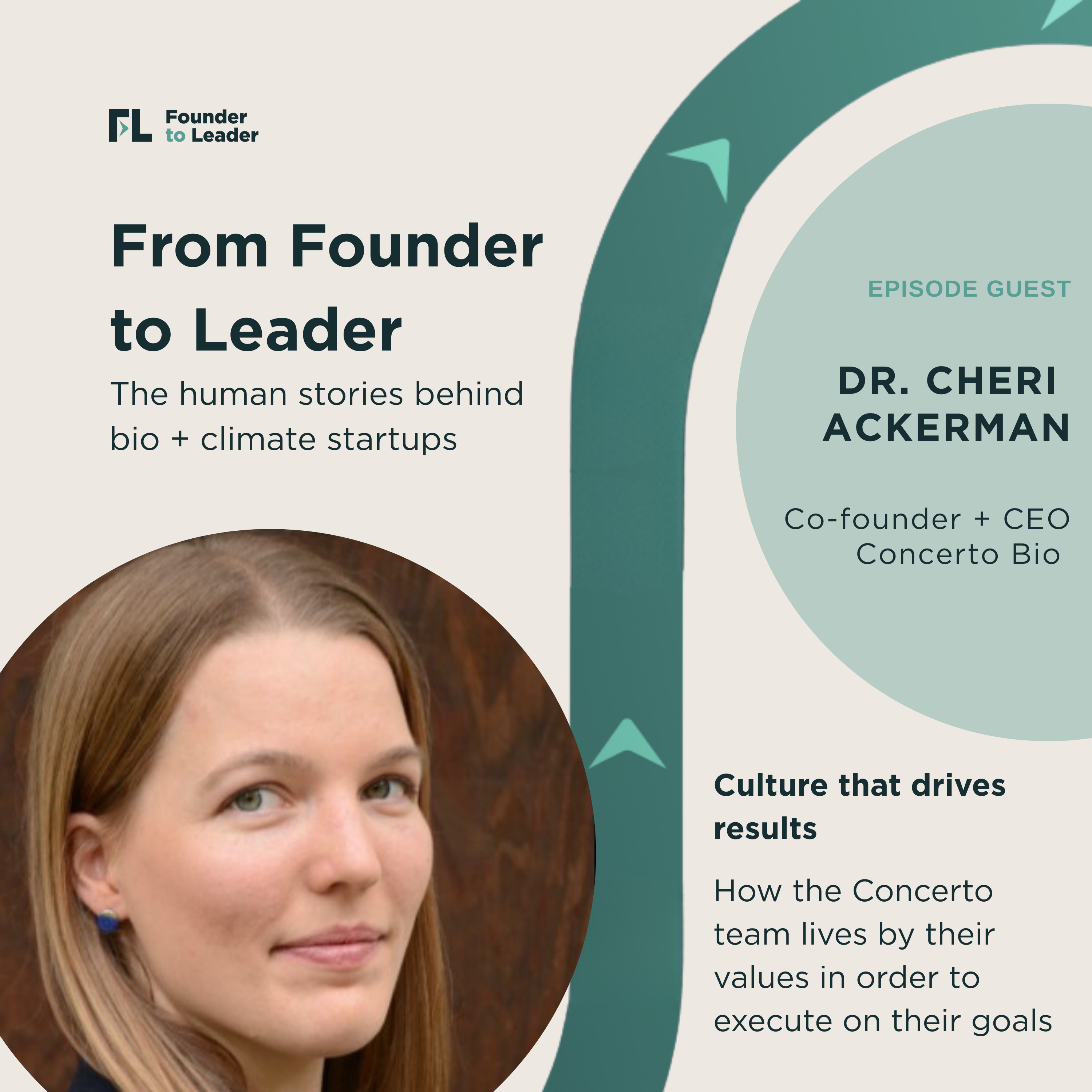 How culture drives results, with Dr. Cheri AckermanFrom Founder to Leader · on Harvard Business Review71 / 100
 Productive. Profitable. People Not Included? AI Displacement. Org Redesign. Universal Basic Income.Your Work Friends · on Harvard Business Review70 / 100
 The Secret to a Strong Workplace Culture (That Actually Lasts) | A HIT-chat with Lauren SweeneyThe H.I.T. Podcast · on Harvard Business Review65 / 100
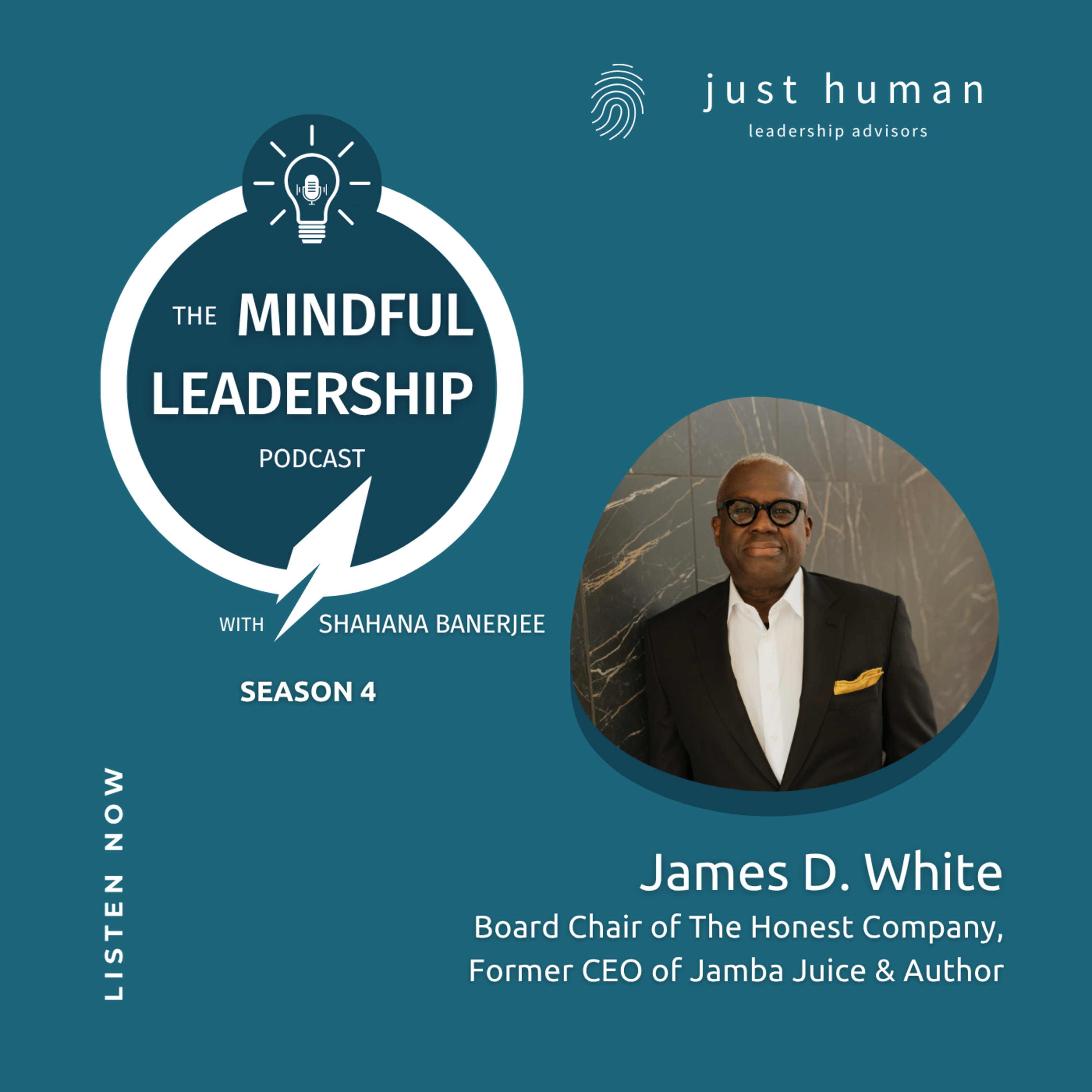 S4e04 Culture By Design with James White73 / 100
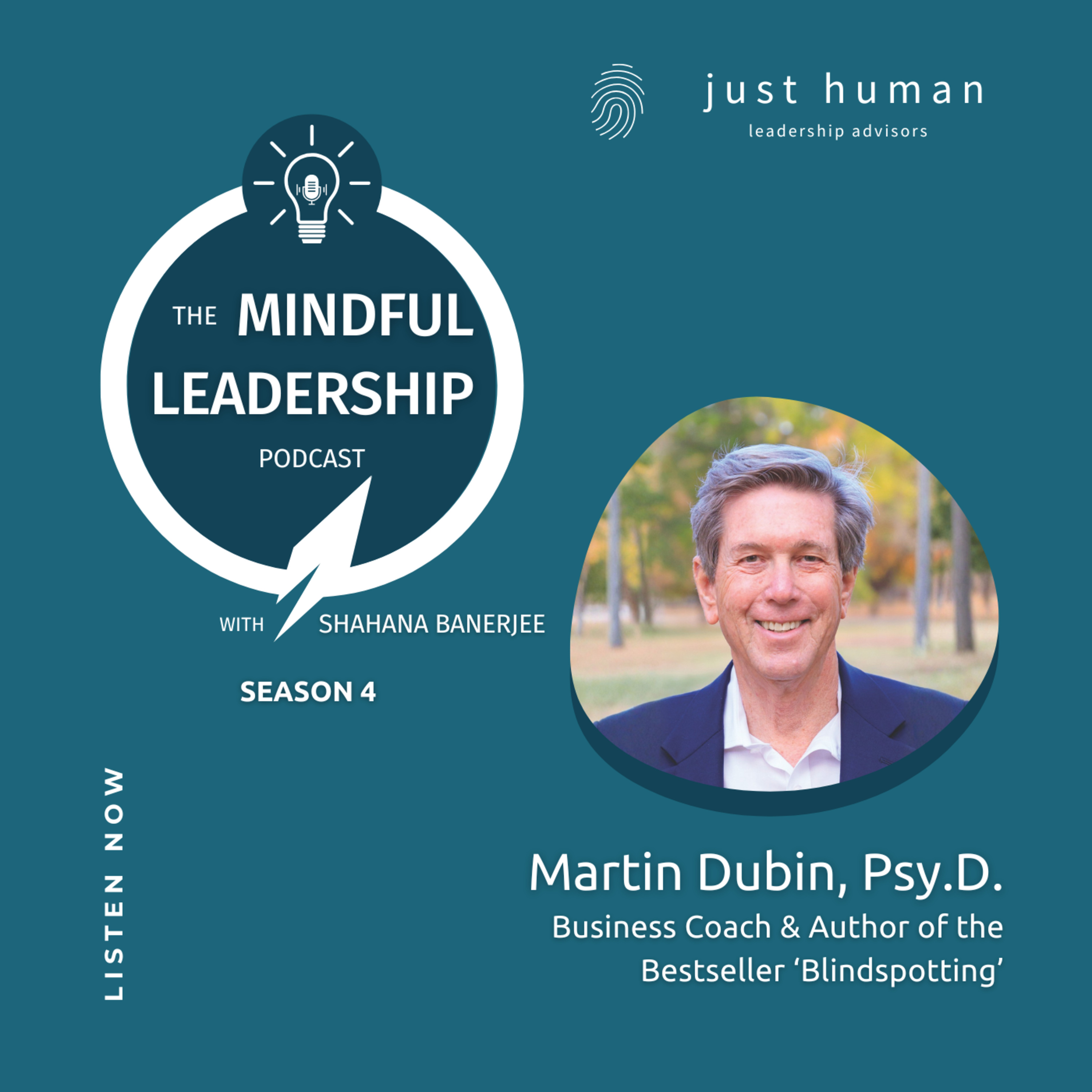 S4e03 Decoding Your Blindspots with Martin Dubin67 / 100
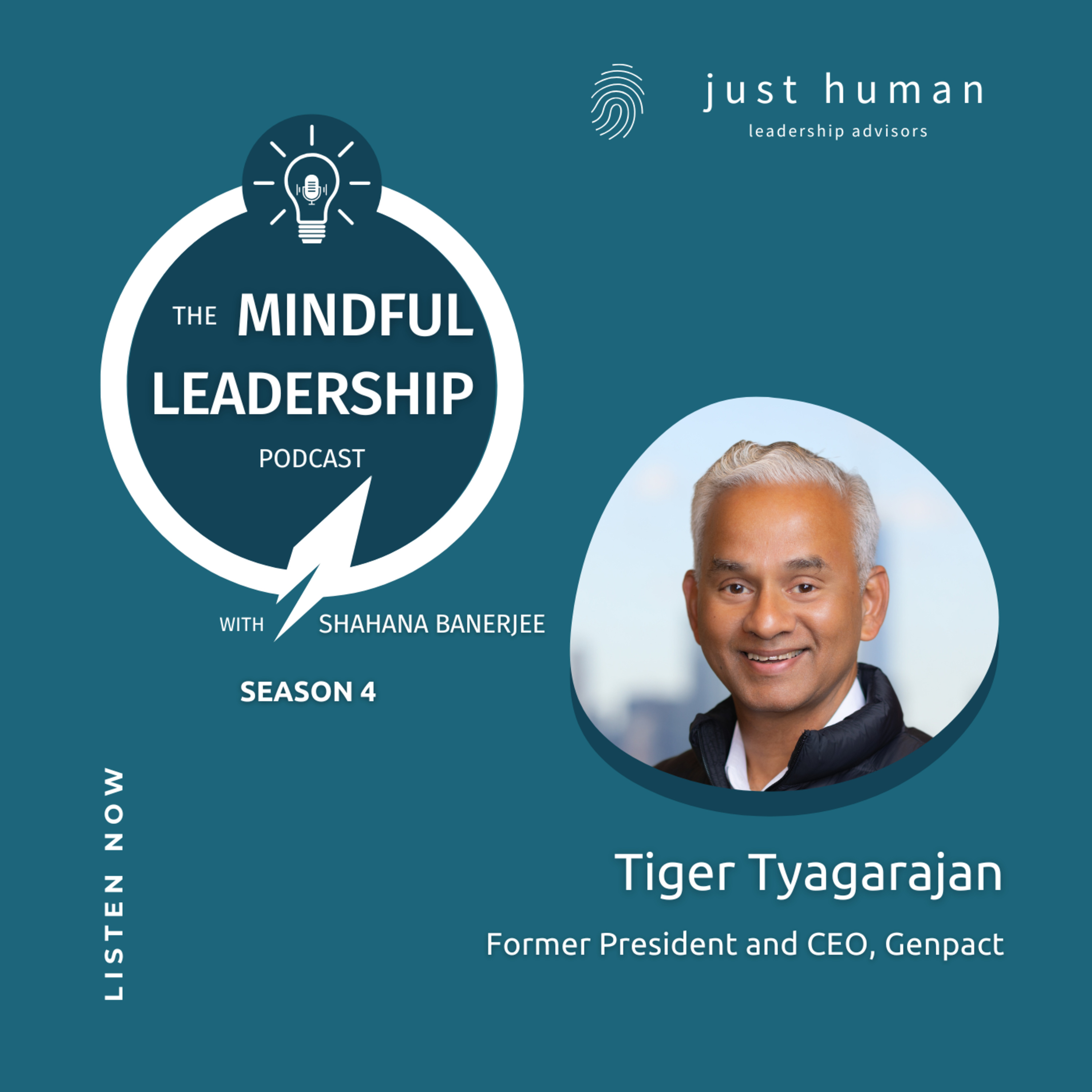 S4e02 Unrelenting Curiosity with Tiger Tyagarajan77 / 100
 S4e01 How To Be Bold with Ranjay Gulati70 / 100
 S3e04 Building Better Leaders with Jonathan Kirschner65 / 100