The Conscious Finance Podcast · 2025-12-03 · 55 min
Key moments - from our scoring
Substance score
46 / 100
Five dimensions, 20 points each
Edwin Davies, investment director at BGF (one of the UK's most active growth capital investors), discusses what separates fundable businesses from those struggling to raise capital in today's polarized PE market. With nearly 13 years at BGF and personal involvement in over 25 investments across 10+ boards, Davies explains how management team quality functions as the primary investment thesis - if founders and leadership are strong, everything else can follow. The episode covers BGF's shift from capital deployment during the 2021 e-commerce boom to current sector focus on SaaS, software, recurring revenue models, defense, and healthcare. Davies reveals the investment readiness standards that matter (monthly management accounts, three-year forecasts, EBITDA benchmarks varying by sector), why perfect propositions aren't required at first conversation, and the red flags that kill deals - particularly businesses missing monthly targets during due diligence. For CFOs, founders, and FDs considering institutional capital, this provides BGF's actual decision-making criteria and why building early relationships with investors beats polished pitches.
BGF prioritizes management team quality first, followed by market opportunity (growing vs. declining sectors), whether the business is doing something disruptive, financial track record versus forecasts, and at minimum one highly credible founder or CEO to back as a minority investor. They also require monthly management accounts, a three-year monthly financial forecast, and P&L, balance sheet, and cash flow visibility.
Requirements vary by sector: traditional businesses typically need EBITDA of £1.5 million or higher, while SaaS businesses might not be profitable yet but should have £3-4 million in recurring revenue growing 20% plus year-over-year. BGF focuses more on where a business can scale with their support than on historical performance alone.
The biggest red flags are businesses constantly missing their monthly numbers during the investment process (which causes delays and raises concerns about trend vs. blip), founders changing their minds about wanting to proceed, and extended decision-making timelines as founders weigh selling, taking investment, or staying independent.
Davies recommends starting conversations early with investors like BGF to build relationships over time rather than waiting for a perfect proposition. Many BGF investments involve businesses they first met three to five years prior. Angel networks and friends-and-family funding are also viable earlier-stage alternatives before institutional PE.
E-commerce was heavily funded in 2021 with inflated valuations, but that sector has dropped off significantly. Money is now concentrated in software, SaaS, high-growth recurring revenue businesses, healthcare, and emerging sectors like defense. BGF describes the market as polarized, with capital flowing to hot sectors while traditional businesses struggle to raise.
Our reviewer’s read on each dimension, with quotes from the episode.
The episode contains a handful of genuinely useful operational details for founders and CFOs preparing for PE investment - EBITDA floors, SaaS ARR benchmarks, pipeline conversion as a lead indicator - but large swathes are consumed by career biography, family chat, and generic affirmations. The signal-to-noise ratio is moderate at best.
if it's a SAS business, it might not be profitable yet. Might be doing 3 or 4 million recurring revenue. And that might be interesting enough if it's growing at 20% plus per year
if I've got X amount M in my pipeline and 30% of that converts, that's a good lead indicator of your performance over the next 612 months
The content is almost entirely conventional PE doctrine - management team first, growing markets, financial readiness, EMI schemes. The 'de-risking via partial liquidity' point is the one mildly underappreciated idea for a founder audience, but nothing challenges received wisdom or offers a contrarian frame.
we often do a deal where we come in, we buy equity from them, they take some cash off the table, we might put some more money into the business as well to help fund that growth
gut feel. Trust. Trust your gut instinct
Edwin Davies is a genuine long-tenure practitioner - 12.5 years at BGF, 25+ personal investments, 10+ board seats at a firm that has deployed £4.5B - which gives him real credibility. He is not a career pundit, but at Investment Director rather than Partner/Managing Director level and at a growth-capital firm rather than top-tier buyout, he sits solidly in the upper-mid range.
BGF's now invested over four and a half billion in over 600 businesses
invested in over 25 businesses personally and been on over 10 boards
There are useful concrete numbers scattered through the episode - EBITDA thresholds, ARR growth rates, deal volumes, a 2018 pipeline-tracking case study - but the case study is never quantified (no exit multiple or revenue figures), sector examples are brief, and most claims remain in approximate ranges rather than hard data.
in some sectors we might want to see EBITDA of a million and a half plus. In other sectors like uh, if it's a SAS business, it might not be profitable yet. Might be doing 3 or 4 million recurring revenue
we had a really good example of that business that we invested in back in 2018 and, and they just weren't tracking their pipeline and conversion
The host repeatedly hijacks segments with lengthy personal anecdotes about her own recruitment career, her business coach, and Simon Sinek, and never once challenges or probes an assertion from the guest. Questions are leading ('no egos?') or purely biographical, and there is no productive disagreement across the full episode.
I'd love to engage in some football chat with you right now, but I'm terrible when it comes to football
Do you follow Simon Sinek much? He wrote the book um, Start with Y
Computed from the transcript - who did the talking, and the words that came up most.
In this episode of The Conscious Finance Podcast , Leo sits down with Edwin Davies, Investment Director at BGF, for a deep dive into the world of growth capital. From his early days in audit at PwC to leading high-impact investments at one of the UK’s most active private equity firms, Edwin shares a refreshingly candid look at the highs, lows, and lessons from his career journey. Whether you're a founder looking to raise funding, a CFO aiming to add strategic value, or simply curious about what makes a business "investment ready", Edwin offers sharp insight into what investors really look for - from backable leadership to scalable models, killer KPIs and culture that clicks. It's a must-listen for anyone scaling a business with purpose. To find out more go to: core3.co.uk/blog
Transcribed and scored by The B2B Podcast Index.
Edwin Davies: If a business is constantly missing its monthly numbers, that's usually a bad sign. If you can get the team right, often everything flows from there. So that's one of the things we focus on right from the outset. What is that? Management team roadmap.
Host: This is what you said in the last survey and this is what we've done. So actually they're like, oh, wow, my voice does matter.
Edwin Davies: We want people that are going to listen to what we say and take it on board. And if they disagree, absolutely fine. But if they just refuse to listen to it, any ideas or advice or
Host: support that often channel no egos. That personal brand of the founder becomes such a, uh, hugely important commercial entity in itself. And, um, in your career, what's the most surprising lesson you've learned?
Edwin Davies: Ah, uh, that, uh, is a challenging one. The most surprising lesson.
Host: So, welcome to our latest episode of the Conscious Finance podcast. I am delighted to be joined by Edwin Davies, who is the investment director for BGF, which is one of the UK's most active private equity firms. Also B Corp. And Edwin's background, um, is starting out life in PwC, I believe, in the big four, um, then climb the ladder in corporate finance. Joined BGF, um, 12 years.
Edwin Davies: Yeah, 12 and a half years. Almost 13 years ago now. Wow.
Host: And since then has invested in over 25 businesses personally and been on over 10 boards. Yeah, that's during that time. So really, really amazing, um, to have you on the podcast, Edwin, and thank you for coming along.
Edwin Davies: Thank you for having me. Really looking forward to it.
Host: Absolutely. Well, let's get straight into it then. So your story is quite an interesting one. I'd love to hear how, um, you started studying chemical engineering as a degree and ended up working in investment. How did that happen?
Edwin Davies: Yeah, it's a bit of a random one, really. And when I was younger, I never really knew what I wanted to do. When I grew up, I liked science, I liked maths, and wasn't sure which, which path to go down. And someone suggested to me chemical engineering as a, as a degree, because that brings together science and maths and puts everything together. Yeah. So I explored that, thought it looked really interesting, so I did my chemical engineering.
Host: Was it interesting?
Edwin Davies: It was, it was tough. It was very interesting. Uh, I liked the analytical side of it. That was great. But sort of after a couple of years I realized I don't really want to end up working on an oil rig or in a chemical plant. So I started to explore other options at that time, um, and then applied to a grad scheme at PwC and got the role, thankfully. So that was brilliant. And it was like going back to university again when I joined PwC because there were hundreds of us in the intake, um, all studying for exams together, all learning the ropes.
Host: And was that the traditional uh, audit path or did go straight into corporate finance?
Edwin Davies: Yeah. So went in, into audit initially. So I was in um, in, in London working in the, the audit team in bank and capital markets. So I spent about 80% of my time on the J.P. morgan audit.
Host: Okay.
Edwin Davies: About 30 people.
Host: Good start.
Edwin Davies: Pretty much year round. It was, it was interesting, but an intense, very intense. Yeah, yeah. The hours were very long, but it was good fun because we were it as I said, it's like going back to uni. It was a real team atmosphere. M. So while we were working really hard and really long hours, we were having a good time alongside it. So it worked out okay.
Host: Yeah, yeah. Interesting. And then from there, what sort of took you down the path to explore corporate finance?
Edwin Davies: Well, uh, as I said, I was working on the order of J.P. morgan a lot of the time, so really far removed from how a business works and that side of things. And I really wanted to start working with small smaller businesses and interact more with CEOs and CFOs. So I decided to, to move out of audit, move back to Bristol, which is where I grew up and joined Grant Thornton in, in the corporate finance team.
Host: Great.
Edwin Davies: And there. So instead of working with a multi billion pound investment bank, I was working with businesses turning over 20, 30, 40 million, growing, growing SMEs and interacting with CEOs, CFOs. And it's just a different kind of perspective and really got to understand how businesses work and uh, that side of things.
Host: How did you make that move? Because there's a lot of people out there that are in audit and would love to get into corporate finance. But often, um, that leap is quite difficult because you're going from a pure technical role into a much more commercial role. Ah. How did you bridge that gap and build confidence with Grant Thornton to take you on?
Edwin Davies: Well, I think a lot of the skills you work on a grad scheme at someone like PwC are really transferable. So a lot of it is how you interact with people, understanding the numbers. So that side of things was okay and then a lot of it was learning on the job when I took the new role. But um, that's kind of expected. If you've got that good grounding from somewhere like PwC, it sets you up well to move into that it's a
Host: good pedigree, isn't it? Exactly worth the blood, sweat and tears.
Edwin Davies: Definitely, definitely. And it was really tough looking back, it was really tough three years. But I did enjoy it and, uh, I'd do it again if I was starting out again.
Host: Yeah, I mean, I have similar thoughts about my early career in recruitment. So I started out in big global corporates which, you know, do want their pound of flesh and it is very KPI driven and it is super long hours and. Well, it was back then. It's not as much now, but, uh, it was intense. But I wouldn't, um, I wouldn't change
Edwin Davies: it because you learn a lot in those times.
Host: Yeah, well, it gave me a real appreciation for work ethic and how, you know, hard work is worthwhile in the right context and, um, gives you that good grounding and a good level of grit and resilience which I think you need in any challenge in your career.
Edwin Davies: Yeah, exactly.
Host: Yeah. So then from there was it BGF straight away?
Edwin Davies: Yeah. So I was with Grant Thornton for a couple of years in Bristol, worked on a lot of transactions there and at the time BGF had recently set up and they were building out their Bristol team. So I think they had about four offices at the time and had probably done 15 investments or so. They were looking to build a bigger presence in the South.
Host: So quite early days then for bj because they're huge now.
Edwin Davies: Right, yeah, exactly. So it was set up in 2011, so been going, been going quite a while now. Yeah, very early days. Back end of 2012 when I joined.
Host: Yeah.
Edwin Davies: Um, and I just saw a really exciting opportunity. They were, they were doing something very different to, uh, other private equity players in the market. And I saw a chance to sort of get in early and be part of that journey. And it was a bit of a risk at the time because the model was unproven at that stage. But, uh, yeah, roll forward almost 13 years and, um, we've achieved a huge amount. So BGF's now invested over four and a half billion in over 600 businesses.
Host: So pretty one of the biggest players now really in the uk.
Edwin Davies: Exactly, yeah. Yeah. So probably the most active growth capital investor across the UK got about 16 offices and we're doing 40 to 50 new investments per year across the UK and Ireland.
Host: Uh, amazing. So what is it that's kept you in the game for so long?
Edwin Davies: I just. Every day is different. I find it really interesting interacting with founders of businesses, CEOs, uh, CFOs, and just there's a new challenge every day. So it's not as if you're going to work and doing the same thing and going through the motions. There's always something new, a new business to look at, different industry, a challenge with a particular portfolio company. So that, that variety is, is really interesting. And comparing when I, when I was working at Grant Thorn was um, in the due diligence team, so doing due diligence on an acquisition. So you're in, you're doing a bit of financial analysis and then you're onto the next project and the next project. Whereas what I do now it's that full life cycle from going out, finding interesting businesses to work with, leading the investment process, taking a seat on the board, following investment and then through to exit and seeing that whole story from start to finish and getting a really successful outcome is really satisfying.
Host: Yeah, I mean it's a really interesting job. It's quite sexy when it comes to finance. And I imagine in terms of what, what you're doing data saying, there's probably a lot of people listening that thinking how can I end up uh, uh, in that, in that type of role? What would you say are the core skills somebody early on would need to build up to reach your level within the investment space?
Edwin Davies: So it's a big part of the job especially in the early years is financial analysis. So you need to be, need to be on it in terms of how to read a P L balance sheet and financial modeling and that side of things like that's a core skill set but it's also about being commercial. So we want people that can take a step back and look at the commercial issues as well as the financial issues and look at the bigger picture. And a big part of our job is assessing risk and reward and making uh, judgments on management teams. And a lot of that comes over time. You build that experience on the job. Um, but people have got to really want to do it and really be interested in, in supporting growing businesses because it, it is a hard job and there's lots of challenges and if you're not really bought into it then it, and it can become more.
Host: Is it a question of nature versus nurture?
Edwin Davies: A little bit, yeah, I would say skill set, yeah. Yeah, some people, some people are uh, just not cut out for it. Others are and really thrive.
Host: Is it, is it still quite a demanding long hours job?
Edwin Davies: Yeah, it is and it goes with, it goes in peaks, troughs depending on where you are in terms of a deal process. So when you're in the middle of A deal, the hours can be very long and stressful and yeah, it's pretty challenging and other times it's a bit less intense. So, yeah, it's a bit up and down. You always get that in a deal LED business.
Host: Burning the midnight oil. Went to get the deal over the line. I've heard that from many CFOs.
Edwin Davies: Exactly, exactly. And yeah, so you've got to have that commitment and drive to be able to do that.
Host: And what do you do when you're not making deals? What do you get up to at home?
Edwin Davies: I've got three young kids, so that keeps me very busy. Um, so there one's almost six, the middle one's four and the youngest is almost two. So, yeah, that's got your hands full. Yeah, yeah, definitely. Plus a golden retriever.
Host: Love that.
Edwin Davies: So that keeps me busy. And then it's. Football's my sort of main hobby outside of. Outside of myself.
Host: I'd love to engage in some football chat with you right now, but I'm terrible when it comes to football. I've got absolutely no knowledge whatsoever, so. So we'll park that one. Um, but, yeah, I mean, juggling three kids whilst being an investment director for some of the most attractive deals in the uk, um, must be pretty intense. How do you find that balance between home life and work life?
Edwin Davies: It's very challenging sometimes, but luckily I've got a very supportive wife that, um, does an amazing job with the kids, so that really, really helps with things. But I think it's also the flexibility to sort of manage our time as. As we see fit and just making sure there is time to spend with the kids, um, as well as get the job done, really. But it is a fine balance.
Host: Definitely. Yeah, I can feel you with that, I think.
Edwin Davies: But it's very, very rewarding as well.
Host: Yeah, definitely. I mean, I have to sort of force myself to, um, m. Make the time because I'm quite passionate and quite obsessive about my career and my work and what I do that I can just let it, you know, take away with me sometimes. And I. I have to set really clear boundaries so that when I'm home, I'm home and I'm present, I'm there, um, and, you know, keep an eye on the clock and not working too late every night and, um, get getting back in time for bed every night and doing my bit when it comes to school runs and things. Because you don't get those moments back, do you?
Edwin Davies: No, exactly. And I wouldn't want to be one of those People that just is a slave to the job and doesn't get to spend time with the kids and then suddenly their kids are all grown up and they've missed out on that really important part. So yeah, so that's really important.
Host: Definitely. So there's going to be a lot of CFOs and finance directors and probably founders and CEOs out there right now that are ah, banging their head against the wall when it comes to raising capital, um, finding investment, um, growing their, their organization. So what, what are you seeing across the market right now?
Edwin Davies: It's an interesting market at the moment. It is more challenging than it has been in, in previous years and there's lot, lots of global factors that are really influencing that. And um, some businesses, they're struggling with their day to day trading and they're not, not hitting their numbers. Other businesses are struggling with recruitment and retention. So there's lots of challenges but there's still some really good deals being done. But what we're seeing currently is it's quite polarized towards certain markets. So whereas in 2021 um, e commerce was the really big sector, everyone was piling into that. There were loads of deals done in the space and very high valuations. That's really dropped off over the past few years. Now a lot of it's focused on software SaaS, businesses, recurring revenue, high growth. So lots of money is pouring into those kind of sectors. So when there's a really good business um, in that space it's attracting a huge amount of interest and valuations are going sky high. And then certain other sectors just, it's really hard for founders to raise money because they're not the hot sector at the moment. But it does go in waves and different sectors come to the forefront. So expecting to see a lot more in the defense industry um, over the next few years, uh, more software, more business services. Healthcare is another good sector at the moment. Very, very resilient. Um, and lots of opportunities there.
Host: Yeah, well that's good to know me. Would you say that the appetite with private equity investors is there but the business performance perhaps isn't for uh, enough organizations that are sort of fundraising ready?
Edwin Davies: Definitely, yeah. There's a lot of private equity firms with a lot of money ready to, and looking for opportunities. But there's probably fewer opportunities right now than there have been. So all of the money is getting diverted towards uh, a few but for others it is pretty challenging.
Host: Okay, so as an investor yourself, when you get under the bonnet of a business, what would you say are the Things that get you really excited. And what are the red flags?
Edwin Davies: A key part of our assessment is the management team. And if you've got a great management team, everything else can almost fall into place. So, uh, that's probably right up there in terms of things that we want to assess. So whether it's someone that's been there and done it before and they're just doing the same again, or whether it's someone that's just got a really clear plan of what they want to do and how they want to do it, um, that is a really key part of it. Then we look at the market the business is in. Is it a growing market or a declining market? What's the business's share of that, that market? And are they doing something disruptive? Are they, are they the new Uber or something like that? Are they approaching things in a very different way? And therefore that growth opportunity is there. And then financial analysis is a, is a big part of it. So getting under the, under the skin of the numbers and sort of looking at the historical track record and how does that compare to what they're, what they're forecasting going forwards, um, what wider team is, have touched on team. And we don't need to invest in businesses with fully formed teams. That's an area that we can support them with. But we need to have at least one person in that team that is highly backable, uh, from an investment point of view.
Host: Okay, so that could be the CEO. It could be the cfo.
Edwin Davies: Yeah, it's typically CEO or founder of the business that we think as a minority investor because we're not getting involved in running the business day to day, there needs to be someone there that we, we really trust them, we come back. But if they need help building out that team, whether it's bringing in a CEO, uh, uh, cfo, coo, or it might be a founder that wants to step back over time and bring in a new CEO. Uh, we can support with all of those kind of things.
Host: Okay, so they don't need a fully fledged board from day one. It's just more about that initial early leadership. Exactly right. So when you say, um, you know, having a strong leadership, um, presence, other than being there, done it before, um, what are the other character traits or track record that you would typically look for?
Edwin Davies: I think ambition is a really important thing. So we want to back business owners, founders, CEOs, that have an ambitious vision to create something of scale. And for an investment to work for us, there needs to be strong growth. So if Someone's sat there thinking, actually I'm happy with the business as it is. I don't really want to take any risk and grow the business. That's not for us.
Host: I imagine they wouldn't come knocking on your door if they.
Edwin Davies: No, it's unlikely. And they're more likely to want to sell the business or just carry on running it as a lifestyle business at that stage. But someone that's really ambitious and driven and wants to succeed at any cost is um, usually a good sign.
Host: Okay, so if they've got all of the boxes ticked when it comes to the leadership side of things, what are the other things that are a minimum standard for you to consider? Investing.
Edwin Davies: So they need to be investment ready and that's something that we can support with in advance of a process as well. But they need to be, they need to be all over that numbers. They need to be preparing the monthly management accounts, putting everything together into a format that's, that's easily digestible for an investor because lots of investors have lots of different opportunities to, to look at and it, it makes our lives a lot easier and a process a lot smoother if it's, it's all being pulled together into an appropriate format.
Host: And what is that appropriate format?
Edwin Davies: It's um, so monthly management accounts, a forecast financial model going out at least three years on a monthly basis. Looking at P L balance sheet cash flow. Lots of businesses might have a budget for the year ahead, but no further than that. Some businesses don't even have that. They just sort of go along with no forecast, no plans, no budget. So that's something that we need. But again it is something that they can develop over time as we're, as we're getting to know the business. But that's pretty key.
Host: What about um, sort of golden rule metrics when it comes to things like EBITDA or replacement of um, year on year growth? Is that sort of minimum standards there that you need to see?
Edwin Davies: It really varies by sector and type of business. So uh, in some sectors we might want to see EBITDA of a million and a half plus. In other sectors like uh, if it's a SAS business, it might not be profitable yet. Might be doing 3 or 4 million recurring revenue. And that might be interesting enough if it's growing at 20% plus per year. Okay, so it really varies, varies by sector.
Host: Uh, okay, so because I guess your target market is more that mid cap, right. Um, SME plus um, of a certain size, the minimum is ideally 1.5 million EBIT and then if it's a SaaS business, 20% year on year growth on the top line or ARR.
Edwin Davies: Yeah, exactly. A lot of it is more about where do we think the business can get to rather than what has it done historically. So if we really, if we see a business opportunity where we think this business can scale and we could support that, then that, that helps. It doesn't have to have achieved strong growth for three, four, five years prior to investment. It's about what can it achieve with our investment and our support going forward.
Host: And for those that aren't there yet, what, what other avenues would you recommend? Um, if they're sort of earlier on in their journey.
Edwin Davies: So there's some good angel networks out there. So high net worth investors are looking for opportunities to support businesses that might not be ready to raise institutional funding. So a lot of businesses, uh, either take money from friends and family or angel networks initially and then there are some other investors out there that will look at some earlier stage opportunities.
Host: Uh, is that more the VC space?
Edwin Davies: Yeah, exactly. But we, we would encourage businesses to start the conversations early and build relationships over time because a lot of the investments we do, businesses that we've met maybe three, four, five years ago, start building that relationship, getting to know each other, and then when the stars align, go on and get the deal.
Host: It's quite good to know because I think a lot of the CFOs and FDs that I speak to are almost, um, obsessed about having a perfect proposition ready for that first conversation with a private equity firm.
Edwin Davies: Yeah.
Host: Whereas you're sort of saying no, actually you can have earlier conversations to help them build that proposition.
Edwin Davies: Yeah, there'll be some private equity firms that want that. They want something perfect to land on their desk and that makes their life very easy. Um, our model is about, it's about scale getting out, meeting lots and lots of businesses, getting to know where they are in their journey, when the timing might be right, and building those relationships over time. Because as a minority investor, we're backing those teams. So the more time we've got to assess that team over the years, the better, really.
Host: And in your experience, let's say the due diligence is in motion. Um, and you've decided, yeah, this could be a good target for us. Um, what are the things that tend to slow a deal down or completely kill it altogether?
Edwin Davies: So often it's the trading throughout an investment process. And if a business is constantly missing its monthly numbers, that's usually a bad sign. And often that will cause deals to delay. And an investor might want to see another month or two trading, see if they are getting back on track, whether it's a short term blip or a longer term trend. Sometimes it's um, it's founders changing their minds and they're not sure whether they really want to do something. They might be at that sort of crossroads where they're deciding, do I sell, do I take investment or just carry on as is. So sometimes they take a while to make decisions. Other times something might come out of due diligence that no one was expecting. Um, and then it takes a bit of time to work through those kind of issues. Uh, sometimes there's management challenges, so there's all sorts of things that can cause that problems with the legal process. So deals can be done very quickly, but sometimes they do take a bit longer than everyone expects for various reasons.
Host: And for people out there that are maybe just not sure what is the right path for them to help grow their business. What advice would you give them?
Edwin Davies: Uh, I'd say chat to people about it and understand what your options are. Because lots of people don't know what their options are. So they think they might think they've got limited choices and might be a founder who's been running a business for 10 years. And they think their only option is just carry on as is or sell, not knowing actually that there are several other options that they could pursue. Um, so a lot of the deals we do, there's an element of de risking for founders, so them taking some cash off the table at the point of investment rather than having to sell the whole business.
Host: Okay.
Edwin Davies: So people often get to the stage where they've reinvested all of their profits, they've got a lot of value tied up in a business and they might at that stage be a bit risk adverse and not want to grow too much if it's going to put the business at risk. They've got all their eggs in one basket. Uh, so we often do a deal where we come in, we buy equity from them, they take some cash off the table, we might put some more money into the business as well to help fund that growth. But if they've been able to de risk and maybe pay off a mortgage, put some money away for a rainy day, buy a boat, whatever they want to do, they, they might be more willing to go on and take risk and grow the business. Yeah, and it's that sort of halfway house between selling a, selling a business now and doing nothing. It's actually, they can take some value off the table now, but they don't have to relinquish control. And often when we talk to founders about that, they don't realize that that is an option. And it's quite attractive to them because they might still be relatively young and not want to go and sit on the beach and do nothing. So they don't really want to sell their business. So being able to de risk now but remain in control and keep growing for another few years with a supportive partner, that can help them ultimately grow a bigger business. That uh, that is really attractive. That's often a key driver of. So people wanted to deal with this.
Host: And what are the trade offs for uh, a founder? Because there is a stereotype out there when it comes to private equity that they can be you know, command and control and very much breathing down your neck asking for KPIs every week and like data, data, data and almost can, can cause that m freedom that a founder has to make quick decisions, um, uh, to disappear because uh, they want to approve every single decision that is made so it can sometimes slow progress. And also that creative freedom that perhaps a founder really enjoys. Is that stereotype valid?
Edwin Davies: Yeah. There's different approaches from different kind of investors. So there's a whole spectrum from private equity investors that want full control and they will act like they only control the business to the other end of the scale where some investors are much more hands off. So we can be anywhere on that spectrum depending on what business owners want. Some of them want much more support from us and we can do that. Others want us to be a bit more hands off and we can do that as well. But anyone going down the private equity route has got to realize it's no longer their business to make decisions on their own. They need to have others in the loop. But our approach to that is we don't want to get involved in the day to day running of a business. So if it's a day to day decision, crack on. You don't need to speak to us about that. But if it's something more strategic that is going to drive value in the business or potentially detract value from the business, we want to be involved at that sort of level. So that could be anything from making an acquisition, raising bank debt, issuing shares to employees, recruiting someone over a specific salary threshold which would have been agreed in advance and we'd see that as someone that's at that top management level. So not sort of day to day recruits. Uh, so we want involvement in those kind of decisions. But It's a very quick decision making process, so it shouldn't slow things down.
Host: I'd imagine that's quite a nice check and balance for the founder. Just say, am I, am I, um, knocking, uh, on the right door here, or is this a silly decision?
Edwin Davies: Exactly. Yeah. Some founders are going through that process already. They might already have a board in place, but lots of them don't. And our approach there is, we want to be involved in those kind of decisions because we think we can add value to those kind of decisions. But our role is to provide constructive challenge and advice rather than telling them what to do or how to do it. But it gives them another, another sounding board, someone to speak to and say, actually, are you sure that's the right idea? What about this? Which is quite valuable.
Host: Yeah, interesting. And just another question, uh, for the finance community, um, I think your, your approach is very different to maybe what I've heard, um, from other private equity firms in that you don't have to have all belts and braces, perfect pack prepared beforehand. Um, but some other firms seem to be quite obsessed with the data and the molecular level of slicing and dicing your customer segmentation and understanding demographics and understanding lifetime value and all the different, uh, KPIs and metrics, um, that they need to understand the business in a much deeper level beyond just P and L and balance sheet. Do you look for things like that as well? And if so, what are the top ones that you tend to keep an eye out for?
Edwin Davies: Yeah, data is important to us too, but probably not to the extent that some PE houses go with it. And often before investment businesses just um, aren't tracking what we think the right data is. They might have their own KPIs, but they might not be focused on, on some of the key areas that we would like to see. Sometimes businesses, they're not really tracking their pipeline and pipeline conversion in a way that we think is very valuable. Because if you're doing that, if, you know, if I've got X amount M in my pipeline and 30% of that converts, that's a good lead indicator of your performance over the next 612 months. And do you need to be out in the market more growing that pipeline, or do you just need to focus more on converting those kind of opportunities? So those kind of metrics are important for software businesses. It's that customer acquisition cost, lifetime value, that ratio that, that's really important. So we will work with businesses to focus on those right. KPI's over time and making sure they're in place because ultimately if you are doing that right, it can lead to better value on exit. Uh, and we had a really good example of that business that we invested in back in 2018 and, and they just weren't tracking their pipeline and conversion. It was quite a lumpy sales business. So often things would slip to the right a bit. But there was a lot of inherent value in that pipeline. They just weren't tracking it in an appropriate way. So we helped them develop that over time and ultimately when we, when we got towards exit, uh, they would get, they got more value from the, from the buyer who could really buy into that inherent value because because of the data we've built up over three years they can, could see, okay, I could see how that is going to convert into value. So ultimately it led to an enhanced value on exit.
Host: Great, that's good to know. So with um, the role of a cfo, uh, it'd be good to sort of understand your perception of what makes a great CFO um, today. But before we get into that, I guess there's a lot of um, organizations that you probably talk to haven't even got a cfo, maybe not even internal finance team. So what do you think is the right time to consider getting that number one in finance?
Edwin Davies: As soon as possible I'd say. And lots of businesses leave it until the last possible moment and it depends on the stage of the business and how big it is and can it afford those kind of roles. But often the conversation we have with founders, they would much rather spend money on a heavy hitting sales director because they can see direct correlation between bring a sales director in, that's going to drive revenue, whereas they see a CFO as uh, a cost to the business. Uh, our view is it shouldn't just be a cost. The right CFO should be able to add strategic value. They should be able to cut costs in certain, certain areas. So overall they should more than pay for themselves.
Host: What's the biggest business cases that you see in terms of immediate value a CFO bring to the table?
Edwin Davies: A lot of it is um, improvements in reporting KPIs which allow people to make better and quicker business decisions. It's cash flow modeling and forecasting. So avoiding potential uh, uh, trouble moments when um, when you run out of cash and we've had a few of those kind of situations where people just haven't been looking at that appropriately and suddenly there's a cash hole a few weeks out that no one had expected. So having a good CFO in that, that's looking at least six months forwards in terms of cash is really, really important. But yeah, often there is that reluctance because people just see it as a cost or they see it as someone that just produce management accounts and annual accounts. That's absolutely not the case. A good CFO should be strategic. They should be a right hand person for the CEO. Uh, they should be involved in key strategic decisions and direction and, and ultimately add a lot of value. And we often see that sometimes founders are reluctant to bring in a CFO because they might have a good finance team, they might have a good head of finance already, and they think if we're bringing in a cfo, it's going to demotivate the existing team. But actually it should be a positive for that team because they can learn from this new person coming in and ultimately, um, grow. Grow their own career. Uh-huh.
Host: Yeah, definitely.
Edwin Davies: Yeah.
Host: I think, I think it, uh, should go without saying really, that a CFO's role is, is primarily that strategic partner as well as providing that commercial insight, helping a CEO, um, drive their decision making, but done in a, in a thoughtful way. So it's well thought through, it's challenged, it's, you know, interrogated so that that investment is spent wisely.
Edwin Davies: That is, that's a really important point. A CFO shouldn't be saying yes to everything. They should be providing that, that challenge to the CEO, because often there's no one else in the business to provide that challenge to a CEO.
Host: It's that voice of reason. Yeah, isn't it?
Edwin Davies: Yeah.
Host: Um, which I think we all need as business leaders. Because as a founder myself, I can get excited by shiny objects and sometimes I just need someone to rein me and I use my business coach at the moment, um, who I always bounce ideas off, off of. Uh, and yeah, often they'll say, no, Leah, you're barking up the wrong tree there. We all need that, don't we? And I think that's the role that a CFO should play day to day. But often it's helping the CEO understand the value of that and appreciating that partnership. It's a partnership. It's not, um, a master servant. It's not a cost center. It's a strategic advisor to you.
Edwin Davies: Definitely, definitely. And another way of a founder getting that kind of support and advice is from non execs. So that's a big part of our model as well. When we invest in businesses, we like to see independent non execs coming in, acting as that, uh, sounding board. And we've got a big network of people that we can bring into those kind of situations, depending on what the business needs, whether it's someone with particular sector experience or just someone that's been sat in the founder's shoes, been there and done it, and can provide that kind of experience to people. And that's really, really valuable as well.
Host: That's probably something that people are interested in hearing, actually is I speak to a lot of, um, CFOs and FDs that want their first NED opportunity. How would you advise those people to get their first board advisory role?
Edwin Davies: Uh, I guess it's about being out there in the market, networking. And the more boards they've sat on as a cfo, the more likely they are to be attractive to businesses looking for that additional experience. But, uh, I think it's out there networking with advisors, bankers who are meeting with lots of businesses on an ongoing basis and therefore might be able to come across some of those kind of opportunities. I think that's pretty important because it's
Host: a slightly different skill set, isn't it, to being on a board for a business, to being uh, an advisor to the board. Because it's almost, you've got, almost got to withhold that temptation to roll up your sleeves and start doing.
Edwin Davies: Exactly that's, that's a real challenge that some people face, particularly if, if they've been in that CFO role for a long time. They're very used to being in the detail and then suddenly being, having to step back and not be tempted to get too involved can be quite a challenge.
Host: And it's also that horizon scanning ability to really understand the macro factors that could affect business performance, which I guess as a CFO you're always doing, but I think as a board advisor you've got to almost see it more holistically.
Edwin Davies: Exactly.
Host: Yeah. Um, so I guess moving on to um, your experience on boards, uh, you've been on a board for over 10 boards over your career, which is amazing. Currently on, uh, currently on three. Three. Um, so you must, across multiple sectors, whether it's uh, wine manufacturing, sass, like what are the common challenges that you see, um, businesses face as they scale?
Edwin Davies: Yeah, so there's common challenges whether it's a manufacturing business, Whether it's a SaaS business, whether it's a wine business. All of them go through the same kind of challenges as they grow from 5 million to 10 million or 10 to 20, 20 to 50. It's around people, it's around systems, around recruitment and retention is really important. Those are the kind of things that we look to work with businesses to address throughout that growth journey. But if you can get the team right, often everything flows from there. So that's one of the things we focus on right from the outset. What is that management team roadmap? Where are the gaps? And sometimes there aren't any gaps, but often there are. Ah. And some of those gaps might be in a year or two's time where you might need a role, but, but not yet. But it's about understanding what does the team need to look like to grow this business from 20 million to 50 million turnover, for example. Um, when do we want to bring those roles in? Once you've got that, it's around. Okay, what systems is the business using? Are they appropriate for the business of this scale and are they appropriate for that business when it's double or treble the size? And it might be a CRM system, it might be their sales, um, pipeline system, Salesforce or things like that. Often businesses are working off spreadsheets and it's really hard to track data as a business gets to a certain scale. You need proper systems where at the click of a button you can see what does your pipeline look like, how's conversion, all of those kind of things. So that's really important. Recruitment and retention, um, being able to bring in the right people and retain them. So growth, uh, shares or uh, equity EMI schemes is really important when we invest in businesses. So we want to ensure that the key people in the team are incentivized to grow value and we want them incentivized to stay with the business because ultimately if they've got some shares, they can make some good money on the exit. So sometimes businesses have already put that in place. Other times you've got a founder who owns 100% and hasn't given equity to anyone else. So we always like to see a pool there for uh, key existing employees and future employees. People that are going to help drive value in the business.
Host: Yeah, definitely. Other than skin in the game, what are the ways that you see businesses help improve their retention?
Edwin Davies: So one thing we encourage is for businesses to do retail, fairly regular surveys at least every six months or so of all of their employees, just to feel the pulse of the business. What are people really thinking? Because at the top you often don't know what everyone else is thinking. The CEO might think everyone's happy, but they might not be. So doing those kind of surveys and acting on the responses because often some interesting things come out of those kind of things. And if you act on them early, you can really improve things.
Host: Yeah, I think that's such a good point. Um, uh, at Core three, we do quarterly employee surveys, and we advise a lot of our clients to do the same. Um, and often some of the objections are, uh, well, nobody really bothers filling them out, and it's just an admin exercise. And I think that one of the main reasons why, why those types of surveys or feedback loops can fall down is that a business doesn't demonstrate what is done with the feedback. So a good mechanism that we use is, let's say you do the survey once a quarter, and then in your town hall or whatever your quarterly update might be, then you communicate, uh, this is what you said in the last survey, and this is what we've done. So actually they're like, oh, wow, my voice does matter. And we are making. It is worth doing these surveys. And, you know, they are making improvements based on what we said.
Edwin Davies: Yeah, I think that's really important. But also, if there's something you haven't addressed, telling them why you haven't addressed it.
Host: Yeah.
Edwin Davies: Not just ignoring.
Host: Yeah, that's a good point. Definitely. So there's a huge crossover between, um, I guess what, what you do and what I do, then, like, big focus on people.
Edwin Davies: Yeah.
Host: And culture.
Edwin Davies: Definitely.
Host: Um, culturally, do you get under the weeds there a lot with, um, an organization that you're on the board with?
Edwin Davies: Yeah. So culture is really important. And often that's one of the key reasons people are worried about private equity. They think that will change their culture if they bring in an investor. And sometimes it might, but we're really conscious about that. And we work with businesses to, uh, really ensure nothing changes day to day or nothing too material so they don't feel like they've been taken over, someone else is in control, that kind of thing. So, yeah, that's really important. And it's important to us as an organization as well. As we've scaled from startup to almost 200 employees, retaining that culture across the business is really key.
Host: Definitely. And when you say attracting talent, what are the tips that you often give businesses to help them improve their talent acquisition strategy?
Edwin Davies: I guess it's using the right people, whether it's recruiters to go and find the right people, but it's also making it an attractive place to work and a business with a good vision of how it's going to grow, how it's going to make the role more interesting for its employees and potentially have other opportunities for those employers because it's A growing business. That's really important. Having the right kind of benefits, having a nice office environment, all of those kind of things are, uh, really important.
Host: Basically. Employer, brand.
Edwin Davies: Yeah. Yeah, that's really.
Host: Because that's something we, we do a lot with our, our clients as well. Because more often than not, you go and you go and walk the floors of a business, and this is amazing. The culture is great, the people are great. Um, there's exciting things happening, the vision's awesome. But then you go on the company website and there's nothing. It's just like a landing page. And then you go on their social media and there's. There's nothing. So bringing that story to life is so important to help, um, organizations attract talent and stand out in a, in quite a crowded marketplace.
Edwin Davies: Yeah.
Host: Um, so, yeah, we advise that a lot with our customers is what's kept you here for so long. What, what are the stories where people in the business, um, have had in terms of wins and successes? Why do they love working here? Um, get behind the camera, do some videos. Uh, the CEO talking about the vision, the HR director talking about the culture, the CFO talking about their strategy for the team. It just paints such a better picture. And we see talent attraction increase by 50% by just doing those employer branding exercises. Because then suddenly when you're approaching, uh, a candidate, rather than just sending a job description, it's like, well, here's the CEO talking passionately about the vision.
Edwin Davies: Yeah.
Host: And here's the HR director talking about the benefits and the culture and why it's a great place to work. And actually, here's somebody who's doing the job right now, telling their story about why they love working for that company. Suddenly you've just got this much better picture.
Edwin Davies: Yeah.
Host: Um, so. And that's not hard to do.
Edwin Davies: No, it's not. But lots of businesses neglect that.
Host: No.
Edwin Davies: The first place someone's going to look if they come across an opportunity is on the website and if it just looks dull and boring and they've got another opportunity where they're doing all of those things you've just mentioned, it's going to be an easy job.
Host: Yeah, absolutely. Love that. Um, so you've talked, um, quite a bit about that sort of growth journey. I mean, what would you say when you, when, when you're, when you say how, how important that leadership team is? What do strong leadership teams get right that others perhaps don't?
Edwin Davies: I think a big part of that is making sure everyone around the table is, is aligned and pulling in the right direction. So not having a founder, uh, that just makes decisions all on their own, we've had some of those kind of experiences. So founders that, that, that uh, are able to make key decisions but bring people on that journey and consult with others and um, and take views from others on, on board. That's really important. So a founder or a CEO that is coachable, they might not necessarily agree with everything you say, but we want people that are going to listen to what we say and take it on board. And if they disagree, absolutely fine. But if, if they just refuse to listen to any ideas or advice or support that, that's often challenging.
Host: No egos.
Edwin Davies: Yeah, yeah, that's good, that's really important.
Host: Good stuff. So um, and then on that with, with then building the next layer of leaders, how much do you think about succession planning within your organizations?
Edwin Davies: That's, that's massively important. And we, we start doing that right from the outset and often it depends on what the existing shareholders want. And um, sometimes they've got a clear plan that they want to take on investment, build out the management team, take a step back over time. And when we get to the eventual exit, they want a clean break. Others have a much longer term time horizon and they're willing to stay involved for the next 10, 15, 20 years. So they're less worried about the succession planning. But we want to make sure that conversation is had from an early stage. It's understanding what each of the players around the business wants and working with them to achieve it. So we've had lots of examples where the founders do want to take that step back over time. So it's about understanding their time scales, how committed they want to be and when they want to take that step back and then planning well in advance of that. So you can't get to six months before you want to sell the business and then think, okay, let's bring in a new CEO and I'll be able to get a clean break plan for that well in advance and get someone to make sure they're embedded because otherwise any buyer of the business in the future will see that as a key risk. If, if that founder, CEO, uh, if they still feel that they're heavily involved, they've got key customer relationships, they'll want to tie them in for another year or two post deal. Sometimes founders don't want that.
Host: Yeah, it's interesting like striking that balance because there is a bit of a movement these days towards personal brand and how founders and CEOs have to be the face of the business. Have you read that book Key person of Influence? Uh, it's um, it's all about that basically where that, that personal brand of, of the founder becomes such a hugely important commercial entity in itself. Um, that you almost create, but, but also then you're creating an immovable object where if, if all um, avenues lead to the founder, then you're not necessarily succession planning then, or empowering the rest of your team to grow. So what are your thoughts on that when it comes to um, personal brand and how much a CEO or founder should be the face of a business versus the opposite?
Edwin Davies: I think it depends on the circumstances. Sometimes it's is pretty important, but in those scenarios, if they are the face of the business and that important, they're going to have to stay involved for the, for the longer term. So it's just, it's about understanding those, those time horizons. But again, coming back to the ego point, you don't want someone that, that feels they're all important and they're the only person that, that is of value in a business because that's not good for culture. Uh, that's not good for, for growth.
Host: Mhm. Love that. So I think just a couple of closing questions. Um, what is the one piece of advice that you would give to CFOs out there right now that are trying to attract investors?
Edwin Davies: I think be prepared. Really think about the type of investor you want to attract and start those conversations early. Don't leave everything to the last minute. Make sure you've got your ducks in a row, so pull your info together, make sure you understand your business and just be ready. Depending on the type of investor, that readiness point could be very important.
Host: And for CFOs out there right now that are thinking this way but maybe don't feel fully prepared or the business performance isn't yet where it needs to be to attract investors. Do you welcome people to reach out to you directly to sort of start that dialogue and help support them for that readiness?
Edwin Davies: Yeah, definitely. Because then you can have a conversation around, um, where is the business now, where is it looking to get to? And then you can feed into that timeline and what do they need to do to be ready? Because often people don't know exactly what it takes to go through a process. So having those kind of early conversations and it might be a conversation around, okay, you need to pull together this kind of data or it might be actually if you recruit this kind of role now, that will make things a lot easier, particularly in circumstances where a business doesn't have an FD or a cfo, sometimes it can really help to get that in before you go through that investment process. Someone that's been there and done it before.
Host: Yeah, definitely. So what's the best way to reach out to you? Is it LinkedIn or LinkedIn or email?
Edwin Davies: Yeah, yeah. All the details are on our, on our website. Uh, find me on LinkedIn as well.
Host: Perfect. And, um, in your career, what's the most surprising lesson you've learned?
Edwin Davies: Oh, uh, that ah, is a challenging one. The most surprising lesson. I think it's not that surprising, but I think gut feel. Trust. Trust your gut instinct. Sometimes you're, and this is often around sort of assessment of management teams and that kind of thing. And often sort of early impressions are really important and if you've got a, uh, niggling doubt about something, there's probably a reason for that. Um, and sometimes, sometimes you can try and look, look past those kind of things and carry on. But I think sometimes that that gut instinct, um, is really important.
Host: It's really interesting actually. I think there's so many, so many times in my career where make a decision and maybe it's hiring somebody, um, or you know, investing in something and you're, you're just like, just doesn't feel quite right.
Edwin Davies: Yeah.
Host: And nine times out of ten if you decide I'm just gonna go for it, it's not the right decision.
Edwin Davies: Exactly.
Host: And it's interesting. Do you follow Simon Sinek much? He wrote the book um, Start with Y. And um, he said, he talked, he talks a lot about the psychology behind gut feel and how actually it's not in your gut, it's in your limbic brain. Um, and, and it's that part of the brain that controls emotion and language. And it's not something that your rational brain can actually put facts or figures behind because it feels like, it feels more emotional. It's like that gut feeling. And actually we're much more intuitive than perhaps we give ourselves credit for. So yeah, I think that's a great point to finish um, on is trust your gut.
Edwin Davies: Yeah.
Host: Awesome. Well, thank you so much, Edwin for joining us. It's been great and hopefully that's been really eye opening to a lot of people out there that are maybe just really unsure about where to turn or where to go when it comes to scaling their business. So, um, thank you for your time.
Edwin Davies: Thank you.
Host: You're welcome. So thanks for listening to the Conscious Finance podcast. Um, it's really appreciated. And if you can help us increase our impact and inspire others. Um, it would be much appreciated. All we ask is just subscribe to the podcast. Um, give us a like or drop us a comment. Um, it really does help get the word out there and expand our reach and hopefully inspire others to drive their impact further. Thank you.
Other episodes covering the same guests and topics, from across The B2B Podcast Index.
 Sapna Shah, of Sie ventures, joins Guy to discuss being a strategic partner to a founder and CFOs and seed investingCFO Insights · on Financial modeling and forecasting78 / 100
 Who Should You Involve in Your ERP Selection? - The ERP Advisor Podcast Episode 146The ERP Advisor · on Due diligence74 / 100
 S3 Ep 24 The Kidnap Test: Is Your Business Actually Sellable?Managed Chaos Podcast · on Due diligence71 / 100
 Deal Integration: Key to value delivery with Mark GallagherThe Mergers & Acquisitions Podcast · on Due diligence71 / 100
 Private Equity Value Creation with Mary Rachide and Bob HundBest But Never Final: Private Equity's Pursuit of Excellence · on Due diligence69 / 100
 EP 151: The "Money Map": Driving Business Value and ScalabilityDefenders of Business Value · on Due diligence61 / 100
 Purpose and Profit: From Big 4 to Better Business64 / 100
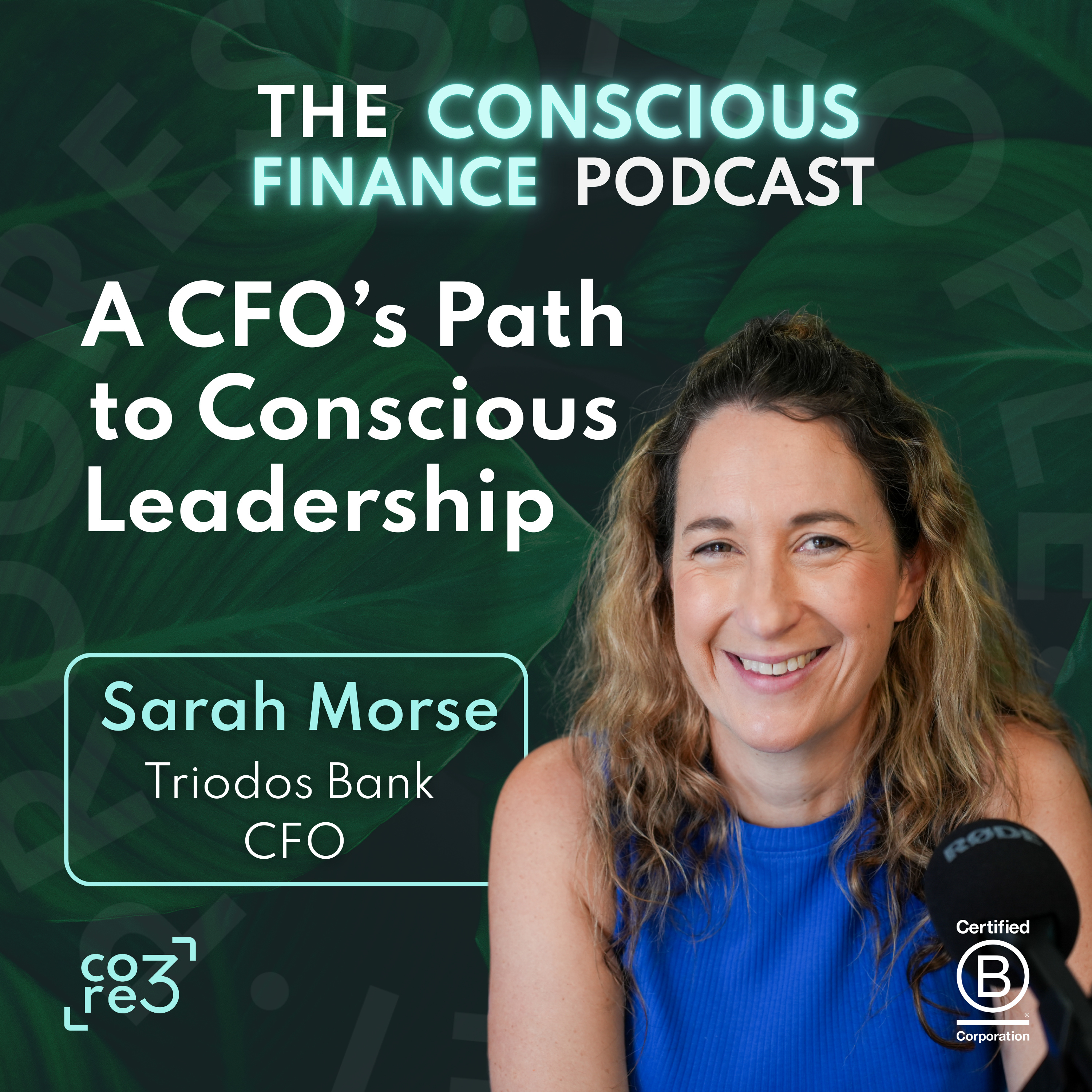 Sarah Morse | A CFO's Path to Conscious Leadership | CFO Triodos Bank64 / 100
 Sophie Bailey - Sustainability Meets Finance - Deloitte74 / 100
 Jayne Phan - Breaking Expectations - The Conscious Finance Podcast57 / 100
 Sarah Mortiboys - Empowering Youth Through Sport - Bristol Sport Foundation48 / 100