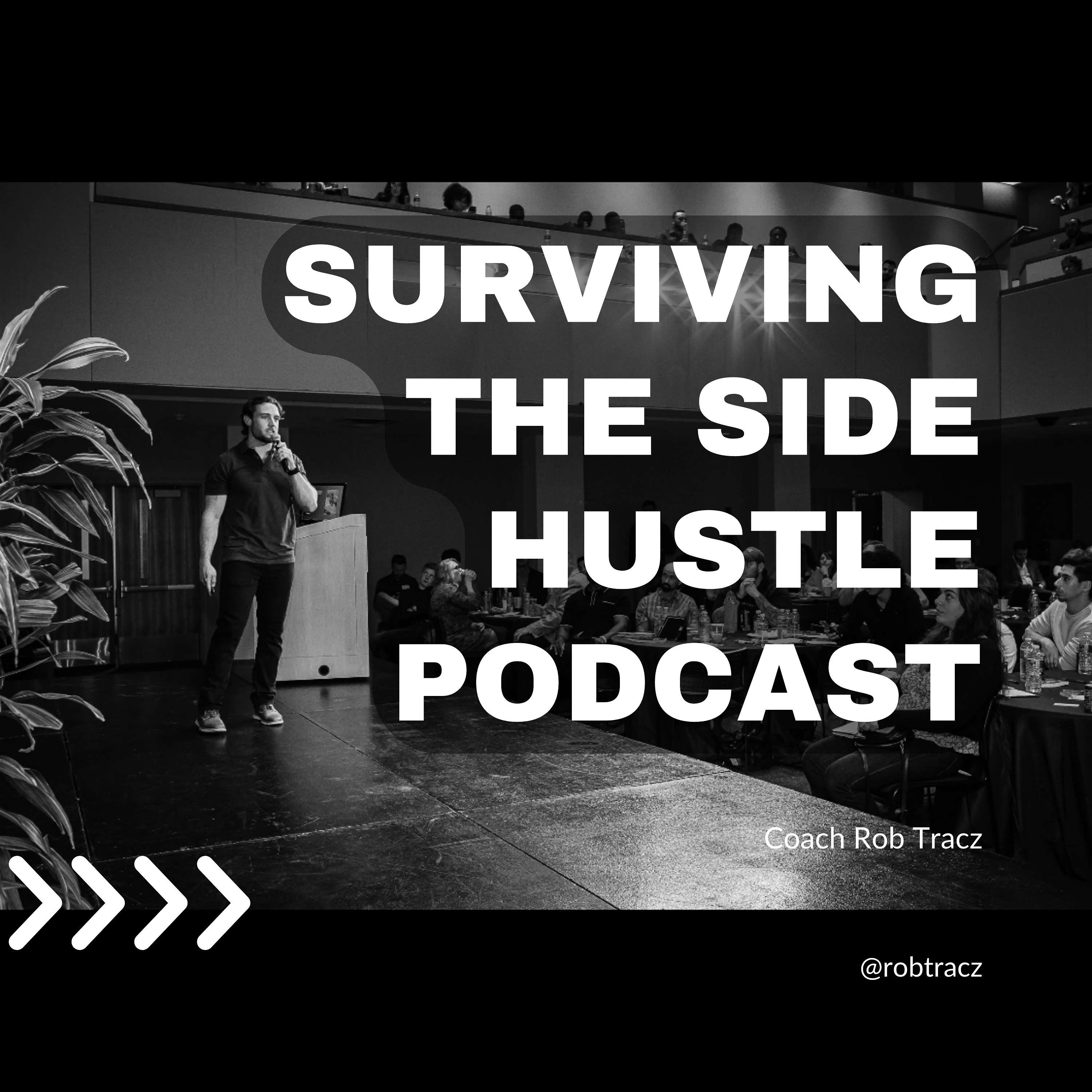
Surviving the Side Hustle · 2026-06-16 · 43 min
Key moments - from our scoring
Substance score
61 / 100
Five dimensions, 20 points each
Eric Dingler built his web design and marketing agency as a side hustle to fund his family's international adoption, but discovered that real growth came from implementing five core business systems: leadership, lead generation, lead conversion, financial management, and project management. His 15 years running a seasonal summer camp taught him how to recruit, train, and develop teams annually - a unique skill most entrepreneurs lack. Now traveling with his wife and four teenagers across 20+ countries while running a fully remote agency, Dingler has shifted his focus from being a technician (building websites) to being a leader (developing people). His biggest insight: most entrepreneurs understand how to sell or create their product, but they freeze when asked to hire their first employee. He teaches entrepreneurs to start with gap hiring (filling specific needs with freelancers), then graduate to team hires once they can commit to consistent payroll. The critical mistake he sees repeatedly is entrepreneurs hiring someone to free up time, then using that freed time for another project rather than revenue-generating work. His framework helps founders delegate technical work so they can focus on lead generation and business development - ultimately creating job opportunities for employees worldwide while building scalable businesses.
Hire a freelancer for variable workload (some months you need six, other months two) and specific project work; hire a team member when you have consistent monthly work you can commit payroll to and want to build culture and long-term development with them.
Use 80% of that freed time for revenue-generating activities like lead generation and sales - not for tackling other projects or tasks, which is the mistake most entrepreneurs make.
Leadership, lead generation, lead conversion, collecting and managing money (financial systems), and project management - these should be continuously cycled through and improved.
Running a seasonal camp forced him through 15 annual cycles of recruiting, training, developing leaders, and improving systems - a unique laboratory that gave him hiring and delegation instincts most entrepreneurs never develop.
He uses tight systems for everything: five core business systems run his agency, his team (including director of web services Peter and executive assistant Emily) handle execution, and he focuses purely on leadership - he hasn't logged into a client's website in three years.
Our reviewer’s read on each dimension, with quotes from the episode.
The episode contains solid, actionable frameworks (the five core systems, the 10-10-80 hiring model, gap hiring vs. team hiring, systems vs. people issues) that would be useful to an operator, but much of the material is relatively familiar advice (delegate, systemize, hire) and the conversation frequently drifts into lifestyle travel narrative and motivational territory that dilutes the substance. For every specific insight there's padding.
Your leadership capacity is the capacity of your business period
there's five core systems that under that each will you'll have multiple systems or there are five core systems. Everybody has to have it... leadership, lead generation, lead conversion, collecting and managing money and project management
The core ideas - systems, delegation, leadership development - are well-worn in entrepreneurship. The five-system framework and the 10-10-80 model are presented as Eric's thinking, but neither feels particularly novel or contrarian. The angle of using summer camp leadership experience to inform business hiring is a nice personal connection but doesn't constitute groundbreaking original thinking. The episode largely recycles standard scaling wisdom.
it's a systems issue and the key is this We have I think we have 220 SOPs in our company
They confuse unique judgment versus unique knowledge
Eric Dingler has genuinely built and scaled a remote digital agency that generates significant revenue, hired and developed a team, and now operates from anywhere globally - this is real practitioner experience. However, he's not at Fortune 500 or exceptional scale (no revenue figures disclosed), and his current pivot into coaching/training businesses means his primary recent experience is in teaching rather than operating at the highest level. He's credible but not elite-tier.
I used to run a summer camp for 15 years. and then went into local church ministry
we've lived out of carry-on luggage. 55 apartments in 20 countries
The episode includes some specific details (220 SOPs, two SOPs Eric personally wrote, $60-$100 VA cost, 10-10-80 breakdown, 25-minute diagnostic calls, 90-day accelerator program) but lacks concrete revenue figures, client numbers, growth metrics, or named examples of client transformation. The travel narrative has specifics (55 apartments, 20 countries, four teenagers) but the business advice relies heavily on abstraction and principles rather than data-driven evidence.
I don't even know how many emails I get anymore. The last time I was responsible for my email, I was getting about 80 a day
We have I think we have 220 SOPs in our company. I wrote two
Rob asks competent follow-up questions and shows genuine curiosity, but rarely pushes back or challenges Eric's claims. The host allows the guest to meander into travel lifestyle details without redirecting to substance, and doesn't probe for specifics (e.g., "what actual revenue increase did your students see?", "why did your first hire last six years versus turnover?"). The conversation feels warm but lacks the edge and rigor that would elevate it.
Mm-hmm
Wow. so you bring him in and then you ⁓ carving out a little bit of time for your CEO hour
Computed from the transcript - who did the talking, and the words that came up most.
In this episode, Eric Dingler shares his inspiring journey from running a summer camp and local church ministry to building a successful online marketing agency while traveling the world. He emphasizes the importance of leadership, systems, and intentional hiring for scaling a business without burnout. Main Topics - Key Insights: How Eric turned his web design skills into a fundraiser for international adoption and built a nonprofit. The evolution from side hustle to full-time business, highlighting key moments and mindset shifts. Strategies for creating scalable systems in your business: leadership, lead generation, lead conversion, project management, and money management. How to build effective remote teams using SOPs, gap hiring, and systems thinking. Practical advice on delegation mindset, including transferring knowledge into systems and SOPs to free up your time. The importance of leadership development for entrepreneurs and their teams. Future goals: scaling his coaching business and building a team to support remote entrepreneurs.
Transcribed and scored by The B2B Podcast Index.
Rob Tracz: What's going on everybody and welcome back to another episode of surviving the side hustle. Today's guests we've got Eric Dingler on and he's a digital marketing agency owner, leadership coach, and someone who's built a business that most entrepreneurs only dream about. Eric runs a successful web design and marketing agency while traveling the world with his family. Over the last four years alone, they've lived in, I believe, more than 50 homes across 20 countries.
But the real story behind that freedom isn't just the independence, it's leadership. Because before becoming a digital entrepreneur, Eric spent around 15 years running a summer camp where he learned to hire, train, and develop new teams every single year. That experience helped shape the framework he now teaches entrepreneurs who want to scale their businesses without burning out. Today, ⁓ helps founders really hire, develop, and develop their first team so that they can stop being that technician inside the business and start becoming the leader of it.
So Eric, welcome to the show, man. Eric Dingler: Hey, thanks for having me on. And love this surviving the side hustle. My digital marketing agency started as a side hustle.
And so it was only ever supposed to be that. And so we survived it ⁓ way beyond what ever imagined or set out to do. Rob Tracz: All right. Love it.
Love it. Well, so I'd love to just jump in like kind of like right there actually, if you're open to it. like, is that what the web design business kind of started as or like, could you explain a little bit on that? Eric Dingler: Yeah, absolutely.
So, we're an open book. I mean, they, we ask we were ⁓ in Virginia this was, several years ago. like you said, I used to run a summer camp for 15 years. and then went into local church ministry and then my wife and I, moved to Virginia to a church.
and as we were pastoring that church, we felt like the next thing we were supposed to do was adopt. and we already had. to biological children. We ended up adopting our two older children that from ⁓ about six years ago.
But we wanted to do that debt free and is expensive. to be honest, especially international adoption should be expensive to it. It's really the only way to prevent human trafficking is to have multiple of people involved. And so we needed an extra $50,000 to adopt debt-free.
didn't want to get a loan for it. And I knew how to build websites. So I started building websites as a fundraiser for our adoption. And we to the end of that ⁓ experience, we our home debt-free ⁓ and I had little business.
And so we decided to start a nonprofit organization that we still have today to help other families their adoptions. So that's called achieve adoption. we run our business to fund our through our nonprofit. And it's just to grow from there.
Rob Tracz: I like that. Nice. Good, good work. Good work on everything there.
I love to hear about that. but I'm interested to hear like, when was it that you realized that the side hustle was really turning into something with some serious traction on it. Eric Dingler: Yeah, it had been about a year before COVID hit that's when we started the nonprofit and stuff. When I looked up and realized like, you know, because after a couple months of building websites, you know, I it it was great when there was a website to build.
But then I be busy building the website and didn't have time to go out and get another project. Rob Tracz: Mm-hmm. Eric Dingler: And so I was in this, you know, feast or famine kind of roller coaster a bit. but I was like, man, I don't know if I I the higher health, but I don't, I don't have the, the, the, the consistency of revenue.
and, I know a lot of what I know now. And so I thought I, I wish I had, could find some more consistency in the revenue of things. And so I came across this guy who's a phenomenal web business coach. His name is Josh Hall.
And I took one of his courses monthly maintenance plans and how could selling a subscription service basically for people that you'd build a website for and they would join your care plan and then pay you every month to manage their website and send them a report. And so I just implemented what he taught about three months later had enough. People signed up and recurring revenue and confidence. I hired my first to help me just two hours a week and was the next thing that changed the game the J I can't say there's been like one game changer moment It's been like ⁓ all these little moments that have added up together.
You know what I mean? ⁓ So so that was kind of the beginning progression Rob Tracz: Mm-hmm Mmm. Okay. I like it.
Yeah. And I feel like that's kind of, like many things in life, right? It's not, there's ⁓ are, sometimes there are these big like game changer opportunities and situations, but then also ⁓ feel like there's a lot of the kind of meandering in each turn or, or recalibration. You learn a little lesson and you move a little bit smoother this way and then you turn there and, and you a little more clear on what you're trying to do.
so I can relate to that with myself and my business. ⁓ so when, so when did you start traveling? Eric Dingler: We started traveling four, and a half years ago. And we did our first test trip.
We went to Istanbul for three months and thought, amazing. Came to the sold everything, pretty much everything. Kept the baby blankets and stuff like that. We have a little like 10 by 10 storage unit that we're not even using half of it.
And we've, for four full we've lived out of carry-on luggage. 55 apartments in 20 countries. It's me, my wife, and we have four teenagers. Our kids are currently 13, 15, 17, and 18.
Rob Tracz: Wow. so that like traveling with that many kids? Because I feel like, because I got a buddy who's got four, he's got four girls under four currently at time of this recording. And was saying how he doesn't have very much vacation planned for the foreseeable future.
⁓ And like, totally get that dude. That sounds pretty hectic. But you've teenagers who I guess they are a little more independent but still like require a lot of guidance supervision and everything as well. Plus you don't want to lose somebody anywhere in the world.
Eric Dingler: exactly, exactly. You know, there are of parents that do ⁓ digital nomad with little kids. They tend to what's called slow travel, where they may be a place for six months at a time, or they'll ⁓ do it in an RV, they'll convert a bus, and they'll live in a bus, and so they're able to have somewhat of that routine. But our kids, our youngest was nine when we started.
And at that point, put your shoes on, everybody put their own shoes on and the correct shoes on the correct feet. So they don't need a lot of babying as far as that goes. So all of our kids, they just learned very quickly. We've got it down to a sign.
mean, we're gonna show up at an Airbnb and within 45 minutes, it's home. know, everybody's got their thing they set up and they do and and when it's time to leave, we can have an Airbnb packed up and be good to go in about two hours. And everybody grabs their we live out backpacks. have these backpacks that convert to carry on bags or backpacks, depending on what you know what you do with the straps and one personal bag.
And we leave and go check, you know, jump on a train, a bus. ⁓ A plane, you know, we've crossed borders by driving. We've walked across borders. So, yeah.
Rob Tracz: So I love that and I love that you have a system for that because I know how important systems are, especially when you're starting to get some traction with their business, but then also with the idea of scaling and kind of growing there. So I want to ask to shift it back over to the business kind of world of things. what were some of the first systems that you built that really set the foundation for your business to kind of run without you needing to be working 24 seven.
Eric Dingler: Yeah, that's good. I am very much a systems guy. I think systems are key to it. There are five core systems that under that each will you'll have multiple systems or there are five core systems.
Everybody has to have it and I had to have all five in place before we could. We could live this way and because there have been times like we were. We went to the Amazon rainforest into the Amazon jungle for 10 days. Totally off grid.
mean we have cell cert with nothing. and so my couldn't get a whole, could, couldn't have got ahold of me if they wanted to. and so I think the first systems I really had in place when, even when I hired our first two hour employee, two hour a week, employee was leadership. Your leadership capacity is the capacity of your business period.
and what I love about leadership is it's, it's universal. If you, if you. grow as a leader in work, you can lead better in home. If you grow as a leader in home, in your home, you can lead better at work.
You can lead better in volunteering, know, for your favorite organization. Like leadership is just this amazing skill that it's, hard to a skill from web design and take that into my family and make my family life better. Right. ⁓ You know, like works, like there's, Skills like that are kind of like in their place, but leadership is unique and I love, that's why I geek out on it.
So I had a system to develop myself as a leader. My very first hire, like I said, was two hours. I immediately set aside one hour a month. It was just one hour a month that while he was working, I went and had what I called my CEO time, where I just, was, I went and worked on the business for an hour, me, a legal pad, a paper.
coffee mug and that was it. And then a couple months into it, that became, you know, CEO day and you know, and it's just, it's grown to where now that's really the only thing I do in my company is, is provide leadership. but the five systems overall, you have leadership, lead generation, lead conversion, collecting and managing money and project management. Those five things are the things you really have to have.
Rob Tracz: Hmm. Eric Dingler: in place and then every time you cycle through those your company grows. Rob Tracz: Hmm. you just go through one system at a time, of like optimizing and upgrading whatever can.
And then when you get through all five, that's where you're expecting to kind of hit like a next stage or a milestone for your business. Eric Dingler: Yeah, well, a lot of times we're working on ones a time. you know, we're constantly working on lead generation, project management, my team is doing, you know, like, so like my executive assistant, Emily and I, Emily and I may be working on a project on lead, you ⁓ lead generation. And then who's our director of web services.
maybe working on a project to improve our project management on over there. And then I may have be in a season where I have a coach that is helping me on lead conversion. then every week I'm studying leadership, talking leadership, reading leadership listen to leadership podcast. And then at this point, we have ⁓ an accountant that is a accountant that kind of like a CFO, fractional, you know, a fractional CFO, you know, fractional chief financial officer that she's been helping us this last year improve our accounting systems.
So I'm always working on a little bit of that. Now, starting out, it was one at a time, right? Because I didn't have the capacity. But as my capacity increased my team, my team can, some people on my team, They're technicians and they do a job and it's great and that's what they do.
But some people on my team are leaders and those people that are in leadership roles, they're also responsible for improving systems regularly. Rob Tracz: how would you, so how do you define leadership yourself? Eric Dingler: Yeah, leadership being able to paint a very clear picture of where we're headed and then pulling the resources or understanding the ⁓ resources ⁓ that gonna need to get there and then coordinating those ⁓ resources. so you're constantly moving to a picture of a preferred future.
And this is all stuff that luckily, the that... I didn't realize was so unique about being a camp director until like two years ago was, you know, every year I'd hire my staff, you know, so I'd have to do all this recruiting to figure out how to recruit the right people, and train them, delegate to them. And then I would have staff that would for multiple summers. And so I was then working to develop them.
⁓ So they could grow up into higher and higher responsibility and their way up our corporate ladder, if you will. But because it was a seasonal summer camp, when camp was over, I got a chance to sit back and go, okay, what worked, what didn't, and rework my leadership and learn some things and grow, and then next year do it all again. So I had these 15 laboratories that by the time I got to my... my side hustle, you know, was pastoring a church, using all of that knowledge from there.
And then when I started the side hustle and wanted to hire, it was the same thing, you know, I just use all that stuff. And didn't realize until two years ago, just how unique that those 15 experience was that helped me turn the side hustle into a full-time nine to five. Rob Tracz: Hmm. So you started side hustle to fund your adoption plans that you had.
Then you started getting some traction with what things were going. You hired this guy to kind of come in two times a week, you said it was? Okay. Two hours a week.
Eric Dingler: two hours a week from, yeah, remote. He's from Bulgaria. Today, he's our Director of Web Services. He's been with us six years.
Rob Tracz: Wow. so you bring him in and then you ⁓ carving out a little bit of time for your CEO hour, which then evolves into CEO day. So where do we go from you now spending more time working on the business instead of in the business to where at which is like helping entrepreneurs kind of scale and helping them ⁓ redo their like systems and stuff like that. So how did you get from there to where you're at now?
Eric Dingler: Yeah, sure. So we started traveling, is And we realized that we've been very blessed and lucky to be able to do it. You know, we've also hard to be able do it. And I still, we don't live on perpetual vacation.
A lot of people that, you know, we're just always on vacation one week we're like, we're posting pictures because we're the Eiffel Tower. And two weeks later, we're in Buenos Aires. And two weeks later, we're in the Patagonia region. And so it just looks like we're on this epic adventure.
And we are. But nobody's life that you see, no snapshots you see through somebody's Instagram is the whole story of their real life. And so in between all of those shots, I'm working full time. Our kids are.
doing school four times. wife homeschools our kids. All of them are at different stages. And so she's got like, you know, four students at four very different places.
Plus she's having to plan our next move and find bus tickets. So, I mean, there's a lot of work plus meals and our kids still need to go to the dentist. know, we, you somebody, somebody always needs a new pair of shoes. I mean, so it's just ⁓ all stuff is happening.
Rob Tracz: Hmm. Haha. Eric Dingler: we're doing all of these other things. Plus we're living on a budget, you know?
So it's not like we just have infinite resources. But all that say, we were posting ⁓ of it and We never tried build an influencer brand or anything like that. That's not my thing. But people started asking questions.
How do you do this? How are you doing it? I thought at first, I thought, well, I've it's our lead gen system. You know, we've really figured out a remote lead gen system.
So I started to people teaching people to do lead gen the way we were doing it. And of realize that one, it's not unique. mean, lead generations lead generation. There's no magic successful way to do it.
Just consistency compounds. That's what it takes. Staying focused on what pick your thing. and do your thing and don't go do the next shiny thing until you master this thing.
Like you just got to do that. So I started, I started teaching that and then people would start getting success and about nine months into, you know, really doing that, know, I had about a half dozen people. like, well, you need to start hiring help. And they just lot lot like, I don't know what you mean.
Like they were just dumbfounded by that. ⁓ so then I thought, okay, well, it must be our whole. Rob Tracz: Mm-hmm. haha Eric Dingler: system structure that includes the leadership and the lead conversion and the project management.
So I started teaching that. This be what it is. It's our whole business system. And then same thing.
People would start implementing it and have success with it. And then I'd be like, okay, you're next set. Now you need to hire. And again, they'd be just like, I just don't know what that means.
And that's where it was about two years ago, I realized. I just assumed everybody knew how to hire because for 15 years, that's what I did. I just hired, right? And so, so to me, I just thought this is something everybody just does, like just hire.
I know what I'm sure what you're thinking about this. So then that's when I started teaching just couple people, I was like, let me help you hire your first And then that's when really realized Rob Tracz: Hmm. Eric Dingler: This was the difference maker. And I had a business coach four years ago, and this was such great advice.
He me, we were talking one time and he said, know, Eric, real estate agents don't build the houses that they're selling. And that, cause I was still even at then pretty involved with a lot of our website projects. And like, I haven't even logged into a client's website in probably three years now. So.
⁓ that mindset shift really helped me go to the next level of like I really need to hire out all the technician stuff. But I didn't ⁓ panic he said I just went, ⁓ yeah, OK, that makes sense. And I went out and I recruited and I onboarded and I started to get into and I developed them. Peter, when he started six years ago.
He barely knew how to log in the WordPress. And now he's our director of web services and him and his team, there's a website, there's not a website they couldn't build. Um, but that takes years of, you know, development intentionality and, and, you know, building people up. Um, so that was kind of the leap, just trying to help people.
I guess that's still the pastor's heart in me. You know, if somebody raises a question or a problem, I feel compelled to answer it and help them. Um, and now I'm really jazzed about it, Rob, because now I'm realizing like, Rob Tracz: Mm. Eric Dingler: You know, having a job is such a game changer for people.
I mean, it just changes everything, right? But I can't hire 2000 people. But man, over the next couple of years, if I could teach 1000 people to how to hire their first two people, I've just helped 2000 people get a job. If I can help 1000 people hire 4000, I've just now 4000 people get a job.
So I'm really. Rob Tracz: Mm-hmm. Eric Dingler: plugged into this and it's some of the most fun I've ever had in ⁓ entire Rob Tracz: Yeah, and that's awesome because I love the that you're building creating around the world with everybody being able to teach other employers because that's why it's so for small businesses kind of continue to grow and succeed because I think that's huge benefit to everybody in the world, just creating opportunities for more people. And I talk a lot about creating shared successes and...
for yourself, for the people you collaborate with and whether it's employees or whatnot, but then also for the customers as well, like making sure that everybody has some degree of success with what you're doing. I want to ask you though, because to be honest, I haven't really thought too much into the hiring kind of world until I started thinking about like affiliates and virtual assistants and whatnot. at the time being, it's just like, okay, well, who can help me kind of create this flyer or whatever it may be.
then it was like, okay, I just want to fill spot with pretty much anybody who's like equipped to do this. ⁓ And understand that that's different when you're hiring somebody just to fulfill like a job there versus hiring somebody to kind of create some culture and making a team, a better team and stuff like that. And I'm interested to hear you like when you're going in and you're teaching people like how to hire correctly for the for the position, what are some things that you share with them?
Eric Dingler: The first thing we start out with is gap I call gap hiring which is what you described, you know Just hiring somebody to fill a gap ⁓ Is that's a great place to start I just had my my We weekly mastermind group. We were just meeting and one of the ladies there. We were talking the the same thing that you know, she was getting ready to hire somebody but When in truth, she's not ready to hire ⁓ Rob Tracz: Mm. Eric Dingler: because she can't commit to paying them every month.
And so it was like, OK, this is really going to be a role for a freelancer, which means, though, you have to take out some of the things you like. She wanted to hire somebody that could take over a project and call the client and get stuff from the client, stuff like that. we're just, I was like, you do that with a freelancer. That is somebody that's going to be on your team.
So there's hiring for your team. Rob Tracz: Hmm. Eric Dingler: Like you said, which is a group of people you're creating culture with and And then you have gap hires. Freelancers just doing a specific thing maybe one time, maybe other time.
We use both in my agency. Our designer, Max, every website we build is designed by Max. He's designed all of our websites the last two years. He's a freelancer.
He's not on the team. He doesn't participate in any team oriented stuff. He's not in our virtual break room He doesn't attend monthly all-staff meetings. He's just a freelancer And that's why because some months I need six websites designed and some nuts I only need two websites design So there I need somebody on payroll to do that So when I first start working with someone, have to start where they are individually, because it is unique.
You may be in a position where you need just a gap hires. Somebody else may need two hours week. Somebody may need 10. The key success though, is very step.
And this is the step that most people fall down on. They'll hire somebody and then they, let's say hire somebody for, because you said, you need a flyer made. Okay, great. So you hire somebody to do this flyer because it was gonna take you two hours.
But instead you've decided to hire some. Well then what happens though is a lot of times people will take those two hours and they'll go do another project. They'll I don't have to design that flyer so I can go over here and do this. that's where mistake happens.
Starting out your first few, especially your first one up to four, six, depending, there's some variables there, but especially your first one to four. When you hire somebody, you wanna take up to about 80 % of that time. Now, you're hiring somebody for two hours, just do the whole two hours. If you hire somebody for 10 hours, you're gonna take eight hours of those 10 hours, and you're gonna do revenue generating work.
That's the benefit of hiring somebody to take something off your plate. You now have time to focus on revenue generating work. Not another project, not another task. I'm going to pay them for two hours.
I'm going to go make money with those two hours. That's the key. When I when I my students, a lot of them start out by hiring 10 hours a week. You know, a virtual assistant, something like that, you know, $60, $100 a week, you know, gets most people what they what they need.
And, you know, we put all the systems together for and all that kind of stuff. And then those 10 hours, I have them take one hour. That's them time. to Starbucks, binge watch something on Netflix.
I don't care what you do. That's your time. That's the benefit of being a business owner. Then second thing you're going to do is you're going to take one hour a week and you're going to put it on leadership.
Developing yourself as a leader and developing this new person as a leader. Or not a leader, but developing them as their leader. But then you're to take eight hours and you're going to do revenue. generating work.
And if you spend eight hours for the next four weeks doing work that actually creates revenue, like calling all of your past clients for an upsell opportunity, know, working the pipeline, whatever it does that makes you money in a month, you're going to have increased your revenue well beyond the salary that you just added to your company because hiring somebody, it's not about how much it's going to cost you. It's about how much it's costing you not hiring them. That's where most people get stuck on.
And even side hustle, like I work with people, ⁓ of the people I work with have remote side hustles or remote job, web designers, copywriters, you know, they're in the digital space. But if you're in a physical you know, your side hustle is, you know, doing laundry or, you know, Rob Tracz: Hmm. Eric Dingler: Washing the neighbors, know garbage cans or you know, you got a dog walking, you know business whatever There are parts of that that you can hire out you want your side hustle to become your main thing now Rob, there's plenty of people they want their side there they just want to make an extra $2,000 a month and That's it.
Like they don't want it and that's fine that this isn't for that. This is for people that have that that side hustle With the dream of becoming their nine the five so that it can escape ⁓ And be they can be their own boss. But again, I would say Real estate agents don't build the houses they they sell so you have to get out of the technician seat fast Rob Tracz: Hmm. Yeah.
And that's also really scary though itself, right? Because I have a, I have a buddy of mine who are an old, old friend back in the day. I haven't really spoken to him too recently, but he had a laser engraving business and he was like engraving a bunch of whatever, whatever you wanted on different types of things. And, uh, he got to a point where He started blowing up.
So he started having a huge inflow of all these email orders and he just never get past that email ordering because he swore that could respond to emails like he could. And I was okay, dude, that's amazing. ⁓ But like, think how much time you're wasting and not filling and doing like the actual thing you should be doing. because you couldn't delegate that out to somebody else.
Like, do you see a lot of people struggling with delegation? Eric Dingler: Yeah, yeah, it's a huge mindset. There are several mindset that people have about delegating that don't serve them well. And ⁓ first thing I would say to people is it's never a person issue, it's a systems issue.
This is where systems come into place. ⁓ maybe ⁓ right the current way you're thinking about hiring somebody, you're not gonna be able to hire somebody that can do it as good as you. Well, that's a systems issues, not a people. Like, come on, you're really the only person in the world that can answer emails.
I don't think so. What most people confuse is they confuse unique judgment versus unique knowledge, and they think, I can only answer the emails because I'm the only one that knows this. OK, well, you can transfer that knowledge. OK.
Rob Tracz: That's not the way it was. ⁓ Eric Dingler: So now you can give that away. But if it, now there are certain things that you may only be the one that can make the judgment decision. Well, okay, well then that filters up to you.
I know I get, I'll be honest, I don't even know how many emails I get anymore. The last time I was responsible for my email, I was getting about 80 a day and it was just killing me. It was killing me on time production. My assistant, Emily, she handles the, haven't checked email.
I haven't logged in my email in a long time. She handles it all. We have a system every day. A few one, two, emails trickle up to me because only I have the judgment that is required to answer that as the business owner.
But the rest of the knowledge I've transferred systematically into our system. that then can go into the system to get the answer. she's learned so many things. She doesn't have to go into the system anymore, but I didn't give Emily the knowledge.
I put the knowledge into our system and then plugged Emily into the system. ⁓ that's where people, where help people delegate when they figure that out. And it's, some tips and tricks and hacks to do that and things like that. Rob Tracz: Mm.
Eric Dingler: it's a systems issue and the key is this We have I think we have 220 SOPs in our company. I wrote two I wrote an SOP How to make Eric a of coffee Which is weird because my team is entirely remote like nobody works in our office But I created an SOP how to make Eric a cup of coffee and then I created an ⁓ SOP how to create an SOP while creating the SOP, how to make Eric a cup of coffee. Those are the only two SOPs I've ever done. Now, I regularly, it's less and less, for about two years, starting about two years ago, I was going, hey, this is really good.
Make sure you create an SOP for this. this is really good. Here's the answer to creating an SOP for this. My team.
creates all of our SOPs. And ⁓ how we do it. And so ⁓ call it the SOP Vault. We've our systems.
We've got them there. We've got check quality control checklist. We call them quacks. We put on them.
Now in our we would be like, hey, can you run a, then we put the duck emoji in it. Can you run a duck emoji this? My team knows that means a quality control checklist, a quack. And so yeah, but I did that that took time and I'm not and it wasn't me that did it It was my team doing it.
⁓ was leading them to do it And that's the key to it Rob Tracz: Hmm. Yeah, I love that. And as I continue to grow myself as an individual and looking ahead at bringing more people into my world and my team, I'm just realizing how important it is to have those SOPs in place for pretty much everything that I'm doing. And I just feel like that's just incredibly valuable.
So great advice there. So I'm interested to hear, like, so where are you going now with the business? Because it sounds like you got everything on autopilot. What's your next goal or next milestone for yourself?
Eric Dingler: Yeah, so our goal is this time next year in about 12 months kind of in you know going into end of q1 Our goal is to bring in a full-time person into in transit studios I we haven't decided yet if this is going to be a new ceo or just a you know operations manager or you director what i decided that But I hope to be in about a year. I hope to be doing ⁓ coaching full-time on building leading teams, remote teams specifically. And so yeah, so that's our plan. My wife and I were the CEO and COO.
She is the chief organizing officer because I'm allergic to details. And so I somebody like that. But my executive assistant is kind of growing into that role. And so my wife is to be done working in the company at the end of the year.
is our goal. And then, like I said, my goal is hopefully by this time next year just to be in the owner seat of the agency. And instead of me leading department heads like I'm leading now, I wanna be to point where I'm just leading one person who's then leading the department heads who's leading the teams. ⁓ And then I just wanna be doing full-time coaching.
Rob Tracz: Hmm. Eric Dingler: We, year, launched a 90-day accelerator. We call it the profitable team accelerator. And we take a cohort through it at a time where in 90 days, we hire your first assistant, your first VA, maybe a VA.
That's what 95 of people start with, and that's fine. And I guarantee that within 90 days of you hiring them, you'll make back. Every dollar that you invest into 90 day sprint or work with you one-on-one Until you you do make that investment back So ⁓ and that people to graduate that cohort if they want to can go on into a mastermind group ⁓ So yeah, so that got that people that aren't quite ready to hire we've we've got a course called op3 that helps them kind of Rob Tracz: Hmm.
Eric Dingler: get some of the business foundations little more better place. That's more self-guided that can go through. And I have a monthly call that they can come into and ask anything about that. So that's I'm really just hoping to build those up.
Rob Tracz: ⁓ nice. Yeah. I'm excited to hear more about that. so we'll have to have you back on once you've finally exited out and you're onto a new project.
⁓ but so if someone's listening right now and they're like, Hey, I really want to get involved. I want to get into this world. where do they go? How do they get in touch with you?
Eric Dingler: Yes. Yeah, because I'm egotistical, I guess my website is just my name, you so Ericdingler.com then go to ⁓ Ericdingler.com for slash first hire and download a first hire readiness guide.
Or if they want, like I said. Some people it's like, well, what is that next step for me? And I don't have a one size fits all next step, because it is kind of unique. So I do a series of questions that I've asked.
I used to have this as a quiz and it was okay, but there was just some nuances. The quiz didn't quite work. So I've just decided, I just do these now in a 25 minute coaching call and those are free. And it's just kind of a next step.
Like what is your next step for you? Is it to hire? Is it not to hire? And if it's not to hire, then...
What do you need to do to get ready for that? If it is the hire, what should be that first hire? And so we can figure that out in about 25 minutes, just in a quick diagnostics call. And so the people get that, just go to ericdingler.
com forward slash call. And that'll let them check and see if there's any availability for those. Those are a little more limited. Or like I said, ericdingler.
com forward slash first hire. It is a full, it's. It's called the first higher readiness checklist. It's gonna help you figure out, know, what role, know, how many, you know, what tasks to take off of your plate, how to hand, you know, to hand off to somebody else, helps you come up with a plan to what I call 10, 10, 80.
What are you gonna do with that 10 % of the, you know, that one hour of your time that you're buying yourself? What are you gonna do one hour for leadership? What are you gonna do eight hour, 80, or eight hours for... generate revenue and then it even has a list of 25 revenue generating activities to help people figure out what to do with that time.
So they either one of those. Rob Tracz: Nice. Yeah, that's a lot of value. And I know you shared a lot of great stuff just here on this episode.
So I appreciate you kind of opening up the secrets there and sharing a lot of your knowledge and your experience too. And some of your story as well. know a lot of the listeners really appreciate that. So thanks Eric.
I really love this. This was awesome for me as well. So this is a super powerful episode. Eric Dingler: Good.
Good. Well, thank you. I hope it inspires people. And I do know at this point, it can be very overwhelming for people that have listed the whole thing because we did cover a lot.
And then it's just like, oh, I got to process that. And so I would just encourage people, just you don't have to handle all this. know, there's a guy, Stu McLaren, Stu. I learned from Stu one of his sayings, you know, go into it or sorry, grow into it.
Don't go into it. And so it's just the next step. And so the next step may be the first higher readiness guy, and that's it. You're not committing, you're just that.
it's jumping on a call, know, 25 call and we just diagnose, you know, your next step together. whatever, just choose of those and that's it. And then after that, you can the next step. So just one step at a time.
Rob Tracz: Love it, love it. then Eric, before I let you go, I wanna ask you just one last final question, because I know a of ⁓ individuals there running with a typical nine to five, starting a side hustle, juggling a family, maybe a social life at the same time, trying to it all, but they might be feeling stuck, and because they're doing everything themselves. What would be your one piece of advice for that individual to start to move forward and generate some momentum with themselves?
Eric Dingler: see yourself as a leader, even if you don't have anybody following you. And start growing yourself as a leader, because your leadership capacity is the capacity of your business, your personal your business life, your financial life, physical health. Like ⁓ no part of life is going to go beyond your leadership capacity. So, you know, I.
I say in a lot of my stuff, lead better to live better. And I mean it. So I would say, see yourself as a leader, even if you're just leading yourself, you're a leader. See yourself as a leader and develop Be intentional about next for me.
Pick up a leadership book, find a leadership podcast to listen to, and just start taking in some content. Rob Tracz: Yeah, I love it, man. it, powerful stuff. Eric, dude, thank you so much.
This was an awesome episode. And like I said, I'd love to have you back in the future, man, once you're taking that next stage for yourself. Eric Dingler: Let's do it. I'm already, I'm excited about it.
Rob Tracz: All right, man. And that's it for everybody today. Peace, peace, peace, peace.
Other episodes covering the same guests and topics, from across The B2B Podcast Index.
 Evo Finance #61 - People, Culture & Risk - Building The Future Of HR In BankingEvolution Exchange Finance Podcast · on Leadership development75 / 100
 Rerelease: Why Not Shoot for the Moon? | Phil Manchester | Frontline UNSCRIPTED Ep. 1UNSCRIPTED · on Leadership development75 / 100
 Lead Your Leader: How to Master Leading Up and Build Influence That Gets You PromotedLeadership Sovereignty Podcast: Career Growth and Promotion · on Leadership development60 / 100
 How Career Pivots Really Happen | Mary Olson-Menzel | 735Leveraging Thought Leadership · on Leadership development56 / 100
 AI Won't Replace Leaders. It Will Expose Them.The Climb · on Leadership development52 / 100
 What Effective Leadership Looks Like in an AI-Driven Workplace with Maren PerryTalent in the Age of AI · on Leadership development48 / 100E199 - Why Financial Planning Should Help You Live Now with Ohan Kayikchyan61 / 100E198 - Lessons from Anthony Cutno: Building on Faith When Everything Falls Apart
55 / 100E197 - From Homelessness to Leadership: How Faith and Authenticity Drive Success w/ Anthony Cutno55 / 100E196 - Lessons from Eric Dingler: The Ultimate System Change That Frees Entrepreneurs Doing It All72 / 100E194 - Lessons from Cindy Van Eeckhout: Are You Rich on Paper but Poor Inside?65 / 100
What Effective Leadership Looks Like in an AI-Driven Workplace with Maren PerryTalent in the Age of AI · on Leadership development48 / 100E199 - Why Financial Planning Should Help You Live Now with Ohan Kayikchyan61 / 100E198 - Lessons from Anthony Cutno: Building on Faith When Everything Falls Apart
55 / 100E197 - From Homelessness to Leadership: How Faith and Authenticity Drive Success w/ Anthony Cutno55 / 100E196 - Lessons from Eric Dingler: The Ultimate System Change That Frees Entrepreneurs Doing It All72 / 100E194 - Lessons from Cindy Van Eeckhout: Are You Rich on Paper but Poor Inside?65 / 100