
Success Leaves Clues with Robin Bailey and Al McDonald · 2026-07-30 · 35 min
Key moments - from our scoring
Substance score
24 / 100
Five dimensions, 20 points each
Brenda Benard's career trajectory defies the linear path many expect - from theatrical dreams abandoned due to fear and lack of support, to becoming a police officer at 33, to eventually becoming COO of a thriving investigations firm. Her transformation wasn't driven by a master plan but by what she calls the universe's whispers - those internal nudges telling her she deserves better and is capable of more. The conversation centers on midlife reinvention, particularly relevant for women navigating the pressure to have it all figured out by a certain age. Brenda addresses the stories we tell ourselves (the imposter syndrome that made her feel inferior to CEOs until meeting them at an AI leadership immersion), the impact of unsupportive relationships on self-worth, and practical strategies like the question "if not now, when?" for overcoming procrastination and fear. She discusses perimenopause's toll on confidence, the power of mentoring younger women, and how honoring your younger self through visualization can rebuild self-esteem. Dean (her partner and CEO) created Bernard + Associates, but it's Brenda's leadership in operations, HR, and finance that keeps the business running - roles she never sought but has embraced.
Ask yourself 'if not now, when?' because you're never going to be younger than you are today. If you don't take action now, you may never have the opportunity again - the road to someday leads to the town of nowhere.
Realize they're just people struggling with life like everyone else, not smarter or better than you. When you let go of the inferiority narrative and express what you're genuinely struggling with, you'll find common ground and discover you have just as much to offer.
It doesn't disappear, but you manage it daily through meditation, journaling, positive affirmations, and honoring your younger self. Looking at a picture of yourself as a child and asking 'how can I make her proud?' is a powerful practice to rebuild self-worth.
Yes - Brenda went from actress aspirations to police officer to fraud investigator to COO in her 50s. The key is trusting the universe's whispers (those internal nudges), picking up on what nags you, and having faith in your ability to grow into new roles.
If you're stuck but not blaming others, you're ready to move forward; ask yourself what change you need to make. If you're in victim mentality, recognize that suffering is a choice - you can either wallow and blame, or take accountability and take action.
Our reviewer’s read on each dimension, with quotes from the episode.
The episode is almost entirely personal memoir and motivational self-help, with virtually no actionable insight for a B2B operator. The handful of 'ideas' are recycled platitudes (Tony Robbins quotes, 'what's the worst that can happen?'), with no frameworks, tactics, or knowledge a smart operator couldn't have already heard.
suffering is a choice. So you can choose to wallow, you can choose to blame, or you can take a deep look at yourself
if you trade your expectation for appreciation, your life will change
Nearly every idea is explicitly attributed to or derivative of Tony Robbins ('trade expectation for appreciation,' the fire walk mindset), combined with stock self-help tropes about inner voices and gratitude. There is no contrarian, first-principles, or novel argument anywhere in the episode.
it's a Tony Robbins message that I've learned
The road to someday leads to the town of nowhere. And that resonates with me. And it's so true
Brenda Bernard is a genuine practitioner with an unusual career arc (policing, dental, fraud investigation, COO), but she operates a small private investigations firm and is interviewed entirely on personal-development terms, not as a business builder. The episode extracts no operational or strategic expertise relevant to a B2B audience.
I am a reluctant COO because I never expected, never wanted to be an entrepreneur or a boss of any kind
I'm a non trained cfo, coo
There are personal biographical specifics (age 33 police officer, Division 1 scholarship, 1984 leukemia loss) but zero business metrics, revenue figures, team sizes, timelines, or named operational examples that would be useful to a B2B operator. All concrete details are personal anecdotes.
I became a police officer at the age of 33. I had two young girls
she achieved a, uh, Division one Full Ride scholarship for soccer
The hosts are warm and skilled at personal storytelling interviews, but there is no challenging of claims, no probing for business specifics, and no follow-up that extracts anything beyond the guest's prepared narrative. The episode reads as a supportive PR conversation rather than a substantive interrogation.
I just got chills, Brenda. I just got chills
I'm glad you shared that
Computed from the transcript - who did the talking, and the words that came up most.
What if the most meaningful chapter of your life hasn’t happened yet? In this episode of Success Leaves Clues, Robin Bailey and Al McDonald sit down with Brenda Benard, COO at Benard + Associates, to explore midlife reinvention, overcoming self-doubt, and finding the courage to create a life that reflects who you are becoming. Brenda never planned to become a business leader. After turning down an opportunity to study theatre, struggling with low confidence, and believing her happiness would come from other people, she spent years moving through life without a clear sense of what she wanted. But a quiet voice continued reminding her that she was capable of more. Brenda shares why walking into a room filled with CEOs changed how she saw her own value, what her professional-athlete daughter taught her about self-belief, and how perimenopause affected her confidence, identity, and mental health. She also explains why asking “What’s the worst that could happen?” can make intimidating decisions feel possible.
Transcribed and scored by The B2B Podcast Index.
Speaker A: Welcome to the Success Leaves Clues Podcast with Robin Bailey and Al MacDonald. Have you ever wondered what makes someone successful? What are they doing that's different? How do they achieve greatness? We believe that Success Leaves Clues. In this series, we are interviewing very successful people from different walks of life to hear their stories. We like to remind our listeners that the views expressed in this podcast are those of our guests and not necessarily those shared by our hosts. Today's episode is sponsored by Life and Legacy Advisory Group. Discover our commitment to our clients at Life and Legacy. Building wealth, securing your family's future, giving back and creating a lasting legacy are not just values, but a way of life. Let us guide you toward a future aligned with what matters most to you. We're also brought to you by ARIA Benefits. If you're a business leader challenged with talent, attraction, employee engagement, or supporting mental health, we can help use your benefits package as the key to unlock your workforce. Now, here's your hosts, Robin Bailey and Al MacDonald.
Speaker B: Welcome back to the Success Leaves Clues podcast. I'm your host, Robin Bailey, back at it again with my business partner and co host, Al MacDonald. Al, enjoying the summer? What are you saying these days?
Speaker C: Enjoying the summer. I think it's finally here to stay, and I think we are all happy about that. Hey, I will add a plug in. This is usually the time of year when I start talking about the Great Cycle Challenge. This year will be no different. So in the month of August, I will be out there riding for, uh, sick kids, for cancer. And so if you see me out there, wave as you go by and give me lots of space.
Speaker B: Well, and very proudly, we can say Al has raised more money every year that he's done this. So hopefully this is another year.
Speaker C: This will be the sixth year.
Speaker B: Such a great cause. I've had family who have benefited from Sick Kids Hospital, so just a wonderful cause. So, yes, please go support and wave. Dial if you see them out there. Well, I couldn't be more excited about this podcast because in over 300 episodes, we've never talked about something that we're going to talk about today. And, you know, it all came from a conversation at our Podcast Awards, and Dean and Brenda Bernard were attending. And of course, I've known them for many years and they've become good friends of mine. And Brenda tapped me on the shoulder, said, hey, I had an idea. What do you think? And I just knew right in that moment we were going to record something because I thought it was just going to be great. So joining us today is Brenda Bernard, Brenda is a business leader, executive and lifelong learner whose career has evolved far beyond anything she originally imagined. What began without a defined plan eventually led Brenda into leadership roles, spending, finance, human resources, operations and executive management. Along the way, she discovered that success is often less about following a carefully mapped out path than and more about embracing opportunities, navigating uncertainty, and trusting your ability to grow. Today, Brenda is passionate about helping others rethink what success looks like in midlife. Through her experiences as a leader, a mentor, grandmother and continuous learner, she challenges the idea that the most meaningful chapters are behind us. Instead, she believes the second half of life can be a time of reinvention, renewed purpose and intentional growth. Her perspective on leadership, self worth, health, longevity, and designing the next chapter of life offers an inspiring reminder that is never too late to become more of who you are meant to be. Brenda, I couldn't be more excited about this conversation, so thank you for bringing this to us and thank you for joining us today.
Speaker D: Thank you for having me. I feel privileged.
Speaker B: We had such a great conversation and I think this one's really going to resonate because there are so many people kind of at this stage and I mean, there's so many questions I want to ask you because the conversation that you and I had subsequent to that night at the awards, we hopped on a call and just said, hey, what do we want to talk about? It was such a brilliant conversation. So I'm hoping we can dive into some of that.
Speaker D: Absolutely.
Speaker B: And where I want to start with this is I want people to, as, uh, they're listening to this, maybe just pause and go to Brenda Benard on LinkedIn and look at her profile and you're going to see something that I've never seen when I go on someone's profile and it says the reluctant COO in brackets. And this goes back to a little bit about, uh, your bio and of course our conversation. And you had said becoming a business leader, that was never really part of the plan. Right. Like when you were younger, what did you think your life would turn out like? Because it doesn't sound like it would turn out like this. So let's start there.
Speaker D: Life has a funny way of happening for you or to you, depending on your perspective. When I was younger, like a lot of women my age, I had a lot of self doubt, very low self confidence, very low self esteem. I didn't trust my decisions. You know, I had fear of failure, fear of success. And I also didn't have a lot of support for the things that maybe I Could have pursued or should have pursued at a young age. And that's not uncommon. You know, a lot of my friends for feel the same way, so I really had no clue. I just sort of was existing through life. My original dream was, believe it or not, to be an, uh, actress on the stage. I wanted to pursue theater. That was my dream out of high school. And I was good. I turned down an acceptance to one of the best programs in the province out of fear and again, lack of support, right? So it was all about get married, get a decent job, marry someone who has a good job. And I really believed at a young age that my happiness would come from other people. I didn't really embrace the truth that you create your own happiness, right? And you create your own success. And I talk about the universe whispering to us all the time, and we get messages. And sometimes it's your body, sometimes it's the weirdest thoughts or the dreams that you wake up with. And you listen. If you listen and you pick up on it, there's something that nags at you. And I always would pick up on, I deserve better than this. I'm capable of more. And with little bits of, I guess, confidence that I would find, you know, as a young mom, I became a police officer at the age of 33. I had two young girls, two young daughters. And I believed, I'm going to teach them that you can do anything you want at any age. And I was successful against all odds. People told me I was crazy, but I did it, uh, more out of spite than anything else, to prove to people that I could immediately hated it. And then I ended up, long story short, leaving policing. You know, I had a dental background. I was a dental assistant. I went into fraud insurance. And then it led me to working with the dean at, uh, Bernard and Associates. A year after that, him and I became a couple. And I was launched into now being, like you said, a business leader. I am a reluctant COO because I never expected, never wanted to be an entrepreneur or a boss of any kind. And then I was sort of thrust into this leadership role, which I've now embraced. And I now realize, again, life happened for me. This is where I'm meant to be, But I never saw it happening. But the reason I got here was because I trusted myself. I trusted the whispers, and I allowed myself to grow as a woman through confidence and faith. I just stopped listening to those voices that were in my head telling me that I couldn't do something or that I wasn't capable. And as I'm getting older and this is evolving. I'm noticing. And at 55, I'm proud to say I'm 55 and now a grandmother. I feel like I'm just. I don't even know what I want to do when I grow up.
Speaker B: Still, that is great. I'm thinking about so many things that you just said, Brenda. And I know already this could turn into a three hour podcast pretty easily.
Speaker D: I know, right?
Speaker B: And we designed to keep them, you know, snackable by design. Of course, there's a couple things. So we have a friend, you might have met him at the awards. His name is Corey Chadwick, and he runs a company called Leum. And it's a very proactive platform. So for mental health and wellness and all this kind of good stuff. And he talks about living your 10, and living your 10 I would describe as flourishing. You're engaged, you're excited. When you described when you were growing up as you were existing, that really struck me. And I have to imagine there's probably a lot of people out there that are just existing. And if they're listening to this and they're thinking, geez, is this what life's about? I'm just existing here. As if you're looking back at your younger self and some younger versions of a Brenda today, what would you tell them?
Speaker D: So I have two trains of thought on that, because it really depends on the mindset that they're at. If you're feeling stuck, so you're otherwise happy and not feeling sorry for yourself, so to speak, you're just sort of stuck, and you think, oh, uh, I want to do more. I would ask the question or I would make the statement. Then this was said to me, actually by someone who's very close to me. He's essentially my brother, he's my cousin, but to me, he's my brother. And I was telling him about, you know, this vision of myself, and this was probably a year or two ago, not that long ago. And he said to me, well, if not now, then when? And I thought, oh, my God, like that hit me like a Mack truck. Because he's right, I'm not getting any younger. So if I ask myself or I think about something I want to do or a place I want to go, and I say, well, if not now, then when. It's true. I don't know. Because if I don't embrace it, if I don't take advantage of it today and I don't, like, get rid of the fear, you know, money's money. Time is time. Take the trip, start the business, if that's something you've always wanted to do. Because today is the youngest I'm ever going to be ever again. And if I don't take advantage of it today, I might never have the opportunity. On the other aspect of that I do, sadly, in the work that we do with investigations, we come across a lot of sort of, I would call them a victim mentality, where they feel like, oh, my life sucks. Uh, I, uh, can't do anything, or, you know, it was unfair then to me, it would be kind of a different question. And really, suffering is a choice. And I hate saying that because it sounds mean, because there are some people that really unfortunate circumstances in their life. Suffering's not a choice. But at the end of the day, suffering is a choice. So you can choose to wallow, you can choose to blame, or you can take a deep look at yourself and take the accountability for the choices you've made. And sometimes, I hate to say it, it's easier to blame than to be responsible. It's easier to blame your boss who's not fair to you, than to take accountability for the mistakes that you're making. Or, you know, you don't love your job, so you're not really doing a good job. So what does it take? It's taking a good, hard look at where you're at in life and deciding, if I don't make a change today, when am I ever gonna make that change? Or if you're happy suffering, then that's a choice.
Speaker C: Hey, one thing that you said, and, uh, I love what you've talked about so far, and I found it really interesting, the evolution that you talked about, and from actress to police officer to the dental profession, and now doing what you're doing. That's a pretty broad spectrum. I'm curious, though. You said one thing. You said, I used to think my happiness would come from others, right? And that's. I think that's really telling. And something changed. When did it happen and where did it come from?
Speaker D: I remember the moment that it happened, and it's the moment that I decided that my marriage was over. My first marriage, I was in a marriage where I was not celebrated and my successes weren't celebrated. And sadly, that's sort of the way that I grew up. So, you know, you end up marrying your mom or your dad. You know, for me, it was my mom, unfortunately, but very narcissistic sort of people in my life. I had an opportunity to attend a conference in New Orleans which was a dream of mine to travel to New Orleans. And I came home so excited with that news. And the look on his face was just pure, just. I don't know. I can't even describe it. It was like disgust. Like, just not happy. Just jealous. Angry. And yet here I've been so supportive. And I thought, what about me? And in that moment, the light just went on, and I knew for years. And I was kind of hanging on for the kids. My kids were elite athletes, and we were busy, and it's like the devil you know? And I was a police officer, so that culture is a whole other conversation. But it was that moment that I realized right then and there, this person's not gonna be happy for me. He's never been happy for me. And what lesson am I teaching my kids if I'm going to accept this? This was something that I was proud of, something I earned. And I mean, like, it was a conference. It wasn't even a big deal, but it was enough for me to finally say, no, I deserve more than this.
Speaker C: I'm glad you shared that. And I'm sure, uh, a lot of people can think about some point in time where, you know, again, like you said, it wasn't even that big a deal. But it was a big deal to you.
Speaker D: Yeah.
Speaker C: I'm also really interested because in your bio that Robin read, you talked about talking to some other women, some other female team members, and that that conversation made you see yourself in a little bit different light. Maybe they saw some things in you that you didn't see. Can you just talk about that? And maybe, again, what changed what you learned? And the impact of that conversation was.
Speaker D: It was funny because Dean and I were at a conference with two of our staff members. And these are young women who. They have moms who are living. And in fact, one of them is old enough to be my daughter. Her mom's around my age. And what this told me was it's about the stories we tell ourselves. Because I don't know why or what I thought the staff thought of me. Right. You know, like, I had this idea in my mind that they. I don't know, maybe they resent me or they don't like me. I don't know why. I just tell myself this story. And I always try to, like, be a really good sort of boss without being a boss. And we were actually out to dinner during the conference, and the conversation we were talking about, I don't know, crises, emergencies. And one of them said, oh, we've talked about it in the office. And the consensus is, if any of us had an emergency, you're the person we would call. And I was like, what? And they're like, oh, yeah, if we had a crisis, we'd call you. And I thought, wow, you know, they see us very differently than we see ourselves. And again, it's like me minimizing myself. Me, you know, not believing I'm something I can be. And yet here they're talking about with their own mothers that, uh, I'm the one they're going to call in a crisis. So it was just. It shook me. And I was really proud that these are my staff members. And then they would say that to me, and they would trust me in a situation like that. It was different than what I expected.
Speaker B: Isn't it funny the stories we tell ourselves, right when, you know, you think, here's how they're thinking of me. And then you learn the reality that, like, oh, no, they see me in a really positive light. I actually want to go back to something you said earlier, because it resonated with me when you said, if not now, when. And the way I think about that, Brenda, is I've had a saying in my head for years. Might have been a Tony Robbins. And I know Dean and is a big Tony Robbins fan as well. What is it? The road to someday leads to the town of nowhere. And that resonates with me. And it's so true. If you're someone out there thinking about trying to do something, just go do it. What's the worst that's going to happen? So, yes, Brenda? Uh, I really was hoping we could talk about something that you and I talked about offline, and you were telling me. And I'm not going to say too much about it, and I think you'll know where I'm going. You recently attended an event, an AI Leadership immersion, and you were there with Dean, and you found yourself in a room with CEOs and VPs and all these senior leaderships.
Speaker D: Okay.
Speaker B: And you felt a certain kind of way at first walking into this room. And then you felt another certain kind of way once you left. Can you just talk about that experience? Because when you told me, I was like, I got chills. Like, that was very powerful. And I think. I think it'll really resonate with the audience as well.
Speaker D: Well, it comes back to the whole, like, valuing of myself and feeling like I'm, um, worthy. And even when I started investigating some of the investigations we did, I had to speak to CEOs or senior leaders, physicians, we spent a lot of time with lawyers. And I always feel, you know, well, I used to always feel like they were somehow better than me. Their voices, they were smarter. And I didn't have much to lend to the conversation or that I wasn't respected in some stupid way. But what I learned through investigations was everybody does dumb stuff, you know, it doesn't matter. The CEO of a company can be just as dumb as a 16 year old kid. Some people just never learn. In this particular case, it was the first time I went to an event where I knew, I mean, it was geared to CEOs and Dean obviously is the CEO of our company. And I went along cause I manage sort of the finances and HR and the operations of our company. So likewise, you know, I'm a non trained cfo, coo. But what I found was when I just let go of all that stuff that I normally would drag myself down with and this feeling of inferiority and we just expressed what we were struggling with and I actually had another CEO in the room say, wow, if she can figure that out, then I'd love to know because she'll become a millionaire. She can figure that out. Like we're all just struggling, we're all just living life. And I just felt like they're just like me, they're not better than me, I'm not less than. And it was really encouraging to finally come out of a room feeling like I had just as much to offer. And I felt a lot of the things I feel they're feeling. We're just people living through life at the end of the day and you just got to let go of that baggage. All that crap that you tell yourself that it's just not serving you at all.
Speaker B: If there's one clue that we can tease out of this podcast, I know there's a ton we're going to tease out, but I would echo your sentiments too. Because when I first came into my career, it was so intimidating to talk to a CEO, a business owner they had accomplished and gotten to places and titles that I hadn't. So my goodness, they must be smarter than me. They're not going to want to talk to me, they're not going to value what I have to say. And it's funny, fast forward to where I am now in my career and yesterday I'm meeting a CEO for the first time, very, very large company. And we were supposed to be talking about business and things that we could do together. And it was a 30 minute call and 25 minutes in we both said, oh, I guess we should talk business, because we were just connecting his people. I thought, this guy's a really cool guy.
Speaker D: He.
Speaker B: He thought I was a really cool guy. We realized we can introduce each other to other people. And to your point, Brenda, people are just people we're all still trying to figure out. There's no one you're going to meet that has it all figured out.
Speaker D: No.
Speaker B: They might look like they do, but once you get to know them, there's going to be something in their life that they haven't figured out. So I think that's a really good message for our listeners that realize you do have value. Everyone has value. There's people we're going to meet and think, wow, they've got their shit together more than we. No, they don't.
Speaker D: No, they don't.
Speaker B: It's life. Especially as an adult, I hate to tell you. Well, as a human, it's a messy life, right? When you're young, you're struggling with things. When you're older, you're struggling with things. You know, life is messy. And I think that's one of the things I love about the podcast, is we always try to get to the person behind the role. And I think you're demonstrating that really well today. So thank you.
Speaker D: Thank you.
Speaker C: Brenda, uh, I got a question for you. In terms of that little voice that you've talked about. Again, we all have it, and, uh, sometimes it's really positive and sometimes it's really negative. Do you think for you, that that little negative voice that told you earlier that you weren't good enough, you weren't capable, Whatever it was saying to you, has it primarily gone away or have you just learned how to manage it? Does it still show up every now and then and create that self doubt and tell you, uh, yeah, but this is something new. You probably can't do this. How do you deal with that?
Speaker D: Yeah, 100% it does. And especially, and I'm going to go there, but perimenopause is a real killer, man, for women. And you don't really know when it's hitting you. It just sort of happens. And I do recall, I would say a few years ago, I call it sort of my dark years. I really was struggling. And the self confidence piece and the stories, and it was hard. So she never really goes away. She's still sort of there. But it's an effort every single day to either meditate or say positive things to myself. You know, you can't minimize that stuff. I know Some people think, oh, that's silly New Age stuff. When you wake up, you see the videos of the little girl telling herself, I am beautiful, I am awesome. But you know what? If there's a kid doing that today, she's going to grow up being a really strong woman. And in fact, it was my daughter who taught me. She's now a professional athlete. And when she was at university, she achieved a, ah, Division one Full Ride scholarship for soccer. And she did a lot of journaling and she really, you know, we took her to a Tony Robbins event and she really embraced this mindset. And she used to put a picture of herself up on her mirror, and it was a picture of herself. I think she was about three years old. And she used to say, how can I make her proud? And I thought, wow, that was so powerful. Here I'm learning from my daughter.
Speaker B: I just got chills, Brenda. I just got chills.
Speaker D: Totally. And I did that. I looked at a picture of myself as a little girl, and I remember the feelings that I felt. And I thought, wow, how do I want to make her proud? How can I honor her? So if you can find something positive every day or just remind yourself. It's hard, but the voice gets smaller. She never really goes away. There's moments, I'm not going to lie, there's days. Last year was a, uh, tough year. Dean and I, like, we ventured on a couple new businesses and we just moved our office. And it was just very stressful. I had a really hard time. And hormonally, you know, again, I'm not going to lie. It's real. I've got to live with that. It's something that a lot of us are struggling with, but you come out of it. You have to honor yourself. You have to love yourself. You have to give yourself space when you need it. And you have to remind yourself that all of that noise is noise. And that's not true. That's not who I am. It's something you said to what's the worst that can happen? And that's something that Dean has taught me, you know, as a spouse, when we go into ventures or we're going to do something, and I'm like, oh, I don't know. And I'm always looking for the reasons why we can't. And Dean's like, what's the worst that's going to happen? And if you're okay with that and you can manage that and you can handle that, why not? Why not try it? Because if the worst case is something you could survive. Then you've got nothing to lose. So this is how I minimize that voice. So it's still there. It's real for all of us. I think it's awesome if you can honestly say it's gone. You never have self doubt and you never have bad days, but you got to work at it.
Speaker C: Yeah. I don't think any of us can say that it's gone. Hey, can I put you on the spot? Brenda? Okay, what do you think is the one thing that you've learned about yourself that when you were growing up, you thought could never be true?
Speaker D: Honestly, that I, uh, can do anything I want. Gosh, there's just so much. And I mean, it would be. Honestly, we would talk for three hours if we went all the way back to that. But I refuse to waste more time because I realize now, as another thing my daughter said to me was, I can't imagine who you would have been if you had a mother like you.
Speaker C: Wow.
Speaker D: Which makes me so proud because she feels like. Well, both my daughters feel like they were lucky to have a great mom. And if I was blessed to have a mom like myself, who would I have been today? Wow. Uh, but like I said, life happened for me, not to me. I truly choose to look at it that way. And all the stuff I've been through has led to me being who I am today and led to me being that mom or that leader or that grandma. So I wouldn't change any of it. Sometimes you sort of like, think, oh, uh, man, I should have. Could have, uh. Because life passes. Ten years passes, whether you do it or don't. And so you have to decide. So this is why I push my children, and I have pushed my children. Go for it. Because what's the worst case again? And you're gonna work someday. Like, Maddie now is playing all over the world. And my daughter, who's now a mother, she was a scuba diver, she was a scuba dive instructor, and she's lived all over the world. So, like, I have two children who. They're courageous. They're everything I wasn't. And I think I had a little bit to do with that, I hope.
Speaker C: Absolutely. And, you know, it's funny, you said, who would I be if I had been my mom? Or something to that effect. But you're who you are because of all the things that have happened to you. So if you are happy with where you've ended up, I mean, I think you can still look back and go, that's what led me here.
Speaker D: Exactly.
Speaker C: Right. All those experiences. And listen, no one's life is made up of lollipops and roses every day. Like, there's gotta be some challenges and some things that you have to overcome to get you to where you are today. Can we look forward a little bit? We've talked a lot about you growing up, some of the challenges that you've had to deal with, some successes. Talk about the next 10 years. Because you have described the next chapter as designing the next 10 years rather than simply aging into them. So maybe talk about that, what that means and what your plan is.
Speaker D: Yeah. So, again, like I said, I'm only going to be this young today, and I don't know what I have tomorrow. And none of us know. We had an employee who. And I can speak about this because she's talked about it publicly. She retired from policing, and just when she was retiring, she did this awesome trip. She went to base camp of Mount Everest, and she was so excited to be retiring, and she was going to do all these things. And she was working with us as an investigator because, I mean, she had 30 years. She was a police investigator. She was a detective. And then she was diagnosed with als. And we saw a bit of a decline, but we weren't sure. And then once she was diagnosed, and the poor woman now, like, she had to resign, and within a year, she can't speak. So she never saw that coming. And she waited. Right. I have seen, you know, we have people that we can look up to, especially women. People like Demi Moore and, you know, these actresses. They're vibrant, they're young. We're aging differently than our mothers did, than our parents did. So I have every reason to believe that I can age and have a full life for a long, long time. I want to be a young grandma. I want to have a lot of fun. But that's, um, up to me. I don't know how many really good years. I might live another 50 years, but how many of those are really good years? So I'm making a conscious decision to put my health first. You know, I don't want to be on medication. I don't want to have high blood pressure. I don't want to have diabetes. And some of it isn't a choice, luckily. And I pray that I don't get a diagnosis, but we don't know. So I feel like while we can. While I have the health and the ability, my health and my wellness is a choice. So I have to embrace that. I have to make that a priority and look at the next 10 years and designing that to be the best they can be. And also, I'm not going to wait. Dean and I, we have no problem taking trips whenever we feel like it. We talk about that with Robin all the time. You know, what if one of us died tomorrow? Nobody on their deathbed is saying, I wish I didn't take that trip. I wish I hadn't gone, you know, done this. Like, nobody's asking for more things. So I'm really embracing life and living to the fullest because, like I said, nothing's promised. So while I can do it, I'm doing it.
Speaker C: Well, that's a great message, and it's why we have this podcast. I'm sure, again, a lot of people are going to hear what you just said and lean into that and, you know, take that to heart.
Speaker B: Brenda, a couple of things before we get to Al's signature question, which we end the episode with. Number one, I always love my interactions with you and Dean. It's been a long time now, our relationship, it's a friendship more than it is a client relationship at this point. And I've just always admired how you go off and live life. Like you said, I think. And I hope there's a very long time away, obviously. But I think you're right. I don't think there's going to be many regrets about places you haven't gone to. But second, I like to remind people when we're recording this episode because I truly believe in moments in time. What I cherish is those moments in time with my wife.
Speaker D: Right.
Speaker B: And I can picture them like, I have these pictures in my head, and there's these really special moments that no one can ever take away from you. Uh, and you touched on so many things today, and especially when you talked about your daughters, and you gave me chills a couple of times with, you know, talking about the picture in the mirror and all that kind of stuff. And I would love if you would share this with your daughters, because this is something that is going to be evergreen. This is going to be, like you said, this is Brenda today, this amazing woman that had doubts as a younger person, but has grown into this successful entrepreneur and maybe even reluctant coo. But certainly, from what I'm seeing, has had a lot of success as well. So I would love if you would share that with them. And with that, I'll let you, uh, take it away for the signature question.
Speaker C: Wonderful. And I think you know what's coming already, Brenda. But a, uh, society grows great when old persons plant Trees in whose shade they will never sit. So you've talked about a lot of things today already, but I'm wondering if maybe there's some proverbial trees that you're planting. And that could be professionally, but it could be something we haven't talked about. It could be something in your community, something family related. I would love to hear your answer.
Speaker D: Gosh, we do a lot in terms of helping sick kids is near and dear to my heart, Al, because I lost a sister to leukemia at just age four back in 1984, and she was admitted to SickKids in Toronto, and we lost her a year later. Of course, a lot has changed since then, but SickKids at Mac, we always promote the big boxing event that happens every year, Champions for Charity, which is a, uh, sick kids charity event. But the way that I would proverbially plant trees is a phrase that I'd like to share because it's a way of thinking and it's a lot of what we've talked about. It's a Tony Robbins message that I've learned. But it's a real mind shift that can change lives. And it's. If you trade your expectation for appreciation, your life will change. And it's simple things. When you're driving a car, there's a lot of road rage and people that are angry and you see it and it's like, gosh, relax. But it's the expectations that, you know, I talk about people in the workplace that are so unhappy because I don't know what people want. Like, they're blaming people for their unhappiness. If you stop expecting and you start appreciating little things, gratitude. Like, I talked about my life, my past. I look at everything that I've been through, and I'm so grateful. I'm so grateful, because were it not for that, I wouldn't be here today. I wouldn't have what I have today. I wouldn't be who I am today. So, uh, for me, this is how I try to live. This is how I try to emulate. I try not to let little things bother me. I mean, I have bad days, of course, but I always try to remember to trade my expectation for appreciation. It's changed my life.
Speaker C: Wow. Well, first of all, that's sad about your sister. I'm sure that was very tough. But you're right, you know, sick kids hospital, whether it's McMaster or downtown Toronto, they're amazing. And we've heard so many good stories about them. But certainly that had to Be tough. But that was an amazing answer. And every answer that we've gotten is different. That was very meaningful. This whole conversation has been meaningful. And I echo what Robin said, too. Just knowing you and Dean over all these years has been great. But I think today's conversation really put a new light on things. I've really enjoyed this, and I've taken a lot away from it. I'm sure Robin has, too.
Speaker B: Yeah. This is our last podcast of the day, and they always say, leave on a high note. And, uh, certainly we're leaving on a high note. Brenda. This conversation would have been really meaningful to me, so I really appreciate it. And I think our audience is going to be really meaningful as well. So for listeners who are interested in learning more about you or what you and Dean are doing and your adventures, what's the best way for them to reach out?
Speaker D: Best way to reach out to me specifically would be probably through LinkedIn. It's just my name, Brenda Bernard. Like you said, the reluctant coo. And I mean that seriously. That's not to be funny. I'm on Instagram. I'm on Facebook, of course, but we also our website, it would be bernardink.com, bernard and Associates is our company. Yeah, I think LinkedIn's probably the easiest way. I used to do some mindset coaching as well. I don't really take on clients anymore because I'm just so busy. But I would welcome anybody who just wants to have a conversation. I'd love to talk to other women or men, midlife people who are having the same struggle or just, you know, want to make a friend or, uh, make a connection. I'd welcome anybody to send me a message. I'd love to know what people are doing and how people are feeling and if I can help in any way or just to have a colleague, a friend.
Speaker B: Very cool. I'm sure there will be people that take you up on that. Well, that does it for today's episode. I think you can tell Al and I really enjoyed this conversation. As always, we hope you did, too. If you have any questions for Al or myself, please feel free to give us a call or rejoining the conversation on LinkedIn. Saw it here very clearly today, my friends, success leaves clues. We'll see you next time.
Other episodes covering the same guests and topics, from across The B2B Podcast Index.
 #57: From Pressure to Performance: How Great Leaders Find Their Mojo and Flow, with Ben CroweWorld's Greatest Business Thinkers · on Imposter syndrome90 / 100
 Standing Out in the AI Age: How to Stay Visible, Valuable, and Relevant with Sally HelgesenThe Good Leadership Podcast · on Imposter syndrome80 / 100
 The Fix for a Firm That Eats Your Whole Life? Charge More, Serve Fewer | Marit BurmoodThe Accounting Leads Now Podcast · on Imposter syndrome76 / 100
 The Business of Learning, Episode 98: The Psychology of MotivationThe Business of Learning · on Imposter syndrome75 / 100
 Why Billionaires Work Harder Than Anyone and Why "Work Smart" Is a TrapBig Hitters with Larry Weidel · on Tony Robbins75 / 100
 What Happens When You Stop Treating Fear as the Enemy?Leadership Mindset 2.0 · on Imposter syndrome71 / 100
 Success Leaves Clues: Ep 305 - How to Turn Marketing Into a Business Growth Driver with Alison Simpson, Retired President & CEO, Canadian Marketing Association71 / 100
 Success Leaves Clues: Ep 296 How Healthcare Innovation Improves Patient Access with John Leombruno, CEO at OkRx 79 / 100
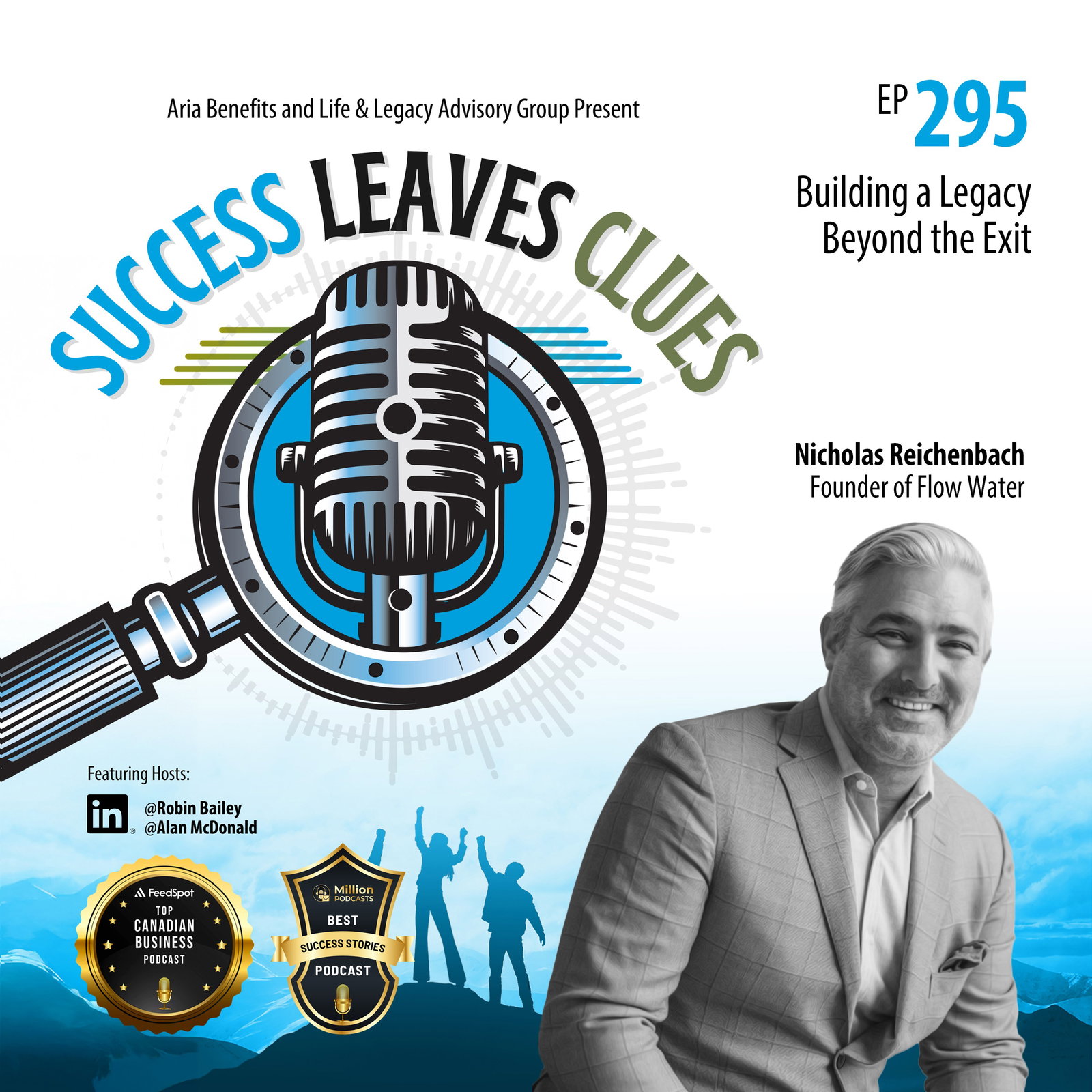 Success Leaves Clues: Ep295 - Building a Legacy Beyond the Exit with Nicholas Reichenbach, founder of Flow Water64 / 100
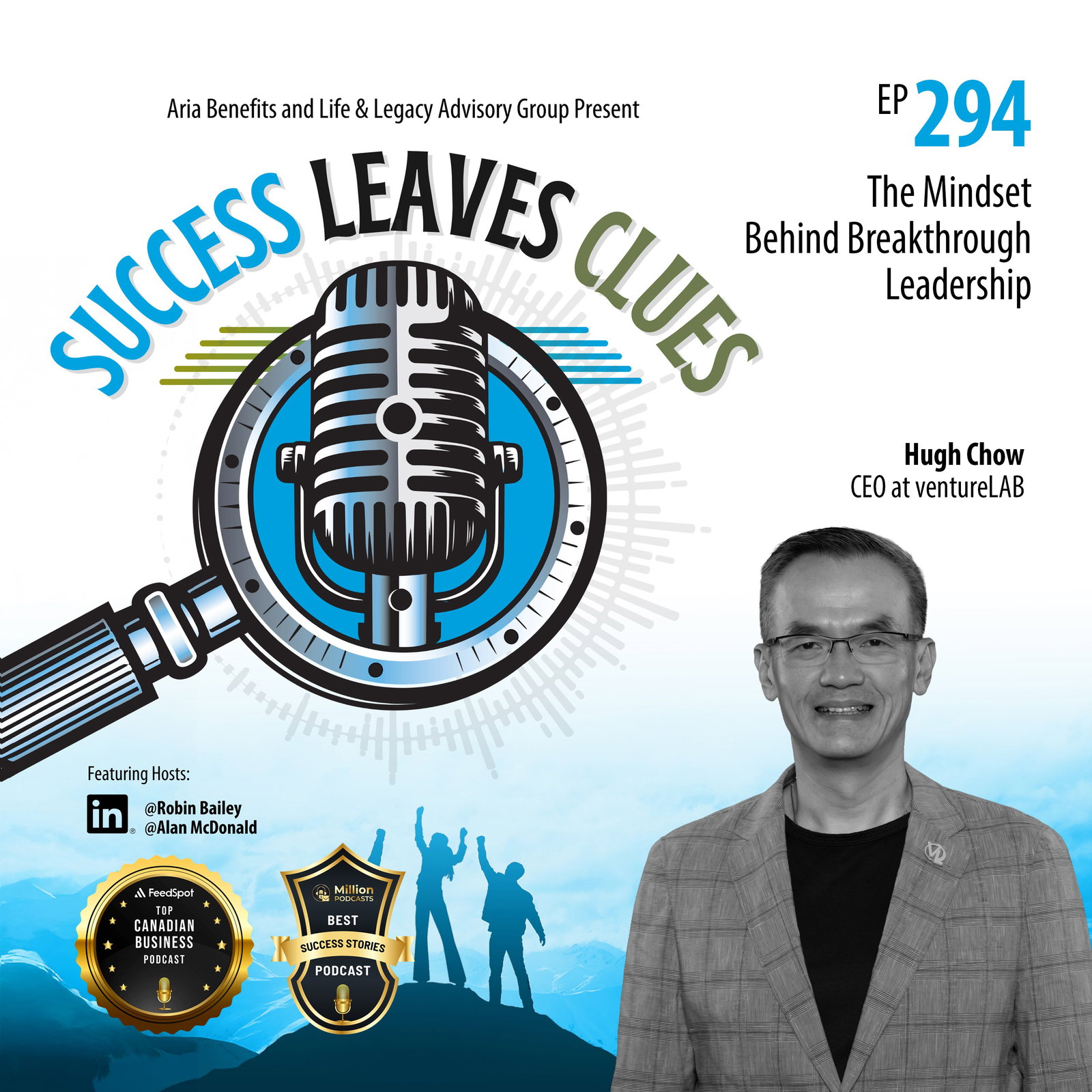 Success Leaves Clues: Ep 294 - The Mindset Behind Breakthrough Leadership with guest Hugh Chow, CEO at ventureLAB63 / 100
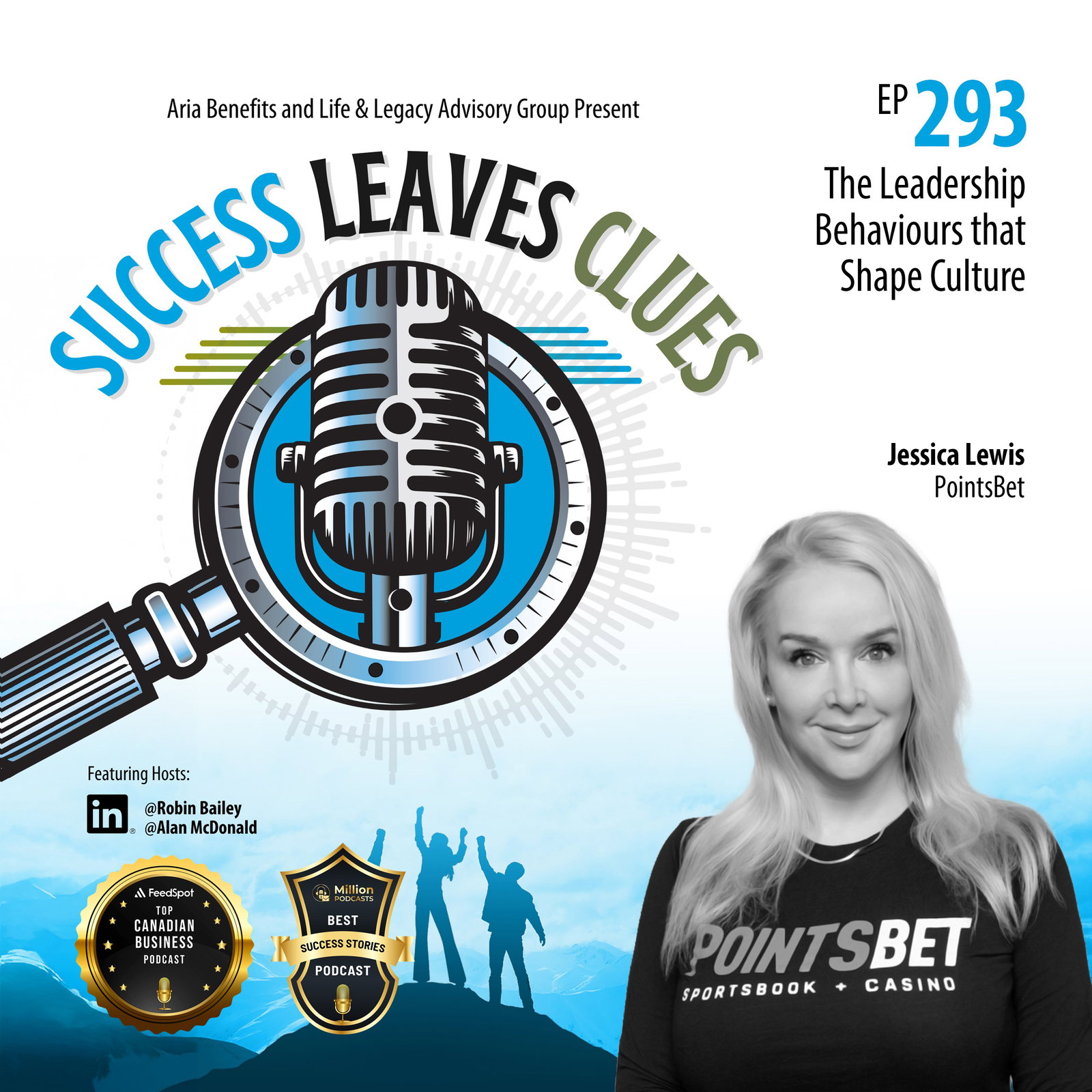 Success Leaves Clues: Ep 293 - The Leadership Behaviours that Shape Culture with Jessica Lewis of PointsBet50 / 100