
Success Leaves Clues with Robin Bailey and Al McDonald · 2026-05-21 · 28 min
Key moments - from our scoring
Substance score
30 / 100
Five dimensions, 20 points each
Jessica Lewis, Head of People at PointsBet, discusses how leadership behaviors fundamentally shape organizational culture, arguing that culture lives at the intersection of leaders, managers, and individual contributors - not owned by any single level. She emphasizes that leaders set the tone through who they promote, recognize, and how they treat people behind closed doors, and warns that visible values mean nothing if the lived employee experience contradicts them. Lewis covers strategic hiring for cultural alignment (looking for grit, adaptability, resourcefulness, and ownership mindset), managing the tension between technical excellence and cultural fit, the role of radical candor in feedback, and the outsized impact of mentorship on career confidence and legacy. She advocates for early, kind conversations about misalignment and frames feedback as a gift that shows the company cares. Operators scaling fast-growth organizations will find her frameworks on hiring intake, OKR rollout, and values-driven decision-making directly applicable.
Culture lives at the intersection of all three: leaders set the tone through hiring and recognition decisions, but it requires alignment with managers and must be embodied daily by individual contributors; it breaks down when managers don't align with values or when espoused values don't match the lived employee experience.
Look for grit, adaptability, resourcefulness, and an ownership mindset; technical competence alone isn't enough - candidates must align with your cultural values and ways of working, and the profile you need may shift as your business evolves.
Treat feedback as a gift and have honest, transparent conversations early using radical candor delivered kindly; give them a clear opportunity to improve and become aligned, but don't wait too long to address the misalignment.
Jessica finds it harder to manage strong culture fits lacking technical competence because they're wonderful people doing their best, but sometimes skill gaps can't be trained and the business has evolved past their capabilities.
Mentors provide confidence to do hard things, offer perspective from similar situations, and for women in male-dominated leadership spaces, provide understanding and guidance on communication and navigating challenges - making mentorship invaluable for career growth and legacy-building.
Our reviewer’s read on each dimension, with quotes from the episode.
The episode is dominated by well-worn HR platitudes and generic leadership advice with almost no novel claims per minute. Occasional moments of moderate substance - like the tension between cultural fit versus technical competence - are quickly abandoned before being explored meaningfully.
I always say leaders are the ultimate influencers. Who they promote, who they recognize, how they treat people behind closed doors shows the culture.
feedback is a gift. Feedback means your company cares about you. Feedback means your company is trying to improve you.
Nearly every framework invoked - radical candor, OKRs, culture fit over technical competence, feedback as a gift - is a widely circulated concept requiring no original thinking. No contrarian or first-principles arguments are offered, and the episode stays firmly within the consensus HR playbook.
one of our values is radical candor, and I do believe that
feedback is a gift
Jessica Lewis is a genuine HR practitioner with real fast-scaling tech experience and a current role at PointsBet, which gives her some authentic operator credibility. However, she is a mid-to-senior people leader rather than a C-suite executive or someone who has built and scaled organizations at a level that would produce rare, hard-won insight.
I come from a fast scaling tech background. You need to have grit, you need to have adaptability, you need to have resourcefulness, and you need to have an ownership mindset
rolling out okrs across departments, leading full cycle recruitment, building mentorship programs, and shaping people strategies that support organizational growth
The episode is almost entirely abstraction with no data points, dollar figures, timelines, or concrete before/after outcomes. Passing references to PointsBet, the People People group, and HR Tech Week are dropped without any substantive detail, and anecdotes (e.g., the exit interview) are kept deliberately vague.
I just signed up for the HR Tech Week and the HR Tech crawl
had an exit interview a couple weeks ago, and this M was someone who had started really junior, had grown to the top senior position
The hosts are warm but predominantly softball in their questioning, and Robin regularly inserts lengthy self-referential anecdotes that consume guest airtime. The one standout moment is Al's genuine pushback on the culture-fit-versus-technical-competence answer, but this thread is dropped before it produces meaningful depth.
See, now, I would have thought that the answer might have been the opposite.
And it reminds me of so we gave out an Award at our awards to Melanie Sheepertz for values and actions. And the reason why is it's similar to a conversation like this I was having with Melanie
Computed from the transcript - who did the talking, and the words that came up most.
What actually creates a great company culture? Is it the values written on the wall… or the behaviors happening behind closed doors? In this episode of Success Leaves Clues, Robin Bailey and Al McDonald sit down with Jessica Lewis from PointsBet to explore what it really takes to build high-performing teams, strong workplace cultures, and leadership environments where people genuinely thrive. Jessica shares her journey from executive assistant to senior people leader, unpacking the lessons she’s learned while scaling teams in fast-paced, high-growth organizations. From mentorship and strategic hiring to difficult feedback conversations and leadership accountability, this conversation reveals why culture is never owned by one person. It’s built collectively, reinforced daily, and tested most during difficult moments. This episode dives into the realities of modern leadership, including the growing role of AI in HR, the importance of trust and transparency, and why the best leaders understand that people strategy is business strategy.
Transcribed and scored by The B2B Podcast Index.
Jessica Lewis: Welcome to the Success Leaves Clues podcast with Robin Bailey and Al MacDonald. Have you ever wondered what makes someone successful? What are they doing that's different? How do they achieve greatness? We believe that Success Leaves Clues. In this series, we are interviewing very successful people from different walks of life to hear their stories. We'd like to remember remind our listeners that the views expressed in this podcast are those of our guests and not necessarily those shared by our hosts. Today's episode is sponsored by Life and Legacy Advisory Group. Discover our commitment to our clients at Life and Legacy. Building wealth, securing your family's future, giving back and creating a lasting legacy are not just values, but a way of life. Let us guide you toward a future aligned with what matters most to you. We're also brought to you by ARIA Benefits. If you're a business leader challenged with talent, attraction, employee engagement, or supporting mental health, we can help use your benefits package as the key to unlock your workforce. Now, here's your hosts, Robin Bailey and Al MacDonald.
Host: Welcome back to the Success Leaves Clues podcast. I'm your host, Robin Bailey and I'm so excited. I'm back at it again with my fantastic co host, Al MacDonald. Al, we just celebrated our second annual podcast awards. Incredible night. Feel very fortunate to be a, uh, host of this show.
Al MacDonald: Yeah, we did. And it was like you said, it was a great night full of great people and a lot of conversations, chance to talk to some people one on one, which we don't always get the chance to do these days. So just a, uh, great night and excited about the next one. Of course.
Host: Yeah, exactly. We're already starting to look for those award winners for next year. Congrats to this year's very well deserving. But with every conversation, obviously we're looking for those conversations that stand out. So perhaps this is one of those today. I'm really excited because today we're joined by Jessica Lewis. And Jessica is an experienced HR and people leader known for building collaborative cultures, elevating employee experience, and helping high growth organizations scale through strong people practices. Now with PointsBet, Jessica brings a track record of developing and executing strategic HR programs that strengthen teams, improve performance and support sustainable growth. Her leadership experience includes rolling out okrs across departments, leading full cycle recruitment, building mentorship programs, and shaping people strategies that support organizational growth. She is passionate about building strong teams and creating cultures that help both people and businesses thrive. Jessica, welcome, uh, to the show. Really excited about you being here, especially from our first conversation. I just wish we could have pressed record that first time.
Jessica Lewis: I'm so Excited to be here, Al and Robin, I've been following your podcast. I've had some incredible mentors on, like Amanda Small, and I just thought, I cannot wait if I get an opportunity to be on the podcast, Robin. So thank you so much for having me. I'm so excited. You know, I get so much from your podcast, so I'm excited to share my learnings and experience.
Host: Well, great that you're here. And since you mentioned Amanda Small. Amanda Small was awarded the Gene Bailey Legacy Award for kindness and impact when we got together with her at the event. So, yes, a very important friend of the podcast and certainly someone who continues to inspire not only me, but a lot of people tell us that. So really great that she's been on the podcast. I want to start with your career because you've built your career in a really fast growing environments where people, strategy can make or break that momentum. Can we talk a little bit about, number one, what first drew you to HR and what has kept you energized in that career as your career has evolved?
Jessica Lewis: I think, you know, I was that child that loved people, loved connecting with people. I love to know what makes people, drive, what makes people tick, and really think about how I can improve their lives. So I've always had that since I was young. And then I started my career as an ea and I, um, would be in these meetings, Robin, and I just was so immersed in the strategy and the decision making and the executives, how they were speaking. And so I wanted to really combine my love for business and people. So it felt like HR was that natural transition. And honestly, it has been the most incredible experience. I truly believe it's my purpose. And I think when something is your purpose and it's your natural skill set, you're going to be able to have an impact, you're going to thrive, and you are really going to have success. So I truly feel like this is what I'm supposed to be doing. I think from a starting out as an HR manager, becoming a senior leader, something that really drives me, something that always keeps it exciting, is there's always room to improve and there's always new challenges in the people space. Uh, because the workplace design, the organizational culture is always changing. So every day is new. When you're dealing with people, every day there's new challenges and every day there's new structures in place. Like right now we have AI. Uh, so it's like, how am I launching AI to really improve the business, to improve the people experience, to improve the employee experience. So that's what's really kept me engaged, is I always think there's room to improve. I always think there's new challenges. And honestly, Robin, I always ask myself, did I leave this place better than I found it? And that is sort of a core question I ask myself every day, Robin. And it I can have people leave 10% better, I feel like I've done my job. So that's sort of a framework that I come from of, like, always pushing forward, always improving, and always assessing new challenges to keep the culture at the best that it can be.
Host: I love that you talked about, you know, the environment is continuously changing and you're always trying to improve. And I love that theme of leaving things better than they were before you got there. Right. I just love that. I think if more people did that, we'd be in a much better space. So that's a very good message that you're sending out there. But I remember for the longest time in the industry, we started our business in 2005, and Al and Jill were on the individual side of the business. So financial planning, estate planning. And I always felt a little bit jealous of their relationship because they were in the same business, they were doing the same thing. And then there was me all by myself doing the employee benefits on my own, and I didn't have people to bounce ideas off of necessarily. And it's one of the reasons why we joined the benefits alliance most recently, because now I've got these member firms across the country. We come together even on slack groups. I can bounce these ideas. And now I have my community. And you're right. When the world is changing so quickly and you talk about in the people space, what are you doing to make sure you're keeping pace with what's going on in the industry? Is it community groups? Is it courses? Like, how does someone in your position make sure that you stay on top of. Because I know there are people in organizations coming to you to look for those answers.
Jessica Lewis: You know what, Robin? That's such a great question. And again, I'm someone who's so passionate about what I do. So there's always that, uh, wanting to learn more, something that I'm really focused on and I'm so lucky. And that's why I mentioned Amanda is our incredible HR tech community in Toronto. The People People group, going to webinars, going to events. I just signed up for the HR Tech Week and the HR Tech crawl. There are so many events that you can keep learning and learning from people, even as a senior leader there's things that people are doing in the AI space that I'm like, okay, I want to chat with you. I want to build those connections. So you're always going to leave learning, so making sure you're maintaining those connections. And I truly think being a mentor, reaching out to people who you really respect and learning from them and learning through their journey. I just went through a huge, uh, change management process and I had some mentors through it. And just having those relationships and really learning what findings, you know, they worked with really helped me to excel and exceed in that project. And I think just making sure your connections in the community are so authentic and really investing in those relationships and showing up for the community. And also now it's funny, like, I'm a mentor to three or four people, so it's also so nice to give back and to teach people when they're junior. Like, I always think it's that cyclical nature of, um, you know, really giving back to the community and really sharing your learnings. You know, in the people people group, there's always so many questions and I'm always like, we need to do everything we can to help everyone and support everyone.
Al MacDonald: So.
Jessica Lewis: So I think I feel so lucky in my career, but also in the HR community, in the tech space in Toronto, I have been helped so many times and now I'm able to help so many people. So I think Robin, that's allowed me to stay up to date and obviously with AI. You know, I do courses every day. It's changing, but I think dedicating a few hours every week to learning, AI setting sort of what is the future, what are the learnings? Every week there's coming out. So really being on top of that in the HR space is really exciting and I think it's a huge opportunity to learn something new. I was chatting with M, my friend, she's CFO and she's going through an AI transformation. And it's like, who would have thought at this point in our career we would learn something, an, uh, entire new industry. And it's exciting. And so I think you have to really invest the time, the energy to keep up to date. But also with those connections and the community.
Al MacDonald: Jessica, can we dive into the world of company culture for a bit? Yes, we talked about that in your bio, that that's something that you're very passionate about, building culture at the company. And you've already mentioned it a couple of times in your first answer. So I'm just curious from your perspective when you are at Various companies. Where do you see culture, shall we say living on a day to day basis? Like do you see that at the uh, leadership level, at middle management, at the team level? Where do you see that it exists and what do you think are maybe some of the reasons that it breaks down in some cases?
Jessica Lewis: Uh, that's such a great question. So I think it's the intersection. I don't think one group owns it. I think it's the leaders, I think it's the managers and I think it's the individual contributors. Again, I do think leaders set the tone. I always say leaders are the ultimate influencers. Who they promote, who they recognize, how they treat people behind closed doors shows the culture. But again it needs to cascade down to the managers and the individual contributors. Where I've seen it break down is sometimes the strategy at the top. Maybe you hire a manager who does not have the values, is not have sort of the cultural awareness at the top. I think that's something that it's so important. You need to have your frontline managers aligned with your values. I also think al, uh, where I've seen it break down is when you have values on the wall. But the employee experience is a completely different lived experience. So it's not aligning. So you have to make sure your culture, how people treat each other when the doors are closed, those daily interactions, how people feel when they walk in the building is not just on the door. It is owned in every single part of the business. And truly an intersection of uh, leaders, managers and individual contributors.
Al MacDonald: You use the phrase in there a couple of times when the door is closed. Maybe talk a little bit more about that, what you mean by that and how you see that as impacting What m. You said, the breakdown of culture.
Jessica Lewis: Yeah, I think it's if someone comes to you with a really hard conversation, maybe if someone's not performing, how you give feedback, how you speak to them, how you deal with really challenging performance issues, how you terminate people, how you onboard people, all of those things behind closed doors equate to your culture. So I truly think it's those interactions behind closed doors and how you really behave that is what sets the tone. So you know, behind closed doors, all of those hard conversations and how you approach things. I always say you can do hard things with kindness and there's a right and wrong way to do hard things. And I think in the people space there are really challenging days. But that doesn't mean you can't do with kindness. It doesn't mean you can't do it with empathy and it doesn't mean you can't do it with a people first approach. And to be quite honest, out I've um, seen it done both ways and I think from my lens, I always think, what is the leader? There's so many times in my career I've needed a leader to show up a certain way. And I remember when I was more junior in my career thinking, one day I'm going to have a seat at the table and I am going to show up in the way that I needed and how that person needed. So also showing up behind closed doors, how that person actually needs it.
Al MacDonald: You also mentioned in terms of sometimes the culture breaking down, you had said that sometimes the leadership, and maybe it's the middle managers or some of the leaders, they don't necessarily align and that can cause the breakdown. So how do you prevent that? How do you recognize that a maybe there isn't this continuity between the leadership and middle management? And how do you prevent it from happening?
Jessica Lewis: I think number one, being really strategic, who you hire. I always say you need to have alignment on who you're hiring. You can have the most technical competent person, but if, uh, they don't fit what your business needs in terms of culture, they are not going to be able to be a leader in your organization. So being very intentional about the behaviors you're trying to drive in managers and making sure that's aligned with your strategy and culture and that is so, so important as well as focusing on really, really focusing on building relationships. And I think when you build relationships, people are open and you have more, you know, an individual contributor will come to you and say, hey, that manager isn't living the values. So as a people leader, your people, you need to have trust, you need to have transparency. And it doesn't happen day one. Trust is earned. But I think when you have those strong relationships alone, you will have a pulse on what's going on and you will have a pulse on who is the right manager and who is a wrong manager aligned with your cultural strategy.
Host: You know, Jessica, um, I'm always impressed with people who walk their talk. And I think you brought up something really important when you're talking about culture and where that has to come from. And it has to come from people like yourself and the CEO or the founder, whoever it is, because that cascades down positively or negatively within the company, which means those employees are having either a really great experience or maybe not such a great experience. And it reminds me of so we gave out an Award at our awards to Melanie Sheepertz for values and actions. And the reason why is it's similar to a conversation like this I was having with Melanie and she was great on the podcast and she was talking about how important these values are. And I had the opportunity to meet some people who were at her firm and they were living it too, and they were demonstrating it and that was cascading down. And that's why she got that award. Because you and I have both seen people who kind of say this is how we operate. And then you find out maybe that's not happening. Right. So I think that's really important and I'd like to continue this conversation down culture if you're okay with it, because we were talking in your bio about you introduced initiatives like OKRs and mentorship, which clearly very important to you. And I just started doing that this year, which has been very rewarding for myself. But you've also done strategic hiring plans. So when you're hiring and you're hiring for culture and that long term success that we're all looking for, can you break down what are you looking for specifically?
Jessica Lewis: I think that's such a great question, Robin. And I think number one is alignment and clarity on what your business needs. Because what your business needs today, Robin, might be different. What the business needs five years ago and who you need to be hiring. So being very clear on what that profile looks like, I think obviously I come from a fast scaling tech background. You need to have grit, you need to have adaptability, you need to have resourcefulness, and you need to have an ownership mindset of your career. I always say to my team, do not be a passerby in your career. I didn't get where I am by not raising my hand. You need to own your journey. And that's actually some of the values that we just did at uh, points that really, really taking that initiative. So those are sort of the core areas I think are so, so important. I always say you can hire the most competent technical person, but if, uh, they are not aligned with your cultural fit, if they are not aligned with your values, if they are not aligned with the ways of working, it doesn't matter how technically competent they are, they are not going to work. So being really sure when you have that hiring intake meeting with the CEO, with the hiring manager, what are we looking for in this person? What do we need and what is the behavior we're trying to drive is so, so important. And I think really evolving that to where your business is because Like I said earlier, every year your business might need a completely different profile based on what's happening in the business. And you might be in a completely different space than you were five years ago. points bad. I know that we are.
Al MacDonald: Jessica, that brings up an interesting question. And you know, we've talked so much about culture and making sure that everyone fits. What do you do when you have someone, and especially you just mentioned about how the companies evolve. What do you do if someone is a really, really great performer in terms of their technical excellence? Like, they do the job great, but there's a bit of a misfit on the culture side. Like, how do you handle that?
Jessica Lewis: I think again, uh, feedback is a gift. And I always think in my career, the opportunities I've had to get feedback has only helped me evolve. So I think being honest, what the expectations are, being clear on what we are looking for in culture, and giving that opportunity, giving that person feedback gives them an opportunity to improve and become more aligned. I think what the worst thing you can do in that situation is just saying, okay, we're done with this person. It's giving that person an opportunity to improve and really being open and transparent in a very kind and constructive way. We definitely, one of our values is radical candor, and I do believe that. But it can be done in a kind way and giving that person the opportunity to grow. And honestly, Al, I've had that situation so many times in my career, or someone who's a great cultural fit but not technical competency and really being clear on the expectations and not letting it go too long and being honest. Day one, when you're seeing these situations and when you're seeing the misalignment, having those tough conversations early and not waiting till it's too late and giving them an opportunity to improve, feedback is a gift. Feedback means your company cares about you. Feedback means your company is trying to improve you.
Al MacDonald: Is there one of those two situations that is the tougher to deal with? What I mean by that is great, technically great expertise, a top performer, but not great fit on the culture side, versus, like you said, a perfect fit for the company, just maybe not performing to, uh, expectations. Is there one or the other that's easier to deal with or not?
Jessica Lewis: I mean, I would say the not being a culture fit is a lot easier. I really struggle. I love people. I'm very close with my team. I'm very a people focused leader. So if you have this wonderful human being who is so aligned with the culture, but they're not performing That's a very challenging conversation because you know they're a really good person and you know that they're doing their best. But if they don't have the technical competency, those are challenging conversations. And obviously in your career, you learn to have these conversations. But, yeah, I think that's really hard if you have a wonderful human being who, you know, everyone loves. But that doesn't mean they're the right person for the role.
Al MacDonald: See, now, I would have thought that the answer might have been the opposite.
Jessica Lewis: No.
Al MacDonald: Because I thought maybe in my head that you might be able to train, like for technical competence, but it's tough to maybe change someone's values. So, thoughts on that?
Jessica Lewis: I mean, it definitely is easier to train technical skills, but sometimes there's just a skill versus will, and sometimes you can train and it doesn't work. And that's where tough conversations happen, and that's where it's really hard when you have an amazing culture fit and it's not working. And I think a lot of times, Al, uh, and Robin, what happens is the company really evolves and maybe the person was incredible five years ago, but where the business is today, we need something different. And so that's really challenging because the culture has evolved and the technical competency has evolved past that person.
Host: I'm so glad we're talking about this because, Al, uh, we just teased out a very important clue as the name of the podcast is Success Leaves Clues. I think that's really interesting. I want to go back, though, to talking about mentorship.
Jessica Lewis: Yes.
Host: And, Jessica, what I'd love to know is what value do you get and what value are you giving? Because I think you're working on both sides of it. You've had mentors, and I think you're mentoring other people as well. So I'd love you to just hear you talk about the value on both sides of that story.
Jessica Lewis: I think what I've gotten is so much confidence, and I love my mentors. I've had Saris, I've had Amanda, who are both friends of the podcast, and they've given me so much confidence to say you can do hard things and have given me that confidence. Sometimes being the only female leader in a very male dominated space, there's some other, you know, mentors that can understand that. So specifically understanding where I'm coming from and giving me that ability to communicate, ability to have confidence, like, it has given me so much confidence and to really learn from them and see what they did in similar situations. So it's been Incredible. It's invaluable. And now where I sit, having an impact on people. Robin, I truly feel that's my legacy, and had an exit interview a couple weeks ago, and this M was someone who had started really junior, had grown to the top senior position, and for me, this was an amazing success story. She'd been here five years, and she went on to do something else. And she said, you have directly impacted me and given me the confidence to succeed, and directly impacted me professionally and personally and giving me those skills. And so I felt, Robin, in that moment, I felt, if this is the impact I'm leaving, if this is what my mentorship is doing, if this is what my advice, if this is what I'm leaving the world, then I am leaving it better than when I found it, and I am doing what I'm supposed to be doing, and I am aligning with my purpose, and I am having a huge impact. And sometimes in hr, it is a really challenging job, and you have really hard days, but when you have moments like that, you take a step back and you just think, I am having an impact on people. So mentorship, I would say it's so much to me, personally and professionally, and it truly feels like, okay, that is a legacy I'm leaving.
Host: I love that, and I love that you're doing that, and I love that there are other people out there who continue to do that and offer that. And you're right. It's those moments that you hear something from someone or they tell you something or they send you an email about something that, you know, made an impact on them. I had one. This happened last week, and I had one. And I think I had said it to you, Al. I said, those are the moments that I'm going to sit when I'm no longer doing this. I'm retired. Hopefully some are warm. And I'm thinking about those moments that, you know, you left an impact on somebody's life, and that kind of ties into where we're going next. Because Al has a great question. Years ago, he came to the podcast. He said, hey, listen, I didn't make up this question, but I think it would be really good on the podcast.
Jessica Lewis: And.
Host: And it's a little more philosophical in nature, and I think you've kind of answered a little bit, but there might be a different answer there. So if you're up for it, Al's signature, uh, question. I'll let him take it away.
Al MacDonald: Wonderful. Yes. A, uh, society grows great when old persons plant trees in whose shade they will Never sit. So, yes, we have heard a little bit so far about some of the impact you've had on other people. But I'm curious what proverbial trees you might be planting that might impact others. And maybe you want to talk about something outside of business too. It could be something personal, it could be something in the community. I'll leave that part to you.
Jessica Lewis: I love that question. I'll. I think working in such a male dominated space, whether it's been tech, right now I'm in online gambling, every single thing I do every day is like, how can I get more females at the table? How can I be strategic? Whether that's building more succession pipelines, whether that's giving them the skill sets to have confidence. It's never a gap in capability. It's about, uh, someone speaking your name at the table, making sure those people are on everyone's mind, making sure they are getting the proper coaching, proper mentorship. We have ERG groups at Points Vet, which is an incredible opportunity. We have speakers come in to connect to network and to learn and giving those opportunities. For me when I leave, I do think there'll be more females at the table and I do think it'll be more equitable. And if that is the tree I'm planting for every single thing that I do, and I already see it over the last 10 years since I started my career, that for me is the tree I'm planting. And that is something that I think about every day. And I think when my son gets to the workforce, I really hope that it is more equitable, more diverse. And I do think it will be. I do think that's where we're going because you have leaders like myself who are making that a strategic mission and where that is really aligned with our values. And I'm excited when my son comes home and you know, he's young, he's 2 years old, but it comes home in 20 years is like, oh, uh, everyone's at the table. Like, that is my dream. Everyone's at the table. And that is something that I do think is going to happen and I'm really excited. And if there's any impact I could make to make that happen, I will do it.
Al MacDonald: That's great, Jessica. I really appreciate that. And it's obvious that you're very passionate about that cause so really appreciate you sharing that. And obviously for being on the podcast
Jessica Lewis: today, you know what, it's so incredible and I feel so lucky to have this platform. Obviously it's incredible to learn from and I just feel really grateful and if anyone wants to reach out to me as a mentor, I'm on LinkedIn, happy to share my email contact and yeah, just being part of the community and helping people as much as I can.
Host: Jessica, uh, I couldn't be more thrilled with this conversation that we had today. And one of the things I like, like Al said, your passion just shows through. And another word for passion is energy. You've such great energy. And we discovered that from the very first call that we did. You brought it here today and I got to tell you, people might not believe it when I say it, but I truly mean it. This is my favorite day of the month. We record twice a month on a Friday and I leave with just such great feelings after conversations like this. It gives me really great hope for the future. As I said, by the time your 2 year old is our age and in the business, it's going to be a much better world and I think for the better. So really want to thank you for everything that you're doing and I look forward to continuing our friendship and relationship. For listeners who are interested in learning more about what you're doing, what's the best way to reach out?
Jessica Lewis: LinkedIn would love to mentor people and I'm happy to share my contacts. If you reach out over LinkedIn. 100%.
Host: Perfect. Well, that does it for today's episode. We really enjoyed this conversation. As always, we hope you did too. If you have any questions for Al or myself, please feel free to give us a call or by joining the conversation on LinkedIn. We saw it here very clearly today. Success leaves clues. We'll see you next time.
Other episodes covering the same guests and topics, from across The B2B Podcast Index.
 50% of your job needs to be finance transformation: Anders Liu-LindbergFP&A Today · on Change management84 / 100
 #299 What It Takes to Become CFO by 33 Audrey Lagresle CFO, Automobile En DirectGrowCFO Show · on Change management78 / 100
 What AEC Marketers Need to Know About Pursuit Intelligence ToolsSpill The Ink · on Change management78 / 100
 The Pace of Innovation: Systems Thinking for Faster EngineeringHow Many CTOs · on Change management78 / 100
 CELab - Ep 185 - The Four Faces of AI Resistance: Eve Kedar on Why Customer Education Should Own the AI RolloutCELab: The Customer Education Lab · on Change management77 / 100
 Who Should You Involve in Your ERP Selection? - The ERP Advisor Podcast Episode 146The ERP Advisor · on Change management74 / 100
 Success Leaves Clues: Ep 305 - How to Turn Marketing Into a Business Growth Driver with Alison Simpson, Retired President & CEO, Canadian Marketing Association71 / 100
 Success Leaves Clues: Ep 301 - If Not Now, When? Reinventing Yourself in Midlife with Brenda Benard, COO at Benard + Associates44 / 100
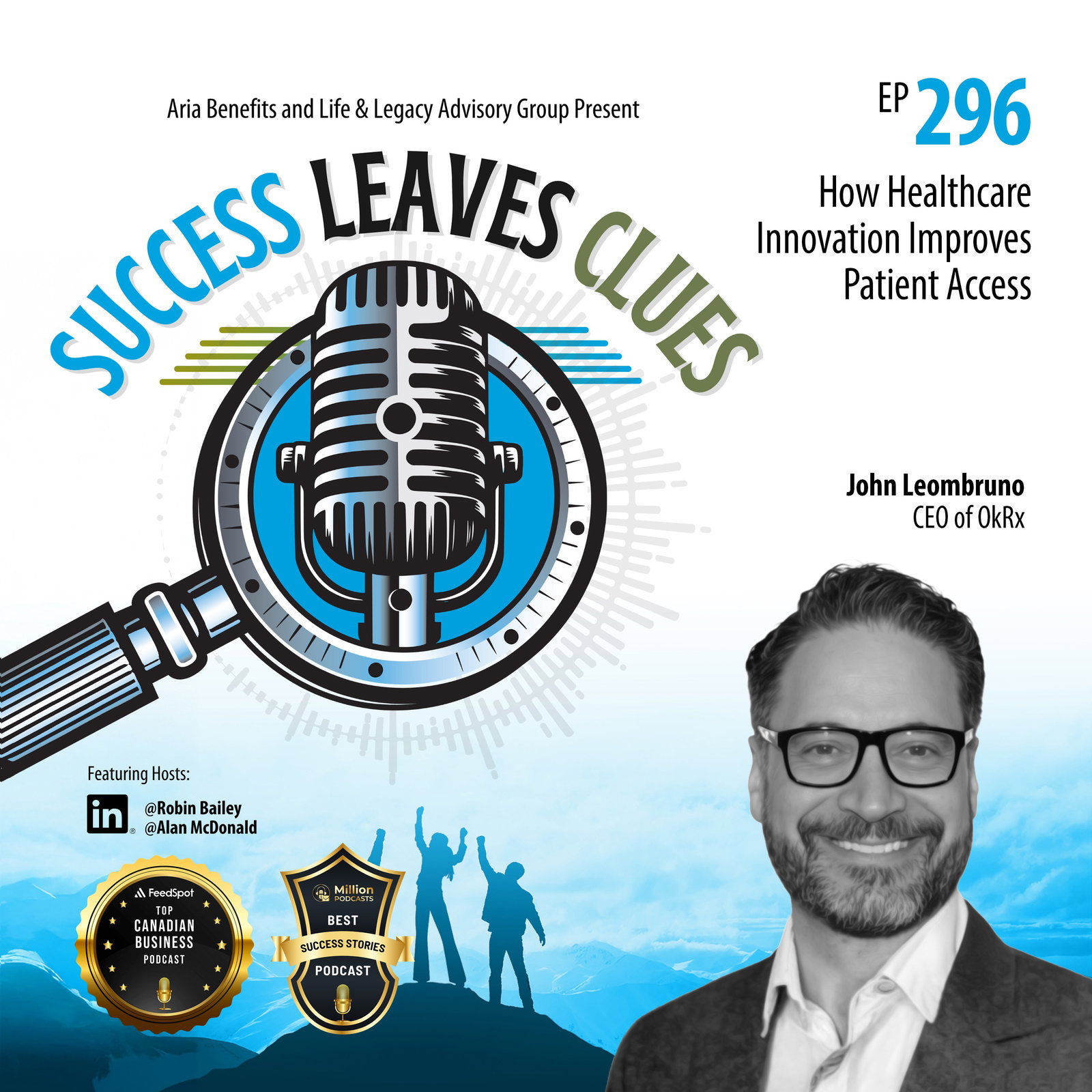 Success Leaves Clues: Ep 296 How Healthcare Innovation Improves Patient Access with John Leombruno, CEO at OkRx 79 / 100
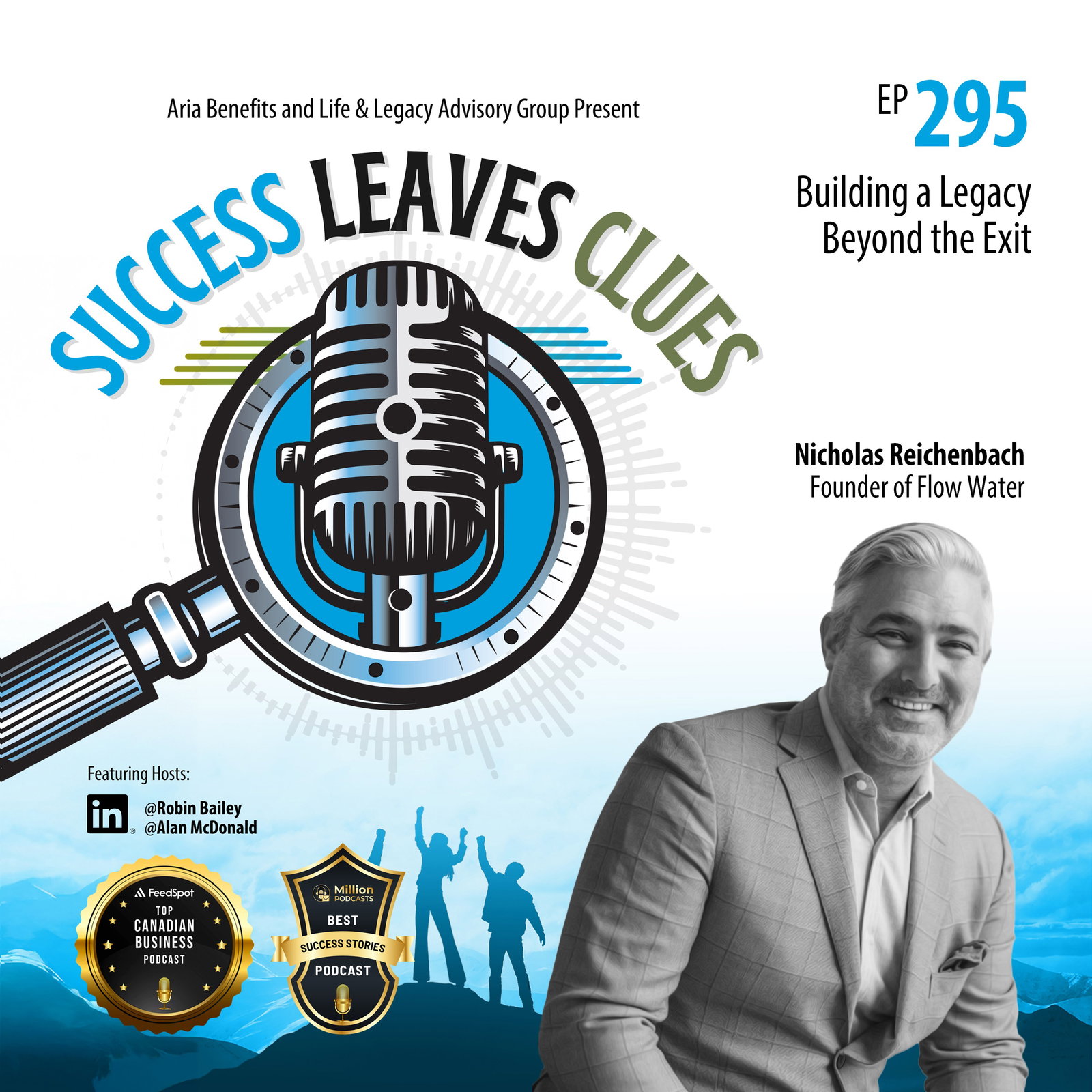 Success Leaves Clues: Ep295 - Building a Legacy Beyond the Exit with Nicholas Reichenbach, founder of Flow Water64 / 100
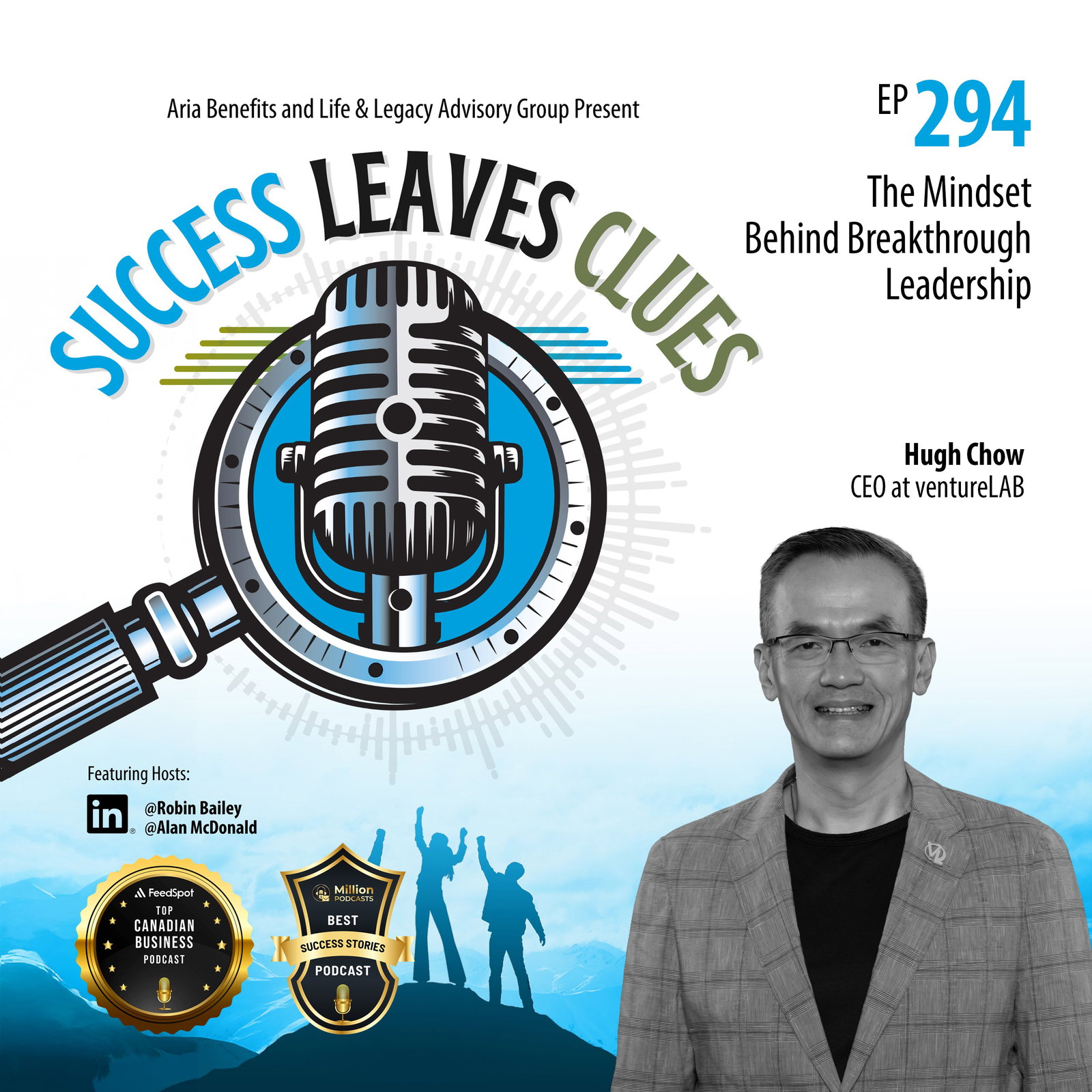 Success Leaves Clues: Ep 294 - The Mindset Behind Breakthrough Leadership with guest Hugh Chow, CEO at ventureLAB63 / 100