
Start Global Insights · 2026-04-15 · 39 min
Key moments - from our scoring
Substance score
52 / 100
Five dimensions, 20 points each
Maryna Starodubska, a cross-cultural consultant and Kyiv-Mohyla Business School professor with 20+ years of experience, unpacks the five core dimensions that define Ukrainian business culture for foreign partners: high distrust requiring time to build relationships; needs-based (not opportunity-based) entrepreneurship born from institutional dysfunction; extreme power distance and uncertainty avoidance driving preference for decision-makers and control; particularism over universalism, meaning relationships trump contracts; and the blending of personal loyalty with business dealings. The episode maps how Ukraine's history as a frontier territory contested by multiple empires shaped deep institutional distrust (courts trusted by <25% of citizens, civil servants by <15%), forcing Ukrainians to rely on personal networks rather than systems. Starodubska offers actionable guidance for Nordic, German, Dutch, and North American firms: send decision-makers at equivalent rank to meetings, break long-term strategies into visible project stages with measurable milestones, invest in personal relationship-building before signing contracts, and understand that Ukrainian risk-aversion stems from circumstances beyond their control - war, dysfunctional courts, and unpredictable environments. Essential for B2B leaders entering Ukrainian markets, managing cross-border teams, or negotiating with Ukrainian partners unfamiliar with how power distance, uncertainty avoidance, and institutional distrust shape negotiations and execution differently from Western Europe or North America.
Send a decision-maker with authority to make commitments on the spot - ideally at parity level with the Ukrainian side's representative (e.g., a regional director if meeting a business owner). Sending a specialist or junior staff is read as lack of seriousness and disinterest, even if preliminary discussions.
High uncertainty avoidance combined with historical institutional dysfunction makes Ukrainians uncomfortable with unclear situations they don't control. Without a response, they assume worst-case scenarios and seek clarity through repeated contact - it's not disrespect but a cultural mechanism to reduce uncertainty.
No. Ukrainian entrepreneurship is needs-based, driven by crisis and forced adaptation to dysfunctional institutions and contested territory, so it booms during crises but declines in stable conditions. Western entrepreneurship is opportunity-based and more sustainable in peacetime.
Yes. In Ukraine, relationship comes before contract; trust is the foundation that makes a contract meaningful. Western cultures reverse this (contract first, relationship second). Personal meetings between decision-makers, shared out-of-work experience, and time to assess whether you can trust the individual are necessary before signing.
Break long-term strategies into shorter project stages with specific deliverables and deadlines. This reconciles Ukrainian short-term thinking (rooted in historical instability and lack of institutional trust) with Western long-term planning while making projects more flexible and measurable for both sides.
Our reviewer’s read on each dimension, with quotes from the episode.
The episode delivers several genuinely useful cultural frameworks for B2B operators - power distance, uncertainty avoidance, needs-based vs opportunity-based entrepreneurship, and the contract-as-culmination-of-trust insight - but the 39 minutes is significantly diluted by the host restating the guest's points, transitional filler, and a lengthy closing summary that merely recaps what was already said.
sociology shows that in the current war after the invasion, 49% of Ukrainians do not plan their life at all...Even before the war, 45% of Ukrainians never planned their life. Mm-hmm. So the war as the, the most difficult crisis there can ever be in a society contributed only 4% to this behavior
In Netherlands, for example, a contract is a beginning of trust building process and a framework for it
The content is almost entirely drawn from established Hofstede and Trompenaars cross-cultural frameworks (power distance, uncertainty avoidance, particularism vs universalism), which have circulated in business culture literature for decades; the Ukrainian application is contextually useful but not conceptually novel, and the Stanford entrepreneurship reference is used only superficially.
Stanford University published a very interesting research on the origin of entrepreneurship and there are two regions of entrepreneurship needs. Opportunities
we have super high power distance and super high uncertainty avoidance. Which means we prefer control to waiting and we prefer acting to planning
Maryna Starodubska is a legitimate practitioner - adjunct professor at a named business school, 20+ years in cross-cultural consulting, and author of a dedicated book on Ukrainian cultural dimensions - making her a credible and topic-relevant guest, though she is a consultant-academic rather than a senior operator who has personally scaled cross-border business.
Maryna Starodubska, a cross-cultural interaction consultant and Kyiv-Mohyla Business School adjunct professor with over 20 years of experience in employees relations, cross-cultural interaction, reputation management, and crisis communication
in my consultancy practice, I frequently see companies who employed thousands of people and have very few formal processes
The episode includes a handful of concrete data points - court trust below 25%, civil servant trust below 15%, the 45%/49% planning statistics - which elevate it above pure abstraction, but there are no named company examples, deal outcomes, dollar figures, or cited research beyond a vague mention of a Stanford study, leaving many claims unanchored.
courts enjoy the trust of less than 25% of people, uh, civil servants. As a category of professionals, enjoy the trust of less than 15% of Ukrainians
Moldova has exactly the same power distance. Um, Greece has higher power distance. Portugal has higher power distance
The host asks logical sequencing questions and occasionally steers toward practical advice, but he consistently paraphrases the guest's answer back to her before asking the next question, rarely probes contradictions or edge cases, and never pushes back on any claim, making the conversation feel more like a structured monologue than a genuine intellectual exchange.
So be open, build trust, understand how the system works, be on the same level of, uh, people that, uh, make the decision. Mm-hmm. And accept the nation as they are without trying to change them. Mm-hmm. Good.
So this, this might be a problem, for example, with, uh, with Nordic cultures where the consensus is in place. Yeah. So when to, to make the decision, they need to agree to, um, all the stakeholders
Computed from the transcript - who did the talking, and the words that came up most.
As global interest in Ukraine reaches an all-time high, international businesses are looking beyond the headlines to understand the real identity of the nation. In this first episode of a special two-part mini-series, Dmytro Shvets explores the "frontier culture" of Ukraine with cross-cultural expert Maryna Starodubska . Designed for global businesses looking to navigate the Ukrainian market, this episode moves past the headlines to reveal the core identity of the people you will be doing business with Key insights from this episode include: The Power of Status: Why sending mid-level managers to meet Ukrainian founders often leads to failed negotiations. The Trust Gap: Navigating a society with low institutional trust where personal loyalty is the major currency. The Frontier Mindset: Understanding why Ukrainians prioritize acting over planning and "needs-based" entrepreneurship over long-term strategy. Relationships First, Contracts Second: Why a signed agreement in Ukraine is the culmination of trust, not the beginning of it. Managing Uncertainty: Practical advice on breaking long-term strategies into visible, measurable stages.
Transcribed and scored by The B2B Podcast Index.
Ukraine is a territory and people have been and continue to be located on the crossroads of multiple trade routes. We're very entrepreneurial, very adaptive, and it's no wonder because Ukraine is a frontier culture, we do not like, do not know things. So we do not like to not control things. Dmytro: Hi, I'm Dmytro Shvets, your host at the Start Global Insights, where I interview experts from different countries about local business secrets and international expansion experience.
Today we are starting our mini series about Ukrainian business culture with Maryna Starodubska, a cross-cultural interaction consultant and Kyiv-Mohyla Business School adjunct professor with over 20 years of experience in employees relations, cross-cultural interaction, reputation management, and crisis communication. Hi Maryna, and welcome to the show. Maryna: Hi. Thanks for having me, Dmytro: Maryna.
Since the Russian invasion to Ukraine, there is a. Huge interest towards this nation. Yeah. But, uh, the information available is mostly about the war and, uh, the current situation on the battlefield and, uh, in my consulting experience and talking to foreign companies that are willing now to see what is going on inside of Ukraine in terms of business and, uh, uh, they need some more information about Ukrainians, uh, just to reveal the real identity and, um, understand them more.
Could you help us with that? And I know that, uh, in your book, um, uh, understanding Ukrainians, uh, cross-cultural dimension, you, you wrote about that quite a lot. Yeah. So, just imagine the situation, the foreigner, uh, comes to you and, uh, asks you, uh, how would you describe Ukrainians?
Maryna: Well, if we were to take. Ukrainians as partners in a business. Then there are the following five considerations come to mind. First of all, we're highly distrustful.
It takes us time to forge trust. Without trust, the cooperation is not gonna go anywhere. Second, Ukrainians are entrepreneurial, but our entrepreneurship is needs based, not opportunity based. We're gonna talk about that a little later.
Mm-hmm. , Third, we have super high power distance and super high uncertainty avoidance. Which means we prefer control to waiting and we prefer acting to planning. Um, fourth is we are particular not universalist in our business dealings, which means we build business on relationships.
So relationship first, contract second, not vice versa. Uh, the, uh, final fifth dimension is we mix business and personal. Personal loyalty is paramount. Without personal loyalty, the partnership is not going to be considered successful or will not go.
As deep and as long as you know your vis-a-vis might want to. Dmytro: Okay. Okay. So, and the first one, uh, the power distance.
In my understanding this is more about the hierarchy of, uh, relationship, uh, between the employees and, and their bosses. Yeah. And, uh, how you behave in business in general. What, what are the decision making processes?
Uh, could you elaborate a bit about that point? Maryna: Our distance is one of the most. Consequential cultural dimensions for understanding how business is conducted in a country, and Ukraine has the highest, one of the highest. Scores for power distance in Europe, uh, in all Europe, which means that not only we respect hierarchy, Ukrainians respect status, if you are a potential client or partner and you are traveling to Ukraine to meet with your prospective.
Vis-a-vis, you better be a decision maker. You better be a person who can make decisions on the spot, because in societies with high power distance negotiations or any kind of discussion about partnership, business, anything important involve. Top level decision makers, decisions like that in high power distance societies are not delegated to specialists. If a specialist from abroad comes to meet a business owner in Ukraine, that meeting isn't gonna go anywhere.
Dmytro: Is it? Is it like the total collapse or they will be perceived as, uh, maybe some, some part of the bigger picture. So Maryna: not, not serious. Dmytro: Mm-hmm.
Maryna: If you're not sending me a decision maker, you are not serious. Dmytro: Mm-hmm. So the expectations will follow, uh, not to expect too much from this partner. Maryna: Exactly.
Mm-hmm. Uh, this will be read by Ukrainian side as lack of interest. Dmytro: Mm-hmm. Okay.
And, uh, in terms of this situation, yeah. So if you face the situation and, uh, you understand that you need to send the decision maker, but in, in, uh, not in all cases, you can do it. Uh, how high should be this rank to, uh, to, to talk to Ukrainians? Maryna: It's not about the rank per se, it's about making decisions for this specific cooperation.
Let's say a foreign partner is coming. To Ukraine or they have a call and Ukrainian side, being a decision maker on their part expects that their vis-a-vis can make decisions on the spot right there. Dmytro: Mm-hmm. Maryna: If vis-a-vis is saying, I need to consult somebody, not a serious meeting.
Dmytro: So this, this might be a problem, for example, with, uh, with Nordic cultures where the consensus is in place. Yeah. So when to, to make the decision, they need to agree to, um, all the stakeholders, uh, uh, at least internally. Maryna: Well, uh, it depends on the stage of negotiations and it, and then clarity should be needed.
If it's a meeting that's preliminary, it's an introductory meeting, then it should be announced as such. The agenda should be, we're not making any decisions. We're introducing, um, each other to one another, and we're just getting to know who's who, who does what. And then both sides are gonna be on the same page as to what's happening.
But still, there must be people who are authorized. To decide on where the partnership goes. For example, if on the, on the Ukrainian side there's a business owner, there should be at least a director of something on the other from the other side, be it the project, be it a. Uh, business cluster, be it a regional office, but equal or parity level rank, so that that person understand that, okay, I can level with this person and that person's word has weight.
Dmytro: Mm-hmm. So could there be then the advice to at least Western culture that, uh, has this, uh, consensus, uh, approach to decision making? To discuss, uh, potential, uh, outcomes or, um, scenarios beforehand, uh, before going to these, uh, type of meetings, not to Absolutely. Maryna: Yes.
Dmytro: Mm-hmm. And, and so, so that, that, that would help, uh, them to, to decide. Um, as far as I understand this power distance is, uh, kind of a heritage of history. Yeah.
Like how the nations, uh, were formed and what, uh, influenced this, uh, behavior. Um, do we have, uh. In Europe, in, in, in, in Western Europe or or Eastern Europe. Uh, do we have com countries similar?
Um, in this di dimension to Ukraine, Maryna: of course Moldova has exactly the same power distance. Um, Greece has higher power distance. Portugal has higher power distance. Um, so it's not, we're not unique that way.
Dmytro: Mm-hmm. Maryna: There are several European countries which have comparable power distance, but they have other cultural dimensions. Manifesting differently. And also another cultural dimension that we mentioned is uncertainty avoidance.
Because uncertainty avoidance is usually, um, when it's high power distance is usually also high in a country. Now, uncertainty avoidance is how triggering stressful, undesirable is a situation which you don't control, which changes very quickly. It's uncertain. I don't know what's happening.
Ukraine has. Again, very high uncertainty avoidance score one of the highest in Europe as well. We do not like to not know things. We do not like to not control things.
This is why, um, when we correspond with partners from, um, Latin America, Southern Europe, Africa, some countries in Asia were responding to an email. Take some time. What you, the mistake Ukrainians make, we write five reminders after not having received the response in two days. And that's a big no no.
Dmytro: So this is not about the, um, uh, disrespect. This is about this, uh, feature of uncertainty avoidance. The, the, uh, the, the situation that we don't like the to be uncertain about something. Yes.
So then when we do not receive the answer, then we think over, uh, some bad stuff or, or some, the worst, uh, situation that can be that, uh, nobody's, uh uh, no, no, nobody has seen this email, or they do not want to cap operate with us, and that's why we're doing it. Maryna: Well, partially. The bigger background of this, uh, cultural dimension is that Ukraine has never had well-functioning institutions throughout our history. And it goes way before the Soviet Union, um, our institutions, I mean.
Law, government, parliament, courts that I'm talking about, this kind of institutions, they were either imperial or punitive or hostile or temporary or ineffective. Oral five. Um, which means if you're a citizen, you are basically on your own if the institution is dysfunctional. It means if you don't have contacts in that institution, if you don't have leverage that you can use.
To make the institution work for you, you are on your own. And that produces a very distrustful society. One of the, um, features of Ukrainians that I mentioned at the beginning of our conversation. So when you don't control what's happening around you, it's no wonder that you wanna try to at least.
Has some clarity. And for that reason, you rely on relationships because if an institution cannot protect you, officially relationship with reliable people definitely can. Dmytro: So that's why we have this power distance. Yeah, the, the trust to someone in power that can decide something and give you clarity.
And, uh, to some extent, uh, takes the responsibility for the outcome. Does it influence the ability of, uh, Ukrainians without this high rank, take the responsibility on themselves to fulfill some tasks or deliver, uh, contracts or, uh, the obligations? Maryna: Interestingly, entrepr, were very entrepreneurial, very adaptive, and it's no wonder because Ukraine is a frontier culture, Ukraine as as a place. As a territory and people have, have been and continue to be located on the crossroads of multiple trade routes, north, south, east, west, vice versa.
Um, Ukraine's territory has been contested, routes as history by many, many. Other countries, sometimes several at the same time. So you cannot not be adaptive with that kind of heritage. Having said that, um, Stanford University published a very interesting research on the origin of entrepreneurship and there are two regions of entrepreneurship needs.
Opportunities. Dmytro: Mm-hmm. Maryna: Now, opportunities, Ukrainian entrepreneurship is needs based. We are adaptive because we have no other choice.
Dmytro: We are forced to be adaptive. Maryna: Yes. Institutions never been functional. Environment is hostile.
Somebody wants to colonize you or anyhow, otherwise encroach. And so Dmytro: all the time. Maryna: Yeah. Circumstances, which you cannot control.
Like we have a war right now, right? Dmytro: Mm-hmm. Maryna: A lot of circumstances we have to deal with. And then you start to enterprise, innovate, think on your feet, how to deal with that.
But the interesting thing about that kind of entrepreneurship is it booms during crises. It declines when everything is okay. This is what I mean when I say needs based. So we are very adaptive and strong need imposes itself.
But when everything seems to be okay, the situation is different then. Dmytro: So the just coming back to, to a responsibility. Yes. That, that doesn't mean that we are not responsible.
Ukrainians are not responsible. They are responsible, but in, in cer certain. Circumstances and, uh, uh, this situation, how, how does it, uh, reveal, uh, itself in business? Um, when the, for example, if you have project with Ukrainian and, uh, there is a need to finish this project, or there is a deadline or some kind of semi crisis, uh, situation, then you can be more.
Calm that Ukrainians will do that because this stress will give them additional energy to fulfill the task. Maryna: Um, it depends on the sector. If you are working with business, most Ukrainian companies, especially those who have already had experience with foreign markets, they're quite deadline oriented. Goals, deadlines, that is something we understand very well.
Remember, uncertainty avoidance. We like deadlines, however, when you're working with public sector government mm-hmm. Uh, that's, it's entirely another story because there are legislative aspects, there are bureaucratic aspects, there are many, many internal kind of influence and power balance aspects. So in that kind of case, if you're working with the um, government institution, agency, organization, the paramount thing to have is your project sponsor inside that institution.
Mm-hmm. Somebody who is. Invested and interested in seeing your cooperation through, because that's the person who's gonna work on the bureaucratic hurdles and organize people inside the, inside the institution. Without that person, the project has no chance.
Dmytro: Hmm. I will always see that, uh, difference in long-term thinking. That, uh, when I work with Western European, uh, uh, companies or Northern European companies, um, they have like strategies till 2050. Maryna: Mm-hmm.
Dmytro: And, um, in Ukraine, uh, uh, people are more attempt to think short term. Because of the, uh, uncertainty and because of the crisis situation all the time and all this, uh, unstable situation over the hundreds of years, they have this, uh, short vision, uh, does it influence. So all that we set, uh, uh. Uh, how, uh, how does it influence this, uh, point, uh, of Ukrainian planning?
And, and, and you should, as a foreigner be pre prepared? Yeah. That, uh, the companies are this short, shortsighted, so to say, and uh, is it changing now in current situation to some more long-term distance? Maryna: Well, um, you're right to say that Ukrainians are short orient, short term oriented.
Um, sociology shows that in the current war after the invasion, 49% of Ukrainians do not plan their life at all, which is understandable given the circumstances. But if you look at sociology before the invasion. Even before the war, 45% of Ukrainians never planned their life. Mm-hmm.
So the war as the, the most difficult crisis there can ever be in a society contributed only 4% to this behavior. So, uh, we are oriented because we never had the luxury of stability, which Northern and Western Europe had. Uh, which means institutions run in the same way. Laws are enforced in a similar manner regardless of who the president is, things like that.
Uh, so strategic thinking is a growth area for us, uh, as a country and for business. People and entrepreneurs. So a good thing if you are a foreign partner, a good thing to consider is Ukraine. No one, nobody in Ukraine can plan for long term.
Now it's obvious why. So work on breaking your long-term proposal into visible stages in which your Ukrainian partners can deliver. Dmytro: Mm-hmm. Maryna: I'm not saying don't strategize, do, but break your strategy down.
Into shorter term periods with specific deliverables, with specific deadlines. So basically make a chain of project stages. This is gonna help both sides because it's gonna be visible time-wise for the Ukrainian side, and it'll be measurable and logical to the foreign side. So we're gonna reconcile short term orientation and longer term orientation.
Dmytro: Yeah. And actually this will help to make the project more flexible and resilient, uh, because if you have this short, uh, chunks, uh, of the project and then you are more flexible to change them or adapt, uh, to the changing situation like we, we all now have, and this is not only Ukrainian case already. Uh, in, in the, uh, view of, uh, the, uh, uh, military conflicts, uh, in, uh, and war actually in Iran and, uh, the, uh, um, military operation in Venezuela. And all this, uh, influences on the global trade and, and, uh, all the countries actually in the world.
And, uh, we are now all interconnected. So this will help to be, um, too. To learn from Ukrainians about the resilience that, uh, they have been forced to be in, uh, with, uh, within hundreds of uh, years and in in, in this terms. I have the question.
Uh, maybe as an advice. Yes. So we have, uh. Uh, heard that the Ukrainians are in, in power, in high power distance.
Yeah. And then, uh, a low institutional trust. Uh, thus this institutional low trust, uh, like goes on the trust to people Yeah. Or to partners.
How this case looks in, in this direction. Maryna: In a society where people distrust institutions, only the closest circle of family and friends. Will be trusted on a personal level. The reason our partners from Netherlands.
Norway, Finland, Sweden, Denmark, Estonia, ammo, trustful is because these are the countries with rather high institutional trust. In practical terms, it means. If my fellow citizen harms me in any way, there is a procedure that's gonna help me get justice and protection, and there is an institution to ensure that that happens. If I know that the court is gonna rule according to the law, not according to cronyism.
I'm not afraid to enterprise, I'm not afraid. To trust because if my vis-a-vis defrauds me, there's a court mm-hmm to help me. Now in a society like ours, the courts enjoy the trust of less than 25% of people, uh, civil servants. As a category of professionals, enjoy the trust of less than 15% of Ukrainians, Dmytro: almost no trust.
Maryna: Yes. In a society like that, I'm gonna trust, first of all, I'm gonna trust only person to person, which means if I'm dealing with my foreign vis-a-vis, I trust this specific person. Who spoke with me, not the company they represent, Dmytro: not the institution that mm-hmm. Yes, Maryna: yes.
This is why the decision maker. Dmytro: Mm-hmm. Maryna: This is why, um, for Ukrainians, it's very important at the beginning of partnership. To have enough personal meetings to get to that point where the trust is formed and there's comfort in cooperation.
That Ukrainian side is not apprehensive that the other side is gonna defraud it or is gonna take advantage and. It takes us time to form that trust and it takes personal relations to form the trust. Now that can be a challenge to, um, vis-a-vis from cultures which are called neutral, where. Emotional resonance is not an expected part of business dealings like Austria, Germany, Netherlands, again, Norway, Finland, Sweden.
Um, and this is something to kind of consider that all this talk and all these. Personal questions. It's a trust building mechanism. It's insurance against being taken advantage of.
Dmytro: So this is not like just, um, a small talk, uh, before the, uh, the communication. This is the tool to understand if I can trust this person or not. Maryna: It's more than that. Ukrainians despise small talk.
We don't understand it. We, we believe that small talk is a waste of time. Mm-hmm. Because it's insincere.
Um, I, I will be honest, before I went to live and study in the United States earlier in my youth, I, I couldn't wrap my head around what small talk is having lived in a country that invented small talk. I, I understand now what that means, but it's a fundamentally American slash Canadian slash British phenomenon. Eastern Europe does not have small talk. Eastern Europe has big talk, which means if you ask a Ukrainian how they are, stand there for for 15 minutes and listen since Dmytro: that's for sure.
I just recently had a conversation about the joint project with Swedish, uh, partners and uh, they wanted to spend like five minutes on, uh, check. Of, uh, all the participants in the, in the, in the meeting. And then they asked me about my cases and how am I, and they were forced to listen to 15 minutes about my projects and my feelings and the missiles, uh, text that we had last night. Yeah, that's, uh, uh, totally true.
Uh, Maryna, coming back to, to this, uh, like advice to foreigners, does it mean that you need to build trust first and then do business? And, uh, what does it take to build trust? Uh, uh, there is this, uh, also big stereotype of, uh, vodka diplomacy. Yeah.
So you just need to drink a lot of alcohol with Ukrainians. Are there any other ways to, to build trust with this nation? Maryna: Well, first of all, there's a big generational shift. Vodka diplomacy is.
Still there for older generations, even older than me, I'm 45, so all the generations older than me. That sometimes still is the same, but if we dissect vodka diplomacy and take vodka out of it, the pattern we're going to have is shared out of work experience. Indeed, Ukrainians. Uh, we build business relations on the principle relations first, contract second.
And if we take our, um, allies and our partners from Nordic, Europe, Netherlands. Germany, Germany, Austria, uk, us, Canada, Australia. These cultures contract first, relationship second. Um, so if you are from this kind of culture, just reverse the process in your head.
Reverse it, because in Ukraine, a contract is a culmination of trust. In Netherlands, for example, a contract is a beginning of trust building process and a framework for it. So as, as a practical advice, before you get to signing things, make sure that you and your vis-a-vis, uh, have had your CEOs or decision makers visit one another. You saw your companies talked about, saw product services, spent some time talking as people drinking, not necessarily mandatory or not mandatory at all.
Uh, out joined out work experience where you can resonate with one another as people, and that kind of helps to understand who's who. Can I trust that person? Can I trust to move together with that person to to cooperation? And if you represent a big corporation with hierarchies and policies, make sure you send the right person.
Right meeting and, uh, introduce the other involved specialists to the Ukrainian side so it doesn't look like you dumped an assistant on a decision maker, because that's, that's gonna be perceived as serious disrespect. And as a lack of interest, Dmytro: what I see when, when I consult Ukrainian companies, they are not very. Um, keen to have, uh, described processes. Yeah.
The systems. It is not, it just only coming to, uh, Ukrainian business culture to understand, uh, how the business is, uh, structured and, uh, uh, create processes that will make the system working, uh, and more rely on. Personalities and internal leaders that, uh, you can trust too, because they're in inner circle already. And then, uh, you build your system on, on this persons, uh, in general.
Yes. Not, not just relying that, uh, uh, there is some description of, uh, some process and everybody will follow that because not everybody will actually follow that. Yeah. So the, the rule that the Ukrainian sees not, uh, obligatory to follow, you know.
So how, how to, how to behave in this situation because as, as far as I see in, in, uh, western cultures, in American culture, the processes are in place. And if the process is written, especially in Germany, yes, the rule is the rule. And, uh, you cannot break it. Maryna: Yeah, Ukrainians have a very tumultuous and difficult relations with rules because throughout our history, those who follow the rules died were killed.
Those who trusted the government were killed. Those who trusted the system were killed. Abused, deported, whatever, put in concentration camps. Um, so Ukrainians are learning, we are relearning to trust institutions and we we're not there yet.
Process is a part of an institution and, uh, in my consultancy practice, I frequently see companies who employed thousands of people and have very few formal processes. They're struggling because of it. But when I speak to management, they, they say things like, oh, the processes are gonna limit us. They're gonna impose these bureaucracy on us.
Um, it's our growth point and um, it's important for our. Companies, entrepreneurs to gradually evolve into a mindset that a good, effective process is a boost, not a hindrance, it's help, it's efficiency. Um, moreover. We consider cultures which are process oriented.
We consider them bureaucratic, quote unquote, slow again, quote unquote, and that is also our growth point because. If you are working a MA in a mature market, running like a headless chicken because you want things done quicker is not gonna give you any benefits because in a mature market, the running phase has long passed. In a mature market, you need to be precise in terms of targeting your consumer segment. In terms of supplying your distributor with a strategy that makes sense to them?
Dmytro: Yeah, I see that, uh, in many cases when Ukrainian companies are starting to export and they start to cap operate with, uh, European and, uh, us uh, Canadian, uh, businesses, um, they transform, they like, they, they leave Ukraine and they, uh, start doing that. And then they. Come back already different, transformed to better, uh, state and, uh, with, with certifications, with processes, with structures, with strategic thinking. So this, uh, international expansion path of Ukrainian businesses is really.
Uh, influencing them to, to change, uh, for good. That's the, the, the practical side of, of this journey. I think that we covered all, uh, top characteristics of Ukrainians. Yeah.
As, as we mentioned at the beginning, Maryna: I just wanted to make one little comment. It's. It's very tempting and I hear it very often in, in my client, uh, circles, in my student circles. Well, people describe cooperating with foreign partners in terms of good, bad, bad or worse, things like that.
And I just wanna say that this is not helpful. Optic. Nobody is better or worse than somebody else. When we are talking about multicultural cooperation, it's about understanding the peculiarities.
Ukrainians are not bad because they're distrustful and somebody else is not good because they're trustful. It's a feature. It's a feature with which you need to work as you would work with a topographic map. If there's a water bed on the map, you consider it, right?
So it is the same thing. So I just wanted kind of our listeners to consider that, especially our Ukrainian listeners. It's not about who's better than somebody else. It's about how you reconcile your peculiarities with your partner's peculiarities and work together productively.
Dmytro: Knowing, knowing data you can plan without knowing and, and understanding how things are. You cannot, uh, build your plan. And again, not to be certain. And, uh, long-term thinking, uh, what, what about I just get an idea to make some small experiment?
I will, uh. Repeat, uh, like, just, just to summarize. Yeah. The what, what we have, we have told, uh, repeat the characteristic and then you can give a small advice what to do with that.
Maryna: Mm-hmm. Dmytro: Yeah. Okay. So the first one you mentioned is the high power distance, uh, and, um, uh, the significance of status of, uh, uh, person that should deal with Ukrainian business.
What to do with that? Maryna: Always send decision makers. To meetings with C-level people and founders never send managers, um, mid-level managers send executives. Dmytro: So that, that those people who can, uh, take the decision, make the decision in, in, uh, on the place.
Yeah. Yes. Uh, the second thing that you, you mentioned is the uncertainty, avoidance and low institutional trust. Uh, which means, uh, that you should do something with that to, uh, to avoid that, uh, pitfalls with, uh, Ukrainians.
Maryna: So two, two things here. First, from the foreign partner side, have a stable team because Ukrainians trust people. If people on your on, on the foreign vis-a-vis side are changing all the time, or there are so many people, Ukrainian side is losing count. Who's who?
Trust is not increasing. It's decreasing because I don't know, you know who to deal with. You know, who's my point of contact? Um, and the second be clear as to the steps and the expectations, uh, what's gonna happen, like, what do you expect, what are next stages?
And, and then, and then the next stage happen. Dmytro: The next one is that Ukrainians Cap operate, uh, with each other via personal loyalty. Yeah. So you should be, yeah.
You should have this loyalty to a particular person to cap rate. Maryna: Yeah. This means that the quality of interpersonal contact matters a lot, which means if points of contact. From a provider and a client have difficulties in getting along, it's not a good idea.
Mm-hmm. Ukrainians do not compartmentalize personal and professional. It's all one thing. So there is a serious personal dislike or some triggering difficult relations.
It's gonna stall the project. Dmytro: And, uh, the next one is, uh, actually, uh, connected to the previous that we already discussed. Yeah. The distrust to the outgroup and, uh, otherness, uh, in other groups that, uh, interfere with us.
So you need to build, uh, distrust first and you do it via people. Actually, uh, Maryna: yes. Uh, and be clear. Explain.
Explain what's happening. Dmytro: Mm-hmm. Maryna: Although this is, uh, uh, this is a stronger advice to our foreign vis-a-vis, um, do not try to westernize Ukrainians, uh, I'm gonna explain what I mean. Uh, do not interact with Ukrainians with the assumption that being emotional is bad, or with the assumption that, um.
Trying to establish a little bit of personal trust within boundaries, of course is bad. So kind of be open-minded, talk about how things are done on your, on your end, the position where you are coming from, and why you act in a certain way. Your vis-a-vis will be open with you too. Dmytro: So be open, build trust, understand how the system works, be on the same level of, uh, people that, uh, make the decision.
Mm-hmm. And accept the nation as they are without trying to change them. Mm-hmm. Good.
Thank you. Uh, I think, uh, to some extent we revealed, uh, the internal, uh, characteristic of the Ukrainian nation, and I hope that, uh, it'll help. Foreign companies that are looking to enter and to be, uh, in a business partnership with Ukrainians, um, will understand more about this nation. Thank you.
Maryna: Thank you very much. Dmytro: Special thanks to all listeners who made it so far. And if you'd like this episode and you would like to get more insights on international expansion, please subscribe to the podcast so you don't miss the next episode.
 From NASA Tech to EU Shelves: How Ukrainian innovative food producer snEco entered the European Retail Market85 / 100
 International Hiring Strategy: How to Find, Contract & Onboard Your First Employee Abroad67 / 100
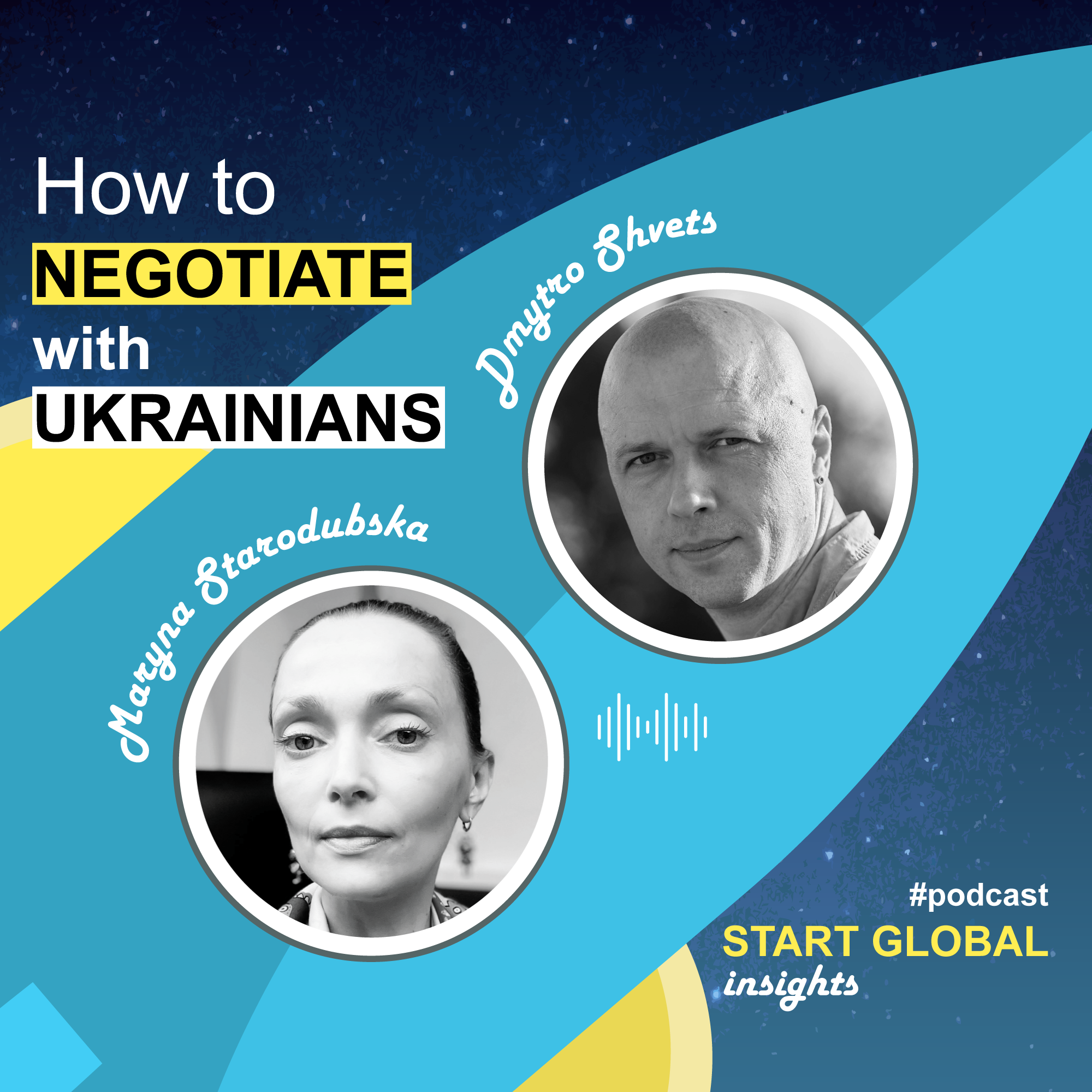 Negotiating with Ukrainians: Relationship First, Contract Second | Part 267 / 100
 How to Export to Australia: Market Entry Secrets with local expert85 / 100
 How to Navigate Complex B2B Sales Qualification in Global Markets80 / 100