
Practical Product Management · 2024-07-03 · 33 min
Key moments - from our scoring
Substance score
40 / 100
Five dimensions, 20 points each
Dana Rosenberg shares her approach to product leadership that centers on simplification, focus, and measurable progress - essential tactics for teams drowning in competing stakeholder demands. Working across Amazon and MasterCard, Dana advocates for a three-step framework: first, conduct qualitative and quantitative journey mapping through customer taxonomy to identify high-impact touchpoints; second, establish a disciplined rhythm of business (monthly reviews built on sprint cadences) that creates predictability and reduces thrashing; third, layer rigorous stakeholder management alongside product vision to ensure alignment without derailment. Marilyn and Leah explore how this translates across organizational cultures - what works at Amazon's wiki-driven, office-hours environment won't transfer directly elsewhere. The conversation emphasizes that while scoring systems and AI tools inform decisions, human irrationality and emotional stakes require product managers to maintain a point of view, communicate beyond their immediate team, and deliver incremental wins that demonstrate progress within a month. Leaders who provide consistency and rhythm enable innovation rather than chaos.
Customer taxonomy maps all touchpoints a customer experiences throughout their journey, layering qualitative data (interviews with key user segments) and quantitative metrics (actual usage patterns) to identify where pain points occur and where users spend the most time. This documentation reveals which touchpoints to prioritize for building measurable change.
Dana recommends analyzing where you can have the most impact, then balancing high-impact features against quick-win improvements that demonstrate progress without long development cycles. The art lies in using scoring tools to inform decisions while applying judgment to select the right sequencing and show measurable results within a month.
Dana advocates a two-layered approach: simplify your story to three key priorities with clear metrics and progress updates shown regularly, plus strategic stakeholder management where you understand each person's expectations, communicate your rhythm of business, and set explicit communication cadences so stakeholders follow a predictable schedule rather than making ad-hoc demands.
Consistency allows teams to know what they're getting from leadership and when, reducing chaos and negative discourse. When you establish a predictable rhythm tied to sprint cycles and monthly business reviews, teams feel safe within a framework that paradoxically enables more innovation than ambiguity.
No - while data and tools inform decisions, humans serve humans who are irrational and emotional. Product managers must interpret what scoring systems tell them, recognize when a logical top-scorer is actually the wrong first move, articulate the story behind prioritization choices, and account for stakeholder sentiment and organizational context that pure logic cannot capture.
Our reviewer’s read on each dimension, with quotes from the episode.
A handful of legitimate PM concepts (customer taxonomy, rhythm of business, art vs. science of prioritization) but they're stated at a surface level and buried under extensive small talk, mutual praise, and baby anecdotes.
It's really giving teams the power of being able to say no
how do you take that unit of work from your engineering team and add that up into a cadence that you can predictably rely on
Almost entirely recycled product-management orthodoxy - prioritization, storytelling, stakeholder management, consistency - with no contrarian or first-principles angle a seasoned operator wouldn't already know.
it all goes back to simplicity, right. And following up on the same narrative every time
What people need more than almost anything else from leaders is consistency
Dana is a genuine practitioner with Amazon and MasterCard product experience, and hosts share similar backgrounds, but she self-describes as early in her leadership journey and the discussion stays at a fairly junior, general level.
Dana and I work together at Amazon. Marilyn and Dana have worked together since then at MasterCard
It was my first job in product management
Some concrete named references (Amazon office hours, Klarna, OpenAI custom GPTs, BJ Fogg, OP1 document, PayPal single pager) but essentially no metrics, dollar figures, timelines, or measured outcomes to back the claims.
I know the four things that are important to Jeff Bezos this year
the team at Klarn is trying to do that
The tone is warm and affirming rather than probing; questions are open prompts to praise superpowers, with virtually no follow-up pushback or challenge to any claim.
today we want to talk about Dana's superpowers
you have this amazing superpower, um, of really galvanizing teams
Computed from the transcript - who did the talking, and the words that came up most.
In this episode, Leah and Marilyn talk to Product Leader & Change-Maker Dana Rosenberg about her superpower of galvanizing teams and driving change in product management. The discussion emphasizes the importance of simplifying the story, focusing on key narratives, and regularly delivering measurable progress. The hosts and guest share their experiences and lessons learned in product management and from working with one another. Takeaways Simplify the story and focus on key narratives to drive change and deliver measurable progress. Effective stakeholder management is crucial for success in product management. Creating a consistent rhythm of the business helps teams operate predictably and efficiently. Break down goals into measurable steps and prioritize what will have the most impact. Storytelling is an essential skill in product management, allowing for clear communication and alignment. Ask questions or suggest show topics at PracticalPMPodcast.com
Transcribed and scored by The B2B Podcast Index.
Speaker A: All right, welcome back to the Practical Product Management podcast. I always have. There's so many P's in that sentence. Uh, today, Marilyn and I have the exciting pleasure of interviewing our friend Dana Rosenberg.
Speaker B: Yay.
Speaker A: Welcome, Dana. Uh, Dana and I work together at Amazon. Marilyn and Dana have worked together since then at MasterCard. Um, but today we want to talk about Dana's superpowers. Welcome, Dana.
Speaker C: Thank you. And I have to say thanks, Leah, Marilyn, for having me today. I think these two women are the only ones who could convince me to talk on a podcast five weeks after having a baby. So I apologize in advance if I am totally sleep deprived. Um, but they. You two are my favorites, and I've learned so much from you, working from both of you and just getting to spend time with you. So I think you're the only two people that I would ever agree to do this for, um, with no sleep at all. So thank you for being the two of you to get me out of my shell, uh, this early in the process.
Speaker A: Amazing. No, we're so glad you agreed. Um, you get to be our first interviewee. Um, and, uh, so we immediately thought of you, and we were throwing out names of people we wanted to talk to, so I wanted to dive in, because. As in talking to Marilyn about why we wanted to talk to you. One of the things that came is that you have this amazing superpower, um, of really galvanizing teams, getting them moving in a direction. I don't know, Marilyn, if you want to talk about what you've seen from Dana and then let her dive in and talk about what she does.
Speaker B: Yeah. And it's not just galvanizing teams, Dana. You bring people together against a purpose, um, and you help teams organize their work in a way that shows, uh, delivery against customer value. Uh, over time. Even teams like internal systems, teams that, like, you know, that think their customers are APIs or customers are internal, like, people always, um, end up with this sense of purpose and delivering against a goal and an ability to measure against a goal, which I think is really unique. Um, and it also makes you really fun to work with, because teams feel like they're achieving something over time. It's not just a slog against a faceless platform. So that's what we'd like to talk to you about today.
Speaker C: Great. Well, I think superpower is a generous term, but thank you. I think I've learned from the best, and I think on this, I've really learned a lot from Marilyn, who is the best storyteller out there that I Know, but when I think about it, and I think about what we have to do in terms of product management and bringing the teams along with us, it's really giving teams the power of being able to say no of what there is out there that allows them to distinguish what's actually important.
Speaker B: And.
Speaker C: And I think taking that step back and having a moment to think through, okay, what are the most important things we want to achieve? How can we measure those? And then how do we focus on those small things and give them incremental value? Um, you know, I remember, Marilyn, we were in a situation where we had a ton of stakeholders who everyone thought they knew the right direction for an internal platform. Every single person we worked with, and it was one of these things where we'd show up at every single meeting and someone would tell us something else, and we would just kind of look at each other at the end, be like, is this right? Like, does this make sense?
Speaker A: And.
Speaker C: And so taking that step back, and we actually did a qualitative and a quantitative, um, analysis to look at a journey map and say, huh, huh? What are the right touch points of this experience where we can actually make a difference? And let's forget about all these different people who are telling us things, um, internally and think through where we can drive that impact. And then how do we have those teams actually deliver progress, um, in incremental value to show change against those metrics? And so I think taking that step back on that journey is the pivotal point. You're going to have people coming to you all the time saying, I want this, I need this, um, you know, make this happen right now. And if you don't take that moment to step back and say, well, what are we actually trying to achieve and how do I show progress against it? Then you're not able to tell that story.
Speaker B: So I had totally, like, thank you for, like, reawakening my brain cells because clearly most of them have been asleep. I had totally forgotten about the customer taxonomy. Um, why don't you. Can you take a minute and just sort of describe to our listeners, uh, what a customer taxonomy is, um, how you went through the process because it was kind of a beast to build, and then why it was important.
Speaker C: Yeah. So customer taxonomy takes an analysis of all the touch points that your customer goes through throughout the journey and the experience, and it layers on the touch points. So, you know, are they signing in, are they taking action, are they acting upon something? Um, how are they exiting the experience and documents that for you and the experience to build that documentation is both qualitative. So interviewing your key segments and knowing who those key segments are and being really strategic about it. Right. Who are your most frequent users, what are those users doing on the platform, or whatever your product is, and then also layering onto it the quantitative data. So is the quantitative actually telling you and mirroring what the qualitative is? And from that you actually build a map so you can see, well, where are my customers, what are they doing? And then building out, well, what's giving them the most pain and what are they doing the most frequently? And we took those main touch points to build the metrics and the story around how are we going to build change for this platform over time? And sorry, you hear a screaming child in the background. This is real life. In five weeks, she rolls a roost and I live in an apartment.
Speaker A: So she's in charge.
Speaker C: We're all at her disposal. She's leaving. She's leaving.
Speaker B: Sounds like some of my stakeholders. We're used to the synthrotic people.
Speaker C: I know I was saying the other day that, you know, product management, again, I'm so new in this journey and I become a mother kind of later in life, um, than most people. And I was saying to someone the other day, it feels a lot like product management. Like I have to prioritize when I'm going to get it done during the day and prioritize how I'm going to make her happy as quickly as possible and everything else falls apart. Um, and so it is really an exercise in prioritization. I know that's something that everyone faces in terms of work, life, balance and everything else, but I do feel like we're like managing a roadmap over here of like, what's going to keep her calm for as long as possible.
Speaker B: Uh, um, I feel like you just changed the topic of our podcast, like
Speaker A: right there with that statement, how product management shows up in your day to day life.
Speaker C: Honestly, it should be an entire, um, entire episode. I think Marilyn will give you tips and trips, tricks from her own life, and retros that she holds in her own life and stand ups, which is my favorite thing about Marilyn.
Speaker A: I mean, she put her kid on a pip.
Speaker B: He really needed to have a performance improvement plan, and so I had to sit him down and give him one.
Speaker A: He needed a pip. Maybe we have to do a segment on parenting as a product manager.
Speaker C: I think you do. Drew and I did the baby room based on BJ Fogg's behavior design and had post its on the wall of what Was important in a baby's room. M. Like, that was up for debate.
Speaker A: I love it. I think this is a good, good idea. I like it. So, Dana, I'm curious, like, as you were describing that, I think you. Were you done? Did you have anything else you want to do?
Speaker C: I'm done.
Speaker B: Okay.
Speaker A: Okay. I just want to make sure I didn't. We didn't lose. Lose the. Lose the plot along the way, as they say. Um, you know, a lot of times when we're building these kinds of solutions, the stakeholders don't understand that there are a multiplicity of people showing up and asking for lots of things. They're not really in charge of that. Right. Which is why we believe there's product management and platforms. But how do you think about, um, creating sort of those themes and how do you go about that process of bringing things together for different kinds of stakeholders showing up and asking you for them things?
Speaker C: Yeah, I think it's twofold, and I think it really depends on what environment you're working on. And I think something that's been successful at one place is not necessarily successful in another place. And I think that's really important to understand the environment that you're working in and take stock of that culture, because if you don't, um, you're never going to succeed. And so I think the first thing is simplifying your story. Right. You can't focus on everything. What are the three things you want to achieve? How are you going to measure it? How are you going to show progress and really focusing on a key narrative, um, up front and showing that change again and again. Right. You can't just say you're going to do something and walk away for a year. Right. You need to keep on coming back in standard periods of time to let people know how you're doing. But in addition to that of focusing on, well, what am I going to deliver, and working with your engineers and actually showing that progress and delivering for customers. It's also the stakeholder management piece, which I think is so critical understanding who are these different people coming to you? What is it that they're expecting? How are you going to work with them? How are you going to manage your expectations back to them of how you're going to communicate with them? So I think it's a layered approach. It's one. Here's what we're going to deliver, and this is our story, and this is our point of view, and that's the power of the product manager. Right. We have a point of view. We've taken all this data and we said, this is our path forward. And then the other piece of it is stakeholder management, which, again, is so critical to the environment. And if you don't effectively manage your stakeholders to, you're not going to get money, you're not going to continue to be able to drive change, um, and you're not going to have impact for those customers or those end users that you're trying to work with. And so for me, it's always been those two pieces of it. Both the making sure that I show my impact and I'm able to get back to people on those key points and not trying to take on too much and delivering quickly. And I think I learned that from Marilyn. Um, you know, if you can't show progress in a month, like, you got a problem, right? Um, but the other piece of it, and I think where people don't spend enough time as product managers, is understanding your stakeholder landscape and how you're going to engage with them, setting those expectations of how you would like to interact with them, make sure that meets their expectations, and then driving forward. Otherwise, you could spend your life spinning, and it's your priority to make sure that your team isn't spinning, right? That you're. You're owning those communications.
Speaker A: Yeah, no, that's a good point. It's funny because as you're talking, I'm thinking about, uh, Part of what you just said is exactly why we did this podcast. Like, everything is not a rule everywhere, right? You can't take every environment and say, you can take some best practices, you can take what you love and try to figure out if it works, but you cannot just plop this environment into that environment. And I mean, you two know, like, one of the things, one of my favorite things, when I used to run office hours for the Amazon payments platform, right? I would run these office hours and there were 80 customers of the payments platform, and they would all show up and be like, this is important to Jeff Bezos. And I always said it. It's not. It's not. Because I know the four things that are important to Jeff Bezos this year, and that's not on the list, right? And I would have to be very thoughtful about how I said, I'm sure he cares about this and I'm not overhauling the roadmap for this, right? Like, I can't. But let me figure out what we can do, right? And then it's really this. How can I get you something you want? But I may not be able to get you everything you want.
Speaker C: Right. It's totally true. And office hours don't even work at all companies. That's why I laughed. Right?
Speaker A: No, I know.
Speaker C: I like, that's what I love. Like Amazon. I mean, there's so many great things about Amazon, right? Like everyone shows up to office hours, everyone reads in advance. You can send people to a wiki. Those are great qualities of showing that people take ownership and they only come with questions. Which works for that environment that doesn't work everywhere else. And you have to adapt. Otherwise you've just strong darned people into something that they don't want to follow.
Speaker A: Absolutely.
Speaker B: Or they just don't.
Speaker C: Or they just don't.
Speaker B: They're like, I know you sent an email, but I never read them. Or I know you sent a doc, but I didn't read in advance. So.
Speaker C: Right.
Speaker A: Yeah. Yeah, totally. So when you're thinking about, you know, you said something you said that caught my attention. And I know that this is how Marilyn, like, I've learned this from Marilyn too. Like this ability to make sure you're delivering something measurable on a regular cadence, a month, whatever. How do you go about breaking things down into, like, measurable steps that people can really attach to and chase so hard?
Speaker C: Right? Like, I think that's the hardest thing of, uh, what's the. Must have to. What's the nice have nice to have and what can go first. Right. And what can be delivered on its own? And I think it really is taking that analysis of where can I have the most impact and can it go out on its own or is it worth waiting? Is there something easy that I could kind of do that doesn't take a lot of work, but shows impact. Right. And it is, you know, I know that we have all these tools out there in product management if I'm going to score this and, you know, all these different weighted measures. But at the end of the day, I always am like, the science is there and we can use it. Right. But it's also an art. Right. And that art is balancing the. What is the most impactful feature that I can get out there versus what is the easiest thing I can do that can have a little impact, that can show progress, and how do I bring that forward? And so I think you take the tools available to you, you look at what the numbers are telling, telling you, and then you have to see how does that measure up against the actual impact I need to drive both for my customers and how do I manage my internal stakeholders as well.
Speaker B: Yeah.
Speaker A: 100. Yeah. I think that that is one of the things like all these scoring systems when we, when the AI takes over,
Speaker C: I don't think we'll be out of a job because I think you have to look at the, look at what it tells you.
Speaker A: Exactly what I was going to say. When like there are, there are so many ways you can score something and something just on numbers would be like, do this. And you're like, that is the wrong thing to do first. This is what I'm going to do first. And you can then articulate this, tell the story of why. Right. And there is a story for why. It's not arbitrary. Right.
Speaker B: I think the other reason why AI is probably not going to take over in my career lifetime. Like it's more than welcome to. By the way. I like, I'd like to go sit by the pool for a few months. So if AI wants my job, like, let's have a conversation. Nameless AI. Um, but I think it's because we're serving humans and humans are irrational. Like if we were serving machines, if we were building tech for machines, um, we could be super logical and we wouldn't have to deal with this emotion of stakeholder management. Do I need a quick win or does the machine. The machine would know the score and the machine would be like, cool. That's logical. It'd be super spocky. But we don't serve machines. We serve humans and humans are wonderfully irrational.
Speaker C: Yeah. And we all know Marilyn, she will never sit by a pool. But, but I do think, am m I allowed to ask Marilyn a question? Because I think the piece of this really is how do you create that effective rhythm of the business? And I think, Marilyn, every time you come into an organization, that's the first thing you focus on. Right. Setting your expectation. I think it's worth people understanding that, that process because I think it's something that I think about all the time and something I try and ingrain and in any team I work with is what is effective rhythm of the business and how is it effective and internalized by the team members. So they're embracing that purpose and what's expected. But more importantly, how do we make sure the stakeholders agree with that and follow that cadence as well?
Speaker B: Yeah, that's a good one. So in all honesty, it's probably a self defense mechanism. Um, chaos makes me insane. And if I feel like things are predictable and repeatable, then I understand how to go through my day and get things done. Um, I actually want to have the most Information go out, um, to the most amount of people with the least amount of work. And that starts from understanding the unit of work that your engineering team is going to work in. So a sprint, right? Um, at the end of a sprint there's a retro, so there's information. Um, if your team's working two weeks sprints, then two sprints worth becomes, ah, an mbr, a monthly business review. Um, and so how do you take that unit of work from your engineering team and add that up into a cadence that you can predictably rely on? And that means, I mean, Danny, you know this. Like that means that sometimes I'm not producing documents at the whim of the person that's above me that wants information. The information comes out on a predictable cadence and you can have it and you'll know where it is and we're all going to talk it about, about it. Um, and if the meeting is a week and a half later, you're going to get old information, right? Because I don't want to cause my teams an overload of thrash. Um, we need to be efficient. It's almost like a machine. So it is a defense mechanism. Um, the fewest amount of meetings to get the most amount of information out as widely as possible.
Speaker C: The best defense mechanism. And then it's teaching our teams. I think this has all been ingrained in us and I think it is so hard and I think AI actually will help on this. It's like how do you make it in a way that anyone can understand, right? Like your team or the one person working on it can't be the only person that understands it. How have you sent it to the CEO versus someone in customer service? They would have the same general understanding. And that translation piece is so hard. Um, but it's so essential to make those rhythm of the businesses effective so that they can be reusable. And that's been a hard thing to train people, um, just to. How do you communicate beyond yourself and understanding that it has a value to a greater audience?
Speaker B: You just like gave me the best idea. Dana. I bet you there is a way for us to leverage GPT to pick up retro notes and release notes, to sort of start to aggregate information and summarize it for different people in different use cases with minimal human interaction. That might be the next thing I play with. That's awesome.
Speaker A: Thank you.
Speaker C: And to help people know and to help people, right. Make something that write something that makes sense or to give them a framework to.
Speaker B: I also like that notion of, I think that customer Service or the people that answer the phone either, you know, in a call center or have to like respond to emails, they're the people that often get the least amount of information and they're the ones that need it. So like, can you set up a system so that this is feeding directly into the people that actually need to ask and answer those questions for real humans on the other side?
Speaker A: Yeah, I mean, Go ahead.
Speaker C: No, go ahead, Leah, go ahead.
Speaker A: I was gonna say that I think that some of the idea behind some of the um, knowledge management chat information, like trying to get this information out of teams in release notes and all of that so that it's fed into the general company knowledge management system. Right. And so that the chat, if you, if the customer service agent asks a question, they get information in. I think the team, like the team at Klarn is trying to do that. There's teams trying to make that system work and, and function in a better way. Um, and I think that that's really, I think that's really important.
Speaker B: I like that. I, I have. So side note, I'm uh, gonna, I'm m gonna derail this just for a second. I actually spent some time talking to some people at Klarna through introduction from you and people from OpenAI. Um, because we've been looking at how they're using GPTs, custom GPTs to sort of like make things more efficient from a, from a knowledge management perspective. And there's just a lot of goodness in there.
Speaker A: It's pretty fun. Yeah. The one thing I wanted to add on this topic, on this subject because, you know, me and my little human centered brain said, you know, one of the things about building rhythm of the business and breaking things down into measurable steps and creating this kind of system. What people need more than almost anything else from leaders is consistency. We like to think it's all these other things that make leaders leaders.
Speaker C: Right?
Speaker A: But generally a team can even put up with a leader that's a little bit caustic, a little bit difficult, a little bit this or that. Right, Whatever. As long as when that person walks in the door, you know what you're getting. You know what I mean? Like you can deliver for someone that you don't necessarily like their style, but you know that they like their brain. Right? You're like, this person's a genius, but their style annoys me. As long as I know that that is a repeatable style and I know how to adjust to it. Right. And I think when you have chaos and ambiguity, teams then try to they try to wrestle with it. And it creates noise and discourse and, like, negative discourse. Right? Like, it just creates this whole. This space of chaos. And when you start to put rhythm of the business in place and when you start to talk to stakeholders and say, this is how we're going to operate, this is how you're going to come to me, these are what the themes are going to be. You create this consistency that people can go, I know what I'm going to get, when I'm going to get it. I know who to ask. Right. And that just in general, actually creates space for innovation because you feel safe in a consistent framework. And so that's something really important to me.
Speaker B: I think that's key. Um, and if we go back to superpower, like, Dana, why don't you describe your OPCO process, starting with, like, how you begin the meetings in sort of an interesting and fun way. How do you do unexpected things to deliver this meeting once a month? And what is this meeting? And how do you bring everybody together?
Speaker C: Yeah, sure. Um, and I would say, um, the fun comes from Marilyn. Marilyn's much more fun than I am. Just so every. So everyone is aware. I am not. I am very boring. Um, but, you know, what we did, and this really was an impetus from Maryland at the time, was creating a standard opco. Right. And it was an opportunity to bring all stakeholders together. And a lot of times we would start it with music or something fun or maybe a fact about someone. And it had people that we didn't work with every day. So it really set the tone for our team and who we were. And the first thing we started out with was, well, what did we deliver? What was the most important things that we show that we can show progress? What are. Then we went into, what are the metrics that we're measuring our business by? Like, that's critical. Um, and showing that we don't lose sight of what we started with. Um, and then the next thing was. Was tracking on our big rock. So those were big milestones or big, big achievables that we wanted for the year and how we were doing based on the deliverables. And then what came next? Our roadmap. So what do we anticipate seeing in the next three months? Things can always change. And so we're really hesitant about showing a year. Right. Like, you can have a year roadmap, but that doesn't mean anything. We all know things change. And then finally, um, what are some cool, exciting things you should know about what's going to impact your business, how can you work with us, et cetera. And so this OPCO moment was an opportunity for us to not only showcase, um, our work, but our team culture and then how we wanted to interact with other people. Um, and so it's really a nice model that I think can be applied anywhere in different formats, whether it's a meeting or an email or, you know, I don't know, a podcast recording that you send to people. Maybe that's the type of, you know, place that someone works. I don't know. Um, but I think, you know, it all goes back to simplicity, right. And following up on the same narrative every time. Leah, as you said, going to the heart and the people. As leaders, we haven't just failed our stakeholders if we're not following that narrative or showing them when we pivot and that changes, which can happen. But we've also failed our internal teams. And I think as, ah, someone in product, I get the most nervous that I might not be doing my job effectively if I go to my team and I'm like, what's most important to us? What is the, you know, I hate to say, you know, the buy. What is the document, right. That everyone that is following. Right. That everyone is going after. Right. Whether whatever, whatever doctrine you follow or subscribe to, or. So for Amazon and for Marilyn and Leah, it was probably the OP1 document. Like, if you don't know the OP1 document, you don't know what's going on. I work for someone else right now who came from PayPal. If you don't know the single pager, then you don't know what's going on. And I think if we can't effectively take those documents and simplify them for our team so they know where to go, then we also have a problem.
Speaker A: Yeah, 100%. Yeah. Because I think there's an element of it that is simplicity. So it goes back to storytelling. It's always storytelling, right. So there's always a narrative. Where are we going? There's an arc, there's a climax, there's a, uh, tailing down. Right. And the idea in my mind is always, how simple can I tell this story? How can I repeat it in such a way that it's interesting and consistent so that I start to hear it coming back to me?
Speaker C: Yes.
Speaker A: I know that when my team starts telling me my own story, I'm like,
Speaker C: yes, I am winning and you won't. You're like, I don't need to work anymore. Like, that's the. That's the moment when it all comes together.
Speaker A: Yeah. And, and even, especially with internal, like when you're building platforms for internal stakeholders, sometimes they start telling you what they want and it's what you've told them that they need. And you're like, like, I have done the thing, I've done the job well and I have been consistent. So we're back to consistency. Right. And my messaging has been on point, point and flexible enough that I've been able to tell that story. And I think that's so important. No matter to your point, whether it's an OP1 or a 6 pager or a 1 pager or a no pager, like whatever the document or the artifact is. Right.
Speaker C: Yeah. I think that artifact is key though, so everyone can go back to it and the consistency and transparency, Um, I can't imagine life without it. I know. It's how I, how I operate. You know, maybe I'm like Marilyn in that way, is that I can't handle chaos because I know every week I go back to see how I'm tracking against it. Right. And then on a quarterly basis, do we need to change something? And maybe it's more frequent or less frequent, depending on where you work, but setting up that framework so that you are tracking and set narrative and able to show the measurement and progress.
Speaker A: I mean, I literally use the same framework to help people build their like, career narrative. So obviously you just wrestle the artifact into whatever it is you want it to be.
Speaker B: Right.
Speaker A: So, um, I'm like, I like this artifact. Let me just play with it. Right? Let's build a strategy for your life, you know, So, I mean, it's, it's, it is really about storytelling. And coming back to that, how do you tell the story in a simple way that is measurable. Right. So what else? Anything else you want to talk that you want to share, Dana?
Speaker C: No, just that, I mean, you two are the ones with all the superpowers, I think. You know, I was thinking about it before I got on, even though you wouldn't tell me what I was talking about, which was making me a little anxious. Um, again, I don't like, I don't like chaos. Um, which I think is hard to say because in product management, you have no idea what's going to happen every single day. Um, but I was thinking about what each of you has taught me. Right. And I think, Leah, ah, thinking back on our time together, you know, you always had a laser eye for requirements of what was actually important, what needed to be in an initial release. Right. We were working on something that had never been done before, um, at Amazon, and we had to look at, um, competitors, what they were offering in the market, as well as what Amazon had internally in terms of its own capabilities. And then how do we get something out quickly? And I just remember sitting in a room with you and you just striking things out on a. At that time, the requirements were in a spreadsheet and you literally were striking them out and be like, this isn't a feature. And I was like, oh, this is a really. It was my first job in product management. It was such a great lesson at the time. Um, and the other thing was how to be real. Um, you know, I think we've been very fortunate that both of you have been my champions in the workplace. And I think it's because both of you have been vulnerable and open with me. And, you know, Leah was the first person to be like, that person was a jerk. Like, you can be mad. Like, they were a jerk. Like, they had no reason to say that. Like, let's think through how we do this. And so I think finding those allies and people you can go to, um, you know, for support and friendship and for perspective has been so key. Um, and so thank you, Leah, for that. I think. I love the fact that you're life coaching now, because I was like, oh, can you write me a strategy doc for my life? Starting with, can this child sleep throughout the night? I'll be right over.
Speaker A: I'll bring my auntie skills. I'll be right over.
Speaker C: Um, and then with Marilyn, I think, you know, it is the storytelling and the fun, right? Like, she's an amazing product leader. She is visionary in ways I will not like. Even as you two were talking, you're talking about scalability and platforms. And my immediate thing is, like, what about this one feature and can we get it done? Right? Like, I'm the, I'm the doer, right? Take it and move it forward. Um, but I think Marilyn reminds all of us, you know, you've got to come to work and you've got to have some fun, but you've got to be so clear on that, that narrative and how you're going to manage it forward. And I think, look, I'm not either of you, right? Um, we each come with our own style. Um, thank goodness. Right? But I think we've all kind of learned from each other, um, of what, what, what is, what can be successful and what isn't, and how we take these different, these different aspects of product management, but also People management and culture management to actually drive change for these products and for our teams.
Speaker A: Yeah, 100%. I have to say, like, if I go all the way back to when we were working together, Dana, I just think that Bill and Brad were like, Leah needs a boost because she needs somebody with fresh eyes who will be excited about stuff. And, you
Speaker B: know,
Speaker A: walking in position was, yay. And I was like, uh, oh, okay, this is gonna be hard. And she was like, really? And then we just would, we just kept moving, right? And we, at, uh, whatever stage we're at. So when you say, oh, you and Maryland are this kind of leader and I'm a doer. We were doers at some point as well.
Speaker C: Right.
Speaker A: And over time, the best leaders, in my opinion, have been doers because they know what it takes and they know what hurts and they know what, what you need. Right. And so I think your leadership, watching you grow, your leadership over the years has been so much fun because you are absolutely a great leader.
Speaker B: Right.
Speaker A: And the, the, the, the ecosystem is built by all of us being different, right. And coming together and saying, oh, what do you got? What do you got? What do you got?
Speaker C: I know. What do you got? Which, which, which, which, which. Which template can I take for my artifact that's going to work for this, right? Like, so hopefully someone will take from this a journey taxonomy or their own one pager or whatever it might be to make their lives simpler and easier for their teams.
Speaker A: Yeah, I think what we should do, Marilyn, for this episode, since we add some resources for some, why don't we dump a, uh, one page template, like just the main content, like, here's some pieces and we can share. Like, if you want to look at a one pager, you want to look at these kinds of documents, here's some examples in the world.
Speaker B: So a hundred percent. And I think that, you know, we'll find an anonymized journey taxonomy. Um, we'll find some anonymized resources. D want to tell you, though, that you have taught me so much. So, like, please don't under undersell your stuff. Like, you've grown the careers of the people around you. Um, you're a fierce advocate for your team. You are the best stakeholder management person I've ever met in my life. Um, you have a, a way of bringing cohesion and fractured teams that I've never seen anywhere else. So love that.
Speaker C: Well, thank you. That's way, way too kind. So I'll take it, I'll take it today, you know, um, and then can we add to the list of documentation and going back to the notion of art versus science. Right. And everyone has the. The ways to. To calculate the score of their features. Right? Like, well documented. Um, but I think, you know, Marilyn Tiny Habits and BJ Fog, the behavior design work, um, of just being able to look at that as a model for more of the. The subjective, um, or the qualitative and not the quantitative, I think is also a really nice tool to look at as well. Um, since I know I use it a lot, despite what.
Speaker A: What.
Speaker C: What the numbers might be telling me.
Speaker B: I do too. I will find that I use his tools constantly.
Speaker A: Yeah, it's good stuff for sure. Awesome. Dana, thank you for joining us. This was so much fun.
Speaker C: Thanks for having me. Thanks for making me get dressed today. This is a big step.
Speaker A: Well, we may drag you into another conversation in the future if we think of something that we're like, oh, we need Dana for this, so anytime to
Speaker C: hang out with the two of you.
Speaker A: Yeah. Thanks so much. All right, then, everyone, thank you for joining us, and we'll see you next time.
Speaker C: Bye.
Speaker B: Take care, Sam.
Other episodes covering the same guests and topics, from across The B2B Podcast Index.
 A Conversation about Designing Human-Centered Work in the Age of AINexus Institute for Work and AI: Research Deep Dive · on Journey mapping87 / 100
 How This CFO Sold LoveFilm to AmazonChat CFO · on Stakeholder management79 / 100
 Episode 77: Temitope Adelanwa - Making Sales Enablement Work as a Solo PMMThis is Product Marketing · on Stakeholder management77 / 100
 Build trust with a stewardship mindsetJournal of Accountancy Podcast · on Stakeholder management74 / 100
 'Own your results': Building accountability as a CFOFinancial Management (FM) magazine · on Stakeholder management72 / 100
 The Missing Piece in High-Ticket PaymentsMerchant Sales Podcast · on Klarna72 / 100
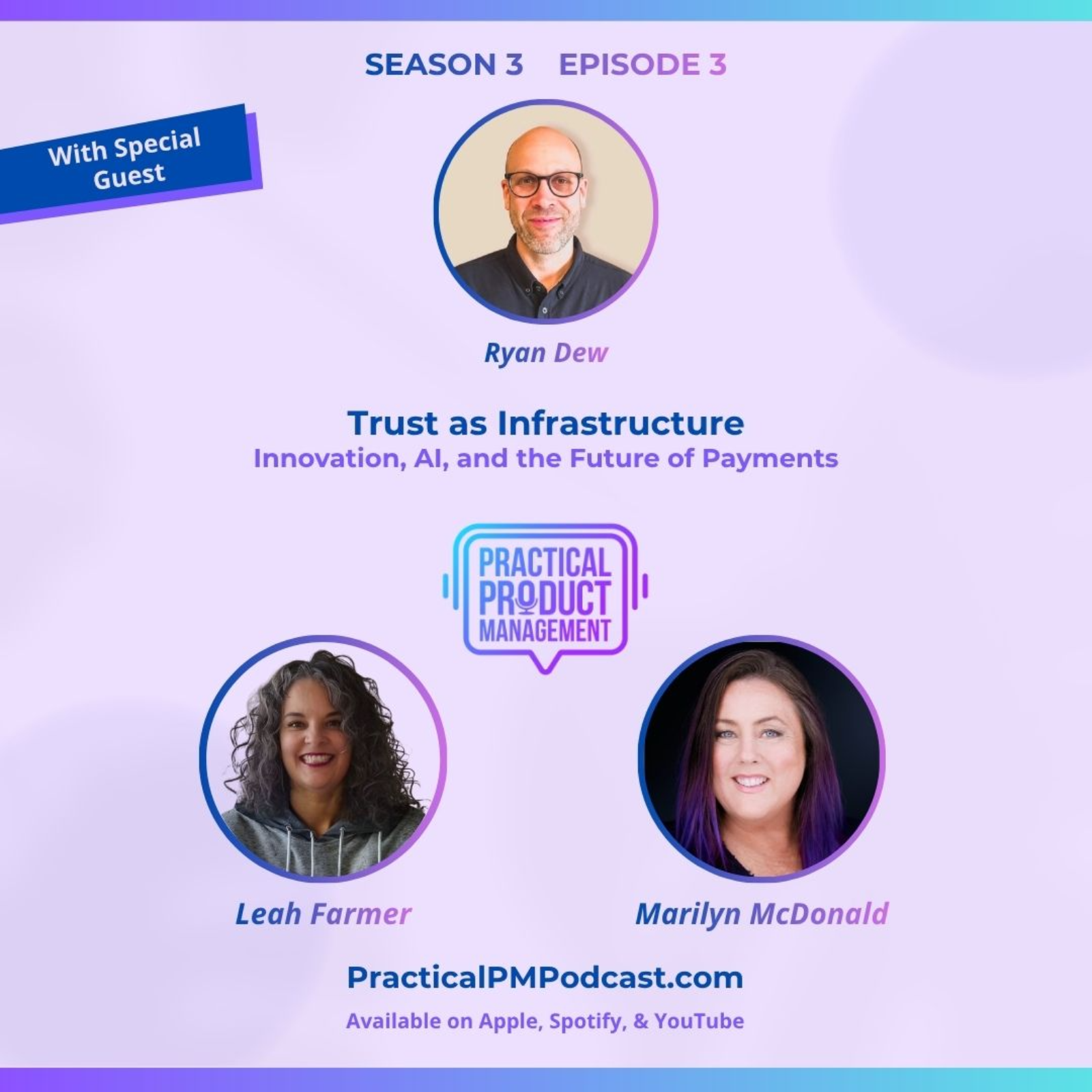 Trust as Infrastructure: Innovation, AI, and the Future of Payments65 / 100
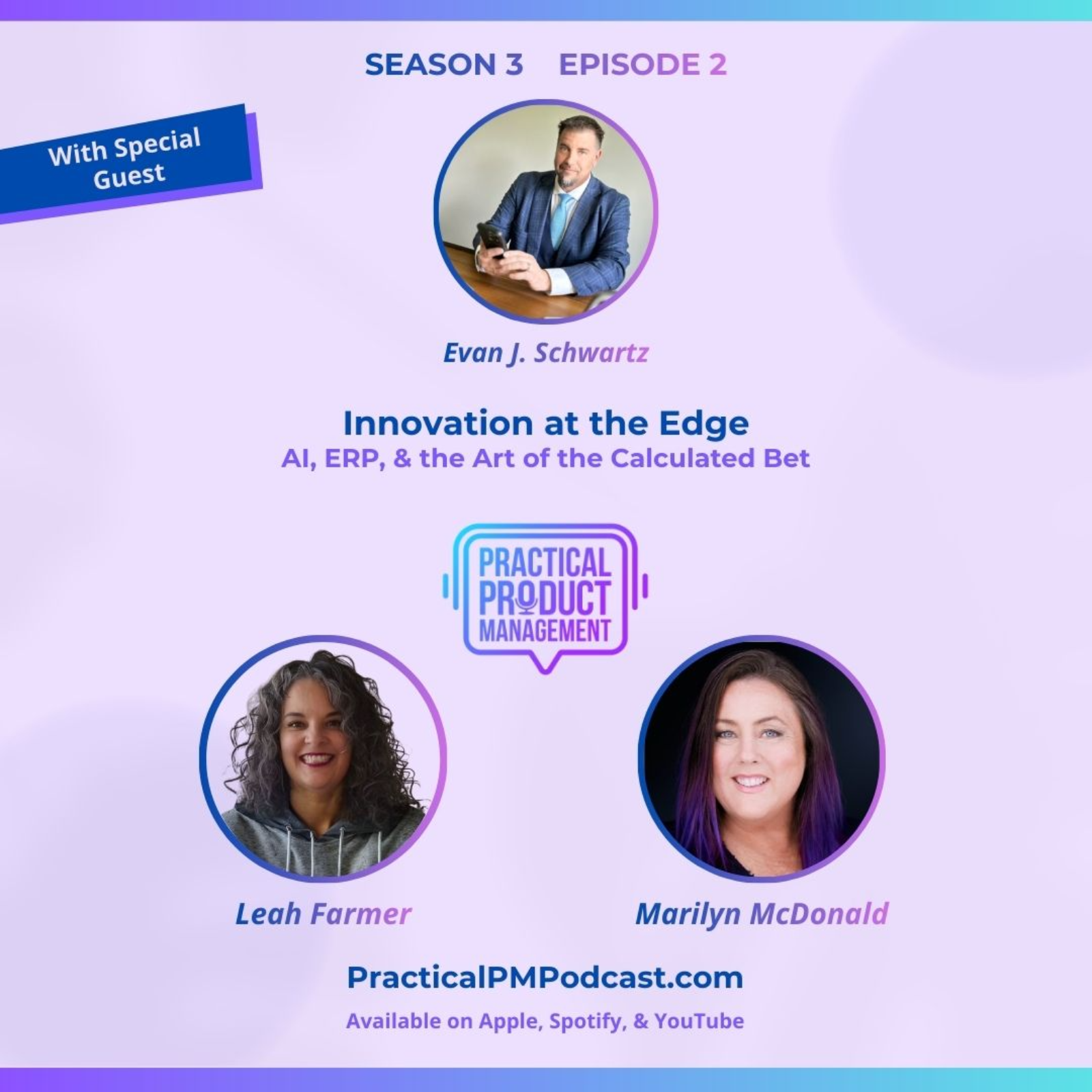 Innovation at the Edge: AI, ERP, and the Art of the Calculated Bet86 / 100
 The Books That Made Us Better Product Managers (And Better Humans)53 / 100
 Season Wrap Up - The CEO of Your Life55 / 100
 Best of Season 2, Part 2 - Conversations that reminded us why Product is a "people-first" craft. 61 / 100