
North Fulton Studio · 2026-06-23
Key moments - from our scoring
Substance score
35 / 100
Five dimensions, 20 points each
Lisa-Ruth Karnes, director of programs at the Cobb Community Foundation and leader of the Vital Signs Initiative, discusses how data-driven community assessment can address workforce housing and affordability challenges across metro Atlanta. Vital Signs is a countywide effort combining primary data from resident surveys and interviews (conducted with Kennesaw State University) and secondary data from census and regional sources to create a holistic picture of community needs. The initiative identified three critical barriers: transportation, family care, and housing affordability - which residents confirmed as top issues alongside utilities and food insecurity. Rather than prescribing solutions, Vital Signs serves as a research, planning, and catalytic tool that brings together funders, nonprofit leaders, policymakers, and elected officials to collaboratively address findings. Karnes emphasizes the importance of community voice, nonprofit partnerships for social trust, and iterative data collection every three to five years. For B2B operators in community development, housing, nonprofit grant-making, and regional planning, this overview explains how comprehensive data platforms can move communities beyond anecdotal conversations and align investment strategies - particularly relevant for those working with Marietta Housing Authority, Bridge Communities, Habitat for Humanity, and faith-based organizations engaged in transitional and cottage housing solutions.
Transportation, family care (caregiving), and housing affordability emerged as the primary barriers, followed closely by utilities, food insecurity, and financial hardship according to preliminary survey data from residents.
Vital Signs combines primary data (resident surveys and interviews designed with Kennesaw State University) with secondary data (census and regional commission data displayed in heat maps) and explicitly ties findings to action through community forums and grant-making strategy, creating a continuous feedback loop updated every three to five years.
Nonprofits already serving residents provide the social trust and community relationships necessary to reach service seekers; as a grant-making foundation rather than direct service provider, the Cobb Community Foundation relies on these partnerships to gain access and credibility with the residents being surveyed.
Bridge Communities is creating cottage communities on faith-based land for unhoused students, Marietta Housing Authority partnered with the school system on six teacher homes, and Emmanuel's Village is developing tiny home communities for unhoused individuals on Glory Houses property.
Our reviewer’s read on each dimension, with quotes from the episode.
The episode contains a handful of concrete data points useful to an operator thinking about workforce housing and talent markets, but much of the runtime is occupied by preamble, pleasantries, and broad-strokes nonprofit process discussion. The ratio of novel signal to filler is low for a B2B context.
Redfin reports that almost 28% of the three bedroom or more houses in the United States are owned by empty nest baby boomers and millennials with children only 16%
in north Fulton cities, the 25 to 34 year old age group has declined by 3.2% over the past three years
The conversation operates almost entirely within standard community-foundation and nonprofit-sector frameworks - data plus action, cross-sector collaboration, iterative assessment - with one mildly interesting angle around social-belonging as a leading indicator. No contrarian or first-principles thinking surfaces.
do you feel like you belong in your community? So, social connection. Yeah, social connection. And I think, to me, that that indicator
data, depending on how you frame it, you can pull different things out of the data
Lisa-Ruth Karnes has genuine ground-level practitioner experience working with housing-insecure families, but she graduated in 2020 and leads a six-person organization; she is not a senior operator who has driven outcomes at scale, and the Vital Signs initiative is still in its preliminary-data phase with no published results yet.
I graduated in 2020 and was very fortunate to have an internship at the Carter center
We are a very small organization. We are six people right now growing very slowly
There is a reasonable density of named sources, specific percentages, and concrete organisations (Redfin, KSU, Atlanta Regional Commission, Bridge Communities, Neighborhood Nexus), and the hosts supply some grounding numbers around AMI and home prices; however, most of the programme-level data is still forthcoming and the cited figures are from third parties rather than the initiative's own published results.
Redfin reports that almost 28% of the three bedroom or more houses in the United States are owned by empty nest baby boomers
area median income, which is just over 100,000. That's a home price of about 300 to 350,000
The hosts ask a decent range of questions covering methodology, cross-sector collaboration, and forward-looking concerns, and occasionally try to make the conversation practical, but there is no substantive pushback, no challenging of claims, and several exchanges devolve into affirmations and tangential name-dropping.
Is this primarily a research tool, a planning tool or catalyst for action?
What concerns you the most about the next five to 10 years and what are you optimistic about?
Computed from the transcript - who did the talking, and the words that came up most.
Transcribed and scored by The B2B Podcast Index.
Kathy Swan: Broadcasting from the North Fulton studio of Business Radio X, it's time for North Fulton Voices. This show is brought to you by the North Fulton Improvement Network addressing the workforce housing crisis in our region.
Lisa-Ruth Karnes: Now, here are your hosts.
John Ray: Hello again, everyone. Welcome to another edition of, uh, North Fulton Voices. I'm John Ray and, and sitting alongside Kathy Swan and Jack Murphy. Kathy, Jack.
Jack Murphy: Morning, John.
John Ray: Hey, great to have. Great to be back in the studio with both, both of you.
Kathy Swan: Thanks for having us, John.
John Ray: Absolutely. We've got a fantastic guest today. Lisa Ruth Karnes is with us. She is with the Cobb Community foundation. And we're going to be chatting with Lisa Ruth in just a second. But before we get to her, we can't let anything start on this show. If you're a longtime listener, nothing starts without some data. We are always looking at the data and that's important stuff, Jack, with the facts, you got to have the facts. So let me go out to the facts on the ground, man.
Jack Murphy: Jack Murphy, man in the street.
John Ray: Yeah.
Jack Murphy: We've talked before on this podcast, John, about the difficulty early career families have finding affordable housing in north Fulton. And we believe that is having a noticeable impact on school enrollment. And one of the contributors leading to this challenge is that seniors, my people, are staying in their homes longer, creating a log jam in the housing pipeline. Redfin reports that almost 28% of the three bedroom or more houses in the United States are owned by empty nest baby boomers and millennials with children only 16%. To give this more of a, uh, local lens, in north Fulton cities, the 25 to 34 year old age group has declined by 3.2% over the past three years. Three years isn't a long time that's noticeable. But during that same time, the 65% or 65 year olds have grown by 6.6%. So we're living, staying in our houses longer. Which jam up the whole pipeline. It does. That doesn't mean that an early career family could buy a million dollar home. But if somebody in a million dollar home has empty bedrooms that they're not using and moves, that just lets everybody move up, theoretically. So communities, uh, across metro Atlanta are facing a growing mismatch between jobs, incomes and housing options. In many suburban, uh, counties, teachers, healthcare workers, young professionals, seniors and first responders are struggling to live near where they work. At the same time, most communities don't have a single shared source of data connecting housing, transportation, demographics, economic mobility, education, health and quality of life. That's why the effort that, uh, Lisa Ruth is going to talk about today from the Community foundation is so important. The initiative is called Vital Signs and it gathers and analyzes community wide indicators to identify trends, gaps and opportunities that otherwise might go unnoticed until they become a crisis. So as you can see, she's a data gem too. It's a more holistic way of understanding how communities function. North Fulton has many organizations studying pieces of community life, housing, transportation, schools, nonprofits and demographics. But few efforts are trying to combine all of those signals into one comprehensive picture. We are trying to do that at nfin. But Kathy, why don't you introduce our guest?
Kathy Swan: I'll be happy to. So today we're going to talk with Lisa Ruth Karnes. She's the director of programs for the Cobb Community foundation and leader of the Vital Signs Initiative. Many of us in North Fulton know Lisa Ruth from her years at North Fulton Community Charities where she worked very closely with families navigating housing instability, financial challenges and access to services. So welcome Lisa Ruth, for listeners who may not know you yet, can you tell us a little bit about your background and your role at the Community Foundation?
Lisa-Ruth Karnes: Yes. Hey, thank you guys so much for having me on. John, Jack and Kathy, it's really nice to be back in North Fulton for a little while. My husband and I are originally from Pennsylvania in central Pennsylvan near Hershey. We moved to New Jersey for seven years and started a family there. In 2005 we moved down here and we've been in North Fulton ever since. I now work in Cobb, but professionally I went back to school as a non traditional student with a goal to intentionally work in nonprofit. So I graduated in 2020 and was very fortunate to have an internship at the Carter center with their human rights program, which taught me a lot about nonprofit how it works. But it was a very international lens as you can imagine. So when the opportunity to work at North Fulton Community Charities came up to revive their workfor program, I was like, oh my gosh, what a great way to help my neighbors right here. So that's what I did. Brought their workforce development program back on track, which I believe is still going, going strong today. And then I moved into donor development as the grants manager. So that really taught me that data Jack is very important when talking about needs and outcomes and then transitioned to the foundation about a year and a half ago as the programs manager, which basically is on the flip side of the grants table. So rather than applying for the grants, we're now I'm overseeing grant making strategy, how we manage our community investment, investments and how we support our non profit partners in Cobb to do the best work that they can do.
Kathy Swan: Wow, that's a lot.
Lisa-Ruth Karnes: Yeah.
Kathy Swan: And of course, many of our listeners are very familiar with North Fulton Community Charities, so, uh, they might remember your name here. So I'm curious, how did that experience, your actual working with families, shape your way of thinking from this new community foundation? Cop Community, I should say. Foundation, the community needs today.
Lisa-Ruth Karnes: Yeah. So I've been a longtime fan of Northfonte Community Charities, donated their shop there, the thrift store. Was actually an ESL teacher there, too, before I joined the staff as well. But understanding, really from the ground up, understanding the needs of the families that are your neighbors, that's where kind of where it started. I learned that everybody in the community can support in some way, whether that's donating, shopping, supporting your local nonprofits. But really, I spoke to neighbors firsthand as a teacher and, and as a workforce development professional. And then translating those stories that I heard and learned about into data and the context to tell the story. The bigger story to funders was really the piece that kind of put it all together. Now that I'm sitting on the funder side, understanding how to break that down in the other way is now part of the challenge as well. But really understanding how to write the grant to tell the funder the whole story without losing the person that really the story centered around.
Kathy Swan: That sounds like a dream opportunity for a former grant writer. I'd love to be giving out some money. It's nice. Was there a moment when you realize communities often lack a complete picture of what's really happening beneath the surface?
Lisa-Ruth Karnes: Yes. I think being an ESL teacher and being really in contact with the families, one on one, you hear stories of, I'm working, but I need this. I can't access it because I can't get there because I don't have a car or I don't have childcare. And you just. You hear all of the stories. Right. So what the challenge is, as someone who works in the industry and in nonprofit, is to translate those stories into some sort of narrative that we can then recreate and find solutions for.
Kathy Swan: Great. So we need to know what drew you to Vital Signs, and you need to tell us what Vital Signs is.
Lisa-Ruth Karnes: Yeah. So Vital Signs is just one piece of what I do at the Community foundation. And of course, I say this a lot. Uh, if anyone's not familiar with the Community foundation, we're a unique entity within the nonprofit space. We hold funds on behalf of charitable people, businesses, organizations, and we also help to support our nonprofit community. So what that means is we hold funds, we're a funder, but we also have programs. So part of the program, one of the programs that we run is called Vital Signs. And this is a countywide effort in Cobb county to really take, uh, a wide lens on what is happening to our community. So it's asking the question, what, how are we really doing? And how we're answering that is we're going straight to the people who are experiencing the need, which is the service seekers within Cobb County. So that's who we're asking.
Kathy Swan: So you're talking to program providers primarily?
Lisa-Ruth Karnes: We're going to the people. Going to the program providers, yeah. Yes.
Kathy Swan: Why is it important to look at community holistically instead of focusing on only one issue at a time? Because you're looking at a lot of issues here.
Lisa-Ruth Karnes: We are looking at a lot of issues. So I'll back up a little bit. So Vital signs started in 20. This is now version two, I should say. So about five or six years ago, Cobb Community foundation did a version of Vital Signs. It wasn't called that at the time. It was called the Cobb Community Human Needs Assessment, I believe. So this is version 2. And the whole point of it is to not only collect data, but also take that data and turn it into action. Right. The data that we are collecting will then be the impetus for a strategy to bring people together to talk about what's happening. So by people, funders, nonprofit leaders, policymaker, business leaders, all the people in the community who have a stake in how the residents experience living there.
Kathy Swan: So you're including elected officials, council people. That's something in your audience.
Lisa-Ruth Karnes: Absolutely.
Kathy Swan: Interesting. So is this primarily a research tool, a planning tool or catalyst for action?
Lisa-Ruth Karnes: Uh, it's absolutely all three. Which makes it even a little more complicated. Right?
Kathy Swan: Yeah.
Lisa-Ruth Karnes: So when I say we're going to the people, we're including community voice. So the. There's. I should explain a little bit more. There's two buckets of data. So we have the primary data, which we are doing in collaboration with Kennesaw State University, who designed a survey and interview intentionally around some focus groups that we did last year with nonprofit leaders. They identified three big buckets of need that they were seeing from their constituents. Those were transportation, family care and affordability, especially around housing. Those are probably not surprising to many of your listeners and to you also. But we took those three big things and we use them as guardrails to design the survey and interview intentionally to include those. But Also to expand wider than that, the second bucket of data is a secondary data. So this is pulling from existing sources already. So this is the census data, this is Atlanta regional commission data. And that data will be put into a heat map which will be available on our website. All of this will be available on our website when it's published. But so that gives us the context for the questions that are then asked in the survey and interview. So those are the two big buckets of data that are going on in the project. And to be clear, the people answering the survey and interviews are the residents in the community experiencing need? Oh, uh, yes.
Jack Murphy: Yes. So NFIN started with a broad kind of agenda for five different sectors. Transportation, housing, income, food insecurity, and child care. Child care. And we realized we didn't have the capacity to be able to even investigate that level of detail. So we have focused on housing, specifically missing middle housing under the idea that we're looking at a population. Uh, we tried to be the poverty task force for a while, and people just wouldn't seem to accept it that we have poverty in northfolk. You and I both know we do, but it just seems to be a little more hidden than in some places. So we've focused on housing. Are you seeing that as a large kind of response now, or is it still those top three things?
Lisa-Ruth Karnes: Yes, we just received the preliminary data, like a summary, basically. This is not the full report, but a summary from Kennesaw State University a couple of weeks ago. So after digging into that, we've really come away with some preliminary data. Again, this is going to be like really top level. But transportation obviously very often cited by the residents as a barrier to access financial hardship with housing right there at the top, and I think followed very closely by utilities and food. So those were very big things. And caregiving also was mentioned quite a lot too. We have yet to really get into the interview data. So there were survey and interviews. There were 20 in depth interviews done with some of the residents. So I think we'll get a more nuanced picture of what that means once we get that report back.
Jack Murphy: And do you think that might include solutions like duplexes and ADUs and that kind of stuff?
Lisa-Ruth Karnes: So the residents that we asked, yes, we did, uh, ask some very open ended questions intentionally. Just what do you see as your barriers and what do you think some solutions are? As you can imagine, we got back a varied amount of different solutions. But the real point of vital signs is the data plus action. That's really the point. So once we get the data and do our launch event, which is on October 15th, and this again, uh, will be available to the public. So the idea after that is to bring people together who have a stake in the community to talk about what we've learned and how we're going to move forward. So we're not prescribing any action. We really want to talk to people about what do you see in this report that maybe we can work on together? And that's going to. That might vary, Right. There might be a lot of ideas around that, but internally, as a community foundation, we'll be putting that as basically a North Star for our grant making, for our community investment, our impact investing strategy, which we're just dipping our toe in impact investing in the next couple of months. But we would. The data that's coming out of this will really be like a guideline, a guide marker for us to start conversations, to bring people together and to make decisions.
Jack Murphy: That's really interesting.
Lisa-Ruth Karnes: Yeah.
Jack Murphy: You, uh, know, we, we look at NFIN as how are we going to solve it? And you're saying, how are we going to educate the community well enough that
Lisa-Ruth Karnes: they will solve it, we'll solve it together. Right. But we have to decide on what that is. Right. And to decide on what that is, we need to know what the context is. Right. So I think once we get the context right and we get the. We have an insight into what people are actually experiencing rather than what we think they're experiencing, then we can move from there. Right. So it's meant to be an iterative process. The data collection will happen every three to five years. The heat maps will be updated annually, most likely so that we will, this will be a continuing process. And then perhaps thinking really long term, Once we have 5, 10, 15 years of data, we can use those measurements to understand where did we start and where are we now.
John Ray: Right.
Lisa-Ruth Karnes: Long term, how are we doing, say, in transportation? Is this getting any better? Are people experiencing it in a different way?
Jack Murphy: Have, have you thought yet about what this community forum might look like?
Lisa-Ruth Karnes: Uh, yes, lots of thinking, lots of thinking about that.
Kathy Swan: We want to steal the idea after October 10th.
Lisa-Ruth Karnes: So yeah, to be perfectly transparent, it's going to depend on what people tell us. Right. And it's going to depend on the context. Every community is going to have their own unique challenges, their own unique solutions, because every community is different. What work works in Cobb, it's not necessarily going to work anywhere else. We can look at examples. Absolutely. Of what other, I will say vital signs is A an example of looking at what other people in other communities are doing. Like the Athens Wellbeing Project. They're another great example of a community input device that is being used to bring people together. So there are other folks out here doing that this type of work, but it's going to look different in every neighborhood.
Jack Murphy: I'm asking you questions like you're our consultant, so am I ever retired. How do you elected officials are going to take to the data?
Lisa-Ruth Karnes: Yeah, that's a good question. So we're inviting them into the conversation early. The plan is to invite people to sit down, look at the data, have a conversation. The launch event, it will be open to obviously the nonprofit partners that we partnered with. I would be remiss if I didn't say thank you, honestly, to the nonprofit partners who open their doors to KSU and to Neighborhood Nexus to come in and talk to the people that they serve because we're not a direct service provider as a community foundation. So where do those relationships and social trust come from from? It comes from the nonprofits that are already in the communities doing the work. Right. So important note there. It's very integral to have the social trust of the community to get anywhere with this type of project. So. Sorry, I got off tangent a little bit.
Jack Murphy: That's okay.
Lisa-Ruth Karnes: Yeah, yeah.
Kathy Swan: Actually, you segued perfectly for me. My question or my comment? Kudos to the Cobb Community foundation for taking this on because you've got the resources and you've got investors that can say, wow, look at the work that you've done to bring these issues to light. So I think it's very unique. I'm curious as Athens well being, is that who's managing or funding that? Is that a city or county?
Lisa-Ruth Karnes: I'm not as familiar with who might be funding them, but I do know that from what I understand, they are a separate entity. The Athens Wellbeing Project that works in collaboration with many of the county leaders and I believe UGA is a, is a part of that as well. Our relationship with KSU in our. Back in. Right in our backyard is a great boon for us in Cobb county as well.
Kathy Swan: It's a great project for ksu, um, for their students. I know we've worked with KSU before and the social services departments and it's very interesting. So let's go. Let's switch back to our challenges. We see one that residents experience issues individually, but they don't always see the larger patterns. Does data help communities move beyond anecdotal conversations? Are you finding that do you expect to find that?
Lisa-Ruth Karnes: Yeah, that's a great question. I think the answer is yes, and the answer is both. I think some audiences are going to be moved by the anecdotes and that's always important. Telling a story is always important. But for some audiences, the data is going to tell the story. I will say data, depending on how you frame it, you can pull different things out of the data. Right. You can pull different ideas. Excuse me, different narratives out of the data. I will say having the evidence based outcomes is where we see vital signs really adding value. Because it is really important to have the data in each of those categories. Uh, absolutely. Hands down. Because vital. Vital signs cannot be the be all, end all of every single transportation survey that's ever going to be. That's just not possible. But what we can do as a community foundation is provide the data and a platform.
Kathy Swan: Right.
Lisa-Ruth Karnes: That's where we feel our value adds as a convener, as a connector, as the leader of a conversation, bringing people together. That's kind of where we offer the most value to the community.
Kathy Swan: And that platform is going to include a lot of stories.
Lisa-Ruth Karnes: Absolutely.
Kathy Swan: Yeah. So your data is backing it up and then the storytelling begins. Right?
Lisa-Ruth Karnes: Exactly.
Kathy Swan: What misconceptions do communities often have about. And, um, we're going to look at housing here, on affordability or workforce housing. Are you seeing pushback at all or an open minded group of folks?
Lisa-Ruth Karnes: I think north Fulton and Cobb probably share a lot of similarities in that way. Just as a north metro Atlanta area. I will say there is a lot of. There are lots of conversations happening and I'm acknowledging a lot of people in Marietta Housing Forum, the Marriott Housing Authority. There are a lot of nonprofits like Bridge Communities, Habitat for Humanity, Northwest Metro Family Promise that are doing great work in housing in Cobb. I think the conversations are starting to become more holistic around housing. But there are innovative solutions happening right now in the community. So I. We're there, we're having the conversations now. Will it grow? I would love to see it grow.
Kathy Swan: Yeah, we actually. Jack, we had Marietta Housing and Marietta school system partnering. Remember they came to our forum last March where they have, I think six homes that they shared part or they partnered in order to get those six homes built. I think for teachers.
Lisa-Ruth Karnes: Yes.
Kathy Swan: And. Yeah. Yes.
Jack Murphy: And the bridge communities is also pretty innovative.
John Ray: Yeah.
Lisa-Ruth Karnes: Yes. Yeah. Using faith based land to look at how they might be able to support temporary housing, transitional housing for unhoused students.
Kathy Swan: So that would be a housing program within that faith community.
Lisa-Ruth Karnes: Yeah, it's like a partnership. I believe it's a cottage communities being built on faith based land specifically for an audience of unhoused students within the school districts in Cobb County.
Jack Murphy: So, yeah, we've talked about having Kevin.
Lisa-Ruth Karnes: You should do a podcast. I would second that.
Jack Murphy: He's a great guy.
Lisa-Ruth Karnes: Yes.
Kathy Swan: Awesome. Yeah, I'd love to hear more about it too, because we struggle. We struggle. We've talked to many faith based churches, uh, temples about unused land. In fact, we're trying to get a land audit for the north Fulton area of land available or land that could be condemned or it's not utilized. Help. What do we do? We have so many people that are struggling with this workforce, housing situation.
Lisa-Ruth Karnes: And I'll just mention one more and then we can move on. But there's a small one, it's called Emmanuel's Vill. That's also a Tiny homes being built also. So that might be another.
Jack Murphy: Is that the one in Acworth?
Lisa-Ruth Karnes: I think that's J and J. Oh, is it JJ's playhouse? I think is an Akwa. This one's in. I believe it's. I think it's Marietta or Smyrna. I'm not sure what city it's in, but it's on Glory Houses property and it is a collaboration of tiny homes for unhoused individuals. So yeah, there's again, it's going to look so different, the solutions depending on where you are. We were all facing the same challenges around zoning issues and lack of space and portability of the actual sexual properties. We're all dealing with the same types of factors.
Kathy Swan: I love talking about tiny homes, but that's not on my agenda here today. But just take note, listeners. People are building tiny home communities and cottage communities. So you're a single organization that's working toward this. Do you think you can solve these issues alone or how important is a cross sector collaboration?
Lisa-Ruth Karnes: Critical. Absolutely critical. So we are a very small organization. We are six people right now growing very slowly, which is fantastic. But. But collaboration is critical. So the theme of, uh, so I will say next year, as part of the rollout of Vital Signs, we would love to offer an additional grant opportunity to our local nonprofits within COBB to work on some of the issues that are. That we're seeing through Vital Signs. And the theme of that grant will be collaboration. So we would love to see more collaboration between nonprofits, between public and private partnerships between all these different entities. I don't want to put all of the onus on the nonprofits, but because There are obviously other group that can be participating in this as well. But collaboration is absolutely. It's the key. Uh, we really can't do anything alone.
Kathy Swan: And that's smart, uh, to get ahead of it. How can communities avoid becoming reactive instead of becoming more proactive?
Lisa-Ruth Karnes: That's such a big question. It's so huge listening. And you know, what I found through the actual survey instrument that we did with KSU is what I learned is that you get a better response when you ask. So if you just ask. So we rolled out the survey in different ways. So a poster with a QR code, a link in an email or a newsletter, or literally having people walk up to people and just say hi, can answer this survey for us. We're trying to figure out what you're facing and what the barriers you're seeing and what solutions you might see. Would you be willing to take this survey now to be transparent? We also offered an incentive. We found that, you know, asking people is a really great way to get an answer to a question that you're seeking. So rather than just putting it out there and hoping that someone is going to respond, and I will say people responded just in the few quotes that we've gotten back from the respondents so far. They're very thoughtful in their answers.
Kathy Swan: And most of these people that were taking the survey, what kind of demographic would they have been? Yeah.
Lisa-Ruth Karnes: So we went, like I mentioned, through our nonprofit partners, 23 of them agreed. So it would be the folks coming in to seek those types of services. Now, we did make sure that we covered a wide range of services, so like food security, senior services, transportation services, all that kind of. So that we weren't skewing heavily in one direction or the other. But who better to ask than the people who are experiencing the need? Right. What are you seeing?
Kathy Swan: Great.
Jack Murphy: So I know you live in north Fulton, so you've got some experience. How would a North Fulton organization, just a random organization, not ours, but yes, ours. How would you. How would they. How would we start?
Lisa-Ruth Karnes: I'll acknowledge that this Vital signs did not start with me. So the vital signs started well before I joined the foundation. Credit to Sherry Martin, our CEO, and others on our board and who were on the board at the time, who decided to look into how other communities were having conversations, basically. How were they learning about their neighbors and what their neighbors were experiencing at that time? It started out, I think I mentioned this as a human needs assessment and group from there. So I think the lesson is, for me, from my perspective, is that, yes, you can start with the data which, yes, it's good to have the evidence based data backed answers but then it has now evolved into this data plus action platform. So knowing where you want to go before you start would be, I think the number one thing for me, just understanding where. What kinds of questions do you want answered? And then just continually talk and ask people, people about it. I know that sounds so. It's way up here but I wish I had a roadmap. I would give it to you but happy to share with you in a year, two, three, when I learn more.
Jack Murphy: The asking questions is a, that's a really good lesson.
Lisa-Ruth Karnes: It was for me, comedian doing the
Jack Murphy: man on the street kind of thing. Yeah, yeah, that works.
Lisa-Ruth Karnes: Yeah, it really does. Having a real person talk to a real person. It does, it works.
Jack Murphy: So based on what you know so far, what are some of the most important community indicators that, that we should, we should be looking at?
Lisa-Ruth Karnes: So in the previous version of Vital Signs, there were four indicators. Uh, transportation, workforce and economics, housing and I'm forgetting, I think food security was its own. And we've expanded that into now six indicators that will be on the heat map. So education, housing, health, including mental health, workforce and economic, family care, which we're, that we're defining that as childcare, elder care and care for folks in the family who have disabilities and then transportation as its own indicator. So on the heat maps, once they're up, you'll be able to search by each indicator or their indexes. And then within each of those indexes there are four to six indicators in each index that will tell us the score based on that. And those are from the census or Atlanta Regional Commission. Gears was another one that we uh, use for child care. Other people are doing this work, work too. Let's lean on each other and what we already know about our community.
Jack Murphy: We've got to connect with a community foundation. We gotta go see Frank.
Kathy Swan: Yeah, Frank Fernandez or Dupree Swaddy.
Jack Murphy: Yeah.
Kathy Swan: Are you listening, Frank?
Jack Murphy: What concerns you the most about the next five to 10 years and what are you optimistic about?
Lisa-Ruth Karnes: Oh, gosh, yeah. The harder question is the uh, the easier question is the optimism. Right, so we'll save that for last. But the harder question is what concerns me? I think, I think what concerns me is that all of these things, when you compound them together and you talk to people about what they're experiencing, that they are experiencing something very, something very negative, a loss of hopelessness, they don't see themselves. One of my favorite questions that we Asked in the survey is basically something to the effect of, do you feel like you belong in your community? So, social connection. Yeah, social connection. And I think, to me, that that indicator. I believe it was only one question. I have to go back and check. But I think it tells you a lot, because the more we hear about, it's hard to access things, it's hard to afford things, it's hard to do these things and then compound onto that in isolation. We're doing that without community support. We're doing that without our neighbors. We're doing that without. It seems personally to be even more hopeless. Right. If you're trying to do it all alone. So I think as the challenges rise, I think we can handle them as a community together. But as the challenges rise and we feel like we don't have anyone to call or to lean on or to help us, that's when it feels like it's insurmountable. Right. So to me, that is the scariest part. And then people start to kind of pull back and recede, and participation and everything kind of just declines.
Kathy Swan: They isolate.
Lisa-Ruth Karnes: Yes, exactly. Exactly. So, uh, I think keeping people engaged and keeping them out of that sense of isolation and hopelessness, that's. Yeah, probably the. Would answer that. Optimism. Wait, we can't end on that. We can't end on that right here. Okay, so what makes me optimistic? So I mentioned this, uh, before, too. So y' all may have heard this before, but if you're familiar with Raj Chetty's work, uh, so he's a Harvard professor. Yes. So you've heard about Opportunity Insights. So the data says that we can change. It is basically what I took away from that. So you can be born in one place, grow up in this place, and based on your social capital, you still can change. You can still make changes. Right. So I don't think any of us would be in the nonprofit space if we didn't already believe that. Right. So I wouldn't if I ever lost my list about that. But that's what makes me optimistic, is that there's still opportunity for change.
Jack Murphy: You. You are an optimist. An awful lot of people read Raj Shetty's work and say, yeah, they did it.
Lisa-Ruth Karnes: Charlotte moved. City of Charlotte moved from number 50 out of 50 metro areas where economic mobility was, you know, very challenging. And they move from number 50 to number 38. It's in the data.
Jack Murphy: I can tell you. It got the attention of the Metro Chamber.
Lisa-Ruth Karnes: Yeah, I bet.
Kathy Swan: And I have to throw in. We've interviewed Joe Clifford, who used to be senior pastor at Alpharetta Presbyterian, who's now at Myers Park Presbyterian in Charlotte. And they created an unbelievable housing. Affordable housing. Housing program. Yeah, we interviewed him with one of our fireside chats.
Lisa-Ruth Karnes: Um, awesome.
Kathy Swan: Three or four years ago, he was on our founding board for the Drake House when we started that.
Lisa-Ruth Karnes: I'll have to read about that.
Kathy Swan: Uh, he certainly has a heart for that. So. Okay, so let's talk about action steps. Let's start with this. Why don't you tell us how we can get in touch with you or how folks can study or dig in on the data that. Or any information that you could provide.
John Ray: Sure.
Lisa-Ruth Karnes: So you can get in touch with me through our website or you can email me. So our website is cob c o b b foundation.org and there is a site, a page on there all about Vital Signs. So we have links to the old data so you can kind of see what used to happen. And then there's everything about the new data. Now I will say we're going to be adding to that once we get the report published, which should be in the late summer. My email is Lisa Ruth, r u t houndation.org so you can email me. And the launch event in October will be like the kickoff to really the rest of the Vital Signs program. Right. So we're starting with the data, then having a conversation, and then moving to solutions. That's really how we see it happening.
Kathy Swan: And how do folks get invited to that or how. How does your Cobb community be made aware of that meeting?
Lisa-Ruth Karnes: Yes, everyone who, uh, everyone who's listening, if you're in Cobb county, let's have a conversation. And we'd love to see people there. We, we do have limited capacity at the event, so we need to have a conversation about who's going to be there. We'd love. We're still, still creating the program as well. We want to make sure that it's informative for people, but we're also not just doing a data dump and then walking away. So how is this, how is this going to be helpful for you and continuing the conversation? So really, the data in October and then really we see next year 2027 is being. Let's focus on real action steps. Yes, exactly.
Jack Murphy: Good.
Kathy Swan: Yeah, this is a good lesson for us too, Jack, because we've been working on this for a long time. But, uh, our call to action is for our, our listeners to get involved in local planning conversations. So many of our cities, there's six cities in north Fulton and Two or three of them are knee deep in their planning conversations. And I know. I believe Alpharetta just is finishing their.
Jack Murphy: Alpharetta's draft is sent to the Department of Community Affairs.
Kathy Swan: Good.
Jack Murphy: So unless there's some significant comments, that's considered the final draft. Yeah.
Kathy Swan: Good. And Jack's been very involved in that process, so that's good. It's been a learning experience for all of us. But you all get involved with those local planning conversations, comprehensive plans and housing discussions. Working with nonprofits and being aware of their work is so important. Obviously, that's. That was your draw. That's where you gathered a lot of your data for Cobb county and see for yourself. Go online and look at homes in the price range of area median income, which is just over 100,000. That's a home price of about 300 to 350,000. How many choices are there and what shape are they in? Move in. Ready, big renovation. Are they houses, condos, townhomes, or look at rentals. Look for a rental under $2,500 a month. And how big is it? How many bedrooms? Is it suitable for a family? This is not a quick fix, which makes it especially challenging. We don't want to see our schools losing enrollment. We need to make some decisions in the short term. Let's listen, share information, and then let's move past. No, thank you. Lisa Ruth, it's been great to have you. This is really good information. And congratulations to Cobb Community Foundation.
Lisa-Ruth Karnes: Thank you all so much. It's been a pleasure.
John Ray: Yeah. And Lisa Ruth, before we let you get out the door, we want to give your vitals again, pardon the pun, where folks can find you and get more information on the great work you're doing.
Lisa-Ruth Karnes: Absolutely. Our website is Cobb c o b b foundation.org and my email is Lisa Hyphen Ruth. R u t hobbfoundation.org Terrific.
John Ray: Lisa Ruth Carnes, thanks again for coming in.
Lisa-Ruth Karnes: Thank you so much.
John Ray: Hey, folks, just a quick reminder. Improved North Fulton. Improve North Fulton.org is the place to go to learn more about the North Fulton Improvement Network to get a little more taste of data and all the information that we share there as part of this initiative to bring the issue of attainable housing up to the forefront. And also this podcast is part of that effort. So if you're listening to this show, we'd love it if you would subscribe. Subscribe on your favorite podcast, Apple Spotify. Wherever you consume podcasts, we'd love to have you. And please share the show with others that you think need to hear the information that we're sharing about the missing middle housing issue in the north Fulton region. So for Jack Murphy, Kathy Swan, I'm John Rae. Join us next time on North Fulton Voices.
Kathy Swan: Thank you for joining us on North Fulton Voices. This show is presented by the North Fulton Improvement Network, working to solve our community's workforce housing challenges. For more information, visit improvenorthfulton.org.
Other episodes covering the same guests and topics, from across The B2B Podcast Index.
 Leading Through Energy Affordability: From Pilot to Practice With NICOR Gas (S5:E7)Just Power · on Habitat for Humanity84 / 100
 Zero Waste at 73,000 Seats: How Mercedes-Benz Stadium Built a Closed-Loop SystemSustainable Design Lab · on Habitat for Humanity74 / 100
 Chris Caldwell: The Inconvenient Path of GratitudeGratitude Through Hard Times · on Habitat for Humanity42 / 100
 Leading by Listening: Cultivating Culture and Engagement at Kennesaw State University with Karen McDonnellLove Your People Podcast · on Kennesaw State University
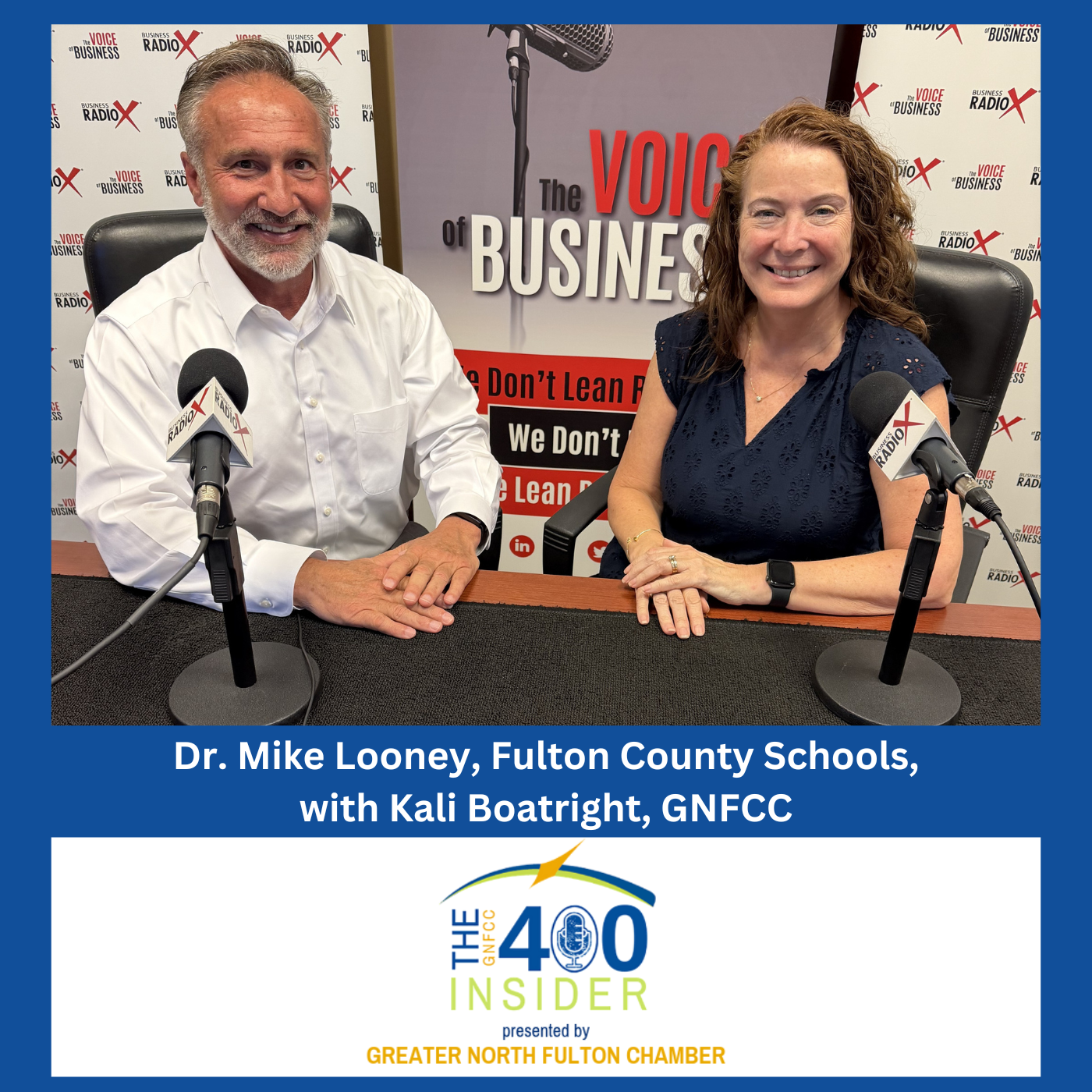 How Fulton County Schools Is Building Tomorrow’s Workforce52 / 100
 Morgan Chen on Video Storytelling to Build Business Trust51 / 100
 From Federal Warden to Leadership Coach: Stevie Knight65 / 100
 Jay Dennard of Northside Hospital on Care and Prevention39 / 100
 Fuller Center for Greater Atlanta: Homes for Working Families57 / 100