
North Fulton Studio · 2026-08-27
Key moments - from our scoring
Substance score
32 / 100
Five dimensions, 20 points each
Dr. Mike Looney brings seven years of experience leading Fulton County Schools, previously serving as superintendent in Tennessee and Alabama after transitioning from military service through education. The conversation centers on how Fulton County is preparing students for three outcomes: workforce entry, military service, or continued formal education. CTAE programs - ranging from artificial intelligence and cybersecurity to agricultural operations - now begin in elementary school, with high school culminating in industry certifications. The district recently changed policy to require students graduating on-time or early to engage in work-based learning experiences aligned to career pathways, creating partnerships with employers seeking interns and entry-level workers. Looney highlights accelerated academic gains across math, science, and social studies that outpace regional, state, and national benchmarks, attributable to focused employee training and raised expectations. The district's 80-hour literacy coaching initiative - with trained internal certifiers - positions literacy as foundational to all subject success. Implementation of a phone-free policy one year ahead of Georgia's mandate shows improved discipline and student-to-student interaction. Facing demographic headwinds from aging populations and limited housing churn, Fulton County is exploring K-8 models and accepting tuition from out-of-district residents. The November ESPLOST renewal funds building maintenance, repair, and replacement of aging infrastructure - critical for creating the 'warm, safe, and dry' learning environments the district prioritizes.
CTAE (Career Technical and Agricultural Education) focuses on skills needed for workforce and industry readiness, ranging from artificial intelligence and cybersecurity to agricultural operations. Fulton County introduces CTAE in elementary school for exploration, middle school for career discovery, and high school for refined training and industry certifications.
Students graduating on-time or early must stay in school and engage in work-based learning aligned to their career pathway. They earn high school credit toward their diploma by working in positions related to their intended career, such as law enforcement, nursing, farming, or cybersecurity.
After one year of implementing the policy ahead of Georgia's state mandate, the district reports improved discipline, increased classroom focus, and more peer-to-peer conversation and relationship-building among students during breaks.
The district hired literacy coaches for elementary schools and required all teachers and administrators (including the superintendent) to complete 80 hours of training in literacy instruction. Employees who achieved 80% proficiency became certified internal trainers, creating a sustainable model without external consultants.
Aging populations and limited housing churn in North Fulton are reducing student enrollment, forcing the district to reimagine school configurations. K-8 models consolidate facilities, reduce transitions, and allow older students to mentor younger ones while maintaining community-based schools.
Our reviewer’s read on each dimension, with quotes from the episode.
The episode is largely a feel-good chamber promotional chat with only occasional substantive points - the policy shift to require work-based learning credit, the CTAE pipeline logic, and the out-of-county tuition experiment are genuinely interesting. Most of the runtime is pleasantries, broad affirmations, and local boosterism that adds no actionable value to a B2B operator.
you can no longer just leave school if you've, uh, on track to graduate early or on time and go home and sleep for a couple hours...Nowadays they have to stay, but one of the mechanisms of stay is to engage in work
we have moved career technical education down to the elementary school level because we recognized by high school it was too late
The thinking is almost entirely conventional K-12 administration messaging: literacy is foundational, attendance matters, phones are distracting, K8 schools work. The out-of-county tuition model is a mildly fresh detail but there is no contrarian framing, first-principles argument, or counterintuitive claim anywhere in the episode.
we can't hold on to things that are just not functional or useful anymore
literacy is the gateway to every academic success story
Dr. Looney is a genuine long-tenured practitioner - 22 years as a superintendent across three states - not a thought-leader or career podcaster, and he has actually implemented the programs he discusses. However, the domain is local public school administration, which has limited direct transferability to most B2B operators outside the region.
I am actually a superintendent that has 22 years of experience now. So I was a superintendent before I arrived here in just south of Nashville in Williamson County, Tennessee
I implemented very successfully my past district, my former district
There are some concrete specifics - 80 hours of mandatory literacy training, 80% proficiency threshold to become a certified trainer, 99% employee fill rate, the 5%-absenteeism threshold backed by cited research - but most data is local and anecdotal, broader research is only vaguely gestured at, and dollar figures or outcome metrics are sparse.
we required, including the superintendent, to go through 80 hours of additional training
if you reached a certain level 80% proficiency, then you became a certified trainer in our methodology
The host functions almost entirely as a cheerleader, repeatedly affirming the guest, volunteering her own opinions unprompted, and asking wide-open biographical softballs. There are no follow-up challenges, no probing on weak claims, and the episode closes with mutual self-congratulation. No productive tension is generated at any point.
Consider me a raving fan as you already
I know I always love for you to tell a little bit about yourself to our listeners
Computed from the transcript - who did the talking, and the words that came up most.
Preparing Fulton County Students for the Workforce and the Future, with Dr. Mike Looney, Fulton County Schools (GNFCC 400 Insider, Episode 117) Fulton County Schools is preparing students for a future that may include college, the military, a skilled trade, entrepreneurship, or immediate entry into the workforce. Superintendent Dr. Mike Looney joins host Kali Boatright […]
Transcribed and scored by The B2B Podcast Index.
Speaker A: Broadcasting live from the Business Radiox studio, it's time for the GNFCC 400 Insider Connect, build and grow with the Greater North Fulton Chamber of Commerce. Hello and welcome to the GNFCC 400 Insider, the monthly podcast presented by the Greater Norfolten Chamber. I'm Callie Boatwright, president and CEO of the Chamber, and today we're talking about some of the biggest issues, issues facing students, parents, teachers and schools right here in North Fulton. And if these are issues affecting parents, then of course they're also affecting businesses all across the region. Joining me today is Dr. Mike Looney, Superintendent of Fulton County Schools and one of our esteemed chamber board members. Dr. Looney, thanks for joining us.
Speaker B: It's always a pleasure to be here and to spend time with you, Kelly, at the great chamber.
Speaker A: Thank you. Always a pleasure to do the same. And before we get started, I know I always love for you to tell a little bit about yourself to our listeners. Just your background, your time with Fulton county schools. And this time, I'd love to hear from you what you feel the most impactful thing, uh, is about being the superintendent.
Speaker B: Well, it's hard to believe I'm saying this, but it's been seven plus years already. It really just seemed like yesterday when I was walking.
Speaker A: How is that possible?
Speaker B: It's unbelievable. But we've been having a good time.
Speaker A: We have.
Speaker B: It's lucky seven a lot of things in Fulton county, and it's been a privilege thus far to serve and I'm looking forward to continuing the good work that we're doing. A little bit about myself, I am actually a superintendent that has 22 years of experience now. So I was a superintendent before I arrived here in just south of Nashville in Williamson County, Tennessee. I did 10 year stint there and then I did several years in Alabama. So this is my third state being a superintendent. Small district to start with. Went to a suburban district just outside of Nashville and now obviously Fulton County. I, um, got into education in a roundabout way. I was actually a, um, retired Marine, got injured in the Marine Corps and then went into private industry and, um, worked in private industry for a little while and my company got sold to. The company I worked for got sold. And I knew a school principal at the time who convinced me while I was working on my MBA at night to become a substitute teacher during the day. And so I became a substitute teacher and the hook was in me. I translated, um, my military service to, um, serving people in a different way, that is serving students and communities. And I haven't looked back since then, I was a teacher, assistant principal, principal, all the way up the ladder, and finally became superintendent. So it's been an enjoyable ride, and I wouldn't trade anything for it.
Speaker A: Well, thank you for your service first, and we're so glad that you changed your trajectory from the military service to, uh, serving the entire community. We're very, very lucky to have you here. And consider me a raving fan as you already. Well, let's start with something that's near and dear to the Chamber's heart. Um, of course, the Chamber is, uh, always thinking about the workforce of tomorrow. And it starts in your classroom. Right. So, regarding the workforce piece, since that's what our business members are probably the most thoughtful about, can you walk us through what CTAE means and what it looks like for Fulton county schools today? Maybe share with us how many students are in those career pathway programs and which new industries might be online soon? Sure.
Speaker B: I'll predicate my response by saying that our goal is to make sure that a, uh, graduate from Fulton county is career ready. And what that means to Fulton county schools is this. They're ready for the workforce. They're ready to continue pursuing their formal education, whether that be through a two year school or a four year school, or they're ready to join the military, one of those three things. And so that's our profile of a graduate and ctae. Career technical agricultural education is a vital part of our mosaic of offerings that we have for our students because we recognize that most businesses in the United States are entrepreneurial based. And so we have to prepare students to go into, uh, the workforce and be ready to be entrepreneurs or to work for another company. And so career technical education focuses on the skills that students need to be career and industry ready. And so that ranges from artificial intelligence work, cybersecurity work, all the way to, you know, owning and operating a farm and learning how crops grow and that sort of thing. So everything in between. I remember when I first landed here in Fulton County, I was sitting with an executive from Alabama or Georgia Power. I'm sorry. And they told me, um, they were having a hard time finding a workforce. And I said, well, what are you looking for? And they said, well, we can't find linemen.
Speaker A: Yeah.
Speaker B: And I remember that conversation vividly. And I said, well, what are the requirements for alignment? What skillset do you have to have? And it was rudimentary that you would think, you know, anybody that had graduated high school would be able to do. And I said, well, what does it pay and at that time, seven years ago, I think starting salary was 55,000.
Speaker A: Pays really well now.
Speaker B: What I didn't want to admit is my teachers made less at that time.
Speaker A: Right.
Speaker B: But I recognize that you can graduate from high school here in Fulton county and genuinely go to the workforce and make good money.
Speaker A: That's right.
Speaker B: Uh, and so we have been focusing on that here in Fulton county for several years now. We have actually moved career technical education down to the elementary school level because we recognized by high school it was too late. So we give them a foundation. Beginning in elementary school and middle school, they start exploring different career fields just to get an appetite, you know? Do I like this? Uh, I might be interested in nursing, but I'm really appalled by the sight of blood.
Speaker A: Yeah, you have to have the aptitude, too.
Speaker B: We give them exposure to that and time to experiment and then in high school refine that and so that they can leave high school with industry certifications to go to the world of work, if that's what they choose, go to the military or to continue their formal education.
Speaker A: I love that. Uh, your definition includes all of the different opportunities for students entering the workforce. And times have changed. Right. I think especially now with the number of entrepreneurs and, and uh, society and being able to get certificates and other things while they're in high school. It's, it's certainly a time where there are plenty of students graduating from high school and going into very well paying jobs.
Speaker B: Not only that, they are inventing, that's creating new things. We have students that have invented things that are now part of the everyday marketplace. And they were sitting in a high school somewhere in Fulton county thinking of the idea. So we want to encourage, we want to nurture, uh, that entrepreneurial spirit and innovation. And, um, that's been a priority for us, making sure that our students have access to those kinds of.
Speaker A: Well, I'm so glad. Sitting in one of your schools right now is the next great idea and the next great business for north Fulton. So if there are north Fulton employers listening right now who might want to partner to assist with a pathway or an internship or work based learning, um, opportunities which I know you all provide. What does that on ramp really look like and what are you finding that businesses might misunderstand about, about how to engage with your schools?
Speaker B: First and foremost, I would proffer that our students are a lot more ready than most people give them credit for. I have yet to find a situation where a student was not able to perform what the expectations were in some sort of job setting. Or shadowing experience or workforce experience. And so, uh, I would first say, don't be shy. Don't shortchange our students in thinking about what they can do, because they really can do a lot of things. It's a really good time for us here in Fulton because we did something this last year. We changed the school board policy. And the policy is that you can no longer just leave school if you've, uh, on track to graduate early or on time and go home and sleep for a couple hours.
Speaker A: Oh, gosh.
Speaker B: Nowadays they have to stay, but one of the mechanisms of stay is to engage in work. Work based learning experience.
Speaker A: Yes.
Speaker B: And so students are actually getting high school credit towards their diploma by going to work. Not just any old job, but something aligned to their career pathway or trajectory. And so we have a lot of employers are saying, hey, look, we're looking for people that are interested in and, you know, law enforcement or cyber security or nursing, you name it.
Speaker A: Marketing. Yeah.
Speaker B: Some students that are working on farms.
Speaker A: Yes.
Speaker B: A little bit of everything. Um, so if you have a business need and you're looking for someone that can solve problems, that can collaborate as a good team member, uh, that has the core skills necessary to be successful in life and in business, then we have students ready to. Ready to do the work.
Speaker A: Well, having worked, uh, with some of those students in the chamber, mostly on the marketing side, I, uh, can tell you that they've actually been extraordinary. And certainly, um, a lot of the ones that we work with are coming out of DECA clubs and other organizations. So it's always a joy to find these students who are far more adaptable than I am.
Speaker B: Just last week I had some students that were producing a show, uh, with their technology skills, their filming skills that this district is going to use. So we're using our students to help tell our story as well.
Speaker A: That's fabulous. Well, like I said, uh, the next great person is already in school in Fulton County. The next great idea. Um, I want to congratulate you. Obviously, the team, the school board, Fulton county schools just posted district wide gains in the Georgia milestones in math, science and social studies. Um, I know that English language arts results aren't out yet, um, with the new assessment that they were using. So what should our members read into these numbers and what are you watching for when that English, uh, data finally lands?
Speaker B: First and foremost, I want to be honest, we still have work to do. There always will be work to do because our students are always changing. But I can tell you this. We are experiencing accelerated gains academically for our students in all subject areas. And that's um, when you compare us to the region, when you compare us to the state, when you compare us to other large districts across the country, we are outpacing, outperforming those districts. And that's a result of intentional focused training for our employees, holding folks accountable for that work and raising our expectations. What is it that we expect our graduates to be able to do? And I'm so proud of our rank and file employees. They're just stepping up to the plate and doing the work and we're starting to see those benefits.
Speaker A: Absolutely. Well, and I think that you're having people, obviously these, these tests scores and being able to uh, to have these. The other thing is people take notice. Right. Which encourages new teachers potentially to move to the area who also are high achieving. So I think it's a, it's a, you know, it's an effect that continues through the ecosystem.
Speaker B: 100 people like to be around successful organizations.
Speaker A: Yeah.
Speaker B: And, uh, that's why we have a 99% fill rate for our employees today.
Speaker A: That's amazing.
Speaker B: You know, people are clamoring to join Fulton county schools. The, the secret is out.
Speaker A: Yeah. It's, it's not a secret anymore. Right. So I think that's a big piece of that. Literacy has been one of your stated priorities. No different this year. What is uh, the district doing strategy wise for closing those literacy gaps? And, and what are you seeing? Work.
Speaker B: Kudos to our school board. Long before the state jumped on board and started replicating the Fulton county model. Now, um, our board invested um, in our teachers and we hired literacy coaches for all of our elementary schools. We also required, including the superintendent, to go through 80 hours of additional training on how to focus and teach literacy skills to our students regardless of where they are. And, and uh, scale of um, literacy competency. And so we have a very focused approach, a very research based approach, and we have a lot of accountability metrics in place. Not only that, we have a sustainable model because when our teachers and principals and superintendent went through the training, you had to take a test after each training module. And in order to be successful, you had to pass the test. And if you reached a certain level 80% proficiency, then you became a certified trainer in our methodology. So we have a model that's sustainable. We don't have to hire trainers anymore. We just do it all internally. We're creating our own trainers. We're just continuing to build the skill set. And we didn't just train people and Let it go. We continue to focus on literacy instruction because we know that literacy is the gateway to every academic success story that you'll find. You can't be successful in math, science, social studies, or any other subject unless you can read the material and comprehend what you're ingesting. And so we believe that literacy is the foundation to our success. And I'm so proud of the work that we're doing. I just earlier today met with, uh, the chair of the Senate Education Committee.
Speaker A: Yeah.
Speaker B: And we were talking about the success here in Fulton. And I will tell you, people are taking notice of what's happening here in Fulton.
Speaker A: I know that to be true. I also think one of the things I respect about you so much, Dr. Looney, is the fact that you didn't expect your, uh, teachers to take this training without you stepping up and taking it with them. And I've seen that in the last seven years time and time, time and time again. It's a sign of a great leader, and I'm impressed.
Speaker B: I would say that, uh, as a former retired Marine, I learned that you never expect your troops to do something that you're not willing to do 100%. I wanted to lead by example, and I'm so proud of our school board for endorsing that and supporting it financially. It's been a great success story.
Speaker A: Well, it's smart because it's self fulfilling. You've now got trainers who can train the new employees when they start. So it's a great thing. So I'm going to jump into a big topic right now, and I know there are people on both sides of this. I won't share my feeling on it, but Fulton county schools moved on the phone free policy a year ahead of the state mandate. And now you've got really a full school year of data. Did. Were there any surprises, um, with that?
Speaker B: Aside from the discipline went down and improved and I imagine students seem to be more focused in classroom. Here's what the principals are reporting to me. Students are talking to one another.
Speaker A: What? They're not typing, they're talking.
Speaker B: They're sitting and they're conversing with each other. You know, when they're on break, they're having conversations, they're playing games. And that to me is just so rewarding to know that it's really about relationship. And we have in some ways, I think as a society become crippled. Crippled to our phones. You know, we just seem to, we can't do anything with our phones these days. So we're, we're Trying to reverse that trend here in Fulton, thankfully, we're, ah, a, uh, year ahead of the state, but we're seeing some really good indications. And we'd like to think. We don't have any evidence yet, but we'd like to think that part of our achievement gains are a result of the additional focus on building relationships with students and putting the cell phones down, the laptops away when they're not necessary. With that being said, I will tell you I think there's a balance. I do think there's a place for those tools. School has to be relevant for students, and one way to make it relevant is to make it real lifelike. And so we can't ignore the fact that those technologies are in their hands when they're not in school. So what we want to do is teach them how to use it appropriately when they're at school.
Speaker A: Brilliant. Well, and as someone who works with business owners, uh, with networking and learning to build relationships to do business with one, it's. For me, I guess I am going to tell you how I feel about it. I think it's wonderful. For me, I think it's great that you've got, um, students learning to do that now and actually have connection, connections and conversations, because that is an expectation when you go into the real world. Standing in a corner and being on your phone does not get you new
Speaker B: sales, a much more workforce.
Speaker A: That's right. That's right. So it really is indeed. And you guys are actually in the midst of every five year, I know the capital plans get updated and this year also means esplast, which we, of course continue to support. Um, so we've got an education SPLOST renewal on the November ballot. For business owners, I think it's important that they understand what's actually at stake if it doesn't pass, um, what the alternative funding paths are or are not and what that means for property taxes. And I know obviously you can educate. I'm not asking you to advocate, but certainly educate.
Speaker B: Well, what the east plus dollars do for Fulton county is they allow us to maintain, repair and refurbish our existing buildings. They also allow us to replace from time to time. You know, schools age out just like any other building.
Speaker A: Absolutely.
Speaker B: So when they reach 60, 70 years old and the systems inside the building are just so outdated or, or would the cost of, uh, replacing them would be so expensive, it makes more sense to rebuild.
Speaker A: Yes.
Speaker B: Then those funds allow us to do that. So it's really about how do you maintain the public's investment in the buildings and the lands and properties that Fulton County Schools is blessed with operating. So it's, um, it's really about reinvesting more than about anything else. Reinvesting in the. In the tools and the resources that we have here in Fulton.
Speaker A: And we want, as. As parents and business owners, our students to go to school someplace that they feel is. They can be proud of.
Speaker B: Absolutely.
Speaker A: And learning.
Speaker B: You know, we. We have a friend, we have a saying in Fulton county. It has to be warm, safe, and dry. And so when the building's leaking, it's. The air conditioner's not broken, and anybody can walk in because you don't have safety systems in the doorway, then that's not a place where students can learn adequately. We want to take away all the. The obstacles in a student's way to let them focus on teaching, uh, and learning and our teachers on teaching warm, safe, and dry.
Speaker A: Those are the basics. I'd say that's a pretty. Pretty baseline, uh, certainly, to get through. Well, we certainly, uh, are hoping that we can work to get that education SPLOST passed on the November ballot. And speaking of taxes and cost of living, here in north Fulton, we're seeing a slowdown in population growth. I don't have to tell you that. You're seeing it already in your classrooms, I'm sure among student age populations, uh, we're seeing them decrease. And, um, you know, folks who are my age and older are deciding to age in place because they have homes that they've probably paid for or are close to doing, and so they're not moving out, and the cost of living is. Is really staying high. So how is that demographic change really impacting north Fulton schools? You guys are, at some point a victim of. Of success of these homes in north Fulton.
Speaker B: First of all, we wish people would have more babies.
Speaker A: That would solve some problems.
Speaker B: Um, but that's not a reality right now.
Speaker A: Right.
Speaker B: We do have an aging population, and there's not as much housing churn as perhaps we would like as. As a school system. So what that's forcing us to do is be creative and think differently. County and so, for the first time in this district's history, we're actually accepting tuition for residents outside of Fulton county that come to a Fulton county school.
Speaker A: Oh, wow.
Speaker B: Um, and so that's. We just started that this year.
Speaker A: I was going to ask you this.
Speaker B: We're trying to find. How do we find ways to change our business model to meet the economic conditions that we're facing? Uh, we're also re. Envisioning what schools look like. You know, do we have. Do we need to have a separate building for kindergarten and middle school as an example, or could we think about community K 8 schools? We're just trying to be smart and think differently about the resources that we have. And as with all aging industries, you know, we. We can't hold on to things that are just not functional or useful anymore. So we have to be courageous enough to make difficult decisions from time to time. And then if we're going to dispose of or close a school, then what comes of that piece of property? How do we engage the community in a thoughtful process to make sure that that land and that property is repatriated into the community?
Speaker A: Absolutely. Well. And as a parent who had kids who went K8 schools, I thought they were wonderful because you had middle schoolers helping the little kids, which is something that truly is educational.
Speaker B: I will tell you, I adore K8s. I think they're all that in a bag of chips. This is a relatively new concept for us here.
Speaker A: It is.
Speaker B: But the, uh, the K8 model has been around for a long time. I implemented very successfully my past district, my former district. And I'm looking forward to, uh, having more conversations with our communities about K8 models here in Fulton, because I do think it allows you to have a community school, a small middle school population. The last thing you really want to do is put 2,000 middle schoolers together.
Speaker A: That's right.
Speaker B: But if you can make that a manageable size and keep them in the community, I think it's better off and allows us to use the facilities that we have in a more purposeful.
Speaker A: I think the side product of that, too, is that, um, those middle schoolers can be given responsibilities that allow them to be proud of what they do and what they can, in fact, give to these elementary school students. And that reduces any kind of issues. You know, that's proven from a psychological perspective. So I think that's awesome.
Speaker B: And one less transition. There's a lot of research that says every time you transition from one school to another, that's a change, and that that impacts the likelihood that you'll have problems. So if we eliminate that one transition from elementary to middle, by combining them, you know, the big kids are able to help the little kids, and the little kids have someone to look up to and model themselves after.
Speaker A: Yeah.
Speaker B: So I've just seen so many positive things, including academic achievement. There's a body of research out there that says K8s actually produce better outcomes than a traditional school.
Speaker A: That doesn't surprise me in the least. I think that's awesome. I like the idea. You're, uh, of course you are. You're operating like a business because you are a business, but you're operating like a business. You look at what works and you look at what doesn't and lean into the things that are working. But I love that you're constantly, you know, evolving and looking for creative solutions. And, hey, if it doesn't work in this particular area, no problem. You can always try back. But why not try things that are working and are best in class?
Speaker B: Kelly, I'm really glad that you said that, because I think that's one of the things that sometimes holds school districts back, and that is we've always done it that way, want to continue doing that way, not being willing to rethink and reimagine and to approach things differently.
Speaker A: Right.
Speaker B: And I think these times require us to be innovative and think differently about the work 100%.
Speaker A: And if you don't believe that, go to any school and see what the students know, because if we're not innovating, we're not ahead of them. So, I mean, we have to be. And of course, having the kids in school is a big piece of that. And luckily, we're well past Covid now from a attendance standpoint. Um, you guys are, uh, doing the 95 to Thrive 95% 95 to Thrive attendance campaign. And I'm amazed. It's really. It's framework around the fact that kids can't learn if they're not in the building, which, yes, my employees, turns out, can't really work. I mean, they can on the off Tuesday if they're not feeling well. But what's actually driving this chronic absenteeism in our schools right now? And is it different post pandemic than it was before?
Speaker B: I will say we learned some bad habits during the pandemic. Uh, we. We came to the conclusion that some of our work could be done from home and you don't have to physically be present. But as it turns out, yes, that's partially true. But you lose a lot of good things that you need to have as part of your experience. Relationships, collaboration, mentorship, problem solving, conflict resolution, mentoring. And, you know, I can't think of a single employer that says, I don't want my employees to come to work on a regular basis. So we know that. And because of that, we want to make sure that our students and their parents learn the value of being present as many days as humanly possible. Now Obviously, if they have a flu that we don't want to come to work or come to school.
Speaker A: No, of course not.
Speaker B: But if they're able to come to school, that's really important. And that is supported by another body of research that says this. If you miss more than 5% of school days, then the likelihood of you finishing that grade level successfully is diminished significantly. A lot of people think that, well, it's families in poverty that don't send their children to school. And that is in some cases true. But poor attendance can be found in any, every locale and in every economic category of students that we serve. You know, it might be that moms and dads are taking an extra week of spring break or an extra week or long weekend to go here or there, but that's still missing school. And while they might be able to on paper, complete the work that was assigned, they're still missing all those other experiences. The debate that happened, the oral delivery of the content. There's just so many critical pieces that you just can't get if you're not physically present in the building. And so that's why we are focused on attendance this year. I, uh, will say our attendance pattern is improving, um, but not at the rate that I hope. And so we're striving to get the 95% attendance. And we have a campaign this year, 95 to Thrive to get us there.
Speaker A: I think that's excellent. I think that one of the things that comes out of conversations around any topic in school is the curiosity, right? You want people to be curious and want to find out more. And when you're just taking the test with the information provided you, that's a step that's critically missed, in my experience. I will share with you that in the last several months with hiring individuals I have been in, actually, I'd go back even further than last year. There are so many individuals who are interviewing for more completely in person, for in person jobs because they are so needing that time in the office with other people. And they are just, they are lonely and they are not getting any kind of, you know, personal satisfaction from sitting at home and doing work. And I know it's not everybody, I don't want to generalize, but I have never seen this many people interviewing who say, I want to be in person. I can't do this anymore. And I think you'll see more of that.
Speaker B: Yeah, it looks like corporate America is rebounding from the work at home 100 category. And I, uh, don't know how to sustain Relationships without presence.
Speaker A: I don't either. I don't either. Yeah, I. And I'm glad that folks are going back in every respect. So I think that's the, uh, campaign that y' all are doing or are. Is very important. Um, let's look a little further out. Zooming out. North Fulton's economy runs on educated, work ready talent. What is the one thing you would want the business community to actually do? Not just fund, not vote for, but to help our schools deliver that pipeline of talent. What could we do?
Speaker B: Well, I'll tell you what we're horrible at doing, and that is telling our story. What we need is people talking about the quality of education that Fulton County Schools offers. We can develop a slick marketing campaign and have an advertisement here or there, but that in no way surpasses the power of an individual's voice through personal experience. When you're at the barber shop or at the beauty shop or at the local restaurant and you hear something about education, specifically about Fulton county schools, I need people to weigh in because we're offering a really good product at a very reasonable cost, and I'm proud of that. And I think that helping us tell that story will resonate, and it will expand our outreach to organizations and to more families that want to call Fulton county home.
Speaker A: Absolutely. I'm happy to be part of your PR campaign. We can sign everybody up for that. As raving fans of the schools and what you're delivering and. And I have to say, your team at every level, I, uh, have the occasion to work with your school board, who's top notch, but also with teachers and administrators. Um, and so it's an absolute joy to work with these true professionals who have so much passion for what they do. So you're lucky to be in that situation as well. Okay, so we've only hit the top of the iceberg, and we are out of time. So I'm going to ask you if you would mind. Just give us some contact information. If folks want to learn more. More about what's going on in Fulton county schools and. And getting involved or. Or just to educate themselves, what's the best place for them to go.
Speaker B: Time always flies when I'm with you, Kelly. Same m. I'll do two things. I'll give you the district's website.
Speaker A: Perfect.
Speaker B: And we have so much information on the website. Anything that you want to know about Fulton County Schools literally is available on our website, and that's www.fulton schools.org. and I'll also extend my email address to your listeners because I want to be accessible as well. My email address is Looney M M L O O N E Y m m@fultonschools.org so please have folks reach out to me. I'm glad to entertain questions or just talk about education generally.
Speaker A: I appreciate that so much. And thank you, Dr. Looney, for joining us and giving us a, uh, look at what's happening in north Fulton schools. You guys have just come back, so, you know, it's always great to have you at the beginning of a year to talk about all the great things that you're doing, not just in north Fulton, but all across this is very large county called Fulton county. And y' all are doing a great job. So thank you.
Speaker B: Well, thank you. It's always a pleasure. And I'll tell you, the Greater North Fulton Chamber does an amazing job, and we appreciate the partnership with y' all and, and all of your, uh, members. So thank you for what you do as well.
Speaker A: It's a great partnership. We're very, very blessed to have y'. All. Um, and to everyone listening, if you're a parent, if you're an educator, student, business owner, or taxpayer, these conversations truly do matter, because the decisions that are being made today are going to shape what our schools and our students and then my new employees are going to look like years from now. I want to thank you for joining us at, uh, gnfcc400insider, presented by the Greater North Fulton Chamber. As a reminder, if you want to listen to this show again or hear any of our previous episodes, you can always visit gnfcc400insider.com to find out more about the Greater North Fulton Chamber, our events, our programs, you can always visit gnfcc.com until next time, I'm Callie Boatwright, and this has been the GNFCC 400 Insider on North Fulton Business Radio X.
Other episodes covering the same guests and topics, from across The B2B Podcast Index.
 Jobs Report: As Hiring Slows, America Works CEO Explains Impact on Vulnerable Job Seekers, with Dr. Lee BowesHuman Capital Leadership · on workforce development82 / 100
 Episode #628: Bridging Research, Digital Skills and Community Impact - with Vicki AytonScaleUp Radio · on workforce development77 / 100
 Solving The Supply Chain Crisis: How To Close The AI Skills GapSmart Supply Chain Podcast · on workforce development76 / 100
 Louisiana's industrial investment momentum: Opportunities & challengesBIC Magazine Podcast Network · on workforce development62 / 100
 19-Powering the Permian: Leadership, Partnership & the Future of Energy with Travis Stice & Tracee BentleyPermian Strategic Partnership Podcast · on workforce development59 / 100
 Lead to Succeed - Danica Stanciu, Daniel J. Kobasic FoundationLead to Succeed · on workforce development54 / 100
 Morgan Chen on Video Storytelling to Build Business Trust51 / 100
 From Federal Warden to Leadership Coach: Stevie Knight65 / 100
 Jay Dennard of Northside Hospital on Care and Prevention39 / 100
 Fuller Center for Greater Atlanta: Homes for Working Families57 / 100
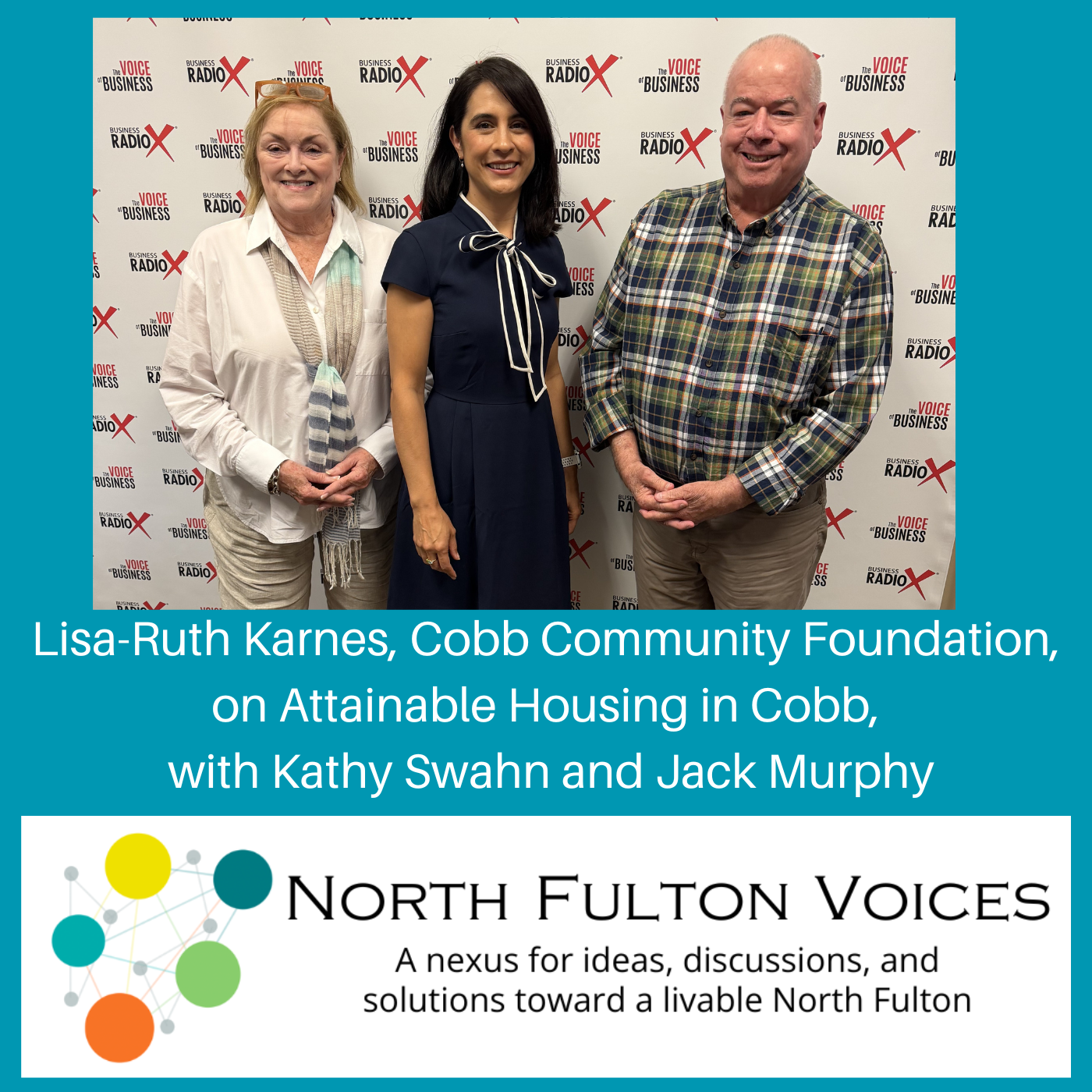 Lisa-Ruth Karnes on Vital Signs and Workforce Housing in Cobb55 / 100