
Marketing Beyond with Alan B. Hart · 2026-04-15 · 21 min
Key moments - from our scoring
Substance score
44 / 100
Five dimensions, 20 points each
Rich Honiball brings a unique perspective on retail transformation from his role overseeing $1.7 billion in retail operations plus food, fuel, services, and hospitality across Navy Exchange's 350 locations worldwide. The conversation covers the historical origins of Navy Exchange (dating to the late 1800s as onboard ship stores), the operational complexity of serving military personnel, families, and retirees across disparate geographies, and the fundamental shift in consumer behavior away from constant consumption toward durability and sustainability. Honiball emphasizes the necessity of two-way customer communication through surveys, live chat, and direct feedback to understand an increasingly fragmented audience. He contrasts his current role serving a mission-driven organization with his prior for-profit retail experience, highlighting how purpose and authenticity distinguish brands in a saturated market. As an adjunct instructor at George Mason University and co-creator of the Retail Relates podcast, Honiball discusses how students consume information differently (via transcription and AI-powered podcast summaries through NotebookLM) and argues that marketers must study these evolving consumption patterns. His framing of AI as both opportunity and threat - requiring human-AI partnership rather than full automation - reflects his broader philosophy that imperfection and humanity remain essential to meaningful connection.
Necessity drove the creation of Navy Exchange: sailors on ships had no access to goods and were exploited by vendors in foreign ports charging high markups. In the late 1800s, a ship captain created an onboard store with minimal markup to provide value and generate morale funds for crew events.
Navy Exchange emphasizes two-way communication through surveys, live chat, and white-glove service - reading every customer response to understand patron needs. They also focus on clear messaging, personalization across diverse life stages, and authentic mission-driven service that differentiates them from commercial competitors.
Consumers are moving away from aspirational consumption (buying the latest products frequently) toward valuing durability and sustainability, reflecting a fundamental change in what people value post-pandemic rather than purely economic factors.
Students are recording lectures, transcribing them into AI tools like NotebookLM to generate podcasts, and learning more effectively through that format than from traditional in-person lectures - signaling that marketers must understand these new information consumption channels.
AI is both opportunity and threat; the optimal approach is human-AI partnership where AI enhances human service and connection rather than replacing human judgment or allowing full automation to govern customer relationships.
Our reviewer’s read on each dimension, with quotes from the episode.
The episode contains some substantive observations about shifts in consumer behavior, personalization, and sustainability, but much of the runtime is devoted to biographical narrative (travel stories, failed retail venture, mentors) and general statements without deep exploration. Useful points about moving from a 'captive audience' model to needing clear messaging and two-way communication exist, but lack specificity or novel frameworks that would surprise a practicing marketer.
20 years ago, it was it was a little bit easier. Marketing for us 20 years ago was actually called marketing communications because it was really just you had somewhat of a captive audience.
10 or 20 years ago, we could bucket customers and kind of predict what they were going to be. Today, Personalization is almost a necessity because you don't know what the individual person's going to want.
While Honiball offers personal anecdotes and a unique military-retail lens, the core insights are largely conventional: personalization is important, customer feedback matters, AI is both opportunity and threat. The historical observation about post-war consumer values and modern sustainability consciousness touches on familiar territory. The most original thinking (embracing AI-human hybrid approaches) is underdeveloped and abstract rather than a fresh strategic framework.
Post-World War two, we had a manufacturing boom. You had the 1960s admin that convinced us that if we didn't have the latest and greatest, that we were failures.
AI can make us better humans and better able to serve and better able to connect.
Honiball is a legitimate operator with real scale (EVP/CMO managing $1.7B+ retail, 350 locations globally) and dual credibility as both a practitioner and educator at an accredited university. However, his primary platform is a niche military-serving business rather than mainstream consumer retail or tech, which limits relevance for a general B2B audience. His credentials are solid but not exceptional by podcast-guest standards.
executive vice president, chief merchandizing and marketing officer at Navy Exchange and the Navy Exchange Service Command
we have about 350 locations around the globe that can be anywhere from 200ft² to 200,000
The episode is sparse on concrete data, metrics, and named examples. Honiball references his $1.7B retail operation and 350 locations, mentions a 2013 Jeep and a past $1.33 meal, but provides almost no customer data, conversion metrics, market research findings, or named competitor examples. The discussion of AI, sustainability, and consumer behavior shifts remains largely anecdotal and abstract without supporting numbers or case studies.
we have about 350 locations around the globe
which is about 1.7 billion
Hart's interview is cordial and well-structured, moving logically from background through current role to broader trends and personal philosophy. However, the questioning is largely soft-serve and accepting. Hart rarely challenges claims, dig deeper on contradictions (e.g., how Navy Exchange navigates the strategic tension between mission and margin), or push back when Honiball makes sweeping statements about consumer behavior without evidence. Follow-ups are minimal; Hart mostly nods and moves to the next topic.
I love that. Well, you have an interesting role.
I love it, I love it. Well, I've enjoyed getting to know, like, how marketing and merchandizing relates to the Navy
Computed from the transcript - who did the talking, and the words that came up most.
How can marketers adapt when consumer behavior is shifting faster than traditional strategies can keep up? In this episode Rich Honiball shares his perspective on navigating the fundamental transformation that's continuing to happen in how people buy and consume information. Drawing on his experience across retail and marketing leadership roles, Rich argues that today's rapid changes demand agile platforms where personalization becomes necessity rather than luxury, and that two-way communication with customers is critical to understanding what will make their lives easier. He challenges the assumption that economic factors alone explain changing purchase patterns, suggesting instead that consumers simply value different things now and seek expertise from different channels. Rich emphasizes the importance of not abandoning core customers when chasing growth and studying how people actually take in information today . T hroughout the conversation, Rich stresses that while the channels and methods are evolving rapidly, the fundamental work remains grounded in understanding and serving the people you are trying to reach. I n this episode, you'll learn: <p class=
Transcribed and scored by The B2B Podcast Index.
Was a day on the show got Rich Honiball. He's the executive vice president, chief merchandizing and marketing officer at Navy Exchange and the Navy Exchange Service Command. So it’s a big part of the Navy. They have ave locations on ships and all around the world.
It’s going to be an interesting conversation. We talk about his background and experience traveling to all 50 states, all seventy different countries. And then we also talk about what retail means, how they drive, loyalty to their patrons and customers, and where he sees the biggest threat and opportunity as it relates to AI. That much more with Rich Honiball.
Are you ready to go beyond the basics of marketing? I'm Alan Hart and this is marketing beyond where we talk about the questions tha spark change and share ideas that challenge the status quo. Join us as we explore the future of marketing and its endless potential. Well, Rich, Welcome to the show.
Pleasure to be here. I feel like you are a guy always on the move. I know this stat: you’ve visited 50 states. All 50 states.
Yeah. 70 countries. And there's more coming. Think up to 72.
I’ve got to take count. Countries keep changing in the time that I've traveled, but my goal is to get to 100. Awesome. I mean, what what's driving that?
That thirst for travel. Combination of a couple things. One, when I did product development and design, we would travel for inspiration into Europe and into Asia. When you did sourcing, you traveled to different countries.
I used to travel for personal reasons and now I just love it. I can get inspiration from almost any state and any country that I visit, so it just... And thankfully my daughter loves it. My wife loves it.
So it's something we all have in common. That's awesome. That's awesome. Well, you are now the chief merchandizing and marketing officer at the Navy Service Exchange.
It's Navy Exchange service command. That is correct. I always think of it as the Navy Exchange. But tell me, how did you get your start in your career?
And how'd you end up at the Navy exchange? So it's it's full circle. My my goal was not to be in retail or in marketing. My goal was to actually join the Navy and go into the JAG Corps, retire private practice, maybe run for Senate.
Unfortunately, got the scholarship, failed the physical, had no plan B, so ended up falling into retail and worked for a couple of great companies. Found my way into marketing, and did marketing, product development, branding. And then ended up about ten years ago joining the Navy Exchange Service command. And I serve in a couple of unique roles.
Chief merchandizing officer for the retail part, which is about 1.7 billion, and chief marketing officer for the command, which includes retail, food, fuel, services, hospitality. We have 18,000 rooms under two going on three mastheads and then command services as well. So I made it.
They couldn't keep me out. I know I was going to say it came full circle, maybe a little later than you wanted to in life. Little later than I wanted to, but it was. It's been a it's been a terrific journey.
And now I get to do what I have always enjoyed doing. Once I discovered a passion for it. But I get to do it for a patron that I absolutely loved with a team that I have tremendous respect for. So yeah, it's it's very fulfilling.
That's amazing. Well, and you talked a little bit about the scope, like size of transactions, the volume, the different types of businesses, but give us a little flavor. I mean, like you have stores in a lot of different countries and then you also get stuff on ships like mobile. It's how we started.
It's how we started. So the easiest way for me to explain it, because the first question is, why does the Navy or why does any branch have retail stores? So, you know, necessity is the mother of invention. And I think that the focus late 1800s Uriah in New York or in the suburbs.
And we decide we want a comic book or, you know, a beer or a gift for someone. And we just go down to the store, travel into town. You're in the middle of, you're on a ship somewhere in the middle of the ocean. You don't have any options.
So whenever the ships are pulled close to a shore in a foreign port, these flat bottom bum boats would come in and they would sell their wares. Second rate goods, high markup. And so in the late 1800s, there was a captain of a ship. I think it was the USS Indiana that said, this doesn't work.
So he took a small closet within the ship, bought a single product, took a very small markup, and the sailors could buy their product whenever they wanted at a very small markup. And the little profit they made went into a morale fund. Because one of the things in the in the military, if we have an event, we all pay our own way. So this gave a morale fund for family events and things like that.
That's how it started. And so we help support the ship stores today. But they eventually became ship stores ashore. And we have about 350 locations around the globe that can be anywhere from 200ft² to 200,000.
Wow. That's the scale and complexity of that is it's pretty massive. It's massive. We have a very talented team that is 40% of them became has some sort of military connection.
The rest learn to appreciate the military connection of the mission. Were there to provide a value, were there to provide convenience and savings to also support the commands and, and the U.S. Navy in their mission.
So it's it as complex as it is, though, we ground ourselves in the fact that we're serving a patron. And so we figure out how to serve that patron regardless of where you are and what you're trying to do for them. Speaking of your patron, like you're talking about the soldiers themselves and the families support systems around them. How do you think about solving for, like, their needs?
Because it feels like they might differ depending on life stage that they're in. Also location they're going to. And it's the same thing we find in regular retail, in a regular marketing right now, is that you have to create an agile platform where whatever the customer needs and it's very vital you know this as well as anybody that, you know, 10 or 20 years ago, we could bucket customers and kind of predict what they were going to be. Today, Personalization is almost a necessity because you don't know what the individual person's going to want.
So what we're trying to do is set up as agile a footprint as agile a an assortment and communication as possible so that whoever comes in, whether they're entry level or the retired and they're on to their second job or they're a spouse or a child, retiree, doesn't matter. We can try to serve them as best we can. And then as you think about, how do you continue to drive engagement with that patron community and loyalty, like keeping them to come back to you because I'm assuming that when they're on land, there are other options.
Oh, absolutely. Yeah. Yeah. 20 years ago, it was it was a little bit easier.
Marketing for us 20 years ago was actually called marketing communications because it was really just you had somewhat of a captive audience. Today with the proliferation of all the different channels and retail options and everything going on, It's much harder to reach. So we just have to make sure that our message is clear. We have to make sure that we're connected with, with the patron, what we call customers.
But I think especially in that we pride ourselves on this, is that two way communication. We get a tremendous number of responses through our 4c surveys, through other surveys that we do, through emails, through our white glove team, through live chat. And we aggregate all of that and we literally read every single one. And we try to understand what we can do to make the patron's life just a little bit easier.
I love that. Well, you have an interesting role. You combining merchandizing and marketing. You've also got this storied background working for for profit brands now, mission oriented brands.
And businesses, I guess, for lack of a better way to describe it. Yes. How do you think about balancing the art and science of all the roles that you've got? I think, and it's it's fascinating when you come to a trade event like this and you and one of the one of the reasons that I'm here is and we'll talk about this, I also teach a class at, at George Mason.
And so I'm in the process of redeveloping or evolving the curriculum. Right. I when I listen to the conversations, I'm involved in the conversations everybody is trying to build upon their mission, build upon their purpose. So we did that when I was in the outside world, as I now call it, after being a decade here.
The fact is, ours is natural. Ours is authentic. But I think regardless of who you are and what you're doing, you have to find that place that that you serve that distinguishes you and where you can be distinctive. And a lot of the noise that's happening right now is with retailers or brands or companies that haven’t been able to find that.
And so throughout my career, that's that's typically been my goal, regardless of what side of the of the equation I've been on. Yeah. Makes sense. Well, you you mentioned that you're, you've got a couple, side interests, things going on.
You got the professor, adjunct professor ship, George Mason. You've also are a co-host and co-creator of Retail Relates podcast. So, yeah, this podcast thing is, is right up your alley. It's it's pretty cool.
I'm, you know, I, I consider you a mentor. And it's interesting the reason that I started this with, with, with a professor and another friend of ours, and we're inviting a couple of other people to co-host is. It's a very unique way to connect with students. The the class I teache is asynchronous, which is challenging to be able to reach students in that level and have that connection and retail and marketing, it's all about that connection.
And sometimes you can have that face to face. So we're able to introduce industry experts from this 360 degree view. It's been a very fun part of of the learning process. I'm enjoying it.
I find myself getting lost in the conversation sometimes and forgetting that we're recording, and then going back and saying, how am I going to edit an hour and a half down to 35 minutes? But it is what I'm finding fascinating, and I connect it to what I do for work and what I do for, for for fun or for a hobby is how people are taking in information. And it is... It's not good or bad, it's just different.
And so how are students learning? Yeah, students are going in and they're recording the lecture. They're taking it and transcribing it. Then they're turned, They're going to notebookLM and turning it into a podcast.
And they're listening to it and they're learning more than they were when they were just attending the regular lecture. So how do we lean in and do that? Right? I love it.
Well, and the other thing I would say is like doing something like writing or doing a podcast and you're already, expert in an area or you're a practitioner. I'm a practitioner. I don't call myself an expert. But I Would say helping others learn that trade or craft actually does put you on the path towards expert.
I don't know if you would agree with that, but like. You know, I there's certain I shun words like vision and expert and and because I, I have the opportunity to have conversations and learn from so many of them, I think what I try to do, and I believe I'm doing this more as I get older, is I try to listen more, I try to learn more. And so a lot of times somebody will say, hey, that was a really good post or that was a really good podcast. I'm learning from somebody.
I'm taking the opportunity to have a conversation with somebody and pick their brain, and I'm just capitalizing it and saying, here's something you can learn from this conversation I just had, so I think I'll forever be a student. If someday someone says, you're an expert, I just want to keep learning. And I love it, I love it. Well, I've enjoyed getting to know, like, how marketing and merchandizing relates to the Navy and what you're doing outside the outside of the day job, so to speak.
One of the things we like to do is get to know you a little bit better. And, I would love to know if there's an experience of your past that makes up or defines who you are. All right. How personal do you want to get?
I've been very lucky. And let me just say that I've been very fortunate. I've traveled the country with a gentleman by the name of Martin Greenfield, who wardrobed every president until he passed away a couple of years ago, and he was a Holocaust survivor. I've been blessed with having many mentors, married my high school sweetheart, and we've been able to stay married, adopted our daughter.
And she's wonderful. So hard to to pick something and say, but I'll give you one: Chicken gizzards and white rice whites. Okay, I got to know that. So I'll give you the story.
Not a lightly so in. When I kind of got hit by the retail bug, I was running a retail store and it was in a tertiary mall that had space open. And I went in and we opened up a shop, sports, like a fan shop with apparel and things like that. Did very well.
I'm in my mid 20s. I had visions of franchising. I did the things that now I know not to do, like didn't invest as much in the core and didn't invest as much in like CRM. And I tried to grow it way too fast and ended up living in the stockroom of the store with my then fiance, now wife, our two cats and everything we owned.
Getting up at 530 in the morning to go to the health club to take a shower. The last meal I remember was $1.33, and it was microwaved chicken gizzards and white rice. And it was at that point that I decided that I had failed as a retailer, and it was time to cash the chips in and move on.
And that was, I'll do the math over 30 years ago and when I when I think about trying to grow too fast or abandon your core customer white rice and chicken gizzards, and I can still remember and and I and I think that's grounding. So that's something. No it's a it's a visceral image and and maybe even taste palate. Yes it is but it you know those those experiences, everything is woven through everything experience that we've had.
And that's one that, that's one that reminds me about the core and what's important. Well, if you were starting this all over again, what advice would you give that younger self? I was I was, you know, it's common to say don't be afraid of failure. And and I think that's the and I've adopted that.
But now I, I wonder if it's, if it's not more than that. I think what I would go back and tell my younger self is take risks, you're going to fail. You, You likely aren't going to be defined by it. And just whatever you do, learn from it.
Take the time to take it, take a deep breath and learn from it, because you're going to figure out a solution. It's going to become a part of the puzzle that you're going to have to solve later. I took when I wasn't doing it right, a little bit too personal early on in my career. You could argue that it might have made me want to achieve more and study more, and that imposter syndrome kick in.
But I would tell my younger self just to take a deep breath once in a while. Well, a couple more questions for you. Are is there anything that you're trying to learn more about right now, or you think marketers need to be learning more about? I love history and so right now, part of the curriculum that I'm developing is looking at history now because I think it repeats itself.
But but it provides echoes that you can learn from. And I think as retailers, as marketers, we're seeing a fundamental shift in how people buy and how people consume information. And it's too easy to blame it on economics. That's part of it.
Part of it might be disposable income. I think it's also the change in what we value. Post-World War two, we had a manufacturing boom. You had the 1960s admin that convinced us that if we didn't have the latest and greatest, that we were failures.
And so every three years we had a new car. I have a 2013 Jeep that's been paid off for years, and that's a badge of honor. And so I think as as retailers and as marketers, we have to come to terms with the fact that consumers are listening to different channels or listening to different forms of advice. They're making different decisions than what we're used to, and we have to pay more attention to it.
Well, are there any trends or subcultures that you're following? You think other people should take notice of? The things that you're curious about. Trends that I think are going on, things that I'm curious about, you know, sustainability is an interesting one for me.
One of the things in the podcast is when we talk to those that are that are overseas, how much more important sustainability is, and I don't know that it's necessarily caught on. I heard, and I can't remember good credit to from yesterday, but someone talked about sustainability is as much about just making products that last longer as it is trying to, you know, organic this or but just making things that are, that are built to last. I'm also fascinated with the way that people are taking in information.
I'll give you a this happened a couple of years ago, but I went into a class, I'm doing a guest lecture, and everybody had their head down and they're on their phones, and I'm from a generation that's like, you know, wake up. They were taking notes. They were connecting with me on LinkedIn. They were one of the most engaged groups that I've had.
They connected more than those that I've been in the past that were looking straight at me. Or maybe straight through me. So I think studying the way that people consume information, where they go for expertise, I think is important. Last question for you.
Sure. What do you feel like is the largest opportunity or threat facing marketers today? AI both. Yes.
I think it's both. I think you have you know, we've gone, you know, blockchain, metaverse. There's all these buzzwords AI has been around for much longer than people give it credit. I jumped on the bandwagon about two and a half years ago so that, you know, even I could understand it.
And I'm fascinated with how quickly it evolves. A in the conversations, there are people that are embracing it, right? And that are ready to replace their entire ecosystem with something that's, that's, you know, steeped in AI and there's people that are shunning it. I've read one too many dystopian novels.
Favorite being, Brave New World. I to me, I think we have to find that that embracing of the imperfection, that connection between AI and humanity where AI can make us better humans and better able to serve and better able to connect. So that's really what I'm studying right now, because I'm fascinated by it, and I'm fascinated by the conversations that are happening on both sides of the equation. Yeah, yeah, I do agree with you.
Like that combination of human and technology. Like you've got to find out the right interface for that. The machines will take over if you allow the machines to take over. If you get lazy and if you expect everything to be perfect but the embracing of the imperfect again, brave new world.
I won't quote it, but I think humanity exists so long as we want humanity, to exist. And as long as we don't abdicate to the machines, you know we're fine. I think. It's a great.
Place for putting up a good fight. Well, Rich, thank you for coming on the show. Appreciate it. Appreciate it.
Appreciate the invitation. It’s been a pleasure. The views, thoughts and opinions expressed are the speaker's own and do not represent the views, thoughts and opinions of Deloitte. Material and information presented here is for general information purposes only, and does not imply endorsement or opposition to any specific company, product or service.
Hi, it's Alan again. Marketing beyond is a Deloitte digital podcast. It's created and produced by me with post-production support from Sam Robertson. If you're new to marketing beyond, please feel free to write us a review and subscribe on your favorite listening platform.
I also invite you to explore the other Deloitte Digital podcast at Deloitte digital.com slash U.S. slash podcast, and share the show with your friends and colleagues.
I love hearing from listeners. You can contact me at Marketingbeyond@deloitte.com. You'll also find complete shownotes and links to what's discussed in the podcast today, and you can search our archives.
I'm Alan Hart and this is Marketing Beyond.
Other episodes covering the same guests and topics, from across The B2B Podcast Index.
 Why the Godfather of Prediction Markets Thinks Insider Trading Should Be EncouragedThe Future of Money · on George Mason University84 / 100
 Is AI Marketing Helping or Hurting Growth? With Sheila Rondeau Ep. 146Talk to Th3 Doc with Steve Meek · on AI in marketing83 / 100
 How to Build a Brand People Love | Sarah Holt on Marketing, Leadership & AIThe Places We'll Go Marketing Show · on AI in marketing82 / 100
 S02E14 It's a Yes & conversation .. guiding your teams to use AI | Emilie Schmitz | Wired for WonderWired for Wonder · on NotebookLM80 / 100
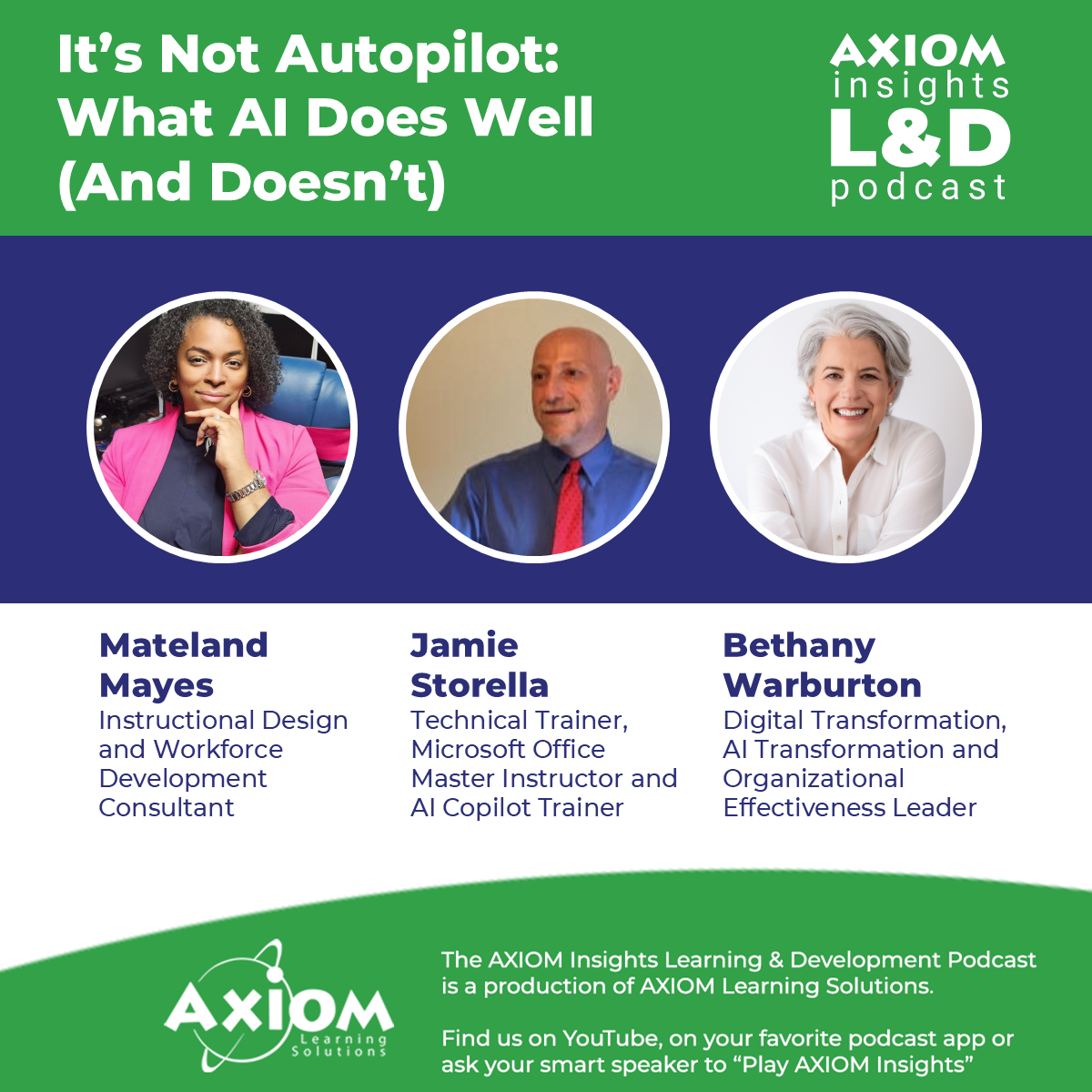 It's Not Autopilot: What AI Does Well (And Doesn't) - AXIOM Insights Learning & Development Podcast #46AXIOM Insights Learning and Development Podcast · on NotebookLM79 / 100
 The SEO Blog Era Is Over. Here's What Replaces It.Marketing Trends · on AI in marketing71 / 100
 RERELEASE: Bridging the gap between marketers and consumers: Insights from Gayle Troberman, executive advisor at iHeartMedia71 / 100
 44: Creating with sales, not for sales: Insights from Vanguard Head of Sales Channel Marketing John Howie58 / 100
 43: How experimentation can fuel marketing effectiveness: Insights from General Motors Executive Director of Marketing and Consumer Engagement Laura Thornton72 / 100
 42: How Adobe is embracing the future of creative work: Insights from Adobe Chief Content and Creative Officer Stacy Martinet67 / 100
 41: Turning brand awareness into loyalty: Insights from Herbalife CMO Hanan Wajih70 / 100