Let's Talk Loyalty · 2026-06-16 · 44 min
Rob Chandler, Head of Customer Loyalty at Sky, discusses how Sky VIP redefined loyalty by shifting from a transaction-focused, acquisition-heavy model to a tenure-based recognition program. Launched in 2017 following a critical 2016 analysis revealing that long-term customers (8+ years) were becoming less stable, Sky VIP directly addresses the top reason customers were leaving: feeling unrecognized. Built on the insight that 73% of customers believe loyalty programs should demonstrate brand loyalty to them - not the reverse - Sky VIP operates on four tiers (Silver, Gold, Platinum, Diamond) based purely on tenure, not spending. Rather than points-based mechanics, the program emphasizes experiences (meeting celebrities, attending premieres, priority queue access, service upgrades) and emotional connection. Chandler explains Sky's "loyalty equation" (value for money × feeling valued ÷ overall price), arguing that while Sky already delivers strong value-for-money through premium content and technology, the program addresses the emotional gap - helping customers feel the brand genuinely cares. This approach is particularly relevant for mature, highly competitive subscription markets where customer lifetime value trumps acquisition volume, and where brands must move beyond transactional relationships to build deeper emotional connections through recognition and preferential treatment.
Sky identified in 2016 that long-term customers (8+ years) were becoming less stable, with customers citing lack of recognition as one of the top five reasons for leaving. Additionally, the business was shifting its focus from gross customer acquisition to customer lifetime value in a mature market, requiring a program that recognized and emotionally connected loyal customers rather than incentivizing transactional behavior.
Sky VIP rewards customers purely for time spent with the brand across four tiers (Silver, Gold, Platinum, Diamond), rather than for spending more money. While points programs create transactional relationships and increase perceived value-for-money, Sky's program focuses on emotional connection through recognition, experiences, and preferential service treatment, addressing the specific issue that customers didn't feel Sky genuinely cared about them despite strong product value.
Higher-tier members receive priority queue access and faster customer service response times, expedited upgrades to premium Sky products, and exclusive access to experiences like meeting celebrities, attending film premieres, Formula One events, and other branded experiences. The program delivers over one million customer experiences annually across all tiers.
Sky's loyalty equation is: loyalty = (value for money × feeling valued) ÷ overall price. It demonstrates that both perceived value for money and emotional connection are necessary; without value for money, feeling valued has no effect. Sky identified that while it already delivered strong value-for-money through premium content and technology, it was failing on the emotional connection element, which the VIP program directly addresses.
Sky made a "huge and brave decision" to offer all current subscription customers the exact same deals available to new customers, fundamentally shifting the business from rewarding customer acquisition through promotional pricing to treating existing customers equitably and focusing on customer lifetime value and emotional loyalty.
Computed from the transcript - who did the talking, and the words that came up most.
When Sky recognised that loyal customers didn't always feel rewarded for their commitment, it transformed its approach to customer loyalty. In this classic Let's Talk Loyalty episode, Rob Chandler , Former Head of Customer Loyalty shares the story behind Sky VIP - the industry's first tenure-based programme built on the promise that "the longer you stay, the better it gets." From exclusive experiences to innovative ways of saying thank you, this episode offers timeless insights into creating loyalty that lasts. Show Notes:- 1) Rob Chandler 2) Sky VIP 3) #39: Sky VIP UK with Head of Customer Loyalty, Rob Chandler
Transcribed and scored by The B2B Podcast Index.
Speaker A: What happens to loyalty when the customer never visits your loyalty program? Today, customers are using AI to discover brands, evaluate options and make purchase decisions, changing the traditional path to engagement. Fayden is leading the discussion on what this shift means for loyalty leaders, where brands risk becoming invisible and how organizations can prepare for a future where AI sits between the customer and the brand. Reserve your spot@loyaltyinsiders.com that's loyalty insiders.com. Welcome to let's Talk Loyalty, an industry podcast for loyalty marketing professionals. I'm your host, Paula Thomas, and if
Speaker B: you work in loyalty marketing, join me every week to learn the latest ideas
Speaker A: from loyalty specialists around the world.
Speaker B: So welcome to episode 39 of let's Talk Loyalty. And uh, listeners will be delighted to know I'm going back to what I believe is one of the most exciting loyalty markets in the world. So again, having a discussion today about a UK based loyalty program and with a company which describes itself as Europe's leading entertainment company, which is the Sky Group. Today I am talking to Rob Chandler who is head of customer loyalty at sky, and he's joining me. Like everybody is doing uh, from home, ah, during lockdown. And Rob is doing extraordinary work with the Sky VIP program which I'm super excited to learn all about. So before we get into the discussion, I would first of all like to welcome Rob Chandler to let's Talk Loyalty.
Speaker C: Hi Paula. Thank you so much for having me with you.
Speaker B: Great, great, great. And so first and foremost, Rob, ah, how are things in the uk? I know sky is having uh, an extremely busy time with uh, a lot of product changes at the moment. So are you coping okay?
Speaker C: Yeah, I think much, uh, like anyone in lockdown, um, I'm very, very lucky. I've got a, uh, pretty beautiful place to work in, um, but I'm having all of those same challenges everyone else is, you know, how to get, uh, how to deal with Skype and uh, zoom and teams and all the different ways of contacting each other and uh, dealing with good things and difficult conversations through screens, all of that stuff. Uh, we're all uh, having that time, but uh, it's a crazy but very interesting time for us all, I think.
Speaker B: Absolutely. And I know we talked off air, Rob, about how fantastically well sky has dealt with their uh, COVID 19 and particularly taking care of you guys. Um, so I think that that's, that's fantastic and I know that's coming through in your loyalty as well. Before we get into talking about sky vip, I'd love to just ask you my Standard opening question, um, literally about loyalty, um, and what it is that you find, I suppose, most interesting in terms of a loyalty statistic.
Speaker C: Um, yeah, you sent me that question in advance and I was really racking my brains. I'm super passionate about the broader spectrum of loyalty and what makes us loyal to anything, not just to organizations, but actually why are we loyal to our friends? How deep does loyalty goes? And I suppose that's the thing that really drives me and makes uh, the world very interesting to me. From a perspective of loyalty programs, I guess the biggest statistic or the most interesting statistic I find is that uh, 70, uh, 3% of customers believe that a loyalty program should be about brands being loyal to them. And 66% of marketers believe exactly the reverse. And I think that is one of the biggest challenges, uh, to us in our industry, uh, and our world really.
Speaker B: Wow. It's a brilliant one, Rob. And actually I think it's one I'm going to have to memorize and make sure I take it into a lot more board meetings. In fact, um, because you're right, I think so many times particularly I get brought into conversations, brands are thinking about having a loyalty program in order to change their customers behavior. And um, it doesn't always have that level of integrity around how can we be loyal to our customers, which is clearly what you're doing in Sky. So um, I'm super excited to hear about the VIP program. But before we get into the program itself, Rob, tell me about your own kind of career background. I don't think you're in loyalty before your sky days, am I right?
Speaker C: Um, well, I have been uh, all the way through, but in a mongrel strategist kind of a context. So I came into. I'm sorry, it's quite windy and I'm in the garden. So apologies for getting some. Sound delightful.
Speaker B: Love it. I'm in the wardrobe as I said to you. So you know what. Lockdown days.
Speaker C: So my background is as a bit of a, uh, mongrel strategist. I actually started my career at Direct Response magazine. Uh, that was one of the founding magazines of the industry. This is back in the uh, early 90s, um, and I was at a time when it was becoming very, very exciting in terms of our ability to start to uh, target individual customers. I think there's a great book called All Customers Aren't Created Equal that was coming out at that time and uh, a lot of the data providers were starting to interrogate this idea of talking to customers on a one to one basis, uh, and what motivates us. And I guess I've then gone from that environment into communications agencies. I started off media data buying, then moved into CRM and segmentation. I then moved into big advertising agencies doing similar work. Um, but all of it in terms of developing deeper relationships with customers and how to use data in order to drive that. Okay, um, I then moved to Australia. Uh, I did a similar thing in Australia for a number of agencies and had a lot of fabulous success there. I was very lucky. I was working on brands, everything from Commonwealth bank, the biggest bank uh, in Australia, 11th biggest in the world. Some of the biggest beer brands uh, in the world. So uh, the most extreme thing I've done for loyalty so far in my career is uh, buy an island off the Barrier Reef exclusively for forex drinkers.
Speaker B: Oh my goodness.
Speaker C: At the other end of the spectrum, working with the likes of Qantas, Virgin Atlantic on very traditional loyalty uh, points based programs. So uh, a bit of an eclectic mix I think. I'm back to the UK and yeah and now it's Sky. It's been fabulous.
Speaker B: That's incredible. And a couple of things that I noticed I saw on your LinkedIn profile and we'll obviously link to that. Rob lots of awards that um, you and the companies you worked for won I think particularly in your days in Australia. And um, if buying an island is the prerequisite for award winning strategy, I mean who am I to argue? So that's incredible. And I think actually a lot of loyalty people do share that love of direct response actually and I think it's a very good background because it is about at the end of the day incentivizing preferred behaviors and using the right data. Um, so a very strong loyalty background even if it wasn't labeled as such um, at the time. And I know you also were um, an independent marketing consultant before Sky. So what tempted you to go back to uh, corporate? The dark side. It was, well it is the dark side in my mind.
Speaker C: It's really interesting and as I said m, I'm a bit of a mongrel so I love grabbing uh, new thinking, new ideas from different spaces. Setting up as an independent was definitely right for me at the time. Um, but the truth is I found it very lonely. Interesting spark off others. My thinking's ignited by bouncing uh, off other people um, and doing that when you're just on your own. Although I had some great clients and Virgin Atlantic was what was one of those. It's just that sense of needing to Be close to a team. Um, so I actually started with Accenture for a period of time and that's how I met sky and started working with them both on the implementation of the Adobe platform. Uh, but also I was asked to do a whole load of work around the development of the loyalty program at that time. And then an opportunity came up and they asked. I'd never been client side. I've always told people what the best thing is to do. Yes, I now realize just how hard it is to do the right thing.
Speaker B: You're absolutely right.
Speaker C: It's a very different world, but very exciting, Mom.
Speaker B: Um, it totally is. And Sky's a company actually I really admire Rob. Uh, I've a lot of friends in Ireland working in sky as well. Um, it's a hugely impressive company and even actually when I was doing my research, going to prepare for today, some of the numbers that impressed me, I know the company is in five European countries, 22 and a half million customers and ah, 12.9 billion pounds in revenue. So just particularly, I suppose for listeners, maybe I have a lot of listeners saying the U.S. for example, mightn't appreciate just how big the sky brand is. Um, I think it's fabulous to see and also actually that it goes back, it was founded in 1990, so 29 years ago. So well done, Sky.
Speaker C: Yeah, absolutely. We're now part of Comcast as well. So for the US listeners, uh, we're very much aligned with the Comcast Group and NBC Universal and such like.
Speaker B: Gotcha, gotcha, Great stuff. And I know particularly as well there's massive investment in, um, exclusive rights to things like the Premier League, lots, um, of the Hollywood titles, when they get to the uk, come to sky first and foremost. So to me, I suppose I was sitting there thinking this is a very brave company, both in terms of just the level of investment and I guess just visionary as well in terms of the kind of content that you guys, um, have bought the rights to. So, um, I'd love to explore. Where did loyalty come from? Um, from a Sky perspective, what was the business driver? Uh, was it purely the amount of competition? Obviously the UK is supremely competitive. But tell us about, um, where did the concept come to actually create a loyalty program?
Speaker A: What happens to loyalty when the customer never visits your loyalty program? Today, customers are using AI to discover brands, evaluate options and make purchase decisions, changing the traditional path to engagement. Fadan is leading the discussion on what this shift means for loyalty leaders, where brands risk becoming invisible and how organizations can prepare for a future where AI Sits between the customer and the brand. Reserve your spot@loyaltyinsiders.com. that's loyaltyinsiders.com.
Speaker C: Okay, it's a really good question. Um, I think the point of transition for sky was really back in about 2016, um, a huge amount of analysis had been done that was looking at the success of retaining customers. Um, and for those that didn't know sky back then, we were becoming quite known as a business that was trading quite heavily. Um, and we were focusing on very much achieving a large uh, customer number, uh, if you like. Now what we saw the impact of some of those trading decisions that were absolutely right at the time, but the impact of those decisions on the customer base was that we were seeing a softening in terms of customers that have been with us for a long time. In fact eight plus years, uh, were starting to become less stable. Um, now that was due to a number of factors. It was due to the external factors, clearly, uh, a lot more competition from over the top, uh, operations and the Netflix and such like of the world. Um, that was definitely having an impact at that time. Um, but also just in terms of uh, where we were at. We pretty much taught our customers to game us in terms of uh, our offers and our pricing and such like.
Speaker B: Yes.
Speaker C: So with this softening we saw that among the top five reasons for people leaving was very much the case of um, it was down to the sense that they weren't being recognized. So it was actually being called out by customers that were leaving us. Um, we'd already launched a program in Italy, uh, that been incredibly successful. She's called Extra in Italy. Um, so we had a framework and a success level from that. Um, and the business was very much making the transition from looking at gross customer numbers to uh, customer lifetime value, uh, and uh, in a mature market making sure that we were looking after customers in the longer term. Um, the prerequisite for all of this was a massively uh, ambitious and brave decision from sky, which was really to make sure that all current customers on a subscription organization could get exactly the same deals as new customers. Now if you look at all subscription customers, uh, businesses around the world, that was a huge decision, um, and marked really a step change uh, of the organization that our focus would be fundamentally different moving forward. And I guess the loyalty program then became right what can we do on top and how can we address this issue of not recognizing customers? So our platform I guess became um, very much driven by uh, that statistic I quoted to you. The 73% of customers think that loyalty programs should be about businesses and brands demonstrating their loyalty towards the customer. And that really, really, uh, stuck with us and sticks with us very much today. How can we recognize and look after customers in a more uh, significant way, uh, and definitely bring them more emotionally connected to the brand?
Speaker B: I love that actually, because there's a real clear vision there. You know, there's a very definite why. You know, I think, um, there must have been an awful lot of soul searching done first of all, to get that trading decision, as you said. Um, and as you know, I mean, um, certainly from my um, life in Ireland, you know, you're absolutely right. We learned how to um, you know, follow the systems and the um, opportunities to threaten to leave, um, big companies like sky in order to try and get better deals. And that's just the way the business had been structured. And I think fundamentally that time has come and gone. So you're absolutely right. But to actually say and commit to ah, not doing that is uh, a real example of thought leadership. So super impressed with that.
Speaker C: Yeah, that was very much what attracted me towards Sky. I think those decisions, I'd love to say I was a part of them. They weren't. They were made before my time and they were made at a very, very senior level from CEO downwards. Um, and I think that that commitment really said that this is an organization that has reached a level of maturity with its customer base that really now sees that development and that growth and that connection with customers being absolutely core to everything it does.
Speaker B: Absolutely.
Speaker C: Um, and that's really, really exciting. And now we're just on the journey of change, if you like. The hard work, that attitude shift from the top is really what drives change. And that's what's so impressive, I suppose, or what I find so impressive about the organization.
Speaker B: Absolutely. And it's very clear on your website as well, Rob. So I'll ask you maybe to talk us through the um, program mechanics and the value proposition now in a minute. But um, I love the fact that it says the longer you stay, the better it get. Clearly, um, launched as the first um, tenure based program I know back in 2017, um, and even now it's based on that exact premise of the longer you stay, the better it gets. So tell us exactly what is it you do for your program members and the tiers and tell us exactly how it's structured.
Speaker C: Absolutely. So we structure ourselves into four tiers which are purely based on tenure. Um, the design of the program is all about thanking customers, uh, for the time that they've been with us. Um, so within that you're not finding us trying to, in terms of our loyalty structure, we're not trying to incentivize the next step. Uh, we're not rewarding people for spending more and more. Um, we're actually purely rewarding them for the time they've been with us and structuring the program in that fashion. Um, so for customers that are new to the program, it does start from the minute you sign up, uh, and join Sky. Um, for those customers, first, uh, of all, they get a free gift of buying and keep movie, uh, on us.
Speaker B: Nice.
Speaker C: Um, which is a nice starting point and then opportunity to get to one of millions of experiences that we actually deliver for our customers, uh, in any given year. So the premise being that we want to get closer customers closer to the things that they really love. Um, and within our world we're gifted in the fact that we have access to some incredible things that all of us, uh, would find incredible. And actually you can become a bit oblivious to within Skype, but you know, to meet Tom Cruise, to meet Anthony Joshua, to meet Will Smith, to attend, uh, a football match, to see a preview cinema screening, to walk the red carpet, to drive a Ferrari, to spend, uh, time down at Le Mans, to go to the Formula one, all of these things are absolutely incredible. And we have access to these things. So the premise, I guess from the outset is getting those customers closer to the things that they love. Um, and we reward over a million customers a year, uh, in terms of the number of experiences we actually deliver. Um, as you go through the tenure bands, uh, so we start at silver, we don't do bronze, we start silver, we move to gold, we move to platinum, and then to diamond. Um, essentially what we've done is we've broken the reward types out based on, um, a lot of analytics and research of what customers really are looking for. So those customers that have been with us for the longest periods of time, their points of dissatisfaction are, uh, why can't I get to the queue quicker or get through the queue when I need you quicker? Why can't I upgrade to the best possible products, um, from sky, um, and get to the front of the queue for that as well. So a lot of those aspects in the higher tenure bands are about service, uh, and then the mid tenure bands where customers are looking at, uh, exploring other services from us. If they've come and bought their TV from us and they're actually interested in broadband, then how do we ensure that they get the best possible deal on that, uh, and ensure that we're looking after them. So any way of upgrading their service, they should always get a really good deal on it. Um, but it's not just about the deal they get, it's the way that that's serviced as well and how we look after our customers and prioritize those over others. So that's really the structure, um, it's quite simplistic, um, but that's kind of its beauty. Um, and one of the challenges to us will be as we evolve. We're only two and a half years old now, but as we evolve as a program, how do we ensure that um, we keep that simplicity of messaging? It's all about. Thank you. Because it's all about the length of time people have been with us.
Speaker B: Yeah, absolutely. And I find it fascinating that particularly in the uk it does seem that there are fewer and fewer points based programs. So certainly ones that are launched in the last three or four years that I've talked to just in the last few weeks, um, it is much less about points and it is much more about um, simplicity as you've already pointed out for the program and you know, just giving uh, things back to people. So um, I think there's a lot to be learned um, for other countries about that.
Speaker C: I think it's really interesting the points, uh, program and where things are evolving. I actually love a points based program depending on what it is you're trying to do for your customers. Now for us, um, there are two things. We call it the value equation or the loyalty equation. So essentially loyalty equals mhm, the value for money you get from a brand plus or multiplied by the sense of feeling valued divided by the overall price. So if you like value for money multiplied by feeling valued, you've got to sense you're getting value for money. Mhm. Otherwise it doesn't matter how valued you feel. If you don't feel you're getting value for money, it doesn't make any effect on you. And that value equation of what your sense of value for money is is always about how much you're willing to pay for something. If you like. Loyalty programs that are based on points I think are very, very good at uh, increasing the perception of value for money. So it's a different way of serving a discount to a customer, it's different framework of doing it. But all the time that is almost become quite a transactional relationship between the brand and the customer that says, look, I get it, I'm going to spend money with you, but you're going to give me a bit back and, uh, that makes me feel better and I can get access to things via that route. It's great. For us, our problem wasn't about value for money. Actually. Um, sky, uh, we're in a very, very lucky position of people love the tech, they love the kit. They feel that the on screen experience is the best in the marketplace. In a broader sense, the content is fantastic. You can't access that much content through any other platform. So that sense of value for money was always there. The issue that we had is whether or not emotionally they felt like we really cared about them. Um, and we do, but we just weren't expressing it. We were so busy doing the right thing and developing the products that we weren't necessarily doing a lot of the softer stuff around the sides.
Speaker A: Yeah.
Speaker C: Or letting customers feel that. And that's why, I suppose the program became about that recognition. Uh, and that's why our, uh, focus really became about how do we help develop that deeper, uh, more uh, emotional connection and let them see the emotional side of us as an organization. Which Sky's incredible in its way of being. Um, it's so innovative, it's creative, it's passionate, um, it's fun, it's a little bit eccentric at times. You know, it's fantastic. But we're not necessarily known for that from our customers. We're known for being very good, fast, quick, you know, functional. Very, very good.
Speaker A: Yeah.
Speaker C: Um, and a lot of those things getting to see beneath the bonnet a little bit is really what we're about within the program.
Speaker B: Brilliant. Yeah. And I've made the point many times, Rob, and I'm glad to hear it coming through from you as well. Just the importance of overtly saying thank you. Um, it might be implied in the investment in Premiership league or implied in any other way, but actually it has to be more than implied. It has to be, um, explicitly express. So, um, that's fantastic. And the other piece I love, Rob, is the M differentiation of service and speed of service for higher tiers. Um, long before I worked in loyalty, in fact I worked in British Airways. And I'm going to say it was probably back in the year 1999 or something, but I specifically remember again, it was one of the top two things. I remember our executive club members saying that they really valued. So there was two things they loved the gold cards that they had on the briefcase at the airport, so they felt like the vip. So there was a sense of prestige. The other thing was when they called the Call center. They wanted to skip the queue. Um, and to be told, okay, yeah, you're going to be getting service straight away. There's not many other brands that I have seen focus on that as a loyalty benefit. So I was super impressed to see that, that Sky's doing that as well.
Speaker C: We can do a lot, lot more on it. And I think it's so good that you touched on those points. There's a fantastic book by a guy called Gabe Zicherman, uh, who's guy, uh, she's called the Gamification of Loyalty. I think he comes out with a model which he calls saps. S, A, P, S. Okay. And what he was saying was essentially, S is for status.
Speaker B: Okay.
Speaker C: Uh, A is for access.
Speaker B: Yeah.
Speaker C: He is for power and S is for stuff. Now, what he was saying in his book. Yeah, his book is that, uh, essentially, stuff costs us all a lot of money. Right. Giving stuff away costs us all a lot of money and is actually the least impactful on people's lives. It's actually the status recognition and access, uh, points that are far more powerful. And your point about loyalty, uh, programs with airlines, you know, how many people do you see strutting through the airport with their baggage tag on that says gold tier? They want to be recognized. They want that status recognition. And that's so important. Um, and it's important to us as people as well. You know, in our friendship groups, we want status recognition. There are friends on Facebook that we acknowledge through alike. There are friends that if we only liked their stuff on Facebook and never spoke to them and acknowledge them and spend time with them, we lose them straight away. And we structure brands in a similar way. There are brands we want to be close to, and there's brands that we hold at arm's length. There's brands that we dip in and out of. There's brands that we live with every single day. And I think we've got to recognize our place in that, um, and then make sure that we're adapting our relationship appropriately so that access to things that other people can't get hold of is the airline lounge. Right. And what can we do to give people access to things that no one else can? It sense makes. Makes them feel cared for. It makes them feel like they're important. And then the third one, I guess, is the power. The power to influence the brand that you feel passionately about. And that's a really key one that I think is really hard. The top three are hard to do, but generally lower cost. Uh, the last one is easier to do, but higher cost. And generally in businesses we've got more money than we have time and energy to be functional in our change. And that's, that's one of the critical pieces for us.
Speaker B: Love it, Love it. And I'll make sure to dig out that book. Actually, I hadn't heard it before, Rob, so it sounds like one old one,
Speaker C: but it's a good, it's a good piece. It's, it's, it's quite good. It's a bit like the old Peppers and Rogers, the ones. Ah, you know, it's kind of like one of those foundation pieces. It's good.
Speaker B: Gotcha. Yeah, yeah. And part of my intention for the show actually, if any of the authors are listening, is to get them on the show, um, because it's genuinely. They're the thought leaders, you know, so, so we're here as practitioners, but there's a lot of people have sat down. Uh, I do have an author coming up in a couple of weeks, but thank you for that extra one. And I'll make sure again that the show notes link to that particular book. The next thing I wanted to ask you about, Rob, given all of the amazing stuff, I can see all the thinking that's going into, um, the VIP program. How do you measure your success for the program? What kind of KPIs are you looking at?
Speaker C: Um, our critical KPI in the business one is our impact on churn. So that's the commercial, uh, commercial case. And with the subscription model, that's got to be our ah, number one KPI. Um, essentially what we've done is a huge amount of work. So if we're a program that's really about working, uh, with the emotions and how do we develop deeper emotional connection? The next step for us was really connecting those metrics, ah, to emotion, which is really hard. So it's almost looking at hybrid, I guess, of the traditional metrics of loyalty, some quite hard business ones, into sort of the brand metrics, uh, and emotional metrics if you like. Um, so we have a metric called its, which is intention to stay. Operates in a similar way to uh, something like an NPS score as an overall score. That metric we can connect back to, recognizes, uh, loyalty and how much recognizing loyalty contributes towards our overall intention to stay. Recognizing loyalty. We can then link back program satisfaction and out program satisfaction. We can link back to a, uh, number of metrics that we look at which involves people connecting in with the program overall their customer experience of the program. What we offer, uh, in terms of the overall proposition, the marketing and all that sort of stuff. Um, we then got a new set of metrics that is also a halo if you like, so doing amazing things for your customers. Uh, it's interesting. Often relate it. It's a bit like our attraction to brands is a bit like our attraction to people. Um, if you walked into a bar and at one end of the bar you see someone that is super hot, stood alone, nosing their mobile phone, you're very much less likely to walk up to that person than you are towards someone that is holding court with a group of people having fun. You know, everyone's looking, smiling, engaged, connected. Now they might be far less hot, but that conversation looks far more fun. Um, and what we're finding is that um, by recognizing and looking after our customers, it also makes us more attractive as a brand overall. So we're actually seeing quite a lot of benefit uh, in the brands. And I think um, O2 priority is probably the one program that has done this incredibly. I think there was a point when I was looking at research on this quite a few years back now that there was a point that the OT priority was working far harder as an attractor for the brand for new customers, uh, than it ever was uh, for retaining customers. And this is the new world of loyalty. If you just look at it as the pure focus metric of one thing, you're m missing out on um, so many other things that you can start to engage your customers on.
Speaker B: Yeah, yeah, brilliant. That's incredible to see. Um, a lot of listeners will know I worked on O2 priority in the Irish market market for about seven years, but always on the agency side. So um, I didn't get to see the internal uh, business casing and all of those amazing insights that you've just um, picked up there. So very interesting to see something that is experience led becoming an acquisition tool. So that's super interesting.
Speaker C: I think it's about everything that a brand does that makes a brand more attractive and how you look after the people, you know, your staff. And we're going to see a lot of this as a post, uh, COVID 19. How brands have looked after their staff will have a dramatic effect on their customers. How businesses look after their customers during this time will also have a dramatic effect and I think in all of your behaviors, um, as an organization that really affects uh, how attractive the organization becomes.
Speaker B: Absolutely, yes. And I do remember seeing some loyalty research which actually said the number one thing that drives brand loyalty is actually transparency and trust. So it doesn't matter how many points or prizes or experiences you give them. So, um, I think, yes, as we're all growing up and I think Covid is driving that, as you said, so much for all of us and I'd love to hear actually, what are you doing, Rob, in terms of managing Covid for members of the VIP program for Sky?
Speaker C: Um, so Covid is a real challenge for all of us, uh, I think. And one of the big debates, uh, as we moved very quickly ahead of lockdown, uh, was really what should we be doing within the program, uh, for our customers and what should we be doing as a brand that is at the forefront of everything, uh, in the uk? News, content, uh, and everything else. Entertainment, home connectivity, um, what should we be doing from a master brand perspective? And we very quickly made the decision, uh, as an organization that anything that we did to help individual customers cope with the current situation, by this, I mean things like furlough, um, or people losing their jobs or inability to pay, all of that stuff needed to be really something the brand did. Yeah, not the loyalty program. And likewise a, uh, huge amount of effort went into the content that we bought to the tv. We actually bought a huge amount of extra entertainment content, educational content for kids, M, health content. Um, we were very, very quick, in fact the quickest to put um, ah, sports on hold rather than having to cancel your sport. As we lost sport from the tv, we very quickly changed our systems to enable people to hold their subscription. Our sport offering, um, which basically meant that they were things that the business had to do and the business was incredible at speed. They said, look, the number one focus is our people and the safety. The number two focus is that of our customers and ensuring they remain connected. Um, we then did a huge amount of prioritisation within who could uh, get access. So making sure that people that were in the most vulnerable positions were being looked after the most if their broadband went down for health workers, all of those sorts of things across the organization. So there are things that maybe some loyalty programs would have done that we actively made the decision. That's not the role of our loyalty program. Our loyalty program is about thanking customers, not helping them cope, uh, with the situation, um, within the loyalty program. Uh, that was a challenge. Uh, I won't lie. Um, our program and our absolute, ah, advertising campaign, which you may have seen is 100% based on the experiences that we deliver for our customers. Of course, um, within a week we had to shut down about, uh, we were running about 37,000 customers a week. That were attending experiences with us.
Speaker B: Holy Lord.
Speaker C: Um, we had to shut down about 150,000 customers from being able to attend those as we went into lockdown.
Speaker B: Wow.
Speaker C: Um, so our first uh, mission was how do you cancel our whole load of things for people without causing upset and distress? We did that incredibly quickly. Um, the next thing was what can we do with them? Uh, and how do we make sure that we maintain that fact of delivering these unique experiences which is so core to our offering. And very quickly we pivoted from doing real life experiences, uh, into doing virtual experiences. So the first thing we released, uh, was uh, uh, Sky VIP at HM Home Proposition. Uh, the same day that the UK went into actual lockdown. We released a whole load of coloring in activities, puzzles, games, a whole lot of stuff any of our customers could download there. And then it's free to everyone. They could access it, they could share with friends and family, something really nice, quite simple. We then evolved and actually we were working with Dynamo, the magician at the time, and we were just about to do a unique experience with him and he was incredible. Uh, and very quickly said, let's all do this virtually. We can do some tricks and have an aud. So we had about, uh, 500 people that were actually going to go to this event and uh, we actually managed to go back to more than that. We actually went back to the 20,000 people that entered the competition, said, look, we can now do this online. And Dynamo did an amazing online, uh, experience for us. This is about two weeks into lockdown, so it's very early on. Um, the team were incredible. My team are absolutely amazing. But to find a virtual platform that we could make work, to produce it, to direct it, to make sure all connected up, up with people's, uh, varying broadband capabilities was incredible. But essentially we created an interactive virtual experience. Uh, about 1,000 customers actually attended it live and about 10,000 ultimately ended up, uh, downloading it or watching back, uh, the content. And Dynamo did some great tricks. Customers got to ask their own questions, um, and this fundamentally became our model. So we made a very swift pivot into virtual experiences. Uh, and the wondrous thing is that, uh, I suppose one of the benefits of, for us, uh, right at the moment is uh, whilst we all can't get out, nor can talent, so a lot of them have got a little bit more time on their hands for sure, um, to be talented. Absolutely. So we've been very lucky in the fact, you know, the likes of Jamie Carragher did a fantastic uh, session for our sports Fans. Um, we had the cast of Brassic, which is, for those that wouldn't know, is a show, it's a Sky original show on, um, our channels, uh, which was fantastic. So we've done these incredible experiences with uh, anything from. Some have been for 10 people, some have been for thousands. Um, but giving people the real opportunity to engage with talent in such a unique way and seeing in their houses is kind of unique, even that, you know, uh, sort of thing. So it's been quite, quite an experience. But for the team, uh, that I work with, they've done an incredible job to one, flip the events round and produce those. But the marketing, getting that news out to the customers, uh, so, so incredible.
Speaker B: My goodness. I can only imagine the logistics, Rob, of that. And when you said you're rewarding a million people a year at the start, I hadn't really, you know, absorbed that, uh, the sheer scale of what you're doing in terms of physical events and managing a million people and, and everything that goes around it. But, but it's certainly what it sounds like is this could become part of your overall, um, thank you. Experiences long term as a solution to maybe even scale the amount of, you know, experiences you can give customers.
Speaker C: Without doubt, adversity is the mother of invention, isn't it? And, uh, we found that with all of these experiences, getting, uh, people your reach geographically is always going to be challenging. Um, you know, if you've got talent that uh, are flying in for 24 hours from the US trying to get them to different parts of the country is impossible. Um, but through the virtual platform, without a doubt we can reach a lot of the customers that traditionally we can't reach quite as easily. Um, we do a lot of work to try and ensure our grass, uh, geographical representation across the UK and Ireland. Um, but it's always a challenge. So, um, yeah, I think virtual experiences will stay with us. Um, and we've got quite a lot in the pipeline, I think, uh, already, which is really, really exciting.
Speaker B: Oh my goodness. Sounds amazing. And yes, I think a lot of people probably have seen even this whole idea about who was responsible for your digital transformation. You know, the way people have been talking about it for so many years, but now it's actually, it was Covid. You know, none of us can say it was the CIO or the CEO. You know, we've had to pivot. So that's amazing. So I'm just coming up to the end of it now, Rob, Conscious of, um, we've been through so much already and the Last couple of things I'd love to just ask you about is, you know, I suppose what have you learned? Maybe, um, being client side for the first time, as you said, and I'm sure you've learned an awful lot. Um, you know, I think you already acknowledge, first of all, how hard it is to get things done. But, uh, what would you say to people listening, you know, running loyalty programs around the world? Like, what have you learned from your time with Sky?
Speaker C: I guess, uh, there's three key things I've learned. Uh, one thing is that if I ever went consultancy side again, um, when it's your budget you're spending, it's a very different thing. It's very easy to be right and lecture a client on what they should be doing. It's very, very hard to make sure it happens. And I have a newfound respect, um, and for businesses making that decision, um, and getting people's buy in. I think I have so much respect for anybody working in the loyalty world or any organization. It's very, uh, powerful. So that's the first thing. I think the second thing is mistakes happen. Um, and mistakes are really good because you learn from them and falling forwards is so, so important. Um, we've made lots of mistakes, uh, within the program. Not major ones, thank God, but we have had a few. Um, and you learn so much from that and you get it right the next time and everything gets better and better. So you've got to, you've got to make, uh, mistakes in order to progress. Um, and then I guess the third thing is it's very easy to lose perspective. Um, as we hone down on our metrics or we create focus, it's very, very easy to lose sight of really what your overall agenda is. Um, I think what we often do, we start to focus on what we can measure rather than what's the right thing. Um, and for me, focusing on doing the right thing and then working out how to measure its impact has been the success of the program. Um, we didn't know whether or not an emotional connection with the brand would drive the churn benefit that we needed to drive right at the beginning. It took a lot of leaps of faith from a lot of people and a commitment from the exec, a huge commitment, which we're hugely thankful for, uh, from the exec to hold true and wait, uh, to see the answers. Um, and actually, you know, we proved out that that is very, very powerful. An emotional connection with a brand is very beneficial and it does deliver the shareholder value that you need. It To.
Speaker B: Yeah.
Speaker C: Um, so staying committed, keeping people aligned, um, and keeping perspective, I think, uh, is really critical for any of us, um, especially as we traverse through some quite uncharted, um, waters going forward, I think.
Speaker B: Absolutely.
Speaker C: My three big learnings.
Speaker B: Well, there are three huge ones, I have to say, Rob. And again, just before, you know, we were coming on, I was looking at the latest news about sky as a company and what really was coming through for me, I guess, was a commitment to excellence. So I know there's been, what was it, 25 Bafta nominations just announced for the content. So the core business is obviously doing extremely well. But I can hear that same commitment to excellence coming through in terms of what you and your team are doing. Ah, to look after people with that whole integrity about driving and being loyal to your customers, uh, and finding a way to measure the, uh, emotional return, um, and reduction in churn. So, well done. I think you're doing amazing work, Rob. That's all I really wanted to cover off on my side. Is there anything else you wanted to mention before we wrap up?
Speaker C: No, I don't think so. Look, thank you so much for having me on, M. Um, I'm here just representing a group of people that are absolutely incredible. My team are amazing. I think we've always said that the last thing we ever want to be is a loyalty program stuffed on the side of a business, giving everyone the excuse, uh, to behave in the wrong way. And our whole model is designed to change the way that the business thinks about its customers. And that success is only made by having a fantastic exec that buy into it. But also, uh, the 30 odd thousand people that work with sky to really want to do that and drive it through. And I think every single one of those people has contributed in some way towards VIP success so far. Um, as I say, look, we're still only two and a half years young, M. We've still got a long way to go and lots of opportunities, so it's exciting times for us.
Speaker B: Wonderful. Well, listen, Rob, as I said, it's been an extraordinary conversation, huge amount of respect for what you've done. I can see there's a brilliant future ahead for the VIP program. So just want to say from. Let's talk loyalty. Thank you so much to Rob Chandler Handler from Sky uk.
Speaker C: Thank you so much.
Speaker A: This show is sponsored by Wise Marketeer Group. Operating the Wise Marketeer and Loyalty Academy for nearly 25 years, the wise Marketer is the industry's longest serving publication and source for news, information and insights, which now includes its own branded industry research, research, insights and advice for global coverage of customer engagement and loyalty. Check out thewisemarketer.com and become a Wiser marketer, member or subscriber. The Loyalty Academy sets a global industry standard for loyalty education with its Certified Loyalty Marketing Professional, or clmp, designation, which has created a community community of more than 1200 marketing executives and professionals across more than 50 countries. Learn more about global loyalty education for individuals or corporate training@loyaltyacademy.org
Speaker B: thank you so
Speaker A: much for listening to this episode of let's Talk Loyalty. If you'd like us, uh, to send you the latest shows each week, uh, simply sign up for the let's Talk loyalty newsletter on letstalkloyalty.com and uh, we'll send our best episodes straight to your inbox. And, um, don't forget that you can follow let's Talk Loyalty on any of your favorite podcast platforms. And of course, we'd love for you to share your feedback and reviews. Thanks again for supporting the show.
Speaker C: Sam.
Other episodes covering the same guests and topics, from across The B2B Podcast Index.
 The Dark and Light Sides of Social Media with Alison BenderStrategy Sessions · on Premier League73 / 100
 Solving the Right Problem: How Victor Gaines Built a Data-Driven TA Function at Wellstar HealthTalent Acquisition Leaders Podcast · on Comcast72 / 100
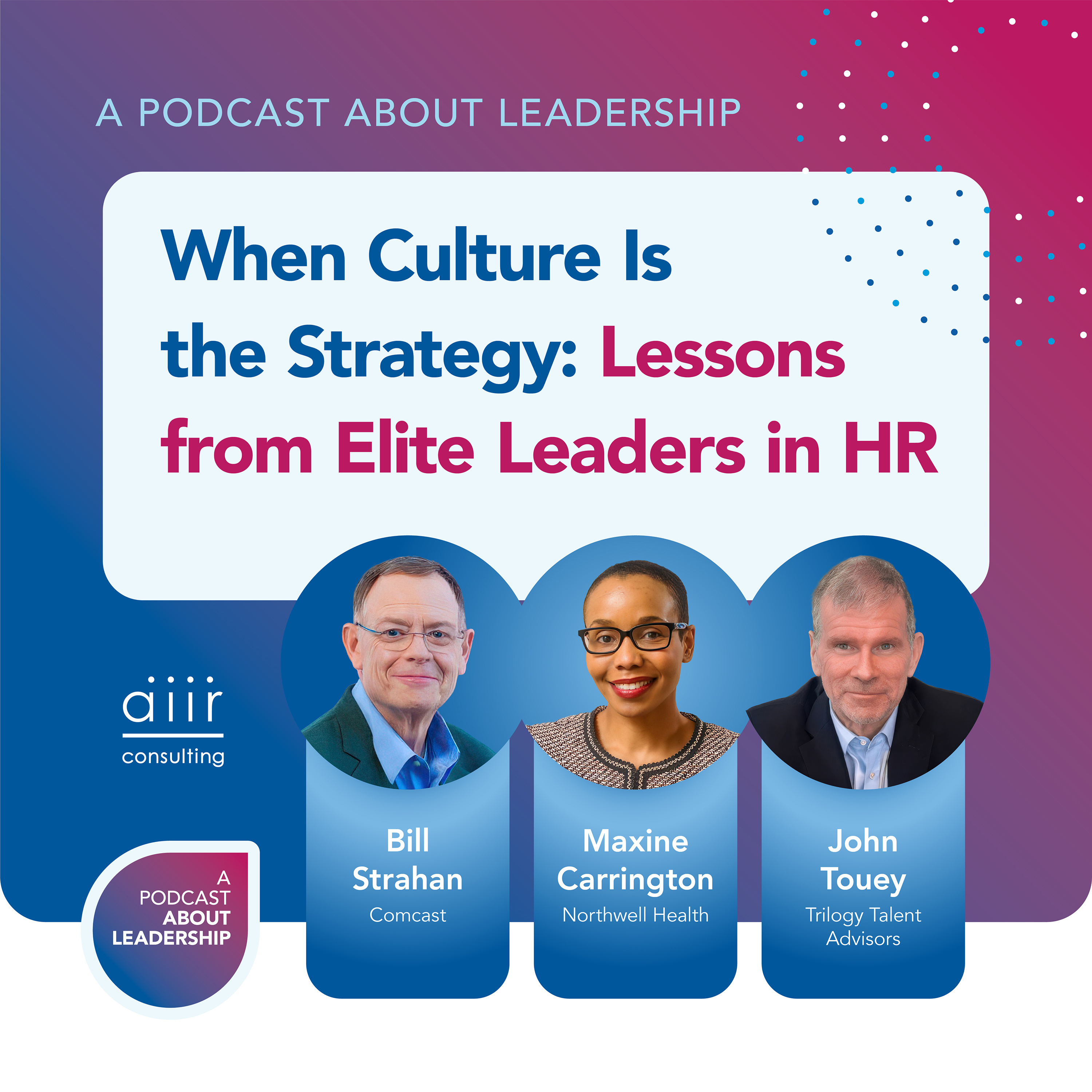 When Culture Is the Strategy: Lessons from Elite Leaders in HRA Podcast About Leadership · on Comcast72 / 100
 ILT015 Quoted Companies Alliance (QCA) CEO James Ashton on Journalism, Economics & the Markets (S2 EP07)Fund Your Retirement Podcast · on Virgin Atlantic62 / 100
 Nobody Talks About This Part of the Founder Journey w/ Shona Beats - Part TwoFounders Unplugged · on Virgin Atlantic62 / 100
 America's Tech Wishlist, Comcast Splits in Two, Tristan Thompson in the Ultradome | Zach Laberge, Gavin Uberti, Eren Bali, Larsen Jensen, Ricky Rosa, Andrew Rea, Michael Anderson, Tristan Thompson, Grant Gregory & Ian RountreeTBPN · on Comcast57 / 100
 Audience Rewards: Transforming Broadway Loyalty Through Fan Engagement (#795)73 / 100
 ITA Group Research Reveals Powerful Loyalty Drivers (#787)85 / 100
 Best of the Back Catalogue | Creating Emotional Connections That Last (#784)58 / 100
 Best of the Back Catalogue: What makes a Coalition Loyalty Programme Truly Successful?(#794)
 7-Eleven: Loyalty, AI & Redefining Convenience for the Next 100 Years (#793)