
Founders Unplugged · 2025-07-23 · 56 min
Key moments - from our scoring
Substance score
42 / 100
Five dimensions, 20 points each
Headspace's transition from live events to a technology platform emerged from observing cultural shifts in how people consumed content through Netflix, YouTube, and emerging app ecosystems. Rather than a dramatic pivot, it began incrementally - Rich and Andy returned from a New York event inspired by new distribution possibilities, leading to Take 10, a simple 10-minute meditation series for attendees who couldn't make live events. The first sequential 365-day course required users to progress daily, though this evolved constantly based on user feedback. The real inflection came on New Year's Day 2012 with a Guardian partnership featuring Andy's guided meditations on a CD alongside a booklet, combined with app availability. Shona watched subscriptions tick up in real-time as people bought access. Subsequent partnerships with Virgin Atlantic proved meditation had mainstream appeal. Critically, Headspace avoided paid advertising for years, relying instead on press, word-of-mouth, partnerships, and features like a buddy system encouraging organic sharing. Shona's role evolved from operations into CEO, tasked by Rich simply to "make this happen" - building infrastructure and expanding internationally to LA. The conversation explores how profound mission (improving world health and happiness) drove team energy, the relationship between sales skills and internal company communication, and the ethics of persuasion when building products people use repeatedly.
Headspace began by creating Take 10, a 10-minute meditation app for event attendees who couldn't attend in-person sessions. Founders Rich and Andy saw emerging content distribution platforms like Netflix and YouTube, then decided to develop a broader app-based offering. The public launch came through a Guardian partnership on New Year's Day 2012.
The Guardian partnership on New Year's Day 2012 was critical - they published a CD of Andy's meditations in every physical magazine with a companion booklet, driving users to the app. Shona watched subscriptions grow in real-time that day, with new purchases appearing every few minutes.
No paid advertising was used for the first couple of years. Growth came from press coverage, word-of-mouth, organic partnerships (Virgin Atlantic, Guardian), and features like the buddy system designed to encourage users to share with friends.
Shona served as MD and later CEO, tasked by Rich to "make this happen." She built operational infrastructure, managed expansion to the US and LA, and handled the day-to-day execution of the vision while founders Rich and Andy focused on creative direction.
When Headspace launched, meditation was considered unusual. The Virgin Atlantic partnership proved mainstream acceptance - having a meditation app available on commercial flights signaled that meditation had become socially acceptable and commercially viable.
Our reviewer’s read on each dimension, with quotes from the episode.
The opening Headspace pivot narrative contains a few genuinely useful operational nuggets - zero paid advertising for two years, a jury-rigged CMS, a Guardian partnership as growth hack - but these are sparse relative to the 56-minute runtime. The back half of the episode is consumed by a meandering smartphones-and-children debate that produces almost nothing actionable for a B2B operator.
We did not pay for advertising for the first couple of years. We didn't. It was press and it was partnerships and it was words of mouth.
The first headspace journey that was created was a 365 day course, um, that you had to go through sequentially. So you actually had to go through every single day. You couldn't leap ahead.
The Headspace origin story carries some genuinely fresh operational texture - building on cardboard-and-sticky-back-plastic technology, hustling a New Year's Day media partnership - but roughly two-thirds of the episode is a rehash of the standard social-media-and-children debate that circulates widely, including the junk-food analogy, the prefrontal-cortex argument, and the algorithm-drives-provocation point.
We therefore built the app on the back of an existing, like, CMS that was not designed to really deliver, uh, meditations on a daily basis. It was really, really like pulled together with, you know, cardboard and sticky back plastic.
it is very easy to sell you something that's not good for you. It's harder to sell you something that is good for you.
Shona Beats has genuine practitioner credibility - she was effectively the operational lead who scaled Headspace from an events business through its app launch and US expansion - but she is now a founder coach, and the conversation does not extract much depth from that Headspace experience before pivoting to general social commentary.
The brief that Rich gave me was, yeah, can you just. Can you make this happen? And so I was, yeah, like, heads down building a yellow brick road. Like, as we were going, it was like, um. And then that brick road went to America.
We did a partnership with the Guardian on New Year's Day.
The Headspace section offers concrete specifics - Guardian New Year's Day launch, Virgin Atlantic partnership, Take 10/15/20 product structure, no paid advertising for two years - but the dominant smartphone discussion is almost entirely anecdote and vague assertion, including a tellingly hedged statistic ('I think it's like 75% of 15 year olds or something').
We did a partnership with the Guardian on New Year's Day. So it was like new New Year, new you. It was exciting... the Guardian were publishing in every single magazine a CD of Andy's kind of guided meditations.
I think it's like 75% of 15 year olds or something have seen that. So I don't know what's happened to us
The host asks a few worthwhile early follow-ups about the Headspace pivot (was the app supplementary or standalone? what year? what was your reaction?), but he habitually answers his own questions, delivers long monologues about his personal life and sales philosophy, and the extended smartphone debate is a mutual agreement session with no productive challenge or tension on either side.
Was the goal always. Sorry, but just what I think of it, was the goal always to make it kind of like this broadly available app, et cetera. Was it really just as like more of an accompanying material for those attending the events?
I've worked for a lot of companies in sales and marketing Functions in leadership positions. And like, if I really boil down their mission and vision statements, it's like, we're not changing the world, guys.
Computed from the transcript - who did the talking, and the words that came up most.
Nobody Talks About This Part of the Founder Journey | Shona Beats on Identity, Burnout & What Comes Next What happens after you step back? After the raise? After the exit? In Part Two of our conversation with Shona Beats - ex-Founding COO of Headspace and now a coach to high-growth founders - we explore the emotional cost of building a company… and what’s waiting on the other side. We talk about identity loss, burnout, ego, and why even the most successful founders can feel totally unprepared when the hustle stops. If you’ve ever asked “what now?” - this one’s for you.
Transcribed and scored by The B2B Podcast Index.
Speaker A: Welcome to Founders Unplugged, Hosted by Greg McCallum. Long form honest conversations with founders and entrepreneurs from around the world. This is part two of this episode. Be sure to check out part one if you haven't already link in the description.
Speaker B: So then we're back for part two. Um, I'm here with Shona. If you haven't checked out part one first, do that because then you know who Shona is and you have some context. But you don't need to. You can also just carry on with this one. So, yeah, we're back. We were, yeah, we were getting quite carried away there with something or I was getting carried away, I should say, as always on this show with some ideas. But I do want to go into your time at Headspace then, specifically when the transition started to occur from. Yeah, from the events company into. Into a tech company. You touched on it a little bit. But I'm really curious because did that come as something as a shock to you in any point or to anyone, that sort of realization? And um, do you remember kind of when that. I don't know when that sort of realization occurred that actually we're going to be pivoting to this. Like you speak on that.
Speaker C: It was so. Well, it was the found, it was Rich and Andy that, that, that came up with the idea and they had, I remember they had been to New York, they did an event in New York, um, and they came back from the event and, and this was, this was the time when sort of Netflix and YouTube that, you know, those platforms started to bubble and this idea of, um, accessing content that was broader than music and films and you know, started to be available. Like there was like how to's on YouTube or here, let me guide you how to do X, Y and Z. So there was this sort of cultural, sort of user experience movement growing, sort
Speaker B: of like video tutorial culture was coming,
Speaker C: becoming a thing exactly like courses online. You know, like it wasn't. If you, you know, this is a long time, a real long time ago now, but there wasn't many apps beyond some of the functional ones. I mean, I'm trying to think back what I had on my phone at the time, but it was very little. I was not an avid app user at that time. It was probably Google Maps and what have you. I had a smartphone.
Speaker B: So like default apps mostly.
Speaker C: Yeah. So I mean, just such a profoundly amazing idea. As I say, like, uh, you know, I think the whole concept of Headspace was incredible that Rich and Ansi, the demystifying meditation I think was the first profoundly impactful idea that they brought to life. And then the second one was then taking the content and applying that in. In an app. And in this case, I think the app was important because you could take it with you anywhere. And the whole point was that you had meditation in your pocket and so you could sit on the tube on the way to work and meditate. And so it was that we, as I say, that we didn't really have any tech experience. Um, we didn't have a lot of money at the time. We therefore built the app on the back of an existing, like, CMS that was not designed to really deliver, uh, meditations on a daily basis. It was really, really like pulled together with, you know, cardboard and sticky back plastic. Ultimately, I mean, but the agency that did the first job for us, I mean, amazing like, that they were able to kind of manipulate this existing technology into something that would deliver what was required for the app. And then, um, uh, wip, the app agency that we worked with as well, were amazing.
Speaker B: Um, was the goal always. Sorry, but just what I think of it, was the goal always to make it kind of like this broadly available app, et cetera. Was it really just as like more of an accompanying material for those attending the events? Was that like the first port of call?
Speaker C: Yeah, no, it's a good point because actually the first app that was created was to give people take 10 after the event. So. Yeah, so skip a step. There was an app that was created to Simply give take 10.
Speaker B: Okay.
Speaker C: Which was 10 minutes of meditation for 10 days.
Speaker B: Additional value, essentially, for attendees.
Speaker C: Uh, exactly. Yeah, exactly. And also to help them continue the practice. So they would obviously come and be inspired by that. It's like, what would help you when you get home? So it was take 10. Take. Take 15. Take 20. 10 minutes. 10 days. 15 minutes. 15 days. 20 minutes to 20 days. And. But there was. So, you know, and again, I suppose this is about listening to your. Listening to your users. Firstly, not everyone could come to the event. So there would be people in Scotland and the events were in London. I'd love to come. I've heard about it from so and so I can't make it. And so you're hearing that more and more. And so you're thinking, well, you know, how can we provide this further and wider? Obviously there was this idea of developing a piece of content on an app anyway, and then it's like, well, actually, why don't we just make this broader? So we. The first sort of. Again, I don't know if people remember this, but the first headspace journey that was created was a 365 day course, um, that you had to go through sequentially. So you actually had to go through every single day. You couldn't leap ahead. Right. So there was all sorts of like, I mean the whole thing never stopped really because it was always this constant learning and iterating, learning and iterating. And in a way, as soon as you baked something and you published it, you immediately worked out that, oh, actually we could have, should have done. So you immediately kind of go back into that, to that process and that never stopped. I don't think there was a point where it was ever job done. It's an important, nor should it ever be.
Speaker B: I mean, it's a living, breathing thing. If people are using it, it's living and breathing. Right?
Speaker C: Yeah, exactly. Yeah.
Speaker B: No, that's super interesting. So what was your first reaction to hearing that that was the direction that it was going to go in? Did it? Did it? I mean, uh, by the way you've described it, because it was very much like a sort of a productization of something initially in quite a small part by the sounds of it, I'd imagine that it was probably like, yeah, okay, that makes sense because you're not seeing what eventually it becomes. It's not like, hey, we're going to build this multi billion pound app. It's very much the next step. So I imagine it wasn't too mind blowing, but.
Speaker C: Well, it was just exciting. I just, I. This is a long time ago as well, but it was just exciting. I just remember every when about.
Speaker B: What year is this now?
Speaker C: 2012. Yeah, well, actually sort of 2011 really. The sort of technology piece began, uh, because it was the addition to the event and then 2012, we really got stuck into it in earnest and I suppose what I mean, in earnest, it was like, right, this will be a fundamental part, part of how people experience headspace, that the audience will now not come to the event. The audience will come here. And what I mean by that is the launch of the app publicly. We did a partnership with the Guardian on New Year's Day. So it was like new New Year, new you. It was exciting. You know, like we were sort of, you know, again, like, the guys are just excellent like this. This partnership was hustled with the Guardian to go live on New Year's Day. We were like squirreling away like trying to get this product app system, if you think about it, because it's not just an app, it's in a whole back operation system, which we're like, never done this before. Everyone's sort of working out. I remember it was, you know, doing all this through Christmas. And I remember the day before it went live, and it, like, it had to go live because the Guardian were publishing, like, they were publishing in every single magazine a CD of Andy's kind of guided meditations. And this really gorgeous little booklet. And I was like, well, we haven't filled in any FAQs, so, like, the FAQs are just black. And I was like, everybody just stick something in there. Like, shove an FAQ in.
Speaker B: It was amazing.
Speaker C: Yeah. And it, you know, but it was just exciting because, you know, that day, obviously the Guardian went live. And we're all like, you know, you're, like, waiting, and then you can see your back end, like our, uh, little system. And it's like, my God, somebody just bought a subscription. Whoa. Like, you know, and you. You could just start to actually see it in real time, growing and. Yeah. So it was just exciting. I don't think there was ever, uh, a down point.
Speaker B: Yeah. Was that the moment, or was there ever a moment where you plural and singular kind of were like, oh, shit, this is gonna be big. Did that ever happen?
Speaker C: I mean, I can't. I'm not sure I can speak for everyone else. Cause I'm sure there were different moments for everybody. But I think that. I mean, that experience. I've spoken about the day it went live with the Guardian partnership, and you could. I was watching people buying and accessing subscriptions, and it was happening. I could see it happening.
Speaker B: It was in real time.
Speaker C: It was real time. And it wasn't just one. It was like one. Oh, God, another one. Like, I'd refresh. I'd go away, have a cup of tea, come back, refresh. Oh, God, another four. Like, refresh again. Oh, God, another five. So at that point, I think, for me, it was realizing this is. This is going to happen. Like, this has to be like, okay, right. We got to wrap our arms around this. Like, this is now. This is now happening. So that was definitely a moment. We did a partnership with Virgin Atlantic, which, again, was just a brilliant, uh, genius move from, you know, Rich and Andy's perspective. Like, thinking that creatively about how and where can we put meditation? And I think when that partnership, um, that partnership came to fruition and then Headspace was on the, you know, media systems of all Virgin Atlantic flights. That was pretty cool. Like, I remember going on a flight and being like, um. And then yeah. So there was just these moments, I think, where you could just see, do you know what it was? I think there was an acceptance of it. Like, if I think about the Virgin Atlantic, it's like, this is meditation. This is quite like back then, this is quite an unusual thing to talk about with people. And then all of a sudden Virgin Atlantic is putting it on their planes. You're like, okay.
Speaker B: Right.
Speaker C: And I think as well, what I could sense was that, um, there was a uniqueness to this that was, um, just really resonating with people. And the practice itself was just absolutely shifting, you know, was positively impacting people time and time and time again. And so you sort of. You knew that would be the case for however many people you brought to the table. So then it was about, how do we bring everyone to the table?
Speaker B: Well, and then I suppose there's an inherent virality to a product that has that significant influence on people. Right. In the positive way. I mean, you know, I heard about Headspace initially from other people. It wasn't through advertising.
Speaker C: Yeah.
Speaker B: I mean, that's how I heard about it.
Speaker C: Yeah.
Speaker B: And I think if you ask most people, where did you first hear about Headspace? You know, if you're, uh, as a headspace user, where did you first hear about it? Probably it's because, oh, someone recommended to me, it's got that sort of that viral. Yeah, that network effect built right into it, you know, which I think for a D2C brand is incredibly important anyway.
Speaker C: Yeah.
Speaker B: From a customer acquisition cost perspective, uh, if nothing else, we did not.
Speaker C: We did not pay for advertising for the first couple of years. We didn't. It was press and it was partnerships and it was words of mouth. We did encourage you. We were very conscious about creating a language that you could use to talk about that with people. And we did have the buddy sister. There were some features that we built in with a view of getting you to tell your five closest friends about you. So there was a buddy feature which was quite rudimentary when I think back to it, but the idea was that you could connect with five of your closest friends. So, yeah, it's interesting now. I mean, now, you know, as I say, getting, getting attention. And it's an entirely different landscape with social media and the way that, um, everything has shifted. But back then, social media was not like it was now. So it was press, it was word of mouth, it was partnerships, it was get listed in the top 10 best apps for health and fitness. Um, it was all of those things that we were driving and we had pr. We had like a PR company that we worked with way before we did any paid marketing.
Speaker B: And, um, during this time then, your role was CEO, is that.
Speaker C: Yeah, so, yeah, md. Um, yeah, it was, it was. The brief that Rich gave me was, yeah, can you just. Can you make this happen? Can you just make this happen? And so I was, yeah, like, heads down building a yellow brick road. Like, as we were going, it was like, um. And then that brick road went to America. So then I like building over the seas. So it was, uh, yeah, it was quite, quite the experience.
Speaker B: What was, um, what was it like moving to? You moved to America, right? You said. Yeah, yeah, yeah, yeah. What was that like? I mean, as. Had you spent much time in America up to that point? Before, prior to moving there?
Speaker C: No, I'd been on a couple of holidays.
Speaker B: Oh, right.
Speaker C: Um, yeah, I've been a couple of family holidays. So we're talking Florida and, you know, New York. I've been. I've been to a few places, but no, never been to la. I went a couple of times before I actually moved, but no, had it been. It was. I think that it was. I was so heads down with this vision and mission to improve the health and happiness of the world to that. The move to LA was just part of that journey, if that m makes sense. And I did kind of just took
Speaker B: it in your stride, really.
Speaker C: Yeah. And I think it was the, you know, I think the whole time that I, uh, was. Again, I think that's a really interesting piece about Headspace in particular is, you know, a lot of the early team had been profoundly, uh, moved and changed by the practice of meditation. And so the compassion to want everyone in the world to have that was quite overwhelming. And I think that's what drove a lot of those early, you know, the energy and the drive. And this is why it's interesting when you talk, when I work with other startups, I'm obsessively asking them about their vision and their mission. I'm like, make it big, make it powerful, make it profound. Because that is ultimately what will inspire your team to get up in the morning and throw in for this. And so, yeah, it sort of came from that level of energy than, you know, oh, this is my job and should my job, you know, you know, I was like, yeah, I'll, um, come to la.
Speaker B: I mean, that's easier said than done though, right? I mean, like, not every product is that inspiring. Yeah, you know, I've worked for a lot of companies in sales and marketing Functions in leadership positions. And like, if I really boil down their mission and vision statements, it's like, we're not changing the world, guys. Like, we're selling B2B like software to help people do this or that. Like, you know what I mean? We can help people save a bit of time, maybe save a bit of money, but like that's basically it.
Speaker A: Ah.
Speaker B: And anything else would be window dressing and clearly bs like, you know, like you can't build it up that, that big. But like for headspace, I mean, yeah, you can feel that, you can feel good about it because that the literal idea of the product is to make people feel good is, is, is to benefit them. So. But I don't think you can force it on everything.
Speaker C: Unfortunately you can't. But I think that you can still, I think you can still rally people around something joyful or something impactful. And I think, I think that the.
Speaker B: By the way you articulate it, you mean.
Speaker C: I think so, yeah. Just, you know, I think any journey that any, any startup goes on is an exciting journey and you can rally people around the exciting journey. But I think the point of rallying people around is super key. M. You know, I would say yeah, it's quite easy to rally people around improving the health and happiness of the world, but there was also rallying people around a product launch or a feature launch or a shift in the company's organizational structure which would benefit, blah, blah, blah, on a day to day basis. So it's um, there's a lot of internal PR that I think goes on in companies.
Speaker B: No, 100%. No, I agree with you wholeheartedly on that. Uh, I talk about that a lot as well with my, with my clients. Right. About the idea that. Because my big focus is obviously on founder led sales primarily or sales in general. Right. Working with sales teams of all various shapes and sizes, some big, some small. And one of the key lessons that I try and deliver on founder led sales for very early stage founders or entrepreneurs is that it's not just learning the fundamental skills of selling to a customer, it's to learn those skills to sell to an investor, to sell to early founding members of the team, you know, et cetera, et cetera. And selling is what you're describing to me. Like when you, when you describe that I just hear sales because, and this is a, this is a thing that, you know, people who haven't been in sales don't understand. They see it as the art of persuasion or the art of manipulation. People who are in sales know Better than that. It's not, um, it is the art of communication and communicating sometimes some very big ideas, um, in a way that makes them easily digestible. To actually, in some ways, to kind of tie it all up in nice bow. To. To actually save other people of the anxiety that you have. The burden that you have in thinking of all of it.
Speaker C: Right.
Speaker B: And trying to do. You're saving people of that burden and you're just giving them the piece of it that's going to be most useful and most motivating without all of the messy chaos behind it.
Speaker C: Yeah.
Speaker B: So I wholeheartedly agree with you on that. There is.
Speaker A: Yeah.
Speaker B: But I don't know. But then. But I suppose to play devil's advocate on that and to sort of, yes, I don't know, straw man my own position, I guess then you think of things like, you know, drug companies that have been prosecuted for, I don't know, getting a whole bunch of people addicted to opioids and stuff like that. And then. And, you know, you see the insights or that we get some behind the scenes of, like their. Their big quarterly meetings where they're getting everyone pumped up and they're making them believe in the vision. Like, it can also go the other way too. You can make people very pumped up about selling absolute garbage to people.
Speaker C: Well, I mean, I think that comes down to our, uh, human values, I suppose. And, you know, that is definitely something that we all have to bear our own human values, I guess. But to your point, it's very difficult. And I think that, um, Yeah, I think, you know, God, like, talking quite existentially now. What a joy to be able to work on something that you feel profoundly passionate about. And I think that, you know, the truth is we do exist in a very big system. And to your point, uh, you know, there are certain things in life which are less good for us, but they make a lot of money, you know, have a lot of friends in advertising and.
Speaker A: Hi. A friendly reminder to share this episode with your network, like, and subscribe. And if you are feeling really supportive, please consider reviewing the show on the podcast platform of your choice. It all really helps support what we do. Thank you. Now back to the show.
Speaker C: You know, like, the art, uh, of m. Advertising. And again, I won't do it justice, but it's like, you know, the point being is it's very easy to sell you something that's not good for you. It's harder to sell you something that is good for you. And, and there's something about human nature. There And I think we are easily manipulated. Yeah, we're easily manipulated. If you're in into the art of manipulation for your game, then, you know, that's. That's what you do.
Speaker B: So it's, uh, with great power comes great responsibility. This is what I tell people in sales. Like, once you get good at sales, it is actually pretty dangerous. Like you can use it for both good and bad. You know, like sales people have the D dark side and the light side to choose from at a certain point. You know, um, well, now it's.
Speaker C: What pill will you take? So.
Speaker B: Well, yeah, yeah, exactly. Oh, yeah, that's a. That's an outdated reference.
Speaker C: No, no, it's just. It is, It's. Yeah, it's. It's. Yeah. Is this good? Is this bad? I mean, I reflect a lot on. I'm a huge advocate of a movement called smartphone Free Childhood. And, um, you know, I think about. I think about that. For example, you know, I'm so glad
Speaker B: you brought that up because I wanted us to talk about this and I almost forgot.
Speaker C: That's all right. Well, it's, you know, I kind of, I imagine, you know, I don't know. Did Mark Zuckerberg. What was his intention when he was building this. This platform? And, you know, if you look back at the early stories, it's about knowing what's happening with your friends. Well, I think I remember there was some interesting. Wasn't it about rating the attractiveness of the girls in the column? I can't remember. Anyway, and I will, I won't. I don't want to misquote it, but I guess the point is, is that, um, yeah, you know, like social media and a platform like Facebook became very addictive and then was designed to be addictive and generate extraordinary amounts of money because of its level of addiction. And therein you're back into the world of addictive foods that we've had all of our lives. Addiction to wanting diamonds in it. Like, you know, like, to your point, you can ultimately get the human brain to desire and put its attention wherever. And obviously companies and are always trying to. That's. That's what capitalism is about. Right. You know, just keep making money. More money, more money, make more money. So it's, um, easy done, you know, if that, uh, if it works. But to your point, where is there a set of values where you go, yeah, but like, not kids.
Speaker B: Yeah.
Speaker C: You know, it's.
Speaker B: It's a complicated topic. Is it? Because if, you know, you. There is. There is a certain amount of accountability, like people have to take accountability for themselves too. Right. You can't. I take issue with people squarely blaming the technology or the company. That feels to me like a dishonest kind of perspective on it because it absolves the individual entirely from blame. And it's not. It's not that simple. Right. You know, it's like, you know, we're talking about meditation. Right. And especially in the first part about getting to know yourself and building the architecture in order to be able to interrogate yourself and to understand yourself and all of that. Like, that should be priority in your life. And if you're not, I mean, for most people, I would argue that it should be. And if you do that, then you probably be less likely to make poor choices when it concerns your health and so on. If you're not doing that, that is fine too. It's your life. But to decide not to do that and as a consequence not be able to make maybe better choices for yourself, you can't then turn around and blame the person that's selling you something.
Speaker C: No.
Speaker B: Or providing you something who is entirely doing it within, I would argue, you know, pretty relatively sound role frame. Not always. Right. But relatively sound. Certainly legal frameworks, at least again, as they are, and so on. So it's like, you know, I don't know. I think a lot of it also comes down to intention, like you said, like, what is the intention behind it? You can definitely see with certain products and certain companies, the intention is clearly bad. But I don't think you find that as prevalently in tech businesses as you would in, say, food companies or.
Speaker C: No.
Speaker B: Do you know what I mean?
Speaker C: I think. Well, and I think I 100% agree with what you're saying. But I think there is something about age and, you know, like the prefrontal cortex, which is the part of the brain that can make good, rational decisions. Decisions isn't fully developed until your early 20s. And so the truth is, like, as a human operating system, to use the language again, you know, are we, you know, I care mostly about the next generations. You know, I'm a mom and, you know, that is, I don't know what we're doing if we're not, like, thinking about the health and happiness of the next generations. Like, I cannot compute, like, not worrying about that or concerning myself about likewise. So I think that, yeah, I think that when, you know, you are placing something addictive in a child's hands and building, for example, algorithms that will simply promote provocative content, etc. Because that creates clicks and likes and time, you know what you're doing? Do you know what I mean? Like, you know what you do. So at that point I'm like, that young person actually doesn't have the grown up wise capacity and nor should they at the age that they are. They haven't, you know, they haven't done it. So I think that at that point you have to, at that point I'm like, you know, go really think about going to go to sleep at night.
Speaker B: You're absolutely right. But, but then again, I mean if we, if we really sort of draw this conclusion out, this, this, this concept out, then we end up in some really dark places potentially because of then what you, what you have to say is, okay, so then in order to prevent that, let's say, let's say the algorithm thing, in order for the algorithm or certain platforms to not promote, you know, potentially harmful content, sexual content, violent content, whatever, then some measures need to be taken in order to curb that. Right? Okay. That means you have to impose certain policies and rules and algorithms on a platform in order to not actually allow for either entire freedom of speech or to curb that freedom of speech and things like that. So then you start getting into some really dark potential territories of like, okay, who's going to enforce that? Is it, is it going to be backed by what are the consequences of breaking that, you know, etc. I mean, that's one side of it. That's not even to mention the other side of it, which is accountability of the individual in terms of like, why are we, like, should we be giving kids access to that at all? Who's, who's, who's authorizing that and the complex complexities that arise there. Because then again, as a parent, I'm thinking, well, if I don't let my child have access to these things, he's just going to get bullied at school for not knowing it. And so. Yeah, do you see what I'm saying?
Speaker C: I do, I do. I mean, I've been in it for a long time. See, I, I don't see it in principle as I think we already have a pretty solid, uh, kind of. Okay, if you think about film ratings, like, film, like, if you Google it, film ratings are in place across the world, like period. Like there is very few countries that exist on the entirety of the earth that have not had four, like a good hundred years or so film ratings. Why? Because the reasonable person, and I'm talking like the whole Earth, not just like, uh, this isn't like niche. This is not niche. This Is the whole Earth for decades has said, do you know what? I'm not really sure a 12 year old, I'll give you an exact one. I'm not really sure a 15 year old should watch a man being beheaded, not a film. And by the way, bear in mind that with, with the cinema and with film, it wasn't an actual man being beheaded because that, that would be banned. Like that wouldn't even hit the cinema.
Speaker B: It'd be a sim. Yeah, it would be a simulation. But you're saying a real, a real video.
Speaker C: Yeah, yeah. Like I think, I can't remember the stat, but I think it's like 75% of 15 year olds or something have seen that. So I don't know what's happened to us where somehow we're now going. It's like, no, no, no, like we already had a pretty decent. I understand that the, the that is set by various countries and what have you, but broadly the consensus of humankind was let's not let young children see things if they don't have to. Like, don't get me wrong, if you are in a war zone, you are experiencing that and there is. Which is a whole other thing. But if you are not there, like do you want that going into your eyeballs every single day? What is that doing to your human body? Because you're going to have a response to that. What is that doing to your operating system? System in seeing that every single day. And by the way, because the algorithms will promote you provocative content if you even hover over something. Because you do. And here's the principle. If an AI like watched humans from above, it would go, ah, ah. They fucking love car crashes. They are like looking at car crash. They love them, they love them. Give them more car crashes. Give them more car crashes. It's not agile. We look at those car crashes because we're humans and we're animals and if
Speaker B: you give us more, we're going to watch.
Speaker C: Absolutely. And we'll just keep watching them because. Because this is what we do. What are we doing though to a young brain? So my, my point of view about the whole thing is this scrap film ratings put on saw at your local cinema and be like, anyone welcome 5 year olds come in. And if I say that to you, you're like, that's ridiculous. But then why have we got to the point where we somehow were justifying and trying to like, you know, it's like, what shifted? You tell me what shifted. Where for hundreds of years we have said, nah, five year Olds probably shouldn't go into seesaw.
Speaker B: I don't think anything has shifted. It's just that the medium is different and you can't regulate it the same way. I mean, like, if I ask you to put your COO hat on and ask you to actually sit down and figure out a way to solve this problem, it's a way more complicated problem to solve than age ratings for movies or computer games or whatever, right? Because in that scenario, all you do, you ID people right now. Okay? What is the Internet equivalent of that? Infinitely more complicated. And it starts to encroach into territory which could impede on people's rights. We have to be careful. Do you see my point there? Like, because. Because otherwise it requires people to have some form of digital identification. Because if. Look, look, let me put it this way. If Twitter, Facebook, Instagram, TikTok, all the main social media platforms all decided to implement exactly what you're saying today, right. Tomorrow, right, Fine. Kids are still going to find it elsewhere. They're going to go to different platforms, right? Because most of this stuff exists on other platforms specifically for it. I know. Like, you know, uh, I used to work many years ago in the nightlife industry and the doormen that I used to work with used to love going to these websites and watching this stuff because they're like ex military and stuff. So they would watch these decapitation videos and stuff like that. Horrendous. But it's all on different platforms. It's shared the social media, but it lives another platform. They'll find it.
Speaker C: Absolutely.
Speaker B: And all of these platforms have people who have accounts that are anonymous, right? Of course. Because they say horrible things, they post horrible things. So anonymity is the issue. But if you take away anonymity, you are massively encroaching people's rights. Right? Because otherwise that is, that is totalitarian. That is ultimate surveillance. So do you see? Do you see what I mean? I'm so torn because I agree with everything you said. But when it comes to the solution, the choice is either have, have freedom and everything about that, that's messy and then it's on to individuals to, to try and make the right choices as best as we can, or you have totalitarianism in full control. Do you see what I mean? It doesn't really feel like there's a middle ground.
Speaker C: M. I do, I do. I don't doubt. Take the cinema piece though. Take cigarettes, take alcohol. You know, did I still watch films before? I should have cooked for sure. Like, did I smoke for sure.
Speaker B: But there's always a way.
Speaker C: There is always a way, but there is setting a principle. Like you say there's a sort of value system that we are saying by and large, like this is very addictive. I wouldn't recommend it until you're 16 or what have you. I totally get it. And I don't think it is easy. I think it is massively complicated. Do I trust in the creative technology genius of, of a lot of the technology. The creative technology geniuses? Yeah. 100%. Like I feel that things absolutely could be, could be. But it's this um, broad acceptance now that, you know, it's all just out the bag and what can we do? And the where we have got to with like devices in pockets of children is they are ah, fully accessible. We don't like, we have to ask ourselves this question. Do we just say, oh well, kids just get behind a car, the wheel of a car then, well, kids just go into the cinema whenever you just get alcohol, just, just walk into that like that. You, it's all. You're encroaching on my human rights by saying I'm 15 years old and I can't go and buy booze. I want booze. You know, like I find a way. But in broadly what we are saying,
Speaker B: you're m. Making it more difficult.
Speaker C: Yeah, yeah, exactly. Or it's just, it's a broad subsystem then.
Speaker B: I know what you're saying, but just, I just think that, you know, it's. I don't know. I, I do, I do, I do agree with you, but there's there's a, there's a line there, isn't there? Because like when you talk about principles and like invoking values or whatever, like I m don't, I don't see it as Mark Zuckerberg's responsibility to ensure that he lays down good values for my child. Like, that's my responsibility. Because at the end of the day, what I would much prefer, you know, my, my responsibility is so that when my son or sons encounter the choice between doing something right or wrong or looking at something right or wrong, they make the right choice because they're inevitably going to. To come across it. Do you know what I mean?
Speaker C: M. I do. But I don't think most kids have a choice. So hear me out. Like, okay, interesting. It is, it is one thing to have like the video and say, do you want to watch this video? And you go M. Yeah, go on. Then I'll watch it. It is another thing to be mindlessly scrolling and for something to pop up on your feed. I'll give you an example. Let me give you an example. My mum is 70 odds right on her feed, I kid you not. She's like, I'm getting, I'm getting videos of monkeys where the baby monkey is like sucking the daddy monkey. And she's like, what? Like, she's like, why has this ever come up in my feed? But obviously because it's shocking. She hovers on it for a hot second. The algorithm's like, she bloody loves those monkey videos. Keep sending her monkey videos. She's getting videos of like men coming out of the sea and they're typing. She, bless her heart, she's like, I don't, I don't know where all this is coming from. So I'm not sure these algorithms are doing a particularly great job of not just chucking like really random crap in people's eyeballs. And, and it's, you've seen it time and time again. A young boy, you know, you go on a young boy's profile on Tick Tock, within a couple of minutes you're going to see something, you're going to see an abuse video. You go on a girls video, within a couple of minutes you're going to see a self harm video or some sort of thing. So you know like. Yeah, yeah, you make a very choice. There is.
Speaker B: Yeah, you make a very valid point. I mean, yeah, because of, I mean essentially what, the way I've interpreted what you said there is we have the ability to uh, to influence our children to, to develop their value system, but so do these products. So yeah, you're absolutely right because they're being reactive to an undeveloped mind.
Speaker C: And you know, and I think you've got to remember the business model, right? The business, the business, the business model is attention and what gets attention is provocation. Why do like, why do like newspapers have shocking headlines?
Speaker B: Yeah, yeah. It's because of our proclivity to negativity. We're predisposed to it evolutionarily.
Speaker C: Yeah, exactly. And that is very. So I do think I get. It's hard, it's extraordinarily hard. And I don't, and I fully. And I haven't actually, what I think is that uh, this is why I think the movement is so powerful. And I'm working funny enough after this call, I'm going to a high school to start talking to them about what they're going to do with their phone policy. I don't have any doubt that it's hard But I still feel like, I'll give you another example as a woman, woman who's part of this movement and her 12 year old daughter went to choir practice and this kid just flipped the phone around and she watched a decapitation video. She didn't have a choice. It was like, bang, there you go. Something gets shared in a WhatsApp group. You're watching it before you've even realized you're watching it. You know, it's like YouTube channels where like a kid will be watching something really like. So there's got to be like, what would you say?
Speaker B: No, no, I think you've touched on a really important point there. Ah. What would you say to the idea of say there being an AI on children's devices that surveilled them, that actually watched what they were doing? Do you think that would cross a line of privacy when it comes to children up to a certain age? Let's say up to the age of say, 10.
Speaker C: Right.
Speaker B: Uh, just, just to be really conservative on the age thing.
Speaker C: Yes, yes.
Speaker B: Up to the age of 10. Would we say that's acceptable or are we starting to encroach on privacy if we're asking AI to literally watch everything that's going on on that screen and report back to us?
Speaker C: As I say, I am not an expert and I am not, but I am, um, I would be at the access to the apps. Like what do you have to do to actually get access to this app?
Speaker B: Yeah, I mean we already have, we already have certain settings that we can do. So for example, my son, he's 10 and he has a phone that he, he doesn't carry with him. He's got access to it on occasion. Right. So mostly for like listening to music when he's doing stuff or having a bar if he wants to put stuff on, or headspace.
Speaker A: Right.
Speaker B: For example. But, but then there's occasions where obviously he might go to his room with that phone and it's all restricted. So it's got, it's got, um, I've set it up through Microsoft family or whatever where you can do that. So you can restrict certain things, but there's always ways of getting around it. And if there's a way, I mean my son, if there's a way to get around something, he will figure it out. Right.
Speaker C: 100%.
Speaker B: And so it's. And also some things might not appear to be harmful to the filters or whatever, but they are. Right. So. So I don't know, it's just. And it's also about Habits in general, because it might not even be necessarily viewing something that's particularly violent or, or dangerous, but it might just be like, dude, you should have just been listening to music and you chose to like, look through pictures of lions for three hours. You know what I mean? Like, you should have been doing that puzzle. Like, it could even be something as, uh, you know, completely mundane as that.
Speaker C: But yeah, I don't know. It's, it's. I think it is, uh, it's all sides of the coin, isn't it? Which is why I think the movement is about delay. The movement is delay. And actually I think the movement is also about awareness and education. And I think that to your point, it's like, you know, you may be unaware, you may be unaware that, you know, if your child goes down a rabbit hole on a laptop. So I don't even think the phone is just the issue. It's the, it's access to the Internet. It's access to everything in any sort of. You could just get access to absolutely everything. So I do think a lot of it is around educating parents about what is accessible. But it's this balance because, you, uh, know, I hear a lot of people saying, oh, well, you know, my kid needs to be great at tech. My kid needs to be great at tech. We're like living in a world of technology and I couldn't agree more. I already, you know, my daughter is 8 and I already have shown her what AI is, how to use it, how can she make the most out of it. But what she's not doing is like back to back TikTok videos. And what I often say when I'm talking about it is like, I have never, like using social media or flicking through YouTube. Doesn't make you great at tech. Yeah, um, like my mom, my mom is like rocking out on Instagram. She's. There's no profound teaching here or like understanding of how to like build a tech company. Be part like, like the, the framework of the architecture on how you even bring like an AI platform to fruition. Like, that's got nothing to do with TikTok videos. Um, it's got nothing to do with liking and showing. So I think that they're talking about
Speaker B: tech literacy in a more broad consumer sense as opposed to like getting interested in a STEM field or becoming a developer. Right.
Speaker C: Like, yeah, which is very difficult idea. It's tough though. As I said, I'm going to a high school tonight and it's tricky. They're like 90% of our problems now. In school are down to phones and social media and what. Because in 9 like however we do like using them in classes for this and that. And so uh, so I'm actually going into. So I don't know what the answer
Speaker B: is really genuinely like we spoke about before. I've spent long and long and hard thinking about this and I think I've arrived at a conclusion, at least for now. It might change but I've held it for a while now which is this AI idea, which is that I think, I think that, that we have an opportunity here to create um, AI assistance essentially for children and that phones that have, that are designed specifically. There should be phones essentially that are designed with a UI and operating system specifically for kids that unlock other uh, features and access depend based on the way that they're using it. So it should be built along a very, a very stringent path early in the path and it won't necessarily block like what they can go online for and things like obviously bar the obvious age filters. Right. Yeah.
Speaker A: If you are enjoying this episode and want to support the show, please like subscribe with notifications turned on and let us know your thoughts and opinions in the comments below. This lets YouTube know we are doing something right back to the show.
Speaker B: But if they do find a way around it, it's not going to stop them, but it will talk to them.
Speaker C: Yeah, that's interesting and I think that's
Speaker B: the important thing because of what we talk about a lot with you. Uh, know I've been talked to about and I talk to other parents about especially as a huge tech advocate like you said, is the education piece. Yeah, but it's impossible to implement. Like let's be completely honest, it is impossible. You can have the best intentions in the world. You could have a roadmap for introducing your child to the Internet technology whatever for like the first 20 years of their life. There is no practical way of implementing it without hiring help. And I think AI is, is sat right there and we, yeah we could get our uh, AI to be like just keep an eye on my kid while they're online please.
Speaker C: Well and I think this is the. I think what is exciting is that you know in the same way that obviously we are seeing you know, awful crashes in children's mental health and well being and suicide, you know like really like it's not great. I really feel for kids, especially kids like through the COVID area. I think everyone just like went on their phone. So I think in particular like there's been, there's Also a lot of kids that are moving away from technology. There's a lot of young people who are actually going. So you know, to your point, I think, I think it will all come out in the wash in a way, in various different ways, shapes and forms. But there are devices coming out which are designed perfect for children. I am in conversations with this incredible woman who is looking, you know, to create sort uh, of rating for apps. Parents, you know, but who rates those apps. But the point being is if you pull together a body of people who you respect and have a good decent understanding of mental health, gamification, addiction. Um, because to your point, I'd let my kids use the Headspace app all day, every day if they liked. I'm all good with you getting addicted to meditating, you know, like that's fine by me. So I think it's about, um. I talk a lot about the supermarket. You know, my mum was, ah, northern 80s mum and she did what the adverts told her. She bought microwave meals. We had vegetables out of a tin because it was efficient. That was how I lived my life. Like I consumed an extraordinary amount of sugar. You know, my mum has a heart, has type 2 diabetes and was told she was malnourished a few um, months ago and she's very overweight and she would say that she's now gone on Marjora to work that. But I guess the point being is that my mom didn't really understand Healthy, not healthy, healthy. And I think this is my, this is the challenge is that you have parents just living their lives, you know, and everyone's on their phone and we've just all consumed this new way of living and this behavior and we're just going with it. Do you know what I mean? I will just go with it because then it kind of seems fun and exciting but you know, are we even aware of what we're doing? Which is I think exactly like food in the 80s. So I think it's similar to. There's sort of a big kind of piece of education now around going into supermarket. You're choosing what to consume through your mouth and into your body. And I think with tech and screens we really would. It's important to get to a point where you can make a considered choice about what you're consuming through your eyes and into your brain. And I don't know whether I don't think adults know what they're consuming. And when I say what are they consuming? I'm not even talking like a piece of video or an Audio that they might experience. It's the, ah, art of the gamification. You know, it's like, what's happening to me? I'm just getting sucked in. So it's, it's even knowing when you are. When my, um, my daughter uses duolingo and I will say to her, are you feeling addicted right now? You know, how hard is it for you to. How hard is it? It's time to close the iPad. How hard is it for you to close the iPad right now? Can you feel how hard that is? Can you feel how excited you get when they go ka ching when they make that noise? Like, I'm teaching her the art of gamification. So she's like, oh, I know.
Speaker B: So you can become self aware.
Speaker C: Yeah, but like, that's me, you know, that's. I am not an average parent in that sense because I've come from that world and I understand it. So to your point, yes, the onus is honest, but was the onus on my mom in the 80s when the adverts were telling her shiny thing over here?
Speaker B: I think there's an argument for both sides because. Yeah, I mean one argument is absolutely. Yes, it is. Is on. On you to take personal accountability of your diet and what you consume. Both, both, you know, mentally and physically.
Speaker C: It is.
Speaker B: We need to take responsibility to that. But at the same time, you know, it's also a responsibility of businesses to ensure that they have. They hold themselves to some level of standards and consider themselves to have a social responsibility. I think the problem lies in the complexity of the potential solution. That's the issue. And I love your comparison to food, by the way, because I'm a huge foodie. I'm the chef at home. I'm an ex chef from many years ago. So. Yeah. So, you know, food is my thing. And I think very, very carefully about the food that we eat at home. Yeah, I consider that to be an immense responsibility. Um, yeah, to the point where, you know, talking to my wife who doesn't have that relationship with food and didn't grow up with that relationship, very similar to you. Right. In the relationship with food. She doesn't get that relationship. For me, m. Food is. Is probably the most important thing in our household. Right.
Speaker C: It's because.
Speaker B: Because it's the tough fuel defines it. You know, it literally makes up our bodies and our brains. And so if we don't have that, we don't have anything to work with. So that's how I see it.
Speaker C: That's brilliant. You're like my Husband. So my husband is that he grew up with a, uh, with a granddad that had an allotment, they always had fresh vegetables. And so he does that. And it's interesting because now you're talking about it maybe sort of. My sort of obsession is more about what we're consuming in our minds and that probably is triggered by family history of mental health challenges and my own personal mental health challenges. And I think because I've, you know, because of meditating and the scientific, the clear scientific benefits of the art of being present and in the present moment and the more that you can do that, you know, as I say, the science speaks for itself. I guess my beef with sort of social media and short form content and kind of kids consuming that, it is the absolute antithesis to that. Whatever you're watching, the truth be told, is like you're really, really not present. So I suppose in a way, and I don't have the answers and I wish I did, and you know, sort of feel naive in many ways talking about it, but I am passionate about it in the same way that you are with food. Because I really believe that what we consume through our eyes and our minds can have a profound effect on our human existence. And to your point, if you're 18 plus doing that like you do, you, you choose. But when you're responsible for people, I
Speaker B: mean yes and yes and no. Because again, to your point about your mum, it's like even as an adult fault, are you not. Yes, you're culpable and you're responsible, but at the same time, if you've built 20, 20 odd years of bad habits through no fault of your own, you're influenced by your parents making, you know, not so great decisions, who by themselves were also influenced by like everyone's culpable.
Speaker C: Yeah.
Speaker B: So it's like in some ways it's not really useful figuring out who's culpable. What's useful is finding out the solution, like, because otherwise you're just playing a blame game. There's plenty of blame to go around for everything these days. No one knows, no one has clean hands, you know. But yeah, I uh, do love, I just do love the analogy you make with food. Because if it's so true, it's junk, it's junk food for the brain, you know, it's junk content. And even what used to be traditionally non junk content like movies and the cinema and things that used to make you think is increasingly becoming junk content too. I've noticed it doesn't seem to want you to think it wants to do the thinking for you.
Speaker C: Yeah.
Speaker B: I mean almost borderline propaganda, but that's, that's almost a different topic. Um, we could probably get into the conspiratorial side of the social media thing on another day. But I suppose one, one final thought on this topic before we kind of maybe you know, move on to wrap things up so we're coming to the end is I guess, you know, I, I see this as funny enough to tie this into kind of what we both do, an element of which is your favorite word, coaching. Right. You know, um, I think it has to come back to that. Um, but I just wonder if there's a smarter way of doing it, the coaching side of things, you know, because if you need a personal trainer to get fit, a nutritionist. A nutritionist to tell you how to eat better, and if you don't have any foundational understanding of health and fitness and nutrition, you would ideally need to have these people live with you.
Speaker A: Mhm.
Speaker B: Right.
Speaker C: Yeah.
Speaker B: And ah, it's the same, if not an infinitely more complex problem when it comes to the tech problem, I think. And you're asking people who have got a million and one other things to worry about to suddenly care very, very deeply about implementing extraordinarily complex solutions to incredibly complex problems that they don't even know exist a lot of the time.
Speaker C: No, I think this is it. It's. Yeah, I, it is very, very complex. And I think that, you know, my broad brush, my very broad brush brush advice for parents in particular is to delay as much as possible. Unless you are like picking and choosing something which is, you know, like duolingo, you're going to learn a language. Is it hardcore gamification? 100%. Like at what age? And you have to ride that out. Like my son is 5. He literally can't cope with an iPad because if he gets it, he's, I need it, I can't let it go. Like, it's just so, it's just. But it's complicated, right? Because if she's on something and he said there's loads of like madness going on in our house where she's sneaking off to use it for like a little bit. It's very, very, very complicated. I think, uh, I, I think education is the thing. It's probably a little bit like you say when the microwave was invented, it's like, whoa. Now we could just, you know, like you kind of fathom it out, don't you? But I just think, yeah, the more education, the better I Think schools need to be educated. I really feel like I'm going to a school now to kind of give them.
Speaker B: I don't think school should allow phones full. I mean, I don't get why they would allow them. What could possibly be the benefit?
Speaker C: I agree entirely. But their point, which I think is very fair. Their point, I'm sure, speaking on behalf of all schools, uh, what I have heard in conversation with some teachers is also, they didn't buy the phones for the kids. It's the parents. So this is, to your point, everyone's buy. Is it. Is it the tech part? Is it the parent? Is it the school? Is it. What have you.
Speaker B: But. Yeah, but you have uniform. You have things that you can and cannot take into school. That's not. That's not unusual. Yeah, I mean, I couldn't. I couldn't take a samurai sword into school. I mean, I couldn't even take, like, a toy car into school. Like, I'm not allowed to take things into school other than the tools I need in order to do my job and wear what I'm allowed to wear as deemed appropriate. I don't see an issue with it. Like, it could just be. There could be an area where kids lock away their devices if they're. If they're that terrified of not having them handy, lock away their devices. These lockers only open at lunch breaks, and then that's it. And if they need to be checked before they go in to make sure, they've definitely panted their phones and do it. But I would much rather that than them potentially, like, okay, is it. I think the biggest issue is the distraction thing in that scenario. They're there to learn at the end of the day, am, um, I allowed to take, you, uh, know, my phone out at work if I'm working in a restaurant?
Speaker C: No, no.
Speaker B: You know what I mean? So it's. It's also. You're not setting them up very well for the workplace.
Speaker C: No, you're not. No. The challenge that I think a lot of the teachers are having is, especially when they get to a sort of early teens, is that on buses and bus passes. Most bus passes are, like. In a way, everyone embraced technology so much that, like, your bank is on it. And that's the challenge with children, because you want them. Like, I want my children to have access to online banks and start to learn that, and bus passes and whatnot. And I want them to have music. So this is why these. There's multiple companies that are now launching devices for children, which is the most Glorious thing. Because then they can enter the world of the joy of technology without any of the sort of Internet enabled places that we just don't. Uh, so. Which are distracting because your phone with your banking app and the weather and maps, not that distracting. I'm not picking that bad boy. You know, like there are children going into the toilet at lunch break and locking the doors. So if you give them something which is good technology but not fundamentally distracting or addictive. There's nothing addictive about the weather app. I mean, I'm yet to get addicted to it.
Speaker B: You haven't given it. I'm on that thing 24 7, I'll tell you.
Speaker C: But anyway. No, but it is, it's complicated. It's complicated.
Speaker B: It is, it is. But you know, you're right. The creation of some of these, these sort of dumb phones or like, or like partially smartphones, like, it's a cool concept.
Speaker C: Just, just phones. Gregory. Like, it makes me like I sat next to my husband, I was like, we need, we need to come up with a better word for a dumb phone. And he literally looked at me. Phone.
Speaker B: Yeah.
Speaker C: It's like, yeah, yeah, yeah, a phone.
Speaker B: Like, what would a phone be if it had nothing else on it but the ability to take a photo? What would that be? What do we have a word for that?
Speaker C: Phone cam. I don't know.
Speaker B: Even then, I still think that's maybe reinventing the wheel unnecessarily. Like you can't. I mean, you know, if anyone's listening or watching this, thinking about this, about their own kids, like for example, there are actually a lot of settings already on phones that you can use for this stuff that people just don't know exists. You can create family accounts that most people don't know. Because if, uh, you've just had a kid, the last thing you're thinking about is that. But at some point you can look into it. Microsoft do it. Apple do it. And you can create these, you know, these linked accounts and stuff. The problem is this isn't widely talked about by these companies or available online. But if you just go and look on YouTube, like how do I set up a family account on Microsoft or on Google or on um, whatever, there's actually some pretty good things in it.
Speaker C: It's effort though, isn't it? And when it comes to food, it's effort and time. I'm like, actually, but I think this is the opportunity for startups, founders is if you come out and you present parents who are thinking, I don't really want to, uh, you know, whatever with it, with an easy solution, off the shelf solution. I'm going to buy that. You got to make it good price. You got to think about the masses. But like, there's opportunity there.
Speaker B: Absolutely. But I mean, at the same time, it's like, back to my point about accountability, it's like these things exist. So it's like if you use all of these things and, uh, you're still struggling to keep your children on the right path, fine, complain. But don't, don't not use any of these things or even bother looking into them.
Speaker C: Yeah.
Speaker B: Especially once you know that they exist. If you didn't know they exist, fine. But especially once you know they exist and then try and say you're trying to, to make my kid dumb. It's, it's like, well, come on, take some accountability. Did you even try, you know, did you set these things up?
Speaker C: You know, I will share this. So there's a, there's a brilliant woman that I've worked with, Dr. Susie, from an organization called Papaya. And to be fair and in the organization, a lot of things can be broken and bypassed. The last I heard, one platform which was very good was Custodio. It's a Q Us. And this is me passing on sort of information that I've heard more than I know it myself. But, um, apparently that is one that is very robust. So, yeah, dropping that out there, if that's helpful and probably old news now, there's probably something better. But, yeah, there's lots.
Speaker B: I know there's a lot of people working on that stuff. You know, I've met, I've met the founders. Then, uh, these, both the hardware side and the software side, there's a lot going on there and it's encouraging, but it's a bigger problem. It takes a village, right? That's the thing. It's not just, it's not just one thing. I mean, you know, I had a conversation with my son, for example, yesterday about being selective with friends, about setting boundaries because, you know, we have issues with his behavior. And you know, you, uh, know I have to say to him, like, look, you need to choose who you hang around with a bit better, buddy, because the people you're deciding to hang around with, like, by the time you get into secondary school, it's going to be a whole different kettle of fish. And I was like, and you need to be that better kid that people want to hang around with too.
Speaker C: You know what? I think you've just touched on something quite profound, and maybe this is really the big lesson is I am not on social media anymore because I realized that I was. I have very small, strict. I'm looking at my phone over there. Like, I've really readjusted my, um, own relationship with it so I can be present for my kids.
Speaker B: Right.
Speaker C: And I think that's the truth is that, you know, my daughter unrequested on holiday last week said, we're going to have a screen free day today. Bearing in mind they were literally having 30 minutes of like Crossy Road while I was having a shower. It wasn't like, it was a lot going on anyway. Um, but even I've obviously talked about things in such a way that she was like, yeah, not today. I am not on. I'm pretty strict about it. You know, we don't have phones in our rooms. Our phones go in one place in the kitchen. And my husband and I just realized that we ourselves were just like, set an example.
Speaker B: Right. This is the thing. Yeah, Set an example and lay down. Um, this is what I mean. I think the kids, ultimately, they learn their base values from us.
Speaker C: Absolutely.
Speaker B: And I don't think we're doing a particularly good job of actually setting a good example. And so, you know, one on one side we're talking about, don't do this, don't do that, don't do that. And then we're just doing all the stuff we're saying not to do. So we need to stop being hypocrites, you know, at the end of the day, maybe.
Speaker C: And maybe that, you know, we sort of said, where is that? Maybe that's the start of it. Like, is that actually if we as adults be like, nah, this is madness, uh, then the generations follow, you know,
Speaker B: so that has to be the starting point. And I don't think we've done that bit yet. And that's kind of, I guess, why I push back a little bit against some of the rhetoric around this topic. Because I think we're not doing the fundamentals right first.
Speaker C: Yeah, it's, um, absolutely fair.
Speaker B: We're just very quick to point the finger at the big companies. It's like, well, at the end of the day, you're using them, which is why they're in business. So, you know what I mean? Like, the reason, you know, why can you go and buy a McDonald's? You complain about that being McDonald's. They exist for a reason.
Speaker C: Yeah.
Speaker B: Because they make money. You know, vote with your wallet.
Speaker C: Absolutely.
Speaker B: And vote with your attention.
Speaker C: Vote with your intention. There you go. Meditate. Put your meditate over there.
Speaker B: You'll be.
Speaker C: Well, I did not mean for that to be an ad at the very end.
Speaker B: That was a nice. That was a nice full circle moment canal bit.
Speaker C: Yeah.
Speaker B: Well, look, we've come to the end. I. I could easily talk to you for another two hours, but I'm gonna let you go because if I'm, um, sure you're sick of me and you've got better things to do, but I've
Speaker C: got to go to that school.
Speaker B: Yeah, yeah, yeah. Well, you can tell them what I said. You can say this from me so you don't get in trouble. Um, thank you, but no, it's been wonderful having you on. Thank you so much. And we'll have to definitely catch up again soon. I want to hear how things are going. And so, you know, just really briefly for everyone that's listening and watching you do you do, um, coaching, is that right? Um, yeah, as you mentioned, working specifically with founders and executives.
Speaker C: Absolutely. Yeah. That's what I do. Shonabeats.com come and see what I do. And yeah, if you're interested, then of course we can hook up and see if I can help you grow and be profoundly impactful in the world.
Speaker B: Wonderful. I'll put that website as well as your LinkedIn profile in the description. So anyone who wants to connect with you and chat with you, they can do so. So, yeah, all that's left to say is thank you so much.
Speaker C: You are welcome.
Speaker B: Have a wonderful evening. Hope it goes well at the school. And, um, yeah, hopefully we'll catch up again very soon.
Speaker C: Thanks, Gregory. See you soon.
Speaker B: Take care.
Speaker C: Bye.
Speaker A: Thank you for listening and or watching. Please like and subscribe. Or if you are listening via podcasting service and want to show your support, consider rating or leaving a review. It really helps. See you next week.
Other episodes covering the same guests and topics, from across The B2B Podcast Index.
 Loss as a catalyst for change: Betterfly CEO Eduardo della Maggiora discusses his journey to disrupting the delivery of both physical and financial wellbeing at scaleFintech Thought Leaders · on Headspace77 / 100
 AI-xhaustion: The Double-Edged Sword of AI's Impact on Our Mental HealthBetween You and AI · on Headspace72 / 100
 The Ultimate Guide to Transactional EmailsEmail Einstein Ingenious eCommerce Email Marketing by Flowium · on Headspace72 / 100
 Russell Glass, CEO, Headspace Health: Meditation and Mental Health Support for the MassesOutside In with Charles Trevail · on Headspace72 / 100
 ILT015 Quoted Companies Alliance (QCA) CEO James Ashton on Journalism, Economics & the Markets (S2 EP07)Fund Your Retirement Podcast · on Virgin Atlantic62 / 100
 Co-Founder of #1 Catholic App: SurrenderFrom Founder To CEO · on Headspace50 / 100
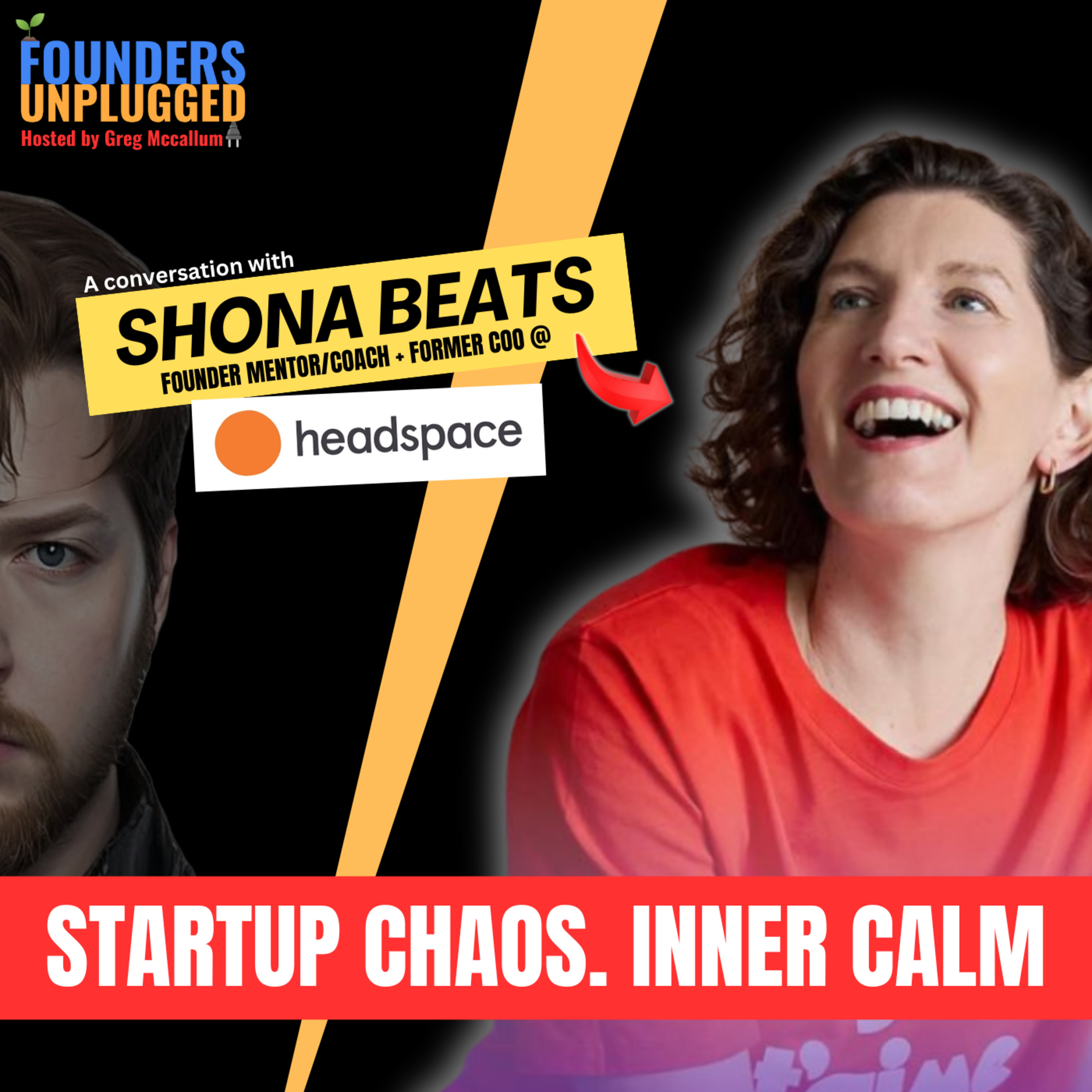 From Headspace to High-Growth Coaching: Shona Beats on Startup Chaos and Calm
 How Symvan Capital Scales Startups Without Losing the Human Touch
 Why Most VCs Don’t Actually Do Venture Capital | Symvan Capital on the State of Early-Stage Funding
 The Startup Hiring Mistakes That Cost You Your Best People w/ Alper Yurder - Part Two
 How to Build Sales Systems That Actually Work w/ Alper Yurder - Part One