
Inside BS Show · 2026-01-13 · 10 min
Key moments - from our scoring
Substance score
34 / 100
Five dimensions, 20 points each
Dave Lorenzo uses a real conversation with financial advisor Chris as a springboard to challenge a common business misconception: that there's nobility in serving lower-income or lower-asset clients. The core argument centers on economics and ROI. For fee-only financial advisors earning 1% of assets under management, a $5M portfolio generates $50,000 annually versus $1,000 for a $100K portfolio - yet the sales and planning effort required is nearly identical. Lorenzo positions this as straightforward business strategy: if client acquisition costs and timelines are the same, targeting affluent clients maximizes shareholder return (yourself, if you're solo). He explicitly separates business from charity, arguing your responsibility as a business owner is profit maximization during working hours, with volunteering reserved for personal time. The episode also addresses a secondary but important warning: don't engage in public social media arguments. A commenter challenged Lorenzo's position, they briefly sparred, and the commenter backed out - but the damage to credibility was already done. For solo practitioners and agency owners, the message is clear: status signaling through "helping the little guy" doesn't pay bills, and public conflicts repel potential clients watching from the sidelines.
The acquisition time and cost to land a $5M client is identical to landing a $100K client, but the revenue generated is 50x higher (1% of $5M = $50K annually vs. 1% of $100K = $1K annually), making it pure business logic to focus on affluent prospects.
No - your business's fiduciary responsibility is to maximize profit for shareholders (starting with yourself); serving lower-income clients is admirable volunteer work, but it should happen outside billable hours.
Prospects watching the exchange become less likely to hire you, viewing public conflict as unprofessional; it's the quickest way to repel potential clients regardless of whether your argument is correct.
At a standard 1% fee-only model, managing $5M generates $50,000 annually while $100K generates $1,000 - a 50x difference for essentially the same sales and planning effort.
Our reviewer’s read on each dimension, with quotes from the episode.
The episode contains one substantive business insight - that client acquisition cost is similar regardless of asset level, making high-net-worth targeting more efficient - but wraps it in excessive repetition and throat-clearing. The core idea (AUM economics incentivize targeting wealthy clients) is sensible but not novel, and it's padded with lengthy explanations of basic fee structures and a personal anecdote that dilutes the substance-to-runtime ratio.
if you're gonna invest the time and the money, go after the better client
the acquisition time, the acquisition cost of an affluent client and the acquisition time and the acquisition cost of a mid-market or a lower market client are identical
The advice is conventional wisdom repeated from a standard business textbook: maximize profit per unit effort, avoid online arguments, niche upmarket. There is no contrarian or first-principles thinking; the entire argument relies on surface-level fee economics that any financial services operator already understands. The personal LinkedIn feud framing is anecdotal rather than generative of new ideas.
You wanna volunteer after business hours and teach the poor how to make money? God bless, you should do that
Your responsibility is to make the most money possible during the time that you're working
This is a solo monologue with no guest. The host shares a second-hand anecdote about "Chris," a financial advisor, but does not interview him or any credible practitioner. The episode lacks any expert voice beyond the host's own assertion, which significantly undermines caliber.
My name is Dave Lorenzo
I'm not necessarily focusing exclusively on getting into fights with people on social media
The episode provides concrete numbers (AUM fee percentages, client asset thresholds like $350k, $5M, $100M) and walks through a worked example of how a 1% AUM fee scales, which grounds the argument. However, these figures are illustrative rather than drawn from data or real case studies; the Chris anecdote is used but not deeply examined, and there are no metrics on actual acquisition costs or time spent.
His average client had about $350,000 in investable assets
if you have $5 million in investable assets and you...get a 1% fee...you're gonna make $50,000 a year
The host is essentially talking to himself with no challenging questions, pushback, or dialectical partner. He frames the LinkedIn commenter as foolish and bows out without exploring the opposing argument (service to underserved markets, mission-driven business models, etc.) with any depth. There is no genuine dialogue or intellectual friction.
This guy doesn't feel that way. So he gets into a fight with me
he essentially told me that I was stupid and then backed out
Computed from the transcript - who did the talking, and the words that came up most.
Most professionals say they want high-net-worth clients. Then they spend their time arguing with strangers on LinkedIn and building businesses that make them poor. In this episode, Dave Lorenzo breaks down a real-world case study sparked by a financial advisor who bristled when told that Dave works with advisors serving clients with $5 million or more in investable assets . That simple statement triggered a public social media argument that revealed two brutal truths most professionals refuse to face: First, fighting online kills trust . Prospective clients are watching how you behave long before they ever reach out. When you argue in public, you broadcast insecurity, not authority. Second, targeting small clients is a business model that caps your income . A financial advisor managing $100,000 makes $1,000 a year. That same advisor managing $5 million makes $50,000 for roughly the same amount of work . Same trust. Same acquisition effort. Wildly different return. Dave explains why working with affluent and high-net-worth clients is not greedy. It is rational. If you want to volunteer, do it after hours. If you want to run a business, maximize return on your time and expertise .
Transcribed and scored by The B2B Podcast Index.
Stop getting on fights with people on social media. You gotta stop. There's no upside to getting into fights with people on social media. Welcome to the Inside BS Show.
My name is Dave Lorenzo. It's Tuesday and thanks for coming back here. We are here as many days a week as I can fit into my schedule today. I'm not necessarily focusing exclusively on getting into fights with people on social media, but today's topic comes from a guy literally trying to pick a fight with me on social media and then backing off.
Over the weekend, I posted something on LinkedIn and it said, I told a story. It was a case study of a financial advisor named Chris, somebody who I actually met, a real person, this week. His average client had about $350,000 in investable assets. And I mentioned that I chose to work with financial advisors who have clients who are north of $5 million in investable assets.
And Chris, the person in the case study, real person, was taken aback and he bristled and he said, well, I work with people who have much less than that, people who have between 10,000 and 150,000, 200,000 in investable assets and I just kind of nurture them along, people in the small business space, people who work for other companies. And I'm okay working with them for five, 10, 20 years until they get to a place where they've accumulated assets that are in the 300, 400, $500,000 range.
For those of you who don't know, if you're listening to the show, most financial advisors who are fee-only advisors, most of those people make money when their clients' portfolios increase. So they get, say, a 1% fee of the assets under management. So if you have $10,000 under management, you're making $100 a year for management. If you have $100,000 under management, you're making $1,000.
So if you have a million dollars, you're making $10,000. As a financial advisor, it is hard to make money and put in the right amount of money and the right amount of effort into lifestyle needs and developing a plan for people who have fewer assets. And it is easier for people who have more assets. So if you're managing someone's investable asset portfolio and they have $5 million in investable assets and you don't get a commission on any products, you just get a percentage, a 1% fee of their assets under management with $5 million, you're gonna make $50,000 a year for managing that portfolio.
If the value of the portfolio increases by 10%, you will have increased their portfolio to $5,500,000 and you will have given yourself a $5,000 per year increase. You will then get 10% of the $5,500,000 and you will make $55,000 as a result of your efforts. If it goes down, you will make less money. So your interests are completely aligned with your client's interest.
It's a good model. So I talked to Chris. Chris says, I don't wanna work with people who make 5 million or more. I'm exploring this to understand his mindset.
Because for me, I would want to make more money with less effort and if I can target better clients by doing the same work and making more money, because doing a plan for someone with $5 million in investable assets probably takes the same amount of time it's a different structure, but it probably takes the same amount of time to acquire that client. It may take a little bit more time for you to invest because there are different options available. But in terms of client acquisition, giving you their money, you still have to get their trust.
So connecting with someone and developing the trust for a million dollars, $100,000, $5 million takes the same amount of time. I would argue that if you have $100 million, you can try someone out at the $5 million level and it's less risky for you than someone thinking, I only have $100,000 to invest. You're gonna wanna do every type of due diligence possible because your life savings is going to this guy. Whereas if you have $100 million, you're gonna give five to Joe Schmo, you're not giving them your life savings, you're giving them 5% of your life savings, still substantial, but not as big a risk as giving somebody everything.
So anyway, I'm having this conversation with this gentleman, Chris, and he doesn't wanna reach out. So I profile this in my LinkedIn post. And a guy in the comments gets into an entire argument with me about how it's better not to target high net worth or ultra high net worth people. Just go target everybody because it's easier for you.
And you're providing a valuable service to people by helping them learn how to save money. And look, I get it, in your mind, it's a noble calling to work with people who have no money. As a business owner, you have a fiduciary responsibility to your shareholders. And that shareholder, number one, is you, if you're a sole practitioner.
Your responsibility is to make the most money possible during the time that you're working. That's the purpose of a business is to make the most money possible during the hours that you're working. You need to provide a return on investment to your shareholders. That's the way I look at business.
You wanna volunteer after business hours and teach the poor how to make money? God bless, you should do that. I think that's a wonderful calling. I volunteer in the hours when I'm not working.
I volunteer doing a whole host of things. And that's what I do to give back to the community. But that's very different from my business. So as a business model, you are to make the most money by providing a return on investment of your time and of your funds.
And I contend for financial advisors that's targeting people who have $5 million or more in investable assets. This guy doesn't feel that way. So he gets into a fight with me, argument, not really a fight, on social media and then he bows out. Two or three comments and he bows out.
Two important lessons for you to take away from our time together today. Number one, don't do that. Don't get into fights with people on social media. There are people who are reading your social media profile and they are deciding whether they wanna work with you or not.
And getting into an argument with someone on social media is the quickest way to turn someone off. So just don't do that. I engaged with this person to have a dialogue with him and he essentially told me that I was stupid and then backed out, wished me well. And maybe I'm foolish for taking the bait, but candidly, I wanted to spark some conversation in the comments and I served that purpose.
I did that. The second thing is, working with people who have more money versus people who have less money, there's no nobility in you doing things the hard way. You don't get any extra points for doing things the hard way. If you can work with 10 people and make more money for working with the top two than you do for working with the rest of the eight, it makes sense for you, it pays for you to work with more people who are like the top two.
It just makes good sense. So that's the big takeaway from today. Targeting high net worth folks is good business because the acquisition time, the acquisition cost of an affluent client and the acquisition time and the acquisition cost of a mid-market or a lower market client are identical. So if you're gonna invest the time and the money, go after the better client.
And getting into fights on social media is stupid, stupid, stupid. This will serve as a reminder to me as well as guidance for you. Be sure and join us tomorrow. We have an interview tomorrow on the Inside BS Show.
Every Wednesday, we have a brand new interview. My name's Dave Lorenzo. We'll see you back here again tomorrow.
Other episodes covering the same guests and topics, from across The B2B Podcast Index.
 They Paid $600,000 for ONE Healthcare Claim. Could You Be Next? | Broken Healthcare #96Broken Healthcare · on Fiduciary responsibility82 / 100
 Episode 646 Mo Al Adham from FrecBank On It · on Assets under management (AUM)76 / 100
 Leading Existential Change in Higher Ed Episode 4 of 7SPH Consulting · on Fiduciary responsibility74 / 100
 S04E157 Your Intake Costing Your Firm Thousands. Fix It with Sou BounlutayLeadership In Law Podcast · on Client acquisition cost59 / 100
 Leading a Team and What it Means to Truly be of Service with Geoffrey RocheThe Leadership Mind · on Fiduciary responsibility55 / 100
 How High-Net-Worth Investors Decide Who They Trust With Capital | 96174 / 100
 How High-Net-Worth Clients Really Decide Who to Trust | 96073 / 100
 How to Prove You’re Worth a Referral to Someone’s Best Client | 95844 / 100
 The Right Way to Build Relationships That Pay | 95787 / 100
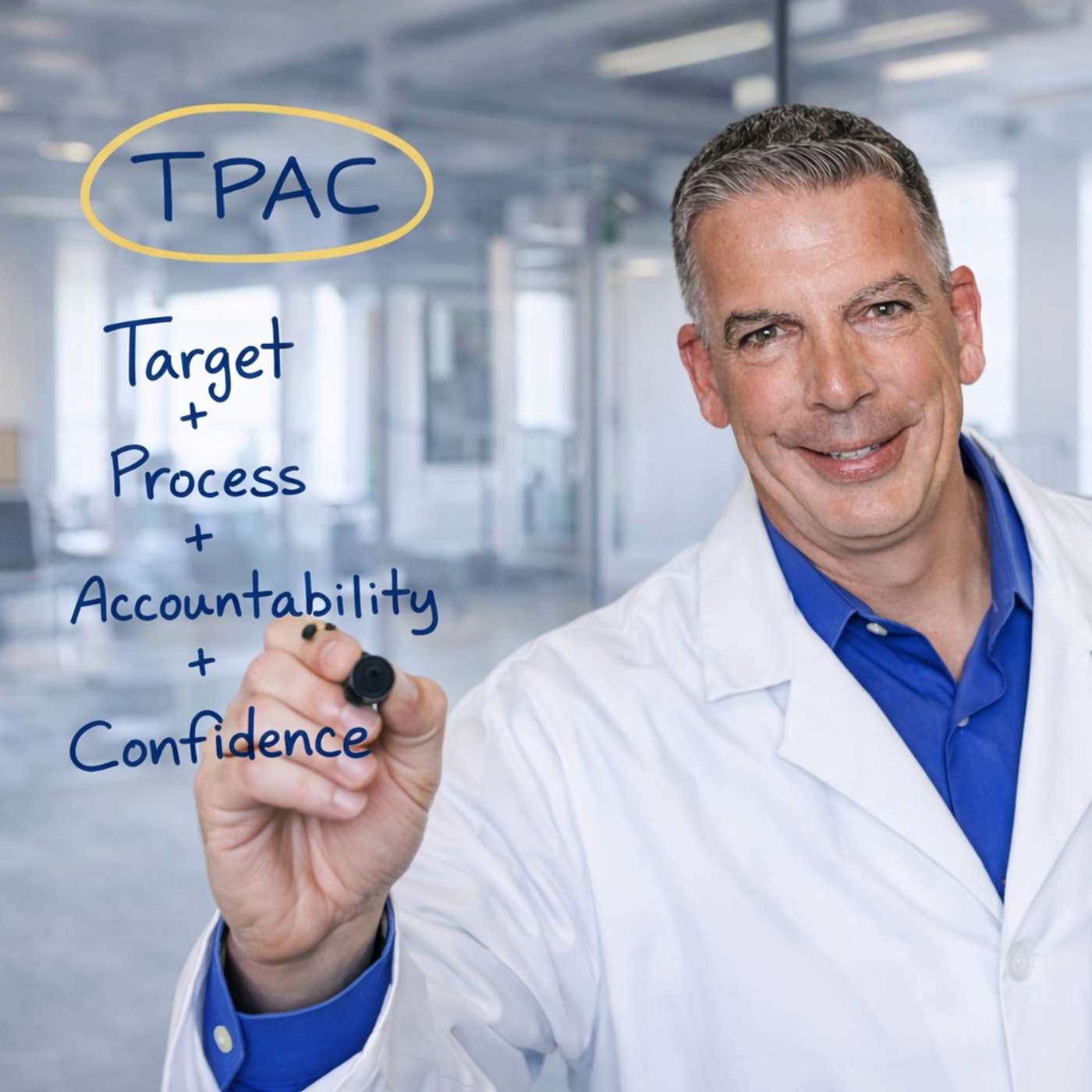 The Growth Formula Most Professionals Never Learn | 95639 / 100