
Growth Diaries by Zenoti · 2026-06-16 · 35 min
Key moments - from our scoring
Substance score
39 / 100
Five dimensions, 20 points each
Purpose Brands and Blow Bar executives share how culture - not product design - became their defensible competitive advantage despite facing hundreds of copycat competitors. In Japan, 350 Anytime Fitness imitators collectively operate fewer locations than the original brand because they replicated the 24-hour access model but missed the underlying culture: hiring aligned franchisees, investing authentically in employee benefits (health insurance, paid time off, maternity leave), and cascading a stakeholder-first mindset through systems. The guests - Dave Barger (Purpose Brands/Anytime Fitness), Chuck Runyon, and the founders of Blow Bar (sisters Amanda and Lauren) - discuss how their "4 Ps" (People, Purpose, Profits, Play) and simplified value filters drive hiring, franchisee selection, and decision-making. For B2B operators scaling franchise brands or service businesses with high staff turnover, this episode reveals why culture scales better than tactics, how to screen for values-alignment early, and why treating employees as stakeholders - not just resources - compounds long-term competitive moat.
The competitors replicated the product design but missed the culture. Anytime Fitness invested in hiring aligned franchisees, building authentic employee benefits, and focusing on stakeholder success (franchisees, employees, vendors, customers), whereas copycat brands focused only on the operational format. Culture, not facility design, became the defensible difference.
The 4 Ps are People, Purpose, Profits, and Play. Leaders use them as a decision-making framework: does a decision make stakeholders win, drive authentic purpose, generate profit, and maintain a fun, non-self-serious culture? This simplification helps franchisees and corporate teams make consistent choices without micromanagement.
Blow Bar runs a 5-day proprietary training program to hire anyone without prior esthetics experience (easier to train than retraining licensed estheticians with different methods). They screen for three non-negotiable traits: positive attitude, empathy, and self-responsibility. They're also creating internal advancement pathways to address linear career progression in the aesthetics industry.
Is it profitable? Does it elevate the brand? Does it make us and other people feel good? If the answer is no to any question, they don't move forward, keeping decision-making simple and values-aligned.
Successful co-founders identify complementary skill sets and let roles fall naturally based on individual strengths rather than forcing equal splits. Mutual respect, zero ego, self-awareness, and the ability to disagree without taking disagreement personally enable long-term partnerships; combative or conformist teams fail.
Our reviewer’s read on each dimension, with quotes from the episode.
Beyond the memorable Japan copycat anecdote and a couple of decision-making frameworks, the episode is dominated by familiar platitudes about culture, authenticity, and 'people business' with little non-obvious takeaway.
Japan today has 350 Anytime Fitness copycats, 350 different brands
people leave because of people, and they stay because of people
The thinking is largely recycled: hire for attitude, culture over product, complementary co-founders, listen to franchisees - all widely circulated ideas presented without fresh or contrarian angles.
it's not the product at all. None of it is the product
In our business, our product is our people
Guests are genuine franchise operators and founders who have scaled real brands (Anytime Fitness/Purpose Brands at 5,500+ locations, Massage Heights, Blow, FoxyBox, Oasis Face Bar), giving practitioner credibility despite the thin content.
We've got Anytime Fitness in what, 50+ countries, over 5,500 locations
Chuck and I have been business partners for 35+ years
There are some concrete figures (350 competitors, 5,500 vs ~1,000 locations, 5-day training program, named estheticians) but most claims remain abstract with little hard data, financials, or detailed mechanics.
they're not 50% of the scale and size of Anytime Fitness in Japan
we have a 5-day training program that's both written, video, and hands-on
The host is overwhelmingly affirming and complimentary, offering long agreeing monologues rather than probing questions or pushback, leaving every claim unchallenged in a PR-friendly tone.
That's wonderful. It works very well, the tagline
you've also said that's a big part of your success as a company
Computed from the transcript - who did the talking, and the words that came up most.
Success in the wellness space depends on more than just a great facility or service. In this episode of Growth Diaries, Sudheer Koneru explores how leading brands like Anytime Fitness, Massage Heights, and Glow Bar use culture as their ultimate competitive advantage. The conversation covers the importance of offering authentic employee care from day one and why standardizing your culture is more valuable than any physical product. These founders share the frameworks they followed for hiring, decision-making, and collaborating with franchisees to ensure long-term growth across thousands of locations. The discussion also examines the power of complementary partnerships and the importance of leading with humility. Founders discuss how having zero ego and leaning into each other’s strengths allows for faster growth and better decision-making. By creating an environment where team members feel safe to challenge leadership and share new ideas, these brands tap into a collective intelligence that keeps them at the top of their game. What You’ll Learn Why offering health insurance and benefits early creates a massive competitive advantage.
Transcribed and scored by The B2B Podcast Index.
The Noti presents Rogue Diaries, the fascinating stories behind the best brands in beauty, wellness, and fitness, hosted by Sudhir Koneeru. Well, you know, from the beginning, like, we wrote our business plan to have memberships. One thing that really stood out to us about our industry was lack of care for the employees. So we knew right away from day one when we were writing our business plan, we want to offer health insurance.
That is not easy from the very beginning. And we also were not able to do that in our very first store. It was something we worked hard for many years to build to. So offering health insurance, I mean, I think that was a day Lauren and I will never forget because it was so exciting to be able to give that to our employees.
And it's something that's really incredibly lacking in this industry. And from there, you know, we just continued to go, what do people need and how do we build it with paid time off, maternity leave, health insurance, 401 plans. We are constantly asking ourselves, how do we enrich the lives of our employees? And when you come from that place, and it's authentic, then you are able to provide and people, it resonates.
And so I think while our programs are still very small in comparison to a large or medium-sized company, I think it speaks volumes for who we are and who our corporate staff is that we, you know, we every week are going, how do we make our employees happy? How do we enrich their lives? How do we add more value to work here? And I think that the difference is you can - people can say they're going to do that, but it's either true or not.
It's either felt or not. And so I think the authenticity is there and we genuinely love and care about our employees so much because at the end of the day, you know, human connection is really all that matters. And that's both with our customer and our employees. So trying to enrich the lives of them plus our guests, it's authentic and I think it lands.
You know, you've also said that's a big part of your success as a company. Maybe you can expand on what is this culture that you have deployed at, you know, at your company? Well, I'm glad you brought that up. In fact, when we were - recently we just went from self-esteem brands, and as you know, we brought purpose brands together.
And as people were asking us, what is your IP? What is your intellectual property? And it would blow a lot of people away. We've got Anytime Fitness in what, 50+ countries, over 5,500 locations.
And, you know, people ask, is it the door access? Is it the way you design the facilities? And I would say no, it's not the product at all. None of it is the product.
The IP of Purpose Brands in our future is really the same 4 Ps that sit on our wall. And it's really the culture we've created and the environment we put together, not just inside our 4 walls, but is outside in all of our systems out there. And it's our belief in our developing the right culture. I'll - and an example of that, people love examples, and I'll give you my greatest example.
You go to Japan today. Japan today has 350 Anytime Fitness copycats, 350 different brands. Think about that. That said, you know what, this 24-hour access thing is easy.
You can build a 4-wall system, you know, you do it about 4,000 to 5,000 square feet, you make sure people can come in 24-hour access, and Of those 350 brands, if you accumulate all of their stores, they're not 50% of the scale and size of Anytime Fitness in Japan. And people ask me why, and it's the same thing here in Minnesota. We had, we had our, one of the largest competitors to 24 Hour Access started here, and we have 5,500 locations and they have less than a, you know, probably close to 1,000.
What made us different in scale and size, had nothing to do with the design of the gym or anything like that. Had to do with the belief in bringing the right people together, believing in our purpose, driving profits to the right, to every stakeholder of the business. That is a very key element. I think so many people get caught up in their shareholder success, and I'll tell you where the real success is when you get obsessed about the stakeholders, your franchisees, your customers, your vendors.
I mean, if my vendor isn't winning, which you're obviously winning. Um, uh, and I mean that in a complimentary way. Everyone needs to win in the game, and you have to care about everyone's success in it. And then last but not least, have some fun while you do this.
We, we have our 4 Ps: our people, purpose, profits, and play. And we take our business extremely serious, but one thing that's made us great in this business, we don't take ourselves too seriously. And I think a lot of people are just too obsessed with themselves sometimes. And so along the way, as you've grown this business, you know, obviously, as you said, at some point hiring staff and therapists and finding them and training them and retaining is important.
And I know it's been an area where you've spent a bunch of time. Like, how have you approached this over the years? Yeah, I mean, we - a lot of the things that we did in the beginning still exist. So therapist recruitment, esthetician recruitment is a lot of - it's relationships with the schools.
The schools do exist and want to provide jobs, you know, and a pathway for their students. And so we keep up those relationships, of course, but a lot of it is also, I mean, it's a combination of efforts. It is trade shows, it is visibility with a lot of, you know, the industry magazines and publications. It is referrals from our existing therapists.
A lot of them have worked together at other salons and spas or have gone to school together together or gotten CEs together. But, I mean, at our core, what I would say is that it's really about culture. And, you know, people leave because of people, and they stay because of people, right? And so sometimes people will leave because there's a little more pay, but most of the time, if they love the people that they work with and they love the environment and the culture, they're going to stay.
And so what we found from a franchisor perspective, we really try to bring in franchisees that match our core values, align with our core values. And if we bring in people that align with our core values, and it's not just a fluffy thing that we say, it's really important. And how we bring franchise candidates through the process is really important as well. They've got to be a good match.
It's got to work both ways because we know that those franchisees, whether they're the key operator, they put someone, someone in place as the key operator, those key operators are going to be that face of that Massage Heights or that Heights Wellness Retreat treat in that market, and they're going to represent the brand, and they need to represent the brand in a way that is attractive to consumers but also to team members. In our business, our product is our people. Without our massage therapists and estheticians, we don't sell massages, we don't sell facials, we don't sell memberships.
And so the operator is, is critical, and it's - it starts with who you recruit into your system, no different than any other company. Who your leaders are, are going to ultimately determine the culture within your organization. But I think, yeah, it's nice. So as you said, this business and the industry is all about the end consumer feeling good walking out.
Like, it's not just looking good. They feel good when they walk out, feel more confident. And that's why even I personally love this industry is because we are in the business of helping people improve self-esteem is how I think of it. And but in your case, you're touching so many lives when you reflect on it.
As when you're building a franchise brand like yours, you're helping the franchisees who are making a living out of it, and then there's the staff who are working there, as you said, and, you know, in their fulfillment and their livings are improving. And then there's the end consumer. So there's a lot of impact. And given you have a lot of women entrepreneurs who are franchisees, I mean, you're - that's nice to see you're impacting a lot of women's lives too.
Good to see that. Yeah, look, it's not just women. Of course, it's a lot of women. A lot of our staff are women.
Virtually all of Our customers are women. We actually did some work a few years ago with a marketing agency, and we worked on coming up with a tagline. And we came up with the tagline, "With Blow, you shine." And out of that came a promise statement that's now on the walls of our bars, which is, "We're here to make you shine."
And we loved that. And then we started to love it even more when we realized, We can make that promise statement to each one of our constituent groups, if you will, our stakeholders, our franchisees. Our corporate team says to our franchisees, "We're here to make you shine." Our franchisees make that same promise to their staff, and the franchisees and their staff make that same promise to their guests.
So, "We're here to make you shine." That's wonderful. It works very well, the tagline, "We're here to make you shine," because I think Yeah, I always thought about feeling good, but I love the, we are here to make you shine. Yeah, and shine means so many things, right?
It's the physical manifestation of our services and it's the self-esteem that you talk about. But more than that, it's the self-care. And we know how much consumers today value self-care. And that's certainly not a trend or a fad.
Now that customers have discovered The world at large has discovered the importance of self-care. That's not going away. No one's gonna give that up. So, when I talk about the importance of how people feel when they're in our bars receiving our services, it's not only about the hair and makeup.
It's about the vibe in bar, the beautiful environment, the warm welcome, the engagement with the stylist who's providing the service, the engagement with the customers. Sitting in the chair beside you. It's all about that wonderful experience they have that makes people feel great. How do we keep the best Vagicians?
That's why you're here. How do we get them and how do we retain them? We are fortunate in Canada that we can train anyone to be a Vagician. So the hair removal industry is unregulated, which means we can train anybody.
They don't need to be a licensed esthetician, which is to our benefit. Because a lot of people that get into the aesthetics world is the Wild West, Sudhir. People teach different crazy things everywhere. So when we get people that know how to wax, often it's harder to retrain them in our method than to get someone that doesn't know anyone, anything.
So we have a 5-day training program that's both written, video, and hands-on. So we can train anyone to be a vajician in 5 days. And as we grow and scale, it's important to us that we don't lose our culture. So, to work at FoxyBox, you have to have 3 things: a positive attitude, empathy, and you have to be self-responsible.
If you don't have any one of those 3 things, you're not the right fit for FoxyBox. So early on, we did a branding retreat where we came up with our brand foundation and went, okay, we know we're cool, but like, how do we maintain this cool as we grow and scale? And so we looked at those qualities that we want to align ourselves with from our physicians to our franchisees and went, what is, how do we test for these things and how do we make decision-making easy? So if we got someone in and we started training them and they were, you know, late for an appointment-based business all the time or, you know, arguing back with, I know how to do this.
Well, you just go back to those 3 questions, right? Do they have these 3 qualities? If the answer is no on any of them, okay, we don't move forward. So we've made decision-making easy for our franchisees.
From the hiring level. And then, yeah, ongoing, we do reviews. So the senior tech, we've set them up as like a well-oiled machine. So they'll have a lead magician that helps do reviews and maintain the quality for our new hires as well.
For someone who didn't go to - okay, so you didn't go finish college or high school, even superior school. Okay, you seem to have very good concepts of, you know, when they say when you have only - simplify things to 3 things, people remember, you know. If you make laundry lists and all, they don't. So even your values and everything, you've brought it down to simpler ways of thinking.
It has saved us so much time. And, you know, same with when we're looking for franchisees. Okay, what are the qualities we're looking for? Do they have these attributes?
Okay, no, you're not the right fit then. Decision-making funnels, we have 3 questions. Is it profitable? Is it going to make us money?
Does it elevate the brand? And does it make us and other people feel good? That's my decision-making funnel. So if I have to make big company decisions, I just go back to that.
Okay, no, it's not going to make them feel good or it's not going to make us feel good. Okay, well, maybe we shouldn't do it, you know. It's great. Great.
And I think, yeah, that's like you said, you always, when you and Chuck are together, you keep wondering, hey, we are probably messing up something, or, you know, Chris, being very self-critical. And they do say, even there was that book by Andy Grove, the founder of Intel, saying only the paranoid survive. Because, you know, I think successful entrepreneurs are always paranoid. They're not so sure that they got everything right.
They think, I'm sure I'm messing up something, and that helps them a lot. You have so many partners in your business. You know, Chuck and I have been business partners for 35+ years and been great partners for 35+ years. I could tell you how many times we've walked out of this office mad at each other.
Probably 2 where I was really mad at him, right? And, and it was personal. Um, all the other times, and we cleared that up really, really quickly. Um, and All the other times, we don't take it personal.
Um, and when you build a team, you have to have a team that's going to challenge you. Now, uh, we are abnormal that I don't care who you are in our business. The worst voice in the room is the one not speaking. We want to hear your voice, want to hear your thoughts, and we don't want you to conform.
If you're conforming to everything we're saying, you're probably not a value-add to this team, right? I want you to challenge us. And Chuck and I have taught challenge is a positive thing. In fact, most business partnerships fall apart because they can't agree on something.
Um, and if they were agreeing on everything, they wouldn't be that great of partners. The problem in the world today is, you know, you see it in our politics. We got a left side and a right side and they can't work together. That's the problem.
The ones working in the middle aren't even being listened to cuz the noisy ones are the far right and the far left. We need more people working. The noisy needs to be in the middle because that's where the beauty happens. Cool.
And I think even, you know, while you attribute a lot of success to culture, to the early days, and in terms of being self-critical and, you know, all the things we've discussed, I also think like, you know, successful entrepreneurs are also fairly persistent. You know, I have my own memory of my early days of working with you. When things went wrong with something with our payments and all that. If you - I don't know if you remember now.
I mean, you were not only supportive, but you were persistent to say, okay, damn it, let's fix this problem. Yeah, you know, and I think, you know, persistence does matter in terms of the, you know, outside of the 4 Ps you had, because it's a personal trait that an entrepreneur needs to have to not give up, you know. I think, for an example, you, you brought up our relationship and We have a great relationship. We've had it for a long time.
It hasn't always been perfect. We've made mistakes. You've taught us on our mistakes. You've made mistakes.
We've taught you on your mistakes. You have to be accepting of people's strengths and weaknesses and want to collaborate and work together. And I think you have to be persistent in making sure that everyone is working as a team. People ask me all the time, what is your role, Dave?
And I'll tell you, my role is take really, really smart people and get them to play in the sandbox together. And, and that is so true because the biggest weakness in a team is the one not being a part of the team. I don't care how smart they are. It's not the A-player that makes things happen.
It's the people that care about everybody else's success. And it truly doesn't matter if it's your idea or not, that we create that. And we got to work through those challenges. I think challenges are the greatest things that we can have ever faced because if we're not making mistakes, and you're not making a mistake, you're - sorry everybody, you're going to make mistakes too.
You know what? You're not working that hard. If you're perfect and everything's perfect, guess what? You're probably coasting.
If you're enjoying the show, we would really appreciate it if you left us a review on Apple Podcasts. It only takes a minute and it helps others find the podcast. You can Also follow along on YouTube and Spotify so you never miss an episode. Yeah, yeah.
So both of you came from different - you said you both went to your different ways and then you came back, and you seem to be a close-knit family to say that you would do work, uh, you know, together. Like, a lot of times people, family doesn't necessarily work together, but tell me, how do you split your work? And do you define it carefully, or is it like, you know, there's between the two of you? From day one, when you first start a business, I don't know how it functions for other people, but I'll speak for us.
We fell very naturally into our roles. Lauren and I are sisters. We're also best friends. We're always together and always talking, whether it's business or not.
So we have the same core values as humans, but in terms of who we are in a business world, we're complete opposites. So we feel really grateful for that. I think that we have an immense amount of respect for single founders because we can't really understand how they could do it. The things that Lauren does, I couldn't do, and vice versa.
We have such different brains in terms of how we operate our business, and we have, you know, places that we cross-intersect like marketing heavily. But for the most part, we fell very naturally into our roles just based on on who we are as people and kind of how different we are at our skills. We like to say that together we're one perfect human. Yeah, yeah, yeah.
No, but I've always found that successful founders, even if they didn't have a founder like you both together, they need someone who complements them. Otherwise, they can lose their way. And also, like, from a growth perspective, our goal was always to grow. And you have to have the - you can't have an ego in understanding what you're not good at.
And the gift for us is it's like magnified our growth because we can trust one another and also understand that she's got that side of the business and I have that - I have my side. And sometimes, like Amanda said, we do cross over, but it's just our skill sets that kind of have allowed us to plow forward. And not having to check on the other person, you know, you're not like worried or wondering. I don't ever think about it and she doesn't think about it.
We know like we're going to take care of each other and take care of our side of the business. I think people should be really cautious about going into business with either family or friends based on where they are in their life. For us, you know, people always love to ask that, like, well, do you guys fight? We never - we don't ever.
But that doesn't mean we don't disagree. Yeah. But I think that who we are as humans, we have so much mutual respect respect and love for one another. And we also aren't the type of people that would be tyrannical or outrageous.
And I think at the end of the day, if you have a ton of awareness around yourself, you will be able to partner with someone. And that person also has to have the awareness and zero ego. Is there a particular trait of yours that you feel has served you well as you've built Blow over the last 10 years? I mean, you'd probably have to ask my team.
I think it's my commitment to collaboration and my recognition that I don't have all the answers. I have something to learn from everyone, and I want to encourage and facilitate that. I tell my team all the time that I don't want anyone to hold back. If they've got a question, if they have an idea, if they have an observation, I want to hear it Good ideas come from everywhere.
Important insights and observations come from anywhere and everywhere. So, it's been really important to me for my leadership team, across our whole team, and of course to our franchisees and their team members when I'm in their bars. It's been really important to me to create that comfort where people do feel that they can come to me with their questions, ideas, etc. I think essentially what ownership is, something that we want to build on.
And at every given point, the reminder always is that if there is no one watching you, are you still doing the same work or you're not? And if the answer is always yes, then I think essentially you're meant to do that, you're supposed to do that, you'll excel at it. But if no one is watching and if no one will come to know whether you've done or contributed it at all, and you decide to still do it, I think that's the answer. That means that you're in the right place, doing the right thing.
So when it comes to employees, right, you said like the staff in your place don't need to wear uniforms and it's very different. And so how has the journey been finding staff and growing them, or, you know, for your franchisees as well, supporting them and saying, how do you go about doing this? Mhm. Definitely COVID changed things for sure.
I think almost anybody can agree to that. Well, we hire - I can train anybody on anything, you know, we can. It's - but I look for - I call it the cheerleader. Not necessarily, the person doesn't have to be a cheerleader, but I want that person when you walk in, you feel their energy, they're excited to see you, they're excited to be there.
You can't train that stuff. And so We tend to look for people that are a little more outgoing, a little more exuberant. But I think, yeah, the training aspect and retention. The other thing within aesthetics is it's very linear.
There's not a whole lot of upward mobility. You can go from, you know, a spa to a med spa to owning your own place possibly, but not a whole lot of like upward mobility. So we try to create that at a unit level and as an organization. So we're going to be rolling out some things here soon to allow estheticians from our whole company to start moving up the ranks, so to speak.
I think that stands out for me with successful franchise businesses, one which you said, which is they treat the franchisee as part of the collaboration process of how will this business evolve. They don't treat the franchisee as, I'm telling you do this, just go do it because I know better, kind of stuff. You know, I think that collaboration is an important element I've seen. The second, what you were just saying, which is to start off, I think I've heard you say before that people are the most important part when you go into business, taking care of the people and having the right people around you.
And often Often people think it is the people inside your company you're talking about in your corporate office and all, but actually it is the franchisees also who are part of your company is how you approach it because they are the people you take care of and they are the people you worry about kind of stuff. When we talk about the Blow family or the Blow community, we don't just mean our corporate team. We don't just mean our team and our franchisees. We mean their staff, and we mean their customers too.
Some of the ways in which our system has evolved and improved over time is based on input not just from the franchisees, but from the people working for them, from the customers. Every single time, literally every single time, and I go once a week to one of our bars for a blowout, whether I'm in Toronto or traveling, every single time, the conversations I have with the staff or the observations or engagements with other customers informs my thinking, gives me something to bring back to our team.
So, yeah, it's not just about we're the franchisor, we've developed the system, you have to follow it. I think as an emerging brand, you know, there's a spectrum. As an emerging brand, you're more likely to back off with the enforcement of compliance with the system. And you recognize that your system is evolving.
As you grow, you have to shift, and that's a difficult transition to make, and we still aren't making it, I would say, because you have to get to a point where you say, "No, no, no, this is the way. These are the system standards." And what I learned at one point, which was a revelation for me, is that when we have to enforce compliance with one franchisee, we're not just doing it for the sake of following the corporate rules. We're doing it for the sake of protecting the brand for the other franchisees.
And that became evident to me when a franchisee said to me, "I love my neighbor in my market, my fellow Blow franchisee in my market, but she's doing things that are offside. Can you please fix it for the sake of my business in this market?" And I went, 'Ah, okay, now I get it.' And it gave us the confidence to have teeth to be able to enforce compliance.
So, I think as you evolve, finding that fine line between where you say, 'No, this is the way it is,' or, 'Okay, let's work on this together, how can we evolve?' But also to be able to confidently say to franchisees, 'That's a great idea, we recognize the value and importance of what you're saying, but not right now. Right now, there are other priorities. We've got that umbrella bird's-eye view, and it might not be satisfying to you at this moment in time, but we're not addressing that quite yet.
I think, yeah, the notion of listening very closely to the world around you as an entrepreneur, not just hearing people out, but actually listening and internalizing, and especially in the early stage, as you mentioned, very important because you're trying to figure out the whole brand and all that stuff. And yes, absolutely, I do think people struggle with the enforcement as they become a bigger brand, but it's a critical transition to make, as you said, for the benefit of the broader network, that there is a standard that your brand stands for.
Yeah. And, you know, sometimes if a franchisee is not performing well, they think the answer lies somewhere outside. I remember hearing a former CEO of McDonald's speak at an International Franchise Association event about franchisees who wanted to add hot dogs or wanted pink lemonade in addition to the yellow lemonade. And, you know, franchisees will often seek something else, but I always say, we have given you an incredible toolkit, we've given you incredible recipes, we know they work, and Great ideas, but not for now.
Let's focus on these other things that really have been proven. You know, once you know you've got the proof to be able to confidently say, we've built you a great system, the rubber hits the road with you, the execution is up to you, but we know that what we've built works. Yeah, I think it's two things. They and we need to understand what their end goal is.
What is their why? Why do you want to become a franchisee? Why do you want to own this business? What is your game plan?
Do you want to be an operator? Are you buying yourself a job? Do you see yourself operating this location for the next 1 year, 3 years, 5 years, 10 years? What is the lifestyle that you want to create?
Why? What are you doing it? You want to send your child to school? You want to travel all the time?
Like, what's the plan in the next, you know, 1, 3, 5, 10 kind of thing? So they have to have a very clear understanding of what their goal is so that we can help them build a plan towards that. Because in some instances, I mean, our - we have great profitability on one location, but if you're at 3 locations or 5 locations or 8 locations, that's an incredible lifestyle. So what are you looking for and in what time frame?
So that's really important that we're on that same page, that we understand the why. We're looking for people that are passionate about people, because regardless of whether or not you operate that location or you have a key operator in it, they are going to be influenced by you, and we need you to lead those people even if you're not in the day-to-day operations. There has to be planning and accountability and leadership and motivation and all of those things. We need your retreat to be successful, and And so we're - a lot of it is about leading and a lot of it is about really, do you love people?
This is a people business. Whether you're in it leading the people or you're greeting the people, it is a people business. So I would just say a love for people is really, really important. I think I am innovation first.
Growth excites me. And I'm always excited about what's new in the market. I'm always excited about what new systems, processes we can build on. And that I think is something that what I've realized is that works for me.
I am the person who will always be excited about growth. I will always be excited about what's new. I'll be always excited with innovation. And I think my team, instead of - what they have also realized about me is that at times they'll have to tell me that no, it's okay, let's - this thing is 6 months away, this thing is a year away, let's first focus on this particular thing.
And it's kind of a double-edged sword because what is exciting to me, I will automatically always gravitate towards that. But it's good to have, I think, a team that will also bring in that check that we are not perhaps ready for it right now. It makes sense or it doesn't make sense. So yeah, and if when it works, it is great to see.
Yeah. Clearly, since you moved the needle in terms of technology you've used within your business, I think curiosity and learning all the time are an important element. And I think especially in this field, it's changing so fast with a lot of innovation, and I'm sure there's a lot more innovation ahead of us. I agree.
I agree. And so if you had, in very brief terms, why should someone choose OSS Face Bar? As a client or a franchisee? As a client.
As a client. Again, it's that relationship. One of the other owners on the panel, he was talking about how he was Googling and, or looking at reviews and being comfortable. You know, for me, it's always been establishing those relationships and making it very personal.
You know, do I want the estheticians to be sharing everything about their lives? Probably not, but it makes it more relatable when you can actually share stuff about about yourself. So I do want them to open up appropriately, but I do feel like people come to us because they want to relax and they want their skin taken care of and all of that, and at an affordable price, and make it a ritual, you know, a monthly thing. But at the end of the day, I want them to feel like they're excited to come in, much like a hairstylist.
You know, you go in, you're like, oh my gosh, I can't wait to hear about her, like, drama with her boyfriend or things like that. But I do want, you know, I want someone to look forward to their time at Oasis Face Bar. Cool. So it's like having, like many people have a great relationship with their stylist and, you know, look forward to the monthly thing kind of thing.
Same way, I guess, here they have a great relationship with your people, with your staff. Absolutely. We have great retention. We're rolling something out and some estheticians had to apply apply, but they couldn't apply until they've been with us for a certain amount of time.
And, um, you know, a shout out to Jordan in Chicago. She's been out there since day one. Scottsdale, we've - we started with 3 estheticians, 2 are still there. We're going on 4 years January.
Nashville has Sunny still out, you know, from day one. And, and so it's incredible in this industry with a high turnover rate that we have had such great retention. I guess it goes both ways. It's great for the client, it's great for the provider to have those relationships.
And I try to have relationships with them as well. I mean, it's - I don't know how many aestheticians we have now in our system, but I know almost all of them. Growth Diaries is brought to you by Zenoti.
Other episodes covering the same guests and topics, from across The B2B Podcast Index.
 Engagement, Retention, and Employee Career Planning Part 1Informed Decisions · on employee retention80 / 100
 431 $4.7M from Marketing: How Builder Funnel Helped a Local Custom BuilderBuilder Funnel Radio · on employee retention76 / 100
 Workplace Wellbeing and Evidence-Based Hiring with Dr. Paul JonesHRchat Podcast · on Company culture60 / 100
 The Founder Bottleneck: How to Reclaim Your Time and Scale Faster feat. Tricia SciortinoBeyond 7 Figures · on Business Scaling56 / 100
 Ep 167: The Promotion He Never Wanted Changed His Life with Nestor GutierrezThe Limitless Leadership Podcast · on Company culture54 / 100
 211. Hot Takes: Company Culture Do's and Don'tsThe Business Reboot · on Company culture43 / 100
 AI Is No Longer Optional59 / 100
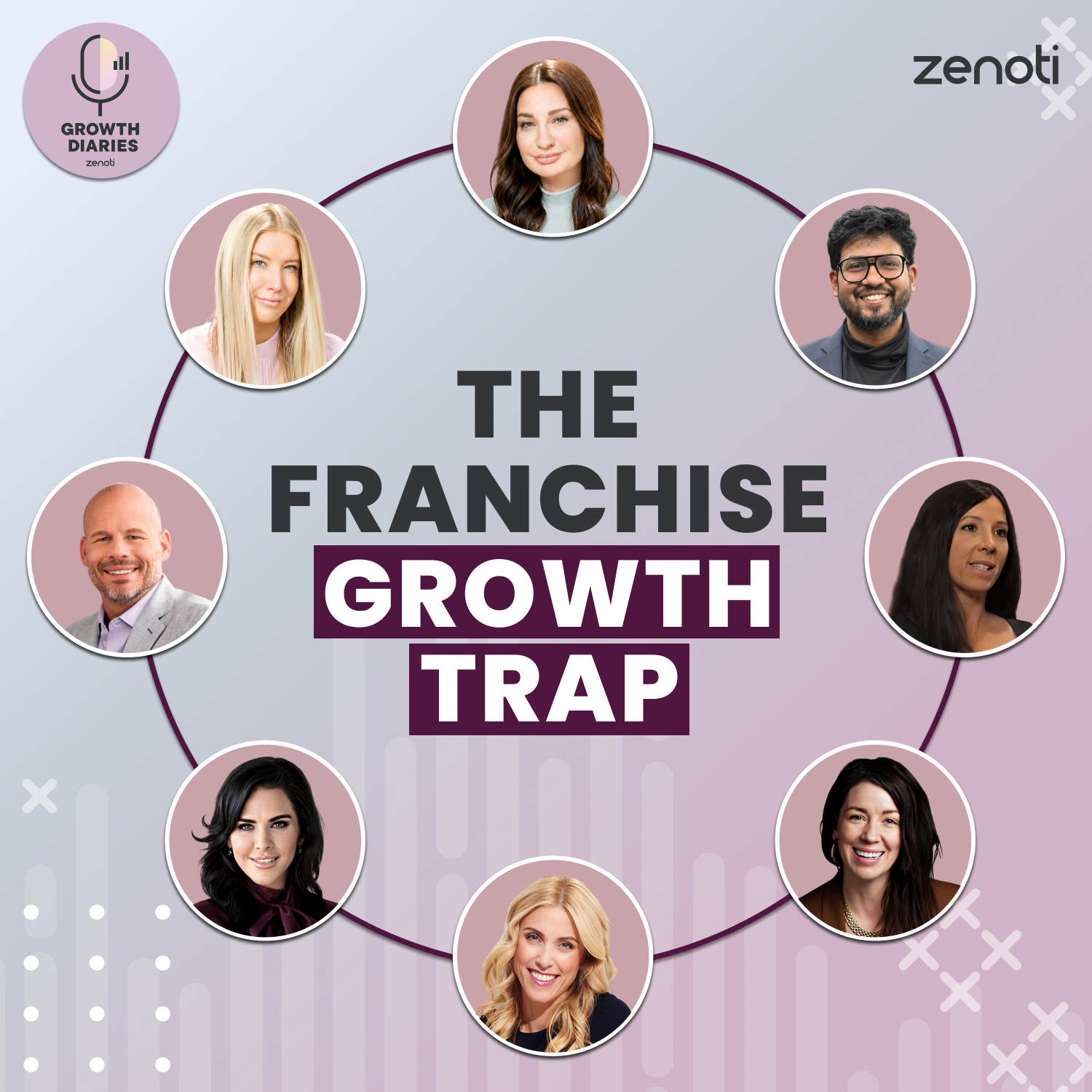 Growth lessons from franchise founders who got it right80 / 100
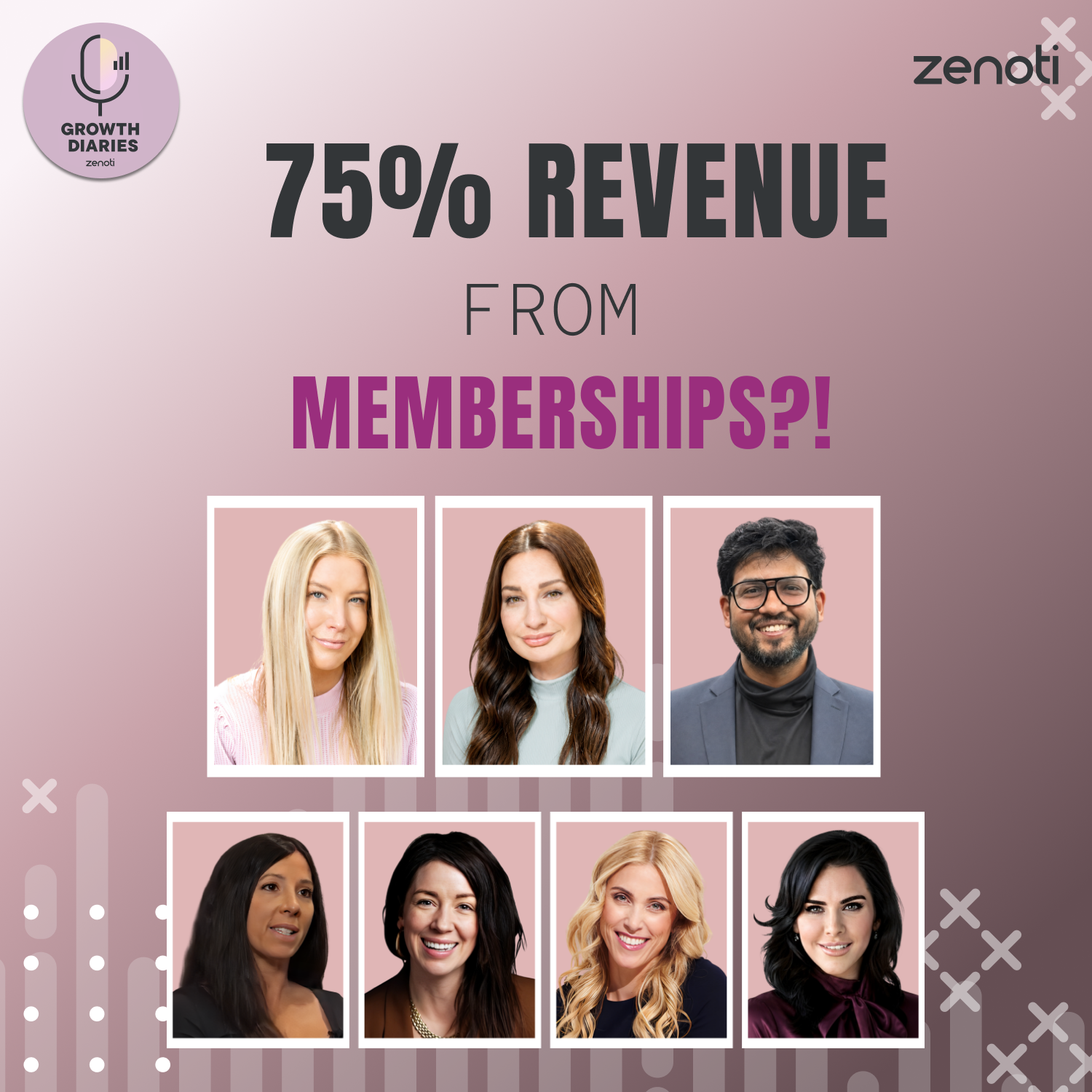 75% Revenue From Memberships?!64 / 100
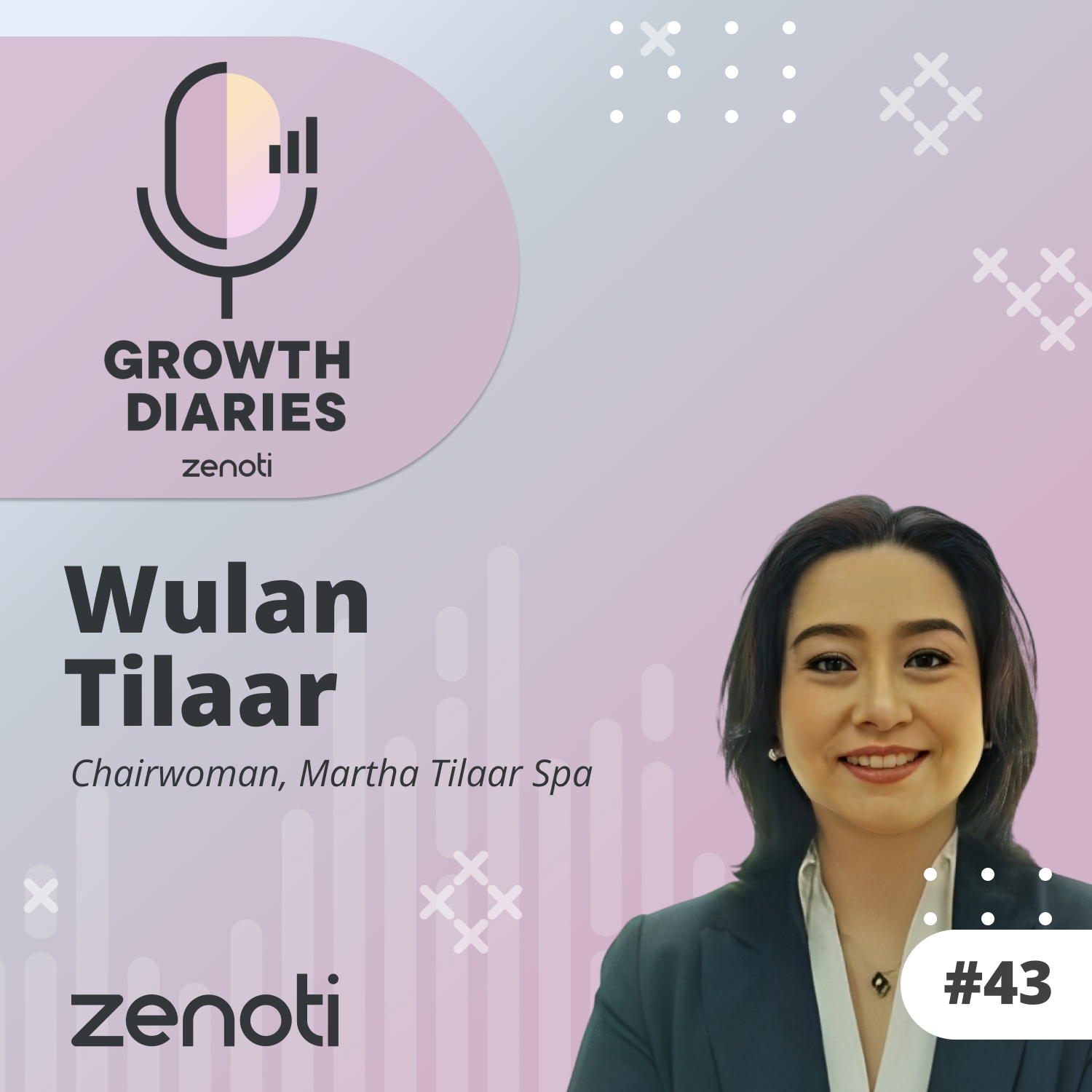 Second Generation, First in Purpose: Wulan Tilaar on Carrying Forward a Family Mission61 / 100
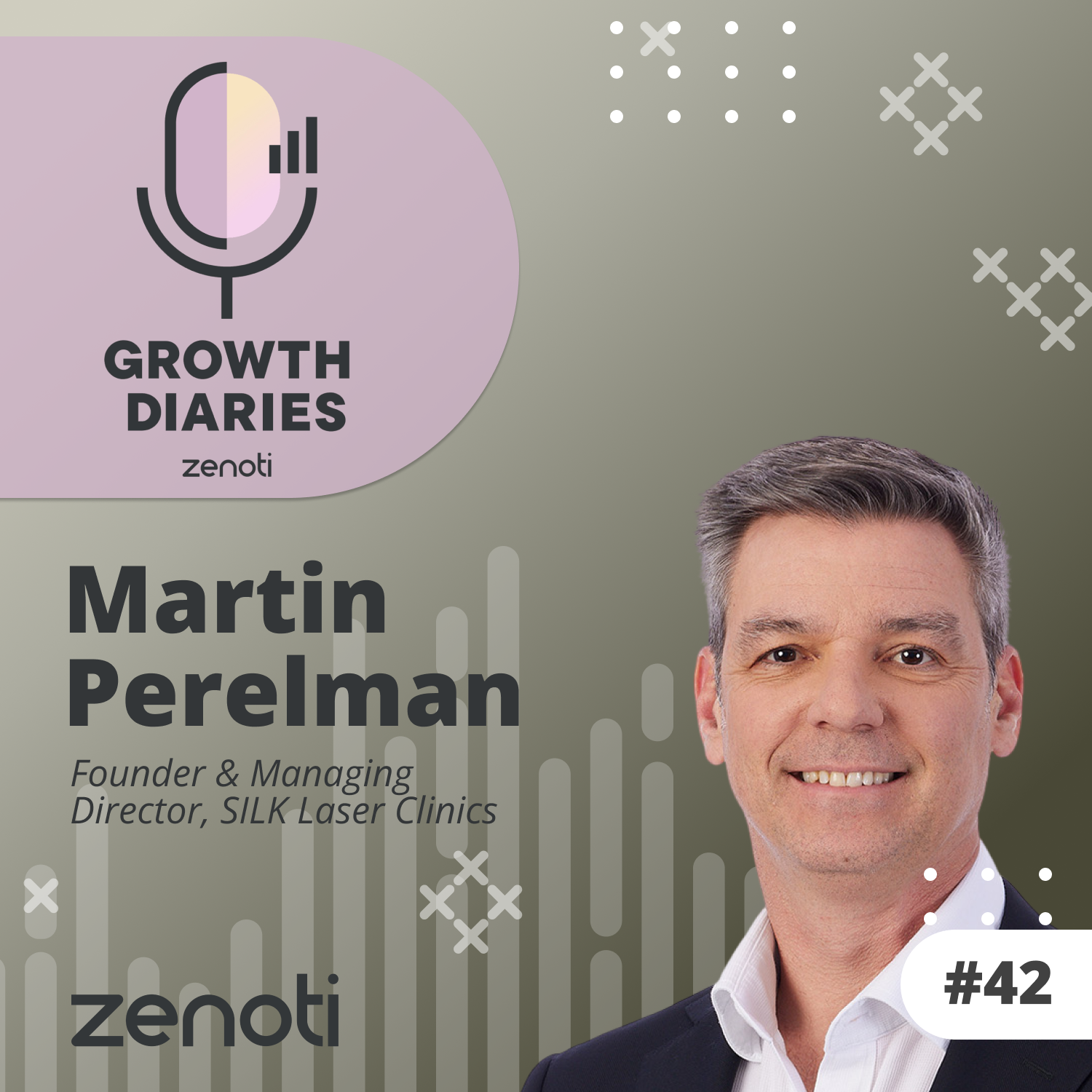 How SILK Laser grew from a garage to 200 clinics with Martin Perelman77 / 100