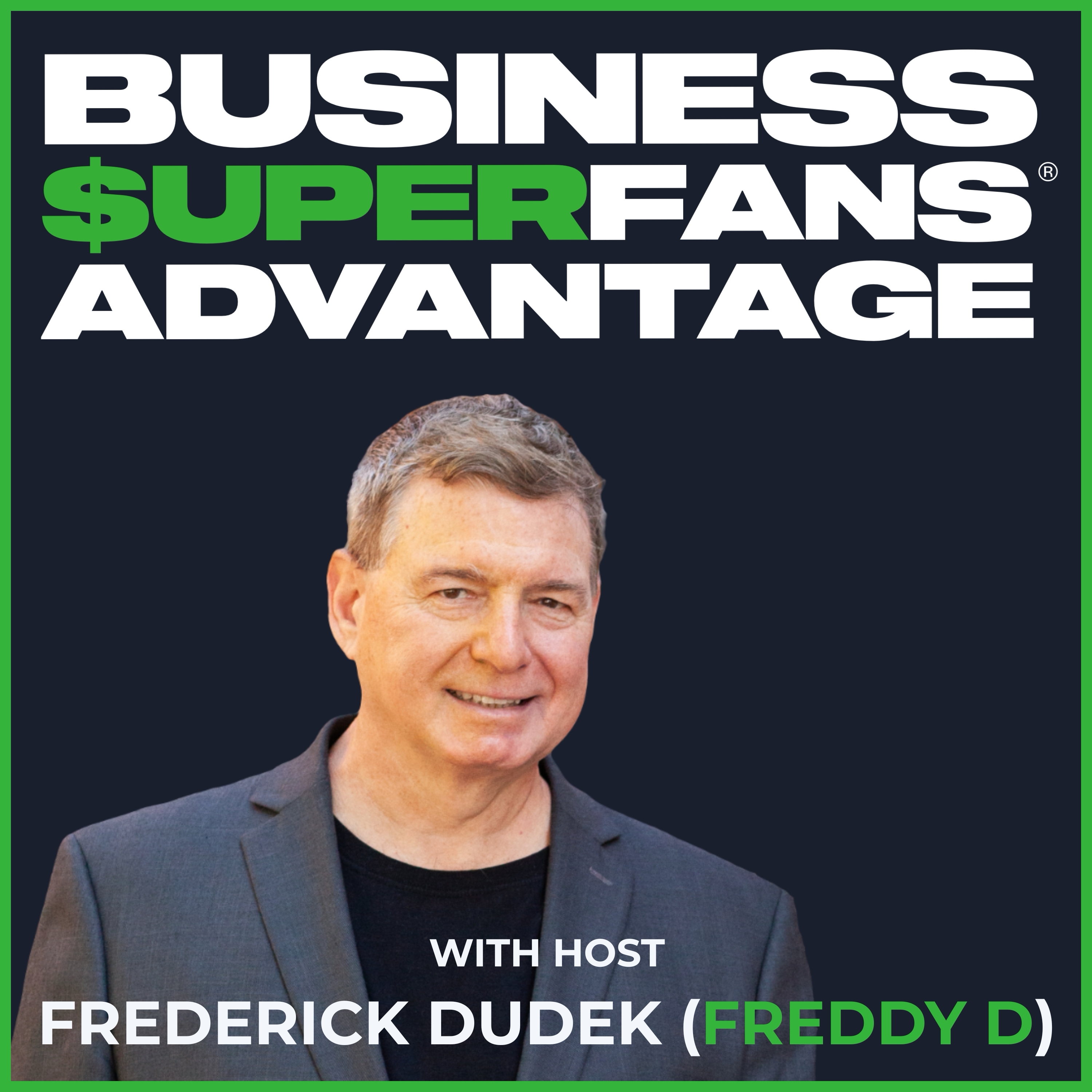
Business Superfans® Advantage · 2026-06-25 · 11 min
Key moments - from our scoring
Substance score
52 / 100
Five dimensions, 20 points each
Frederick Dudek makes a compelling case that business owners overlook the most powerful lever in their arsenal: recognizing and empowering frontline employees. Using Great Lakes Pot Pies as his anchor example, he walks through how founder Janni Teitelbaum's intentional recognition practices - celebrating birthdays, acknowledging hard work, correcting privately - created the conditions for spontaneous moments of employee creativity that customers couldn't resist. When one team member began doing the chicken dance for customers who spent over $100, customers started deliberately spending that amount just to trigger it. Dudek breaks down three mechanisms: recognition starting behind the counter rather than with customers, genuine empowerment to create unscripted moments, and protecting employees through flexibility and private feedback. He frames this within the R6 Reactor sequence (Recognition, Retention, Reputation, Reviews, Referrals, Revenue), arguing that skipping the recognition step breaks the entire chain. The episode targets owners struggling with turnover, artificial loyalty programs, and inconsistent customer experiences - showing that the antidote isn't marketing spend but internal culture work that compounds outward.
A team member started doing the chicken dance spontaneously when customers crossed the $100 threshold, and this unscripted moment became so beloved that customers deliberately spent over $100 just to trigger the dance.
The R6 Reactor is a six-stage growth sequence: Recognition, Retention, Reputation, Reviews, Referrals, and Revenue, with recognition of employees being the ignition point that must come first.
She makes real events of team birthdays, buys lunch during hard weeks, corrects privately never publicly, and works around employees' schedules - practices that made her company lose only two people over years in an industry famous for turnover.
When recognition goes public (like posting photos of employees at retail demos), it triggers multiple ripple effects: store restocking, new customer foot traffic, employee social sharing to friends and family, and amplified brand visibility.
A disengaged employee completes a transaction, while an engaged one creates a memorable experience - same job, same wage, but completely different revenue outcomes.
Our reviewer’s read on each dimension, with quotes from the episode.
The episode delivers a core insight about employee recognition driving customer loyalty through the Great Lakes Pot Pies example, but relies heavily on repeating this single case study and the R6 framework rather than layering multiple novel concepts. The three actionable points (recognition, empowerment, protection) are sensible but fairly obvious to experienced operators, and the episode lacks concrete metrics or data beyond the anecdote.
Most owners I've worked with don't know that leak exists until they do
You can't script that. You can't put it in a campaign. You can only create the conditions where your people invent it themselves
The thesis that frontline employee morale drives customer experience is well-established in business literature; the episode presents it competently but without contrarian or first-principles thinking. The chicken dance anecdote is memorable but a single narrative does not constitute original analysis. The R6 framework (Recognition, Retention, Reputation, Reviews, Referrals, Revenue) is presented as novel but is essentially a repackaging of standard customer advocacy sequence theory.
You spend money getting customers in the door. You discount them to come back. You build a loyalty app nobody opens
Recognition comes first and you start inside your own walls
This is a solo host episode with no guest present. The host references Janni Teitelbaum from a prior episode but does not interview her directly here. The caliber assessment is therefore limited to the host's own credentials and operating experience, which are not detailed or substantiated in this transcript, reducing the episode's authority on the subject matter.
Most owners I've worked with don't know that leak exists until they do
I want to talk to you about the most underused marketing asset in your entire business, the person standing behind the counter
The Great Lakes Pot Pies example provides concrete, memorable details: a customer spent $112 on chicken pot pies to trigger a dance, the business started in a borrowed church kitchen at 3:30 a.m., opened in April 2020 during the pandemic, and achieved near-zero turnover. However, the episode lacks operational metrics, revenue impact data, timelines for results, or comparative data from other businesses testing the same approach. The specificity is anecdotal rather than analytical.
A woman in Clawson, Michigan once spent $112 on chicken pot pies on purpose
She started out semi retired and bored. She worked her pot pie recipe out on paper almost a year before she ever baked one
As a solo monologue with no guest interview, there is no conversational dynamic, follow-up questioning, or productive disagreement to evaluate. The host delivers a polished narrative with clear structure but without the back-and-forth, challenge, or depth that genuine conversation provides. This format limits the episode's ability to test ideas, surface objections, or explore nuance.
So let me give you three things that make that possible
And here's where this fits. This is stage one of the growth sequence cultivating superfans
Computed from the transcript - who did the talking, and the words that came up most.
Episode 213 Frederick Dudek | Business Prosperity Advisor Employee recognition is the frontline advocacy strategy Frederick Dudek (Freddy D) explains in Episode 213 to help service entrepreneurs and SMBs turn everyday team interactions into customer loyalty. Episode Description Employee recognition is the frontline advocacy strategy most business owners overlook when trying to build customer loyalty, referrals, and sustainable revenue. In this solo episode of Business Superfans® Advantage , Frederick Dudek (Freddy D) explains why advocacy starts with the people behind the counter - not with the customers walking through the door. Direct Answer Block: Employee recognition builds customer loyalty by making frontline team members feel seen, trusted, and empowered to create memorable customer experiences. When employees are recognized first, they stay longer, serve better, and naturally turn everyday interactions into reputation-building moments that lead to reviews, referrals, and sustainable revenue.
Transcribed and scored by The B2B Podcast Index.
A woman in Clawson, Michigan once spent $112 on chicken pot pies on purpose. She didn't need 12 pies, she needed to cross $100 because this little shop when you did, a team member broke into the chicken dance in the middle of the store and she wanted to dance. But I am the world's biggest super fan. You're like a super fan.
Welcome to the Business Superfans Podcast. We will discuss how establish superfans from customers, employees and business partners can elevate your success exponentially. Learn why these advocates are a key factor to achieving excellence in the world of commerce. We discuss the invaluable insights of business owners who have successfully implemented the strategies in the book to build their own team of devoted superfans.
Gain insightful knowledge from the experts who create applications that help you create passionate superfans. This is the Business Superfans Podcast with your host, Freddie D. Freddie Fre. You're listening to the Business Superfans Advantage Podcast.
I'm Freddie D. Today I want to talk to you about the most underused marketing asset in your entire business, the person standing behind the counter. And why advocacy starts with them, not your customers. Here's the leak most business owners never see.
You spend money getting customers in the door. You discount them to come back. You build a loyalty app nobody opens. And the whole time the people who actually shape how your customers feel about your business.
Your frontline team are running on empty, unrecognized, just processing transactions. A disengaged team member completes a sale and then power one creates a memory. Same job, same wage, completely different result for your revenue. Most owners I've worked with don't know that leak exists until they do.
Let me tell you about Janni Teitelbaum. She's the founder of Great Lakes Pot Pies in Michigan, and she was a guest on this show, episode 14. She started out semi retired and bored. She worked her pot pie recipe out on paper almost a year before she ever baked one.
She built the whole thing initially out of a borrowed church chicken, up at 3:30 in the morning, hauling frozen pies to a farmer's market in coolers. And in April of 2020, in the middle of the pandemic, she opened up a storefront. Now here's a part I can't stop thinking about. One day she posts a video.
One of her team members breaks into the chicken dance in the middle of the store because a customer just spent over $100. Nobody at the marketing agency wrote the bid. An empowered Employee made it up off the cuff because she felt free to. And what happened next tells you everything.
Customers started to spend over $100 on purpose just to trigger the dance. You can't script that. You can't put it in a campaign. You can only create the conditions where your people invent it themselves.
So let me give you three things that make that possible. Number one, Recognition starts behind the counter. Your team is the first stakeholder group, not your last. Jenny makes a real event out of every single team member's birthday.
She buys lunch when the team pulls off a hard week. And in years of operating in an industry famous for turnover, she's lost exactly two people. One retired, one moved away. When your team feels seen, they stay.
And the team that stays is the only thing that makes a great customer experience consistent. Two, empowerment. Don't script the chicken dance worked because it was real and it was theirs. Your job as the owner isn't to write every customer moment.
It's to give your people permission to create them and then go back to them when they do. The business that feels alive are the ones where the team has room to be human. Number three, protect your people and to protect your customers. Janny corrects in private, never in front of the team.
She works around doctor's appointments instead of denying them. That's not being soft. That's building a kind of loyalty, where a team member says, this place actually appreciates me. And that gratitude doesn't stay behind the counter.
It walks out in front and lands on your customers. And watch what happens when that recognition goes public. When Jenny sends a team member to run a tasting demo at one of the grocery stores that carries her pies, she takes a photo of them at the table, apron on, signs up, and posts it that same day. Think about everything that that photo does.
The store sells its stock and has to reorder. New customers see it and walk in. And that employee, they're showing their friends and family, look, that's me. You recognize one person, and it rippled straight to your customers, your retail partners, and that team member's entire circle.
Recognition is cheap, but the moment you let it out into the open, it compounds. That's the whole game. Most owners are out front trying to manufacture loyalty with discounts and apps, and the lever that actually moves it is sitting right behind the counter waiting to be recognized. So here's where this fits.
This is stage one of the growth sequence cultivating superfans. And it's the ignition point of the R6 reactor. Recognition, retention, reputation reviews, referrals revenue. Look at that order.
Recognition comes first and you start inside your own walls. A recognized team stays and the team that stays creates experiences customers talk about, and that's what eventually becomes reviews, referrals, and revenue. Skip the first step and the rest of the chain never fires. So here's what I want you to do in the next 72 hours.
Think about the one person on your front line who made a customer light up this month. You already know who it is. Before the week is out, write them a note by hand and name the exact moment. Tell them what it meant for the business and what it meant to you.
Don't text it. Don't toss it out on your way to the car. Put it where they'll find it and keep it. Because the thing you take the time to make real is the thing they remember.
And that one small act of recognition is the first part of the R6 reactor. Recognize your people first and they'll go build the loyalty you're trying to buy. That's how you get a business that grows whether or not you're standing in the building. Because you can't script the chicken dance, you can only empower the person who started it.
If this one landed, remember, it started with a single team member who felt seen. If you want the full playbook on turning the people around you into advocates who sell for you, grab my book Creating Business superfans over at frederickdudek.com and for a steady stream of plays like this one, sign up for the Prosperity Pathway newsletter at ProsperityPathway Tips. I'm Frederick Dudek, or as my friends call me, Freddy D.
And I'll talk to you in the next episode. We hope you took away some useful knowledge from today's episode of the Business Superfans podcast. Join us on the next episode as we continue guiding you on your journey to achieve flourishing success in business.
Other episodes covering the same guests and topics, from across The B2B Podcast Index.
 Restaurant Mogul & Top Chef Judge Reveals Training Secrets | Janet ZuccariniIt’s Not You · on employee retention87 / 100
 Innovative Hub and Spoke Model for Bagel ShopsThe Restaurant Technology Guys Podcast brought to you by Custom Business Solutions · on employee retention81 / 100
 Engagement, Retention, and Employee Career Planning Part 1Informed Decisions · on employee retention80 / 100
 You Can’t Choose Between Empathy and Economics: The Business Case for People-First Leadership | Susie Silver, CDE, Workplace OptionsHigh Octane Leadership · on employee retention78 / 100
 431 $4.7M from Marketing: How Builder Funnel Helped a Local Custom BuilderBuilder Funnel Radio · on employee retention76 / 100
 Lessons on Leadership, Growth and the Exit: Darren Spicer of 110 VenturesRunning Restaurants · on customer loyalty programs76 / 100
 Turn Your LinkedIn Profile Into a Client Pipeline: Kanika Vasudeva | Ep. 21880 / 100
 Profit Through People: Jonathan Maharaj Builds Human-Centered Growth That Improves Cash Flow | Ep. 21452 / 100
 Major Gifts Fundraising: Jeff Schreifels Turns Donor Trust into Revenue | Ep. 21276 / 100
 Overlooked Growth Engine: Frederick Dudek Reveals the Hidden Relationships That Drive Revenue | Ep. 21164 / 100
 AI Content Strategy: David Ebner Shares How to Build Authority Through Human-Led Brand Storytelling | Ep. 21076 / 100