
Growth Diaries by Zenoti · 2026-06-30 · 32 min
Key moments - from our scoring
Substance score
44 / 100
Five dimensions, 20 points each
This episode explores how membership models have transformed beauty, wellness, and spa businesses - traditionally transactional industries - into predictable, recurring-revenue operations. Speakers include spa and massage entrepreneurs who built their businesses on 50,000+ member bases, nail salon owners, a Blow Dry Bar franchisee network, and clinic operators scaling through acquisition. Key insights: membership-based models provide revenue forecasting, lower customer acquisition costs, staff retention through predictable scheduling, and resilience during economic downturns and closures (both 2008 and COVID are cited). At established locations, membership revenue reaches 75% of total revenue. The discussion also covers the operational infrastructure required - booking software capabilities, KPI tracking via Zenoti, transparent franchisee reporting, and hands-on support systems (weekly calls, monthly all-hands meetings, operational audits). Valuable for franchise operators, salon/spa owners considering membership conversions, and fitness-adjacent service businesses seeking recurring revenue models and systems to support multi-unit growth.
The best-performing established locations achieve approximately 75% of total revenue from memberships, though this varies by location maturity and stage of business development.
Memberships provided stable, predictable cash flow even during closures; members maintained subscriptions and redeemed credits when reopened, leading to strong retention and pent-up demand rather than customer loss.
Booking software must offer robust tracking, analytics, and intelligence capabilities; additionally, data extraction tools and KPI dashboards (like those powered by Zenoti) help franchisors and operators benchmark performance and identify improvement opportunities.
Top franchisors assign dedicated franchise business consultants, handle site selection and real estate matching, manage build-out and contractor coordination, provide pre-opening staff training, send teams for opening week support, conduct monthly check-ins, share weekly KPI reports, and facilitate monthly all-franchisee meetings where locations share wins, struggles, and ideas.
Membership models create predictable daily schedules with guaranteed client bookings, eliminating downtime and uncertainty, which improves job stability and allows staff recruitment focused on career-minded professionals.
Our reviewer’s read on each dimension, with quotes from the episode.
A few useful operational nuggets (membership resilience during COVID, front-desk staffing driving conversion, the 300-visit stability threshold) but heavily diluted by platitudes about being 'the best' and generic franchise-support talk.
every single person that comes out of a room as a prospect, if you are limiting your front desk staff, guess what, they're just going to check them out
around 300 guest visits a month, it is stable, it can function on its own
Largely recycled franchise wisdom - 'your franchisee is your customer,' transparency of KPIs, membership benefits - with little contrarian or first-principles thinking that an operator hasn't heard before.
your most important customer is your franchisee
membership model is, for a lot of reasons is a great, great way to build a business
The guests appear to be genuine founders/operators of franchise beauty and wellness brands who have actually built membership businesses at scale, though they are thinly identified and speaking in a branded showcase format.
I had the background in the membership based gym business
we acquired around 27 clinics to become approximately 50 today
Some concrete data points (75% membership revenue, ~$50k franchise fee, 27 clinics, 300 visits/month, 10% conversion, 18 locations) but many claims remain vague and anecdotal without hard financials.
Our best is probably a 75%, I would say
they average around 50,000 for most brands
Host asks leading, softball questions ('why should a guest choose Blow Dry Bar'), rarely pushes back, and the episode is interrupted by repeated review solicitations and Zenoti product plugs, marking it as a promotional showcase.
We're the best.
Leave us a quick review on Apple Podcasts. It makes a huge difference.
Computed from the transcript - who did the talking, and the words that came up most.
In this special episode of the Growth Diaries podcast, host Sudheer Koneru brings together franchise leaders from across the beauty, wellness, and fitness landscape to unpack three pillars that separate thriving franchise systems from the rest: membership models, franchisee support infrastructure, and data-driven performance management. What You’ll Learn: Why membership models work in wellness during economic downturns How to build a responsible growth franchise system that actually supports franchisees The power of transparent KPI sharing to drive franchisee success How to reach your stability threshold with membership revenue Why your franchisee is your primary customer, not the end consumer How to use employee-level transparency to drive peer-to-peer coaching and retention If you enjoyed this episode, make sure to subscribe, rate, and review it on Apple Podcasts, Spotify, and YouTube Podcasts. Instructions on how to do so are here .
Transcribed and scored by The B2B Podcast Index.
Speaker A: The NOTI presents Growth Diaries the fascinating
Speaker B: stories behind the best brands in beauty,
Speaker A: Wellness and fitness hosted by Sudhir Koneroo.
Speaker B: Yeah, I had the background in the membership based gym business and so I really understood that and I understood the value creation from a business perspective but I also understood the value that that would provide to our members. If we could forecast our sales, we would be able to manage our P and LS easier. We'd be able to manage scheduling based on the number of members that we had. We would eventually be able to reduce our marketing costs because as we had memberships grow we would have repeat customers and it would help us more easily recruit and retain therapists who knew that they would be busy, that they'd have a schedule every day, they wouldn't be waiting around. So there was a lot about it that made a whole lot of sense.
Speaker C: So it's like you were definitely one of the first few pioneers in doing membership in the massage and spa and salon side. I know gyms have always had it but the services side didn't have it. Just today I was talking to someone else who was running a uh, barber shop with a membership business and they mentioned one of the big benefits is what you said, which is their staff know there's a book of business every month that are people going to come in and so you're uh, steady income kind of thing which people miss. People are more focused on the valuation of the business but also the staff benefits in working at a membership oriented business.
Speaker B: Well there's staff benefits, there's member benefits. Right. And there are business benefits. It just makes sense. And I, I will say that in, you know, in all these years and I guess you're right, I didn't even think about the fact that we were probably one of the first ones outside of gyms. I'm sure we were. I would love to know actually where we fell in with that. I'm uh, sure there were some one offs but yeah, membership based wellness was not really a thing then other than fitness centers. And yeah, now I'm curious. So check it out that now I'm really curious. But it served us very well in times of uncertainty. So in 0809 when we had a financial crisis, what we found in those times is our retreats and that's what we call our locations in the areas that were most affected in that time had the highest unemployment rates. Sacramento, Las Vegas, areas of florid. Our retreats excelled. And it's because in times like that people are either going to go to really Healthy things or not so healthy things. And we provided a healthy thing that was very affordable and also something that people really love and desire to do. You know, some people love fitness and going to the gym, some people don't. But there's not too many people who wouldn't love to lay on a massage table for an hour or so and pay for that. So we found that to serve us very, very well during that time. And we found the membership based model to serve us very well during the COVID period as well. So even during closures, you know, we still had a very strong business model because we had membership dues that were still coming in. And our model allows for the members to roll over any credits that they may have for services. And so instead of canceling, we retained their membership and they flooded in the doors as soon as the doors opened. And we just didn't have, we needed more therapists to take care of them. So that was a really good problem to have. So membership model is, for a lot of reasons is a great, great way to build a business.
Speaker D: Well, the interesting thing is day one, day one, day one, we understood that there was a massive opportunity to have memberships for nail salons that did not really exist at the time of opening. And we did try to roll it out. When we first opened, we were on a different booking software that just didn't have the capabilities that we needed. The intelligence, the tracking, the analytics, like all of the very, very information. And so we actually turned it off as a brand and stopped memberships for a long time. And for us, you know, our customer, once we get our customer in our door, they are never, they're not going to leave because we know that we provide the cleanest, the safest, the best service for every single person that comes in our door. And so they're asking us why isn't there a membership program? I come here all the time, like what does it look like from a loyalty perspective? And so for us, we really knew it was important to have a membership program, but equally important to do it right and to have the right tools and things in place in order to support all sides of the membership program. Because it really is, it's a beast when you start going with it and operationally just making sure things were really buttoned up. And now we have it and people are obsessed with it. It's, it's a, it's a great part of our business. And we actually just rolled out a new membership last week, I think two weeks ago, called the Self Care Stash. And it's been a massive hit. So we're constantly thinking, what can we do different? What do our guests want? What's going to add value and ease to our team members from even a checkout process? And memberships really fit all those boxes.
Speaker C: Yeah, I like that. And I think I totally agree. Asking the right questions in a forum when you don't know the answers is an important element of exhibiting confidence. Just asking the questions in the right format. So why should a guest choose Blow Dry Bar for their service?
Speaker A: We're the best. Our franchisees and their teams are the best. We really do have a commitment to continual improvement. So when they come to us, they're going to get the best quality service with the best products being used. Our bars are beautiful. There's a wonderful dynamic in bar. We're so proud of our net promoter score and our customer reviews. We know that our customers love the experience there. So for all those reasons and we have a wonderful membership program that helps them save money.
Speaker C: And so did you have memberships from the very beginning or when did you explore and experiment with memberships? Uh, even with Skin Oasis or later?
Speaker E: Yep, I've always had memberships right from day one. So at Skin Oasis again, I never did any advertising. Back in the day, Groupon was very popular. So I started with a Groupon and it was, I was barely making any money off of Groupon so I tried to keep my membership real low so that it wasn't too much of a change for them. And it worked. Almost every single person signed up and then slowly I incrementally would increase it. But again, it was the word of mouth. It was, you know, people loved it. They would tell somebody we stopped doing Groupons and everything. But yeah, the membership was always from day one because it just, it worked really well for us.
Speaker C: So during COVID also because you had memberships, you were still customers were still paying for their membership, but they redeemed those credits later on.
Speaker E: Yeah, so we're very client centric. So what we did is I emailed all the members and I said, we will send you a facial in a box. You'll still get your credit for a membership if you will keep it going. And then that's what we did. We, we would send them facials in a box. They loved it. We shipped them out. I mean we shipped them to every single state in the United States. They were sending them to nurses in New York. And I put in a little want a franchise, you know, that type of thing in all the boxes. But yeah, They, I don't think we. We barely lost any members during that time. And then of course, when we reopened, some people didn't want to come back. We're open concept. It was steam going from one client and I mean, it was the worst case scenario for an open concept swab. But we got through it just fine. And then of course, some people would have 10 credits maybe, and then be like, can I have a party now? Absolutely. You know, you spent the money and you stayed with us.
Speaker C: Cool. And typically, what percent of your revenue comes from memberships? And, uh, you know, how do you know? I'm assuming there's certain levels at which, you know, the store becomes, you know, safe to operate from a financial perspective once you've achieved a certain member level, etc.
Speaker E: Yep. So all the members, like, because everyone's in such different stages right now, if you look at our more established locations, their memberships can be quite high. Our best is probably a 75%, I would say, and then others a little bit less than that. And then a newer location, of course, they just haven't had the time to build that up. The first year, I try to prep every owner. That first year is critical. And once you get through there, it's much, much better and we keep our overhead as low as we possibly can.
Speaker C: So now you are obviously, you know, franchising, uh, as a regular process and it's onboarding. You have good systems and process compared to even legal documents in the early days. But today, how do you go about supporting a franchisee to be successful? What things do you do? After I'm committed, I've opened my store running now I need support to make sure I can survive.
Speaker B: You know, it's immediate and, and this is where a lot of new brands get hung up. A lot of new brands, people that just start emerging franchise brands that start franchising will go off and they'll sell a lot of franchise licenses and they have no idea how to get them open. Well, guess what, as a franchisor, you make no money unless those doors are open. Because we work off of royalty stream. Right. So you can pretty much determine that. Every bit of a franchise fee, and they average around 50,000 for most brands. Every bit of that franchisee fee is gone, gone by the time you sign that license with that franchisee, because you've spent it either in, uh, franchise commissions, brokers, whatever.
Speaker F: Right.
Speaker B: And then you go into site selection. So as soon as that franchisee comes on in our system, they're assigned what we call a franchise business. Consultant and between the franchise development person that brought them on and that franchise business consultant, we're onboarding them through a process of immediately getting them to training. What happens next? What is the first thing we have to do? You need to understand this brand, you understand who we are, what we stand for, what we're looking for. From a real estate perspective, all of that, they get matched up with real estate right away. We've already looked at the territory in the process, right? And so we kind of have, we know where we ultimately feel that they should go based on our core customers and what we're looking for from, you know, psychographic and demographic analysis perspective. So we know where, where to go. But we immediately get them with real estate. We start that process, then they're connected with, you know, we have a, we have a company that does all of the general contracting. So all this, the retreat design and build and everything is, you know, happening as well, licensing, all of that. They're going through multiple training sessions throughout this entire process. We're driving the entire process. They don't really have to do anything as it relates to the stuff to get it built. Right. So we're handling that with the general contractor and the GC is handling it with trades anyway. Everything is completely set up. It's really turnkey in our situation. There's a point in which during the retreat build that we have our furniture, fixtures and equipment that is literally rolled in on a truck where all this time also they are doing marketing, they're getting out in their community. So they do have to do something, right? And that's what we want, want them focused on, is the marketing and the things that only they can do in their immediate community. We can't do those things. But we're hand holding this entire time we're building the business plan. We're talking about what does the first 30 days look like, look like the next 60 days, 90 and so on and so forth. And so that is a lot to do to get a uh, retreat up and running. Once they're up and running, it is constant communication and check ins on goals, on key performance metrics, on making sure that if we didn't hit something that we're talking about a plan to bridge that gap. This is the plan and you know, this is what we're going to do together in the next.
Speaker C: That's great. So that's good context in terms of how you got involved and all the grounding. And I think it's important, I do find that entrepreneurs, you know, they generally have A journey which helps to prepare them. It's serendipitous kind of stuff to prepare them for whatever they're about to embark on. So, as you said, I think you had all the groundwork, uh, yeah, jumping into this business. So in terms of growing the business itself, how have you approached, you know, because you got involved and you want to grow it faster in terms of supporting franchisees, what kind of systems, processes, where were things and what did you have to do to say, let's get to a better job to make these franchisees more successful and make your business more attractive to them?
Speaker A: So it's, of course, on so many fronts, so many aspects. When I came here, the philosophy, the approach I took, was that our growth had to be responsible, meaning we needed to ensure that we built the infrastructure, the right people, the right systems and processes at the right time to support the growth, to support the system we had and the system we were about to have as we grew. And it was also very clear to me that as a franchisor, you're in the customer service business and your most important customer is your franchisee. It's easy to imagine or, uh, to think that your primary customer is the end user of the product or service that you're offering, but really the franchisee is your customer. And when franchisees sign on with us, we take on a tremendous responsibility. It's a real privilege and it's a responsibility they are entrusting us with their family's wealth, with their entrepreneurial dreams, and we take that very seriously. So I wanted to ensure that whatever we did, whatever we created, the resources, the tools, the systems, the approach to supporting our franchisees was all about setting them up for success. So in order to do that successfully, I had to learn the business of franchising. I was able to learn from our team, from my husband and his experience. Even though he wasn't day to day, he knew a lot about franchising and the industry. And then I started to seek mentors, the same as I did when I was in fundraising. I sought out mentors who were professional fundraisers. I hired even young junior people for my team who had experience elsewhere that we could learn from. So we took a similar approach here and then. It was really about building out those systems over time. But we needed to ensure that we understood the needs of our franchisees. So creating a culture and dynamic that really encouraged and facilitated that dialogue. We needed to hear from our franchisees what was working for them, what were the best practices that one had implemented in their bar that we could package up as a system, best practice and share with the rest of the team or the rest of the system what were the challenges they were having, what were the areas of opportunity that they were seeing. So it really had to be about collaboration and dialogue.
Speaker C: Love the show. Leave us a quick review on Apple Podcasts. It makes a huge difference. And don't forget to follow us on Spotify and YouTube for more episodes.
Speaker G: So in 2017-18 is when we opened our first clinic outside of Delhi ncr, which is our, uh, you know, home ground. And that was our pilot to see if we could remotely manage a clinic. We opened two together and I think we had some learnings from there. We understood, okay, what works, what isn't working, what are we doing right, what are we not doing right? That gave us the initial confidence that we'll be able to remotely manage locations from there. We organically grew to around 2022 before this acquisition, where we acquired around 27 clinics to become approximately 50 today. These 27 locations, I think we had the belief, one, that we'll be able to integrate them to our systems. The second belief we had was that our systems work. If our systems are followed, that would lead to a positive outcome. But yes, we had to build our team before we did that. All of us, I think, worked slightly, a little bit of overtime also because we were always short of hands to help us with the integration and, and all the systems, the lms. Then I think one other system that we implemented was that we do operational audits and we use a software where there is this checklist uploaded and the auditor has to then click pictures and upload them. And we generally try and reach out to every process essentially in that audit. So it's about a series of six to seven audits that we want to do monthly. We made a special task force in house which was, uh, our, which we call the takeover force. And we would have a team go out to and sit in that clinic, at least a person for the first five, six days, handhold the existing staff. But yes, I think the journey is still continuing. We are still. The culture integration is something that we're trying to work hard on because that I think it will take time. The process integration can happen first, but culturally it does take time.
Speaker F: I think, um, I feel so proud of our brand for how we support our franchisees. Quite often we hear in the franchise world, oh, I've never even seen anyone from headquarters or, I don't know, you know, like the support aspect, they'll sell you on buying a business and then there, there's no follow through. I really pride ourselves on the support that we offer. So I mean from signing, you have weekly calls with our coo. She walks you through how to open a business. Many of our franchisees have never opened a business. From incorporating to negotiating your lease, picking your space, all those things. Then we help you with your build out. Any contractor questions, we support you through those. Before you open your doors, we send a team to your store. We train all of your first fleet of magicians we call ourselves and front uh, of house staff. So we're really setting you up for success. No one cannot giggle when I say magicians. And so we support you. We're there for a week, we're holding your hand, we're making sure that you're getting set up. And then after you've been running for, for a while, we send someone back once a, uh, month for two months to check in on you, do staff or help you with staff reviews. And then you have weekly calls with our franchise business coach. On top of that we send out a KPI report which we pull from Zenoti. So we send weekly. Every Monday, everyone gets a report. Total sales, laser percentage. What are key performance indicators that are important for us to watch new customers through the door? Client retention. And we share everybody's numbers from all 18 locations to everybody. We're a fully transparent company. We believe that that's why you're in a franchise. We can support each other. If you know, Uptown did $20,000 in laser sales, I'm probably going to want to know how the heck they did that last week. So you know, we put those numbers in there to go, yeah, reach out to each other and lean on each other. Did you do a flash sale? How did you get that, you know, those new customers through the door, what have you. So, and then my favorite part of our support is every month we do meeting with everybody in the system. All of our franchisees, managers are invited as well, the whole headquarters team. And we send out a form before that. We ask everyone to bring a win, a struggle and a great idea. And then we say, and we can open up the mic if you want to take the mic as well. We've got some of our greatest ideas from these meetings. I facilitate it, the struggles, I mean, you know, if someone's got staffing struggles or something, then we bring it up on the call and we open it up so that other people, chances are Sudhir, if at uh, your store you've had a struggle, one of the other 18 stores probably has had that struggle and we can help coach you through it. So we do that every month. And uh, yeah, it's a really fun call to get everybody, see everyone's face and get them all together.
Speaker C: If you're enjoying the show, we'd really appreciate it if you left us a review on Apple. Ah, podcasts. It only takes a minute and it's, it helps others find the podcast. You can also follow along on YouTube and Spotify so you never miss an episode. Nice. So basically your ability to actually experiment with the service and see how it works and then bring it back to your franchisees and all that is good. And in fact, by the way, this morning I was actually asking my wife, what would you add to a blow drive? Because she was looking online, ah, about um, your business and then she kind of herself before she realized you have makeup, she said maybe makeup. I would foot kind of.
Speaker G: So because it was like so long,
Speaker C: it felt like it might go with the uh, business footprint. And it's interesting that you're also exploring not just retail of what you use in the store, but other things which might, because, which might resonate with your customer because your franchisee benefits in the sense you're making them more robust in terms of revenue and all that. Now, talking of revenue and making your franchise grow, there are other things also I realized from a uh, business process perspective that you do. One is of course introducing services, but you can make your franchisees be more smarter, more robust, do well and you have a fairly transparent system of tracking and you have this rewards process called the bestie rewards for your thing. I love the word and the way you've uh, branded them. And then you are very transparent with all the metrics and how has it helped the franchisees to make more money? Maybe you should share that because people don't think that, that that might help them make more money.
Speaker A: Yeah. So we, as we came out of the pandemic and had the opportunity for a strategic reset, we decided that it was very important that we become a data driven, performance driven organization. And we started investing in data tools beyond what was available to us through the booking software POS system that we use in bar. And we started doing our own secure data extract and manipulating the data. And it really gave us the ability to very clearly identify KPIs and targets and benchmarks for our franchisees. And then we started publishing results. And at first we were reluctant because, you know, these are private businesses in a way and we weren't sure how Our franchisees would feel about having their results published, but we came to understand that the sharing of the data really drove success in our system and continues to do so for a few reasons. For one thing, it enables our franchisees to understand what the potential was for them across different metrics. So often our franchisees who were new would say, well, how am I doing? Should I be doing better? Could I be doing better? And we didn't have good answers or weren't able to present that to them in a, in a clear, concise way. And so being able to share data helps our franchisees see what the potential is for them and then it helps them measure their current success against those benchmarks. So now every week, our franchise business coaches share an email that talks about the month to date results across a number of benchmarks. And every month we publish out the system benchmarks. And so there's a lot of celebrating, a lot of recognition. Our franchisees have come to wait for those data releases. Sometimes they'll reach out to their franchise business coach and say, hey, when's the weekly email coming? Or why haven't you sent out the, uh, monthly results yet? And then some of our franchisees are even sharing the results with their teams. So their teams are saying, did we make the top 10 this month? And they're using that to inform their strategic planning. They're using that to set goals for their, their businesses, for their individual team members. And so that data sharing is really fueling success and it's changed the nature of the conversations we have with our franchisees.
Speaker C: And so, of course, taking care of employees is an important element. And the other thing, uh, from what I could make out, if you're willing to share more detail and color on it, is, you know, how do you actually track and reward employee performance? What are the metrics for you personally that decide that, you know, so we
Speaker D: have this whole structure, it's not called this, but we've kind of internally called path to growth. And it's a tool that we've put together that looks at utilization, their reviews from their customers. So at an individual level, we look at things even like if they are on time for their shifts, if they've clocked in and the retention, how people are coming back, what they're doing with their time within the stores, whether they've sold memberships or we have internal, internal little goals too, that every single store manager can have the autonomy to make that decision of how they want a staff reward or what challenges do they want to have. It's yelp and Google. It's a lot of different things, but those are the big pillars that we really look at, how we track how our team members are doing.
Speaker C: And M. Are these performance metrics, when you track them, do all the employees know what they are? Like, they know who's the number one this week?
Speaker D: It depends on the store. I would say that, I would say when they're onboarded, it's part of the onboarding experience to understand how they want to know, how do they perform in their job, how do they become better, how do they accomplish these goals? And that's part of the education and training process. So we're informing our employees from the beginning, which I think is really important to have team members understand how do I. What mean, what makes me an A player? And so they understand the metrics that they're measured upon. And then every store turns into like kind of a mini competition where they get shout outs at their team outings of like, oh, this person had 80% rebooking percentage, or you know, their review. They got 137, five star reviews this month. So things like that are being shouted out. Then it's all through Zenoti that those metrics are being pulled.
Speaker C: Great. I think, yeah. I'm a firm believer that when employees know the metrics and they can see them and as a peer group, then they kind of, you know, they feel also the fairness and transparency in terms of that you're not making some biased decision as you grow because you're dealing with the data and numbers.
Speaker D: It also is like a team approach. So if there and some stores actually have like a whole team goal, what is, what are we gonna, what is our upsell? Are we gonna sell gift cards this year? Like, what are the goals that we're gonna try to accomplish together? And then if somebody is like, we have some team members that are just rock stars consistently, and so that inspires other people to go to them and say, teach me how you do that. So it becomes like peer to peer coaching a lot of times, which I think is really impactful too.
Speaker G: My go to metric always is the number of visits, the number of guest visits that a, uh, clinic is getting. What I figured out is that around 300 guest visits a month, it is stable, it can function on its own, it can live its individual Life. But before 300 visits a month, I need to support that clinic with marketing, I need to support the processes, etc. Etc. And to do that, to get to 300 visits, what we are trying to do is we are Trying to essentially, for example, for treatments which I know that there is a next session coming up. For some treatments it will be 20 days after. For some it will be one month after. We tend to add these guests in the Zenoti waitlist at the time they consume their appointment and for a day, maybe 20 days after, 30 days after. And the admin department of the clinic, the front office will reach out to these clinics on that day. Ah, reach out to these clients on that day and ask them for the next appointment. We share regular data with them and we call this our uh, drop off data. Customers who have been consuming our service but have paused or have stopped coming to us or have not consumed their service. So one, this helps us deliver treatment results. This ensures that the efficacy of the treatment is how it should be. And of course then with more visits that ensures that we also get better customer satisfaction if we have better customer results.
Speaker C: Cool, great. So I guess you do have very well defined key performance metrics once they're open and how you expect them to trend in the first six months for a typical thing. So you can guide them whether they're on track or not?
Speaker B: Yeah, I mean so when they're off track, we guide them to training resources. We might actually send somebody from operations in. We might do an online course with them personally or we'll have them go to online courses. But we might zoom, but we're always looking for. So you know, one of our. Because we're a membership based business, a key performance metric for us of course is membership conversion. So non member to member, how well are we converting? Sometimes we'll have a retreat open with 800 prospects, but they've got maybe 10% conversion rate. You know, that's not good. So what's happening there? And we have to look at schedules. Are we booking too many people? But without enough front desk people to, to focus on checking those guests out. So in the beginning stages, if you're driving a lot of traffic, depending on how you're scheduling your therapist, you better have your front desk set up because every single person that comes out of a room as a prospect, if you are limiting your front desk staff, guess what, they're just going to check them out and you're not going to be able to take the time, they're not going to take the time to pitch them on the membership. And so you look at your prospects and your membership conversion, you go, oh, what's happening?
Speaker F: Right.
Speaker B: So we're looking at all of those things using the dashboard and Zenoti and Other tools that we have to help guide them through the numbers that they should be looking for, uh, and the things that they need to adjust to get better in various areas.
Speaker F: So it's been so long since I've been in the store where our franchise business coach really helps our franchisees with their staffing. But um, I know that we do have staff performance reviews and there's, I mean we've got sheets that they go over so we help them set goals for themselves. So like product sales, they get commissions on product sales. So, okay, what do you want your sales to be this, you know, this month and then how are we going to help you hit that target? Client retention is a huge one. Making sure that they're texting and calling customers that haven't been in in four plus weeks. So pulling on reports on Zenoti, going back through their schedule, seeing who hasn't rebooked, reaching out to them. So I know during the staff reviews they have a lot of things that they look at to help them.
Speaker C: Yeah, it's nice that you have your providers be actively thinking about reaching out to their customers, as you uh, said, because they probably have a better relationship and they have downtime using that to.
Speaker F: If their schedule is not booked up for the day, we encourage that. Go back who hasn't been. See you go back five weeks, look at the. Do you see them rebooked? No. Send them a text, you've got your SMS message and then you know. Our managers will often mandate that they reach out to 10 people a day or what have you if their schedule isn't booked. But encouraging them to build their clientele and get people coming back in to see them.
Speaker B: Growth Diaries is brought to you by Zenoti.
Other episodes covering the same guests and topics, from across The B2B Podcast Index.
 From Amazon to Arm: The Blueprint for Scaling Tech Giants with Jason ChildSecrets of Rockstar CFOs · on Groupon85 / 100
 Episode 178-Becoming a Legal Recruiter: Navigating an Alternative Legal Career with Matt MillerCounsel to Counsel · on Groupon81 / 100
 My First Million Podcast Ep. 19 - Building A Profitable IT Business & Extreme Ownership With Doug BatesMSP Success Podcast · on recurring revenue model75 / 100
 Ep. 62: Quesadilla GorillaRetail Intel · on Real estate site selection65 / 100
 309 - Why AI Should Give Us Time Back, Not More Work: Ray'n Terry (Chief People Officer, MOO)The Modern People Leader: Forward-Thinking HR · on Groupon63 / 100
 How a Bootstrapped Pool Company Dunked on the GiantsBootstrapped Business with Fexingo · on recurring revenue model
 AI Is No Longer Optional59 / 100
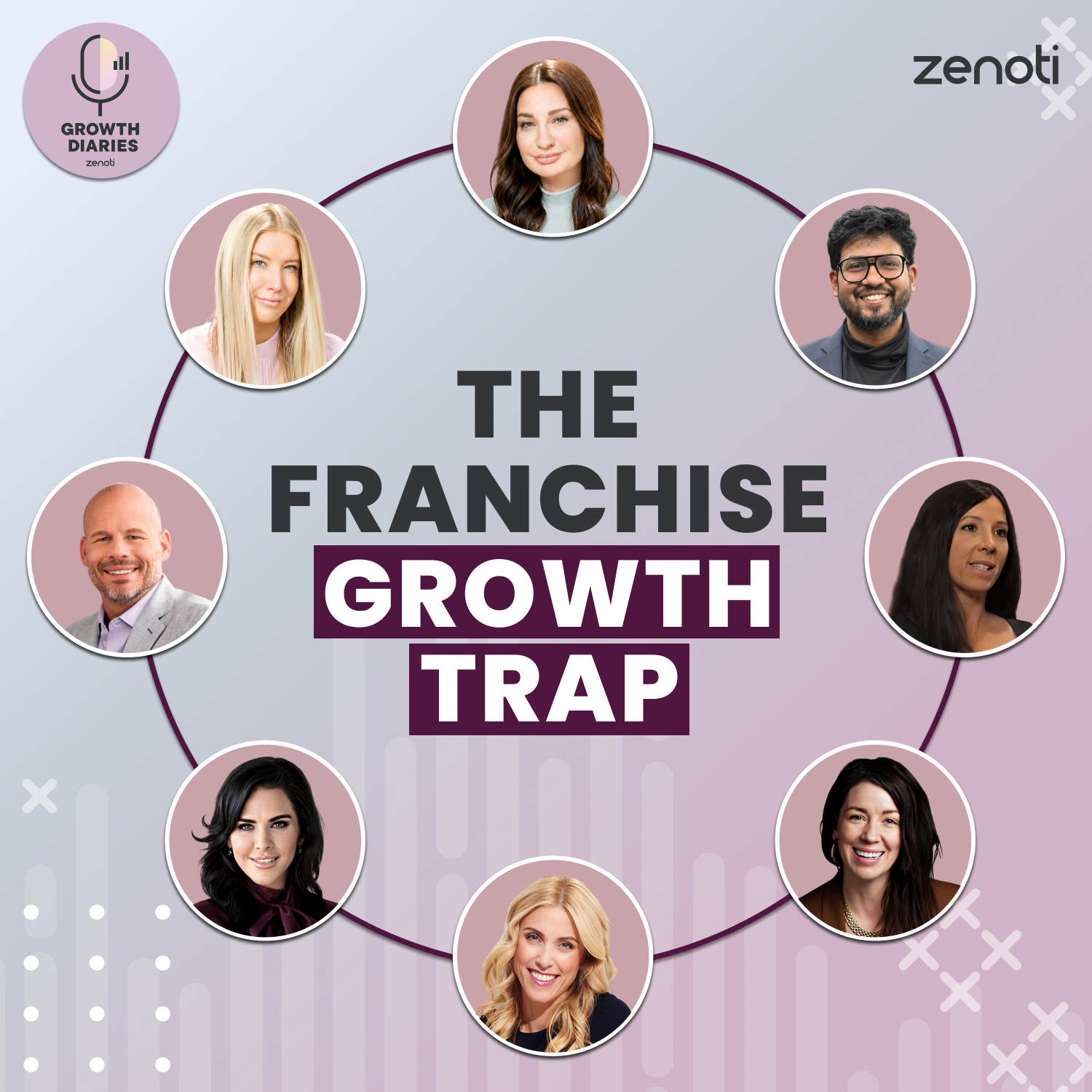 Growth lessons from franchise founders who got it right80 / 100
 What 350 competitors in Japan couldn’t replicate59 / 100
 Second Generation, First in Purpose: Wulan Tilaar on Carrying Forward a Family Mission61 / 100
 How SILK Laser grew from a garage to 200 clinics with Martin Perelman77 / 100