Gratitude Through Hard Times · 2026-09-10 · 46 min
Key moments - from our scoring
Substance score
56 / 100
Five dimensions, 20 points each
James Farrin built his personal injury law firm from a single paralegal and 30 clients in 1997 to 60 attorneys across 40 offices, recovering billions for tens of thousands of clients. His most defining moment came when he took on the USDA Black Farmers discrimination case - a civil rights litigation that required borrowing $17 million and personal guarantees of $10 million, with no certainty of legislative success. Farrin credits his grandfather, Admiral James Moore Farrin, with modeling humble achievement. The turning point in the case came when John Boyd, the Black Farmers Association spokesperson, reminded him to focus on the clients' suffering rather than his own despair. After seven years, the case resulted in $1.25 billion appropriated to Black farmers. To operationalize his values across the firm, Farrin created the JSF Way - 24 specific behavioral codes (like "do the right thing, always") that move beyond abstract values into lived practices. The firm communicates these weekly through firm-wide emails featuring different leaders explaining what each behavior means, includes them in hiring and performance reviews, and tests new employees at 90 days to ensure the values feel authentic rather than aspirational.
Farrin's firm borrowed $17 million over seven years, with Farrin and his wife personally guaranteeing $10 million of that amount, despite not having $10 million in assets.
The case resulted in $1.25 billion being appropriated by Congress, with Black farmers recovering approximately $1 billion after a seven-year effort.
The JSF Way consists of 24 specific behavioral codes like "do the right thing, always." The firm communicates them through weekly firm-wide emails featuring different leaders, incorporates them into hiring and performance reviews, and tests new employees at 90 days to ensure they're lived authentically rather than merely posted on walls.
John Boyd, the national Black Farmers Association spokesperson and partner on the case, reminded Farrin that Black farmers had suffered discrimination for a century and needed an advocate - shifting Farrin's focus from his personal despair to delivering results for his clients.
Inspired by a Vistage speaker, Farrin spent a Saturday writing down behaviors he believed in, circulated them to his leadership team for feedback, and refined them into 24 specific behavioral codes that define the firm's culture.
Our reviewer’s read on each dimension, with quotes from the episode.
The episode contains some genuine insights about organizational culture (the JSF Way framework), lessons from the black farmers case about client focus over outcomes, and reflections on balancing ambition with meaning. However, substantial portions consist of philosophical reflection and personal storytelling that, while emotionally resonant, lack operational specificity or novel business thinking. The insights present are more intuitive than surprising to a seasoned B2B operator.
when things were tough, it simplified the task. Don't worry about all the risk and the outcome. Focus on the process of delivering the best possible result for your client. That's what it means to be a lawyer.
the goal was forcing us to sort of out kick our coverage so we could get to a certain level of growth just by spending more on advertising and bringing in more cases. But the quality wasn't necessarily there.
While the host and guest reference established frameworks (Jim Collins' 'fire bullets then cannonballs,' Goodhart's Law), the episode largely recycles well-worn themes: the power of company values, the importance of team, humility, and finding meaning in work. The core narratives - humble founder, family values, altruistic litigation - are archetypal founder stories. The JSF Way itself is explicitly described as borrowed from a Vistage speaker. There is limited contrarian or first-principles thinking.
Like almost every good idea we've implemented, I stole it. Somebody had the idea. It was a speaker at one at a Vistage group.
We believe in results the right way. We want to fight hard and achieve things for our clients, but the way we go about doing that, we want to honor a process that is the right way.
Jim Farrin is a legitimate operator: founder and CEO of a multi-hundred-million-dollar law firm with 60 attorneys across 40 offices, and he has managed a nationally significant civil rights litigation. However, his relevance is primarily to legal services and personal injury practice, not to broad B2B operations or technology-driven business. For a general B2B audience (founders, marketers, sales leaders), his seniority in a specific vertical limits applicability. He is not a thought-leader or podcaster-for-hire, which is positive, but his domain expertise doesn't translate broadly.
Jim is the founder and CEO of one of the largest personal injury law firms in the country, and it's based out of the Carolinas. He started it in 1997 in Durham, North Carolina, with just one paralegal and 30 clients.
today, the firm has 60 attorneys for 40 office, 40 offices across North Carolina and South Carolina, and has record billions of dollars for tens of thousands of people.
The episode includes concrete numbers on select topics: the firm started with one paralegal and 30 clients in 1997; now has 60 attorneys and 40 offices; $17 million borrowed personally for black farmers case with $10 million personal guarantee; $1.25 billion appropriated for black farmers with ~$1 billion recovered; 24 specific JSF Way behaviors; 15% historical growth target (later revised downward). However, operational specifics about the law firm's systems, hiring practices, client economics, or case strategy are largely absent. Most of the episode trades in abstraction and philosophy rather than concrete business mechanics.
He started it in 1997 in Durham, North Carolina, with just one paralegal and 30 clients.
we ended up borrowing $17 million on this case. Again, not all at once, but over time it added up. And my wife and I had to sign personal guarantees for $10 million.
The host, Chris Shembra, asks thoughtful open-ended questions (e.g., 'What's unsaid?', the gratitude opening, South Star principle) and demonstrates genuine curiosity. However, he frequently pivots away from guest answers to insert his own anecdotes and frameworks, reducing follow-up depth. The host occasionally leads the guest toward predetermined conclusions ('I think you taught our listeners...') rather than probing surprising or contradictory points. There is minimal challenge or pushback; the conversation is affirming rather than exploratory. The host's questions are well-intentioned but the execution prioritizes thematic coherence over discovering new territory.
It's a beautiful thing to know who you want to be. That's a good North Star. My question to you is, have you made a list of who you don't want to be?
What's one thing that you'll think about more tomorrow based on our conversation today?
Computed from the transcript - who did the talking, and the words that came up most.
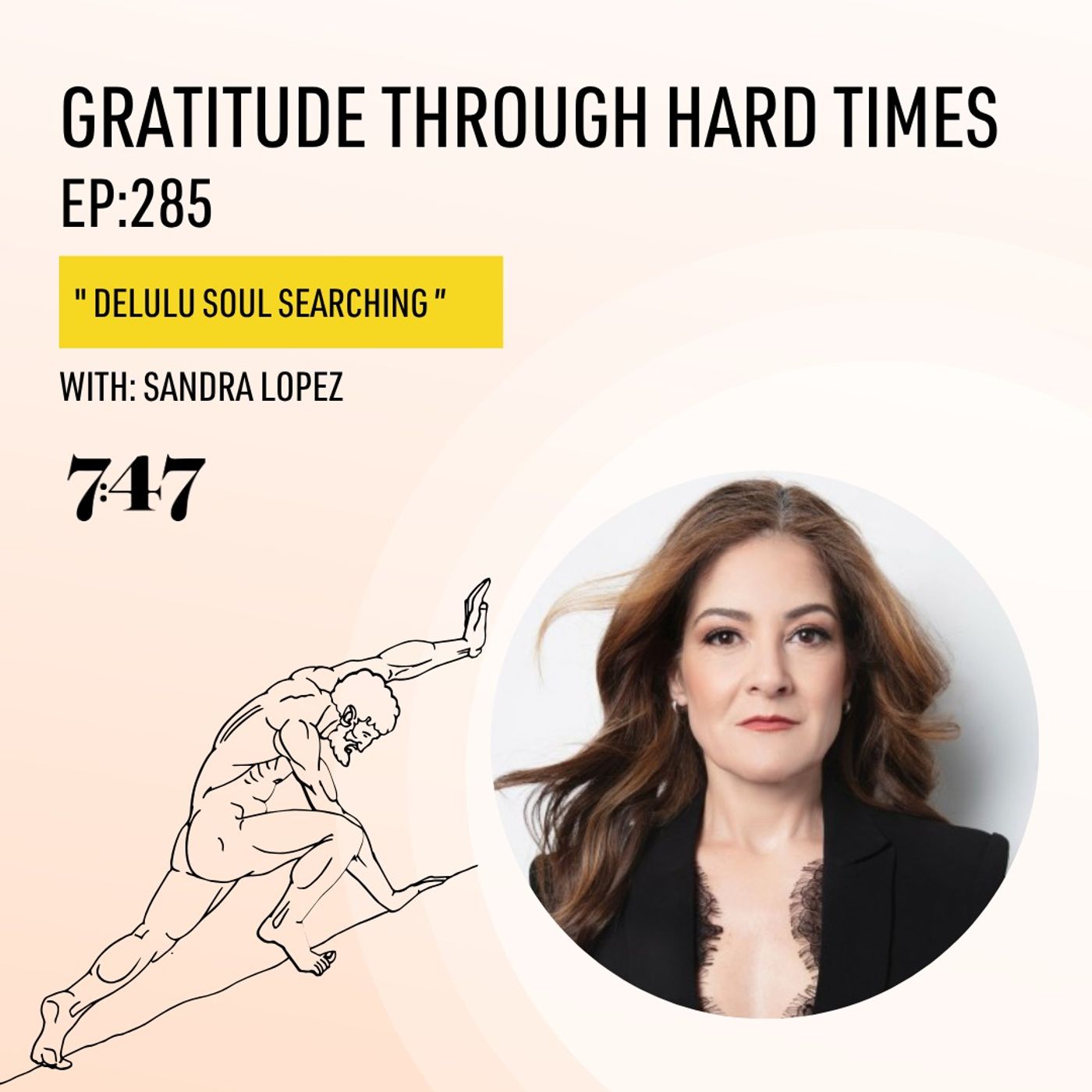
"When you're in need, you realize you need help. And when you're successful, you realize you got help all along." - James Farrin In a world obsessed with digital efficiency and quick fixes, the real currency of a meaningful life remains independent thought, presence, and intentional effort. In this episode of Gratitude Through Hard Times , host Chris Schembra sits down with James "Jim" Farrin, founder, President, and CEO of the Law Offices of James Scott Farrin. Jim reflects on growing up across 10 countries in 17 years, applying rigorous business principles to plaintiff representation, and taking on one of the largest civil rights litigations in U.S. history. He breaks down why authentic leadership requires intentional culture, why high metrics can distort purpose, and how focusing on service frees leaders from personal despair. 10 Memorable Quotes: "When you're in need, you realize you need help.
Transcribed and scored by The B2B Podcast Index.
Speaker A: They have suffered discrimination for a century. They have been mistreated. They need an advocate. You need to just focus on them. And it was really a, uh, great reminder that when things were tough, it simplified the task. Don't worry about all the risk and the outcome. Focus on the process of delivering the best possible results for your client. That's what it means to be a lawyer. Don't be opportunistic. Do the best thing for them. That spirit kind of helped me and I think our firm get through that.
Speaker B: You're now listening to a new episode of Gratitude Through Hard Times. Gratitude instills humility. Gratitude removes ego. Gratitude helps empower the best in others around you. Our goal is to guide individuals and companies to practice gratitude so you can live a longer, happier, and more successful life. Get ahead of life with connection and purpose. This is Gratitude Through Hard Times with Chris Shambra.
Speaker C: Well, good afternoon, ladies and gentlemen, and welcome back to another episode of Gratitude Through Hard Times. It's your host, Chris Shembra. And and today we are soaking up the last few moments of summer. It's been a wonderful one in New York City, and it's been an honor and a privilege to bring this podcast to you. To all the loyal listeners on the podcast, it's good to see you, friend. Your support for the last 11 years is what's allowed us to continue to do our work. And some of my favorite moments throughout the week are when you email in your thoughts, questions, comments about today's episode guest. So keep them coming. To all the new listeners of this podcast, it's nice to meet you, friend. I don't know how you stumbled upon our humble, cozy little corner of the Internet, but we're glad to have you. If you came for a podcast about go to market strategy or business ethics, uh, uh, how to hire your thousandth employee, you've come to the wrong place. Oh, that strategy is important, but it's not the conversation here today you've stumbled upon a wonderful conversation series, close to 300 episodes deep of our commitment to bringing on some of the world's great leaders to share their stories of how they've gotten to where they are today and how they do it in a human way. As you know, the skills rising fastest in the world of work tomorrow, not just technical, even though that's what the television says, they're human. The ability to think clearly and act wisely under pressure. The leaders of this episode series or conversation series have done just that. So definitely look back through the podcast episode archives and we're Going to invite you to click that subscribe button by the end of this podcast episode. Without further ado, I am so excited to have today's guest, Jim Farren. Now, I grew up in Hilton Head Island, South Carolina, and Jim Farren was a household name. Jim is the founder and CEO of one of the largest personal injury law firms in the country, and it's based out of the Carolinas. He started it in 1997 in Durham, North Carolina, with just one paralegal and 30 clients. You got to get your start somewhere. But today, the firm has 60 attorneys for 40 office, 40 offices across North Carolina and South Carolina, and has record billions of dollars for tens of thousands of people. If you're from South Carolina or North Carolina, you remember the old law firm, Jim's James Scott Farron TV commercial, uh, TV commercials starring the great actor Robert Vaughn, the great late actor Robert Vaughn, with a long running slogan, tell them you mean business. Oh, it was a soundtrack of a childhood, uh, but Jim is the oldest of five children. He lived in 10 different countries across 17 years, and he's truly invested in philanthropy and fighting for those that need a bigger voice. And he runs his company across a series of amazing core values. So we're going to be talking about a human interest story on today's episode of Gratitude Through Hard Times. Without further ado, Jim, welcome to the podcast.
Speaker A: It's a pleasure to be here, Chris.
Speaker C: Now, Jim, before we dive into your journey and story, we always have to start with a simple gratitude question for you. Now, we first asked this gratitude question around the dinner table on July 15, 2015, when I had a simple bowl of pasta sauce and I gathered some friends to see if it was good or not. And that gratitude question has stuck with us 11 years, ever since. Every day. And so, to kick us off, Jim, I need to ask you that signature gratitude question. If you could give credit or thanks to one person in your life that you don't give enough credit or thanks to or that you've never thought to thank, who would that be?
Speaker A: Well, I've, uh, never said it publicly, and he's dead, so I've lost my opportunity. But my grandfather was a hero to me and very influential. He was an admiral in the Navy, man, very accomplished, second in his class at the Naval Academy, was a shipbuilder, designed ships. He was part of Admiral Rick Hover's team that built, uh, nuclear submarines for the United States after World War II. So he was a man of tremendous accomplishment. But really, Chris, what stuck with me was he was Also a man of tremendous humility. He never bragged about what he had accomplished. You had to pry it out of him. He was just humble. And you ask about his career. Did he wish he had done more? No, I did what I was meant to do. I didn't feel passed over. Uh, and he would always say that he was shot full of luck. I. I doubt rising to the levels he did was, uh, really a product of luck. I'm sure that was part of it. But that's anyway, his humility. First of all, he was an achiever with humility, and that has, you know, I would like to thank him for that inspiration.
Speaker C: What was the admiral's name?
Speaker A: Uh, James Farren. James Moore Farren. Not Scott Farren. James Farren.
Speaker C: James Moore Farren. What does the word hero mean to you? Uh, first of all, cheers, Admiral. Uh, my grandfather was in the navy as well, during the war effort, and, uh, it's, uh, my favorite branch of the military. So cheers to the Navy. What does the word hero mean to you these days?
Speaker A: I think a hero is someone who is genuinely inspiring, who you could look up to as a role model and say, I wish I could be like that.
Speaker C: It's amazing because m. Some people think of heroes as these extraordinary individuals that perform extraordinary acts. Bravery, courage, etc. And I think those people are very important. And I believe there's a new appetite in America of, uh, finding heroism in finding extraordinary in the ordinary. And what I mean by that is the average, ordinary, everyday person who keeps along the path in an ordinary way, I think is a new modern version of heroism. In a world where social media says we should do the most every epic things to get that like. And comment. Finding heroism in the ordinary, I believe is coming back again. Do you see any of that around you?
Speaker A: Yeah, I completely agree that there's heroism in everyday life in ordinary people. Everyone lives, uh, heroically in some way, I think, at least. And here's the way I think about it, our clients, you know, we have the privilege of representing thousands of people every year. Each of them begins with, uh, adversity. There's some reason they need an attorney to help them with their injury case, or if their land is condemned, their condemnation case. Something bad has happened to them, something they weren't looking for. They may be in a lot of pain. They may be very hurt. They may be they're up against powerful adversaries and they don't know what to do. It could be easy for them to give in to despair, just give up or figure the System's rigged against me. Or, uh. But what are. What we see is our clients, they pick themselves up and they get, get some. They're not afraid to be vulnerable and get help. And they go through a process where over the course of time they get better. And it culminates in a, uh, result at the end of the case where they can feel. I'm really proud of their journey, what they have done, what they have overcome. And so I think we see it played out again and again and again. These are not superheroes. They're ordinary people who have overcome adversity through faith and perseverance and maybe getting the right kind of help.
Speaker C: It's a tremendous thing to be able to zoom out and focus on the learnings of the journey and, and not just the goal or the end result. Those things are important, the end result, winning the case, but to understand the journey and the story of the individual. We all have our own hero's journey, and that's the cool thing about life. And I think that you all have to have a tremendous amount of empathy in order to step into the shoes of those you serve and to join them at different empathetic steps of their journey. I want to go back into your journey. You certainly had, um, what I would say on paper, as someone who lived in the same place my whole childhood, I was comfortable in that journey. And you had, I mean, it had, it had its own moments of adversity, but you had a different childhood. You moved around a lot, right? I was good at a young age at welcoming people to my home because it was constant. You got good at going to new people's homes, moving around 10 different countries in 17 years because your father was an executive at Colgate Palmolive. What did you learn about yourself and the people around you through that early journey?
Speaker A: Well, about the people around me. It made me much closer to my family because they were the real, only constant. Every year or two years we would move and I'd lose my circle of friends and have to start over again. And so the constant was the family. And so I learned that they were the ones that I could count on the most and had strong, enduring relationships. Through all these stops and starts in new places, I learned it always works out. There's always some. You'll find a new set of friends. It may take a little more time here or there, but there's going to be someone you're going to be thankful for coming into your life. You may be sad when you leave, um, them, but I think it always worked out. And we would go to places, there'd be a new house, a new city, a new country, a new language maybe. And we landed on our feet. We figured it out. We knew how to survive, and it never defeated us. Each new chapter was a new adventure that I think we had confidence would always work out.
Speaker C: It's cool because when talking about that chapter of your journey, I think you taught our listeners two things that throughout moments of adversity, whatever that looks like for you watching this podcast, a first step. Find the constants. Right. In a world of everlasting change, find the constants and savor the constancy around you. And two mindset. It always works out. What's the third thing you would add to that?
Speaker A: Well, m. You're not alone. Uh, you may not have friends for a while when you move into a new. You go to a new school and you don't know anybody, but you've got your family. So there was always somebody. It never felt like I was completely alone. I had help at my disposal. And I think it's really important. Whatever challenges we face, I see this for our clients. It's so much harder if you feel like you're on your own and you have to deal. You've got the weight of your world, the, uh, weight of world on your shoulders, and you alone are carrying it. And finding other people to relate to and who can help, I think that's huge.
Speaker C: Find constants. Mindset matters. And you're never truly going through something alone. You know, I think that that's. We live in a world that, uh, again, hero worships uniqueness. Hero worship's individuality in certain communities, and it convinces us that we're the only ones who have been through that experience and therefore were able to share a story about or post on social media about that experience. It will make us look unique and people will be attracted to that. But the truth that that's what social media generation has done to the people. But the truth of the matter is nobody's story is actually inherently unique. The odds are there are other people around the world that have gone through similar things that you've been through. Right. If you're a founder, CEO, you know, listening to this call, the odds are whatever company you've just built, as novel and innovative and pioneering as it is, there are actually more people who understand exactly what you're going through than. Than you give credit to. And so there will always be people that are going through that adversity journey with you. Does that make sense?
Speaker A: Yep.
Speaker C: Now One of the great, great, great things that I know you took upon yourself was you took upon yourself a, um, massive, massive, massive national black farmers discrimination litigation. The USDA had discriminated against black farmers for decades in credit and assistance, and you stepped up to the task, but in, in order to do so, you had to personally borrow millions of dollars to underwrite the case. Can you tell me about that big, bold risk and what it took to find faith in the hopeful eventual outcome that ended up becoming to the tune of billions? But what did that require you to find out about yourself and your belief system and faith and whatever that may be? I mean, tens of thousands of people were involved to the tune of billions. This is a massive, massive risk.
Speaker A: It was, it was. I went into it probably underestimating the risk. I think that as an entrepreneur, often you're focused on the end result and the opportunity, and you tend to minimize all, all of the hard steps that it will take along the way. I know this because I told my wife at the beginning of when we're getting, getting ready. My wife Robin was getting ready to get into the case that I think it's going to be easy and there's going to, we're going to do a lot of good for a lot of people and we're going to make m. A lot of money. She was very skeptical. Turned out she was right. What I learned is, but at the beginning, I had to make a decision on whether to commit the firm to it. It was not a multimillion dollar ante at that time. It was a series of steps. But, you, uh, know, we knew that this, it was a civil rights case based in Washington D.C. we were a personal injury firm in North Carolina. We were a little bit out of our element. Should we take this on? And I remember thinking about it, and in the end I committed myself to it because I thought that if I didn't do it, I would always wonder what would have happened, what might have been. And so, uh, by going after it, we had a chance to do something historic, play on a national stage, do some amazing things. And that justified the risk. So that was sort of my thought at the beginning with quite a bit of naivete, uh, in terms of the amount of the lift. And so, you know, President Obama, he sponsored the legislation, he became president. We thought we had it made, but the world collapsed economically by the time he entered office and getting funding. We need to, for the, for this case to succeed. It was more of a political case than anything else. We needed Congress to appropriate money for the black farmers, that was what it was all about. And the fiscal environment deteriorated remarkably on us. And so we had to. And we had lobbyists and lawyers, and we were, you know, we were spending money on the case. But to get this thing to the finish line, we needed legislation. It was hard, uh, it was really hard. We ended up working with a guy named John Boyd, who's a spokesperson for black farmers. And he was great at getting media attention. We partnered with him and, you know, kind of the little engine that could. We were able to keep the pressure on. And there were some other law firms that certainly assisted with us. But after a, uh, two year effort, uh, we ended up getting the legislation through. The ante kept going up originally like a $1.2 million commitment. And to stay in the game, I had to keep. I was sort of the person responsible for funding this case. And we ended up borrowing $17 million on this case. Again, not all at once, but over time it added up. And my wife and I had to sign personal guarantees for $10 million. And I can assure you we didn't have $10 million. She signed it. Great credit to her. But we got in probably way too deep. I learned a lot about myself as one that I need to be more careful with risk and, uh, to maybe listen to, uh, wiser counsel sometimes. I also learned that we were in a bad spot and the proverbial only way out was through. We had to figure it out. And again, maybe it was divine intervention, resourcefulness. A, uh, great partner in John Boyd, great people who worked for me, who helped do all the, all the work. Other law firms had helped us with it, but we were able to put together a team and somehow we got it done. But there was one other thing that I really learned along the way, and that is at a time of despair, I was feeling sorry for myself. You know, we're ruined. We have borrowed millions and millions of dollars. There's no certainty this is going. We're going to get the legislation through. We're in trouble, and woe is me. And at that moment, John Boyd, a black farmer spokesperson, the guy we worked with, head of the national black Farmers association, you know, made a good point to me. He said, you know, this is about the black farmers. They have suffered discrimination for a century. They have been mistreated. They need an advocate. You need to just focus on them. And that was really a great reminder that when things were tough, it simplified the task. Just focus on, you know, don't worry about all, all the risk and the outcome Focus on the process of delivering the best possible result for your client. That's what it means to be a lawyer. Uh, don't, you know, don't be opportunistic. Do the best thing for them. That spirit kind of helped me and I think our firm get through that. So in the end, it all worked out. It took seven years. We were able to repay the 17 million and clear quite a bit. So it turned out to have a happy ending. It was a harrowing journey. The case of a lifetime. It did have tremendous, uh, significance. You know, uh, black farmers recovered over, you know, there's $1.25 billion appropriated. They recovered about billion dollars. It was a historic case. We achieved some great things. We survived. And I learned some, some difficult lessons during those seven years.
Speaker C: Absolute gratitude for those moments of despair that taught you so much. I mean, just to really simplify that exact teaching, in moments of despair, your instinct as an individual was to feel sorry for yourself. And then you had to actually check the facts and realize the m people we're serving have gone through far worse injustice than whatever despair I'm feeling right now. And so that radical act of empathy as an act of serving others helps destigmatize the negative emotion in you and helps you be more generative and creative in how you serve others.
Speaker A: Yep.
Speaker C: Holy brilliance. You know, folks that are listening to this, I, um, you know, I felt a little bit of a moment of despair maybe two and a half years ago. I was on the phone with my dad. I just had a traumatic brain injury, a mild traumatic brain injury, A, uh, concussion that I still have, you know, symptoms of today. But I was on the phone with my dad, and I was saying, woe is me. Moment of despair. And my dad said, when's the last time you asked someone how they're doing, how they are? I said, I don't know. Can't you just focus on me, dad? Why can't I talk about how bad I'm doing? He said, no, go ask somebody else. And I walked into the nearest coffee shop and they, they gave me the coffee, and I said, how are you today? He said, wow, thanks for asking. And then they talked, and they asked me how I was doing today, and I got to talk, and two negative starting people ended up talking out what they were going through and realized we're not alone. And it ended up being a positive. And so the moral of the story to all you listeners is in your moment of despair, instead of turning the attention inwards, turn the attention outwards. And, uh, remember, who you serve and ask them how they're doing. That's called a posture of otherness. It's a good thing for motion regulation.
Speaker A: Sets you free and gets you out of your own head.
Speaker C: Yeah. Now, Jim, you are really amazing at having kind of, you know, uh, built a whole alternative world within your law firm. And it's called the JSF Way. And the James Scott Farron way is a collection of 24amazing codes and core values that y' all stand for. At James Scott Farron, core values aren't just supposed to be something that exists on the wall. There's supposed to be this living, breathing thing that gives people purpose and meaning for showing up every day. How did you come up with those? And how do they show up in the day to day culture at James Scott Farron law firm?
Speaker A: Yeah, well, like almost every good idea we've implemented, I stole it. Somebody, uh, had the idea. It was a speaker at one at a Vistage group that I was at who was talking about here's how you build culture is the thesis was values can seem abstract. You have five values. What do they really mean? Reduce them to behaviors. They're easier for people to relate to. And so he said, do that. And he suggested you as the leader of the organization, need to define what you're willing to tolerate and what your behaviors are and go spend a weekend and write them down. So I did. I sat down, pen in hand, I'm an old school guy. And. And for one Saturday wrote down a number of things that I believed in. And they're things like do the right thing, always is one of them. And then for each, you give, uh, the behavior and then a little description of what that really means. And so I did it. I came up with a list. I circulated it to my leadership team, got some feedback and they suggested a few others. And after a while we had come up with these 24 behaviors that we thought represented who we wanted to be. Uh, it wasn't always who we are yet, but this is. These are the behaviors that we think we need to be. The good thing about doing this is before we identified how we wanted to live, I felt like the culture was defined by the strongest personality in the room. And so there was a void. And they would just, the culture would be who these people, how these people were acting. And instead we took hold of it, grabbed hold of it, said, here's what we're about. And the way we communicated it was to the whole firm. I announced, this is for real. It's not a flavor uh, of the month initiative. We have to walk the walk, not talk the talk. These are the 24 behaviors and what we do. And again, this is the idea of the, from the speaker I heard is every week we send a firm wide email about our behavior of the week and have somebody from the firm, a leader in the firm, talk about what it means to them, send out a blog on that. And so every week we are putting a fresh perspective on these behaviors. And then when we hire people, we say, these are our behaviors. Don't come here if you don't like them. We train on them. Uh, we give as part of people's performance reviews, self evaluations. It's something that we have made a real effort to make sure that it's real. I like to ask new employees, I meet them on their first day and say, have you read the JSF Way? He said, yes. I said, well, the true test will be in 90 days when I check back in with you. Do they seem to be real? And invariably people say they are. And so, you know, coming, uh, it's one thing to define things and be clear on who you want to be, but you have to live it and you have to get other people to buy in. And so this process has allowed this to happen. And we're over 10 years strong with the JSF way, and I can assure you it's taken deep hold in our organization. And people buy in because they think it's us, it's who we want to be. And then good people, it attracts the right kind of people to want to work with us.
Speaker C: It's a beautiful thing to know who you want to be. That's a good North Star. My question to you is, have you made a list of who you don't want to be? We call that the South Star.
Speaker A: Yes. Um, we had a meeting yesterday and then somebody asked what characteristics bother you the most? And I just rattled off a few off the top of my head. Uh, I haven't gone so far as to write the anti JSF way, but these are the thing. But if I were, I mean, here are the things that I, I can't stand. A lack of self awareness, uh, kind of bothers me. Self centeredness really bothers me. Where people are not, you know, they think they're the only person in the room and the only one that exists. Greed really, uh, bothers me. Laziness doesn't work well for us. Uh, a, uh, lack of accountability is a problem. Lack of appreciation is another. Lack of gratitude. I think that boorish obnoxious behavior is another. We believe in results the right way. We want to fight hard and achieve things for our clients, but the way we go about doing that, we want to honor a process that is, I guess, the right way. And so not cutting corners and not making people feel terrible as you trampling over them on the way to victory. Those are the kinds of things that we believe in and conversely, that we don't believe in.
Speaker C: Sounds like a great list. That was a great anti JS JSF way. The South Star principle we wrote about in our second book, Gratitude Through Hard Times. I got to credit Kate Luzio for inventing that term. And the anti JSF question. There's actually a great Winston Salem, North Carolina company inMarket who has their kind of InMar way is beliefs, standards, values. There's like five, five and six of each. And what they did just a couple months ago is they created the anti BSVs. And so you get to model. Are you following the BSVs and are you making sure you're not that other person? M. And so that was pretty cool.
Speaker A: Um, interesting idea. Let me just say there's one of. There is one of our JSF ways which is, ah, a don't be. And so that will point to a South Star. And that is don't be a jerk. Uh, in our profession, sometimes lawyers can come across that way. So we don't want to be that way.
Speaker C: Now, earlier in the conversation you were talking about, and I want to clarify, when you were talking about your grandfather's accomplishments, you and his humility, you were very particular to say, if we ever tried to compliment his accomplishments, he would say, I did just what I was supposed to do. And to me, it sounded like a. A right sizedness thing of like, I didn't do more than I was needed. I didn't do less than I just did exactly right what I was supposed to do. Now, I don't know if there's a link here, but in a podcast that came out on December 1, 2022 that you were in, you talked about that your growth targets are 15% per year deliberately measured. Is there a magic number about that 15%? I think it's. To me, it's interesting that, you know, I think we live in a world where every company's like 39,000%. Let's go. Three year growth.
Speaker B: Let's go.
Speaker C: And is there something magic about the right sizedness of 15% that's deliberately measured?
Speaker A: Maybe at the time, but not right now. Uh, so for years I thought that was a good Target because it would stretch us and we were growing, but we were also able, it was something where we were able to deliver quality work after a while. A few years ago we concluded, uh, that the goal was forcing us to sort of out kick our coverage so we could get to a certain level of growth just by spending more on advertising and bringing in more cases. But, but the quality wasn't, but we weren't necessarily able to do work, uh, that made us proud to achieve that. And so we ended up deciding, let's step back and do away with that goal. Let's cut it in half. And even then let's not measure ourselves by that. Let's just measure ourselves by providing high quality work for as many people as we can do. So actually I backed off that 15%. We still have grown every year, but, but I think at some point it can become a dangerous target.
Speaker C: It's something that's very. And if you're watching this and seeing my eyes darts because I'm typing in something, there's a, uh, famous economics principle called, uh, Goodhart's law. Goodhart's law was invented by a British economist in 1975. And essentially it loosely translates to when a measure becomes a target, it ceases to be a good measure, which means 15% for 15% sake, you accidentally out kick your coverage and you accidentally do things that don't bring meaning. I think it was in that same podcast, actually that you said, my first five years out of law school, I wanted to be successful, I was trying, I had ambition. But it wasn't married to meaning. And so it sounds like you've given up on the metric for the sake of measurement and you're continuing, especially through the JSF way, the pursuit of meaning.
Speaker A: Mhm. Yeah. Yeah, I think so.
Speaker C: I think that's a massive differentiation. One is growth for the sake of growth, efficiency gains optimization. At what cost? Right? What is the cost in the human spirit when you're doing work that's not tied to the purpose of the individual that works at James Scott Fair and Law Firm.
Speaker A: Yeah. And Chris, it's a lesson I've had to learn and relearn repeatedly. There's always been a tension in me because I'm an achiever, I'm ambitious, I want to do great things. Sort of instilled in me growing up. But I also need to feel good and find meaning in what we're doing. And sometimes ambition takes control and I get a little bit divorced from meaning and then reality. You know, I have like with the black farmer Case I have to come back to the core. Here's why you're doing it. So that's kind of been an ongoing, uh, attention from time to time in my life.
Speaker C: I like it. Well, as we start rounding the corner of the podcast, I like to ask this kind of a, uh, broad, very open ended question. So to set the scene for the podcast listeners and you. I love questions. I mean I literally changed my job title of my own company in December of 2016 to chief question Asker. I love it. And, but we know that not all questions are equal. We hate, uh, we're at a war against why questions. They're too defensive at times, they trigger defensiveness in others. We love what or how questions. And my five favorite what or how questions are what if helps us dream. What's known gives understanding. So what drives context now? What drives action? What's unsaid gives voice to help surface an unsaid original thought, feeling, emotion, idea. If I had to ask you what's unsaid in your life right now, what would you say?
Speaker A: Well, it's a good question. Dare, uh, I say that I probably don't tell people I love as much as I should, how I feel about them, that I love them. Sometimes that goes unsaid, but that may not be what you're asking. Um, Well, I'm struggling. What else is unsaid? You know, I'm grateful for all of the people who have helped make me, uh, make this firm successful. No. You know, there's no man is an island. It's easy to when you hit a certain level of success and maybe acclaim to take a bow and take a lot of personal credit for it. And there's certainly an element of that. But I think through, think about all of the people who helped me get there, from my parents, encouraging spouse and then most importantly the coworkers who bought in to the dream and make it happen. Now I don't work on cases anymore. I just manage the business and other people achieve the results and they've, you know, I had a vision and identity. This is who we're going to be. Come join me. And a number of people have bought in and made it happen. So I guess maybe what's unsaid is how fortunate I am to have had so many people help along the way because I couldn't do it myself. And back, uh, to the original thing is when you're in need, you can't do it alone. You need help. When you're successful, you need to realize you didn't do it alone. You got help.
Speaker C: Oh, did you make that up? Where did that come from?
Speaker A: Just came. I don't know. Just talking.
Speaker C: Oh, my gosh, Jim, that was amazing. Um, when. When you're in need, you realize you need help. And when you've. When you're successful, you realize you got help all along. Well, we'll get the exact clip and quote. But that was amazing. That was a tremendous thing. No man is an island now. We are in a world where,
Speaker A: uh,
Speaker C: I believe there's this seductive idea that's being promoted to the world that you can become your own island. Right. AI is now making knowledge increasingly individual. It's this seductive idea, this allure, that me alone plus the machine is enough. You're smiling when I say that. Tell me more about what you see we're up against, because you just shared with our listeners the passion, the joy, the gratitude of having built something meaningful together. Tell me what you're seeing out there in the world right now.
Speaker A: I think there's a crisis of aloneness. I think we are social creatures. Uh, we need other people. Imagine doing something great and then being by yourself in a room thinking about it. Maybe there's some degree of satisfaction, but it really wouldn't be the same as hugging the one, sharing that moment with the people who helped to achieve it, and, uh, being a part of a community. So, anyway, I'm convinced that we need people. We've always needed people. We need them more than ever. And with AI and social media and all these things. Yes, I agree with you that people can be seduced, uh, into not recognizing that that need is there, and it's there. One of the reasons we want to make sure that for our clients, we're not having chatbots or AI agents do the work for them. I think our clients want to talk to a human being and have a real human empathize with them and to share their experience.
Speaker C: Thank you for your commitment there. You know, I'm going to come up with an original quote, uh, in the style of the JSF way. I'm going to say I'd rather, uh, achieve little but have good people than achieve a lot and not have anybody. I think the opportunity to invest in more moments of connection with others where we don't achieve anything, we just wastelessly exist together is one of the main beauties of life. It's where curiosity and wonder and awe and gratitude and mystery and serendipity and synchronicity come alive. And those are beautiful, joyous emotions that then allow us to return back to work and achieve more. So it's actually you can have both, you know, uh, to close out. You're a great, uh, you know, Jim Collins, uh, in a fan, I believe your favorite quote of Jim Collins is where he writes in his book, great by choice, fire bullets, then cannonballs. It's a strategic principle of testing small ideas before making big commitments. But my favorite quote from Jim Collins is that we must step out of the tyranny of the or and into the genius of the and. And I think one of the great ands in this world is pursue success and gather people that you're unsuccessful with or gather people that you don't pursue success with. So pursue success together and gather people where success is not the goal. And I think we need both not or. And it doesn't make you a bum to have a dinner party with friends where you don't achieve anything and it doesn't make you a hustler to go out and pursue capitalistic ambition. Does that make sense?
Speaker A: Yeah. Yeah, Absolutely.
Speaker C: If the Admiral was on the call here today, what words of gratitude would you give him?
Speaker A: Well, thanks for your example. I hope you think I'm on the right course and I made you proud.
Speaker C: From one James Farran to the other, I would say he is. Any last words in closing, Jim?
Speaker A: No. It's been a, uh, pleasure. I enjoyed, uh, exploring, uh, these thoughts, these concepts, a lot of things I hadn't thought about before. So, uh, uh. I really appreciate the opportunity to dwell on these things and talk about them.
Speaker C: What's one thing that you'll think about more tomorrow based on our conversation today?
Speaker A: Well, you have me stumped with what's unsaid, so I'm going to be thinking about what's unsaid.
Speaker C: My goal for all of you listeners is to think about that question. And gosh, golly, if you got to block two hours on your calendar to sit in front of a whiteboard and do nothing and just see what comes, see what you draw, see what you think, see what you dream, there is something that is unsaid. I believe extraordinary ideas lie unsaid within extraordinary people. And we just got to create the time and space to let them come to the surface. If you turn a what's unsaid idea, thought, feeling, emotion into a what if question. What if I took action on this? What if I connected to people around this, y' all that are watching this, that haven't found your way yet, or going to find a uniquely human thing inside of you that you can do tomorrow? So Search for that and then take action on it. Fire a bullet, not a cannonball. Just get your start. Start before you're ready. Jim, thanks for having. Thanks for making the time to come on this podcast. I, uh, learned a lot to all our listeners. Let's recap a few things. No man is an island. Be the little engine that could. In moments of despair, don't feel sorry for yourself. Instead, focus on the service that you provide for others. That posture of otherness thing. In moments of great adversity, find constance mindset that it'll always work out, just may look different on a different timeline. And number three, you're never gonna be uniquely alone in what you're going through. If you focus on your beliefs, your standards, your values, what you stand for, you will find meaning every day in your dream. So go out and pursue it. Live large, act boldly, take risk, especially in the service of those who have a voice that needs to be shared. Go fight alongside people, and let's do great work for the world. Thanks for tuning in. If you're new to the podcast, I hope you enjoyed what you found. If someone sent you this episode, it was an action of them saying, I see you. You matter. Keep along the path. Life is about the journey, not the destination. We learned that from Jim's story of 10 countries in 17 years. Click that subscribe button. Join us along for this journey. I hope y' all are having a phenomenal day on Earth or the South Carolina low country. Remember, uh, folks, it's your world. Go explore. We'll see you next episode.
Other episodes covering the same guests and topics, from across The B2B Podcast Index.