Gratitude Through Hard Times · 2026-05-28 · 43 min
Key moments - from our scoring
Substance score
24 / 100
Five dimensions, 20 points each
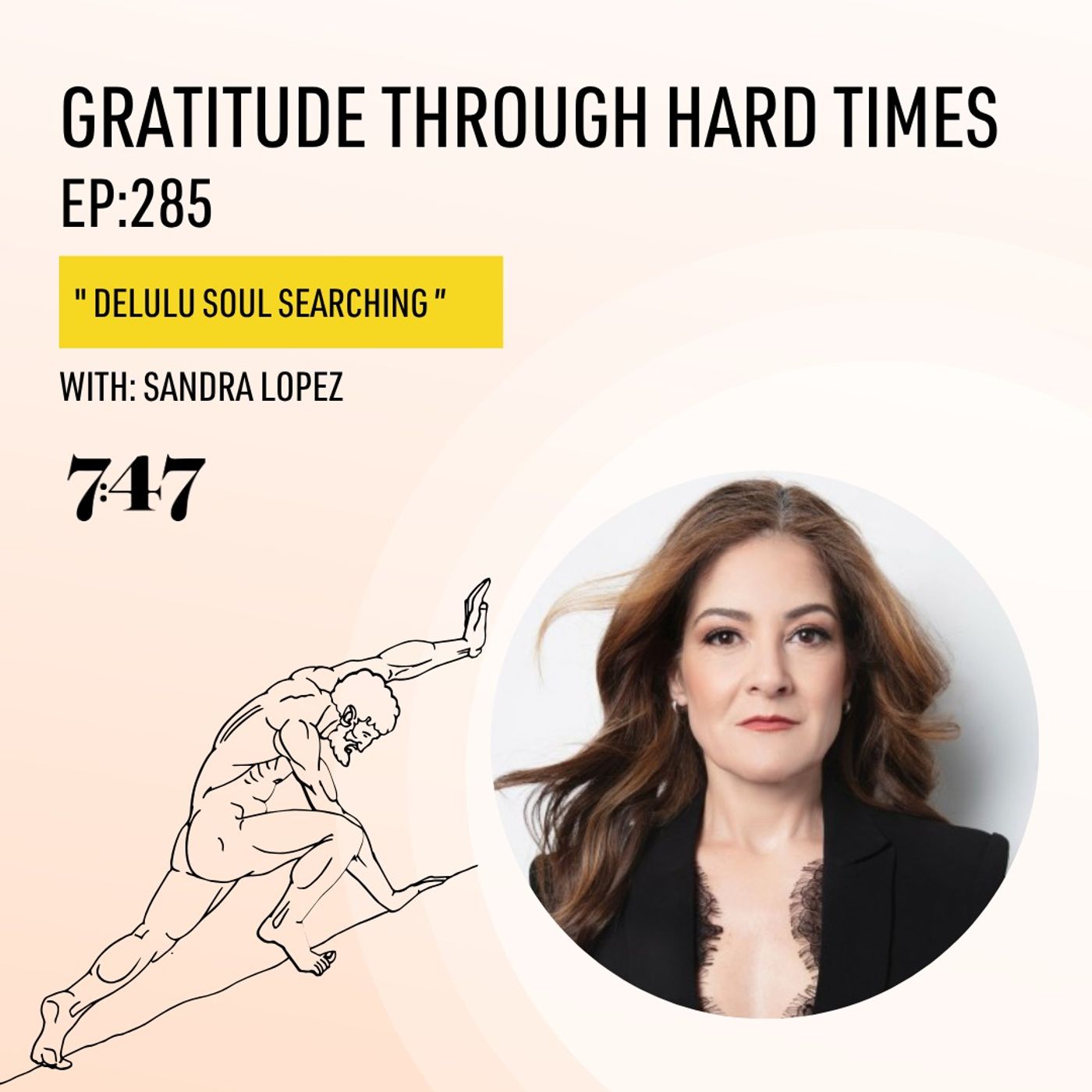
Abigail Beach shares two profound gratitude stories tied to her angel number 505. At 22 years old, pregnant at 27 weeks, she experienced a placental abruption caused by a rare blood deficiency that nearly killed her. Eleven blood donations - along with seven platelet and four fibrin transfusions - saved her life, though she lost her daughter Rayleigh during the emergency C-section. Years later, she discovered she could donate blood after standards changed, and now commits to four donations annually to repay the gift. Her sister Amber, the oldest of four 'A' sisters, powered her through this trauma by saying hard truths rather than offering comfort. Beach also reflects on how to authentically support others in grief - avoiding pity while honoring their stories, a lesson she applies when reaching out to parents who've lost children. Her angel number 505 connects to a best friend from high school, representing the human connections that sustain us through life's hardest moments.
She experienced a placental abruption at 27 weeks of pregnancy caused by a rare blood deficiency, which caused her blood count to drop from 11 to 7 in four hours - a state of internal bleeding that required emergency C-section surgery and 11 blood transfusions to save her life.
She has a rare blood deficiency that initially prevented her from donating under existing standards, making it heartbreaking that she couldn't repay the gift until a hematologist later informed her that the standards had changed and she could donate.
Her angel number is 505, which connects to a best friend from high school, representing the human connections that sustain people through their hardest moments.
She emphasizes sharing in their grief rather than offering pity, allowing them space to tell their child's story without sadness, and reaching out to say you understand their experience - she specifically avoids sympathy that makes grieving parents reluctant to discuss their child.
Amber challenges and presses people by saying uncomfortable truths they don't want to hear, prioritizing whether they walk away as a better version of themselves rather than whether they like her.
Our reviewer’s read on each dimension, with quotes from the episode.
The episode is almost entirely personal storytelling with essentially zero actionable insights for a B2B operator. The host explicitly disclaims any business relevance, and the handful of ideas that surface ('don't surround yourself with yes people') are pure platitudes.
If you wanted a conversation about a go to market strategy or something to do to better your career, this ain't the podcast for you.
I think that's a big mark on your character. You don't want to be in a room surrounded by a bunch of yes people.
The 'angel numbers' framing is a mildly interesting device for prompting personal reflection, but every idea that emerges - be purposeful, surround yourself with truth-tellers, live gratefully - is a recycled platitude delivered without any contrarian or first-principles angle.
only the good die young kept circling in my head like a bad track
you are who you hang out with
The host openly admits he doesn't know what Abigail Beach does professionally ('I don't know what she does in the real estate industry, but I think she's in marketing') and invited her purely for a touching conference moment, not for any demonstrated expertise or seniority relevant to B2B operators.
I don't know what she does in the real estate industry, but I think she's in marketing. But we're not going to be talking about go to market strategy at all.
I was the youngest of my parents, were tired and I got away with everything probably because I talked faster than I ate.
The personal medical narrative contains genuine concrete specifics (blood counts, transfusion numbers, exact ages and dates), which is the only real evidence in the episode; there is zero business data, named metrics, or professional case studies of any kind.
I went from an 11 to a 7 in four hours. So I was bleeding to death.
you had 11 blood transfusions, you had seven platelet transfusions, and then four fibrin
The host shows genuine craft in personal interviewing - catching a verbal distinction the guest made and pressing it ('You said you don't take life more seriously, it's that you take your purpose more seriously') and asking emotionally precise follow-ups; however, there is no challenging of any claim and no productive disagreement whatsoever.
After Brooke passed away, who did Abigail become?
You said that you don't. After her passing, it's not that you take life more seriously. It's that you take your purpose more seriously. What is your purpose?
Computed from the transcript - who did the talking, and the words that came up most.
"So many things about our life are numbers." This simple principle serves as the heartbeat for a life dedicated to authentic human depth. In a world optimized for digital efficiency and "frictionless" convenience, the true currency of a meaningful life remains the unscalable power of independent thought, presence, and intentional effort. In this episode of Gratitude Through Hard Times, Abigail Beach explores the growing cultural movement of human connection, healing, and the unexpected ways numbers anchor our lives. Abigail shares insights from her personal journey, including navigating a life-threatening placental abruption at age 22, the heartbreaking loss of her daughter Rayleigh, and the long road to paying forward the anonymous blood transfusions that saved her life. Together, the conversation dives into how we show up for others during grief, the power of people who challenge us, and how a chance moment sharing "angel numbers" at a housing innovation conference brought an entire auditorium to life.
Transcribed and scored by The B2B Podcast Index.
Abigail Beach: 11 individuals who saved my life by donating blood. So I have Those group of 11 individuals that I will never know. I could pass them on the street and I wouldn't even know it and they saved my life. I'm very grateful for those 11 individuals and the, uh, situation that surrounded the events of me needing blood donations and then my sister for powering me through that moment in my life and then even continuing on from there.
Narrator: Foreign. You're now listening to a new episode of Gratitude Through Hard Times. Gratitude instills humility. Gratitude removes ego. Gratitude helps empower the best in others around you. Our goal is to guide individuals and companies to practice gratitude so you can live a longer, uh, happier and more successful life. Get ahead of life with connection and purpose. This is Gratitude Through Hard Times with Chris Shambra.
Chris Shembra: Well, good afternoon, ladies and gentlemen, and welcome back to another episode of Gratitude Through Hard Times. It's your host, Chris Shembra. And today spring is springing in New York City. It's Tuesday, May 12, and we are just so excited to be recording what I think will be a very unique episode of this podcast. And so to all the loyal listeners who have been supporting this podcast for over eight years, welcome back, friend. It's good to see you. Some of my favorite moments throughout the week are when you email in your thoughts, questions, comments and concerns of today's episode guests. And I hope that this one you truly love and it hits you right in the soul. It's good to see you, friend. To all the new listeners out there, I have no clue how you stumbled upon our little corner of the universe. Maybe you googled today's illustrious guest. Maybe you were shared this episode from a friend as a vehicle for them to say, I see you friend. You matter, I love you. Whatever it took you to get here, I hope you join us for the journey you know. By the end of this podcast episode, I hope you click that subscribe button and join us along for the ride. Take a look back through the podcast episode archives and you'll see our close to eight year commitment bringing on hundreds of the world's great leaders just to share the human stories of how they got to where they are today. I invite you to join, get a cup of coffee, grab a glass of wine and get strapped in for a really human conversation. If you wanted a conversation about a go to market strategy or something to do to better your career, this ain't the podcast for you. Today, we're just talking about life. Now. I met today's guest in a very unique way. I was speaking at the AIM conference, the Apartment Innovation and Marketing Conference in Huntington Beach, CA last Monday, May 4, 2026. First of all, what a conference. If you're in the multifamily real estate industry, this is the conference to be at some of the nicest group of people talking about the smartest bunch of things to help you in your multifamily career, technology, resident experience, net operating income, the whole nine yards from the marketing and innovation side. So shout out to Steve Lefkowitz and Dennis Cogbill and Ash Bell and Michael Bowman for inviting me into that great, great, great experience. Now, I was the opening keynote speaker. Barbara Corcoran was the closer. And in the middle of my keynote speech on the first day, we got to a place after I was talking about pasta sauce, we got to a place where we talked about how grateful I am that my entire life revolves around cooking pasta sauce for people all over the world for the last 11 years, where I put the pasta in the pot at 7:47pm to cook the pasta al dente. Al dente is Italian for to the tooth. It's pasta that's not overcooked, where it becomes mush and not undercooked, where it stays hard. It's just a little bit in between. Al ah dente. It's a little moment of friction which is a metaphor for human connection. And I'm telling the audience that I get text messages and calls on a weekly basis from folks like you at 7:47am and 7:47pm saying I'm thinking of you. They looked at 7:47 on the clock and it reminded them to pause and it made them shift how their day was going. And I get those every day. And so in our keynote speech, we then started talking about angel numbers, of which our attendees look at a clock every single day and they're reminded of something. And today's guest was one of the people that we called on to share their angel number and their story made the room come alive and connect in the most amazing way. And today, today's guest, we're going to share what that angel number is. We're going to share that story about why it is, and we're just going to talk about life. Abigail beach is our guest today. I don't know what she does in the real estate industry, but I think she's in marketing. But we're not going to be talking about go to market strategy at all. We're just going to be talking about Abigail, the person. So without further ado, let's welcome, Abigail, to the podcast. It's great to have you here, new friend.
Abigail Beach: Hi Chris. Thank you for inviting me. Love to be here.
Chris Shembra: Without giving details of what we talked about in that room, what made you say yes,
Abigail Beach: you as a person? I feel like, you know, I said a few years ago that if I ever got the opportunity to speak about two specific events in my life that I would speak about them. Because I, like you said, creating that human connection is so important. And so I thought to myself, I can't say that I'm true to myself if I don't take this opportunity and run with it. So that was my biggest reason.
Chris Shembra: Well, thank you for saying yes in a world that oftentimes defaults to no. Mhm.
Abigail Beach: You're welcome.
Chris Shembra: You said yes. Now, Abigail, we always have to kick off our podcast with one simple question. A little bit of a detour before we get to angel numbers. You heard the question in person. Our loyal listeners have heard this question far too many times. But for all the new listeners on the call, we like to start off our podcast by asking a very simple gratitude question that we first asked around the dinner table on July 15, 2015. That's a story for another day, but we've been asking it every single day of our life ever since. So to kick off, Abigail, if you could give credit or thanks to one person in your life that you don't give enough credit or thanks to or that you've never thought to thank, who would that be? Not associated with your angel number, who would that be?
Abigail Beach: Yes. So actually it's hard for me to choose just one because I actually have 12. One of them is my sister, my oldest sibling. I'm the youngest of four, so she is my oldest sister. And the uh, second are 11 individuals who saved my life by donating blood. So I have Those group of 11 individuals that I will never know. I could pass them on the street and I wouldn't even know it and they saved my life. So yeah, it's like it's kind of a two part question for me. I'm very grateful for those 11 individuals and the situation that surrounded the events of me needing blood donations and then my sister for powering me through that moment in my life and then even continuing on from there. So I mean we could deep dive into so many things with that.
Chris Shembra: First of all, before we get to the 11. Mhm. What's your sister's name?
Abigail Beach: My sister's name is Amber. I am, I'm four A's. We have four girls in Our family, and we all start with a. And our dog was even an Amy when growing up.
Chris Shembra: And how did your sister. Because there's a fine line between a sister being a nudge or a nag and you as a sister thinking like, oh, uh, she's just, you know, saying this to say this as a sister. But it sounds like how she said the things that needed to get you through your hardest moments were well received. How did she best serve you in that moment that made you listen?
Abigail Beach: She said the things that I didn't want to hear. She's very good at reading me and reading several people honestly. And she will make the situation very uncomfortable if, uh, she thinks that will be bringing out the best part of yourself. But she does that with everybody. She challenges and presses every single person she comes across because she doesn't. She doesn't necessarily care if you walk away loving her or hating her. She wants you to walk away being a better version of yourself. And she just does an amazing job doing that.
Chris Shembra: What a metaphor for life. Do you think we surround ourselves more in life in general with, like, people that challenge us or people that enable us?
Abigail Beach: I think that's a big mark on your character. You don't want to be in a room surrounded by a bunch of yes people. That is not going to make you be the best version of yourself. But there are those people in the world that do want to be surrounded by yes people. So I think it's, you know, just as the people you hang out with, you're always told growing up, you are who you hang out with. And I think that as you become an adult, you recognize even more so that you can define somebody's character by who you see them around. Not because the person's making a poor decision, but because of how they're allowing you to make a poor decision and not calling you out on it. So I try to say that I'm not around. I don't surround my people myself with a bunch of yes people. I surround myself with as many Ambers as I can find.
Chris Shembra: Well, cheers to Amber, you know, if Amber, or for all of you that are watching that love to play the role of an Amber in others lives by challenging assumptions, helping them reveal hidden insights, and saying the things that others don't want to hear. I know how challenging that can be for you. Sometimes you see a truth for others that they don't see for themselves yet. And there's oftentimes a disconnect between what you say and what they're willing to believe. And act upon. There's sometimes a distance, whether it be time or a physical distance, that's created by saying the hard thing. Keep going. The world needs more truth tellers, and sometimes the truth hurts. And it sounds like Abigail was given the gift of amber at a very young age. That's pretty cool.
Abigail Beach: Yes.
Chris Shembra: And I know some of you, and you have. Yes. People around you on your leadership team. So I'm not going to call anybody out that's watching, but, like, we're clocking it, folks. We're clocking it. Yeah, we're clocking it. We're clocking it. Okay. I'm the dorkiest Gen Z wannabe ever. Okay. So, abigail, quick detour. 11 people saved your life during a blood transfusion when.
Abigail Beach: Yes. I was, uh, 22 years old. I only ever wanted to be a mom, so. So my husband and I, we, you know, got. We did the whole, you know, thing that people. I don't know, I don't want to pigeonhole anybody, but that was my dream, was to be a mom. We got married, we immediately started trying to have children. And in the course of my pregnancy, I sustained a placental abruption. So when I thought I was just having food poisoning, my husband had to rush me to the emergency room. You know, four in the morning, heard the worst news of my life. And this amazing nurse, who is still a part of my life, sat at my bedside the entire time through this event. And we thought we were just going to have to go through normal Labor. I was 27 weeks along, and there was no heartbeat. And they knew that I was. I had had this placental abruption, so they thought I was just going to go through the labor. And then the maternal fetal medicine doctor came in, looked at my blood, my total, uh, blood count, and I went from an 11. So with your blood count, you want to be at least a 12, right? Everybody has enough. You know, that's the numbers. Everything's in numbers. That's what's like find so interesting about your 747, because so many things about our life are numbers. So you want it to be an 11. And the terminology that's used is 8 is the gate, meaning if you go below 8, you're essentially bleeding to death. So when they pulled my numbers, I went from an 11 to a 7 in four hours. So I was bleeding to death. So they had to immediately go in and do a C section. And at that point, I was in desperate need of blood and plasma and fibrin. And on top of everything else, losing my Daughter. I looked down at my arm and I just had all these basically track marks because they were just pumping me full of blood and all of these things. And I just remember thinking like, my goodness, like, I never in my life have donated blood. And I'm just getting blood, like so many people's blood right now. And I had gone to my post op six weeks later, and the doctor, um, sat there and he counted and he said, you had 11 blood transfusions, you had seven platelet transfusions, and then four fibrin. So it was those, each of those individuals making a conscious decision to donate their blood, their plasma, their fibrin. And that's what saved my life. Had it not been from them or, uh, for them, I would have died. So it's one of those moments of, you know, I'm so grateful. And then I found out after several tests that I actually have a very rare blood deficiency that caused my placental abruption and it would actually prevent me from donating blood. So I couldn't even repay the gift that I wanted to do. And that was heartbreaking for me because I'm like, I want to save people's lives. That's, you know, if my life was saved by blood donations. So several. I also want to do that. And I went several years knowing this, and then because of another thing that happened in my life, I had to actually go to see a blood specialist, a hematologist. And I was discussing with him how devastated I was that I couldn't donate blood. And he looked and he was like, you can donate blood. Those standards were changed. I'm like, are you kidding me? So now I donate blood. So I wasn't able to. And I am able to. So yes, it's wonderful. Donate blood.
Chris Shembra: Donate blood, folks. Well, I mean, yeah. What a frustrating thing to be the recipient of someone's anonymous donation but not be able to pay it forward in your own way.
Abigail Beach: Mhm.
Chris Shembra: When you couldn't donate blood, was there a way that, like, you gave back or paid forward that like, was adjacent to what was happening?
Abigail Beach: No, not really. I had wrote to the Michigan Blood bank association, uh, and let them know my story, and I believe they published my story. So it was like giving more attention to the issues. But as far as, you know, I never did. I was. I'm kind of terrified of needles. So when I thought about, well, I could volunteer, um, at a, you know, blood bank or something like that, give out cookies so that people don't pass out. And it's honestly, when I'd Reached out to them. They have so many volunteers that they were like, yeah, we'll call you if we need you. I'm like, okay. So, yeah, I tried, but no, not until I was actually able. And I make sure, like, my goal every year is at least four blood donations a year. So it's kind of every quarter I donate, I go and donate blood.
Chris Shembra: Beautiful. I also, for all those who are watching that feel the urge to give, but have ever been rejected by a, uh, nonprofit for a volunteer opportunity because they're just too booked and busy with volunteers. A, let's let that serve as a reminder that the world is filled with really, really good people. We just don't pay attention to the good enough. And then B, you know, let's figure out ways that we can actually go and initiate acts of giving ourselves so that we don't have to wait for an actual algorithm or, uh, you know, some kind of, you know, group to like, allow us to give. I mean, there's nothing that stands in the way of just being a good giving, generous person than like actually being told, no, we don't want your service here. M. Crazy.
Abigail Beach: Yeah, that's crazy. We have enough.
Chris Shembra: We have.
Abigail Beach: Yes. That's happened a couple of times.
Chris Shembra: Yeah.
Abigail Beach: And it kind of, you know, it was a very stark realization, like, wow, there are people out there that are willing to give up their time. The most expensive thing we have, and volunteer. So that was very. Yeah, uh, it was good. It was a sad and happy thing.
Chris Shembra: Time, the most expensive thing we have. That's going to wrap us over to time angel numbers in a sec. What was your daughter's name?
Abigail Beach: Rayleigh. Thank you for asking.
Chris Shembra: Rayleigh.
Abigail Beach: Rayleigh.
Chris Shembra: And you lost her during childbirth?
Abigail Beach: Yes. Mhm. Yes. And it's very, it's. And I think that of anything else provides another connection. And you find all of these other people who also experienced one of the most horrific moments in my life. And having those moms reach out to me was also very. Just amazing. I was. Love was poured into me at that moment and it was wonderful. It was sad that we had to bond over such a horrific incident. But it was nice to know I wasn't alone.
Chris Shembra: When people go through really hard times, sometimes people who are not going through the hard times don't reach out because they don't know what to say or do or ask. What is a way that a human can support another human in an authentic way in their hard time? Or is that different per person or like, like, I'll never know what it's like, to lose a child like that. How can people show up for others best in that way?
Abigail Beach: Well, and like you said, it can be difficult because it depends on your proximity to the person before the event. But there are exceptions. So for me, personally, I've always been a person who can connect with anybody. And any outreach, I accepted. I had neighbors who were making me chocolate chip cookies, and I'd never met them before in my life. And they were just dropping them off because they'd heard what had happened. And then I had. We're a farm community. So I had an individual that my husband knows, and the farmer's mother wrote me the most beautiful letter. And she had not only lost her own child, but she also was a maternity nurse for her entire career. So the letter that she wrote to me, I still have it. It's in my jewelry box. I see it all the time. So that was beautiful. But then, honestly, it was just. I remember going to my vet, and I had these kittens, because, again, we're on a farm, so these kittens are always being born. And I boxed them up, and I took them to the vet because I had this maternal love that I just couldn't put on anything. And so I just wanted to save these kittens, so I took them to the vet. And I'm sitting there, and the vet comes in, and she sits down, and she starts telling me about. That she heard about our situation and that she, too, also lost a child, but her child was lost at nine months. And we just sat there and cried in a veterinarian wellness checkup situation with these two kittens. And it's just. I never met this woman in my life, and she just came in and just was immediate about telling me her story and kind of sharing in that grief with me. She wasn't trying to dismiss it. She was trying to give it authority and saying, you know, this is how we can connect. This is terrible, but I'm gonna sit in your grief with you. And I just. I don't want to say that every person will accept it the same way as I did, but I think if you just. The approach that you make based on the proximity to the person, then also shared experience. I mean, anytime I have the opportunity, when I find out about a person who is experiencing the loss of a child at the same time that I was at, I reach out to them and just to let them know, you know, I share in your grief. If you need anything, please reach out to me. I'm here to help you. Any of your emotions are Justified, you know, just giving the person the space to be empathetic with them. And because that's the thing, too, at least for me. The one thing I did not want was somebody's pity or sympathy. Uh, and pity can kind of. There's that fine line, right? Because I would say Rayleigh's name and I would say something about her story, and immediately their faces would fall and they're. I'm so sorry. I'm so sorry for your loss. And that's wonderful. But at the same time, it can make a parent who's grieving almost not want to discuss it. Because the last thing we want to do is be pitied. We just want to be able to talk about our kid. It's like. And I just like talking about Rayleigh. Like, you know, I still remember her in utero and hearing, you know, the Irish dancers at Christmas time. We were watching that documentary or the Irish Celtic women singing, and she was going crazy in my stomach. And every Christmas, I tell that story to my children, and they love it. And there's no crying, there's no pity. It's like, that's the memory that I have of her. So it's just nice to be able to allow somebody to share those stories.
Chris Shembra: Thank you for that.
Abigail Beach: You're welcome.
Chris Shembra: Cheers to the Irish jig.
Abigail Beach: Yes. Got her going.
Chris Shembra: Make dogs and babies and adults. And I just think it makes a lot of people happy.
Abigail Beach: Yes, I think so. 100%.
Chris Shembra: Now, Abigail, we met last Monday, May 4th, because at about minute 28 in my keynote, I paused after telling a story about pasta sauce and how I, you know, put the pasta in the pot at 7:47pm to cook it al dente. And how I see 7:47 everywhere now. You know, I see it. I saw it on the phone this morning. I didn't take a screenshot. I see it on receipts. I see it on. I see it in people's phone numbers who ghost me, by the way. Pastor Jeremy from Manchester wants me to come to Manchester next month for a keynote, and he's ghosted me, but he has 747 in his number, so I'm keeping the hope alive. Anyways, we looked out at the audience and by the way, this was the very aim, was the very first time I thought of doing the angel number thing.
Abigail Beach: Really?
Chris Shembra: Yeah.
Abigail Beach: I love it. That was great.
Chris Shembra: Yeah, it was fun.
Abigail Beach: That's interesting. Right place, right time.
Chris Shembra: By the way, just gratitude to my friend Matt and his screenshots of his father that he sends to me almost every single week. Was one of those screenshots that was up on the. Up on the screen that day. That was the first time that I've, you know, put that out publicly. And his father passed away that day. Wow. Or sorry, father had. Yeah, father had passed away that day. The day that I put him up on, on the slide in the keynote, he passed away. Isn't that crazy?
Abigail Beach: It is. It's insane.
Chris Shembra: And I had reached out to Matt the previous week to say, can I have you on my podcast to talk about your dad?
Abigail Beach: Mhm.
Chris Shembra: By the way, shout out to Matt's literal new book that launched the next day.
Abigail Beach: Wow.
Chris Shembra: 5 5.
Abigail Beach: That's 5 5.
Chris Shembra: This launched 5 5.
Abigail Beach: Okay, so you have to read that one.
Chris Shembra: Yeah, you're gonna have to read it. Make it matter. Unlocking human potential through the mattering mindset. Every Monday matters. We did this on a Monday together.
Abigail Beach: We did.
Chris Shembra: Whoa. Okay. There's a lot going on anyways, so for all those that are listening, thank you for being in that moment with us. So I looked out at the audience and, you know, we gave him a little four minute, you know, turn to your neighbor and talk about your time and what you remind yourself of during that time. And we called him. Some folks. Some folks had like 11:11. Um, some folks had 1, 2, 3, 4 o'.
Narrator: Clock.
Chris Shembra: That reminded them of a touch of whimsy.
Abigail Beach: That was cool.
Chris Shembra: Uh, some folks had 429 and 621 and 747 and all these kind of different things. And then I called on Abigail and I'll just let you share what your number was. Why? And the floor is yours.
Abigail Beach: Awesome. Thank you. Yes, My number is 505. One of my best friends in high school passed away when we were 16 and her birthday was May 5th. And so throughout my life, I had 505. Always I would see 505. I would have an email come through or, you know, it was crazy. Honestly. One of the things that I always. My ex. My milk will expire on 505. You know, just these weird things, you know, that she would come into my life and I shouldn't share this for, you know, identity purposes, but my debit card pin, you know, was similar to that number. And so a few years ago, several years after we graduated, my friend and I, who we had been in high school together with our friend who passed away. We were at, uh, a hotel in Chicago for her bachelorette party and she needed me to go get ice. So she handed me her debit card and she said, hey, yeah, my pin is or I asked her what her pin was and she said 05 05. And I just looked at her and I was like, is it for Brooke? And she was like, yeah. And we both just started crying and it was just crazy to me that we had never talked about it. It was just, you know, something that we unconsciously did, but consciously. And she had the same number as me. And we both think about Brooke because of that. And it was just that moment that we connected and we just. And we didn't even realize. So yeah, that was crazy. Mhm.
Chris Shembra: Take me back to 16 year old Abigail.
Abigail Beach: Oh my goodness, she was a riot. Oh my word. Yeah, so I was the youngest of my parents, were tired and I got away with everything probably because I talked faster than I ate. And yeah, I just got into a bunch of trouble and I feel like I was probably a good kid. I didn't care about school very much, but I was good at school. And then yeah, I had this amazing group of friends and we were on the swim team together. We spent summers together, you know, in the. My hometown that I'm from, I'm from South Haven, Michigan. Go Rams. And you would drive around. There's a South beach and there's a North Beach. And the thing that kids do, and I believe they still do it to this day, is you just get in your car with your girlfriends and you just drive around from one beach to the other beach. Maybe not in today's age because, you know, gas is, you know, $8 a gallon or whatever it is. So we would just drive around and I still remember Brooke driving in her Pontiac four door, cute little silver car. And we would be driving and listening to rap music and she would push the bass and treble all the way up to try to get the. And she didn't have subs or any. It's just one of those memories that I have of her because she was just this cute little teeny tiny thing and just wanted to push that base out. So yeah, that was the good childhood.
Chris Shembra: You were a riot. You got away with a lot of things. You talk faster than you ate. You're a good kid that got into a little bit of trouble. But you were pretty good at school and you love treble and bass in your car.
Abigail Beach: Yes.
Chris Shembra: After Brooke passed away, who did Abigail become?
Abigail Beach: You know, I think that I grew up a lot faster than I probably would have because I took. It's crazy. I didn't take life more seriously. I took my purpose in life more seriously because Brooke wasn't there to live her life. And that wasn't fair to me. You know, the adage, only the good die young kept circling in my head like a bad track. And I just remember thinking, this, uh, day is a day that she doesn't get to live. And she. I'm not kidding you. You know those people in high school where they say, like, oh, my gosh, they're the best person. Everybody loved them. This was her. Like, I'm not trying to say anything negative about myself, but that wasn't me. You know, had it been the same way, people might have said that to be nice, but, I mean, there were moments where I was just, you know, a, uh, hellion. And, you know, it's just maybe my experience. Your experience with me wasn't always sunshine and roses, but with Brooke, it was. Everybody loved her. She was just the best person there was. Nobody. She didn't have a mean bone in her body. And I just remember thinking, you know, how, uh, grateful. And I think that was the hardest part about last week, with talking to you about this and trying to have that vulnerable moment. And I looked at you and I said, I don't want to cry, because I didn't. But truly, what I'm grateful for with Brooke, and it's such a hard thing to say, because I'm not grateful for her dying. I'm grateful for what her death brought to me. Because every day I am here, and she would have given anything to be here, and she isn't. So it's. I need to live my life gratefully and with grace and with attention, because she doesn't get to. And I don't think very many people are able to live their life knowing that somebody that they were so close with can't live it. And we were the exact same age. So it's, you know, every year, the anniversary of her passing and then the anniversary of her birthday, I always reflect on the fact that she would have given anything to be here. And so I have to. It's like, what's the worst case scenario? The worst case scenario is pretty bad. So I'm going to make this life amazing. She would have. So. Yeah.
Chris Shembra: You said that you don't. After her passing, it's not that you take life more seriously. It's that you take your purpose more seriously.
Abigail Beach: Mm.
Chris Shembra: What is your purpose?
Abigail Beach: I think my purpose is trying to find a way to bring joy into the people's lives who I'm close with. I just want them to know how important their life is and how they should bring joy into the world. In any capacity that they can. And if their capacity is just bringing joy to their family, then that's great. But if they have a larger audience and they can bring joy to a community or an industry, that's what I want them to do. I just want everybody, I truly just want everybody to be happy. Because I feel like happy people, you know, kind of like the Legally Blonde moment. Happy people don't kill their husbands. It's just happy people just want to bring more joy and happiness to the world. So I feel like my purpose and every single day that I live it and leave it, I want to walk away. That there was one moment of joy just makes your life more purposeful. I feel like,
Chris Shembra: Abigail, um, you have been through hard times as all of us, you know, have listened to your story. Life hasn't been super linear and easy and predictable one step after the other, but you've chosen joy and a positive mental attitude and telling good stories every step of the way. And I think that's such a learning lesson, is that sometimes the hard things that we go through actually make us the most grateful, the most generous, the most giving. Mm. It's a great paradox.
Abigail Beach: Yes. Mm. Mhm.
Chris Shembra: I want to start kind of looping back around. You've shared an amazing couple chapters in your story about Amber, about Brooke, about Raley, about so many beautiful things. What haven't you said? Hmm.
Abigail Beach: M. Well, I mean, I. I don't know. I think it's. There's one story I could share with you. It actually happened at AIM in 2025. And that's why I just. I keep telling myself, I think I need to go to AIM every single year. I mean, I want to. Anyways, it's an amazing conference, and because of the time of the year, it's around, it's May 5th. So last year when I was there, this awesome vendor was handing out permanent jewelry certificates. So he would, you could go. The last day of the conference, you get permanent jewelry put on. And I have this claustrophobic thing. Like if I have. If I sleep with my rings on or something like that, I just wake up claustrophobic. It's kind of crazy. And so I didn't really like the idea of having it on my wrist. So I was like, I want to go and get one. I'm going to get it on my ankle. So I go down to the lady in the booth and I was like, hi. And I was like, yes, I would actually like to get one on my ankle. She's like, oh, yeah, that's Perfectly fine. We can do that. She was like, just pick out your chain and we'll do that for you. And I was like, okay. I was like, well, I really like this one. And she was like, oh, our Brooklyn. We really don't suggest that one on the ankle. We think it would be more on your. And I was like, what did you just call this? And she said, oh, that's our Brooklyn. And I'm like, put it on my wrist. Like, put it on my wrist right now. And it was because it was Brooke's birthday, and my, uh, boss at the time. She's still my boss. Was there also, and we were sitting next to each other a couple of weeks ago, and she was like, hey, you have the same bracelet on as me. And I was like, we picked the same chain. And so then I told her the story, and that built another connection with somebody that I had a connection with, and it just. It was just one more thing. And then after coming back from your conference, it's, you know, it's the ripple effect of what you're doing and the stories that you're allowing people. Giving the space for people to tell. I was talking to somebody, and I was explaining the thing, and he was like, I have an angel number. And I was like, you're kidding me. And so it just started this whole much larger conversation of finding all these people who also have angel numbers and then the story behind their numbers, and it just gives you such a glimpse into their life, and it's just. It's so cool. I love the connection. And I just think that the ripple effect that you're having is awesome. It's such an awesome thing.
Chris Shembra: If 0505 wasn't your angel number, M. What would it be?
Abigail Beach: 1 14. My daughter's birthday. So I have two. I couldn't talk. That was the thing. I was like, I can't talk about both of them. I'm gonna cry when I talk about Brooke. I'd cry even harder if I talked about Rayleigh at the same time. So Rayleigh's birthday is January 14th. Yeah. So her. My number is 114 for her. And I see them both. I see them on a daily basis.
Chris Shembra: If Amber, Rayleigh, or Brooke were on this podcast with us right now, which one would you say something to, and what would you say?
Abigail Beach: I think I would say something to Amber. Truly. I mean, she's the one that helped me get through losing Brooke. She's the one that helped me get through losing Rayleigh. She was the one who, you know, helped get me out of the depression that I was getting myself into after Raeley. And she was the one that I got to see her fight for people that they didn't even realize she was fighting for them. I'm talking about an entire community of individuals. And Amber sat across the table from a man who could have fired her. And when he asked her a question and was, you know, trying to basically have her curtail her opinion about an entire group of people, she stood firm and said, absolutely not. And so she did that without these people ever knowing. And so she fights for people that aren't even in the room because it's what's morally correct for her. And because of that, and because she's eight years older than me and she shares in her experiences. And, you know, it's just so funny because she's always. I'll call her and I'll say, oh, my goodness, this is what's happening. And she was like, yeah, welcome to there. I remember when that was me eight years ago. And so she helps me in the little ways and then she also helps me in the big ways too. So, yeah, it would be just, you're a badass and just keep going. And she's, she's raising, you know, three children, but two daughters, and they are just the strongest headed women. Amazing. So, yeah, just amazing. I think I forgot your question because I could just talk. I could talk about her for an hour.
Chris Shembra: You answered it.
Abigail Beach: Uh, awesome.
Chris Shembra: Um, well, Abigail, thank you for coming on. Any last words in closing?
Abigail Beach: Keep doing what you're doing and invite me to dinner. You already did, but I'm going to have to take you up on that dinner. I got to try this pasta sauce.
Chris Shembra: Got it. It's pretty good. Red, Lil, spicy arribiata. Love to have you. And for anybody who's watching, love to have you as well. Well, folks, what a journey, huh? Huh? From Amber to Raley to Brooke and back to Abigail. I just hope you feel connected to this story. You're all, we're all doing things. Life's hard. We're all going through it. But I just hope today proved that you're not alone in whatever you're going through there. There are people who choose purpose every single day, regardless of what's going on in the world around them. And you're meant for that. If you're watching this, my invitation to you just like I have 707, just have just how Abigail has 114 and 05.05 and so many other people have so many different numbers, is to really, truly reflect. What are your numbers? What time of day invites you to pause, and what is it inside of you that you are remembering during that pause? Who is it around you that you're thinking about during that pause? What inside of your situation right now can you shift into a positive that could become a story that inspires others to live a better life Tomorrow? If you do those three things during your next moment of pause, the world's going to be a better place. That's all it takes. Nothing fancy. Just you being here in the moment, reminding that you are enough. So thanks for tuning in to all our loyal listeners. How was that? Pretty different, huh? Huh? I hope you liked it. I had a blast. As I mentioned, some of my favorite moments are when you reach out with some of your favorite moments from today's episode. So keep that up to all the new listeners. What's up y'? All? There's a standing invite on this podcast. If you want to come to New York City the same time that we're hosting a gratitude dinner and you reach out and say that you're coming, there's a seat for you at our dinner table. It's how the world goes around, one dinner table at a time. We invite you to click that subscribe button if you enjoyed this episode. Join the journey with us. Please Share this episode to a friend. Let it be a vehicle to let them know you see them. They matter. Their purpose is worth living for and chasing. So keep tuning in. We're going to keep bringing you these amazing conversations. I hope you're having a phenomenal day on our three member folks. It's your world. Go explore. We'll see you next episode.
Other episodes covering the same guests and topics, from across The B2B Podcast Index.
 A Legacy of Wisdom Across GenerationsTake Command: A Leadership Podcast · on Gratitude
 No Excuses with Justin BreenHoney, I Blew Up The Business · on Gratitude
 Are You Grateful for the Journey You Are Currently On? (A Journal Entry)The Journey with Jordan Paris · on Gratitude
 The Power of Gratitude: Celebrating our 50th Episode!The Needle Movement Podcast · on Gratitude