
Exceptional Leadership · 2026-08-02 · 25 min
Key moments - from our scoring
Substance score
27 / 100
Five dimensions, 20 points each
This episode draws heavily on Viktor Frankl's Man's Search for Meaning, using the Austrian psychiatrist's Holocaust survival and logotherapy framework to address why some leaders persevere while others collapse under adversity. Frankl's core insight - that humans retain freedom of attitude even when external control is stripped away - anchors a broader discussion on how emerging managers can build resilience by establishing a personal "why" larger than themselves. Hamilton explores three pathways to meaning (creating something, experiencing love and beauty, and choosing attitude toward unavoidable suffering) and argues that unlike religious practitioners who inherit meaning, secular leaders must deliberately construct their own value systems. The episode moves beyond workplace application into martial arts, community roles, and personal development, positioning leadership as inherently meaningful work that requires understanding its deeper purpose. Hamilton uses examples from his jiu-jitsu experience to illustrate how authority figures unconsciously mentor those seeking role models, and closes with Rudyard Kipling's "If" to reinforce themes of dignity under pressure and resilience through principled action.
Frankl observed that although prisoners had nearly all external freedom stripped away, those who found some sense of purpose - whether through hope of reunion with loved ones, completing unfinished work, or maintaining dignity - showed greater psychological resilience even under horrific conditions.
Logotherapy is Frankl's form of psychotherapy based on the idea that primary human motivation is the search for meaning; it posits that people can endure tremendous hardship if they believe their lives have purpose, making it directly applicable to building resilience.
The three ways are: creating or accomplishing something meaningful, experiencing love, beauty, nature or relationships, and choosing the attitude you take toward unavoidable suffering that cannot be avoided.
Religious practitioners inherit a framework of purpose and meaning from their faith tradition, while secular or agnostic leaders must deliberately construct their own value systems and philosophy to achieve the same sense of purpose that fuels resilience.
Sophisticated savages are leaders who are nuanced, calm, educated and logical under normal circumstances, but willing to roll up their sleeves, get down and dirty, and meet challenges head-on without fear when disaster strikes the organization or team.
Our reviewer’s read on each dimension, with quotes from the episode.
The episode recycles well-known Frankl concepts (meaning, freedom of attitude, logotherapy) without substantial new application to modern B2B leadership. While the host adds personal anecdotes (martial arts coaching, absent fathers), these are illustrative rather than revealing. Most content is motivational reframing rather than novel insight - the core takeaway (find your why) is standard leadership advice. Substantial portions are filler: intro praise-taking, book recommendations, and reading a full Kipling poem consume airtime without advancing substance.
People can endure tremendous hardship if they believe that their lives have a purpose
I think on both of those counts, the answer is yes. But as Viktor Frankl touched on, well, not touched on, he wrote a book on it. I think we have to have a reason, something bigger than ourselves
The episode is entirely derivative, offering no contrarian perspective or fresh synthesis. It summarizes Frankl's 1946 philosophy straight from the book with no reinterpretation for modern leadership contexts. The host's personal examples (martial arts, mentoring) are genuine but narrow; he never challenges Frankl's framework or explores tensions (e.g., does finding meaning through suffering risk enabling poor conditions?). The closing poem, while beautiful, adds ornament rather than originality. This is faithful popularization, not original thinking.
His philosophy could be summed up as one that was aimed at finding meaning in one's life. He developed a form of psychotherapy called logotherapy
Frankl famously argued that our final freedom is the ability to choose our attitude. And in any given circumstance
There is no guest on this episode. The host, Matt Hamilton, delivers a solo monologue summarizing Viktor Frankl's published work and offering personal commentary. Frankl is cited but not interviewed; he is a historical figure being quoted/referenced, not a living practitioner sharing operational insight. This is a solo narrative show, not a guest-driven conversation.
All right, team, welcome to another episode of the Exceptional Leadership Podcast. As always, I'm your host, Matt Hamilton
a gentleman that I thought was absolutely perfect to help us segue into today's episode is a guy called Viktor Frankl
The episode cites Frankl's concentration camp experience and his book Man's Search for Meaning with basic historical facts, but offers minimal concrete evidence or data relevant to B2B leadership. The host names his own martial arts gym practice and mentions 'late teens, early 20s' participants, but provides no metrics, timelines, or measurable outcomes. The list of possible leadership 'whys' is entirely abstract and illustrative, with no case studies, company examples, or quantified results. The Kipling poem is named but no data anchors any argument.
During World War II, he was imprisoned in several Nazi concentration camps, including Auschwitz concentration camp and Dachau concentration camp. Through one of its sub camps, he lost both of his parents, brother and pregnant wife during the Holocaust
I do martial arts. I've done martial arts for a long, long time. Um, jiu jitsu specifically
This is a monologue, not a conversation, eliminating opportunity for follow-up, pushback, or dynamic inquiry. The host asks rhetorical questions to the audience ('Why would we do it?', 'What is your why?') but never grapples with pushback or explores tension. He makes broad claims (e.g., religious believers have an 'advantage' in meaning-making, 'most are in leadership for themselves') without interrogating them. There is no guest to challenge, sharpen, or develop ideas collaboratively. The closing poem is read in full without critical commentary. As a solo narrative, this sacrifices the conversational craft that elevates B2B content.
So why would we do it? The question has to be, uh, but I'm of the view that anything that really matters, anything that really means something, is usually difficult
So the question is when? You are inevitably presented with suffering and it will come. Suffering is inevitable. That's what life does.
Computed from the transcript - who did the talking, and the words that came up most.
Every leader will face setbacks, criticism, uncertainty, and failure. The difference isn’t whether adversity arrives - it’s how we choose to respond. In this episode, I explore one of the most important qualities a leader can develop: resilience. Why do some people recover quickly from challenges while others become overwhelmed? What role do mindset, purpose, and meaning play in our ability to endure difficult circumstances? Drawing on the work of psychiatrist and Holocaust survivor Viktor Frankl, we discuss the powerful idea that while we can’t always control what happens to us, we can choose the meaning we give it. That choice shapes our resilience, our leadership, and ultimately the example we set for those around us. If you’re leading a team, navigating a difficult period, or simply looking to become mentally stronger, this episode offers practical insights into building resilience that lasts. In this episode you’ll learn: Why resilience is a defining leadership capability. Why some people appear more resilient than others. Viktor Frankl’s philosophy of meaning and choice. Practical ways to build resilience before adversity strikes.
Transcribed and scored by The B2B Podcast Index.
Speaker A: All right, team, welcome to another episode of the Exceptional Leadership Podcast. As always, I'm your host, Matt Hamilton. Delighted to have your company with me once again from wherever you might be listening to the show. From around the world, I am seeing record numbers of people tuning in, and for that I am eternally grateful. So for those of you who have left a nice review or shared the show, maybe told a couple of friends about it, uh, this is largely thanks to you. So I am eternally grateful. Now, today we're going to discuss the topic of resilience. Finding our reason, our why to help us get through the difficult times that leadership will undoubtedly present us with. And this is not just applicable for the workplace, it is, of course, applicable for our personal lives as well, because we know that plenty of challenges exist outside the walls of our workplace. And that is why what we discuss on this show is so relevant. Uh, really across the spectrum, not just work, but also our personal lives. Now, a gentleman that I thought was absolutely perfect to help us segue into today's episode is a guy called Viktor Frankl. He wrote a book called Man's Search for Meaning. He was an Austrian psychiatrist, neurologist and Holocaust survivor and spent quite a bit of time in the Nazi prison camps. And so if there is anyone who can tell us about resilience and finding meaning, well, I think it's going to be Viktor Frankl. I've got his book right here on the, uh, on the bookshelf for those of you who are watching the video. You'll see, and I've got a collection of books behind me, and I recommend that you do pick that one up, Man's Search for Meaning, if you'd like to have a sobering but a valuable read. So, without further ado, let's get into a summary of Viktor Frankl's experiences and then we'll discuss some more thoughts on this topic. So, Viktor Frankl was an Austrian psychiatrist, neurologist and Holocaust survivor. And During World War II, he was imprisoned in several Nazi concentration camps, including Auschwitz concentration camp and Dachau concentration camp. Through one of its sub camps, he lost both of his parents, brother and pregnant wife during the Holocaust. In the camps, Frankl observed that although prisoners had almost all external freedom stripped away, they still retained the ability to choose how they responded internally. He noticed that people who found some sense of purpose, whether through hope of reuniting with loved ones, completing unfinished work or maintaining their dignity, often showed greater psychological resilience, even under horrific conditions. So after the war, Frankl returned to Vienna and wrote Man's Search for Meaning, which combines his memoir of life in the concentration camps with his psychological theory. And his philosophy could be summed up as one that was aimed at finding meaning in one's life. He developed a form of psychotherapy called logotherapy, based on the idea that the primary human motivation is the search for meaning. His philosophy included several key ideas, and I've got a few of those here. Meaning is essential to human life. People can endure tremendous hardship if they believe that their lives have a purpose. Secondly, freedom of attitude. While we cannot always control what happens to us, we can choose how we respond. Frankl famously argued that our final freedom is the ability to choose our attitude. And in any given circumstance. He theorised that meaning can be found in three main ways. Firstly, through creating or accomplishing something meaningful. Secondly, through experiencing love, beauty, nature or relationships. And thirdly, through the attitude we take towards unavoidable suffering. Now, ah, he was of the view that suffering itself is not inherently meaningful. Rather, when suffering cannot be avoided, a person can still find meaning in how they choose to face it. Frankl did not suggest seeking out suffering or romanticizing it, but he was focused on our choice in, uh, that moment when it was forced upon us. And of course, he would have to be one of the most hardcore case studies I can think of. It does not get much worse than being in a Nazi prison camp. So that prompted me to delve into this subject a little bit more, and I wanted to talk to you all today about those, uh, thoughts and how it ties back into our leadership. As I say, I've got his book up here on the bookshelf. I do recommend that you pick it up. It's not a big book, um, fairly easy read in terms of the effort required, but it is, as I said, a difficult read at times when you consider the suffering involved. Some initial thoughts on this that I had. Why can some people persevere longer than others? I'm sure we've all noticed that. I'm sure you've noticed that some become despondent and tend to fall apart quite quickly when faced with adversity. But others seem to hold a lot more steadfast. Why? Why is that? And I think that we as leaders, ideally should possess a few qualities if we are to be deemed worthy of holding that position. We should be tenacious, driven, resilient, because people won't want to follow someone incapable of demonstrating those qualities. They need to be inspired through a display of strength. But can those things be learned if we feel that we don't naturally possess them. Maybe you feel like you don't naturally have those qualities in abundance. Maybe you're not naturally tenacious, particularly driven or resilient. And now you find yourself in a leadership position. Can you learn those things? Can we set the right mental conditions to optimise any tendency that we do have to be any of those things? I think on both of those counts, the answer is yes. But as Viktor, uh, Frankl touched on, well, not touched on, he wrote a book on it. I think we have to have a reason, something bigger than ourselves. We have to find our why. And ideally, our, uh, why should be linked to something larger than ourselves. This tends to bring greater meaning at a deeper level in the soul. You know, I was thinking about this. There's a reason why religion is as prevalent as it is. Whether you're, uh, Protestant, Catholic, Hindu, Muslim, Buddhist, whatever it might be. There's a reason that so many people in this world are religious. And that's because it brings purpose, it brings comfort, it brings a sense that we belong to something bigger than just ourselves. And it's perhaps a luxury that those of us who are agnostic or atheist, perhaps it's a luxury that we don't have. We have to find meaning elsewhere. We have to work harder, look more closely to find meaning in a world that can sometimes feel quite devoid of it. There's a lot of suffering, there's a lot of tragedy. So that faith, that religious persuasion that so many of us have, maybe it's a luxury, But I don't think it's an accident. I do think there's a reason so many choose faith, if it is indeed something you choose. M so with that in mind, what is our why as leaders? Because here's the thing, and if you've been in the hot seat for any length of time or you've held a senior position, even outside of work, it might be in a family, might be in a club or a community, you will know that leadership is hard for a number of reasons. Ultimately, everything is your responsibility. Everything good that occurs and everything bad that occurs under your watch. You will deal with difficult, ungrateful people. You'll deal with politics. And the reality is that you're often not paid that much more. You're not rewarded exponentially more than those who occupy senior positions underneath you, but don't hold any people leadership responsibilities. So why would we do it? The question has to be, uh, but I'm of the view that anything that really matters, anything that really means something, is usually difficult and so we, if we're to be in this long term, if we're to last, we might benefit from the development of a meaning that map for ourselves. And this will be highly individual. You'll have to determine what your values are. What is your North Star? This is a deeply personal thing and it will require some thinking. And as I said, if you've not got something bigger than yourself to base, uh, this thinking on, be it religion or philosophy of some kind, you'll going to have to work hard to come up with your own values to help guide you. But here's a few that I've put down and they are meant to be general in nature. And so bear that in mind as I go through these. Let's keep it in the workplace. Perhaps one of your reasons for doing this is because you know that some are not equipped to lead, but you are. Uh, doesn't mean that you don't feel fear or anxiety or any of those things, but some people are literally just not equipped with any of the personality traits or skills that you need to lead, whether that be social skills, you know, public speaking skills, organization skills. Sometimes personalities are just insufficient to do that particular job. So maybe you've been naturally endowed with those things. Maybe you want to positively impact people and your organization, therefore more broadly, but even beyond that, your community. Because the ripple effects that stem from the way you treat people from a position of authority do not stop just at that local level. They branch out. The butterfly effect, so to speak. Maybe you're of the view that as you progress through life and you learn more, perhaps it's reasonable that more is expected of you. Maybe it's reasonable that you should consider it a duty to pass on your learning to, to those who haven't had those experiences, to those who are not, uh, quite as far down the road as you. Maybe you've seen bad leadership and you've been impacted by it, and maybe you're of the view that too many are in it for themselves and you want to balance that out a little bit and counter that. You might just want to challenge yourself, be an example to others. Like your kids, for example, an example as to what hard work can lead to. Something for them to look up to and be proud of. And finally, maybe you want to. And, uh, this is a deep one, not just for the workplace. Maybe you want to help, be there for others in a more serious way. Maybe you want to fill a void left by others. Think absent parents. I told you this is a deep one. Now this is going to occur Outside of work. Think sporting clubs, community organizations. I'll give you an example. I do martial arts. I've done martial arts for a long, long time. Um, jiu jitsu specifically, and others. And one of the things you notice in all of those pursuits is that oftentimes people are searching for something. They have backgrounds that you're not privy to. And sometimes those backgrounds can be ones that contain suffering. And as someone who is a senior person by now in the gym, uh, I do see it as my role to bring those younger people along. Not to intimidate them, not to bully them and win just because I can, but to actually take an interest in coaching them and bringing them along. And this is particularly important from my perspective. Um, when you're dealing with young people, you know, people in that. That younger cohort, late teens, early 20s, people who look up to you as not only an older man but also a senior person in the gym, you have a responsibility. I have a responsibility to nurture and look after those younger people because I've been there. I'm sure you've been there. Doesn't have to be in a martial arts setting. It could be in a work setting or a social setting. You look up to people and how they treat you. Makes a hell of a difference, doesn't it? To your confidence? It's good to feel like you're supported. It's good to feel like somebody wants to see you come along and develop and win. Essentially, it's being a coach. But above and beyond that, you also never know what those people are going through in their personal lives. These young men that I speak of, that might be looking for something more in that environment. M Some of them might have absent fathers and be looking for good quality role models subconsciously. Maybe they don't even know they're looking for it. And so you might be. We might be more to people than we realize. And that's always important to bear in mind when you're in a position of authority, when you're a leader, you might mean more to people than you realize. And so suddenly your decisions have weight. What you say has real meaning to some people. And if you treat that as the privilege that it is, that's also. That's also a special thing. You have the chance to make a real difference in the lives of people who perhaps need it. And we shouldn't take that lightly. So to continue the serious note, perhaps, perhaps you relate to that especially because you've suffered. Maybe your purpose could be to turn that hurt that you see in others. And that you've experienced yourself into an inexhaustible source of fuel to do amazing things that most couldn't imagine doing simply because they don't have the drive to do it. That's the dichotomy of that. That suffering. It's a source of pain, but it can also be a source of fuel. So, to echo the sentiments of Viktor Frankl, how do you choose to use that suffering? Some people who haven't suffered are running on the emotional equivalent of standard fuel. And maybe you're running on high octane premium. What are you going to do with. Can be a blessing and a curse. But the choice is ultimately ours. So in closing, I would like to encourage you all to be sophisticated savages. Sophisticated savages. It's a term that I love. Nuanced, calm, educated, logical. But if the sleeves need to be rolled up, If disaster and suffering is thrust upon us or our organization, our teams, those we lead, that's when the savage comes out. Not afraid to get down and dirty, not afraid of a fight. That is, to me, what, uh, being a sophisticated savage is all about. And that's how I would like to encourage you to be. It's that dichotomy. You've got to be willing and able as a leader to dig in, Meet challenges head on, even if it means suffering a little bit yourself for the greater good. Now, I'm going to finish with a poem by a guy called Rudyard Kipling, and it's called if. I'm just going to log into my computer here and pull it up. I thought it was an ideal opportunity to share what I think is a pretty beautiful piece of writing and really poignant, given the topic that we're discussing. So this one's called if by Rudyard Kipling. And you can take a lot from this. It goes like this. If you can keep your head when all about you are, uh, losing theirs and blaming it on you. If you can trust yourself when all men doubt you, but make allowances for their doubting too. If you can wait and not be tired by waiting or being lied about, don't deal in lies, or being hated, don't give way to hating and yet don't look too good nor talk too wise. If you can dream and not make dreams your master, if you can think and not make thoughts your aim. If you can meet with triumph and disaster and treat those two imposters just the same. If you can bear to hear the truth you've spoken, twisted by knaves to make a trap for fools or Watch the things you gave your life to broken and stoop and build them up with worn out tools. If you can make one heap of all your winnings and risk it on one turn of pitch and toss and lose and start again at your beginnings and never breathe a word about your loss. If you can force your heart and nerve and sinew to serve your turn long after they're gone and so hold on when there is nothing in you except the will which says to them hold on. If you can talk with crowds and keep your virtue or walk with kings nor lose the common touch if neither foes nor loving friends can hurt you if all men count with you, but none too much if you can fill the unforgiving minute with 60 seconds worth of distance run yours is the earth and everything that is in it and which is more, you'll be a man my son by Rudyard Kipling. That one's called if and there are some themes in there that I think we would all do well to focus on from time to time. So the question is when? You are inevitably presented with suffering and it will come. Suffering is inevitable. That's what life does. But even more so as a leader because you're responsible in that position. My question to you is what are you going to do? What is your why? What drives you? A really good thing to think about for sure. Guys, thank you so much for tuning in. I really appreciate your company. Again, I'd ask you to share the show with some friends if you're getting value. Share it far and wide. Like subscribe, leave a nice five star review. Uh, and uh, I would be eternally grateful if you haven't yet, check out the website www.exceptionalleadershippodcast.com and uh, well, I think I've probably asked enough of you. Go and check out that content. There's blogs, there's all sorts of stuff on that and have a fantastic fortnight until we do this all again in two weeks time. See you later.
Other episodes covering the same guests and topics, from across The B2B Podcast Index.
 My Autistic Son Taught Me to Be a More Resilient Leader - with Adrian Jones, Goldman Sachs - Chairman & Co-Head, Global Private Equity, Asset ManagementImperfect Leaders · on Leadership Resilience83 / 100
 Why Do Smart Leaders Make Bad Decisions Under Pressure? | Neuroscience in AI| AI for executivesAI Cafe Conversations · on Viktor Frankl68 / 100
 The CEO Series with Michelle Cirocco!Strategy Focused Group · on Leadership Resilience57 / 100
 #276 - Self Transcendence Might Be the PointBuilding Better with Brandon Bartneck · on Viktor Frankl37 / 100
 The Power of Reinventing Yourself with Charlene BrigantyThe NeuroLeadership Edge: Pressure-Proof Leadership™ & Calm Authority · on Leadership Resilience
 Responsibility Means Respond in Your Ability: How to Set Boundaries Without GuiltLeadership Sovereignty Podcast: Career Growth and Promotion · on Viktor Frankl
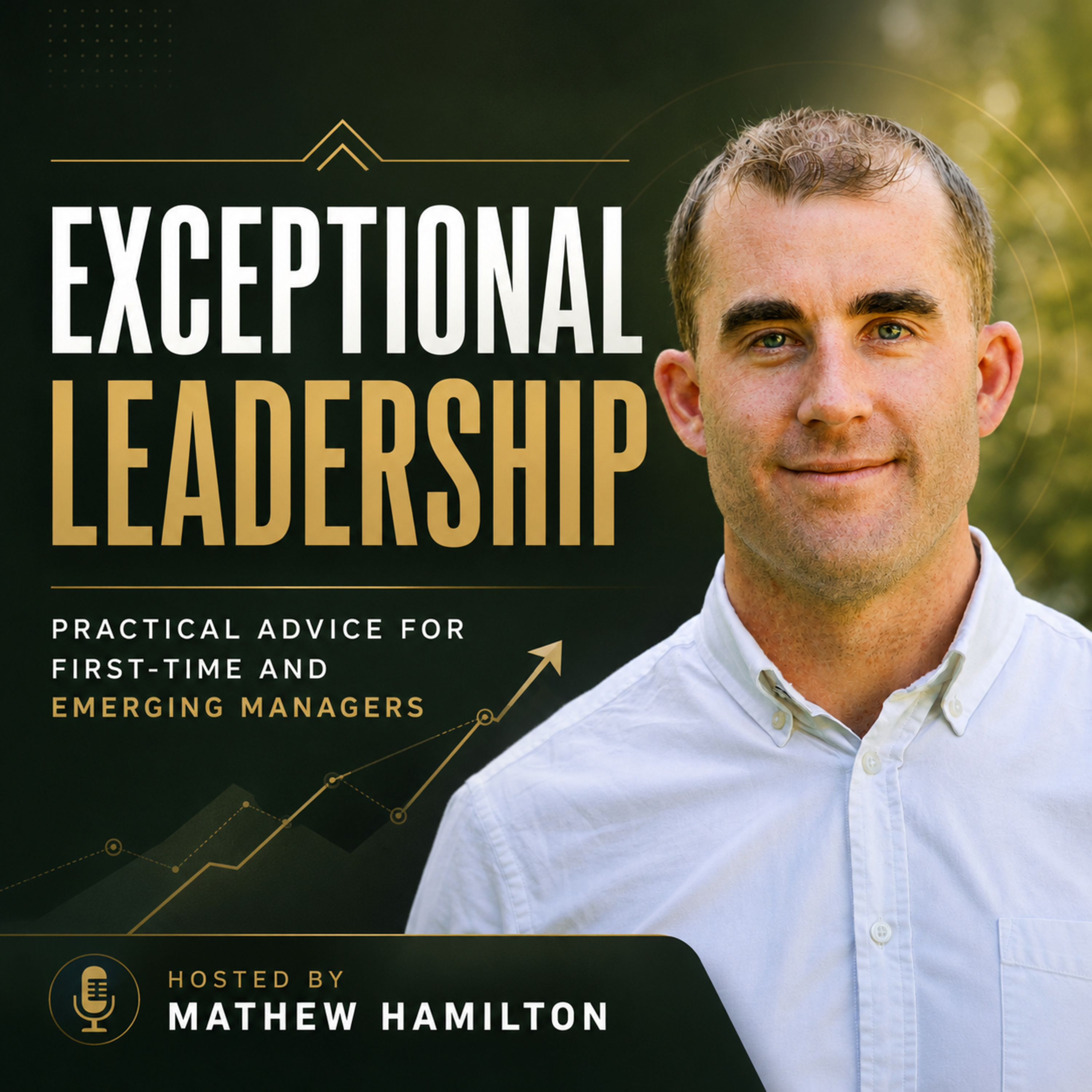 #70 Leadership Presence: Why the Best Leaders Listen First53 / 100#69 Performance & Development Plans: Retain Talent and Build Better Teams40 / 100
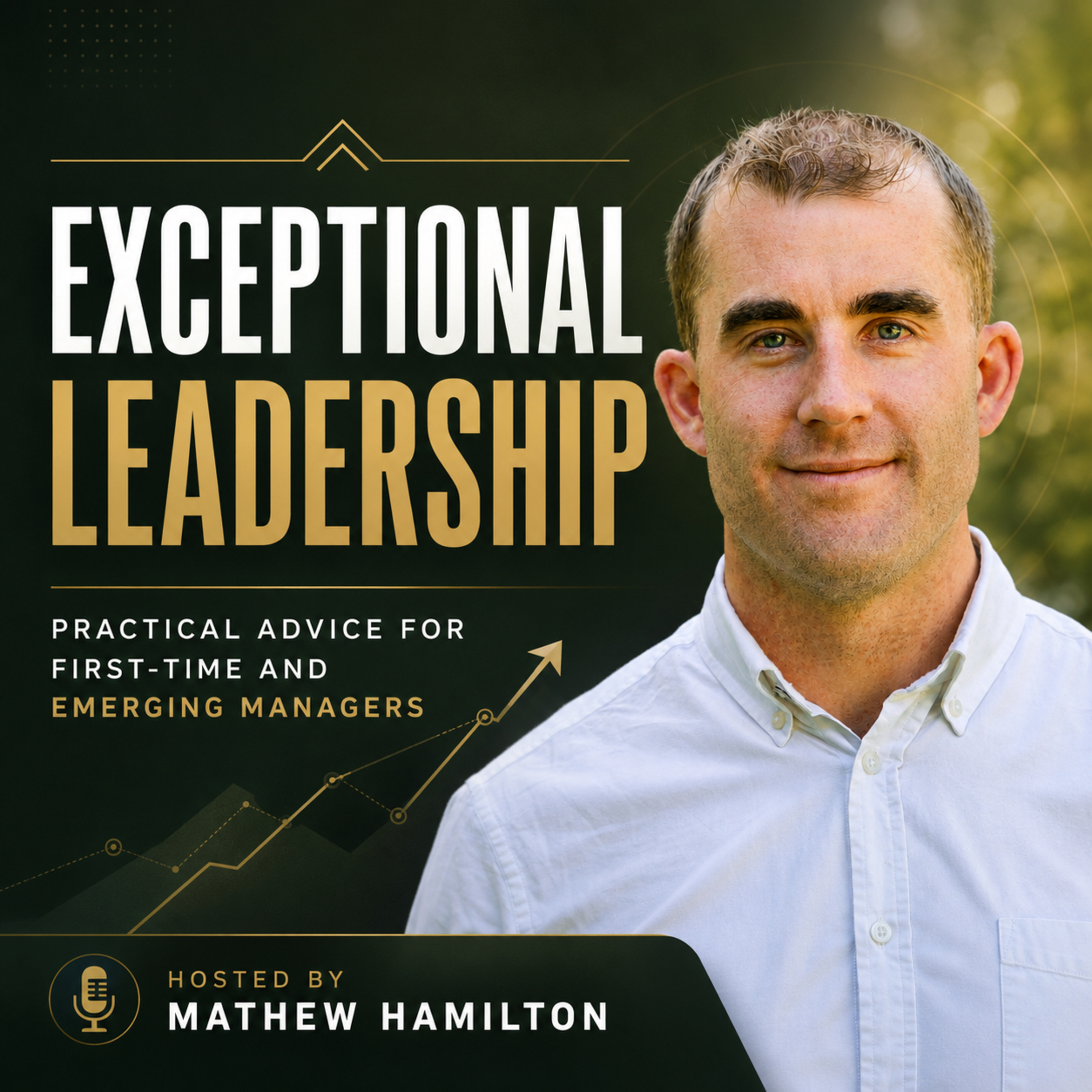 #68 Strategic Workforce Planning: Building Tomorrow’s Team Today42 / 100
 #67 Show Them: The Leadership Principle That Builds Trust40 / 100#73 Don’t Just Ask for It. Prove It.