
Exceptional Leadership · 2026-07-05 · 13 min
Key moments - from our scoring
Substance score
33 / 100
Five dimensions, 20 points each
This episode examines listening as a foundational leadership competency, anchored in Dwight D. Eisenhower's practice during the 1944 D-Day planning meetings. Rather than imposing his view on senior commanders, Eisenhower encouraged open debate, challenged assumptions, and withheld his own opinion until all voices were heard - a practice historian Stephen Ambrose documented as deliberate avoidance of dominance to gather better intelligence. Hamilton explains the mechanics: when leaders speak first, authority bias causes teams to unconsciously align their opinions with the leader's position, diluting honest feedback. By listening selectively, leaders gain undiluted information, develop visibility into team morale and concerns, identify talented but quieter thinkers who might otherwise stay silent, and paradoxically increase their own impact when they do speak. The episode positions listening not as weakness or silence, but as a marker of secure, confident leadership - scarcity of speech makes each contribution carry greater weight. Hamilton argues this is especially critical for emerging managers who might feel pressure to constantly steer conversations, when strategic silence and attentive listening actually demonstrate greater control.
Eisenhower deliberately held back his opinion to avoid authority bias, which causes people to unconsciously align their views with a leader's position. By listening first, he ensured commanders shared honest assessments and concerns rather than simply agreeing with him.
Authority bias is the phenomenon where people unconsciously adjust their opinions toward a leader's view simply because the leader holds a position of authority. This prevents leaders from hearing true team perspectives and quality information.
Scarcity creates value - if a leader speaks selectively rather than constantly, each contribution carries more significance because people are not over-saturated with the leader's commentary and pay closer attention.
Insecure leaders may believe they must constantly steer conversations to demonstrate control and justify their position, when in reality strategic silence and selective contribution demonstrate greater confidence and actual control.
Listening creates space for quieter or junior team members to contribute ideas they might otherwise keep silent due to lack of confidence or fear of disagreement; this reveals talented thinkers who don't naturally speak up in large meetings.
Our reviewer’s read on each dimension, with quotes from the episode.
The episode contains some useful framing around listening as a leadership practice, but relies heavily on a single historical anecdote and repeats the same core ideas (listening yields better information, reveals team morale, identifies talent, increases impact) without novel mechanics or counterintuitive depth. The reasoning is sound but well-trodden ground for any manager who has read basic leadership literature.
When you speak, it has consequence. When you offer a view, people might receive it differently to a colleague offering a view.
listening gives us greater impact when we do choose to speak because we're not simply filling silence
The episode recycles well-known listening frameworks and the Eisenhower anecdote, though competently told. The authority bias mention adds a small touch of behavioral psychology, but the overall thesis - that leaders should listen more and speak less - is conventional wisdom. No contrarian arguments, first-principles questioning, or surprising evidence emerges.
Listening often reveals what people are really thinking.
it's better for people to think of you as a fool than for you to speak too early and to remove all doubt
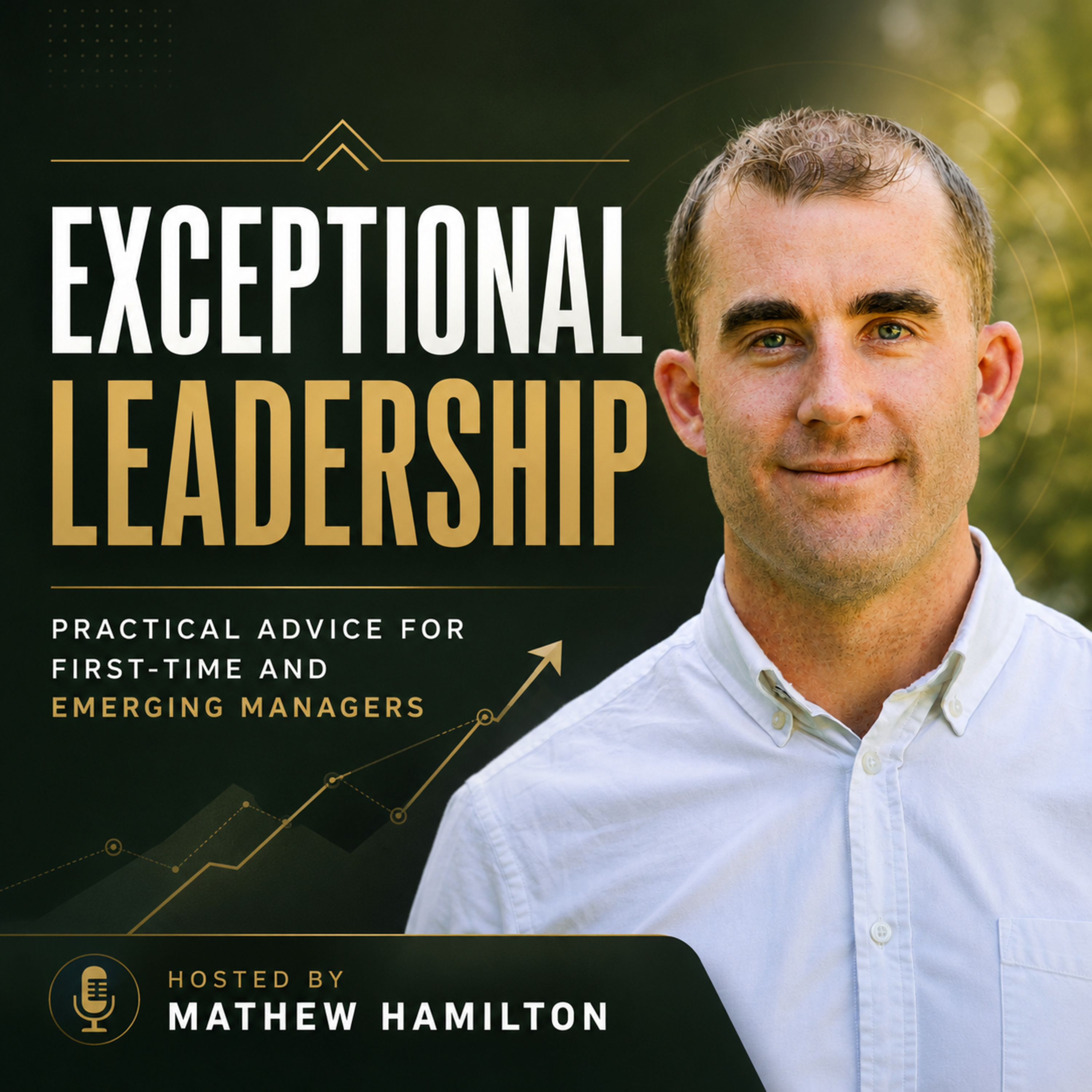
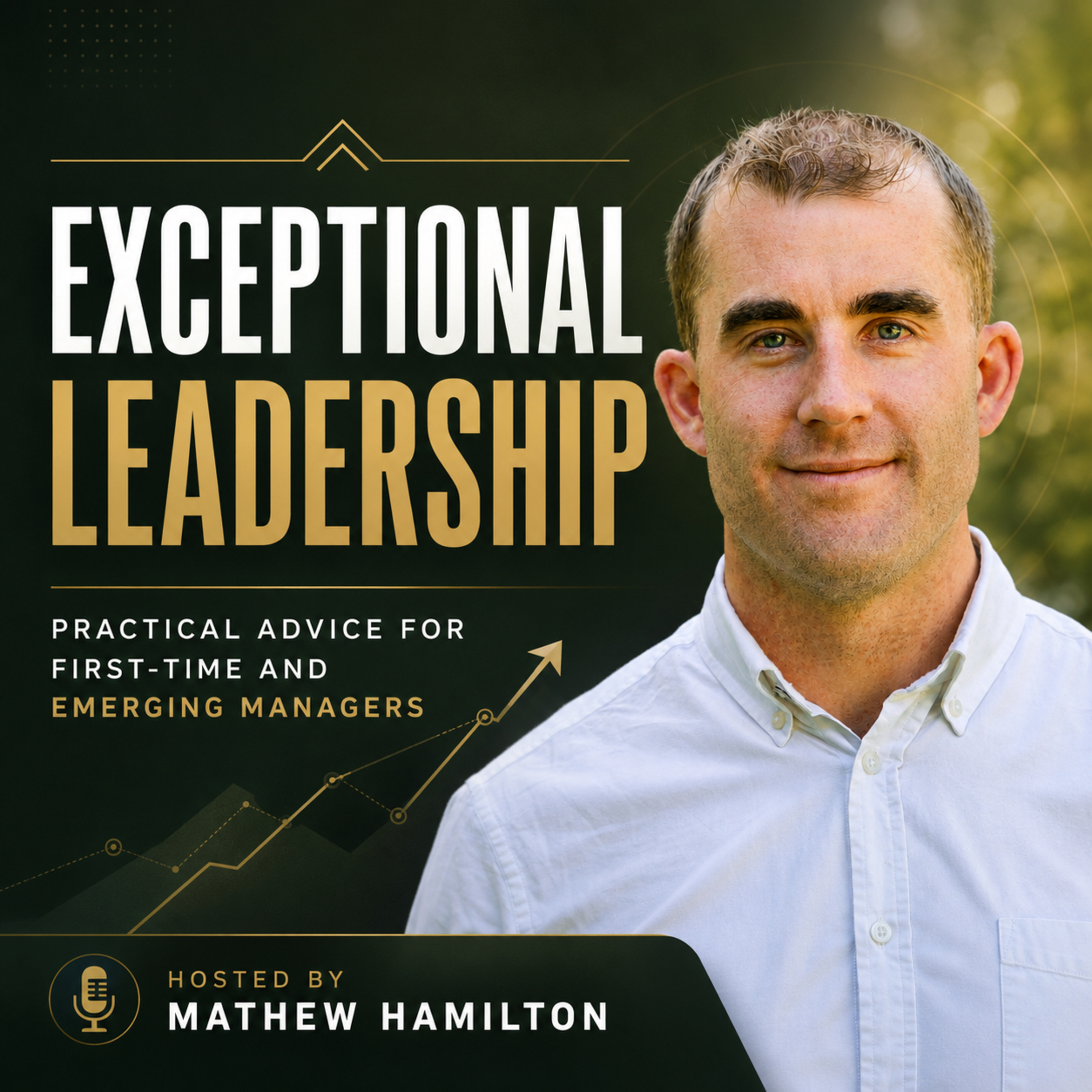
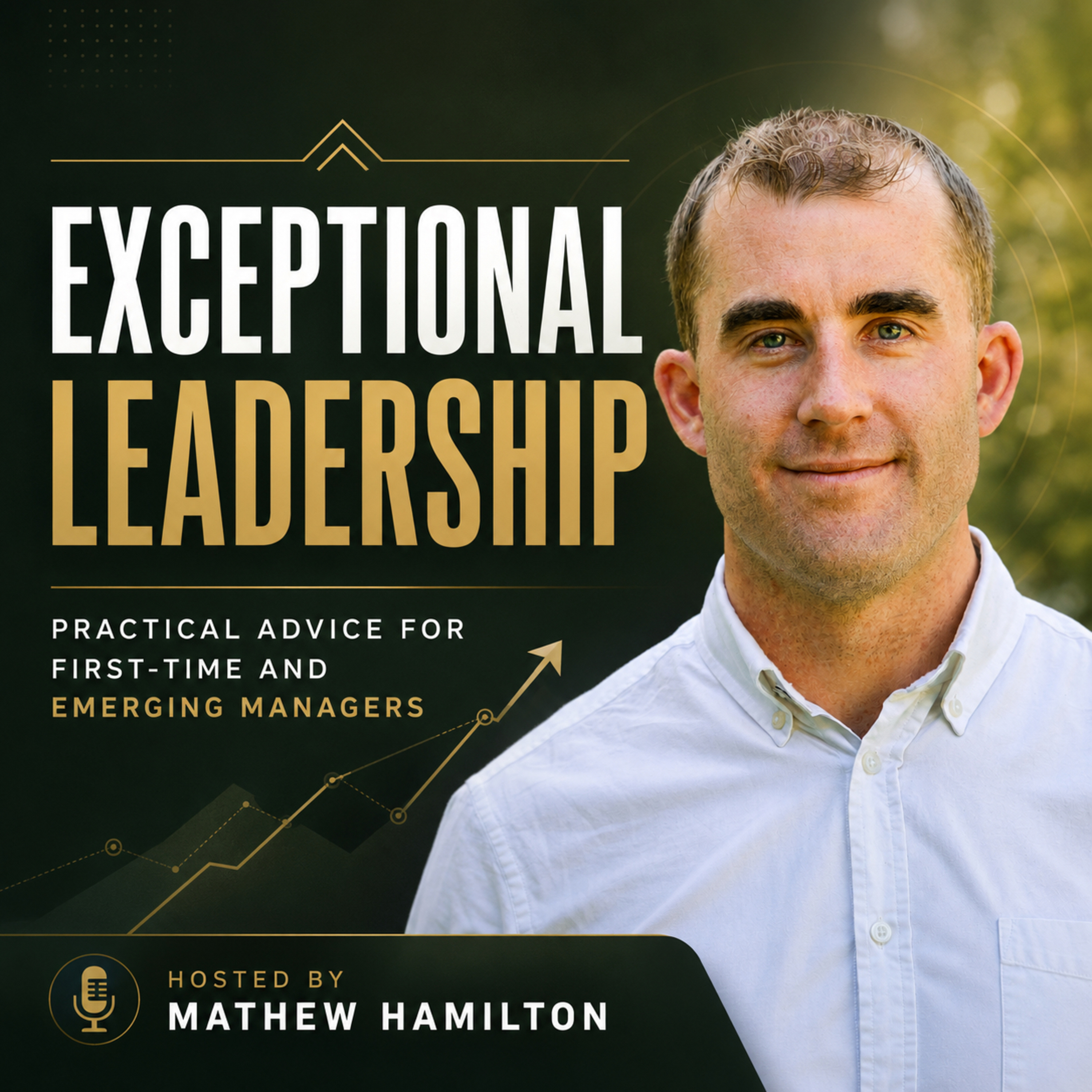
This is a solo host episode with no guest. The host, Matt Hamilton, appears to be a podcast presenter offering general leadership observations rather than a practitioner with demonstrated operating experience at scale. No credibility signals, client work, or specific organizational context is provided.
I'm your host, Matt Hamilton
I'm in meetings all day, I interact with teams all day, other leaders, other departments
The Eisenhower D-Day example is specific and historically grounded, but it is the only concrete case study. The rest relies on abstract principles and the host's anecdotal observations of 'clunky interactions' without named examples, metrics, or data. No companies, team sizes, outcomes, or quantified impact are offered beyond the historical narrative.
The largest amphibious invasion in history is only weeks away. More than 150,000 Allied troops are preparing to cross the English Channel.
you see a lot of clunky interactions in those environments that could quite often have been avoided if the person had just sat back and listened a little bit more
This is a monologue, not a dialogue. There is no guest to challenge, no real questioning or pushback, and no moment of productive disagreement. The host delivers prepared talking points without intellectual friction. The structure is linear and unchallenged - the host simply elaborates on a pre-written thesis around listening.
All right, team, welcome to another episode of the Exceptional Leadership Podcast
So that's something that we have to be mindful of. And of course, just like everything in leadership and management, it is a balance.
Computed from the transcript - who did the talking, and the words that came up most.
In this episode, I explore one of the most underrated leadership skills: listening first. Using Dwight Eisenhower as a reference point, I break down how he deliberately structured meetings to let others speak before he did - and why that simple behaviour created a major strategic advantage. I also share how I’ve been applying this approach in my own leadership practice, and the impact it’s had on the quality of conversations and decisions. We unpack four key benefits of leading this way: It reduces authority bias, so people are less likely to just agree with the leader It surfaces more honest, accurate insight into what people actually think and feel It creates space for better ideas to emerge, helping identify real talent It increases the impact of your own voice when you do choose to speak This isn’t about staying quiet for the sake of it - it’s about being intentional with when and how you speak so that your leadership carries more weight when it matters.
Transcribed and scored by The B2B Podcast Index.
Speaker A: All right, team, welcome to another episode of the Exceptional Leadership Podcast. As always, I'm your host, Matt Hamilton. Delighted to have your company with me once again from wherever you might be listening to the show from around the world. It still does blow my mind that I can record an episode and somebody in New York or California or somewhere in Europe could, uh, be listening to me, uh, during their commute to work. It's very flattering and I'm really pleased that you're getting something out of the show. So thank you for your support. Just quickly, if you wouldn't mind subscribing to the show on whatever podcast app ah, you listen to me on, that would be very much appreciated. And as always, if you'd be kind enough to leave the show a five star review, that would also be incredibly helpful. I know I'm asking a little bit, uh, frequently of late, but it is because it's so helpful to get the show out there and trusted for any new potential audience members who might be keen to give it a go. So that'd be very helpful and I'd appreciate it if you could support me in that way. Now, today we're going to be talking about the importance of listening as a leader. And it's not just something that leaders should be good at. It is actually something that's just generally good life advice. Um, you really should listen more than you talk. And there are some very good reasons, uh, that I take that view. Now, we'll get into those reasons one by one, but as I often do, we'll begin the show with a example from history to set the scene a little bit and give the discussion some context. So today's no different. Let's go ahead and have a look at an example from 1944. Here we go. I want you to imagine you're in southern England in the spring of 1944. The largest amphibious invasion in history is only weeks away. More than 150,000 Allied troops are preparing to cross the English Channel. Now, if the plan fails, thousands will die and the war in Europe could be prolonged by years. Every senior commander is in the room. There are strong personalities everywhere. British generals, American generals, naval commanders, air commanders. And every one of them has a view. At the end of the table sits General Dwight D. Eisenhower, the supreme Allied Commander. Now, many leaders in that situation would begin by telling everybody what they think. Eisenhower, however, did the opposite. He let the discussion unfold. He encouraged disagreement. He wanted the commanders to challenge assumptions, raise concerns, and argue their case. Historian Stephen Ambrose noted that Eisenhower deliberately avoided Dominating these meetings simply because he wanted the best information before reaching a decision. He understood that if he spoke too early, people would naturally begin agreeing with him instead of telling him what they actually thought. For hours, the debate continued. Weather forecasts were scrutinised. Landing beaches were questioned. Risks were weighed from every angle. Only after everybody had spoken did did Eisenhower summarize the discussion and make the decision. And when he finally spoke, there was no ambiguity about it whatsoever. He simply said, we'll go. No long speech, no dramatic flourish, just clarity. His words carried enormous weight because everybody in the room knew that he had listened thoroughly before making that call. Now, that, to me, is one of the hallmarks of, of confident leadership. A leader who is comfortable enough not to feel every silence, not to feel the need to speak for the sake of it, comfortable enough to let others speak and offer their views because someone else might actually have the best idea. Listening often reveals what people are really thinking. And because when you finally do speak, people know that your words matter. And that's important as a leader now, uh, important from a historical nuanced perspective. We can't say that Eisenhower always, 100% of the time, waited until everybody had spoken in every single meeting. Uh, that would be overstating his tendencies, I would suggest. But historians do consistently describe, um, his habit of encouraging open discussion and trying to draw out differing opinions and resisting the urge to impose his own view too early. So I just wanted to add that nuance there. But I think that is a really good model to follow, certainly one that I like to follow myself. Now, I am of the view that this is worthwhile, particularly in leadership, and there's a couple of reasons I've written down as to why we need to understand, and I've talked about this, uh, a lot before. You need to understand the perception that others have of you as a leader. When you speak, it has consequence. When you offer a view, people might receive it differently to a colleague offering a view. And, uh, what I mean by that is when a leader speaks first, people tend to unconsciously adjust their opinions towards that leader's view. A, uh, phenomenon related to authority bias. So if we choose to listen first, there's a few things we'll gain as leaders to help offset any of that bias, which doesn't help us because you don't want a bunch of yes men and women around you. You want people who will respectfully disagree with you if they have better information or relevant experience at hand. Ego stroking is something that is incredibly counterproductive, actually. Um, if you are In a leadership position, you really want people to be open and honest, of course, respectful, but not afraid to give you quality information simply because it might differ from the view that you hold. So as leaders, we want to listen first, because by doing that we gain better information. And that's simply because people are less influenced by our opinion. As the leader. It gives us insight into team morale and concerns. I talk a lot about keeping your finger on the pulse as a leader. Very hard to do that if you're talking all the time. Um, I think it actually was Eisenhower who said something along the lines of, I've never learned anything while talking. Um, yeah, good observation. Listening is important to gain insight into team morale and concerns. Thirdly, it provides us with opportunities to identify talented thinkers who might otherwise remain quiet. Now, this is something you will come across often, you know, as leaders, even if you start off a bit shaky, uh, and lacking in confidence. Usually after you've been in the role for a while, you get pretty confident talking in front of your team at meetings and whatnot, just through force of habit. But especially in big meetings, you might find people who are not so well practised or versed in speaking in front of people like that or offering a view, you might find they're less inclined to do so. They might have that natural tendency to think that, you know, people are going to disagree with me or think that my idea is silly or I'm going to say something that's already been suggested. Something we especially see with younger people. If they're towards the junior end, uh, in a team, they might be less willing to express a view or an opinion and we want to encourage them to have some input. So listening gives us opportunities to identify talented thinkers who might otherwise remain quiet. And lastly, the point that I wanted to touch on was that listening, listening gives us greater impact when we do choose to speak because we're not simply filling silence. Our words aren't diluted by constant commentary. You know, scarcity creates value and it's no different when it comes to speaking. If we comment on everything, each comment we offer carries less significance. But if we choose to speak selectively, people naturally pay closer, uh, attention because they're not over saturated with our words. So there's something I want you to think about. You know, there's a lot of good quotes around, uh, speaking and the importance of doing so selectively. Another one that I like is something along the lines of it's better for people to think of you as a fool than for you to speak too early and to remove all doubt. Very, very frequently I am, um, reminded as to the dangers of speaking too soon because I'm in meetings all day, I interact with teams all day, other leaders, other departments, you know, regularly. Uh, and so you see a lot of clunky interactions in those environments that could quite often have been avoided if the person had just sat back and listened a little bit more. It's also quite characteristic of an insecure leader if they feel like they need to be speaking all the time. All right, you might feel like, well, there's no point in me being here unless I'm actually saying something. People are going to feel like I'm not in control if I'm not constantly steering the ship. But the reality is that you can have absolute control while still being very selective about when you choose to contribute. So that's something that we have to be mindful of. And of course, just like everything in leadership and management, it is a balance. So, guys, I'm going to leave you with that. It's a simple concept, but it is one of those foundational pieces that I think comes with maturity and a little bit of wisdom to understand that listening is really, really important in just about every context. And I hope you can take that with you. And, uh, it has some impact on the way that you go about leading your teams. Guys, thank you so much for joining me for another episode. If you haven't yet done so, check out the website www.exceptionalleadershippodcast.com. jump on the blogs, uh, revisit old episodes, subscribe to the Brief, and, uh, if you do so, I will make sure you get a fortnightly newsletter, which is basically just me talking about a bunch of leadership thoughts I have had for the last fortnight. If that sounds like something that could add further value to you, sign up and I'd be delighted to add you to the email list. Guys, go ahead and subscribe to the show. Leave us a review. Tell one friend, tell ten friends, as I always say, and together we'll grow the standard of leadership globally. Have a fantastic fortnight and I'll see you for the next one.
Other episodes covering the same guests and topics, from across The B2B Podcast Index.
 Leadership Communication: If Speaking Up About Your Success Feels Awkward, Listen to ThisLeadership Communication in Action · on Leadership presence43 / 100
 E144: The Power of Restraint as Leadership PresenceThe Inner Edge · on Leadership presence38 / 100
 291 | Centering Reset: The Surprising Psychology of HopeThriving in Christ · on Leadership presence37 / 100
 2ML: Most Team-Building Efforts Fail for One ReasonLeadership Career Accelerator · on Leadership presence35 / 100
 Stars, Stagehands, and Shareholders: Producing Magic on Broadway with Brian MorelandHumanity At Scale: Redefining Leadership · on Leadership presence
 Zayna Rose, Image Strategist & Communications Consultant: Elevating Your Image as a Tech LeaderThe CTO Podcast · on Leadership presence
 #72 Resilience Starts With Meaning: Lessons from Viktor Frankl47 / 100#69 Performance & Development Plans: Retain Talent and Build Better Teams40 / 100
 #68 Strategic Workforce Planning: Building Tomorrow’s Team Today42 / 100
 #67 Show Them: The Leadership Principle That Builds Trust40 / 100#73 Don’t Just Ask for It. Prove It.