
Beyond High Performance · 2026-07-20 · 23 min
Key moments - from our scoring
Substance score
27 / 100
Five dimensions, 20 points each
This episode tackles the pervasive feeling among high performers that they should already be further ahead - in career, income, or life stage - and examines why this mindset persists despite limiting results. The conversation features three coaches from Novus Global and the Meta Performance Institute dissecting the psychology of shoulds, imposter syndrome, and comparison. When Speaker A discusses the movie production metaphor of not showing the monster, he illustrates how avoiding looking at our doubts keeps them scarier than they actually are. The coaches explore how shame-based motivation got many of them to their current success, but now operates as residual programming in spaces where they've already proven themselves. For CEOs in their first seat or professionals returning after career breaks, the 'should' creates anxiety and hiding rather than action. However, comparison can also drive growth - like Speaker B's son playing volleyball with older, better players to push himself forward. The episode emphasizes that arriving at a vision doesn't mean you've 'arrived' as a person, and that acknowledging "you haven't been here before" frees people to learn without shame. Key insight: shame becomes fuel when paired with community, vulnerability, and a growth mindset rather than judgment.
Notice whether the comparison or should expands your sense of possibility and creates love/abundance, or whether it shrinks you with fear and judgment. If it pulls you toward learning (like seeking mentors) versus pushing you into hiding and anxiety, it's likely fueling growth rather than keeping you stuck.
The survival mindset and drive to prove yourself that got you to success created real value and motivation, so the brain keeps running that program. But once you've already proven it, the same mechanism now operates as residual programming in situations where you no longer need to survive - you can choose to reinvent.
It means examining the specific fears and doubts you're avoiding looking at directly, rather than letting them stay scary in your imagination. When you actually face what you're afraid of, it's rarely as terrifying as the anxiety you've built around it.
First, acknowledge you're not running anyone else's race - you're running your own with your own constraints and choices. Second, if you're going to compare, do it intentionally: seek out mentors in comparable positions to learn from, rather than using comparison to spiral into shame about where you aren't.
Acknowledge that you haven't been in your current situation before (whether that's a first CEO role, returning after parental leave, or navigating AI disruption), and give yourself permission to figure it out as you go. Sharing these feelings in community reveals they're universal, not personal failures.
Our reviewer’s read on each dimension, with quotes from the episode.
The episode surfaces a few useful reframes - shame as a source of fuel rather than just a burden, and the 'love the gap' idea - but the bulk of the runtime is familiar coaching territory (imposter syndrome, 'running your own race') dressed in conversational filler. Insight-per-minute is low for a 23-minute episode.
It's not desire anymore that moves you forward, it's judgment that keeps you stuck.
The gap is beautiful. Like, we talk about in our work, like, love the gap. And we talk about that because most people don't love the gap.
The episode explicitly acknowledges recycled framing ('comparison is the thief of joy') and then doesn't move much beyond it. The 'shame as fuel' angle and the movie-monster metaphor for avoidance show some creative thinking, but the overall arc is a well-worn coaching conversation rather than a genuinely counterintuitive argument.
we've all heard like that phrase, like it's, you know, like a uh, comparison is the thief of joy. And I go, yeah.
The scariest thing to do was not show the monster... I don't think that's as scary as you think that it is.
All three speakers are internal coaches from the same firm (Novus Global) with no external guest; there is no independent, high-stakes operator voice to provide outside credibility. One mentions coaching an unnamed Olympian, but the conversation stays at the level of general coaching reflection rather than demonstrated domain expertise a B2B operator could stress-test.
I'm coaching someone that was in the Olympics and while. And, and, and coming up to the Winter Olympics, he's telling me all of the things that he's trying to prove to everyone else.
at Novus Global. We ask whether performance alone is enough. You'll hear conversations with our elite coaches, world class leaders
The episode is almost entirely abstract; the only concrete illustrations are personal anecdotes (a son playing volleyball, an immigrant upbringing, single parenting) with no named companies, metrics, dollar figures, or verifiable data points. The CEO examples are generic archetypes, not real cases.
he was comparing himself and then I'm behind, but also comparing himself and constantly putting himself in gyms where he's the worst libero in the gym.
I think about particularly like executives, CEOs... they have this thought of like, oh man, I should know everything to do here.
This is a roundtable among three colleagues from the same organization rather than an interview, so there is structural softness built in; questions are broad and affirming, no claim is challenged, and the group regularly echoes and validates each other. There is no moment of productive tension or follow-up that forces a sharper answer.
How common do you actually think that this is? How often does it come up for you? And why do we not talk about it a whole lot?
I'm curious if either of you have stories of, um, how you've seen this, like, happen with your clients.
Computed from the transcript - who did the talking, and the words that came up most.
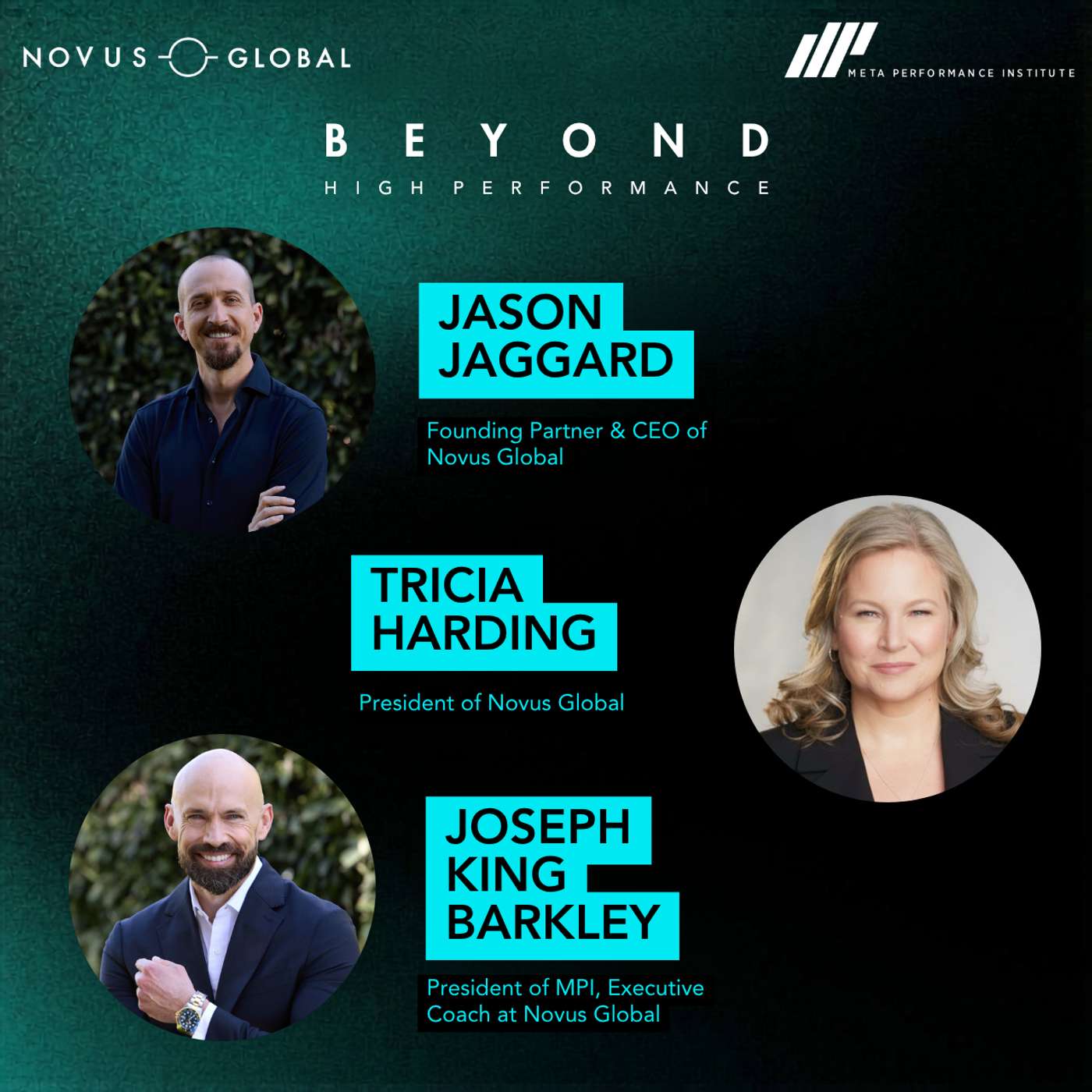
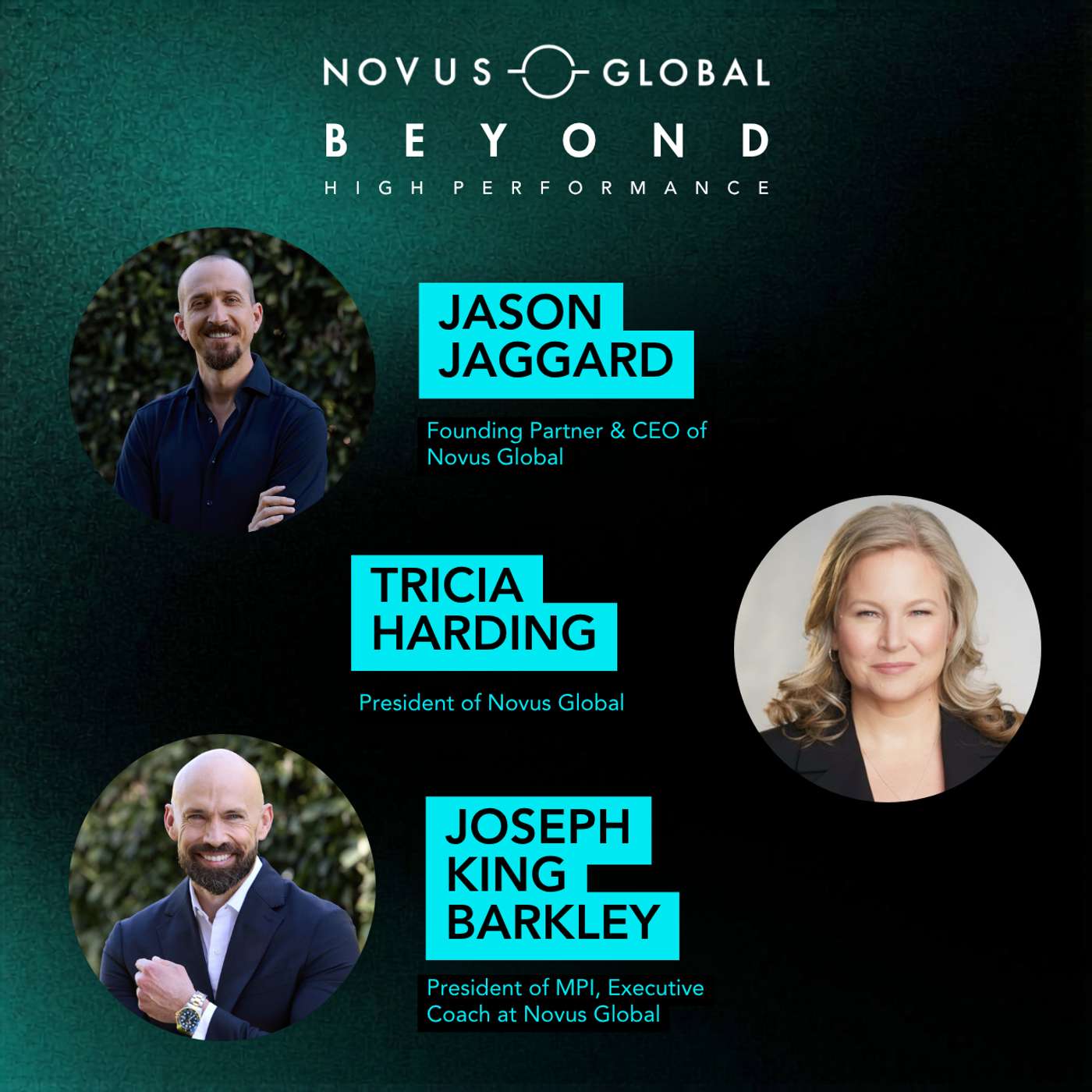
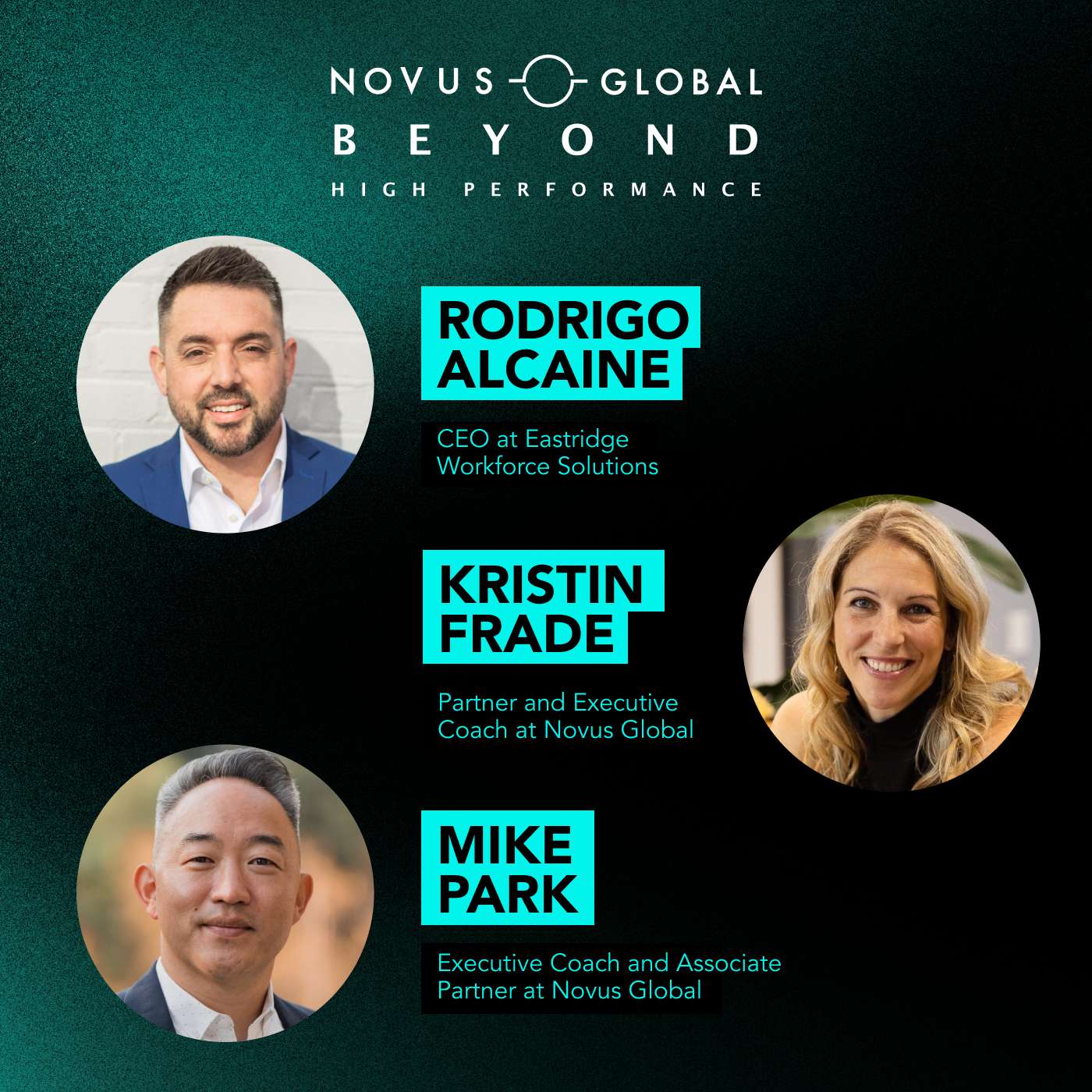
“I should be further along.” It’s one of the quietest, most common thoughts high performers carry and can either be one of the most powerful places to begin or sink. In this episode of the Beyond High Performance podcast , Amanda Jaggard, Co-Founder of MPI & Partner at Novus Global, David Miller, Chief Revenue Officer & Novus Global Executive Coach, and Mike Park, Novus Global Partner & Executive Coach, explore the shame, comparison, imposter syndrome, and “prove it” energy that often drive high performers. They discuss how comparison can either keep us stuck or call us forward, why reinvention is not a solo game, and how learning to love the gap between where you are and where you’re going can become a source of freedom, courage, and growth. If you’ve ever felt behind in your career, leadership, finances, relationships, or life, this conversation will help you trade shame for curiosity and start building from where you are. Download the free companion resource mentioned in the episode - Book a Free Discovery Call with a Novus Global Coach - Learn more about becoming a Novus Global coach - #executivecoaching #leadershipdevelopment #novusglobal
Transcribed and scored by The B2B Podcast Index.
Speaker A: In movie production, at least until, like, graphics got as, like, realistic, uh, as they are, the scariest thing to do was not show the monster.
Speaker B: Right?
Speaker C: Yeah.
Speaker A: And there is, and there's something really interesting to us. Uh, how often are we not. We just. We won't look at the monster, we won't look at the potential cost. Can we just bring that into the light for a minute? Because I don't think that's as scary as you think that it is. I don't want to talk about my vision. I don't want to talk about that picture of the future because I actually am ashamed that I don't have it yet.
Speaker C: Most of us spend our lives performing at Novus Global. We ask whether performance alone is enough. You'll hear conversations with our elite coaches, world class leaders and exceptional artists and athletes all exploring what it means to go beyond high performance. Because our lives are defined by the questions we ask and the questions we don't. This is beyond high performance from Novus Global and the Meta Performance Institute.
Speaker A: You
Speaker B: so, uh, looking forward to this conversation with you guys here today. And we are going to talk about one of the pain points that comes up so often with our clients, their coaches that are part of Novus Global ourselves. And it's this idea around. I should be further along, further along in my career, further along in how much money I'm making, further along in my personal life for somebody's like, I should be further along than where I am right now.
Speaker A: Yeah.
Speaker B: So would love to throw it out. How common do you actually think that this is? How often does it come up for you? And why do we not talk about it a whole lot?
Speaker A: I mean, first of all, you gotta love a good should. Like, there's, like, there is something.
Speaker B: I love my should.
Speaker A: Gotta love a good should. Uh, in my experience, for me as an individual and for like the leaders that I coach, I know for you as well, it is something that comes up almost, uh, every client, uh, I am yet to have a client that doesn't have some sort of belief around where they should be, where they could be, if only, like, there's this. And, and, and in some ways, uh, like the work that we do with our clients brings this to the surface. In my experience, let's create a picture of the future that compels you into action, your vision. And then we have this picture out here that you are able to, to see with your mind's eye, but you are not yet.
Speaker C: Yeah.
Speaker A: And so you are objectively not to be. Right. It gets to Be potentially, um, like, uh, in the danger zone of all this when it turns into. But I should be.
Speaker C: Well, and that's the thing. Right? So, I mean, the thing you just did right now is like, hey, you're coming to us because there's a problem. Like, I'm, um, not where I should be. Like, again, you said pain point. Like, this is. This is. This is not good. Like, alarms going off. Like, this is. Yeah, we're in crisis mode.
Speaker B: Yeah. Ah.
Speaker C: And what you just did is like, no, wait, look at this. Like, what if this is an opportunity? Because this brought you here, this brought you to this moment. Like, oh, like, there's something that I want. There's something I want to be happening. There's a place I want to be in my life that I am not at yet. And you as a coach, like, so I go to come David, and. And you said, he's, like, awesome.
Speaker A: Yeah. Amazing. You're ahead of the game. Yeah.
Speaker C: You're ahead of the game. You figured that out. There's something that you noticed about your life that you want. Yeah. Uh, now we get to talk about what that could look like and how you can get there.
Speaker B: But I think with so many high performers, there is this, like, it comes up almost all the time in vision conversations. They'll say is, like, I should already be there. I should already have that.
Speaker C: Yeah.
Speaker B: Ye. Like, almost, like, even in a Not saying it sometimes, because even by saying it. Yeah, it means that I should have already done it already. So what's my problem?
Speaker C: Yeah.
Speaker A: That's interesting. I, I. I've experienced both. I've experienced times that someone will be talking about the vision, and someone will say, well, I don't want to say after prodding and all of it. I don't know that I want to go there, because the moment it's out of my mouth, now I feel like I have to do it.
Speaker C: Yeah.
Speaker A: Yeah. And that's an interesting weight to carry for the client and for that coaching relationship. I also have seen what you're saying, I think Amanda, and you can tell me if I'm on it, but I've also seen where. Where someone will come in and it's. And there is this. I don't want to talk about my vision. I don't want to talk about the. That picture of the future because I actually am ashamed that I don't have it yet.
Speaker C: Right.
Speaker A: It's not that it's compelling me forward. It's actually keeping me where I am because I'm so ashamed that, that I uh, feel like everything should have, fill in the blank of whatever should have. And now I'm going to sit here and talk about it. And now I'm going to sit in the shame. And as a coach, oftentimes, uh, like, you know, once we hit that area, it's, it's kind of behooves us to kind of, to go, well, okay, great. What if this is exactly the way that you, you want it right now?
Speaker C: It's not desire anymore that moves you forward, it's judgment that keeps you stuck. And that's what we're talking about, right?
Speaker A: Yeah.
Speaker C: So like when you have that thought of like I should be this, I should be that, then it's like, oh, I stay in that story. What does it cause? Like what, like what are the results? Right? Well, the results of it is I get anxiety, I get um, shame, like I get really afraid. I start with, I start holding back, I'm waiting. I don't make moves. I lead from a, like a more anxious place and say, oh, okay, now that's keeping you stuck somewhere, right? And that's getting in your way.
Speaker A: Yeah. Where does the should compel you? And where does the should keep you stuck? Is, is, is interesting to me.
Speaker C: Where's the shit helpful.
Speaker A: I, I think that there is something like, um, even before having this conversation, we, we talked a little bit around this idea of um, of like comparison. And so I think sometimes we can look at this lens of comparison and go, I'm comparing myself to you. And literally we've been friends for a long time. I will, I'll be like, I'm comparing myself to Mike and I'm going man, like, look what he's up to and the way that he's showing up in the world. I would, that, that is inspiring to me.
Speaker C: Yeah.
Speaker A: To go and to accomplish, to try to be that. There are other times that I'll look at a friend and I'll go, and I'll go, oh, they're so much further ahead. It's almost a self pity is when the should uh, keeps you stuck. But in like an inspirational way there can be this, this like, oh, wow, like I, I, I, I get to strive towards something, I get to try something that I wouldn't have tried if I didn't have that example or that thing that I'm comparing myself to. And so sometimes, right, we've all heard like that phrase, like it's, you know, like a uh, comparison is the thief of joy. And I go, yeah. And I think there's a lot of truth in that there are times that it would go well, sometimes actually that will be something that will be compelling to you. The. The difference which becomes for me, how are you experiencing, how are you choosing to like, live in that comparison in that should. In that next step of what. Where you're headed.
Speaker B: Because if it does create some sort of judgment or like, if it diminishes and uh, instead of expanding. Right. So if it makes I get smaller or if it helps to open up possibility, or if it creates fear rather than, uh, more love and abundance. I think about my son. He's a senior in high school, but he plays competitive volleyball. And he didn't start playing until he was 14 is when he finally told me that he wanted to play volleyball, which is farther along, like older than maybe some other people. Right. Or you think about kids who are growing up, their parents are former pro players and they're playing at a really young age. So he constantly has this feeling of, I'm behind, I'm behind. And so frustrated. However, one of his, uh, strategies. So he was comparing himself and then I'm behind, but also comparing himself and constantly putting himself in gyms where he's the worst libero in the gym. Because that comparison drives him forward. Yeah. He has something to, uh, work towards and I really respect that about him. So it is the difference of comparison and being in that should. And then he's sad in the car, driving home or the pulling him forward into more greatness.
Speaker A: I'm curious if either of you have stories of, um, how you've seen this, like, happen with your clients. Like, what are you watching with clients or what are you even looking for in conversations with clients that will help you to know whether they are using, um, again, comparison or should in a way that is like, compelling them or utilizing comparison and should as a way that, um, holds them back.
Speaker C: Yeah. So I think about particularly like executives, CEOs. I mean, we all work with like, you know, high level executives who are in the seat for the first time. M. So in their seat for the first time. And then they have this thought of like, oh man, I should know everything to do here. I should know how to lead this team. I should know how to lead this company. I knew I should know how to be in the seat. And they don't. And now all of a sudden they're, they're like, oh man, what if someone finds. So it's like we talk about imposter syndrome. Right. That comes out up a lot. It's like, man, what if what if people find out? Because I look at all the others or in my, or the, my perception of what a CEO should know or how they should operate in this moment,
Speaker A: or the book version of the social media version of that CEO tells me that they always knew the right answer. And why don't I. Yeah.
Speaker C: And so it's like that's where you know, to your point, it's like, man, so that's where comparison, I think gets in the way. M. Because then if it's like, if you're going to start hiding, if you're going to start like having this anxiety and fear of being found out.
Speaker A: Yeah.
Speaker C: Shaming out. Or you're not going to be as honest or um, forthcoming with your team, you're going to withhold ideas because it's like, oh man, what if some finds out? I don't know. I don't know everything.
Speaker A: Right.
Speaker C: Newsflash. You're human just like anyone else. Yeah. Ah, then that gets in the way. And like comparison I think can be really helpful because I'll start working with. And you know, in this past year there have been some CEOs I've worked with where I said, they're in the sea for the first time. I said, look, you're in the seat for the first time. There are a lot of things you don't know. Who has been in your seat or a similar seat before? Who are some people? You know, like, look at your network. What resource do you have? What if you can go and learn from them?
Speaker A: Mhm.
Speaker C: There's someone in a comparable position. You can go and ask for mentoring, ask for data, just pick their brain. And that's where that comparison is. Like, because I want to get better.
Speaker A: Yeah.
Speaker C: Like, I want to grow. So I want to put my, you know, to like, like Elijah. I want to put myself in the gym where there are people out there that I'm going to, I'm going to compare myself to in a really great way and say, man, I want to get to where they are. How can I learn from them?
Speaker B: When I think about clients, I, I coach a lot of male, uh, clients, but I also coach a lot of females and for maybe they took uh, a little bit of a, of a break to have kids or focus on some other priorities, uh, including, including myself even. And it's like I compare myself to other people who either don't have the same personal life situation as I do, or um, they've been working for the last 40 years and it's like, oh, I should be at the Age I am, I should be farther along. And something that I've really had to learn for myself and with my clients is that I'm not running anybody else's race but my own.
Speaker A: Yeah, that's right.
Speaker B: This is my race, my journey, my story. Uh, it is unfolding perfectly, and these are the decisions that. That I have made, and I can stand in. In pride of that. And I think, yeah, I mean, we can look back and have any types of regrets. Oh, I made this decision. I made this decision. Um, and I think that's helpful for. For learning, like, there is something to the. The regret of it and, like, reframing it for myself and saying, like, this is my story and I' Anybody else's race, this is mine.
Speaker C: All right, we're talking about ourselves. Um, man, I. I mean, I. I think about. Because in a lot, in some ways, and when we think about the shoulds and we think about the shame spiral, I think, you know, I know that's like, the topic. So much of that is the story I tell myself about myself. And so when I think about, you know, you guys, you know me, I'm. And know my story. I'm first generation immigrant kid, um, growing up in, like, in the 80s and 90s in Southern California. A lot of times, like, it's not that way now by far, but, like, man, a lot of times I was one of few Asian kids in my class. The experience for me, a lot of in life has been being in spaces where there aren't a lot of people who look like me or have the same background I do. And so the story I've told myself is that I don't know if I belong here or, like, I got to prove that I belong here and that that's the running story. What's interesting is that so, like, there can be that imposter syndrome of, like, oh, man, I hope, like, they find out or they don't find out that I'm actually.
Speaker A: Yeah.
Speaker C: Or, like, I'm afraid that people are gonna think that I don't belong or I'm not good enough or all that. But then they're also. There's that drive that. That creates for me. I think about how that's carried over into my, like, adult life because there's like, uh. There's a moment when I was a kid, I was like, this is what I have to do to make it. This is what I have to do to survive. There was like, a real, like, survival.
Speaker A: Yeah.
Speaker C: Part of it. And this is. This is what it means to make it. And honestly, like my, my, my uh, immigrant family, my parents, they're like, that was like, that was it. Like we were like fighting tooth and nail to make it in a country where we don't know the language that well, where we don't have a lot of resources. And so. But as I've gotten older, I realized like, I operate that way in places where I don't have to anymore.
Speaker A: Sure. Yeah. There's residual. Yeah, yeah.
Speaker C: And so now I'm in situations where I'm like, I don't know if I belong here. And everyone's around like, what, are you kidding me? Or like, oh, like, I don't know if, you know, people really respect me. It's like.
Speaker B: And you're the only one that has that.
Speaker C: I know I'm the only one who's
Speaker B: running to anybody else that way.
Speaker C: Yeah.
Speaker B: Yeah.
Speaker C: And again, you know, when we think about like, why something like the shoulds and imposter syndrome, like, persists, it's. We've gotten a lot of juice out of that squeeze. You know, it's created value or motivation. It got us here.
Speaker A: It's fascinating to kind of go, oh, um, when you're in a place where they. You're allowed to reinvent.
Speaker B: Yes.
Speaker A: Yeah. You, you are not only the last mistake you made or frankly the last success you had.
Speaker C: That's right.
Speaker A: But, but you are like, uh, in process at all times. There's something that is core to our work that we talk like there is no such thing as arrival. I haven't all of a sudden arrived the title. I have the skill, I have the client. You know, whatever those things are happening and with our, the clients that we have, um, we're coaching at some of the highest levels. I'm coaching someone that was in the Olympics and while. And, and, and coming up to the Winter Olympics, he's t. Telling me all of the things that he's trying to prove to everyone else. That's right. We have all of these conversations around, um, well, like, what if you actually already have proven that? Is there something about coming into uh, this next game with the energy of. I've already shown you. Mhm. Now I just get to live in who I, who I am now. Not this fictitious version of what's coming or the version that you remember of me from before. I actually get to be right here right now and show you everything that I have in this moment.
Speaker B: I think a lot of people, just in the way that the world is going today, when I talk to people about AI or Where work is going,
Speaker A: like people don't know anywhere.
Speaker B: Nobody knows where we've been before. And I have a son in college and I think the youths are dealing with this. And you sing.
Speaker A: The youth, you sing. Uh, no, no, no, I get it. That says more about you though. Just, I mean I just want to be very clear about what just happened here.
Speaker C: That was my cousin video.
Speaker A: Hey Amanda, tell us what the youths are saying.
Speaker B: Yes, that's how I talk.
Speaker A: I appreciate that. Let us know.
Speaker B: The, the. The youths are having like an existential dread in a lot of ways because there is so much uncertainty. And parents, um, us Gen Xers who, you know, you check the box and you get the thing and nobody knows how to live in this uncertainty. And I think that our work is really important in that. For stepping in. Like none of us have been here before. And so to some extent, you know, imposter syndrome or even this feeling of I should be further along, I should like I should be completely um, fluent in AI.
Speaker A: Yeah. Like yeah, good luck.
Speaker B: Yeah, yeah. Cause it changes the moment, you know, every week.
Speaker A: Yeah, exactly.
Speaker B: Right. And so I think that that has helped me m. To in a way get rid of that. Because if our world is constantly changing and growing, if my vision is constantly changing and growing, uh, yeah, I want to be a part of something, an organization where there's constant change. And so it kind of takes the should away because everything's new.
Speaker A: I think that in the same way that we say often um, like a, like a high performer really has like. Like these two things happening at the same time. They are simultaneously uh, like like bored and overwhelmed. Mhm. Right. So like I have experiences of, of as a. I'll say recovering. So in an. In recovery so high performer I feel often both overwhelmed. There's too much going on. I can't believe that I'm working so much and board. I think we can actually in some ways like transpose this idea here of um. Like the, the kind of two sides of the coin where um. The. The idea of should. There is a. I should be further along is one side of the coin and I deserve more than I have is the other side of the coin.
Speaker B: We have a distorted view of ourself. I like to think of myself as very open and uh, not afraid of what people think and stuff. And so I don't. It doesn't occur to me that I might be like hiding because I don't want people to find stuff out. But as you're talking I'm thinking I actually wonder how Much of that is true.
Speaker A: It makes me think of like in movie production at least until um. Like graphics got as, as. As like realistic. Ah. As they are. The scariest thing to do was not show the monster. Right.
Speaker C: Yeah.
Speaker A: And there is, and there's something really interesting to us. Uh, how often are we not. We just. We won't look at the monster, we won't look at the potential cost, we won't. And, and I don't think we always do it on purpose. I don't know that I think that it's always a uh, like a conscious like activity to avoid the cost of being seen as not enough or not good enough or whatever it is. But I, Yeah but I do think that there is something to people like sitting in a space and going I, I haven't actually shed light on that yet. And I think that there again there's something really beautiful in the coaching like uh, like with, with clients that I'll have very often I'm like can we just bring that into the light for a minute? Because I don't think that's as scary as you think that it is. Yeah. I think you just haven't seen it yet. It's, it's, it's. It's the, it's the scary music of the thing that's under the water that hasn't come up yet. But the moment we see it and then turn the music off and see if you're actually still afraid. Yeah. Like it's, it's, it's not as scary as you think think when you actually look at an align.
Speaker C: Yeah.
Speaker A: But we create an environment that allows it to be scary. We create an environment that allows us to feel less than we create an environment um, that, that that puts us in this position or like, like brings us in this position of striving and we really put ourselves there. Like it's like we, we've chosen to do that and I think it is, it goes back to often for me at least and clients that I've seen it is this. Uh, uh. But that's what got me here.
Speaker C: Mhm.
Speaker A: That chip on my shoulder got me here. Who am I without it? That belief that I will show you got me here. Who will I be without that? The beauty of not of knowing what I don't know all of a sudden brings it into light.
Speaker B: Right.
Speaker A: Uh. And lets me see it and to not be afraid of that thing anymore.
Speaker B: And I think when I bring stuff into the light oftentimes I find out that I'm not the only one Right. And one of the things I appreciate, I think, about coaching and sitting across from so many people and hearing the same, like, it's such a human thing. Like, it comes with the skin. And, uh, we're not alone in those fears, but, like, we're not necessarily talking about it, um, all the time because we maybe think that we're the only ones. Becoming a single parent was super hard because now there wasn't even a sharing of the things. And so many times where I've been paralyzed and making decisions because of the fear, because, like, it all. It all depends on me. Or at least that's the story that I was telling myself. Um, and I remember in therapy with Xander, and the therapist, uh, said, can we just acknowledge that none of you have been here before? You haven't been here before, and you haven't been here before, and you're both figuring this out as you go. And it was so freeing to me. And I've used that with clients. Like, can we just acknowledge you haven't been here before?
Speaker A: Yeah.
Speaker B: And can that be okay?
Speaker A: The beauty of, um, giving yourself permission to make mistakes, I think, is a superpower against the thing that we're talking about.
Speaker B: Yes.
Speaker C: And seeing that as a win, like
Speaker A: I felt, is the learning mistake is
Speaker C: the next step, and I'm gonna get back up and I'm gonna learn from this, and I'm in the room, and that's a win. Two things. One, uh, reinvention and shifting our stories from a place of shame to joy and belief is. It's a team game. We do it in community. Like, I love that.
Speaker A: Yeah.
Speaker C: And the second piece is that, um, often we think about shame, um, as a problem, as a burden, as, um, this. This massive thing that I'm carrying, this thing I need to fix. But often, like, from our conversation, it's fuel. It's a way for us to. It can be right. It's a way we fuel, um, and motivate ourselves.
Speaker B: It's a great motivator.
Speaker C: Right. And so, you know, noticing that it is one type of fuel, it's not the only one. So what if acknowledgement. Uh, what if. What if joy? What if community? What if love could, um, also be fuel and a more powerful fuel in our lives?
Speaker A: Yeah. I think if I were to boil it into a truth, I would say that the gap is beautiful. Like, we talk about in our work, like, love the gap. And we talk about that because most people don't love the gap. Like, the gap is shame. The gap is scary. The gap is. And and, and like to, to flip that into the gap is beautiful. The gap is opportunity. The gap is compelling you towards something. The gap is. Yeah, there's something so powerful when you, when you. When you, like, shift that relationship with the gap to where no longer am I trying to hide the gap. I'm actually, like, touting the gap. I'm headed somewhere. You ain't seen nothing.
Speaker C: Thanks for spending time with us. If this conversation sparked something in you, we've created a free companion resource to help you continue the work. You'll find it in our episode description and at. Ah, www.novus.global. learn more about becoming a Novus Global Coach through the Meta Performance institute at. Uh, www.mp.instu-remember, dare to go beyond high performance. We'll see you next time.
Other episodes covering the same guests and topics, from across The B2B Podcast Index.
 #57: From Pressure to Performance: How Great Leaders Find Their Mojo and Flow, with Ben CroweWorld's Greatest Business Thinkers · on Imposter syndrome90 / 100
 Standing Out in the AI Age: How to Stay Visible, Valuable, and Relevant with Sally HelgesenThe Good Leadership Podcast · on Imposter syndrome80 / 100
 The Fix for a Firm That Eats Your Whole Life? Charge More, Serve Fewer | Marit BurmoodThe Accounting Leads Now Podcast · on Imposter syndrome76 / 100
 The Business of Learning, Episode 98: The Psychology of MotivationThe Business of Learning · on Imposter syndrome75 / 100
 What Happens When You Stop Treating Fear as the Enemy?Leadership Mindset 2.0 · on Imposter syndrome71 / 100
 From Invisible to Influential: Empowering Leaders to Be SeenOptimising Leader Brilliance · on Imposter syndrome67 / 100
 Are You Training Your AI, Or Is It Training You?59 / 100
 Are You Training Your AI, Or Is It Training You?75 / 100
 The Summitless Peak: The Endless Pursuit of Mastery48 / 100
 Profit on the Other Side: What It Really Takes to Go from Survival to Strength46 / 100
 The Leadership Playbook: Andy Stanley on Vision, Focus, and Multiplying Your Impact88 / 100