
Beyond High Performance · 2025-11-11 · 1h 5m
Key moments - from our scoring
Substance score
68 / 100
Five dimensions, 20 points each
Andy Stanley, founding pastor of North Point Community Church, walks through two interconnected leadership principles that directly counter how most leaders actually operate. The core insight: leaders who overload themselves shift from leadership into management mode, losing the margin needed for envisioning and strategy. Stanley uses North Point - one of the world's largest faith communities - as a case study for scaling leadership through systematic delegation. He explains that 'only do what only you can do' isn't about shirking responsibility; it's about discovering where you add irreplaceable value (for him, the Sunday teaching slot) and relentlessly handing off everything else. He introduces the metaphor of juggling: trying to juggle four balls when you can only handle three means you drop all of them, whereas leaving one on the floor lets someone else pick it up and fully exploit their strength. Stanley emphasizes that a fully exploited strength always outperforms a marginally improved weakness, and leaders waste decades propping up weaknesses instead of developing strengths. He also addresses the emotional difficulty of this principle - he held on to responsibilities too long early in his tenure, requiring his 30-year assistant Diane to literally pry things from his hands. The conversation explores criticism tolerance, conscience clarity, and why the 'impossible dream' of limiting your tasks remains essential as a north star.
It means identifying where you bring irreplaceable value to the organization and systematically delegating or eliminating everything else - not avoiding your job, but focusing your limited time on the highest-leverage activities where you have a unique contribution.
When you're buried in too many tasks, you lose the margin and mental space needed for envisioning and strategy; you end up 'working in it' (executing tasks) instead of 'working on it' (improving the system), which is what leaders actually do.
A fully exploited strength always delivers greater organizational value than a marginally improved weakness, and time spent propping up weaknesses means you're winging it in your actual strengths, preventing full development.
He and his founding team created an org chart for a large successful church using The E-Myth as a template, assigned themselves to every box initially, then systematically worked their way out by handing off responsibilities - though he admits he held on too long and needed his assistant to pry things from his hands.
The critical event is the one thing that, if it goes well, everything else works - and if it fails, nothing else matters; for North Point, it's the Sunday teaching hour, which is why that gets Stanley's top attention even though leading the organization might seem primary.
Our reviewer’s read on each dimension, with quotes from the episode.
The episode delivers solid, actionable principles around delegation, focus, and vision-casting that most operators would find useful. However, much of the insight derives from ideas already in circulation (E-Myth, systems thinking, Stephen Covey frameworks). The core tension - margin enables leadership, not management - is valuable but well-trodden. Andy's formula for vision (problem, solution, why us, why now) is concrete and transferable, yet the episode often retreats into softer, more philosophical territory without pushing into novel operational specifics.
If you're sitting in the leadership seat and you find yourself responsible for too many tasks, you will shift into a management mode rather than a leadership mode. But you won't know it. The vision begins to flag, but you're still so busy and then you wonder what happens.
My fully exploited strength is of far greater value than my marginally improved weakness.
The episode repackages well-known leadership frameworks (focus, delegation, systems thinking, vision casting) rather than introducing genuinely fresh thinking. The definition of leadership as 'getting people to do what you believe needs to be done' is assertive but not particularly novel in leadership discourse. The Jesus-as-leadership-model angle, while less common in B2B podcasts, is presented more as application than new theory. Most of the insight is Andy synthesizing and reinforcing his established body of work rather than breaking new ground.
Only do what only you can do.
The less you do, the more you accomplish.
Andy Stanley is a genuinely credible operator with three decades of sustained organizational leadership at scale. Northpointe is a top-tier organization by most metrics (reach, complexity, cultural influence), making him a rare guest who has actually built and led a large, complex enterprise over time. However, the episode's framing as a deep leadership conversation is somewhat limited by the host's clear admiration, which constrains pushback and critical questioning. Stanley's caliber is unquestionable; the interview format underutilizes it.
Lead pastor and founding pastor of Northpointe Community Church... one of the most successful faith communities in the world. It reaches millions of people every year.
For 20 plus years, almost 30 years
The episode mixes specific examples (Northpointe's org chart exercise from E-Myth, Frank Blake at Home Depot, the 35-minute Sunday sermon slot) with broad principle-based discussion lacking concrete metrics. Stanley rarely quantifies impact, provides timelines for major decisions, or grounds claims in hard data. The Home Depot anecdote is told second-hand. While the advice is substantive, it often remains at the level of framework and philosophy rather than detailed case study or measurable outcome.
We created an org chart... There were five of us, and we all put our initials in every single box on an org chart that represented a really large, successful church.
Of that hour and five minutes, they give me 35 of those minutes.
The host conducts a respectful, well-structured interview with clear thematic threads (isms) and decent follow-ups. However, the conversation rarely challenges or pressures Stanley's claims. The host is highly deferential - often validating rather than probing. There are few moments of genuine tension or pushback. The host asks good setup questions but seldom asks 'but what about the counterargument?' or forces Stanley to defend a position. This limits the intellectual rigor and depth of the exchange. A more confrontational interviewer would have extracted sharper insights.
There's a short list of people who I would say have profoundly influenced my life from afar through books and conferences and things like that. And uh, the person I'm interviewing today is one of those people.
You are a world class leader. And so I'm excited to walk through a few of your isms today together.
Computed from the transcript - who did the talking, and the words that came up most.
Are you leading a team and feeling stretched thin, juggling constant demands, increasing complexity, and wondering if your influence will endure? How do you shape a legacy-driven organization that thrives long after you’re out of the room? In this episode of the Beyond High Performance Podcast, Jason Jaggard is joined by Andy Stanley, bestselling author, globally respected communicator, and host of the Andy Stanley Leadership Podcast, recognized by Forbes as one of the Top 6 Leadership Podcasts to Listen to in 2024 . From his book Next Generation Leader to leading the global impact of North Point Ministries, Andy shares battle-tested wisdom on vision-casting, building high-trust teams, and protecting margin so leaders can sustain what matters most. Discover why leadership isn’t simply about doing more, but doing what only you can do. Whether you're scaling a start-up or stewarding a global organization, this episode offers a powerful look into how elite leaders think about growth, legacy, and influence that lasts. What You’ll Learn in This Episode: The Power of Focus - Why doing less creates more impact and how to protect your margin to lead better.
Transcribed and scored by The B2B Podcast Index.
Speaker A: If you're sitting in the leadership seat and you find yourself responsible for too many tasks, you will shift into a management mode rather than a leadership mode. But you won't know it. The vision begins to flag, but you're still so busy and then you wonder what happens. But the fewer tasks that I have been have assigned myself, the more margin I have. And the margin time is the leadership time, it's the envisioning time, it's the how do I make it better time. It's not just working in it, it's working on it. And if you're always working in it, there's no margin to work on it. You're managing, you're not lead.
Speaker B: Welcome to the Beyond High Performance Podcast. Featuring content and conversations from me, Jason Jaggerd, along with our elite coaches at Novus Global, their high performing clients, and the faculty of the Meta Performance Institute for coaching. On this podcast you'll hear some of the world's best executive coaches and high performing leaders, artists and athletes discuss how they continue to go beyond high performance
Speaker C: in their lives and businesses. So welcome to the Beyond High Performance Podcast. I'm Jason Jaggert and we have a very special episode today. There's a short list of people who I would say have profoundly influenced my life from afar through books and conferences and things like that. And uh, the person I'm interviewing today is one of those people. His name is Andy Stanley. He is the lead pastor and founding pastor of Northpointe Community Church and the lead of Northpointe Ministries. If you've never heard of North Pointe, it is one of the most successful faith communities in the world. It reaches millions of people every year. And Andy is, we'll talk about this in the interview, but he is uh, a gifted speaker. I recommend anything his, his podcast and, and his sermons and, and uh, they've even repackaged some of his sermons on another podcast. He's lots of material out there. He's a prolific writer, dozens and dozens of books. We talk about some of those in the interview. But uh, really I think what makes Andy special is his capacity to lead. And so we are going to do a deep dive into leading one of the most difficult organizations in the world to lead, which is a 501 faith based organization. Uh, especially in uh, this political climate, it's incredibly challenging to do what he has done and his team have done over decades. And so we, we go into uh, a lot of the sayings that I have gleaned from him over the years and we double click, we go deeper we talk about time management. We talk about what is leadership, really. It's not what people think that it is. We differentiate it from leadership versus management, and it's.
Speaker B: It's a blast.
Speaker C: It's a really fun conversation, and I think you're going to really love it. So enjoy the show. Andy, thank you so much for spending some time with me. I've been looking forward to this, and I'm very excited, uh, to introduce you to our audience. Many of the people in our audience, of course, are going to know who you are, and a lot of people, this will be their first time, uh, getting to experience you. And so we'll put all your books and things in.
Speaker A: Not all my books.
Speaker C: Most of your books.
Speaker A: Selective. Selective, uh, selective book.
Speaker C: A curated list.
Speaker A: The two I actually like.
Speaker C: Oh, yeah.
Speaker A: No, I'm just kidding. No, no, no. Yeah, the two worth that I'm sure are worth reading the rest, you know,
Speaker C: so I've read more than two, and I liked all of them, and still
Speaker A: we're doing those, and then here we are.
Speaker C: So, you know that it wasn't that bad. Uh, and, uh, so I want to start here, especially for folks who are listening who, uh, who don't necessarily have a church exposure or maybe have limited church exposure, uh, because you have, um, been able to create, with a team, one of the largest and most influential faith communities in the world, I think, in the. In the top 10 faith communities in the world. And we did get to an interview with Diane, your assistant. She's here somewhere. And.
Speaker A: Well, you got all the scoop in. Yeah, yeah.
Speaker C: Uh, and we talked a little bit about how, like, when we're talking about, like, the big five in stock and like, Nvidia and Apple or whatever, we don't really do that for, like, nonprofits and things. Uh, and North Point, if you were. North Point, goes in that space because, you know, I got to be a pastor for 10 years. It was one of the greatest seasons of my life, by the way. Just hang tight. Questions on the horizon. Um, and, uh, you know, with our firm, we work with hundreds of companies, and we get an intimate look there. And I believe that local church leadership is the hardest, most complicated, most difficult, most challenging form of leadership in the world. And that's not necessarily obvious to people who are just looking at it on the outside.
Speaker A: No, it looks easy. They wonder what we do other than on Sunday.
Speaker C: That's right.
Speaker A: What do you do the rest of the week?
Speaker C: Yeah. So it is incredible. So if you're listening to this, Northpointe belongs in kind of the pantheon of Apple, Nvidia and other faith communities like it also belong in it. It is incredibly difficult. It has all the complications of business for profit, government, education, uh, where 50% of the population hates you when you say something. They hate you if you don't say something. And it's very hard to do. And so you are one of the best in what you do. And I think oftentimes people know you as a speaker and they know you as a writer and talking to people behind your back who know you, they would be like, uh, Andy is, of course, he's a world class speaker. Of course his books have sold millions of copies. All the things. And you are a world class leader. And so I'm excited to walk through a few of your isms today together. And they're isms that have shaped my life. They're isms that our firm knows. And I quote you, uh, often to them. I quote you to my clients. Our coaches quote you to our clients. You had a profound impact on me personally and uh, on our coaches, whether they realize it or not. And our clients. Wow. And so, uh, this, I should say the thank you for the end, but I wanted to start with a thank you for everything that you've done and your leadership. And so, uh, I want to jump in and start talking about some of the isms. Can we do that? Yes.
Speaker A: And thank you for saying all that. That's, uh, that's encouraging. And in terms of the challenge of being, doing what I do, it's so interesting you say that. We don't have to talk about the details, but we're right in the middle of one of those, in this very moment. So, uh, yeah, we're. My meeting before this was, you know, when you try to get it right, you get criticism from both sides. And that's how I feel like, you know, you're doing the right thing. Because most people live in the middle. Nobody lives in the extremes. So, um, as my staff would say today. Here we go again.
Speaker C: Here we go. Yeah, yeah, yeah, that's right. And I like that, I like that maxim, because most people, I heard a quote one time, I don't know the secret to success, but I knew that know the secret to failure. Try to make everybody happy. And it sounds like what you're saying is the opposite of that. You know, you're doing something right when everyone's a little bothered by it.
Speaker A: Yeah, I, I have a friend who, who started the church in Atlanta a few years ago and about, I don't know, six weeks in few months in, he texted me, he said, what do you do about criticism? I'm like, the only way to avoid criticism is don't do anything. And then somebody will criticize that as well. But you'll get less criticism if you just don't do anything. So that's just the main. But that's true of, of just about everything, not just ministry. So.
Speaker B: And is it.
Speaker C: Are you familiar with, um, There's a book called Leadership Pain? I think that's what it's called. It's a, uh. The theory says that your capacity to lead is based on your capacity for criticism. And so at any given time, about 10% of the people you lead won't like you. And so if you can only handle one person not leading or not liking,
Speaker A: you should only have 10 employees.
Speaker C: Right?
Speaker B: Yeah.
Speaker C: And so if you can stomach. Does that sound accurate to you or how does that resonate?
Speaker A: Well, the whole idea of trying to keep everybody happy, it's. Yeah, it's impossible. And you know, different temperaments feel that differently. It doesn't. I've learned, um, that it doesn't bother me as much as it bothers some other temperaments and some other personalities. And if you look at whether it's enneagram and there's a variety of personality tests and strategies, uh, but when I'm okay with me, it's easier for me to be okay with the fact that I'm not okay with other people. You know, clear conscience. You feel like you're doing the right thing, you know, so. But you learn that over time.
Speaker C: And is that the hack? Like, because I, I struggle with that.
Speaker A: Yeah. Well, I tell. I this. 2 days ago I had this conversation with Leader. I said, um, no, actually it was yesterday on the phone. Said you have to find a place that you can retreat to. And retreats kind of strong step back into to realize what's most important. Why am I doing this? Is my conscience clear then? Okay. And when I realize that I'm wrong, I'll be the. I'll be the first to apologize. You won't have to come looking for me. Um, because as we get older, I think, uh. Well, as I've gotten older, I am actually encouraged when I realize I'm wrong because then I'm not wrong anymore. So. Right. And um, so that's. That is. I think it's easier for me and part of it too. And I know this isn't what we're going to talk about, but my dad was a pastor and a successful pastor, so in some ways I feel like I live my life twice because I experienced so much of what I saw and observed, and that is so helpful. Um, so again, I think we all in leadership have to find that place that we retreat back to to regain our balance recenter and then go forward. And if somebody doesn't have that, the stress of leadership, you know, it'll. It'll crush you after a while, especially if you're trying to make everybody happy. And the leader who decides to make everybody happy eventually compromises. Um, they violate their own conscience, then they have to pretend, and then they're dishonest. And, um, that's just a bad place, you know, to wake up in. So.
Speaker C: It compounds.
Speaker A: Yeah, it definitely compounds. That's the right word. Yeah.
Speaker C: I heard, uh, Ben Affleck say one time I wanted to be a director because I wanted to be able to fail on my own terms. And there's the idea of, like, if I'm going to fail, I want to at least fail doing what I believe versus trying to make everybody happy. And then I don't even get to have what I believe in the table on the table. That's fascinating. Okay, so isms. So we're going to walk through a few of them. I'm going to couple two of them together. We're going to kind of slice and dice them a little bit. One is because I'm getting, like, massive deja vu. I read, uh, this isn't the first book I'd recommend in the list of books that I would recommend, but it was the first book that I read, which was Next Generation leader. I was 21 years old. I got my first job, had no. I had an office. I had an assistant. No clue what I was doing. And I buy your book. It's rebranded now. It's a silver book. And I open up, and one of the first things I read is this maxim that says, only do what only you can do. And I read that, and it. I remember thinking, I have no idea what that means. So can you talk a little bit about the phrase only do what only you can do?
Speaker A: Yeah. So it's, it's. It's generally, uh, impossible. It's the impossible dream. But I think it's. It's important for leaders to keep that out front because the goal is to hand off everything we're not good at. And we can't do that initially because when you start an organization, you do everything whether you're good at it or not. But the idea of only do what only you can do is to as Quick as possible, reduce the number of tasks, not the responsibility. The responsibility is there all the time for everything and everybody. But in terms of what I'm spending my time on and what I'm focusing on, I need to focus my time and energy on the things in the organization where I bring the most value and spend less and less time on the things that don't bring as much value and that other people do better than me anyway. So it's kind of the impossible dream. But I think it's, it's extremely important to keep that out front, to only do what only you can do. So that's, that's what's behind that.
Speaker C: So then I can, I remember as a young person reading that thinking, uh, great, so my boss is asking you to do all these things.
Speaker A: You just let them know I. That's not, that's not my.
Speaker C: Yeah. And it worked. Great. So obviously what you're not saying is don't do other things.
Speaker A: Yeah, I'm not saying don't do your job, but as part. I'm glad you brought that up. I think even in the book the uh, Next Generation Leader, I talk about when you discover within the context of a specific job, hey, of my, of the broad responsibility I've been given, here's where I add the most value. I think it's not incumbent, but I think it's wise for an employee to at some point sit down or during the one on one say, hey, can I bring something up? You know, this is the scope of what you've asked me to do. Here's where I. Of all the things I'm responsible for and of all the tasks you've assigned me to, here's where I think I add the more val. The most value. Can we experiment with giving me more time on fewer things to see if I add more value to what you're doing here? So I think, uh, introducing that conversation is a way that somebody who's, you know, not the leader of the organization can bring the idea of do more of where, do more of what I'm best at. Because we all know when a person finds the right seat on the bus, you know, to, to echo Jim Collins, um, it's, it's just, it's just better. So this isn't just for the point leader. I think regardless of where a person is in their career, um, again, it's, it's the impossible dream. But to keep it as sort of a North Star, to direct careers toward
Speaker C: so and so, then I imagine that is different in different phases and I'd like. If we can. I'd like to use you as a model for that. So early days, North Point. I remember I heard a story one time where you went to a retreat and you wrote down all the job descriptions for, like, a giant, influential faith community, and they started. And then what did you do after that?
Speaker A: Yeah, so we were reading the E. Myth. Um, well, the E. Myth and the E. Myth Revisited. Michael Gerber. Is that right? Um, so it's one of the first books we read as an. As a team. And he said to do this. He said, if it's a book about franchising, and. And he. This was his instruction. Go ahead and create an org chart for what you see the organization being someday. So we did. We. On a board. We created an org chart. There were five of us, and we all put our initials in every single box on an org chart that represented a really large, successful church. Um, and then we began trying to work our way out of those boxes, but having that as the template. And this was easy for us because we had all come out of a large, successful church. So again, we.
Speaker B: We.
Speaker A: This wasn't. We weren't just making this up. It was an informed, um, imagined church. Um, so, yeah, and then you begin working your way out of those boxes.
Speaker C: So then for you, what would you say are, uh, the key things that only you can do? And then how did that shift over the last couple of decades of leadership?
Speaker A: This is so important because, again, it's kind of the. The impossible dream that's important to dream. So early on in organizational life, the leader has to set the pace, uh, the standard of excellence. To answer the question, this is how we do it here. It's, you know, orchestrate and evaluate. Orchestrate and evaluate. Orchestrate. This is how we do it here. Evaluate. How can we do it better? But you have to orchestrate and evaluate, or you have chaos. And if you don't ever evaluate, you just fall behind. Right. So that's kind of the rhythm of the organization. So early on, in terms of what's being orchestrated, you have to be involved in all those details. And m. One of my faults, or, you know, and one of your questions, I think later is, what do I wish I had done different? Or maybe everybody just asked me that all the time, and I always had the same answer, is, I didn't give things away quick enough. I held on. And my assistant, who's sitting in our studio audience, if we can call it that, she would tell you at times she's had to pry things out of my hand. But she's worked with me for 20 plus years, almost 30 years, so she knew. And too I'm surrounded by people where the communication's fluid and they're not. They have not been shy to let me know you're not really good at that. Thanks. And what I was going to say is, to a fault, I would feel like, well, since I don't really want to do this, nobody wants to do this, so I'm going to graciously do the stuff nobody else wants to do. Meanwhile, there are people that are dying to do that because they're gifted for it and equipped to do it. And this, it took me two weeks long to recognize that. So every once in a while when Diane and I are meeting, um, I will say, and this doesn't hurt her feelings, I don't think I have an ask her. But I will say because we're going over the mail and the schedule and just the stuff. And I would say I would. I would really hate your job. And she smiles and she says, and I would really hate yours. So, you know, we're. But again, you know, what's, you know, difficult for me is a dream for somebody else. So anyway, it just took me too long to figure that out.
Speaker C: Yeah. And unimaginable. Imagine then, as you whittle obviously Sundays, giving a compelling talk to where people want to come back next week.
Speaker A: Yes. Number one in our organization, because in every organization there's a critical event, at least one. The critical event is that if that goes well, everything goes well. If that doesn't go well, it doesn't matter how everything else went. And for us, the critical event is an hour on Sunday morning that we repeat twice and sometimes three or four times, depending on what's going on in the year. That has to be amazing. Um, and I. Of that hour and five minutes, they give me 35 of those minutes. Um, and so, uh, that has to be. That's the priority. And it's not the thing that only I can do, but it's the thing that is the greatest value add to our organization.
Speaker C: It's the biggest lever at the biggest
Speaker A: lever and more so than my leadership of the organization, is my performance, if I can use that term. Anytime you have a microphone on, it's a performance. Okay. I'm not taking away the sacredness of church, but it's a, you know, you got to be.
Speaker C: You're showing up.
Speaker A: Yeah, yeah, I'm showing up. So that, that 35 minutes has to be. So again, in terms of prioritizing the rest of the week, that gets the bulk of my attention more, uh, so than just leading the organization. And that's. Then that's a unique thing for an organization like a church, unlike a, uh, traditional organization.
Speaker C: But it's a great question for. I'm thinking of my clients. It's a great question for them to ask, which is, where are the highest leverage? Where's the biggest lever of things? What are the things that have to go when these things pop? I like the way what you said, when things, things pop, everything works out. If this doesn't pop, it doesn't matter what you do. Nothing's going to work.
Speaker A: Yeah. And married, uh, to that is the idea that my fully. And this is true of everybody, but I'll just personalize it. My fully exploited strength is of far greater value than my marginally improved weakness. And again, early on in leadership, I felt like I need to be a good administrator. I need to be whatever, you know, anything that has to be done, I need to get. I need to be good at it. I'm setting the pace, I'm leading the way. No, I finally realized, no, my fully exploited strength will always be my value add, uh, my greatest value of the organization. And that's true for everybody. And the earlier, the earlier in our careers that we can discover what is my strength? How do I fully develop that strength rather than trying to prop up a weakness? Because if you spend time propping up a weakness, you'll begin to wing it in your strength and you'll never fully develop that strength.
Speaker C: You know, that's worth double clicking on. And this took me a while and actually, uh, Mark Jordan, who, if you're listening to this, you don't know who he is necessarily, but he's. He was a part of North Point in the early days. Him, uh, and his wife, and they've become mentors of mine on the east coast or on the West Coast. And uh, he, he has a saying that, that you may have said as well, which is like, you can, you can have anything you want, but you can't have everything that you want. And I hate that as a young leader, I really. And he told me this probably five, six years ago, really rebelled against that. And it finally clicked for me, uh, because one is from, um, and I don't have like a very competitive mindset, but it's like, um, if you're a public speaker and you're winging it, there's somebody else out there that's giving everything they have to that. And that's Compounding over time. And you will lose the spot, the space, the microphone, the platform, whatever, if you don't steward your greatest strength with your greatest time. And that's. I don't think that's, uh. I think it's not intuitive for people to. I'm reflecting on myself.
Speaker B: You do.
Speaker C: You're like, I'll just wing it. All the things that I'm really good, I'm going to wing it.
Speaker A: Well, it's. Yeah, because you're good at it.
Speaker C: Yeah.
Speaker A: Yeah.
Speaker C: And versus. And this gets into this second ism in some ways, which is. And the second ism is, um, the less you do, the more you accomplish. And that's a fun one to misuse as well. You know, you can like tell a brand new employee. Yeah. The less you do, the more you accomplish. Great.
Speaker A: Yeah.
Speaker C: On the clock in one hour day.
Speaker A: It's a principle. It's not part of your job description.
Speaker C: Yeah. So I want to. I want to come back to that in a second. But. So tell us a little bit about what that means. The less you do, the more you accomplish.
Speaker A: Yeah. Well, again, the. My fully exploited strength is going to be my greatest value add. So the organization is going to be better when I'm better at what I'm naturally gifted to do. And not only me, but everybody in the organization. And, um, when I used. When I used to. When I would teach this in the past, I would, um. I used to be able to juggle three balls. I. Not anymore. So I would take three tennis balls and say. And I would have four tennis balls. I would put one on the floor and I would juggle three. And I would say I can juggle three, not four. If I try to juggle four, how many do I drop? All of them. It's best to leave that one on the floor and wait for somebody who likes that particular tennis ball to come pick it up and carry it for the organization. But if I insist on juggling four, I have just robbed someone of an opportunity to exploit their strength in our organization. So in my attempt to do everything, I limit the potential of the organization. So anyway.
Speaker C: And do you have a good heuristic for what balls are okay to put down or let drop or. Because I'm imagining people who are juggling like crazy right now and they're like, well, what do, uh. I.
Speaker B: Everything's important.
Speaker C: I can't put anything down.
Speaker A: Yeah. And we feel that it's not necessarily true. And I can answer that question within the context of church world. I certainly can't Answer that within the context of every type of organization. Um, but, uh, and so maybe this is helpful. When I would meet with church planters, they. They want to start a new church. They would want to start a church and have something for everybody. I'm like, no, that's a terrible idea. You should do what you can do with excellence and be comfortable telling people, I'm sorry, we don't have that here. You're going to have to go to another church to find that, because you have got to find your uniqueness in the community. Because there's a hundred churches in your community. And it's not about competition. It's about if you're going to be successful, there has to be. You have to have something unique, um, to stand out in the community. So do the thing that you can be unique at with all of your heart and all of your resources and your limited resources, and over time, you know, develop a fuller menu over time. Um, but that's hard when the expectation is, as you said, hey, if we're going to. If we're going to be a technology company, if you're going to be whatever kind of. We got to do it all. Um, but that's hard. It's hard. It's hard to discipline the focus. The focus wins every single time. Right?
Speaker C: Yeah. I hate that. I know. It's true. And it's incredibly relevant to the business world because product creep is real.
Speaker A: Oh.
Speaker C: Like, it's like, well, let's do this. Let's do this. I mean, even on our firm, I'll read.
Speaker B: We.
Speaker A: One of the other books we read early on was Al Rees's book Focus. I met them years after we read the book. We realized he lives in Atlanta. We never. We should have just had him come in and sit with the staff, you know? Um, but again, uh, some of those early books were so instrumental, and that was one of them. Let's do what we can do well, and let's get comfortable saying, hey, maybe one day. But we don't. We don't have that. We don't have that. But, hey, what we do have, um, we're going to be the best in our community at. Because of what we feel called to do for organization.
Speaker C: That's great. So, like, even from our organization, what's the thing that we do better than anyone else?
Speaker A: Yeah. What's our. You. What is our unique contribution? That's an important question, even if you don't have an immediate answer. What is our unique contribution? Are we just. Are we just doing what everybody else is doing that. Maybe we need to rethink why we're doing this.
Speaker C: No kidding. Okay, so then I want to go back to the, uh, the less you do, the more you accomplish. Because, again, I think people think it's the opposite. I think it's. The more I do, more is more. And I guess we've already explored that. Is there anything else in terms of, like, for. For a leader on their journey? Uh, almost always with the folks that I am working with, I'm reminding them, like, your job isn't to go to meetings. Your job isn't to be everywhere. Your job isn't to cut all the ribbons. Your job isn't, you know, it's not. That's not your job. Like, how do you. It's almost. Actually, this, uh, is a little bit of a riff off of what you've said and what I've learned from you. I'm curious if it resonates or if you tweak it, which is like, your job is almost to, like, not do things. Not to do things.
Speaker A: Yeah, let me dive into that a little bit. So what happens in leadership is if I have too many things I have to do, I will shift from leading the organization to managing the organization. There's no, there's no alternative because the days are full, there's so many meetings, and I'm going to do all these things. And I feel successful because I'm very busy. I'm so busy, I'm tired at the end of the day. What a great person I am. Right. But if there is, you have to have margin to lead. You have to have thinking time to lead. You have to have wasted time to lead. And again, this isn't about being lazy. This is about loving the organization so much. I'm going to stay in the leadership seat. But if you're sitting in the leadership seat and you find yourself responsible for too many tasks, you will shift into a management mode rather than a leadership mode. But you won't know it. The vision begins to flag, but you're still so busy, and then you wonder what happens and the other thing that can happen. And I've, I've, I've. This is, you know, personal. Even though you have more to do than you've ever done before, you can get bored all at the same time because you're bored with what you're doing, because you're no longer leading and you're wired to lead. So the less you do, the more you accomplish, because the less task I'm responsible for. It's not Responsibility. The responsibility sits there 24 7. But the fewer tasks that I have been, have assigned myself, the more margin I have in the margin. Time is the leadership. Time is the envisioning time. It's the how do I make it better time. It's not just working in it, it's working on it. And if you're always working in it, there's no margin to work on it. You're managing, you're not leading.
Speaker C: Now, I know it probably depends. This is going to be context specific, but in general, if you were, if you were coaching a bunch of CEOs, how much margin time would you recommend?
Speaker A: As like a percent as much as possible. Why not? Because again, the assumption is you have a strong work ethic, you're not lazy, you're not going home early, it's okay. I have, I have, um, responsibly delegated, not response, some responsibility. But again, I keep coming back to this. It's 24. If you're the leader, it's 24 7. It's in the world that I live in, you don't. I can't schedule people's emergencies, but I have to respond to emergencies. Our organization does. So this isn't about lazy. So the more margin a leader has because they have delegated responsibly, the more margin they have to think in terms of the future and to dream and to try and to have ad hoc meetings and last impromptu meetings to think. Um, and if you don't have that, you're going to manage, you're not going to lead, and you won't know it except you'll get bored, you'll get angry. That, that residual kind of anger that has nothing to do with your, your organization, uh, it gets it going to come out somewhere. Um, it's, it's just not healthy. And, and having allowed myself to be scheduled into those seasons, I know firsthand, it's, it's not a healthy place to be and the organization suffers.
Speaker C: Yeah. And I want to stay here for a second because I think this is gold. And by the way, the first book that I would recommend on the books that I've read that I would recommend is Visioneering. And I do. It's interesting because it sounds like what you're saying is a big part of this is going to, this is going to sound obvious. A big part of leading is like the visioning piece, the dreaming of the future. And I suppose one question is, if you're not dreaming of a future of your organization, then who is?
Speaker A: Yeah, well, everybody has a Plan. Uh, I mean, everybody has a picture of what it should be, right? And vision is a mental picture of what could be fueled by a passion that it should be. Could be is a wish and a dream. Should be is a vision. And you're like me, you've met people, I call them the gonna do it anyway people. You've met people who have a vision and passion for something and you think, you know, he or she, they're going to do it anyway. I might as well help them, I might as well fund them because they're going to do it anyway. And so again, because there's a could be and a should be, this is a problem that must be solved. This is something that we can't ignore. You know, that kind of passion, that's vision. And so consequently the visionary or the person that carries that vision or, uh, who's responsible for carrying the vision, there has to be margin. Otherwise all that passion and all that activism get sucked into the daily routine of running the organization.
Speaker C: And again, well, um, envisioning is harder than it looks. I think that's, I think if you're going back to what we were talking about earlier, if you're pretty good at vision casting, you know, you can get like a pickup game of vision on the side, you know, between things, you could wing that. And you wrote a whole book on visioning and vision casting. Some of my favorite talks we talked about this last time are like vision casting talks. Like vision casting is an art form. The same way playing a guitar or being world class.
Speaker A: There's a formula.
Speaker C: Yeah. And I guess what I hear you saying is permission giving for leaders to create the space to get really, really, really, really good at this thing that most people just give kind of the leftovers to. Would you mind saying the formula?
Speaker A: Yeah, yeah. And I'll tell you where I got the formula, where I bumped into what I, what dawned on me. Oh, this is, as you just said, this is gold. So when we started the church, we had a vision for what we wanted to do. And our, our original vision was we wanted to create, we wanted to attempt. We didn't know if it was possible. In fact, we were told it's not possible, especially in the Southeast. We wanted to create a church that unchurched people would love to attend. Um, not. This isn't a church for unchurched people. A church is, A church is for Jesus followers. That's what a church is. And that gets confusing sometimes with this language. But so our, our vision statement that, you know, and that's A whole other thing, crafting a vision statement was to create a church unchurched, people love to attend. And there it didn't exist. So we're. This was what we wanted to create. So I decided to do a message series on the book of Nehemiah, which is where the book visioneering came from. Um, because Nehemiah shows up in a city where the walls had been broken down, city of Jerusalem, and the gates have been burned for over a hundred years. And everybody living in the city, that was just Tuesday. This is just normal. This is just where we live. We don't have the authority to repair our walls. We don't have the money to repair our walls. And everybody in that generation was born or moved into a city with broken down walls and burned down gates. And Nehemiah hears about this. It's a long story. Gets permission, shows up in Jerusalem and, and he sees what they can't see even though they're living there. And he puts into words what they should be concerned about that they had not been concerned about. So to summarize, here was the formula that, here's what he did. He pointed out the problem and he made them feel it. He gave them a solution. And then he explained why we need to do something, why we're the ones to do it, and why we need to do it now.
Speaker C: Now.
Speaker A: So here's the problem, here's the solution. Because a vision is a solution to a problem. And when we can pitch the vision as a solution, this must change. This needs to be done. This company need must be created. This is a service people need. This is a product people need. Here's the problem, here's the solution, and here's why we're the ones to do it and why we're the ones to do it now. So that's about seven verses in the whole book of Nehemiah. But when I read that, I thought, there it is, there's, there's the interesting, uh, story. Um, you may know Frank Blake. Have you met Frank? Frank, uh, was CEO of Home Depot for, I think seven years. Came in after, when Home Depot was in disarray. Never been a point leader. He had been on the board and had worked at Home Depot. He selected, this is his first point leader job. You're CEO of Home, um, Depot. He was shocked. And he said when I interviewed him on the podcast, completely unprepared. And he's like, what do you do? I mean, that's like 30,000 or 300,000 associates. I don't know. It's Just enormous, you know, and his, his. And so this sounds like I'm bragging, but I'm proud of this, I should say. Um, his wife had heard me give a talk on creating vision at a conference. Hands Frank the dvd. Frank, this is Frank, this is, he's told me this many times. He said, I watched the dvd, thought that's what I'm going to do. So what's the problem? What's the solution? Why us and why us now? And stood up and gave his vision speech and has, um, you know, given me credit for that ever since. And we became friends through all of that. But it's really Nehemiah. I mean, it's been sitting there, you know, for uh, you know, 3,000 years. You know, this, here's this, this formula. But the point is it's transferable and it's transferable in any context. What's the problem we've come to address? We are the solution. But why us and why now? And when you can get words around that genuine, not hype. And again, we've all, you know, we've all seen leaders use vision for self aggrandizement or to enrich themselves. And we're just going to put this language. But when it's, you know, when you're willing to lay your life on the line, not your life, but when you're willing to lay your, your time, life on the line, um, you know, people want to be a part of something bigger than themselves and a vision is always bigger than ourselves because it doesn't exist. It's a future. So, so anyway, there's room for that, I think, in any context.
Speaker C: Well, what I love about that and what I've not thought about until you and I are talking about it now is, uh, that's a full time job,
Speaker A: like to keep it front and center and hot.
Speaker C: It takes time, it takes energy, it
Speaker A: takes creativity, and there is no autopilot for vision.
Speaker C: That's right.
Speaker A: And the minute we take our foot off because we get distracted, we get busy, get complacent, it flags.
Speaker C: Hey everybody, we'll get right back to our interview in a second. But first we want to do something that we've actually never done before. Usually when we take a break like this, we're advertising our coaching services or uh, a new cohort, starting with the Meta Performance Institute. But this time we, and for the first time, we want to point, uh, you into the direction of Andy Stanley's podcast. So like I mentioned before on this interview, um, probably multiple times, uh, he has had A profound impact on my life. And I want to make sure that you are able to connect with his resources and have your life be changed in the same way that has changed mine. And so his team has told us that the best place for you to start is the Andy Stanley Leadership Podcast. I've been listening to it for years. I love the guests, I love the content. It is brief, it is packed, it is valuable and it has enhanced my leadership and I would love for it to be enhance yours. So please check out the Andy Stanley Leadership Podcast wherever you listen to your podcasts. And now back to the show. I may have heard you say one time, well, I think vision leaks and then also, uh, it's almost impossible to
Speaker B: do it too much.
Speaker C: Every leader, like, I'm thinking of people that I know who are amazing leaders. Probably right now, they're listening, thinking, yeah, yeah, yeah, it's like I said that
Speaker A: once, I said that last week. Yeah, no, I suffer from that. In fact, I wrote a tiny little book, um, called Making Vision Stick where I just took kind of the synopsis of what I just said. And so tiny little book. And so this is, you're going to think this, this is absolutely true. So two, three weeks ago, um, Holly Goddard, who runs this campus, she's fabulous leader, she said, would you meet with the NPCC staff and just talk about vision? I'm like, sure. I haven't talked about that in a while. So I sit down to put together a presentation for 60 or 60 person staff at this particular campus and I pulled out. I, I don't know if you do this. I. So I have bought all, um, I've purchased all my books on Kindle because, uh, it's, it's easy, it's quick and fine for search. Yeah, it's great. So I thought I should look at my book, you know, Making Vision Stick. So I sat there one morning and read the whole book and felt so convicted by my own book because it leaks so quickly. And I told the staff that I'm like, this assignment forced me to read my own book and to, you know, take my own medicine and practice what I preach. And I'm so glad Holly asked me to address this because I needed the refresher because again, I'm busy and it's meetings and it's sermons and it's all the stuff.
Speaker C: So anyway, well, Making Vision Stick, by the way, I highly recommend.
Speaker A: It's cheap and it's little. You can read it in 45 minutes.
Speaker C: So confession is. Hopefully copyright police won't come after me, because you gave. The first talk I ever saw you give was the Making Vision Stick Talk. And I couldn't find it anywhere years later. And so I bought the DVD and then ripped it onto my computer so that. So that I. So that I have it. And it's on my to do list, actually, right now, for our executive team to watch the talk and go through that stuff, because it is so good. And essentially, in some ways, what we're talking about now. And as we pivot into my. The third ism, uh, I just want to remind people that this, the little vision thing isn't a nice have. It's a must have. It is the furnace. And it takes anything. Anytime that you're doing something that you should be delegating, you're robbing the organization of you getting better at this indispensable thing.
Speaker A: And, you know, and you know that you can speak to this better than I can. But the, the arena where this is the clearest is athletics. Athletes have to get better. They have to. And unlike us in business, there's an actual scoreboard, there's an actual audience, there's actual positive pressure to win, to get better, to improve. And, um, you know, in organizational life, it's easy because we don't. There's not. There's not that dynamic, but there is that dynamic. We just don't hear it and see it. And, you know, keeping that front and center keeps me continuing to want to get better as a leader. And again, um, um, I was very convicted last week reading my little book that I so believe is true. But, you know, I love that.
Speaker C: That's fantastic. All right, so the next ism, um, is actually one I should have asked before, because I think you said it. I'm. I'm hoping that you said it.
Speaker A: If it's good. I did.
Speaker C: Great. Yeah. And so. And this one is more controversial. And I, like, I talk about this with our team a lot. And, uh, so when you're talking about, like, the definition of what is leadership, you know, you've got John Maxwell's Leadership is influence. And, you know, then you have other, like, worst definitions about you. Oh, I heard. I'm not going to say the author. Uh, everyone know who he is? I think he's been on your podcast before. He's great. And he wrote an article in the Atlantic where he said that leadership is, uh, finding out where people want to go, then helping them get there.
Speaker A: Yeah. That's politics. That's not leadership.
Speaker C: No.
Speaker A: And that's my opinion.
Speaker C: And I would agree I would agree.
Speaker A: You didn't say that, did you?
Speaker C: No, no, I did not. No, I did not say that. And I was, remember reading it, thinking Steve Jobs popped in my head. And it's like, people don't know what they want until you show it to them. You know, it's like, that's not leadership. And so when I. When I heard your definition of leadership, I thought, I latched onto this maybe 10 years ago. I was like, that is a meaty definition of leadership. Uh, and so the definition is leadership is getting other people to do what you believe needs to be done. And that is juicy. And because it's easy to, like, oh, that's manipulative, or that sounds forceful or that sounds coercive or all these things. But talk a little bit about what this means and why it seems like you are comfortable with having something that has more teeth to it than most. What, uh, most people's definition of leadership is the reason.
Speaker A: And I remember, you know, years ago, when I first became fascinated with leadership, I felt the pressure to define all these things, come up with my personal values, my personal mission statement. You know, Stephen Covey, you know, all. You know, all this stuff, which was so healthy and so formative in those early years. And I did. I felt like, okay, if I want to be a leader, you know, what is it? Um, and I think the reason, just the way my mind works and the way I'm wired, I needed a handle. I didn't need something ethereal and intangible. I need, okay, what. What am I doing? And I'm convinced this is what needs to get done. And I. I want people to want to do this. I want. I want people to feel like, okay, yeah, I have a job description, and I get paid here, but this is more than a job. This is a mission. This is important. Important. And again, you can. You can rent people's hands, you can't rent their hearts. And the heart piece is what causes people to love to come to work and feel like they're doing something purposeful with their lives in their hands. And so it's, you know, leadership is getting people to want to do what you're convinced needs to be done, because at the end of the day, they're convinced this is something that needs to be done. And one of the joys of my life in this season because we have m. Multiple churches and multiple campuses and multiple pastors and multiple leaders and multiple. Everything is watching our leaders talk about our vision and realizing is, something happened to me today. If, you know, if I, you know, everybody says if you get hit by a bus. But I won. Let's just say I won the lottery, right? And I just decided to move to a villa in Italy. Let's make it positive. Listen, I don't have to die, right? Or anyway, I am convinced that what we have built here, and we as a lot of people, um, will continue because there's hundreds of people that have moved way beyond a job description to this is something that needs to be done and we are the ones that do it. And it needs to be done now. So when I watch them cast vision in their particular arena, I'm telling you, um, as I say, sometimes I love to watch it work without me. Um, nothing is more satisfying or gratifying than that. So what starts off as I want to convince you that this is important and get you to do what I think needs to get done at some point. If we're consistent and if we're authentic and if our walk matches our talk that people watch us and realize, oh, this isn't just hype, this isn't to manipulate me to get something done. So, Andy, benefits or leader benefits, um, and people, then it's contagious. And once they get the disease, they're carriers. And to multiply vision carriers around something that's important, that's the win. And I'm at a season. This is our. We're about to celebrate our 30th anniversary as an organization, which I can't believe. And um, every time we have an all staff, with all the staff from all of our campuses, we celebrate anniversaries. And so, um, we've celebrated 25 year anniversaries. We're about to celebrate a round of 30 year anniversaries in this organization. So, you know, that's the win.
Speaker C: Yeah, that's right. And now that you're saying, it dawns on me because I'm always looking for like, what is leadership really? You know, because it's so, in some ways so ethereal. The people who are really good at it oftentimes don't know. And actually, not to go too far down this hole, but like, uh, that's one of the things I really like about you specifically is you have the unique combination of you're really good at something and you can break it down into principles, patterns. And most people who are really good at something can't break it down. And then of course the world is full of people who break it down, aren't good at it, you know, and
Speaker A: living, doing that, that's Right.
Speaker C: And so I really appreciate you for that. And what I'm thinking of is we have two co presidents in the firm right now, and it's new, and I'm stepping back a little bit or stepping up or whatever. And they've pushed you up.
Speaker A: The organization has. Yeah. Ella.
Speaker C: Yeah, it's very exciting that's supposed to happen. And, um, I'm very proud of them, and I'm very excited about it. And what's interesting is watching them being the weeds. The way that I was saying, you got to get out of the weeds. You got to get out of the weeds. And there is this kind of thing like, well, what am I going to do if I go? Like, it's like, there's nothing to do. And what I found is every time I delegate anything, suddenly my calendar is full again because there's things to do. And one of the things that you just mentioned is, not only are, how are you getting better at vision casting, but are you creating a visional culture? What is your strategy? And I'm thinking about some people that I work with specifically. They're pretty good vision casters, although I'd want to see them grow, and I think they would want to, too. But if I were to ask them right now, what is your strategy for creating a culture of, uh, vision casters? They would look at me like, I've never thought about that. When am I going to find the time to do that? It's like, exactly. You need to get things off your plate so that you can train people how to do what you're doing. Can you talk mechanic? M. Um, mechanistically, a little bit about how Northpoint's done that.
Speaker A: Tim Elmore. I don't know if you're familiar with Tim's work. Tim says more time with fewer people, greater impact. I think that's a great formula.
Speaker C: That's great.
Speaker A: More time, fewer people, greater impact. Because there's a multiplication factor, and you can only do that if you have margin. And you can only do that if you have the freedom to choose the people to invest in and not worry about what everybody else says about who you selected for your inner circle for a season. So that's part of it. But that's not a job description. That's, uh, a. Oh, that's a, uh, every other week lunch. That's an every, you know, I've. But again, who. Who has time to think about that or prepare for those lunches? That's the margin. The time's going to get filled up with. And when you, when you hire again, if you hire well, it solves all the what about in the margin and you know, hand things off or. One of our little isms here is if you replace yourself, you'll always have a place. If you replace yourself, you'll always have a place because if you replace yourself, the organization's growing. And if you replace yourself, you're a self replacer. We want you in this organization because you're a multiplier.
Speaker C: And by the way, even, uh, because sometimes I've heard things like that in various organizations and then I've like, whispers are like, that's not really true because blah, blah, blah. And I'm like, if you, if you replace yourself, you always have a place, mostly here, but also maybe someplace else because you're valuable. Which means the market's going to value people.
Speaker A: Pick our people off all the time. Yes. And we celebrate that. We've decided no one of our staff values is remain open handed. Remain open handed. We don't have people, we don't own anybody. Everybody's a volunteer. Some of them get paid, but everybody is a volunteer because today they can tell me, I'm going to go somewhere else to volunteer for a paycheck because anyway, uh, well.
Speaker C: And you lose nothing by becoming more valuable. You lose nothing.
Speaker A: We want people to be, I mean, we have launched lots of careers and we celebrate and we train people. They get good at something, they start contracting with other organizations. They leave us because they can make more money contracting. And then who do we contract with? Them because they already know our staff and can run our equipment. We've just gotten fine with that. That is, you know, and I, you know, I'm surrounded by staff today. I tell people all the time, we recycle, hey, you don't like it out there, come on back. We, you know, we're not one and done so well, you know, and there's a wisdom there.
Speaker C: And this is wildly off topic, but I'm really happy we're talking about it, which is, uh, like letting people leave. Well, so I remember you gave a talk or something somewhere sometime where you said, hey, when people leave, even if they're mad, even they're frustrated or whatever, give them a call. They're not gonna answer, maybe, or they whatever. But like, you'll always be glad that you reached out or did a thing because a year from now, five years from now, the time heals.
Speaker A: Oh yeah. People forget, what was I so mad about?
Speaker C: Yeah. And then to your point is, uh, good help's hard to find. And if they're good help and they're transitioning someplace else, I want to be the place where they can come back. Because, again, I gain nothing from them feeling like they have to burn a bridge or something. And I've always thought about that when
Speaker A: we have folks leave, and it's not always possible, but I want to err on the side of at least reaching out. And even when it's an awkward conversation, and I've had awkward conversations. The other thing I tell our. When our new. When I do our new staff orientations is I say, I want this to be the best job you've ever had and that you'll ever have that. When you look back on your career, because you may move, your spouse takes a job, a different city, or you just decide you get paid more doing something else. Uh, when you look back on, in terms of jobs, staff cultures, I want. I want you to think, wow, that was the best job I ever had. And I'm like, I hope you stay here forever. But in the meantime, uh, we want that kind of staff culture. And then we're saying. We say to our new employees, hey, you're bringing fresh eyes, you're bringing fresh ears. We need to learn from you before you're just, you know, part of the furniture. Like, you know, because the longer you are anywhere, the less aware you are of it. The longer you're in a culture, the less aware you are of the culture. So.
Speaker C: Well, and that's vision casting. Again, you. You saying we want this to be the best job you've ever had is. Is something that people are like, I want. I can't wait to be here. Who says that out loud? That's fantastic. All right, so we only have a little bit of time left, so I have to round third. Um, but, uh, because we actually covered one of the isms implicitly, which is do for one what you wish you could do for all. And I feel like m. Where we've mentioned it already is in how you spend time with key leaders. One brief question on that is, what's your heuristic for who you decide to bring into your circle? Is it, um, hierarchical? Is it cross functional? What's your best thinking on that?
Speaker A: So that has shifted over time, as you might imagine. So two things, um, and I hope I can remember both of these,
Speaker B: um,
Speaker A: or talk about both of them intelligently in terms of a leadership team. I've always been a fan of. I don't want two direct reports who have four direct reports who have eight. I want to be In a meeting every single week with the people who are closest to the critical event in our organization, regardless of who they report to. So I've always had a, ah, directional team, um, where there are people in the room who report to each other. But I want, you know, there's just not enough time to chase down information. So there's got to be a group where I'm getting the quickest information about what. And in our world, see it's an every seven day cycle. Every seven day we have multiple critical events that are make it or break it, that are really vision centric to what we're trying to do as a local church. So it's a, it's a, it's a quick turnaround. So I've always had that group and I've always used that group to read books together, to read articles together, to develop the future together. Because I've learned very few people have to be number one in the organization. But uh, there are a lot of people who at least want to be in the meeting where their future is determined that they don't, they don't hear about. There was a meeting and we decided here's what you. Okay. I mean that's, that's gotta happen to some degree. But the, your cert. You get better leaders when you have a group, a larger group of people who feel like they're in the meeting that determines their own future in the organization. So that's one group of investors that I invest in. The other are, in our case, it goes back to what we said earlier. What's my greatest value add? My greatest value add as it relates to the critical event is public speaking on Sunday morning. So the other group are the primary communicators who again are gifted and are developing that gift. And I'm good at looking at what they do in evaluating and helping them evaluate that specific slice of skill. So that's the other group that I invest in. So part of it is skilled because this is where I can help, um, organizing events. Nobody wants me to come to that meeting. And I'm good at evaluating an event. But uh, you know, Andy, we, everyone in the early days I would try to help people say, I'll take, I'll organize that. They're like, no, you don't organize anything. You organize outlines. We got this, we're taking that away. Learn that. So those are the two, two groups where I feel like I'm making a personal investment in terms of investing, leadership and skill development.
Speaker C: Okay, so we've, you mentioned some of the Books that have influenced you. Focus. I know, I know. The Leadership Challenge is that.
Speaker A: Yeah.
Speaker C: Was a big one for you.
Speaker A: Uh, that was the first leadership book I ever read.
Speaker C: Really started with a good one.
Speaker A: Yeah. Oh, it's like. Yeah, that and the Seven Habits. I mean, it kind of covers it, right? Because, um. Um, I think you agree. I. I like to read leadership books written by leaders who've actually done something. But I also love the leadership books where somebody has done a deep dive and researched, you know, opinions.
Speaker C: Ah.
Speaker A: You know, but if you've accomplished something, you know, I want to know. I want to hear your story. And if you've done the deep dive. So, you know, those are kind of the two categories of leadership book.
Speaker C: When you strike me as voracious, I think that you read a lot.
Speaker A: A lot.
Speaker C: And by the way, that's another thing that goes in the category of, uh, what a leader should be doing with their margin. They should be learning. And obviously, it doesn't have to be reading podcasts, conferences, being around people, whatever.
Speaker A: It's amazing. What we have access to is books.
Speaker C: One of your main deals is.
Speaker A: Yeah, I listen to book. I try to listen to podcasts. They're too long.
Speaker C: We'll shorten this one then.
Speaker A: No, no, no.
Speaker C: I mean.
Speaker A: Yeah, you know what I mean? People, if you listen to someone says, I'm like, I would rather listen to a book than a podcast. I feel like a book. It's, you know, it's a book. So I listen. I'm constantly listening to books and, um, podcasts. Um, excuse me, books rather than podcasts.
Speaker C: And do you have some key ones? So you mentioned Seven Habits. We got focus. We've got Leadership Challenge. That have shaped you, or do you recommend?
Speaker A: Well, the other book we read early on that shaped us is the fifth discipline. Not an easy book. Um, but systems, because we were create again. You know, systems determine behaviors. Period. Systems determine behaviors. And so once you know how you want people to behave, I mean, you can tell people do this, that don't do. But systems impact behavior. So we early on decided, okay, what. What are the behaviors? What system facilitates and inspires a person toward that behavior? So that was a huge read for us. We spent months navigating that book. But, wow, it was, uh, super influential.
Speaker C: I highly recommend it. I can never say the guy's last name, right? Peter Sinji.
Speaker A: Sinji, yeah, I got it. And no, no, no, I've. I used to never say it out loud because I knew I was saying it wrong. But I. From what I understand is Peter Sinji.
Speaker B: Yeah.
Speaker C: Fifth discipline. It is good. And there's a workbook now. Yeah, there's a big old, thick work.
Speaker A: Big old thick workbook. I. The book was enough.
Speaker C: Yeah. And that. And that.
Speaker A: But, I mean, it was great.
Speaker C: I haven't read the workbook.
Speaker A: Yeah, I didn't think so. Yeah, yeah. Confessions. Yeah, I own it.
Speaker C: I do own it.
Speaker A: Uh, I own a lot of books.
Speaker C: I look at it sometimes, and it makes me feel great.
Speaker A: Yeah, yeah, yeah.
Speaker C: All right.
Speaker A: I have that book.
Speaker C: So then the last question I have is around the person of Jesus. And if someone's listening to this so far, they'd be like, this is going to feel like a left turn. But it's not. Because when we think about. And if you're watching, listening this, like, um, listening to this, think about, uh, the leaders you look up to. You know, there's always, like, the classic 20th century leaders, you know, whether it's Gandhi or King or, um, business leaders. Although that's getting a little more controversial to mention business leaders you look up to. Because everyone's, you know, it's a crazy time and. But still, there are people that people look up to, whether it's people that you know personally or. Or you read their books or read their biographies or whatever. And, uh, I think most business leaders perhaps underappreciate. I'm going to say. I'm going to start broadly by saying historical. Ancient. Historical figures. Uh, maybe Plato, maybe Socrates. You know, stoicism is really hot right now. And so you got a lot of Marcus Aurelius. Yep, that's right. Aurelius. That's right. Uh, and Jesus, I think, belongs there. And I think you do, too. I think you agree that he's. That he belongs on the list.
Speaker A: Yes.
Speaker C: Make the case for somebody who's not, like, antagonistic towards that idea, but just never thought of it that way.
Speaker A: Yeah. Well, the challenge is, and this is the angle that I lean into heavily in my preaching and teaching. I'm constantly telling people, in fact, this past weekend, I preached at our church out in California. And the point of my message was, don't miss Jesus. Even if you don't believe Jesus, Son of God, even if you don't believe Jesus is divine, no one should ignore the teaching of Jesus. No one should ignore the Sermon on the Mount. And so I tell people all the time, just follow Jesus through one of the four accounts of his life. Matthew, Mark, Luke or John. Matthew or John in particular, and just read the story of Jesus. Because there are two or three things Jesus Said that if everybody did those, the world changes immediately. Um, there are things Jesus said that if everybody did this, I wrote a couple down because you gave me this list of questions ahead of time. That if people did these things, most of these things we've heard. And then people say, oh, other people have said it. Well, of course they have. They're true. Um, that if we would embrace several things Jesus said, you know, within a month, your community feels different, the world feels different. And I say this all the time in sermons. And I would say this to your audience. My hunch is, even though I've. Whoever I'm talking to, we've never met, that your greatest regret in life, whether it was a season or an event or a weekend or a spring break or a business trip, your greatest regret in life would have been avoided if you had been following Jesus in that season of your life, period. That's how relevant the teaching of Jesus is. Um, and Jesus taught mutual submission. Um, the word submission, you know, in terms of evangelicalism especially, gets misapplied all the time. But the apostle Paul, teeing off of something Jesus said, said, submit to one another as unto the king. Mutual submission makes my marriage a race to the back of the line. Mutual submission makes my marriage a submission to competition. Um, and to bring that, in fact, I have a whole leadership talk I've done on creating a culture of mutual submission within an organization. The org chart is important, but an organization that understands I'm here for you and you're here for me. And how can I leverage what my resources to make you more successful? And how can you leverage yours to make me more successful? Is that not the perfect corporate environment? We're all here to do something together. And, and yeah, I have a job description, and yeah, I'm in a silo. But hey, how can I help? In fact, one of the most, um, one of the most impactful questions a leader can ask, especially the further up you are in the organization, is what can I do to help? Because the people that work for you think you're. They're there to help you. No, Jesus flipped the script. I mean, uh, at, you know, on his way to Jerusalem, his date with faith, he makes this statement. He.
Speaker C: He.
Speaker A: It's. It's such a great little narrative. They're on their way to Jerusalem, and he hears his. His disciples arguing about who's going to be number two and number three in the kingdom. Because they think when he gets to Jerusalem, he's going to rip off his rabbi robe and declare himself Messiah. And they're like, yeah, but who gets to sit on your left and your right? And he pulls them off the road system, down, says, let me go over this one more time. He says, you know how the Gentiles talking about the Romans? You know how the Romans lorded over each. Over other people? They leveraged their resources to gain more resources for themselves. You know how they manipulate people for their own benefit? And they're all, like, nodding like, yeah, that's why we want to be number two and number three. We know. We know how the world works. And then he says this. He says it to me. He says, you know how all that is? And they're like, yeah. He says, not so with you. In other words, not in my kingdom. Um, and he flips the script on authority, and he flips the script on greatness, and we're still talking about him.
Speaker C: So finish the story, by the way. What does he say?
Speaker A: Yeah, he says, if you. He says, if you want to be great, here's my words. If you want to be great, you run to the back of the line. If you want to be great, you become a servant to everybody else. And then he says, for even the Son of man talking about himself, for even the Son of Man did not come to be served, but to serve and to give his life a ransom for many. And everybody listening to this podcast knows this. When you meet a person who is genuinely for you at the expense of what's best for them, you admire that person and you either secretly or publicly want to be more like them. It stirs the human heart and this human soul. So Jesus. Jesus is not, um, the quote, the model leader in the traditional sense of leadership, but in terms of how he led and how he lived, there is so much to be taken from that, from his story. So I just think anybody, whether you're of a different faith tradition, it doesn't matter. Find a Bible, download the Bible app, and just follow Jesus through Matthew, Mark, Luke, or John. I would say start maybe John, maybe Matthew, but just follow Jesus through the Gospel. Um, and again, there's so much to take away. And as a father and as a boss and as a leader, um, my accountability to the teaching of Jesus keeps me centered. And last thing as a Christian, at the end of the day, when I'm frustrated or I'm, um, tempted to get frustrated with criticism, people don't understand the on and on and on and on. For me, I realized that I am leading for the approval of one period. My king. That is so recentering. Because if I can go to bed at night with a clear conscience. And if I'm willing to quickly admit when I'm wrong, that's all I'm accountable for because that's what's required of me.
Speaker C: Well, and I, like, uh, there's words in the scriptures that don't always like, culturally translate, like even like the word Lord. Like, I don't, I don't live on a farm. I'm not a surf, you know, kind of a deal. And, and, but like when there's like language about Jesus where he's like the Lord of Lords. And so like, uh, what I've done in my own, I guess private life is re. Reinterpreted that as like he's. There's leaders and then there's leaders of leaders. And he's like the leader. He's like the. If you're looking for like an apex leader, it'd be. You're not going to find a better example or a better model. And most of the people, um, that we mentioned on the list from the 20th century, like Andy, like King and others, Teresa, were obviously profoundly influenced and were happy to be influenced by the leader, uh, that Jesus is. And as weird as it is, uh, I do put you on a list for me of people who are leaders and who lead leaders and who have I said this to you the last time we talked. But like, it had a profound impact on many, many, many people. And so I want to thank you. Uh, it didn't have to go this way. You, uh, could have made lots of different choices, you could have gone lots of different directions. Whether it's just like picking a different career, but also, uh, you could have made worse choices. And um, I want to thank you for, to whatever degree your choices are, great. I want to thank you for that. And uh, and I want to also, uh, thank you on behalf of a lot of people who have heard your talks, read your books, um, partnered with you in creating communities. It's, uh, really a pleasure to talk with you. And I think your legacy is only just starting.
Speaker B: All right, we have a few more things to let you know about before we go. First, podcast reviews really help us serve more people. So if this podcast is helpful for you, we'd love your help to get it into as many leaders hands as possible. Please leave us a review, even if
Speaker C: it's not five stars.
Speaker B: And if you really want to go the extra mile, let us know what you'd like to hear more of or what you think we could do better to serve you and the people you care about. Okay? Second, we have more resources for you
Speaker C: online and they're all free.
Speaker B: We have free assessments, educational videos, articles from sources like Fast Company, written by our coaches and clients, all designed to help you use our tools in your
Speaker C: everyday life and leadership.
Speaker B: To dive into the free treasure trove of goodies we have for you, go to Novus Global and then click on Resources. Some of you have been listening for a while while and you haven't yet taken that next step to hire a coach. This is your time. I can't tell you how often I've heard from clients around the world that they wish they would have talked to us sooner. If you have a sense that you're capable of more, we would be thrilled to explore what coaching could do for you and those you influence. Simply email us at beginovus Global or click the link in the show Notes. You also might be listening to this thinking maybe you want to be a coach or maybe you already are and you and you have a vision to build a six or seven figure practice coaching people you love in a way that brings life to you and your clients. Well, that's why we created the Meta Performance Institute for Coaching. It is an in depth coaching apprenticeship designed to help you create the coaching
Speaker C: practice of your dreams.
Speaker B: The first step in exploring that is simple. Just go to www.mp as in meta performance.instute there we have free assessments to help you see what kind of training you need to create the coaching practice the way our coaches do at Novus Global. Thank you so much for listening. We love making these for you. And remember, dare to go beyond high performance.
Other episodes covering the same guests and topics, from across The B2B Podcast Index.
 The Safest of Them All: What If Safe Assets Aren't Safe? (ft. Vincent Mortier, Group CIO of Amundi and Deputy CEO of Amundi AM)2050 Investors · on education81 / 100
 EP 85: The Fear And Work ShowThe Bad Boss Brief Podcast · on Executive coaching76 / 100
 Beyond Numbers: Business Leadership for CFOs Part 2Informed Decisions · on Executive coaching74 / 100
 Closing the Confidence GapLeadership Powered by Common Sense · on Executive coaching67 / 100
 How Will AI and Executive Coaching Coexist in the Future?Mainline Executive Coaching ACT · on Executive coaching66 / 100
 From Federal Warden to Leadership Coach: Stevie KnightNorth Fulton Studio · on Executive coaching65 / 100
 Could Self-Doubt Be Fueling Your Growth?47 / 100
 Are You Training Your AI, Or Is It Training You?59 / 100
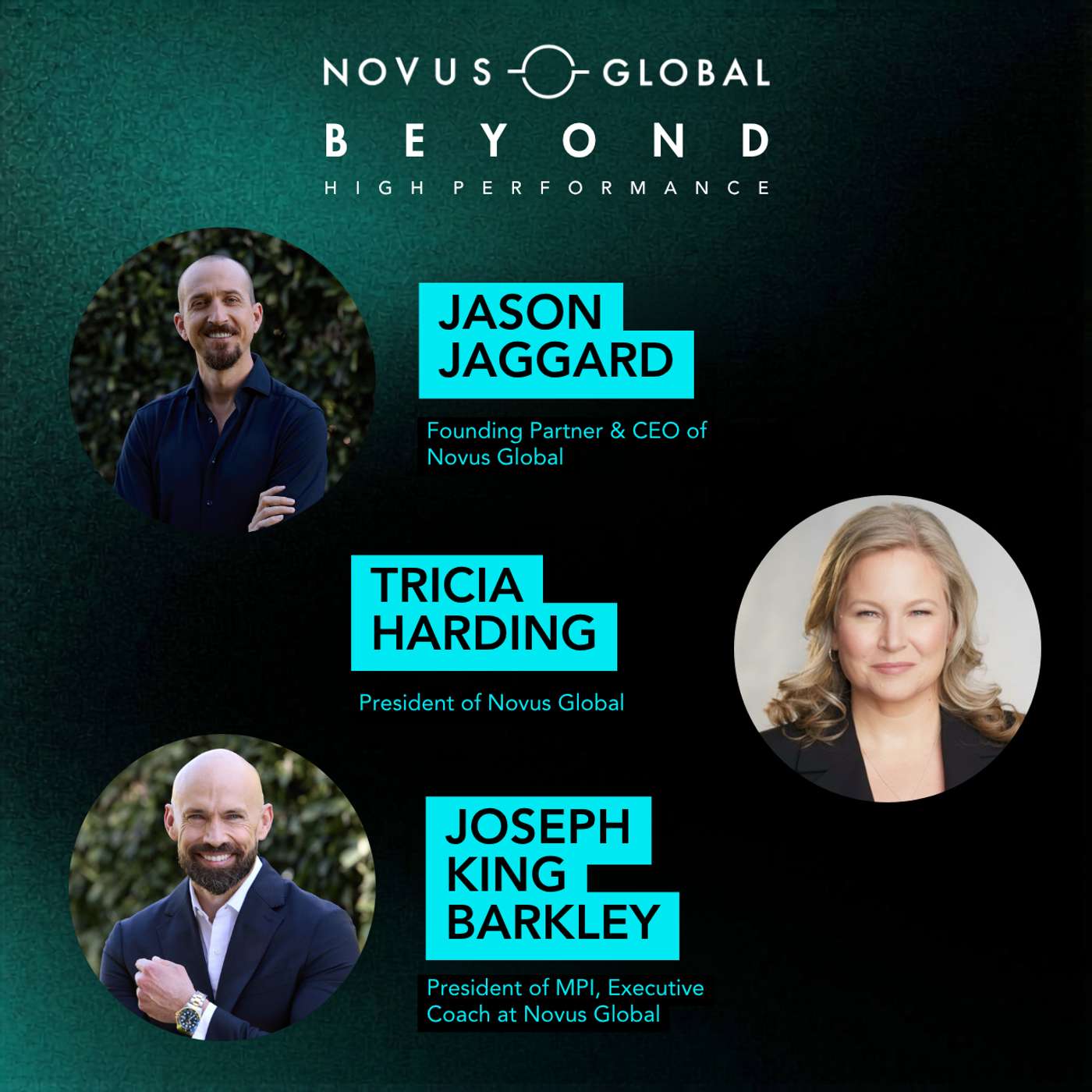 Are You Training Your AI, Or Is It Training You?75 / 100
 The Summitless Peak: The Endless Pursuit of Mastery48 / 100
 Profit on the Other Side: What It Really Takes to Go from Survival to Strength46 / 100