
Ahrefs Podcast · 2026-07-21 · 1h 2m
Key moments - from our scoring
Substance score
68 / 100
Five dimensions, 20 points each
Amanda Natividad, VP of Marketing at SparkToro, discusses her book and philosophy of zero-click marketing, which she co-authored with founder Rand Fishkin. The concept doesn't mean abandoning website traffic; rather, it acknowledges that social platforms algorithmically suppress links, so successful marketing requires building trust and recognition first through native content, then leveraging owned channels like blogs and email for conversion. SparkToro demonstrates this in practice: their audience research blog posts rank organically for relevant keywords, drive traffic via RSS-fed email (9,000 - 10,000 subscribers), and get repurposed into social media posts that later drive recall searches. Amanda rejects traditional attribution models as flawed - Google and Meta bias credit to themselves, conversion windows are arbitrary, and loyal customers often convert outside measurement windows. Rather than chase paid advertising returns on content, she frames the work as impact-focused, believing zero-click marketing scales reach efficiently through reduced friction. For B2B leaders skeptical of social ROI or frustrated by platform algorithm changes, this episode challenges conventional thinking about content distribution, attribution accountability, and the role of owned media in modern marketing.
Zero-click marketing means creating valuable, complete content directly on social platforms (like LinkedIn or Twitter) without withholding value behind website links or CTAs, acknowledging that platforms suppress link clicks algorithmically. It builds brand recognition and trust first, so when people later search for your company or category, they find you.
SparkToro uses organic SEO (targeting audience research keywords), an email list of 9,000 - 10,000 subscribers fed by blog RSS, and social repurposing: they condense blog post ideas into pithy 80-word LinkedIn posts that prompt people to search for the full article later.
The team is small (2.5 people), skeptical that paid spend will 2 - 3x ROI, and prioritizes organic reach and impact over short-term conversion tracking. Amanda believes high-quality content scales efficiently without paid amplification.
Attribution platforms like Google and Meta bias credit to themselves, use arbitrary conversion windows (7 or 30 days), and often miss loyal customers who convert after the window or consume multiple touchpoints like podcasts and blog posts before deciding.
Attribution is flawed; instead, track brand awareness, email list growth, organic search rankings, and customer retention patterns. Zero-click content builds algorithmic capital and trust that convert over longer, unmeasurable customer journeys.
Our reviewer’s read on each dimension, with quotes from the episode.
The episode contains solid, well-articulated marketing philosophy around zero-click marketing, attribution, and reputation building. However, much of it rehashes concepts Amanda has discussed in previous interviews (as the host acknowledges using Claude to pull from past appearances). The core ideas - leading indicators over attribution windows, building brand through consistent value delivery, measuring what you can control - are substantial but not novel within the B2B marketing discourse. The debate structure does surface some practical tension (quantity vs. quality posting, paid spend justification), but resolutions tend toward philosophy rather than new frameworks or data.
zero click marketing means it doesn't mean not wanting the click, right? It means creating value before the click and not being dependent on that click to happen every single time
instead of being so obsessed with what you can find in attribution, instead measure what you're doing. Measure the success of the work you're doing ongoing. Look for your leading and lagging indicators
Amanda's core thesis - that platforms suppress outbound clicks, so marketers should invest in native value creation and organic discovery - is now well-established thinking (she notes it's been four years since coining 'zero-click marketing'). The framing around 'reputation' instead of 'personal brand,' jobs-to-done framework for marketing, and the idea of 'taking ideas on a tour' are sensible repackagings rather than contrarian breakthroughs. The SparkToro usage examples are practical but predictable applications of audience research (finding where audiences hang out, keyword topics).
your personal brand is just your reputation at scale, right? It's how others perceive you
if you take a jobs to be done approach to your marketing, you could look at each asset, your team works on, each campaign, each project as having a job to be done
Amanda Natividad is a strong guest: VP of Marketing at SparkToro (a real, revenue-generating product), author of an upcoming book, and genuinely operates at scale with a visible, engaged audience. She has shipped products, grown followings, and built repeatable marketing systems. This is not a pure strategist or talking-head; she is a practitioner with skin in the game. However, she is also now 'fractional' at SparkToro and is building personal brand/podcast presence, which slightly dilutes pure operator credibility. She's calibrated and articulate but not exceptional in seniority relative to her media presence.
VP of marketing at SparkToro, the audience research platform founded by no other than Rent Fishkin
she has grown a pretty significant following as a result
The episode lacks concrete numbers, metrics, and named examples beyond SparkToro itself. Amanda references 'one of our top ranking or top most visited blog posts has been this guide to audience research' and '9,000 to 10,000 subscribers' on an email list, but provides almost no specifics on campaign performance, customer acquisition costs, revenue impact, or detailed case studies. The SparkToro usage walkthrough (searching keywords, AI prompts, analyzing social platforms) is explained but not shown with data. No dollar figures, conversion rates, time-to-value, or concrete ROI are discussed. The 'force of nature' and 'dreamdata' examples of zero-click marketing are named but not evidenced.
one of our top ranking or top most visited blog posts has been this guide to audience research
We have something like 9,000 to 10,000 subscribers there
Tim is an excellent interviewer who sets up productive disagreement upfront ('I'll try to put myself in the shoes of devil's advocate'), pushes back substantively on key claims (attribution logic, paid spend skepticism, quantity vs. quality posting), and follows up with specificity ('Can you give me an example of, uh, what you discovered in SparkToro?'). He also fact-checks Amanda's own framework (you can't really know posts are mediocre; you never truly know what will hit). However, he occasionally accepts partial answers without drilling deeper (e.g., podcast data gathering methodology is left vague), and some of his pushback, while valid, doesn't force Amanda to materially revise her position - they mostly agree to disagree on frame rather than substance.
if you could prove attribution, if you had this link and if you saw that people are clicking this link and signing up...you wouldn't have any issues just throwing a lot of money into your content
everyone thinks that whatever they're posting, uh, is great. This is the first thing. The second thing is from my own posting on LinkedIn, I coded an interesting dashboard
Computed from the transcript - who did the talking, and the words that came up most.
Zero-click marketing doesn't mean you don't want the click - it means you stop being dependent on it. Amanda Natividad, VP of Marketing at SparkToro, coined the term and joins Tim Soulo to defend it against every skeptic's favorite objection: "If nobody clicks through, how do people actually buy your stuff?" Amanda is one of the sharpest, most opinionated marketing voices online, and the co-author (with Rand Fishkin) of the book Zero-Click Marketing. At SparkToro, the audience research platform, she's built a significant following by practicing exactly what she preaches - creating complete, useful value wherever her audience already is, instead of teasing a payoff to lure people to a website. In this conversation, Amanda breaks down the difference between the tactical "jab, jab, right hook" of zero-click content and the bigger brand-building strategy behind it. If you've ever asked an AI search engine "how do you still get traffic to your blog if you give everything away on social media?" - Amanda answers it directly, revealing how SparkToro uses SEO, email lists, and repurposed theses to make sure people can still find (and buy from) them when they're ready.
Transcribed and scored by The B2B Podcast Index.
Speaker A: My today's guest has coined the term zero click marketing. Her name is Amanda Natividad and she's the VP of marketing at SparkToro, the audience research platform founded by no other than Rent Fishkin. Amanda is one of the sharpest, most opinionated marketing voices on social media, where she has grown a pretty significant following as a result. So here's my rough plan for today's episode. First, we're going to debate the idea of zero click marketing a little. Then I'm going to ask Amanda for some tips on growing my social media following and connecting with my followers better. And finally, we'll talk about how SparkToro team uses SparkToro to grow SparkToro. Amanda, um, um, welcome to Ahrefs podcast.
Speaker B: Oh my gosh. Thank you for having me, Tim. I've been a, uh, longtime listener, you know, first time caller and it's really fun to be on the show.
Speaker A: Well, thank you. And uh, we did try to get you to Ahrefs podcast for quite a while and finally the stars aligned and we are here now. And, uh, it's also good because you're now promoting your book Zero click Marketing, which I'm excited to talk about. So, first of all, important disclosure, uh, in principle I agree with your ideology, but it wouldn't make for an interesting conversation if we just agree on anything. So I'll try to put myself in the shoes of devil's advocate and try to kind of push on your ideas a little. Starting from zero, uh, click marketing means you're not, uh, trying to get clicks to your website, but you still need them because how are people going to buy from you? How they're going to buy your products or services if they won't visit your website? So how do you address this dichotomy? So, yeah, you need to create content for social media platforms and whatnot that doesn't push people to click because then it would perform well, it would be rewarded by the platforms. But at the same time, you do need people to visit your website because this is where you sell stuff. How do you go about it?
Speaker B: Well, I think first, you know, all marketers say this and I'm no different. It depends, right? It's the thing that we marketers always say, but we all hate it. I'll start by saying, you know, zero click marketing means it doesn't mean not wanting the click, right? It means creating value before the click and not being dependent on that click to happen every single time. And it really also just means giving people something complete and useful wherever they encounter you instead of withholding that payoff or just kind of teasing that, teasing that payoff until they visit your website. So our goal is still to earn customers, even though that click isn't going to happen right away. And it's, I think it's now, especially now, um, a much more realistic way to look at the customer journey because it acknowledges that the path begins with recognition and it goes on with building trust and recall. And it's not just about trackable sessions anymore.
Speaker A: And yet what are the mechanics of still getting people to your website? Is it about uh, the old principle from um, Gary Weinerchuck, jab, jab, right hook, where you post zero, uh, click content for a while and then you post something where people need to visit a link or is it about uh, people discovering your product and service via zero click content and they, they need to, I don't know, go to search engines and do their searches themselves? Which is it?
Speaker B: That's a really interesting question because I think it's both. But the first one, the jab jab, you know, right hook, that is more of the, the tactical, um, day to day of zero click marketing. Right. It's thinking about how you post very strategically on social media. But the second thing you described, that's the strategy of zero click marketing, right? It's, it's basically building a brand, doing marketing in such a way that people will know to find you, search for you when they're ready, and that you will already have, you know, essentially this body of work that is very findable and trackable on your website. But it's only after once people get there that they'll be able to see all of it.
Speaker A: What made you write the book in the first place is that you see that a lot of marketers are still not embracing the fact that social networks reward native content and they're still trying to push to get that click to your website. Or what's the main reason? What kind of, I don't know, uh, mistake you see marketers are making that made you want to write this book?
Speaker B: Yeah, I think when I first started talking about zero click marketing, gosh, it was almost four years ago, four years ago now. And I had started by calling it zero click content where it was essentially the jab jab, right hook thing. Right. You give that value first content directly on social channels and then kind of eventually lure people to your website. That was how I saw it then. But I saw it that way because of the way we've seen the platforms hoard traffic for themselves. Know, essentially ban, not ban, sorry, not ban, um, suppress you algorithmically for posting links. And I thought, well, this is kind of the way forward. But over these past four years we've been seeing a lot of these trends accelerate much, much faster. Right things. And with the rise of AI tools, that's obviously accelerating that even more. And so I wrote this book, well, co authored it with Rand Fishkin. We wrote this book as a response to people who are still kind of skeptical of it. You know, people who are like, but we do need to track everything or what do you mean? We never, you know, never ask for a click. And it gave us the opportunity to dispel some of those myths, right? So the easy ones, right, like we're not saying never, never go for the click, right? We're not saying that. We're saying don't be dependent on that to happen in every single marketing campaign or project that you work on.
Speaker A: So I haven't read your book yet. I only pre ordered it. By the way, when, ah, are they going out?
Speaker B: The books should be by October.
Speaker A: Oh, ah, okay. That's quite a wait. So we are early, uh, discussing your book. Um, Anyway, I visited SparkToro Blog and you still publish articles on your blog. Uh, how do you get traffic to those articles if at the same time you promote the idea of zero click content where essentially you take the central idea of the article and you repurpose it for whatever social network, uh, or platform where you want to post it. So how do you get traffic to your blog articles?
Speaker B: Thank you for asking this. No one ever asks this. They acknowledge.
Speaker A: Well, welcome to Ahrefs podcast. What can I say?
Speaker B: We ask the questions. No. Um, so for this, I'll say this. So our website is still set up correctly. You know, we still, we care about SEO with respect to like our, you know, are the robots and search engines crawling our website and indexing it correctly. Obviously we care about those things, right? We want our content to be legible, readable, easy to understand. But you know what I mean, like for the audience. And those things are SEO implications. So we think of these things. One, when we think about what content creation as, like, what are the things that we want to read about as marketers? So that's our starting point. And yes, there are times that we do care about keyword research in that traditional sense. Maybe the best example I have of that is one of our top ranking or top most visited blog posts has been this guide to audience research that I wrote. Right? So audience research as a term doesn't get massive keyword, keyword, um, keyword volume, right? It gets a decent amount. But I figure, well, that's the category we're in, right? SparkToro is not a keyword research tool. We're not a market research tool. We are an audience research tool. And so I figure, well, if someone's going to search for that audience research, right, I want us to rank for that. I want us to have one of the best resources you can find on that. And so that is still one of our most visited blog posts ever. So I will say part of how we still get traffic to our blog posts is through SEO, but it's also through our email list, right? We have multiple email lists, one of which is really just a blog RSS feed. So you can subscribe just to our blog posts. We have something like 9,000 to 10,000 subscribers there. And then social media, we repackage the blog post into a thesis that's much more simplified and easier to catch the eye of somebody scrolling by. And so we'll will repurpose the idea or the thesis into a pithy, you know, 80 word LinkedIn post. But then maybe a week later you think, oh, didn't Amanda say something about public evidence and demand? What was that again? Maybe a little search for it and then they'll find it on the SparkToro blog.
Speaker A: Yeah, that was kind of my next question because, uh, it's almost that your website needs to be kind of the central point of truth or something like that. And I think I saw that somewhere in your content a long time ago where you were, uh, describing how you promote a specific idea, where you like, record webinar about it, office hours, YouTube video, you go to podcasts, you deliver a talk and everything is about the idea. And uh, one of my teammates, uh, Louise, when I was interviewing her for a job at Ahrefs and I asked her, okay, like creating content, we discussed that, but how do you promote it? How do you distribute it? And she said something, uh, she phrased it very nicely to the point that I still remember it. She said, I like how Rand and Amanda do it. They take their ideas on a tour. And I'm like, wow, this is such a good way to put it. Take your idea on a tour, don't just publish an article, go post about it on social media, go to podcasts, write a book about it. So you're still taking the idea of zero click marketing and zero click content on a tour, but at the same time when you create all this content. Yeah, like if people need to recall it. If some journalist is writing an article and they want to mention your work and they try to look it up. I think social networks are terrible for looking up past content. Maybe like because of the sheer volume of it, maybe because the posts are so short and it's very hard to find which one is which. But it seems, yeah, the website is still very important. And again, probably more so in the age of AI assistants, because I don't feel that, I don't remember in Google that I would find a lot of links to someone's LinkedIn or X posts. And same with, uh, AI assistants like ChatGPT, Claude, whatever. I don't remember them referencing individual posts on social networks. But they do reference websites all the time. Like, is that in line with your thinking?
Speaker B: Absolutely, yeah. And I love that phrasing, taking your ideas on a tour, right? Because I mean, it's also this, right? If you have an idea that you really believe in and you want to defend it, it's a hill you want to die on. Chances are it's worth a blog post. And not everything needs to be like 2,000, 3,000 words. It might be a nice tight 800 word blog post. And if you, on the flip side of that, if you don't have an idea for which you're willing to die on that hill, then maybe it wasn't even really worth, maybe it's not worth a blog post and therefore maybe it's not really worth spreading or looking up later. So I am, um, such a big, big believer in taking your ideas on a tour. And the other thing too is that it gives you continued opportunities to, to stress test these ideas or these examples. Like maybe when you're first forming the idea, like if I could do this in order, you know, like I would, I would do a webinar first. Like, um, well, maybe I would do like a pithy social media post to kind of like test the waters and be like, oh, do people like this? And then I would do a webinar next because the webinar would be, it would basically be like my draft blog post where I would bring for the ideas first. Like, oh, I think this is how you should think about this. Here are some examples. What do you think? And then seeing real time, if people in the chat, you know, or Q and A are like, this doesn't make sense, I don't know what you're talking about. Can you give a different example? Right? This is the best opportunity to get live feedback. And then after that you refine the presentation after that it becomes maybe the blog post, maybe you do a podcast episode on it or you, you use it as a talking point in other podcasts. Right. And then over time you can build up to this presentation becoming something you present at like AHREFS conference.
Speaker A: Exactly. Yeah. So uh, basically we can agree on the fact that zero click marketing doesn't mean you stop publishing content on your own website and you stop expecting people to visit your website. Because that is not the point of zero click marketing.
Speaker B: Right.
Speaker A: It's just the way that people get to your website gets a little bit different because previously you could get traffic from social networks and other kind of uh, platforms on the web more easily, while right now uh, they don't encourage people to click away. So you need to be more strategic in a way, uh, of incentivizing and motivating people to go and find. You go and find your work which they heard about on social networks.
Speaker B: Yeah. And the way I think about it is think of your, the content you post on social media, right? Think of that as like you're building algorithmic capital, right? You're making these many deposits into your algorithmic bank. Each zero click post is depositing a little bit just to build up more algorithmic capital, right. Maybe it's like your hot take a how to um, a ah, de identified case study, right? And then you do these things where you're sharing just that value upfront. And then you know, maybe after three or four or five posts, then you post something with a link that's like, hey, book a demo with me, subscribe to my newsletter. You cash in on a little bit of that algorithmic capital or goodwill so to speak.
Speaker A: Uh, in that, in that regard I loved uh, the post when uh, Rand Fishkin posted about uh, the announcement of the book and he said ironically, you'll need to click here to go and order a copy uh, of the book. So that was actually fun. Uh, one other interesting thing, uh, we, or rather Claude Cod. Because now Claude Cod is helping me to prepare to those interviews and like eats all the like past, not all the past interviews and like a few of the most recent uh, interviews you've done. And based on like my uh, typical line of questioning, it helps to find me interesting angles and the angle it has found. Let's make sure it's not a hallucination. But you spend zero on paid advertising at Sparktoro, is that correct?
Speaker B: Yeah, that's true.
Speaker A: In that regard, my question is, well, basically why? And I'll uh, explain a little bit, a little Bit more. If, for example, here at Ahrefs, if we post something on social and we see that idea is taking off, whether it is, has a link to our landing page or whatnot, or it's just purely an idea of something we've done at Ahrefs, or some native explanation, uh, of a new feature of a new product and we think it has legs, we would put some paid budget behind it because why not pay for more people to see this cool thing? So I wonder, how come you are not using any advertising at SparkToro?
Speaker B: Well, I guess there are a couple of reasons. I mean, it's still just the three of us and actually now I'm fractional time at SparkToro, so it's two and a half of us at the company. So we're a small team. Um, we've historically just have been a leaner team, leaner operations, leaner budget. And a lot of what we do is like, well, we, we pay for consultants and agencies, right? We pay for the work to get done. We make sure it gets done right. But I guess I'll just say I think ultimately it comes down to incrementality, right? We, we're just skeptical that whatever we pay for is truly going to grow the business over time. Like, we're just skeptical that, let's say we do throw in, uh, like tens of thousands of dollars into some kind of paid channel. I think, yeah, we can make it decently efficient. I think it's just that we don't think it's, we're ever gonna like 2x or 3x that investment. It's probably going to be like just positive return on ad spend. And for that reason, like, that doesn't feel worth it to us.
Speaker A: Okay, that was kind of a trick question to segue into the topic of attribution. Uh, and I'll explain why. So the thing is, if you could prove attribution, if you had this link and if you saw that people are clicking this link and signing up, and you would put some budget behind it and you would see that for every like hundred dollars you spent, you get 150 back, you wouldn't have any issues just throwing a lot of money into your content to promote your content because you know that, uh, it brings you value. But you replied with exactly that. You cannot know what exactly, uh, it does to your business. Therefore you don't really bother, uh, putting some advertising spend behind it. But, uh, at the same time, you created this content for a reason. So you created it because you feel it has some value to your company, essentially, because at the end of the day, we're not, I, uh, don't know, philosophers sharing our thoughts on social media just because we need to grow our businesses as a result. So when you post something, you, uh, well, not every time, but eventually you want to tie it back to your product so that people would get interested in your product, go and sign up. And in such cases, when you know that a piece of content is tied to your product, why not advertise it? So I have, like, I also almost finished a book that I'm, uh, that I'm about to publish, and there I'm using an argument that I was using for quite a while, uh, in my kind of previous content and videos and such. Um, if you can justify spending money to promote your content, how did you justify spending time and effort to create it in the first place? So basically, back to you.
Speaker B: No, I like that question. Well, sometimes you work on things because you just feel like the idea is worth it, because the work, the output itself is like, that's the work you want to do. You know, it's an idea you believe in. So you write it, you produce it, you create it. And it's not that. Like, I guess I just don't see it like, I did this thing, therefore it needs to tie back to my product. I think it's just. It might just be like a different worldview, you know, where, like, the way I see it is just I do these things because I believe it makes the marketing world better. And therefore that, that's worth it to me to know that I can help people with this content or with this book, right? Like, those things matter to me. I think, I think I just think of it as, like, do I care more about, you know, trying to get people to become a buyer of my product, or do I care more about making an impact on how people are thinking about marketing over time? And so I care more about impact. And I think, and, uh, this is probably just a me thing, right? Like, with regards to me and my work, I just care more about impact than tying it to roi. And it's a little bit, again, this is just, for me, it's a little bit of that leap of faith in, like, trusting the universe that, no, I'm going to focus on this work because I believe in it, because I really want to change people's minds around how they see marketing. And I want to do this at scale. And I believe the way to do this is to reduce friction, to getting to my blog posts, to my Podcast to the book over time. Now, all that being said, do I hope my book sells thousands of copies? Obviously, yes. Like I do, right? Like I want lots of fun, why else, right? Like I do want those things. So I think it's a valid question, right? Like if it's worth putting in the effort, why would it not be worth spending on? Maybe I, and also by the way, I can change my mind, right? Like there might be a world in a couple months, maybe in a year or something where I decide to put some paid spend behind the book. That's possible. You know, I don't think it'll happen today, but I'm not opposed to it. Maybe the other, other part of my messy answer here is just I don't have a lot of budget to start with, you know, like maybe it would be, maybe it would shift my mindset if I just had like, if I put together like this is my fund of $10,000 or whatever, right? Of this is my advertising budget. I'm going to use this across LinkedIn, creator marketing, you know, whatever channels and then I'm going to trust these are good bets and I'm going to measure how this is doing over time. I could do that. I think it's that I'm probably stubborn and don't want to and I think I can, I think, I really think I can accomplish much of this, reach fully, organically. Mhm.
Speaker A: So like I said, this was the question leading us into the topic of attribution. Because here's the thing. You, uh, and random are marketers at heart. You understand how those things work and why you do them on like deep, whatever, visceral level or something. But a lot of marketers are working for their boss who is not a marketer. So when they do zero click marketing where they post content on different social networks without necessarily having links to drive visits to a website, at some point their boss would ask them like, why are you doing this? How is it helping us? Yeah, they might not, uh, have a paid spend, so they might not need to prove the value of $10,000, I don't know, per month that they're spending on advertising and make sure that this comes back with profit, but they're still investing their effort to do something. And how does their boss know that what they're doing is effective for the business? So again, I didn't have a chance to read your book because it is not out yet. I don't have it in my hands. Uh, I'm very excited about it. Uh, but I would imagine you are addressing the attribution argument in your book. So how do you address that?
Speaker B: Yeah, so I mean, one, I would say, look, first it's, it's first, it's attribution is flawed for a number of reasons, right? Like the, the platforms that we use to attribute things, Google Meta, right? They, they all bias to themselves. Google's always going to want to claim credit. So will Facebook and Instagram. So that's one. Also, the conversion windows are arbitrary, right? Some of them use a seven day window, some of them use 30 day, right? This can change at any time. But part of it is like you're not even looking at the exact right comparisons. Not to mention the fact that if something happens on the eighth day, let's say it's a seven day conversion window, something happens on the eighth day, which happens quite often. And there has been some research on this where people have seen that the person who converts on the eighth day is invisible to the, to the attribution window. But they're also very likely a more loyal customer, right? Because maybe it's somebody who took their time to do some research or they had another set of nudges along the way, like maybe they also consumed a podcast episode or read a blog post. So that's one. But then even if you do get attribution, if you're like, okay, Google said this, now this is again, maybe philosophical. It's, well, what does that tell you? Like, what were you going to do with that information? You put all this, let's say you put all your budget into SEO and content and SEM ads and you see, okay, Google converted this customer. How does that actually materially help you all? It just tells you that, it just tells you that you put money in this thing and then you got one thing out, you know, like it does, does it actually change your decision making day to day? I really don't think it does. That's kind of the main thing I push back on for when executives ask this thing. I'm like, if you, if you do know your attribution, like if you know, like, oh, we get 20% of our traffic from SM. Um, okay, fine. One, what if you turned it off for two weeks or a month? If you turn it off, what would happen? Well, most likely you would see a lot of that traffic shift to organic, right? Because that would, that would only be the other mechanism for which they would come through. But then two, even if you did know, like, okay, came from here, how does that change what you do next? And it usually doesn't that's my M. That's my personal main quibble with it. So what I say we should do instead, this is also in our book. It's instead of being so obsessed with what you can find in attribution, instead measure what you're doing. Measure the success of the work you're doing ongoing. Look for your leading and lagging indicators. Right? A leading indicator might just be your impressions and follower growth on a social media platform. Right. A latent or lagging indicator might be, um, email subscribers. Over time, maybe it's demos booked, right. And maybe over time it's branded search increase, um, share of voice increase, hopefully maybe it's even increase in AI visibility. Right? Like those are, those things are things that you can track over time. Those are measurable, those give you some goal posts to reach for and it's more realistic because those are things you can actually see. I guess going back to the attribution thing though, even if you do get the click from TikTok, LinkedIn, whatever, most of the time it's going to be marked as direct anyway. You're not even going to know it came from there. Right. So, uh, specifically the platforms like TikTok, WhatsApp, Slack, Discord, and if you care Mastodon, 100% of the time that shows up as direct traffic. So if you're saying like, oh, we should do more on TikTok, what would that mean for your business? Just give TikTok money. How would you measure that? How would you measure that? Between that and organic on TikTok?
Speaker A: Yeah, like I said, uh, in the beginning of this interview, I'm very much, uh, in agreement with you, uh, on all of that, uh, marketing philosophy, uh, let's call it that. Uh, I just have slightly another way to put it. Yeah, I condensed it, uh, in a sentence. So basically, if you get attention or like, if marketing gets attention of relevant people and talks about the product that you sell, how does it not have value to the business? So basically I'm flipping the question instead of me answering to CEO or boss or client, whatever, how does my work, uh, grow? The bottom line, I tell them I got the attention of relevant people who are kind of in market for what you do. I show them, uh, your product, your service or like some qualities of your product. So they saw it, they learned about it. If they convert it or not into customers and sales. It's not really up to me at this point. And you had a version of that because Claude flagged this from some of the previous interviews. Um, if you've got the impressions, you're talking about your product and no one buys. That is a business ICP problem, not marketing. So you talk, um, about the same thing as well.
Speaker B: Yeah, I think I'll, you know, adding to that, I'll also say something else that I. Or another way I think about this too, is looking at marketing as jobs to be done, right? The jobs to be done strategy by Clayton Christensen and Bobby Mosta. You think about how in this case, you know, in their, in their, um, framework, it's people hire people like customers, right? They hire products to do a job for them, right. They might buy designer sunglasses to buy status, right? For the job to be done is to, uh, be fancy, right? I don't know. In the case of marketing, if you take a jobs to be done approach to your marketing, you could look at each asset, your team works on, each campaign, each project as having a job to be done. But the job to be done is serving another function of the business. So one example could be maybe the marketing or content team puts together some blog posts, other written collateral that help address some common questions you get about your product, right? Maybe it's woven into a narrative that fits really nicely on the blog. In that case, the job to be done would be things like the client that it serves then is customer success, right? The job to be done is within that realm of customer support. And then the way you track success of that would be things like reduced contacts, right? Fewer customer support tickets. Um, maybe it could be retention over time, right? Like those are things that you can have a pretty direct impact on. And in the short term, you could even report on that as, hey, we followed up with the customer success team. They said that they are spending three hours less per week answering this question. Right? Like, that would be pretty solid.
Speaker A: Yeah. Let's wrap up the topic, uh, of marketing attribution and switch to another one which is growing. Uh, your personal brand and your following on social media. Because you said something interesting in your previous interviews. Kill, um, the term personal brand. Call it reputation. Can you explain this to me, please?
Speaker B: Yeah. So I say this because, like it or not, we all have a personal brand. Sorry, your, your personal brand is just your reputation at scale, right? It's how others perceive you. And, you know, perception is reality. If people see you a certain way, then that is their perception of you. And something you're putting out there is probably contributing to that, right? So the way I see it is we all have a personal brand anyway. We all have a reputation. So you might as well, take control of it, right? If people are going to search for you or find you online, you might as well control that narrative. I mean, it's you and it's your own story, right?
Speaker A: So if I, if I stop referring to what I'm doing as personal brand and they start referring to it as reputation, how does this change my approach? What should I stop doing? What should I stop focusing on in regards to that and how else should I change my thinking? Why are you suggesting for people to stop calling it a personal brand and start calling it a reputation? Because I, uh, imagine on the back end it requires some change of approach, right?
Speaker B: Mhm. Yeah. Because I think when you think of posting online and representing yourself publicly, right? If you think about that as managing your reputation, then your bar for what you want to put out there is raised. You know, like, uh, if, if you're, if you're thinking like, oh, I want to build my brand, I want to be known as, you know, the, I'll make this up, right? I want to be known as like the best email marketer ever. And um, fine, you can do that, right? But then you might then be thinking, okay, post email marketing tip, email marketing tip, email marketing tip. And that's fine. But if you think about this as managing your reputation in the field of email marketing, for which you want to be seen as like the thought leader, right? Then you're going to be thinking about, about this a little more critically. Like you might be like, great, I'm going to have a couple of email marketing posts. Oh, uh, but this is my reputation at stake here. I, I want to veer out a little bit and I want to talk about what it's like to work with me, or I want to talk about what my expectations are when I hire a consultant or when I'm, when I go in house. I want to talk about the bar that I set for my team, right? You start thinking about like you, yourself as a human and your reputation. Whereas if you're just thinking of how do I grow myself as a brand, you kind of dehumanize yourself or you risk doing that at least.
Speaker A: Okay, uh, parasocial relationships. This is the next thing I wanted to talk about. And uh, this is fun because we started our, today's call, today's conversation from kind of admitting that our relationship with you so far has been parasocial because this is the first time we actually talked to each other, but we consumed each other's content quite a bit. So it feels like we know each other. But in that Vein. I would like to ask you, other than simply putting out content online, is there something specific you need to be doing to kind of develop this parasocial relationship with people? And uh, to be more specific, is it about sharing more of your personal life or just showing up professionally is enough? What do you think? Mhm.
Speaker B: That's interesting. I guess I would first ask, do you want to create more parasocial connections? You know, that's, that's a broader question, but I will say to do that. I think the biggest thing in a, the main thing in a parasocial relationship, like when you feel like you connect with someone on a parasocial level, right. You, you're thinking probably that the things that person puts out there, it makes you feel seen, right? You, you read this person's content or you watch their videos and you think, uh, that's me. Or I feel that, I feel so seen. And I think it's that, it's whatever that is, you know, achieving that feeling in someone else, that's what makes them feel like they connect with you where they're like, oh, Tim really described this problem that I really feel as a cmo. He gets me like, he's my, he's my people. You know, it's that. It's a little hard to explain that on a very, you know, tactical level, but I think that encapsulates it.
Speaker A: Yeah, that's interesting and I think, I think I agree with you on that. But the reason I was asking you this question specifically is because, uh, in the years that I was following you and we were connected on social media, I noticed that generally you posted a lot more personal stuff than I did. It probably just comes natural to you to post about, I don't know, your family, your struggles at, uh, something with home or personal, uh, and uh, my content is 98, maybe 99% is just professional. I don't really post much about what's happening in my home, family, uh, or even kind of broader, maybe psychological, some struggles or questions. I'm wrestling with this kind of stuff and I always thought, should I be doing this? Is this a good way to connect with uh, people online on a deeper level where you develop this more kind of meaningful, stronger connection to them. But yeah, it looks like what you're saying, it's more about you understanding them, um, rather than simply sharing your personal life with them.
Speaker B: Yeah, yeah, that's what it is. It's like if you are sharing your personal life or something from your personal life, why are you sharing it? You know, like Rhetorically, what is that for? Right? Is it to vent about something that happened on your way to work, or is it because you experienced this really annoying thing while you were sitting in traffic right where you thought, oh my gosh, this has to happen to everybody else. This thing is so annoying. And then you post that thing and people are like, uh, oh, that happens to me too. Every day when you're making a left turn, three of you can go. When it turns from yellow to red, come on. It's not just two of you. Three of us can make it if you hurry.
Speaker A: And I think it's not just about pointing out something that happens, but maybe offering people some kind of solution or a way to cope with it or a way to get over this. Because if you just share an observation that people have. Yeah, okay, but if you kind of suggest them a way to deal with it that they would find useful, then they're like, oh, this person is like me. And they seem to figure out how to deal with those kinds of things. So let me follow them. Maybe I'll pick up some more of such tips or, uh, wisdom for a bigger word. Am I thinking in the right direction?
Speaker B: Yeah. And I think one thing, one other thing I'll add to that is think about the conversations you want to have on that post. You know, like if you, if you write about something about parenting and you people start engaging in that conversation with you, what would you want that conversation to look like? You know, like one too obvious example might be like, this is my kid's Halloween costume. Post your kids costume, I want to see. And that, that's pretty straightforward. Yeah, but using that as an example, then ask yourself, do you want to see other people's kids in Halloween costumes? And maybe you do, maybe you want ideas, right? But it's a broader question of like, well, if you don't care, and maybe you don't, I don't care, I wouldn't post it. Right.
Speaker A: Or maybe you want to know that your kids Halloween costume is still the best out of everyone.
Speaker B: I wanted confirmation that my kid's costume was the best.
Speaker A: One other thing that, uh, we've picked up from your previous interviews, which I quite directly disagree with. And let's talk about it. Let's see if we'll find some common ground. You said that, uh, posting three great posts beats, uh, posting five mediocre ones. So I disagree with you, uh, quite strongly and I will explain why. First of all, I, uh, don't quite think that a lot of people think of their posts as Mediocre. Everyone thinks that whatever they're posting, uh, is great. This is the first thing. The second thing is from my own posting on LinkedIn, I coded an interesting dashboard where I have a bunch of people, I think you're there as well. And uh, every few days it scrapes how many times people have posted and what's their following. And basically I can see how fast everyone's audience is growing. And the most striking correlation that I've noticed, not studied the numbers, but notice the correlation is the more you post in a given week, the more followers you get in a given week. So your pace of posting is correlated with growth of your audience. Without, like going, did you have big hits? Did you not? And sometimes I would see that someone would have a very big hit, but it didn't bring them, uh, that many followers, interestingly so again, we could probably be digging into details more and more, but in that sense there's this famous, uh, experiment or study or maybe a tale, a fable. Some people talk about a photography class, some people talk about pottering class. I need to really, uh, dig which is it? But basically there were two groups of students and one group was tasked to create, uh, one amazing photograph by studying all the photography rules, blah, blah, blah, and submit an amazing photograph. Another group was tasked to make photos every day, M. Make multiple photos every day and submit, I don't know, 10 of their best photographs by the end of the quarter or whatever. And the thing is, uh, as a result the photos that the quantity group has submitted were better than the one photo of a quality group. And the explanation is they just had more practice to understand what's working, what's not, what they don't like. While the people who submitted just one photograph, they didn't have that experience, so to say. And finally, one final argument. It's you never really know what's going to hit. So I saw a post from my friend, uh, Nat Eliason. If I pronounce his name correctly, he, uh, didn't post on his blog for a while, for maybe a year or something. And then he quickly threw an article together, posted it, and it performed better than anything he can wrote, to which he concluded that even after years of blogging and creating content online, I still don't have like a good intuition of what is going to hit or not. Because sometimes you post something that you don't think is particularly exciting and then it takes off. So these are my arguments. Let me know if you disagree with any of them and uh, if you are ready to change your Stance on uh, three great posts versus five mediocre ones.
Speaker B: Yeah, no, I love this. I love that you came like, you came like ready to fight about this. I love it. So I think what's really interesting though is your three points address three different things. The first one is the correlation to, to follower growth or audience growth. We'll say, yeah, right, that that's one marker. If, if one were to say I need to grow my following as fast as I can, how should I do it then? I do think, all right, seems like the answer then is posting five times a week, like do the best you can, needs to be on topic content. I don't think you and I would disagree with like, needs to be focused on your niche and like have that goal. Like of course you both agree with that. Right? So that's like that. That is one aspect I will concede on that point of if your goal is the audience growth, that is something to keep in mind. Right. But two, what I think is so interesting about your second example of photography is that's sort of like the whole Ira Glass taste gap issue. The only way to get better at something is to keep doing it over and over and over again, which I believe that's true. But there also is a difference between posting everything you've come up with in a given week and creating every day that week and posting what you think is best. You can still get better over time as long as you're doing the work. Right. I would say that in that second one, that's probably more of the indicator that you improve over time with consistent practice and feedback. So I would say you can get practice and feedback without having to publish five days a week.
Speaker A: Mhm.
Speaker B: There's that. And the third point is you never know what will hit. I think that's true directionally. Right. I think, I think the other thing is that sometimes you do know. I think more often than not you do know what'll hit. You know, and that kind of comes like with practice. Right. I'm not saying like every single post, like I can, I can predict I'm m going to get 50 likes, I'm going to get 300, I don't know but I have, I usually have a pretty good understanding of like, uh, ah, this is going to be pretty good or I think this one's going to be a slow burn. People aren't going to get this right away, but they're going to reference it off more frequently over time. Like this post that I had on the Sparktoro blog this Idea that um, search only captures demand but the public record creates it. Right. That's not super catchy right off the bat, but it's a durable, long lasting like thesis one that I've slowly but steadily been getting traction on. Like that, the, the views of that post, that idea. I've posted this idea multiple times, multiple ways and it's getting more and more traction. It's like it's growing up and to the right there. So I think overall where I still, here's where I still, I still want to defend three great posts over five mediocre ones. Because I think a lot of the times when you are, when it's just you creating content, so maybe it's for yourself and a personal brand or you are starting to lead a team. The biggest barrier to overcome first is getting started. And it's a lot harder to get started if you think I have to do five posts a week. It's easier to get started if you go, no, I'm going to do three, I'm going to do three. I'm going to work really hard. I am going to, you know, like, look at the keyword research strategy behind. I want to see if these are topics that people are searching for. Like, yeah, cool, you can look at those things. I want to spend a little extra time on these ideas and I'm going to publish these three days a week. It's still regular, I'm still getting my practice, I'm taking my time a little bit more. But then maybe over time you can work your way up to five days a week if you can. Um, and maybe over time it's more sustainable for you because you can do five posts, five decent posts a week. Right. For every week for a year, you'll have more followers. But at the end of the year, are you going to be burnt out? Are you going to be like, I've said everything I can possibly say about this topic. I cannot do it anymore. So the other issue there is the sustainability issue.
Speaker A: Yeah. So there are two things that uh, we kind of approach differently when we talk about this topic. And this is why I like having those debates because, because there's this quantity aspect and there's this quality aspect. So when you said that to get started it is hard to publish five posts, I agree with you. But also I can say that when you're trying to get started, it's hard to write a great post because you might think, oh, this is not good enough, let me not post it. Oh, this is not good enough, let me work More about it, just freaking post. If you have an idea that is worth something, again, done is better than perfect, right? So I'd rather post something than would be, uh, perfecting it endlessly. Again, it applies to the book like crazy. I realized that I can be working on my book and improving it basically indefinitely. There's always something to improve. There's always something more to say. And as I was having this conversation with, uh, some of my co workers at ahrefs, um, I think it was actually our cto, uh, who said that, Tim. But you do realize that at some point you have to say, okay, this is good enough, let's send it to publishing because you will never end working on the book. And I'm like, yeah, this makes sense. So this is kind of the angle that I'm approaching with this debate that don't wait for a great post, a perfect post if the post is good enough. Mediocre. Yeah. Like, what is mediocre? Mediocre is like, I ate some cereal the morning post. Uh, but yeah, my point is that, uh, just start posting. Yeah. Put some effort into it. And yeah, I'm not posting five days a week. Uh, it's like, it's very hard to do again because then you would have to compromise quality a lot. So I think we're in agreement in what we're saying. We're just approaching it from different standpoints.
Speaker B: Yeah, I think so too. And I think, and also a case of you and me, or really anybody, it's, well, do I want to post five days a week? You know, you might just be like, I don't, I don't care enough. I don't want to do that. No, it's a personal decision.
Speaker A: Okay, uh, final topic before we go into the rapid fire round. Uh, how SparkToro uses SparkToro to grow SparkToro. So you're an audience research platform. And, uh, what's interesting to me, for example, let's put it this way, you published a book about zero click marketing. And we just talked about the idea that, uh, to market your product, you want to get the attention of your audience and tell them about your product. So I wonder if SparkToro fits the kind of narrative of zero click marketing and where exactly it fits. So people who buy into the, uh, ideology of zero Click Marketing, is SparkToro the product for them and how would they use it?
Speaker B: Yeah. So, you know, when we talk about doing effective zero click marketing, the main thing right, is doing the marketing where your audience already is. Right. Where they're already Paying attention. So it's less about, hey, throw some money at ads and more about, well, where is your audience? Do you know where they're hanging out? Do you know what they're talking about? Do you know which social accounts they follow, which podcast they listen to? That's the first step. And so that first step is audience research. And so, yeah, I do think that's a very clean way where, clean part. Where SparkToro fits in there. It's. You go to SparkToro, you know, analyze your audience, learn about where they're hanging out online, which social networks they use more and less frequently than other Internet users, um, which search and AI tools they use, which keywords they search for online, and which AI prompt topics they use. Right. Cause that'll give you a sense of what content should I be creating for this audience? And then if you look at the social accounts and YouTube channels and podcasts they follow, that gives you a sense of, oh, could these people be, um, possible co marketing partners? Could I do some creator sponsorships? Could I pitch them on maybe joining one of their podcasts? Right. Like those are things that are super actionable, right. Super tactical, things you can get started on right away.
Speaker A: Can you give me an example of, uh, what you discovered in SparkToro, uh, that helped you to take, uh, some specific action like in your marketing kind of. How did you use SparkToro to market SparkToro?
Speaker B: Yeah, yeah. So I do, I look at, so I'll search our audience in SparkToro, either one. I'll search people who visit sparktoro.com, what are they doing online. Or I'll search for, um, B2B and content marketers. Right. So I'll look at these kinds of audiences that are representative of our audience and our customer base. And then I look at the, the search keywords, like the keywords are searching for on Google. And then I look at the AI prompt topics. So the topics that they are prompting in AI tools. And I'll, um, look at like, what, what's the overlap here? Like what, what are they? What's on their minds? Right. Like a lot of times it'll be things around things related to content marketing strategy, um, email marketing, best practices, things related to pr, um, which are very much my world. Right. And so I'll try to use that to guide some of our content strategies. So if I'm thinking about, like, I haven't blogged in a while, like, what, what can I blog about? And I look at those topics for some inspiration, like, oh, do any of these kind of lighten me up. And that's a little bit subjective, right? Because ideally I would find the most popular topic and pick that one. But that most popular topic might be, it might be content marketing best practices. And so I might. So I kind of see that and I'm like, well, I don't, I don't know what I would write there. That doesn't really interest me right now. Like, that's very broad, you know, like, so maybe it'll be all right. Loosely. What is a content marketing best practice? And what can I say about that that I think is new or like a, uh, value add to the marketing community. Right. So I look at, I look at that. I also look at, like, I look at. I do check the social networks that our audience uses more and less frequently than average web users. Because now and then I'll think, should there be, uh, is there another social network we should be on or should not be on? And so our audience, we know is they're on LinkedIn much more often than the, than the average web user. So that's stuff that we look at. And then more recently, funny enough, I've been, I've been looking at popular podcasts in our audience. Cause I've been thinking about like, oh, I had the book coming out. I should think about like putting together like our own little book tour. Like, all right, I'm going to make a list of all these influential podcasts, but then I'm going to sort it by people I already know, you know, or people I have maybe a connection to. And I'll start there and hopefully I can work my way up to some of the better known podcasts. That's, um, how I'm approaching it.
Speaker A: Did you see Chef's podcast on the list?
Speaker B: Um, you know what, it wasn't on the list when I last checked, but I'm going to have to check again because I, embarrassed to say, I haven't run a search in several weeks. I got to go back and do it.
Speaker A: I need to know, I need to know the criteria, how to show up, uh, high inspectoro for marketing podcasts. Because then once, uh, or like if we ever decide to get, uh, sponsorships or something, I think that would help the podcast to land sponsorship. So we need to know the criteria that you're using.
Speaker B: You know, I do too. It is tough. Podcast data is really hard to get.
Speaker A: Yeah.
Speaker B: And I'll have to like, go back. This is so embarrassing. I should just know how all these things are made. But I know it's All a mix of social media data, clickstream and search data. And there are some inferences we make about podcast data. Like, it's kind of like if a person has a lot of social media followers and they happen to have a podcast, we do a little bit of presumptions on like, well, their audience probably listens to their podcast, or they at least consider listening to their podcast or they know about it in some way.
Speaker A: Uh, back to when you said that you, uh, you research the audience that visits Parktoro and you check what kind of keywords they're putting in Google and prompts they ask to chat G. And then it informs your content strategy. Back to what we talked about, uh, that when people search for stuff, they're looking for the website. So I would make an assumption that it informs your content strategy for the blog. Not so much content strategy for social media. Because if you want people to specifically find you, you need to have it on your own website. And yeah, like, you can talk about those topics on social media and you would know that you're reaching your own audience. Uh, but again, to get people to visit your website and start using your service, you need to create this content on your website.
Speaker B: That's a good point. Yeah. Because I will probably still promote it on my social networks, but I don't look at it the same way. I'm not doing that thinking. Oh, I really, really hope it goes viral. I usually know I don't think anyone's going to care, but I think this content is important and it's worth making and having on our website because I feel confident people are going to search for this over time.
Speaker A: Awesome. Uh, rapid fire round. Uh, name a marketer or maybe a few, uh, whose content you never skip when you see it on social media.
Speaker B: Okay.
Speaker A: Just someone you follow religiously.
Speaker B: Oh, my gosh. April Dunford. Will Reynolds. She doesn't post very often too. Um, Will Reynolds. Kevin Indig, you.
Speaker A: Thank you.
Speaker B: Yeah, honestly. Yeah. Like, oh, what did Tim post? I guess because you don't post five mediocre posts a week. Because if you did, I'd be like, I would be like, what does Tim want?
Speaker A: That is true. Uh, next question. No, uh, name a brand or again, maybe a few. Or a company doing zero click marketing really correctly. Right now
Speaker B: I can't say Ahrefs because that's gonna just look too self, like too much. So we have to exclude Ahrefs and we have to exclude Sparktoro Dream, um, data. They're really good at it. Yeah.
Speaker A: Okay. Uh, anyone else comes to mind.
Speaker B: I want to say consumer brand. Uh, I will say force of nature.
Speaker A: Force of nature, yeah.
Speaker B: Regenerative agriculture company.
Speaker A: Uh, name up to three marketing tools that you can't live without without. Again, let's exclude SparkToro and maybe Ahrefs.
Speaker B: Well, I use Goldcast for our webinars, so that has to be one Goldcast. Um, Canva. Because I cannot live without my Canva account.
Speaker A: Okay.
Speaker B: And Riverside.
Speaker A: Riverside. What is the difference between Goldcast and Riverside?
Speaker B: Oh, I use Riverside to record my podcast.
Speaker A: And, um, Goldcast.
Speaker B: And Goldcast is for webinars specifically. So we host our SparkToro office hours there. We do the whole lead gen thing. Riverside is, I guess it's for me, right? For my zero click marketing ecosystem. I publish the podcast there. Or I mean, I record it there. Sorry.
Speaker A: Interesting. I believe we are now in the process of signing up for a bigger account with Riverside specifically to unlock some, uh, webinar functionality to have like hundreds of people on the webinar. So it's interesting that you're using Goldcast. That's final question. Uh, recommend the marketing leader I should interview on Ahrefs podcast next.
Speaker B: Oh,
Speaker A: who's someone interesting doing interesting stuff?
Speaker B: Asia Orangio.
Speaker A: Uh, what is she like doing? Where does she work? Who is she? Yeah, I don't think I've heard about her.
Speaker B: A lot of her work right now is.
Speaker A: No, I know her. Was she on the board of Moles at some point?
Speaker B: She was on the board Lord of Moz.
Speaker A: Yeah.
Speaker B: So she has a consultancy, demand Maven, where she basically works as a fractional CMO or fractional marketing VP for fast growing brands. So she goes in and she figures out like, okay, what's going on here? Where are the growth opportunities? What's happening with her churn? And she, uh, rolls up her sleeves and gets it done for a few months.
Speaker A: Cool. I know her. I will reach out and get, uh, her on Ahrefs podcast. Thank you for the recommendation, Amanda. That's it. Thanks a lot. I hope you enjoyed our little debates. I hope you enjoyed your time on Ahrefs podcast.
Speaker B: This was so much fun, Tim. Thank you for having me.
Other episodes covering the same guests and topics, from across The B2B Podcast Index.
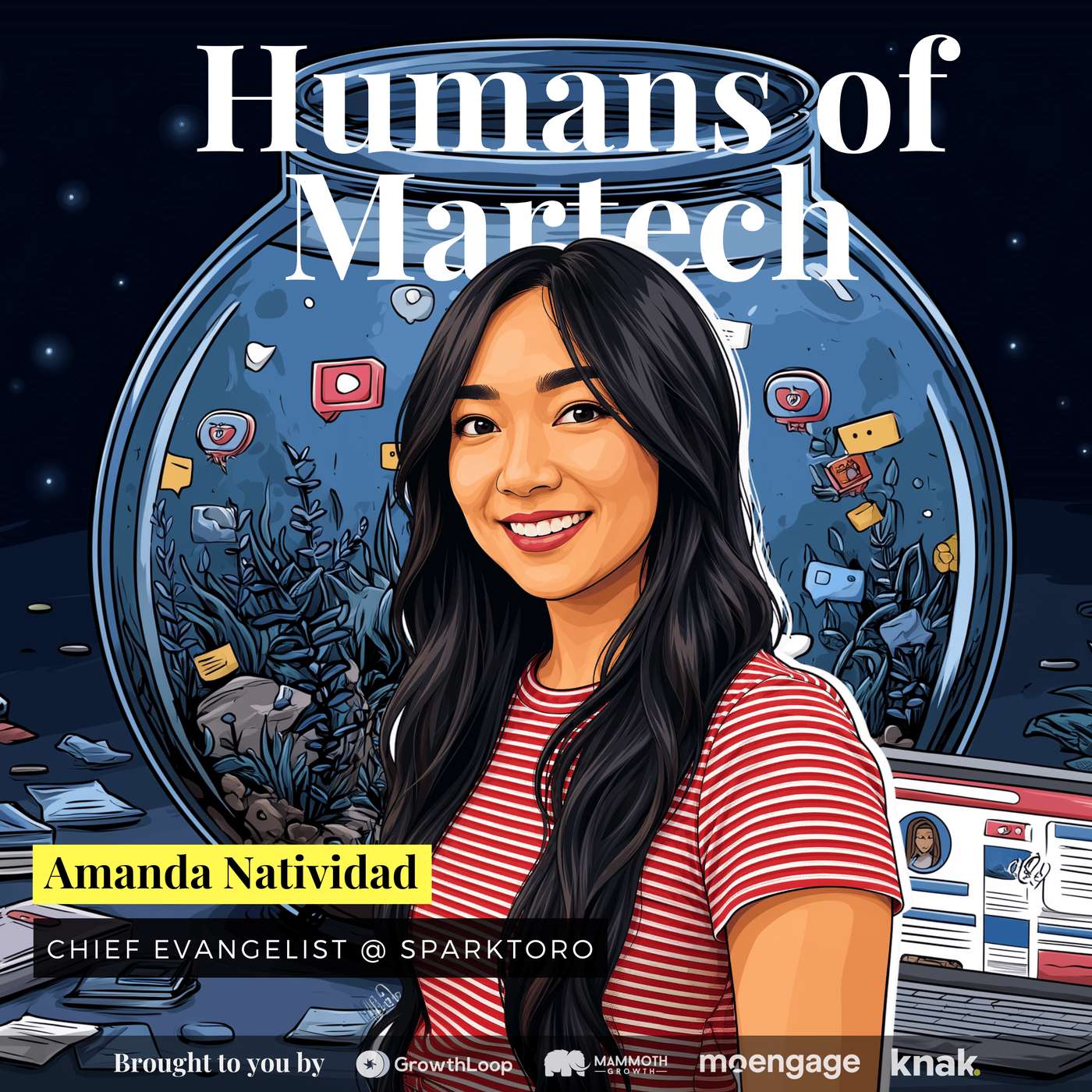 230: Zero-click marketing broke the measurement layer, so what should ops teams do now, with Amanda NatividadHumans of Martech · features Amanda Natividad83 / 100
 Why Marketing Mix Models Beat Attribution for Long Sales CyclesMarketing Analytics with Fexingo · on Attribution models92 / 100
 The One Thing That Makes Your Content Stand Out in 2026 | Govind Balakrishnan, SVP at Adobe ExpressSilicon Valley Girl · on Social media algorithms82 / 100
 Why isn't your CRO working? Emotional targeting is the missing piece, not button color - with Talia WolfClosing Time · on Zero-Click Marketing81 / 100
 How a Solopreneur Built a Passive Income Stream with One EbookSolopreneur Sessions with Fexingo · on Content repurposing76 / 100
 #109: Why top-of-funnel content is crucial to building pipelineSaaS Marketing Weekly · on Content repurposing75 / 100
 What Marketing Science Says About Growing a Brand | Professor Byron Sharp (Ehrenberg-Bass Institute)74 / 100
 The $200K Mistake We Didn't See Coming | Jacque Aboubakr (Ahrefs)
 Why Copying Ryanair's SMM Tactics Won't Work Anymore | Michael Corcoran (Slice Social, Ryanair)
 AI Apps, Reports & Workflows Every Marketer Should Steal | Glen Allsopp (Ahrefs, Detailed)
 Gong's Billion-Dollar Bet Against Best Practices | Udi Ledergor (Gong)