
VTEX Live · 2025-11-11 · 23 min
Key moments - from our scoring
Substance score
53 / 100
Five dimensions, 20 points each
Daniela Jurado Jabba brings a unique perspective to global commerce strategy after ten years at VTEX across LATAM, Brazil, EMEA, and her current role leading North America sales and marketing from Manhattan. She contrasts the deeply localized, fragmented regulatory environment of European markets - where companies must be country-specific, speak local languages, and navigate unified GDPR compliance - with North America's different challenge: proving local case studies and regional regulatory complexity (California vs. East Coast laws) despite a more globally-comfortable business culture. For retailers and brands, she emphasizes two critical priorities for 2026: operational efficiency and customer retention. Existing customers spend 67% more than new ones and require only three additional customers to offset a single loss, making retention economics compelling. The platform approach at VTEX enables rapid experimentation across channels - marketplaces, B2B, live shopping, conversational commerce - without massive upfront Capex, allowing brands to test new revenue streams with minimal risk. She highlights how unified commerce architecture breaks down silos between B2B and B2C teams while maintaining channel-specific requirements like pricing tables and approval flows. Real operational challenges remain: Fortune 500 companies still receive orders via PDF and fax, creating costly manual reconciliation and inventory coordination failures. For global expansion, Jurado stresses delivery promise visibility from product page through checkout, last-mile logistics partnerships (DoorDash, Instacart), and omnichannel presence as non-negotiable competitive factors.
Europe requires deep country-by-country localization (speaking Italian in Italy, Romanian in Romania), unified GDPR compliance, and cultural trust-building, while North America demands local case studies, regional regulatory fragmentation (California vs. East Coast laws), and ADA compliance, but is more accustomed to foreign companies operating at scale.
By enabling delivery promise visibility at product page and checkout, adopting last-mile services like DoorDash or Instacart, and offering multiple channels (marketplace, B2B, live shopping, conversational commerce) so existing customers - who spend 67% more than new ones - stay engaged and loyal.
Many lack a unified commerce platform that orchestrates manual channels into one system, resulting in manual inventory checks, sales agent callbacks, middlemen coordination costs, and inability to provide fast, accurate order fulfillment - a major operational inefficiency.
Yes, with a composable platform like VTEX you can enable a new marketplace with a few clicks and minimal resources; if it doesn't work, you can quickly turn it off without sunk Capex costs, making experimentation low-risk.
Operational efficiency (reducing costs while delivering more) and customer retention (keeping existing customers engaged through better delivery experience, channel diversity, and convenience).
Our reviewer’s read on each dimension, with quotes from the episode.
The episode contains some substantive observations about market differences and operational challenges (e.g., B2B PDF/fax ordering, customer retention metrics, regional compliance variations), but is padded with considerable throat-clearing, self-promotion, and obvious statements. The guest repeats points multiple times and the conversation often retreads familiar ground without drilling deeper into novel mechanisms or surprising findings.
existing customers spend around 67% more than a new customer
in order to make up for a customer that you lose, you need three more customers
The core frameworks - unified commerce architecture, omnichannel efficiency, customer retention over acquisition - are well-trodden SaaS talking points. The regional insights (EMEA vs. North America, local culture mattering) are sensible but not counterintuitive or first-principles. The discussion of last-mile partnerships and delivery promises echoes widespread industry practice.
it's more expensive to get new customers than retain the existing customers
the means justify the end in his case
Daniela Jurado Jabba is an Executive VP at VTEX with 10 years tenure and hands-on experience across multiple regions (LATAM, Brazil, Italy, EMEA, North America). She has operational credibility and has actually built and scaled go-to-market teams. However, she is primarily a sales/marketing leader, not a founder or merchant operator, which limits her ability to speak from first-principles operator experience.
I'm currently the executive VP for VTEX in North America
I've been in VTEX for the last 10 years
The episode includes some concrete numbers (67% higher spend, 1-to-3 customer acquisition ratio, references to B2B orders still coming via PDF/fax and Fortune 500 companies) but lacks named customer examples, real revenue figures, specific timeline data, or measurable outcomes from implementations. Claims are largely anecdotal or derived from generic statistics rather than proprietary research or detailed case studies.
existing customers spend around 67% more than a new customer
Fortune 500 companies that still get orders through PDF, email, fax
The host asks broad, open-ended questions but rarely challenges claims, digs into contradictions, or pushes back. Questions are often rhetorical or serve as setup for the guest to elaborate on talking points. There is minimal follow-up depth; the host frequently accepts surface-level answers and pivots to new topics rather than pursuing specifics or uncomfortable trade-offs.
Why do you think so?
What are the main challenges that you face when you want to approach to Our big retailers
Computed from the transcript - who did the talking, and the words that came up most.
A VTEX Live conversation featuring Daniela Jurado Jabba, Executive Vice President of VTEX North America, whose decade-long journey with VTEX spans Latin America, Europe, and now the United States. Known for her global perspective and operational depth, Daniela has helped shape VTEX’s expansion across continents, building teams, opening new markets, and guiding brands toward sustainable growth through unified commerce and customer-centric innovation. Access this and more episodes of VTEX Live on Apple Podcasts or Spotify . What does it really take to scale global commerce in today’s fragmented and competitive landscape? And how can brands balance operational efficiency , customer retention , and local adaptability while expanding across markets? In this episode, Daniela joins Santiago Naranjo , Chief Revenue Officer of VTEX , for a grounded conversation on how companies can succeed by combining local insight with global strategy . She shares lessons from building VTEX operations in Brazil and Italy before leading North America from New York, unpacking the cultural nuances, regulatory differences, and customer expectations that define each region.
Transcribed and scored by The B2B Podcast Index.
Speaker A: Listen a lot, understand how the market moves, understand how people talk, what are the gestures they use, what are things that are sociable, acceptable, and things that are not sociable, acceptable. Words matter. Words really matter. So I think just observing the local environment is very important in personal and professional life.
Speaker B: Welcome to Bitex Live, the podcast where digital transformation gets a reality check. I am Santiago Naranjo from Bittex, and this is where we break the rules. We write the playbook and hear from leaders who are actually getting results. Let's get into it. Danny, so happy to have you here. We are in Medellin. Thank you for coming. I'm so excited. And, um, I want to take this moment and, um, share with your audience at btex. Audience a little bit about your journey, your experience. You are an inspiration for a lot of people inside Bitex ecosystem and, of course, in the world. So I want to take a minute for you to share a little bit of your background. Restoring vtex. Allow people to know you.
Speaker A: Thank you so much, Santi, for having me. It is a pleasure to be here in my native country. By the way, so many people don't know that I'm actually from Colombia. When I speak in English, people are like, you're from Brazil. You have this Brazilian accent. But no, I'm actually from Colombia. So it is just lovely to be here.
Speaker B: You're not polygal. Speak a lot of languages, but we
Speaker A: can talk about four. Come on.
Speaker B: It's, uh, just four languages.
Speaker A: But anyway, so I'm currently the executive VP for VTEX in North America. I've been in VTEX for the last 10 years. So it's been a long journey already. Basically going in different, uh, territories, countries, and also continents. So I started working for latam, then I moved to Brazil, then I moved to Italy. So it was a big change. I went to emea. I was responsible of basically starting operation from scratch for Italy. And then I got the honor to basically manage EMEA as one region for a couple of years. And then back in 2023, I got the invitation to come to the US to manage the sales and marketing team. And this is what I've been doing for the last two years and a half.
Speaker B: Amazing. Um, journey from Colombia, Brazil, Europe, and, um, the United States. And now you're based in New York.
Speaker A: Correct.
Speaker B: Why New York?
Speaker A: Well, it's. It's a place to be, right, like for a company as Vetex that is originally from Brazil. When you come to this big continent where basically all the competitors are already here, you know, like, you have A lot of competition. You have some names that are basically from here. Like, you have those big names that are local, so they're already like in the top of many of people. You cannot just come here and say, I'm based in Brazil. Like, you need to have here the local presence that gives a lot of confidence and trust to people. So this is why we decided to bring, I would say, the core team to New York. And we have today a big office with our headquarters in Manhattan with. We have people from cx. So it's not only the sales and marketing, but also the support and the people that are going to be joining our customers during the implementation and during the ongoing. So no doubt this is the place to be.
Speaker B: It's a beautiful place. Danny, can you share a little bit about, in your point of view, what are the difference between United States market and European market? Taking advantage that you were there and you understand the retails and brands?
Speaker A: Yeah, it's a very great question. And to be honest, it's two completely different worlds. When I came from emea, I was like, okay, this is gonna be easy. Like, I already did it and not at all. So you have this difference. For example, in Emea, you deal with different countries. So in emea, it's not enough to be European. You need to be French if you're in France, you need to be Romanian. If you are in Romania, you need to be Italian if you're in Italy. And they have this big culture of just buying from the country, you know, it's not even the region. So again, when we were in Italy, we face the question that, are you from here? Do you have people here? Like, do you have locals? Do you speak Italian? So, of course, I had the challenge to learn Italian and to speak it, like, very fluently, because this gives confidence to people.
Speaker B: We speak a beautiful, amazing m. Italian, also Portuguese, also English, also Spanish.
Speaker A: Oh, uh, thank you so much. In the US I think this is not as big, you know, like, as a thick culture as it is in emea, because North America is a region that is used to have companies from different places in different regions. So it's not weird to have a Brazilian company, you know, that is making history, that is public in yse and there is selling technology. However, what you really need to have in North America is the local cases. It's very hard to import success in North America. Like, if you're selling to a furniture company, they're going to ask you, what have you done for furniture here in the US and by the way, in Middle west, you know, like it's not only the country, it's also the region. So I think they care more about their local presence and the experience that is locally and so on. And then you have compliance. I think in emea this is a huge topic. And it's not that it's not here, but in the US it's also by region. Like you have laws in California, you know, you have laws in the east side of the country. In EMEA is more about gdpr. It's just like one big legislation that you need to be compliant with and people care a lot about that. In the US it's more complicated because you have fragmented laws and fragmented legislation. So. So I think there is more worry and concern around security and compliance and so on in the U.S. the last thing I would mention, uh, Ada, like this is something that is so much more frequent in North America. I didn't see that much, at least in my time in EMEA in North America is like a big, big topic for you to get approved on. In order to be able to move into a contractor relationship.
Speaker B: You have the capability to see from brands and retailers doing local operation in EMEA and also United States. What are the things that you believe you need to do different as a retailer when you operate in Europe. What are the things that allow you to win when you are in the United States? Can you share a little bit of this concept?
Speaker A: Yeah, um, absolutely. And I like the fact that you are mentioning brands and retailers because I'm just going to take one step back to mention what is VTEC's currently? ICP it exactly what you mentioned. We're seeing two big groups. We're seeing retailers and that's part of the global footprint that Vitex has. You know, like these operations that have a significant physical presence with brick and mortar. They also have warehouses and so on. So there is a lot of omnichannel capabilities that they need. And the other one is brands that are more on the manufacturing, industrial or distribution side. So this is more on the B2B side. Companies that are looking to sell to other companies and they have very complex rules when it comes to access, pricing, catalog segmentation, approval flows and so on. So on the first side, on the retails, retailers and omnichannel, the first thing I would mention is operational efficiency. This is something all brands need to look at. I think we know that it's been a while that we're going through this scenario of high interest rates. Capital is very expensive. Just trying things new is very expensive.
Speaker B: As well, crazy rates and macroeconomic challenges.
Speaker A: Exactly. So brands, they still need to do more. That's the tricky thing. It's not about, okay, don't do anything. They still need to be innovative, they still need to offer more things, they still need to be more efficient when it comes to delivery times. But they have to keep in mind the cost of doing all this together. So it's a big challenge. I would say the two main words or the keywords for me are customer retention and the second one is operational efficiency. So how do you combine these two? How do I make my public and my audience happy? How do I make them come back keeping my costs down and at the same time giving them more than what they were getting before on the brand side. And I don't know if you know this, many people don't know this, but actually there is a lot of, I would say manual steal operation in the B2B site. We see like billion companies, huge companies, 500 fortune companies that still get orders through PDF, email, fax. Yes, it happens. And that has a huge cost because every time you're receiving any different order from a different channel, they're not connected one to each other. You need to check, oh, do I actually have this inventory ready to, can I actually sell this? Or I need to go back to the customer. So I need to get one sales agent to make that call. All that implies cost. You have people in the middle of the operation, you have middlemen in the middle of the operation. You have different channels that are not coordinated. So I think the biggest challenge for the brands on the B2B side is how to orchestrate all these channels into one single channel and provide good support to the brands and especially provide the quality service they are looking for. Because for distributors this is something very tricky. You can be replaced by Amazon if you are a distributor. I know it's different for a manufacturer.
Speaker B: Why do you think so?
Speaker A: I mean you find all the assortment in Amazon, right? And when you're a distributor you don't control the manufacturing, you just sell what you receive. The thing is the manufacturing are selling through other channels. So it's very tough, it's a very tough market. But again, I think operational efficiency and customer retention are the two key words for 2026.
Speaker B: I would love to put like a label on this and understood this. You have a unified ah, commerce architecture. You are able to make both work, you are able to have efficiency and also you are able to deliver. What are the main challenges that you face when you want to approach to Our big retailers at these top 500 retailers in the United States, why they are not moving yet for a more uh, flexible, composable architecture. Where are they the fear that they have on what is the quit wins that they can find if they move to this type of architecture?
Speaker A: I think the first one is people still think you require a lot of money like a ah, huge Capex to make this happen and people are trying to go back right on that Capex model. They're looking more for OPEX and things that you can monetize in an easier and faster way. My main message when I hear this is well, it's actually not that costly if you already have a platform and I'm not selling. But I need to say like if you have a platform like vtex, this will allow you to unlock different channels in a very fast and easy way. If you want to try a new marketplace but you're not sure, am I actually able to become a marketplace? Do I have the right traffic? Do I have the volume that I need? Am I attractive to other brands to bring their portfolio of products to me? You can do that with just a couple of clicks, a couple of people, you don't need a lot of resources and so on because it's a tried out. If it doesn't work you just go back and there isn't a big trade off on the fact of trying it. Same thing for B2B. You usually have separate teams. So I have one team that manages all the B2B and I have the other team that manages the other B2C and they don't talk to each other. So how do I actually make them talk to each other and understand they can unify a lot in only one single platform is still keeping what is fundamental for both channels. So it's still keeping the different price tables for B2B. Uh, still keeping the different catalogs for B2B still keeping their approval flows that you need for B2B but at the same time having the same catalog that at the end is the same for B2B or for B2C of course with segmentation's rule. But the source is the same just going in a smoother way for the D2C channel and the B2B channel and the Marketplace channel. And what if I want to do live shopping? Can I do that in a fast way, easy way without uh, a huge topics? Yes you can. What if I want to do conversational commerce? Well, you can also do that in a very easy way. It's a native functionality. So I think the big challenge is mentality and just understand there isn't a lot of investment when you're going to try for new channels. There is another way to do this.
Speaker B: Yeah, majority of the CIOs that I speak in United States, all of them know that they need to be modern, they need to innovate. But um, sometimes they have this old mentality that they will need to have like a $10 million project and three years project and then cross finger that thing works. Now with the unified, uh, composable agile architecture, you are able to test projects in weeks on um, worst case scenario, months. But I think it's more like not only about bt, but it is a way that the architecture and technology that allow commerce to happen need to be, be deployed in that scenario. Also the brands and retailer have a huge challenge. That is how to make more money with the customer that they already have, how they are able to create loyalty, to guarantee that you have a lifetime value, that you can allow the clients to have an amazing experience and back again. So how technology can enable this.
Speaker A: It's a very good point. I think it's obvious and most of the people know that it's more expensive to get new customers than retain the existing customers. But I'm going to give you like two numbers that I didn't know and I think it's very, very interesting. The first one is, did you know that existing customers spend around 67% more than a new customer? I didn't know that. And the second thing is, do you know that in order to make up for a customer that you lose, you need three more customers? I mean it's numbers talk by themselves. It's so much harder to get a new customer than just give something else to a customer that you already have. And also when you already have an existing customer, this customer already knows you, which means a customer that is going to make less clicks, it's a customer that is going to have less questions. It's a customer that is going to require less from the customer support team, which means less cost. Now going back to your question, like how can we do this? I think the marketplace is a very good option because again, you're giving more assortment to a customer that might be looking for something else. And the customer is always going to prefer to just have it in one single place than going to two, three, four different places. This is why Amazon is what it is. Right? It's obvious. And the second thing is what really matters, today's convenience. And I think we're living In a different world before we were more concerned about money. Like can actually people buy? Yeah, people can buy what people cannot basically lose a lot of time on doing something is on buying. I mean what matters is the time. People have more money than time available. So how can I make my customers happier? From a time perspective, delivery is fundamental but the delivery starts from the front end navigation. This is what I always tell my customers. For me it doesn't matter if you're going to deliver the product tomorrow. If when I go into the website I see two weeks, yeah, it's great that they're going to surprise me and I'm actually going to get it tomorrow. But why don't you tell me from the front end navigation that I'm going to get it tomorrow? Trust me, I'm going to be happier at the moment and I won't think twice on getting the product. And this is technology wise. Many customers, many companies cannot still do this. They cannot have delivery promise in the front end. They cannot get the data to be able to tell you when exactly you will get the product. They are not able to notify you about the process itself. It's here is the late you're going to get before, you're going to get it after and so on. It sounds basic.
Speaker B: Yeah, uh, it's basic. I am seeing this on Amazon.com for the last 15 years.
Speaker A: Yeah, yeah, yeah, yeah. But it's not, trust me, especially for B2B because in B2B you deal with these volumes many times you're dealing with made to order products and it's very hard because if it's a made to order I don't know exactly when I'm going to be able to manufacture, have it ready and deliver it. But you have a guessing, you have an average. It's not a guessing, it's an average based on historical data. The customer really values this knowing from the again checkout moment, even product page moment that they're going to be able to get it tomorrow or in two weeks or in 30 days or in 60 days.
Speaker B: And it's so expensive to find a new customer and um, just to not invest enough to allow them to have a perfect journey, you m will allow them to go to the competitor. So if the brands and retailers and many of the B2B that to acquire a new customer is so difficult because the ticket and AOB is so big you need to invest on the port purchase and all experience that allow these distributors, customers to be able to feel like in peace with the whole experience.
Speaker A: Yeah and for B2C, like we're seeing cases of customers of us that the only way they're being able to grow right now is through last mile is basically adopting new tools like a doordash or an instacart and so on. In so many cases even outsourcing the picking. And this is important because of course there is always a trade off. It's expensive, you're going to pay someone else to do your picking and to deliver in two hours. But it's going to pay it off because your customer is going to return. And as I said before, it's going to buy 67% more than a new customer.
Speaker B: That's good. Let's go to other topic. Big, big lesson, um, that immigrant in United States can share to all professionals, founders, entrepreneurials that are arriving to United States right now.
Speaker A: So I would say don't underestimate the local. I think that having the global background always helps. It gives you a lot of confidence and trust as a brand but also as a person. But being able to adapt to follow their the local. What is a guideline, you know, what is seen as a good custom, what is seen as something that will make you more trustable in front of a customer. So I think the local is very, very important. Listen a lot, understand how the market moves, understand how people talk, what are the gestures they use, what are things that are sociable acceptable and things that are not sociable acceptable. Words matter, words really matter. And sometimes when you are not native in a language you just, you think something is okay, it has a different interpretation. So I think just observing the local environment is very important in personal and professional life.
Speaker B: I think bringing this concept is a little bit of the recipe that a company needs to grow, that is innovation to be able to change, adjust, uh, to understand the local concept flavors when you are a retailer in United States, but also you have like a, uh, global ambitions, what are the main innovations that you can bring to your customers or the process to make successful journeys? How the brands can literally go from selling in the States to go global.
Speaker A: I would say there are two things that I would really um, focus a lot as a retailer or a brand for 20, 26 and the following years. The first one, and this is more the outcome but is do whatever you need to do to improve the delivery experience or the customer. And I kind of mentioned it before but I'm um, not a huge fan of machiavelic sentences, but I really think the means justify the end in his case like in this one, do whatever you need to do to be able to provide a better experience again from the front end navigation to actually the post purchase process. As I said before, like people are just looking for convenience and time really matters. So delivery, promise, last mile operations and so on. And the second one is really offering more channels. People want to find the brand in different channels and as a customer I'm not always going to buy from the same channel. I'm not always going to go to the website. I might go to a LLM M. Right. Like I might go to ChatGPT to actually buy or I might go to a marketplace, uh, or I might go to a multi brand store. So the more you can diversify in terms of channels, the better you're going to be represented.
Speaker B: Perfect. I going out of the script for a little bit. I want a sentence that you can share about your experience in Colombia, then a sentence about your experience in Brazil, then a sentence of your experience in Europe and then a sentence of your experience United States.
Speaker A: Definitely not ready for this.
Speaker B: This is the idea. Ah.
Speaker A: So I'm going to do Colombia, Latin America.
Speaker B: Yes.
Speaker A: Each country is a country and that also applies to emea. But yeah, Mexico is a country, Chile is a country, Peru is a country. They're another region when it comes to business. So again the local part really matters. Brazil, kindest people in the world. Honestly.
Speaker B: Seriously?
Speaker A: Oh yeah, I think so. And it's a very friendly environment to make business as well. Which I mean by that is it's not only stretching hands, it's so much more than that.
Speaker B: And you used to live in Milan is correct?
Speaker A: In Italy. I was in Italy. I was in Milan for four years. Emea, um, is. Don't overestimate the local challenges as well. I think it's very connected to Latam in a bigger intensity. I don't know if people know but it's very hard for a woman coming from Latin America to open an operation in Italy. It's very hard.
Speaker B: But you did it in a.
Speaker A: But there is a lot of stereotype and that's very hard. Don't underestimate the local culture in North America. That's a big game. That's the big game. That's where we need to make it happen and we're in a good path.
Speaker B: Thank you so much. Danny. Danny, there is anything that you want to share with the audience of the podcast?
Speaker A: I'm just excited to be here. I do appreciate the opportunity and I think this kind of content really matters. Right. Like I'm not here, we're not here. To talk about the solution and selling? No, it's more about what we're seeing in the market where we're having the opportunity to listen from other customers and prospects. We're very lucky because we have the chance to talk with, with a manufacturing company. The other day we're talking to a CPG company. The week after we're talking to a, uh, distributor. And then in one month we're talking to the biggest retailer in the country. So we learn a lot. And I just think this is a great space to be able to share that, to exchange our points of view as well and to just ask the companies to move fast because the world is going faster than ever.
Speaker B: If I am a CIO or CEO in the States and I want to meet you, I know that you travel a lot, you go normally to these big events. What are the events that you're going to be and um, how they can reach you.
Speaker A: Yeah, great question. So we have NRF coming and we're going to have a big presence of nrf. Um, not only booth, but also big idea session. We're going to bring some of the customers. I think it's great when people have the chance to listen from the customer, not only from us. What we're doing differently, what are the main numbers and results we're bringing. So NRF for sure, shop talk as well. We have a big presence in B2B, so B2B online, B2B paradigm and so on. We're going to be in all those events and we also have our own branded events. So I just would really motivate people to take a look at VTech's, uh, website and talk to us, talk to our solution engineers. We really talk your language. So we're not going to talk about fluffy things. We're going to talk about what really matters and that's what really differentiate our team.
Speaker B: So happy to have you. I hope we can do it more times. I thank you for coming. Next time in Manhattan, Um, for sure. And that's it.
Speaker A: Thank you everyone.
Speaker B: This episode of bitax Live was brought to you by Bitex, the digital commerce platform for bold leaders. Head to bitex.com to see how we help businesses scale fast, flex smart and, uh, let the AI power future of commerce. If you like it, what you hear, follow the show on Apple, Spotify or wherever you listen. Because in this space, speed isn't a, uh, luxury, it is your edge.
Other episodes covering the same guests and topics, from across The B2B Podcast Index.
 Why Ecommerce Re-platforming FailsThe MarTech Matrix · on Composable commerce81 / 100
 Navigating AI Risks with Trevor Horwitz from TrustNetB2B Automation Spotlight · on GDPR compliance79 / 100
 He Makes $50m/yr on Cookie Popups, Controls 2% of all Web TrafficSaaS Interviews with CEOs, Startups, Founders · on GDPR compliance72 / 100
 Why Customer Retention Is the Most Valuable PE Growth StrategyDemand Revenue · on customer retention67 / 100
 Digitize Before You Automate: Yoav Kutner, Founder & CEO of OroCommerce, on the B2B Commerce Gap (Recorded at the B2B eCommerce Association)MarTalks- The #1 Ecommerce and MarTech application podcast · on Composable commerce65 / 100
 Trying out new versions of our best selling product - founder product development processMatt Kelly · on customer retention60 / 100
 Building Trust in the Age of Agentic AI: Sucharita Kodali on the Future of Retail Intelligence66 / 100
 Brewing Up B2B Success: Lessons from Jamie Golde’s Career Journey49 / 100
 From Amazon to VTEX: Alexandre Gusmão on the Art and Science of Product77 / 100
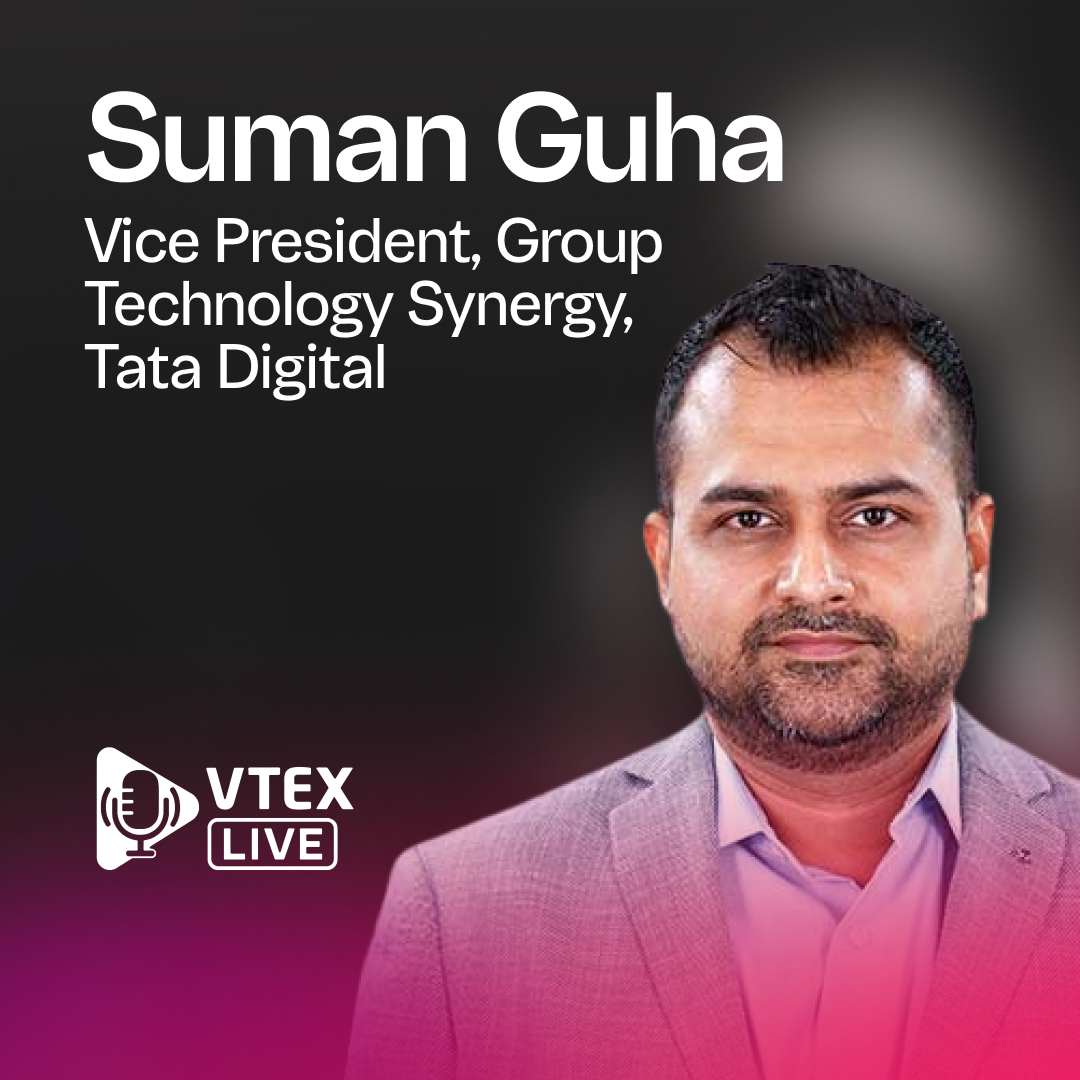 Suman Guha on Nation-Building, Global Commerce & Purpose-Driven Leadership at Tata Group69 / 100
 Julia Vater Fernández on Leading Two IPOs, Global Expansion & Putting LATAM on the Tech Map