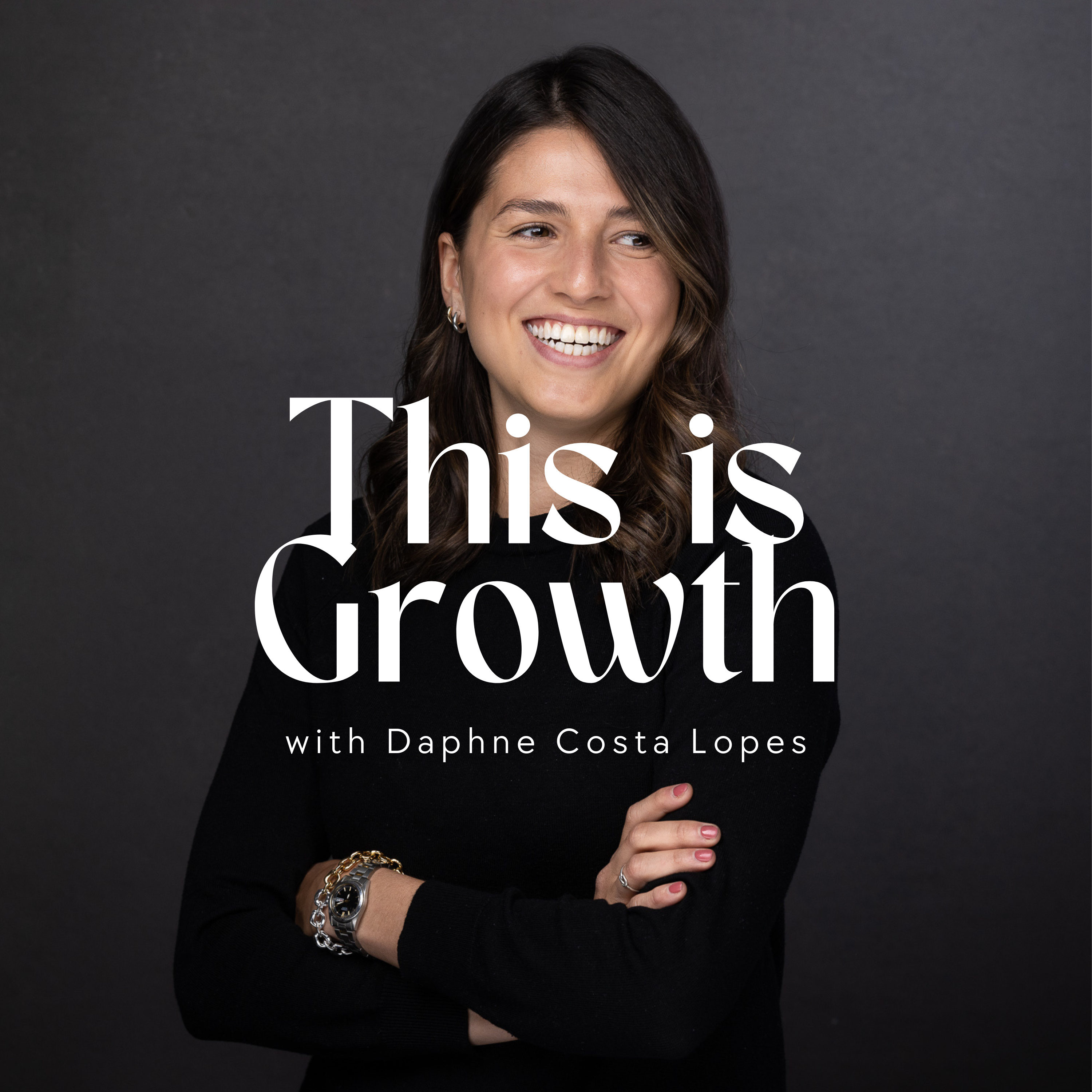
This is Growth! · 2025-08-28 · 1h 0m
Customer success has fundamentally shifted from adoption metrics to demonstrable ROI. Natalia Piaggio, a CS leader with 15 years of experience across NICE Systems, Qualtrics, and the care sector, argues that in an era where enterprises realize they're only using 55% of the 364 applications they purchase, CS teams must lead with business outcomes. Enterprise organizations now conduct 76% more rigorous ROI analyses than three years ago, and SaaS NRR has declined 7 percentage points between 2022-2023, creating urgency around value realization. Piaggio's framework - starting with sales promise alignment through tools like MEDDIC, then building customer success plans around the five value pillars (growth, cost reduction, efficiency, experience, risk management) - bridges the perennial sales-CS gap. She advocates for Andrew Robson's insights-stories-results-outcomes (ISRO) framework as a pragmatic alternative to intimidating financial modeling, helping CSMs move from adoption conversations to financially-grounded stakeholder alignment with procurement and finance teams who control renewals.
ROI equals the total dollar value your product helped the customer create, divided by what they paid for it (product price plus services and implementation costs), multiplied by 100. The challenge isn't the formula - it's quantifying the actual value created in dollar terms based on what the customer defines as valuable.
Enabling organizational growth (revenue or headcount), reducing costs (salaries, agency fees), improving operational efficiency (time savings for higher-value work), enhancing customer or employee experience (loyalty and brand perception), and managing risks (regulatory compliance, business continuity).
Value definition must start during the sales process - documented in your CRM with tangible ROI metrics - then carried through at kickoff with success plans that include KPIs, baselines, and targets. If a champion lacks clarity, escalate to their manager or the person who signed the contract, as finance and procurement typically have clearer business outcomes.
Enterprise customers now use only 55% of the 364 applications they buy, leading to rigorous ROI scrutiny (76% more rigorous than three years ago). Combined with cost-of-living pressures globally and declining SaaS NRR, CS teams must prove business outcomes or face churn and loss of expansion opportunities.
The insights-stories-results-outcomes (ISRO) framework by Andrew Robson breaks ROI into bite-sized steps: start with customer insights three months post-launch, document breakthrough stories, show measured results, then correlate to financial impact - avoiding spreadsheet intimidation for non-finance CSMs.
Computed from the transcript - who did the talking, and the words that came up most.
In this episode, learn how to turn “value realisation” from a buzzword into a repeatable system that drives retention and growth. Join Daphne Costa Lopes as she sits down with Natalia, a seasoned Customer Success leader with 15 years of experience across SaaS, consulting, and enterprise transformation, to explore how companies can prove ROI and deliver outcomes that truly matter to customers. You’ll hear how Natalia defines value in the eyes of the customer, the frameworks she uses to surface ROI, and how she aligns Sales and CS to avoid the classic trap of over-promising and under-delivering. She also shares practical ways CSMs can capture insights, document customer stories, and turn them into measurable business outcomes that finance leaders and executives care about. Whether you’re building your first value framework, trying to fix the disconnect between Sales and CS, or leading a team through tougher renewal conversations, this episode is packed with actionable insights and bold strategies. Tune in to discover how to move from adoption to impact and make customer value your most powerful growth engine.
Transcribed and scored by The B2B Podcast Index.
Speaker A: You can have adoption, you can have exec engagement, you can have an amazing product. But at the end of the day, you know, if you can't prove that this is the solution that really brings in return on investment business outcomes is aligned with the business strategy of your customer, then you're in real trouble.
Speaker B: Welcome to this is Growth, the podcast where we help you build and um, scale modern customer success success organizations. Natalia, my fellow Latin America customer success leader, I am so excited to have you here on the podcast. Ever since I saw that presentation that you gave at the customer conference, your talk track around what value is and how to surface that to customers has literally been living rent free on my mind. But before we dive into all the questions I have for you, tell us your story, tell the audience who you are and how did you get into customer success?
Speaker A: Thank you so much. Well, truly an honor to be on your podcast. So, um, yeah, my journey in customer success. Well, I think as like many of our fellow CS leaders, um, CS found me, it wasn't really a deliberate decision. Um, my first professional roles out of university were in finance, advertising and strategic marketing consulting. But it was only after I finished my MBA at London Business School that I landed my first customer success role without actually knowing it. So back then I started at a startup as employee number 20 as a professional services manager. And as in every startup, you wear many hats. So I was doing a little bit of pre sales, a little bit of post sales. We had a huge focus on adoption and um, obviously change management, business transformation, value realization and a huge focus on roi. And to be honest, um, a lot of uh, what we were doing was also moving from um, pilot conversion, um, conversion to value. But many, many times we were going from escalation to expans and over investing where we really needed to rectify this ship where things weren't going that well. Um, so typical customer success as we know it today. And interestingly, that journey started 15 years ago. And I cannot believe that all of that history when I was working in the US in finance, in advertising, in marketing, would be so helpful to my role as a customer success leader today. Because it requires a huge amount of commercial acumen. You have to be creative, resourceful and influential and you have to strike that balance between strategic thinking and executing efficiently. I was actually listening to Debbie Hewitt, the chair of the Football association, just a few days ago, and she was saying strategy without execution is hallucination. And that really struck with me.
Speaker B: I love that quote that strategy without execution is hallucination. And I've heard before, strategy, uh, without execution is the sound before defeat. Um, and, you know, all of these quotes really resonate with me because it is all about how we put sound stuff in practice, not just about the plans that we put on paper. Now, obviously planning is really important, but in order to, to really drive value for customers, you're going to have to execute. And execution is harder than what it looks like on plans because it requires technology, it requires people, and none of these things are easy to nail. And one thing that it's kind of playing on my mind is customer value is like that as well. You can write down on paper that your business, your product, delivers a certain value to your customer. But unless you're able to execute against that and m then measure and be able to communicate back to customers, you're not really able to do what you said you're going to do to live up to your promises. So I'd like to get into that idea of customer value with you because when I was watching your talk, one thing that resonated with me was the fact that value is broader than just the outcomes that we put on paper. So can you provide some context on this? Can you give us a framework and how you think about value and more important, value realization?
Speaker A: Absolutely. Um, so I think the biggest challenge for me today is how to summarize this huge passion I have for this topic in 15 years of history, right? And really, um, trying to get some, you know, bring into our audience some key takeaways. Um, in order to do that, it's very important to start with some very simple concepts around what we need to think about when we think about customer outcomes or as you said, value realization. I use this inter exchangeably. Um, first we need to think about definition. Then we need to think about how it fits into our customer life cycle. And then we need to think about why now. We're all very busy. Prioritizing ruthlessly is absolutely important for me. If we start with a definition, it can take many forms, but at the end of the day, what we need to think about is improving the bottom line for our customers and ensuring that we help them to increase shareholder value. We do that by tackling into one or more of five key pillars. The first one is enabling organizational growth. This is increasing revenue or helping them to recruit more, you know, employees. Then it's around reducing costs. And I'm talking to you from the uk, where this is a hot topic now because we have the UK budget announcement, an increase in the national insurance and increasing the minimum wage. So our customers are looking at reducing full time employee equivalent agency costs, any cost. Then we look at number three, which is improving operational efficiency. This is all about time savings, allowing our customers to do more productive work. Then it's all about enhancing the customer and or employee experience. And this is a direct impact on loyalty, profitability, brand perception and shareholder value. And the last but not least, number five is really around managing risks. So I work in the care sector for instance, which is hugely regulated. It's all about risk. Now to bring you an example, a care firm that has a CQC rating that's inadequate, it's been challenged to the existence their business can be closed if they get that inadequate cqc. So this is how important it is. We're not even really talking about just value, we're talking about existence, right? So that's how important to test. Um, when we think about the definition of value, what's really, really important to think about is that value is in the eyes of the beholder. Value is a hugely subjective topic. What I'm really passionate about is how important it is to have an open and honest conversation with your customers about what is their business outcome, why they bought solution, what are they trying to get out of. The number one rule I can tell you, and I learned this the hard way is you can never assume. I used to work for NICE Systems where we managed a workforce management solution. It was all about that. Number two, reducing costs all around, helping our customers to reduce full time equivalent. Um, I met with the key stakeholders, um, in a media company, uh, around where you live and I asked them, so what does success look like for you? And I literally started writing, you know, the pound value and um, the pound number. And funny enough, they said, well, we want you to help us win the hearts and minds of our team. Good luck with that.
Speaker B: That is so hard to measure. Uh, and I suppose like you are so right, the value is definitely in the hands of the customer because if, if it's not valuable for them, then you could generate however many dollars, but they don't recognize it as value. So I, I absolutely love that you're, you're bringing this piece and the topic into this value definition conversation. But one thing that I'd love to dive into is the fact that as you know, CSMs are trying to have these conversations about value with customers and depending on who's sitting across the table with them, that conversation will be very different. For example, if you have the CFO of the business, their definition of value might be the pound Value that you started writing in that meeting. But if you talk to, um, you know, the, the leader of the team, they might have an experience goal or they might have a team specific kind of outcome that they want to see. So I'd love to hear from you. When you think about mapping and defining value, who do you talk to?
Speaker A: Oh, excellent, uh, question. And sometimes that's a real eye opener. And that's why I'm so passionate about it. Because when you start getting hesitation and you don't see the clarity that you expect, that's when you really need to level up the conversation. And that's probably one of the hardest things to do. Right. Um, and to do that is, you know, I find it that sometimes it's like, well, you know, um, we'll workshop with you. Let's work on it together. I'll bring you some examples from some other clients on, you know, what I've seen. That's best practice. Um, but I really look for a sign off and a next meeting with, you know, one or two levels up. Right. Again, the type of stakeholder really varies. But this is where it's interesting, right, because this is how, you know, and it was one of the things I wanted to share with you is we need to start thinking about where does value realization or, you know, customer outcomes start. Um, and it's really on that sales promise. So this is where we start seeing misalignment between the sales and service handover. Right. Well, you know, let's face this. As customer leaders, we see this very often, right? Um, so really what we see is that we typically think of the customer life cycle as that lovely figure of eight from acquisition to activation to adoption, to the expansion and referral. Um, but it all starts with that sales promise. And it all starts with that alignment. What was the promise made? Then you go back to your key stakeholders and your sales leaders to really understand what drove that sale. If it's not documented. Now, one of the best practice examples that I've seen on how business outcomes really links in the customer journey and really starts with that sales promise is during my day sat Qualtrics at Qualtrics, we used to use medicine to the T and our salespeople were documenting everything on Salesforce step by step, including a tangible ROI metric. So this is where it can really start. This is a great example of sales to service alignment. And, um, this is how you start linking and connecting the dots.
Speaker B: I love that advice of, you know, using that lack of clarity that you might observe. And I know every CSM has sat across the table from a customer that can't articulate their goals. That is a signal, that's a flag that you need to lean in and actually consult and help the customer refine. And you gave a really good advice there, which I think is something that customers really value, which is showing what other customers like them are working towards what they're tracking so that they can get inspired. Because sometimes, you know, if you're working with a customer or a company that for them maybe bringing your product is, is a really big digital transformation for their business, they might be a little bit lost at uh, exactly how to demonstrate value to their business, how to track that they're in the right, you know, direction that they implemented the right strategy. So I think that's such a valuable point for CSMs to be really aware that that uh, confusion or that lack of clarity is a flag to lean in and have the conversation and as you said, go a level up. You know, if you're talking to somebody that's going to be implementing your tool and they are a champion and they don't have clarity, that doesn't mean that they're boss doesn't have clarity or their boss's boss. And that's where I think that partnership with sales that you talked about is so critical because the person that signed the check probably knows the reason why they're buying this thing, right? They, they, they might not know exactly how to measure that's doing what's supposed to do, but they did the work of uh, identifying a solution, going through a sales process, comparing different tools. So that person or that committee of people, which now is much more common to have a group of people assessing, they have more clarity. And going that level up I think is a, is a really good shout. Um, Natalia, one of the things that you also mentioned was the partnership with sales and the value definition starts in the sales process. That friction between sales and CS is probably the most common question that I get in my GMs from people trying to fix this problem of value. They're like, oh, Daphne, we have a value framework. We, we have defined value, but it's not how sales does it. And you know, you talked about magic and that being a framework that, that the sales team is using. Um, can you tell me more in your experience of how can you align sales and CS behind the same definitions of value so that there isn't that chasm between what we promise and what we deliver?
Speaker A: Well, um, I think that's a great question. Um, sometimes it's using the same frameworks. Right. Um, so as I mentioned earlier. Right. Um, we don't have to reinvent the wheel. Um, I also used Medic when I was at Qualtrics and our customers were using Medic. Um, but to get to medicine I use other tools and solutions and we'll get to that eventually in the chat. But you can do spin, which is very common in SaaS sales, that situation, problem, implication and need or payoff. Um, you can use Medic, you can use that same framework and that can help with alignment. I think at ah, the end of the day what we need to think about is regardless of the framework is again, what's our shared goal with sales? And it's really that customer led growth. Right. It's retaining our customers and selling them more m and it's making sure. And again. Right. I mentioned the typical escalation to expansion journey. This is where you can really start building stronger relationships with our sales counterparts because nobody in sales likes dealing with an escalation. Cs we are the queens and kings of escalation. Right? So we know how to turn around a, uh, customer that is disgruntled and really invest on that relationship to turn it around. And so when we do that and we gain the trust, that's the best moment to go for an expansion. So helping with that journey and helping demonstrate that by demonstrating either ideally tangible roi, you can then go and upsell your customers. That's the best way to deal with that friction. Now why are we talking about business outcomes and roi and we're not talking about, you know, we're not talking about adoption, we're not talking about having the best product. We're not talking about, you know, it's like even engagement is a means to an end. Because as you said, Daphne, what's really, really important is who signs that contract. And it's procurement and finance that are going to be heavily involved in that contract renewal. And um, they care about one thing and one thing only, which is return on investment.
Speaker B: I think the gap people have isn't on, you know, how to calculate ROI or the ROI calculator. Because the ROI calculator is really easy, right? It uh, is looking at the total value that your product helped the customer create. Divide that by the value that the customer paid, the price of your product, investments they made. So for example, your product plus the services that supported it and then you multiply that by 100, that's ROI. It's super simple. It couldn't be simpler. The problem though is understanding what is the value that your product created for the customer in a dollar amount, being able to quantify that, to actually plug into that calculator. And people are not going to be able to do that if they didn't spend the time doing what you said, the definition of value at the very start because where are they taking that value from? And you mentioned that value is in the eye of the beholder. So it has to be calculated based on the things that the customer cares about and not just in random value metrics that you, you, that you create yourself so that spending that time in the start couldn't be more important. Um, so I love your point. And Natalia, one thing that you said you're going to tell the, the audience as well about this is why is it important right now for people to be working on this? Now my opinion is it's always been important, but it feels so critical right now.
Speaker A: Yeah, absolutely. So I think we are in unfortunately a bit, facing a little bit of a vicious circle at the moment to be honest. There's this huge realization from enterprise level customers that they are underutilizing the number of applications they're buying. On average a customer buys 364 applications. Um, and this is related uh, to a study done by Apti. And interestingly they have realized that they're using 55% of what they buy. So what this leads is heightened scrutiny. So 76% of organizations now undertake more rigorous ROI analysis than they did three years ago according to an IDC study. Right. So when you combine the two that increase realization, we're not really utilizing there's too much self. Well, let's start as I mentioned earlier in the uk, but this is across the board globally the cost of living has increased and businesses um, under um, huge pressure to demonstrate savings left and right. So when you combine these two, unfortunately what we're saying is SaaS companies in general are seeing a decrease of 7 percentage points in their NRR between 2022 and 2023. So really as I mentioned, right, and I'm going to repeat this again and again and again, but you can have adoption, you can have exec engagement, you know, you can have an amazing product. But at the end of the day, if you can't prove that this is the solution that really brings in um, return on investment, business outcomes is aligned with the business strategy of your customer, then you're in real trouble.
Speaker B: I couldn't agree more. And what uh, you said about the UK stats, it's definitely seen worldwide especially I think in the North American market with the zero interest, uh, rate and the changes in the investment landscape. Every single company, every person is feeling that pinch. So I think that is so true across the board. But when we talk about customer success and how to communicate value back to customers or deliver value, what are some of the frameworks that a CS team can use?
Speaker A: Yeah, absolutely. So, first of all, I would caveat by saying none of the frameworks I'm going to name, um, I'm actually mine. Um, so I'm dealing with pride here. And I think this is what's really important, is that, you know, I see as leaders, we can't afford to be reinventing the wheel. Um, there's so many great frameworks out there that I can mention. Um, I'm going to hone into my favorite one, which is one, uh, that's really, really pragmatic. Um, but, you know, try and use different ones and see what really resonates with you. Um, there's a great podcast called the Value Coffee Talk. And for those that really love things around value realization, demonstrating business outcomes and frameworks like this, I would strongly encourage that you have a look at that. From them I learned about these grow framework, which is goals, rollout, outcomes and wins. They also mentioned a similar one, which is not different, which is so situation, objectives, actions, result, we talked a lot about already. You know, the ones used in sales as being the medic, etc. Um, and there's another one that's more internally focused, um, which Is around the five Rs, Relations, Retention, Reference and realization. So my advice to the audience is, you know, try to see what resonates best with your customers, with your audience, uh, with their, like, with their even, like, jargon. Uh, you know, because what you want is to demonstrate that you're listening to them. Um, so, you know, whatever buzzwords you're hearing from your customer, try to reuse them, right? Because it's all about a conversation. And as I mentioned, um, all the time. And I'm allowed to say this because I'm Argentinian. It takes two to tango, right? So it all starts with a conversation and a very open and honest discussion at the kickoff. And you need to do it at the kickoff. And you need to start with this, you know, success plan and really putting, you know, those really important, you know, success criteria, uh, KPIs, baseline targets. Right? Now let me hone in the one framework that, for me, has been the best that I've used in the past 15 years. And this comes from a colleague, actually, somebody I hired 15 years ago. And I'm going to sidetrack here a little bit because as a CS leader I would like to highlight, I have built lots of mini empires of customer success across different businesses. But the one thing that I'm most proud of and my one superpower as a leader is hiring people that are way smarter than me. This framework I'm going to share comes from Andrew Robson, who's now working at sprinklr as uh, um, you know, a value leader. And what I love about this framework is that it's so pragmatic and it's all about thinking of, you know, taking the next step. Um, and it's about insights, stories, results and outcomes. So I'm going to repeat this. You start with insights, you build on to stories, then you look to demonstrate results and then you look to build from those results, uh, you look to correlate those to the impact with tangible financial metrics. So let me illustrate this a little bit with some examples but really, really important that you think about it in a way of taking little steps towards an end goal. So what's great about this is that you can think about it as taking bite sauce, bite sized chunks. Right? Because what I find Most commonly with CSMs is that Ah, you talk about ROI and they get you know, a bit scared, a bit, uh, they find it a bit daunting. Many CSMs don't come from a financial background. So you talk about numbers and they're like, oh, you know, maybe, you know, uncomfort zone. Um, so what this framework helps is to really start from the beginning which is by really capturing insights and it's the type of conversations that every csm, um, should have with their customers. Right. So we're not thinking about complex spreadsheets here. We're just really looking to open up, you know, three months after they launched, you know, what was your biggest win so far? Right. Things like that that can really help break it down and listen to your customers. One great example I've seen here comes from our CEO at Qualtrics, which, you know, I was listening to him at an executive dinner, uh, sitting down with, you know, the biggest, you know, BP and C level, um, the, the this, the BPs and the, the um, the BPs and the C levels from you know, some of the biggest brands out there. And his question was so simple but so to the point. He was, tell me about breakthrough moment using our solution. And then, my goodness, the level of insight that we captured in that dinner was incredible. And I'm just going to share one example that comes from, you know, a, uh, low cost Swedish, uh, furniture company. And they said by listening to our customers, we learned that we could actually turn our customer contact center, which was, you know, a call center, into a revenue operations resource. Um, because we decided we would start designing kitchens during COVID as a result of customers being stuck in their homes. Right? So that was a really interesting insight and something that, you know, we would have no idea about. And uh, no spreadsheet would ever take you to that. Then you move on, right? And you try to think about, okay, you have that great insight. Then you start documenting those specific stories. And this is, you know, perfect, you know, one slider case study. All businesses have them now, but you turn that insight into a documented story. Sometimes what you can do is also get customers to speak to other customers. It's so simple. We don't do enough of it. During my days at ICIS when I was um, you know, ICIS is part of uh, the Relics group and it's a ma, it's a um, market intelligence tool for the pet chem and energy sector. Our customers use our solution to make very important procurement decisions and they can save millions in just one transaction. Now they would be very cagey about sharing the return on investment with our sales team because that would mean we would rank up our prices. But they were more open to speak about these types of savings with our customer success managers. So what we did is we discovered that we were delivering so much value to our customers, our sales team wasn't closing the loop. They weren't able to close the loop. They didn't have this type of insight. But while we were doing the demos and the trainings and doing the follow ups, we would learn about all of these stories. We set up weekly meetings every Monday to share the learnings from the week before. Um, we ended up at one point gathering 100 value stories that really helped our sales team improve our value based positioning. So going back to that CS sales friction, here's another example on how you can really close the loop and get closer to that team and helping them because we are the ones that are closer to that value story. Once you move from insights to stories, then you start really looking at how can we quantify the impact of your key objectives and metrics as a customer. This is where, for instance, my experience working for NICE Systems was really valuable because when I was working with them, um, we were measuring employee and customer success metrics, the typical CSAT and nps. But we were monitoring the results on sometimes a daily, a Weekly, monthly basis for customers. So you could really help our customers visualize in our own dashboards the impact. Not only that we could deliver benchmarks. And on one given year, I was able to collate all of the results from our customers and prove that 94% of our customers were able to significantly improve their KPIs using our solution. And that is so strong when you're looking at, uh, contract renewal, you know, to have that aggregated view, to say, we are your trusted provider. We can do that not only for you, for most of our customers. And if you ask me about that 6%, it's because that was not their strategic priorities, was because that was not the right fit for our, you know, uh, our solution. Um, so I was very comfortable with that number. And that really helped in, you know, um, not just the renewal, but the conversion of our deals. And then you move on to the next step, which is outcomes. And here's the ability to correlate those key objectives and metrics to tangible financial metrics. This is where you will be using and trying to really invest a lot of time and effort. Uh, but it's so worth it. Here's where you can use ROI calculators, data scientists. You would even want to involve the CFO to sign off those outcomes and those studies, uh, for credibility, you could sometimes involve a third party, um, like a consultancy. And we've done that a lot in the past. Um, it is a big investment and I recommend that it's not something that you do with a csm. Uh, you take it up a notch. But it's so worth doing. Here's where, for instance, we would use data scientists to going back to those, you know, customer experience and employee experience metrics is how do you demonstrate that that has an impact in your, you know, growth, revenue growth, and in your shareholder value. And for that, you need some really, really thorough analysis and you really need to invest and you really want the customer to buy in that time, that effort, that sign off from the cfo. Um, so it's a project you'll be taking on together.
Speaker B: Natalia, this was so informative. And you've just blown my mind with so many things. I want to call out a few things that I think were really, really important. When you talked about this, you know, insights and documenting value stories directly from the customer, what that kind of had a light bulb moment for me was, you know, a lot of people feel stuck in, you know, we don't know what value is for customers and therefore we can't measure and therefore we can't do value realization and that, you know, they get into this vicious circle of because we don't know, we can't measure, and because we can't measure, we can't. Communication that just keeps perpetuating itself. But you talked about asking the customer for their value stories, like asking them what were the breakthrough moments, what were the aha, uh, moments, how is it impacting the team? And then you connected that back to when we document these stories and you talk about having documented over a hundred of them in your time and being able to take the insights that is the baseline for how you're able to then do the work that you talked about, that is, you know, going into the outcomes piece and working with a data science team and working with specialists to be able to bring the right data and the right, uh, tracking mechanisms in place. But if you don't have that, you can still have those value conversations and have those questions, really impactful questions that you ask the customer. And I loved how you said that this really helped align sales and CS because you're able to share those value stories with sales and that can help them refine their pitches, understand how to sell, sell better, understand how to upsell better. So, I mean, I just absolutely love this framework. And like I said, when I heard you speak about this during the customer conference, I literally wrote every single one of these things down. And I've been really thinking through, in my own role, uh, in my conversations with other leaders, how do you get through those insights, those stories, those results, and those outcomes. So thank you so much for sharing this with the audience. One thing I want to ask you as a follow up is, you know, every single one of these stages, it feels like they happen at different times in the customer journey. So I want to know what are the business processes that support value delivery?
Speaker A: Absolutely. Um, let me, you know, touch on that. But I also, you know, wanted to go back to something. Uh, I think it's really important. Right. And you touched on it, Daphne, which is why are we so afraid to ask? Right. And we shouldn't be. And something really magical happens when actually the answer comes back from the customer. First of all, you may get an answer that you didn't expect. It, uh, that's a massive insight. And the second is once they've said it, they probably will repeat it. They'll probably repeat it to higher level stakeholders. So probably, you know, it was a, you're creating that light bulb moment in our customers. Right. Um, so super, super important to, you know, hone into this, right. And make sure that you're, you really work with your CSMs and we'll get on the processes. But before we go into the processes, what you need to think about is you really need to have the right, you know, personality, the right csm, um, to be curious and courageous and dare to ask these questions. Right? Because then the processes will follow and that's the easiest bit. But you really need to help the CSMs to get out that comfort zone. And that's the hardest bit. And especially if you're an inherited, you're inheriting a team, as I've done in the past, right? Where we are all creatures of habits. And if you can come in and you say, okay, we're going to do this differently, um, you're going to face, uh, some challenges, um, and you're going to face some individuals that won't be taking that on board. So some really quick tips on this. Um, sometimes it helps to do, uh, competition. Sometimes it helps to kind of like bring in somebody that's already doing that internally and, you know, you know, put them on, up on the, on the pedestal, you know, really all of these things. Right. So going back to the process, the process is super simple, right? So as I mentioned earlier, you really start with a kickoff, uh, with managing the expectations of what we do in customer success. Making sure that they understand this is our job, this is our main objective, is to demonstrate value by managing that expectation from the get go. Then you say, this is what we're going to do. We're going to build together a success plan and then we're going to execute the hell out of it. We're going to project, manage it. We're going to start with what are your business imperatives? How does this link to a key success criteria? How, uh, does this link to your KPIs, what are your KPIs baselines? What are your KPIs targets? How does this align to your overall business strategy? This is where you're going to start going into those investor reports. And this is where you can really leverage things like AI to improve that productivity and help on the preparation of that meeting. If customers are cagey or don't know their KPIs, you can start looking at things like Perplexity, where you can start asking for some benchmarks or you have some benchmarks from some clients in the industry sector that you can, um, start with. Right. Um, but this is where you can really leverage, um, things like AI. You know, we use a lot LinkedIn sales navigator to really understand the business imperatives and the business challenges of our customers. I use perplexity left and right to ask for recent trends, financial details, you know, CX and ex results, you know, from various sources. I look at, you know, read my PDF and I just put the PDF there and uh, get the investor reports, uh, summarized, uh, with key takeaways. So um, the process starts with a kickoff and it's then just managed like any project. Weekly meetings ideally, but sometimes you can't afford that and you move on to monthly. Uh, but definitely you need to have a quarterly update just um, to make sure that things are on track.
Speaker B: I love the call out for the csm, asking those deep questions around, you know, the customer's goals, around what's important to them. And I think that brings me to one of the things that I talk a lot about, which is business acumen being such an important skill for CSMs. The advice that you gave about using AI to help consolidate all those findings, you know, you don't need to listen to every single one of your customers earnings calls and go and read the financial reports yourself. You can now leverage AI to get some of that information more easily digestible so that you can be prepared to have conversations. Because let's face it, CSMs have multiple customers and they're not full time with one customer understanding every single thing about their business. Um, so AI I think is so transformative and a game changer for how CSMs can show up with good insights and information into those conversations. But the other thing you mentioned there that I want to call out is that project management piece that you talked about. Once you get those answers, now you need to execute on them. And I've been talking a lot about driving accountability with my team and driving accountability is, you know, if your customer said that they want to achieve a certain goal, now you as a csm, you need to create a success plan together with them and has to be a joint success plan. But then you need to drive accountability. Your customer needs to do the things that they said that they were going to do, allocate the resources that they said that they were going to allocate in order to see value, in order to see results. And as a csm it can feel daunting to hold your customers accountable to those promises. But the reality is that if you don't, then deadlines will pass, then the project just keeps going, the onboarding never ends. And if that's the situation, by the time you are going to have a renewal new conversation with that customer, they haven't actually been able to get much value out of the product and then you're on the back foot. So in order to prevent a harder conversation down the line, you're going to have to have some hard conversations throughout the project. So I think that's such a hugely important skill for CSMS to learn and it's one that AI is not going to help us with. AI is going to help us with the information, it's going to help us prepare, it's going to have help us be better prepared for customer pushbacks and for, you know, having those deep business conversations, but not to drive accountability that has to come from humans. Uh, so, um, I'm, I am so interested in this topic on how we can really help CSMs drive accountability with their customers. Um, Natalia, ah, one question I have for you is, you know, this all sounds really good on paper, right? Like, you know, it all makes sense. You set up the customer goals, you, you document the value stories, you find metrics, you drive accountability that, you know, every single thing that we talked about makes sense on paper. But somehow in reality, it's so hard for CSMs to execute on that. And you know, there's a lot of data, there's a lot of insights, there are a lot of tools that you need in order to execute on it. So can you talk a little bit on what it takes for a CSM to deliver and communicate value in practice?
Speaker A: You are 100% right, Daphne. It's always easier said than done. Um, right. And um, you know, let's admit that it's a big ask. Um, it starts with managing the right expectations with the customer from the get go. As I say, and I'll say it again, it takes two to tango. And you need to be very clear to the customer that, you know, this is not all on us. We need them, we need their input, we need their guidance, we need their time, we need their follow up. And that's why sometimes, you know, it's worth really being very clear, uh, about, okay, this is very serious. Right. And you know, uh, you need to think about it as, uh, change management, really. Right. And think about things like, you know, yes, we're going to have to invest a lot of time, we're going to document this. Uh, we need to have a sponsor who's going to be the sponsor. You know, you do a proper racy, you define, you know, who's the right level of seniority to reinvolve, you know, you know, how we're going to keep managing. So you really have to be very clear and outspoken on this is very, very serious and we need your commitment. And if you're starting to see some hesitation then it's a great opportunity to again, right, level the, you know, up, level the conversation. So this is a great moment to realize if you're seeing hesitation from the customer, I need to move up because this is something perhaps we're not engaging at the right level but more often than not we are and we just need that level of clarity with our customers and you need to think about it, you know. Well, you have, we need the sponsor, we need, you know, the time, we need the commitment, we need the data. Um, we need that kickoff meeting and you know, some things that we did that makes such a big difference. It's like, you know, have a celebration, you know, you're gonna kick off. If this involves, you know, uh, you know we used to work a lot with contact centers at NICE Systems and we really had that cupcakes and balloons moment and saying this is a celebration, this is something big. This is something that's going to help us, you know, you know, be more productive, improve the customer experience, you know, improve our work, everything. Right. And so really, really important that um, you know, you work in partnership with your customers to put together that project plan. Starting with. And that's why I always talk about it all starts with the sale. It all starts with the pre sales, you know, thinking about that pre launch and launch moment and how you're going to communicate. It is a full on project. So yes, that's why it's hard. Um, and sometimes the easiest thing to do is take it into baby steps and having those weekly check ins that really help drive that accountability. Yes, it is an over investment and you can't do it with every customer but with those customers that are willing to do this type of work, it really pays off. I think that's part of what I also wanted to share with you that even when you think about know a csm, um, you know, and you know, let's assume they have 15 accounts, right? And they will approach those 15 accounts. But you really need to think as a pipeline you're not going to get every customer to buy into this and that's okay, maybe it's not the right time. Maybe you know, they're transitioning into a new role. Maybe you know, so you start with your 15, you then probably end up uh, with half of them really engaging and wanting, right. And then you end up having a proper full on, you know, all the way to outcomes you know, and really correlating those metrics with tangible business results from three of those customers. And that's okay. You don't need to have all 15 customers buying into it. Once you have the first one, which is the harvest, then you can leverage that story, bring in customers to talk on webinars, talk on customer advisory boards, do referrals, case studies, and you leverage the story. And then there's fomo, uh, and then everybody else wants to do the same.
Speaker B: That is so true. I feel like customers want to know how other customers like them are seeing success. That is literally the most asked question in CSM calls that I've attended. Enterprise Business Reviews is like, how are other people doing this? And what are the results that other people are getting? Like, customers are so curious and hungry to understand how other companies like them are performing because that benchmarking helps them contextualize their results. Are we doing better? Are we doing worse? Is there room to improve? And, you know, having those documented stories helps so much. Natalia, my final question for you is one dedicated for the CS leaders out there, which is, what's your advice for people who have literally nothing in place right now for a value realization journey? They're just starting in. In. In this journey of helping their customers understand the value, see success, etc. Where do they get started? Like, how. How can they start implementing the advice that you just shared today?
Speaker A: Well, you know, let's admit it. The first step, it's the hardest step. It's like, you know, restarting the gym after you left for a while. Once you build that muscle, it gets much easier. And it's like, you know, oh, yes, I'm really enjoying that. You know, you get out of your comfort zone, you're building up, you're doing something different and exciting. And so, you know, don't be discouraged. Uh, don't feel daunted. It's really easier than it sounds. And the easiest way to start is perhaps by taking little steps, right? So again, let's go back to that framework, right? You start delivering on quickly wins. So you ask your CSMs, let's gather some insights, let's build some stories. We should all have some of that somewhere, right? And if. If you don't have it on cs, you know, go to your marketing team, collaborate with them. Um, right. But you definitely should start with those quick wins. I'm sure you already have something to work with, to start with, to. To share with your team as, uh, you know, this is a good example of the things that we need to do More of, then you move on to the second step, which is driving tactical gains and really building those stories into results. Right. And when you're doing that, really what you're looking at is, you know, bringing in. And to your point, Daphne, customers want to hear from customers, right? They don't want to hear from the vendors. So you just get customers to talk to one another and you'll be amazed how much they would share even if they're in competitive space. I had tier one UK banks talking to one another about their ex strategy with a lot of detail because they truly cared about their employees. It didn't matter that they were competitors. Right. When you are in front of true leaders, you know, they want to learn from one another. They're really passionate about what they do. So never assume that because your clients are in a competitive space, they don't want to talk to one another. I uh, mean they will be very smart on things that they can share and they can't. And you know, they're professional enough to know that. So that's a great way to start. And you know, building those insights into stories, into results. They'll start even talking about, you know, some of the things that they're really proud of achieving. Then you go into orchestrating strategic value. And this is really, as I mentioned earlier, right, moving from those results and really looking into demonstrating how do those link to true business outcomes, financial metrics, et cetera. Right. And when you're doing these things, then you take them a notch up. You're just building up from what you've done already. But you start sharing the same customer advice rebours. You get your clients to go, you know, and talk about their success story. Uh, you get C level executives, you know, they'll be sharing so many insights and you'll get so much more thought leadership and value. I mean this is where your roadmap, you know, you should just go to your product team and say, okay, this is it, this is what we're doing, right? This is, this is where our customers are going. Right. Um, and as I mentioned, right, you need to think about it as ah, a pipeline. But the best uh, advice I could probably give, uh, you know, leaders is that the most important thing is getting that CSM buying and understanding, you know, what is it, how it fits into the customer life cycle and the why now? So it all links back to what we started, which is, you know, why it's important now and how does it link to, you know, renewals and expansions and their metrics. Um, it's all about that alignment and that buy in.
Speaker B: Natalia, I think you've given leaders here an incredible roadmap. How to go from one on one conversations about value to one too many with many customers and then actually creating a framework that you can use to scale. So thank you so much for for sharing your thoughts and your ideas and your experience about this topic. I am certain that the audience is going to be inspired to take action after this conversation. This is where we land the plane. Natalia, thank you so much for coming to the podcast.
Speaker A: It's been my absolute pleasure. Thank you so much for having me. I really enjoy that and you know, happy to continue.
Speaker B: If you enjoyed this conversation and want to support the podcast, make sure to hit follow or subscribe wherever you listen. Um, and if you're feeling generous, please share with your colleagues or friends. That's the best way to help me spread the word.
Speaker A: Have a wonderful day.
Speaker B: And finally, if you're loving this video content, don't forget to sign up to the this Is Growth newsletter. It's a weekly email that hits your inbox on a Friday with practical tips on how to build and scale modern customer success organizations. Thank you for listening and I see you next month.
Other episodes covering the same guests and topics, from across The B2B Podcast Index.
 ONE STRATEGY STUDIO - JONATHAN WILLIAMS (FOUNDER). PART 2. Why bootstrapping often beats chasing VC money. Addressing client concerns on AI; and why even with SaaS they often still want you to press 'the button' for them.Insights, Marketing & Data · on Qualtrics86 / 100
 The Return of Real Leadership: Presence, Capacity, and the AI AgeTeamwork - A Better Way · on Qualtrics80 / 100
 How to Navigate the BANT Qualification FrameworkSales Leadership with Fexingo · on MEDDIC framework72 / 100
 Season 9, Episode 9: From Measuring Engagement to Driving Impact: Rethinking Employee Listening The Experience Perspective: An Ipsos Podcast · on Qualtrics70 / 100
 Inside the Mind of a Modern Sales Leader: AI, Forecasting, and Winning Deals - Scott Shillington - Advisor, Sales Excellence @ Pike Street CapitalElite Selling Podcast · on MEDDIC framework70 / 100
 S07E01: Accessible Research is Good Research (with Steve Levine and Kari Bassett-Levine)TRIP · on Qualtrics64 / 100Cutting the cost of Customer Success by 70% (without layoffs), with Jim Richmond, CCO of Smartling87 / 100Gal Biran: How Base Is Turning Customers Into a GTM Force Multiplier73 / 100
 Scaling a $3bn Customer Success Engine with Jon Dick, SVP of Customer Success at HubSpot
 Transforming Customer Feedback: 15x more insights to drive better adoption and retention.
 Scaling Customer Success With Gemma Cipriani-Espineira, RVP of Customer Success for Twilio