
The Workplace Podcast in association with Dynamic Partners · 2026-06-18 · 55 min
Key moments - from our scoring
Substance score
44 / 100
Five dimensions, 20 points each
Martin Dubin, clinical psychologist, entrepreneur, and executive coach, discusses how leaders' blind spots - what they don't see about themselves - undermine performance and prevent them from achieving their goals. The episode centers on Dubin's framework for self-awareness, which breaks down blind spots across six dimensions: motive, traits, intellect, emotion, identity, and behavior. A critical insight is the concept of 'supernovas' - overplayed strengths that once served leaders well but now become liabilities when applied indiscriminately. The conversation explores how motives (achievement, power, affiliation, as defined by Harvard psychologist McClelland) drive behavior and how emotional mastery - developing sophisticated emotional awareness and regulation - enables leaders to manage themselves and others more effectively. Dubin also addresses the identity-role alignment problem: when leaders are promoted from individual contributor to manager but retain an identity as subject matter expert rather than team leader, misalignment creates friction. The discussion includes practical tools like journaling for emotional awareness and honest self-assessment of one's organizational 'brand.' This episode is essential for executive coaches, mediators, facilitators, and leaders seeking to unlock high performance by understanding what's actually holding them back.
A blind spot is what we don't see about ourselves - gaps in self-awareness that get in the way of our leadership effectiveness and prevent us from delivering on our goals.
Supernovas are overused strengths that have served leaders well (working 80-90% of the time) but tip over into becoming problems when applied in the wrong context; they often mask the real development opportunity, which is recognizing when a strength needs to be dialed back.
The three motives are achievement, power, and affiliation; leaders have different set points on each and often struggle when they over-rely on one motive (e.g., driving hard for achievement while ignoring team affiliation) rather than adapting to what the situation requires.
Emotional mastery involves a pyramid of skills - knowing emotion vocabulary, identifying your own emotions, recognizing others' emotions, regulating your emotions, and using emotional awareness strategically; emotional sophistication is applying that awareness strategically in work situations (e.g., pounding the table when normally quiet to make a point).
When someone is promoted from individual contributor to manager but maintains an identity as a subject matter expert, there's misalignment; the manager's role requires leading a team while the subject matter expert identity prioritizes technical expertise, creating conflict that can hinder effectiveness.
Our reviewer’s read on each dimension, with quotes from the episode.
The episode contains a handful of genuinely useful practitioner frameworks - the supernova concept, the calendar color-coding audit, the five-act difficult conversation, and the EQ mastery pyramid - but the host's extended book praise, self-promotion, and multi-part preambles significantly dilute the idea-per-minute ratio. Much of the territory (EQ, identity-role alignment, impostor syndrome) is well-covered ground in leadership development.
the strengths often overplayed, tipped over and became the problem, the supernova, the burnout
let's ask your admin to pull out your calendar and let's color code those over the last, uh, 90 days and see how much time you spent on those
The 'supernova' framing for overplayed strengths is a clean reframe, and describing emotion as a data set to win over resistant Silicon Valley engineers is a clever entry point, but the underlying frameworks - McClelland's three motives from the 1960s, Goleman-style EQ pyramids, identity-role misalignment on promotion - are well-established concepts being repackaged rather than genuinely new thinking.
there's a Harvard, uh, organizational psychologist, McClellan that talked about three core motives in business. Um, the motive for achievement, motive for power, motive for affiliation
emotion is data. Those are data points as well as all your logical data points. And how smart is it of you to ignore an entire data set?
Dubin has legitimate practitioner depth - clinical psychologist background, a coaching role at the Centre for Creative Leadership, a partnership at an international talent firm, and hands-on work with Fortune 500 C-suites and Silicon Valley VC portfolios - but he presents primarily as an author and coach rather than an operator who built something at scale, which caps his ceiling here.
I worked for a international psychological, um, consulting firm. So we had lots of very big traditional companies, um, US based international companies
I was doing a lot of work um, in the, in Silicon Valley with these entrepreneurs, with venture capital firms and some of these early stage companies
A few concrete and memorable anecdotes land well - the C-minus-1 executive who listed his SAT score in his bio, the CEO perceived as simultaneously humble and arrogant, and the woman truth-teller seeking promotion - but no company names, dollar figures, study citations beyond McClelland, or outcome metrics are provided, leaving most claims illustrative rather than evidenced.
he was described as both, um, humble and arrogant. Now, how can that be right?
he was a very, very high functioning. He was at the C minus 1, you know, one level below the CEO and it was still going on
The host has visibly prepared - citing page numbers, referencing specific frameworks, and connecting the content to his own mediation practice - but the questions are frequently leading and multi-part, the preambles are excessively long, and there is no meaningful pushback or challenge to any of Dubin's claims throughout the entire episode; it reads largely as a promotional conversation for the book.
Marty, what a book
So, as you can see by all my sticky notes in this book, I really thought this was a fantastic book
Computed from the transcript - who did the talking, and the words that came up most.
In this episode of The Workplace Podcast, William Corless is joined by Martin Dubin - clinical psychologist, entrepreneur, executive coach, and author of Blindspotting: How to See What’s Holding You Back as a Leader. Together, they explore the hidden blind spots that can derail leadership effectiveness, why our greatest strengths can sometimes become our biggest weaknesses, and how greater self-awareness can unlock stronger performance, better relationships, and more effective leadership. Topics include: The difference between strengths and ”supernovas” Why self-awareness is a leadership superpower The role of emotions in decision-making Identity shifts when moving into leadership roles How blind spots impact teams, culture, and performance Practical strategies for creating meaningful behaviour change A thought-provoking conversation packed with practical insights for leaders at every level. Find out more about the work Martin does here: Sponsored by Dynamic Partners Dynamic Partners:
Transcribed and scored by The B2B Podcast Index.
Narrator: Welcome to the Workplace podcast. In association with Dynamic Partners. We've got an incredible guest today and we're really excited for the insights and ideas they'll be sharing. There are so many practical learnings from this conversation that will make a difference to you, your team or your organization. Whether you're navigating leadership challenges, building high performing teams, or driving organizational changes, today's episode has something valuable for you. If your organization is interested in exploring this topic further or would benefit from a workshop, feel free to get in touch via our website, dynamicpartners.ie. now, let's start the conversation. Today's guest is clinical psychologist Martin Dubin. Martin is a serial entrepreneur, business coach and advisor to C Suite executives and Silicon Valley entrepreneurs. A former coach at the Centre for Creative Leadership and a partner at talent firm OR H OR International, he worked directly with hundreds of C Suite senior executives from Fortune 500 companies and with Silicon Valley venture capital firms and their portfolio companies. He is also the author of how to see what's holding you back as a leader.
William: Welcome to the Workplace podcast. Our topic today is blind spotting how to see what's holding you back as a leader. And joining us today to discuss his book of the same title is Martin Dubin. Marty, welcome to the workplace podcast.
Martin Dubin: Thank you, William. Um, I'm looking forward to the conversation.
William: So, as you can see by all my sticky notes in this book, I really thought this was a fantastic book. And for our leaders, here's the praise that I like for the book. So Marty's written this in a way, the structure of the book is really the definition of the blind spot and the perception gap. And what I like is like the super strengths and supernovas which I believe are particularly helpful. So we'll talk about that later on in the podcast. And the framework or the self awareness model that Marty has put together is absolutely excellent. So he's broken down blind spots. So this is very different to anything you might have experienced before. And this what makes the learning so rich. As a leader, it's a very much a fresh take because many people before might have taken a catch all approach. And what Marty has done is really broken down the model, the framework, into motives, traits, intellect, emotion, identity and behavior. So I'll try to touch on as many of these points in the podcast and from my perspective to all you listeners is as an executive coach and someone who's passionate about conflict resolution, this is a book that develops, um, leaders and you know, it really will help people and also as my role as a mediator um, to resolve conflict in the workplace. So this is why this book is so useful, because it helps shine a light on what's getting way of people's success. And two more points. I'm not finished yet. The stories Marta, you've written to illustrate what has held leaders back, I think really helps people understand the model and they can identify themselves in that. Not only that is at the end, then it's the steps to make those changes. And the checklists at the end are so practical for the readers. And if you are a leader then, or facilitator or mediator, executive coach, I strongly urge you to read this book if you want to unlock high performance and great leadership. Marty, what a book.
Martin Dubin: Thank you. Thank you. Uh, I need to bring you along on all my talks. That's a great intro.
William: This part of me is disappointed, Marty, because if I wanted to do this book justice, it would have taken three podcast episodes, three hours. That's how much I rate this book. So for our listeners then, what's your definition of a blind spot?
Martin Dubin: Yeah, blind spots are very much as the word, uh, connotes. It's what we don't see. Um, and I had a long career, um, in various areas and as a clinical psychologist, as an entrepreneur and as a coach. And when I thought like, what's the through line of all of that? It's self awareness. Really what I've been always trying to do is help people become more self aware. I think that's the empowerment for all of us. Um, that's the extra, uh, uh, turbocharged to our leadership. And so blind spots are what get in the way of our self awareness.
William: And what I like about it is on the inside of the jacket of the book is the line, bottom line, until we uncover these blind spots, we can't move forward or deliver on our goals as a leader. And that's, that's the thing, isn't it? It's, it's that we have these, as you say in the book, these super strengths of these supernovas. Can you tell us a little bit more about that? Because that's the bottom line, isn't it? That sometimes these super strengths are actually getting in our way as well.
Martin Dubin: Yeah. You know, if you think about most, uh, learning and development, uh, where coaching is kind of embedded in organizations, um, there's a lot of learning, there's a lot of skill development, there's a lot of knowledge, um, that leaders need. But at the end of the day, you and I could read the same book, um, and take away the same Lessons, five ways to resolve a conflict or lead a meeting. But we can apply them differently because of who we. So the tool is ourselves, the tool is our personality. And the more we're aware of where we're strong and where we get in our own way is the way we can get, uh, a, uh, boost in our leadership. So a typical thing I did as a executive, uh, coach that is familiar to your listeners is doing a360 interviewing people around the leader. And often when I first started doing it, and I think the traditional way is you kind of end up with a list of two buckets where the strengths are and where the opportunities for improvement. And after a while, at first I thought those were two separate buckets. And the leaders typically would say, I know my strengths, I don't want to talk about that, just tell me what's wrong here. But after a while, I started to see they were connected and it wasn't super obvious. But the more you dug into it, the strengths often overplayed, tipped over and became the problem, the supernova, the burnout. So that's where I began to find the real unlock. For me, many leaders, uh, it wasn't like, you know, teach me something I don't know about myself, um, some new strength. It's. No, you're overusing your strength. It works 80, 90% of the time for you. It's gotten you where you are. But do you know when it gets in the way? Do you know when the situation is calling for something different? Often the exact opposite. And that's the unlock often for leaders.
William: So speaking of unlock, then that's where the self awareness model that you have. So in the center you have motive, and then in an outer circle, then it's intellect, emotion and traits, and then identity and behavior. So why did you take that format? Why? You start with motive first in the very center.
Martin Dubin: Yeah. Maybe just to zoom back for one second first. Yeah. As a, as a clinical psychologist, I had a psychotherapy practice for quite a while before I got into business. And you know, I have this. I had a diagnostic statistical manual of mental disorders. I tried to figure out when the patient came in, is this a phobia? Anxiety, depression, whatever. Um, so that's kind of job one, and then job two was, what's the change? What's the catalyst for change for this person? How do they think? Who are they? How can I help them change? So I really, when I got into coaching, coaching doesn't have either of those. Uh, it's a shame, quite frankly. I think it's a new enough discipline that there's a lot of science that needs to be developed. And so the model is a sense of a categorization. Kind of like that diagnostic manual. Here's six areas. I don't believe this is everything, but it's, it's a good place to start. Here's six areas to look for. Um, so you're, so you begin to break your personality down. And then the model is set up so that that outer ring, that behavior and identity is the easiest place to change. We can always change our behavior. You know, if you talk too much, you can just not talk. Um, you need to learn what the behavior change is and your idea, our identities and we can talk about that change through our life and getting to know, understand our identity. We can pretty clearly change that. Motive is hard to change. And intellect and emotion, um, and traits. But often those are what uh, are behind that, you know, deeper inside the outer ring of the, of the traits and the uh, uh, behavior. So motive is the why. You know, a lot of leadership is built on traits. What are the leadership traits? And there's a good, a lot of good research there. But really underneath all that is, is why are you doing what you're doing? You know, um, you've got your traits that express who you are, but understanding what is motivating you. Um, and that sometimes we're very aware of that. Often our emotions tell us, you know, if our motives are blocked, we're upset. If our motives are gratified, we're happy. So we can of see that. So helping people begin to focus on what their motives are. And we can talk about it. But I break it down into, try into different um, motives to look at.
William: So, so just on that, what are the, the motives then? Like if, if I'm listening in here and I'm going to go, okay, I want to start to ask him my question. Well, what is, what are my motives? What, what does drive me?
Martin Dubin: So I have two, two ways. One, one is, um, there's a Harvard, uh, organizational psychologist, McClellan that talked about three core motives in business. Um, the motive for achievement, motive for power, motive for affiliation. So we all have those, we have those in different amounts. Um, there's probably. We all have a different set point on those. And then we kind of fluctuate around that. So that would be a first question, you know, trying to do a self assessment. You know, is achievement, um, so important to me? So when the, you know, the job's got to be done by this Friday, I'm not Paying attention to my team, and if anybody's happy or not, I'm driving them hard to get the job done. Um, or the opposite might be that you're so focused on affiliation that you're socializing and doing all that. So understanding those, um, and again, different motives are appropriate in different situations. So what's the context that's going on right now? And maybe the question is, do I need to shift my motives a little bit? Because I don't feel like I'm making progress. I mean, the first step is, if things are going great, fine. But if you're starting to feel like things aren't working, you're not feeling right about it, or you're getting feedback, then it begins to do some self exploration. The second way is our emotions are kind of the royal road to our motives. As I said earlier, if you leave a meeting and you're frustrated and upset and you're angry, and first question is, why? What ticked me off in that meeting? Um, that's probably telling you there's some motive that got frustrated, that got blocked. You know, you wanted to say something and you got cut off, or the m. Meeting went in a different direction, or you didn't get acknowledged for what you said, whatever it might be, it's telling you some motive inside is getting blocked, or the opposite might happen. And you leave a meeting, you're just ecstatic. Same question, God, why am I so happy? And some motive got satisfied.
William: This is what I like about the book, that you give people the language to actually discover for themselves or even to have a conversation with their culture, even with a team member. And the language, uh, that I remember especially around the emotions that you just talked about, there was emotional mastery and emotional sophistication that you're very able, very clearly to say what emotion that it is. And then the other person then is allowed to clearly understand that. Because I, I thought about a, um, a recent workplace conflict I was involved in. I mean, you talk about the motivation and the. And yeah, there was a drive and the affiliation was very different. One person just wanted to get the job done and didn't care how it was done. And the other person says, is that how you're treating me to have your result? And this has happened several times with managers where they, they're not making that shift, um, there. So just go back to that. Emotional mastery and sophistication. Can you tell us more about that?
Martin Dubin: Yeah. So the, you know, as you indicated, each chapter in the book is, Has a different one of these, um, uh, sectors uh, to talk about in terms of, uh, blind spots. So in the emotion chapter, those of your listeners who are familiar with EQ will find a lot of EQ in there. Um, and, um, so I, you know, an EQ in my mind kind of think it, I think of it almost like a pyramid of mastery. At the very bottom is just knowledge of a lot of emotions, having words for lots of emotions, being have a, you know, a, uh, real repertoire of bandwidth so that it isn't just mad, sad, glad, but, you know, all the gradations of the primary colors, all the, all the variations, the rainbow in the, in there. So you start there. So now you have an awareness that there's a lot of emotion out there. The next level up is being aware of your own emotions. Being able to identify what you're feeling, you know, at the time is the best. Afterwards, shortly after, and getting better at better. Often it's recognizing physical. Maybe your neck's tight, your, you know, jaws clenched, that's telling you something about your emotions. Um, and then it, you know, it moves up and being able to be aware of other people's emotions, um, being able to regulate your own emotions. First after you acknowledge your emotions, then it's regulate your emotions. And I don't just mean as I'll talk about in a minute, just like calm them down. It's deciding what to do with them. Um, and then the next level is being aware of other people's emotions. M. And you know, when most people think of the most sophisticated leaders, they are just super strong in this whole dimension. You know, just naturally, ah, attuned to other people and fluidly being able to, um, use that data about how other people are feeling. And the final tip of the pyramid for me is that mastery. Um, it's great to have all of that awareness of emotion, but at work it's like, yeah, so what, I mean, what are you going to do with that? And to me, at the end of the day, it's being able to be very strategic about it. Um, so maybe you're in a meeting and you tend to be a quiet kind of person, and you've made your point two or three times and nobody's really picking up on it. You could be very strategically emotional. You could pound the table, which is like out of character for you, but you're doing that, you feel it, you're feeling upset, but you're actually doing that in a strategic way to get attention and to make your point to people. Because it's not coming across to me that, that's where that strategic, uh, sophistication and mastery of the emotional, emotional realm, uh, shows up.
William: So just for our listeners who may not be aware, emotional intelligence is what we mean by eq and then what you mean by all the colors of emotions. It could be the difference between angry and irate, you know, and frustrated. You know, it's been very sophisticated what it actually is. And we'll say, for example, I am struggling with my emotion there. I am. That mastery is lacking. I am lacking that emotional regulation. Like, what advice would you give to someone listening in?
Martin Dubin: So if, you know, if you feel like I am beginning to, um, be aware that the emotional area is getting in the way in my work, um, then it does kind of the first step is some self reflection. What are you feeling? Being able to identify them. And then that second step of being able to then manage and master your emotion. Um, and this is not a one, you know, this isn't done in a week. This isn't done in one or two times. It is something that takes time and effort. So sometimes I recommend just start journaling, um, when you're feeling something really strong. Take, you know, give yourself like two minutes to like focus on it. How did it show up in your body? Um, how did you become aware of something was going on? Even if. And then, and then what can you begin to identify that that feeling is? So first it's that kind of awareness and then identification and then it moves to that. All right, now what do I want to do about it? Um, and maybe it's. I recognize that this person and I are always in conflict. I'm going to go into a meeting with them again on Tuesday. So. Okay, get prepared. What do you want to do to be able to manage your emotions? What are the triggers that happen in your interaction with that particular person and what can you do? Um, and that's a lot of work that your coach can help or reading some books, what you can do about beginning to kind of master the interaction in a more effective way.
William: So speaking of leadership, then this is what I found really insightful, if I'm honest, about the difference between role and identity. And then you talk about entrepreneurial and established companies that your identity, there needs to be a shift there sometimes depending on your role or, uh, identity or what might be holding you back as well of your, like what people know you first. It's like that, that brand as well, isn't it? Is that people don't put themselves forward or don't promote themselves, maybe. But if we just go Back to the difference between role and identity. Like, you know, you have the individual contributor or the manager or the operation leader. You know, if you talk about that
Narrator: for me, if this conversation has you thinking about getting better, a, uh, conflict in your team, now is a good time to act on it. Resolution Intelligence helps leaders bend the arc of conflict toward healthy resolution, navigating challenges with confidence and saving time, money and relationships. Visit resolution-intelligence.com to get your personal Resolution Intelligence report and take the first step.
Martin Dubin: Sure. So, um, you know, we all have identities, um, that, it's kind of what we write for ourself. When you fill in the blank of who am I? Or you meet somebody at a networking event, you know, how do you describe yourself? Um, that is, you're beginning to tell your identity. Um, and you know, we have a lot of identities, um, but there's probably a handful that are up at the top in terms of priorities. And so think about what those are at work. Um, and as you indicated, um, um, I had, uh, somebody, you know, I start working with people and say, you know, you've got a brand at work. You know, just like products have brands, you have a brand. And you may, and that's your, that's the identity other people see about you. You know, you may. Maybe it's consistent with how you see yourself, but it often is a little bit different or a lot different. And so sometimes that's interesting is to begin to ask people, hey, what's my brand at work? Oh, your brand's a hard worker, or your brand is trustworthy, or your brand is, you know, diligent. And so figuring that out, um, and then as I talk about roles are really, you know, if you think of an organizational chart, if there's a box on the chart, that's a role. I mean, otherwise you don't need a box. There, there's something that job is supposed to do. There's a role that that job is supposed to do. And, and so you're most effective when your identity and your role are aligned. You know, if you've been an individual contributor and now you're a, uh, manager, you know, and your identity as an individual contributor was to be a subject matter expert. Now, that doesn't fit for your role as a manager. The manager is not to be a subject matter expert. The job of the manager is to manage a team and get work done from a team. And so your identity needs to begin to shift. It doesn't mean you stop being, um, a subject matter expert, but it probably should drop A notch or two, um, on your identity priority. And something about management and leadership and working with others should get up there. And so having a little talk with yourself about that, um, you know, I, you know, if you get a promotion, it's like, well, there's a lot of good in that, but there's some change here. And maybe I'll feel some sense of grief about having to drop being a subject matter expert. And now I'm managing others. And there's other people that know more about my discipline now than me. And that, you know, that may hurt a little bit.
William: And that leads me to the next point then, is, is like that imposter syndrome or that, that people might have. So you talk about, uh, I think it's on page 29. I have it here in my notes where you talk about the impostor, the independent thinker, the rule follower, someone that might feel unworthy, uh, someone is entitled the rebel or the peacemaker. So we've all these common personal identities, you know. So of these then, which, which of these, like, would you like to maybe speak about?
Martin Dubin: I mean, there's thousands of identities, right? So, um, yeah, I mean, there's some common ones, as you say. I talked about some common ones that happen in large organizations and in entrepreneurial organizations, but these more personal ones, like you're just, uh, um, identifying now. You know, imposter syndrome is certainly one that comes up a lot in the literature. I have a mixed feeling about it. In some ways I think it's good. I mean, if we're all kind of like, I don't know, I can do this next job. I've been promoted, uh, to, you know, I'm feeling a little bit like an imposter. Like, did I really earn this? There's something healthy about that, um, to a point. There's something very healthy of saying I really have to step it up or I have to make some changes. This, um, is going to be uncomfortable. I'm going to be in some uncharted territory for a while. I'm not going to feel proficient. Um, so all that is good, you know, if it tips over into it's holding you back. You're, you're now not being courageous or bold. You're, you know, you're trying to shrink back into what you're, what your, what your comfort zone is, then that imposter syndrome is, is getting in the way of your performance. And so it's a question, you know, is this something that you have felt throughout your career, then really? It is something you probably need to work on, maybe a coach needs to help you with that, um, to how you kind of get beyond that and develop some behaviors and be able to recognize when that imposter syndrome is getting in the way. But a little bit of that at each stage of a career I think is probably a healthy thing.
William: The rebel, then that could be seen as the devil's advocate, maybe where we're outspoken or an upstander, couldn't it. It doesn't always have to be that negative thing. But then the dark side of it is the rebel might be seen as a troublemaker. So that's. There could be a perception gap where I think I'm a truthsayer and people will say, well actually the get the perception gap is when actually you're coming across really negatively.
Martin Dubin: Yeah, I had a. I worked with somebody who wanted to get promoted, you know, into the top upper levels of management when she had always been the one, the critique of the manager, uh, of upper management. And in a healthy way off in a way that was problematic sometimes for upper management. But you know, she was the truth teller to authority. She was really able to say, wait, this doesn't work and kind of push back. Um, and so we talked about if you're going to be in upper management, you know, that has to really change. Um, and so the question for her is could she kind of moderate that as you're indicating in a way that could be productive? Um, or is it such a part of who she is as a person that it's just, you know, she's not going to feel fulfilled if she isn't always kind of speaking up. And so that was the work of the uh, um, of the coaching was to get. Find the place, the sweet spot. And she did find that where she could get promoted. And because she was always sensitive to the um, effect on the larger, um, uh, workforce that was really. She could help other leaders who weren't that sensitive to that, see that. And she found ways to do that in, in a way that was productive and constructive.
William: So think about finding ways. And so people might be listening in and you know, I'd say listen for my identity. There's different ways to get feedback on the different, um, pieces of the framework that you talked about there. And there's one piece that I really like that I actually do as well with my clients is look back on your calendar. Well actually how you might be. Where's your focus on how that might be perceived? Can you just tell us a little bit about that?
Martin Dubin: Yeah. In the chapter on behavior. Um, I talk about the calendar really being ineffective in a lot of ways, but I, um, think, um, the one is really, it's a key question for every leader. And the higher you go in an organization, the more important it is, is how you spend your time and are you really working on what you should be working on for. Again, back to what that box requires. What's that role requirement? What can only that role do? Um, and being able to really clear and some fascinating exercise. Sometimes I will talk with leaders about that and they'll talk about, well, these are my five priorities and that's really what's important. And then I say, all right, well let's ask your admin to pull out your calendar and let's color code those over the last, uh, 90 days and see how much time you spent on those and how much time you spend on other things. And sometimes it's a real eye opener that, you know, we're not that aware of it, but often we end up gravitating toward things we like to do or things we're very good at. Um, maybe you're getting too far into the weeds of some things that uh, really are gratifying to you and that really isn't the priority, um, as you would actually when you sit back and really think about it. So it's a real reality check, um, looking at how you spend your time and then matching that against what that role requirement is, what, what the priorities are for your role and what you should be doing.
William: Now there's something that I thought was fascinating to read in the book, and this is about chasing approval or looking for validation. So this was something that I have worked with before with clients and uh, I've never seen it written about. So. And that can really frustrate other people, with people constantly looking for that validation as well. So if I am someone that's doing that or somebody that I, ah, know keeps looking for approval from me, what advice could you give to people on that?
Martin Dubin: Sometimes it's very obvious to everybody else that somebody is doing that. Um, but it is not obvious to them. Um, and you know, there's just lots of ways that shows up. Um, you know, could be just a discussion on an issue and you know, you think the issue's resolved and you and the other person are in agreement about it, yet the other person keeps talking about it. And often what's going on is they're wanting a personal pat on the back about something in there. Um, and they're not. Again, this is a motive that's going on for them, the need for approval, the need for validation. And if, um, that motive isn't satisfied, then they're still asking for it in certain ways. Um, so, um, it can be a very deep seated problem, quite frankly, that's been with somebody for their whole life. And it really requires some deep reflection, um, about that. You know, the one thing that's different about being a coach from being a psychotherapist is a coach is about work and performance. And so even if this is a deep seated issue, you can still find ways to show up at work and not let that get in the way. Um, maybe another issue at home or with friends and family that it, you know, you have a, you have a deeper way, deeper, uh, um, job to do, work on that. But at work, if you know that it's showing up, you can begin to become aware of it and your triggers for wanting to do that. I talk in the book about this guy that introduced, um, himself and introducing himself, you know, he talked about how he'd gotten a perfect score, um, on the SATs and irrelevant, I mean, wonderful that, you know, you did well on this, on an important test. But it's irrelevant to, you know, your work performance. But he was doing that and he was even in his bio, um, and it was like very clearly he's asking for a pat on the back about that. You know, the response should be, oh, aren't you smart? You know, that's what he's wanting people to say from that. So there's a clear indicator that he needed to think about that and work on that.
William: And he was doing that decades later.
Martin Dubin: Wasn't like, yeah, long time, long after and it was just so appropriate. And he was a very, very high functioning. He was at the C minus 1, you know, one level below the CEO and it was still going on.
William: Wow. Wow. Um, so let's, let's move on to traits then. The title of one of the chapters is Character Traits Can Define Us and Destroy Us. So traits, what are they like? How are they different from the other aspects of the mod you talked about?
Martin Dubin: Yeah, this is probably the easiest one for your listeners to get a hold of. I mean this is where most leadership work, um, has been done. You know, what are the, what are leadership traits? You can, you know, Google that and find all sorts of different models and uh, for that. So these are the adjectives that we use to describe ourselves and that other people use to describe us. Um, and these are typically our quote, our strengths, um, and the things that help us be successful and that we're proud of. Um, and the point I make in the chapter, the blind spot is, as we said in the earlier part of our discussion, this is when your strengths tip over and become a problem. I get one. Here's an easy way for your listeners and, um, to get a handle on this for themselves. I'd ask you to think about what are those key strengths for you? If you list, you know, three or four things that, um, you're very proud of and that really, um, are what make you successful. You know, you're hard working, you're diligent, you're trust, trustworthy, you're courageous, you're, um, um, disciplined, you're, you know, compulsive, um, whatever it might be about detail. Um, and then add the modifier, the word T o o in front of that. What happens when you're too organized? What happens when you're too bold? What happens when you're too courageous? What happens when you're too disciplined? Um, and these are probably the things that your spouse or partner or friends at times complain to you about. You know, um, and so the point here is, do you know when those get in the way? Do you know when they are tipping over and becoming a problem? Um, and just to give you a complicated kind of example, but it just becomes so apparent. I had a CEO I was working with, and he was described as both, um, humble and arrogant. Now, how can that be right? I mean, those are opposites, but yet those were in a position. People were just confused, like, because some, they felt at a core level, he was a humble person, um, but very smart, um, uh, you know, scientist that became a CEO and there. And he thought his job was to solve problems. Um, and, you know, so he's collecting input from everybody else, asking questions. Very humble and just inquisitive and delightful to be with. But once he thought he had that figured out, aha, now I know the answer. He then really kind of was dismissive of everybody else. I don't need to know anymore. I've got it. I've made the decision. And of course, that appeared very arrogant. It's like what, you know, he just gets up and leaves. And so here it is, a super strength of confidence, responsibility, kind of intellectual prowess, tipped over and became arrogant. The opposite of his normal nature of humbleness. And so I worked with him on the trigger for this was when he stopped asking questions when he thought he had the answer. And so the change for him was when you feel that don't do your normal thing of dismiss everybody and get up and walk out and announce your answer. Leave the conversation open. Be sensitive to the fact that there even may be more input that's going to come in later that you may help you um, evolve your, your decision. So simply say, I think I'm coming close to a decision now, but I want to sit on it for a couple days or you know, my office door is open if there's something more you want to talk about. This any way that he could kind of engage the group and not uh, behave in that kind of arrogant kind of way. And it was a, it was a huge change for him and for the team and it created different interactions for him in subsequent uh, uh, meetings with people.
William: So speaking of change, then sometimes people will change from an established company to more an entrepreneurial company. And then, you know, you talk in the book, this is on page 94 about, you know, successful leaders are often described as well rounded, you know, and, and how do, how do you know you get that right mix uh, there or how can you prepare for that? Because sometimes, you know, we might be really good in it, in, in one organization or one department, but then when we move, do we have an appetite for risk or something like that, you know, that entrepreneurial side of things, resilience or that optimism, you know, like how do you, how do you navigate that?
Martin Dubin: Yeah, there's a lot in what you just what uh, you just said and asked. Um, I, so I worked for a international psychological, um, consulting firm. So we had lots of very big traditional companies, um, US based international companies. And most of the senior leaders were quote, well rounded. They had been through a lot of experiences as they moved up through their career and um, they were very sophisticated leaders. Um, and then I was doing a lot of work um, in the, in Silicon Valley with these entrepreneurs, with venture capital firms and some of these early stage companies. And these were super brilliant people, um, and they were like two or three standard deviations above the norm in certain areas. They were just so good. But you know, they were not well rounded. They were spiky if you will. And often these people were got in terms of what they were doing because they were innovators. Um, and that's what they need, that's what you need to get a business started. Um, and you take risk and you uh, do things that have never been done before. But once your product catches on, once you've got a market, once you've got revenue coming in, you know, then you actually need to build a business. Um, and oftentimes they weren't that interested in that. I um, mean they didn't, they knew that was the next step and so of course they were doing that. But really they were much more interested in staying with their product. And so this was a mismatch quite frankly. This is about to kind of roll an identity if you're, you know, their identity which was as a innovator, uh, and it really wasn't as a business builder. And so you know, I think the more well rounded um, as you go, as you go up the organizational chart, um, it's less uh, of a change in what the, what your identity needs to be. You're already kind of into the leader, um, uh, uh, channel versus these uh, entrepreneurs. But you also build, you bring up what if you move to a different company that has a different uh, culture. And I think that's where um, it may be an exciting job to go from your uh, traditional company to some startup. But you really, the culture is very different. It's a very fast paced culture. It's like 80% is good enough. We don't need 99. You know, uh, fail fast and move on and take risks. And so boy, you know, anybody that's shifting jobs needs to spend a lot of time thinking about company culture. That's one of the first questions I always ask. You listen for stories about the company and the stories tell you what the culture is very quickly.
Narrator: If this conversation has you thinking about getting better at uh, conflict in your team, now is a good time to act on it. Resolution Intelligence helps leaders bend the arc of conflict toward healthy resolution, navigating challenges with confidence and saving time, money and relationships. Visit resolution-intelligence.com to get your personal Resolution Intelligence report and take the first step.
William: Yeah, and I'm just thinking about this is if, if I really want to say I've been told to have these traits in a row like and I don't have these traits already, is that something I can adopt or adapt, uh, my, my style in the workplace and you know, would I suffer from burnout as a result of that? Or is that something people easily navigate?
Martin Dubin: Yeah, I mean this is back to that model that we talked about. You know, I uh, think our traits are very, you know, well developed and pretty stable. You can again there's set points on what, who we are and you can make little changes and modify them and become more sophisticated. But you know, if it's, you know, if you're in a job that requires risk and you've been a actuary your whole life and been you know, focused on, uh, on risk mitigation. You're not going to be happy in this company, even as exciting as it sounds to you. And some part of your motivation may be like, I'm motivated by that kind of fun energy, but really your traits are not a match for it. Um, that's a real, you need to have a very kind of a soul searching talk with yourself about, about whether it's a good fit for you, otherwise you probably will be frustrated.
William: So we just talked about the guy earlier on that had the perfect SAT scores and that's moving us into intellect now. You know, so this is where you make the point. Is high IQ over rewarded? You know, can you, can you tell us a little bit about, about that? And then I'd like to move into the types of intelligence because I thought that was great. So just on, on that, like, like what does it mean to be smart?
Martin Dubin: Yeah, um, you know, it's so prized in our culture. It's prized in school, uh, and academic pursuits and everything else. And you know, as I watch these successful leaders, some of them, you know, were smart enough, but they, you know, I'm, you know, I'm sure they were not in the top part of their, you know, top 10% of their class or so on. And it's like, what's going on here? Um, and what's really important. And then I started noticing there's just so many different kinds of intellect. And as psychologists I'm in, my profession is the most guilty for over fetishizing, you know, high iq. And it, uh, you know, it's super important. Um, but it isn't the only thing, only type of intelligence. And so the chapter on intelligence is maybe more of a experimental chapter, if you will, in my book. I want to say, hey, pay attention to other types of intelligence. I identify four in the book just to kind of get that going, um, horsepower, that high iq, speed of processing. Some people are just fast, fast on their feet, fast, you know, in a discussion to make a point. Um, some people are just super creative, um, and they can be kind of annoying. Sometimes in a meeting they're going to say, some make a connection. And other people are kind of like, what are you talking about? That isn't relevant here. But really they're probably picking up on something that's really, really crucial. And so again, bringing that part into the discussion is important. And the fourth category I talk about is kind of street smart, street savvy. Um, these are people that kind of have head on a swivel. They're paying attention to lots of data points. Um, and I think the really competent leaders intuitively know there's different kinds of intelligence and they surround themselves and get teams built with those different intelligences. I just talked about, if you're just trying to get all the high IQ people in the room, you're probably not going to get the best decision. If you've got this mix of diversity of intellectual types of. Is where you're going to get the best decisions.
William: So just put that in mind. The best decisions. Sometimes our decisions are based on our behavior, how we influence others then. So you talk about behavior in the book and what I liked was this is the fishbowl effect. Is that kind of like how is everybody seeing me? So if I remember from the book, is this about where one of the founders then started spending a lot of expenses and you know, really taking in the. The rewards of. Of the role? Did you want to talk about that? Because I thought that was fascinating how some people's behaviors had changed and that was impacting on the culture.
Martin Dubin: Yeah, I mean as you rise in an organization, um, everybody is paying attention to how you communicate and your behavior, ah, is the expression of your communication. Um, so we can't read each other's minds. So, um, people, you're in a fishbowl if you're a leader. And most leaders realize that at some point sometimes that's so uncomfortable that they really need to think about whether leadership is the right place for them. Um, so in the example, this was an entrepreneurial company that had, uh, struggled for years and worked really hard. The um, as most uh, uh, entrepreneurs do, um, and then had achieved tremendous success. And he started to, um, flaunt, if you will, the uh, um, uh, the success. And, and it had always been a scrappy company and that's how they had done well. Um, and so that was. He was really behaving counter to the culture. Um, and in his own mind, hey, I deserve this. I worked so damn hard and you know, ate cereal, you know, for din until I could, you know, and didn't sleep until we kind of became successful. Well, that's fine. He could do that outside of work, but at work he probably needed to. If the culture that he wanted and that they did want needed to still stay scrappy, he needed to appear scrappy at work. And if not, then maybe it was time for him to think of another role for himself. Um, and that's what. Where the, where the coaching went. So it's this idea about being very consistent. If you're a leader knowing that culture, we define culture as leaders, um, how we behave is how other people look to us to define how work gets done here. How do you behave at work? And so um, it's very important for senior leaders to be very focused on that fishbowl effect and hold uh, themselves and others accountable to the cultural standards in the company.
William: Something in the book that I really liked and that's this is in the chapter of Behavior then is the role of the group facilitator. How you're, you're drawing others out or you're asking open ended questions or really those thought provoking uh, questions there. And I like, I really like this because I, I have a model along with Luke Monahan called resolution Intelligence Ratio. We, when we're trying to help people navigate conflict, you know it's the frame is on resolution and we've one dimension which is the people process of progress. And in the process we have to. Facilitator. Yeah and I love this is, is, is you take people through the, the three steps then of being very tactical around that. How we can play that role of that facilitator.
Martin Dubin: Yeah. I, for me what I call difficult conversations, um, when leaders have you know, maybe it's a performance review, maybe it's a ah you know, exiting somebody from a company. Maybe it's just a very difficult uh issue um, that needs to get resolved where there's conflict. Um, and I've seen leaders just kind of like jump into it and um, and then it goes haywire pretty quickly and and they don't know why. And so I think talk about there's like there's five, five acts just like a play you go to in the, in, in the theater there's five acts. And if you, and theater is built that way, you don't move from Act 1 to Act 2 till you finish what Act 1 was all about. You know. And then there's a transition to act two. So um, the five acts in a, in a difficult conversation first it's rapport building and we normally do that. Talk about the weather. You talk about something that's in common between you and the other person and what and what. But what you're trying to do there is say we both want to have a good conversation here. We both respect each other. And so you need to get that established first. And it's often done in M2 minutes. Um, and then you move on. Um, and then the next is get all the issues out on the table. Why are we here? What's this all about, um, and then once you've kind of done all of that, then you move into the real, the difficult part of the conversation. Now let's start to talk about where we have conflict, what can get resolved, what can't get resolved. Um, and then you agree on, okay, we've solved points one to three, but five to seven, we're pretty far apart still. And then finally, so what are our final actions? That's at the very end, your last act, and so on. So there's that. That kind of knowing that there's a rhythm to the, um, to the whole negotiation, the whole conflict. And so you, as a, you know, as a facilitator or as a partner in that, are thinking through all of that and doing that in an organized kind of way. Um, that helps. That. That's one way to help have a good conversation. The other trick that I call a trick, it's just a natural habit, is, and I think this is what you were identifying is what I call meta conversation. Meta means about. And it's a release valve when you get into that really difficult point where you're not getting anywhere. And maybe it's beginning to move from debating the issue to start getting angry with each other as people or the relationship. And, and, you know, this happens in marriages as well. And so to the release valve is just comment about the conversation, to actually remove yourself from the date, from the immediate interaction and say, boy, it seems like we're having a real difficulty right now, or I'm having a real difficulty right now, or it seems we're at loggerheads right now. Um, all of a sudden the tension begins to diminish a little bit because you've kind of removed yourself for a moment. And sometimes a facilitator can do that as a third party, make that kind of facilitative comment. And all of a sudden everybody kind of takes a little bit of a breather. And then you begin to identify why are we. Instead of, instead of acting back and forth like a, uh, play, you know, you actually remove yourself and become the script writers and comment on it. Well, wait a minute, you know, why are we at odds right now? What's the issue that's going on? And you. And so that is very helpful from time to time. I also recommend that when you begin a conversation, I mean, if, you know it's going to be a difficult conversation at the beginning, you say that, hey, you and I are going to have a difficult conversation. It's going to be uncomfortable for me, it's going to be uncomfortable for you, we may need to take, you know, breathers periodically during our meeting today. Uh, already everybody is now the tension's already reduced a little bit.
William: I like that point. And, uh, I used this before, this approach in mediations that I've done between we say senior leaders in the workplace, and it's really about that meta conversation or meta communication where we're having a conversation about the conversation, let's leave the content go and just say, what was it about that communication that we can improve next time? Or what was it, uh, like the breakthrough moment there was somebody said it was the way you said it, and that was a trigger for me. And say, okay, so what was it about this interaction? And then you're allowed. Everybody can learn from the interaction then. And you actually talk about this in the book as well. Going back to the emotion chapter, is that every single interaction, there's emotion in it.
Narrator: Yeah.
Martin Dubin: I worked with a lot of, in Silicon Valley with a lot of engineers. Um, and they were like, oh, I've got this logical argument. It's obvious we should be doing this for these reasons. And then all this emotion gets in there. Why is there so much emotion at work? And I finally found, um, a, uh, way into them by just saying emotion is data. Those are data points as well as all your logical data points. And how smart is it of you to ignore an entire data set? You know that this is something that another person has strong feelings about. So again, it's trying to find a way for people to understand and organize their thinking.
William: So if I want to organize my thinking, then. And create a change plan.
Martin Dubin: Yeah.
William: What are the steps for me to create that change plan for myself?
Martin Dubin: Uh, first off, I think I found at work as a coach, um, that small tweaks can have huge impact. So the first thing here is recognizing these blind spots where they might be getting in your way in those, um, six areas, and then figuring out what's the behavior change that I want to have. Um, to your example of it's the way you said it. I don't want to say it that way. You know, I do that too frequently, whatever that feedback was. So you practice. What's a different way of expressing yourself in those kind of situations that's more productive? Um, so transformation, all that kind of talk is just, I think, nonsense, quite frankly. We don't transform people. People are transformational. It's about small tweaks that have large impact. So calibrate that this behavior change is really not a huge effort, but it's Similar to like going on a diet or going to the gym. You really have to be disciplined about it. So in the last chapter, I go through kind of 10 steps, and they're very basic and simple and logical. It's, you know, as I said, identify what the new behavior is, figure what the prompts are to prompt you to use that new behavior, find ways to reinforce it. And, you know, and never, you're never going to get it right the first time. So. Okay, what's the next iteration? It's going to be a little bit better and just, uh, commit yourself to a couple months of, uh, 60 to 60 days or so to begin to put in a new plan, um, and maybe review it every Friday and, or maybe have accountability is often helpful. You're accountable to yourself. Be accountable to somebody else. You know, I'm going to try this change and please help me with it and give me feedback as you notice, uh, how well I'm doing or where I need some, um, some help.
William: And what I really like then is, is that, you know, that, that targeted behavior that you said there after the awareness, and also have to trigger what makes these behaviors occur and what's, what's a better behavior response there and create a plan around that and, and maybe what's the prompt? What will, what will trigger that change? Um, there, that's all on page, uh, 2011. You can see Angela's plan, uh, there at the end of the book. You know, Marty, this has been a wonderful conversation and really insightful for our listeners. Um, if people were to find out more about you and your brilliant book, how might they do so?
Martin Dubin: Um, so I've got a author website, martindubin.com. um, uh, but also we've created a website, blindspotting.com where we've put lots of extra content material. Some of these stories, other stories, um, some of the podcasts that I've done or talks that I've done, um, out there. Um, we also have a blind spotting assessment where you can take the test, takes about 10 minutes and then you get feedback about, uh, where are you at risk for blind spots, um, and what to do about it. So, so blindspotting.com is probably the best place to go. And the book is for sale on Amazon and any place you buy your books.
William: Thank you so much for your time today. This was absolutely, uh, excellent. And it's, uh, I suppose for me it's really about encouraging people to take a different path in their, uh, team, in their career and their organization. Thank you so much for joining the Workplace Podcast.
Martin Dubin: Thank you, William. Really enjoyed the conversation.
William: Me too.
Narrator: Thanks so much for listening to the Workplace Podcast in association with Dynamic Partners. We really appreciate you being part of the conversation. Want to start the conversation about leadership in your organization? At, uh, Dynamic Partners, we help leaders and teams build a culture of performance that drives real results. Visit DynamicPartners IE to find out more about our workshops and coaching services, or email infoynamicpartners. Ah IE to start the conversation. We're ambitious for your leadership. Are you.
Other episodes covering the same guests and topics, from across The B2B Podcast Index.
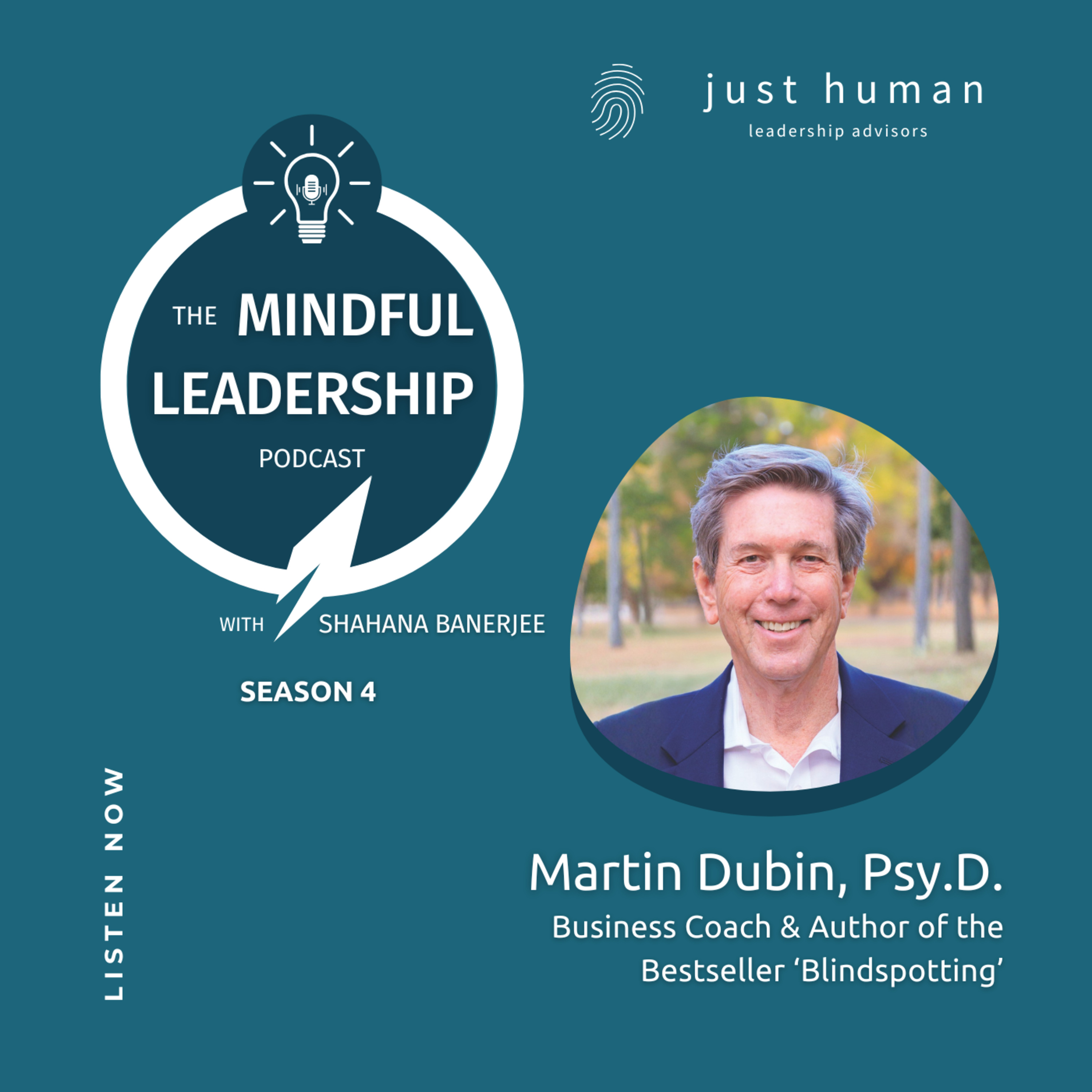 S4e03 Decoding Your Blindspots with Martin DubinThe Mindful Leadership Podcast with Shahana Banerjee · features Martin Dubin67 / 100
 #57: From Pressure to Performance: How Great Leaders Find Their Mojo and Flow, with Ben CroweWorld's Greatest Business Thinkers · on Imposter syndrome90 / 100
 Standing Out in the AI Age: How to Stay Visible, Valuable, and Relevant with Sally HelgesenThe Good Leadership Podcast · on Imposter syndrome80 / 100
 The Fix for a Firm That Eats Your Whole Life? Charge More, Serve Fewer | Marit BurmoodThe Accounting Leads Now Podcast · on Imposter syndrome76 / 100
 How To Ascend To The Next Level In Business with Authenticity and EQ, with Natalyn Lewis, Founder and CEO of Ascend EQ!Get Authentic with Marques Ogden · on Emotional intelligence (EQ)75 / 100
 The Business of Learning, Episode 98: The Psychology of MotivationThe Business of Learning · on Imposter syndrome75 / 100
 Episode 138: How Leaders Can Drive Innovation with Professor Linda Hill81 / 100
 Episode 135: Conflict Conversations at Work with Amy Gallo67 / 100
 Episode 134: Dynamic Work Design with Nelson P. Repenning76 / 100
 Episode 140: Tapping into the Potential of Neurostrengths with Morra Aarons-Mele
 Episode 139: Productive Work Rhythms with Camilla Kring