
The WLD Show · 2025-11-24 · 40 min
Key moments - from our scoring
Substance score
31 / 100
Five dimensions, 20 points each
In this 'Besties' episode of The WLD Show, hosts Will Chang and Andrew Hsu catch up on major life transitions and personal breakthroughs. Andrew shares detailed insights from traveling across Japan for a full month with his family - navigating the logistical challenges of managing luggage, strollers, and a toddler while driving on unfamiliar roads and finding kid-friendly restaurants in neighborhoods across Tokyo, Nagano, and Osaka. He frames the experience using the concept of "type two fun" (rewarding in retrospect despite difficulty) and reflects on how the trip strengthened his relationship with his wife Shaolin by clarifying their parenting roles and emotional support patterns.
Will discusses his attendance at Tony Robbins' "Unleash the Power Within" event - a 10,000-person stadium event in Anaheim - where he went as a couple with Claudine alongside Ed and Angie (whom he met through C100, an organization for prominent Chinese American leaders). Will explains how Tony Robbins' framework of identifying life category gaps (family, health, money, business) combined with visualization exercises helped him move past limiting beliefs around health, wealth management, and surrogacy. Post-event, Will hired trainer Andy Shin and shifted his health rating from 5/10 to 10/10, while also overcoming financial anxiety by starting daily LinkedIn posts about coaching - generating five-six weekly conversations and four prospective clients. Will details Tony Robbins' business model as a $7 billion revenue operation that uses emotional activation, stadium events, and upselling premium packages ($20,000+) to clients seeking specialized help in specific life domains.
Type two fun is when you're happy that something is over because it was difficult, but you gained value from it - Andrew experienced this during his month in Japan managing logistics, finding kid-friendly restaurants, and adjusting to traveling with a 2.5-year-old, which gradually shifted to type one fun (enjoying it in the moment) once patterns were established.
It's a 4-day stadium event with 10,000 people hosted at venues like Honda Center in Anaheim, priced from $500-$2,000 for the entry-level event, with the first 2 of 4 days dedicated to upselling specialized coaching packages ($20,000+) in specific life domains like health, business, money, and relationships.
After the event, Will hired trainer Andy Shin (who tracks hormones, sleep, and nutrition and provides daily workouts) and made the commitment despite the trainer being an hour away in Irvine - the visualization and belief-work at Tony Robbins enabled him to act on this connection he'd resisted before.
In approximately one month of weekday LinkedIn posts focused on thought clarification and lessons learned, Will generated five-six coaching conversations per week, closed one client, had four more in closing process, and received inbound from other coaches and coach matchmakers.
Being together constantly for a month clarified their new roles as parents and helped them develop strategies for splitting responsibilities (Andrew handling logistics and Emmy when active, Shaolin providing emotional support and pushing the stroller), plus recognizing each other's emotional limits and supporting when the other hit capacity.
Our reviewer’s read on each dimension, with quotes from the episode.
The episode contains scattered observations about parenting logistics, Tony Robbins' business model, and limiting beliefs, but most insights are either well-known (motion affects mood, visualization helps manifestation) or surface-level personal reflection. Long stretches are devoted to mundane travel details (finding elevators, kid meal timing) that offer little actionable learning for B2B operators. The Tony Robbins section provides some structural business insight but mostly describes hype-and-upsell mechanics rather than novel operational principles.
Just figuring out also which neighborhoods are like or train stations are the best for kids
Motion is emotion or something like that where you have to move your body
The episode recycles mainstream self-help frameworks (visualization, certainty mindset, cold plunges for state change) that are ubiquitous in entrepreneurship circles. The Tony Robbins analysis is descriptive rather than critical - essentially praising the funnel without original analysis. The parenting reflections are personal but not novel. Absent are contrarian takes, first-principles questioning, or genuinely fresh perspectives on any topic discussed.
Imagine myself having a child having like a beautiful house with a great view
The only way you'll ever get something is having 100 search team even without the evidence
This is a co-host conversation between founders/coaches, not an interview with a high-caliber guest. While the hosts have built things, there's no external expert or operator brought in with specialized expertise or significant scale exit. The episode is essentially two friends reflecting on their own experiences and a third-party event (Tony Robbins), but neither host has demonstrated major operational achievement or deep domain expertise that would warrant feature-interview treatment.
I've founded two companies small
I don't even know how to explain it. They're an organization for Chinese Americans
The episode lacks concrete data, metrics, or named examples that would help operators replicate insights. Japan travel details are anecdotal (timing nap schedules, finding elevators) rather than systematic. Tony Robbins discussion cites $7B revenue estimate but no breakdown of how that revenue is actually generated or what CAC/LTV looks like. Coaching results mentioned are vague ('four clients closing') with no context on deal size, sales cycle, or methodology. The limiting belief discussion is highly abstract.
They have a beautiful house in Buena Park. It's on a lake
I think they generate like $7 billion in revenue a year
The hosts demonstrate genuine rapport and ask reasonable follow-up questions (e.g., 'What were the categories?', 'How did that conversation go with Claudine?', 'What are you thinking about next?'). They probe each other's reasoning and push back gently on vagueness. However, questions often remain surface-level; when Will asks about categories, Andrew admits he can't remember most of them, and the conversation moves on rather than drilling into specifics. Few moments of productive disagreement or hard scrutiny of claims.
What were the categories? But then also what was it like going as a couple?
How did that conversation go? She just came to that conclusion, or there was an actual discussion. How did that happen?
Computed from the transcript - who did the talking, and the words that came up most.
Andrew Hsu shares his learnings from spending a month traveling in Japan with his pregnant wife and 2 year old daughter. Will Chang shares his experience with Tony Robbins and impact it had on his month.
Transcribed and scored by The B2B Podcast Index.
Speaker A: I think I'm working through the limiting belief now that work has to be the definition of what society says. So even though I've founded two companies small, I still don't feel like a founder. And I think I just have friction or limiting beliefs. And so I think I'm working to hold that work can be this amorphous combination of things that are all positive and like, whatever it is that is the right fit, even if I can't name it and being okay with it.
Speaker B: Welcome to the Wild show with your hosts, Will Chang, Li Chang and Andrew Hsu.
Speaker A: Hi.
Speaker B: This is Will Chang, and as always, I have my co host Andrew Hsu with me today.
Speaker A: Hey, Will. Good to be here. Good to see you.
Speaker B: It's been a while since we chatted. You've been out of the country for a month, and so we've actually really haven't talked much. We caught up a little bit yesterday, but we haven't really talked much since a month ago. Since you left for Japan. You spent an entire month in Japan. I've been going through a ton of changes as well, so would love to catch up and just kind of talk through both sides.
Speaker A: Amazing. Yeah, I always appreciate it. I don't even know where to start, though.
Speaker B: So let's start with Japan. So like a month in Japan. Everyone must imagine how amazing that is. Everyone wants to go to Japan. Everyone I know is in Japan right now. You met a bunch of my friends in Japan. And so what was it like being in Japan for such a long time?
Speaker A: I think that my answer doesn't feel like a common answer anymore about, like, all the amazing food and cool stuff, because that is true. But for me, that was the first extended trip traveling with family and a two and a half year old. And on top of that, let's just say I have to lift everything. Like, I just had to handle everything. So it just was nonstop, actually, like, work and figuring things out. So I call it like two weeks of kind of figuring out, uh, a new pattern or way of being. And then once I figured that out, it just became the most. It's just a very rewarding, kind of inspirational trip to realize that we could travel in a different country for an extended period with a kid almost like type two fun. And then after that, it became type one and type two fun.
Speaker B: And type two fun is what I think.
Speaker A: Type two fun is where you're happy when it's over because it was hard. And then type one fun is just, you know, you had a good time.
Speaker B: Yeah. So what was Hard about it, uh,
Speaker A: it's hard to describe, but just as simple as finding food for your kid after dark. Cuz it didn't feel like kids were welcome out at typical restaurants once the sunset, things like that or you're always in New York. We have daycare, so not having daycare, so you're planning a schedule for a kid that matches them and eating while trying to sightsee. And so you have to change how you think about traveling, what you're thinking about doing. Always making sure you have food and water. And then the evenings not being able to just easily go get food, for example, or inadvertently going to a place that's twice as busy as Times Square with a stroller and you're like whoa, that's a lot of people. And so just figuring out also which neighborhoods are like or train stations are the best for kids. Another funny small anecdote is like finding every single elevator cuz you've got like a bag and a kid and a stroller everywhere you go. So just completely different way of travel. Basically being okay being slower, like all kinds of things. So really just a big adjustment in almost everything honestly.
Speaker B: Were you in the same place for a while or were you actually spending different periods of time in different places for the entire month?
Speaker A: We did a week in Tokyo, then we did, then we moved all over to three different cities in Nagano and on top of that I was driving. So that was a whole experience unto itself. Driving on the left side of the road with the steering uh, wheel that's on the right side of the car. And like some of it was like mountain roads. And then being in Osaka for a week and then back to Tokyo for a little bit. Yeah. And it was great because it felt like, and this is the goal, we got a, a good spread of like all the different experiences and neighborhoods in Japan. Not all, but a good spread. And it actually added a lot of perspective. So when we got to back to New York we were so grateful for like how many friends and neighbors we have here. It is very accessible for like restaurants and stuff for kids and just seeing like the huge benefits of where we live in New York. So really like a lot of good
Speaker B: perspective and uh, just for the audience. How old is your daughter and then your wife? Shaolin's also pregnant, right?
Speaker A: Yeah, Emmy's two and a half.
Speaker B: And so what was that logistical transition like? Cause I can't imagine it being easy. So how did you guys manage? Not only the logistics but also the emotional transition.
Speaker A: Logistic wise I just had to do Everything. I don't know what else to say because like, Shaw can't lift anything either, really. So Shaw would push the stroller if we were moving with all our luggage, and I would handle the luggage. And then even then, like, if you're loading on the train, once you, you know, put everything up, then I gotta go lift Emmy, put her into the seat, then like fold up the stroller and put it away while we were like training between stuff. So you just kind of figure out how to. For the most part, I would carry everything. And then Sha would be pushing Emmy. Um, so that was like one thing. Or in general, M likes to run. And so if we're like out doing something and it's safe, then Shaw would push the stroller. Then I'd have to like, make sure Em, um, didn't go anywhere that she wasn't supposed to like, basically like have to chase her. So that's kind of how we'd split up. And then that's like, it really slows you down if you're trying to get anywhere. So on a day to day basis when Em's active, I would have that, that part. And you have to just be okay with taking like 40 minutes to get three streets or something. And then after you kind of let the kid get the energy out, then you could put them in the stroller and get where you need to go fast. And then the whole time you're kind of just avoiding meltdowns by making sure, you know, they're entertained. There's food, there's water, they can move around. And so if they get that quota in, then once they have that enough, you can kind of throw them in the stroller, get where you want to go, have maybe 30 minutes to yourself, then they take a nap, and then you do it all over again. And then you go to dinner. Right. So you're just kind of planning two entertainment sessions a day plus nap and then a dinner. Right. And like we were saying, dinner can be really hard to find. At first you're kind of figuring out where you can and can't go with a kid. And then every day you're trying to figure out where they nap, if they're like in the stroller or wherever you're at. So that's kind of the logistics of, uh, figuring it out.
Speaker B: What about the emotional piece?
Speaker A: The emotional piece. I feel like this is almost the culmination, meaning it's just been a big change being a parent. I was actually, I've been talking to a couple people who are new parents or considering being parents. But when you become a parent, it really changes the relationship for so many things. So I think it changes the relationship with yourself, with your significant other. But I feel like in Japan, because we were together for so long, it kind of helped us clarify. I don't even know how to put it, but just kind of cemented us in those new roles. So you really just have less time together as a couple, which is hard. I don't know what else to say. I think each couple will find out what that new baseline is, and then you each have your own relationship. Went solo with a kid, and I think in New York, we had figured that out pretty well. Em, um, definitely settles into her own pattern when hanging out with just Shaw or just me. And, like, that's pretty smooth. And then we had not figured out both of us together. And I know it sounds weird, but effectively, like, a kid is very different when they're with both of you. Right. And so the things that normally work, if it's just me, they don't work. And so we might be together, but many times you're also kind of apart. And so just to be in that every day, you kind of have to figure out who all three of you together are as you're traveling. In a way. You could take that luggage analogy and somehow put that emotionally of, like, Sha, for the most part, is emotional support, I guess, and then, uh, more logistical support or, like, food or whatever, something like that. But I don't know how to translate that to emotions. But it's kind of understanding how to do that. And then each day or every two days, one of us would just lose it for, like, two hours. And if that happened to me, I'd just have to, like, put in headphones and, like, listen to music. And Shaw would totally get it. She's like, okay, yep. He's like, completely hit his limit. Because this kid's, like, screaming for the last hour and a half. And then Sha would, you know, do her own thing too, or if it would happen to her, I would just. If I could, I would just take Em. Like, I would just be like, okay, like, there's a playground over here. I'm out. You know? And then, hey, you know, you can figure out a cafe and do your own thing for, like, two hours. So there was also that. And, yeah, I don't know how to. You just kind of hit your limit and you learn to see each other's limits. And when the person hits their limit, the other person just, like, takes over because they can see there's no other option, basically. So, yeah, that's kind of figuring out the, uh, logistics and the kind of, like, emotional side. But it's very empowering. It was one of the first trips, you know, we were out for a month where I was like, I could keep going. It was rough, but it's also, like, very rewarding and it's very high feedback versus, let's say, like, some of our. Our, uh, jobs. Instantly, you can tell if something's going to work or not, you know, and you're just kind of moving through the world. So it's actually, like, very rewarding.
Speaker B: What did you want going into it, and then did you end up getting it? And what did you end up getting?
Speaker A: I think we just wanted to explore, like, a different lifestyle more than anything and consider, like, one of the fun things we were doing is just like, could we move to Japan? Yeah, I think we definitely got it. I think the short answer is, yes, we could move to Japan. In fact, we found, like, a neighborhood that we loved, and then, um, the very amusing thing is we realized we just found the same neighborhood style of, like, where we live in New York. So it was very reinforcing that we're probably where we. Where we would thrive the most and where we should be. Yeah, it was. I think we definitely got it even more, and I personally wasn't looking for anything more than that. Japan came so hyped. Everyone I talked to is completely in love with it. It's like going to see a movie that everyone's hyped up. I try to keep my expectations very low, because if I was as hyped as everyone that talked to me, I definitely would have. You know, I would have expected the greatest place on earth where there's, like, no problems whatsoever, basically. So, yeah, no, definitely found, I think, what we were looking for and really enjoyed it.
Speaker B: Amazing.
Speaker A: Yeah. So what's been going on with you? I think you've got a lot of different things going on. What's the overall rundown?
Speaker B: I mean, so when you left for Japan, I went with a friend, Ed. Meow. To Tony Robbins.
Speaker A: Whoa.
Speaker B: Yeah, so we met Ed, actually. It was a crazy way of meeting him. So we actually met Ed through ff. He came to one of our events. We put on, like, a little happy hour, like a C100 event. And then he was there, and we got introduced to him, me and Claudine. We were thinking about surrogacy.
Speaker A: I think you should explain C100 real quick and then jump back in.
Speaker B: So C100 I don't even know how to explain it. They're an organization for Chinese Americans that are kind of like the top Chinese Americans in society. So I know Yo Yo Ma is in it. That's the only person I know that's in it. But basically, yeah, C100 is like just an organization with. Do you know a better explanation?
Speaker A: I think it's that. So it's like cultural leaders, professional leaders. And then I don't know the exact founding premise to your point, but yeah,
Speaker B: I think it was something to do with, like, when China opened up. Something to do with Henry Kinsinger. I could be wrong. But basically, like, they wanted to build Chinese and American relationships and they built this organization. I'm, um, completely guessing here. But anyways, so we were at this event, and then he was a young leader at this class, this year's young leader at C100. And we were throwing a happy hour and he got introduced to us. We just got along really well. And he said that he had just gone through surrogacy with his wife. And so if I had any questions, then reach out to him, that's kind of how the conversation ended. And then later on with my coaching group, I had actually gone to do ayahuasca. And. And in this ayahuasca journey, I realized that my superpower is community building. And the reason why I'm able to do it is because of my wife, Claudine. And in order to do more of it, I had to basically love Claudine, right? So everything is through Claudine. And that night, Claudine texted me and said that she's getting param menopause symptoms and that she's not going to have kids anymore. And so I need to look for a way to get to do surrogacy. And so I hit up Ed. And then, so we met. Ed met his wife, loved them as a couple, and they explained to us what was going on from a surrogacy standpoint, how they went through it and kind of guided us through the process. And then last month, Ed and Angie basically invited us to go to Tony Robbins. We're Tony Robbins unleashed. Uh, the power within is in the Honda center in Anaheim, which is like this 10,000 person venue. And we, uh, live kind of far away in Los Angeles, so we actually got to stay at their place in Bu Park.
Speaker A: Wait, you did it together with Claudine?
Speaker B: Yeah. So Claudine and I stayed at Angie and Ed's house for the week. And then every morning they would drive us to so the four of us would go together and then do 12 hours of Tony Robbins and drive home. And so we spent like a whole week with them, right? And what was really powerful about that, because, like, Tony Robbins, I mean, a lot of the stuff I already knew because I've done so much work on myself. But one of the reminders was actually like, where do you want to go? Right? So what do you want to go? Why do you want to go there? And how you will get there, right? And so then you basically categorize your different pieces of your life and then you basically be like, okay, am I at a 1 out of 10? Or like, am I a 1 to 10? Where am I at? And then figure out, like, what's the gap there? So I had three gaps. The first gap was family, right? So me and Claudine was going through surrogacy. We don't have a house, we don't have children. This is something that we wanted. But, like, there was a huge gap there. We were still trying to figure it out. Number two was my health. So actually rated a five out of ten in my health. Out of all the categories, my health was actually the lowest rated because I just had a different relationship with working out. At 35, I was like, very aesthetic. But now at 40, like, it's no longer fun for me because my relationship with working out needs to change to a, uh, more longevity and mobility. And I haven't been able to get there yet. And then the third one was like, around money. So I've made and lost a lot of money twice in this past time. When I lost it, I got audited. And so I didn't have any, like, trust in myself in holding money anymore. So I gave it all to one of my friends who's a wealth manager to manage. Right. And so I've actually never really spent time on money for the last couple years. And I realized I have a limiting belief there is that actually I can't hold a lot of money right now. Like, I can't imagine it, right. And so through Tony Robbins, through that three or four day process, like, I actually spent a lot of time working my beliefs. And the first one is living in Angie and Ed's house. They have a beautiful house in Buena Park. It's on a lake. It's beautifully. Every morning we would wake up and we would do cold plunges on the lake. And then we would spend time with their one year old son, Jasper, at night. And I was just like imagining, oh, actually I can hold a house. I can hold a child now, right? And so, like, being able to actually visualize it being at their house actually really helped a lot. And the second one was like, okay, I gotta work on my health. And then I had to imagine, okay, what is it like if Will is healthy again? And then the third one was like, okay, money. How do I basically start holding money again? Imagining myself holding the same type of money that I was imagining myself holding when I was younger? Can I do that? And basically Tony Robbins opened that up and made me, like, be able to visualize and hold those things again. And so immediately after Tony Robbins, I got actually connected to this trainer, Andy Shin, like, a week before. And I just knew that this guy was putting my life to basically change my life, but I didn't act on it. After Tony Robbins, I was like, okay, this is guy. I hit him up. I was like, I want to get trained. He's actually an hour away in Irvine, but I now drive an hour every week to see him. He tracks my hormones, he tracks my sleep, he tracks my nutrition. He gives me a workout every day where I don't think about it, and it's just easy. So something happened, something shifted, and I feel like I'm a completely new person with my health. So originally it was a 5 out of 10. Now I'm. I'm at a 10 out of 10. And then the money piece, like, it's really opened up for me is like, okay. Like, I'm no longer feeling any, like, blocks there now. And so one of the things that I've been doing is actually now, okay, Like, I feel really, I was put on this earth to actually do coaching, right? And so why don't I just try to maximize as much as possible and at least tell people about it. I started posting on LinkedIn every day, and I just basically was like, okay, I'm gonna just use LinkedIn posting as a way to kind of, like, write and clarify my thoughts. It's a good kind of, like, daily prompt for me to actually just put down all my thoughts and what I've learned over the last, like, two or three years. And I started writing. I've been writing every day for the last month or so, every weekday. And it's been resonating like crazy with all my friends. And people have been just reaching out and reaching out. I'm having like maybe five, six conversations a week of, uh, people where it's like, oh, I hit something of theirs, and let's have that conversation. And we talk about what's going on and it's very energizing. I've got in one client that's closed and four more clients that are, uh, in the process that's closing just from these LinkedIn posts. And I've had like, other coaches reach out to me. I've had coach matchmakers reach out to me. Like, I've just had just a lot of inbound opportunities and conversations because, like, I'm just doing this that daily post. So, yeah, that's where my life is right now. I've been having so much fun doing this. I feel like my life has just completely changed since I went to Tony Robbins.
Speaker A: There's, uh, so much there. Should I ask about Tony Robbins? Do you, do you have more energy to talk about some more questions about Tony Robbins and Tony Robbins as a couple? I can say yeah, okay, let's do that. So what were the categories? But then also what was it like going as a couple? Because I haven't heard of anyone that's gone as a couple, especially two couples. So tell me about the categories and then how it affected, you know, you guys as a couple and maybe how you guys talk to each other with another couple of like sorting through things.
Speaker B: So I would say that first of all, just so people understand, Tony Robbins is. Tony Robbins is a guy who at a very young age had a very abusive and narcissistic mother. And he spent his young life basically trying to fix her or support her, right? And so he basically gained the skills to try to heal people or try to change people. And then he became very famous because he was using infomercials. He would use anything that basically at his disposal to get his message out and to market his abilities. And so he goes on infomercials and started doing this more and more. What he does is he employs every tactic that has been proven in order to get you to change, right? And so it feels very culty. It feels like church. It feels like a rave. Because what he's doing is he's basically using every single thing that has works in society to get you to do the things that you wanted to do. So it's like going to mega church and instead of believing God, you're believing in yourself, right? And he's so charismatic. And then also you're going with a 10,000 people right in this stadium, right? And it's his onboarding funnel. So you pay like 500 to like $2,000 for this 10,000 person stadium. And then for four days he basically tells you, hey, okay, this is how you change. You need to need to state, you need to be able to visualize it, you need to be able to believe it and then hear all the different things. But also, out of the four days, he's two of those days, he's upselling, right? Because, like, as he's figuring out all these things, he's getting more life problems, whether it's business or money or relationships or health. And then he's gone out and found like somebody that he really loves that can help him. And because he's able to help him, then he's like, okay, I can basically create a package and sell it to the people that also need these two, right? And so the first unleash the power is like a, uh, onboarding funnel thing where it's like, okay, here are the different concepts, right? And then go figure out what you actually are lacking. Like, okay, you're not happy with your money, you're not happy with your business, you're not happy with relationships, you're not happy with your health, okay? Now that you know this, figure out why you want to change it. And now the how, the how is me. I have a $20,000 package that can help you. If you do this, then you'll fix your health or have like a 20,000 package that'll help you do business, right? And so his companies, I think, is the best business I've ever seen. I think they generate like $7 billion in revenue a year. And so it's like amazing. It's two days of its upselling and like, I love it because, uh, you don't even feel like you're getting upsold because it's so good. But it's like this whole system that he does and he spends like, I think, I mean, people will hire him like Steph Curry and like Bill Clinton will hire him for like a million dollars to coaching one on one. But he still will spend twice a year spending times with us like plebes or peasants to like, you know, teach us this stuff because I think it's accessible. But also he wants to on ramp us to these bigger packages. And what's amazing is the testimonials. He'll basically bring people that with the craziest stories that have, you know, went to the unleash the power within like 15, 20 years ago, and then now they've sold their companies for a billion dollars and they're coming back and telling you how Tony Robbins changed them, right? And so it's. The whole thing is so well done. It's amazing.
Speaker A: Yeah, amazing. Very nitpicky. Knit question. What were the categories?
Speaker B: I can't really tell you exactly what the categories were. Cause I can't remember. But it's like, I remember the health one. Right. I remember the nutrition one. I remember money. I remember business. I remember relationships, work. That's all I remember.
Speaker A: Okay. And then for the two days of quote, unquote, upselling, did you already get something out of it? Was it, like, the motivation to change or what did you get out of. Yeah. Did you get something out of the first two days?
Speaker B: Yeah. I mean, there's a lot that was useful, so I probably can't remember, you know, 50% of it. But what was useful to me is that motion is emotion or something like that where you have to move your body. So one of the things that, like, I guess I've been doing is just how do I think my way or conceptually work my way through my emotions or work my way, like. And then. But one of the things that Tony Robbins is like, how do you get into a beautiful state? How do you get to a state that's positive, that believes in more, that you want to do things, that you're constantly trying to put yourself in that state.
Speaker A: Right.
Speaker B: The positivity state. And there's, like, a lot of ways of doing it. One is motion, the second one is breath. And then I think those are the main two. So Tony Robbins, every day, he basically jumps ups and down, visualizes and does a lot of breathwork stuff. And then he'll do cold plunges to get him into the state where he's ready to do stuff. Right. And it's not unless you're in that state where you're actually going to change or do stuff and you try to put yourself that state as much as possible.
Speaker A: I get it. I think that's actually why I do work out in the mornings. You and I talk about that piece. But anyways, Great.
Speaker B: Yeah. So, I mean, every day since Tony Robbins, I've been doing it for literally, like four weeks now. Every single day I wake up and I feel like, man, I don't want to do anything. And then I'm like, okay, I'm going cold plunge. Uh, I cold plunge. And I'm like, oh, I'm ready to go. And so I've been doing cold plunge every single day since Tony Robbins for the last three, four weeks. Yeah. Yeah.
Speaker A: You basically do something hard. And then better yet is if the hard thing has. It's not just like a mentally hard
Speaker B: thing puts you in a state.
Speaker A: Yeah. If you're out in the elements. You're basically ready, right?
Speaker B: Yeah. What Coldplex actually does is it makes your body feel like it's dying. So all the blood goes into your internal organs. So one, it releases dopamine, and the second, it flushes your lymphatic systems out. When you get out of it, you basically be like, okay, I'm ready to go, versus when you wake up, you're like, oh, man. Like, I'm not ready to go at all. Yeah.
Speaker A: So what conversations did it spur with you and Claudine?
Speaker B: One of the ones that actually, like, was an interesting one, was one of the days, like, maybe the third day in. Claudine woke up and she was like, we're not going to have a baby. Like, the surrogacy thing isn't going to happen. Our surrogacy matchmaker isn't. Isn't going to do the work, and we're not going to have a baby. And I was like, I'm M100 sure we're going to have a baby. Like, I feel it. Like, you should also feel that. Like, why aren't you feeling that? Right. And I just didn't make sense to me. And then I was just trying to cover her, but. And then Tony Robbins, that day was like, the only way you'll ever get something is having 100 search team even without the evidence. Right. And I was like, yes, this is actually what I do. Like, why I'm able to get so much done is because when I decide something, I just decide it's 100% certain. Right. And then the reason why Claudine might not get the things that she wants done as fast is because there's this, like, doubt and certain uncertainty that happens. Right. And so, like, that Tony Robbins thing actually helped put into words the difference between us. That actually helped Claudine realize that she needed to decide to be a hundred percent certain, even without the evidence. And then now we're together, both a hundred percent certain even without the evidence, and things are just a lot better now. Yeah. So that was probably the biggest thing that helped us.
Speaker A: How did that conversation go? She just came to that conclusion, or there was an actual discussion. How did that happen?
Speaker B: Well, uh, what happened was Tony Rollins was talking about it, and I just was like, hey, remember our conversation before? And then we, like, later on, we were just like, yeah, like, we have to be certain. If we want something, we have to be certain. We can't be scared to actually claim it. We can't be scared to actually, like, move toward it and let it flow towards instead of basically stopping ourselves from actually wanting it.
Speaker A: Were there any other items that she or you guys together wanted to work on or have a hundred percent confidence in?
Speaker B: I think the main one was the children piece. I think also though, just over the last month or so, Claudine has been more and more like certain in what she wants to do. Part of the reason why we're not probably having kids or there's it's hard is because both of our energy towards kids actually is a fear energy. Right. Because I think both me and Claudine have. Have this fear of being trapped and expresses ourselves in different ways. We both had childhoods where we felt very trapped. And so having a kid for me feels a little bit trapping and having a kid for her, there's a lot of fear in that because her parents relationship was so stressful in that. And so the way that I've been, you know, working on it is actually trying to conceptually work through it the way that I've just coach people. That's how I've been working through it. For Claudine, a lot of it has been basically healing it through spirit, like more spirituality. And because she's actually really highly like sensitive spiritually. And so she's actually now in December going to do this thing called ayahuasca and ifs together. So it's called ifs Awasa or something like that. I don't remember exactly the term. But basically like having both internal family systems and ayahuasca together. She's going to massacode it to do that, to heal herself so that she can heal others. And then also I think she's doing Hoffman in February as well. And so she's actually working on herself and trying to heal herself so that she can like work through this stuff from her childhood so that the energy is different with children and as well as help others too, which is what she wants to do.
Speaker A: Okay, so I'm hearing Claudine is kind of doing. There are spiritual pieces, say some substance pieces and then therapy and then what are some details on like how you're working through it? How do you do it?
Speaker B: Every morning I wake up, I go get on my cold plunge and I put on my headphones on and I listen to David Bayer. He has like a 10 minute meditation thing. And I basically imagine myself having a child having like a beautiful house with a great view where um, all my friends are coming and I'm basically, you know, coaching them or we're talking about like self development and I have a really successful coaching business and to the point where I have the ability to coach people like Joe Tai, the owner of the Brooklyn Nets, and Jen Huang. That's what I imagine every day.
Speaker A: Beautiful. Yeah. I actually listened to that episode this morning while I was working out. It was great. And just slowly putting together the pieces as, you know, you and I talked about. I think it's been really fun traveling, and I've put a lot of work into the family side, and I've actually been now starting to use that same method to think a bit more professionally. So. Very cool, man. Nice. And so on top of all that, having been to Tony Robbins and kind of all the things you're practicing, how has it inspired you to update your own coaching, like, how you're coaching? I'm sure it inspired some ideas outside of the writing. How did it, like, yeah. Update your. Your coaching structure or how you're onboarding people?
Speaker B: I think one is that it's given me the confidence to actually recognize that I have something unique, I have a unique gift, and that I can help a lot of people. I think that's the first thing, right, Is like, actually, yeah, uh, like all the work that I've been doing, all the mapping out that I've been doing for the last couple years, I actually have something valuable that people that might be valuable for people be open and be willing to share and give it to others.
Speaker A: Right.
Speaker B: I think that's the first thing. I think the second thing is anytime you're asked to do something that's out of the thing that you've done, there is a little bit of a, uh, fear that you can't do it. Right? And so, like, I mean, when somebody asks you to coach them, when they're not exactly asking for you to solve the problems that you've solved for everybody else, there's a little bit of fear and a doubt where it's like, oh, can I actually do this? Right? And that fear and doubt just comes from the fact that you don't have the evidence that you can do it, but basically actually believing that you can do it and actually am able to do it, because I really believe in it. Like, I truly believe in my soul that I can help a lot of people to the ability, like a very high ability. So none of the stuff that actually is being asked of me to do, like, that I've never done before, it should cause me to feel fear. Right. And so if I'm able to actually really think about how confident I am in the ability, then when people are Asking me to do things outside of my scope, actually, it doesn't have to trigger anything. Right. And so that's kind of what I've been working on, is actually expanding it. And as people are asking for more things, I'm open to it. And I'm like, okay, yeah, we can work this out. We can figure it out, because this is something that I can do. So that's another thing that's been helpful. There's probably like a judgment piece too, right? Because as I'm sharing more and more of like what's on the internal to the external, like, it's not going to match with a lot of people. Not everyone is going to understand her or like match with it and being okay with being judged and being okay with not matching. I think that's another thing that I've accepted too.
Speaker A: It's beautiful. Yeah, man. I'm, um, happy for you.
Speaker B: Yeah, thank you.
Speaker A: Sounds awesome.
Speaker B: Yeah, it's been really fun. I've been having a really great time.
Speaker A: You know, it's so cool to hear that you got to experience Tony Robbins with a couple. And to me it sounds like you actually got a glimpse into a potential future life that you're using to expand and hold. That's inspiring. And you've kind of got the things to work on and changes to your practice. So. Yeah. What are you thinking about next? What changes are you making? Yeah, what's next?
Speaker B: I mean, so as I'm talking to people and uh, as I'm realizing how much is resonating, I'm really excited to build something like a more of a structured thing with you. Actually, last year or a couple months ago, in July, we ran a retreat together. In January, we're about to run another retreat and this time I'm charging money, more money. Not enough to actually make money, but enough money where at least my food and my living expenses is covered. But I'm starting to feel like I have enough value to give that I'm okay with just charging more money. Now, the last time we talked, you gave us the name family office, right? And how do we create a community of Asian American men, high achievers and founders, so that way they can all get to know each other and help each other. And so that's something that I'm trying to figure out how to get to or not figure out. But that's what I'm working towards is that how do we create a one on one coaching retreats and also community thing to teach Asian American men how to get from. By me to, through Me?
Speaker A: Yeah. I mean, I'm excited for it. You know what's really funny for me is looking at the Tony Robbins piece, I feel like you're the first two days and I'm the second two. I'm, um, the upsells. Because I just want to spend all the time, like, getting those different facets tight, you know what I mean? Plus all the kind of, like, work. That's why I was asking you for the categories. Like, I want to get people to those insights and then get them to the. But I skipped the motivation piece, which is, like, so important. Right. Because I'm already intrinsically motivated. So it's cool to hear. Yeah, I'm excited to help set up and then just continue on those. So, uh, that's awesome, man.
Speaker B: What are you thinking about?
Speaker A: I think I'm working through the limiting belief now that work has to be the definition of what society says. So even though I've founded two companies small, I still don't feel like a founder, and I think I just have friction or limiting beliefs. And so I think I'm working to hold that work can be this amorphous combination of things that are all positive and whatever it is that is the right fit, even if I can't name it and being okay with it. Yeah. So it's actually continuing stuff where, you know, you and I were just chatting about doing it together, but removing those assumptions, barriers, et cetera. And that was, you know, it's just been a day from us talking yesterday, but that's actually what I noticed from even just sitting with it this morning, is I have an assumption, based on all the articles I read and all these things of, like, whatever's next needs to be like, a life purpose. A founder with a $10 million exit. Like, an infinite number of assumptions versus accepting that what if it's whole community is doing really well and we're all making a bit more money or. I don't know. But being okay with that lack, uh, of clarity is actually, I think what I'm sitting with. And, yeah, I think that's what I'm working on.
Speaker B: I've been actually having the same exact conversation with a lot of people recently. And it's like, there's a lot of fear in AI. Like, I was talking to an engineer, and he was basically like, should I even take all these LEET coding tests, like, or train to do LEET coding? Because if I get another job, I'm gonna get AI a layoff, uh, again, anyways. Right. And I was telling him that, yeah, Anything where you like, you are a black box where you're forced to have an input in order to have an output. Right. You're a cog in the machine. You're gonna basically probably get AI'd out. But what is actually really important is figuring out and really valuable is figuring out who you are and what you're supposed to be doing. And if you're basically doing the things that you're supposed to be doing and it's bringing so much energy that you're just continually doing and get. Getting better at it, you're going to be uniquely you. You're going to be able to create, uh, so much value in this society that eventually get paid for it. And you can't find it by thinking what it is. You have to be able to find it by following kind of the breadcrumbs over time. Right. Of just following your intuition over time. And that's the scary part is because we all have these boxes where we think we need to go in order to get the thing. But really, I think the most valuable people that make the most money are the ones that figured out how to be uniquely themselves and create value. Enough value in society where they're actually getting paid well for it.
Speaker A: Yeah, I think that's a different way to summarize or. Yeah. What I've been thinking about. So it's kind of like. Yeah, it's being your way into. Right. Like doing or being your way into it versus thinking. So that's it. Just trying to continue on that path, man.
Speaker B: Awesome. All right, thanks, Andrew.
Speaker A: Is that the pod?
Speaker B: That's the pod.
Speaker A: See ya.
Speaker B: Bye. Thank you so much for listening until the end. If you've enjoyed this episode, please leave us a review on Spotify or Apple Podcasts. It'll help more people like you find us. You can find more about us on Wild show wld. Please subscribe to our newsletter or DM us on Twitter. We'd love to get to know you.
Taylor Lo: Catching up 5 years and 150 episodes later | #15451 / 100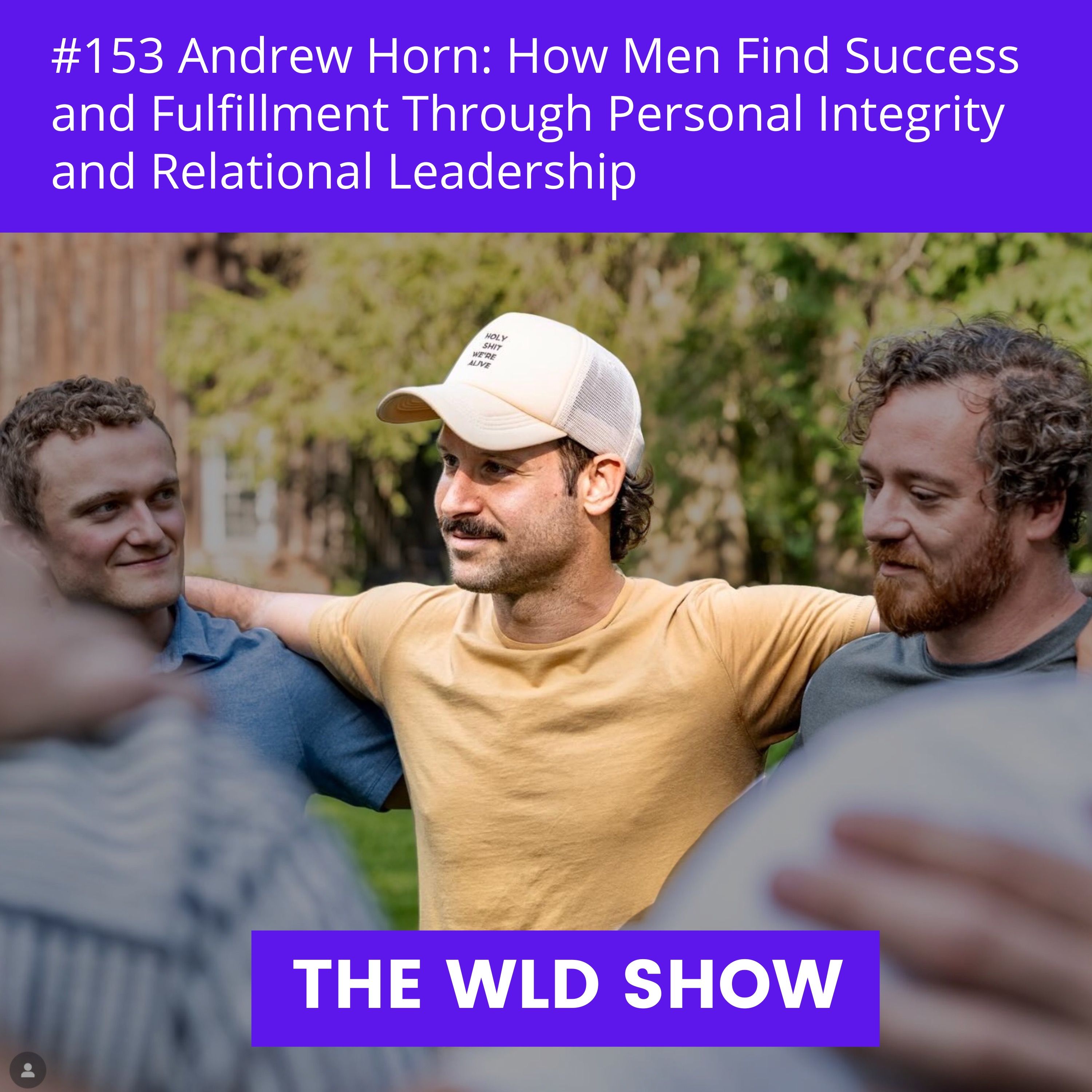 Andrew Horn: How Men Find Success and Fulfillment Through Personal Integrity and Relational Leadership | #15358 / 100Besties: Andrew celebrates 40th. Will attends a Men's Leadership Retreat | #15243 / 100Besties: Why I Ran a Men’s Group at a Chinese American Fraternity Reunion | #15068 / 100Besties: We put on our first men's retreat! Here's what we learned. | #14956 / 100