
The Talent Game Podcast · 2026-03-12 · 53 min
Key moments - from our scoring
Substance score
58 / 100
Five dimensions, 20 points each
This episode explores the evolving CFO role within gaming companies through the perspectives of two experienced gaming finance leaders. Ido Hochman, who has worked at Miniclip, Outright Games, and now Avid Games (a TCG-focused indie developer), and Francesco La Deda, with experience at Electronic Arts, Aristocrat, and more recently in real money gaming and affiliate marketing, discuss how modern CFOs go far beyond traditional accounting. Rather than simply managing cash flow and compliance, both emphasize that today's gaming CFO acts as a strategic business partner, enabling product teams to make better decisions through FP&A (financial planning and analysis) insights, helping translate gameplay decisions into financial implications, and advising on capital allocation and monetization strategy. Francesco highlights the breadth of responsibility - from tax expertise to HR to legal strategy - especially in smaller organizations where CFOs become de facto experts across multiple domains. The conversation distinguishes between three flavors of CFO roles: the controller (operational cleanup and systems setup), the strategic CFO (product partnership and growth enablement), and the M&A/fundraising specialist. Both guests emphasize that while core finance competencies matter, curiosity about gaming, passion for the industry, and genuine interest in the business are more predictive of CFO success than prior gaming experience.
Beyond keeping the lights on and handling compliance, a gaming CFO partners with product teams on monetization strategy, provides FP&A insights that translate gameplay decisions into financial implications, enables better capital allocation decisions, and advises on growth opportunities - essentially removing non-gameplay responsibilities so designers can focus on creating great experiences.
Yes, as long as they have core finance competencies and genuine curiosity about gaming. Francesco and Ido both argue that passion for the industry and willingness to learn gaming economics matter more than prior experience; however, relating to the product and understanding player psychology does create a significant advantage.
A controller focuses on operational cleanup, setting up systems, processes, and accounting rigor - essential for scaling fast-growing companies. A CFO is more strategic, partnering with the CEO and product teams on growth narrative, capital allocation, and business enablement.
Both executives recommend hiring people who play and enjoy games because it demonstrates genuine interest in the industry and helps them understand monetization mechanics and player retention strategies intuitively, which informs better financial advice to the business.
Ido prioritizes analytical capability first (so team members can solve problems with similar tools) and curiosity second, arguing that curious people who care about the company will excel and invest extra effort, making curiosity more important than specific prior experience.
Our reviewer’s read on each dimension, with quotes from the episode.
The episode contains solid practitioner insights about CFO roles across different company stages, definitions of CFO types, and hiring criteria. However, significant time is devoted to introductions, casual gaming discussion, and repetitive ads that dilute insight density. The core financial and strategic concepts (capital allocation, FP&A, tax strategy, cash flow focus) are discussed but often at a surface level without deep operational specifics.
I want to give the team the tools to execute better on what they do, allow them to focus on the sort of quote unquote, the fun stuff, the fun experience and help them think about how we unlock the Growth.
I think the first one would be more like the accountant cfo. They are coming in to clean up the mess that founders have made perhaps.
The discussion covers fairly standard CFO frameworks (operational vs. strategic CFO roles, importance of curiosity, low ego, cross-functional visibility) that circulate widely in finance leadership discourse. While the gaming-specific context adds some flavor, the core ideas about what makes a good CFO lack fresh perspective or contrarian thinking. The categorization of CFO types is useful but not novel.
you need to be curious and interested in what we do as a business in order to excel in it.
I think the CFO as the conscious of the organization.
Both guests are experienced CFOs with legitimate credentials: Ido has worked at Miniclip (scaled to significant size), Outright Games (PE-backed), and now Avid Games; Francesco has experience at EA, Aristocrat, and currently in real-money gaming/B2P platforms. They are active practitioners rather than pure consultants or thought-leaders, though neither is at a mega-corporation during the recording. Both bring real operational experience.
I spent an amazing five years there, really scaling the business, um, and then took a bit of a break.
I work for uh, large companies like Electronic Arts or Aristocrat or smaller companies.
The episode lacks concrete examples, specific metrics, or detailed case studies. Guests mention their past companies (EA, Miniclip, Outright Games, Aristocrat) but rarely explain with numbers, timelines, or specific decisions. Tax discussions mention Brazil and UK regulation increases and transfer pricing in the abstract, and Francesco discusses due diligence on cohort retention but without data. Much advice remains general principles rather than grounded evidence.
I did a deal where I helped Miniclip with a transaction with Tencent.
I've been a Division 3 for five years. It was uh, there was very little on the operation side
The host asks open-ended questions and allows guests to elaborate, but rarely pushes back, challenges claims, or forces specificity. Follow-ups are often soft ('anything to add?') rather than probing. The parachute question to Francesco shows willingness to test thinking, but most interactions are friendly and affirming rather than adversarial. The host occasionally redirects (e.g., the down-and-to-right question) but doesn't sharply interrogate core claims.
Do you want to do on a clean up? Do you want someone to help you be strategic with your product?
Is there a situation where the numbers are going down and to the right in which you could say that CFO was still successful?
Computed from the transcript - who did the talking, and the words that came up most.
In this episode of the Talent Game Podcast, host Joe Burridge engages with CFOs Edo and Francesco to explore the multifaceted role of a Chief Financial Officer (CFO) in the gaming industry. They discuss their career paths, the importance of industry knowledge, and the various types of CFOs. The conversation delves into the perception of finance, what makes it exciting, and the essential qualities that aspiring CFOs should cultivate. The episode concludes with insights on effective interview questions for hiring finance professionals. Takeaways CFOs play a crucial role in enabling teams to focus on growth. Industry knowledge enhances a CFO's effectiveness in decision-making. Curiosity and passion for the industry are vital traits for a CFO. Different stages of a company's growth require different CFO skills. Finance is not just about numbers; it's about people and culture. A successful CFO must communicate effectively with all departments. Understanding the product and market dynamics is essential for a CFO. CFOs should be adaptable and able to switch between strategic and operational roles. Hiring a CFO requires understanding the specific needs of the business.
Transcribed and scored by The B2B Podcast Index.
Speaker A: You know what? It sucks to be bored. But when I get on my phone and play real casino games on spinquest.com, the time flies by. That two hour wait at the DMV seems like 10 minutes. Play your favorite slots, live blackjack, live craps with a live dealer. New players $30 coin packs are on sale for 10 bucks. Play spinquest.com and you'll never be bored again.
Speaker B: Spin Quest is a free to play social casino void where prohibited. Visit spinquest.com for more details.
Speaker C: There's nothing like my American Express Platinum card. I love that I can earn hotel credits when I travel. I can also earn resi credits so you know, I'm hitting the restaurants everyone's talking about. Plus with the digital entertainment credit, I'm even more excited to catch my favorite shows. All in all, I can access over $3,500 in annual value with benefits and eligible purchases across travel, entertainment and more. Learn more@americanexpress.com Explore Platinum Enrollment Requirements monthly and other limits in terms apply.
Speaker D: Hello everyone and um, welcome back to another episode of the Talent Game podcast. Today we are talking about everything to be a CFO or chief financial officer. I have two amazing CFOs with me today, Ido and Francesco. And we're going to be diving into their careers, what it means to be a cfo, how to hire a CFO and a whole bunch of other stuff. So uh, I'll hand it over to both of them to introduce themselves. How about Francesco, you can uh, you can kick us off?
Speaker E: Yeah, sure.
Speaker F: No, thank you so much Joe for, for having me here and uh. Hi Ido. So yes, I'm, I'm uh, well as you can imagine from my name, I'm,
Speaker E: I'm Italian and uh, I, I live in London.
Speaker F: I lived in London for 22 odd years still. I, I have my accent and everybody find out eventually that I am Italian.
Speaker E: I, so I started in strategy consultant
Speaker F: a long time ago but then I moved very quickly into, into finance.
Speaker E: I work started into FMCG sort of companies, then move into media technology and
Speaker F: then gaming and in gaming I work for uh, large companies like Electronic Arts
Speaker E: or Aristocrat or smaller companies.
Speaker F: For example one was called Zatika that
Speaker E: they were actually listed but and uh, and uh, and seeing a bit of everything. So I'm of course I'm a qualified accountant.
Speaker F: So I, I've seen of course the
Speaker E: accounting side of it but really getting excited on the commercial side on the, partnering on the, on the um, finance, uh, monetization for example and lately I moved more and more into what is real money gaming.
Speaker F: So in the last couple of years I work in for a, for a B2P platform and an affiliate marketing company. Still very much focusing on gaming in some ways or form, but not directly to consumers as I used to be.
Speaker D: Yeah, brilliant. And always nice to meet a fellow EA alumni, of which it feels like there are thousands in the industry at this point.
Speaker E: But yes, sadly, and all with different stories,
Speaker D: but uh, Ido, over to you.
Speaker G: Thanks Johan, thanks for having me. And hey Francesco. I feel like I'm a bit out of the loop now coming out of ea, but hopefully uh, I'll uh, provide enough credentials. I'm Ito. Uh, I'm also a foreigner. Like Francesco, I'm originally from Israel, but I've been in the UK since uh, gosh, since 2009 and before that in the US. I'm originally an engineer, a computer engineer. And what I say to people jokingly, which is also kind of true, is I was a pretty crappy engineer. But what I've always thought that I've done quite okay is connect technology with business and finance, connect the product and help translate. And so over the years I've kind of shifted to the dark side of finance. Um, um, and when I came to the uk I did my MBA and then I became uh, an investment banker, don't hurt me, became an investment banker, all in tmt. And that was really my first foray into gaming. I did a deal where I helped Miniclip with a transaction with Tencent. Uh, and then shortly after that the team at Miniclip, the founder at the time, Rob, and the CFO Craig, asked if I could join and help build the corporate finance side of things. So that was the first time I stepped into gaming. I spent an amazing five years there, really scaling the business, um, and then took a bit of a break. My second daughter was born so it kind of made sense to have a break. There was absolutely no break during that time, just more work than ever. But then joined another shop here in the UK called Outright Games, which is the leading publisher, focused on kids, very much a console player and having two girls kind of worked quite nicely because I could relate to the content. Spent two years with Outright, which is a private equity backed business and gaming, an interesting experience. And then about a year and a half ago joined Avid Games. We are an indie developer focused on the TCG space. I'll put in some shameless plugs throughout this, but we are, we're focused on tcg, we're Releasing a new game, a uh, smaller team. Um, and it's been fun and happy to talk about sort of the different experiences in each one. Brilliant.
Speaker D: Thanks for that. And um, yeah, I have three daughters and uh, we, I think we've played all, all of the outright games, Paw Patrol titles and the Peppa Pig one as well. So there you go. Um, and yeah, we've, we had your colleague Mark on uh, previously on the cto, um, episode. And yeah, I also said that, you know, I love TCGs. I've played. Well, it was actually when we were chatting at Pocket Gamer, uh, a uh, while back and I, I started playing cards universe and everything after that.
Speaker G: Awesome.
Speaker D: Thoroughly, thoroughly enjoyed it. So nice work. So the first question that I ask uh, everybody before the episode gets started is uh, what are you playing right now? And you know, I'll throw it back to you Ido, just because uh, you were the last to talk. So. Yeah, what, what are you playing right now?
Speaker G: Sure thing. So, a couple of things actually. So Shameless plug number one, we are releasing a new game, it's in soft launch, so I've been playing that. But more so just kind of, you know, to give comments on the experience to the team and ones from somebody who's not sort of a um, big TCG player. So more as a first time user experience. But um, outside of that, I've been playing quite a lot of Monument Valley 3. I find that's quite a nice game to just kind of like, you know, zone out and lose an hour and a half. And it's a gorgeous game and it's so much fun. And then I have two girls as I mentioned, um, and that's quite fun as well because uh, during Christmas we picked up Just Dance 2026 which I highly recommend. It's a proper workout, it's fun. And then uh, Astro Bot has been big around the house and uh, I use my girls as an excuse to play Astro Bot. It's, it's, it's an amazing game as well.
Speaker D: Yeah, great. I only played the first Astro Bot. Be meaning to on my long list of amazing games to play. But uh, yeah, just dance. I haven't, I haven't played a game like that in.
Speaker G: It's fantastic.
Speaker D: Feels like decades at this point. Also a good shout out for Monument Valley 3, another London based game studio. Ah, us too. So, yeah.
Speaker F: Awesome.
Speaker D: How about you, Francesco? Anything you're dabbling with or.
Speaker E: Yeah, no, no, I, I, I think I'm, I'm always constrained with time, so
Speaker F: I must admit I focus on mobile games, I've been playing, uh, you know, the, the supercell games for quite a while. So Clash Royale and Clash of Clans are my thing and I consider myself
Speaker E: pretty good at them.
Speaker F: So maybe that's why I keep playing.
Speaker E: I must admit something that uh, every
Speaker F: time I play mobile games, and again, I've been working on mobile games for quite a while.
Speaker E: I always try to have fun and
Speaker F: some of them are definitely competitive, at least for the way I see them,
Speaker E: but I always have this sort of a CFO brain attached to that. So I always enjoy the fact that they are really good at retaining, really good at reducing churn. I try, always, always try to think, oh yes, they're including this new feature there or they, I know what they're trying to do. And I probably because I've been in the industry for a while, they actually push me to play even more because I think they have this sort of component, this sort of way of uh,
Speaker F: uh, dealing with new ideas of future
Speaker E: that I find it actually quite intriguing
Speaker F: and educational in a way. So from, from a pure financial point
Speaker D: of view, I love that I, I can just imagine you like um, doing in app spending and being like, wow, they're monetizing me.
Speaker E: Yes.
Speaker D: And hundreds of pounds down, you're like this gate. Wow, they're really getting my money.
Speaker B: Well done.
Speaker F: Yes.
Speaker D: Yeah, I love that. Um, okay, awesome. So let's uh, we're, we're coming, uh, up to 10 minutes in I guess, so we should probably um, get into to the core of the conversation. So I think the first obvious question here when talking about CFOs is like, what, what is a CF CFO at least, or at least how, perhaps too broad of a question, how would you define your current role then? So Ido, I appreciate you have almost like two job titles at the moment, but how would you describe your current role as cfo? Ida?
Speaker G: So when you asked us this question, it was kind of more how would you define, how would you explain this to an outsider? Because, um, if I had to explain this to Francesco would probably end up talking about taxes and all that stuff, which is riveting, highly exciting, but we'll park that for the time being.
Speaker E: We can do it later.
Speaker G: Yeah, well, yeah, or maybe not. But I think the way I kind of approach my role is, you know, I want to give the team the tools to execute better on what they do, allow them to focus on the sort of quote unquote, the fun stuff, the fun experience and help them think about how we unlock the Growth. So there is an element of keeping the lights on. I think every CFO will always say that. Every cfo, every coo, you know, you got to make sure that the basics are there. Anywhere from capital to just paying the bills, if we're honest. Making sure that payroll goes on time and those kind of things. Making sure that you do your taxes on time. M, of course. But I think where, where I find the most enjoyment and probably most of my time goes is to sort of enabling the team to step up. So giving them data tools, giving them FP&A insight. So FP&A stands for financial planning and analysis. Really kind of have them think through if you're going to do this in the game from a gameplay perspective, what does that translate to financially? Have you thought about that? Right. And take them through that journey. So effectively it's really trying to take kind of all the stuff that is not gameplay related away from them so they can focus on the gameplay on the fun side and really make magic there. That's how I tend to think about my role.
Speaker D: Brilliant. And how about you, Francesca?
Speaker E: So absolutely on the capital allocation, uh, side that's something that needs to be done.
Speaker F: And I think CFO especially I would say in gaming needs to always take into consideration this sort of, you know, balance between risk and opportunity. Where do I spend my m next, uh, my next dollar? Where is the best place to put it? What are the consequences of doing that? I totally agree with uh, with IDO on that.
Speaker E: The, the beauty I think of being a uh, cfo, especially I would say
Speaker F: in smaller organization, is that you feel
Speaker E: and you probably are responsible for many other things that happening around the company that are not necessarily finance, but people think around you that you should know
Speaker F: or you should be responsible or you should give advice. So you know, you can be the,
Speaker E: the, the, the strategy person like ido,
Speaker F: you can be magically an expert in Brazilian tax like uh, for some reason I became.
Speaker E: And uh, you can be an expert. No, you need, you definitely need to
Speaker F: be on the legal side.
Speaker E: You definitely need to be on the
Speaker F: HR side maybe because you, you tend to be the older guy in the table.
Speaker E: So you, you know, you are, you are, you're always tempted to feel responsible for many, many things and many aspects in a sense, especially in gaming.
Speaker F: That makes me feel like I'm um,
Speaker E: contributing more to what I actually at
Speaker F: the end is a finished product and
Speaker E: that is actually what makes it exciting.
Speaker F: I think the industry can be complex, I think gaming can be very complex.
Speaker E: But the velocity with which things do evolve constantly ask you to become an expert on many, many fields that maybe
Speaker F: before you were not touching but now you are supposed to be an expert and give adv other people in the
Speaker E: company and then absolutely the overall uh,
Speaker F: you know, managing your team and make them grow and being there for them
Speaker E: and really from my point of view trying to make them think to the bigger picture rather than being bogged down into details. You know, taking the person that maybe is too much on the numbers and
Speaker F: make them then think that probably develop their communication and their way of expressing
Speaker E: a narrative is key is something that
Speaker F: I find it personally very enjoyable people. But that's uh, that's probably is the. The other side of the table.
Speaker D: Yeah. Great. I, I think there's an interesting thread there that you both said about the definition of your role in that the advantage that your industry specialist experience brings. So I think there's some people who might just think, okay, the CFO is the person who handles like all of the accounting and all of the, you know, the money goes in and out of the business and makes decisions about that and that that is completely separate from product. So there could be an argument to say, well if I'm a CFO at this gaming business, I could be a CFO at literally any other industry because it's just money and money doesn't change uh, in a, in a company. But if, but actually hearing both your answers, you were talking about enabling the, helping enable uh, a lot of the entire business. Even like Ido, you were talking about even monetization in the product and the game itself like, and how that influences gameplay.
Speaker A: You know what, it sucks to be bored. But when I get on my phone and play real casino games on spinquest.com the time flies by. That two hour wait at the DMV seems like 10 minutes. Play your favorite slots, Live blackjack, live craps with a live dealer. New players. 30 coin packs are on sale for 10 bucks. Play spinquest.com and you'll never be bored again.
Speaker B: Spin Quest is a free to play social casino. Void weapons prohibited. Visit spinquest.com for more details.
Speaker C: There's nothing like my American Express platinum card. I love that I can earn hotel credits when I travel. I can also earn resi credits, so you know, I'm hitting the restaurants everyone's talking about. Plus with the digital entertainment credit, I'm even more excited to catch my favorite shows. All in all, I can access over $3,500 in annual value with benefits and eligible purchases across travel, entertainment and more. More Learn more@american express.com Explore-platinum enrollment requirements monthly and other limits in terms apply.
Speaker D: Even things like gameplay, which I think a game uh, designer might be quite surprised to hear if they've never partnered with someone in finance before. So um, I guess the question is what advantages do you have from being in, from um, having industry knowledge about the games? Like what, what advantages does that bring? And could someone be. And I guess the second part would be could someone be successful as a CFO in a gaming company without any experience in games? And so Francesco, I'll throw it to you to answer that first.
Speaker E: Interesting, interesting question. So I think at the end of the day it still is a finance role.
Speaker F: So as um, as we were saying
Speaker E: at the beginning, you still need to
Speaker F: do your, your accounting right? You still need your, to do your
Speaker E: attacks right, you still need to do
Speaker F: your budgeting right, as much as you can.
Speaker E: But all of that is a given. The excitement comes when you can actually
Speaker F: relate to the product, when you can actually sit down with uh, the development people.
Speaker E: I used to work a lot with the user acquisition, you know, the online marketing people and deeply enjoying that sort of interaction because I thought I was actually contributing to at least giving a different point of view at best at ah, allocating the resources going back to before, um, allocating the resources in the best possible way.
Speaker F: That then is a win, win situation for everyone in.
Speaker E: So in that sense I strongly believe that you need to be passionate about this. I think we are lucky enough to be in an industry that I find it personally very exciting. It's one of those places where I like to talk to my kids about it and they are actually quite interested.
Speaker F: I have two boys, not girls, but
Speaker E: they are very interested in understanding the
Speaker F: economics or at least I think so
Speaker E: the economics behind the game and I'm very happy to explain it. So I think that sort of passion in the gaming needs to be.
Speaker F: There is actually, you know, when I recruit I actually ask if for example when I used to go, when I used to work for a gaming company, if they were actually played the game and enjoyed it and what they actually would actually suggest.
Speaker E: So for me that is very important saying that you can build it.
Speaker F: So maybe you were working in media or in a company making yogurt. So I used to work for the known.
Speaker E: But if you have the passion for the interest, the industry and the interest I think is a massive advantage. I think you start already with understanding what is behind it and then there is the element of curiosity. You want to learn more you probably already thought about some of it. You probably thought why you were playing, why there was that sort of a feature there that was actually asking for a microtransaction at that point in the game. So those sort of, you know, curiosity out there to learn what is behind the actual game in itself, I think is important to have and you can learn it fast as long as you
Speaker F: are keen on, uh, the industry. Uh, cool.
Speaker D: Ido, do you have anything to add to that?
Speaker G: I agree 150% with Francesco. I think there is the core parts to doing the role, which frankly most finance professionals should be able to do. And if you're at this level, you probably can do them. And in fact, I've always thought that coming into any industry with experience from another industry is quite valuable. So having a finance person or a CFO comes in who perhaps been on other sides of B2C and can bring a certain, uh, sort of toolbox into it is quite helpful. So, yeah, 100%, you should be able to step into this and pick it up and completely agree with what Francesco said. As long as you got the curiosity and the interest in it, I think you'll pick it up. So when I. Francesca spoke a little bit earlier also about building team. When I build my teams and I've done a couple of hires in the last sort of couple of months, what I care about is people that have the capabilities, the functional capabilities. It tends to be analytical for us because I know that they can solve probably most problems with the same tools that I use and speak the same language. But curiosity is then the next thing that I care about. And actually that probably takes precedence to your skills. Because if you're curious, if you care about this, if you care about the company, if you care about the people and position it in your head however you want to, you will excel. You will sit down, you will do the work, you will sit down, um, on the weekends and do the work. You will not let anything drop. Right. And I think that's. That to me is the most important thing. So you just need to be curious and interested in what we do as a business in order to excel in it.
Speaker D: Yeah, yeah, brilliant. And, um, thanks for that. Um, I was also thinking as you were giving your explanations there about ultimately, um, what makes a good cfo? My role at Playventures, I'm an advisinger, quite a handful of typically early stage companies. Um, and when we, when the conversation comes up about wanting to hire a CFO or a fractional CFO or just finance leader, in general, I'm trying to figure out what flavor of CFO they actually mean, because that one, I think that one job title can mean a few different things. So this kind of. I kind of tend to put it in three different camps and I would love to know if I'm missing something or if you agree with that. So I think the first one would be more like the accountant cfo. They, they are coming in to clean up the mess that founders have made perhaps. And I, you know, not throwing any particular founders on the bus, but it might mean the company has grown exceptionally fast or they've done a lot of pivots. So the uh, the money has changed or they've taken finance from different places and it's. And no one, no one in the founders. Our, uh, founding team is, comes from finance, so is perhaps not been in their skillset. So bringing in someone to clean up and then long term ensure that there's, uh, rigor. So I kind of think of that as like the, the accountant cfo. Right. I think the, the next one could be like, much more strategic. I think one that is like partnering closely with other C level especially, you know, could be monetization, uh, of the product and thinking about working with the CEO, I guess much more like revenue focused. And I think the last one might be really focused in on like M and A and fundraising and I guess, you know, making those deals happen, like, oh, we want to bring in a CFO to hit the next series of funding or to exit or something like that as kind of how I, so I kind of go into that conversation with those three broad categories. Do you want to do on a clean up? Do you want someone to help you be strategic with your product? Um, or do you want to actually like, you know, fundraise or exit? I was wondering that in your experience, how would you describe the different flavors of cfo? Is there anything there that I'm missing? And I'll, uh, throw it to Ida. Ido. Sorry, first.
Speaker G: Okay. You see, I told you. Francesco, everything and anything. Uh, yeah, yeah, all good.
Speaker D: I caught, I caught myself pronouncing your name.
Speaker G: Well, I'll respond with yo at some point as well. So as we, as we said. Yes, I, so I, I agree with you. I'd probably bucket your two and three kind. So to me, that first category, the operational, um, probably more so than a cfo, I'd call it a controller, if I'm honest. Um, and I've been in situations before, before avid and when I'm kind of in transition where people say, I want the cfo, and then you sit with a founder and you say, what do you actually want me to do? And you realize they want you to set up systems and processes. And that's a controller more than a CFO at this point. To me, a CFO is really that strategic side of things. It's the partnering. It's thinking about your growth story, thinking about your narrative, thinking about your equity capital allocation. Like Francesco said, somebody that can connect the commercial reality and the product reality with the finances, with the balance sheet, with the cash flow. So somebody that sits at that level and can talk to the investors. I'd say this. Probably in the last two, three years, there has been a rise of another type of cfo, which is the restructuring cfo, where you need to come into a business and it's more so than the setting up the controls, it's more so than the strategic. In fact, I don't think it's as strategic. It's just I need to take this business back to stability. And that is a very different skill set from what I have seen, particularly, particularly when it comes to the creative industries.
Speaker D: That third one sounds like the worst. And, uh, I'm just joking.
Speaker C: It's a different.
Speaker G: It's a different cattle fish, we'll put it that way.
Speaker D: Well, it's necessary though, right? Like, I'm glad you brought it up, like, because the games industry has obviously had this totally turbulent time over coming up to now, five years, which is mad. It was definitely 20, 21 where the, uh, decline started. But you're right, like these finance leaders who have to make really tough calls to be able to come in and save a business, which often means redundancies, uh, or letting go or, you know, parting ways with different sections of the business, whether it's people or product or IP or whatever it is, in order to save the whole, um, I think there has been a rise. Ah. In that. So sorry, I didn't want to just jump in and be like, that's. It's the worst one, but it's incredibly necessary. So, yeah, thanks for that. Um, Francesco, anything to add there at all?
Speaker F: I think, you know, both of you cover very well. Ultimately, it depends on the stage of
Speaker E: the company, the size of the company,
Speaker F: the culture and so on, where and what they rather want to have in a particular point in time.
Speaker E: Maybe the only one that, because I experienced myself, was the division of cfo, that is, you know, the CFO of a large.
Speaker F: Large or small division inside a larger corporate.
Speaker E: And I would say There is a, uh, maybe not that much work on the operation side.
Speaker F: For example, I, I've been a Division 3 for five years. It was uh, there was very little on the operation side like you know,
Speaker E: the accounting, the tax, the legal entities and all of that that was managed
Speaker F: by some other groups or company.
Speaker E: But there was a lot of request on connecting, you know, the division world with the corporate world, the division world
Speaker F: with the investors or the shareholders.
Speaker E: And that requires some sort of different
Speaker F: skills in terms of relationship, uh, which I thought they were, they were interesting in itself.
Speaker E: But of course when you then step
Speaker F: up to ah, a real CFO role
Speaker E: and you need to start looking at the tax, the legal entities, the investors requirement, all set of requirements that you
Speaker F: were not actually looking at, um, when you were in, in, in a, in
Speaker E: a corporate world, it's a different game, it's a completely different story on how
Speaker F: you need to split your time and manage and manage your uh, your uh, your resources around.
Speaker D: Yeah. And it just, just makes me think when you said the word tax, I feel like, I feel like the finance gets an unfair rep for being, you know, being boring. So just to uh, throw it out there, you know, in terms of like, yeah, I attacked and finance everything else, but I have friends and many colleagues that have been in finance apps. You'd love it. So I would love to hear from you two, like, what, what do you, what do you love about like the, the world of finance within a company? I mean first of all, do you even agree that it gets the bad rep of being boring? And, and secondly, what makes it, what makes it like, uh, what do you love about that? Uh, the role.
Speaker E: Can I take that?
Speaker D: Yeah, yeah, go on.
Speaker E: Taxes actually. So specifically tax I think is fascinating, 100% but, but maybe in a different
Speaker F: way of what you were thinking.
Speaker E: So in a sense it's a great challenge. It keeps changing. It has a massive impact on the company and um, if you get it right, nobody notices. If you get it wrong, then you
Speaker F: are in big trouble.
Speaker E: Let me say that. But it's like an academic paper, right? It's a very challenging academic paper which have very strong real impacts on the company money.
Speaker F: Because at the end of the day
Speaker E: that's the cash, that's the tax leakage, whatever you want to call that you need to pay out. You need to be good at that. You need to understand very well how
Speaker F: the flow cash goes through the entities. That is another fascinating subject if you
Speaker E: want to take it in another podcast and which I've done quite a lot Lately.
Speaker G: But it's not an investment advice or a tax advice, is it?
Speaker E: Of course, yes. I need to say that I need to have a big disclaimer. The all of those subjects, uh, are, yes, are um, maybe not exciting as
Speaker F: for example a marketeer talking on spending money on a particular feature on a website or a product guide talking about how to evolve the game in a
Speaker E: particular market, but the consequences are uh,
Speaker F: key for uh, the business.
Speaker D: Yeah. And even before. Sorry Ido, before you jump in, I was just thinking that like that one subject hacks. Right. I feel like that's such a big influence on where products and games around the world get made.
Speaker G: Right.
Speaker D: Like there are, you know, the, the UK there have some reliefs, but you look at some other countries and locations that really encourage, you know, startups, even like actually Israel.
Speaker H: Hey everybody.
Speaker I: Lady luck here. And we're celebrating America's 250th birthday. Now all summer long I'm going to be celebrating celebrating by playing on spinquest.com which is an American owned social casino. It obviously features over a thousand slot games and live blackjack, live craps, live bubble craps. Head on over to spinquest.com get yourself a $30 coin pack for just 10 bucks.
Speaker B: Spin Quest is a free to play social casino void where prohibited. Visit spinquest.com for more details.
Speaker A: Get that AMEX gold card ready.
Speaker D: Um, I'm way too tired to cook tonight.
Speaker H: You read my mind. With the gold card we can get up to $120 a year in statement credits. Are you feeling the Cheesecake Factory five guys. Either of those sound good? Yes. Uh, which one? Both pay with the gold card to receive up to $10 a month in statement credits of participating partners. Uncover more ways to reward yourself@americanexpress.com Explore Gold enrollment. Required terms apply comes to mind.
Speaker D: And even a bunch of other countries over in Eastern Europe now that are like really thriving and growing because they are uh, they understand what the businesses need at various stages. So that, yeah, sorry, it definitely isn't boring. In fact powers everything.
Speaker E: If you get into real money gaming, you know, regulation.
Speaker G: Yeah.
Speaker E: The increase in tax in the uk, the increase in tax in Brazil, you know those have an, a massive impact strategically on you. You still want to invest in a
Speaker F: country, you still want to develop something
Speaker E: in that country, you need to come
Speaker F: out with some smart transfer pricing ways of reducing that.
Speaker E: You, you need to stay compliant. So you know, we go back to the CFO being tons of different roles
Speaker F: at the same time.
Speaker D: Istanbul was going to be and Turkey Was going to be the other place where it's like really fast growing now because of that too. Uh, yeah. Either. So finance isn't boring, right? Tell me.
Speaker G: No, never. Um, uh, yeah. I do so look like, like, like any role out there. Every job has got its kind of grunts side of things.
Speaker A: Yeah.
Speaker G: Gotta deal with it. It is what it is. Um, but I do think that probably from the outside, for somebody who has never come across finance, because finance is a big area, a lot of times you kind of associate finance with accounting. It is not just accounting. Accounting and controlling. And that's not necessarily boring because there's a lot to do there as well. But people just think invoices, expenses, that's what you guys do 24 hours a day. Crack on with that. And that can be exciting. I think it's far from it. There is an element of it. We spoke about it at the beginning, you know, keeping the lights on. But finance, and to an extent, probably also Joe, from your world, kind of the people function, it's one of the only function in an organization that literally looks across laterally. You look across every single thing you have visibility into marketing, into product, into people. Um, and I find that I probably spend most of my time thinking about how we grow, how we grow sustainably. I spend my time thinking around people and people related matters. Um, because we're a smaller organization, I kind of have to wear that hat sometimes. So I think from the outside I get it. But once you're in it, it's like there aren't. At least I find this. And Francesco, Charlotte, if you disagree, there aren't enough hours in the day to finish your, uh, your daily tasks. And it's about prioritizing whatever is important. It'll be strategy sometimes, sometimes it'll be people, sometimes it'll be taxes. But it's, it's quite varied.
Speaker D: Yeah. And I, I love that point as well about being lateral across the whole company. Because this is why CFOs are often so fantastic at partnering with CEOs. Like, the CEO should know what's happening in every corner of the business. And so, yeah, uh, to be able to do your job well, you also need to do the same thing. So. Um, yeah, that's such a good point. Also, uh, I was talking about like my role at Play Ventures. Naturally I have to help hire CFOs quite often. So from being in your role, what do you think are some. Well, and this answer may change depending on the size of size and stage of the business. Because between the Two of you, you've I think, gone from huge corporates down to tiny businesses. Right. But are there any common threads for what makes a great cfo? Or does actually that just change nonstop, uh, depending on size and stage of the business, even so, looking for green flags and things to really look for when hiring a cfo. Would either of you like to take
Speaker F: that try and then maybe we'll jump
Speaker G: in with corrections afterwards?
Speaker E: Okay, perfect.
Speaker D: Let's do that, huh?
Speaker E: Absolutely. It depends. There should be a section on this.
Speaker F: I don't know if you have planned it, or it would be another podcast on the relationship between CEOs and CFOs, which is another story. Or CFOs and shareholders. That's another story as well.
Speaker E: But I think at the end of the day, you need to change your behavior as a cfo depending by the
Speaker F: situation in which you are in and depending by the team that you are in. Right.
Speaker E: So if you are in a certain stage of the growth, you want to be as collaborative as possible.
Speaker F: You want to, uh, you know, build a narrative.
Speaker E: You want as many people involved as possible. If you are in a moment of crisis, you need to be as direct as possible. So maybe not as close to the, to, to the people around you, but you really need to take decision as quickly as you can for the sake of the organization. So you need to. I think that the great.
Speaker F: Sorry, probably the way to say it
Speaker E: is that the green light will be for a person that is capable of switching from being very number oriented and focused and determined to finish and closing the books and making sure that the taxes are paid and the people are paid and everything is instructional to the guy that actually is good at a certain point to have a massive step back, build the narrative, bring people in, communicate internally and externally and everything in between. So those sorts of skills are all necessary. I think in uh, a CFO person, some of them are more necessary than others. Depending by where the organization is in
Speaker F: where and, and, and, and, and depending of course by the, the, the size of the, the organization itself.
Speaker E: I'm not sure that if that answered the question.
Speaker D: No, no, try I said. Oh, maybe it. The answer changes depending on the on the side stage product of the business. And in your opinion? It does. But yeah. I don't know. In ido, is there anything that you'd add?
Speaker G: I think so. Sorry to um, Miniclip was 800 people by the time I left outright was 200 and we're about 30. And there is definitely a difference in technical skill set and what you get involved in, like Francesco said, like the smaller organizations, you do commercial work in addition to accounting and controls. So different situations, I suspect different GEOs, different subsectors in gaming, console versus mobile versus iGaming, perhaps even different genres will require different skillset. I mean, I know I had to adapt from casual to TCGs, very different spaces. But then, uh, when I think about some of the folks that I've worked with and when I was a bit more junior and the CFOs I really respect, I'd say that there's kind of two traits that I think are quite important irrespective of the size of the organization. I think the first one is I've always viewed the CFO as the conscious of the organization. So people will always. Or not people will always. But you know, you'll have different personalities and some will inevitably look a bit more positive, some will look a bit more negative. I think it's on you particularly because you deal with the investors. You should be dealing with the investors on a more daily basis. Um, to kind of say really where you think things will, will end up. It's not so much about selling at that point. It just really kind of saying, I think this is how it's going to be. Um, so being being honest and true to what the real outcome is. The second bit is, and this is a tricky one. Uh, the second bit is low ego. And I'm not gonna say no ego. Cause I've heard so many people say this to me and I don't believe in that. I think ego is actually. I think it's a good thing when ego aligns with where the business is going. Ego makes people do some amazing things. But I've always believed, and Francesco, challenge me if you disagree. I've always believed that as long as the, if the business goes up and to the right on the different quadrant, you as a CFO are successful. And I think to get there, you need to be able to say, I don't know how to do this. I'm going to hand this over to this person. I don't know how to do that. People ask you a question, you just say, genuinely, I don't know, but give me two days, I'll figure it out. I don't think everybody can do that. I think that takes a certain type of individual and you probably want that kind of individual in the CFO seat.
Speaker F: So almost the humility of saying 100%,
Speaker E: I need to delegate to someone else
Speaker F: or think more about it before coming back with that.
Speaker G: I pride Myself, not pride myself, but I want to bring in people and I suspect we're all the same that are, ah, way better than me at some point, because there's no way you can cover legal data, uh, finance, accounting strategy in one individual. Right. And you want to let them run with it and basically support them. I think you spoke about this earlier, Francesco, in their growth, make them be better than you in your role, because that makes you be successful.
Speaker E: I think it's a great point of view. The only. The only point I would make.
Speaker F: Uh, that and, uh, probably I'm just rephrasing. Part of what you were saying before is that I think that requires an enormous ego.
Speaker E: In a sense, the fact that you are brave enough to say, I don't know.
Speaker G: Interesting.
Speaker E: Let me come back to you. I think it actually requires a dose of courage that sometimes is.
Speaker F: Does require that you are, you know,
Speaker E: that you feel that you're actually big enough to say that during a board meeting rather than rambling about or talking
Speaker F: about something else and go on a tangent.
Speaker E: So that's the only point that maybe I would make is that I think saying I don't know sometimes is harder than not. You know, coming out with a question
Speaker F: that is half cooked and 100% agree with that.
Speaker G: Yeah. You feel vulnerable when you do that. And I think people. People look to you to kind of have all the answers. But I've. I've always thought, again, this is my philosophy, that those who sit in front of you and supposedly have all the answers, that is the riskiest bit possible.
Speaker A: Yeah.
Speaker D: Um, interesting. Also, Ido, you said. Said about the key definition of success for a cfo, as if the number's going up to the end, to the right, then the CFO is successful. Is there a situation where the numbers are going down and to the right in which you could say that CFO was still successful? So the question is about, like, what is the definition of success in this role really? And I will throw that to you, Ido, because you m. You came.
Speaker G: I'm just trying to. So when you say kind of down and to the right. Yo. Or Joe, what are you thinking?
Speaker D: Yeah, well, I guess I'm, um, playing devil's advocate or pushing back a bit. Was. Is there just one singular definition of success in this role, and that is the revenue is going up, uh, or, you know, the company. Let's just say the company is doing well financially. Is that. Is that. That can be very quantified as a, uh, success metric? Or are, ah, there actually other things that go into being a successful CFO other than just we. The money. The money is, the money is good, um, for the business.
Speaker G: So fair challenge. Um, you know, as you kind of ask me that, I kind of go no. There are other metrics as well. You know, things like probably uh, attrition of your workforce and things like that that you don't see on, you know, up and to the right in the financial chart. I guess I've always approached it as that up and to the right is sort of the ultimate measurement that takes everything into account. So you know, if your workforce is potentially not engaged, that's going to break at some point if people are leaving, you don't see that, but you'll start seeing that because you'll have to hire more people to spend more. It's gonna plateau. So I guess with a grain of salt, yes, it's still an important kind of way. Obviously there's a lot to it, but I think for me it's more about being able to enable people to get to that pattern while giving away responsibility. And like Francesco said, just saying, I don't know, I have to bring somebody else who's better at this than me to enable us to get to that trajectory.
Speaker E: From my point of view, uh, and
Speaker F: I think gaming is amazing at that. It's ah, a metaphor of life.
Speaker E: Uh, you can go from hero to
Speaker F: zero in literally one week, right?
Speaker E: You have a game that is doing
Speaker F: very well and then all of a sudden something changes and uh, the new version is not exciting. They put a new monetization there that consumers hate it and it goes basically down to nothing. And then good luck, I'm making it go up again.
Speaker E: And in my, in my opinion what,
Speaker F: what is very important is the, even
Speaker E: if things go badly and, and even if you know, you struggle with cash
Speaker F: or with uh, uh, some, some key
Speaker E: KPI, as long as, and this is
Speaker F: very hard to do.
Speaker E: As long as you keep the communication going and the communication is consistent and you have a message that is consistent
Speaker F: out there and you avoid surprises with investors, with your team, with the rest
Speaker E: of the company, then look, you succeed. Of course it's much better to give,
Speaker F: to have good news, right?
Speaker I: Hey everybody, Lady Luck here and we're celebrating America's 250th birthday. Now all summer long I'm going to be celebrating by playing on spinquest.com which is an American owned social casino. It obviously features over a thousand slot games and live blackjack, live craps, live bubble craps. Head on over to spinquest.com get yourself a $30 coin pack for just 10 bucks.
Speaker B: Spinquest is a free to play social casino or prohibited. Visit spinquest.com for more details.
Speaker A: Get that Amex gold cart ready. I'm, um, way too tired to cook tonight.
Speaker H: You read my mind. With the gold cart, we can get up to $120 a year in statement credits. Are you feeling the Cheesecake Factory five guys? Either of those sounds sound good?
Speaker A: Yes.
Speaker H: Which one?
Speaker E: Both.
Speaker H: Pay with the gold card to receive up to $10 a month in statement credits of participating partners. Uncover more ways to reward yourself@americanexpress.com explored
Speaker E: gold enrollment required terms apply uh, I'd rather go there.
Speaker F: I'd rather be in that position. I mean especially in gaming, there is
Speaker E: such an incredible volatility out there and that is so difficult to predict.
Speaker F: Right. Especially how a new game perform forms.
Speaker E: But if you build that sort of a structure and, and, and with that comes the credibility.
Speaker F: Right. That you build around the organization and outside, then you do, I think a pretty good job.
Speaker D: Yeah, brilliant. Okay, I like that. So I, I mean I agree with you both in that like ultimately if you distill success in your role down to absolutely just one thing, then yeah, it's the uh, is the company making money? That's fine. But I do love that you're like, well for that to be a success, all of these other parts. And it's like it's finance isn't just numbers on a spreadsheet. It's the, the people and the culture and everything else that comes into play there. So again, going back to CFO touches on literally every part of the business, which is, uh, which is great.
Speaker E: You, you've throughout, from that point, you might be interested to hear, and probably you will cut this bit, you know, done quite a, quite a few. I follow a few due diligence for
Speaker F: some large project, whatever. And I work with some external analysts, uh, uh, doing that from the city
Speaker E: and their approach was to having these
Speaker F: incredible cohorts that were always growing and
Speaker E: you were there guys.
Speaker F: It's not going to happen.
Speaker E: I mean, yes, of course we all want that and we all want to
Speaker F: see that happening is not possible.
Speaker E: So that's sort of a message in a sense prepared the business, the acquiring business to say, well actually it might not go in that direction. What are uh, the scenarios out there? What are the consequences ultimately?
Speaker F: What is the trade off?
Speaker E: Happy to cut it if you don't feel this.
Speaker D: No, no, no, I know, I like that. I, you know, I was going to say earlier, uh, in the episode that you're playing the role of pragmatist or realist in that and, and again going back to that like CEO partnership that I think sometimes, not always the case, but sometimes the CEO could be more of an idealist. Right. They are the vision holder of the future of the company is going to be. They, they are the rallying cry of, of the company. And so sometimes being that other, you know, other side of that coin bringing, you know, bringing them back down to, to reality somewhat and having a holistic view of the health of the entire company is a privileged spot to be in, I think. But uh, yeah, one the, the thing we're coming up to somewhat the end of the episode and something I haven't asked but which would be really intrigued is that if someone's listening to this and they aspire to be a CFO one day, like what advice would you give them? And especially around like what are the types of experiences or skills that should they be really focused on getting so that they can eventually be a cfo? We've had so much advice from you both, but I would love something really focused in on that career progression. Um, um, yeah, also either of you can jump in on that one.
Speaker G: I can go in Francesco, if you want. So, um, I take two things on that, Joe. One is very geo specific. So depending on where you are, have a look at what is required and what is expected of you to become a cfo and make sure that you're taking actions to get there if you don't have it. I'll, uh, give an example. I think in the uk one of the biggest requirements for a CFO is to be a chartered accountant. Now in the US that is not so much the case. You'll oftentimes see people come out of consultancies who do a great job being CFOs. But if you're in the UK and you want to do this, and let's say you come from a banking background and you want to end up as a cfo, start taking steps, start working on becoming a chartered accountant. So that tick box is basically ticked for you when, when you go for the role. And then the second point I'd say kind of touching along the trend of what we've been talking about. I think the CFO is a very strategic, very lateral position. If you're in a more controlling position or uh, more of an operational role, try and get exposure to more to the more commercial side of, to business, try and support people. Even if you just sit there and listen to conversation because I think we spoke quite a bit about people. And as you step into the CFO role, you want to have exposure to all kinds of different experiences. Having seen them, there's a lot of pattern recognition, a lot of heuristics that help at least move fast quite quickly at the beginning. So I'd say don't lose sight of the commercial side of things.
Speaker D: Awesome, thanks for that. Uh, Francesca, what do you think?
Speaker F: I completely agree with, uh, ido. I think it's key to going back
Speaker E: to the curiosity bit, being out there,
Speaker F: understand the product, understand what's going on.
Speaker E: Being that element in the company that can connect different departments and get to understand how they all work together or how create synergies across that.
Speaker F: If you are a finance analyst, a
Speaker E: finance manager, you know, at the beginning of your career is actually key. And there's a trait that if you
Speaker F: keep developing, could really bring a person
Speaker E: far from a more, you know, financial point of view.
Speaker F: The biggest advice is, you know, keep an eye on cash flow. Uh, you know, EBITDA is nice, but,
Speaker E: you know, by experience, you know, having that, uh, always on check is the biggest trait. And, uh, meant really trying to do that. Step back when you look at the numbers, not just, okay, this boring VAT reconciliation, but actually what is it bringing? What is it meaning? What is the difference? Particular change in a number. What is actually bringing to the company? That element of thinking outside of, I need to finish this task because then I have to start another one and another one.
Speaker B: It.
Speaker E: It needs to change. It needs to be what actually the task means. What is going to see? What is my boss going to see out of that? What are the product people going to see, what that.
Speaker F: What are potentially even the final users going to see out of that?
Speaker E: So take that sort of perspective, I think is key.
Speaker A: Yeah.
Speaker D: Brilliant. Thank you. Yeah, I think this has been great. If anyone's listening, aspiring to be a cfo, I think between you giving your career stories and what it means to function at that level and have some specific advice that's, uh, incredibly helpful. Hey, we are coming up right to the end. So, uh, I do have one last question for you both that I ask everybody. I always ask the same question at the beginning and the same question at the end. So my final question for you both would be, what's your favorite interview question? I imagine you both have done a lot of hiring in your time building finance teams, as well as just building teams across the company. So are there any particular. Well, any particular one question that comes to mind? That you'd love to ask. Um, yeah, Francesca.
Speaker F: And it depends which roles I'm recruiting right at the end, I must admit,
Speaker E: considering my history and what I've seen,
Speaker F: I'm always very keen on understanding. Especially if you're talking about a commercial sort of a finance person, I would
Speaker E: say, you know, what sort of question would be, what sort of decisions have
Speaker F: you taken when you have incomplete information, which is so typical in the industry. And basically have you, when you take
Speaker E: the decision, have you thought about the
Speaker F: downside and what is the downside?
Speaker E: Um, and you can understand a lot from the answer?
Speaker D: Yeah, yeah, well, I was gonna say I can imagine. But yeah, in your, in your opinion, what would, what would a great answer look like? But also what would like a, uh, bad answer to that sound like.
Speaker E: But I mean a good answer.
Speaker F: It would be a fairly, you know, an answer that contextualized where we stand and answer that, you know, start to. Okay, what do I actually need to understand about the company? The situation, the regulation.
Speaker E: But depending on the industry, for example,
Speaker F: where I am right now, that is a lot of compliance. And on regulation, what do you actually
Speaker E: do or thought about to reduce that risk? And uh, you can have some amazing
Speaker F: answer related with some reducing effects exposure,
Speaker E: for example, or thinking uh, about liquidity that could be attached to that. It could be fairly, fairly complicated. But at the end of the day
Speaker F: what really counts and what I like to hear is if you have that extra dollar right to spend, how would you spend it and what are the consequences of uh, that.
Speaker E: And if the answer is around what is the return on investment or uh, what is the risk attached to that?
Speaker F: That's a great answer.
Speaker E: If the answer is I'll place it to the UA spend of the biggest game that we go, well, that's a
Speaker F: bit too, too easy, right? It needs to be contextualized, work around a bit.
Speaker D: Fair enough. You want to like peel back the layers and understand the person. So if they're giving you. Yeah, yeah, okay, that makes sense how
Speaker E: they think and how they get there. I mean it's an easy answer, but it requires a quite a complex, uh. Yeah, sorry, it's an easy question, but it requires quite a complex answer in my opinion.
Speaker F: And as you can see, as you said, it's really about feeling it down.
Speaker D: Yeah, yeah. Awesome. No, no, I like that a lot.
Speaker J: Nice.
Speaker D: Um, and open ended, um, as well.
Speaker G: And.
Speaker D: But yeah, Ido, I'll throw it over to you. Do you have a favorite interview question
Speaker G: I always ask people? What's the GDP per capita of South Africa. And I expect a precise answer for that. I'm gonna go, I'm gonna go slightly, slightly, uh, to the other side. Uh, I ask people at the end of interviews, what do you do for fun? I want to know what you do for fun. Because ultimately that's what our industry is about. It's about creating fun moments. And it's always interesting when you ask people that question because I think they immediately, because they're interviewing from a gaming business, their first answer will say, I play games. And then you kind of start peeling the onion and you say, okay, what games are you playing? And then you realize that perhaps they actually don't play games. So then it gives you a bit of an insight into personalities, but it also gives you a bit of insight into what they actually do for, for fun. Which is interesting because you might find somebody who is, you know, I'm an avid game with, no pun intended, an avid gamer, but it's just never been in the industry. So, uh, I like to know a bit more about the people that I bring into the team.
Speaker F: Yeah.
Speaker D: And so, yeah.
Speaker F: Can I ask you a question on that?
Speaker E: Yeah, so what, what? I, I, I love that one. And uh, but I'm always worried about the answer. What if treasure, for example? I guess it depends by the position. Let me say a treasurer is saying
Speaker F: to you that she loves, or he loves to jump out of, uh, parachuting or something like that. I, what do you think about that?
Speaker E: Or you prefer a person that plays chess.
Speaker D: Oh my gosh.
Speaker G: Something terrific.
Speaker D: Yeah. A risk fuel, a risk fueled, uh, uh, treasurer is that.
Speaker E: I, I don't know. I don't know. Or maybe, or maybe it's better.
Speaker G: That's, that's an interesting. So, um, I've never had that kind of answer before. I have to be honest. I never thought about that. Um, and I kind of feel like most treasurers will not tell you they like to jump out of airplanes as it is. Um, it's an interesting one. Um, I probably would have to think, take that and, and think about it. If anything, I don't know is the honest truth.
Speaker D: But yeah, the, I guess the point of a question like that though is often I like asking these questions actually at the beginning of interviews because I guess it lowers the barrier. Ah, it makes someone feel more comfortable. But I also get it, like you ask it at the end, you can end an interview on a very positive note, you know, just asking, asking about them and their experiences and stuff. Yeah, you were saying that. Oh, great. If they're a gamer, then we could talk about games. But, um, I'm assuming, like, they, they could talk about absolutely anything they like. And that's the point, right? To get to know them m the person.
Speaker G: Totally. I mean, again, gaming is a form of creative outlet. If they do music, if they do something creative, that tells me that they will appreciate the art of what the industry has to to offering. We'll understand some of the process around that. So it doesn't. I, I like it if, like we said at the beginning, I actually like it when somebody's not coming from gaming but appreciates some kind of a creative outlet. Hopefully not jumping out of airplanes.
Speaker D: Yeah, yeah, no, I hear you. That's great. Um, um. All right, awesome. Well, hey, uh, Ido, Francesco, this is, this is the end. So I just say thanks so much for taking the time and coming on the podcast. I really enjoyed the conversation today. There's so much good advice in there for anyone listening on what it is to be a cfo. Uh, how to hire one, how to be one. There's loads in there. So thank you.
Speaker G: Thanks, Joe. Thanks for having us.
Speaker E: Thank you.
Speaker F: Thank you.
Speaker D: See you soon.
Speaker G: Bye. Bye.
Speaker F: Bye.
Speaker A: Uh, hanging out at the pool is great. Relaxing and playing Vegas style games on my phone at the same time. Same time. Drink in one hand and a blackjack in the other. It's all at Spinquest. Over a thousand games, including your favorite slots and table games. Be cool with this summer special. New players get 30 coin packs for
Speaker B: 10@Spinquest.com Spin Quest is a free to play social casino Void where prohibited. Visit spinquest.com for more details.
Speaker J: Granger knows. When you're a procurement manager for an office park, you're not managing one building, you're managing all of them. And to stay ahead, you need to see through walls and around corners. Lights about to fail, filters ready to clog H Vac on its last leg. If you wait until something breaks, you're already behind. Count on Grainger for quality products, easy reordering and 24. 7 support. Call 1-800-GRAINGER click grainger.com or just stop by Grainger for the ones who get it.
Other episodes covering the same guests and topics, from across The B2B Podcast Index.
 100: The Future of Finance with OneStream Co-Founder Craig ColbyOneStream CPM Customer Success · on Financial Planning and Analysis (FP&A)77 / 100
 How to Cut Your Board Reporting Process From Weeks to Days (with Fabian Ferrada)The Diary of a CFO · on Financial Planning and Analysis (FP&A)72 / 100
 Corporate Finance Explained | Executive DashboardsFinPod · on Financial Planning and Analysis (FP&A)66 / 100
 FP&A and Operations: Creating Powerful Partnerships for Strategic GrowthThe Finance Leader Podcast · on Financial Planning and Analysis (FP&A)51 / 100
 The Role of COO in Gaming: Viki Freeman (Airship Interactive) and Katya Dolgova (Redhill Games)60 / 100
 HR Leadership in Gaming: Marina Jónsdóttir (Head of People at Starbreeze), Joseph Wilson (ex-VP People Experience at EA), Keith Caswell (ex-Hasbro, EA, Microsoft)73 / 100
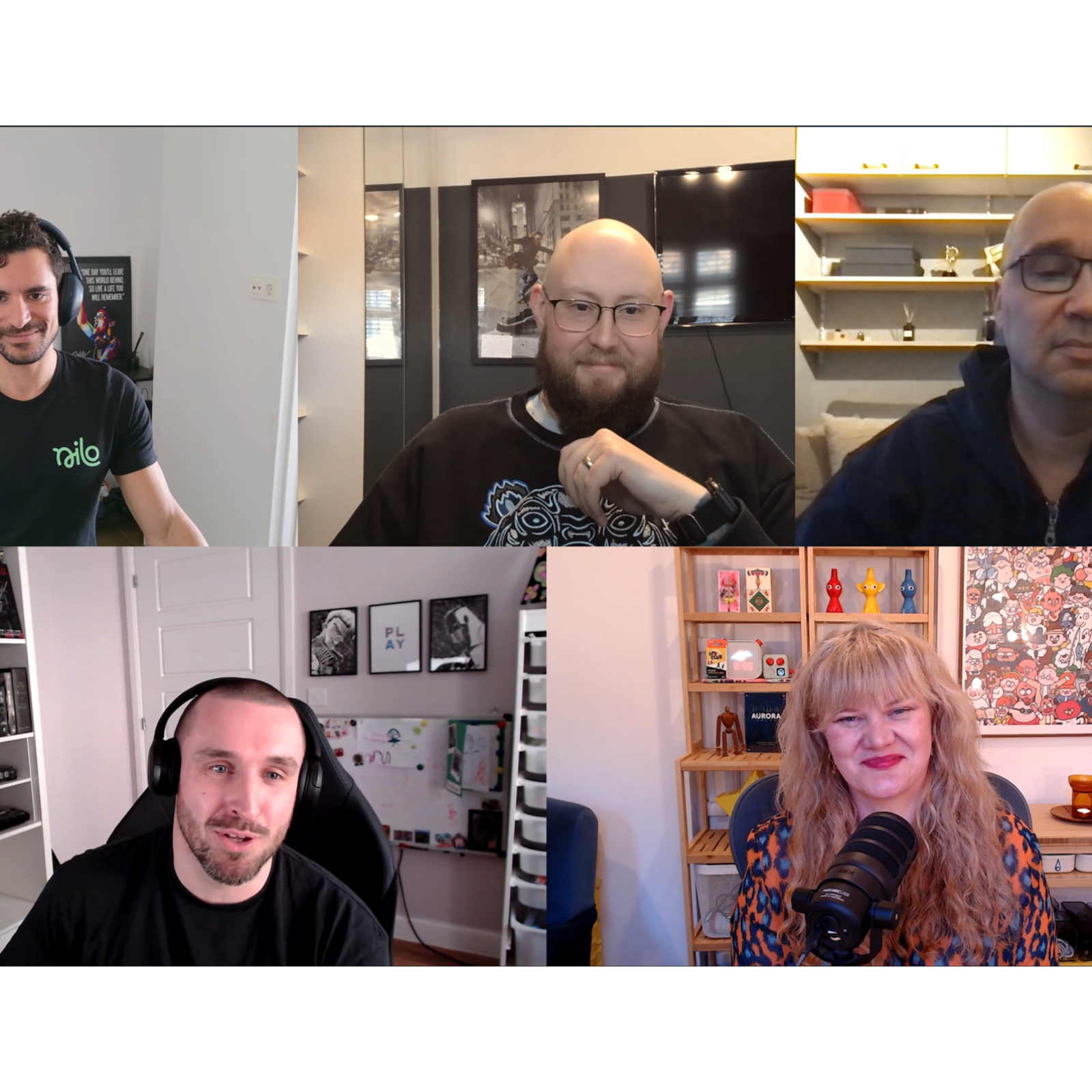 Inside the Role of a Games CEO: Nuno Leiria (CEO, Nilo), John Wright (CEO, Turborilla), Kate Booth (CEO, Studio HEFT), Kim Soares (CEO, Social First)62 / 100
 The Chief Revenue Officer role in gaming: Paul Bowen (CRO at Appcharge) and Dan Laughlin (CRO at Gamesight)73 / 100
 The role of CTO in the games industry: Mark Allen (Avid Games), Terence Burns (Tanglewood Games) and Puli Liyanagama (Metica)