The Talent Game Podcast · 2026-03-20 · 1h 3m
Key moments - from our scoring
Substance score
42 / 100
Five dimensions, 20 points each
Four indie game studio CEOs - Kate Booth (Studio HEFT), Nuno Leiria (Nilo), John Wright (Turborilla), and Kim Soares (Social First) - discuss what the CEO role actually entails across vastly different company stages and business models. Kate manages a four-person creative collective without a CTO, building interactive audio games for the Oto device, while juggling VAT returns and funding applications. Nuno leads Nilo, a 20-person platform for game creation using generative AI (backed by a16z and Supercell), navigating tech-startup dynamics versus traditional game development. John runs Turborilla, a physics-based action sports game studio in Sweden with 250+ million Mad Skills installs, blending parental gaming constraints with industry leadership. Kim founded Social First, a Finnish gaming startup, and is reviving Eve Online gameplay after nine years. The conversation reveals how the CEO title masks radically different day-to-day realities: from admin burden and team alignment in micro-studios to vision-setting and funding cycles in venture-backed platforms, emphasizing that effective leadership is fundamentally collaborative rather than isolated decision-making.
Nilo is a platform that enables young people to create games using generative AI in a multiplayer browser environment. Users can generate 3D models, animations, and code by simply describing what they want (like "Hello Kitty" or "Spiderman"), turning work that would take professional teams days into something achievable in minutes.
Turborilla specializes in physics-based action sports games for mobile, primarily under their Mad Skills IP, which has accumulated over 250 million installs across titles featuring BMX, motocross, and snow rally gameplay.
Studio HEFT develops titles for the Oto, an audio player device designed for young children that lets them select their own content like audiobooks and interactive choose-your-own-adventure games without traditional screens.
Kate spent 10-15 years as a COO preferring clear briefs and execution, but found being CEO requires zooming in and out between day-to-day details and long-term vision while also managing team alignment, strategy refinement, and administrative work like VAT returns and funding applications.
Kim resumed playing Eve Online after nine years, playing almost daily since last summer and spending three figures on monetization, noting CCP (the developer) monetizes the game very effectively.
Our reviewer’s read on each dimension, with quotes from the episode.
The episode delivers a handful of usable points - John's three-pillar CEO framing (strategy, finance, firefighting), Nuno's surface-area-for-luck mental model, and the repeated emphasis on financial and legal literacy in games - but these are diluted heavily by extended gaming small talk, ad breaks, off-topic banter, and generic platitudes about networking and communication that any mid-career professional would already know.
I have three clear pillars in my opinion guys. One is being accountable for strategy... The second... finance... And then the third one is really the firefighting aspect
increasing your surface area for luck. You know, there's a point that Kim made about being a little bit more extroverted and not just being inside. Like, how is luck going to come to you if you don't leave the couch?
Most advice is well-worn - build a network, have hard conversations, know your financials - with occasional fresher angles like the engineering-as-trade-offs lens and Kim's GDC quote that nobody in the industry actually knows anything; these flashes of counterintuitive thinking are outnumbered by recycled wisdom.
nobody in the industry knows anything. So everybody, nobody knows like what is the next hit game, Nobody knows what is the next big uh, platform or rising platform. So everybody's kind of winging it
engineers like to see things through trade offs. Um, and so I think it's a helpful lens reach to construct a company itself
The four guests are genuine practitioners - Nuno has shipped on Fortnite and Unreal Engine 5 and secured a16z/Supercell backing, John leads a 17-year-old studio with ~250M installs, and Kim is a multi-time founder - but the companies are mostly small-to-mid scale and the conversation rarely unlocks the depth their CVs suggest.
close to, sorry, 250 million installs of our games on our IP called Mad Skills
it's 16Z on Supercell backed... worked on Fortnite on Fable and uh, leading the optimization team for Unreal Engine 5
Company sizes, funding sources, and install counts give the episode a factual skeleton, but the advice sections are almost entirely abstract - no specific frameworks, decision-making processes, financial benchmarks, or named deals to anchor the claims about financial literacy, negotiation, or building runway.
we raised 15 million from series A. So I got to see up close, uh, the journey
I've managed hundreds of people in my career, but I fired maybe 50
The host's questions are largely stock interview prompts ('how would you describe your role,' 'what advice would you give') with minimal follow-up drilling; a disproportionate share of runtime is consumed by gaming small talk and jokes, and no claim goes meaningfully challenged across the full episode.
Kim, uh, how would you define success in your role? Anything different or anything to add?
And I love the contrast already in these. It's like Kate's uh, co founded by a team with no CTO and you're a solo founder
Computed from the transcript - who did the talking, and the words that came up most.
In this episode of the Talent Game podcast, a group of CEOs from various gaming companies share their personal stories, insights into the gaming industry, and the challenges they face in their roles. The conversation covers topics such as gaming nostalgia, the impact of generative AI on game development, and the balance between work and personal gaming time. Each guest shares their unique journey and experiences, highlighting the importance of collaboration and community in the gaming world. In this conversation, industry leaders discuss their diverse paths to becoming CEOs in the gaming sector, emphasizing the importance of technical backgrounds, accountability, and the need for financial literacy. They share insights on the significance of negotiation, communication, and building genuine relationships, while also addressing the balance between creative and business aspects. The discussion culminates in defining success not just in terms of financial metrics but also in the long-term impact on team members and the industry as a whole.
Transcribed and scored by The B2B Podcast Index.
Joe Burridge: This July 4th at Lowe's, get up to 45% off select major appliances plus save $80 on a select Char Broil Performance series gas Grill. Now $299. Our best lineup is here at Lowe's.
Kate Booth: Lowe's.
Joe Burridge: We help you save valid through 78 while supplies last selection varies by location. See Lowes.com for more details.
Narrator: Visit your nearby Lowe's.
Joe Burridge: The most effective people at work aren't working harder than everyone else.
Narrator: They're working smarter inside better systems.
Joe Burridge: Superhuman Go from the makers of Grammarly is the AI chat that works inside every tool you already use. Always ready and already aware of what you're working on. It's a teammate whose only job is to help you be better at yours. With Go working with you, you can show off what you do best. See what superhuman go can do@superhuman.com that's superhuman.com hello everyone, and welcome back to another episode of the Talent Game podcast. So this episode is going to be all about speaking to a bunch of CEOs, figuring out what their job is and uh, how they got there going round. Uh, the virtual room. Uh, I'd love to hear some introductions. So I'll hand it to Kim first. Uh, go ahead and introduce yourself.
Kim Soares: Okay. Junk Joe. Um, nice to be here. So my name is Kim Soares. I'm the founder and CEO and creative director at Social first, which is a Finnish, uh, gaming startup. I, um, ended up in games, being in love with games. My, uh, first console was Atari 2600 and I started playing on that one when I was five years old and that was like 1979. I know you couldn't believe it watching my youthful appearances. But, but yeah, I've been gaming since the 70s. So yeah, ever since games have been my, uh, hobby and um, since 2000 something or also my profession. But more on that later, I guess.
Joe Burridge: Yeah.
Nuno Leiria: Nice.
Joe Burridge: I love that. Um, John, you put your hand up looking like Atari 2600 was your first console as well. Am I right?
John Wright: It was, dude. But I was actually born in 87, so my first consult was an Atari, but it was a hand me down, so. But yeah, it was, it was my first experience.
Joe Burridge: Well, John, what? You're already talking. Do you want to introduce yourself, uh, again for the second time on this podcast?
John Wright: Yeah, apart from a collector of vintage consoles and hand me downs from, from elder cousins, also the CEO of turborilla, we're, uh, an action sports, uh, gaming studio, or focus gaming studio in Umir, which is in the north of Sweden. Um, the bulk of Our history has been in mobile and we've done over or close to, sorry, 250 million installs of our games on our IP called Mad Skills. So yeah, we make physics based action sports games for uh, for people who like extreme sports, basically, you know, bmx, motocross, snow rally, uh, all of that kind of stuff.
Joe Burridge: Awesome, thanks for that. Uh, Kate, over to you.
Kate Booth: Hey, I'm Kate Booth, I'm CEO of a company called Studio Heft. We're actually very much a baby amongst this bunch. We're only in our first year so we started last May. We're currently developing titles for a platform called the oto, which is an audio player device that up until um, when we got involved they would just uh, you essentially buy these like little cards. The idea is it gives uh, young kids agencies to be able to pick their own content. They can listen to their own audiobooks and have a little device that's made just for them. It's nice and robust and you can actually see it just uh, above my head here. Uh, and the content that we're making for it is much more interactive. So things like choose your own adventure in its most basic level, but also with lots of different tools that can be held up with the device. Um, and the idea being that it's kind of play for something without just having a normal traditional screen or mobile device. I absolutely love it. We've launched our first title, we've got two more coming out this year. Um, and we're currently working out what our kind of long term strategy is. We're essentially a collaborator, uh, collective of quite experienced um, creatives. We're quite unusual that we don't have a cto. So we're made up of a writer, a game designer, an amazing audio composer and myself. So for that we're kind of completely platform agnostic and we're actually intentionally starting to target the slightly more unusual um, platforms which are really, really fun to be able to focus on just like the creative bit of making games rather than having to, you know, we're still out a business strategy for that to be long term sustainable. But uh, so far it's going really, really well and I'm loving it and got a great team.
Joe Burridge: Very cool. And from one brand new company to another. Nuno, could you round us out?
Nuno Leiria: Yeah, absolutely. Thanks Joe. It's great to be here. Um, I'm Nuno La Ria, founder and CEO of Nilo, uh, which is uh, a platform for young people to create games using generative AI. So, so imagine that you're in a browser with other players multiplayer game and you just say hey, I would like hello Kitty and hello Kitty appears or I would like Spiderman and you're just playing around because generative AI creates 3D models and animations and codes and so what used to take a team of professionals days to create. Now it takes a young person just a few minutes. And so it's a platform where you can just create games with friends, publish them, remix them and um, yeah, that's what they're building. And it's uh, not much older than Kate. It's not even two years old. Uh, but it's a 16Z on Supercell backed. So now we're I think 20 people. Um, so yeah, uh, that's what we're building. As for myself, I've been playing games and making games since I was 12. So worked on Fortnite on Fable and uh, leading the optimization team for Unreal Engine 5. So games are my life.
Joe Burridge: Yeah, awesome. Great. Well thanks all for that. Uh, the question that I always uh, start episodes with, um, I'll hand over, we'll go back the opposite way around. Nuno, I'd love to know what you playing right now. Um, I assume lots of games with Inside Nilo, but anything else?
Nuno Leiria: Yes, that too. But uh, one thing that surprised me is that the more time I spend making games, the less time I have to play games. Which sounds obvious now but uh, yeah, uh, it's uh, an unfortunate side effect. Uh, but yeah, I've been when I'm home and not traveling, I've been trying to finish Final Fantasy 16, uh, God of War, Ragnarok and most recently I've been playing Expedition 33.
Joe Burridge: Awesome. How about you, Kate?
Kate Booth: I'm playing a lot of mobile games at the moment. Uh, mobile I think is my favorite platform to play on. Uh, I do love console but I'm waiting for my next big title and I bouncing between replaying the same Assassin Creeds franchise and uh, GTA until the new one comes out. So uh, yeah, I've basically been really intentionally experimenting with every time I'm getting ads on mobile, actually downloading those games and I've been sort of playing a little bit of research for from professionally but actually some really like there's some really fantastic mobile games out there. Uh, Little Farm Story is one that I'm playing at the moment which sounds really cheesy. It's actually really, it's very well designed as I think they push the limits of quality uh, and monetization which is it's a nice example. So it's a little bit of a bossman's holiday of churning through mobile games.
Joe Burridge: How are you John?
John Wright: So mate, I've got three levels of gaming and I think this is a is as a parent is how I can um, how much time I have to allocate. So I've got Pokemon Trading Card Game which is my go to on a daily basis playing multiple times a day within like two to four minute experiences. And then I have, when I have a little bit more of time I'll play Call of Duty Warzone with my friends. But that's purely a social aspect. If I've got like 30 minutes to uh, an hour I'll quickly go on and we'll have a run of Warzone. And then if I actually have real time to game it's Ghost of Yotai which I've been trying to play properly since Christmas and have failed miserably. But so yeah like I have like different levels based on the time allocation I have and there's no said the more time I spend making games the less time I actually have to play games. And it's the most frustrating quandary of gaming existence. I think so yeah, yeah.
Joe Burridge: And I would just add like Nuno and Kate and John, you've all kind of made this point right like Kate you saying about even building games without the screens now. And this is why I've like played so much more like Tabletop even like D and D or Magic the Gathering or just board games nights just to like break from the screen. Which always makes my friends this July 4th at Lowe's get up to 45% off select major appliances plus save $80 on a select Char Broil Performance series gas Grill. Now $299. Our best lineup is here at Lowe's Lowes. We help you Save valid through 78 while supplies last selection varies by location. See Lowes.com for more details.
Narrator: Visit your nearby Lowe's. When you're a maintenance engineer in a beverage manufacturing plant, you keep production lines moving and quality on track because there is no room for slowdowns. With Grainger's vast selection of high quality motors, sensors, belts and hard to find parts, you can get what you need fast and all in one place. So nothing gets in the way of getting the job done. Call 1-800-GRAINGER Click ranger.com or just stop by Granger. For the ones who get it done,
Joe Burridge: laugh because I'm like yeah, can we just play like less video games? They're like you are like the video games guy. What's going on here? So I hear you. Um, uh, it's also just a note, I think last time when we recorded our last episode, John, I remember you just posted, uh, your mew. Uh, uh, you opened a mew card and you put it on LinkedIn. You were that excited about it? It doesn't. That may be.
John Wright: Yeah. Look, guys, I'll be honest with you. I've probably spent over a thousand euros on that game. Like, I am like, suit, Like, I'm super into it, man. I've got, there must have had like 15 different sets that have come out and I've got every card of every set. And yeah, I'm, uh, just like, you know, super geek when it comes to stuff, man. Like, Pokemon was like when I was like 13, Pokemon hit the UK and it kind of changed my life a little bit, you know, so, so I'm still heavily addicted now. My kids love it. I love playing it with my kids and. Yeah. So part of me, you know.
Joe Burridge: Nice. I'm just wondering if that even puts you in the whale category or whether that's just the average amount that people are playing.
John Wright: I actually don't think I'm in the whale category for Pokemon, man. You know, it's biggest IP in the world, you know, so.
Joe Burridge: Good point. Um, and hey, uh, Kim, how about you? What are you playing right now?
Kim Soares: Um, yeah, I mean, I, I, I do feel you guys saying that. Yeah, you're making games and then you don't really have that much time to play games anymore. I, uh, guess that that applies to just being adult. Like, you had much more time time when you were in high school or college or whatever. Uh, but, uh, I have been postponing, uh, of playing Eve online for like, I played it last time, like nine years ago. And then last summer I decided like, like, okay, I do want to play it, so fuck it, you might beat that. Uh, I will start playing it again, uh, after nine years. So I started that like last summer. Uh, I've been playing it almost every single day after that. Like, at least doing the dailies and everything. Uh, about being kind of like spending money in games. Um, it's three figures so far, uh, so not in the thousands yet, but they are monetizing it really, really well. Uh, I have to hand that to ccp, but that's what I've been playing mostly. Besides our own games, uh, we make so games, hence the company name is so, so first, our game, Nexus Station, has been in early access for a year, so I of course play that a lot myself as well. But then board games, I know that you guys, some of you have like maybe a bit younger kids. Mine are already like in their mid-20s. Uh, there's kind of like this, this kind of like portrait theory. So I bought Hero Quest for my family, like couple.
John Wright: Yeah.
Kim Soares: And we played it like four times. And after that I bought the Warhammer, uh, fantasy rpg Pen and paper, rbt. And we've been playing that a bit as well. But now that I started EVE online, I haven't been able to kind of like game master that anymore. But, but yeah, you should play games. But yeah, that's what I've been playing.
Joe Burridge: Yeah, I've, My uh, dream is to play Dungeons, uh, and Dragons with my, my kids. I, I, they're just a bit too young, but we'll get there.
Nuno Leiria: So.
Kim Soares: But Warhammer is, Warhammer is, it's, it's, yeah, yeah.
Joe Burridge: Nice. Well, uh, yeah, go on, Kate. Yeah. Yes,
John Wright: Yes, let's go.
Joe Burridge: That is the dream. That is the dream, Kate. Like you're just living that dream. I love it.
Nuno Leiria: Yeah, that's, that's really good.
Kim Soares: You have a partner who also, also plays games. I mean, that's, that's really good as well. My wife is just saying we played the first Halo. We played uh, through together having a wine and playing Halo.
Nuno Leiria: Yeah.
John Wright: Tomb Raider. During, uh, lockdown, me and my wife would, uh, double up on Tomb Raider whilst drinking. It was good times.
Kim Soares: So shout out to the spouses as well if they ever see this.
Joe Burridge: You know what? Um, yeah, my, yeah, my, my m, my wife always also likes playing video, video games. But where I think I went wrong was I was like, hey, let's play Overcooked. And then like I think I fried her brain a bit with that. And then I was like, dad, don't worry, I've got a really good one for you next. It's called Cuphead. Let's work. Let's play that. Notoriously one of the hardest co op. And then um. Yeah, I don't know. I need to bring her back with something else.
Kate Booth: Astrobot. Get her into Astrobot. That is the most perfectly designed, most perfectly balanced team. You know, just turn based like. Yeah, it's awesome to play.
John Wright: Overrated. Did not deserve game of the year. Ah, I may close my laptop. Problems with this. Massive problems. Uh, we should move on. Before I get on, I'm going to
Kate Booth: make you stay behind and debate that with you.
Joe Burridge: You can imagine the headlines now. CEO, uh, John Wright hates Astro.
John Wright: Overrated man m It's not. I've got Game of the Year. I'm telling you that now.
Joe Burridge: Um, I was just gonna say I'm moving on. No, no, all, all opinions are valid. It's totally fine. Also, I was meant to say, Kim, you can, you can say it on this podcast as much as you like. So I, uh, just thought I'd say, you know, all F bombs.
Kim Soares: Welcome. Yeah, that's, that's awesome.
Nuno Leiria: Yeah, yeah.
Joe Burridge: And uh, I was gonna say I, I recently formed a band, kind of just was a metal band with my friends in spare time and I, I kept. They're like, oh, I wonder what we should call it. And I just secretly dropped in like loads of gaming, um, you know, terms and things that they unheard of. And they like, quite liked the name Sniper Wolf, which is one of the boss, Boss, uh, bosses from Metal Gear Solid. Oh, that's cool. That's a cool name. I was like, all right, but actually go back and play Mel Gear Solid now. So, uh, to have a bit more context on it. So that's why I'm playing the Original one from PS1. Uh, remaster.
John Wright: Yeah.
Joe Burridge: Yeah. Well, I thought Psycho Mantis might be a bit too on the nose, so I went with. Yeah. Uh, but, um, all right, so we should probably talk about, you know, work related things now. Uh, well, I say work related things. Video games are work related, but your roles more specifically. So I think a good place to start would be so you all have the title CEO. Uh, but I'd love to know what you think the definition of that job would be. So starting with Kate, like, how would you describe your role at the moment?
Kate Booth: So I think I'm actually sort of career wise. Oo was has been my title for like the last 10, 15 years. So this is my first time taking the CEO title. And I think I was actually really intimidated to take that, uh, role because I think that I uh, never really. I always perceived a CEO as somebody, you know, you've got a big vision for, you've got a big idea, whether it's a game or product or where you know, you've got a reason that you've started the company. You know, I liked COO because it was all about, you know, somebody gives you a target to run towards and then it's like, well, how are we going to get there and executing it? And I'm really good with a brief and I really love doing that. And I think I thought like, oh, you know, like I'm. I don't have, you know, I'm not good with a blank piece of paper. And actually uh, how this uh, ended up coming about was there was a team of people who. One of which I was, was an old colleague and I'd worked with and they wanted somebody. It was basically an opportunity to start a business and they wanted somebody to run it and reached out to me and asked if I'd be interested. So I kind of thought fuck it and it was an opportunity to try doing it. And I think so. I've been through a big transition uh, in the m. In the first year of the company of actually really understanding what the difference between the CEO role and CEO role was. And to be honest, I think a big uh, thing I realized was actually I was a little naive that it's always a group effort. Uh, it isn't necessarily just about, you know, there's this side.
Narrator: When you're a maintenance engineer in a beverage manufacturing plant, you keep production lines moving and quality on track because there's no room for slowdowns. With Grainger's vast selection of high quality motors, sensors, belts and hard to find parts, you can get what you need fast and all in one place. So nothing gets in the way of getting the job done. Call 1-800-GRAINGER clickranger.com or just stop by Granger for the ones who get it done.
Joe Burridge: The most effective people at work aren't working harder than everyone else.
Narrator: They're working smarter inside better systems.
Joe Burridge: Superhuman GO from the makers of Grammarly is the AI chat that works inside every tool you already use. Always ready and already aware of what you're working on. It's a teammate whose only job is to help you be better at yours. With GO working with you, you can show off what you do best. See what superhuman go can do@superhuman.com that's
Kate Booth: superhuman.com Dear of this shining white knight that is leading from the front and makes all the decisions and kind of everything in the book starts with them. It's you know, still absolutely feels um, like a team effort which has been really refreshing. And it didn't feel like, you know, I think definitely, you know, somebody needs to ultimately the book needs to start with them and needs to be the person that kind of decisions are fed through. So there is like a coherent vision. But it certainly wasn't what I expected in this idea of like just sitting in an isolated room on your own being like, oh well, you know, I've got to make every decision all on my own. Having a good team around me is really, really helped with that. Um, I think the biggest thing, like, day to day, it's, uh, a lot of admin. I think that that is a major thing, especially for a really small indie like us. There's only four of us in the company. Uh, you know, there's a lot of, um, the kind of responsibilities are things like, you know, making sure we're all aligned and we've got a strategy and that everybody's on board with that. Uh, constantly reviewing and refining that is. So I think that the biggest thing is like, zooming in and out, uh, of actually, you know, what's happening day to day, making sure that that's been executed, you know, in line with, like, whatever our strategy is, and also zooming out and looking at the big picture regularly, you know, at different times of the year, um, and making sure that we're really proactive in sort of, you know, checking on team vibe and we're 100% remote as a team, so. And, you know, having to. The last couple of probably the last five years, I've been working with remote teams. So thankfully, it just was one of those great moments where all of that experience sort of came in use. So I already had, you know, a lot of tactics and kind of strategies for doing that. Um, but, you know, making sure that everyone's okay, even though we're all co founders and we're equally sharing the business together. But obviously it's still my. My job to make sure that everyone's on the same page and if there are disagreements, you know, that we can resolve, that, you know, you're always. We do is so subjective. Even when you're talking about strategy or whether you're talking about, you know, creativeness, which is why I think it is really good to have one person that can kind of like, bridge all of those different perspectives. Um, and yeah, the last thing in. The most common thing I'm probably doing at the moment is things like sorting out the VAT return, sorting out your corporation tax, you know, making sure, you know, just like getting BFI accreditation, all of those kinds of stuff. It's a lot of administration, sending informs for funding, all that kind of stuff. Yeah, it's pretty wide ranging. And I think, you know, luckily, um, I'm actually adhd. It turns out that's actually a really good, uh, like CEOs and like CEOs, because you're doing a little bit of everything all day long. There's loads of variety, which makes it awesome.
Joe Burridge: Yeah, but. And how big is your company? Uh, Kate, at the moment, we are
Kate Booth: only four people so we are tiny, especially considering compared to you guys. We also work with like, we're for people as like permanent members of the team and we work with contractors. It's definitely going to be part of our model is very much, you know, having a good contractor network. Um, and yeah, something I will talk about until uh, I come from an agency background where freelance and contract is just part of the industry. It's a really good, you know, it's considered a really well respected part of the industry. You know, you've got really good. Some people, you know, do spend their whole life being contractors. Um, and you know there's an amazing talent pool out there. Uh, and I think, you know, there's obviously pros and cons to it. There's things you have to, to watch out for. But uh, that's definitely part of our model.
Joe Burridge: Yeah. Yeah, brilliant. Thanks for that, Kate. Um, uh, and like I said, I love the variety but also it's like uh, that's why I asked in terms of the company size, um, that I think that's very much the nature of it. Um, Nuno, you, your company is obviously within games, but quite a bit different. Around 20 people, but also B2C tooling. Right. And as a platform. So how would you describe your role then? Any similarities to Kate or is that quite a bit different?
Nuno Leiria: Yeah, quite some similarities especially with uh, zooming in and zooming out, big uh, perspective, but then getting into the details as well. But also some differences because I think how I took to starting the company has actually been more of a uh, um, technology path rather than a games path since it's not content, it's a tech platform. And so it was a little bit more of a, hey, here's the vision. This is where the industry is going. This is like let's get some, some angel round of funding, you know, to then get the team to then build the products. You know, more of a tech path. Uh, but you know the, we have a lot of games DNA in the team, lots of people that come From Rec Room, VRChat and Snapchat and you know, epic games and uh, lots uh, of games companies but also a lot of generative AI and tech background. And so how my role has evolved has actually depended on the stage of the company. And so in the B, it's like a chief do everything officer in the beginning because there's no one else to do anything. Uh, also especially because I'm a solo founder. Uh, and so you know, it just starts. You have to incorporate and then you just Speak with lawyers and then accountants and then you need to create a bank, you know, and like oh, now you need to recruit people and how do you create a product? You know all the things. But eventually. And fundraising and eventually once you actually get to a certain stage you're actually able to trust and delegate some functions to people so that you're actually able to scale yourself and able to hire people that are uh, hopefully much better than you at certain specific uh, areas and then you just let them carry over while you're focusing on the direction. Um, that's what has been happening so far. So now we have world class people on engineering, on design. I have someone that helps me with um, like operations, you know, Steph is brilliant and hr. And so now I don't need to deal with as much admin as I did before. And so uh, the role changes and evolves but it doesn't. Something that never changes is the setting, the vision and making sure that everyone is aligned on where we're going and what we're about to do and what's important. Um, so yeah, yeah, and I was
Joe Burridge: going to say like your, so your background is from software engineering, programming, which um, I wish I had some data on like what the most common backgrounds for going into a CEO or founder role but I feel like pro programming is probably uh, one of the uh, in the minority I would say. So how have you found that uh, all of that like technical, uh, all those technical skills has been uh, has influenced like your role. Now do you, do you feel like you're of all of the can do everything? Do you try and still stay technical or do you genuinely just have to be across the whole business?
Nuno Leiria: Well, I still code a lot. I mean not as much as I would like or as I did. Uh, but I'm still coding especially now with generative AI. It's just unbelievable. I can just fire agents left and right and because I know code, I know if they're doing something correct or not. Um, and so I can actually get and churn through a lot of um, features in the product and bug fixes that because I have the context right with my user and where the company is going and what the team is working on and like what's needed. Like I can make very targeted changes with generative AI that I couldn't before. So being technical is helpful in that regard but much broader than that is actually helpful in terms of like trade offs and like how you are to attack the company itself. Like the machine that builds the machine, like almost everything can be seen through that lens. And I think that's something that is useful as well is just having different lenses through which to view things. Like biologists see things through evolution, you know. And uh, um, there are different categories of people that see things through different lenses and engineers like to see things through trade offs. Um, and so I think it's a helpful lens reach to construct a company itself. So it's been helpful. And also the learning mindset. So constantly learning, constantly evolving because that's one of the core requirements of being a CEO I think is that everything is constantly shifting. So you just constantly need to adapt and learn. And so being an engineer actually primes you to be able to do that. Or at least it did for me. So those are some things that I've actually been very helpful. Yeah.
Kate Booth: Great.
Joe Burridge: And I love the contrast already in these. It's like Kate's uh, co founded by a team with no CTO and you're a solo founder. Uh, coming from an engineering background. Yeah.
Nuno Leiria: Um, brilliant.
Joe Burridge: John, how would you describe what you do on a day to day or just the role in general?
John Wright: Yeah, I mean just to give a bit of context, we're a studio of around 30 people and I am an inherited CEO. Uh, I did not found the business. I became CEO of a company that's been live for 17 years last year. So again we're a long standing game studio. So. So again there's a big difference. What I've realized is there's a big difference between building a team and inheriting a team. And how you actually deal with that is, is very different compared to uh, you know, one or the other. But that's not the question I think for, for me and we'll go into that probably later Joe, I imagine. But for me it's, it's Chief Accountability Officer, you know, it's not executive, it's. I'm accountable. There is no, there is no one else. It is very much, you know, uh, and, and I think there's three clear pillars in my opinion guys. One is being accountable for strategy.
Nuno Leiria: Okay.
John Wright: So this is again direction of the business, ensuring that what we're building for the future makes sense. That we're going to grow and we're going to strive and we're going to, you know, everyone is going to be on the same page and be happy about what we're doing. The second, and obviously my background before I got into games 15 years ago was I was a chartered accountant. So the finance aspects, P Ls, balance sheets, opex, raising money ensuring that we are cash flow positive. And we are positive. Abeda. That is, you know, very, very. That's pillar number two. And that is the one where I think a lot of. Of studios lack to be completely honest. Um, and I think, uh, having more financial competence in studios is very important in this day and age. And then the third one is really the firefighting aspect. Okay. And this is on a daily basis happens. Okay. And every day without fail, four or five times a day, someone's calling me because something has gone wrong. And it's ultimately down to me to make the best decision. Best gut call, best judgment call. I can utilizing the team around me, right? Like, I always ask for the leadership's input on stuff, but there is just a certain point where people don't feel comfortable about making decisions, Joe. And the buck stops with somewhere. And you as a CEO has to be that person. Okay? So you have to make hard decisions. And sometimes, probably the hardest one is balancing up, uh, what's best for the business versus what's best for the team. And not all the times they aligned.
Joe Burridge: Yeah, I like that. Yeah, thanks. And, um, and we're gonna get. Also I was thinking we're gonna get into, um, like how, how you got into your roles, but already so far we had like Kate saying she came from like, operational, like coo, like that track. And then Nuno from engineering, John from accountancy, uh, way back. So, um, Kim, um, how would you describe your role? And I don't know, are there any backgrounds there that are similar? Or did you. Or you come from a fourth unique background here?
Kim Soares: Well, I mean, my own kind of like discipline in games is, Is game designer. So I love design aspects of games. Uh, that comes from. Well, I can't code, I can't. I can't draw stick figure. So. So design.
Joe Burridge: Design for.
Kim Soares: Was me, for me. Uh, but I mean, yeah, without going into. If this comes up later, later in the session. But kind of like, uh, I have no official kind of like, uh, education, uh, because back in my day there was no schools for, for kind of like game industry schools, like game development and stuff like that. Uh, but I'm the. I'm, um, one of the two founders of SOSO first and I have been around the block a few times. So this was my third game company and fifth company in general that I founded. So I was smart enough that my founding partner, Mikko, uh, he took the administrative. Administrative role. So he's doing all the boring and like unfortunate, uh, stuff kind of like that, that, uh. But I'M more kind of like, uh, I'm also creative director. I'm the kind of like also uh, kind of like leading the team and stuff like that. So I think that being a CEO in general is very much kind of like uh, it doesn't differ that much like industry from industry. I think it uh, differs mostly like what state your company is or what kind of uh. Is it like four people, like with Kate or 30 people? Uh, we join. We are uh, 10, 12 people right now. So I still kind of like, uh, do a lot of design as well. But as companies grow, as teams, team sizes grow, then the CEO becomes, I would say more and more in the administrative role, uh, leadership role. And yeah, as John said, there's always some. You said that we can curse it. There's always some shit going on. Like every single day something happens and you have to kind of like be there, put uh, out the fires, uh, kind of like, yeah, reassure the team that, yeah, we can handle this and all of that. But also kind of like. And again, this, this kind of like uh, goes into what state your company is at. Uh, as Noona mentioned, uh, also first my company, we are still a startup. Being a CEO is also a lot of kind of like if you're raising funds, then you travel around the world, uh, pitching to investors, uh, do all of that. And that of course is like days and weeks away from the office and uh, away from the team. Where we don't have an office, we allocate, uh, company. We are uh, like totally work from home, but still it's like time away from your normal CEO duties. But uh, yeah, I, I'd say that it's especially startups, you have to have more than one hat, maybe two hats, three hats, four hats. Then also as Nuna mentioned, then you want to hire people who are best at what they do, be it like programmer or marketing or whatever, so that you as a CEO can kind of like uh, give those reins to other people, uh, as the company grows.
Joe Burridge: Okay, awesome. Thanks, Kim. So it sounds like from the. The four of you, all different businesses at different stages, inherited, founded or. And four different backgrounds, programming, design, operations and finance. But still I think the common thread is that you are uh, owning the success of the entire business, or at least you should. You have scope across that. So, um, accountability, uh, definitely, John. And then just be. Just being able to wear various hats, um, to cover all areas. Seems like a common theme. Yeah, yeah, yeah, there you go.
John Wright: I have a thing for shoes. A thing for shoes. It's a Disease. Honestly.
Joe Burridge: Um, yeah. Well to be honest with you, they look lovely.
Narrator: So they the most effective people at work aren't working harder than everyone else. They're working smarter inside better systems. Superhuman GO from the makers of Grammarly is the AI chat that works inside every tool you already use. Always ready and already aware of what you're working on. It's a teammate whose only job is to help you be better at yours. With GO working with you, you can show off what you do best. See what Superhuman Go can do at superhuman.com that's superhuman.com Ryan Reynolds here from
Joe Burridge: Mint Mobile with a message for everyone paying big wireless way too much. Please, for the love of everything good in this world, stop with Mint. You can get premium wireless for just $15 a month. Of course if you enjoy overpaying.
John Wright: No judgments.
Joe Burridge: But that's weird. Okay, one judgment anyway. Give it a try@mintmobile.com switch upfront payment
Narrator: of 45 for 3 month plan equivalent to 15 per month required intro rate first 3 months only, then full price plan options available, taxes and fees extra. See full terms@mintmobile.com don't look very well
Joe Burridge: worn, but they do look good. Um, so I have to say they're definitely warm.
John Wright: Definitely wore.
Nuno Leiria: Yeah.
Joe Burridge: Okay.
John Wright: Cool, cool wall. It goes all the way.
Joe Burridge: There you go. Yes. Yeah, so know about John loves rugby video games and ah, Nike shoes. So yeah, um, but it um, but uh. Hey Kim go. Yeah, Kim going, going back to you then. So, so save. Someone's listening uh, to this episode and they're thinking I want to be a CEO of a games business one day. Just like the four people on this podcast. What advice would you have them and I guess both from the positive and the negative, like war, like constructive advice, uh, would you have and like things they proactively should do and um, anything perhaps on the negative, anything they should avoid or, or even like you know, can, can anybody be a CEO, Um, a games company? What, what characteristics or what things should they be interested in that could be like oh, actually I would make a good CEO. So that was a very long question in one. But what advice would you give to someone who wants to be a, a CEO?
Kim Soares: Well, um, well I would say like yeah, if you want to be a CEO, there are certain things that you have to do. I mean you have to be able to uh, talk to people, um, be out there. Not uh, meaning like you have to be a public speaker. But, but uh, I mean even if you're like off site company, you still have to kind of like lead the discussion and have the weekly, weekly meetings and whatnot. So you can't be too kind of like uh, turned inwards. You have to be uh, outgoing person in that sense because we are dealing with people. I mean leading company is also leading people in this company. And again it doesn't really matter if it's like games or, I don't know, pharmaceuticals or whatever. You're still dealing with people. But also kind of like what John mentioned earlier. You have to be aware as a CEO if you want to be one, that there are financial realities included, uh, as well. So I often go to the local university, uh, the game studies track to kind of like uh, speak some hard routes for the first year students there. And people often want to get into games because they like games. And well, we already established that when you do games you don't have the time to play games anymore that much. But I mean it's some kind of like ice cream is nice to eat if you like ice cream, but it's not necessarily the nice, nice to make ice cream every day. So it is also work and you have to kind of like approach it from that, that aspect as well. And uh, if it's not a hobby, then you have to take into account the financial realities. I mean you have to have, if you want to have professionals, you have to pay them. Uh, you have to be able to see, okay, we have Runway for six months, 12 months, we have, we are break even all of that. So but then if you don't want to do that, then you can make games for a hobby, for example. Same as you. If you want to, I don't know, play in a punk band, you can play that, do gigs on site. But if you want to kind of like have a professional career as a musician, then the bar is, is currently higher. Uh, but also I would say that connections matter. You have to. And again this goes to the outgoing personality. So, so you have to be kind of like creating your network. You have to meet people, you have to know people. Uh, don't be an asshole because reputation goes a long way. And for example, I mean if I assume John here had some connections that he got hired as a CEO not just because he's so handsome. Uh, so you have to have connections. Otherwise. Yeah, you don't get very far without connections.
Joe Burridge: Yeah, yeah, yeah,
John Wright: yeah. Basically I'm a co investor in another studio of one of the bald members of Turborilla. And so that was my thing. So. Yeah.
Nuno Leiria: Yeah.
John Wright: Nice. This is it.
Joe Burridge: So I was, I just always Assumed it was because you were so handsome. That's how you got that role.
Kim Soares: But not only. I said not only.
Joe Burridge: Oh, okay. Yeah.
Kate Booth: Okay.
John Wright: Not only.
Joe Burridge: Yeah, yeah, great. Yeah. Kim, there's loads of good points in there, but one that just like stuck uh, out my mind is, is a. The point which feels quite obvious about the, the uh, ability to run a business. The amount of times especially since being at Play Ventures the last uh, just over two years or so, the amount of people that speak to that thinking about starting their own studios or starting their own games businesses and, and really is a case of like that just, just sounds like a uh, hobby project. I don't think they've really, really factored into like making a business uh, from it. And also sometimes it feels like there's almost this. I can't think of the best way to phrase it other than like the dirtier side of like oh no, you should be, should be making games for the love of the art, uh, or the passion or something. It's like okay, like you know, salaries don't get paid from necessarily uh, from that and also having someone who can like uh, own those hard decisions about how the business is going to not just be here tomorrow or next month but long into the future and be a successful games company. So uh, glad you highlighted that. Um, John, what uh, anything to add on to Kim in terms of like advice you'd give to someone who's like I want to be a game CEO uh, or any other points there?
John Wright: Yeah, look, I think Kim said a lot of the stuff that I normally say. Guys, I think uh, I'm, I come from the dirty part as Joe put it. Right. Like again I come from more of a corporate background, more of a financial background. Uh, for the last 15 years I've been in games. I started off in performance marketing which is very numbers driven. And then I worked through to becoming VP operation COO type characters like Kate and then this is my first CEO role. So I've always been on the more operational side the of, of of the business. But yeah look one, one vital skill in my opinion is you need to know be able to negotiate because you're closing deals, you're, you're having agreements, you know there's certain technologies that cost X amount of money and uh, if you are unable to, to as Kim said, you know, like basically talk to people and be out there and whatever else, you're going to be in a bad position man. You know, but you need to be able to negotiate and do the best for your Business and have these hard conversations. And negotiation doesn't just mean, like, financially negotiating. It could be like getting someone to believe in something like negotiating with them, you know, as to why this is important because quite frankly, a lot of the time people might be on a different page to you and you have to, you know, negotiate with them and, and you know, um, explain to them why the way you're thinking is, is. Is the best, you know, for this project. For them, um, getting someone to change their mind is an extremely difficult thing. Right? And, uh, quite frankly, you. You have to be able to do that. And that. That's. That means you have to be able to. Have to have hard conversations with people.
Nuno Leiria: Right?
John Wright: You can't just be the Mr. Nice Guy. You can't be telling everyone what they want to hear. You need to be very honest and very direct to say, okay, if something's not up to Mark or someone's not delivering or God, I mean, like, I've managed hundreds of people in my career, but I fired maybe 50.
Nuno Leiria: Right?
John Wright: And firing people is extremely difficult. But what's the alternative, right? Like what, you're gonna let someone be toxic in a business and take root and, and everything else? And so look, man, like, the art of, like, the, uh, the reason I got into games was because I have been a gamer since I was five years of age. I love nothing more than games. I've got tattoos all over my body of games. Games, right. Ah.
Kim Soares: I.
John Wright: And it's part of who I am. It's seeped into my soul. You know, Like, I came out of corporate finance and I said, this is what I want to do for the rest of my life. And that's what. All I'll do is games for the
Kim Soares: rest of my life.
Nuno Leiria: Right?
John Wright: Um, but yeah, people need to understand it's more than the craft, more than the love of the art. Like, you need to understand that this is a business. And, and guys, I'm already, uh, I'm gonna write a book called the Business of Fun, and it's going to be about this exact subject, right? I've been talking about it for years, but I'm going to talk about the hard stuff in games that people need to know, even understand legal. Like, people don't understand contracts. Like, how do you negotiate a publishing agreement where you as the developer are getting the best for yourselves if you don't understand the legal ramifications of certain clauses? And these are the things that people don't want to hear about, man, but these are the things we need to teach about in gaming universities. Because, yeah, if you go into, into this business, not even, you know, to be a founder, to be a CEO, to be a C level, and you don't have the, the eye on the legal, the eye on the numbers, the eye on, you know, the operational parts, you're just setting yourself up for failure. So, and it's tough, people don't want to hear it, but it's the truth.
Joe Burridge: No, it's great. I, I, I, brilliant advice. In fact, I, I actually just mentioned that to a university, uh, local to me. Um, uh, it's called Falmouth University, top in the UK for game design now. And I was like, brilliant. But exactly the point of why I love going to speak to students, you know, I'll give them a, a crash course in venture capital and games or something. Um, but it's uh, you know, if they're like, oh, yeah, it's my dream to keep making games, it's like you need to be able to make it into a business, otherwise you're just going to be in your bedroom building games. You can do that for free, like for the rest of your life. But turning it into something that is a business. Yeah, uh, I love that job. Hey, any, any, any advice that you would give to someone who is wanting to be a CEO? A CEO?
Kate Booth: Um, I, uh, definitely would echo everything Kim and John have just said. I think that fundamentally for me is really thinking about why you want to either be a CEO or go into any leadership position. Because I think that, you know, there is a bit of a misconception of, oh, and just you get to have all this power and be in charge and make all the decisions and you know, I can do all those things that my old boss did badly or those kinds of things, you know, which are not awesome. But like, that's not what it's about. You know, I think to be a CEO or to be any, you know, to found a business, like, you have to care as much about the business side of stuff as you do the end product. Um, and I think for me that's where the perfect balance of output comes from, is like, I care as much about how we make something, who we get to make it, why we're making it, the strategy behind it, what the business, you know, making it actually make money as I do about the, actually how fun it is and what the user experience is like. Uh, all of those things are completely equal to me. Um, and I think that's really, you know, often overlooked, you know, like, and I completely agree with What John was just saying about your kind of financial literacy and your legal literacy, like, there's a lot of those kind of skills that you're gonna. You're gonna have to learn a lot of that stuff. And if you don't really care or value that side of the business, then it's gonna be a steep learning curve and you're probably not gonna enjoy it very much. Much so, um, I think that is absolutely key. I think also communication and, um, as you know, as well put earlier about having difficult conversations, I think sometimes that that can sound like it's about, you know, hard negotiation or being, you know, quite aggressive. And it's not just about that. It's just about having difficult conversations that, you know, if you don't like confrontation and you don't like having to get those difficult conversations out of the way, um, in a. And, you know, in a compassionate way, if you struggle with that, like, those are skills that are really wor. You know, investing in, because it does take conscious effort. It's not something that everybody is naturally, you know, brilliant at. And the more you do it, the more effort you put into developing those communication skills, the better you'll get at it and the better leader you'll be, certainly. Because every single thing you're going to do every day, whether you're negotiating a financial contract or you're trying to, you know, get everybody to agree on, like, a game design mechanic or, you know, a certain direction or whatever, it's all about communication and about making people feel heard and genuinely not just giving them, not just making them feel heard, you know, really, really listening to everybody. And I think, particularly for us, because we really care about, you know, diversity in the workforce. You know, like the team that we're putting together and the. The output that we're making, we want it to, you know, we are trying to do things that are a little bit different. Um, I know everybody says that, but, you know, we're actually out. Ah. Of the four founders, three of them are women. Um, and that side of things is really important to us as well. And I think that we. I've had to, uh. It's lucky that, you know, by design, I should say that, uh, I really care about all the process, strategy, side of stuff because it, you know, we are having to innovate just even how we work, how we go about doing business development. You know, what works in one context doesn't necessarily work as easily for us. So, um, you are going to have to be very, you know, creatively thinking on your Feet and you can't just think about the product all the time. You have to have the business like you know, absolutely front of mind.
Joe Burridge: I love that. I uh, love that. Uh, yeah, I, I love that. Thank you. I thank you. I particularly love point about you're saying you have to be just as passionate about the product and actually what the business makes it as about like how, like how it comes to be in the first place. So um, that loving all I am,
Kate Booth: I would say I'm like, I am a complete spreadsheet and process nerd. I love that stuff. That's why, you know, I did rations for so long is because I, I love refining and improving how we're doing stuff because the better we are at how we work and the more we can do with the resources we have, you know, the more things that we can achieve. Um, and there's nothing worse than when play a game and you can see the process or the business strategy has fallen over and the game, you know, is like under resourced or you can like. I think when you're doing every day you can really see it in the end product. So I think that stuff is really, really important and I think a lot of it's something I definitely was surprised when I first came into games that there's a lot more focus at uh, leadership level on the product and less on the business side of things. Um, and that can tends to just be like, oh yeah, that's hr. That's like, you know, the legal or the finance team. There's, there's not as much. I think it's much better. Uh, you know, it has gotten better, you know, over the last sort of 10 years because the industry is now so hard and it's hard to make money and you know, people have not had the choice to neglect that stuff. But in my uh, experience actually really focusing on that stuff and better integrating that stuff into the creative process actually uh, makes for better. You know, you get a better commercial output and you get a better quality output as well.
Joe Burridge: Well, nice. Yeah, thanks. That Kate and um, those for those of you listening on audio, when Kate said that she loves uh, being a spreadsheet nerd, Nuno was there with making an X sign with both, both arms up. So but you know, all leaning into your strengths right in this role. So Nuno, anything, anything to add to add to that. Like I know you've had three answers already, but any, anything to add to, um, uh, any advice to someone looking to be a CEO, uh, or perhaps even CEO and founder in this case.
Nuno Leiria: Thanks for putting me in the tough spot, Joe. Those are tough facts to follow. You're welcome.
Joe Burridge: You're most welcome.
Nuno Leiria: But, uh, something that Kate mentioned about things depending on context resonated with me because something I wanted to preface was that, uh, like, I'm very wary of giving advice like, like willy nilly, very broadly because sometimes, uh, advice that you can give in one context, in another context, you give the exact opposite advice. And so my most general advice.
Joe Burridge: Ryan Reynolds here from Mint Mobile with a message for everyone paying big wireless way too much. Please, for the love of everything good in this world, stop with Mint. You can get premium wireless for just $15 a month. Of course, if you enjoy overpaying. No judgments, but that's with weird. Okay, one judgment. Anyway, give it a try. @mintmobile.com Switch upfront.
Narrator: Um, payment of $45 for three month plan equivalent to $15 per month required. Intro rate first three months only, then full price plan options available, taxes and fees extra.
Kate Booth: See full terms@mintmobile.com Ryan Reynolds here from Mint Mobile.
Joe Burridge: I don't know if you knew this, but anyone can get the same Premium Wireless for $15 a month plan that I've been enjoying. It's not just for celebrities. So, so do like I did and have one of your assistant's assistants switch you to Mint Mobile today. I'm told it's super easy to do.
Narrator: @mintmobile.com Switch upfront payment of $45 for 3 month plan equivalent to $15 per month required. Intro rate first 3 months only, then full price plan options available, taxes and fees, extra fee, full terms@mintmobile.com this would be.
Nuno Leiria: Be wary of general advice and think for yourself. But, but in order to try and be helpful, some of the things that have been helpful for me, uh, in my journey, uh, are for example, trying to learn from people that are a few steps ahead from you. And I think of uh, Bruce Grove, who you've had on your podcast before and he was, uh, my CEO at polystream. I was the first engineer hired at Polish rim, which was this Silicon Valley style startup but, but in the UK and we raised 15 million from series A. So I got to see up close, uh, the journey, um, and that's where I started branching out from engineering and learning, you know, fundraising and marketing and sales. And very close to Bruce, some of the things that I've noticed him doing was like, hey, it was just changing the water and you know, mopping the floors. And I'm like, why is the CEO doing this? This doesn't make any sense. And that's when I realized, like, hey, for me to be able to create the product, he is creating the environment that allows me to do my best work. And that's what he was doing. Making sure that the whole team had a great environment, that the company was well positioned in the world that was constantly changing. And that was, uh, very enlightening and very inspirational. So I started going to him and going like, hey, Bruce, can I take you out to lunch? Can we go for a lunch once every couple of weeks or so? I also didn't want to spend a lot of his time, but something that I noticed was not just learning from him, but also like, hey, can I learn from him if one day I would like to have my own company? No. He's already a few steps ahead. But he's not an exited founder, right? Like, it's not like his 20 years in this company already forgot what it's like. Like, he's going through it and so he's a few steps ahead. And I think those kinds of people are really good to have in your corner so that you can learn from them. And that speaks to the, um. Someone made this point about having genuine relationships, you know, and then connections. And it just makes, like, a whole difference when you can lean on people. Especially being a solo funder, right? Like, if I didn't have a whole tribe and network with me, there's no way that I would be able to do this. And it's not just the team. It's people that believe in you that eventually become investors, your partners, like your friends, right? Like, you need emotional support to regulate yourself. Um, and another point I would make is just increasing your surface area for luck. You know, there's a point that Kim made about being a little bit more extroverted and not just being inside. Like, how is luck going to come to you if you don't leave the couch? Like, you need to put yourself in that conference, speaking at that panel. You know, there's. There are certain things that you can do to just increase, um, the probability that luck might find you. And you gotta think a little bit, you know, you gotta reflect, take time, you know, speak with people. Put yourself out there to make sure that you put yourself and your company in the best position. Because sometimes people don't realize how much like companies that now everyone has heard of have come to just dying. And yes, there's some, you know, survivorship bias for sure, but every single company has gone through multiple rounds of we're about to Die and someone did something or someone is very kind, you know, and just something happened and the company was saved. And that's just luck. Right, but luck, you can't influence it. Right. And so it's thinking about what you can do to actually make that happen. And um, just the value of knowing yourself, like, and your, your gut feeling and understanding yourself and your. Because so much of it is intuition and decision making. And when things, when the buck stops with you and you have to make calls and you have to make uh, hard decisions, then you need to really know yourself and why you're making those decisions and which decisions have been good in the past so that you can continue to make good decisions in the future. And that's all about reflection, self awareness. There's a lot of inner work that needs to come as well. So, uh, I think people that want to become CEOs need to be prepared that there's a lot of work that is invisible, that needs to also happen at the same time as the work itself. Ah, to make sure that, that the company has a good chance of success.
Joe Burridge: Yeah, that's, yeah, brilliant. Thanks for that, Nuno. I, I especially love that point about, um, luck as well. I think a lot of people look at whoever, these startups that get funded, oh, they're so lucky. It's like, oh, no, if you, if you could only see the amount of work Nuno is doing every single day to, to make that land. Yeah, that's brilliant. Yeah, thanks for that advice. And yes, Bruce Grove is a lovely person and, and also incredibly smart. So, uh, great call out there. Um, we are running up to the end of the, ah, episode, but there is, there is one last question I would love to ask you all. So I wonder if you can condense an answer here, uh, before we, before we get to the end bit. But I would love to know, like what, how are you defining success in this role? Because you've all given a variety of answers about how you got into the position, what your current role is, everything else. But how, how do you know if you're doing a good job even?
Nuno Leiria: Right.
Joe Burridge: Uh, are there, is it purely just gut feel, finger and finger in the wind, or are there some really quantified things that you're looking at, or is it a blend of both? Um, we'll go background again. So Nuno, I don't want to rush you too much, but if you can give, uh, a condensed answer like. Yeah, how do you define success in your role?
Nuno Leiria: Sure. Um, I'm, um, I go back to Bruce since he's on my mind and I asked him this question when I was at Polystream, I'm like, hey, what does success mean to you at Polystream? Right. And bear in mind, I was just a senior engineer at the time. You know, this was like more than 10 years ago. And the, uh, answer he gave surprised me a lot. He basically said, hey, uh, the people that are here at Polystream, if they go on to do even more and better things, like if they go on out of Polystream having a really good background in order to then go on to do the things that they want to do afterwards, uh, that's success to me. And I'm like, wow. He's not talking about, you know, valuations. He's not talking about the product taking over the market. He's talking about the people and their futures. And that was very inspiring for me. And so I also like that his answer spoke about the long term, not the short term. And so that's how I'm going to define success for Nilo itself is on the long term, and it's on that basis of what the people are able to do with what they learn.
Joe Burridge: Very cool. I like that a lot. Um, how about you, Kate?
Kate Booth: Um, I think when we founded Studio Heft, the reason it's called Heft is because we all, you know, a bunch of seasoned creatives that wanted to make work that we believed in. And I think my personal ambition with it is to be able to build sustainable creative careers for everybody who comes through our doors and hopefully we can grow that. I have some very lofty ambitions of what we were going to do in the long term. Um, but it is probably long term. You know, it's a five, five year vision more than like, um, a one year vision. And so for me, keeping the doors open, the lights are lights on. Making sure that we've got enough of a financial return that we can invest in our own work. Creating our own ip that's really, you know, will be the big mark of success. Also making sure that we're all really, really proud of every single thing that we put out, whether it's small scale, whether it's big scale. Um, you know, we want it to be the. Not just like, level of polish, but we want the work to add actually, you know, whether it says something or it just. Heft is specifically the word that we kept using, because I can't think of a better word to describe a kind of amorphous, vague thing of just something that just has worked with weight. That is really what we're, we're about. So I think if, if in five years time we've managed to still be here and we've managed to grow the team and we've put out work that we really believe in, like I would be over the moon. That would be absolutely incredible. If we can also establish an amazing physical location that is uh, the House of Hexagon that people can. Because uh, we're actually some of our team is in uh, the Netherlands. We're you know, not just based in the uk. Having a hub that everyone can come back to, that would be a really lofty long term goal. Um, if anyone wants to give us loads of money then we did that, that would be amazing. But uh, yeah, that's really what our goal is across all platforms. And you know, in, in lots of. We were also doing things like um, immersive experiences as well. So it's not just going to be sort of screen based stuff. As long as we want to keep doing it, as long as we can get away with it.
Joe Burridge: Brilliant. Um, yeah, I like that. I like that. John. John, how's success?
John Wright: Top to the right.
Joe Burridge: I knew you knew you'd say that for some reason. Yeah, yeah.
John Wright: So give me a second. I've been dying to say that. Ah, but no, on a serious note, I think um, you know my job as again I'm an inherited CEO, right. Like I entered into the position after 16 years of the company's consol consolidate. So my job first and foremost is to ensure that the business is moving forward in the right trajectory and success is giving me the ability to keep people's um, security. You know, like I, I want the company to grow. I want us to be proud of what we do, but I want us to grow to ensure that all of the employees that I'm, I'm responsible for are ah, in a safe and happy position. Um, I was very fortunate to work with uh, David Darling, who's the founder of Quali and Codemasters. And his vision was uh, always around to put our games into the world in the hands of the world's players. And his thing was all about getting the games uh, played by as many people as possible. And I always loved that. But ultimately for me right now, success looks like giving people stability and security and ensuring that, that people are safe in this, in this job that they love. And um, and yeah, looking after people in that way.
Joe Burridge: Yeah. And what the reason why I said I knew you would say that but it's because like you said, you're inherited CEO and You've come in to like, make the business as successful as possible. So that's what, uh. Yeah, that's what I was not surprised. You know, up and to the right.
John Wright: Yeah, I've got a ball, Joe. You know, like, people think CEOs is the top. It's not. When you've got a board, everything changes. I have to answer to them and you know, if, if they tell me they want to see, you know, a uh, bida, uh, double year over year, that's, that's what I need to do.
Nuno Leiria: Right?
Joe Burridge: Yeah, yeah, yeah, fair. Um, and Kim, uh, how would you define success in your role? Anything different or anything to add?
Kim Soares: Well, I mean, I'm of course all about 50xing the, the, the investment money that we got from our investors. And that's the only thing. No, but that, that's kind of like, but that gives the kind of like. Because success can mean different things. I mean, if you think from financial point of view you do want to get, uh, the kind of growth trajectory that, especially if you are a, uh, company that runs on investment money as we do, uh, as uh, play portfolio company Nuno had, um, A16Z and supercells, then those kind of like give you some success factors that you aim for. But it might be a bit different personally, for example, but uh, what Kate said, kind of like keeping the lights on and all of that success for me personally is to be able to continue making games as a living, as my profession. That means some extent of financial success. But also I want to have a good time making those games with people I enjoy making them with. Because, yeah, in the end of the day, I think all of us here, we love games, games. That's why we are making them. And yeah, you need financial success to be able to do that, but you also want to make fun games and have fun doing it.
Joe Burridge: Brilliant. Thank you. Thank you so much. So, uh, we're now closing out at the end of the episode and I was thinking I always bookmark with the same questions, but considering, um, that I said weird, uh, wrap up quickly from here. I'd love just uh, like a, almost like a one sentence answer to this. Um, if you can, one or two. But, um, give or take. But um, I always ask everyone, what's your favorite interview question? Um, and I do allow enough time to go in depth and explain it. But yeah, if you, if you could just give me your favorite interview question and explain why you love it, that'd be great. Um, and I'm gonna start with, uh,
John Wright: John, where Will you be in five years?
Joe Burridge: Yeah.
John Wright: That is the most in the history of interview questions. Sorry, I just needed to do something
Joe Burridge: so I was like, oh, wow, one of those. Okay.
John Wright: No, no, I mean, I, I, my one always is. Tell me something, tell me a, ah, situation where you had to overcome adversity. Like give me an example of where you had a situation, a bad situation, and you've overcome it. And how did you, you come up with that solution? So yeah, trying to understand how people do, um, troubleshooting and getting over problems.
Nuno Leiria: Brilliant.
Joe Burridge: Um, Kate, do you have a favorite interview question? Oh, just a second. Sorry. Kate, do you have a favorite interview question?
Kate Booth: Uh, normally I would say, uh, I'd ask about the future and I do actually like the five years thing because it just gives you an insight into how they think about the future career and what their plans are. Um, this might be a bit like, it sounds a bit not controversial but um, uh, one thing that you would change about the industry, I think I'd be really interested in what sort of insight you would get. What people focus on. It just tells you a little bit about their perspective of making games and why they're here and what they want to achieve. So I find a really interesting thing to ask people.
Joe Burridge: Yeah, that's great. I have your head doubled. Um, uh, do you have a favorite interview question? I assume so, considering you built the company to 20 people now. Any particular favorites? Any particular favorites?
Nuno Leiria: I have quite a few, but one that I think is interesting is, uh, among the people you've worked with, who do you admire and why? And for example, why I like this is, if you had asked me that question, you would get me telling some of the stories I just told about Bruce, which would tell you about my values. Right? So I like that.
Joe Burridge: Very cool. I like that a lot. And Kim, uh, how about you?
Kim Soares: Well, I'll tell you my favorite, uh, key takeaway from one G.D.C. uh, session. I was, I don't know, maybe 10 years ago. It was two older gentlemen, uh, who had been, they had background in movies in Hollywood and then in games. And the key takeaway from their 45 minute session was that nobody in the industry knows anything. So everybody, nobody knows like what is the next hit game, Nobody knows what is the next big uh, platform or rising platform. So everybody's kind of winging it. Uh, you need to do your homework, you need to be thirst for knowledge. But it's not like everybody else has silver bullets and you are just fumbling around. Everybody's fumbling around.
Joe Burridge: Yeah. Can um, confirm that anecdote. But, hey, I just want to say to all of you, Nuno, Kate, John, Kim, thank you so much for all of you taking your time today. I think anyone listening to you will have come away with tons of, uh, really invaluable advice and insight. So really appreciate it. Um, uh, and I'll see you all at a games conference. Thanks very much. Thanks very much.
Nuno Leiria: Thanks, Joe.
Kim Soares: Thanks, uh, man.
Joe Burridge: Great.
Kate Booth: Thanks, guys.
Narrator: This is the story of the 1. As a maintenance engineer at a beverage manufacturing plant, he starts his day knowing every line is ready to run because Grainger delivers the industrial grade products he needs to keep mixers, conveyors and packaging equipment moving. With Grainger's vast selection of bearings, belts and motors, he keeps operations running smoothly so nothing grinds to a halt. Call 1-800-GRAINGER Click grainger.com or just stop by Grainger for the ones who get it done. This is the story of the One. The one who keeps multiple buildings running smoothly day after day.
Nuno Leiria: Day.
Narrator: Plumbing that flows, H Vac that hums. Cleaning supplies that keep surfaces sparkling. That's why she counts on Grainger. With easy reordering online and 247 support, Grainger helps her keep the products she needs on hand so shelves stay stocked and buildings stay ready. Call 1-800-GRAINGER click granger.com or just stop by Grainger for the ones who get it done.
Other episodes covering the same guests and topics, from across The B2B Podcast Index.
 The Role of COO in Gaming: Viki Freeman (Airship Interactive) and Katya Dolgova (Redhill Games)60 / 100
 HR Leadership in Gaming: Marina Jónsdóttir (Head of People at Starbreeze), Joseph Wilson (ex-VP People Experience at EA), Keith Caswell (ex-Hasbro, EA, Microsoft)73 / 100
 The CFO role in gaming: Ido Hochman (CFO, Avid Games) and Francesco La Deda (CFO, WA.Technology)78 / 100
 The Chief Revenue Officer role in gaming: Paul Bowen (CRO at Appcharge) and Dan Laughlin (CRO at Gamesight)73 / 100
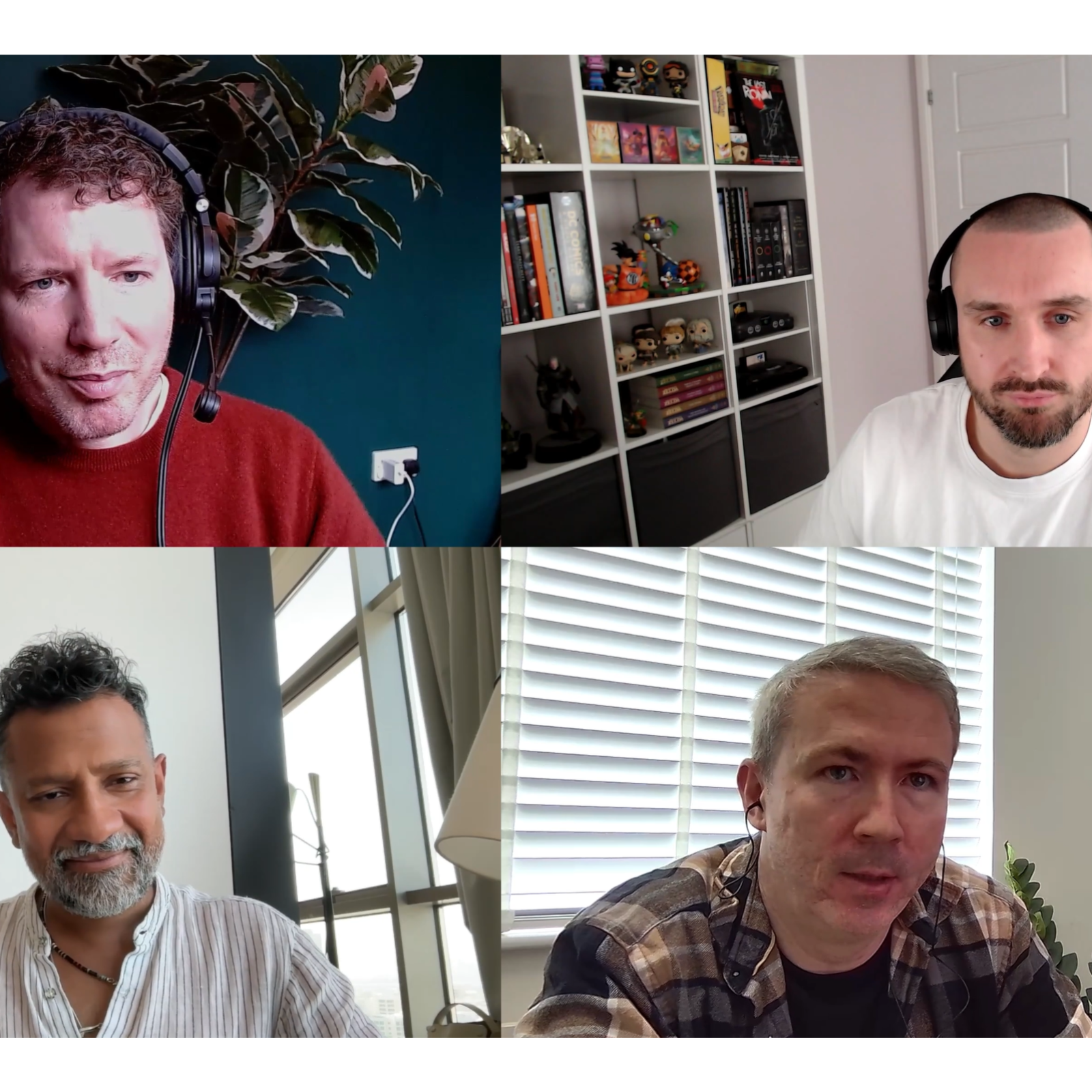 The role of CTO in the games industry: Mark Allen (Avid Games), Terence Burns (Tanglewood Games) and Puli Liyanagama (Metica)