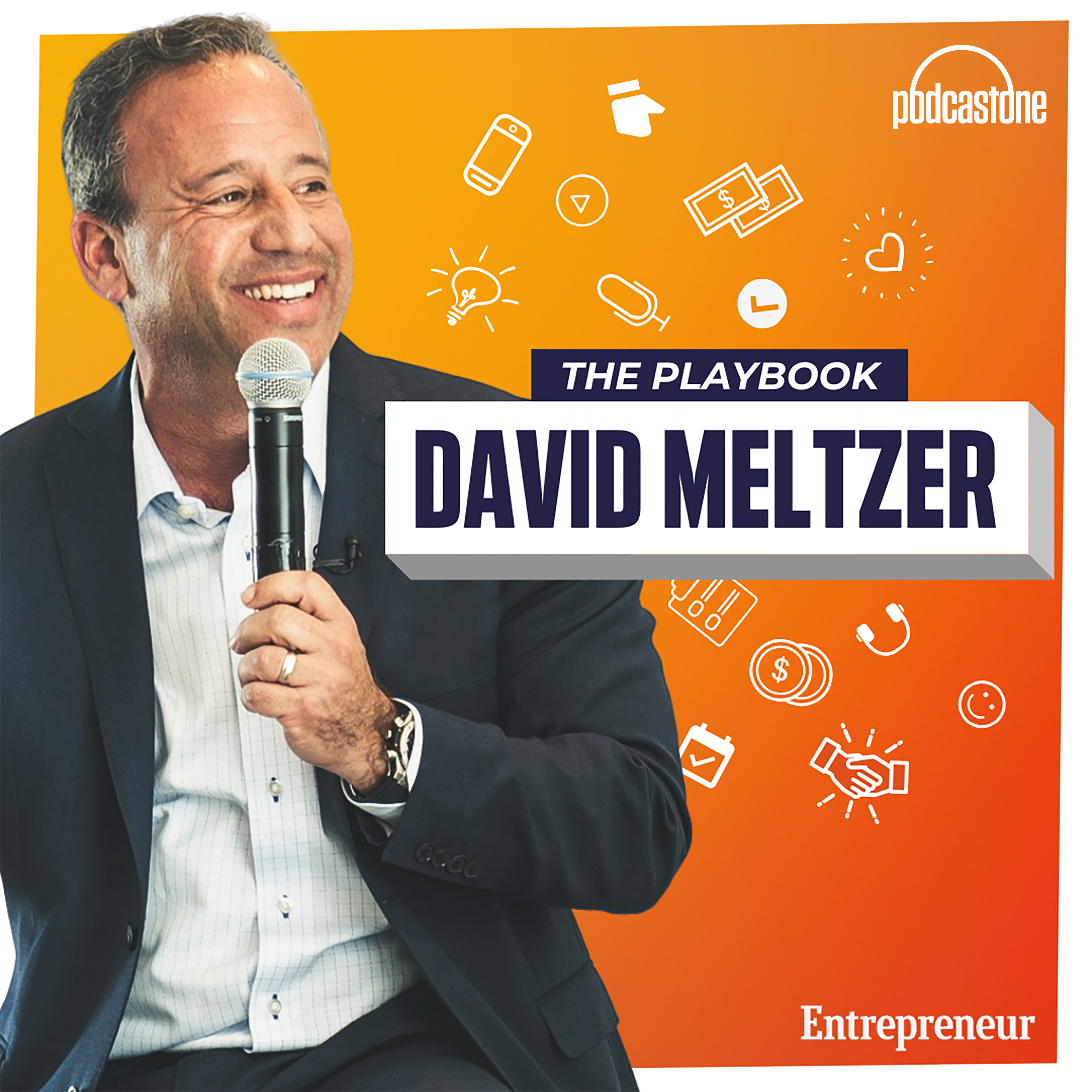
The Playbook With David Meltzer · 2026-07-03 · 19 min
Key moments - from our scoring
Substance score
20 / 100
Five dimensions, 20 points each
This episode centers on identity preservation and personal authenticity in an increasingly connected world, featuring perspectives from entertainment, business, and healthcare leaders. Sasha Pieterse discusses her transition from child actor in Pretty Little Liars to entrepreneur building Hippie Energy (an all-natural energy drink for women) and the forthcoming Hippie Brew launching in May at Target. The conversation explores how celebrities like Pieterse have managed to maintain their core selves while playing multiple public roles - a challenge she credits to having a close circle outside the entertainment industry and choosing transparency over performance as an adult. Claude Silver and Stefano Sinecropi add weight to discussions about women's self-sacrifice and the modern identity crisis extending beyond celebrities to everyday people through social media. Eric Brown raises the critical question of how public figures authentically connect with audiences without exhausting themselves through constant performance. Gary Vayner's philosophy of "being yourself" anchors the conversation, with speakers noting this approach now applies to Gen Z and younger audiences facing similar authenticity pressures on TikTok and Instagram.
She credited having parents who weren't traditional stage parents, choosing a close circle of friends outside the entertainment industry, and doing much of her identity exploration behind the scenes rather than in public, which allowed her to make mistakes privately.
Hippie Energy is the cleanest energy drink specifically made for women; Hippie Brew is launching in May and will be available at Target and other retailers.
The pressure to perform a curated version of yourself for social media now applies universally to teenagers and everyday people on platforms like TikTok and Instagram, not just athletes and entertainers.
Her podcast connects women across generations, discussing shared experiences including health issues, body positivity, mental health, and the importance of women supporting women.
She created them to address real self-care challenges she and other women face - including the need for clean nutrition, mental health support, and reminders to prioritize personal wellness alongside caring for others.
Our reviewer’s read on each dimension, with quotes from the episode.
The episode is almost entirely platitudes and mutual affirmation with no actionable, non-obvious claims for a B2B operator. The closest thing to an insight is an underdeveloped observation about social media creating identity crises for non-celebrities, but it is never operationalised.
be who I am. Because you all. Everybody starts out trying. My first TV show, so what am I supposed to. I asked the producer, what am I supposed to act like? And he's like, whoa, whoa, you're going to be exhausted. If you tried to be what you want people to think you are. That's exhausting. Just be you, man.
it's flexing the muscle of discipline, really being able to take that pause, understanding that it is necessary in the grand scheme of things to be able to do everything that you want to do.
Every theme - authenticity, women supporting women, self-care, identity in the public eye - is recycled mainstream content. The 'energy gap' framing is momentarily interesting but is dropped immediately and amounts to a restatement of 'be authentic'.
I am not in point out we're not dealing with this is what I want people to think I am. This energy gap is going to really be a difficult energy gap to close.
we stand on other women's shoulders. And now they're standing on your shoulders, my shoulders. And it's amazing.
Claude Silver holds a genuine senior title at VaynerX and has real operational seniority, but she barely contributes substantive content. Sasha Petersa is a celebrity at the very early stage of a consumer product launch, not an at-scale B2B practitioner. The spine surgeon and 'logistics/mindset' guest add little relevant expertise.
She is the chief heart officer at the Amazing Vayner.
Eric Brown is in the house downtown. Eric Brown, logistics expert but also a great mindset leader and uh, entrepreneur. He's a performance driven thinker.
Almost no hard data, metrics, timelines, or named business evidence. The only concrete details are peripheral personal facts (graduated at 14, son is 5) and a single retail distribution mention with no supporting numbers.
Hippie Brew as well, uh, which is coming out in May, will be available in Target
I graduated at 14. Um, you know, I've been working 15 hour days since then.
The host spends most of the episode praising guests and delivering monologues rather than asking incisive questions. Follow-ups are absent; the one substantive question about protecting identity is immediately softened and never probed for operational detail. The dynamic is a PR conversation, not an interview.
Ask a lot of people why when they've had successful careers, especially in sports and entertainment, why they would want to continue the suffering and become an entrepreneur.
I'll just give the floor to you and final thoughts on, you know, what you think about that. Sorry to be a little bit heavy on that, but it is true.
Computed from the transcript - who did the talking, and the words that came up most.
In today’s episode, I sit down with actress, entrepreneur, and podcast host Sasha Pieterse to discuss the transition from a successful career in entertainment to building purpose-driven businesses. Sasha shares how her relationship with fans inspired her entrepreneurial journey, the importance of creating products that solve real problems, and why supporting women through health, wellness, and community has become central to her mission. We also talk about maintaining personal identity in the public eye, navigating motherhood, setting healthy boundaries, and the growing challenge social media presents for younger generations. Alongside insights from Claude Silver, Eric Brown, and Dr. Stefano Sinicropi, this conversation explores authenticity, self-care, and leading with intention. See Privacy Policy at and California Privacy Notice at
Transcribed and scored by The B2B Podcast Index.
Speaker A: Welcome to Office Hours. I'm David Meltzer. We're live here at the SiriusXM studios at the Wynn in Las Vegas. Feel like I've won the lottery with our great co host today. Claude Silver, my spirit animal twin. She is the chief heart officer at the Amazing Vayner. Is it media or sports? Vayner X I think Vayner X, Vayner X, uh, the leader in media. If it wasn't for Vayner, I don't think I'd be here. Great, uh, mentorship from Claude and her friend Gary. Thank you so much for joining me.
Speaker B: Thank you for having me. I love being with you.
Speaker A: This is like a New York crew. Uh, we got the east coast at least. Eric Brown is in the house downtown. Eric Brown, logistics expert but also a great mindset leader and uh, entrepreneur. He's a performance driven thinker. Thanks for joining me.
Speaker C: Hey buddy. Thank you, thank you David. Just feel like you feel like it's family here.
Speaker A: I appreciate that. That's the goal. Speaking of family, our anchorman took uh, me about three seasons to figure out how to pronounce his name correctly. But I finally have. His name is Stefano Sinecropi and he is one of the world's leading surgeons of the spine. But he's also an author and a speaker and a mentor helping others with longevity and wellness. Thanks for joining me buddy.
Speaker D: I mean it is an unbelievable honor to be here. And by the way, tell Gary let's chop chop with buying those jets. We need to turn around like real quick. I think that's what would do it 100% he doesn't. That guy does not lose. I need him to buy my jets.
Speaker A: The reason he doesn't lose is the lady next to me, I'll tell you that. So everyone has it in secret and I have mine. An incredible team around me. Speaking of incredible teams, Sasha Petersa is here and she is well renowned TV and movie star, um, especially in my house, uh, incredible content. Uh, but so many celebrities like yourself have got into entrepreneurship and you have hippie energy specifically on the market. Made for women. It's the cleanest energy drink made specifically for women. And soon to launch Hippie Brew as well, uh, which is coming out in May, will be available in Target, uh, in many other places I'm sure. Uh, welcome to office hours, Sasha.
Speaker E: Thank you so much. I love being on this side. I like being in the hot seat.
Speaker A: Yeah, right on. Well we like you there as well. Ask a lot of people why when they've had successful careers, especially in sports and entertainment, why they would want to continue the suffering and become an entrepreneur.
Speaker E: I know, right? It's like choosing that punishment, but it's, uh. I say punishment, but it's really not. I mean, I think that it can be, um. But what I've loved about what I've built in my career is the relationship with my fans. I've been incredibly lucky to be able to connect with people all over the world, and I've realized that so many of the things that I have gone through in my life, um, are so relatable, and I. I want to share that with people. And so even just with my podcast, being able to connect with people, women all around the world, and realize how many of the same issues that we deal with on a daily basis, um, are so similar is. It's been wonderful. And I think being able to use those struggles for positivity, um, has been one of my main goals. And creating products for myself that make my life better and make other women's life better, ah, has been such a treat and such an unexpected, I would say, like, addition to my career that I did not see coming.
Speaker A: That's beautiful. Well, speaking of women's leaders and mentors, there's nobody better. If you haven't noticed, I'm a huge fan of Claude Silver.
Speaker B: I know I do.
Speaker A: Perfect start.
Speaker B: It's so perfect because I really feel like right now there is this. There's a, uh, confluence of women really, really starting to support women. And, yeah, different generational also doesn't matter. But we are all. I don't know, we've turned up the frequency somehow. And so I'm curious for what you do. Are you finding that both the drink, both the podcast, both you are really relevant to kind of the five generations we see even in the workforce right now.
Speaker E: I would agree. I think right now it's a special time. Um, but I think often that comes from necessity. I think we're realizing that finally we're stronger together. Right. You know, it's. There's so much. We have so much more in common than we. Than we do, um, than we don't. And I'm. I'm understanding now, as someone in my early 30s with family, that female relationships are so important to me. I was like the guy's girl. I had just so many guy friends. And, um, that's who I related to. I never really related to other women, specifically my age. And as I got older and realized, oh, I have all of these health issues and there's a lot of things that I deal with that. My guy friends, bless them, don't understand, and that's okay. Um, where are my girls? And I've been very lucky to have, um, a few very solid girlfriends throughout my lifetime, and that I still have and cherish. And I've understood what that means, to expand that and what that support looks like and how to be a good, um, support system for other women on my. On my side as well. And there's just certain things that you can't explain, um, to some. To a man. No. No offense. Um, and. Or that you probably don't want to.
Speaker A: I got three daughters.
Speaker E: I'm still trying to communicate, and I think it's so rewarding to find those relationships, but ultimately to find solutions and find ways, um, to make things better, and we can make things better together for everybody. And it's also, I think, so much about, uh, advocating for yourself and understanding that you also have to model it. You have to be the reflection of what you want it to look like. And, um, I'm, you know, um, I'm honored to know so many amazing women, to be able to interview them on my podcast to create, you know, solutions for them, um, to be a voice, to be an advocate. It just kind of all snowballs. And we have to, you know, hold hands and stand together and be the way, essentially.
Speaker B: Yeah. I mean, we stand on other women's shoulders.
Speaker E: Absolutely.
Speaker B: And now they're standing on your shoulders, my shoulders. And it's amazing. The community. And you said it perfectly. There's a necessity, I think, that we've. All women have been quiet about certain things, whether or not it's perimenopause, whether or not it's miscarriage, whether or not it's menopause. And we're loud now. We're loud and proud, and I love it. So thank you.
Speaker E: Thank you. Thank you.
Speaker A: Tough to follow.
Speaker C: Yeah, tough to follow. I feel very special. You know, we talk about roles you're coming out of, uh, a child childhood Hollywood actor, actress.
Speaker B: Yeah.
Speaker C: And, you know, we're sitting here with the Cho of Vayner X. It's these different roles we play in life. And so you're. You're a rare element to make it through on this side. And now to see you as an entrepreneur and successful and your. Your mom seems like a good mom from first impressions. How did, how did you protect your real identity through your career knowing that you played so many roles? And now there is a role. We have a mom role. We have entrepreneur role. You had different X men to shark Boy and Lava Girl. How'd you protect your real identity? Because I'm saying this, I'm pivoting this way because so many people get hurt, uh, in, in Hollywood. And I heard Jim Carrey talking the other day. I don't know when he said it just recently, but, uh, he was talking about his different characters that he played. And he said one of them was Jim Carrey. And I'm like, wait a minute. He was like. I was, I became Jim Carrey. I mean, himself. I just went around and tried to make other people feel comfortable when they were at unease. So he would just joke all the time. So you lose yourself.
Speaker E: Yeah, I think, I mean, and I love him. Uh, I think that that's a very fair point. I mean, I think in, in many ways I got out unscathed, if you will, but I saw a lot. And, um, I would give credit to my parents there because they weren't the traditional stage parents. However, you know, there's things that you're exposed to in the industry that kids normally aren't. And I grew up really quickly. I'm an only child. I graduated at 14. Um, you know, I've been working 15 hour days since then. And I, I love it. I wouldn't trade it, but there, there's a lot that, you know, I think twice about when it comes to my son. And as far as protecting my own identity, I love that question. Um, I think that is a, it's an evolving answer. Um, because I think I did that just like Jimmy did, where you have this sense of, um, I'm supposed to be something for other people. And what does that look like when the doors are closed? I, I'm very, um, grateful for the community that I had. I think I had, whether it was instinctual or not, chosen people that were my close circle that were not in the entertainment industry at all. And I think that is truly what it is because I know a lot of amazing people in the industry. And now I feel like as a fully formed human, as an adult, I am, I am making great choices on who I befriend that was close to me in the industry. But it's hard to kind of find yourself and make those mistakes in the public eye. And I, I managed to kind of do a lot of that behind the scenes. And now I feel like it's way more beneficial for me to be open about my experiences than closed. And so if I can help somebody else not make a mistake, if I can help them understand what it looks like to be in my position or, um, um, you know, help another woman with body positivity or understanding that, you know, we. It's okay to not be okay. It's, it's, it's, it's okay to evolve. It's okay to change your. You know, it's okay to make room for yourself and advocate for yourself. What does that look like? Um, I think I've just been able to kind of be lucky, if you will. And so what I do choose to expose my son to is very, I don't want to say curated because I want to let him make his own mistakes and do all of those things as well. But, you know, listen, he's five. There's a lot of time for that. Um, but, you know, he is very outgoing, he's very friendly. He has no fear of adults. I love that he wants. If he was in this room right now, he would be sitting on your lap, you'd be chatting, he'd be asking me questions from over there and bring him on. And I love that.
Speaker A: Yeah, absolutely.
Speaker E: But there is that protective nature in me that's going, what is he going to want to do? Is he going to want to be, you know, an actor? Is he going to want to be in the public eye? And I'm okay with that, but I have a different lens on it of what that could look like as he gets older.
Speaker A: And Steph, two things real quick. One, you know you're super famous when you call Jim Carrey Jimmy.
Speaker C: I heard that.
Speaker B: Noted.
Speaker A: Noted. Right. And then, uh, two, though I think things, you know, being around the sports entertainment world for so long, there's an evolution of the, this energy gap that only exclusively hit the athletes and entertainers, which was, I don't. I forget who I am because I spend most of my time trying to be what I want people to think I am. And whether as paid or unpaid, that this is part of being an athlete and an entertainer. And because of social media, my greatest fear with my own children who are not actors or athletes of that type of notoriety falling, uh, into the. I always talk about, I am not in point out we're not dealing with this is what I want people to think I am. This energy gap is going to really be a difficult energy gap to close. And it now applies to not just celebrities and athletes, it applies to your five year old.
Speaker E: Yeah, it's a great point.
Speaker A: TikTok or Instagram or other places. So, um, it's why people love, uh, Gary. And it's something that I tried to emulate was I am m going. And Gary encouraged me to be who I am.
Speaker E: Yeah.
Speaker A: Because you all. Everybody starts out trying. My first TV show, so what am I supposed to. I asked the producer, what am I supposed to act like? And he's like, whoa, whoa, you're going to be exhausted. If you tried to be what you want people to think you are. That's exhausting. Just be you, man.
Speaker E: You're sick and under.
Speaker A: People love you or hate you.
Speaker E: Because I. I completely agree with you. And I think that we have this danger, uh, especially with, like, our teenagers getting older and wanting them wanting to be looked at a certain way.
Speaker A: Right.
Speaker E: You're right. This is not. This is no longer just an athlete or an entertainer's issue anymore. What I will say from my side, which influenced a lot of my mindset, was when. If somebody recognizes me from Pretty Little Liars, and that's all they watched in high school, and they're so excited and whatever. There is this level of wanting to live up to it for them, you know, or like a, um, I don't care that I'm sweaty or that I, you know, don't look my best right now. Um, that's not their problem. It's just a circumstance, like, okay, well, now I need to make sure that, you know, I give them a good experience. And I think that there's always room for two truths because I've learned my boundary, and I will never say no to a fan because they're the reason I'm here. Um, I get to do what I love every single day because they love my work. And so what does that boundary look like then? I'll still take the photo. I'll still do, you know, I'll still sign something. I'll still interact, I'll hug, I'll do whatever. Um, but understanding my placement and my energy and what that looks like for me mentally has absolutely shifted now compared to 10 years ago. Um, and it's how I process and deal with the way that I'm feeling and the way that. How I care how I'm perceived, it's just. It's different and it's understanding that I don't need to look perfect for that photo. It's fine.
Speaker D: No, I mean, I. Listen, uh, you're an incredible person. Everything that you've done and, you know, what you're doing with your podcast and you're out there and you're just trying to help people, and your energy is infectious. I had the honor of sitting next to you as a co host on the show, and it was Just incredible, um, to just feel your passion. You know, women are amazing. And, you know, they. I mean, they give so much of themselves, and I'm so glad that the recognition, you know, is coming out. You know, my. If I think of my, you know, my mom that, you know, just raising me, she gave everything right. My wife has given up so much of herself for my career to stand behind me when she could have done so much. I mean, just a brilliant woman. She could have done so much more. She would do anything right? But. But. But you have to give so much when you're the person behind the, you know, behind the person. And, uh, I have taken care of thousands of women as a physician, and just thinking about their stories of how they've sacrificed everything and have not even paid attention to their own health because they feel like they have to take care of their children, they have to take care of their spouses. They're the wife behind whoever's doing whatever. Even if that person's a construction worker, sometimes they're the breadwinner. So m mom will put everything on the line for them. Um, I know you have this podcast, and I'm sure you hear the same exact stories that I do day in and day out, and some of them are broken by the time this is all over because they don't pay attention to, you know, their own personal needs. And it's amazing you're doing something about it. So I'll just give the floor to you and final thoughts on, you know, what you think about that. Sorry to be a little bit heavy on that, but it is true. You guys are amazing, and we would be nothing without you guys. So kudos.
Speaker A: I don't think you can get here without a woman.
Speaker D: I mean, now you're going into a whole.
Speaker A: You're the doctor.
Speaker D: You're going into whole science. I get it, I get it. I get it. He loosened it up.
Speaker A: He loosened her out there.
Speaker E: I think that, you know, I mean, thank you. Yes. I mean, I think that, you know, I think about my mom. I think about the woman in my life. I think about myself. Um, it's true. We. We give everything all the time, 100% more than that. Um, and I think what is actually m. Been so helpful for me, selfishly, with my own podcast is. Is hearing that message over and over and over and understanding, and I still need reminders how important it is to take care of myself. Um, I still have that problem. I still have the. Like, I know what I'm supposed to do. I know. You know, um, what I need to be doing, to be taking care of myself. My self care routine, my mental health, all of these things, they're so incredibly important. And still, as somebody that is sitting in the seat asking people questions about how they deal with their mental health or how, you know, how they're doing it, um, creating a product to try and help solve, um, some of those little things that we deal with still, I still need to be reminded. My husband is an absolute saint and he is always trying to take care of me, to give back, um, and to kind of just refill my cup. And it's hard. Um, and I think I just always feel like there's never enough time. I just, there's always more that I want to do. There's always something that needs to be done. And I think it's flexing the muscle of discipline, really being able to take that pause, understanding that it is necessary in the grand scheme of things to be able to do everything that you want to do. You have to take care of yourself. You have to take that moment to pause. You have to move your body, you have to, you know, get enough sleep. You have to drink less alcohol. And that's why I created my products. You have to take those pauses and that time for yourself to create the life that you ultimately want.
Speaker A: There's great leaders in the world and they come in all forms and provide all types of platforms to speak and shout from the roofs for the protection, promotion, and love and even perfection of others. Believe it or not, that's what Sasha Peterson has done for years, both on and off the screen. And she's doing it in the most difficult circumstance today, that of an entrepreneur. Check out Hippie Energy and soon to be Hippie Brew. Uh, made for women and available everywhere, it's the cleanest energy drink on the market. Sasha, what an honor it is and keep up the great work. Thank you for joining us.
Speaker E: Always lovely.
Speaker A: She's amazing and so are they. Cheers on office hours.
Other episodes covering the same guests and topics, from across The B2B Podcast Index.
 Cyber News: Iranian Hacker, Quantum Ransomware and Rogue AIThe Audit · features Eric Brown75 / 100
 Claude Silver on Emotional Bravery & People-First CultureChats with Jason · features Claude Silver68 / 100
 Second Generation, First in Purpose: Wulan Tilaar on Carrying Forward a Family MissionGrowth Diaries by Zenoti · on Women entrepreneurs61 / 100
 7 Lessons On Scaling A Business Without Burning Out | Robin Sims-Allen | 399SaaS Fuel · on Women entrepreneurs56 / 100
 Hema Reddy - Strengthening Women Entrepreneurs: Mindset and MentorshipEmpire Life Podcast · on Women entrepreneurs55 / 100
 The Last She Built This Episode: How to End an EraShe Built This® · on Women entrepreneurs29 / 100The Values That Change EverythingThe Power Of Proactive HealthThe Price of a Toxic CultureThe Infinite Loop of GivingThe Power of Giving Back