
Empire Life Podcast · 2024-07-16 · 44 min
Key moments - from our scoring
Substance score
35 / 100
Five dimensions, 20 points each
Hema Reddy transitioned from senior management roles at IBM to building Crafty Counter, a food and beverage company making plant-based egg alternatives. She discusses the psychological and financial challenges of leaving a six-figure corporate income, emphasizing the importance of a financial safety net (leveraging her husband's tech income and savings) and realistic timelines for profitability in food businesses. Reddy stresses that success in the food industry requires building an ecosystem of advisors, industry contacts, and authentic relationships - not just technical skill. She addresses the gender gap in venture capital funding, noting that while women start businesses at rates equal to men, 90% of venture capital is controlled by males, and women are often less comfortable raising capital early compared to men who bootstrap confidence. On managing negativity and self-doubt, Reddy shares a powerful framework: detaching yourself from your ego by becoming a spectator of your own actions, making the mission primary rather than personal success/failure, and reframing all experiences as learning opportunities rather than setbacks. She also discusses social media strategy with Allison Ramsey, emphasizing humor and welcoming responses to negative comments rather than deletion, and the importance of leaving constructive criticism visible to demonstrate character and personality.
She had a financial safety net from corporate savings and her husband's tech income, which allowed her to avoid taking a paycheck for the first couple of years while proving product-market fit. She acknowledges that without this safety net, the business model would need to achieve cash-flow positivity much faster.
Men typically raise venture capital immediately when they're ready to scale, while women tend to bootstrap their businesses for significantly longer periods before seeking capital. This hesitation stems partly from confidence gaps and partly from discomfort asking for money early.
Approximately 90% of venture capital funds are male-owned, operated, or led by primarily white males, though Reddy notes a growing number of women entering venture capital and private equity to create funds specifically supporting female entrepreneurs.
She practices viewing herself as a spectator of her own actions and emotions, talking to herself in third person, which creates separation from negative thoughts. When she reframes situations around the mission rather than personal success/failure, all experiences become learning opportunities rather than negatives.
They prioritize humor to diffuse tension, followed by welcoming or nurturing responses. They only delete comments in extreme cases, intentionally leaving constructive criticism visible to demonstrate strength of character and build community trust.
Our reviewer’s read on each dimension, with quotes from the episode.
The episode contains occasional useful observations - notably the spectator self-detachment technique and the point that ecosystem-building must be done in parallel with go-to-market - but these are buried under long stretches of platitudes ('fail fast,' 'never give up,' 'try your best') and mutual affirmation that generate no new ideas for a B2B operator.
building that ecosystem first or in parallel as you are taking your product or your idea to market
you can't scale yourself or you can't scale your business until you scale you
The spectator-detachment reframe for managing self-doubt is the one mildly fresh idea in the episode; everything else - mission over ego, monkey mind, grit, bootstrapping women vs. capital-seeking men - is well-worn entrepreneurship content recycled without a new angle or evidence.
I try to put myself as a spectator, um, of me on my actions and my words and the way I'm reacting to situations
your baby should never be your baby. You know, you have the mission at hand
Hema Reddy is a legitimate CPG operator - 15 years at IBM then a six-year food startup now in ~900 national retail doors - giving her genuine practitioner credibility; however, the conversation largely fails to extract her hard-won operational knowledge, leaving her caliber underutilised.
I was at IBM for 15 years
they are in about 900 stores around the country. And we also sell them online
A handful of concrete details appear (900 store count, named retailers like Whole Foods and Wegmans, a vague $20,000 loss figure), but the VC gender statistic is sourced only as 'I heard somebody talking about it on LinkedIn,' and almost all strategic claims are unanchored to timelines, revenue, or verifiable data.
they are in about 900 stores around the country
you just lost $20,000 or something to that effect
The host regularly redirects conversation to her own stories - her daughter Lily, her 5 million social followers, her real estate activity, her dosha type - rather than probing the guest's operational experience; questions are leading or vague, and there is no pushback or productive challenge anywhere in the episode.
Was that a challenge for you to, to think how am I going to replace my, my income and will I get there
I think close to 5 million now on all of our platforms
Computed from the transcript - who did the talking, and the words that came up most.
Having a positive mindset and not letting negativity affect us is important as an entrepreneur. Starting a business is tough; it will take your time and resources. Having strong mental fortitude is crucial because you don't want to fail just because you listened to others. You can dictate how you will run your business, and that is the power you have to change the business for better or worse. Today's special guest is Hema Reddy, founder of Crafty Counter, started her journey in 2018 with a mission to provide parents with high-quality, convenient, minimally processed, and delicious food options. Initially creating WunderNuggets, a variety of vegetarian and blended protein nuggets, she shifted focus in 2020 after learning about the environmental and ethical issues in poultry farming. This led to the company becoming 100% plant-based, launching WunderBites, and ultimately, in 2022, creating WunderEggs - a plant-based egg alternative. WunderEggs, which won the "Best New Meat Alternative 2022" award, launched at Whole Foods in January 2023 and continues to expand nationwide, aligning with Reddy’s mission to nourish both bodies and the planet without compromise.
Transcribed and scored by The B2B Podcast Index.
Speaker A: When you make it not about you and it's about the mission, nothing could be negative. It's all positive. The good, the bad and the ugly. And it's positive because it is part of the journey.
Speaker B: Hi everybody. Welcome to the Empire Life podcast where we interview founders from all around the world about their success journey from A to Z and immediate strategies that you can implement into your life. And I'm Allison Ramsey, your host, the founder of Empire Life, where we mentor and guide female founders in scaling their empires. And today I'm with special guest Hema Reddy and she is the founder of Crafty Counter and also Wonder Eggs, which you can see behind her if you're watching the video and I'll hand it over to her to intro herself a little bit more.
Speaker A: Thank you Alison for having me on this show. Thank you for your time and uh, this opportunity to share my story and the journey and everything in between with the, our listeners. I appreciate it. Yeah. My name is Hema Reddy and I'm um, the founder and CEO of Crafty Counter. We make egg alternative products. Um, I've been on this um, entrepreneurship journey for about six years now and in the past life before, um, before I, before my entrepreneurial journeys, I was in the corpor, I was at IBM for 15 years. I have a bachelor's in, master's in computer science and a managerial curriculum, um, certification from UT Macomb School of Business. In general, I've always had an opportunity with food and cooking and the world of culinary draws me. So all of that combined, once I had done my thing in the corporate world, I just quit and went all in into starting a business in the food and beverage realm. So that brings me to what we do today, making ah, plant based egg alternatives.
Speaker B: Um, we met through LinkedIn and Instagram I think and you know, I love what you're doing there and all your videos, how you show, you know, like I was watching the egg salad one recently and you're so talented and you make it creative and easy to follow and understand how to implement Wonder Eggs into your daily life. And, and I'm curious what kind of challenges you, uh, know the first thing that comes to mind is I'm also coming from software and I think when I first started this is my third company with Empire Life, I wanted to replace my income and it felt like a huge risk or challenge at first or at the beginning to imagine especially coming from probably uh, more in the corporate world a more higher income than average. Was that a challenge for you to, to think how am I going to replace my, my income and will I get there? And how did you remain, you know, strong through that and resilient.
Speaker A: Yeah. So two things come to mind to that question. It absolutely was a concern. I had a headache, ah, for six months, constantly before I turned in my notice. Um, but I had the fortunate of being in the corporate world and across various kinds of senior management and executive roles, because of which we had saved up. So we had a nest egg, in other words. So with that in mind, and of course, uh, so much of it depends upon who your support system is. My husband is also in tech, and so he also brings our paycheck. So between the two of us, we could afford the risk of, uh, me just saying, okay, I'm going to walk away from this comfortable paycheck. But again, second element kicks in, which is complete naivete when you know, you don't know what, how this journey looks like. In my amateur mind, I thought, oh, yeah, for the second year, I'm making a paycheck and I'll be bringing home just about the sizable check that I was bringing earlier. And I'll figure this out. I've done complex projects around the world before. How hard can this be? And then you dive in and, and you realize, oh, my goodness, it's a totally different world. Um, starting something from scratch, building something from the ground up just is incredibly hard. Um, and you can't predict how your journey will pan out. It always takes so much longer, uh, than you think and take so much more money than you think. So I guess two things is, it's always, um, it's hard no matter what. It's a little bit, you know, easier when you come at it with a position of some grounding, you know, an alternate income source or your savings, that you basically bet it all at some point, um, on your, um, brainchild, on your idea, on your business. That day comes, um, before you know it. So, yeah, that's how I had the, um, I made the decision to jump all in. Keeping in mind that, okay, I do have that safety net. So I understand that in some cases, some people don't have that safety net, in which case it becomes a different business model. Like, for them, getting to cash to the positive is so much more important for me. You know, in a way, that was not what I was thinking for when I jumped in right when I started the business, I needed to prove the product and market and all of that, uh, knowing that it's okay if I don't take home a paycheck for A couple of years. So it totally depends upon where you are in that you're. Where you are in your phase of life. And when you start, uh, a business, you have to think through all of those factors.
Speaker B: Yes, I completely agree about how long is it going to take me to make money or asking ourselves those questions in our plans. Am I going to. Or if someone needs to make money within six months, how am I going to generate this, the, uh, income flow? And with the food industry, do you feel it would be doing popups about generating more income at the beginning or. Or what is. What does it look like for you to continue to be resilient?
Speaker A: So there's a lot of learning, right, in the food business. It's not like a tech startup where you can learn a programming language or you can hire around it. A lot of the information that you have to work with needs to be acquired. So I invested several months and I still do. I mean, it's been six years since I quit and fifth year in business. But, um, just listening to, constantly listening to podcasts, any networking event that was there, I took, I grabbed so many coffees just to understand from people who have been there, done that before on how the industry operates, what are the levers? How do you build a business and how do you get to. Profitability is something that needs to be acquired. And even with all of that knowledge from other people around you, advisors and friends in the industry, you have to have to first build an ecosystem that you can lean on. It is so paramount, and I'm a strong believer of building that ecosystem first or in parallel as you are taking your product or your idea to market. So in the food world, it's very hard, um, if you don't invest that, think through those things that, okay, I don't want to find out who to talk to when I'm in that, uh, echo of a situation. Right. So building that list of contacts or friends that, okay, if it's a manufacturing question, this is what I call. If it's a business plan question is who I call legal, this is what I call having those folks around there or subscribing to Slack networking channels, Facebook groups, um, you know, local networking chapters is so key. So that's how I learn the ropes. And, you know, it takes a while. And the only way to get acclimated and get situated is by spending the time building those authentic relationships that are not transactional. You're just helping. And Austin is such a good ecosystem where you can find folks that are more generous with their Time and uh, they're happy to help you. So I had to invest in learning events and getting, learning the playbook by first conversations and then even with all that conversations, making the mistakes and fail fast, fail quick or you know, so on.
Speaker B: True, those are great points. And when I was first starting, even though this is my third business, I thought, I'm going to do it better this time. I'm going to have mentors from the beginning. And I, I uh, went out and sought after particularly female founders. And I found it generally very difficult to find female founders that were doing something I guess similar and had really big visions about, you know, where they wanted to go with their income or that they were even in business to begin with. And I ended up having two, uh, male founders that were my mentors at the beginning. And that's what led me to want to mostly work with women too because of the difficulty I had finding really solid, you know, big picture, huge vision, uh, female founders out there to guide me along my journey. How is it in the food industry? What is the uh, the ratio? Is it mostly women or M A? Big mix.
Speaker A: Depends on what industry vertical you're looking at or what part of the ecosystem you're looking at. So for instance, in the world of entrepreneurship, I mean women are just as much as fast starting, just as many women are starting businesses in general. I think based on the Small Business Bureau or some numbers that somebody was. I heard somebody talking about it on LinkedIn actually. So entrepreneurship, like how many women entrepreneurs are there? There are just as many as male entrepreneurs. Uh, even in terms of hiring or across various levels, I believe the playing field is pretty much even when it comes to gender presence in a job function where it gets a little off skew is uh, say for example, capital raising money for your business, fundraising and venture capital space. Right. That is where I mean 90% of these funds are male. Owned, operated, lent, or they've got mixed teams. But it's primarily a male and generally speaking white males that are controlling all the venture capital funding that goes into women founders. These days I'm hearing more and more women getting into the space of capital, um, venture capital and uh, private equity in fact in some cases as well, where they're creating funds to support female entrepreneurs. So yeah, it really depends on the job function.
Speaker B: That's a good take on that. And I like how you worded that answer. And I've seen when it comes to the, well in corporate, like the C level executives or in entrepreneurship, more of the founders, I still feel like we need to get more women in the, in those roles and, and then those women kind of sitting the elevator down and saying to others, you know, come up with me or I'm going to show you more of the ropes and reach back and support more women getting to be successful and rising together.
Speaker A: I think with uh, time and with enough initiative, with enough narrative and conversations, we will at some point even the playing field when it comes to the capital available to female entrepreneurs. Uh, I also hear chatter about a lot of women don't feel comfortable asking for money either. There is that hesitation as well. Um, the confidence with which men operate when asking for some things, um, is just very, very different than how women look at the need for capital or reaching out for capital early on. So most of the women try to bootstrap it, uh, through quite a significant period of time and then go for capital versus men. The first thing they do is okay, I'm ready, I need to raise money. So you know, that's true.
Speaker B: That's a significant difference too in the, the margin about who can have more capital or not. I've often thought it would be fascinating to start a uh, female founded venture capital fund that only worked with female founded businesses. Maybe that's another, another business venture in the future for us as we have more capital too to be able to reach back and support or give, give back and have a stake in certain new businesses that are coming up. Um, and I've been getting into real estate recently and I'm starting to see that as well. Every time I watch videos like where are the women here? And my last tech, you know, my last corporate job seven years ago, I was the only female on the floor about 50 something developers. And so it, it tends that I lean towards where, oh okay, I'm the only woman in the room. That's okay. And then I want to bring more women, you know, with me and continue to support one another.
Speaker A: Hey, kudos to you on that. Thank you very much.
Speaker B: And for negativity, uh, Hema, how do you feel like as similar with resistance that may come up. How do you move through that especially with this is this is your first business, right?
Speaker A: Yeah, it is.
Speaker B: And so you might have had some self doubting feelings come up or am I doing the right thing? Is this, is this really for me? And sometimes those might be like doom and gloom or more negative thoughts. I mean I know speaking from experience that I need to have things I say to myself that I can kind of talk myself out of that, that no, if I don't do it. No one else is going to do it. There's only one me. My vision is important. I'm building generational wealth or some of the examples of how I continue to stay positive and motivated. I'm wondering how you managed to do that.
Speaker A: Yeah, no, that's a great question. So, um, the way I have tackled negativity. Well, first of all, absolutely, even to this day, sometimes I have self doubt. Um, and it's been, you know, we've seen, I've launched two products before, this is that third one and it's doing really well. It's just really taken off. But um, even with all of that success, the commercial success, the validation from customers, I'm just loving it and raving about it throughout social media. You still wonder, you know, uh, because if you put a lot at stake to get here, it takes, you've made trade offs, you have sacrificed time with family, you have invested. At least in my case, I invested my personal savings to the extent possible. Uh, so with all of that, the what if question does come, right? No matter how much you are hoping for, or you're building the business for positive outcomes, the reality is you don't control anything. Uh, an outcome is a factor of so many different elements that are just out of your control no matter how you execute it. It's microeconomic shits, macroeconomics, the economy, it's just, you can't predict it. Who predicted Covid will ever happen?
Speaker B: Right.
Speaker A: And that put out so many businesses. Those self talks always do come and that negativity does come, but it's the art is to detect something as a negative feeling versus letting it rain out without even classifying that as a negative, you know, thought. So you detach. In one practice that I thought really helped, has really helped me and has worked for me is you detaching yourself from you. I know it's a tricky statement. Like, you know, I try to put myself, I try to put myself as a spectator, um, of me on my actions and my words and the way I'm reacting to situations so that I can step away from myself and watch myself react and function in this world. What that does is, um, it just gives you a separate lens. First of all, it helps you with some sort of detachment at a certain level. And at that point, if you continue to do that as a practice, you can also evaluate, okay, this is a thought, it's coming to me. But you are talking to yourself in the third person. It's coming to me. I see you. Um, and then at that point you have to remind yourself or the other person you're watching that it's not about you. Not about. It's always about the mission. I said the same thing in, as in your case, right? When you make it not about you and it's about the mission, nothing could be negative. It's all positive, the good, the bad and the ugly. And it's positive because it is part of the journey. If it is negative, then you still take it in the stride and you think of it as, okay, this is what is required for me to execute on this mission. When you think about it in that way, uh, it doesn't seem like it's anything is negative at all. It's just an experience. It could be you could think of something as positive, somebody else could think of that as negative. It's such a different lens when you detach yourself from you and then you watch every experience as it's happening to you as a spectator. And then the third thing is you put the mission first. Um, because then success of failure doesn't matter, because what matters is you tried. And it's so easy to say that, yeah, try, try, try, never give up. And it's just, you try your best, but to implement it, it needs a totally different level of a system, a way of thinking, um, muscle that you can only improve by truly, truly realizing that and recognizing that and having the, um, the strength and the intelligence to do that. And that comes from listening to podcasts and talking, reading, just enlightening yourself constantly, investing in education, you know, investing in lectures, any source that can give you, that can help you strengthen from the insight. And that's when it just starts getting, you know, taking lesser and lesser role and impact on you. And before, you know, nothing seems negative at all. It's an experience. And that's just it. Nothing more.
Speaker B: Yes, it is an experience. It. As you were talking, I was also reminded of some more his traumatizing things that happened at the beginning of Empire Life, where I thought it was, I was losing sleep and I didn't know quite how to handle the situation. And when I look back on it with being able to zoom out, like you mentioned that having a mentor also kind of, they see it as zoomed out and they're kind of more watching what you're doing. And they have been probably through something similar. I had a client who wanted to end a contract with me at my first time going through that process, and I had done a lot of work for them and they didn't want to fully pay me for the work. And then they had a lawyer that was threatening me. And I had never been through anything like that before. And my mentor said, you're officially in business.
Speaker A: I love it.
Speaker B: Yeah. There was a big positive spin on that, was you're going to have amazing clients and you're going to have some disgruntled ones. And when you have some of those disgruntled ones, it's an experience, it's opportunity, uh, for me to improve. I later. And as I was able to zone out and get some sleep and not take it so personally, I was able to look at where possibly I, uh, didn't understand it, that maybe it wasn't the best fit from the beginning. And I was coming from a place of, I gotta get cash flow, I can really help this person. And those are great intentions. But the person wasn't quite the best fit to be my client. And when you're first, you know, getting started in a business, oftentimes you don't even know exactly who is the best fit or who is exactly your target market. And that's all part of the experience. And I looked at all the systems that we went through with that, uh, particular client and where some of the weak points were. And I just kept giving forgiveness to them and to myself that I didn't know what I didn't know. I didn't see those, those weak points at the beginning. And I was able to improve it, make it more a stronger process and have it be a better experience for the future clients. And I kept being thankful or grateful to have that experience. And I think, um, looking. I still feel the same way, looking back on it, it's, it makes it, as you're saying, to be able to kind of zoom out and look at the big picture. It allows us to take what we can and learn from the experience as opposed to ruminating on it all day obsessively, which I was at the beginning because it's was the first time that I had been through something like that. And I was beating myself up too and thinking, how could I not have seen these things? Or how can I not have understood that maybe that wasn't the best fit? And everything ended up being for the best in, in the end.
Speaker A: Oh man. I mean, I think I love what, what that sentence, congratulations, you're in business because, yeah, the things happen. You can't, you can't just expect positive experiences or whatever you think it is positive.
Speaker B: Right.
Speaker A: Uh, there will be setbacks. And if there's nothing that can seemingly seem like a setback then we're not doing it. Right. Right.
Speaker B: Yes. I tell myself that too about social media. So we have, I think close to 5 million now on all of our platforms. Every now and then, you know, we have not so positive comments and, um, oftentimes I leave them there and I don't. It doesn't really bother me anymore. I'm not ruminating on why I did that person. And it's interesting, the more I let go and I also have a team, I have a lot of my team handling social media posts, creating them and posting and a posting plan and everything. And the more I let go, I see that people kind of just move on. If they're not resonating with my content or something, that's for them. And I've had a lot of clients ask me that, like, how do you just keep posts up? Like, some of your posts get a lot of engagement and some don't. How do you just keep the ones there that didn't get a lot of engagement? And that's what I relate to them. That's not what it's about. It's about exposing more prospective clients. And if some people don't engage with it and they move on, they may still click the link, but they didn't necessarily, you know, like it or follow me back. And I can see that in the analytics. But it's, it's more about letting people know what I'm up to. It's not necessarily about the vanity metrics or, or taking it personally. Why didn't. Oh my God, why did anybody like this post? I'm just going to delete it because nobody's resonating with it. And that's not the. Oftentimes the full picture. Have you experienced that too?
Speaker A: Absolutely. I mean, um, I have a team too. And um, it's just me and one person from a marketing standpoint. And we have conversations about this. Like when people have negative comments, how do you respond to it? Right? Because it's impossible to please everyone. There will always be those people that just will complain about anything and everything. And even if you've covered all your bases, they'll find something. And there's trolls. And that's very much how the world is today. And we can't control them. And so we have responses that are like, we've talked about that. Okay, somebody says this and our response is always to be welcoming for number one. Actually, I take that back. Number one, use humor. Always diffuse the situation if possible. Like make a joke out of it. Right. Because then it sends A direct message that, yes, you have a sense of humor. People always like humor, always wins everything. It's just the easiest way you can convert something serious into a lighthearted conversation. We all can use some lighthearted conversation any time of the day. We use humor. The person is really trolling, then, you know, maybe just continue on the tone of humor or welcoming or nurturing and just not letting it get to you. And if the person is really, you know, a troll, then you just, you know, delete the comment. But we tend to. That is the extreme measure. We leave complaints about, oh, we use plastic in our trays, even though it's recyclable. Like, you know, let me explain that it's still made of polypropylene or why bother making egg alternative products? It's real chicken eggs and eat real chicken egg. And there's all kinds of comments, right? And so, uh, somebody was saying, oh, she's making her kids work for her, and, you know, that's child labor. All kinds of bizarre comments that come to come through, come down. We just laugh it out. You know, just laugh it out. That's the easiest way. Um, and then if it's really offensive content, of course we're going to remove it. But you have to leave those negative comments out there because it's an opportunity for you, to show you your strength of character and your personality, um, and your brain and how you think, what's your culture. Right. People want to hear, want to see how you handle criticism, how to. How you handle something that a real mistake we've made, we've not shipped out an order or something was wrong or the product had something in it, excess moisture, whatever, be it, they need to understand it's not just happy smiles and fun. You know, it's impossible to be like that. Real humans have real problems and real humans make real mistakes. Right? It's all about how do you correct them and how do you service that customer, whether it's angry and frustrated with you, um, because especially if you're a small business, they will be angry customers. That's a point. They always are. Um, but how do you turn them into your fans is the challenge. Um, and if we can do that, then we have our basics together.
Speaker B: That's so true. And I love how you pointed out to leave the comments there and let people see how you answer and handle when maybe something unexpected came up. Because I always read the reviews, for example, on Amazon, and I like seeing how people answered that. Or on, you know, for businesses that I'm about to go See if I'm going to go see a practitioner. And they didn't answer a negative comment. I definitely wonder, well, why did that person say that? There's no answer there.
Speaker A: Yeah.
Speaker B: Uh, so I love how you pointed that out. And on tax purposes, I think children can technically work for their parents company at ah, like as young as seven with tax purposes.
Speaker A: Well, there you go. I mean we should probably take that tax rate as a business. That's something I haven't looked into.
Speaker B: Yeah. So you can actually pay them to a business. Well, to their personal checking account and it's tax deductible. So why a lot of uh, like Trump for example, a lot of people have their kids. They're able, if their kids are, you know, uh, experienced, are they trained in that they're like Lily or. My daughter was able to do something with social media from a really young age because she's super talented at that and she's helped me with a lot of different client projects.
Speaker A: That's awesome.
Speaker B: Yeah, it's really awesome and great experience for them for their whole life to understand some of the inner workings of the business. I don't look at it as child labor because I don't assume that anyone who has their own business is going to be giving you. You have to prove, even with taxes that they're at an age where they could handle the kind of tasks that you're giving them.
Speaker A: Well then I should employ my daughter.
Speaker B: Yes.
Speaker A: To come up with funny one liners because she has a sense of humor. I tell you, like she's so funny and just so, so spontaneous.
Speaker B: Oh, that's amazing.
Speaker A: Best one liners. So maybe I need to have her on the copywriting team.
Speaker B: Yes. Yeah. Lily has been doing things for Empire Life almost every school break. And the last, uh, I guess task or assignment that she had was to go into a spreadsheet. And each different social media platform was to aim to find people who would be great to connect with or like to network, to have as a prospective client to reach out to for various reasons or to be on the podcast to be featured in the blog. And then she'll put like their link, their LinkedIn, you know, link that we can later go click on or Facebook or Instagram M or also we're really big on X now. Guess it's not Twitter anymore.
Speaker A: Yeah, X, that's right.
Speaker B: So I think there's always something that we can allow them to do that they're really great at. Or she could even do that. What I was talking about listening to music or watching a television show she liked. So I think that's important to involve our kids. And she's been involved since she was a baby in entrepreneurship. So I think she probably knows way more than she realizes about the topic. I want to bring the topic back to you, Hema, about what traits do you feel like you have yourself that have really helped you in entrepreneurship and in your company journey?
Speaker A: Yeah, it's another good question. Um, even keel. Just being even keel and not letting situations take your calm away. And that's my biggest strength. I didn't. And you don't realize that until you're in it and you. Something went wrong and you played every card perfectly. And again, you can't control the. There's only surprises. And you just lost $20,000 or something to that effect. Right? I mean, as you're growing, it depends upon which phase you're in. And that could be a small hit or a big hit. Uh, and it could be, it could be anything that comes your way. Just being, taking everything in the stride and not letting it crush your spirit is something that I realized, um, I had inbuilt. The second thing is with grit and perseverance. I thought I was a strong person, but one really doesn't know what great really means unless they're put in a position where it's a test of every single DNA, like what they're made of, their true DNA test. Because you don't get that level of heart in a corporate role, uh, in a job because the stakes are different, uh, the pressures are different. Um, the level of mental strength you need is just different. So just not giving up, uh, when things go wrong again and again, to just get back and just live another day, and it doesn't make you any weaker, it makes you stronger with every fall. That's something I've only learned, um, after I've realized that, man, I, you know, I felt that was hard. But this is a new level. And how do you collect yourself and pull yourself together and stand tall for your team, for your stakeholders, for your investors? Um, so that's the second one. And third one is just pivoting, pivoting quickly, you know, when you course correct. Right. Uh, creatively course correct with, in a way that is business savvy, you know, not getting too sentimentally attached to your creations because you hear this word, right? It's my baby. Never. Your baby should never be your baby. You know, you have the mission at hand. And when you detach that purpose from you, that is not my baby. It's the whole world's baby. It is for the world. It's not for me, then it's very liberating, you know, uh, so when you think, when you put yourself in that frame of mind, then every, every head is just, okay, you know, it's fine, we'll take it, and you just get back up. Because you're not out there to prove yourself. You're out there to make an impact in the world. That impact is much bigger and stronger, and it makes you stand tall like a champion. But if you make it about you and your success and how the world perceives you, then it's very draining because a lot of vanity kicks in. It's personal ego and personal judge. People are judging me. Like, it's not as. You just can't think about that now. In the beginning, I was thinking like that the first couple years, um, I was totally guilty of thinking being in that frame of mind. And I, uh, had to put in work to look within and question myself and educate myself to get out of that, you know, suffocating mindset and first liberate me. Because my favorite quote sentence that I share with anybody that comes after me is, you can't scale yourself or you can't scale your business until you scale you. So that's so important. So those are some of the traits that I never thought much about. And you only realize them when you're put in that situation. Um, and you have to make a choice, get up, get back up, and how you actually react to it. Situations happen every single day, left, right and center. How you react to it is who you are. What defines you as a person.
Speaker B: Yes. I like, I love that quote that you mentioned. And it, it reminds me of how we scale ourselves is about that remembering. I was just talking about this with my husband recently, remembering, uh, that there's a stimulus and then there's a reaction to the stimulus. But in between there, we get the power. We have the power to decide how are we going to react to the stimulus. And I think a lot of people might miss. They actually have that power, like giving, empowering ourselves, or bringing it back within to breathe through it or even to call it what it is. You know, I have a extremely big inner fire. I'm, um, like, really, um, pitta, uh.
Speaker A: Oh, yeah.
Speaker B: And you're. Which one are you? Do you know?
Speaker A: I've never done it.
Speaker B: You never done it?
Speaker A: No, I really, really, really want to do it. I have to make time for it. I have to meet someone. Um, I know of them. I know their impact. I understand the culinary relationship, um, correspondence, doshas, but, um, I've just never invested time in it. It's one thing that I, it's in my, it's in my bucket list, but
Speaker B: it's in mine too. It's in mine too. To see like a real specialist. I've only my own personal, uh, looking into it and trying to learn about it. And I was saying that I have a lot of inner fire. So sometimes I feel at first, before I feel the hurt or the pain, I feel anger and being able to say that I'm, I'm angry right now and then kind of lean into that and eventually maybe if I need to have a good cry or I need to talk to somebody about how I feel that way, it doesn't necessarily mean that I'm like throwing things around or slamming things, uh, if I'm able to feel it or express, own the feeling and move through it. And perhaps underneath the anger or the fire is like, oh, that really, that really hurt or that, uh, is some kind of vulnerability that I need to feel in that moment. And I, I think a lot of things come up like that in, in our businesses or personal lives that give us the experience, like you mentioned, to uncover or heal certain things that it might trigger. I always say, like, having your own business triggers everything. If you have any triggers, it's going to trigger all of them.
Speaker A: So, yeah, that is so true.
Speaker B: We, as a, uh, as our own responsibility and accountability to ourselves, we look at. Is this, I often ask myself, is this worth me getting upset about right now? Or, uh, maybe how could I handle this? Is, can I, is there some way that I can let this go? Can I delegate this? And is there a better way that I'm not seeing because of my anger? How can I sit with this and have. Go through it rather than maybe avoid it or compartmentalize it? How can I go through this to better understand how to handle it? And before we hop off, Hema, I, um, was wanting to know, what do you think? What would you like to leave the audience with? Like what, what comes up for you in, let's say two to three concepts that you think they can immediately implement for their success and influence, or to have, you know, more financial abundance, for example.
Speaker A: Get a good business coach. I mean it. I'm not saying it's because you're in that line of business, but you've got to find yourself knowing that it starts knowing, um, that we're limited in our knowledge, we're limited in our resources. Um, by reason of mental resources and just tapping into that, or how do you tap into your strengths to bring out the best in whatever project you do and establish that as a baseline and then you understand that, okay, doing that reality check, taking inventory of yourself and saying, okay, I need to be better. That hunger and that thirst and that curiosity to be better wherever you are, wherever you think you are, I want to be better. Just sets you up for more success than you, than you can, uh, than you would otherwise. Right? And success is defined by different people differently. So I'm not going to go there. But investing in finding a source of constant enrichment and knowledge, seeing a therapist, right, because it just doesn't hurt. Like it's something that is a taboo, but it can be, especially if you're an entrepreneur, that can really, really help. Um, and more and more people are talking about that openly. Seeing a therapist. If you don't want to see a therapist. Investing, if you are of a faith, then investing in that faith. Investing in that faith to draw energy from, um, to fill your cup. As to say, listening to podcasts on like mental health or strength and personal development, professional development. But more importantly for me, it's about finding my spiritual balance because that's where I derive my even keel. Like, how do. Even though I was even killed even before I started a business, at least I thought I was and I, you know, I understood that as a self awareness check, uh, I still know that I need more, I need even more because the level of stress, the level of pressure, the level of setbacks that you can introduce that get thrown your way need to up your game substantially. And you can't just have it because you want to have it. You have to find those sources. Finding those sources is really, really key. Doing a self awareness and inventory check, being honest with yourself. Because a lot of us that get into starting businesses have this issue about picking a personality. This whole statement about fake it till you make it can introduce a false sense of ego and false sense of propriety or self. And that's always very tricky. Um, so that would be like my second thing. And the third thing is don't trust your mind. It's called as monkey mind because it is monkey mind is just hopping and jumping everywhere. And uh, you have to invest into that mind as a muscle along with investing into your physical, you know, fitness. It's impossible to do anything well if you're not moving. So all things that, you know, said and done, reading, talking to people, listening to stuff, if you don't combine that with physical movement, getting your heart rate up, in my opinion, it just doesn't work. The body doesn't cooperate with the mind because it's two different entities, completely different entities. Uh, and for them to work in harmony, you have to service them both. Um, eating right movement and exercising. That, in addition to exercising your physical body is what I would say. The, uh, third thing that I would have people really think deeper about.
Speaker B: Yes, for sure. I was just thinking about how can I squeeze in workout before my next call.
Speaker A: There's always time.
Speaker B: Yes, there's always time. Uh, I notice when I get on the treadmill, if I tell myself, okay, I'm going to do this for 10 minutes, and then I can do it for 20, and then I can maybe do it for 30. And I keep trying to push a little bit further every time, and then, um, then I can go a little bit further. Just like in business, if you tell yourself, I want to do a little better, and every day you incrementally do a little better, eventually you're going to have scaled to something massive and look back and say, wow, I. I did all this. We did this together. It was so great to talk with you, Hema. Uh, and for everybody listening, you'll see the show notes about how to get in touch with him. Uh, and where are Wonder Eggs right now? I know where. We're both in Texas. Where can they find them in the stores?
Speaker A: They're, uh. The best way to find the nearest store, uh, to you is to go on our website, craftycounter.com looking at the store locator link at the bottom of the webpage. They're available in whole food stores and a lot of other regional chains like Wegmans and Southern California stores, and some online stores as well, like Thrive Market and FreshDirect. So they are in about 900 stores around the country. And we also sell them online, so they're very easily available.
Speaker B: That's incredible that you're making them so accessible. Thank you so much for being here.
Speaker A: Absolutely. My pleasure. It's great chatting with you. That's why I'm Allison. Take care, Sam.
Other episodes covering the same guests and topics, from across The B2B Podcast Index.
 The Truth About Bootstrapping an AI Startup with David Pourquery (#80)Exit Algorithms · on bootstrapping81 / 100
 Building Without Funding: Control, Trade-offs, and DisciplineThe Fractional CFO Show with Adam Cooper · on bootstrapping81 / 100
 Cahlan & Colt: 10-Year DevMountain Reunion, Bootstrapping, Bootcamps, AcquisitionsStartup Ignition Podcast · on bootstrapping80 / 100
 Bootstrapped 20 Years to Life Changing Exit | Simon Swords, S3E3ProfitLed Podcast · on bootstrapping80 / 100
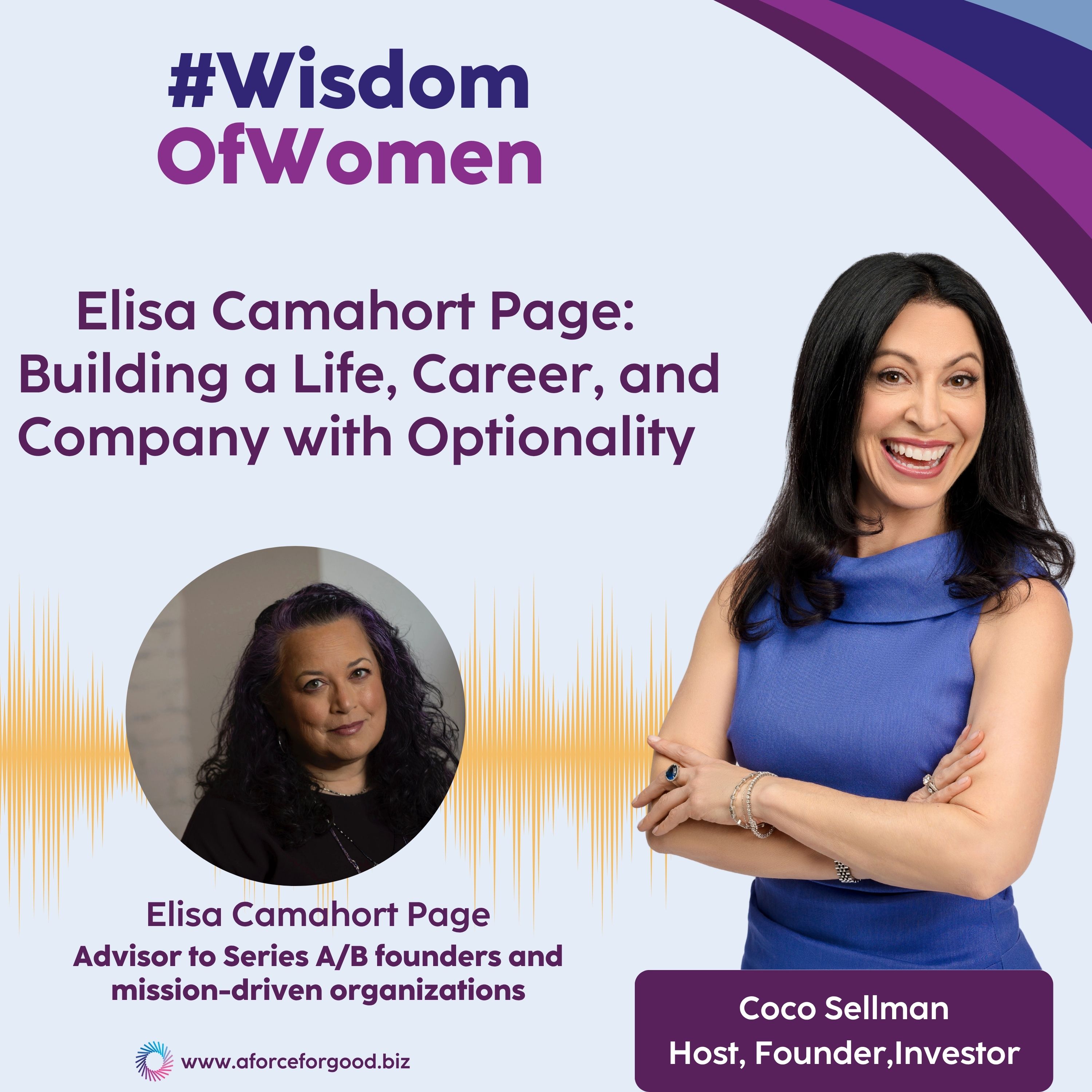 Elisa Camahort Page: Building a Life, Career, and Company with Optionality#WisdomOfWomen Show · on bootstrapping76 / 100
 Networking, Identity and Building Monday Girl with Rachel WongStartup Women Podcast · on bootstrapping68 / 100
 Bridget Sicsko - Make Your Online Brand Visible
 Ali Schwanke - First Move Pitch and Marketing Strategy
 Christina Orosco - Empowering Women with Friendships
 Laura Johns - Achieve Success by Embracing Key Business Values
 Mackenzie Armstrong - Grow your Online Presence with Pinterest.