The New F*Word · 2025-11-20 · 28 min
Key moments - from our scoring
Substance score
53 / 100
Five dimensions, 20 points each
Kevin from Horn CPA shares how he scaled a contractor from $30M to $100M in six years by addressing two fundamental blind spots: cash flow visibility and financial acumen across the organization. The episode focuses on his playbook for fractional CFO work in construction and manufacturing - industries notoriously tech-lagging but ripe for intervention. Key moves included diversifying revenue away from single-customer dependency (67% to 32%), implementing Vista ERP to automate manual processes rather than hire headcount, securing better banking relationships and credit lines to manage extended payment cycles (90 - 120 days), and crucially, training field staff and back-office teams to speak the same financial language. Kevin emphasizes that the primary mistake companies make - from small to large - is fixating on net profit and EBITDA while ignoring cash flow forecasting. The 13-week rolling cash flow forecast emerges as the critical tool he recommends, not a 3-year FP&A model. The episode speaks directly to construction and manufacturing operators, finance leaders, and those considering fractional CFO support, with specific learnings on ERP selection, change management, and cash flow discipline.
Kevin's team moved to Vista, a Trimble product, because their existing ERP was stretched to capacity and couldn't handle growth. Vista outperformed expectations and enabled them to automate manual processes, allowing the finance team to grow by only two people despite tripling company revenue, rather than doubling or tripling headcount.
Kevin recommends a two-pronged approach: negotiate early payment programs with customers (accepting slightly higher interest costs as cheaper than waiting 90 - 120 days) and increase your line of credit with your bank to bridge the gap during the first contract cycle. Growing at a healthy, sustainable pace rather than chasing revenue aggressively also helps preserve working capital.
A 13-week rolling cash flow forecast is a forward-looking view of cash in and out over the next three months based on what you know now. Unlike 12-month or multi-year FP&A models, it provides the granular visibility needed to spot upcoming problems, anticipate benefits, and control discretionary spending week by week - the detail that longer forecasts miss.
Over-focus on net profit and EBITDA rather than cash. Kevin says companies can survive short-term profit issues, but recurring cash problems snowball throughout the business - preventing payroll, losing staff, and damaging customer relationships. Cash, not profit, is what drives the business.
He maps complementary industries aligned with the company's capabilities and existing relationships, then launches an active customer and revenue expansion campaign. In his example, diversifying from 67% reliance on one industry to 32% took six years alongside new divisions (like an E&I division) and internal operations (like in-house steel fabrication) that became profit centers.
Our reviewer’s read on each dimension, with quotes from the episode.
A handful of usable operator ideas (diversifying customer/revenue concentration, 13-week cash flow forecast, early-payment banking programs, in-housing steel fabrication) sit alongside a lot of generic platitudes like 'cash is king' and 'no one likes change.'
putting tools in place, just like a 13 week cash flow forecast
67% of its revenue was derived from one industry
The core messages - cash beats profit, use a 13-week forecast, diversify concentration risk, walk staff through change - are standard finance advice that circulates widely, with no contrarian or first-principles angle.
cash is king. You can survive profit issues for a short while
no one likes change, even necessary change
A genuine practitioner who actually took a construction company from $30M to $100M over six years and now runs a fractional CFO practice; real operating experience, though within a niche.
in six years, we took it from a $30 million a year company to over $100 million a year
I actually sit in a fractional CFO role, acting as a CFO for multiple clients
Contains concrete figures and named systems (Vista/Trimble ERP, 67%-to-32% concentration, six-year timeline, only two added staff, 90/120-day pay cycles), but lacks deeper dollar figures, margins, or customer names.
We actually settled on Vista, which is a Trimble product
We only added two additional people during that time of growth
The host asks reasonable follow-ups on timeline, what would be done differently, and cash-flow mitigation, but never challenges claims and the tone remains a friendly, promotional chat tied to the host's product Float.
is there anything you would have done differently
how long did that take, that process to get from 30 to 100?
Computed from the transcript - who did the talking, and the words that came up most.
In this episode of The New F*Word, host Colin Hewitt is joined by Kevin Jacobs, Fractional CFO at BDO USA, to discuss the unglamorous but critical reality of cash flow management, scaling from $30M to $100M in revenue, and why contractors and manufacturers are leaving money on the table by obsessing over profit instead of cash. What You’ll Learn: * Why profit is a vanity metric and cash is your actual business lifeline * How to implement a 13-week cash flow forecast * Why diversification of customers and revenue streams prevents the cash flow death spiral * How to educate field staff and back-office teams to speak the same financial language * The fractional CFO future Kevin Jacobs is a Fractional CFO at BDO USA, bringing over 20 years of industry experience spanning construction and manufacturing. With a background that includes scaling a $30M company to over $100M in six years through strategic financial planning, ERP implementation, and working capital management, Kevin specializes in helping contractors and manufacturers gain financial clarity and sustainable growth. This is a public episode.
Transcribed and scored by The B2B Podcast Index.
Speaker A: Your first line problem of why people don't focus on cash because they're so focused on that net profit, showing them that cash is what drives your business. Because if you don't have cash in the bank to make payroll, that's a problem that snowballs into every part of your business.
Speaker B: Welcome back to the new F Word
Speaker C: podcast where we talk finances in business. I'm your host, Colin Hewitt, founder and CEO at Float.
Speaker B: We're so glad to be back for season three.
Speaker C: And this season we've got some great guests that are going to bring a ton of value. We'll be diving further into how fractional CFOs add value, what financial clarity actually looks like, and what systems and apps are leading the way. New guests, sharper conversations.
Speaker B: Let's get into it. Hey Kevin, it's great to have you on the podcast. How are you doing?
Speaker A: I'm good, man. It's great to be here.
Speaker B: Well, um, whereabouts in the world are you?
Speaker A: Today I am in Madison, Mississippi, which is northern suburb of Jackson, Mississippi, which is the capital of the state.
Speaker B: Fantastic. And I'd love to hear a little bit about your journey, how you got into becoming a fractional cfo. Like, what's been the key steps to get where you are today?
Speaker A: When you say key step, I have to jump back a little bit. I actually began my college career not really knowing which direction I wanted to go, but I wanted to go to college. So I went to the University of Alabama in Tuscaloosa, which was at the time known nationally for both academics and for its reputation as a party school. So I did. Like most college freshmen, I spent much more time learning names of Dorman and Barman than my professors. And I effectively partied my way back home, met my wife during that time. She helped me get my head on straight. Went to work at a local paper mill in operations, working shift work. So it was midnights, 3, 11 days, then rotate back over. That helped get my head on straight. Went back to school at a smaller school named the University of West Alabama. And it was there I went back just to see if I could do it because I failed at my first attempt. I don't like having that on my record. So I said like, look, I need to go back, see what I can do. So I continued to work full time, got married, we were beginning our family and went back to school, like I said, just to see if I could do it. And then took a couple classes, did really well. Next semester, took a couple more classes, did really well. I was in business and in that, the core curriculum was accounting one and two. And I had the same teacher who was the chair of the department. She pulls me aside in accounting too, and she says, hey, this comes natural to you. You're good at it. You're not having to put a lot of effort right now. Like I said, it comes natural. You need to be an accounting major. And I went, no, my mom's an accountant.
Speaker C: I.
Speaker A: That's. That's not a path I want to take right now. And she basically cornered me in her office. This is the chair of the department. Basically held me hostage until I changed my major. And I kind of did it just to get her off my back. That was one of the best decisions I've ever made in my life. It led to getting an undergrad in accounting. It led to getting an MBA in finance, and it led me down my professional career, which I have really, really enjoyed. Because, like I was explaining to you, I'm, uh, very linear, which lines up very well with being an accountant. But also, you find that these people who start businesses, especially contractors, they are really, really good at their craft. But either they've never had to increase their financial acumen, or they've got their spouse doing it. And they're not well versed in finances either, but they're doing what they can. But all of a sudden, their craft turns into a multimillion dollar business, and then the money is scaring them. So to be able to go in and solve headaches and take away some of their anxiety is a very rewarding part of my career.
Speaker B: Wow, that's great. And did you set your own firm up or did you kind of go independent? How's that trajectory gone for you?
Speaker A: Once I graduated, uh, I spent two years in public accounting with a regional CPA firm. And then I switched over to industry after those two years and spent the next 20 plus years in industry, which included both construction and manufacturing. And then just recently, back in the early part of 2024, jumped back into public accounting, but not in the tradition audit or tax role. I actually sit in a fractional CFO role, acting as a CFO for multiple clients instead of just focusing my attention on one company.
Speaker B: And how did you make that decision? Like, what was the thing that got you into the more of the cfo? Was it again, just following where you tended to be enjoying, or what was the key that got you in there?
Speaker A: Yes, just. Just like you say, kind of following the path. I enjoyed the last company that I was at. Prior to Horn, the owner had a goal to grow it. And in six years, we took it from a $30 million a year company to over $100 million a year. We replaced the ERP system. We didn't replace our banking relationship, but we added to our banking relationship with m much larger financial institution, which gave us better financing options, gave us access to larger lines of credit. And so I really enjoyed that journey of taking that company to where it wanted to be. And so I kind of wanted to turn my attention to doing that. Like I said, for multiple clients, it's been, uh, very rewarding. And that's what led me to Horn, because they horn actually saw a need in the market. Their assurance staff was continually being pulled into this fractional consultation space. And so they saw the need there and so they were very eager to go down this road with me. And so we've, we've come together and we've kind of formed this fractional CFO department within kind of their client advisory services space. And it took about six months for me to get my legs under me, for me to learn the environment, for me to learn their processes and system. But it seems like overnight it just went from getting the word out there to just being swamped with business.
Speaker B: The journey of going from a 30 million to 100 million is something that I think a lot of people will be interested to hear about. From your point of view, you know, what were the big. Was that an inevitability? Because I've heard people say, you know, you can get from 1 million to 10 million and that's a huge milestone. If you can get to 10 million, you can figure out a way to get to 50 million or 100 million. But it sounds like it's still a massive undertaking and a big shift, I imagine, for companies. So first of all, you said you moved ERP system. What did you move to that'd be interesting? And then what are the other things that you can tell us from that experience that might be of interest to companies in a similar position?
Speaker A: The company was heavily invested in one particular industry. Like 67% of its revenue was derived from one industry and a very small set of customers within that industry. So the first thing we wanted to do is diversify both our customer base and our revenue base. Not to be so dependent on this one industry, because this industry was more and more it was heading towards the 90 day pay cycle or even the 120 day pay cycle. It would really hurt cash flow if two of these customers decided to jump from 60 to 120 days, which, that sounds strange. To some people. But it is something that I've seen within this industry to avoid that risk. Like I said, we wanted to diversify both customer and revenue base. So that was the first thing we did. We sat down and we planned out what industries were complementary to what we were doing that we could go after that we may have relationships in already. And then also did the same thing with customers within that industry. And so we started an active campaign to expand customers customer base and where we were working. And then at the same time, our current ERP system was stretched to the max. It could not handle growth. So we investigated the options that were out there. We actually settled on Vista, which is a Trimble product. It actually ended up like most ERP implementations. It's a huge headache and no one likes change. But the system actually outperformed even what they sold us on. Vista for the right clients is an amazing package and it set the foundation for our growth personally within the accounting and finance department. To go from $30 million to $100 million, you automatically think, well that's going to take doubling your staff or tripling your staff. Vista was a tool that allowed us. We only added two additional people during that time of growth because we were able to recapture some time because we took manual processes and automated them and that people to take on other responsibilities or even different responsibilities from what they traditionally had been working in. That was very helpful with the ERP system, but then also the new banking relationship because we pursued larger lines of credit, we pursued financing options, we were very equipment heavy. We were turning over our light duty truck fleet on a regular basis so as to not to incur those extra repairs and maintenance costs when they get a little older. And we pursued items like that, like we were $100 million company. And so to have those tools in place along with the ERP system, that gave us a lot of our time back. Like I said, that was the foundation for our growth. And then it was expand, like I said, expanding into different industries, chasing different customers. We even started different divisions within the company because the company was a self performing general contractor. We did not have an ENI division, so we didn't have any electric. Started an E and I division. We saw a need there. And then we also took a look at the amount of steel fabrication that we subcontracted out and we did the analysis of whether or not we needed to be doing that in house. We decided it was really close. We decided to take a chance on it. We started our own fabrication shop in a very old building and Then within a couple of years, we had built a new building with the overhead crane and the plasma table. And it went from being an internal source, saving us the subcontracted cost to being a revenue generating, uh, profit center. All those together just aided in that growth. We were able to hire some very good project managers that helped us expand into the different industries. And so by the time we were finished, like I said, we had grown to over 100 million. But that 67% reliance on this one industry for revenue was down into about 32%. So we had accomplished our goal of spreading some risk out and we grew at a healthy pace and got to the point where the owner wanted to be.
Speaker B: That's fantastic. And, um, how long did that take, that process to get from 30 to 100? Like how fast did you do it?
Speaker A: It took us about six years.
Speaker B: And, um, it sounds like the belief was there was the leadership, were they all on board with, how important would you say, communication? And what did you see in the leadership team that really enabled that transition to happen as well?
Speaker A: The leadership had the goal of growing, so they were totally supportive and totally on board. The only place that I saw some real resistance was in mid level. That goes back to human psychology. You know, no one likes change, even necessary change. No one wants to go through it. But you've got, going back to the old psychology class or marketing, you've got early adopters, you got the next stage of people who come along willingly, you've got that next stage of people you drag through it. But then you've got that final stage of people who won't adopt no matter what you do. And so I was told early in the process by someone very experienced, that group, you generally, you probably have to let them go at some point. We saw that in some people and cut ties, you do everything you can to make it as easy as possible on them. Um, you're left with the ones who adopted the change and who are excited about going forward. So it worked out for us.
Speaker B: And is there anything you would have done differently, like, that would have helped you get there faster or things that slowed you down that were just things that you couldn't help? Uh, like what are your reflections on that?
Speaker A: I don't think I would do anything differently because I feel like we grew at a very healthy pace because there are a lot of people out there who may not realize that you can grow at an unhealthy pace. You can get ahead of your working capital, you can get ahead of your cash. And so I feel like we grew at a very healthy pace, educating our, uh, staff along the way about how to use these new tools that were in their hand. Because we're talking about 20 year contractors who have been turning in time on a piece of paper and a pencil for those 20 years. And now you're asking them to use an app on their smartphone. One way to get over the anxiety of change is to really come alongside of them and educate them and help walk them through that process until they're comfortable. And so we were able to do that by growing at a healthy pace instead of getting out there too fast.
Speaker B: And you mentioned like customers stretching cash flow to 90 to 120 days. Is that where you needed the credit or what were you able to do to mitigate against some of that sort of side of things?
Speaker A: One thing that we did was work out with our customers and common banking relationship between us and them. Um, we were able to work out an early payment program. I mean it cost us a little bit of interest. It was very low compared to waiting the 90 or 120 days to get the money. So that was one option that we did. Another was the increased line of credit. We were able to lean more on that to get us through till our billing cycle started repeating itself. And then, you know, at that point into that contract and into that cycle and it repeats every month. The 90 to 120 days doesn't hurt at that point, but for the first 90 days it does. So that increased line of credit was an option. So both of those helped us get through it. Plus growing at that healthy pace and not burning through cash, just chasing top dollar revenue at an unhealthy pace.
Speaker B: Makes sense. What happens to a company when they hit that 100 million? That's kind of like, uh, a lot of companies aspire to get there. Do they kind of go right, 200, 300? Were they exiting at that point? Like what happened next?
Speaker A: I see all types of results. I see owners who take their foot off the gas and they say, okay, I'm happy right here. This is where I want to be. I've seen owners who take it through that a hundred million because they're looking and exiting the company. They're wanting to hit that hundred million and then put it out there for sale. And then I, uh, I've seen the group that says, okay, we're at 100 million. Let's take a deep breath and let's plan on going to 250. Then you know, they've got a plan at 250 to go to 500. So it really depends on the ownership and the leadership and what they're willing to do and what they want to do. So like I said, I've seen all different options.
Speaker B: So you're building out this fractional department. What kind of companies are you focusing in on that still in that nation? The, uh, construction, manufacturing side of things, is that where you, you stay in that lean? Are you looking for more diversity or how do you find that?
Speaker A: I love the construction and manufacturing world. That's where I enjoy working, that's the type people I enjoy working with. So I'm not really looking to veer out of that lane too far. And the need is so great, especially in construction. Construction as a whole tends to be behind in the adoption of technology and some more forward thinking financial tools. So the ground is fertile out there. And not saying they can't be up to date, it's just the fact, like going back to our earlier comments, they're really good at their craft and they're out there and they're building and they're getting things done and the finances kind of seem to just drag along with them because they just don't have the time to put the attention to it. So it's an industry that, that has a lot of potential and like I say, I enjoy working within it. So I don't really see chasing anything outside that lane.
Speaker B: When you start off with a new company, maybe haven't had a fractional cfo, like what's the typical way you're coming in? Um, maybe how do you start? Like what are the things you're looking for to get right? Is it the recording? Is it systems and processes? What are the first things you're kind of looking to do? And when you're coming into a new
Speaker A: gig, when you come in, generally the game plan is you come in the door, you meet the team, you meet everybody, and then you kind of sit with each person and map out the processes and what their daily, weekly, monthly duties might be. And at the same time you're kind of assessing their abilities and if they need additional tools or training, or if the team might need to be structured a little different. And so it really starts with the processes, mapping those out, punching holes in them, seeing where you can gain some quick efficiencies, some low hanging fruit and go to the owner and say, give them an analysis. Okay, here's what I see. Here's where we can make some improvements. Here's what I see about the team. Now let's talk about next Steps, do we need to take a, uh, technology approach or is the technology there? And we really just need to do some training with your team? Even training. One area that I've kind of seen a lot of focus on lately is training the field staff, the project managers, the superintendents, to increase their financial acumen. So getting the back office and the field personnel on the same page, that's a large key to company success. Because there's always been this type of feeling that accounting in the field are combatants. And to get past that and get them working together makes their jobs easier. It takes the stress level within the company down a little bit and it produces better reporting. Just if the field personnel know how their decisions out there affect the financials and then letting the accounting staff know the challenges that the field personnel have in gathering this information and transmitting it to the back office. It's the old saying about walking a mile in another man's shoes. You'll understand him a lot better and
Speaker B: you'll be a mile further away and you'll have issues. So
Speaker A: that's right. I love that.
Speaker B: And I think in terms of cash flow, you know something we talk a lot about, something we're very interested in. What tips do you typically give to the mistakes companies are typically making? I'm sure it's the same in larger companies that would be in smaller companies as well. Like what are you looking for from an efficiencies point of view? When you look at a company in terms of shoring up cash flow, you
Speaker A: would think that the larger companies have it down, have it working smoothly, but it's not uncommon to see the same problem with cash large to small companies. And the biggest problem is the fact that there's so much focus on profit, whether it be net or ebitda. Uh, but cash is king. You can survive profit issues for a short while, but if you have cash issues that keep repeating themselves, they're a lot harder to overcome. And so putting tools in place, just like a 13 week cash flow forecast, there may be some superstitious people out there. You can go 14 weeks, but don't go any less than 13 weeks. 13 weeks is a three month window to let you look into the future based on what you know right now and see if you can tell what problems may be coming, what benefits may be coming, and if it's benefits, how you can use those benefits to push the problems out even further or to overcome problems that may be out there that just may not be in your forecast yet. But just having an eye on what Your cash flow is. Because so many times I hear, you know, what are you doing for cash flow? Well, I look at my app on my phone and I have a positive cash balance which means I'm good, which they. So many of our contractors think that way. And not that they can't open up to being able to forecast, but just no one's ever shown them how or they've never thought about it because like I say, if you can get that visibility into what's coming in and what's going out, then you can kind of control that spend, that discretionary spend along the way and just help get through the hurdles.
Speaker B: That's for us, that's the big thing we've been focusing on and float is just there's a lot of FP and A tools that do longer term three way forecasting. You get a 12 month, a uh, two year, three year forecast looks like cash flow but it's actually missing that detail that you get from the 13 week. It's a big missing piece. In so many companies they say oh look, we've got either they get no cash flow or they got a spreadsheet that is, it has a cash flow report. But it's very general and I think we're trying to, that's the thing that we want to try and help. Why do so many companies not have it? Like what's your, is it lack of knowledge? Is it they put it in the too hard bucket or. And how do you go about like oiling the wheels to get it in process? Is it a financial controller that does it? Do you do it? He makes it possible.
Speaker A: I think one of the issues why you don't see it a lot is just the fact that you know balance sheet and P and L, you don't even hear cash flow statement a whole lot which the cash flow statement gives you great information, but it's still not a forecast either. But you hear balance sheet and P and L. Balance sheet, P and L. And I think that right there is kind of your first line problem of why people don't focus on cash because they're so focused on that net profit and then showing them that is important. Now I'm not saying the balance sheet and the P and L are not important, but showing them that cash is what drives your business. Because if you don't have cash in the bank to make payroll, that's a problem that snowballs into every part of your business. Because if you can't pay your people, they leave, can't get work done, Customers are Calling. So cash is the number one issue that you need to focus on. And so just to whether it's in Excel or whether it's report within their ERP system, having a template that you can put in front of them. And, and just like we were talking about with the technology for the older, more experienced contractors coming alongside of them, um, building it for them, um, the first time and showing them what you do and then letting them build it the next time and be there with them to point out where information comes from, what information you might need to be thinking of, is there a large annual payment coming up, asking questions like that to get them thinking of all the ins and outs that are coming over this next 13 weeks and just to be able to organize that into a simple, readable format that they can point to a week and go, oh, there's a problem, we need to plan for that. It comes down to educating and showing, walking them through the steps, taking away that anxiety because like I say, nobody likes change. And to go, hey, you need to do this 13 week cash flow forecast and good luck, I'll be back in a month and I'll see how you do. And they're not going to do anything with it. So just spending time with them, walking them through the steps and educating them and telling them that this is just another tool in their arsenal to run their business just a little better, it's great.
Speaker B: It makes a lot of sense. It's been so good to chat. I think my final question, Kevin, is just how do you see things evolving in the future in terms of the role of the fractional CFO on the technologies that are evolving at quite a PS you know, with AI, do you see you having to do less in terms of the reporting and more in terms of the advice? Or how do you see things working out in the next couple of years? Where do you see it going with
Speaker A: the speed at which AI is changing things? What I say today may be totally wrong tomorrow, but the fractional CFO role, there are more and more companies who are getting to a level where they need that strategic guidance, they need that level of experience, but they may not need it there every single day, or they may not be at a level where they can quite afford it yet, depending on the market they're in. And that's not a bad thing either. Uh, but the fractional role coupled with the technology that's coming and with the need that's going to be there, which I think is a growing need, it's going to be less and less about reporting the results and more and more about. Here are the results. Now, let's use that as the basis for our strategic decisions going forward, because most of these contractors are very good at their craft, and they've gotten to $10 million with a, uh, bank account. They're still wanting to do what they do, but they're wanting to grow a little bit. So to come in, like I say again, come in alongside of them, show them, um, okay, here's what you do as far as financial reporting to satisfy your bank and your surety agents. But here's what we're going to use internally to guide our decisions, to grow your business, to shed some risk so that you sleep better at night and you can focus on what you do best, which is growing that business and not worrying about making payroll.
Speaker B: Brilliant. Kevin, thanks so much. It's been, like, absolutely great to hear. I think that journey of going from 30 to 100 million, I think the role of cash flow, it's so interesting. And, um, yeah, I really wish you all the best in what you're doing in building this, uh, CFO department. So we'll put any links to you and your company in the show notes. It'd be really great, this job.
Speaker A: I sure appreciate you having me on. I have enjoyed it, man. I hope you have a great rest of your day.
Speaker B: Thanks so much.
Speaker A: All right, thank you.
Speaker C: Thanks for tuning in to another episode
Speaker A: of the new F Word.
Speaker C: I hope you enjoyed it. Remember, expert financial advice shouldn't be limited to those with just big budgets. You can access the same level of advice for a fraction of the costs, thanks to this fractional revolution. I believe that every growing business needs to know how much a game changer this can be. So if you loved the episode, please consider subscribing to the show. It'll help us keep doing what we're passionate about. And feel free to share this episode with others who might find it useful.
Speaker A: Useful.
Speaker C: Finally, we'd love to hear your thoughts. Feel free to connect with us on LinkedIn.
Speaker B: See you in the next one.
Other episodes covering the same guests and topics, from across The B2B Podcast Index.
 A Conversation about Designing Motivating Digital WorkplacesDaily Leadership Research · on ERP system implementation84 / 100
 The CFO Playbook: What Corporate CFOs Can Learn from Amnesty InternationalThe CFO Playbook · on ERP system implementation70 / 100
 The Human Side of Cybersecurity with Adam Gunnett, VP of BI & Strategy at Busy BeaverThe Human Side of Cybersecurity · on ERP system implementation63 / 100
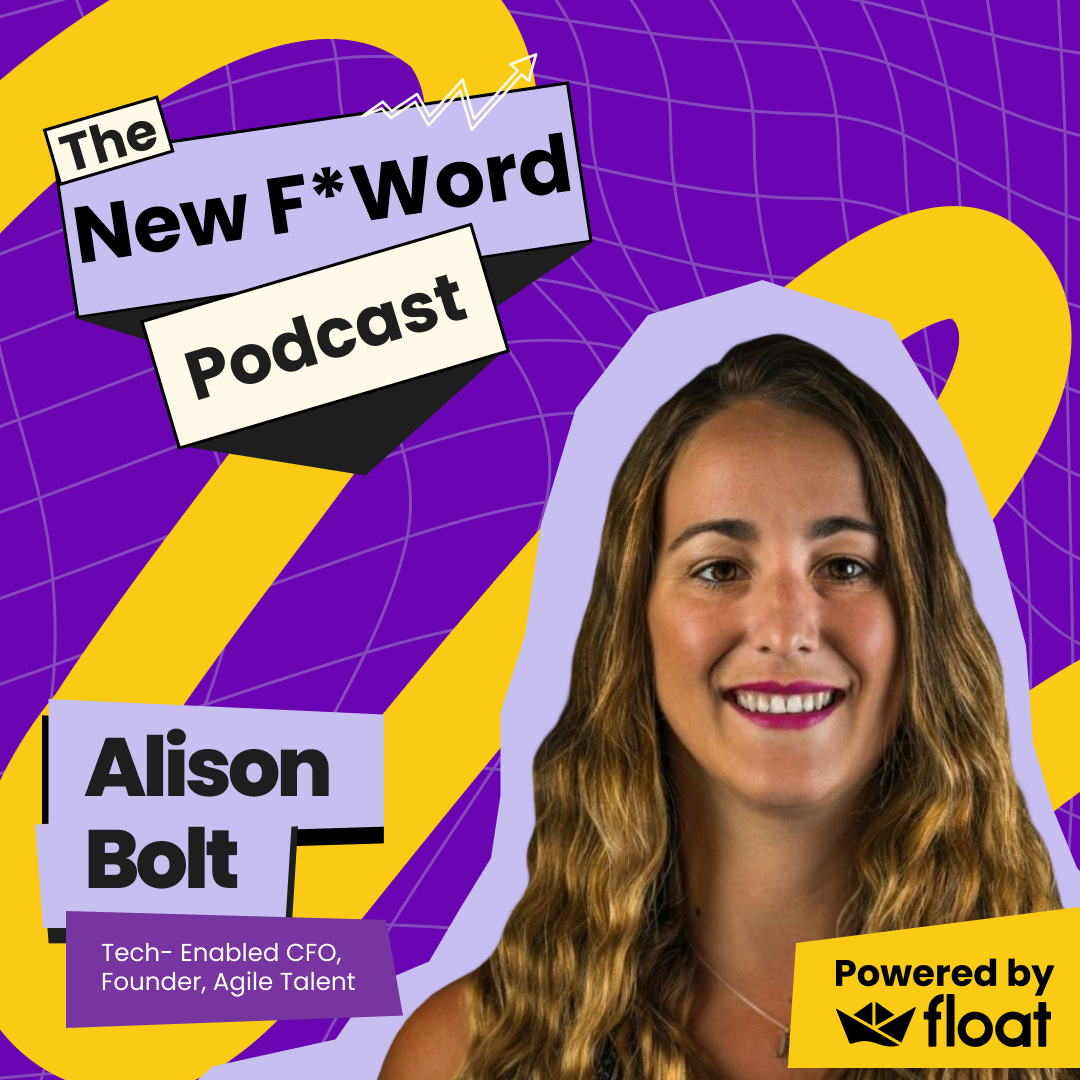 What Fractional CFOs Really Do For Growing Businesses with Alison Bolt58 / 100
 The CFO Skill Nobody Teaches: Coaching and Human Leadership with Alastair Manson55 / 100
 How Fractional CFOs Actually Add Value with Jonathan Rosenzweig57 / 100
 Greatest Hits: Cash, Clients, and the Secrets Behind Growing Businesses82 / 100
 How Laura Taylor Built a £1M+ Firm That Won The Advisory Game72 / 100