The New F*Word · 2025-12-18 · 34 min
Key moments - from our scoring
Substance score
43 / 100
Five dimensions, 20 points each
Siân Grinter, founder of Superstar FD, shares her two-year journey from corporate finance director to fractional CFO practitioner, offering candid lessons on avoiding burnout and building a scalable business model. After 20-25 years climbing the finance ranks (accounts assistant to finance director), a health crisis prompted Grinter to explore entrepreneurship through the Corporate Escape Club, where she discovered the fractional CFO model offered more strategic appeal than opening a traditional accounts practice. Her early wins came quickly - a LinkedIn contact referred her first project within days - but she soon hit a critical realization: she was replicating employee behavior by overextending into HR, operations, and compliance work while neglecting her own business operations. By treating her business as her "number one client" and implementing strict time boundaries (protecting Tuesday afternoons for pipeline work), she reduced scope creep and built a team of contractors and soon-to-be employees to handle bookkeeping and finance operations. Grinter niched deliberately into professional services firms (law, financial services) where she understands billing rates, realization rates, and utilization metrics deeply - avoiding the mistake of serving retail clients where she couldn't provide best-in-class advice. Her growth model evolved from a modest £10,000 first-year target to ambitious plans for multiple staff and eventually other fractional CFOs, driven by her unexpected passion for working with founders and the variety the work provides.
Grinter serves professional services firms (law, financial services) because that's where her 20-25 year corporate career was based. She niched down deliberately after taking on a retail client early on and realizing she couldn't provide best-in-class advice in unfamiliar industries, deciding it was unethical to charge clients when others could serve them better. Her expertise in industry-specific metrics like billing rates, realization rates, and utilization rates makes her valuable only within her niche.
Within days of updating her LinkedIn profile after quitting her corporate job, a LinkedIn contact referred her to a vacant head of finance position needing three months of coverage, which became her first major project. She also reconnected with ex-employers she'd left on good terms, who asked her to help with various projects, demonstrating the power of networking and maintaining strong professional relationships.
Grinter burned out by replicating her employee mindset - she monitored five client inboxes simultaneously, took on scope creep (like HR and operations advice), and allowed clients to interrupt her work without boundaries. She was doing bookkeeping, accounts payable, invoicing, and process work that should have been delegated, preventing her from reaching the strategic CFO work clients actually needed.
She implemented three key changes: (1) treating her business as her "number one client" requiring protected time for pipeline and business development, (2) setting firm time boundaries like blocking Tuesday afternoons from client emails, and (3) hiring contractors and planning employee hires to handle bookkeeping, finance management, and accounts work so she could focus on CFO-level strategy rather than operational tasks.
She plans to hire contractors initially, transitioning at least one to two employees next year to build more flexibility in client assignment. She initially targeted modest income (£10,000 first year) but now models more ambitious growth including eventual hiring of other fractional CFOs alongside support staff, driven by higher revenue requirements to support payroll.
Our reviewer’s read on each dimension, with quotes from the episode.
A handful of genuinely useful operator lessons (treat your business as your top client, scope creep management, fractional CFO not being scalable, contractor vs employee flexibility) are buried in a largely narrative founder-journey chat with much filler.
you have to view your business as your number one client
being a fractional CFO is not scalable
Ideas are sensible but well-worn in the fractional/services world (niche down, know-like-trust, don't overload on software); little contrarian or first-principles thinking.
when I really niched down and said this is who I work with, suddenly I felt like I could talk to people
the three keywords that you get told all the time
Guest has real 20-25 year finance career from assistant to FD/CFO, but is running a two-year-old solo/small fractional practice, so the perspective is early-stage micro-business rather than someone who has scaled the thing.
I had worked in traditional finance roles within business for 20, 25 years
about two years ago I quit my job and made the leap
Some concrete figures (£5k-£10k first-year target, six-to-nine-month cash reserve, nine-month client transition) and named tools (Xero, Sage), but clients and metrics stay anonymous and much remains abstract.
I could be all right for about six to nine months
I'd be happy if I earn £5,000... stretched it up to about 10,000
Host asks reasonable follow-ups (why niche, contractors vs employees, growth model) but never pushes back or challenges claims; tone is warm and supportive rather than probing.
How did you decide on that and why did you decide to niche rather than stay general?
are you employing these people? Are they contractors
Computed from the transcript - who did the talking, and the words that came up most.
In this episode of The New F*Word, host Colin Hewitt is joined by Siân Grinter, Founder and Fractional Finance Director of Superstar FD, to dive into how she transformed personal adversity into entrepreneurial growth, built a thriving niche in professional services, and learned to set healthy boundaries while scaling sustainably. What You’ll Learn: * How Siân turned personal challenges into motivation for change * What separates a great fractional CFO from an accounting practice * Building a business model that aligns with your strengths * How to transition from doing all the work yourself to building a team Siân Grinter is the Founder and Fractional Finance Director of Superstar FD, a fractional finance department specializing in professional services firms. With over 25 years of experience progressing from accounts assistant to finance director across law firms and financial services organizations, Siân has built a unique expertise in translating corporate finance leadership into scalable, fractional advisory. This is a public episode. If you would like to discuss this with other subscribers or get access to bonus episodes, visit newfword.substack.com
Transcribed and scored by The B2B Podcast Index.
Speaker A: The first thing I realized was I was focusing 100% on the clients and not focusing on my business whatsoever. And I had to view. Someone actually told me quite recently that you have to view your business as your number one client. They are their best paying client and you prioritize them above everything else.
Speaker B: Welcome back to the new F Word podcast where we talk finances in business. I'm your host, Colin Hewitt, founder and CEO at Float. We're so glad to be back for season three. And this season we've got some great guests that are going to bring a ton of value. We'll be diving further into how fractional CFOs add value, what financial clarity actually looks like, and what systems and apps are leading the way. New guests, sharper conversations. Let's get into it. Hey, folks. I am delighted to be joined by Sean Grinter today who runs Superstar fd. Sean, welcome to the podcast.
Speaker A: Hi. Thanks for having me.
Speaker B: Yeah, it's great to have you, Shan. I would love to hear a little bit about your story. Superstar fd. I love the name. Where does it come from? What led you to this point that you're now setting up your own business?
Speaker A: Thank you very much for saying you like the name. I have been very, um, sure of the name for the last two years, but I get a lot of feedback that it's quite an impactful name. So I think I'm going to keep it. I had worked in traditional finance roles within business for 20, 25 years. I've moved all the way up from accounts assistant to financial controller, head of finance, finance director. Uh, but I had always wanted to run my own business. It was just something that had sat in the back of my mind that I wanted to do. I tried setting up accounts practices in my 30s, but just didn't really sit with me. Accounts practice is just a slightly different skill set to finance director and CFO in 20, I think it was. My husband got diagnosed with cancer, so he was very sick for a while. And when we came out the other side of that, there was this real sort of feeling of I want to reset. I want to sort of try my own thing because something needs to change. This is not making me happy. And I happened to come across a lady called an Eve who set up the corporate Escape club, and she focuses on consultants and coaches. She helped me to work out that actually you can build a business as a fractional finance director, you don't have to be an accounts practice. And she helped me build that model to the point that I felt confident and I just thought, I'm going to go for it. And about two years ago I quit my job and made the leap and I've never looked back.
Speaker B: Brilliant. So you were doing it before, it was cool, you know, right back in 2022. Tell us about when you met Aleve. Were you looking? Was that something that was on your radar or did you just happen to meet her by chance?
Speaker A: No, I did go looking. I was looking at uh, business networking because I thought what I'm going to do, I'm going to dip my toe in that world. I'm going to talk to other people who'd set up their own businesses, I'm going to see what they say. I always find that networking, not every networking, but like a lot of business networking, you can come away with great energy for what you want to do because you meet all these other people who are actually doing it. And so I thought, right, I'll have a look at what's around. And near to me is, I'm just outside London in, in the uk. Near to me is a, uh, networking group called the Corporate Escape Club, which is for people who have been in the corporate world who are coming out and looking to utilise the skills and experience that they had in their corporate job in a fractional, consultative, coach based world. So I thought, oh, she'll be a good person to talk to. And it all went from there. I genuinely thought I can be a uh, practice accountant, I can set up my own accounts practice. I had never really considered that I could be a finance director but on my own terms and as a self employed person. So she just opened my eyes to it. So I was looking for, but not in that I didn't realize it would get to that capacity.
Speaker B: And did that make, did that unlock something for you? Why did you feel that that was a better path than opening up a practice?
Speaker A: I think having a practice is not in every practice and I know that there is a greater move towards the advisory model, but I think traditionally it's very focused on tax and compliance accounting, which is something, if I really felt drawn to that, I could turn my hand to it. But it's, I am um, not a tax expert. I could produce a set of financial statements but it's not really what I have a huge amount of experience doing. But what I really enjoy doing is working alongside um, businesses, setting strategy, measuring performance, trying to figure out how the business is actually tracking against where it wants to be, what the KPIs are, what the cash flow is. All of the kind of the indicators that tell you whether a business is working the way it wants to work and um, tracking towards where it wants to go and it's less on the backwards view or of this is what's happened during the year and we're going to report and we're going to file the accounts. So that's why finance director sits better than accounts practice.
Speaker B: No, I love that because I think a lot of people probably ended up accounting practices and uh, not like you say, you might have taken that route had you not met somebody because it was just the natural step. But actually being able to realize there's something I can do the best that I like and not do the best I don't like. That's a. And it's an area that businesses don't. Aren't getting from a lot of places that maybe want to do it, but just haven't got the model or the capacity to be able to offer that. So I think it makes a ton of sense. Brilliant. So you take us for the next step. So you got it in your mind that you want to do it. You said your husband was sick. Were you going to be the sole breadwinner at that time? So there's a lot riding on this?
Speaker A: Yes and no. He was quite lucky in that he was still able to work throughout being sick. And then, um, we got the all clear, which hopefully will remain, but who knows. But there was a fear that if I do this and get sick again or something else happens, then as you say, I'm the sole breadwinner and that's quite scary. We're lucky in that we don't have kids to support. So I think if I had children maybe it would have been a slightly different decision and maybe I would have done it but in a slightly different way. So sort of maybe I would have tried to do it on a part time basis. But I also, having tried to set up businesses in the past alongside working, I'd also realized that for me personally I have to be all in or I just don't fully commit. And then I would have been not fully committing to my job and not fully committing to the business. And I wouldn't have been successful in either because I just, my attentions would be split. So it was a case of if I'm going to do this, I've got to give it a fair chance. But I did build up quite, uh, a reserve of cash just to see me through. I think I'd worked out that I could be all right for about six to nine months. And I thought that was enough chance to see, does this work? Is this right? Do I want to continue with this? And if not, my backup plan was I'd get another job.
Speaker B: Brilliant. So I think that's really smart. What happened then? How long did it take to get your first client? What was the process like?
Speaker A: Do you know what? It really surprised me. So I spoke to a few people who were doing similar things but in different worlds. So I spoke to someone who was doing it on a marketing basis. I was doing. I was speaking to someone who was doing hr, all on a fractional basis. And the one thing I was told was tell everyone because you never know what's going to come a bit. And, um, you will be massively surprised who will help you and who won't. You think, oh, those people over there, they'll help me, I'll talk to them. And those people over there, there's no point in talking to them, so they're not going to help me. I came out, I instantly updated my LinkedIn profile and a contact on my LinkedIn connections said, There's a position that I know of, vacant head finance position. Seeing what you've just done, do you think there's anything you might be able to help? Just the three months, just to, to staff it and recruit into it. So that was quite shocking how quickly that came through because I was at the stage where it's. I wanted to take everything I needed to take everything. I said, yes. And that was quite quickly became a very big project, a big client, and then I found a couple of ex employers who I had left on really good terms with and I just got everything out of the jobs that I could get out of them. Came back and said, can you help us out with a couple of projects? So that was the surprise of who will help you? Because I'd left those companies that they were in a good place and then suddenly, three years later I'm being told, do you think you could come and help? So early on, I was very, very lucky. I do fully appreciate that it's not that quick and not that, uh, lucky for many other people, but I was quite lucky in that respect that I found people quite quickly, found clients quite quickly. I also very quickly realized that they aren't necessarily want to take every single client. So the one client that said, oh, we got this vacant head of finance position had a lot of problems, it had a lot of mess. It was actually an enormous job. When I got into it and I hadn't scoped it out, I hadn't adequately quoted for it. So that was a bit of a baptism of fire where I, after about six months I just sort of thought, I really have to turn this client away, which is quite difficult to do when you're so early on. I didn't quite get rid of them at that point. I did have a transition phase. I think I was with um, them for maybe nine months to a year, something like that in the end. But that was a very, very difficult one to get my head around because they were quite good at paying me and yet they were taking all of my time and all of my energy. And so that was hard. So to find clients that sit well with me and sit well in my niche has been a bit harder. But I'm starting to get there. I'm starting to get my confidence with talking to people about what I do and how I can do it.
Speaker B: Let's talk about your niche because I presume those two clients maybe weren't the initial niche that you've decided to move into. How did you decide on that and why did you decide to niche rather than stay general?
Speaker A: The niche that I serve is professional services firms, and that is because that's where my career was. I had worked for law firms and um, financial services firms and um, a trade association which, you know, was slightly different, but that's my history, that's my world. Manufacturing, retail, E commerce, all of those worlds. I think there's a lot of clients in that space, even technology, there's a lot of clients that are SMEs in that space who need fractional support and I could help them. But I did actually take on a client very early on who was in retail and it did help them. But I very quickly realized that I wasn't being fair to them because what I. The advice I was giving when it got into the real sort of the questions of so the strategy behind the retail world, I could help them. I had knowledge and I had skills, but someone else could help them so much better. And it just almost kept me away wake at night because I just kept thinking, God, I'm charging them for money and I'm not giving them the best advice and the best service that I possibly can. Um, so at that point I realized I really had to give only what I felt confident giving. And I will absolutely talk to someone if they say, I really like you and I think that you'd be a good fit. And I will absolutely give them time and talk to them and try and understand if there's something I can do. To help them. But I don't feel comfortable myself feeling like I can charge someone for my time if I just don't know the industry that they're in. And I just don't understand the world that they're operating in. So it was hard because when you're starting out, you want to help everyone and you want to take money wherever you can because you don't know at what point that's going to stop. And you might need to cover period of not having any clients. But when I switched to that and when I really niched down and said this is who I work with, suddenly I felt like I could talk to people and I could tell them what I do and I could give them examples. I've done this, I've done that. I know that problems in your area are, uh, you're always talking about billing rates, realization rates, utilization rates. All of the things that I know that industry is looking at. That's how I niched down and decided to stick at it.
Speaker B: I think that really resonates and I think, you know, talking to more companies that are looking at, I think the first step a lot of companies are making is they realize they need a fractional cfo, that they're maybe not getting that service that they need from their accountants, or they need an extra step in that, then the next part of learning is actually going, I don't just need a generic cfo. I need somebody who understands and, um, can really bring insider knowledge that will help me move faster. So I think that is where I see the market kind of evolving into that being able to say, yeah, like there's lots of CFOs, but my specialty is, is this. And I guess that certainly our experience. And I used to run a professional services firm myself and we found people would come to us and we didn't have a particular niche. We were a design agency. And, um, for some reason, you know, what tends to happen is even then you will do a piece of work and then those people will talk to other people and they'll start hearing about it. Clients like the fact that you just have, you know, you, you obviously have that experience and we didn't think it mattered, but actually I realized now being in SAS company, you know, if we're going to hire CFO, we want to hire somebody with SaaS experience. It makes a ton of sense. So what's been the journey so far then? How has that been going? That's how I started. What's been. Have you managed to find a healthy balance in what you're doing yes and no.
Speaker A: So it comes in sort of waves where I feel like I'm on top of things, and then suddenly it gets really busy. And it feels like when one client gets busy, all clients get busy. I don't know what it is that drives that, but it just sort of seems to get overwhelmingly busy and then less so. I think what I have struggled with quite a lot since starting, and I think I'm finally feeling more confident, is when you're an employee, you are told, this is the job, and you do that job, it might bleed into other areas. So you've got. So, for example, I had a job as finance director in a law firm. Um, and I worked really, really closely with the ops manager and the head of hr. That kind of is what I've done with most other senior finance roles that I've had. And it's natural for me to want to do that in the roles I'm doing. So I come in and someone says to me, be my cfo. And, um, I go in, and then I suddenly go, we need to look at your benefits package, because, you know, the cost of your benefits premiums are too high. And that might be something to do, but I got into that habit of the scope creep, where it's like, no, no, no. My focus is I need to get the finances under control. And then if I believe that area with HR is something that needs to look at, I need to agree that with the business and I need to put that into the scope and I need to work that through. So I was operating very much as an employee of several different companies. When I first did this, I ended up almost burning myself out because all I was doing was every day I was just monitoring five different inboxes. I was getting involved in things that were outside the scope that I had agreed because I just felt like, uh, well, that's just what's expected of me. And it was just horrendous. And I couldn't cope. So I've come quite a long way since then. The first thing I realized was I was focusing 100% on the clients and not focusing on my business whatsoever. And I had to view. Someone actually told me quite recently that you have to view your business as your number one client. They are the best paying client, and you prioritize them above everything else. And as soon as I started thinking like that, I started to put up some barriers to the clients I had. So I gave them my time. I did the best job, or I do the best job that I Possibly can. But I also have very clear boundaries where Tuesday afternoon I cannot look at their emails because I am working on my business or my pipeline or another business. And I started to break my time down into these chunks which help because you're not dealing with one client and then having another client call you and you're talking to them while you're trying to answer. The biggest revelation that I came to is that being a fractional CFO is not scalable. And a lot of the clients that I've been working with, and this is purely because of what I do, I know there's a lot of CFOs out there who are maybe a little bit more project based and um, they're a little bit more, we will come in and help you with M and A work or um, with a sale or anything like that. I am um, more process driven. I can help you with reporting and with forecasting and with setting up the processes and the systems. And so a lot of the clients I've gone into need a cfo, a credit controller, a finance manager, uh, an accounts payable clerk, an accounts assistant, a bookkeeper. And um, I was doing a lot of the things that these roles could do and that was draining my time. It wasn't a good use of the client's money, it wasn't a good use of my time. And it was meaning that I wasn't able to get to the strategy because I had to chase out the invoices or put in place a, uh, new month and process. And so where I'm now coming to is a place where I've got other people involved in superstar fd and I'm providing more of an outsourced finance department. So I can provide the CFO level advice and support and services. But I've got a team below me who can actually do the work to ensure that the figures and um, the data and the day to day is covered and is clean. So that when I go, right, here's your cash flow, we know that the data is good that's gone into that cash flow.
Speaker B: Yes, I think this is the way forward. I think more and more people are coming to this realization. You know, we don't want to be paying a CFO to be doing your bookkeeping. Right. It's like everybody knows that's the most expensive bookkeeper you'll ever hire. And then all the other stuff like you say, there's so many different ways to systemize that. So that allows the CFO to be bringing in what you want them to be bringing, which is strategic. And so are you employing these people? Are they contractors for. How does that work?
Speaker A: So at, uh, the moment they're contractors, but I have a little business plan, as I tell every, every business, uh, owner that they should have, whereby I am hoping that certainly one, if not two, will be employees next year. But at the moment the contractor model works while I'm still building up that ongoing revenue, it'll be successful quite quickly and then there'll be employees because I also. There's another, there's another restriction with growing your business only with contractors. It's great because it's flexible and you get the contractors in when you need them and then when you don't, they're just sort of sat there not costing you any money. But one thing I have learned from being an associate for someone else, it's quite difficult if you are needed on that other business's client. So if you've got an associate and your client says, I want someone on Thursday, and you ask your associates, is anyone free on Thursday? And everyone's like, no, I've got my own clients, you have no control to say, okay, let's look at your client base. Let's see if we can redistribute it so we can put you on that client. So when you get the employees, you've got got more flexibility to be able to assign them to clients, to assign the work to. Say, can you put that down and, um, prioritize this work than when you're just growing your business with the associates or contractors? But I definitely think there's a definite place for associates in that model as well. I just think you need to get a good basis of employed and contracted.
Speaker B: And how far does the business model go? Does it. Do you see yourself potentially hiring more CFOs and becoming. Do you have a financial, uh, target or is it a number of people or how do you think of it?
Speaker A: So when I first started working on the business plan, like two years ago when I was looking at doing this and Eve said to me, set down some financial targets and they can be completely arbitrary, but just put them down and just let's see how they sit. And I sort of said, well, in the first year, I'd like to, I'd be happy if I earn £5,000. And then she was like, you to stretch that a little bit. And I sort of stretched it up to about 10,000 because. Because I'm a prudent accountant and I think that, you know, it's all going to go wrong. And I have to be prepared for that. And I had this vision whereby it was just going to be me doing this work and I'd have one client and that would be great. And, um, I'd do some work and I'd get a bit of income and that would be wonderful. And then I'd get another client and I'd do some work and that would be wonderful. And I never expected to enjoy doing what I'm doing as much as I am. I never expected to be as motivated by it. I love the variety. I love working with these founders who feel really passionate about their businesses and you can really see the difference that they're making. And over the case of two years, I've gone from just thinking, I'd just like to earn enough money to be able to have me do this and have some fun activities outside of work, and that's what I'm just going to do, to suddenly thinking, actually, no, I really want to grow and I want to have a team and I want to get to a point where the businesses can operate without me being there. I can take a holiday and I don't need to worry that I have to be at the end of a phone just in case something goes wrong or a payment needs to be approved or anything like that. So I've only done two years, but it's quite an ambitious. But it's quite interesting when you start modeling it and you start going, what if I took on two people and what if I took on one person and one associate, or two people and one associate? And looking at what income you have to earn in order to get those people in, you suddenly become really quite ambitious because you think, well, actually, no, I've really got to push for this because suddenly you're going to have salaries to pay. So it's an ambitious target that was set initially with a level of income that I wanted to earn, just because I just wanted to earn a certain level of income. And then when I modeled in salaries, I realized I needed to be more ambitious. And so it's a model that grows year on year. I do see myself taking on CFOs at the moment, it's just more bookkeepers, finance managers, that level of staff. But I do think after two years, that's where I'm aiming to have at least one, two CFOs in that model as well.
Speaker B: Brilliant. That's really exciting and it's great speaking to people who love it and who are excited about it, you know, that I guess there's a kind of model of large CFO agency which just has a bunch of CFOs that come in and they're kind of like reluctantly doing what they need to do. And this feels fresh and exciting and I really like it. I'm sure uh, the clients do as well I think. Tell me about how you see software and AI and do you feel like the world is changing? Do you feel like you're seeing you can do stuff now that you couldn't have done a few years ago? What's your view on that?
Speaker A: It's so funny. If you'd have asked me this six months ago I would have given a very different answer. I think software I have always had a good feeling about. I always think there's a lot of potential from various apps from software. I think Xero felt like a massive game changer after using Sage for so many years and it opened my eyes to we can do things differently and not spend all of our time doing so. I've always been a massive advocate for utilizing software well, but being very choosy about it. I think I've seen businesses and one of the clients that I've had over the last couple of years was a good one for doing this. They, they just completely go all out with the technology and they have an invoice approval software and they've got an expense approval software and they've got accounting system and they've got a reporting system and they've got all these different add ons and I think you can go too overboard on it but I also think you can massively complicate your life and not put enough in. So software and technology I think are great and I think that people should spend a lot of time thinking about what they do on a day to day basis and if there's software that can help them do what they're doing, definitely investigate it. I again I think it's a game changer to eight months ago I was unconvinced because I just thought oh, you know, he doesn't really understand it's going to get things wrong. And I think there is a fear from me that it will hinder people's junior staff's learning because it will take away the thinking behind what they're doing. But I also think there are things that it can do that can help. So I think as long as AI and technology is utilized alongside uh, long form learning and it doesn't necessarily have to be long long form learning but just alongside learning what you're doing, I think there are huge Benef to be gained. There's a lot of process in accounting. I always think there's going to need to be human interaction. I was on a webinar the other day where we were all talking about the future of bookkeeping and AI. Will AI replace bookkeeping? I genuinely think there are things that people know that machines will never know just because of conversations, because of things that are happening, because of that invoice just needs to be treated slightly differently to that invoice. But I definitely think used carefully, it's going to completely free people up and um, make us much more efficient and much more accurate. There's a very long worded answer.
Speaker B: Uh, I agree. I think there's a lot to gimmicky stuff, but I think I agree. I'm um, certainly from our end, how do we make reconciliation faster? It's never going to be 100%, but the problem should be do as much as you can and then bring the person in, um, reporting. How do we automate reports and just make that easier, but still need somebody to come in and look at it and go, this is completely wrong, or somebody's missed something here or this is what this means. And I think that's still a massive opportunity to provide value and then also just to have somebody who's really able to see this is what you need and don't do that and don't use this piece of software or don't have this process or it's a real combination of being able to work smarter. I think we've covered a lot and I think, yeah, really exciting to see in terms of maybe this final question. What are you hoping for by the end of the year in terms of your own business? What's your big. Do you have anything that you really, you need to get done or you need to try and knock off the list before we hit M2026, I think
Speaker A: I would like to win. I've got space now because I've restructured the way I work and um, because I'm bringing on team members. I would like to win another client, another client to the finance department role because that's what, what I'm trying to grow at this moment in time. How realistic that is for the rest of the year, I don't know. Because who wants to change?
Speaker B: Well, uh, one conversation away, that's my big goal.
Speaker A: But, but as I say, I'm a prudent accountant, so you know, it, it could actually be more realistic. Three or four clients and I'm there going, well, I'd like to win one client in the next three months. That would be good, but that would be nice.
Speaker B: And what's your strategy for that? Is it LinkedIn? Is it through your marketing channels, like your website? Do you do other stuff?
Speaker A: Me and TikTok, I think it's a number of different things. I really must work on my website. I don't think my website is really doing me much service in that respect. So, um, I do need to get on top of that. But it's mostly focusing on LinkedIn to really explain to people what I do, build that engagement, tell people I'm here, here's, uh, some interesting information that might help you. Here's some information about me and build that kind of information up on the Internet. And then it's about going out and networking and just talking to people. For me, I think I sell myself better talking to people than I do on a website. I could be wrong, but I just feel that when someone is looking for a, uh, CFO or a finance department, it's a difficult thing to fill and it's very scary thing to fill. And I think it is unlikely that someone will just pick a website and go, yeah, this is the person for me. I think they need to know, like, trust me, the three keywords that you get told all the time. And the way they're going to know, like trust me, is through me talking to people, through referrals, through connections built that way. So it's primarily personal, but also LinkedIn based.
Speaker B: Brilliant. Love it. I'm excited to watch the journey develop and, like, I hope we can stay in touch. And Sian, thanks so much for coming on.
Speaker A: Thanks for, um, invoicing me.
Speaker B: Thanks for tuning in to another episode of the new fworks. I hope you enjoyed it. Remember, expert financial advice shouldn't be limited to those with just big budgets. You can access the same level of advice for a fraction of the costs. Thanks to this fractional revolution. I believe that every growing business needs to know how much a game changer this can be. So if you love the episode, please consider subscribing to the show. It'll help us keep doing what we're passionate about. And feel free to share this episode with others who might find it useful. Finally, we'd love to hear your thoughts. Feel free to connect with us on LinkedIn. See you in the next one.
Other episodes covering the same guests and topics, from across The B2B Podcast Index.
 Ep. 198 - How to Make Your SaaS Company More FundableSaaS Backwards · on Cash Flow Forecasting94 / 100
 What Good Financial Leadership Looks Like in PracticeThe Fractional CFO Show with Adam Cooper · on Fractional CFO model80 / 100
 Ep. 23 | The Pizza Express Finance Playbook: Scaling to 500 Restaurants Without Chaos | Dan Jarvis | Supy Talks PodcastSupy Talks · on Cash Flow Forecasting77 / 100
 EP 291 - No More Burnout Marketing: Boundaries, Pricing, and Profit at a Slower Pace Alt Marketing School · on Scope creep management75 / 100
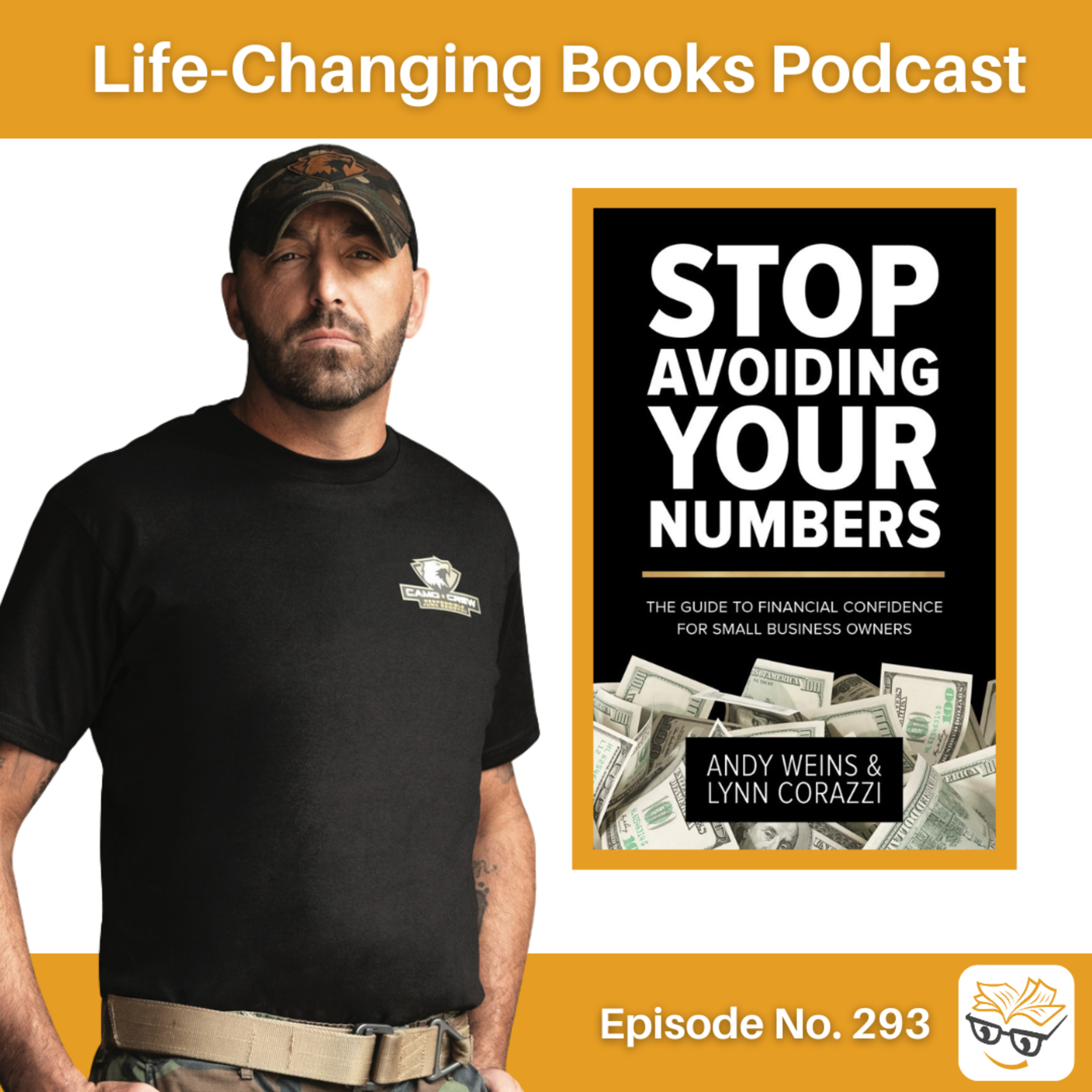 293. Andy Weins | Stop Avoiding Your NumbersBookThinkers: Life-Changing Books · on Cash Flow Forecasting69 / 100
 From Finance to Frontier Tech: Inside the CFO Role at a VC-Backed Engineering Business with Adam Uttley, CFO at Wayland AdditiveThe Finance Seat · on Cash Flow Forecasting68 / 100
 What Fractional CFOs Really Do For Growing Businesses with Alison Bolt58 / 100
 The CFO Skill Nobody Teaches: Coaching and Human Leadership with Alastair Manson55 / 100
 How Fractional CFOs Actually Add Value with Jonathan Rosenzweig57 / 100
 Greatest Hits: Cash, Clients, and the Secrets Behind Growing Businesses82 / 100
 How Laura Taylor Built a £1M+ Firm That Won The Advisory Game72 / 100