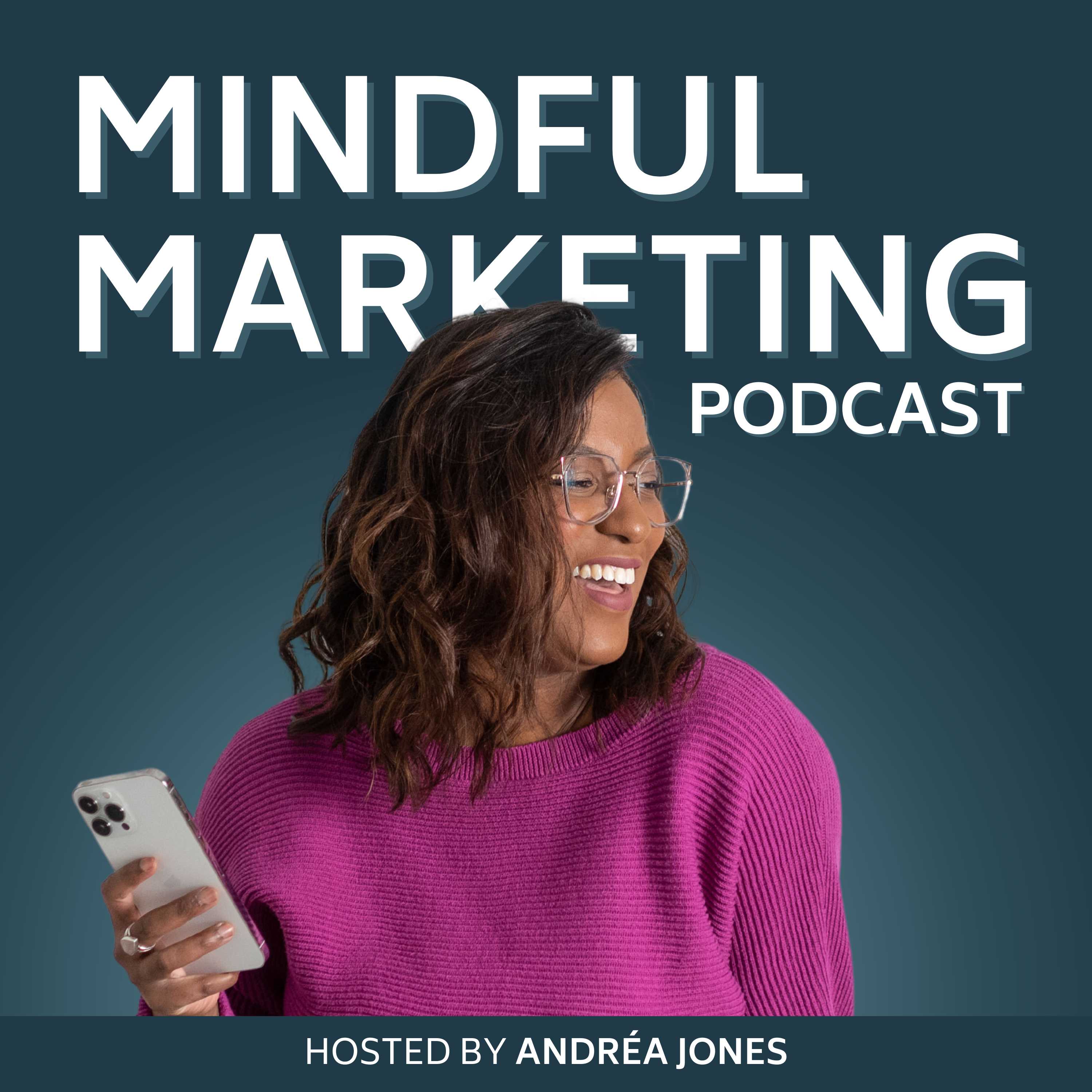
The Mindful Marketing Podcast · 2026-04-29 · 28 min
Key moments - from our scoring
Substance score
44 / 100
Five dimensions, 20 points each
Andréa Jones articulates a nuanced 2026 perspective on AI adoption for business owners, rejecting both techno-utopianism and anti-AI positions. She acknowledges that large language models like ChatGPT, Claude, and Gemini are now woven into tools like Google Workspace, Canva, Airtable, and JotForms, making the question less about whether to use AI and more about how to use it strategically. Jones shares practical applications: using AI for technical setup (domain/email configuration), voice-to-text enhancement, form building via JotForms, vibe coding, and mockups. However, she's pulled back from using AI heavily for creative writing - emails, social captions, and graphic design - because it flattens her voice, misses context, and produces generic outputs indistinguishable from competitors' work. She warns against treating AI as a strategy rather than a shortcut, notes serious privacy concerns (especially with Gemini's access to Google's ecosystem), and flags a looming threat: as users become dependent on AI tools and those tools raise prices post-adoption, businesses may lose the judgment and discernment needed to operate independently. For small teams and solopreneurs managing everything, AI graphics and automation are better than nothing; for premium brands, paid creative work remains essential.
Use AI as a first draft or starting point (especially voice-to-text for fast ideation), but always edit heavily to restore your unique tone, humor, and personality - AI typically flattens voice and removes nuance, so plan to spend 20% of the time customizing rather than 0%.
Yes, for solopreneurs and mom-and-pop shops, AI graphics are better than nothing, but they'll look generic and identical to competitors' graphics; premium brands should invest in paid design work to stand out.
Gemini poses significant privacy risk because it's connected to your entire Google ecosystem (photos, documents, financial records, calendar); never put client names or sensitive information into any AI tool without their explicit consent, as the data feeds the model's training.
AI removes the humanity, sarcasm, emphasis, and personality from her voice - it edits out her run-on sentences, specific emoji use, and conversational style, so the output feels bland and doesn't sound like her even though it reads as coherent.
As businesses become dependent on AI tools and users can't imagine operating without them, the companies running AI at a loss will raise prices significantly; if you've outsourced all judgment to AI, you won't know how to operate independently when costs become prohibitive.
Our reviewer’s read on each dimension, with quotes from the episode.
The episode contains useful tactical observations about AI integration in business tools and workflows, but relies heavily on personal anecdotes rather than novel insights. Key useful points include the distinction between AI as infrastructure vs. magic solution, privacy concerns with Gemini, and the training period required for effective AI use. However, much of the content rehashes familiar AI warnings (hallucinations, confidence in wrongness) and lacks substantive business strategy or measurable frameworks.
AI is a shortcut, not a strategy
if you think AI is creative, you are not creative
The episode presents a moderate take positioned between AI maximalism and skepticism, which is reasonable but not particularly original. The framing of AI as infrastructure, privacy concerns with Google's Gemini, and warnings about dependency are all circulating widely in B2B discourse. The host's personal examples (bread recipe, website setup) illustrate points but don't offer contrarian frameworks or first-principles thinking that would distinguish this from standard AI guidance.
AI is no longer a cute little side bonus tool that we use in our business. AI is now infrastructure
the cost of AI is going up. Claude, Chachi Butti, Gemini, even they're all running their business at a loss
This is a solo episode with no guest. The host, Andréa Jones, is a marketing strategist and creator, but the episode format does not involve interviewing a practitioner with specific operational experience to validate or challenge the claims made.
[Solo episode - no guest present]
The episode includes concrete examples of AI application (Google Workspace setup, JotForms automation, Canva edits, vibe coding, email voice-to-text), but lacks specific business metrics, customer outcomes, or measurable results. The examples are illustrative of use cases rather than evidence-based. No data on productivity gains, ROI, error rates in hallucinations, or comparative costs across platforms. The Easter promo graphics observation is anecdotal rather than researched.
I use it a lot with voice to text
I made pasta and I wanted to make a bread, but I didn't have time... And it gave me a recipe for six, which is perfect because there's only three of us
As a solo episode, there is no host-guest dynamic to evaluate. The host's delivery is conversational and personal (stream-of-consciousness structure, anecdotes about bread-making and mom's website), but without an interviewer pushing back or probing deeper, the episode misses opportunities for rigorous interrogation of her claims. The host occasionally challenges her own thinking ('that may change in the next two years'), but stops short of genuine debate or pressure testing.
Y'all hear how I said that? I really, really, really did not like that
Did she say that out loud? I did. If you think AI is creative, you're not creative, babe
Computed from the transcript - who did the talking, and the words that came up most.
AI has changed a lot in the past year… and so have my thoughts on it. In this episode, I’m sharing my 2026 perspective on AI in marketing - what I’m using more, what I’m using way less, and why I think business owners need to stop outsourcing their voice, strategy, and judgment to tools that are really, really good at sounding confident… while also sometimes making things up. We’re talking about: AI as a shortcut (not a strategy) Why your standards need to get higher as AI gets better Where AI actually saves time - and where it quietly makes things worse Why your voice matters more now than ever And how to use AI inside a mindful marketing approach without turning your content into robot soup If you’ve been feeling a little “wait… is this helping or hurting?” about AI lately, this one’s for you.
Transcribed and scored by The B2B Podcast Index.
Andréa Jones: AI is no longer a cute little side bonus tool that we use in our business. AI is now infrastructure. It is literally embedded into the tools that we use every single day. Google has Gemini, Canva has AI, Airtable has AI.
All of my favorite tools now have this technology built in. So the question is no longer, should I use AI? The question then becomes, how am I using AI? How am I using my judgment?
How am I using it for my creativity? How am I using it to support me in my business? And in this episode, I'm gonna talk through how my thoughts have shifted on AI in the past year specifically, because a lot has changed. So we'll get into that and more, but first a word from our sponsor.
About a year ago now, I released a brand new freebie called AI in Marketing. It was all about how I use AI in my everyday life and in my business for marketing purposes. And I stand by a lot of what I put in that free resource, ⁓ which you can find at onlinedrea.com slash AI.
But of my opinions on AI have shifted in the past year, ⁓ specifically with how I use AI. ⁓ to ⁓ collaborate with me in terms of writing, strategy, and really standards. My standards towards AI have completely changed and shifted. And this episode is not ⁓ any of the extremes.
On one end, I'm not saying AI will save everything. It's amazing. Bow down to the AI gods. I'm not saying that.
But I'm also not saying anti-AI, never use it in your life ever, ever. OK? I am not on either extreme. am somewhere in the middle.
And I challenge and encourage you to think about that somewhere in the middle as well, because what I'm referring to today in this episode is large language models like ChatGPT as AI, but AI itself has existed for 20 years. Plus plus, right? Like the technology has existed. Even social media algorithms are inherently AI and those existed before ChatGPT became a thing in November, 2023.
However, In the past six months, especially in the past 12 months, my opinion on AI has shifted. AI is literally infrastructure now. I gotta talk about this because it's not just ChatGPT. When I recorded that private podcast last year, I talked a lot about ChatGPT.
Claude was still kind of a big thing, but Claude is way bigger now, which is the other contender, in my opinion, to ChatGPT. We also have Gemini, which is Google's version of ChatDBT. We have ⁓ Grok, which is ⁓ another version of this, right? There are so many iterations of this tool.
And like I mentioned in my opening line, ⁓ even Canva just released some more AI updates to their AI tools that are embedded in their suite of products. I was doing some edits for my mom on her Wix website. that has AI built into it. There's so many things that AI has built in.
I'll use a practical example of how this incredibly sped along my process for starting a new brand. So I'm starting a new company. It is a faceless brand. I don't know if I want to say what it is just yet, but I have alluded to it on the podcast before.
I kind of want to start it as an experiment of a faceless brand because I've seen a lot of hype around it. I still personally think founder led companies are the way to go. Y'all know that I'm a creator led marketing strategy. I love founder stories embedded into marketing and there is a time and a place for faceless brands.
I'm testing this out. Anyways, so I go through the process of creating up a Google workspace, getting my branded email, all that jazz and y'all the AI prompts made it incredibly, incredibly faster to set that up specifically. to connect my GoDaddy, which is where I purchased my domain, to my Google workspace, which is where I will have my at email. So for example, for my company here, it's Andrea at onlinedrea.
com, right? The AI behind their setup tool made that probably almost nearly painless. The only thing that was painful is the waiting. Like you have to wait to make sure all the DNS records are updated and all that jazz.
But it even gave me, there's one spot that the AI couldn't do. It literally gave me like copy this, put this here, instructions based on GoDaddy and based on my setup. Okay. This to me is what AI is for.
It's not about replacing our creativity, but it's incredibly speeding along the process to where this is. It's a giant shortcut and y'all know how I feel about marketing shortcuts. I think marketing shortcuts are amazing, especially for my mindful business owners who have a million things to do and they don't want another annoying task that's gonna take them three hours to get the thing done, right? We want AI to fast track some of those processes.
So to me, AI can help you move faster, but, and this is a huge but, it cannot replace your judgment. I'm gonna say that again. AI can help you move faster, but it cannot replace your judgment. The biggest problem that I had with AI a year ago that I still have today is that AI is very good at sounding confident.
It's very good at making things up and speaking with its whole chest about stuff it is totally wrong about. We all have had experience like this probably at this point where we put something into AI, it hallucinates and it spits out something that's just wrong. We've either seen it up for ourselves or we've seen the memes about it. And even now, people are using it instead of therapists, instead of doctors.
it's a friend actually texted me a meme the other day where someone took a picture of a mushroom, popped it into Chachi-B.T. and said, is this poisonous? Chachi-B.
T. in the comic, in this little meme, Chachi-B.T. said, no, sure, eat it.
And then the next scene is like them in the ground with the tombstone on it. And it chatty's going, oops, sorry. I mean, yes, it is poisonous. Don't eat it.
I'll learn that information for next time. Chatty BT, Claude, all of them make up things to an extreme level. And we feel confident that it's correct because it's confident that it's correct and it's not. And I think this is where the big ⁓ challenges with AI is that it is a shortcut, not a strategy.
AI is a shortcut, not. a strategy. And the reason that I can use AI very quickly to this day is that I have 20 years experience, 22 actually years experience now creating content online. Okay, so I've been creating content since 2004 for these internet streets.
And so I can look at something AI produces and go, yes, that's good. No, that's bad. This is awful. This is terrible.
Fix this, that and the other thing, because it's almost as if my clients are doing it. It's almost as if I'm coaching anyone. That's what I do for my job. That's literally what I do for my job as a marketing strategist, right?
So it helps me move quicker through marketing strategy. However, you may not be a 22-year veteran in marketing or content creation. So when you look at AI, the output, it gives you a go, yeah, that works. but then you start posting on social media and you're like, this isn't getting traction.
You start running that ad strategy. You start posting the blog posts. You start creating content that AI told you to create and it's not working. Why?
Because it's missing the strategic piece. So I want to talk a little bit about what I'm doing with AI now and what I'm not doing anymore. So for AI now, I definitely use it for setup, for anything that requires structure, anything that's technical that may slow me down. I use it a lot with voice to text, y'all.
If you can tell, I'm a talker. Your girl's a talker. So I actually have been using voice to text for years, but AI has made it faster. For example, with Gemini, their little ⁓ prompts that they give you, terrible.
But I still use Gemini in my email and my Gmail, and I will use voice to text and then have it write that. And I still have to tweak it, okay? It comes out sounding wild sometimes, and I'll talk more about that. but for speed.
I use it for vibe coding, technical things on websites. Y'all, I can build websites now because of AI, because I know just enough to be able to command AI to do what I want it to do. And as a total side note, my business partner and I over at Uncommon Marketing Agency are working on our first software, which is an AI tool, and we're really excited about it. It's gonna be so fun.
Anyways. for vibe coding. Okay, so I use it for analyzing long documents. I use it for helping me build automations.
I was helping someone build a form on their website and I literally went into JotForms, y'all. JotForms, that's a form builder, now has AI. I just pasted in what questions I needed and it built the entire form for me. This is the power of AI.
We're using it every day. And yes, I still use it in my everyday life as well. I mentioned this in the private podcast that I talked about on Landry.com slash AI.
But yesterday I did the exact same thing. I made pasta and I wanted to make a bread, but I didn't have time. Usually I'll try to make like a cornbread or something. That's what I love.
Don't hate me. But I didn't have time to make a whole cornbread. Plus my kids sometimes it's hit or miss. So I went to AI and said, here are the ingredients I have.
I just moved. I don't have all my stuff yet. How can I make like it easy bread? That's like maybe garlicky or cheesy.
And it gave me these like, they almost turned out like biscuits, but I made them in the muffin tin. And it gave me a recipe for six, which is perfect because there's only three of us. So I don't really need like a dozen of these things. I just want a few, right?
And Chatty gave me my recipe. So for me, AI is great to go from that blank page all the way to something workable that I can fix. Okay. So basically AI helps me do the thing I was going to do anyways, just faster.
All right. This is what I use AI way less for, which is writing. I used to use AI to write, more heavily write my emails and my social media captions and things like that. And ⁓ it was great for speed, but it was missing the humanity piece.
And I talk about this in my email marketing ⁓ course, I, how I add in the humanity piece, because I have to edit it a lot to make it sound like me. For example, When I'm using voice to text and I say something to AI, like, I really, really, really did not like that. Y'all hear how I said that? I really, really, really did not like that.
AI would then go, I really didn't like that. That's not what I said. I said, I really, really, really didn't like that. And so when I'm typing it, if AI says, I really didn't like that, and like, you're missing all the humanity of what I just said, I wanted the three reallys, babe.
Like, really, really, really, and that third really, I'm gonna italicize it and probably bold it because I really, really, really didn't like that, right? AI edits out my humanness, my va va vroom, my je ne sais quoi. I don't want it to do that. I want it to still sound like me.
So what I've been doing now, same process, voice to text, put it in chatty. I have trained my chatty to sound more like me, but y'all, it gets me like. Mm, 80 % of the way there. That's using voice to text.
That's using my prompts. I still have to go in and edit the dang thing because it does not understand my sarcastic use of emojis. I don't use them all the time. I use them lightly and on, in a very specific way.
And it just kind of dulls me out a little bit, flattens me, I think is the right word for this. It's just like boring. I feel like I'm a little, you know, spicier than that sometimes. So...
I want the little human parts. want to run on sentence. I want it to start with so. I want it to start with my but slash and.
Like I go, but and this is what I think. Like AI thinks I'm making a mistake when I say that. I'm not making a mistake babes. That's how I meant to say it.
And so for me, yes, I still use it to assist, but way less than I was using a year ago. I will say this too. AI still struggles with graphic design. I know y'all love using Chatty for these graphics.
And the latest update that came out, I believe, a week ago is a lot better. Don't get me wrong. It's a lot better. However, there are times and places for these AI graphics.
And what happens right now is they're all looking the same. If you scroll back on my threads, I rethreaded a post that someone said back around Easter time. It was about Easter promos. and there was about a dozen different Easter promo graphics that various companies posted on social media.
They all look the same because they all use ChatGPT to create those graphics. So do I think there's something wrong with using AI for graphic design? Me personally, I'm not gonna say no. Like I would still support a business if they were using AI for graphic design.
However, it grinds my gears when I see the graphics because I know that they came from AI because they all look the same. They all look the same. And so here's my edited opinion on this because I did say before I would never use it for graphics and I no longer believe that. think smaller mom and pop shop businesses, your solo entrepreneurs, business owners who are doing everything themselves, using an AI graphic is better than nothing.
And some people aren't gonna like that, but I believe it. I believe it's better than nothing. can I tell that it's AI? Yeah, but I'm still gonna go to my local coffee shop.
I'm still gonna go to the brewery in my town. I'm still gonna be a patron ⁓ of a craft fair coming up because they use AI graphic. I'm still gonna do that. However, ⁓ if Nike, the big companies start using AI graphics, I'm gonna start questioning a lot of things.
I think there's a time and a place for AI graphics. and I really still hate AI logos. They just look bad. Okay.
I don't know how else to say it. They look bad. And I think if you want a premium experience, you have to pay for the premium experience. You cannot sell a premium product with the AI graphic.
That's just what I believe. Okay. That may change in the next two years. I'm just giving you the update for here now in 2026.
I also think they're great for mockups. I ⁓ am going to my first author event for my romance author side in a couple of weeks. I had a friend ask me what my booth is going to look like. And I was like, I don't know.
I have a concept, an idea, but I'm not an artist. So I put in my graphics that I made in Canva, mind you. I made those graphics in Canva. I put them into ChachiBeauty.
And I said, here's the specs of my booth. Here's the other things that I'm going to have on the table. And it actually did all right with the mock-up. Like some stuff was still wonky, but it was enough for me to go to my friend and be like, here's what I'm thinking for my booth.
And she said, oh, you know what I immediately noticed? you don't have the price anywhere, you should put prices up. I'm like, duh, I should have the price of where, right? So things like that really help for that feedback loop.
But would I post that graphic on my social media and be like, here's my boot look like? No, I wouldn't do that, okay? The other thing is AI still gets things wrong, okay? AI makes up stuff all the time.
It misses the context. It guides you in the wrong direction very confidently. And then with the visual elements, what I've noticed as well is if you ask it to fix one thing, like my booth example, if I said, ⁓ I actually have red rose petals all over my booth, not pink, it would change the rose petals and then it would change like three other things. And it would be like one of those, you know, those ⁓ little quizzes and stuff you do as kids, it's like, the thing in the graphic that's different.
Like it's very much that, where you're looking at it you're like, It changed something else, but I can't see what else. They go, ⁓ I see. It changed the text on that other thing too, right? Like it's, the vibe is kind of weird, okay?
So because of this, my thoughts on AI and creativity have changed as well. My spicy hot take for this is that if you think AI is creative, you are not creative. Did she say that out loud? I did.
If you think AI is creative, you're not creative, babe. I'm sorry. I'm sorry. AI is not a creator.
It is not. creative and if you give it free rein, it will give you the blandest, most gobbledygook thing ever. And this is why people complain about the AI trash that's populating the internet right now. Because people who are creative can instantly spot when AI is used and they don't like it, right?
People who are creative know that there's a better way, know that there's a more complex way, know that there's a more creative way. AI doesn't have our lived experiences. AI doesn't have our stories. It doesn't have the tension that we have as humans.
It doesn't have our emotional ⁓ capabilities. It doesn't have those weird little things that make us us, right? It doesn't have even like how I'm saying this. It can't do that the way that I'm saying this.
I interrupt myself sometimes. I don't have complete thoughts. I have run on sentences. I like to use a lot of examples like I'm a freaking preacher in the pulpit.
I like that. And AI can't do that. Okay, AI can't do that. It's not creative.
So I'm using AI as the tool, the first draft, the starting place, but I'm not using it to give me a taste level. right. ⁓ Last thing I'll say about AI and why I don't use it anymore is that the privacy behind it has gotten way more complicated. And I know I talked a lot about ChatGBT in this episode.
That is still the tool that I use. However, a lot of people are moving over to Claude right now because of some of the privacy concerns with ChatGBT, some of the direction that it's going as a company. And so my advice is, you know, pick the tool that works for you, but be mindful of some of the privacy concerns. But I will also say this.
I think there's a bigger privacy concern with Gemini than with ChatGBT or Claude combined. Why? Because Gemini is connected to Google. And y'all, I have my whole life inside my Google.
Okay, I've been using a Google account for, let's just say 25 years now. I've been using Google 20 years, let's say plus. ⁓ I have my entire photo library is backed up to Google Photos. All of my documents are in Google documents, including private financial information.
I know. Google saying, don't worry, your data is safe with us. And I know they have teams of people on their data security side of the business. I understand that in theory.
However, you just attached an AI to this. And you said, Gemini can read through my Google documents and my calendar and look at my photos. You said that. And I clicked the box and said, OK.
Right? We're all doing it. So in my humble opinion, if I will put my little tinfoil hat on for a second, it already knows. OK, whatever you're trying to hide.
from the robots, if it's on the internet somewhere, it already knows. It already knows. So for me, I'm like, if there's anything I don't want it to know, I'm not putting it on the internet. Plain and simple.
If there's something that I don't want AI to know, I'm not putting it on the internet. Therefore, protecting myself. right, tinfoil hat aside, I think there is a danger in putting private client information into these tools. using client names and things like that without their consent.
⁓ Even when I do strategy sessions with clients, depending on the sensitive nature of the topics, I won't put it into chat GPT or even record the call because I use Gemini to give me call notes now after almost every meeting. Right? So there's a lot of information out there. Just be mindful of where you're putting it.
All of that aside, I think AI is a beautiful thing. Like I have to say my caveats, I have to, but AI is a beautiful thing, especially when I consider the framework that I teach inside of the Mindful Marketing Lab and my approach to building a marketing playground. It's an ecosystem and it all feeds together. And if there is a shortcut that can help protect your energy, protect your time, protect your space, get you unstuck, ⁓ jumpstart your creativity, make...
actually doing the thing a lot easier. If there's a tool that can do that, you better believe I'm gonna suggest it to you. And I believe these large language models are that. However, they're not a magic pill, they're not a magic solution.
And the challenge I'm bumping up against in working with my clients one-on-one is that to train AI takes time that they already don't have. So there is a training period to build this shortcut essentially. and train it and teach it. It's almost like any other employee that you would have.
There's probably a three month training period with that employee, with the tool, with whatever. And so when you are able to take the time to build that up, then everything after that is much easier, much faster, much better for you. But you've got to take the time to do that. And a lot of people aren't willing to do that, which is why they get this bland from AI, okay?
⁓ So I want you to use AI, but I want you to use it in a smarter way, in a simpler way, in a way that actually boosts your productivity and not tanks it. Because I think there is a job that AI has, and that job is not creativity, but it can be everything else. Because, and this is my warning to all of you listening to this, I feel like this pod has turned a little bit doom and gloom, but I gotta warn you about this. because I have a big concern about the future of AI, which is a lot of people are embedding it into their workflows, into their companies even.
I wouldn't be surprised if, Flowdesk come out with an AI that helps you write emails. I wouldn't be surprised if, ⁓ I don't know, any other tool starts layering in AI where it doesn't need to be, right? It just feels like everything has AI right now, which is fine. But I think the inherent challenge in that and the inherent prediction for the future for me is that it built an extreme dependency on AI that is going to be our downfall.
⁓ my God, this sounds so doom and gloom, but hear me out, hear me out. We become dependent on AI, then the cost of AI is going up. Claude, Chachi Butti, Gemini, even they're all running their business at a loss. So from like a business strategy perspective, this is pretty normal.
You run your business at a loss to build your user base. Once your users are there and your investors are happy, then you start cutting costs, raising pricing so that you can then pay out your investors. That's probably what's gonna happen with AI. It's cheap now.
I'm putting cheap in quotes, y'all. It's cheap now, okay? But... That's because we're going to become dependent on it.
AI is learning from us as much as we are using it. It is using us. We then have it so embedded into our lives that we can't imagine not writing an email without ⁓ Gemini in our inbox. We can't imagine building a form in JotForm the regular way, right?
It becomes so embedded into what we do that we don't know what judgment looks like. We don't know what discernment looks like because we've put all of that on AI. And I'll give an example of this with vibe coding. I mentioned I started vibe coding.
My business partner is an amazing partner for me in this project because he comes from a web development background. So whenever I'm vibe coding stuff and I get stuck, I can then go to him and he'll be like, oh, it's because you have this, this, this that needs to be adjusted. Just do this, that, and this. AI could not answer the questions that he could answer.
went to AI first and said, I'm having this problem. I said, ⁓ just do this. I did that. It didn't work.
I said, ⁓ sorry. I was wrong about that. Just do this. And I did that.
It didn't work. ⁓ was like, ⁓ my bad. I'm sorry about that. This is actually the solution you need.
And then I do that and it didn't work. AI ran me in circles for hours until I asked a human being what the problem was and then got it fixed. And so I think that there's an inherent problem and a warning that I have to say about AI because we become dependent on it. So what do want you to use AI for?
AI is great for those first drafts. Get the thoughts out, get it down on paper, then edit and still use a human editor. AI is wonderful for brainstorming, bouncing ideas, especially if you ask it to tear your idea down and tell you how awful it is and why it won't work. Amazing.
It's great for summarizing things. I use it in my meetings to give me notes after. It's great for content repurposing. I'll probably take this podcast and use AI right inside of Riverside to repurpose it.
It's great for doing technical things. Like I said, with my domain hookup and Google Workspace, amazing. It's great for workflows and shortcuts. I use AI bot inside of my program.
So when someone joins my mindful marketing community, they get a little message from me. Hi, welcome. I just saw you join. This isn't the real me, but it is my account.
And I use the magic of of tools to get this message to you so you know that I'm here, right? It's great with outlining. I did like word vomit of this episode into ChatGPT and said, can you organize my thoughts on this? Because y'all, my original plan was way more scatterbrained.
And so I need something to like, tighten it up, organize it, bullet point outline it. And then I can go, actually, I want to do this section, then this section, okay? So AI helps me start my projects, but my So I want you to think about this for AI for yourself. How can you get AI to get you started, but then you get to finish it, right?
You come in with the strategy, you come in with the final voice, the guides, the brands, you view the client's sensitive information, you're fact checking it, you're adding your graphic design. Maybe you can use it for a mock-up that you send to a designer, but the designer actually adds in all of those beautiful things that make humans human, right? You put in your actual stories, your opinions, your thoughts, like, add the human to it. Okay, we're not outsourcing all of these things, but we're using it to make us more human.
Make us more human again. That's kind of like my tagline for AI. AI is here to make us even more human. I love that.
So that's where I'm at in 2026. I'm not anti AI. Clearly in this podcast episode, I talked about a lot of examples how I use AI in my everyday life. I love it for ⁓ dreaming, experimenting, consolidating.
⁓ taking my ideas and actually getting them started. Love it for that. But I don't want us to get AI lazy and just depend on it for all of the things, right? So AI can help.
And if you're still here listening to this podcast, I would highly encourage you to check out my AI series that I released last year. You can find it in the show notes at 405.org go to onlinedrea.com slash AI.
to get how I actually use ChatGBT in my business every day. It's a free audio series and it also comes with my ChatGBT starter pack, which really gets you using Chatty in a way that feels useful and not just like staring at a blank page and feeling overwhelmed. All right, that's all for today. I'll see you next week with another episode.
Bye for now.
Other episodes covering the same guests and topics, from across The B2B Podcast Index.
 Paul Graham On Startups, Ambition, and Great FoundersY Combinator Startup Podcast · on ChatGPT88 / 100
 The AI-Native Law Firm, with Ryan Walker of General LegalMeeting of the Minds · on Claude88 / 100
 657. Waziri Garuba, CEO of Harlem Labs, Introducing G.R.I.O.TUnleashed · on Airtable80 / 100
 Unresolved.cx - When Feedback Has To Matter - Paul TuckerUnresolved.cx · on Claude80 / 100
 321 | How to Build an AI App Without Coding: From Idea to App Store with Replit & Claude by Bryce Rattner KeithleyLeveraging AI · on Claude80 / 100
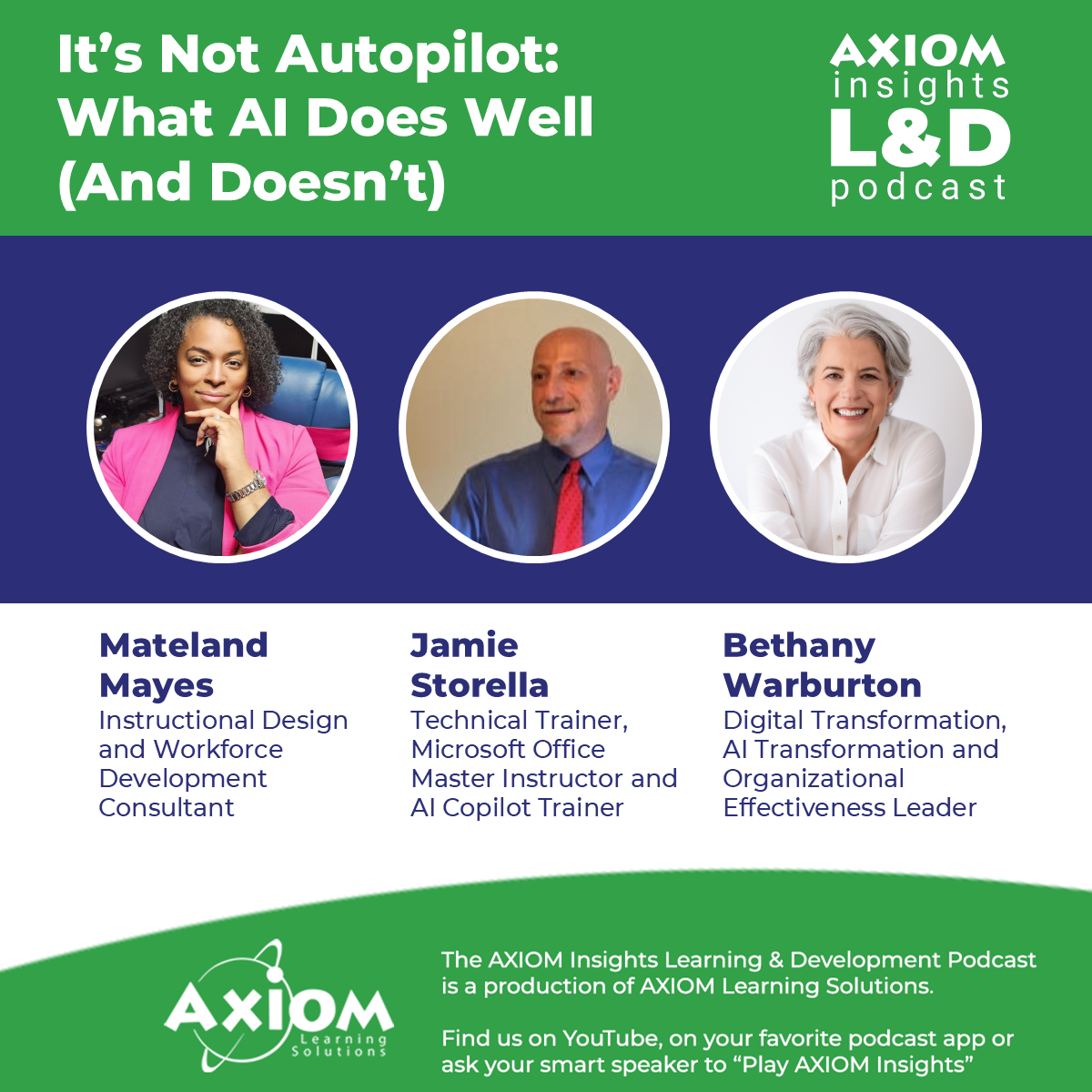 It's Not Autopilot: What AI Does Well (And Doesn't) - AXIOM Insights Learning & Development Podcast #46AXIOM Insights Learning and Development Podcast · on Gemini79 / 100Social Media Is Doing a Lot. Here’s What Actually Matters.59 / 100Podcast Guesting That Actually Builds Your Business with Alex Sanfilippo86 / 100Pinterest in 2026: Cold Traffic, AI Slop, and Smarter Search with Kate Ahl86 / 100What the No Pressure Post Party Taught Me50 / 100How to Simplify Your Content Strategy with Fope Nkwocha80 / 100