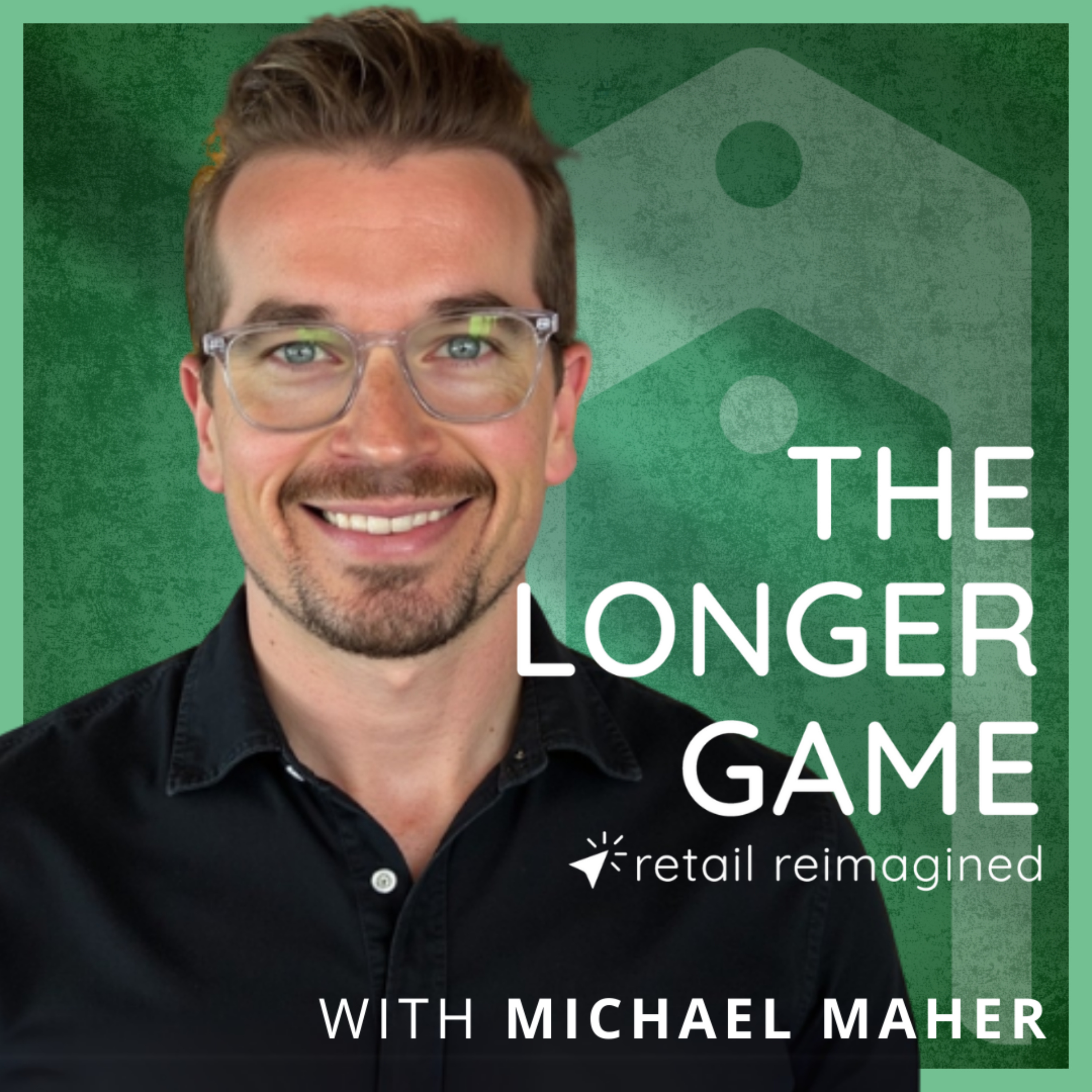
The Longer Game · 2026-03-23 · 31 min
Key moments - from our scoring
Substance score
53 / 100
Five dimensions, 20 points each
Kodai Takahashi brings a refreshing perspective on international brand expansion and the necessity of embracing risk in digital-first markets. As CEO of Silks Bridge USA - a Japanese premium hair care brand that leverages liquid silk technology - he shares how his company launched in the US just 18 months ago by fundamentally rethinking its messaging while preserving its Asian heritage positioning. Rather than forcing existing Japanese copywriting and design onto American consumers, Silks Bridge conducted rapid A/B testing on messaging, colors, and brand language to resonate with K-beauty and J-beauty trends gaining mainstream acceptance. The conversation reveals how Amazon served as a proving ground: by building strong reviews and social proof on the platform, Takahashi was able to approach traditional retailers and distributors with concrete evidence of market fit - inverting the traditional retail gatekeeping model. His brand now derives 40-50% of revenue from Amazon while building physical retail presence across California and beyond. Takahashi emphasizes the critical role of multiple touchpoints in lowering customer acquisition costs, citing YouTube sponsorships that drove thousands of store visits when consumers saw product availability information. For emerging brands struggling with expensive online CPA, his thesis is clear: offline shelf presence and non-traditional media (YouTube, podcasts) create familiarity that makes subsequent digital touchpoints more efficient. He also frankly addresses the psychological shift required - coming from Japanese business culture that discourages risk-taking, he had to unlearn perfectionism and embrace rapid iteration through PDCA cycles.
Amazon has a built-in customer base of people who shop almost exclusively there and use it as their primary product search engine. You're not cannibalizing your own sales; you're accessing entirely new customers who would never visit your DTC site, representing 50-60% of initial product searches.
By building strong reviews and sales momentum on Amazon, you create social proof that you can show to traditional retailers and distributors to demonstrate market validation, making them more willing to stock your products - essentially inverting the old model where retail gatekeepers decided access.
When customers first encounter your brand in-store, they develop familiarity; subsequent online ads or retargeting become more effective because they've already seen the product. Multiple touchpoints across channels compound recognition, reducing the cost to convert because purchase barriers are lower after seeing the brand multiple times.
Silks Bridge is a Japanese premium hair care brand using actual liquid silk in its formulations to create silky, shiny, smooth hair, positioning itself as bringing Asian heritage and K-beauty/J-beauty trends to Western markets.
Real market feedback from imperfect launches reveals what actually resonates with customers far faster than internal planning; rapid A/B testing and PDCA cycles expose gaps between assumptions and market reality, enabling continuous improvement rather than delayed launches waiting for perfection.
Our reviewer’s read on each dimension, with quotes from the episode.
The episode contains some useful operational insights about omnichannel strategy, Amazon's role in leveling the playing field for emerging brands, and the importance of multiple consumer touchpoints. However, much of the discussion consists of either obvious marketing principles (test and iterate, get multiple exposures) or surface-level observations without deep exploration. The conversation lacks specificity about what actually worked quantitatively or why certain tactics succeed beyond common sense.
Amazon is not taking customers from you per se, they have a built-in customer base... they would never even think to go to your site. So you're actually missing customers.
we started from Amazon actually. We started from Amazon... we could get into some Asian stores because we are selling a lot in Asia too. So they believed in us
The episode rehashes well-established frameworks: omnichannel retail strategy, the importance of consumer touchpoints, testing and iteration (PDCA), and Amazon as a market equalizer. The 'brands can't be afraid of rejection' theme, while reasonably framed through a dating metaphor, is not novel thinking. There are no contrarian arguments, first-principles analysis, or genuinely fresh perspectives on emerging brand strategy.
brands are launching on Amazon, going to retailers saying, like you said, Hey, look at our reviews
it's like finding a girlfriend. Even in the date, they couldn't get along, but maybe in the future, they're gonna find each other again
Kodai Takahashi is a founder and CEO of an active international brand (Silk's Rich) with demonstrable traction - 10,000+ stores in Japan, #1 ranking for 10+ months, and measurable US expansion. He has real operating experience across multiple markets and channels. However, the brand is relatively young in the US (1.5 years), and his insights reflect early-stage operator perspective rather than scaling expertise at massive scale or deep category authority.
I'm Kodai, the CEO of Silks Bridge USA. We made a Silks Bridge like three years ago... and then we get into the US a year and a half ago
our brand is really fused in Japan now. We're selling over 10,000 stores. We're number one for over 10 months so far
The episode includes some concrete metrics: 10,000+ stores in Japan, #1 ranking for 10+ months, 30-40 physical stores in LA, Amazon representing 40-50% of sales, and mentions of customer acquisition cost trends. However, many claims lack supporting data - the YouTube success story mentions 'thousands of times in a week' without defining the baseline or ROI, pop-up effectiveness is asserted without numbers, and most strategic choices are explained through anecdote rather than comparative data or financial outcomes.
We're selling over 10,000 stores. We're number one for over 10 months so far
Amazon is around like 40 to 50 percentages
Maher asks reasonable follow-up questions and attempts to draw out operational lessons (e.g., 'Why do you think that is?' about shelf placement reducing CAC). However, the conversation is largely soft-serve - Maher rarely pushes back on claims, doesn't challenge assumptions, and often validates Kodai's points rather than creating productive tension. Questions tend toward open-ended reflections rather than sharp probing. The gym analogy, while conversational, derails rather than illuminates.
So you feel like being on an in-store shelf can decrease your acquisition cost. Why do you think that is?
how much did you learn in that process of doing the bad copywriting to getting to the better stuff, to adjusting the colors?
Computed from the transcript - who did the talking, and the words that came up most.
Sometimes, solving problems for humans is a walk in the park. You need something that keeps you warm but isn't heavy. Hello down jackets! But what happens when you add the complexity of different cultures? Someone in Tunisia doesn't experience brand messaging the same as someone in Texas. Colors may even hit differently. Kodai Takahashi, CEO and Co-Founder of Silk The Rich, joins us on this episode of The Longer Game to share the complexities of brand ownership, especially across cultural lines. From playing it safe to risk taker, he gives us his take on exposure to customers, showing us why brands shouldn't be afraid to get rejected. Nobody likes getting told "No" but the truth is, the more interactions we have, the less strange a brand becomes and the more likely we finally stop resisting and say "I'm in." Get your favorite shower radio, start the water, and get to shampooing as we head out on another wild retail adventure. The Longer Game (@thelongergame) is a podcast focused on leaning into the trends and advancements in retail so brands see a clearer path to success across ALL channels.
Transcribed and scored by The B2B Podcast Index.
Michael Maher: Hey everybody, welcome to the longer game, the podcast where we talk all about retail. that means we talk about Omnichannel ⁓ the fact that brands today are dealing with consumers who do not have linear experiences. They're experiencing someone being in the store, they're finding their brand online and then maybe they're going to the store. It's just not a linear path anymore.
And so brands really have to stay agile during this time period. So we bring all kinds of people on the podcast to talk about what it's like being in retail, what it's like being in direct to consumer, or what it's like selling on Amazon, which is what my agency does. help cartology, we help brands to sell their products on Amazon. And so today we have another brand joining us on the podcast, Kodai Takahashi, who is the co-founder of Silk the Rich.
He's joining us today. Welcome to the show, man. Tell us a little bit more about you and what you do. Kodai Takahashi: Alright, thank you.
Hi, I'm Kodai, the CEO of Silks Bridge USA. We made a Silks Bridge like three years ago, which is a Japanese premium hair care brand spreading all over Asia, including Japan, Korea, Taiwan. And then we get into the US a year and a half ago, half years ago. So we're new, we try to figure out what is a good thing and a bad thing in the US.
Michael Maher: When you first got into the US, talk about that experience. What was that like for you? Kodai Takahashi: So, you know, as an Asian brand, we don't know much about like US, like how, what color, what like brand messages good for the US market. Like we have there, you know, as a brand, we have messages for the customers in Asia, but that doesn't mean like it's good for the customer in the US.
So at the first month and the second month, we figure out what copywriting or what even color is the best for the customers in the US. Michael Maher: Mm-hmm. Hmm. Kodai Takahashi: And then depending on that, we try to change how we make the Instagram account or TikTok account or even website.
That was first point. Michael Maher: I think what's interesting is your product can have application across many different countries and can help and impact people in a positive way or there can be a need for that product. We're all humans. We all have needs.
We all want to or most of us want to smell good. We want to have good skin or clean skin. We need to be fed. We want to be healthy.
So like we have kind of general needs even though those things will change regionally. And it can be really challenging as trends emerge. Kodai Takahashi: Mm-hmm. Mm-hmm.
Michael Maher: Brands, a lot of times we've talked about this before on here, another of content that I produce, like I have a live show that I do on LinkedIn and on YouTube. And we'll talk to brands about just how to stay relevant. And a lot of times brands will change their product for the trend or change who they are for the trend to hop on that trend bandwagon. And I think it's a lot harder to say, hey, we want to still be true to who we are as a brand.
Kodai Takahashi: Mm-hmm. Michael Maher: but we want to be relevant where we're at. So you're not changing the core of your brand. were basically changing your message to with the people that were in a totally different country, but that maybe had the same needs.
Does that sound right? Kodai Takahashi: Yeah, that's totally true. you know, as a brand, like, we silks are rich, bringing the culture of silk. So we exactly using a liquid silk inside.
So if you use it, you're putting the silk inside of your hair, and if you're going to be super silky shiny smooth, that's how it works actually for every human being on this planet. And also, lake silk is one of the heritage from Asia. So we're bringing those Japanese or Asian heritage to the Western world. So that's the concept.
every time the people in the US perceive the image of Asian beauty differently, guess. Listen to me, ⁓ because K-Beauty, ⁓ I the Asian beauty stuff is booming up and the acceptance of the ⁓ Asian is really growing up. yeah, listen to me. I see shift.
the customers too. Michael Maher: And if anything, this is, you, like you talked about the adoption of K beauty allows for the acceptance of maybe J beauty or other styles of brands. it's a really good opportunity to come in say, Hey, like we're kind of adjacent here. We're not exactly the same, but we have this cool thing that is applicable for all people that can help all people's hair ⁓ be nice, to be soft, whatever.
⁓ you're also taking heritage from the past silk industry that's been in Japan. and bringing that to the forefront. So you're staying true to who you are as a brand, but you're making it relevant for the here and the now. Kodai Takahashi: Mm-hmm.
Yeah, that's so true. If you say like we're silk brand and putting a lot of like only heritage, that's too much for customers in the US. But they know like K-pop, K-beauty, Asian thing is becoming like one of the mainstreams, like even anime is getting to the mainstream right now. So we try to bring those messages into the brand.
Like, while we don't change the concept and the core of the brand. Michael Maher: Yeah. Okay. I love that.
Do you feel like you've been able resonate with people by staying true to the brand, but by reaching them in a way that maybe language that they can understand? Kodai Takahashi: Yeah, so that's issue too. We didn't have any English label, English concept, English copywritings, so we started to make one. Sure.
Michael Maher: Mm. Right now, brands are to be in multiple places at once. ⁓ I think as much as my agency helps brands to win on Amazon, initially, ⁓ years ago, a lot of times people would say, well, we just want to focus on retail, or we want to focus on direct-to-consumer. We don't want ⁓ on Amazon.
Or we don't want sales to be cannibalized on direct-to-consumer site. Kodai Takahashi: Mm-hmm. Mmm. Michael Maher: And so we don't want to sell on Amazon.
And I think there's a misunderstanding of how consumers operated even back then, but even more so now. And the reality is consumers aren't just, if you think, well, we don't want to be on Amazon because we don't want our sales to get cannibalized. We don't want them to go over to Amazon. You don't understand or know how Amazon works.
Amazon is not Kodai Takahashi: Hmm. Mm-hmm. Michael Maher: taking customers from you per se, they have a built-in customer base. And there are people who might be going to your site that are also going to Amazon, but there are people who almost exclusively shop on Amazon.
And they would never even think to go to your site. So you're actually missing customers. it's a huge search engine. People go there first, 50 to 60 % of the time, just to find and locate products.
So if you're not showing up there, that means that you're missing out on an opportunity. Kodai Takahashi: Mm. That's true. Mm.
Hmm. Michael Maher: to be seen by these consumers and someone else who is there, who's first to market, now maybe wins that customer and you don't have an opportunity to do that. So there's a misunderstanding of how that works. But now more than ever, customers are just not going to your direct-to-consumer site.
They're not just going to Amazon. They're not going to Walmart or to Target ⁓ to Home Depot only. They're going to multiple places. And sometimes, It's about price, but sometimes it's about convenience.
Tell me a little bit more about your experience of balancing the offline and the online together. Kodai Takahashi: Yeah, for sure. So in the US, we are selling online and offline, but offline we only sell around like 30 to 40 stores right now, especially in LA because I mean, I'm based in LA. So we are exclusive for California for, you know, you know, for the launch and the product, but online for sure.
We selling Amazon, D2C, some other EC malls. then the ratio of Amazon is around like 40 to 50 percentages. So it's a lot for sure. So, and also like we started from Amazon actually.
We started from Amazon. We ⁓ some reviews and we showed the reviews to retailers, distributors, and then we could get into some Asian stores because we are selling a lot in Asia too. So they believed in us like, ⁓ they're from Asia, selling a lot. And then they could sell well, like Michael Maher: Okay.
Mmm. Kodai Takahashi: in Amazon and then they have a good review. So they believe in us as an Asian brand to get into those shelves and they sell a lot. So that was the initial like year of this, ⁓ of our brand.
And then for the future, this year we're planning to end those some celebrities well for the US citizens. And ⁓ one she gonna those collaboration and ambassador program, we are going to get into more retail stores to get more awareness. And once they know the product, they want to feel, ⁓ where is the product? And then when they go to some Whole Foods or Sephora, they can find it.
That's really good, you know, cycle for customers and for us too. Michael Maher: It's funny because when Amazon first got their start, they were a traditional retailer, like one P only. just like Target or Walmart will buy your product and they'll sell it. That's how Amazon got their start.
And they would go to trade shows and just say, Hey, we want to buy your product and we want to sell it on Amazon. And now brands are launching on Amazon, going to retailers saying, like you said, Hey, look at our reviews, look at this. And that's actually opening doors for them. And that was not originally the case.
Kodai Takahashi: Mm-hmm. Mmm. Yeah. wow, I didn't know that.
⁓ Michael Maher: Yeah, so it's funny how that's come full circle, but it's kind of amazing because one of the reasons why I think Amazon is so powerful, or I know that it's so powerful, is it's leveled the playing field a little bit. It's allowed someone like you who has created a brand and maybe didn't have those contacts in retail, you know, with a Walmart or Target, which maybe for some people, 20, 30, 40 years ago, getting on a Walmart shelf could have been make or break for your brand.
Kodai Takahashi: Mm-hmm. Mm-hmm. Michael Maher: But now you can start a brand, you don't have to invest as much capital, you can maybe start with a little bit less production. I think it's continuing to evolve over time, but you have the opportunities to get in front of customers and maybe even say, hey, is this working, is this not working?
And then when you see that there's success, that's going in opening doors for you. And before, it was not that way. Kodai Takahashi: Mmm. Hmm.
Mmm, really, wow. Michael Maher: Talk about, we talked about a little bit about how Amazon is a big part of what you're doing right now, but where do you see the future of that going of in-store versus Amazon, or just in-store versus online? What do you feel like that looks like for brands, what are you paying attention to right now? Kodai Takahashi: Mm-hmm.
So recently, as I mentioned, it's easy to launch in a brand. It's so easy to start brand on Amazon or Shopify. It's so easy to start. So there will be more more brands emerging.
That means the CPA online is going to be super high. So we're going to have more difficult times to acquire customers only online. Because online is easy to go, but it's you know, expensive to acquire customers. So I believe like online is for sure we should do to get more attention, but at same time we have, we should get as many shelves as possible.
And then at the same time, think it's like celebrity and those men draw promotion is a key to prove more customers and to let them understand, this brand is so cool. And then we should buy this product. Like, I think it's better to Go on both to make the CPA online even lower. Michael Maher: So you feel like being on an in-store shelf can decrease your acquisition cost.
Why do you think that is? Kodai Takahashi: Mm-hmm. Because imagine like when you see a new brand in Walmart, that is the first touch point for you. And then if you see their brand online after that, ⁓ you can realize like, ⁓ I saw this brand in Walmart.
Okay, let me check. And then maybe you're going to buy it on second touch. If you don't, once you're going to see the brand again retargeting marketing, maybe you're going to purchase because you saw it three times. Michael Maher: Mm-hmm.
Kodai Takahashi: there's no reason to avoid it anymore because you saw it, you knew, you understood the of the brand. And then I really think if ⁓ see the brand three times, they're gonna purchase. Michael Maher: Hmm. So it's like greater from your perspective, greater familiarity with the brand.
It's almost like building. You're building a relationship with the consumer by being in multiple places. You're showing up on the shelf. That's like a meet and greet.
Then someone finds you online. That's like, you know, becoming friends with them on Facebook or connect, following them on Instagram or something like that. then the retargeting could be a text or a phone call or something like that. But it's like you're building this relationship with this consumer.
And the more often ⁓ see you. But. I think you said something that was really key. The more often they see you and you properly convey the advantages of your product.
It's not just showing up, but it's getting the messaging right. Why would you use this product? Why should someone purchase your product, maybe even over another product? It's highlighting those advantages when you get that airtime with them that's allowing them to become more familiar and break down the barriers to say, hey, maybe I will try this new product, right?
Kodai Takahashi: ⁓ Yeah, definitely. That happened a lot so far. Michael Maher: What's been some of most exciting consumer stories that you have of finding people, whether it's in Japan or in the States or wherever, just some of those customer interactions maybe that you've had that have been surprising even? Kodai Takahashi: our brand is really fused in Japan now.
We're selling over 10,000 stores. We're number one for over 10 months so far in some big chain ⁓ stores as a shampoo. And then the first breakthrough for that was ⁓ for the YouTube channel actually. ⁓ YouTube channel, no one was realizing the YouTube channel was gonna ⁓ a good task for customers in terms of awareness.
Michael Maher: Wow. Mmm. Kodai Takahashi: But once we do it, like we could get a lot of attention, awareness through the channel. And at the same time, we started selling over like 5,000 stores when we did the sponsorship.
So the customers can see through the YouTube channel because in the YouTube channel sponsorship, say our products are available in this store and that store, and they gonna see the landing page first. Michael Maher: Wow, okay. Kodai Takahashi: Even though they don't buy it, they're go to the store because they want to buy some groceries, groceries or whatever they use in daily life. And they saw a brand and purchased at the time because they saw it in the YouTube.
Right? So that happened a lot. That happened like over thousands of times in a week because I could hear story from the retailers. ⁓ Michael Maher: Hmm, they said ⁓ we saw this this brand on a YouTube video Interesting, okay It seems like the non-traditional media like podcasts or YouTube or whatever like those kinds of sponsorships like either a couple I don't really listen to podcasts, which is kind of funny because I have my own Which is a kind of a crazy thing to say but there are a couple that there's some work that I do that I don't have to be as like locked in like it's it's more Kodai Takahashi: Yes.
So. Hmm. Mm-hmm. That's funny.
Mm-hmm. Michael Maher: It's a little bit more automatic. And so I might have a podcast or like an episode. It's not like I watch it regularly, but I will watch episodes that are funny or that are interesting to me.
I've just noticed the amount of sponsorships that are on there. Like people reading scripts of bedding services or, know, online pharmacies ⁓ or bed whatever the case might be. Like brands have really into that. And it seems like that non-traditional media has been a way.
Kodai Takahashi: Mm-hmm. Mmm. Michael Maher: to access a customer, whereas it used to be maybe TV commercials. But now I feel like being on a podcast might actually be more impactful because the audience, viewership of some of those podcasts, like you look at like Joe Rogan's podcast, he's hundreds of millions of people I'm pretty sure that are listening to his podcast.
That's a huge ⁓ audience. mean, it's gonna cost a lot, but that's a huge audience. Kodai Takahashi: Yeah. Mm-hmm.
⁓ Yeah. Mm-hmm. Yeah, that's huge. And then, yeah, it's like finding a girlfriend.
Even in the date, they couldn't get along, but maybe in the future, they're gonna find each other again. I found you before, right? We did dating before. And then they get along after that.
That happened a lot in this world, right? So ⁓ I think it's same thing as a brand. Michael Maher: It does. It does.
Kodai Takahashi: We have to get a lot of attention, we have to get a lot of touch points with the customers. That makes our customer acquisition costs even lower. yeah, that's why I think it's like online and offline is like doing both are really important. Michael Maher: I think you brought up something really interesting about the dating piece.
I've heard a lot of stories of people who say, we went on our first date and it was terrible. I thought he was an ass or ⁓ thought she was terrible, whatever. And then people ended up going on other dates and they ended up falling in love and in a relationship. And I think brands can take something away from that.
And it was in what you said. Kodai Takahashi: Mm. Michael Maher: But you didn't say it specifically, but I think you want multiple touch points. And I think that what I'm getting from that is brands can't be afraid of rejection.
You may not see, and I think from a digital perspective, lot of times I will frame things in like a big brand ⁓ like a brand versus an emerging brand. Kodai Takahashi: Yeah, I think so. Michael Maher: Legacy brands are great at research development. They're good at branding.
They're good at supply chain. They have all these things that they've done for, you know, 50 to 100 years and they've just done really, really well. But they sometimes ignore digital or oftentimes ignore digital to their own detriment. And that allows for other brands, emerging brands to come in and capture the market where they maybe now have people captive, like brands that have really won on Amazon are now able to get into retail.
Kodai Takahashi: Mmm. Michael Maher: Whereas if they try to go retail first or really win there, they may not have been as successful, but they've actually been able to capture some of the market. Now they're growing in retail and that's hurt some of these big legacy brands and emerging. So emerging brands have been first to market in some of those things, but emerging brands also have a lot more hurdles.
They don't have their supply chain as developed. They don't have as much capital to build into being non-profitable without investors for an extended period of time is much more challenging, know, versus a publicly traded. Kodai Takahashi: Mm-hmm. Michael Maher: company that's been around for a long time.
But in the digital space, we're so focused on attribution. Like, what is my row as? I advertise for this term, did I get a sale or not? And that's something that emerging brands miss that I think big brands get when they would be focused on generating a ton of impressions or views on a Super Bowl commercial.
Or, you know, speaking of something that's, it'll be Kodai Takahashi: Hmm. Hmm. Yeah. Michael Maher: gone well beyond when this episode comes out, but the Super Bowl is about to come up when we're recording now.
So they're focused on that brand awareness of getting those multiple touch points. And I think we're so focused sometimes as digital marketers or as brands can be so focused on getting the attribution that they forget that it's not gonna happen right away. Kodai Takahashi: Yep. Yeah.
Hmm... Michael Maher: And you can't be afraid of rejection because you may miss out on finding your soulmate. Kodai Takahashi: True. As an international founder coming to the US, the first copywriting was terrible.
And then our employee was like, Kodai, what is this copywriting? Something like that. So we have to show that a lot and then test it out. Like A, test.
Oh, this copywriting works. Oh, this didn't work. So like frequency of A, test is going to be the key. was an emerging brand, guess.
Michael Maher: There's a, there's a lot of people and I think myself included who oftentimes want things to be perfect before you launch them, before you get them out. And I think, I think that that does you a disservice. Like one of the most simple ways I've heard it put is like, you can do things like you can just go out and do things and try things and see if they work or not. If, if that's, it's almost like saying Kodai Takahashi: Hmm.
who we are. Hmm. Okay. Michael Maher: I'm gonna wait to go to the gym until I'm really fit.
Which doesn't make any sense at all. If you did that, you would have a home gym, hopefully, then maybe you'd be able to be jacked. I love working out at home, but I didn't wait to go start working out until I was super, I didn't wait until I was super fit to start working out. It just would not happen.
Like it's never gonna, that's maybe not the best example, but it's decent. But like, ship the thing, get the thing out, do it. Kodai Takahashi: Ahem. No.
Yeah. Mm-hmm. Yeah. Mm-hmm.
Yeah. Michael Maher: just start and evolve from there. Don't wait for it to be perfect. And think, and you could probably attest to this, but how much did you learn in that process of doing the bad copywriting to getting to the better stuff, to adjusting the colors?
How much did you grow and learn during that time? Kodai Takahashi: Hmm. I mean, lot. Like I cannot describe this as a like number or something, but I really feel like if even though we go, this is 100 % sure and okay, we can go with this.
Maybe that doesn't work in the market. So we ⁓ should launch and attack it out and PDCA should be the key because nobody knows ⁓ what's to be the good. Michael Maher: Sure. Kodai Takahashi: you know, copywriting and what is a good marketing stuff, right?
Michael Maher: You might have an idea, but you won't know. Right, yeah, but you won't know until you actually go live. Kodai Takahashi: Yeah, you should slow it away to the market. Yeah, yeah.
I think so. really think like we as Japanese really don't like taking a risk. ⁓ was a little bit hard for me to try it out. I thought I like again and again because ⁓ don't like to be denied.
But once I came here, I changed my mind. Okay, I have to taste it out and nobody cares. And I do it again and again. Michael Maher: Okay.
Yeah. Okay. Kodai Takahashi: and our CPA is going down, we're obviously getting better and better. So yeah, right now I'm still figuring it out, but it's going well now, better.
Michael Maher: So you basically had to, you came from a culture where you feel like, I'm not really as willing to take risks. And you basically had to go against that in order to be successful here. Kodai Takahashi: Yep. Mm-hmm.
Yeah, 100%. That's why I'm here. Michael Maher: And do you feel like you've been able to take any of that back to Japan with you? Any of that learning of like being willing to take risks?
Kodai Takahashi: Yeah, I totally changed in a year. So when I come back to Japan, everybody said to me, you changed a lot. So yeah, that's my personal learning. ⁓ Michael Maher: Do you feel like you've been able to take anything at a company level back to Japan that like, take risks, let's test things out mindset?
Kodai Takahashi: Mm. Mm. think ⁓ because when here, I can learn a lot about the brand, how the brand in the US succeeded in the market. I can learn, like, they took a risk here.
So can talk about that the fact of those brands. Like this example, like, who took risk and then get succeed. So the member in Japan can understand, ⁓ this is a way to go global. Michael Maher: Yeah.
Yeah. So in a way, coming here forced you to take a step back in some senses and shift your thinking, but it's allowed you to go back to Japan and be a pioneer of sorts, because people are like, hey, Kodai, he's willing to take risks. That's weird. Kodai Takahashi: Mm-hmm.
Yeah. but I'm used to it now, so I don't feel weird. They feel weird, but I don't feel weird. ⁓ don't know, yes they do.
⁓ Michael Maher: You don't, but they do. But I think that just goes back to what you said about the brand and getting multiple touch points. The more exposure to something you get, the less strange or weird it becomes. I think at even a really core level, the reason why people have, I it's very normal to have a prejudice against someone when you have no interaction with them.
I'm not saying we should lean into that, but it's very normal. Kodai Takahashi: Mm-hmm. Michael Maher: I don't know this person that looks like this. So I, or I've heard things and I've never really interacted with someone or I had one bad experience.
So now I have a prejudice or bias against this person. And the more exposure you have, the more you'll likely realize, ⁓ maybe that was a one-off case or Hey, maybe this person isn't as bad as I thought they were. And it doesn't have to be even on racial ethnic lines. It could just be, Hey, someone told me that John is a real ass.
But I now I'm friends with him and I realized ⁓ is that other person that was actually not very cool and they were talking trash about about John's but you talked about You know being more exposed to taking risks when now it's normal for you the same thing I think is applicable for brands It's getting exposed to the consumer and the more touch points that you have the less weird you become to that consumer Kodai Takahashi: Yeah, yeah, that's true. ⁓ Michael Maher: and the more willing they are to have a relationship and to and test and purchase your product.
Kodai Takahashi: That's true. That's why I do a lot of pop-up these days too. I do a lot. Michael Maher: You do in the LA area.
Kodai Takahashi: Yeah, in LA, San Diego next month. Michael Maher: I've heard people talk about a lot of pop-ups, I feel like, the past couple of years, and it seems like it drives excitement. Is that true? Kodai Takahashi: Yeah, driving silent even for like ⁓ a founder.
And then it's really good to like gathering like customers information, like how customer think about our brand. doesn't a lot of sales ⁓ in of sales. doesn't, you know, ⁓ it's that good in terms of getting feedback, getting our, you know, to exposure to the market. Or we can use the fact like, we did a pop up here.
Michael Maher: Mmm. Okay. was just going to say. Kodai Takahashi: and then we're gonna do this here and we can make communities through this pop-up too.
So we are building a community of six rich too. Michael Maher: Yeah, that's good. that's another, that's actually the oldest form of retail is a pop-up, pop-up shop, basically like a bazaar or a market. That was the original retail.
you're now, you've got another touch point, another channel, if you will. It's not a physical store that's, you know, that's staying still. It's not directly consumer, it's not Amazon, but now it's a pop-up shop. So it's just one more layer of omni-channel.
Kodai Takahashi: Mm-hmm. Yeah. Mm-hmm. Mm-hmm.
Michael Maher: that you're experimenting with. Kodai Takahashi: That's true. And then interesting story like I did a pop-up like in ⁓ a lot and then sometimes I go to events which doesn't ⁓ to the business itself like mixture or like happy hour kind of thing ⁓ then randomly talk to people and then they realize me as a silk storage founder. Oikora, you're selling the products in here.
I bought it. Something like that. That happens a lot in LA now. Because it's not a big city.
yeah, it's a big city, but still. If you do a lot of pop-ups there, they can realize... me. Because I have unique hairstyle.
then... ⁓ thank you. I'm the best salesperson. So...
⁓ So, yeah. I see those people like purchasing from the pop-ups, say... Michael Maher: Wow, okay. Yeah, yeah.
You've got great hair, Yeah, I was gonna say, soak the rich. You must be using it like crazy. Kodai Takahashi: tell to their friends, families, and expanding from their small community to the bigger stage now. Michael Maher: And the the word of mouth marketing is still super, super powerful.
So you're able to get exposure to someone at that pop-up, then they try it or something, and then they tell their friends, their friends tell their friends. Growing over time takes a lot of effort, ⁓ and takes patience. But I've talked with other brands, like Fishwife. Kodai Takahashi: Mmm.
What a mouth. Yeah, it is. Mm-hmm. Michael Maher: who they said, hey, we launched in smaller retailers intentionally because those shop owners loved their shop and they loved the products.
And so the first exposure that someone gets is this small bodega or this small market where someone's talking about our product that is super passionate about it. And then maybe they go and buy online. And now when they see, we're at Target, now you've got a built-in user base because of the convenience of the accessibility, but they're always gonna remember that first touch point when they were at Kodai Takahashi: Mmm. Yeah.
Yeah. Michael Maher: modica market or that whatever that small retailer is that they first experience your brand at, which is what you're doing in these Asian markets is like that first touch point where people are really passionate, really care. It's small, it's a little bit more focused and maybe it's not as much exposure, but it's really a great opportunity reach people. Kodai Takahashi: Yeah, 100%.
So we, I don't know what's gonna happen, but at least I decided like, okay, we're gonna do pop up as a match as possible because nobody knows like maybe the buyer we're gonna come and then some said everything gonna come. Nobody knows. So. Michael Maher: Ooh, I like that.
Maybe you'll get some autographs. Maybe you'll sign some autographs. Kodai Takahashi: Yeah, do it. Michael Maher: Kodi, you've been great, man.
I so appreciate you coming on and chatting with us. If you want to know more about what it is that you're doing, where should they go to find you? Will you be washing your hair at a pop-up in front of people, or where can they find out more about what it is that you're doing? Kodai Takahashi: Mm-hmm.
You So basically we upload a lot of videos and content on Instagram. So if you find me at mark kodai underscore takahashi, you can find me and you can find the brand in my bio too. So. Michael Maher: Love it.
All right, people. Well, you heard it here first. Kodaii underscore Takahashi. You want to find out what he's doing?
Go take a look. That's all we got for you today. Until next time, see you then. Kodai Takahashi: Yeah.
Other episodes covering the same guests and topics, from across The B2B Podcast Index.
 IG Live | From Celebrity Smile Makeovers to Luxury Beauty Brands & Identity-Shaping Stories: The Power of TransformationOffice Hours with David Meltzer · features Kodai Takahashi41 / 100
 The Next Storefront Is AI with Tarek MüllerThe Retail Tea Break · on Omnichannel retail85 / 100
 Building Demand in a Market That Doesn't Exist YeteCom Collab Club Podcast · on Omnichannel retail84 / 100
 Why Ecommerce Re-platforming FailsThe MarTech Matrix · on Omnichannel retail81 / 100
 #364 - Cracking the Code on Retention: Recharge CEO Reveals What Best-in-Class Subscription Brands Do DifferentlyDTC POD · on Direct-to-consumer (D2C)80 / 100
 Half Your Ads Don't Work, So Here's How to Know Which Half WillRetail Technology Spotlight Series · on Customer acquisition cost (CPA)79 / 100
 Season 4 Episode 10: You Are Enough60 / 100
 Season 4 Episode 9: Retail Ain't Dead Yet72 / 100
 Season 4 Episode 8: Freedom To Fail79 / 100
 Season 4 Episode 6: Baking In Slow Growth65 / 100
 Season 4 Episode 5: Right Data, Right Place, Right Time75 / 100