The Longer Game · 2026-04-17 · 38 min
Key moments - from our scoring
Substance score
55 / 100
Five dimensions, 20 points each
Michael Maher hosts James Gosling, co-founder of Bespoke, a company that builds custom analytics dashboards for Amazon sellers, agencies, and aggregators. The core tension they explore is that while Amazon provides more data than most retail channels - including 80+ API endpoints - most brands either want all the data indiscriminately or focus on lagging indicators like revenue instead of leading indicators like organic rank improvement and ad spend efficiency. Gosling explains that Amazon Marketing Cloud (AMC), a data clean room for analyzing consumer interactions, is underutilized because 75% of brands just want to see their funnel once and confirm their assumptions, rather than actively building audiences and drip campaigns within it. Maher pushes back on vanity metrics like branded share-of-impressions, using a real client example where he deliberately keeps branded spend low to focus on non-brand category winners. The discussion emphasizes that how data is presented - and what business outcome it's tied to - matters more than having access to everything. Bespoke's approach embeds product-level data directly on Amazon listing pages and in seller dashboards, eliminating the friction of jumping between consoles. For B2B operators managing Amazon businesses, this episode clarifies when to hire agencies (once you've maxed out your own capacity but have margin to invest), why leading indicators matter more than trailing ones, and how to use sophisticated tools only when you're prepared to act on them daily.
Amazon Marketing Cloud is a data clean room showing anonymized consumer interactions with your ads and organic listings. Most brands (about 75%) look at it once to confirm demographics they already expected, then never return; it's actually meant for daily active use building custom audiences and drip campaigns across multiple ad types to replicate high-conversion funnel experiences.
Not necessarily - it depends on your category and competitors. If your category is driven by non-brand terms and competitors, winning more non-brand impression share from them is better than winning 100% of your own branded share; the business outcome (category leadership) should drive which metrics you track.
Once you've maxed out what you can manage yourself manually (typically when data gets too complex to hold in one person's head) and you have enough margin to commit to the onboarding process and ad spend to let the agency drive results - hiring too early with thin margins wastes both parties' time.
Having 80+ data endpoints doesn't help if you don't know which metrics indicate success for your specific business goal; the way data is organized and displayed determines whether you take action on it or just confirm what you thought.
Bespoke embeds product-level data directly on Amazon listing pages and builds branded dashboards unique to each client's strategy, so users access actionable insights where they're already making decisions instead of toggling between separate reporting consoles.
Our reviewer’s read on each dimension, with quotes from the episode.
The episode contains substantive insights about Amazon marketplace data strategy, attribution challenges, and omnichannel retail expansion, but is diluted significantly by tangential discussion, product endorsements, and conversational meandering. The core ideas about leading vs. lagging indicators, multi-touch attribution, and AMC's actual use cases are sound, but occupy only ~40% of the runtime.
your organic rank is improving. Hey, look, your share purchases inside of search query performance is improving.
DSP may be the last link in a chain...looking at a linear touch progression to see, okay, well the campaign, regardless of where it was that brought in the most return on adsman was actually this ranking campaign.
The discussion rehashes well-known frameworks (omnichannel strategy, attribution problems, data consolidation) without introducing novel angles or contrarian takes. The Sports Research case study is illustrative but not particularly new. The observation about Amazon's competitive erosion and margin compression is topical but not contrarian in 2024.
brands are being pinched on all sides and the profitability just really isn't there on Amazon as it used to be
it's hedging your bets, it's security. you stop putting all your eggs in one basket
James Gosling is a credible practitioner with hands-on experience at top-100 Amazon sellers (Nordic Naturals, Sports Research) and builds tools used in the space. However, he functions somewhat as both a guest and co-promoter of his own product (Bespoke), blurring the line between genuine expert perspective and vendor pitch. Real operator experience is evident but moderated by commercial interest.
I used to run sports research...Amazon business and they're a top 100 seller
I was at Nordic Naturals and then at Sports Research
Specific examples exist (Sports Research omnichannel expansion, 95%+ share of purchases on branded terms, 63 ROAS misattribution) but are often loosely detailed. The episode lacks concrete metrics, timelines, and financial data. Claims about brand growth and channel economics are stated but not substantiated with numbers, percentages, or dollar figures beyond a few scattered references.
we have like 95 plus percent share purchases
posted about this yesterday on LinkedIn about a brand saying like, yeah why don't we just spend more money here? We have a 63 ROAS, and it's like, no, you don't
Host Michael Maher asks generally competent questions but rarely pushes back or challenges claims substantively. The conversation is friendly and collaborative, which undermines critical friction. When Maher does push (e.g., on Amazon account exec defensiveness), it's brief. Gosling's claims about Bespoke capabilities and Sports Research products go largely unchallenged. The tone is more peer banter than rigorous inquiry.
yeah, but implementation of that's going to require XXX. OK. Well, like, I didn't think about that.
James, people want to know more about what you're doing. Where should they be looking for you
Computed from the transcript - who did the talking, and the words that came up most.
Everybody wants more data. Everybody says their data driven. In reality, who isn't data driven? We all make decisions based on data points, it's just not always the right data that drives us. What matters is the quality of the data and the actual story that data is telling us. James Gossling, Co-Founder of Bispoke, joined us to talk about the importance of the right data and how you visualize it. In working with Amazon, he has seen how siloed the data is, making it harder to make the right decision for your brand. The solution: bringing all the data you need into one place to make a better decision faster. More data doesn't equal more revenue. Deciding on the right data, then getting it visualized properly is what leads brands to crush the competition. Grab your creatine and fish oil and let's get poppin'. The Longer Game explores the future of retail across Amazon, ecommerce, and brick-and-mortar. The goal is simple: help brands grow by understanding how all channels work together. Retail is evolving. The brands that win are the ones willing to adapt.
Transcribed and scored by The B2B Podcast Index.
Michael Maher: Hello everybody and welcome to the longer game. I'm your host Michael Mar and I just love all of you guys. Actually, I don't know all of you guys and that was a weird way to start this, but thank you for listening. If you are listening right now, I don't know if I've ever officially thanked anybody for listening to this podcast.
So mom, my wife, thank you for listening. Thank you for listening. Anyway, we're a podcast that talks all about retail. So that's brick and mortar.
That is e-commerce. That is... Marketplaces like Amazon, which is what my agency cartology works with and so we bring on all kinds of people to talk about what the retail landscape looks like and to help you brands that are listening to Succeed and to play the longer game. Do get it?
That's why I named the podcast the longer game on today's show We have a good friend of mine someone I've actually met in person which doesn't always happen with this podcast and it is James Gosling, he's the co-founder of Bespoke. James, welcome to the show. Tell us a little bit about yourself and what you do. James Gossling: Yeah, so am the co-founder of Bespoke.
We and curate ⁓ analytics dashboards for any teams that are in the Amazon Marketplace space. So ⁓ agencies, ⁓ yeah, should, yeah, we have something in common here. Agencies, accelerators, aggregators, vendors, sellers, ⁓ we work kind of the whole gamut Michael Maher: Ooh, Amazon, we should talk. James Gossling: We are working on tools that kind of make life a little bit easier for everyone managing their Amazon business.
Michael Maher: Dude, be clear everybody, we do work together. James has built an amazing dashboard for us, partially because I'm so anal retentive and I wanted him to build something specific and he said, yes, what a fool. I can't believe that you said yes. But I say, gonna shout out to Vidal, best dashboard I've ever worked with because I had a clear vision going in.
and you already had a ton of experience, you'd built stuff before, you were creative, you were solution oriented, which I love, one of our core values at Cartology is winning attitude, and that means that you are solution oriented. It's not, ⁓ I can't do this, it's how am I gonna get this done? And so that's one of the reasons why I think it turned out so great. It's beautiful, it's all matched up with our Cartology branding.
but it is actually used by clients. I think that's something that maybe you guys hear more than other people. Like everybody offers a dashboard and a software, but how often are people actually using that dashboard? I mean, do you know?
James Gossling: ⁓ We do keep an eye on that. I what's really great about having analytics ⁓ as an on Amazon is it's a huge differentiator. Some might say having an analytics tool and having dashboard reporting is basically table stakes. So whatever you could do above and beyond that is going to set yourself apart.
And then I think every agency, at they would hope, has kind of their own secret sauce strategy, ethos, how they do business, how they think about business, which KPIs are important to them. And so we're able to build a branded dashboard that represents kind of how ⁓ ⁓ seller brands business is being managed, which awesome. And then the other cool thing is the goal is to bring something unique to the table. know, everyone gets the same data for Amazon.
So a lot of the reporting is Michael Maher: Mm-hmm. James Gossling: pretty much the same, they're getting the same numbers, but anything we can do to display and slice and dice that data differently and have it represent your agency only where they can only get that reporting from you is going to be something that makes that customer more sticky, I believe. it's, you know, ⁓ just gonna be one more reason why they won't wanna leave and ⁓ they keep doing business with you. So, Michael Maher: And I think maybe five years ago, maybe more, everyone used to say, what was the biggest complaint that everyone had?
Do you remember? James Gossling: that couldn't find the data. Yeah. Michael Maher: Amazon didn't give you enough data.
Amazon doesn't give you data. And it was always, it's not your customer, it's Amazon's customer. But that's true for Walmart, for Target, for all these other places. So why do you care about Amazon versus a retailer?
You really shouldn't because your customer, you don't even own fully when they're on your direct-to-consumer site. They are not loyal to one specific spot. Being omnichannel, the future of retail is being omnichannel, which is what we've said on this podcast. I believe you say you believe that same thing and there's probably stories that you have to talk about how you can leverage being omni-channel.
But that also means not just being multi-channel but showing up for a consumer how they need in that instance or that channel. On direct-to-consumer, they need something different than on Amazon. Maybe they need a bigger item ⁓ and serving size. and maybe they want something that's subscribed and saved on Amazon because they've got all these other items that they get a discount on.
So showing up in that channel for that person and for that customer, how they need you there is really important. I've heard people talk about dudewives, how the marketing they do at Walmart is very, very different than how they may do in other channels. They're playing to who the demographic is. brands, in order to successful on Amazon, you have a lot of data now.
and you arguably don't even need all that data. It's what story is the data telling you? And what you all are doing giving that a story by how you're displaying it. James Gossling: Yeah.
⁓ think Amazon, Amazon better than most channels. I mean, the amount of different reports that we could possibly pull is vast. You know, I think a lot of people have this utopia dream of every channel giving them all the same data that the name and address, ⁓ you know, that that does give you on your direct to consumer channel. mean, just finding demographics ⁓ on a direct consumer channel.
is almost impossible and extremely expensive. So getting any demographics from Amazon whatsoever, any of these channels is huge. The Holy Grail that we sell in Walmart or to be selling in all these massive retailers, you're not going to get hardly any reporting. I know I've worked with a ton of data from these providers like Nielsen and Spends.
So Amazon Michael Maher: Yeah! James Gossling: Amazon probably is the best channel to sell on if you want to know kind of what's happening in your business. And they've gotten way better over the last couple of years. The hardest thing right now that we have to deal with is Amazon is so large and segmented into teams that when they come out with new features like the new Subscrib and Save dashboard, who knows when that'll hit the API?
There's new brand analytics that people have asked me for for years, and it's not there. Michael Maher: ⁓ it's so siloed. James Gossling: ⁓ so there's, there's a lot of things that they still kind of hold the keys, to, it takes forever to trickle down to their teams. but then there's other things that are API first.
I mean, it just kind of really depends ⁓ how going to do it. But I mean, you know, we pull, we pull like 80 different endpoints. it's more data than, ⁓ I mean, sellers are just interested in their sales and traffic, ⁓ what their spend is. and, and yeah.
Michael Maher: Yeah, which is great, but that's, are all, traffic is a leading indicator, sales is a lagging indicator. what driving your revenue? That lagging indicator, it's ad spend. Your ad spend is your leading indicator, how effectively you're using that, then there's all these middle points, but revenue is a lagging indicator.
So if you're just looking at revenue, that's not telling you anything. You have to be able to cast that, picture ahead of time and that's exactly what we're doing when we work with clients is we're saying look what is your product great here's your biggest competitors in the category here's the category leaders we think you can go after them or hey they're they're they're above where you're at right now let's focus on these players right above you and steal market share from them here's what we need to do to win here's the terms we need to rank on because being ranked high organically on the most important terms is arguably what's gonna on non-brain terms is what's gonna win you in that category unless the category is very brand term driven.
That might be a different story. And then winning on those areas. And then we say, hey, look, your organic rank is improving. Hey, look, your share purchases inside of search query performance is improving.
And look, we're actually seeing the search volume go up at the same time as your market share is improving. So not only are you improving market share, you're gaining more sales and a bigger piece of a bigger pie. That's all stuff that we're able to do there. And then they start to see the sales coming but without that data, so many brands get squeamish when you're like, hey, you're spending and by the way, your ROAS is a 1.
25 but look, your organic is improving and they always come back with, well, our sales aren't going up, our sales aren't growing up, which is true but we have to say, we need you to trust us, you hired us for a reason, you're gonna get there and then when they get there, guess what happens? They're like, oh, okay, this is great, everything's good, cool. Take the, mean, seriously, that's what happens. James Gossling: Michael, take the wheel.
⁓ Michael Maher: but it requires not being an order taker and being persistent and pushing back in the right moments while still understanding, I get what you're saying as a business owner, I wanna be profitable too. I realize this is cutting your margin and look at what's here and here's the potential. We need to keep going. All this stuff is telling us we're moving in the right direction.
And I think a lot of times, people, maybe because ⁓ feel like their jobs at risk or agencies ⁓ push back, they just take orders. James Gossling: Yeah. Michael Maher: and the brand hired you to be the expert. So now you're taking orders from someone who's not an expert and they're directing you in a place that's not helping you.
then ⁓ something bad happens, ⁓ happens? They push it back on you. Well, why didn't you do this? And why didn't you do this?
That's why you have to be willing to stand up to someone respectfully and say, here's what we should be doing. But that data that you have, ⁓ on the right things. Not everything's gonna be important. for supplement business, subscribe and save data is really important because that's renewable sales and as that's growing, that's only gonna give us more margin to play with in order to win in the category.
picking your data points, I feel like is probably something you see all the time. A lot of people are like, we want all the data, but does that really help them, all the data? James Gossling: You know, I was thinking while you were talking of, maybe a step back real quick before we get into that conversation of, of brands Amazon and kind of that, like, ⁓ when you go over the agency side? And ⁓ there kind of a, there is a sweet, mean, I think brands of any size can use agencies, right?
Just depending. But I think you see a lot of smaller brands where they're, they're able to consume all the data. Michael Maher: Mmm. James Gossling: just in seller central and ad console and kind of keep it all in one place in their head and relate it all.
our brains have the capacity to relate certain amounts of data to each other. And then they hit a certain point where they're probably not profitable enough to support an internal team yet, and they're busy growing the business. don't have the time to spend in this reporting. And an agency really makes sense there because an agency usually has the mechanisms, has the training and expertise, and hopefully the tools Michael Maher: Mm-hmm.
James Gossling: ⁓ you know, like what you guys have to then, you know, as that brand is growing and the, and everything's becoming way too much to consume manually to start to, you know, just automatically surface these, insights and, know what to do. when, a company or a brand is managing, and then I think they get, they get to a certain point where they get larger. And I think ⁓ you're, you want some of those internal resources ⁓ and. Michael Maher: That's a good point.
James Gossling: It'll be up to the brand, you know, how much of that stays internal. I always think it's good to have an agency partner. Once you're larger, I almost view an agency as insurance because I always had an agency even running top 100 brands on Amazon because it was only my business that I had. Like I had a team, had everybody I needed, but I didn't have a visibility.
So I wanted a team that was working with other brands and other categories to warn me what was coming and like more than paid for itself. Michael Maher: Yeah. Mmm. James Gossling: So, you know, I think an agency, once you get to a certain point, you know, obviously from, from sale number one, you're not going to have one, but there does come a certain point where it's there.
And then I think, I think an agency is always beneficial in a certain capacity. Going back to the, yeah. Michael Maher: I think you're really wise just to say brands don't, you don't need someone right away. Do as much as you can on your own.
And I try to tell people that when I talk with them, like, look, I think you're better off just doing these ⁓ things or maybe working with a freelancer to help you set up some stuff. try and do as much as you can, ⁓ back in the business. Then when you get to certain place, then you can start to leverage it because one of the worst things that you can do is hire an agency and you don't have the capital to give them to actually drive results. James Gossling: Absolutely.
Michael Maher: They're gonna, you wasted your time and you wasted their time. James Gossling: Yeah. Yeah, when you onboard an agency, there's a certain amount of committing to, you know, it a little bit of time to roll things over to kind of get into that new strategy. And there has to be kind of some trust there.
And if margins are super thin, ⁓ know, the smaller brands just can't go through that process to get to the longer game. The, the, yeah, ⁓ ⁓ Michael Maher: Boom! Well done. Podcast over.
We did it. James Gossling: As Michael said, we're we talking out together. We've crashed parties together. So, you know, we we we go way back.
⁓ The the data question, you're right, there is lot of people want. Well, we'll talk about AMC, for example, right? ⁓ it's kind of in the advertising space. Amazon Marketing Cloud.
⁓ Amazon Marketing. Amazon Marketing Cloud is a data clean room. It is. Michael Maher: Yeah.
We go so, we go so back so hard. Amazon marketing cloud for all you people that don't know. Tell them about Amazon marketing cloud. James Gossling: kind of this wealth of anonymized consumer interactions with your ad property.
And to a certain extent, they allow you to also see consumer and kind of ⁓ bucket individual consumers that have interacted your organic listings, ⁓ you know, your maybe that didn't come through ad spend. ⁓ But AMC ⁓ is an immensely valuable Michael Maher: Mm. James Gossling: But you and I have talked about this, When AMC first came out, I think everyone was trying to drop an AMC tool ⁓ you really don't hear about it anymore. No one's throwing tons of ad spend behind AMC.
And I think the reason is a lot of brands want to get in there and look at AMC. And I'd say for probably 75 % of brands, all they want to see is their funnel. Michael Maher: Yeah. James Gossling: And they want to see some demographics and they're going to look at it and go like, okay, that's about what I thought.
And you don't need to track it, but that's not really what AMC is for. Like AMC is not just maybe another report. ⁓ AMC is meant to have somebody that is there engaged and actually working in it on a daily basis, building it, building audiences out, ⁓ those audiences to trigger other campaigns, like almost building drip funnels. Michael Maher: Yeah.
Mm-mm. Mm-hmm. James Gossling: could even get to that point of building ⁓ funnels like we would see akin to a direct-to-consumer site and what they're able to do with email, but hitting ads at users or consumers of ⁓ ads and on Amazon at whatever part of the funnel or the conversion process they're in. A lot of people really want that AMC data, but what we found is they would look at it once and then they would never look at it again because it doesn't...
Michael Maher: I think it's also because they don't know. They see what they want, but also I don't think they know how to look at it. Because there's so much there. There's so much there.
James Gossling: It doesn't change, you know. Yeah, I mean, you know, you. I know one of your long time customers is a beauty brand. It's like, you're going to look at those demographics once and you're going to assume that it's probably going to be, you know, pointed towards a certain age range or a certain demographic or a certain gender.
And once you see it, it'll just kind of confirm what you thought and then you're okay and you move along. Michael Maher: And where I think the real power is, is looking at and where a lot of brands don't see, yes, you see more ad types, people are more likely to convert. There's greater brand familiarity. Now that works for Amazon because what does that mean?
You should spend more on more ad types, which I think is true, but how you go about doing it is important. way the data is presented, matters and what your target is. was on a call with an Amazon account exec on the recently with a brand of ours and they first thing, hey, we've noticed, you know, they reached because they saw us spending more and sales were growing. Okay, great.
Like tell us you're seeing. Well, we noticed right away that your share of impressions on sponsored products and sponsored brands for your brand is very low. And I said, yeah, with intention. We don't need to try and win branded.
And then I backed it up with Amazon data. If you go and look at search query performance data, of our branded terms, we have like 95 plus percent share purchases. I'm not worried about that. We're trying to win in the category and beat out competitors and win on non-brand.
To which they said, ⁓ well that leads us to our next slide. That's to know. That's good information to know. Leads us to our next slide, which we've actually seen you increase.
and share compared to your competitors and on non-brand. I'm like, right, that's exactly what we've been trying to do. So you're proving my point that what we're doing is right, but winning on everything, trying to get all of your brand sponsored products and sponsored brands share impressions necessarily the goal or isn't the goal for us, because we want to win in the category, but how you present that data and what your target is will determine what data you're using. We're not measuring share of sponsored products brand impressions.
We don't care about winning that because the category is driven by non-brand terms and their other bigger competitors who, if we got 5 % of their share of impressions, that would actually be better than getting 100 % of our branded share of impressions on sponsored products or sponsored brands. just the, how you present it matters and what you're going after should determine what data you use to actually help you determine if you're being successful or not. But the AMC data, we're looking at like, All right, we saw sponsor products, sponsor brand and DSP and sponsor display.
We ran all those ad types that actually improved conversion rate. How do we replicate that across more people? Because the more ad types, typically the less unique purchases, purchasers, or unique users there are. How do we get more unique users into that funnel?
That's where the real stuff starts to happen. And then we can create a custom audience to say, ⁓ people that are more likely, ⁓ who put something in a cart and haven't purchased in 90 days. Let's target those people. We don't have to just rely upon brain tailored promotions.
We can target them in advertising. like all those things are what AMC is for, but if you're just looking at it for consumer demographic data and you're confirming what you knew, like going outside and being like, all right, grass is green, I knew it. And then walking back inside. James Gossling: Yeah.
Yeah. No, absolutely. It does. You do kind of have to look at everything altogether.
I think when brands don't have a platform for reporting that can kind of tie insights together across the different properties, like take the ad console, for example, the biggest weakness of managing things in the ad console is that you lose any of the operational data. So you're looking at campaigns and you kind of will get laser focused on, Hey, is this campaign converting or not? And you lose the visibility. a little bit on, okay, well, what about the ASIN?
How is the ASIN traffic doing? in the past, how has my spend affected sales on this ASIN and traffic on this ASIN? so, ⁓ does help to pull all that data together. We wanna use a little bit of everything, right?
There's nothing where I'm like, no, you don't need that data. It's just it and having it. One of our that we have built, the whole point of it is just to have the data where you're making the decisions and where you're kind of determining what next steps are. It's like we.
⁓ Michael Maher: Instead of bringing you to another console, you're bringing that data and console into the native UI of Amazon. James Gossling: Exactly. We embed on the actual product page. Yeah.
Cause I think anyone that's doing any listing health or looking at their, you you, want to walk the store. You want to walk around your store, your virtual store here and look at the shelf and see where your product is and see where it sits. And then also they'll look at the packaging and how does it stand out? at, you know, search query performance.
Are these terms in my listing? Has the content changed? Michael Maher: Mm. James Gossling: So we embed right on the Amazon product page, your product's actual data.
And it's not the end all be all best dashboard in the world. I definitely never say that, but it is such a huge, you heard it here first. You're going to be on our homepage now. what it does is it gives you that data at your fingertips.
And saves so much time over. Michael Maher: I'll say it's the end all be all best dashboard in the world. There you go. You've got it from Michael Marv cartology.
I love it. James Gossling: having to go to another page and then go find the report and then go filter the ace in your looking at, then go to the ad reporting and go filter the ace in there, know, it all into one place. Just a little tool like that is so helpful to brands that are just always in the decision making process and every day they're going to battle ⁓ and need to make decisions fast. you know, anything that you can do to bring that data together, if you go work with Cardology and use their amazing dashboards that are custom to built and custom designed and Michael Maher: Yeah.
James Gossling: And we're always like, you know, Michael and I are working on almost a weekly basis to make tweaks of those and maybe change how things were built because maybe they don't make as much sense now. And so we're always making small tweaks. always tuning and making sure it's just perfect. You know, yeah.
Michael Maher: Mm-hmm. Well, sometimes it's like, have a good idea, but it's like, is this actually practical? Does it need to be implemented? Or I'm like, man, this thing sounds cool.
And you're like, yeah, but implementation of that's going to require XXX. ⁓ OK. Well, like, I didn't think about that. I didn't know about that.
And like, we need to be able to bounce stuff off each other. Or I can say, hey, here's kind of what I'm looking for. And you have a great idea of like, well, here's how I would look at this. And I'm like, ⁓ the data visualization piece, I'm thinking about what the data is going to lead me towards.
But the visualization of it. of it is super important and able to bring that and say well here's how I would look at this or here's what we've done before and say ⁓ that makes total sense I don't know if I ever would have thought of that on my own James Gossling: Yeah, now you guys have definitely challenged what we've done in the past. ⁓ And like in a good way though, like just pushing us, pushing me forward to develop solutions. And you guys have brought a lot of data to the table that we're not able to get from Amazon directly because of all the tools that you guys work with and third parties to get different data points.
So been awesome to build that. And then also, again, as you mentioned before, see people actually ⁓ it is awesome. Michael Maher: Good. Mm.
When I hear clients saying like, ⁓ yeah, I was in the dashboard and I was looking at this, I love that because not every dashboard is useful. I've seen some that have been really useful that people live in and they prioritize that over something that we have. And I'm like, man, that just sucks. want my dashboard to not be picked last in gym.
I want my dashboard to be one of the first things that people pick, but it allows, think you brought up a great point, which is bring data together. so people can make decisions. Don't make it harder for them, which Amazon does. Your ads data is different than your retail data, which is different than your conversion share data and your brand analytics data.
And we're trying to unify and bring that all together because to exact point, the ⁓ data you bring together allows you to make better decisions instead of bringing that to the place where you're gonna make decisions. instead of making it spread out and making it harder, because that's probably arguably going to push you away from wanting to take the time to make the decision. James Gossling: Yeah. Yeah.
And, and the other thing too is, ⁓ to be able to kind of put that in one place. So that way you can, you know, there's a lot like, we'll talk about DSP for a second, right? DSP, their reports view, export data out of DSP. mean, there's tons of data points.
Amazon on their end is going to show the ad attributed sales like as much as they possibly can. Like they're going to make it look like that one DSP campaign was just. ⁓ Michael Maher: crazy. crushed it.
James Gossling: converting everybody, brought all these new people to the table. ⁓ And when we merge that data together with the organic data, we can actually show and see that those add attributed sales of DSP, that additional ad spend, so you're spending more, but your total sales are not growing. And actually if you overlay what DSP is claiming the sales are over your organic, over your total sales, you kind of get this Delta of organic sales, definitely not perfect because it's just your total sales.
Michael Maher: Yeah. James Gossling: from sales and traffic or orders with ad spend subtracted, but you start to see your ad spend went up and all that really changed was that share of total sales. Maybe you had a little bit of increase, but when they're saying, had a, posted about this yesterday on LinkedIn about a brand saying like, ⁓ yeah, why don't we just spend more money here? We have a 63 ROAS, and it's like, no, you don't.
⁓ do not have 63 ROAS. ⁓ Michael Maher: Yeah. You have a VCPM campaign that's attributing your ROAS to that campaign. Well, I think what makes Amazon Marketing Cloud so helpful too is DSP may be the last link in a chain.
And so maybe even if it does get attribution, looking at a linear touch progression to see, okay, well the campaign, regardless of where it was that brought in the most return on adsman was actually this James Gossling: everything it possibly can. Exactly. Michael Maher: ranking campaign. It wasn't the thing that got attributed sales to it.
And part of that's, ⁓ the ROAS is low on those are those cam on those campaigns is typically the reason the ROAS is typically low in those campaigns is because CPC is a lot higher and your price doesn't change. So it naturally brings the ROAS down, but maybe people also did more exploration after they saw that and they saw a sponsor display campaign or another sponsor product campaign or DSP campaign that retargeted them. Then they came back and buy it's last touch attributions.
That's always going to be what wins. So James Gossling: Mm-hmm. Michael Maher: That's why layering on the right data at the right times can also be super helpful. James Gossling: Yeah, 100 % agree.
Michael Maher: Why, we're talking a little bit about this, but why now, ⁓ being Omnichannel more important than maybe it was even five, 10 years ago? James Gossling: Yeah, I'm such a believer in Omni Channel. think there was definitely a golden era of Amazon and I don't want to say it's passed. I'm not saying it can't come back and that there won't be times when Amazon is the greenest pasture.
But I think just with the economic climate of inflation, tariffs, brands are being pinched on all sides and the profitability just really isn't there on Amazon as it used to be. And it may not be Michael Maher: As it used to be, think, is the clutch thing. James Gossling: much. think yes.
Yeah, I think I think not necessarily that it's gonna be your least profitable channel. No, but it is so competitive. Now there are way more consumers there, right? But it is so competitive that it just takes a lot more fights ⁓ to market share and share a voice than it did before.
And ⁓ I'll give an example. used to I used to run sports researches. ⁓ Amazon business and they're a top 100 seller. Amazon was a huge percentage of their business ⁓ or four years ago.
⁓ And ⁓ just kind of really felt like we were hitting a wall. And didn't want to mess with ⁓ retail distribution. had a couple engagements. weren't, ⁓ like I said, weren't fully Amazon.
⁓ They were in lot of the vitamin shops and GNCs and things like that. Michael Maher: Mm-hmm. Sure. James Gossling: They weren't in these big box retailers.
And I just really felt like we were at that, you know, kind of to mid nine figures of revenue on Amazon and just kind of starting to hit critical mass of the consumers that were going to be in our market and within easy, attainable reach. And so ⁓ we, know, as business, they decided to ⁓ go omnichannel ⁓ with little bit of nudging and ⁓ Now they're in Walmart, Target, you can find them on the shelves almost anywhere. And the huge thing is they pushed really heavy into Costco ⁓ with their fish oil product, which is one of the best fish oils on the market.
And I've worked for, I've worked for two of the best fish oils on the market. I was at Nordic Naturals and then at Sports Research. And ⁓ was ⁓ successful too now where ⁓ Michael Maher: Mmm. James Gossling: and I don't have like, I don't have the actual numbers on this stuff, but their, their Omni channel footprint is bringing their Amazon business more to half of their business.
They had all this, you know, these, these just we just talked about, right? Where that multi-touch seeing somebody on sponsored products and then sponsored brands, then DSP and, seeing your ads across these multiple touches ⁓ starts convert. The same thing happened on the retail shelves where Michael Maher: Yes. James Gossling: when they see you on the retail shelves and then they're looking for a product on Amazon and they recognize your brand, you have authority.
It's like, this is a real brand. saw them in Walmart. Like they're not just selling out of a basement. And I think the same thing too, like when you see that best seller badge and all those reviews and everything on Amazon, and then they see you at Costco where they're doing their shopping, like, ⁓ yeah, like sports research, they're awesome.
And so they throw them in the cart. And so what is, what's... Michael Maher: Yes, exactly. James Gossling: been able to happen and look, they still been spending on ads, they still been doing all the stuff they're supposed to do, but both of those channels, all of those channels are growing together now, right?
Michael Maher: I was just gonna say, you're creating a bigger pie. In totality. James Gossling: Yes, it is actually part of a full retail flywheel. And look, not every brand can go get a Walmart deal, you know, at the same time they get on Amazon.
But I think the brands get large enough, these Amazon only brands get large enough that they start to maybe hit some sort of invisible barrier of growth. And have participate across all these channels. And you should anyways, right? It's hedging your bets, it's security.
you stop putting all your eggs in one basket, like, you know, use every metaphor that that, you know, your dad or mom told you growing up, but ⁓ that that the goal should be, yeah, whatever you will make stuff up. But it's not. It's so relevant. ⁓ Yeah, put cotton swabs in between your toes.
I don't know. I thinking of whatever I can. But you want Yeah, you want to hedge your bets and Michael Maher: No more snakes in the tub. I just made that up.
Snore snakes in the tub. Keep your hair out of the drain. Brush your teeth three times a day. Those are just all good hygiene things, I think.
James Gossling: Anyways, I've seen them be so successful to, and look, also, you can't be selling garbage products, right? You have to have a brand with quality products. Research is a brand with quality products. You gotta have a brand with quality products.
You ⁓ have have good products. You have to have good products. Sports Research has amazing products. I've been recommended their products and supplements by doctors.
⁓ You know, like, hey, if we're gonna... Michael Maher: Say it again for the people in the back. Say it again for the people in the back. Yeah.
Dude, I got some Creatine Monohydrate sitting on my counter right here. James Gossling: I love my sports research products. take them every day. I have whole cabinet full of them.
they have some of the best tasting whey protein on the planet. Michael Maher: I think they've got the best clean ingredients for a great price point. I like on the sports supplementation side. It can be hard to stuff like that sometimes.
James Gossling: They... They do. Well, and to get nerdy about, you know, the little that I know about formulating supplements. When you are out, you know, thousand bottles a day on a line, you have to, there's things that you have to add to your product to help all the ingredients flow where they need to go.
⁓ You just put like ⁓ raw, don't know, like creatine and expect it to all go where it needs to go and flow through all the tubes and everything. So there's a lot of fillers and they really know manufacturing very well. and they've reduced fillers as much as possible in their products. So a lot of the things are single ingredient, very clean.
Again, great product, great family that runs it. They're privately owned. All of these other brands that everyone takes are being bought up by Nestle and their products are being cheapened. Yes.
Dr. Ramesh. Yeah, Mr. Ramesh Research and their children, basketball, soccer.
Michael Maher: The Reese, yes, the research family, right? Dr. Research, Mr. and Mrs.
Research. Ha ha ha! James Gossling: Now, the Petersons, you should look up some of their brand story, man. They're awesome.
Michael Maher: was good. I will have to. It's it's growing demand for your product. The reason why there are so many better for you soda brands is because brands like all the pop and poppy grew demand for the product through awareness of their product and why it was beneficial.
So being in other channels will naturally make you part of the conversation because your consumer is just not staying in one spot. And that is what helps to grow Amazon Costco. Even though your Amazon percent of total is going down, your awareness and your touch points are growing. And so you have more people picking up your product.
The is never ending in some cases. I mean, it is finite, but There's more to be taken if you haven't taken all of it. So being in these other channels really just helps to increase your awareness of your brand and keep you a part of the conversation. James Gossling: Absolutely, absolutely.
You mentioned earlier about, we say conquesting, but conquesting is a type of ad that you might spend on. think for emerging brands, either brands in a category or maybe a product that doesn't quite have a category yet, but has kind of similar categories, I think there's a time where conquesting makes a ton of sense. I think as brands mature, it can make less sense. And then I think there's a time where Omnichannel is that step that has to be taken because I've just seen that growth kind of taper off and hit a level.
⁓ Michael Maher: When you can see, even on Amazon, part of the data pieces, you can see demand grow. It's not a perfect metric, but you can look at search volume inside of search query performance and see, we seeing a material increase in these brand searches? You can look at that inside of AMC and DSP, but. James Gossling: That's the best part about the best part about search query performance is being able to look at your branded terms and see is your brand actually growing and awareness is awesome.
Michael Maher: Right, and then also looking at your search frequency rank inside of top search terms and saying, hey, six months ago, our brand term was in 100,000. Now it's in, now it's the 50,000th search term. we're, it's relative, but we're seeing an increase there and that's huge. James Gossling: Yeah.
Yeah. I mean, I think we're kind of illustrating the point of looking at all the different data points to determine and tell the story. Yeah. We do some custom solutions and have some custom solutions, but we've worked with brands to pull in data from Serkana for Costco, data Nielsen's for Target and ⁓ pulling out don't necessarily need all the data, but you need enough of it from all the different channels to try and stitch together and tell a whole story.
anyways, that usually, like the path forward typically becomes evident without it even being explicitly called out. Michael Maher: Love it. All right, James, people want to know more about what you're doing. Where should they be looking for you in the gym?
Pumping up a bunch of supplements from sports research, doing sampling of sports research stuff, singing vocals ⁓ a room. James Gossling: Outside of all that, yeah, I'll probably go next door right after this and ⁓ do a duet. But yeah, I'm on LinkedIn here and there. And mostly ⁓ I'm my time trying to develop and build out ⁓ more into our pool.
Our hope here, and ⁓ hopefully by time this launches, we have SKU Economics and &L reporting in our Sidekick tool. ⁓ And then we'll have the first... Michael Maher: Mmm. James Gossling: implementation of our sidekick tool embedding in the ad console also.
Which will hopefully ⁓ bringing in that operational ASIN data into ⁓ ad console, which we about before is a big disconnect. Absolutely. ⁓ Absolutely. then hopefully you and I are to grab and grab again sometime soon and get to hang out.
Michael Maher: Whoa! bringing it all together so that you can make better decisions faster. All right, people. ⁓ it's gonna happen.
I don't know when, but it's gonna happen. All right, people, that's it. We don't have anything else. You gotta go home and outta here, but don't get back on a runny kind.
Peace out. James Gossling: Go to Costco see what brands are on the shelf. Michael Maher: and don't think twice, but do think twice. I'm just creating new adages of, and be nice.
That's it. See you guys later. James Gossling: and be nice.
Other episodes covering the same guests and topics, from across The B2B Podcast Index.
 Kevin King's Amazon Playbook: Winning Strategies for Sellers in 2024#ThisWeekWithSabir · on Subscribe and Save80 / 100
 EP 53 - How Can You Optimize Your Amazon Sales in Europe - Anton Hermann - Co-founder of SPACEGOATSeCommerce UnderCover · on Seller Central61 / 100
 Leveraging Amazon Ads for global expansion, with b.boxeCommerce Made Simple with Jérôme de Guigné · on Amazon Marketing Cloud (AMC)58 / 100
 Amazon News & Trends: March 2023eCommerce Deep Dive · on Amazon Marketing Cloud (AMC)39 / 100
 Why Attribution Models Miss Retail Media NetworksMarketing Analytics with Fexingo · on Sponsored Products
 Season 4 Episode 10: You Are Enough60 / 100
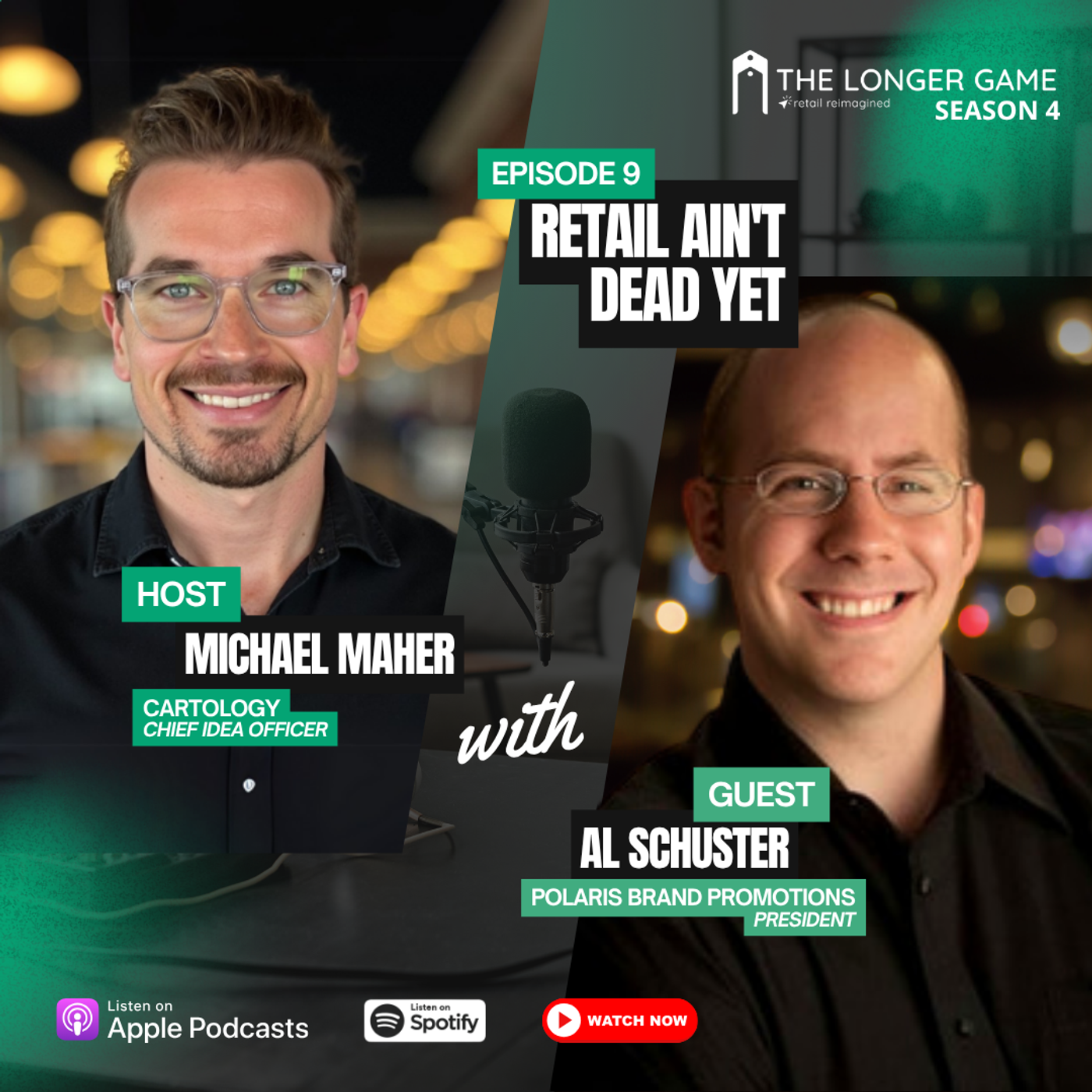 Season 4 Episode 9: Retail Ain't Dead Yet72 / 100
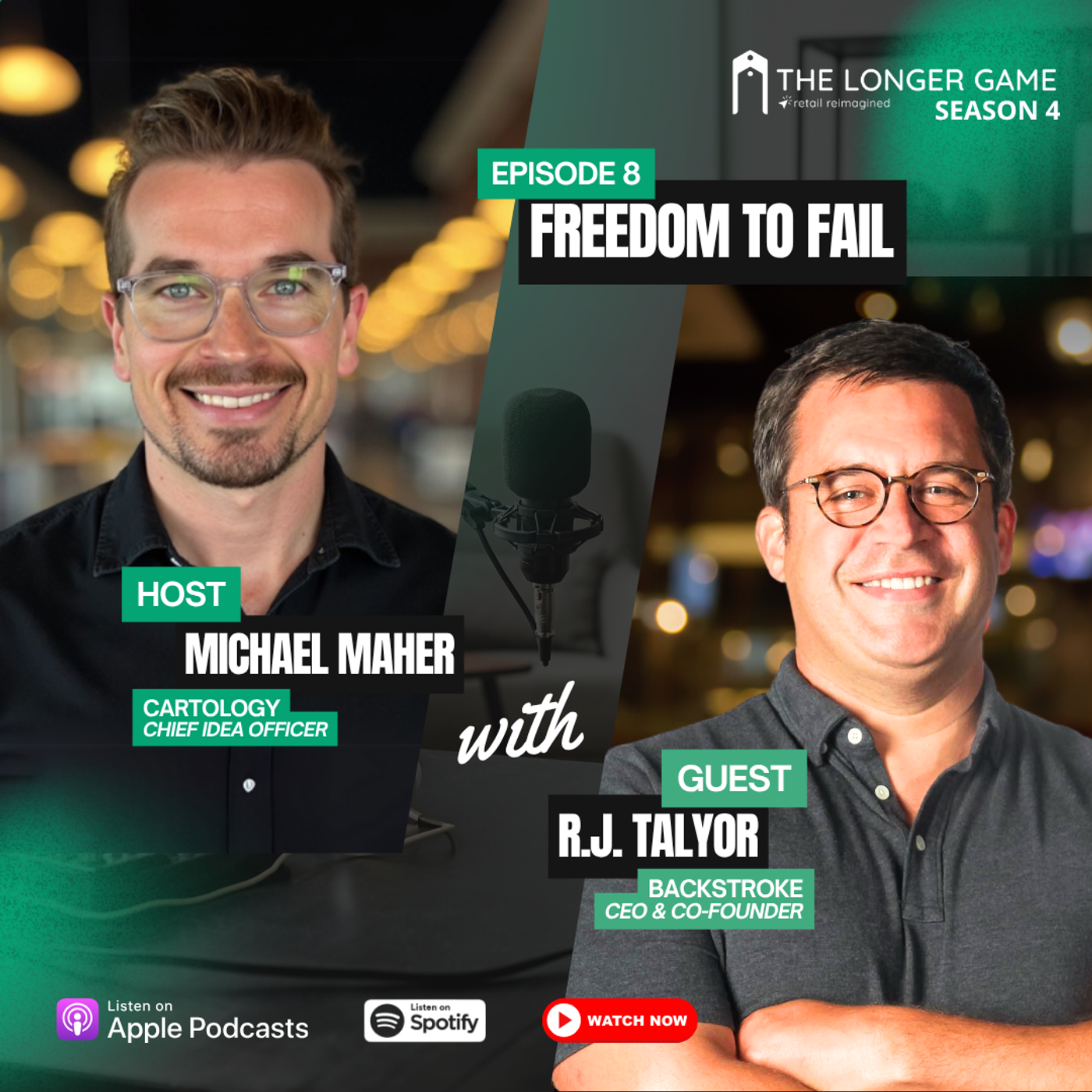 Season 4 Episode 8: Freedom To Fail79 / 100
 Season 4 Episode 6: Baking In Slow Growth65 / 100
 Season 4 Episode 4: How To March With Pace And Urgency78 / 100