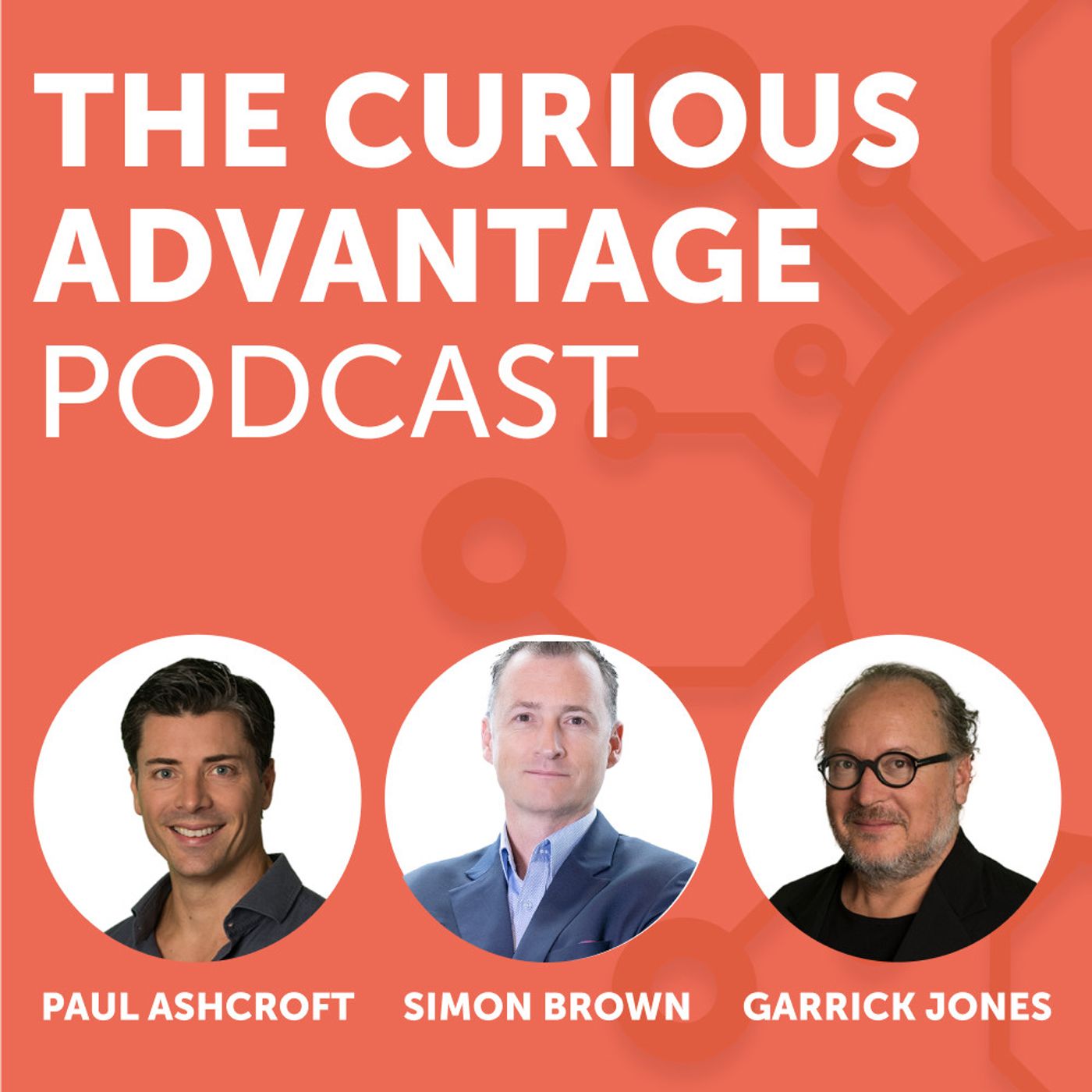
The Curious Advantage Podcast · 2026-06-03 · 28 min
Key moments - from our scoring
Substance score
26 / 100
Five dimensions, 20 points each
At the 100-episode milestone, the hosts reflect on how a pandemic-era dinner conversation in 2019 evolved into a globally-ranked podcast covering neuroscience, leadership, art, quantum physics, and AI. The podcast has featured 100+ guests including Navy SEAL Rich Devaney, neuroscientist Amy Edmondson, Microsoft's Alexa Cambon, Khan Academy's Sal Khan, education reformist Ted Dintersmith, and futurists like Jamais Cascio and Chris Meyer. Key themes across six years include psychological safety, the neuroscience of curiosity and wellbeing, AI's implications for work and education, and what it means to be human in an age of abundance. The hosts reveal they're finalizing "The Curious Imperative," arguing that curiosity has shifted from competitive advantage to societal imperative as quantum computing, AI, and tokenization reshape industries and human work. The conversation weaves together lessons on failure, resilience, ethics, and agency - positioning curiosity as essential navigation through geopolitical uncertainty and technological disruption.
The top episode is Alexia Cambon on frontier firms and agent bosses in AI; number two is Dr. Serena Goncalves-Fersh on curiosity and women in leadership; number three is Giles Yeo on obesity drugs and calorie counting; and the top ten also include episodes with Amy Edmondson on psychological safety, Ari Popper on sci-fi futures, and Kentaro Toyama on AI ethics.
They believe that in the six years since their first book, curiosity has become more critical due to emerging technologies like AI, quantum computing, and tokenization. They argue it's shifted from a competitive advantage to a societal imperative necessary for navigating uncertainty and maintaining human agency.
Curiosity has become much more mainstream and is now recognized by the World Economic Forum as one of the fastest-growing skills, whereas five or six years ago it was discussed by only a small number of books and voices in business.
Alexia Cambon's work on frontier firms and agent bosses, Kentaro Toyama on AI ethics and consciousness, Ari Popper on sci-fi futures, and early interviews with ChatGPT and Sal Khan on GPT-4's educational impact significantly shaped their perspectives on AI's role in work and learning.
Being curious stimulates biological wellbeing and improves learning retention; understanding the vagus nerve's link to wellbeing encourages health behaviors; and curiosity activates psychological safety, which enables better performance and failure tolerance in teams and organizations.
Our reviewer’s read on each dimension, with quotes from the episode.
This episode is largely retrospective and celebratory rather than insight-dense. The hosts recap previous episodes and guests without extracting novel operational lessons or actionable insights. Most discussion consists of name-dropping past conversations, listing top episodes, and wishlist guests. There is minimal new thinking, frameworks, or ideas that a B2B operator would learn - mostly platitudes about curiosity being important and AI being transformative.
it's been quite a journey from a conversation we had over dinner back in 2019
We're going to be doing something a little different. We don't have any other guests, it's Paul, Garrick and myself.
The framing of curiosity as an 'imperative' rather than an 'advantage' is the only marginally original angle, but it is underdeveloped and unsupported with evidence. The episode recycles observations from prior interviews rather than generating fresh thinking. No contrarian arguments, first-principles reasoning, or counterintuitive claims are presented. The hosts mostly affirm conventional wisdom about AI disruption and the importance of staying adaptable.
curiosity is even more important than it was when we first wrote the book
curiosity seems to be a topic that is evergreen
This episode contains no guest interview. It is a self-congratulatory retrospective featuring only the three hosts reminiscing about past episodes and making a book announcement. While prior episodes apparently featured high-caliber guests (Amy Edmondson, Alexa Cambon, etc.), those conversations are not present in this transcript, only referenced secondhand.
We don't have any other guests, it's Paul, Garrick and myself
So it's been quite a journey from a conversation we had over dinner back in 2019
The episode cites specific past guests (Amy Edmondson, Kentaro Toyama, Alexia Cambon, Giles Yeo, etc.) and mentions their topics, and lists the top 10 episodes by listen count. However, these are largely name-checks without concrete data, metrics, or evidence from those prior conversations. No specific numbers, dollar figures, timelines, or measured outcomes are provided. The hosts note podcast chart positions (number 8 in New Zealand, 24 in UK, etc.) but provide no performance metrics, listener growth, or ROI.
we've been number eight in New Zealand. We've been number 24 in the UK, 18 in the Netherlands, 11 in Belgium
At number 10, Shannon Munifi, relational curiosity, trust and psychological safety
The conversation between the three hosts is cordial and flows naturally, with genuine reflection on their journey. However, there are no challenging questions, productive disagreement, or sharp follow-ups. The hosts largely agree with each other, make soft jokes, and take turns listing past guests. There is minimal pressure testing of ideas or intellectual rigor. The tone is self-congratulatory and circular - reminiscing rather than interrogating.
I have more hair.
You're a secret Swifty, are you, Garak?
Computed from the transcript - who did the talking, and the words that came up most.
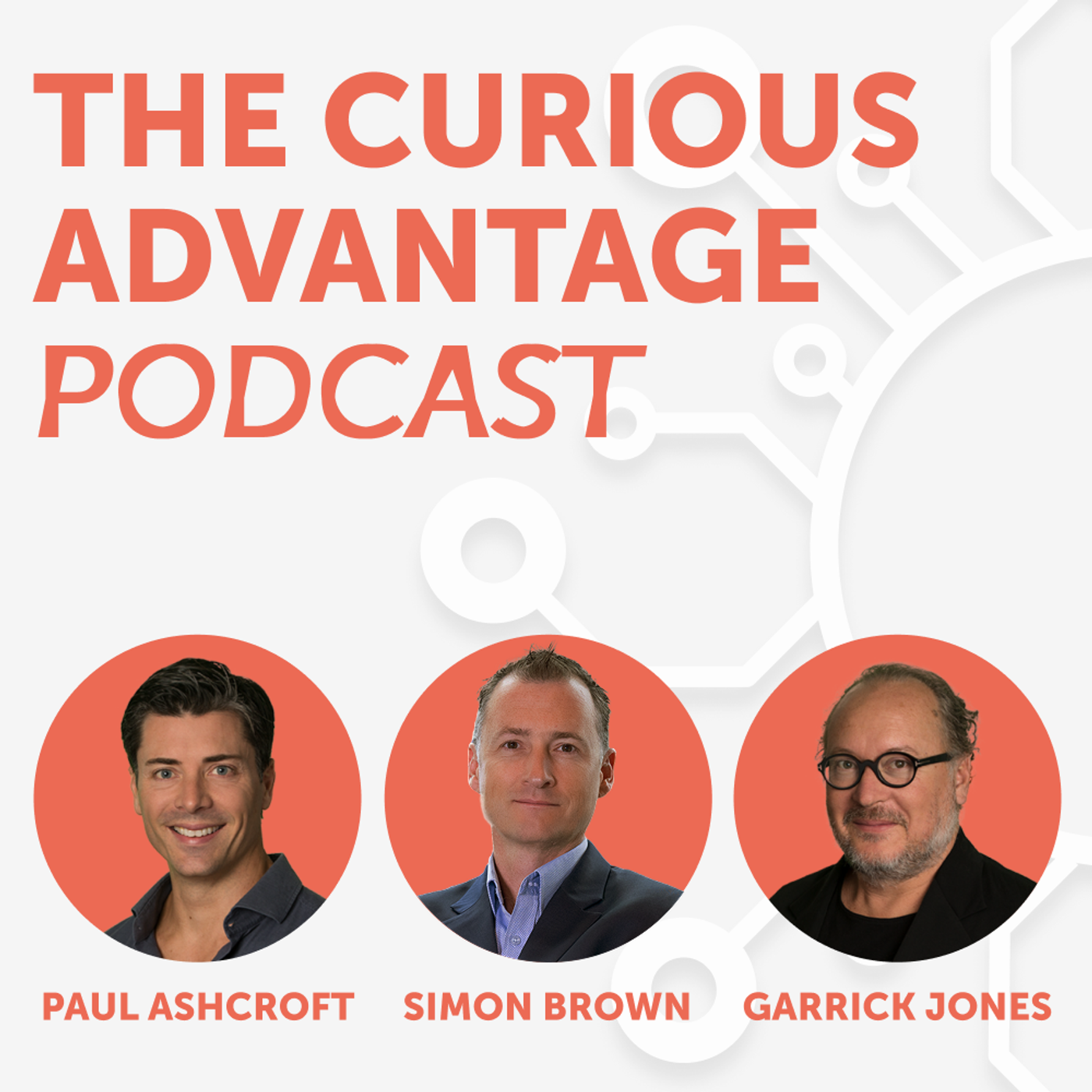
In this milestone 100th episode of The Curious Advantage Podcast, Paul Ashcroft, Simon Brown and Garrick Jones reflect on six years of conversations exploring curiosity, leadership, learning, AI and the future of work. What began during lockdown has grown into a global platform for ideas spanning neuroscience, psychology, education, business transformation, technology and the arts. In this special episode, the team looks back at the guests, themes and moments that shaped the first 100 episodes and explores why curiosity has moved from being an advantage to becoming an imperative. They discuss standout conversations with guests including Amy Edmondson, Alexia Cambon and Giles Yeo, while also introducing the thinking behind their upcoming book, The Curious Imperative . You’ll hear reflections on how curiosity helps us navigate AI, disruption, uncertainty and change and why asking better questions may be one of the most important human skills for the future. Resources The Curious Advantage Website Learn more about The Curious Imperative Buy The Curious Advantage The Curious Advantage explores curiosity and its growing importance in the digital age.
Transcribed and scored by The B2B Podcast Index.
Simon Brown (00:02.097) Hello and a warm welcome to our 100th episode of the Curious Advantage podcast. Today marks a milestone for us, so we're gonna be doing something a little different. We don't have any other guests, it's Paul, Garrick and myself.
And we're gonna look a little bit back over the course of the last five, six years it is, scary, at the episodes we've had, some of the themes that we've talked about, some of the things we've learned personally in our takeaways. We've also got a bit of an announcement that we'll be sharing and also look a little bit to the future. So it's been quite a journey from a conversation we had over dinner back in 2019, I think it was, when asked Paul and Garrick whether they might give me some advice on writing a book.
And that led to us actually writing The Curious Advantage, which led on to the podcast. yeah, six years later, 100 episodes on. And here we are. maybe Paul, kick us off with a sort of look back from your perspective on some of your reflections over the last six years.
Paul Ashcroft (01:08.75) Well, 2020 guys, we were all much younger, no doubt much better looking, more hair. We were in the middle of lockdown, do remember? pandemic was in full swing in the world.
And one of the reasons we started the podcast was because it was a brilliant way to research, to have curious conversations with people who were at the cutting edge of their field. Simon Brown (01:13.142) I have more hair. Garrick Jones (01:14.
596) Good for yourself. Paul Ashcroft (01:35.884) because it informed the work that we were doing. It was all entirely remote, wasn't it?
And even when we started recording the podcast and we still do it remotely, Simon, with you being in Switzerland, Garrick and I being in the UK, it's been a format that's just worked. We've gone from audio only to video only. We've spoken to, well, up a hundred plus guests now with this being the hundredth episode. And it's been quite an amazing journey over...
covering neuroscience, covering leadership, covering art, pottery, cartoons, quantum, you name it. And of course, 2022, we had AI. So the world has taken on another massive shift since then. Simon Brown (02:13.
144) Lego. Garrick Jones (02:16.726) AI. Simon Brown (02:18.
788) Yeah. Simon Brown (02:25.64) I was having a look in preparation for this actually at some of the stats because maybe people are surprised but we don't keep running detail on the stats. I was quite pleasantly surprised that actually if we look this year 2026, we've in the Apple podcast charts, we've actually been number eight in New Zealand.
We've been number 24 in the UK, 18 in the Netherlands, 11 in Belgium. Even 28 in Ukraine, 16 in South Africa, 14 in Ireland, 23 in India. So it's been right up there with some of the world's best podcasts in the Apple Management podcast rankings. So for something that was never really a plan, was let's publish some of our conversations.
It's great to see that it's had some traction. I guess a huge thank you to all of our listeners on behalf of all three of us for listening and keeping the conversation going with us along the journey. Garrick Jones (03:22.283) Absolutely and a thank you to our production team over the years who stuck by us and make us look great on these things.
Simon Brown (03:29.653) Not easy sometimes. Garrick Jones (03:32.25) I mean, there have been some great conversations.
There've also been some difficult conversations as well. We'll talk about those in a minute, I'm sure. But the thing that really stays with me is how this kind of came out of necessity. There was no marketing during COVID.
Our publishers, nobody knew what to do. So we thought we'd launch a podcast and now we're 100 in. And I have to say personally, it's been an amazing journey to speak to some of these incredible brains. keep our curiosity alive and keep our thinking on the edge or challenged if nothing else.
If I remember a little bit, some of the memorable ones are people who weren't in the business world, like artists like Sir Michael Craig Martin or graphic novelists like John Dunning or potters like Magdalena. You know, incredible people with incredible insights from outside of business. But then, of course, within business, you've got Alexa Cambon from Microsoft and her Frontier work on AI. What that means, fascinating.
I mean, these are the kinds of things that stick with me. And then very difficult conversations we've had with futurists like JamaisCascio and so on, who talking about beyond VUCA and these kind of chaos of the world that we're facing. And then incredible, incredible intelligences like Indy Selvarajah, who really seems to have tools that can shift the entire planet. I mean, constantly challenging us.
Simon Paul, what are some of the memorable ones you've... Simon Brown (05:14.257) I remember that conversation with Indy actually when he was sat in his garden and incredibly bright guy. That was the limits of testing my brain, I think, on trying to keep up with him and turn it into something.
I remember some amazing takeaways of his views on sort of how things will impact on city design and all sorts of other areas. I think for me, it's been a variety of guests. mean, to go from... Navy Seal Team 6, Rich Deviney and sort of going into what makes a Navy Seal.
had, keeping that sort high performance elite sports, had Tignham, Scott Pelton. Most sort of takeaways there of the importance of sleep, nutrition, movement and mindset. We had Darren Shand quite a long time ago now, who was the All Blacks coach or manager. him talking around, you when you're the greatest of all time as a rugby, all-black rugby player, still the importance of being curious and sort of how you improve what you're doing.
And then, yeah, we've had incredible guests. mean, one that was very memorable for me was Jose Manuel Barroso, was a real privilege having him perform at Prime Minister and European Commission President on and my takeaway from that conversation was if you've got a tough problem actually make it bigger. It was like actually if you can make something bigger you get more people involved and actually it gives you a greater chance to actually get it resolved. there's so many great conversations that we've had.
what were a few of your favourite conversations? Paul Ashcroft (06:57.485) Similar so many. mean, I think the one that recently stuck up for me is talking with Amy Edmondson, who of course, brilliant, brilliant person, and how she talks about essentially getting comfortable with failing.
And I think that's probably been a theme over the past few years as a society, as we've been dealing with massive change, experimenting, trying, failing and... creating the psychological safety around each other as we try new things out. And of course with AI, we've had a lot of really interesting conversations that including, you do remember three years ago we interviewed Chat GPT Didn't we find ourselves innovative then? That looks so archaic now.
Simon Brown (07:41.711) Yes. Garrick Jones (07:45.464) I had somebody talk to me about that the other day, just this week, kind of going, you interviewed G.
P.T. and they spoke to you and she decided that her name, you know, she was female and all the rest of it. was three years ago.
Ada Lovelace, Lord Byron's daughter. Simon Brown (07:57.934) Ada wasn't it after Ada Lovelace literally called you GPF. That was the identity that ChatGPT gave itself.
Yes, yes. Paul Ashcroft (08:04.909) But also the neuroscience of curiosity, I think, has been really quite surprising to me. I hadn't realized quite how connected something is.
Hard to put your finger on as curiosity is to our biology. And I think that's one of things I've learned, how just by being curious, you not only learn better, you retain more, you actually stimulate your own wellbeing. Right? It's better for you to be curious.
And I think that for me is something I've really held onto throughout the past few years of working on this with you guys. Garrick Jones (08:43.449) I remember Pamay Bassey from Kraft, she did 52weeks days of faith. I think that's where looked at where she went.
She spent a year or more going every week to a different faith or different places of worship and understanding how complicated and complex and fascinating that world is and all she learned from that. That really stayed with me. somebody would be brave enough to step outside of their own world and explore openly, I mean, this question of faith, which is amazing. And that also the idea of the, know, the meta, what it means to be human in this age of AI.
And AI has been a theme that comes up again and again, and more specifically, what it means for the change that's coming around in our organization. Spoken to some, you know, the great guys out of... California, other podcasters, people who've got their finger on their pulse. And then the great thing for me personally is that we hear what the challenges are that society is facing.
How do we get young people to come through? Which was always the starting point for curiosity. We thought it was about knowledge. How do we train young people in what's needed to be part of the digital revolution at the time now?
How do we bring young people into profitable, valuable working lives or the future that is unfolding. These are the kinds of things that really stay with me and sort of give me questions to ask the experts. Simon Brown (10:22.853) That was where my mom was going as well.
Actually, while we're talking about this, I'd love also if people can share what they've taken away from the podcast episode. So wherever you're listening to this, there's LinkedIn or YouTube or whatever, do share your favourite moments, your favourite guests, because that will also give us a view on who we need to contact to get back on the podcast as well. But yeah, the education piece is one, if I sort of look back down the list of 100 guests we had Sal Khan on, I remember that was in the sort of early days of of chat GPT, think he'd just had access to GPT-4, I think it was all 4.
0 at that point, and he'd done Carmigo, and that's one I've sort of referred back to many, many times since. More recently we had Ted Dintersmith, the education reformist, and even on our most recent episode that we've just been recording with Mike Houseman, we're discussing on that as well, the role of education, and particularly with AI, how important it is to build those AI. Garrick Jones (11:08.355) to Matt.
Simon Brown (11:22.707) AI skills, the discussion around is AI cheating or not, how should universities, how should schools be approaching AI. I think that's a really important topic at the moment and that's one I think looking to the future we're to have have many more discussions around that one because I think there's so much to be learning around that. Garrick Jones (11:42.
426) That's right. the thing that it really helped me with was the fear of AI taking away all the jobs and disrupting society in a way that destroys economies and so on. And I think that's, I don't think that, and you hear that a lot and you feel that comes up in some of the comments, but that fear, think I've got rid of because I really have come to see that it's change, change is normal, but what happens is... And by being curious, we understand that there are problems that get created through all this change.
And yet those are just problems to be solved. And where there problems to be solved, there are opportunities. And so it's a shift on opportunities and a shift of focus, which means that there is disruption. But if you're open, you will be able to make it or leap the abyss.
I mean, it brings me back to one of my favorite podcasts. And I know we don't want to talk about too many favorites. because they're all great, but with Chris Meyer, was a colleague of ours who sadly is no longer with us, but he gave a podcast about the future, him being a futurist and so knowledgeable, where he looked about and talked about, I keep on talking about this, about ants and all the different pathways that they explore so that if difficulty comes in one pathway, they have other opportunities, they have other things on the go.
At the same time he called it from the Big Mac to the Big Bang which is so memorable and the point about this curiosity and this curious podcast For me, it's one of the ways of keeping those channels open to things that I wouldn't have considered in the past You know things that I didn't know about and which give me options as we move forward one of which Paul be pleased to know is on health and well-being which has been a recurring theme that pictures up understanding about the Vegas nerve, understanding about the link between our wellbeing and curiosity and so on encourages me to keep fit.
Simon Brown (13:50.258) I think that's a nice thing we've had a good diversity. talking about health, I remember the episode with Giles Yeo around some of the obesity drugs and things like that. We've tried to keep a variety of mainstream topics, but also going into some maybe parallel topics to business, some maybe away from business, but actually even some of the ones that have been not necessarily obvious to be tied to business on the face of it have often had that we can learn that we can bring back into or at least I've been able to bring back into my day to day.
Paul Ashcroft (14:27.031) Yeah, curiosity seems to be a topic that is evergreen. Right. I think that's something else that we found that nice thing about curiosity.
You can talk to almost anybody about it because if you are curious, then they are probably a curious person as well. I mean, imagine we've had Andy Clark talking about consciousness. We've talked, we've been in the future. And I think these sorts of conversations were really questioning what, you know, what does it mean to be human?
We spoke to Kentaro Toyama, do you remember? Again, talking about ethics, consciousness, and how we save ourselves from the cult of technology. So some of these conversations really pushed the thinking, certainly my thinking, in terms of like who we are and what's our role in how we take our society forward. Simon Brown (14:59.
993) Mm. Simon Brown (15:19.441) The Kentaro one sticks in my mind and... It sounds like, you've passed the fear point with AI.
I'm still in two minds that there's still an element of fear there. And the Kentaro conversation was an interesting one. I remember him saying, in his view, when we look at the incentives, we're going to end up in some sort of disaster event before we then put the right sort of checks and balances in place. And I remember Ari Popper as well, had his team of Garrick Jones (15:46.
147) Bye. Simon Brown (15:51.634) sci-fi writers that helped envisage the future for Fortune 500 organizations and things. We've had some really positive views of the future, but we also have people presenting maybe that more dystopian view, that we're not necessarily...
default onto the good path that there's things we need to do, the agency we need to take in order to put things onto the right track, which has been certainly creating a lot to be thoughtful about, which maybe brings us onto why curiosity is becoming not just an advantage, but that it's becoming more of an imperative. And maybe Paul, you'd like to share some of our news of what's going to be happening in the next couple of months. Paul Ashcroft (16:39.927) Well, big news for those that follow us at Curious Advantage.
We're in the final stages of writing the next book. The next book will be called The Curious Imperative. You heard it here first. We're very, very excited to get this out and get this into people's hands.
why did we write this? Well, we felt sort of five, six years further on from The Curious Advantage that actually curiosity is even more important. than it was when we first wrote the book. Originally, we thought, well, actually, curiosity is probably the greatest advantage we as humans have in the digital age.
Well, in the advent of AI and other technologies such as tokenization and quantum that are coming down the line, we think being curious is actually going to be an imperative. So, yeah, we're super excited about the new book. It's going to talk about, you know, why does the future feel so unsettling for us? What does it mean to be human?
What are we going to do when everything becomes abundant? But also, as ever, we take not just a positive, but a hopefully balanced view of the future. And we think about, what will we do as humans to take agency? And how can we use our curiosity to take agency in this changing world?
So yeah, we're really excited about the book. Check out the links, please register your interest and we're very excited to hear your thoughts. Garrick Jones (18:10.933) It's amazing.
We've learned so much. mean, we've tried to synthesize not only a new research, but also what we've been told by our guests on the podcast several times and feed that into the curious imperative. The idea that not only are we naturally curious, but that we as humans, you know, as we learn more about neuroscience and as we learn more about what it means to be human, both at a metaphysical as well as a physical level. We come to have some more tools and more ability to kind of apply the things that we're learning in our everyday lives, which kind of hopefully makes it easier as we definitely go through this transition that's happening.
I keep on thinking back to the start of the 20th century, which was characterized, yes, by war, but it was also characterized by the discovery of oil on a very large scale. discovery of industrialization, moving away from steam, but to flight and the invention of white goods for the household. These were like, we take them for granted now, but they fundamentally changed the way the world was operating and what it meant to be human in the world and who was in charge, what the elite were up to and who were servants previously and created the middle class and so on.
A huge shift which we were born into. And now we face the 21st century and our curiosity has led us to understand some of these big trends that are coming down the line. As Paul mentioned, know, quantum AI, tokenization to name a few. And these things as they scale are to have a huge impact on us.
But we also know what it means more to be human, which is fascinating to me. know, what is the neuroscience telling us about how we respond and how we can respond and how we can impact not only our wellbeing, but also our mental wellbeing. we face these huge changes that are going to impact our children and the generations down the line. Simon Brown (20:14.
255) I think there's been quite a change over those six years in terms of how people perceive curiosity. think we probably weren't the first book to write about it, but we were amongst a small number of books on curiosity. And I think it's become much more mainstream, much more talked about over that five or six years. And it's now recognized by World Economic Forum as one of the fastest growing skills and it's held up in many examples.
And I guess for me, it's and that's why we're calling it now the imperative. How do you navigate through the unknown? Whether that's AI geopolitics or all of these other pieces. I think you have to have that element of curiosity now.
I think across those hundred conversations now there's so many examples of why that's so important. Garrick Jones (22:59.629) This is the top 10 that's been in the last six months. All right, so yeah.
So would you guys be interested in the top 10 episodes that have been listened to in the last year? Simon Brown (23:17.049) Absolutely, yeah, yeah, don't think I know where to start on that. So yeah, super curious.
Garrick Jones (23:18.661) At number 10, Shannon Munifi, relational curiosity, trust in psychological safety. The lovely Shannon. Number nine, Viola Rollins from the London Business School, recrafting the psychological contract.
Number eight, Kentaro Toyama, who we've talked about, AI, ethics, consciousness, and rescuing us from the cult of technology. Number seven, Rich Devaney, the SEAL, Navy SEAL trainer. Simon Brown (23:44.177) Mm-hmm.
Garrick Jones (23:47.138) applying a Navy SEAL's attributes mindset. Number six, James Cashio navigating the age of chaos. BANI Explore.
That was a tough one. Number five, Ari Popper, imagining the future where sci-fi meets curiosity. Fascinating. Number four, Amy Edmondson, practical tips for leaders and fostering positive failure.
Number three, Giles Yeoh, weight loss, ism pic and the end of calorie counting. Simon Brown (23:54.927) Danny, yes, yes. Garrick Jones (24:14.
617) And number two, Dr. Serena Goncalves-Fersh, curious about learning, curiosity, AI, leadership, talents, and women in leadership. And number one, Alexia Cambon, the future of work, Frontier Firms, Agent Bosses, AI, and the 2026 work trend. Simon Brown (24:17.
584) Mmm. Simon Brown (24:25.155) yes. Simon Brown (24:32.
827) which was a great episode. I've recommended that one to many people in terms of getting Alexia's phenomenal views and research around frontier firm and where things are going from agent bosses and working with AI. There's some great insights from that episode. Paul Ashcroft (24:53.
592) Who would be your most wanted next guests, guys? Paul Ashcroft (25:01.87) I can start you off if while you're thinking, put you on this. Can I have two?
Can I have Fei-Fei Li, Dr. Fei-Fei Li, computer scientist at human centered AI and well, amazing, amazing, leading voice on human centered AI. And then. Simon Brown (25:03.
663) Yeah, go on. Simon Brown (25:08.87) The AI, here Paul Ashcroft (25:19.994) If I'm allowed to, can I have Dario Hamade as well, please, of Anthropic, because, well, why not?
Someone who's shaping and changing our society as we stand on it. I think they would be my two wishlist guests. What would be your assignment? Simon Brown (25:39.
026) Dario would have been up there. I think I've been listening a lot to the the moonshops podcast. So Peter Diamandis, Salim Ismail and the team there. So yeah, maybe maybe getting one or two of them would be a great conversation with some phenomenal views on sort of where the future is going and this sort of escape velocity of five years time where we reach a point where we'll live a year or more longer for every year that goes.
by and then the talk of the Dyson swarm of data centers in space and all of these pieces. I think that would make for a very interesting conversation. think, yeah, any of the sort of great minds around AI, but also actually I'd be interested to go both sides of AI as well. So we get the positive ones from the AI large language model teams, et cetera, but also maybe Eli Izykowski or Tristan Harris or some of the counter voices.
Actually Tristan Harris would be fantastic to have on or any of the sort of counter views there. Geoffrey Hinton would be fantastic as well. So yeah, maybe so we can get that balanced view from the sort of positive, but also the voice of we need to be very cautious about some of these things as well. Garrick Jones (27:00.
683) Exactly. I'd love to speak to Peter Thiel and ask him what the hell has he got in mind and what is he doing and where is it going. And, you know, I think we're about, I think there two degrees of separation to Peter Thiel. So it's not outside of the bounds of fantasy.
And I think the, there's a fascinating economist called Simon Brown (27:03.824) Mm. Simon Brown (27:07.569) you Garrick Jones (27:29.
069) Mariana Mazzucato is Italian, but she's looked at, she's looking at circular economics and accounting for circular economics and all the things that are needed to really take us into a less consumer based accounting mechanism, a less consumer based world. So it starts to make it valuable to kind of put all the stuff back into the economy. which is where it should be anyway so she's she's invented all the stuff and she's got some great I'd love to have Marianne on the the the on the podcast Simon Brown (28:05.
457) Yeah. And another one maybe which I think you have some links here, Garak, as well, be keeping the art theme banksy. In terms of curious mind, I think that would be a great conversation. So going outside of our normal sort of business and AI lens.
Garrick Jones (28:21.273) That's right. And do think we could have Elon? Should we aim for Elon?
Has he got time? Simon Brown (28:28.218) would be fascinating, be an amazing conversation. Garrick Jones (28:32.
805) I mean, I mean, also you talked about Jeffrey Hinton, but I'm also interested in talk to to Sam Altman as well. mean, these are people who are defining what's going on now, whether these things last down into the century. Who knows? But I think certainly what's happening in the next 10 years is being defined by not only these organizations, but also these people.
It'd be fun to talk to them. Simon Brown (28:38.865) Mmm. Simon Brown (28:58.
289) From a great entrepreneurial minds perspective, Richard Branson is someone I would love to talk to as well. think the curiosity he's showing over his career and the pivots he's taken along the way and some of the really sort of courageous bold moves he's done, I think that would be fascinating to learn more about. There we go, so we've got a few names to keep the series going for another 100 episodes. Garrick Jones (29:14.
851) Yeah. Paul Ashcroft (29:20.104) wishlist that'll keep Jess busy. Garrick Jones (29:22.
883) Can I ask for Taylor Swift? Simon Brown (29:25.519) You can ask. Paul Ashcroft (29:26.
478) Yeah. Garrick Jones (29:28.729) Taylor Swift's fascinating because she banked a billion dollars for her last tour and yet she does it by just connecting with a specific demographic and her marketing is astonishing. So there's my full wish list.
I might have to ask for another... Paul Ashcroft (29:48.792) You're a secret Swifty, are you, Garak? We didn't know that about you.
Garrick Jones (29:56.505) somebody else in the music industry to keep me cool but I don't I gave up being cool a long time ago. Simon Brown (30:07.223) good.
So I think we're coming towards the end. just... and take this opportunity on behalf of all three of us, guess, to just say a huge thank you for joining us along the journey of the last six years on the podcast. A few thanks to those of you who have bought the book and for all of the support and comments and things that you've given us and to our 100 plus guests as well.
An enormous thank you for joining us and making for curious conversations along the way. But it's not over yet. There's plenty more to come. So, yeah, do send us your ideas of who you would like us to be talking to.
We'll be sharing more details around the Curious Imperative, likely probably August, September time that we'll be launching that. But yeah, we'll have links in the comments for more information and to sign up to make sure you're getting updates on when that's coming. Garrick Jones (31:04.793) Happy 100th, guys.
Simon Brown (31:07.759) Indeed, happy 100. Paul Ashcroft (31:08.524) Yeah.
Happy 100th. Simon Brown (31:12.913) Perfect. And with that, thank you.
And we'll call things a day for today. And we'll talk to you when normal service is resumed on our next podcast. Thank you all. Paul Ashcroft (31:22.
798) See you next time.
Other episodes covering the same guests and topics, from across The B2B Podcast Index.
 #57: From Pressure to Performance: How Great Leaders Find Their Mojo and Flow, with Ben CroweWorld's Greatest Business Thinkers · on Psychological safety90 / 100
 Workplace Culture & Psychological Safety | The HR Leadership Blind Spot with Seema BhansaliThe HR L&D Podcast · on Psychological safety86 / 100
 Your Best Employees are Quitting Quietly - Warning Signs You Can't IgnoreHigh Octane Leadership · on Psychological safety84 / 100
 Reframing Cyber Risk with Jane Frankland MBEBCG on Compliance · on Psychological safety84 / 100
 Engagement, Retention, and Employee Career Planning Part 1Informed Decisions · on Psychological safety80 / 100
 The Superhero Leader Trap: Why Doing More Can Make Your Team Do LessThe Mason Duchatschek Show · on Psychological safety80 / 100
 104: From Particle Physics to AI: Rewiring How Organisations Work with Markus Bernhardt (Endeavour Intelligence)100 / 100
 102: Written Off by School. Recruited by Harvard: Brandon P. Fleming’s Story on Curiosity, Mentorship and Potential63 / 100101: Why "Just Be Yourself" Is Terrible Leadership Advice with Dr Laura Sicola (Cognitive Linguist)80 / 10099: Prof. Robert Kegan on Curiosity, Self-Authorship, Adult Development and Why Change Is So Hard (Harvard Graduate School of Education)93 / 10098: Tara May: The Unexpected Superpowers of Autistic Minds That Transform Business Success (CEO, Aspiritech)80 / 100