
The Biotech Startups Podcast · 2026-07-30 · 59 min
Key moments - from our scoring
Substance score
62 / 100
Five dimensions, 20 points each
Javier Tordable left Google roughly two and a half years ago to launch Pauling AI (named after Nobel laureate Linus Pauling), recognizing that language models and agentic systems could fundamentally transform computational chemistry - a field where researchers spend months to years running in silico simulations that could theoretically be accelerated. His platform automates the full computational chemistry workflow, including molecular docking and ADMET analysis, collapsing months of work into days. Building alone in the AI era, Tordable leverages language models across the entire company: generating website content from code, using ChatGPT for contract review, filing provisional and non-provisional patents entirely himself, and deploying agents not just for customer workflows but for internal infrastructure. He discusses the paradox of AI-enabled prospecting (email outreach has become so cheap that it's now noise) and argues that human-to-human relationships, in-person meetings, and artisanal, hand-crafted business interactions will become increasingly valuable as automation commoditizes digital communication. The conversation explores how solo founding in biotech - traditionally regarded as impossibly hard - is becoming more feasible with modern tooling (Apollo, Clay for prospecting; LLM-driven development), though challenges remain in voice-based AI sales outreach and the regulatory requirement for human oversight in medicine.
Pauling AI automates the full in silico drug discovery workflow - including molecular docking, ADMET (absorption, distribution, metabolism, excretion, toxicity) analysis, and lead candidate identification - using language models and agents to collapse work that typically takes 6 months to a year into days.
He uses language models for coding (via agents), website generation from code, contract review via ChatGPT, patent filing, and sales enablement materials. He also runs agents internally to build the systems customers depend on, and relies on modern prospecting tools like Apollo rather than traditional hiring.
After observing language models and agentic systems at Google, he recognized that automation could dramatically improve computational chemistry - a field where researchers waste months on in-silico work that could theoretically run much faster inside a computer, and he believed this was better pursued outside a large company.
Email prospecting has become commoditized and noisy - everyone uses tools like Apollo to send thousands of emails - so human-to-human outreach and in-person meetings have become more valuable. Voice AI agents still struggle with sub-100-millisecond latency needed for natural conversation.
Unlikely; professional bodies like the AMA will likely lobby for continued human physician oversight, meaning someone will always need to sign off on treatments and bear responsibility for outcomes, creating a structural floor for human involvement.
Our reviewer’s read on each dimension, with quotes from the episode.
The episode contains solid technical insights about computational chemistry automation, drug discovery economics, and AI applications in biotech, but much of the content rehashes familiar talking points about LLM capabilities and AI-driven acceleration. The most novel insights - such as the economics argument that Western biotech cannot compete with China's faster clinical timelines, and the specific observation that computational work should take days not months - are valuable but interspersed with considerable throat-clearing about AI hype and general startup advice that adds minimal new information for operators.
you spend six months running an in silico campaign...it never made sense that you would spend six months running an in silico campaign
it comes down to an economics question...big pharma...why would I give you this money where I can just literally buy the exact same thing from this company in China
While the guest's personal pivot from Google to drug discovery is compelling, the core business idea - using AI to accelerate computational chemistry - is well-trodden ground in the AI-for-science space. The framing of it as a pure economics problem rather than a scientific one is somewhat fresh, but the broader narrative of LLMs automating workflows, the comparison to software engineering disruption, and the China competitiveness argument are recycled frameworks appearing frequently in biotech discourse. The technical execution may be novel, but the strategic thinking presented is not particularly contrarian.
using agents to automate those workflows...apply first principles to this and do it faster and cheaper
language models...can automate tasks...this was not obvious at all...Two and a half years ago
Javier brings genuine operator credibility: 16 years at Google building infrastructure, a self-taught background showing technical depth, and two years actively running a bootstrapped/early-stage biotech company solo. He has real customers and has built working systems. However, he is not a seasoned biotech operator with multiple successful exits or deep pharma/clinical experience; his expertise is primarily in infrastructure and AI applied to chemistry, not drug development end-to-end. He speaks thoughtfully but from the perspective of someone relatively early in translating technical capability into business success.
16 years at Google building infrastructure at scale
solo founding Pauling AI
The episode lacks concrete numbers and specific case studies. Claims about timelines (months vs. days), costs (saving $20,000 per program, $750 vs. $200 yen appointments), and China's percentage of new molecules (30-40%) are stated without source attribution or evidence. Customer examples are vague ('small, medium sized biotech funded'). Technical protocols are described abstractly rather than with real-world examples. The Taiwan herpesvirus vaccination study on Alzheimer's is mentioned but not cited with specifics. This hurts the episode's ability to ground claims in verifiable reality.
we can save you $20,000 in your next computational chemistry program
30, 40% of all new molecules are actually coming from China
The host asks reasonable follow-up questions and shows genuine curiosity, but rarely pushes back or challenges the guest's claims directly. The conversation meanders productively through topics (AI, solo founding, China competition, longevity) but lacks sharp, targeted questioning on weak points. For instance, the host doesn't press on why Pauling's approach would outcompete established CROs or larger players with more resources, or validate the claimed timeline improvements with specific customer data. The host also allows philosophical tangents (handmade goods, artisan craftsmanship) that feel more conversational than substantive. Overall, it reads as a friendly deep-dive rather than probing inquiry.
Yeah...Hard mode. Hard mode
Can you talk a little about that? I'm fascinated at how people are company building in this day and age
Computed from the transcript - who did the talking, and the words that came up most.
The Biotech Startups Podcast is powered by Excedr - helping life science startups accelerate R&D and commercialization with founder-friendly equipment leasing. Skip the upfront costs, stay lean, and focus on breakthrough science. As a TBSP listener, you can get exclusive perks through Excedr's partner network - special savings, promotions, and more. Explore these offers today: "We not only run agents that do the computational chemistry for our customers, but we run agents for building our own systems." In this part of the podcast, Javier Tordable unpacks why he left Google to solo found Pauling AI and how its agentic platform automates computational chemistry - from docking to ADMET - collapsing months into days. Javier walks through building a company alone with AI: filing patents with LLMs, writing sales processes, and running agents to build the systems customers depend on. He and Jon dig into why human-written communication will command a premium and how biotechs use Pauling to run screens faster.
Transcribed and scored by The B2B Podcast Index.
Speaker A: This episode is brought to you by Exceeder. Exceeder provides lifesign startups with equipment leases on founder friendly terms to accelerate R and D and commercialization. Lease the equipment you need with Exceeder, extend your Runway, hit your milestones, raise your next round at a favorable valuation and achieve a blockbuster exit while minimizing dilution. Additionally, as a podcast listener, you can redeem exclusive discounts with a growing list of biotech vendors and get $500 off your first equipment lease by using promo code tbsp on exceeder.com partners.
Speaker B: Welcome to the Biotech Startups podcast by Excedr. Join us as we speak with first time founders, serial entrepreneurs and experienced investors about the challenges and triumphs of running a biotech startup. Um, from pre seed to IPO with your host John Chee. In our last episode, Javier, uh, shared the personal loss that pivoted him from cloud infrastructure into life sciences, how he self taught his way into the field, and why he believes the most important problems in drug discovery are, uh, economic, not scientific. If you missed it, check out part three. In part four, Javier unpacks why he left Google to solo found Pauling AI and how its agentic platform automates the full computational chemistry workflow from docking to admet analysis, collapsing months of work into days. He also walks through what it really means to build a company alone in the age of AI, filing your patents with LLM, writing your own sales process, and running agents to build the very systems your customers depend on.
Speaker A: So like when you were at Google, when did you know it was time to start your own company?
Speaker C: Yes. So basically a couple of years ago, maybe two and a half years ago. Of course I was kind of in the bleeding edge of AI, right? You know, working very closely with a lot of folks, seeing what's happening. And at one point I started thinking very deeply about what in my mind is one of the most transformational technologies, right? Which is language models and agents based on language models that can automate tasks. Now today it may even seem that obvious, right? Like I think everybody has seen, you know, their Codex or Claude or Gemini or Quinn or whatever is your favorite LLM and harness. You go and tell it, you know, read my document and write me some marketing lines that I can put in Google Ads, right? A lot of us have done things like that and are familiar with the fact that these systems can orchestrate fairly complex sequences of actions. They can make decisions, they can analyze edge cases and so on. Two and a half years ago this was not obvious at all. So back then there were A few cool demos. You could go and tell a language model, you know, give me this and we'll give you that. Or like process this text and summarize it. And it would do that. You could ask it to write code, right? And it would write a test case or whatever, it would write a function, but you would never ever be able to tell it to write a large complex piece of code. If you went to the equivalent of like GPT3 and then tell it, write me, uh, an iPhone app that keeps track of my to do list. There was like zero chance literally that it would be able to finish that all the way into it. Now that's not the case. You can definitely try that. You can get your favoring hard your favorite hardness and language model. And there are many of them around that are very good. I mean, I use all of them, right? But you can pick whatever is your favorite. And in many cases it will do that, right? Like literally just let it run for a few hours and it will complete that task. So I started thinking very, very deeply about this. And what are the second and third order consequences of that? And just like a lot of other tasks that are automated, you know, the first kind of consequence is you may need less people to do certain things, right? Because a, uh, system that can perform these things automatically can do it faster and cheaper. Eventually you can move upscale and think. Well, once you have not just something that is faster and cheaper, but a repeatable, well documented process, you can go and improve it. And you can improve it probably faster than you can improve a human. This is also, you know, one of those things that it's funny to talk about it, right? But like when we talk about how long does it take to train a human to perform a job function, you know, that's 20 years, right?
Speaker A: Yeah.
Speaker C: You take, you know, two, three, four year olds, right? And then you put them through school and then college and then this and then grad school and then you teach them on the job. It takes 20 years, right, to train one of these humans. We are in like what, year four of training language models, right? And now they are at the equivalent of a PhD in many fields. You know, year five, six, seven, right? You know, these things are going to be superhuman, right? There's no question about it. So, you know, I started thinking very deeply about those things and then I realized that I wanted to pursue some of these ideas and it just made more sense to do it outside of Google than inside of Google. So I left, founded Pauling, which is named after Linus Pauling, I think we briefly touched on that, but he is surprisingly unknown, given he's like one of the most celebrated scientists, American scientists in history, the only person that ever won two Nobel Prizes without sharing them with anybody. And he was behind a lot of, you know, really, really important scientific discoveries in chemistry. And maybe most importantly for me, the domain name was available, right? So I ended up naming the company Polygon AI and started working on these things, right? So it feels like a whole lifetime, even though it's been basically two years. But left Google, uh, found a few people that were interested in the space, raised a little bit of money. We spent a lot of time just building infrastructure. We have our own genetic system and so on and so forth. But, you know, with that kind of, you know, going through all the details, the key idea is basically to automate the work of a computational chemist, right? Which such, you know, is one of the first few things that you would do when you're trying to come up with a novel therapy, right, Or a new molecule for a novel target. You go and start running some of the simulations on the computer. You may have a structure for your target. And you want to say, well, let me see if I can find a small molecule inhibitor, a binder for this thing, then that should have some therapeutic effect. You know, people would spend six months, a year, a couple of years going through that process. You go through many different iterations. You make mistakes, you go back and forth and you hire chemists that do all, all this stuff for you, computational chemists or medicinal chemists. You iterate multiple times and eventually you find your lead candidate. You do your analysis in in vitro cells and animal studies and so on and so forth. But you still spend a year, right, like maybe going through all these simulations. So I thought that makes no sense whatsoever. This is all work that is done inside a computer. I mean, outside of a computer, things take time, right? If you're trying to give some drug to a mouse and then see, does the drug cure the cancer in the mouse? It's going to take months, right, for that biological process. But things that happen inside of a computer can be made much faster. So to me, it never made sense that you would spend six months running an in silico campaign. So I thought, let's see if we can apply first principles to this and do it faster and cheaper and better than people are doing it today than anybody else in the world can do. And that was basically where we started, right? Like we started automating computational chemistry workflows. We use Language models to automate those workflows. And the ultimate goal, of course, is to help scientists find new cures, new drugs for diseases.
Speaker A: Freaking rad. And I guess first off, did you have co founders or did you solo found this?
Speaker C: It was mostly solo founding. Yeah, I mean, I have a few people that have been with me since the beginning, but in the sense of giving the vision for the company, that's probably just me.
Speaker A: Okay, so hard mode. Hard mode, Yeah.
Speaker C: I mean, I remember talking with a good friend of mine about this and it was like you chose to do a startup, which is already very hard in arguably the most complicated field, which is, you know, biotech, drug discovery, right?
Speaker A: Yeah, yeah.
Speaker C: And to do it by yourself, you're like, that's just crazy. But here I am two years later.
Speaker A: Yeah, yeah, Tell me a little bit about just like the early days. I mean, I realize it's like, you know, two plus years, but what was like the early days of company building for you? And talk about the early teammates too, that are like helping you build this up. Yeah.
Speaker C: I mean, so probably made every mistake in the book, right? I think in spite of the fact that I had experience in a couple of companies, right. And when I joined Google, it was still fairly young, I would say back then I was still very much a, uh, big company kind of person. Right. So the big shift, of course, when you start a company or uh, when you move to a company is that suddenly you don't have all the support systems that you would have in a big companies. You just have to do everything yourself. You have to set up your own payroll and review contracts and do everything. Even today, like, so we started working with customers, you know, a few months ago. We spent a good year and a half basically building infrastructure, working with design partners, but not really doing a, uh, proper sales process. Just this morning I was working with one of my team members on setting up our sales enablement materials to share with people, right. We have a few other folks that are going to doing calls with customers who's like, yeah, here's my day, here's my press sheet, here's my frequently asked questions, concerns, here's the kind of the sales process. But I was like just writing my sales process, right? Like if it was up to me, I'd be like, yeah, let me just write code or like benchmark this model, right? Like start working on new modalities that we can simulate or whatever. But you just have to do everything, right? You do your sales, your legal, your hr, right. Like, just have to do Everything yourself.
Speaker A: Yeah. And I think the timing of this conversations really couldn't be better. At least I don't think it could be because I don't think there's a better time to solo found a company, frankly. Because like I virtually solo founded Exceeder in 2011. Like you're talking about sales enablement. The amount of tooling that's available now is insane. Okay. This is what I used to do to like get cold calls. I used to go and find like deeds and scrape deeds to find people's names and phone numbers. This is before zoom info. Like I was like pillaging. I was going to who is data. Like basically website databases. Trying to find like people and just like creating a prospecting list. Now you have like I have clay. I have like 120 data sources and like it does waterfalls and then like I can do all these things.
Speaker C: Yeah, yeah, or Apollo, right? I think we use Apollo. I don't think we just clay, but they're all the same, I think.
Speaker A: But you know what I'm saying, right? It's kind of like this crazy.
Speaker C: You select biotech founders in this geo area, here's a thousand people, right?
Speaker A: You're like, what the heck? And are you building like agentic systems for yourself? Like not just for your customers, but like core infrastructure? Can you talk a little about that? I'm fascinated at how people are company building in this day and age. Because like you're founding a company when this is all like, like for me, I wouldn't say I'm like ripping things out because like I wasn't building on like SAP or anything of that sort, so I didn't have to rip things out. But how are you building your company with everything that's now available to you and how are you thinking about it?
Speaker C: Some things are definitely easier, right? Most of our website is generated by an LLM, right? I mean it's like you read it and if you're very familiar with this, if you do this every day, you can kind of recognize a few things here and there, right? I would say it's pretty good by now, but like, yeah, I mean like we just go and point the LLM. So we have for example, our list of the protocols that we run. Right? Computational caption protocols. I did not sit down and spend three days writing that. Right. I pointed the LLM to the code and it said, here's the actual code of the pipeline. Go and generate a, uh, website where you explain what are the different steps and how to interact with each other. And then it Generated the whole thing, right? I mean, literally that was like half an hour, right? Maybe reviewing that. Whereas before, if you had asked an expert computational chemist write down your docking protocol in enough detail that somebody could reproduce in a paper, you were like, yeah, I mean, that's a week of work, right? So a lot of these things are of course, you know, marginal or useful. Reviewing contracts, right? I mean, I don't know if this is one of those things that, you know, may end up biting later, right? But like, I do a lot of ChatGPT cloud contracting, right? I filed a patent entirely by myself, the whole thing. We did a non provisional patent back in the day and then maybe about a year ago, so we did the provisional one first, then we did the non provisional one and that was literally just going back and forth. It was still quite a bit of work, right, to go through every single thing, review every single claim, the drawings, the formatting, all that kind of stuff. But that entire process, right, like Normally would be 5,000 bucks, 2,000 bucks, right? I think software patents are a little bit easier, right, than biopathants. But we did an entire process entirely, you know, by myself with LLMs. So a lot of those things are becoming possible, right? Like of course, two years ago that have been completely impossible, right? Like you would need to know enough to at least not make mistakes. Maybe you would have saved a little bit of time, but it wouldn't be, it wouldn't be so special. I mean, apart from that, like, of course we're using agents for coding, right? Like at the core we build software, right? So we use agents. Not going to talk much about that. I think that's kind of our part of our secret sauce, right?
Speaker A: Yeah, no worries.
Speaker C: We're very, very good at writing code efficiently and we have set up a lot of infrastructure systems to be, to do that properly. So we not only run, uh, agents that do the computational chemistry for our customers, right? But we run agents for building our own systems. And you know, there are many other things, right. I think in the marketing space it's interesting, right, because it's become much easier, but it's become much easier for everybody. So the net result is that now it's actually harder to reach a customer than it was a few years ago. Everybody has a hundred emails from people. I don't know about everybody else, but like, there's not a single day when I don't get an email from somebody offering to reach customers on my behalf on a, uh, commission level, right? Literally it's every single day, it's become so easy to reach everybody, right? And everybody is just like going through your favorite prospecting and email tool. You know, 10,000 people, you send 10,000 emails, right? Like before you even had a chance to finish your morning coffee, right? So the end result is like, we all have like literally hundreds of messages per day, right? And I've been personally been very aggressive just marking everything as a spam because there's no way I can deal with all that stuff and I'm just not interested. But I can imagine when we reach out to people and tell them, hey, we can save you $20,000 in your next computational chemistry program, right? For some people maybe that's just a goes into spam, right? So I think email is definitely struggling as a way to reach customers. We use a variety of other things, like in person, right? Or other ways to reach the people. We haven't been doing a lot of cold calling. It's kind of hard to sell computational chemistry when you're cold calling somebody. But I think that's definitely one of the areas that we need to explore a little bit. It's still hard to do that with an agent, right? You can definitely point an LLM.
Speaker A: I'm not comfortable yet with the voice agents. Well, I did see something creepy on Twitter. I was like, oh, shit. Like, that is creepy good. But I'm like, not there yet. Definitely on the written word is getting a lot better. But I have a similar experience too. Like, I think. But it's kind of like this thing where like you're like, all right, there's like phone calls and meeting people in person again. Maybe voice AI will become so good that like you can do, but it's
Speaker C: just a matter of time, right? The last 5% there, getting the latency right. Normal people would tend to interrupt a little bit, go back and forth. So that is still going to be, I think, a little bit harder. Language models still take 100 milliseconds to 100 milliseconds or whatever. Even highly optimized systems takes a while to load your entire context in memory and so on. So it's hard to get into that 50 millisecond kind of latency of real human interaction. And, um, I think it's probably going to be for a few years. So you can definitely generate 100% realistic sounding voice. You can generate an audiobook using a voice model indistinguishable from a human. But having a live conversation is a little bit harder.
Speaker A: That's been a huge unlock for me. I'm a slow reader But I'm a really quick listener. I'm one of those like sociopaths that uh, like will do like two, two and a half, sometimes three and just go.
Speaker C: I find it very obnoxious. I can't do that. It annoys me so much. More than 1.5x. I just find it very, very obno.
Speaker A: Just. That's so funny. Like it's my preferred method of ingesting. Like at one point in time I wanted to be a lawyer and I was like, how I read so slow. Like, like this is like impossible. But I'm like a great, like I'm great at just auditory. Like. But um, anyways, that's been an interesting thing is kind of hearing the kind of like 11 labs of the world doing that. And I was like, oh, this is crazy. Like this is actually crazy. It's interesting too. As you're building the company, it's like you go back to meeting people in person and stuff. It just like the more digital we get, the value of analog, it's just like, oh yeah, you appreciate things that
Speaker C: are done by hand. Right. Honestly, this is also maybe one of those second order effects that is hard to distinguish. But in the age of industrialization, people still appreciated handmade things. You get a handmade leather bag that is more expensive than a leather bag that is made by a machine, even though it is, objectively speaking, making worse. Right. The stitches are going to be worse, the finishing is going to be worse. But it is handmade. Right. And you pay extra for it. I mean, I definitely do not pay extra for any of them, but some people do, right?
Speaker A: Yeah.
Speaker C: So I think there's going to be a premium in that. Right. Like being able to do in person interactions, being good at selling in person is definitely going to become harder and it's going to become more and more important over time.
Speaker A: 100% I think too because like eventually you're just not going to know if it's a person on the other side. You won't like, you know, if the voice gets so good again. There's. I used to laugh at like, ah, uh, you got got by a deep fake. Like, oh, uh, like I'm getting got now.
Speaker C: Oh yeah, yeah, no, no, it is, it is. So I think voice is literally solved, right? I think conversation maybe will need a couple of years, but voice by itself is solved. Video is very, very close to being solved. Like there are some videos. I mean, I don't know, like if you open Instagram or whatever, like I would say AI accounts are like, I Don't know, like half of what I get in my Instagram feed. Many of them are really good. I sometimes would go and literally just open an account and I was like, oh, is this AI or this a trio? And I would have to scroll all the way and feel like, oh, here's an artifact in the AI, uh, generation, right? They're becoming really, really good. I stopped correcting every single spelling mistake in my emails, right? Like back in the day they were like, oh yeah, you need to correct all your spelling mistakes. And I'm like, well if you have spelling mistakes, obviously you're not an AI. So I'm like, yeah, screw it, right? I'm just not going to click on the red line. Whatever. I send images like that. So you know that I'm a human being sending you this email.
Speaker A: By the way, I'm doing the same thing. Like I'm like not even going to capitalize it. I'm almost sending my emails. Like I would text my friends just like rapid fire texting, like, just like rap, like almost like aim, just like let it rip. Because at this point, like, you know, you can just like click the polish and then it's just like boom. It's like, oh, perfect. Uh, email, of course, robot like. But now I'm in the same exact way. I'll just let it fly. I don't care. It's actually valuable in this sense and
Speaker C: I think it is going to be more valuable, honestly. Right. It's like human written communication is going to be at a premium. It's going to be more effective than agentic communication. I mean, we'll see, right? All these are kind of hypothesis, right? But if you look at what happened in other places, right. It's just going to be a little bit of a premium on doing things by hand the old fashioned way for sure.
Speaker A: And I think two is just kind of doing it like the artisan way. I always like going to Japan and just seeing how like they handcraft like a lot of things and I think we're going to just like, see this is like, yeah, like to use food as an example. Like I want to like there's this person who makes one dish by hand. That's all they do. I will pay a premium for that. And they dedicated their life to this thing and it's kind of like that artisan craftsmanship that I think, think with everything, the proliferation of being able to just so quickly just industrialize almost everything. Exactly what you said. It's just like. And then you get back into again meeting People in person, getting a meal, getting coffee, whatever it may be, having a real, authentic, real relationship with someone. Ultimately at the end of the day too, even with all these scientific endeavors, at the end of the day it's still human to human. People do business with people like at the end of the day and I always think too is like this, you know, there's like always like people like yeah, well you know, the clankers are going to take over everything. No, like at the end of the day there's someone that needs to be responsible. Like at the end of this like some human's gonna have to sign off on this and like be like I bear the responsibility of this output.
Speaker C: Yeah, yeah, in many areas for sure.
Speaker A: Yeah, yeah, in medicine for sure. Like I don't think the regulator is going to be like, yeah, it's here's
Speaker C: the funny thing, right? I think in the US the AMA is always going to lobby for a human doctor to review every single prescription, to approve every single treatment, right. They're a very powerful lobby is going to go and fight them. But you are going to see is that in other places you will get automated systems that are just maybe, just as good, right? So like maybe in China or in Japan you will have an automated system that goes, that's an interview in a fully automated way, does whatever blood tests you need to do and then will give you your prescription for your antibiotics and it will cost, cost $5 for the appointment. So what you will have is that the technology is available worldwide but in some countries your healthcare costs actually start to go down because they have the right incentives, right? Whereas in the US we're going to say nope, you go to the doctor and you want to get your antibiotic prescription and that doctor is going to charge $750 to your appointment and uh, your insurance company is going to pay 215 right. For your 12 minute appointment and then you go to the pharmacy and it's going to cost dollar with insurance out of $800 to get your antibiotic. Whereas in Japan would be like, yeah, here's your receipt, 200 yen. Here's the exact same level quality of care, right? But it's going to be much, much, much cheaper. It is sad but again like I think we live in a world where the incentives right within the care space are just so misaligned that something like that, I mean I would say probably like 70, 80% of something like that actually happening.
Speaker A: Yeah, I think, I mean we're kind of like as an industry grappling with it all you can see in endpoints and stat. They're just like China's overtaking us. It's disorganized differently. Like the barrier to getting building things. You have a very engineered, focused, it's an engineering culture, whereas we have a very legal culture. It's a very litigious and regulatory kind of framework. Each has their pros and cons. But what we're seeing now is friends who go to China come back, they're like, holy shit. Like, talk about the preclinical, like research that they're doing out there. They're just like cranking like the robotics and like, it's just like these like, just like these loops, like these like lab loops that they just have going and just being able to get clinical trials done without absolutely obliterating. Like, it's just like quick. I've always like thought about life science. If we can somehow bring that. We need more of that like software feedback loops that you can get. It's just really hard in the framework that we operate in the United States. But then you just see how China's doing it. They're kind of mimicking feedback loops, almost like software feedback loops.
Speaker C: I mean, I don't think the part is that hard. So you can build robots here, the simul, you can build them there. I think their competitive advantage is a little bit more subtle than that. So people will work longer hours and they will do multiple shifts, for example. So if you go and you have a research, uh, lab and some people work in the morning and some people work at night, night, right. And it's the exact same amount of work, right? But you do two shifts a day, you're moving twice as fast right now here in the US Somebody from your state department of revenue or whatever is going to go and complain. You cannot have people work for 12 hours a day or whatever, right. You will find all sorts of holidays and people don't want to do it either, right? Like nobody wants to wake up at five in the morning and then work for eight hours and then somebody else starts at four p.m. right? And then works until one in the morning. We don't want to do that, right? As founders, we probably do, but like most people don't.
Speaker A: Most people don't. Most people don't. Like we're kind of like operating on like crazy time, like demon hours. The one thing I will say though is like we can create these like automatic like lab loops, like pre clinical stuff, but like they actually get it into the clinic and then you see all these pharma just like snapping up like anything, just like for like this boom. First clinic. Oh, good readout. Okay. And that part, we don't do that. Like, we just can't get into the clinic and actually dose and then actually get a readout out as quickly as that. And I'm like, we need to do something.
Speaker C: It's probably not even legal, right? Like in the US you need some protocols that you need to use to set up your trials and you set up your controls and how you give medicine to people and so on and so forth. Yeah, it's probably not even legal to do that. No, no, 100%. Right. My point is like, you know, some parts are probably easier to replicate, right? The robotics part for sure. Like, you can build it here the same way that you would build it over there. You know, other parts are definitely more subtle, right? The schedules, the ability to, you know, operate within a, uh, legal framework where you can, you know, maybe take more risks or do more automated way. Right. And I think a lot of those things are very significant competitive advantages, right? And now you're seeing like, what is it, 30, 40% of all new molecules are actually coming from China. To be fair, a lot of those molecules are also not truly novel, right? They are patent busting kind of molecules, right?
Speaker A: Yeah, yeah, yeah. It's like kind of like follow on.
Speaker C: Yeah, exactly. Right. But again, it comes down to an economics question, right? You know, so if you go and say, you may be Cambridge graduate, incredibly smart person, you did your postdoc at the Sanger Institute, you discovered truly no biology, and then you go and publish your paper and then you patent your molecule and then you're like, this is great, I'm going to go raise $50 million and do a phase one and solve this is X. And then before the time you get the chance to finish your race, somebody from China has already done that and given it to a patient in the clinic, right? So now big pharma comes in and says, well, why would I give you this amount of money for you to set up your office in Cambridge and do all this stuff? I mean, you may be the smartest person in the world, right? But why would I give you this money where I can just literally buy the exact same thing from this company in China that took your invention and then three months later is giving it to a patient in the clinic? It makes no sense, right? So as a pharma company, which is a rational economic buyer, you go and say, I'm just going to put my money where I have the highest chance of making a return, right? And again, the people that are coming up with this invention is like, they may be smarter, they may be working harder, but the economics just don't work, right? So unfortunately, a lot of innovation is just going to be entirely disrupted in the west because there's no way to pay for it.
Speaker A: Yup, yup. And this is kind of what I was alluding to before, where I have this urge of, fuck it, burn it down. And we need to rebuild the framework because clearly it's not working. And it's kind of this thing where we're seeing it happen before our eyes. And I wonder, again, this is the optimist in me that, okay, maybe we can get, like, statutory changes and regulatory changes.
Speaker C: Good luck with that. You have all my stuff. Thank you very much. Done.
Speaker A: What for you exactly? I'm just like. But then when I say that it was like, do I really believe it? Like, I don't know. But you're right, it's an economic problem. And also the pro and con, when it comes down and saying, like, this is a, uh, an initiative for the nation, we're going to make it such that this is a thing. Of course it's going to work, like, but we just don't have the that here. Like, we're just, like, set up differently.
Speaker C: I mean, unfortunately, I don't think it's going to happen. But again, like, I'm naturally a, um, pessimistic person, right? Like, I tend to think in terms of, you know, all the things that could go wrong and so on and so forth. And of course, as an entrepreneur, you cannot do that, right? Like, you always have to be optimistic because otherwise you would not survive. When I think the 36,000ft view, right, we are in this strange fall of the Roman Empire kind of phase, right, where the decline has already started, right? It may go on for decades, right? But I think, unfortunately, things are going to get worse before they get better for many of us, right? That we're immersed in the system, we have salaries or advantages, or we live inside of a bubble with a lot of these things that affect us. You know, it may be fine. You know, many of us are mobile. We can go to different parts of the world, right? Like, we speak languages, we have capital and so on and so forth, right? So I think many people are just not going to be affected. The really sad part is that for a lot of people, it's a problem, right? And without, uh, mentioning words, right, like the fact that things are very expensive and it takes so long to get these treatments and it gets, and care is so expensive means that people will unnecessarily die in the United States and a lot of western countries. There's no question around it. Right. So I feel for that. Right. But at the same time, it is not a science problem. It is purely a political and economical problem.
Speaker A: Yep, absolutely. So like to bring it back to like polling the. So like you laid out how you're like building this like framework for solo founding this thing. Talk a little about the product development journey and then, and you mentioned that you're, you know, you now have paying customers. Like talk about a little bit about as you got into go to market. Can you talk a little bit about that? Like what type of organizations find the most resonance with your product and use cases and stuff like that? Yeah.
Speaker C: So as we were talking a little bit before, typically when somebody is beginning a new discovery program or they're starting a program that is parallel to something that may already have. Right. The first phase is to go through literature. You're trying to understand a target or trying to figure out how to pick a specific target for a disease. And then the next step is to hit a target. Right. Typically you would have some modality, you would know where mortality makes sense for your target and for your indication. And then you want to, you know, inhibit or modulate, you know, somehow that target. And one of the ways to do that is using rational drug design and using computer simulations. So that process, it costs a certain amount of money and it takes a certain amount of time. So we're trying to do is make it faster and cheaper. So it's a pure economics play, so to speak. Right. We're not trying to come up with a uh, truly novel method, right. That kind of replaces previous approach. We're just trying to make it much more efficient. So there's a little bit of a difference with a lot of the companies that are popping up in this space. So if you are DeepMind, you're building AlphaFold, you're not trying to build a better molecular dynamic simulation platform to come up with a protein structure. Right. Like you're trying to sidestep all the stuff entirely. And of course, you know, that was a massive achievement and there are probably many more of those things that are still out there, out there. But there's also the more mundane problem of even when you know what to do, you still spend a lot of time and money setting that up. So a lot of the folks that we're working with are small, medium sized companies. That have some of these programs. Sometimes it's something purely de novo where they have a specific indication area where they're interested in kind of entering a market. Sometimes they want to replicate what a competitor is doing. So maybe some company publishes a patent and they say, okay, okay, this is interesting. This is another space. How can we come up with novel chemical matter, a novel molecule that is different enough for whatever is in the patent that it can be patented separately, but at the same time has similar mechanism of action. So a lot of those things can be done through computer simulation. So from our perspective, there are certain things that we already know how to do. We've built agents that do them, and then we're very efficient, we're very quick at doing that. So we can do regular screens, we can do counter screening, which is basically when you, you try to find molecules that hit a specific target, but do not hit another target. So sometimes you do it for different pockets within one target. So let's say you have an enzyme that may have an orthostatic pocket where, you know, some cofactor binds, but then maybe another pocket, and you want to try to find something that binds to the other pocket, but not to the main pocket in order to reduce toxicity or whatnot. Sometimes it is a different target. In the human body, you have families of proteins as opposed to individual proteins typically, right. So you would have many different proteins that are, are similar in different ways, but have slightly different function. And for a lot of diseases, you would be interested in preventing or kind of disabling one of the proteins in the same family, but without disabling all the other ones. So one of the common things that you would do with screen is say, can I find a small molecule that binds to one protein in the same family but does not bind to any of the other proteins in that same family. Now that is of course, more complicated because these things tend to be very similar. So you kind of try to play with what are the small differences where you kind of leverage them.
Speaker B: That.
Speaker C: So we've been doing a few of those. Sometimes you're interested in what's called polypharmacology, which is essentially a molecule that would hit multiple targets at the same time, because that has some benefits in your specific disease. So we do a variety of different types of screen and then we typically use physics based tools as opposed to machine learning methods. We combine a lot of different methods, but the basis of it is typically physics based. So we do traditional docking and molecular dynamics and then a variety of analysis stemming from those molecular Dynamic simulations. Now, we started with small molecules because a lot of the tooling is more mature. It's just better understood. We can justify that, our protocols are good enough, but we're going to be doing other modalities. You know, we'll do peptides, we'll do antibody design, et cetera, et cetera, et cetera. One of the nice benefits of an unbiased AI system is that it can look objectively at a variety of different ways to perturb a cell to have a therapeutic effect. Now, in real life, humans, they have experience that is tailored to a specific area, right? So within bio, you would have have a small molecule person versus a biologics person versus a cell therapy person and so on and so forth. And it's very hard to have an overarching point of view, right? So if you have a, uh, novel disease or you're trying to come up with something that is truly different at a big company, you would have a team of, you know, 20 people. You put them all together in a room, right? And then something would come out of it. That's an expensive meeting, right? Everybody can afford that. But an AI system can go and say, okay, let me look at the cross product of different targets that may have in a specific path pathway that is involved in a disease. Times modalities that I have for that, right? So you could look and say, okay, there's this GPCR is a protein in the surface of the cell that acts as a receptor and then something binds to it and then it kind of dissociates from another part of that protein and that binds to another enzyme and that complex binds to something else and then catalyzes some reaction happening and then something else causes the disease. So an AI system can go and look at it and say, oh, okay, I have the gpcr, I have the first part of it and I have the complex. And then I have maybe some transcription factors somewhere, right? And then I have small molecules, peptides, antibodies, sirnas and so on and so forth. And they can go and say, let me just go through the entire cross product. I go through all 50 options and then just look at each one one by one, systematically, right? So an AI system can do things like that that are essentially impossible for humans today to do. Definitely to do on a cost effective basis, cases. So the idea is to build a platform that can do all these different things so that when somebody comes in and says, you know what, here's my antigen that I just found out, here's some virus. I only have annotations for some of these proteins. I don't really know how it works. I just have the sequence, right? Like, how would we come up with a novel antiviral for it? And then the system would go through every single protein, every single function, every interaction, try to do some selection of the right target and then select the right modality. Right. You know, it could be an antiviral. Maybe there's some surface protein in the capsule of that virus that is very distinctive. So you say, yeah, an antibody would perfectly work here, right? So you would go and design an antibody to bind to it, you know, give you some sequence or like directly send it to one of these cloud labs and say, synthesize this antibody for me, express it in this different way. I need this amount of quantity, this level of purity or whatever, ship it somewhere else, have it tested against that virus and then go and iterate, right. And do this whole process in, uh, a fully autonomous way. Now, now, again, people do this today. And to do the thing that I described, you could spend a year easily doing that. So what we want is to be able to do that in a matter of days. We want to go 10 times or 100 times faster, right? So, yeah, I mean, we've been basically building a lot of infrastructure for doing that so far. We are, of course, a little bit more modest, right. Like, we've been doing small molecules for a variety of different targets. So we've done a few ion channels, GPCRs, traditional enzymes, so on and so forth. We can do a variety of different simulations with and without membrane, but we keep adding more and more sick. We're still going in that journey, I have to say. Like, we're still a fairly young company, right? So there are a few things that we can do and others that we're still going through, but if things work out well, hopefully we can raise money, get more customers and so on and so forth. Right. Like, we'll get to a point where we can truly provide a platform that will come up with new cures, just purely autonomously.
Speaker A: Very cool. And something that stood out to me is talking about how the AI system can, like, objectively just like, assess. That stood out to me. And also just when you were talking about, like, being at a large organization like Google, where you have to, like, schmooze a little bit. It's like what ideas comes to the top, you know, and the biases kind of start to play in when there's people involved. It's always like, for me, I was always like, I always would battle in my lab with the comp bio people, I'm like, no, we need to do all this in the wet lab. And like all the comp bio people are like, no, we'll just do it on the computer. And there's like kind of these bias.
Speaker C: Yeah, well, I mean, some things are easier to do on the computer than other things. And some things are easier to do in real life, by the way. Right. So still they're easier to do in real life for sure.
Speaker A: And something even on my side and exceeder, what we're trying to do is like, we just have like so much data. Uh, we have like conversation data. We have like all the HubSpot, like email data. Like, we have data from like events and we like feed it in and then we just have. Basically what we're doing now is like we're having just like AI like kicks. Like, we used to have these calls where we're all kind of kicking off the week. Each department just says their thing. But now we flipped it where we're having now AI kind of dig into the data and then do the presentation to start the week. And then we chime in. And it's an interesting thing because when a sales team is forecasting things, is it as good as you say it is or are you just think it is? And AI is very much a great at just like cutting through that. Uh, you're just like, like, no, this is at risk actually. And it kind of gives this level of clarity where it's objective, it has no feelings. It's just like, here it is. This is what it is.
Speaker C: Doesn't have a quota, doesn't care about getting fired at the end of the quarter.
Speaker A: Right, exactly. Has zero, does not care. And then so it's kind of really changed the way we communicate internally because now it's just like the robot literally just like we know where it's sourcing it from. Like, we can see this and this rubric is now like very clear. And then that's just like sales as an example. And then when we do like marketing analytics and stuff as well, we're just like, okay, like it does way better attribution than we can do. Like, like way better. And it's just kind of interesting seeing the nature of work change with all of this. I guess maybe I'll let you do the setting of the table. Like, you know, you said it takes like a year. What is the status quo? If polling wasn't around, what would you typically be doing in that year time? Yeah.
Speaker C: Ah, I mean, so it normally comes down to a, uh, couple of different options. Right. So normally sometimes people just don't believe in computational. So they want to do everything experimentally that costs time and money. Right. But in some cases, you know, that's just the best way to do it. I would say in many cases computational methods can help and do help. Now, for people that do computational methods, typically it's one of two things. They either have an in house team, so may have a person, two people, three people, if it's a small company, if it's a large company, they may have hundreds of people to do this, but they have some in house teams that are typically overworked and other stuff as usual, right. Where people have some particular level of expertise and in some ways they're trying to use some of this technology, usually not as effectively as they could. Right. The reason why software engineering is getting disrupted so much and the reason why these models are so good at writing software is because the models were built by people who write software. Right? So it's a problem that is very, very well understood and it's a tool that is built by the same people that suffer from that specific problem. Now that's not the case in computational chemistry. You don't have computational chemists building LLMs specifically for computational chemistry. So people are trying to use some of these tools, but I think for the most part they are not as efficient as they could be and the alternative is to outsource that. This is an area where it's very common to use a CRO or a chemistry research organization. You know, of course There are many CROs that do experiments of various types in cell lines or organoids or animal studies, et cetera, et cetera, et cetera. As a matter of fact, I think most biotechs don't do their own ANIM studies, right? Like they just hire a CRO to do it who is an expert in sourcing and taking care of those animals and running the experiments and so on. So the same thing happens for computational chemistry. So somebody would hire a CRO and says, you know, here's my target, here's the kind of constraints, you know, in the chemical space that I want to get. Here's what I want from my molecule, the CRO. Go and tell them, yeah, this is going to take six weeks and we're going to charge you $20,000 and then we'll give you the stuff, your top 100 comp compounds. Now, uh, and an in house team, you know, may say, well, it's going to take me Two months to do the same thing. Right. But of course you only pay a salary, Right. You don't pay extra. Right. You may have to set up your own like GPU cluster and buy them workstations and so on and so forth. And depending where you are in the world, the salary of that person may be very high too. Right. So if you're in San Francisco, you may pay quarter million dollars, you know, fully loaded cost to that person to do simulations for you. So our value proposition where we come in is somebody would tell us about what they want to do and then we try to be drastically faster than any of those two options. So we typically would do projects in, you know, three, four, five days, all the way from getting a target to getting a list of hits. Of course that is just the first phase, right. So after somebody, you know, test those molecules, they may come back and say, hey, this works, this work. Let's run through an optimization process, let's focus more on that, continue searching in one way or another. Right. It's almost never one and done. Right. But we would do that radically faster. And in general we can do it also cheaper. Some people do have infrastructure in house that they have already paid for. Right. So in that case it's kind of harder to compete with the cost of electricity, but we can definitely do it cheaper than almost any other CRO out there. And I would say again, as I mentioned right now, there are certain things that we know how to do, we've done for some customers we're very good at, we have fully automated. But benefit is as we keep doing more and more projects, building more and more infrastructure, the repertoire of the kinds of simulations and the kind of analysis that we can do keeps us back. So if you put yourself in a position, you have an in house team, you hired one person, that person is a small molecule person. And then you want to say, well, we want to expand into biologics because for this specific or the other way around, actually that's even more common. Have an antibody for a specific cytokine that you use for an autoimmune disease and you must say, well this is great, but you have to inject it every day or every week and it becomes a pain. So if you had a small molecule that does the same effect, that would be great. Well, if you had a quarter million dollar antibody person and you tell them, uh, ah, next week we're going to do small molecules, they'll be like, what am I going to do with that information? Right. You can go and hire somebody Else or you can send this person back for training, spend another year, right? And then they come back and maybe they can help you. So we try to essentially overcome that limitation, right? Somebody comes in and says, yeah, I have this specific target. Find me a large 700 molecular weight molecule that binds to it, unlikely to create immunogenicity or whatever, right? And we're going to say okay, well let's just put our agents to work on that and then hopefully we can do that faster and cheaper than they can.
Speaker A: Sick in my head I can to envision the path dependency that kind of like, right, Just like from biologic to like oh shit, like we cannot go from here. Like we can't make that turn. It was a one way door.
Speaker C: Well but now it's all the rage, right? Like even with GLP1s, it's all like oral GLP1s and like for Glyburn, right. Like you know the New lilly small molecule GLP1 inhibitor, right. I mean I think for a lot of people, right. Again, back to another economics question, right? Like you know, biologics are expensive, right? If you can go from a biologic to a small molecule that has the same purpose, not only is it more convenient for people, it makes it more expensive. Accessible people is also cheaper, right?
Speaker A: Yup, yup, spot on. And like that optionality is like for real. It's got like that value proposition. You're just like, yeah, like we'll give this a spin. Let's see what we can do on the small molecule side. That's really, really cool. And like I've was talking to some other founders that it's just like what a time to be building. Like it's freaking cool. Like I have been getting less sleep because I'm just like tinkering with like and building things way more, more. And I'm so tired, but I'm having so much fun. Is this freaking awesome? And hearing what you're building is sweet. And as you're looking forward, let's uh, say one year, two years, what's in store for you guys?
Speaker C: Yeah, I don't think it's shocking, right? I mean it is exciting, but it's not as always shocking, right? So expanding across all dimensions, right? So now we can do one type of modality, we want to do more type of modalities, right? We want to do products, we want to do molecular glue, we want to do more exotic kind of mechanisms for small molecules, peptides, antibodies, et cetera. We want to expand across the type of simulations that we do, right? So we do enzymes, we do transmember proteins. Right. It would be great to be able to simulate RNA of DNA transcription factor complexes. Right. And small molecules that modulate the transcription factor. Well, that's a class of therapeutic molecule that has not barely been explored. Right. Like, I mean, there's a little bit of literature, but it's very rare. There are no good computational methods for, for that. So we'd like to do that. You know, of course, becoming more mature as a business. Right. Where we have, you know, more established processes and so on and so forth. And I think, you know, as I mentioned, the ultimate goal is right now we're working with other, uh, companies suffering services, acting a little bit like as a CRO and then building technology that we charge for. But of course, the ultimate goal is to work on assets, to work on therapists. Right. So there are many different things that I'm interested in that I'd love to be able to, to work. One of the things maybe just kind of like going a little bit down the weeds. Right? But I mean, one of the things that I think is super, super interesting and one of our academic collaborators is in this space is the impact of chronic infections on neurodegenerative diseases. Some of these are better known and understood than others. But I think this is one of the areas that is going to be a massive potential longevity, expanding intervention in the future. So some of these things like the association between Epstein Barr virus and multiple sclerosis. Right. It's very well known Epstein Barr viruses that seems to be present, present in 90, 95% of people that actually suffer from multiple sclerosis that contributes to the demyelation of neurons. So the rationale, and again, this is not a novel. Many people have thought about this for the years. But the point would be, well, if you could come up with an, um, antiviral for this virus or somehow prevent the virus from working, you could prevent the neurodegenerative disease. Right. And I think that intuitively makes a lot of sense, but the same thing. There are many other examples of similar infectious diseases. The was a shocking study in my mind that came from Taiwan originally around people that were vaccinated for herpesvirus. And in that study, because of the way that was done and because of the kind of constraints around which they started vaccinating people, they were able to prove causal relationship between protection against herpesvirus and reduction in the probability of developing Alzheimer's to a point where if you had been exposed to herpes virus at some point in your Life, you were essentially 30% more likely to develop of Alzheimer's or other things being equal. So what would suggest is that if you could come up with an antiviral, this is a little bit more complicated because herpes is a very complex virus. It doesn't just stay in blood, penetrates neurons. It would form certain conformations that become latent for many years and it would reactivate over time. And it's very, very hard to actually reach with most modalities. Creates a little bit of, uh, a cluster that protects it and so on and so forth. So it's much harder than it seems from a technology perspective. But if you could somehow prevent that virus from working, you could have a meaningful effect preventing neurodegenerative disease. And in my mind, once this is a little bit understood and the technology matures, I think some of these things would be ideal use cases for technology like ours that can exhaustively find and explore novel targets. Right? I really like the example of a virus because in a virus you have a limited number of proteins, right? You may have 100 to 100 proteins and you can systematically go through every single one of those and try to identify which one would be easier or harder to, to drug. You can go through essentially every single protein, protein interaction, you can disrupt protein interactions. There are much smaller organisms where you can reason through them exhaustively in a way that you probably would not be able to do with more complex organisms. And uh, if you could completely save and without off target toxicity effects, if you could somehow inhibit this, then you would have a hopefully positive consequence not just for that possibly acute infection, but for the long term effects of that infection, the inflammation, aging and many other age related effects. As a matter of fact, I mean, you probably know this better than I do, right? Like one of the reasons why older people die, right, Is because the immune system eventually becomes busy with all sorts of things instead of protecting against infections. So old people may die from the same cold that you and I go through and we have no issue whatsoever, right? If you're 95 years old and you get that cold maybe fatal for you, right? So being able to fight infectious disease I think is still very, very, very important. You know, in my mind, I mean, this is kind of high speculation, right? But I think one of the interesting things that came up from the GLP1 drugs is that when you reduce caloric intake, you get a whole bunch of side effect, right? So it's not just for diabetes and obesity, right? But it kind of reduces the cravings, it improves psychological, well Being you have all sorts of really amazing side effects. I think if we were able to reduce essentially infectious disease and um, reduce inflammatory information, that would probably have a very substantial effect in many other things across our bodies, including longevity.
Speaker A: Absolutely. And it's really cool to hear how like one, the ultimate goal to actually start developing assets that'll be super rad. That's a future that uh, I'll be rooting from you from the cheap seats. Like just like I'll be rooting for you. That's really cool. And I guess a question for you too. Like, you know you talked about like I believe you said, a research partnership with academia. Are you guys looking for like academic research, like partnerships? Are you primarily focused on industry? Industry you mentioned some of your early customers are kind of like the small to medium size. Do you also look at the large folks? All of the above.
Speaker C: I mean, of course, like if anybody is listening to this and they want to discuss, you know, happy to do that.
Speaker A: Right.
Speaker C: I would say right now there are a couple of things that are more interesting and a few things that are a little bit less interesting. So academic partners may be a little bit less interesting. Right. Like a lot of those are unpaid or like people don't necessarily have a lot of money. Right. So we have, or at least I personally have a bunch of different indications that I would like to work on. And, and it's not complicated to find people that are working on that same space and then try to strike a partnership. Right. So we've done a few of those already. Larger pharma tends to be slower and harder to work with. Right. We haven't put as much effort into it. At some point a year from now, RADHAC will have a whole sales team. Hopefully we'll do all the stuff, we'll go to every conference and so on and so forth. So I think the sweet spot for us is small, medium sized biotech funded. Right. But not necessarily tons of resources. Right. And where the value proposition of saving money money and especially being able to operate faster.
Speaker A: Right.
Speaker C: To be able to compete with some of these other companies that are coming from China or elsewhere becomes much, much more interesting. And of course investors like any other company. Right. Nevali raising money. If you're a vc, you're investing in the AI for science space. Hit me up. I'd love to discuss. We're trying to build the fastest, lowest cost computational chemistry zero in the world. And if we manage to get the resources, we will do that. I have no doubt about that. But the ultimate goal is not to create a zero. The ultimate goal is to cure the diseases. Right. So this is a tool that we use for that. Right. It's not the, it's not the ultimate purpose.
Speaker A: Very cool, very cool. Well, uh, Javier, this has been super fun and wide ranging as well. I always think about these conversations as like a road trip almost and then like taking these detours into the forest and then we find our way back, and then we take another detour and then find our way back. So it's been really, really fun and I've learned a lot. And in traditional clothing fashion. Got two questions for you. First question is, would you like to give any shout outs to anyone who supported you along the way?
Speaker C: Yeah, I mean there are many people, I think some of them I already mentioned. Right. Some of my managers at Google, you know, Saf and Patrick and Will and others. The folks that invested in my pre seed, Oren and Gandhi and a few other people. Right. You know, so lots of thanks. And of course, you know, many other people that have, you know, I think in our world nobody does anything completely alone. Right. But there's a lot of people to mention. Absolutely.
Speaker A: I mean it's like, it's hard shit that we're working on. Like it's not easy, so. No, absolutely. And the last question is, what's the best piece of advice someone else has given you?
Speaker C: It's hard to say. I mean, I'm a person that actually would listen to advice and I listen to it objectively. I don't usually ask for advice, but when I get it, I would reason about it and then I am not ashamed to steal advice from other people for sure. Uh, I definitely have a lot of things that I just sometimes tell to people when I give advice. You know, I would use things that I was like, oh yeah, I blatantly stole that from somebody else. I have no problem whatsoever with that. But one thing that I think is very generally applicable, not as many people as they should use is to do things that make you happy because you are in charge of your own happiness. Many people think that the world needs to provide for them or other people need to provide for them or things will somehow turn out or they have to work hard and then eventually they'll be able to be free and enjoy life however they want. I don't think that's a good idea. I think it's a better idea to allow align what you do, what you spend most of your time on, with the things that make you happy. Right. So that takes different form depending on different people. Right. Spending time with friends, family or working on interesting things or traveling or whatever it may be for different people. Right. But uh, we are responsible for our own happiness.
Speaker A: Absolutely. I couldn't agree more. I talk about this at Exceeder and the company is like at least this is for me. It's just like you spend a lot of your waking hours work better like the work that you're doing again it's not all puppies and rainbows. We but like God damn you better like it. Like you only got one of these. You only got one life. It's just uh a Just like snapshots in time and you better.
Speaker C: You're gonna enjoy to like it too. Right? So you may initially like it and then it's great. Or you can train yourself to enjoy to find pleasure on doing things well. Right. In whatever job happens to be.
Speaker A: Yeah. And it's hard like I think too it's not a masochistic pleasure. It's like, you know, it's just like. You know what it is like to start a company and you're running through walls all the time getting no's all the time. Eventually you start to relish it and you're just like I'm here for it. And I couldn't agree more. It is your responsibility. So. Well Javier, thank you again for your time. This has been super fun. Next time I'm up in Seattle. I'm in Seattle a lot actually. I have a lot of friends, childhood friends are actually now living in Seattle. Went to UW and Su. So the next time I'm up there I'll give you a shout. Love that. Yeah, you guys have fantastic food and coffee so there's plenty to do. And it's also like you said, it's beautiful out there. So.
Speaker C: Yeah especially in summer. So you know, if you get a chance to visit, let me know.
Speaker A: Is it super, super nice right now?
Speaker C: Yes, surprisingly. Actually it's one of the funny things in Seattle. Right. Of course like people will tend to talk about the weather. Surprisingly big amount of time. But the weather was supposed to be pretty bad this week. When I checked yesterday it was going to be about 10 days straight of rain and 60 degree weather. But today it's actually beautiful. Clear skies. I think it's like 70. Yeah, it's almost 70 degrees.
Speaker A: That's the dream I was going to say like my wife and I, every time we go up there like when it's like summertime in Clear, it's just like there really is no better place. We're talking about like our trip to Hawaii and just like similarly, just like how does this exist? Like when you're up in Seattle, like you're just like surrounded by pure lush and you're just right by the water. There's nothing better. So next time I'll catch you when the sun's out in Seattle. This has been super fun. Thanks Javier.
Speaker C: It was my pleasure. Thank you for having me.
Speaker B: Thanks for listening to our four part series featuring Javier Talk from self taught kid in Spain through dual degrees in math and computer science, 16 years at Google building infrastructure at scale and a deeply personal pivot into life sciences after his father's death from cancer UH to solo founding Pauling AI on the conviction that agentic AI can collapse the cost and timeline of drug discovery. Javier's story shows what it looks like when someone spends decades accumulating exactly the skills the world's hardest problems will require, then builds the company to solve them. If you enjoy the show, please subscribe, leave a review or share it with a friend. Join us for our next series featuring Philip Borden, CEO of labshares, a greater Boston lab services and shared laboratory company helping emerging biotech and UM life science teams get to work quickly with flexible capital, efficient access to space, equipment and UM Support. Before joining LabShares, Philip spent more than two decades in healthcare and life sciences investing and UM company building, serving as a Managing Partner at Gallen Partners, a Managing Director at UH Longfellow Healthcare Partners and a General Partner at UH Riverside Partners. After starting his career at Fraser Healthcare Partners, he also earned his MBA from Harvard Business School and his Bachelor's degree in Cell and Molecular Biology from Duke where he was a captain and most valuable athlete on the varsity swimming team at UH labshares. Philip is focused on making it easier for biotech teams to scale by giving them state of the art shared labs, advanced equipment and the operational infrastructure to move fast without the burden of building everything themselves. Philip's journey from healthcare investor to operator, UH to CEO shows what it looks like like when someone combines capital strategy and a deep understanding of the life sciences ecosystem to remove friction for science minded founders, making this a conversation you won't want to miss. The Biotech Startups podcast is produced by exceda. Don't UH want to miss an episode? Search for the Biotech Startups Podcast wherever you get your podcast, podcasts and um. Click subscribe. Exceda provides research labs with equipment leases on UM founder friendly terms to support paths to exceptional outcomes. To learn more, Visit our website www.exedr.com on behalf of the team here at Exceda. Uh, thanks for listening. The Biotech Startups podcast provides general insights into the life science sector through the experiences of its guests. The use of information on this podcast or materials linked from the podcast is at the user's own risk. The views expressed by the participants are their own, um, and are not the views of Exceda or sponsors. No reference to any product, service or company in the podcast is an endorsement by Exceda or its guests.
Other episodes covering the same guests and topics, from across The B2B Podcast Index.
 104: From Particle Physics to AI: Rewiring How Organisations Work with Markus Bernhardt (Endeavour Intelligence)The Curious Advantage Podcast · on agentic systems100 / 100
 Why Your Customers Are Lying to You (Without Even Knowing It) With Malinda SannaUp Arrow Podcast · on Google81 / 100
 Vibe Coding Your MVP Is a Time Bomb: AI Workflows for Founders Who Want to Ship TwiceAI for Founders with Ryan Estes · on agentic systems80 / 100
 HIMSSCast: AI-generated code needs AI-powered review systemsHIMSSCast · on language models76 / 100
 Michael Moritz: Steve Jobs, Sequoia, and the Weight of HistoryThe Puck: Venture Capital and Beyond · on Google74 / 100
 Why Vibe Coding Is Remaking the AI Startup PlaybookChatGPT and Beyond with Fexingo · on Google72 / 100
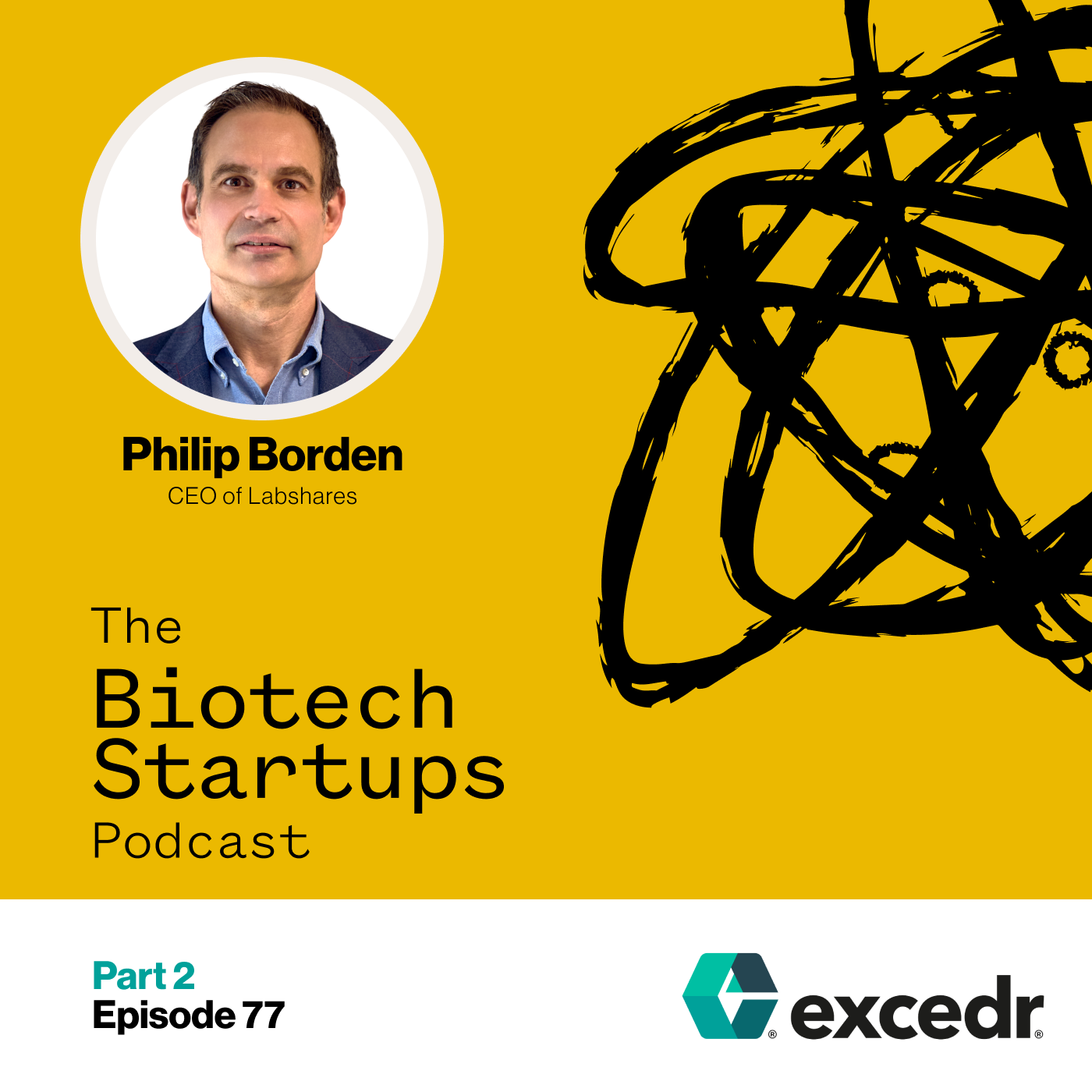 Cold Calling Your Way Into Venture Capital | Philip Borden (2/4)80 / 100
 🧬 Transforming Food Systems with Lactoferrin & Precision Fermentation | Fengru Lin Rerelease (3/3)72 / 100
 🧬 AI in Biotech: When Sustainable Growth Replaces Hype | Mati Gill (4/4)60 / 100
 What Rural Indiana Can Teach Biotech Founders About Trust | Philip Borden (1/4)
 🧬 Making Lab Data Actionable Through Automation | Nathan Clark Rerelease (4/4)