
The Biotech Startups Podcast · 2026-09-03 · 21 min
Key moments - from our scoring
Substance score
60 / 100
Five dimensions, 20 points each
Fresh out of Duke with a molecular biology degree but no interest in bench science, Philip Borden took an unconventional path into venture capital by literally Googling biotech VCs, creating a list of 30 firms, and cold calling his way into Fraser Healthcare in Seattle around 1998 - 1999. Working as a junior analyst at Fraser - sitting in partner meetings, screening deal flow, and meeting entrepreneurs - gave him a front-row seat to how world-class investors think and make decisions. The episode explores his key insight that founders arrive in a vulnerable position seeking capital and partnership, and how investors can honor that vulnerability while still asking tough questions and making decisive decisions. Both Philip and host John Chee reflect on the counterintuitive value of old-school outreach (phone calls, handwritten letters, in-person meetings) in an era of AI-generated emails, and how genuine relationship-building and quick, respectful feedback - even rejections - separate great capital allocators from mediocre ones. The conversation weaves personal anecdotes about Seattle in the late 1990s, Exceeder's early struggles securing equipment financing without sponsor backing, and the importance of manufacturing luck through consistent action.
He created a list of 30 biotech VC firms by Googling, then picked up the phone and cold called them, introducing himself as someone with a molecular biology degree and finance background willing to work on anything they needed. Fraser Healthcare responded positively and hired him shortly after.
He learned to deeply respect the vulnerability of entrepreneurs seeking capital, to ask tough questions in a respectful way rather than arrogantly, and the critical importance of getting back to founders with timely feedback - even when the answer is no - rather than leaving them hanging indefinitely.
Phone calls allow for real-time course correction, body language and tone reading, and smooth delivery of difficult messages in ways emails cannot; nuances get lost in written communication and messages often get taken out of context, leading to misunderstandings.
When a new customer launches their lab at Lab Shares, the company hosts a ribbon-cutting ceremony with photos and social media coverage to make the moment feel significant and honor the founder's commitment - a small gesture that meaningfully improves customer relationships and first impressions.
He redefines selling as communication, relationship-building, and asking the right questions rather than providing answers; it's fundamentally about listening and understanding what differentiates you and creates genuine connection.
Our reviewer’s read on each dimension, with quotes from the episode.
The episode contains moderate substance focused on cold calling, relationship-building, and professional culture. However, much of the insight is conversational and exploratory rather than densely packed with novel claims. The discussion around founder vulnerability, respectful capital allocation, and phone communication has merit, but lacks concrete frameworks, metrics, or counterintuitive business principles that would elevate it. Significant portions drift into personal anecdotes about Seattle and career pivots that add color but limited actionable insight.
Relationships beat transactions, and getting back to people even with a no is non negotiable
how do you stand out? How do you differentiate yourself? How do you develop those relationships? That's what you're really doing
The core thesis - that cold calling and phone relationships matter, especially in a digital age - is sound but well-trodden ground in sales and venture literature. The emphasis on founder vulnerability and respectful treatment from capital allocators is increasingly mainstream in modern VC discourse. While the personal anecdote of cold-calling into Fraser Healthcare is compelling, it does not present genuinely contrarian or first-principles thinking. The framing of 'selling as listening' and 'asking the right questions' are established concepts.
it's the personal relationships now trumping what can easily be, you know, an email or a blog post or whatever
selling, you know, people sometimes hear that's like a dirty Word that's pejorative
Philip Borden demonstrates legitimate operating experience: he cold-called his way into Fraser Healthcare (a premier VC firm), spent three years learning investment decision-making alongside experienced partners, and is now building Lab Shares as a founder. He has done the relevant things at meaningful scale. However, the episode is part 2 of a multi-part series and functions more as biographical narrative than deep operational interrogation, limiting the guest's ability to show depth of insight. His experience is substantive but the format constrains full demonstration of caliber.
I was the guy screening, you know, some of these things that came in. And so you had a case study every three hours
I invested in lots of founder owned businesses
The episode relies heavily on anecdotal narrative and lacks concrete metrics, data, or quantified outcomes. References to Fraser Healthcare partners (Alan Frazier, Nader Naini, Patrick Heron) and Lab Shares ribbon-cutting ceremonies are specific but illustrative, not evidential. No deal sizes, success rates, timeline specifics for decision-making, or measurable cultural metrics are provided. The discussion of the 'first loan' Borden received mentions personal savings and subscription financing but no dollar figures. The 1998 - 2000 timeframe is mentioned but without specific company outcomes or investment returns.
I created a list of 30 some odd biotech VC firms. And I picked up the phone
All I need is pay me enough that I can cover my rent, like some food
The host (John Chee) asks reasonably good follow-up questions and shows genuine curiosity, particularly when unpacking the Fraser learning experience and the parallels between venture capital gatekeeping and Exceeder's lending experience. However, questioning lacks real challenge or productive disagreement. When philosophical claims emerge ('relationships beat transactions'), they go largely unexamined. The host frequently mirrors Borden's points and shares his own anecdotes rather than pressing for specificity or alternative viewpoints. The conversation feels collaborative and warm but misses opportunities for rigorous interrogation.
Unpack that. I'm very curious
Do you say that because not enough experience, didn't know what you were doing, what made you think you didn't deserve it?
Computed from the transcript - who did the talking, and the words that came up most.
The Biotech Startups Podcast is powered by Excedr: helping life science startups accelerate R&D and commercialization with founder-friendly equipment leasing. Skip the upfront costs, stay lean, and focus on breakthrough science. As a TBSP listener, you can get exclusive perks through Excedr's partner network: special savings, promotions, and more. Explore these offers today: “What I could offer is I'm willing to work hard. I'm willing to learn. I'm willing to be a good contributor.” Philip Borden explains how realizing he did not want to pursue a PhD or spend his career at the lab bench led him toward venture capital. With a molecular biology degree, limited finance experience, and a list of biotech VC firms, he picked up the phone and cold-called his way into Frazier Healthcare in Seattle. Philip shares why personal relationships, phone calls, and in-person conversations matter more than email when building trust. He discusses selling as communication and listening, the humility required to ask for an opportunity, and the culture lessons he learned from working alongside experienced investors.
Transcribed and scored by The B2B Podcast Index.
Speaker A: This episode is brought to you by Exceeder. Exceeder provides lifesign startups with equipment leases on founder friendly terms to accelerate R and D and commercialization. Lease the equipment you need with Exceeder, extend your Runway, hit your milestones, raise your next round at a favorable valuation and achieve a blockbuster exit while minimizing dilution. Additionally, as a podcast listener, you can redeem exclusive discounts with a growing list of biotech vendors and get $500 off your first equipment lease by using promo code tbsp on exceeder.com partners.
Speaker B: Welcome to the Biotech Startups podcast by Excedr. Join us as we speak with first time founders, serial entrepreneurs and experienced investors about the challenges and triumphs of running a biotech startup. Um, from pre seed to IPO with your host John Chee Last time Philip took us from a rural Indiana upbringing to the moment he discovered he loved molecular biology but didn't want to live at the bench. If you missed it, start with part one. In part two, Philip picks up the phone, he talks his way into Fraser Healthcare in Seattle, gets a front row seat to how great invest actually make decisions, and starts forming the belief that would define his whole career. Relationships beat transactions, and getting back to people even with a no is non negotiable.
Speaker A: So as, uh, you were about to graduate, did you know what you wanted to do?
Speaker C: I, uh, did some things that helped me learn what I didn't want to do. And so I worked in the Department of Molecular Cancer Biology while I was there for two or three summers at Duke and it turned out I wasn't very good in the lab. So again, I really like this. But I found the process really tough because mostly because I was impatient. It takes so long to get the kind of feedback loops in science. You're fumbling around trying to figure out why doesn't this experiment work. I don't, you know, I don't know. No one else knows. And it's this process of kind of groping around in the dark that is so hard. And for me those feedback loops were really tough. And I really thought long and hard and filled out some PhD applications to go to grad school in molecular biology. And I ended up just not submitting anything because I was like, that's not what I want to do with the next seven years of my life or eight or, I don't know, whatever it is. And I'm so glad I had that experience of trying something out, realizing I'm not sure this is a fit for me, and course correcting before kind of Going down what's a long, arduous path.
Speaker A: Some people end up going on that journey and they push off and then like, sometimes they do it and it could be a painful one. I had a moment where I thought I was going to go to law school. I did a little stint at a law firm, consulting firm. Learned quickly what I didn't want to do. Love the legal profession. I do a lot of legal work now, but practicing law is a completely different thing.
Speaker C: Being measured by increments of 10 minutes is not how I want to live my life. Yeah, it's rough.
Speaker A: It's super rough. Like, I just remember, like, logging into jurists and just being like, all right, oh God, we just got to build these. Like, all, uh, right. What did I do at, I don't know, like 11:39?
Speaker C: Like, it's a tough career, but I think, you know, again, just kind of realizing what am I gravitating towards, what resonates with me? And kind of listening to those signals early on is kind. I mean, again, it's more like. It's almost more sort of gut feel than anything, but like, hey, this doesn't feel like me, you know, it doesn't feel like my authentic self, how I really want to be spending my time. And I don't regret those decisions. So all of my classmates were otherwise going to med school. And I was thinking, know, I love this molecular biology stuff. Okay, what do I do about it? Well, I basically talked my way into working at a venture capital firm and literally talking my way into it.
Speaker A: Unpack that. I'm very curious.
Speaker C: So, uh, I was graduating, I had my first job, which was a very brief one in finance. But I was wanting to kind of get into venture capital because that felt like the place to be. This is what, 98, 99, you know, something like that. I wanted to learn about investing. I wanted to learn about how do I back interesting companies? What's that like? And again, I didn't know anything, but it just seemed cool. Literally what I did was I used Google, which was brand new at the time. And I Googled like, okay, biotech VC firms. I created a list of 30 some odd biotech VC firms. And I picked up the phone and I started calling, you know, and I said, I'm, uh, Philip Borden. I've got a degree in molecular biology. I've got a little bit of finance background. I'm happy to work on anything that you need, you know. And so I sort of talked my way into this firm out in Seattle called Fraser Healthcare. Which is one of the Premier Life Science VCs in the world. And I connected with someone there, they happened to be looking at the right. And I said, all I need is pay me enough that I can cover my rent, like some food. I mean, it really set me on the right path for my entire, the entire rest of my career to kind of take that job at Fraser.
Speaker A: God, I love that. And I think this is critically important for anyone listening that the value of picking up the phone, it's still incredibly valuable. I think with all the AI stuff, picking up the phone has become more valuable because everyone can fire out a billion emails. Like everybody.
Speaker C: Uh, it's so funny you say that. I couldn't agree more, John. Like, it's the personal relationships now trumping what can easily be, you know, an email or a blog post or whatever, having these kind of personal connections. And so, you know, I am regularly picking up the phone and talking with founders that we've met and, you know, brokers that we might be working with and whatever. And I use the phone a lot more for our team. It is not a natural motion for the late 20s, early 30s set. They are not used to the phone. And there are nuances that you can get. You can smooth over tough messages on the phone. There's all sorts of things that you can do on a phone call that you're never gonna get in an email. Never. I've had more things go awry on emails where something gets taken out of context, whatever. And if I'm on a phone call, I can pick that up, I can course correct. It's a better medium for these kinds of messages.
Speaker A: Absolutely. It's hard. Like, I mean, it was actually my co founder, Jeff, that like pushed like, I used to just be like, email only. Like, I'm a lab guy, so I'm like, I want to talk to anybody. What? And he really pushed me to just like pick up the phone in early days too. Like, if you're starting a business, that's what you got to do. You got to pick up the phone and try to sell. And I always encourage anyone, even if you're a bench scientist, like literally taking some sort of role that teaches you how to pick up the phone and have a conversation is some of the most invaluable skills you can have, like, ever. Like, raising money, you're selling, like hiring, you're selling. Literally everything. Marketing is selling at scale is all selling. Like, you got to learn it.
Speaker C: When you say selling, you know, people sometimes hear that's like a dirty Word that's pejorative.
Speaker A: Yeah, it's like aching.
Speaker C: No, but it's communicating. It's how do you stand out? How do you differentiate yourself? How do you develop those relationships? That's what you're really doing. And again, there's in person. There's no substitute for being in person. Again, video conferences can be great, can be useful, but in our business at Lab Shares, we really want people on site because you can pick up on, okay, what's the vibe like, you're never going to be able to get that in an email or a blog post.
Speaker A: And body language is real too. That's another thing. And so I completely agree. And I think, and also you're right, selling has a negative connotation in science. Like, I get it, you go into science to kind of like separate church and state. You like the purity of science with business on the other side. But it's like, it doesn't have to be antagonistic. I often find, just like selling, you're exactly right. It's communication, but it also is mostly listening. It's mostly listening and asking questions. The right questions, which I think is critically important because, like, again, what I'm seeing and like, how, uh, things are shifting is like, it's not really about having the answers anymore. It's all about asking the right questions because, like, the answers are in your pocket, but only if you ask the right questions. If you ask the wrong questions, just like, it's all for naught. I love how you landed that gig off. Just like picking up the phone, you
Speaker C: know, a lot of call. Like, it was good though, because, I mean, uh, it's embarrassing a little bit. I mean, like, you are in a position of, like, being kind of vulnerable. Hey, I'm looking for something. I'm willing to kind of do all the grunt work that you need, but by the same token, like, it also teaches you some real humility. And at the time, I didn't know anything. What I could offer is I'm willing to work hard, I'm willing to learn, I'm willing to be a good contributor. That's I had to offer at that time. And they were the ones who were offering me this opportunity. And like I said, Fraser was such an amazing m place to work. And, you know, I mean, the biggest thing that I learned there was like, how do you have a work culture that makes it so everybody wants to be there? And, like, is fun. It's a fun place to be. It's a fun place to work. People joked around, people work really Hard and were really smart. But the biggest thing that I learned from working there was they had created an environment that I got to know. The people that I worked with, you know, Alan Frazier, Nader Naini and Patrick Heron and a bunch of folks that like. But they were all really funny and like, good people to work with, cared about me, cared about my career, but, like, also could joke around and create this culture that it made it fun to be at work. And that's what we really try hard at Lab Shares to do that a little bit. You know, one of our core values we list is Lab Shares is a fun place to be and a fun place to work. And having that kind of environment is just so important.
Speaker A: Absolutely. And I guess before I double click on the Fraser learning experience on the investing side, how was moving to Seattle?
Speaker C: Yeah, uh, it was great. I loved Seattle. So I sort of talked my way into this job. They said, yeah, you know, show up in like a week and a half or something. So I packed everything up, uh, found an apartment, stayed on a friend's couch for a couple weeks or something. Found a place right next to the Space Needle. I mean, you know, God, how cool was that? I was, you know, right downtown and spent almost three awesome years there. And Seattle at the time was, again, this is late 90s, early 2000s. So, okay, Microsoft, Amazon was kind of getting started then, obviously from the biotech side, there was a ton going on there. And at the same time, I was there during, if you remember, the World Trade Organization protests were going on there. So I remember vividly we didn't go into work the day of those protests, which turned quite violent. My apartment was close enough downtown that like, the tear gas smoke kind of came into my apartment.
Speaker A: Oh, shit.
Speaker C: And it was an interesting, interesting place to be for a couple of years. And I loved being in Seattle. In many ways, Seattle and Boston have a lot in common. I mean, similar sizes, both on. On the water, both great university towns, you know, like, there's a lot of similarities between the two. And maybe feel in Boston, where I am now, much more at home.
Speaker A: Yeah, I love the Pacific Northwest. And Seattle buddies of mine are like, settled down. They went to su, so we always make it a point to go visit. And also if you can go in the summer, whoo. Nothing better.
Speaker C: No place better than Seattle in the summer. I 100% agree. And I don't know, Seattle gets a bad rap. Oh, the rain. Rain isn't that bad. And the summers are just gorgeous. And there's no place I'd Rather be in the summer than in Seattle.
Speaker A: So, yeah, I've never seen a city just so happy during the summer. My God, everyone is in a good mood. Like, everybody.
Speaker C: Everyone's out. You walk along Pike Place Market or Mariners game or something. It's a great place to be.
Speaker A: So much fun. Okay, so you're an undergrad with a biology degree. You're now at a premier venture firm with no experience in venture investing. It must have been a baptism of fire. Like, talk a little bit about just like the early days at Fraser. Like, how did you, like, learn the ropes? What were some just, like, core things like investing, you know, honestly, the foundational elements that you learned while you're there.
Speaker C: I mean, first off, yeah, I was drinking through a fire hose, to say the least. You walk in, again, having very little background and just kind of this hunger to learn. And that's. That is my most valuable asset. I was willing to learn. And part of that was I had the opportunity to sit in on all the partner meetings. I mean, oh, my God, what an amazing place to learn. Like, how people with decades of experience think about making investments. What are the questions that they ask, you know, what are they skeptical of? What gets them excited, you know, and so being a, uh, you know, in many ways, a fly on the wall. Talk about an educational experience. And then you kind of combine that with every day I've got three new opportunities that come across your desk. And part of my job was like, I was the guy screening, you know, some of these things that came in. And so you had a case study every three hours that came in that you had the opportunity to learn from. And then you had the opportunity to have entrepreneurs come on site and meet them and learn from them, too. So all of those things were amazing learning experiences. I mean, I think foundationally, though, the venture world is a world known with lots of personalities. And I say that, uh, firstly, there are big egos. There are people who don't always treat founders in the way that, frankly, founders should be treated. And I think one of the biggest foundational lessons from my time at Fraser was the respect for and appreciation for, my God, how hard it is to be an entrepreneur. You know, entrepreneurs come to you in a position of vulnerability. They need some capital, they need a partner. And how do you honor that? And, you know, again, you're going to be saying no way more than you're saying yes. But how do you get back to people you talk to entrepreneurs. How do you ask tough questions in a way that doesn't come across as being disrespectful or being a jerk. And I think that was foundationally again later on I invested in lots of founder owned businesses. But I think that's probably the biggest lesson that I took from it is just how do you honor that entrepreneurial spirit, treat them well and create a culture that is respectful while still getting all the answers that you need.
Speaker A: Yeah, no, I mean that's incredible. And I think the point that really, really stood out to me that what you just said is like founders are coming to you in a kind of vulnerable space and like as a investor, venture or otherwise, you're basically kind of like a gatekeeper of sorts. And a lot of capital allocators that can get to your head can kind of create like a kind of like sort of God complex, which I think is just like counterproductive. And for me this is, was formative for me because in the early days of Exceeder, I literally went door to door, like physically door to door to the bank headquarters down in San Francisco and was basically begging for loans, just begging for loans. I was just like, I was like, I need to buy some instrumentation, like bad. And some of them were just too good.
Speaker C: Yeah, you weren't big enough. And as an entrepreneur I bet you could pick up on their attitude to you in about 10 seconds for sure.
Speaker A: Really, really quickly. And I uh, bring that to Exceed or now we just do the opposite of that because we know when people are coming to us. It's because there's a need we have to do diligence. So like you're also like opening up everything, right? It's very much a vulnerable state, respective time. In respect of the hard work, we have to say no all the time we're in credit. But it's always thinking about just making sure we're like respectful all the way through and get you to a quick no and a quick yes. We're not going to waste time and we'll give you feedback quickly. We'll tell you these are things that we are seeing on our side. And this will be pointed out everywhere else you go. If you get this fixed, we can make something happen that's totally cool. And I think sometimes I can see some frustration from founders. The venture side's a little bit different than what we do. But like when you just get this no and like you're like, but why? How do I get better? And they kind of dance around it, you don't know what they're really trying to say and you're just like, well I wasted My time. And like, that's the worst feeling.
Speaker C: Yeah. I remember one of the conversations I had with one of the senior partners at Frazier. Again, I'm the junior guy, and part of my job was to say no to some people who we weren't going to pursue any further. And I remember one time I was busy, uh, I think it took me a week and a half, two weeks or something to kind of, you know, we made the decision and I hadn't gotten back to a founder. And I remember a senior partner kind of pulled me aside and kind of explained, hey, this is why this is so important for us to get back to founders. And part of our culture is we're responsive. And founders aren't always going to like that answer. But it is still so much better to get that no and have it be a closed loop as opposed to dangling out there. You never hear anything back. So, yeah, that lesson really stuck with me from that time.
Speaker A: Absolutely. Uh, and another thing that, you know, stood out and which you pointed out is as I was doing the soliciting of loans from these banks, again, I didn't deserve my first loan. Like, I really didn't. It's kind of a thing where it's like your first loan, your first job, your first anything, you usually don't deserve it.
Speaker C: Do you say that because not enough experience, didn't know what you were doing, what made you think you didn't deserve it?
Speaker A: Yeah, that's a great question. I think I had some track record, but I was like, for the amount of money I was asking for, I was like, oh, it was definitely a big ask, just on a pure quantity basis. Also, the reason why it stood out to me that your father was a lender to agricultural businesses is because the relationship banker can get to know the business intimately well, and they know the cash flows of the business, the macro, they know everything about it. So they understand the risk and they're willing to put capital behind it. Being in San Francisco, you've gotta be a sponsored backed business to get credit.
Speaker C: Usually, yeah.
Speaker A: No sponsor here. Literally just me, my pg. What are they gonna do, take my jeans? Like, I didn't deserve it. Like, if I was flush with cash, it would've been a, uh, very different story. So, like, we had track record. Like basically the first piece of equipment I bought with life savings did use that to build the track record to go solicit the loans. Subscale, like subscale, no sponsor. You know, just little me. So that's kind of where I thought, like, I didn't deserve it because, like, out here you got to have, like, a venture capitalist backing you or a private equity or, uh, some sponsor. Like, you got to have a sponsor. It's really, like, hard. And then the lender was just like, no, we're going to give it a shot. And I was like, hallelujah. Like, like. And that's the thing. Like those, like, pivotal moments, right? Like you landing at Frasier, you're just like, I don't know, just pick up the phone. It was like. And they took a chance on me.
Speaker B: Yeah.
Speaker C: No, it's interesting how much of your career, or candidly your life is the sort of butterfly moments of, you know, small little changes have this really outsized impact later on. So I definitely think a lot about what if I hadn't reached anyone at Frasier that morning or had you not gone to the banker at the time that you did? You know, be a very different world. So.
Speaker A: Yeah, and there's an aspect of luck to it, for sure. Like, there's aspect of luck, but, like, you've got to manufacture that luck. You can't get lucky if you don't give it a shot. Right. You know, it's kind of this thing, like you don't have a chance to win the Powerball unless you at least get one ticket. And, uh, I'm not saying that your expected return is going to be great on a Powerball, but it's kind of the thing. You got to be in the game. And it's very low risk to just go pick up the phone, knock on doors. Also, too, something that we're doing on our side, handwritten letters. People forgot about that. Your LLM is not doing a handwritten letter to someone.
Speaker C: And like, people forget we've been doing something recently. So when we win a new customer lab shares for their lab space that they're going to start with, we have a ribbon cutting ceremony. We do photos, we make it a big deal because for a lot of the companies that come to lab shares, you know, it's not always their first lab that they're setting up. But even if it's not like this is a big deal for them, you know, their baby is going to be in this lab, in this space, and they're going to be spending, you know, a lot of hours in it. And so again, kind of honoring that in the form of, for us, a, uh, ribbon cutting ceremony where we do photos, we post them on social media. They can post it on social media, they can show it to their board. That little thing makes a huge difference to how customers view us and how we get off on the right foot with the customer.
Speaker A: Yeah, be like, care first. You always got to care first. At least that's my philosophy.
Speaker B: That's a wrap on part two with Philip Borden. Next time Philip drives 3,000 miles across i90 to Harvard Business School, falls in love with the case method and with a classmate, and heads back into investing, where an early solo deal nearly comes apart before it becomes the best return of his career. Enjoy the show. Leave a quick review. It genuinely helps catch you in part three. The Biotech Startups Podcast is produced by Exceda. Don't want to miss an episode? Search for the Biotech Startups Podcast wherever you get your podcasts and um, click subscribe. Exceda provides research labs with equipment leases on um, founder friendly terms to support paths to exceptional outcomes. To learn more, Visit our website www.excedr.com. on behalf of the team here at Exceda, thanks for listening. The Biotech Startups Podcast provides general insights into the life science sector through the experiences of its guests. The use of information on this podcast or materials linked from the podcast is at, uh, the user's own risk. The views expressed by the participants are their own and are uh, not the views of Exceda or sponsors. No reference to any product, service or company in the podcast is an endorsement by Exceda or its guests.
Other episodes covering the same guests and topics, from across The B2B Podcast Index.
 Hiring Your First Sales Team with Andrew BoosFiredUp! · on Cold calling86 / 100
 B2B Sales Strategy and AI in Sales: Deal Intelligence That Drives RevenueThe B2B Revenue Executive Experience · on Venture capital due diligence80 / 100
 Kindness as a Growth Strategy With Brent RidgeLean Marketing · on Cold calling77 / 100
 The #1 Thing Accounting Firms Refuse to Do That Costs Them Clients | Drewbie WilsonThe Accounting Leads Now Podcast · on Cold calling75 / 100
 #120 The SDR DiscoCall Podcast - Matt BanksThe SDR DiscoCall Podcast · on Cold calling73 / 100
 Too Good To IgnoreOutbound Squad · on Cold calling72 / 100
 🧬 This Ex-Googler Replaced a Whole Drug R&D Team | Javier Tordable (4/4)82 / 100
 🧬 Transforming Food Systems with Lactoferrin & Precision Fermentation | Fengru Lin Rerelease (3/3)72 / 100
 🧬 AI in Biotech: When Sustainable Growth Replaces Hype | Mati Gill (4/4)60 / 100
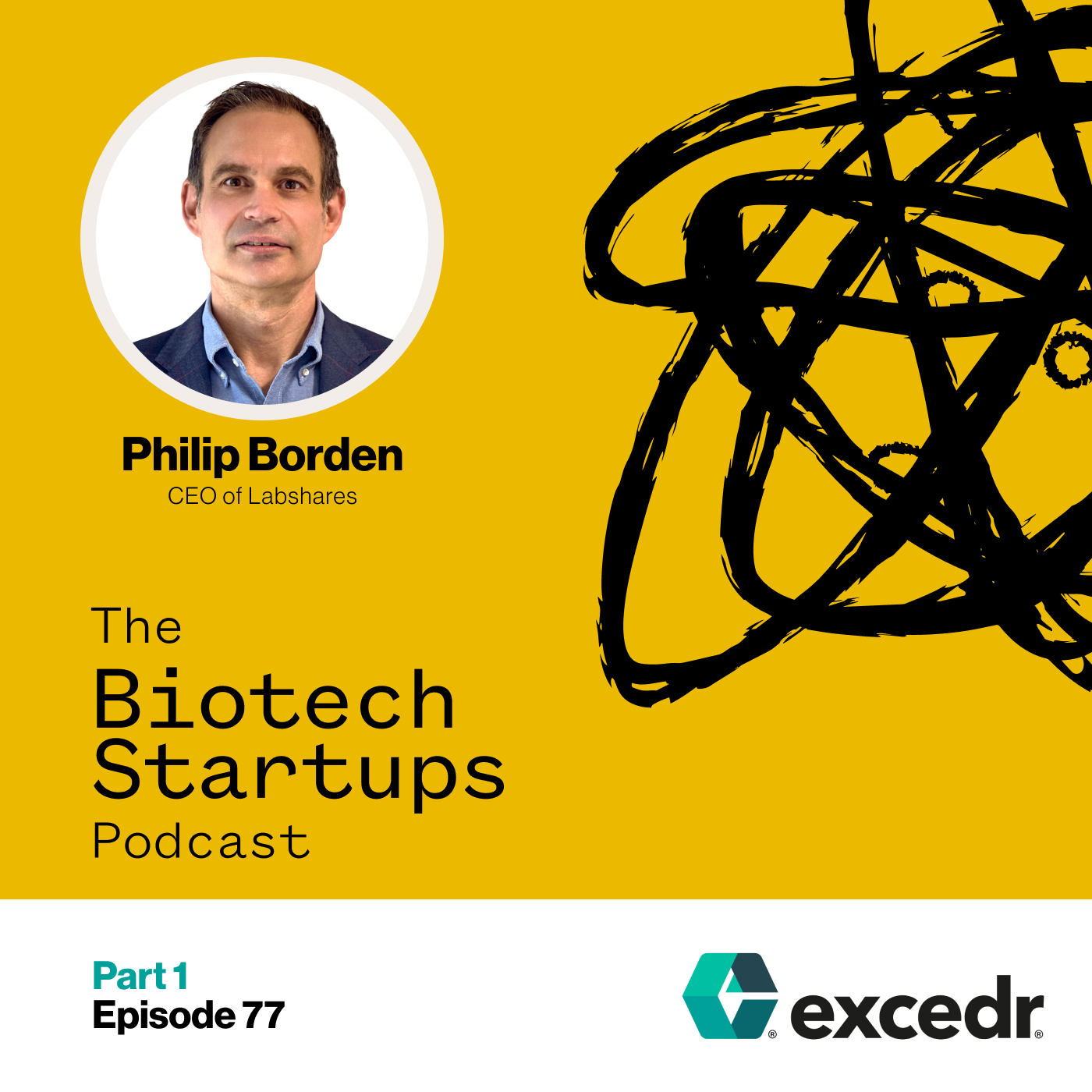 What Rural Indiana Can Teach Biotech Founders About Trust | Philip Borden (1/4)
 🧬 Making Lab Data Actionable Through Automation | Nathan Clark Rerelease (4/4)