The BeanCast™ Marketing Podcast · 2026-06-29
Key moments - from our scoring
Substance score
44 / 100
Five dimensions, 20 points each
The BeanCast panel examines the 2026 Cannes Festival of Creativity's focus on delineating AI's role in marketing. Rose Cameron emphasizes a cultural shift away from transactional, AI-driven efficiency toward brand-building through conversations, experiences, craft, and engagement - citing Reddit, Pinterest's Manifestival, and award winners like Coinbase and Apple TV's physical installations as examples. Saul Colt critiques Cannes as ultimately irrelevant to actual marketing decisions, an expensive networking event where nothing discussed on stage changes Monday's work. Farah Bostick grounds the AI conversation in what's actually useful today - proposal editing, meeting note summarization - rather than future AGI scenarios, while noting that marketing feels boring because operational efficiency and attribution metrics drive decisions, not taste or creativity. The panel argues that cheaper, faster production rarely yields better work, and that conferences like Cannes and SXSW suffer from stale submissions due to long lead times. The discussion then pivots to PlayStation's atypical strategy of heavily marketing the third-party Grand Theft Auto 6 launch with exclusive content and deals, despite GTA6 being multiplatform.
AI is being applied primarily for transactional marketing efficiency - cost reduction, automation, and productivity - while brands are shifting investment toward cultural marketing through conversations, experiences, craft, and fan engagement that humans and creatives drive.
Business decisions about staffing, hiring, and the future direction of advertising are being made based on Cannes themes and award winners, even though the actual work discussed there rarely translates into actionable change at agency or brand level.
AI excels at specific efficiency tasks like checking proposals for errors and summarizing meeting notes, but still makes mistakes with numbering, missing information, and incorrect inferences, and cannot replace human creative judgment for interesting brand work.
CMOs and marketing leaders without creative backgrounds prioritize directly attributable ROI metrics and operational efficiency over taste and creativity, making interesting advertising a lower priority than meeting quarterly budget obligations.
Panels must be submitted 10 months ahead at conferences like SXSW, making it impossible to discuss cutting-edge topics, so conferences become stale networking and sales events rather than forums for future-focused marketing discussion.
Our reviewer’s read on each dimension, with quotes from the episode.
There are intermittent genuine insights - Saul's point about brands not needing to be the hero of every story, Farah's observation that AI is discussed almost entirely in future tense while present-tense utility is ignored, the reframe of privacy as customer experience rather than legal document - but the episode is heavily diluted by banter, tangential jokes about Cannes being about sex, a PayPal request for Mad Magazine art, and an incoherent rambling outro. The ratio of substance to filler is poor.
brands hired creatives because they rented audiences. Now they're hiring creatives because they make better content than a lot of agencies do. Their production partners, not just distribution channels.
privacy isn't a legal document. It's part of the customer experience
A few genuinely fresh reframes appear - trust as a premium feature accessible mainly to the wealthy, sports fandom as identity rather than consumption, and Sony's deliberate decision to play the supporting role - but the Cannes section retreads well-worn 60/40 brand-vs-performance arguments and recycled conference skepticism, and panelists largely agree with each other rather than developing contrarian positions.
I don't think any consumer was saying, you know, the real problem with advertising is it wasn't personalized enough, it wasn't targeted closely enough to my interests
trust now is a premium feature. It's a thing that rich people can pay for and everybody else is stuck being surveilled
All three panelists are credible working practitioners - a research strategist, a brand consultant, and a word-of-mouth agency founder - and they speak from genuine experience, but none are operators who have demonstrably run marketing at scale inside a major organisation; the lineup skews toward independent consultants and career conference speakers rather than in-the-trenches practitioners.
I've always looked at CAN as three things. It's an award show, it's networking event, and it's a very expensive reason to bill your clients for a week in the south of France.
My career wouldn't. I wouldn't have the career I have now, good or bad, if it wasn't for south by Southwest. I was there very early. I got to speak seven years in a row
The episode mixes some genuinely concrete data points - GTA 5 active player counts, daily revenue figures, specific report statistics on consumer cancellations and willingness to pay - with large stretches of vague assertion and hand-waving; the PlayStation segment is the strongest for specificity, while the Cannes and trust discussions lean on abstract claims.
something like 10 million weekly active live players of GTA 5. Um, and this is six coming out and uh, something like on the order of $1.3 million a day in revenue against that game
Nearly a quarter of all consumers have canceled a service over the last year because of lack of transparency on this matter. And 52% said they'd be willing to pay more for a service that honestly offered their data policies
The host's questions are broad and rarely probing - he mostly tosses topics to panelists and lets them run - and the panel spends considerable time agreeing with each other rather than generating productive tension; there is almost no follow-up that pushes a claim to its logical limit or challenges an assertion with counter-evidence.
Rose. The Cannes Festival of Creativity always seems to have, like, competing priorities, if you will. On one hand, it's about celebrating marketing creativity in all its many forms.
I agree with Rose. You know, I. I usually do. She's brilliant.
Computed from the transcript - who did the talking, and the words that came up most.
This Week: Farrah Bostic, Rose Cameron, and Saul Colt join Bob to discuss Cannes insights, PlayStation's marketing of GTA VI, consumers on AI data, whether sports fans are done with influencers, plus this week's #FairFailFoul.
Transcribed and scored by The B2B Podcast Index.
Speaker A: Episode 819 bringing people together. For Monday, June 29, 2026. It's time for this week's edition of the Beanc, a weekly discussion about the news and issues facing marketers today. Uh, I'm your host, Bob North. Thanks for joining us. Well, another Cannes Festival of creativity is behind us, and from what we can see from the reports coming out, organizers and attendees alike tried hard to delineate the role of AI in the future of the marketing world. So what's the vision and is it truly viable? Tonight we'll discuss also PlayStation's atypical approach to marketing, a third party game, consumers vote with their wallets about AI, whether sports fans are tiring of influencers, plus this week's fair, fail, foul. Uh, that's the lineup. Let's meet tonight's panel. Thanks for joining us for this week's Beancast. I'm, um, Bob Knorp. And with me on the panel for this evening, we start with research and strategy consultant at the difference engine, Ms. Farah Bostick is here. Hey, Farrah.
Speaker B: Hi, Bob. It's always nice to take a break from pulling up carpet to talk to people about something else.
Speaker A: I can think of lots of things that would be better than pulling up carpet. But I'm glad that you find my podcast to be your sanctuary.
Speaker B: Wonderful respite.
Speaker C: Yes.
Speaker A: Fantastic. Now, also joining us, we have brand innovation consultant at R. Cameron Consulting. M, Ms. Rose Cameron is here. Hey, Rose.
Speaker C: Hello. And know these delicate little hands do not dirty themselves with carpeting. So good on you, father. It's great to be on once again, Bob.
Speaker A: Fantastic. Finally, we welcome back the founder and president of the idea integration company, someone who's never last in this list, but for somehow by the Alphabet gods became last on this list. Author, Speaker, Mr. Saul Colt. Hey, Saul.
Speaker D: I was just thinking that people were like, oh, I don't have to listen to this week's episode. But now that they're, you know, you know, there's a good three good reasons to stay.
Speaker A: Aw, that's great. I'm glad you all getting along already and this is going to be a good show. I wanted to jump right in and talk about Cannes first. Rose. The Cannes Festival of Creativity always seems to have, like, competing priorities, if you will. On one hand, it's about celebrating marketing creativity in all its many forms. And on the other hand, it's also a conference to share ideas on the future of marketing. But this year, there was a clear nexus between the two in the form of AI. What are the big takeaways for you from this year's event. And how is AI shaping both the creative and the creative output and the strategy and everything else about marketing? Um, how is the festival at delineating the two and putting it into focus between the human and the AI components in advertising today?
Speaker C: Um, you know, I'm going to lean a little bit on a book a friend of mine just wrote. His name is Paul Parton, and he wrote a book called Shared of Culture. And in that he talks about, uh, you know, whereas we should do around 60% brand marketing and 40% transactional or kind of direct offer, um, marketing, which has very much been delegated to the digital realm. What we've done is people kind of became addicted to that transactional side because it was really easy to measure.
Speaker A: Right.
Speaker C: You could, uh, easily see the ROI on it. And so we flipped the equation of, you know, what percentile we invest in. And as a result, a lot of brands have suffered because we haven't been feeding that cultural side. And I think that what you're seeing in Cannes is it used to be kind of the escape pod for all creatives who were kind of burnt out. You know, they. It was their chance to run away and see their friends and kibit and drink heavily and, you know, say, why did I, you know, sell my soul for this much money? Um, and what they're kind of coming out with right now is that cultural versus transactional side. And the transactional side is very much the AI side because, um, it's being used primarily for efficiency sake. It's being used to drive down the costs of having an agency or doing a media purchase or running advertising itself. And as a result, you're seeing a lot of the byproduct of that in the digital realm, where a lot of that transactional marketing occurs.
Speaker A: Yeah, it's saying a lot of, like, leaner and meaner and leaner and more productive are the phrases that were used coming out of the conference.
Speaker C: Absolutely. Um, and what you're seeing on the other side of the gambit, I think, is a lot more of an attempt to bring back that brand voice. Okay. If you're not going to have our creatives focus on the digital side, you're going to use a lot of AI there. We're just kind of feeding in the terms that will drive the engine. Then let's see what we can do that's new and interesting on the cultural side. So I wouldn't necessarily call it the creative side. I would call it the cultural side. Right. And so what you're seeing. And what was getting rewards were things like, uh, you know, conversations. How do you generate them? Um, very much led by the whole Reddit group and how they are talking about their. And I mean, you and I have talked about this so many times. We've talked about, look at Reddit, oh my God, what an amazing engine that everybody thought would have died years ago, but has this incredible base of users. And it's all around these conversations, right? And they're really celebrating that right now. Um, then you have the whole area of experiences that Pinterest focused on with their, um, manifestival, where they're saying, you know, get away from the screens, come out, let's do things together, let's do tattoos, let's do experiences. Um, you have the whole engagement side that they were talking about with fans, because people are seeing how involved fans are, how much they're driving sales, how much they're driving the success of everything. And I think that's very much fed by a lot of the Asian properties that are becoming very big here in the United States. You saw the BTS concert where, you know, 100 inch forensic people in campuses emerged around these auditoriums. And then the last one is this whole area of craft, um, where you see the creatives really going back and saying, what can we make with our hands and celebrate the craft? The creatorship, um, around advertising, which, when I was coming up through advertising, that was all it was about. It was very much about that. Um, and so you see Coinbase, uh, getting the Grand Prix. Their ad, which looks digital but totally was not okay, was real filming with overlays on top of it. And it, it talks about getting away from systemization, getting away from everyone doing the same thing, becoming, breaking out, you know, um, and Apple as well, with this incredible glass sculpture that they've created for Apple tv that they're shining light aspects and it's physical. It was not a digital entity. It is a physical filmed entity. And then of course, the music that backed that up with, which is from the great craftsman of all craftsmen, Phineas Billie, um, Eilish, his partner and brother who made the sound for that. Right. So you've got this very participatory versus static passive receptiveness that's occurring that I would say moves it beyond craft and into culture. So, uh, yeah, that's what I was thinking. And then you have AI in there because you have to. It's the efficiency model. It's what's making everything else affordable. And it's very much driving the sea Level conversations that are saying, okay, um, how do we drive efficiencies and transactions so that we are not going to be stuck with agencies sucking our blood for the rest of our lives? And, you know, they don't realize AI is not necessarily going to embed them into culture at the same level that say, conversations, experience, craft and engagement are. So that's kind of what I saw as the division.
Speaker D: Yeah. So I agree with Rose. You know, I. I usually do. She's brilliant. So I'm going to take this in a bit of a different direction and say, you know, I, I been very fortunate to be on this show for many, many years, and I'm, uh, for whatever reason, I seem to be on the Cannes show like, every year. And every year I kind of roll my eyes and say it's irrelevant. You know, everyone acts as if this is where the future of marketing gets decided. It really isn't. You know, like, I've always looked at CAN as three things. It's an award show, it's networking event, and it's a very expensive reason to bill your clients for a week in the south of France. So in this year, you can talk about SA money and being more efficient. The two kind of like, you know, it's. It's very hypocritical, but that doesn't mean it's not valuable. Relationships get built there, deals get done and people, you know, find their next job and, and stuff like that. But if you weren't at can, chances are you weren't sitting around refreshing LinkedIn, wondering what's happening on the. The cassette. And if I'm even pronouncing that right. And it's never been like that. You know, like, can is not changing. And if you go by what Rose is saying, they're not talking about the future of marketing. They're actually saying, whoa, let's go back to what we were doing 25 years ago, because, uh, that's really cool and that's what people want right now. So, you know, it struck me that, you know, it's impossible to avoid AI. Um, but it wasn't that everybody was talking about AI. We've been doing that for two years. What struck me was the conversation has matured. Last year it was all hype. This year it was almost entirely about efficiency, which Rose talked about. So I'm going to. I'm going to, like, you know, skip that. But when I hear words like automation, scale, productivity, I didn't hear nearly enough about making marketing more interesting. You know, the other thing that stood out for me was all the talk about creatives. That's one trend I think is very real. But for years, brands hired creatives because they rented audiences. Now they're hiring creatives because they make better content than a lot of agencies do. Their production partners, not just distribution channels. That's a shift, but it didn't happen at Cannes. It's happened in the last 12 months and nobody was talking about it 12 months ago at Cannes. So it's like, why are we still think that this thing, uh, is important? Except for the giant brands that want to reward people and the big box agencies, no middle tier agency or small agency cares about can because it's, it doesn't like nothing anybody's talking about on the beaches or on, um, the stages is going to change anything this Monday or next Monday.
Speaker A: M. Well, let's move the conversation a little bit in that direction and we'll go to Farah next on this, because where do you see the disconnects between what the industry claims is the future? What seems to be happening in the marketplace? Um, I get the sense that a lot of the things that they were saying were humans should be doing the real creative grunt work. But if you want to handle hundreds of emails and do all this other stuff that we've never been able to scale, you should use AI for that. And they kind of rested their laurels on that and wiped their hands and said, this is fine. Is that a disconnect for you? And do you see any other disconnects?
Speaker B: I don't think it is a disconnect. I think it's kind of getting to terms with what this set of tools is so far good at. Um, I think one of the problems of the kind of broader AI discourse is that we're constantly talking about it in this future tense of like, you know, when it eventually gains, you know, uh, AGI capabilities and can solve any problem with, without even any, uh, human intervention. And it can program itself and yada, yada, yada, like we are not there yet. But we're taught all the debate about AI rests in this imagined future. And very little of it rests in what's actually going on right now. And I think part of this just feels like a kind of recognition of what is it good at right now? It's, it's pretty good at. You know, I use various AI tools for things like, here is a proposal I've written. Will you please check it for typos and other, other errors that the typical spell checker isn't going to catch? And it's pretty good at that. It's pretty good at taking meeting notes and turning it into a brief. But it's still going to get the dumbest things wrong. It's going to misnumber things, it's going to miss stuff. It's going to infer topics that weren't actually discussed in the meeting. Um, those things are still happening. And so, you know, there's sort of a. Where you say, well, what is it good for? Well, if it's good for a certain kind of stage of efficiency, that's great. But I think one of the other things I noticed in some of the coverage I did not go to Cannes was a sense that some of the stuff that was being presented on the beach was pretty boring. And that, like, these tech companies are not showing up to Cannes any longer, doing really exciting things to engage the people who go to Cannes. Um, and having been in Cannes during Cannes once, I think my, um, impression of it is kind of what. What I've started to feel about south by Southwest, which is it's probably more worth it to have the plane ticket and the cost of lodging just to be where everybody else is and skip what's going on in the conference hall. Um, and I think, you know, the thing that's interesting about these conversations is this realization of, like we've been doing to Rose's point at the very outset, we've been doing this transactional, focused marketing for so long, and it's so boring and it's so cookie cutter and it's, you know, has inevitable diminishing returns that any kind of conversation that's like, okay, well, in the end, we're not going to be producing our brand TV spot using generative AI tools. We're going to go do practical effects with craftspeople because it looks cooler and we're more proud of it, we're more excited about it. I think that starts to get somewhere. I think the tension actually is what Saul's saying, which is that so much of marketing is just boring now. It's. It isn't even a question like, uh, I'm not even interested in the question of whether it's effective. It's just dull. And so, you know, it's. It's entirely forgettable most of the time. I think the old kind of saw about most of my, you know, half my advertising is working. I just don't know which half is like, I don't think it matters anymore to people, uh, certain kinds of marketers anyway, whether the. Whether the advertising is any Good, as long as it meets the budgetary obligation that they set to spend that amount of money. And they can show some chart that's showing number go up, but there's all kinds of ways to show the number goes up. So I guess I'm kind of with Solan. I think the whole kind of event is sort of irrelevant, but I think there's this interesting tension that is resolvable, which is just to say, okay, it's a technology that automates stuff, but we don't want it to automate everything we do. And so some things we'll just still do by hand because. Because that's better and often faster and sometimes cheaper. And so everyone's just sort of figuring out what it's good for and what it's not good for. And I think that kind of conversation gets missed in the AI discourse because we're too busy imagining when it's going to take over everything and murder us all.
Speaker A: Yeah, for me, it's just like, I hate to be the apologist for anything to do with can. I mean, it's just like that's not my role in this show and never has been. But, um, you gotta put some relevance on the show in the sense that business decisions are being made because of this stupid show. And I'm talking about business decisions about staffing and hiring and what the future of advertising looks like. And, you know, for me, that was the disconnect when they kept talking about how we're going to do it leaner and meaner and faster and cheaper and everything's going to be great, but we're still going to have humans. We're still going to have humans being the gatekeepers of the creative and the gatekeepers of the. Of the high, um, end advertising. But, uh, I see a huge disconnect between that and cheaper faster. You know, it's just like cheaper faster never results in some kind of great creativity. It results in more boredom and more, you know, sameness. And. And it's almost like the relevance of this conference is the bad part.
Speaker D: You know, the relevance were laid off so they could send 50 people first class to Paris.
Speaker A: Right, Exactly.
Speaker B: The other thing I would say, though, is like, uh, that is half true. Cheaper and faster doesn't make anything better. Sometimes those are pretty, you know, a phrase I like to use as liberating constraints. Sometimes those can be quite liberating constraints. And you can do really cool stuff when you have to do it fast and you don't have a lot of money. But on the other hand, I Think the actual kind of impediment here is frankly taste and the sense that taste has anything to do with it at all. If I were going to place like the locus of board, why, why marketing is boring anywhere, it would probably be on the kind of operational efficiency desire for everything in publicly traded companies certainly, and venture backed companies. So the idea that like everything has to be tied to a direct attributable metric and we have to sing for our supper every quarter for the marketing budget because that's the easiest one to cut. And by the way, the head of marketing isn't a creative person at all, has never been a creative person, has never worked in a creative agency. They have an MBA and worked for a consultancy and the consultancy, uh, or the venture capital firm has a board seat and so they like this guy and he gets to be the head of marketing. No wonder the advertising is boring. No one's interested in making interesting advertising. They're just interested in making advertising that converts, whatever that means. And I sometimes think that the reason I don't like these kinds of events and it's a struggle as a small business owner because you want to go to conferences where you might meet clients and Ken is one of those places. And so that's cool. Except that everybody is engaged in a different game than um, imagining the future of marketing. They're not doing that. They're trying to win clients, they're trying to develop relationships that might one day turn into a client relationship. They're trying to win business and lure away talent and figure out what the cool thing they're going to drop into the next pitch deck that they will never get a budget to do is going to be. And that's it. It's a sales event. I think that is why to me it's kind of I'd rather spend the however many euros to sit on the beach and drink a glass of rose than go into the convention hall because nothing interesting is happening in there. And at least when you're on the beach or on the beach. But like this is the real problem is we're not actually, none of these conferences are actually talking about the future of marketing or about the future of creativity or any of those things because they have to pay the bills. And so therefore we have to have clients in tandem, um, with agencies. And they're all just sort of circling each other trying to figure out if there's an opportunity to do business together or circling each other trying to figure out if there's a better partner walking in the door.
Speaker C: Uh, I absolutely agree with you. And I think that actually, you know what this conference specifically about is sex. So what do I mean by that?
Speaker B: And not just because Cindy Gallop's there.
Speaker C: Exactly. And, oh, God, doesn't she love talking about it? Love you, Cindy.
Speaker B: And she looks great in a bikini.
Speaker C: So that's, you know, and you gotta hate her for that. But, um, so. But no, really, I mean, if this were not about sex, it would not be in Cannes, of all places. Right. Uh, you know, if, if this were about efficiency, it would be in Palo Alto, and nobody wants to go there, trust me. So, you know, I, I look at Khan, and I think, you know, you go to Cannes because you want to feel sexy again. You want to feel like you have the right to wear dark glasses at any time of the day or night. You know, you want to feel that this is your. Your one chance to do illicit drugs, but it's okay because everybody else is doing them. You know, it. It is putting the sexy back into marketing and taking you for a moment away from the drudgery that it's become.
Speaker D: But it's also literally about sex because, like, five or six years ago, two people got caught not, like, physically having sex on the red carpet area.
Speaker A: That was more like. It was more like 15, 18 years ago.
Speaker D: But, like, people were caught, like, actually having sex, like, on the red carpet at, like, 1 or 2 in the morning.
Speaker C: Legend.
Speaker D: So.
Speaker C: As you should. As you should. So, you know, I, I look at that, Bob, and I'm like, uh, well, of course. Course it's in con. Because it's keeping almost. It's actually keeping a category alive in many ways, which is all of these people wanting to look sexy so that the other sexy people collaborate with them.
Speaker A: Yeah.
Speaker D: I also really like something that, that Farah said, and it sort of dropped from my, My. Oh, I know what it is. That, no, you know, they have to make money, so they're. They're sort of, you know, catering to sponsors, cater to things like that. Like, I, I, My, My career wouldn't. I wouldn't have the career I have now, good or bad, if it wasn't for south by Southwest. I was there very early. I got to speak seven years in a row, and I was able to build a lot of momentum about south by Southwest. But one thing about south by Southwest that very few people talk about is all the panels are stale because you have to submit your panel 10 months ahead of time.
Speaker C: So it's like nobody had a plan, for crying out loud.
Speaker D: Yeah, like, nobody's talking about cutting edge stuff anymore because it's like, you know, it's like for all we know people are gonna have panels this year on holograms or, or whatever because you're, you're really trying to, to guess what's going to be the thing to, to get your panel placed. And, and it's a shame because like, I realize it's a huge thing now and it takes a million moving parts to make it a success. And I love the conference and I want them to be successful forever. But like you know, just kind of what Ferris said, like the, the badge is the most irrelevant part of the conference because like nobody's, nobody's like wowing people uh, with anything because you can't wow people nine months ahead of time.
Speaker A: Well, I want to move on and talk about PlayStation. Um, my, one of my favorite topics to get into the PlayStation is pushing the upcoming launch of Grand Theft Auto 6, which if you know anything about the video game world is like, suddenly the heavens have opened up and we now have the Christ child among us or something. But it's uh, a terrible analogy considering what Grand Theft Auto is. But you would think it was a first party game the way they're going about it with exclusive uh, content and exclusive deals and all kinds of blog posts and images and content. Uh, you'd think it was an exclusive to their own console and it's not. You know, they've taken the aggressive and what some might even call a risky approach of giving it more attention than they usually would provide to their own first party games. Um, I gotta ask Farah, ah, you're a gamer so I throw this one to you. Is this approach warranted in this case? What could it teach other marketers about video games and video game consoles? The marketing portion of this? What do you think?
Speaker D: Think?
Speaker B: Yeah, I mean I, I don't think it's very risky at all given this has been 13 years since the last GTA game. Uh, and yet it has continued to have an enormous following and participation in the online, uh, and online play. So it's something like 10 million weekly active live players of GTA 5. Um, and this is six coming out and uh, something like on the order of $1.3 million a day in revenue against that game game. Um, it is a cash cow. It is a beloved cash cow. And what they have done in the last 13 years is just like really committed to that game and continued to kind of improve it over time. And now with this much anticipated, much awaited launch of the latest version of it. I think they just know that, you know, it's very obvious what's going to happen and they are pressing into that as hard as they can by trying to turn it into a thing that, that everybody who has a PlayStation console is going to want to play. Everybody's going to know about it, will have a kind of. I don't even know if we use this term anymore with work from home, but water cooler moment around the new edition of the game. Um, and Even just the PlayStation version has about a third of those online players. And so this is a perfectly reasonable, um, investment on the part of Sony and PlayStation for this because it's a good reason to. If you haven't updated to the new PlayStation, this is a good reason to get one. Um, it's a good way to get people actively engaged on their PlayStations if they've been showing any kind of lag. Or people like me who play four or five immersive games a year, um, but aren't playing all the time like my husband does. He plays every day. Um, not gta, but he plays other stuff. And that is, I think, here's where we get to the lesson. And I think the lesson for marketers, a lesson for games marketers, but not just games marketers and not just the console marketers, is commit, like actually commit to things, go all in on some stuff, turn everything into that, stick with something that is doing well as opposed to doing everything in this kind of quarterly campaign sort of way. I think the real lesson of what the players have brought to the GTA sort of experience is just like constant play. They're always playing the game. They play it for hours a week. Um, there is, there are millions of them doing it. It has a kind of community effect in that regard. And it's a huge money maker. And so for PlayStation to come out and have a few, a few features in the game that are best experienced on a PlayStation 5, all of that kind of stuff is just a little cherry on top of the whole thing to show that this really is extremely integrated. But the reality is this is a way more profitable game than the Last of Us, which I love. Um, but it is a different kind of game. Also. Last of Us is never going to be most likely a massive multiplayer online game. And when they launch, you know, with the launch of this latest version of Grand Theft Auto, there will be that kind of cinematic, story driven initial experience. But it will go back to being a mog. It'll go back to being something where people are just sort of playing every day, grinding away at it and having a great time, killing time, spending money and spending time on the platform. And that's good for both the game marketer and the platform platform marketer. I think the real lesson here is we don't commit enough like this to things. Um, and I think if I were, if I were the other games that are first, first party for Sony, I'd be thrilled because that's the cash cow that pays for my development. And so that, that's kind of where I would be sitting on that.
Speaker C: Yeah. And it's, it's funny, isn't it father, that they're all kind of going, wait a minute, why didn't you give us this love? But you're absolutely right. And I think what, one of the things that interests me the most, I totally agree with what you're saying is uh, that they, it might not be a game created by Sony, but Sony's got a commission based agreement with gta. Um, exactly that, that they get a percentage of every one of these that sold. And so it might as well be. And quite frankly that'll make them more money arguably than the ones that they've made themselves.
Speaker A: And then you get the price consideration too that we need to kind of address real quickly. I mean the game itself, the standard game is $79, which is already $10 above the top priced games on the market right now. And then you go up to $99 for the ultimate Edition, which everybody's going to want to buy. And then you have the free, uh, some of Sony's offering a free month of the subscription service, but they're not even putting, putting the price of the subscription service. So you know, that's going to be astronomical too. So I'm just wondering, uh, is all that, is any of that going to keep people away from the game?
Speaker B: I doubt it.
Speaker D: But so what? Two things that no one's mentioned yet is that one, this actually could bring the United States back together because like Republican or Democrat, everybody loves carjacking and beating up prostitutes. But beyond that, I don't think Sony's marketing the game. They're marketing the reason to own a PlayStation. And that's a really important distinction because you know, think about every successful console generation. People love to argue about whatever, processors, frame rates, but that, that's almost never why anyone buys a console. They buy hardware because of software. Nobody bought an Xbox because of the chip inside it. They bought it because of Halo. People bought a Switch because of Zelda and Mario. And the hardware is Just the ticket for the experience. And, and you know, both women on the panel have said this is probably the biggest entertainment launch of the decade. 15 years. Like, there's been memes for years about we're going to get rainbows before we get, you know, uh, GTA, uh, 6 or we're going to get, you know, peace on in the Middle east before we get this. Like the, the meme actually ran out of Steam before they actually released the game. Um, if there ever was a moment to remind millions of people who are still sitting on a PS4 that it's finally time to upgrade, this is it. Like, and, and, and what's interesting is that GTA isn't, you know, we've already talked, it is an exclusive. And, and that's like a big thing. But the fact that they're first to market with hype and, and you know, every, every time you see a trailer, every pre order, every homepage, um, the email is on PlayStation and everything like that, eventually your brain starts thinking GTA equals PlayStation, even if you could technically buy it on every platform imaginable. And like, this is a, uh, marketing and advertising podcast. That's branding, you know, that's marketing. And the other lesson here is that other marketers outside of gaming should steal is too many brands think that they have to be the hero of every story. Sony isn't trying to outshine gta. They're happily playing the supportive role because they know if the movie is a blockbuster, if the game is a huge hit, if the show is successful, they'll sell a lot of tickets to the theater and nobody sits around going, oh man, like, you know, I have to watch that show because it's on NBC. They're like, I'm a fan of that show. Sometimes the smartest marketing move is actually attaching yourself to something that's already going to dominate culture instead of trying to create the cultural moment yourself. And, and I think that's what they're doing. Uh, and, and you know, they're marketing on emotion, not features. They're not saying, look at our SSD speeds or any of that stuff. They're saying, remember that game you've been waiting over a decade for? This is where you'll experience it. You should experience it here first. And that's very powerful, Stan.
Speaker C: Innovation. Soul. That was beautiful, man. That was beautiful.
Speaker A: A good summation. Definitely a good summation. Well, um, Saul, since I've got you, I want to talk about. User Centrics has completed their 2026 report on the state of digital Trust. And in just one year since last year's report, consumers seem to have grown a stronger backbone and demanding complete transparency on how data is being used in connection with AI. Nearly a quarter of all consumers have canceled a service over the last year because of lack of transparency on this matter. And 52% said they'd be willing to pay more for a service that honestly offered their data policies to consumers. What I'm asking you is how should brands react to this? What is the impact and what should we be doing to do better for our customers?
Speaker D: So first I'll say when I looked at the rundown of um, the show tonight, the next topic is the one I wish you had given me because
Speaker A: like can, now that you've told me
Speaker D: you will get it, but like can. I couldn't care less about this topic, but I'm gonna do it and I'm gonna, I'm gonna do it. Well, um, I think this story is much bigger than AI. I think it's, it's really about trust. You know, we've said a thousand times, you know, if, if you're not paying for the product, you are the product. Brands have always gotten a pretty one sided deal. We'll give you a free service, you give us your data. Most consumers understood that bargain, even if they didn't like it. But AI changes everything in that respect. Now people aren't just wondering, are you collecting my data? They're asking, what are you doing with it? Are you training models with it? Is it a machine making decisions about me? Can I get it back? Who else has access to it? These are much personal questions. I'm actually going to say I don't really agree with what I'm saying because I think people have given up on privacy in exchange for convenience. But for the sake of, of, you know, the, the, the argument here, these are much more personal questions than, than we've had before. What's really fascinating about this report though is that consumers aren't demanding perfection, they're demanding honesty which like I think that that horse has left the barn. But the stat that jumped out at me wasn't that people are leaving brands, it was that over half said they'd actually pay more for transparency. And if you think about that for a second, for years we've competed on features conven price. Now honesty itself is becoming a premium feature. Um, Apple has really put their whole brand around, um, privacy. I don't know if that's helped people decide to shift or stay with them or whatever, but that's an interesting Concept. I also think marketers have been looking at this through the wrong lens. Privacy has always been treated as a legal issue. Um, but consumers don't experience privacy through a PDF, PDF buried in the footer. They experience it every time a brand asks for permission, every time they're surprised by how their information is used, every creepy ad that follows them around. The, the, um, the Internet, uh, privacy isn't a legal document. It's part of the customer experience. So this is where AI makes everything harder, because AI operates inside a black box. So even the companies building these models can always explain exactly why a model produced a specific answer. And that means can no longer say trust us. They actually have to earn it. And earning trust usually looks like giving customers more control, not less. Simple explanations, clear opt outs, meaningful consent, no surprises. But that goes against most modern marketing practices. And the companies that embrace, um, that are going to have a competitive advantage because trust compounds, but it also could, could, you know, affect their, their bottom line. So, um, there's a bit of an interesting irony there. The, the marketing industry spent 20 years trying to collect as much consumer data as possible because we believe more data meant better personalization. I don't think it's been used the way everyone's intended and it, it hasn't been enormously successful. But consumers are now telling us something different. They'd rather have slightly less personalization if it means they feel respected. And that's a really important lesson. And sometimes the best customer experience isn't the one that knows everything about me. It's, it's just the one that feels the, the best and it feels like I'm still in control.
Speaker B: I think this is, this is an interesting thing that I've been thinking a lot about, because for a long time we have taken as sort of an article of faith that if people really cared about their privacy, they wouldn't do all the stuff they do online. And I think that's kind of got it the wrong way around. I think that people just assume that they could trust you not to do creepy stuff with their data. I think they assumed that stuff they were posting on social platforms still belonged to them and that they got to say who saw it and where it went and all of that. And as that flew away, people, uh, started to feel uneasy. And then it's been, I think, probably What, a solid 10 years at this point since any of the social platforms made that kind of promise to us of, oh, no, all this, all of this content belongs to you, sweetie. No one's doing that anymore. And haven't for a long time. And I kind of am in the midst of thinking that there's like a 10 year lag before a critical mass of consumers realize that they've been had. And once they have come to that realization, I think you do start to see that in fact privacy did matter to them all along. They just didn't think that there was a high risk to the things that they were sharing online at first. And I think what's interesting about AI in particular is that, you know, the sales pitch that these companies have been offering is, uh, none of you are going to have jobs soon. We're going to have to replace it with universal basic income. Um, whole industries are going to be destroyed. And in more or less the words of Sam Altman, it's probably going to lead to the destruction of humanity. But some great businesses are going to be built in the meantime. And like, wow, what a pitch, guys. We should totally trust you, right? Like this is, this is not trust building at all. It's sort of, I mean it comes on the back frankly of the whole discourse that started around blockchain, which was that this was a system that would obviate the problem of trust. Trust, which is an actual like core component of a pro social primate species like ours, which relies on social trust to do almost everything. And like, oh, uh, but we don't need to, we don't need to worry about that anymore. Well, when we stop worrying about that, the interesting thing is when you don't try to earn anybody's trust, well, they just don't trust you, right? Like, it's not that they just go, oh, I guess I can trust them. No, you did nothing to earn it. You have to do something. You have to at least acknowledge that I too am a human. And that is enough, enough in some instances. And sometimes you have to do a little bit more. I think the interesting thing about AI is how it is like out of the gate, the most unpopular technology of my lifetime. They may be sitting there talking about all the amazing things it's going to be able to do. But in survey after survey, particularly young people are really down on it as a technology. They think it is going to remove meaning from both life and work. They think it's going to destroy their economic process aspects. They think it's generally bad for democracy. They think it's bad for the economy. Like they are not sold. They're not excited about it. Not like, you know, not like I was in the first dot com boom about the Internet and like that is a major difference here that I think is playing a role in some of this. And then I, uh, think though, Saul, you are absolutely right. Trust now is a premium feature. It's a thing that rich people can pay for and everybody else is stuck being surveilled and being stolen from. And uh, they get to sometimes pay for the privilege or just have personalized, quote unquote advertising targeted at them. And this, I think I just have to get this dig in. I don't think any consumer was saying, you know, the real problem with advertising is it wasn't personalized enough, it wasn't targeted closely enough to my interests. Um, I don't think that was a problem with advertising before, but in the guise of almighty efficiency, boy, did we convince CMOS that it mattered.
Speaker C: Yeah, can, can I go just pure dystopian off of that? F. Do it. Okay, well, first of all, I just want to say thank you for using the word obviated and uh, pro social. I love you beyond belief. Uh, you're absolutely right. And where we're seeing the people dropping out of, uh, the opportunity to be, uh, you know, essentially taxonomized, uh, are the 18 to 29 year olds. They're saying, you know, I see I have lived the experience of the after effects of AI. I have seen my CV not being accepted. I have seen my role being replaced. And they are, are absolutely believers that unlike some technology which had a lot of buzz but were, was relatively benign, that AI actually transacts. Right? So it takes data and it creates a sense of validity about it. Right. It says, okay, I've been able to go through all this shite that you don't want to, and I am telling you here and now that this is what it means. So it is defining situations, it is defining what content should be served. It is defining the value of individuals and people. To your point, the board members are saying, oh good, we can, we can actually use the data we've been harvesting. And um, I look at your discussion, Saul, where you're talking about, about,
Speaker B: uh,
Speaker C: it now being about trust and all of the rest of it, okay, fine, for how many months? Because all of this is being done with data that's created now and in the past. So I might sign up to a trust contract with Apple that it keeps for the next three months. But then what happens when new management comes on board court and they, they can go through everything that was backdated and use it in whatever way they want. So I, I, that, that's my dystopian for you, I think that we can agree that trust is relative and it is highly transitory, and it is dependent upon the human beings who have agreed that trust contract. Once that human being is not there anymore, it's all up for sale. And, um, so I think that when you look at this, that is why trust is built in years, but AI is growing in minutes. So that's my dystopian for today.
Speaker A: Yeah, that's. That's a rough situation. Well, we got. We only have a little time, and I want to get to the last topic. We haven't assigned it to anybody, so I'm not sure who wants to do it, but I'm thinking, so Saul would be good choice. So we're gonna go to him.
Speaker C: Yeah. Funny thought.
Speaker A: Sports fans are a strange breed among all the universe of fan groups out there. They're not willing to step back and let others guide their experience. They demand firsthand participation, have a real ownership connection with their teams. So when typical influencer tactics are employed, they can often rub fans the wrong way. So, Saul, is there a real and growing problem in sports influencing and what should we do about it? What do you think? Think?
Speaker D: Yeah. Like, I. I think the biggest mistake brands make is treating sports fans like every other audience on social media. They're far from it. If I'm buying makeup, maybe I want an influencer to tell me what they use. If I'm buying looking for a restaurant, maybe I trust a foodie. But sports fandom doesn't work like that. Sports isn't consumption. It's identity. People don't casually like a team, they usually inherit it. Like, look at the, the Knicks winning the NBA finals. Like, this was a whole city and there was people from birth to, to their 80s. You know, they suffer with it. They organize their weekends around it. They spend decades watching their team to just to break their heart. That's not influence. That's belonging. And that's why so many traditional influencer campaigns fall flat. Brands, um, forever confuse access with authenticity. They'll fly someone who's never cared about a team into a luxury suite, hand them field passes, let them meet players, and expect actual fans to think, wow, that's amazing. When most fans think, why the hell is that person there instead of someone who actually cares? The influencer becomes the story instead of the sport. And that's the opposite of what sports marketing is supposed to be. You know, I love the example in the article of, uh, that guy Brandon, you know, you know, Brandon wasn't interesting because he had access. He Was interesting because he didn't. His story was every fan story. How do I afford this? How do I get there? How do I convince my boss to let me take another Friday off? Fans saw themselves in them, which is the point of influencers. You know, you're supposed to, you know, it's, it's not all like aspiration of rich people and stuff like that. It's. It's supposed to be like, I like that person because like, they get me. And with sportsman, fans are the content. The rituals are the content. The heartbreak is the content. The inside jokes, you know, the terrible weather, the blown leads. Like, that's what fandom is about. And sports marketing has never really been about the athletes. It's been about the people in the stands. And I think that's where influencer marketing is evolving. The future is an influencer's. It's like people who are leaders. And by leaders, I mean leaders who really love like their teams and, and stuff like that. And people who already have the credibility. Um, yeah, I think brands spend way too much money trying to create cultural moments. Sports already creates them every single weekend. Your job as a brand isn't to interrupt that moment. Your job is to make the fan experience just a little, little bit better because of that moment. And, and I think that's like, you know, if the, if the influencer is the hero, you've probably missed the point.
Speaker A: Yeah, very, very good points there. Anybody else want to chime in? Anybody else have any thoughts about this?
Speaker C: I have a quick one which is you're absolutely right with regards inheriting fandom. Um, however, it's shifting because I've been following this due to the FIFA thing, thing, um, that's happening in the United States right now.
Speaker A: The FIFA thing, the FIFA thing.
Speaker C: Um, and there are a growing number of fans who never inherited games like what I call football, you call soccer. Um, and they've been introduced to them through online gaming or online gambling. And, and so you have a new breed. And we'll have to watch this space and see what happens that are fans not through family and ritual and heritage, but from these digital sources. So that will be very interesting to see how that changes the tenor. Um, but they're still in the minimum versus the majority. And, but that's all I'm adding to Sol's wonderful, um, comments.
Speaker A: Fantastic. Well, with that it's time for this week's fair fail foul. But before we get to that segment of the show, I do want to take this quick opportunity to thank my guests again and allow Them to each do a shameless plug, starting with Farrah Bostic. You can find her at thedifferenceengine Co. Thedifferenceengine Co. Tell us what's going on in your world, Farah. What would you like to promote?
Speaker B: I have a couple of things. Um, one is, uh, I'm on a little side quest to understand how people are using qualitative analysis tools. There's a bunch of them. There's like, Marvin and Dovetail, and I, uh, mean a variety of these kinds of tools. And I'm just curious if anybody in the audience uses these tools, how are you using them? Asking for a friend? Because I find, um, all of them are kind of making very strange sort of business pivots, and I'm not really sure where the value in them is. And so if you have advice on how to put any of them to good use, I would love to hear about it. Or if there are things that you particularly hate about them, I would love to know that, too. And then the only other kind of, um, little mini plug, and this is, um, not exclusive to New Yorkers. I'm working right now with the New York Public Library on some stuff, and I just want to advocate. Get your library card. Your library card is your ticket to so many things. Sometimes literally. Certainly in New York, there is, um, Culture Pass, which you get with your library card, which allows you to get free tickets to other museums and gardens and zoos and things like that. But just the best way for you to show support for something that is still physical in many respects, though there's plenty of ebooks and audiobooks to listen to, too. Um, a place where people convene in real time. An egalitarian place that everybody can go and enjoy. And nobody, uh, nobody thinks you don't belong at the library. Um, get a library card. It costs you nothing.
Speaker A: It's easy to get, too. It's easy to get. You don't even need to have a driver's license or any kind of id. All you need to do is have, like, a piece of mail that was delivered to your home, and they'll give you a library card. It's really cool.
Speaker B: There is nobody who wants to make sure you have a library more than a librarian. They will figure it out.
Speaker A: Absolutely. Well, help a Farah out. Help her. She's got two requests there now. Next up, we have Rose Cameron. You can find her on the Internet somewhere. I have her LinkedIn link on her name in M the Show Notes, but tell us what's going on in your world, Rose, what would you like to promote?
Speaker C: Well, I actually have something I'm promoting and you might like this Farrah. I'm going to be doing ah, a webinar on reshaping research with synthetic consumer and AI insights.
Speaker B: Interesting.
Speaker C: Um, so what we're seeing is this whole drive um, around how do we use AI? Everything from synthetic respondents to AI moderated interviews to predictive consumer simulations and automated insight generation. But while it promises unprecedented speed and scale and efficiency, many um, organizations are really struggling to answer answer much bigger questions around how do we balance research with real people versus synthetic? Where are the best uses for this? So I am doing a webinar on that, uh, with filament. Uh, on July 16th I will be posting this on LinkedIn. So you guys can find is a paid for webinar. So um, you know, come it's, I think it's at 1 o' clock or something on July 16th. But we're going to be talking about how AI customer research actually works. The differences between synthetic consumers and real participants and what AI research does exceptionally well and what it doesn't and the risks and limitations of AI generated insights. Uh, so that's what I'm plugging this week. I'd love to see people there and uh, feel free to join us.
Speaker A: Yeah. And if you haven't seen Rose in action, going through her speech or public speaking, she's really amazing. You want to see her? She's much better than me. What I'm doing right now is I'm stumbling over my words. So. But I wanted this to be a very eloquent, you know, endorsement of you Rose. But instead here I am sounding like a fool. But um, I should.
Speaker C: No one is as sincere as you, my dear friend, or as intelligent.
Speaker A: So thank you. Thank you. Now next up we have Saul Colt. You can find him attheide integration.com. that's the home of the Idea Integration Company company, his agency where he is doing lots of word of mouth and experiential type work and a lot of branding work as well. So tell us what's going on in your world, Saul. What would you like to promote?
Speaker D: I'd like to use my time a little differently than I normally do on the show. And you know, normally I beg people, buy my book, hire me. Um, but instead I met a guy recently who's sitting on maybe one of the great greatest collections ever of original painted Mad magazine covers. And I want to buy like a bunch of them really badly. So you know, I know Martin Sorrel Sometimes listens to the show. I know there's lots of rich people who listen to the show. My PayPal is, is paypal.com Saul Colt. If somebody could send me like 20 grams or something, um, you'd really make me very, very happy. And I would buy like a bunch of these paintings and, and I'll send you pictures of them. You can come visit them. I'll leave them to you. When I die, it's like, I'm old. It's not going to be that long. Think of it as like a really unique investment. So just like, please take this seriously. I am. And thank you.
Speaker A: Suddenly this show has become a swap shop. We're putting our requests online.
Speaker D: Oh, well, Sir Martin does listen to the show, right?
Speaker A: Yeah, every week. Or at least his people do. His people.
Speaker D: He's got a little couch cash.
Speaker A: Well, anyway, for more information about me or the show, visit thebeancast.com there you can find a complete show archive, you can find out how to consult with me, and of course you can find out how to advertise on this program. So check it all out@thebeancast.com and now it's time for this week's fair. Foul. Foul. A rundown of the best and worst of advertising, marketing and public relations from the last last week. First up, the fair. I'm going to give this to Saul. Saul Mountain Dew Social Activation featuring retro cans for nickel, I think was pretty, pretty good. I mean, it's just like, it's, it's not the most original thing to do. Legacy can work and everything and selling it for the original price. But I thought they did a good job of handling the, the online interactions and making this a really exciting event for fans while. Do you think?
Speaker D: Yeah, no, I liked it. You know, I'm a big fan of, of nostalgia, uh, for like, many different reasons. You know, for the most part, it's not a strategy, it's an invitation. And you know, like, there was a lot of layers to this. Selling a can for nickel isn't just about saving people, you know, two bucks. It's giving a people a reason to tell a story, which is what I'm all about. So the product isn't the can, it's the, the, it's the Instagram post, it's the tick tock and the, uh, the conversation. You know, great, great marketing gives people something. We're talking about. And, and, and I, I think this does that.
Speaker A: Okay, we're going to go to the fail Next, which is REI's latest AI blunder they did an AI ad blunder. They created an ad pharah that said they, they featured a bike and the bike had two sets of handlebars on it. Um, you know, this seems like this kind of thing shouldn't happen anymore. I mean it's like when I sent out an ad, whenever I was doing ads for a creative department, I always had to look at the ad and actually say, look, there's two handlebars here. This doesn't work. You know, it's just like you rarely came up with an image that would have such a drastic problem with it. And it's almost like people are pressing the button and they're not even looking at the work.
Speaker B: Which is a good tagline for most of the AI tools tools. Press, uh, a button and don't even look at it. Uh, this, this is one of these things where I do want to lay some of this at the feet of Meta just for fun. Um, and also because it is kind of their fault. Like they, they have sold everybody on this idea of this like fully automated creative generating ad buying and placing and targeting platform. Like it is sold essentially as set it, forget it. You know, one click and you're done. That is, is the promise of these tools. And yet, um, it's showing you a bike with two sets of handlebars which I guess, like, I don't know where you sit while you ride this bike, but I suppose there's some um, poetry. And instead of turning the bike around, turn the rider around, um, and pedal off in the other direction. Um, but it's. Yeah, yes. If you're going to use these tools, you still need governance. I'm sorry everybody. You still have to have an approval process. I know that this is the thing that has driven all of us crazy. Crazy who wanted to be able to do like cool, fun, rapid response tweets, but had two week approval periods before we could get a tweet approved by our clients. Um, it is the dumbest. But, um, at least it wasn't super offensive to anybody except like real bikeheads.
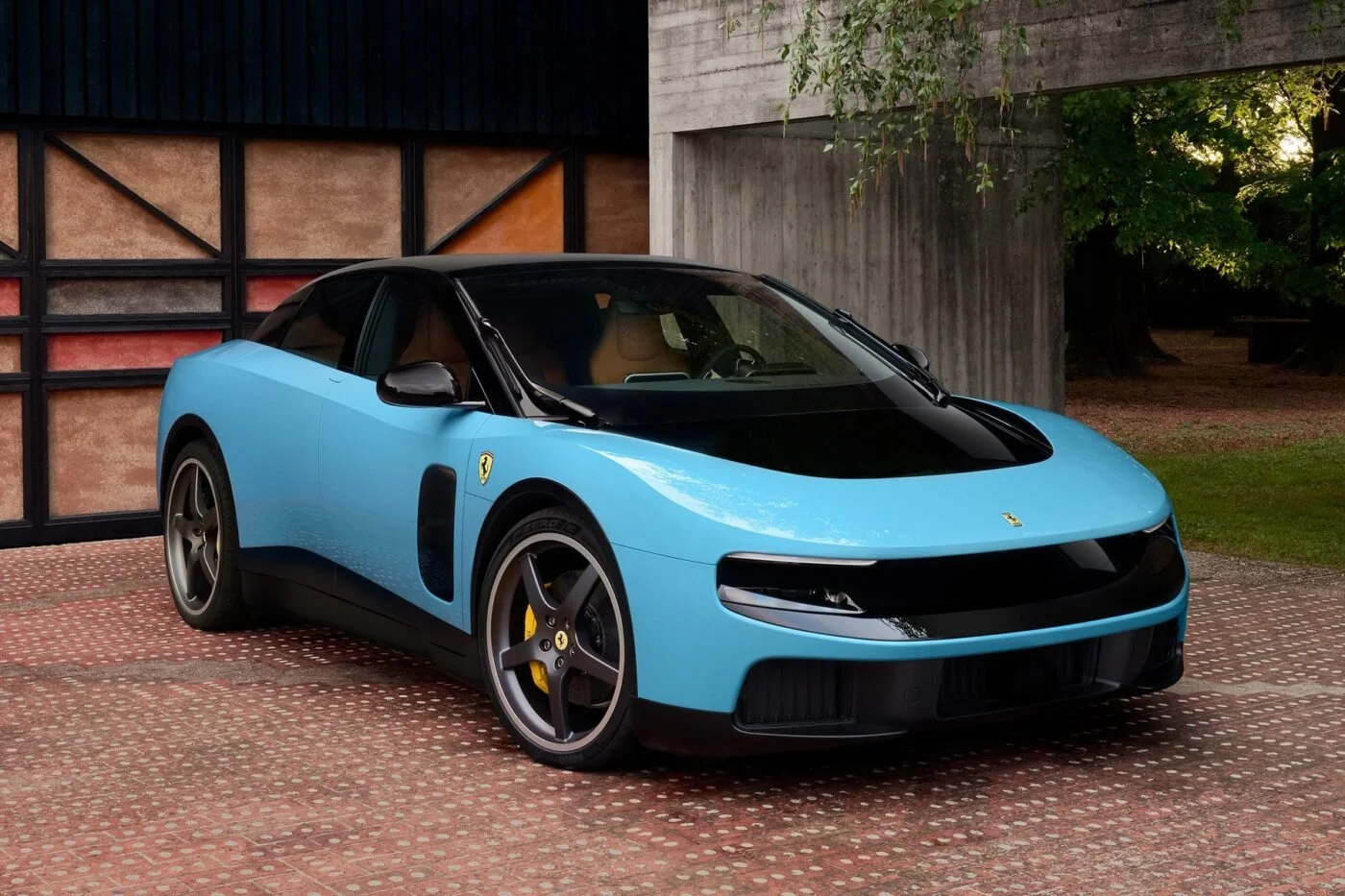
Speaker A: Yeah, at least it wasn't offensive. That should be the motto for all AI creative these days. At least it didn't kill anybody. Um, the foul for this week arose is going to go to Ferrari. Uh, Ferrari has this much maligned EV design called the Luche. Um, which they designed and I think in coordination with um, Johnny I've, who designed the imac and a lot of the early Apple stuff, the iPhone, stuff like that. Um, and it's been roundly panned We've talked about it on the show before. It's not going well for them with this in the public eye. Um, they just fired their CMO over it. Now can you tell me what the connection is between. We have a bad design that nobody likes. It was designed by the iPhone Guy is like driving an iPhone. But we're going to fire the CMO over this? I mean, what's going on?
Speaker C: Yeah, Bugger Divine know is actually the answer to that question. Nobody has actually, from what I've read, Red, nobody has actually said we fired him directly in relation to this EV design. Okay. It was just parallel. Right. Really bad news around the EV design. And you gotta ask yourself, what is Ferrari doing creating an ev? Right? This is just a testosterone burning, sexy, A, you know, beast of a car. It's a beast of a car. You don't make an EV beast of a car. I mean, come on. So, uh, did any of us think that this was actually gonna work? I don't think so. So, you know, I think the, the first question we have is why didn't this have an impact at another level? I think, you know, maybe they just wanted to release some angst. And the one guy they weren't really thrilled with who was at the level at that point in time was the cmo. And they're like, a head's got a role, it's got to be his.
Speaker A: Sucks to be the cmo.
Speaker C: Exactly. But I really, I cannot fathom, um, you know, unless he was like, yeah, this is going to be collaboration. We're going to get all these people who previously bought Apple and they're going to come and be our new customers. No, you know, it's the same way as I'm not going to buy a muscle car, I'm going to stick to my cute little mint Mini. Um, you know, somebody who buys Ferrari or buys a Mini is not going to buy a Ferrari. It's just not going to happen.
Speaker B: So I will say my lukewarm take on this because I live in a place where in the summertime, people who drive Lamborghinis and Ferraris truck their cars in and drive them poorly on roads they don't know. Uh, there is something worse, I think, than that ev, and that is the, like, station wagon version of a Lamborghini, which, I kid you not, I saw in the park other day.
Speaker C: So wrong. It's right up there with the Cayenne. The Porsche Cayenne.
Speaker B: Exactly.
Speaker C: It's like, what were you thinking?
Speaker B: No offense to our neighbors who has one.
Speaker A: Oh, Man. Well, with that it's, uh. Have a suggestion for this list or just want to discuss it? Comment online. Use the hashtag Fairfail foul. Let's pound Fairfail foul. You guys have been great. Let me finish this up. If you'd like to subscribe to this podcast, visit our website@thebeancast.com and click on the subscribe link. If you're an Apple Podcast listener, we've also provided a direct link to our listing there. Or just search for the Beancast in the podcast directory on the Apple Podcasts app. And whichever podcast directory you use when you subscribe, please leave us a review. Got a comment? Have a question? We'd love to hear from you. Just send your emails to beancastmail.com Opening theme was performed by Joe Seibel. Closing theme by CJ Jacks. Thanks for listening. I'm Bob Norp. We're going to be taking our two, uh, month summer break now, so we're not going to come back till September 13, so put it on your calendar. But we'll be back again on September 13th with more new episodes. So hope you'll join us then. It's just like, um. It's like, you know what I mean? It's like, it's like, like if it's.
Speaker D: You know what I mean?
Speaker B: I don't know, man.
Speaker C: Just like.
Speaker A: Okay. It's like, um, you know what I mean, like, it's like totally like that. It's like, um. It's like, it's like, I don't know, like if it's, you know, it's like, you know what I mean?
Speaker C: Yeah, it's just like kind of.
Speaker A: It just seems like it's just like almost exactly.
Speaker B: Exactly.
Speaker D: Yeah.
Speaker A: You know what I mean?
Speaker B: Exactly.
Speaker C: Cool beans.
Speaker B: Mhm.
Other episodes covering the same guests and topics, from across The B2B Podcast Index.
 Your Best Candidate Might Have The Worst ResumePeople Managing People · on Coinbase88 / 100
 Is AI Marketing Helping or Hurting Growth? With Sheila Rondeau Ep. 146Talk to Th3 Doc with Steve Meek · on AI in marketing83 / 100
 How to Build a Brand People Love | Sarah Holt on Marketing, Leadership & AIThe Places We'll Go Marketing Show · on AI in marketing82 / 100
 SpaceX Starfall And Apple Price Hikes | The Brainstorm 138FYI - For Your Innovation · on Coinbase80 / 100
 SPECIAL SERIES ==> 🚽 The AI Hacks We Actually Use <== | BATHROOM Break #114 COLLAB: The Marketing Millennials + Do This, Not ThatDo This, NOT That: Marketing Tips with Jay Schwedelson · on Reddit73 / 100
 How Coinbase Rebuilt Its Blockchain Node InfrastructureThe CTO Podcast with Fexingo · on Coinbase72 / 100
 BeanCast 818: It's All Cat Litter
 BeanCast 817: Driving An iPhone
 BeanCast 816: A New and Improved Google
 BeanCast 815: My Mom Thinks I'm Awesome
 BeanCast 814: Oh, Feet Stuff