
The Acquirers Podcast · 2026-05-27 · 1h 0m
Key moments - from our scoring
Substance score
62 / 100
Five dimensions, 20 points each
Value options merges fundamental value investing with tactical options strategies to create better risk-adjusted returns. Rather than using options for speculation, Tim Travis advocates selling cash-secured puts and covered calls on stocks you'd be willing to own at specific price points, creating a "heads you win, tails you win" scenario if structured correctly. The key insight is that options are often mispriced because they're valued using mathematical models (especially volatility assumptions) disconnected from business fundamentals. A stock trading at 50% of net asset value might have cheap puts available precisely because it's volatile, allowing you to sell puts far out of the money and build additional margin of safety beyond what the valuation already offers. Travis walks through real examples like Owl (the asset manager trading at discounts despite investment-grade credit and 9.5% dividends), ServiceNow (demolished from highs but benefiting from AI adoption), and Amazon (whose free cash flow investments in AWS, advertising, and logistics will generate exceptional returns). The strategy targets double-digit annualized returns on put sales while manufacturing entry prices 25-40% below current market prices. This appeals particularly to engineers, business owners, and educated investors who understand that position sizing and disciplined exit rules matter more than catching home runs.
Sell cash-secured puts at a strike price where you'd be willing to own the stock. If the stock stays above the strike, you keep the premium as profit (targeting 10%+ annualized). If it falls below the strike, you buy the stock at that lower price plus the premium already collected, creating a discounted entry point.
Options are priced using mathematical models that treat volatility as the primary risk metric, independent of business fundamentals. A stock trading at 50% of net asset value with a good balance sheet will have expensive puts due to high volatility, allowing you to sell those puts at attractive premiums while the valuation fundamentals remain attractive.
No - if you expect significant upside, own shares outright to capture the full gain. Use puts to layer into positions at lower prices (if the stock drops) or to reduce positions at higher prices through covered calls, not as your primary position strategy for high-conviction winners.
You keep the premium you collected upfront, achieving your target return (typically 10%+ annualized on the cash secured), but you miss the stock's additional upside. This is acceptable if you position size correctly - owning shares outright for core conviction positions and using puts for additional entry layers.
Yes - the strategy performs best in range-bound or declining markets where you benefit from premium collection. It significantly underperforms in strong bull markets where stocks rally 25-30%+ because you cap gains through both unexercised puts and covered calls you may have sold.
Our reviewer’s read on each dimension, with quotes from the episode.
The episode contains solid foundational concepts about value investing with options (puts, calls, cash-secured strategies, the wheel), but much of the content is explanatory rather than novel. The core ideas - selling puts to create cheaper entry prices, targeting double-digit returns, using options as tactical tools within value investing - are well-articulated but not surprising to an experienced investor. The second half devolves into macroeconomic commentary (tariffs, AI, market concentration, interest rates) that is general and lacks specificity, diluting insight density.
So basically, uh, we're value investors, uh, so naturally. So we're looking to buy businesses that are trading at large discounts to intrinsic value, uh, based on extensive fundamental analysis. And then when we're talking about value options, it's using simple strategies such as covered calls or cash secured puts to generate income and reduce risk.
it all ultimately comes down to the. Is the stock that you're buying good?
The value-options framework itself is not new; Tim acknowledges Buffett did this with Coca-Cola in the 1990s and frames the strategy as a tactical application of existing value-investing principles. The octopus-and-railroads analogy by Jake (precision scheduled railroading, decentralized vs. centralized systems, efficiency vs. resilience) is creative and original, but it arrives late and is disconnected from the core topic. The options discussion largely recycles standard frameworks without contrarian or first-principles depth.
Buffett doing it with Coca Cola in the early 1990s after it established his position, it's trading at $39
options are priced off a bunch of mathematical algorithms, including volatility as being a big component of that
Tim Travis is the CEO of Value Options Letter, so he is a practitioner building a business around this strategy, not a pure theorist. However, beyond his newsletter he discusses mostly general market observations rather than specific operational depth on his own business execution. He has experience in investing-adjacent businesses (mentioned multiple times but kept vague), giving him credibility, but the conversation doesn't deeply probe his track record, returns, or operational challenges. He's relevant but not exceptionally senior or battle-tested on the specific topic.
I've been doing this for a very long time
I have other businesses that I'm involved in, uh, that I'm not really talking about that are related to investing, of course
The episode provides some worked examples (Owl, ServiceNow, Amazon, MetaREIT positions) but often lacks concrete numbers. When specifics are given - Amazon at $200 strike (hypothetical), Owl's 9.5% dividend, historical references to Buffett at $35 Coca-Cola - they are useful but limited. The macro discussion (Buffett indicator at 200, 10-year yield comparison to 2007, Nvidia at $195-$225) includes numbers but lacks named sources or methodical evidence. The wheel strategy explanation is conceptual rather than showing actual P&L or entry/exit examples.
Amazon right now is trading around 260 as we record this. Uh, let's say that you want to buy it at 200.
Owl, the asset management company... they're paying a really big dividend. But that's one of those... with a nine and a half percent or something like that.
The hosts ask reasonable follow-up questions (Jake's clarifying summarization about volatility vs. fundamentals, Tobias's question about measuring risk, the operational bankroll allocation question). However, questioning often lacks teeth - hosts accept answers at face value without pushing back on vague claims (e.g., Tim's vague reference to other businesses, the unquoted Micron inventory claim, assertions about AI's impact without pushback). The octopus-railroads digression is excellent conversational craft but tangential to the core topic. Overall competent but not sharp or consistently probing.
Tim, can you summarizing what you're saying there then? Basically, if people are using math to value something and they're using the inputs of volatility as one of the primary drivers that can become disconnected from the fundamentals of the business.
operationally, because I've never really tried this before. But how much of your bankroll do you keep available versus written, uh, you know, let's say especially like on the put side.
Computed from the transcript - who did the talking, and the words that came up most.
Value: After Hours is a podcast about value investing, Fintwit, and all things finance and investment by investors Tobias Carlisle, and Jake Taylor. We are live every Tuesday at 1.30pm E / 10.30am P. ────────────────────── VALUE OPTIONS LETTER Three to five curated ideas every week - cash-secured puts, covered calls, and spreads on businesses we'd want to own at strikes we'd be willing to pay. Every trade includes the business thesis in plain English, the fair-value estimate and its key assumptions, the specific option trade with target premium, and the pre-identified exit criteria. Every idea reviewed and approved by an analyst before it hits your inbox. valueoptionsletter.com/subscribe ────────────────────── See our latest episodes at About Jake Jake's Twitter: Jake's book: The Rebel Allocator ABOUT THE PODCAST Hi, I'm Tobias Carlisle. I launched The Acquirers Podcast to discuss the process of finding undervalued stocks, deep value investing, hedge funds, activism, buyouts, and special situations.We uncover the tactics and strategies for finding good investments, managing risk, dealing with bad luck, and maximizing success.
Transcribed and scored by The B2B Podcast Index.
Speaker A: Fourth of July savings are happening now at the Home Depot with select appliances starting at $398. Plus get free delivery on appliance purchases of $398 or more. No membership required. Upgrade your kitchen with a modern and sleek GE profile refrigerator featuring hands free autofill for the perfect pour every time. And make laundry day easier with 2 in 1 washer dryer combo innovation that completes laundry in about 90 minutes. Shop top brand appliances now at the Home Depot offer valid June 17th July at the US only C store online for details.
Speaker B: Hey babes, it's Paris Hilton. So I was checking my points balance in the Hilton Honors app the other day and yeah, I've got about a billion, which feels excessive even for me. Just kidding. You can never have too many Hilton Honors points and I want to do something iconic this summer, so I'm giving away all my Paris points. Just find somewhere you've always wanted to stay, then go to my socials or Hilton's and tell me about it. Just make sure you're a Hilton Honors member and I might be sending you Paris points if you. Because when you want points that make your summer even hotter, it matters where you stay.
Speaker C: We're live. This is Value After Hours. I'm Tobias Carlisle joined as always by my co host, Jake Taylor. Special guest today, Tim Travis, CEO Value Options Letter. How are you, Tim?
Speaker D: I'm doing well. How are you guys doing?
Speaker C: Really well.
Speaker E: Good to have you back, Tim.
Speaker C: What's that? Good to have you back.
Speaker D: Well, thank you, thank you.
Speaker C: When we have, uh, when we're talking value options, uh, just in case folks don't know. Do you want to give us a little explanation?
Speaker E: Yeah.
Speaker D: So basically, uh, we're value investors, uh, so naturally. So we're looking to buy businesses that are trading at large discounts to intrinsic value, uh, based on extensive fundamental analysis. And then when we're talking about value options, it's using simple strategies such as covered calls or cash secured puts to generate income and reduce risk. And we're limiting ourselves to stocks that are already undervalued. Uh, and so that's kind of the critical element of this is that it's value investing. That's the strategy. The way that we utilize options are just tactics. For instance, if you like a stock and you would be willing to buy it here, but maybe you're kind of concerned about the overall market or you just like to make it a little safer even you might sell a put a cash secured put on that stock and that creates a situation where there's two outcomes. Heads or tails? Heads. If the stock's above that strike price where you sold the put at expiration, you make your return. We target over 10% annualized, uh, almost always, uh, tails, you end up buying the stock. If the stock's below your strike price where you sold the put at, you end up owning it. And now you have all the upside. The dividends you could sell covered calls on it, uh, however you want to deal with it from there. But that's kind of the basis of, uh, value options.
Speaker C: There are two things that I like about it. One is that you can choose your entry and exit price for stocks. You're not necessarily guaranteed to get that entry or exit price, but that's the other side of the equation that you can make sure you're getting a sufficient return on. Because when they're cash secured, so if you want to go long a stock, you sell a put, which I know is a little bit like inside out the way that people think about it. You buy a put for protection, for downside protection. And so you sell a put. So you're underwriting the stock if it falls below that particular strike. But the nice thing is, and there's an example of Buffett doing it with Coca Cola in the early 1990s after it established his position, it's trading at $39. Um, he buys a strike at 35, and he gets $1.50 per contract. So if he gets the stock put to him, it's $33.50 against the $39 stock price. And in that instance, uh, I guess he thought that $33.50 was a good price to take the stock because the premium that he got was only enough to give, uh, him about a 6% annualized return, which, uh, is pretty thin for, um, the cash that he had to put up. So he may not have done it cash secured, but you would recommend doing it cash secured. So you got to put the money into your account and the premium gives you a little discount. And basically that's your return for the period of time you have it there.
Speaker D: Correct? Correct. Exactly. So, uh, it's an attractive way to layer into a stock everyone wants to buy when stocks, they want to buy stocks at cheaper prices. Right? Um, and, and it's hard to do that mechanically. Sometimes people will dollar cost average, uh, just, you know, they'll have like, certain limit prices that they're willing to buy the stock at. But when you're selling puts, you're kind of manufacturing that in a way where if that stock doesn't drop to your level, you're still able to profit because sometimes you'll, you'll be buying, let's say, Google or Meta or something like that, and the stock runs away from you where you can't buy that full position that maybe you wanted, maybe it had already run up. You get in, you establish a foothold in the stock, but you haven't built the full one. You're just a little cautious on it, and you're kind of, uh, expecting it to drop at some point, but you might not get that chance. And so when you sell puts, you're able to, uh, create a heads you win, tails you win situation. As long as you're willing to own the stock, that, that's the key difference.
Speaker C: It's not necessarily heads you win, tails you win. You've got to make sure that you win on both sides before you put the trade on, right? Like that's.
Speaker D: You win in the sense that you want to buy the stock cheaper. You know what I mean? So it's a stock you want to own, so you're able to manufacture that cheaper entry price into it. But 100%. It all ultimately comes down to the. Is the stock that you're buying good? You still have similar loss dynamics. I mean, if a stock goes to zero on you, of course.
Speaker C: And it's true on the other side too. If you own the stock and you want to sell, it's just the reverse process. You sell the call. You're not necessarily getting hit, but you generate income in the event that you don't trade all the way up.
Speaker D: Right.
Speaker E: Why do you think that these securities get mispriced in the option market, and is it more likely to misprice than the underlying?
Speaker D: Uh, I think that, yeah, at times that is the case. I think it's because just like there's the efficient market theory where, uh, you know, volatility is equated to risk in some academic circles. Uh, and I know that someone like Buffett or Charlie Munger would totally agree with that, disagree with that. And so would I, uh, personally, same thing with options. I mean, options are priced off a bunch of mathematical algorithms, including volatility as being a big component of that. So if a stock drops a lot, the, the price of that option might be very, very high. But that doesn't necessarily mean that the, uh, that the underlying stock is extremely risky or that the option position that you're building is risky. I mean, we see things where you might have like a real estate investment trust that's trading at 50% of its net asset value. And it's got a good balance sheet. Obviously there's headwinds, right, because why is it trading so cheaply? But even now, I mean, even high quality ones are trading at 15, 20, 25% discounts, uh, to nav. Just because real estate's so out of favor with rates going up, uh, and then they've taken a big hit. So volatility is pretty high. You're able to sell puts way out of the money. So creating a much, much, much larger margin of safety to what you already see as a pretty big margin of safety. Uh, so you're kind of benefiting two ways. You have the mispriced stock and then you have the option that's just really based on the mathematical principles of how far the stocks dropped in what amount of time, uh, and the perceptions of short term movements with options. And I think it gives the advantage to someone that's patient, that's willing to own the underlying. And that's one of the things that we do, uh, at Value Options Letter, is that we break down the mathematics for subscribers so that they can see, okay, we're targeting 13% on this trade. Worst case, you're gonna manufacture an entry price 25% below the current price. This is why this stock looks attractive. These are the fundamentals behind it. And then those, uh, subscribers also get, um, get input on when good exiting opportunities would be. So it's easier to track the options
Speaker F: when you need to build up your team to handle the growing chaos at work. Use Indeed Sponsored Jobs. It gives your job post the boost it needs to be seen and helps reach people with the right skills, certifications, and more. Spend less time searching and more time actually interviewing candidates who. Check all your boxes. Listeners of this show will get a $75 sponsored job credit@ Indeed.com podcast. That's Indeed.com podC terms and conditions apply. Need a hiring hero? This is a job for Indeed. Sponsored Jobs. This episode is brought to you by Accenture. When your advertising operations fall out of sync, everything else follows. Spotify and Accenture are working together to reinvent the rhythm of ad sales using automation, analytics and smarter workflows to simplify campaign delivery and access better data across the business. The result? Less time spent on operations, more time connecting brands with the moments and fandoms that matter most. Learn more@accenture.com Spotify
Speaker E: Tim, can you summarizing what you're saying there then? Basically, if people are using math to value something and they're using the inputs of volatility as one of the primary drivers that can become disconnected from the fundamentals of the business. Which allows you to take a different view on the security then.
Speaker D: Precisely.
Speaker A: I would agree.
Speaker D: I think you summarized it much more eloquently than I did.
Speaker E: Well, I had time to think while you were talking.
Speaker C: Can you give us a worked example? I know you've done that previously, but we can work through. You gave us Blue hour last time. I think Blue is kind of interesting because it's in the news. Lots of headline risk, lots of people feel strongly about it one way or another.
Speaker E: People selling their sports franchises.
Speaker D: It's a good, it is a good example because when you're talking about Owl, the asset management company that has the vast majority of their assets under management are permanent capital. And, and so there's a, uh, certain stability to the fees that they're bringing in. And they have a variety of different verticals where they're raising assets, whether it's real estate, whether, you know, they're, they're in the data center type stuff that's being built. They also have the private capital, they have the publicly traded private capital which is different. Uh, and so they're in the headlines for all the wrong reasons. But the reality is the business isn't that risky at all. It's an asset management business. Uh, so I don't think that, I mean it's an investment grade credit for a reason. They generate a ton of free cash flow, they're paying a really big dividend. But that's one of those where because the stocks dropped a lot, the options are really volatile on the put side and the call side. So you could sell puts at really high returns way out of the money. You could sell calls uh, really, really high returns way out of the money while also collecting the dividend which is like nine and a half percent or something like that. It's very high, but we gave that last time. But where we found some opportunities lately are on some of these software as a service, uh, stocks. So it's interesting. I mean that's not the normal purview of some value investors. But we look at growth and value as being intertwined. And so uh, stocks that have just gotten demolished, but their underlying fundamentals are pretty strong. Like ServiceNow for instance was one, uh, that has done pretty well lately. But it got absolutely demolished from its 52 week highs. But we actually look at them as being a beneficiary of AI, uh because of where they sit in the IT infrastructure and helping companies kind of bridge that gap and navigate things and get the appropriate permissions and all of that stuff. And they're still growing their revenues. They've got a really good balance sheet. Management seems to finally want to start taking some medicine on the stock based compensation which is a big problem for them. But you're buying it at multiples that it's never been available for. Uh, and the options are priced very attractively as well. But of course we're willing to own the underlying stock. So some of those are really good. I mean even Amazon, when Amazon dipped to 200 that was a great opportunity. We look at Amazon as good of a business as there is in terms of the future and the assets that they have. If you think about it, you have, you have uh, obviously the retail operations, but AWS is the crown jewel. You have the advertising business which is bigger than YouTube, uh, and growing rapidly and is perfectly situated with where it is. You have them now entering logistics, third party logistics, uh, competing with UPS and uh, FedEx. Uh, and there's so many different ways for them to win. And you look at the valuation, yes, free, free cash flow is getting crushed. So on a uh, price to free cash flow it's going to look horrendous. But this is, this is money that they're going to earn a fantastic return on in our estimation. I mean if I was CEO of Amazon, I'd want to be throwing a lot into this because the reality is the AI is that good, it is that powerful. And I was skeptical. Uh, but the more you engage with it the more and the more you see what you can do with really is, I mean there's very, very high limits to how much computing power and stuff like that that they're going to be able to sell. So I thought that was attractive. So you're able to sell, puts on really high quality companies like that and manufacture attractive entry prices into the stock or if it runs away then you made a really nice profit too.
Speaker C: Tim, couple of good questions from the crowd. What's the expected return on this put approach? Uh, that's difficult to quantify. But how do you measure the risk in this method?
Speaker D: Well, I mean, how do you measure the risk uh, when you buy stock? Right. So I mean the number one risk we're concerned with is, is mitigating permanent losses of capital. Uh, so, so that's the big difference in how we use options versus many people is that a lot of people use options where either they're buying options and they have unlimited potential but limited risk. But the odds are stacked against them or they'll do things like technical trading and they're doing spreads where if it goes against you, yes, once again your risk is limited, but you're locking in permanent losses of capital. And you might have just been wrong on the timing, you might have just gotten the timing wrong. But ultimately that's the issue with this. We're targeting double digit returns on the option trades that are uh, put out and published on the site. And then if you end up owning the stocks, it also lists the target price. So a lot of these are 40, 50% below uh, the target prices for the stock. So I would say this, I think it's a safer strategy than owning stocks outright. It's a risk reduction strategy. There's different types of risks. Uh, so like as you mentioned earlier Toby, if you own a stock and you sell a call 25% above where the price is at, uh, current price is at, and let's say that option's a year out, which sometimes we'll do. If that stock doubles, well, you still made a great profit but you didn't double your money. So that's another risk where you're, you're capping the upside on some of these. So you want to sell calls, covered calls at prices that you'd be willing to sell the stock at and conversely you want to sell puts on prices that you're willing to uh, acquire the stock at. But I would say this is a risk reduction income enhancement strategy I think once you understand how to do it. And that's really the genesis of the value options letter. This was a concept I've wanted to build for 20 years and obviously I have other businesses that I'm involved in, uh, that I'm not really talking about that are related to investing, of course, uh, but, but trying to keep those separate. But the idea is options are such a valuable tool when you know how to use them in an intelligent business like manner. And so I want to democratize that and make that easy for people to understand and incorporate it into what they're doing with their investments. Because you can have a lot more wins when you're, when you're doing something like this. Uh, but you're going to have losers too. I mean of course there's, there's pros and cons to any strategy but I think there's huge value the more educated people become on this, on this subject.
Speaker E: So if you tim a couple two questions I guess. One, um, are you then in this strategy rooting for choppy markets? Is that that good for, for this,
Speaker D: it's definitely not bad. Like if, if you were to do a relative performance type thing versus like the S and P. That's a very good scenario. Uh, really any scenario. I think this, you know, it all depends on the stock selection and whatnot. But even if you're doing this on like an S P index, which we don't, we don't do. But, but if you were doing it, then the, the, the, the markets that run away to the upside where it's up 25, 30%, those are the ones where you're going to underperform the most. Uh, if the market's down a lot, you'll still lose money. Uh, but you'll, you should lose less. Right. Because we're building that, that bigger margin of safety with the options and yeah, choppy. So, so yeah, I mean so there was periods like uh, after the tech crash and then going into the financial crisis where there was a lot of stability, a lot of range bound trading and a lot of these types of strategies did quite well. But, but they weren't there. Honestly other than Buffett, there's not a lot of people that you see talking about and he doesn't talk about it a lot either and it's not in the news that much. But talking about using the options as a tool to manufacture a cheaper entry price into the stock, it's not just an options, it's a value options where the key part is the value investing principles, the research behind it and then just using the tools like a hammer and wrench, you know, you're just using. Okay, I want to create a situation, let's say you own a thousand shares of a stock. Maybe you want to layer out of that at different prices. So you could sell calls 20% above, 10% above, uh, that sort of thing. And if it, if somebody gets exercised, great. You're reducing your position like you wanted to. If none of it gets exercised, well, you just made a lot of money that you wouldn't have made anyways. A lot of people that work at companies that have a ton of one stock, I see that all the time. What a great tool to reduce that risk, uh, without just blowing it all out at once. There might be tax consequences uh, if you just blow it all out at once. So a lot of value there.
Speaker E: If you should, that's the other thing too that. Sorry, sorry tv. If you are trafficking in names that are very power law driven, it seems like that this would not be good for that because it's the, you know, the big Winners are carrying most of the weight in, in that type of portfolio. But if you're looking more to do singles and doubles and not trying to hit home runs, so you're focused more on batting average than slugging percentage, let's say, then this could be a good way of, of focusing on that.
Speaker D: Yeah, I would agree, I would agree with that. I mean, I mean there's, there's definitely stocks that will run away from um, you, uh, but, but I think that, yeah, there's a lot. There's a lot. It's a lot easier to find opportunities to get those targeting double digit annualized returns. And if you're in a market and we've talked about this before, but I remember in 2010, 2011, after we had had two major bear markets in 10 years, buy and hold was considered debt, right? Like annuity sales were up, gold coins were up. I bet people wish they would have held onto those nowadays. Uh, and it was buy and hold was dead. That was thing and now we were talking about it before the show. In my career I've never seen more optimism on buy and hold where it's just like set it and forget it. Very little risk valuations, who cares? Nvidia at five and a half trillion, like it doesn't matter. Uh, and so you know, the pendulum swing both ways. And so as you get more range bound markets or more negative markets or just not as robust markets, adding some of these additional tools to generate income and reduce risk in your portfolio can make a lot of sense. And most of the people that gravitate it, from my experience, and I've been doing this a very long time, are like engineers, uh, business owners, lawyers, doctors, educated people that are like, well that makes a lot of sense. Like why, why wouldn't I do that? You know. And it's the reason why people don't is their advisors might not know how to do it. You have to keep track of a lot of stuff. You still have to. You or someone else has to understand the businesses that you're investing in. Uh, but those are kind of uh, the solutions that we tried to solve. Uh, with the valueoptionsletter.com if you're short
Speaker C: a put, um, if you sell a put, it's sometimes called a bull put. The way to think about that is it's your downside is like being long the equity because you've underwritten it, but you've got a little bit of a discount already with the strike and you get a little bit of additional padding with the premium that you take on. So that's your downside risk for a sold put. But there's also this sort of other risk on the other side where you, you sell the put and you get the premium and then it's on a stock that goes on this incredible run. So you miss out on the upside of that, of that stock. So how do you quantify the benefit of a cash secured put versus buying more stock?
Speaker D: I think position sizing has a lot to do with it. Uh, so if you think that a stock is going to double, I would suggest owning the stock and then zero day expiration.
Speaker E: That's what I would say.
Speaker D: Yeah, right, right. Uh, but I would suggest owning the stock. I mean, so that's why it's important to have things like target prices and that's stuff that we provide. So if we think a stock's going to double, you definitely want to own some shares in it. But maybe you're also saying, well, if it drops 10%, I want to buy more. And so that's where you could sell puts. Or you say, all right, if it rallies 25%, I want to lighten 25% of my stock up. Uh, so the idea is if a stock doubles, there's going to be so many different times when as an investor, we've all been through this, uh, where okay, should I hold or should I sell? Should I sell some. The exact same principles apply. Right. Because I mean, we've all had stocks that, oh, uh, meta is a great buy at 100, 100, and then it gets to 200 and it's like, oh, I mean, we just doubled our money, let's take profits. And now it's at 600. Right. So, so it happens if you own the stock, it can happen with options. It's just being disciplined and understanding that, that you're taking, you're making businesslike decisions with your investment portfolios. That's something that I'm a firm believer in, knowing that not every business decision is the correct one, but there's the strong rationale and logic behind it will lead to good outcomes. It's a sound process that can lead to good outcomes and I think less risk overall. If you're implementing it in the way that's kind of suggested by Tim, just
Speaker E: operationally, because I've never really tried this before. But how much of your bankroll do you keep available versus written, uh, you know, let's say especially like on the put side.
Speaker D: So the benefit with the, uh, cash secured puts is that, is that you have to allocate the capital for the full amount. So if you're selling a ah, fifty dollar put, that's 100 shares, you're going to collect a 500 premium. The, the capital required be about $4,500. So you're not going to get a margin call. If you're doing cash secured puts, you're going to do it like you're doing it stock. So that means that you should expect stock like returns. And that's why at the value options letter we just sell uh, puts that generally target that double digit threshold. Uh, so it can be, it also kind of depends on just the outlook. I mean if you have a lot of, if it's 2009 and you've got just really fertile grounds for investment, buying stock is fantastic. And the website does make recommendations of just buying stock when it makes sense to do so. But maybe you're looking at the current investment climate and it's not that attractive to you. Maybe you want to overweight towards some of these more conservative strategies where you're still targeting double digit returns. And what's nice is even if the market's kind of flat, ah, you can still uh, potentially generate returns uh, with that.
Speaker C: When you say you're targeting double digit returns, what you mean is that the premium that you're getting relative to the cash that you put up that is secured on an annualized basis works out to a double digit irr.
Speaker D: Correct? Exactly. So, so the, the target profit. So if you sell a put, you're going to collect a premium upfront and let's just say in that example 500, uh, and on a $50 stock your maximum risk is 5,000 minus the 500 you collected. So it's 4,500. So that's your return low double digits. And it just depends on the time frame. I mean the website has stock or option trades that are targeting 40% annualized returns and it has some that are targeting 10. And even on some, if it's like a super safe stock, the hurdle gets lowered a little bit to like nine. But you know, I'll pose this question like I think it's interesting if you look at like Berkshire Hathaway because it's oh well we're not buying back stock at uh, like let's say 1.6 times book value. But at 1.4 times book value we're buying stock and at 1.3 we're really backing up the truck or 1.2, whatever. But what I like about using these types of strategies is that you can create that where look, you're backing up the truck at 1.2 times book value. It's not hard to figure out what price that would be at. Ah, you set the strike to that level and then over time if you're investing in good companies, it's going to be worth more over time. The Amazons, the Google, the Metas, the Microsoft's. Uh, so we want to focus, we're focusing on high quality balance sheets, undervalued stocks. This is not like a get rich quick uh method. It's a tactical business like approach, uh, and very educational approach to help people navigate the options, uh, market.
Speaker C: Uh, Tim, do you want to just discuss um, a wheel? Give folks an idea of the wheel.
Speaker F: Yes.
Speaker D: Yeah, yeah. So a wheel is a really cool strategy and it's great way to kind of articulate the value of the site. So, so let's say that you want to acquire uh, let's just say Amazon stock. Let's use that, we've talked about it a few times. And so Amazon right now is trading around 260 as we record this. Uh, let's say that you want to buy it at 200. Okay. And so you're going to sell a put at 200 and you're going to target a double digit return. Now this is just totally hypothetical. Realistically Amazon is so high quality there's, I'm assure that there's not a $200 put that's, that's uh, targeting 10%. But I just want to use as example a stock that everyone knows. Uh, so basically you're in a situation where if the stock's above 200 you're making 10%. If the stock's below 200 you're buying it at a discount, a ah, sizable discount to the current price and a discount to your strike price cause you collected the premium. Now let's assume that Amazon just tanks and now you own the stock. Well, your options probably underwater a little bit just depending on how far the stock dropped. But now you own the stock at whatever the break even is, maybe it's 180 or whatever it is, uh, and now you have all the upside or downside with the stock. What you can do with this strategy is then you can start selling calls. So maybe you sell a call at 240, uh, and it expires, then you sell another call. Or if you want to, if you're like I kind of don't really want to own Amazon as much as I thought I did, maybe something changed fundamentally. Maybe you just want to sell that call kind of at uh, the strike, you sold the put at 200. You can do that. And you're making money on both sides. You're making money from uh, you're reducing your cost basis by selling the put and then you're making money on the calls that you sell. So once you get exercise, as long as it's a stock you want to own, it's really the beginning of the game. And so that's what the wheel is. It's continued covered, uh, calls on existing positions and that's the value. So if you're trying to do this on your own, it's hard. There's a lot of layers to it. You've got to analyze companies, you've got to analyze option chains and then you've got to track all these things. So it's very, very, very hard. And that's why I've tried building this website for 20 years. I've hired two developers, I've paid over $60,000 and none. It just came out clunky. It wasn't the right user experience, but we finally got it right. And so that's the beautiful thing of it is it tracks the trades, users place the trades with their own brokerage. Uh, it's not an advisory, it's a publication, a research publication. Uh, but it issues, it publishes uh, suggestions on when to exit and stuff like that and when to sell, additional calls on the wheel strategy and things like that.
Speaker C: So what's the website, tim?
Speaker D: Yeah, it's www.valueoptionsletter.com and there's right now it's priced 50% off. So it's just $100 a month, $99 a month. Uh, and there's a sale where it's 9.99 for the full year. So very cheap. That price will double uh, soon because it's new. Uh, we really look at kind of founding subscribers as partners in this because they're putting trust in us in the method and the process. Uh, but I think it's a great value and we're excited about it. There's also a free seven day trial. So if you're interested, try the free seven day trial and see if you like it. And I think you will. But three to five trades come out every week on average. Lately there's actually been more than that. Uh, and uh, especially because we have new subscribers and we really want them to get the full uh, multitude of what the site does.
Speaker C: So Tim and I have partnered together on this. We've also written a book together. Uh, called value options. It's really short, easy to read. Just discusses everything that we've said here. All of the stuff that is in the book is free on the site too. So you don't need to buy the book. You can just go and read the stuff that's on the site or buy the book if you prefer to do it that way through Amazon. Um, jt, let me do some. Do you have some veggies? Let me, let me do a quick shout out around the horn and then we'll do some veggies. Gothenburg, Sweden. First in the house. What's up? Valparaisa, Indiana. Luzon, Switzerland. Philly. Boulogne, France. Welcome. Petitva, Israel. Tallahassee. The market rates. Woodshed. Hope you're okay. Boise, Toronto. Snohomish. Helsinki, Finland. Limerick City. His favorite saint, Saint Patrick. His favorite poems of Limerick. Oregon City, Oregon. Bethesda, London, Chicago, Cincinnati. Havertown. Thanks for joining us, folks. We appreciate it. JT with some veggies.
Speaker E: All right, so we are going to attempt something never before tried, which is connecting railroads and everyone's favorite, the octopus. So stay with me on this. Yeah, so one of, one of them is thought commonly as a repulsive, conniving creature with no soul. Slippery, hard to pin down, will strangle you if it gets a chance. And the other one is an octopus. Um, all right, but underneath the jokes, uh, they're solving the same problem often, which is how do you keep flow moving through a complex system without the whole thing falling apart? So let's start, uh, a little bit with what rail railroads used to look like. And for most of their history, North American railroads were less like factories and more like a jazz band. Local managers would make these judgment calls. Trains would, would leave when they were just full enough, basically, in the opinion of that person. Rail yards acted like these giant buffers where they would soak up a lot of uncertainty and delay. And it was organized in a very improvisational way. And for a long time that worked because competitive pressures just weren't really that intense. Uh, but then trucking got better. Deregulation finally arrived, uh, and investors started demanding higher returns. And then we come to this guy, Hunter Harrison, and he's one of the most divisive operators in transportation history. He ran four Class 1 railroads in his career, and unfortunately, he died three weeks after taking over CSX, uh, in 2017. But the basic story with him was he would come in and take over and all of a sudden the operating ratios, which is basically just like profit margin, the term that they use in railroads Ah, would just continue to keep improving. And uh, he would take a company or a railroad that was earning like 2%, 2 pennies on every dollar of revenue and bring it down to like 40 cents of profit margin. Just absolutely huge. He did it four different times in different locations. Um, and this philosophy that he implemented was called precision scheduled railroading, psr. And uh, you might have heard Buffett talk about this at different points. And it's a pretty common, uh, there's a common argument about this. So what PSR actually does is it takes what the traditional railroads used to do was wait for the demand to show up and then ship something. PSR forces the customer to adopt to the schedule of the train is leaving, get your stuff on there. Otherwise, sorry, uh, the train leaves on a clock whether it's full or not. And they try to run fewer trains, they run longer trains. And the whole point is to have less idle equipment. Less dwell time is what it's called, where a rail car is just sitting motionless in the yard and this whole network is then tuned for one continuous thing, which is just flow. Ah, and the railroad stops behaving like a freight company, it really starts looking like a circulatory system. Which is where we're going to go back to the octopus. Uh, believe it or not, an octopus has three hearts. Two pump blood to the gills, one pumps oxygenated blood throughout the body. And more importantly, an octopus is this profoundly decentralized organism. No rigid skeleton, eight arms that are operating semi independently. A huge percentage of the neurons live in the arms themselves, not in some central brain. And each arm can then solve problems and react locally on its own. Um, but there's this famous problem in anything decentralized, which is like, how do you coordinate? And the octopus solved this by building a circulatory architecture that keeps this flow synchronized across the whole organism. Multiple hearts are managing pressure and the body functions then as one system, even though the intelligence is kind of spread out. So this is kind of what PSR is trying to do for a railroad. Decentralized assets, but centralized circulation and the network is this organism. Uh, the flow is the point. But there's a trade off here. And the octopus, when it swims really hard, its main systemic heart actually struggles under that load. And which is why octopuses prefer to crawl, typically rather than swimming. Very expensive metabolically to swim. And they weren't really built for it. Um, so that same trade off sits inside of psr. Traditional railroads actually carried a lot of slack. They had extra crews, extra locomotives, extra yard capacity. And uh, on paper that slack looks like waste of course, but in practice it's a bit like biological fat reserves. It absorbs shocks and PSR strips most of that out. The financial results are amazing and the operating ratios drop to be attractive. Assets get more productive, free cash flow gushes. But you also have removed this buffer and one delayed train then can pressure into the next. One congested yard creates downstream choke points, um, and the same synchronization uh, that it produces efficiency can also then amplify fragility. The investing version of this that we've seen m relatively recently was um, in Japanese auto parts in 2011 with a 9.0 magnitude earthquake hitting Japan. It was a triple disaster because you had the quake, the tsunami and Fukushima meltdown. And these manufacturing companies uh, in Japan were really like the gold standard of just in time delivery. Toyota basically invented this. And the average Japanese manufacturer at the time held only three weeks of material inventory. So really lean balance sheets, lean warehouses, single source suppliers, uh, look like this super efficient industrial system. And of course MBAs rejoiced uh, at how well they were taking working capital out of it. But then it stopped uh, and production fell 78% year over year in April of 2011 because of this earthquake. And it wasn't that Toyota's own plants were even destroyed, it was actually their suppliers, suppliers, suppliers were destroyed, uh, and that's then chokes the whole system. Um, so manufacturing actually dropped across Japan completely 15% of March. It didn't recover for like six months. So after that Toyota rewrote their, their business continuity plans and they now require key suppliers to hold uh, anywhere from two to six months of inventory minimum. And they moved away from single sourcing many of their things. And you know there's some irony in the fact that the firm that invented just in time voluntarily put slack back into the system, um, and they sacrificed efficiency on purpose. Uh, so try to wrap this up here. There's this kind of uncomfortable point which is that all this efficiency in PSR is visible, uh, but that the resilience is often invisible. And you see these lower operating margins, uh, or better operating margins I should say in psr, uh, and you get all this working capital that's released, uh, and you can count fewer locomotives being used, fewer crews, but what you can't see is the train that doesn't get delayed because the crew was available, the factory that doesn't shut down because inventory was available, uh, the portfolio that doesn't have to sell at the bottom because cash that looked lazy for 5 years is available to do the things that you want to do. Uh, and so uh, Mother nature's octopus understood all these trade offs long before we did have this distributed intelligence that's useful and then this circulated, uh, centralized circulation system. But the organism survives because it has more than one way to keep the blood moving. And the real underwriting question in any business or supply chain, railroad whatever is how efficient is this under normal conditions. But what happens when one of the hearts stops?
Speaker C: Good one. Have you seen the conspiracy theory that octopuses are uh, um, octopods, uh, aliens because they don't fit into any of the uh, other like normal schema families. Yes. Yeah, yeah.
Speaker D: My teacher, the octopus purposefully not watched it.
Speaker C: I've avoided it.
Speaker E: Yeah, that's a little uncomfortable.
Speaker C: I like the taste too much.
Speaker D: I know you fall in love with the octopus and the guy's great too. And then he doesn't defend the octopus while it's getting like eaten by sharks. It's hard to watch for sure. I think globalization though, I think similar. I remember reading uh, I remember it was actually Bill Gates of all people that recommended it, but it was like a book by like vaccine or something. Jake might know. Yeah, yeah, yeah. And uh, and it talked about globalization, uh, but just how vulnerable we were because we had outsourced so much of our manufacturing. And so you get to war times, or now you see it with rare earth minerals and things like that where obviously, you know, when, when, when there's peace. Globalization is very efficient. Uh, but you know, we've seen that collapse multiple times now. Uh so it's interesting it works in smaller scale. Like I mean railroads are still big or even on the global economy.
Speaker E: It is surprising that so many countries kind of willingly seeded their energy independence and military independence, uh, so easily.
Speaker D: It's crazy to think about it's, it
Speaker C: really is years of peace, years of like no conflict, no huge global conflict. Two generations nobody, nobody remembers.
Speaker E: Can't happen here.
Speaker C: I saw a YouTube documentary on Ah, BYD and the level are clearly, clearly cleverly run. And the guys, uh, you know, Munger says he's a visionary, uh, on the level of Benjamin Franklin. But they've also been enormously subsidized by uh, by China along the way. Like China subsidized a lot of those industries. And so I just, I, uh, you know, because we, you and I visited China, we, we looked at those EVs. Like they're beautiful EVs, they're much cheaper than EVs in the States. And we Were concerned that you unleash these EVs on the US and then how does someone like Tesla compete with these guys? But it seems like they are pretty heavily subsidized, uh, subsidizing uh, a lot of different industries. So I think that probably tariffs are a reasonable response to that. Anybody want to jump on that grenade?
Speaker D: Yeah, yeah.
Speaker E: Touch that third rail.
Speaker C: Uh, I mean very unpopular topic.
Speaker D: But war two, what happened? They, we had to convert the auto manufacturing into you know, war production, uh, and war equipment like tanks and stuff like that. So there's huge disadvantages from allowing all these countries to, to uh, you know, have all the manufacturing of key things. So uh, I think that there is logic behind that. But it's obviously super painful and not easy in communication and whatnot.
Speaker C: I mean it goes to.
Speaker E: It's tough though, right? Because yeah, you get the consumer wins over most of that time period until they get enslaved by the other country.
Speaker C: Is that bad?
Speaker E: Is that. Yeah. Was that one.
Speaker C: Well, Ant overlords. Yeah. Um, what do you guys make of this massive rally that we've seen since March 31st?
Speaker D: Yeah, it is. I mean a lot of it seems like it's Nvidia, uh, and some of those other um, like Microns and the Sandis of the world. It doesn't seem like it's that broad of a rally, uh, overall. Uh, so you know, it's interesting. I just think that when I have a stock screener that I look at a stock ticker thing with Schwab and it's hundreds of names and I feel like through most of the rally probably 65% have been read most of the time. Whereas. But then you have Nvidia gapping up five bucks which is a huge market cap number. Last I looked it was a five and a half trillion dollar market capitalization. So I think people are rightfully looking at AI and the more you engage with it on the more sophisticated things, it's very clear that it's going to dramatically transform a ton of industries. It's, it can be fantastic or devastating for small and big businesses, both. Uh, but you could see why the demand for the chips is as high as it is. Uh, and, but it's interesting because you have Nvidia. I feel like there's even more competition, uh, getting in now with Google's chips and Amazon's chips that might be a little more energy efficient, uh, than Nvidia's chips. But uh, right now uh, it's a tailwind for all of them it seems.
Speaker C: Never been a better Time to be a solo entrepreneur. Because the Claude or chatgpt just so powerful.
Speaker D: Efficiency is insane. I mean you can have it working overnight on a project and. Exactly, I mean, I mean even things like accounting and you really can automate so much. But more and more you're hearing kind of the horror stories where people that thought they had job stability are realizing that they absolutely do not. And I'm sure it's going to create a ton of new jobs, a ton of new businesses, but uh, it's, I mean, right on par with the Internet if not exceeding it as far as impact, in my opinion. I see it, having used it a lot, I see that in my opinion.
Speaker C: To what extent do you think the
Speaker E: companies are gonna, how much DIY vibe coding do you think is going to happen in most companies? I guess, uh, do you think that that's a real, you don't think that's a big threat for maybe VMs, mission
Speaker C: critical kind of individual? I think it'll be solo providers, solo guys. Because there's no incentive in a big company to go and build something.
Speaker D: Yeah, I mean, yeah. And how, how expensive is it? You know, I mean I, I, I, I was reading something where the Constellation Software guys were talking about when they lose clients, when they lose customers. And it wasn't cost that was the issue, it was the customers go out of business or, or they get bought by someone that's not, uh, a customer of, of one of Constellation Software's divisions. And so if you can create a cheaper CRM, for instance, or erp, is that really going to drive you away from using Salesforce, um, or Workday, maybe if you're a small business. If you're a big business, that's a lot. You've already invested so much time training these people. Uh, everyone's familiar with the system. So I do think that the fears are a little bit overblown on some of them. Clearly, you know, some smaller companies will be impacted and everyone's going to be impacted in some way. But most of them are embracing AI, creating their own agents, uh, so that, so that they can enhance their user experience. Because I mean I, I use HubSpot, for instance, as my CRM and I've been tempted by other things. I don't love all of it, but it's a big project like to, to move that to something else. You have a lot of integrations built into it. Everyone's comfortable with it. It's not like something that's really a high priority for me.
Speaker E: Do you think that that puts Pricing pressure though on like knowing that you could do it yourself if you wanted means that they can kind of only charge you so much before you squeal and defect. Do you think that's true in software in general?
Speaker D: I don't know.
Speaker C: I don't. There's always competition though. There's always been other competitors out there. There are other options and the same problem has always existed that you have to switch from one to the other and it's a massive time consuming project to get that done.
Speaker D: I think they have to invest more into R and D because I mean if you're not, I'm sure that these, these big salesforce software companies, uh, their customers are asking okay, like how are, how are you the best solution in this new age of AI? And so you need to have that AI formula. Uh, well, we're using it in these ways to make your life easier. This is why you wouldn't want to just try to create this on your own. And it's not that easy. I mean you can create some pretty cool things. But I mean these companies have phenomenal software developers and they know what their customers want. So I don't know. I think now some of them are attractively priced. I mean even like a, you look at a stock like Adobe, I mean it's uh, very, very cheap. You know, it's a low, low, low double digit multiple when it used to trade at 35, 40 and you could see why there'd be more competition and why. But, but it's not directly, you're not seeing that in the financial results yet. And there are a lot of reasons why it's easier just to maintain them uh, as part of the infrastructure for, for what they do.
Speaker C: So it will see we're seeing increasing numbers of layoffs. I mean I don't know if we're seeing increase. I just see the, I see the headlines and so, and they're always big numbers. Like Meta comes out and says it's 8,000 and then blocks out with like 7,000 like the big numbers whenever they come out. I wonder to what extent it is AI causing them or if that's just a convenience scapegoat for. What really happened was that they massively overhired through 2020, 2025 and there were lots of articles about, you know, they used to. What happened to all those TikTok girls who'd do the uh, day in the life where it was basically just them getting Masha green tea.
Speaker E: Yeah, yeah.
Speaker C: Like just showing up late and eating and like there was no Sign of any work being done at any stage of the day, maybe like crack the laptop open and type an email or something and then close. And it looked like a great day. But hard to imagine that they were. There was much value for money.
Speaker D: There is probably reducing those jobs, I think. I think. All right, you have the big hyperscalers investing hundreds of billions of dollars of capex. Where's that money going? Data centers. Right. I mean, like I have friends and clients, uh, that are involved in that business. And I mean there's so many different facets, so many different companies that are benefiting it from. So a lot of the job growth is related to where all of that money is going to. Uh, but yeah, I mean, it's a K shaped or whatever you want to call it, economy. Where there's haves and have nots, and especially with oil prices where they are, there seems like there's a lot more have nots.
Speaker C: Uh, it feels like the top end of that K has been white collar though, and the bottom end has been blue collar. But it feels to me like that's going to switch pretty hard here. If AI comes in like, you know, in 2020, we said it's a shame that it's like all the blue collar guys got to go out and actually risk their lives. All the white collar guys on their computers are home and fine. But the reverse is about to happen with AI. Like now AI maybe can do all those jobs, but you know, to wire a data center, you actually got to go to the data center and wire it, like to grade the land, like to do all the work that it requires to build a data center. You need to be physically present to do it. Maybe it's a blue collar on top of the cave for a while.
Speaker D: Well, and imagine if stocks drop, you know, for a prolonged period of time.
Speaker C: Yeah, yeah, you're right. That's impossible.
Speaker D: Yeah, we're so reliant. I mean, remember the Buffett indicator? Like, what is that at right now?
Speaker C: I looked at that today. It's actually 200 or something.
Speaker E: Where are we at?
Speaker C: The numbers I looked at, I went to the D short because they have the value. They track all of them, like Crestmont, they track the indicator to its own number. They track Schiller, pe, Tobin's Q. And then they lump them all together and then they look at it on an arithmetic basis and a geometric basis and basically just smoke coming out of
Speaker E: your computer at that point or what was.
Speaker C: It's off the scale. Like the chart caps off and you can't see the top of it, they couldn't imagine that it could get this high. Ah but it definitely came off a little bit from Q4 last year. But there's been this violent rally. I think one of the things that's really interesting I tracked two series that to get an idea of to what extent it is the top end of town that is driving all of this or if it's more broad based and one is just equal weight versus market capitalization weight and that one in particular has gone to new all time highs as of like last week. Maybe it's come off a little bit over the last couple of days but that one surprised me a little bit because the other one I look at is OEF which is the S&P 100. So that's the biggest hundred versus the 500. So in that instance if you think of RSP as being the more broadly based one and 500 as being the big end of town if you in this one it makes the 500 the M more broadly based indicator and the 100 is the Binghamton. And what's interesting is that that 100 hasn't bounced as hard relative to the 500 as the 500 did to the equal weight. And I've been, I've noticed that for the last few weeks. I don't really know what that means but it doesn't seem to me that it really is the very biggest of the big that's driving it and it's the average biggest stock. I don't really know how to articulated and I don't know the reason why but I've just seen it. I think it's an interesting little phenomenon like the 100 hasn't bounced as much as the 500 relative to its more broadly based uh, comparison other than Nvidia.
Speaker D: The other ones haven't bounced as much like Amazon. I mean they had a big rally like a little bit earlier uh, but Meta and Microsoft, they bounced a little bit from their lows but, but it's really like the last couple weeks it's Nvidia going from 195 to 225. I mean that's $30. Move on. The largest company in the world. It's probably pretty big. And then you have the memory ones, uh, like the Microns and the Sandis and all that.
Speaker C: Uh, those are value stocks. Every now and again you wait long enough, the cycle turns. They were uh, multiples are, couldn't get a bid.
Speaker D: Yeah the multiples still aren't high. Know if you, if, if if earnings are, are uh, stable. I know that I think they're like. So I think Micron's like sold out till like 2028 or something like that is what I, I heard something like that, but don't quote me on it.
Speaker C: I track, I track Bagman, which is like mag 7 plus a few others. I, um, guess Broadcom's the B. I was gonna say.
Speaker E: What's the B?
Speaker C: Broadcom Avgo. The ticker is um, Broadcom, Amazon, Google, Microsoft, Apple, Nvidia, maybe Netflix as well in there. And that rally, uh, since the start of the year is in the order of like 22% last time I looked anyway. So it's definitely run up more than the rest of the index. It's just been a violent. Every day it's up a few percent
Speaker D: until the last couple of those guys
Speaker E: finally winning a little bit.
Speaker C: Yeah, it is. It's nice to see them win a little bit. Like George Clooney selling Casamigos for a billion. Good to see that bloke have a win.
Speaker E: Finally catch a break.
Speaker D: Yeah, Apple's had a big move too, actually. Apple. Apple's gone up to like near 300 and that was at 260 not long ago. So I mean that's another. Just some of the biggest are huge.
Speaker C: The big end of town is running.
Speaker F: Yeah.
Speaker C: I think the funniest thing is, uh, running to where? To the moon.
Speaker E: Okay.
Speaker C: Make it to the moon if you have to crawl. I think the funniest thing is energy. Uh, stocks have come in since, since the war.
Speaker D: Oh. And the multiples. You're saying on the multiples?
Speaker E: Yeah, yeah, yeah.
Speaker C: Well, I haven't reported yet, so. I mean there hasn't been much report. Haven't. They haven't all reported yet.
Speaker D: Right. Yeah. I mean I know the pipelines have had a big run. It's, it's, it just seems like this war is uh, dragging on a lot longer. So it's a pretty good environment for energy generally, of course.
Speaker E: Uh, but get to the next two weeks and then I thought that was
Speaker C: supposed to hit long duration. I thought higher rates hit long duration. Actually that's one interesting thing that I've, I've been track. You know, I track the 10 year and the three month. Um, that's at a, that's a, that spreads at an all time. Not a. Sorry, sorry. Not an all time high. A high for this cycle. It's like 93 at the moment. Um, having been negative like not that long ago.
Speaker E: We're not inverted, we're.
Speaker C: We're back, we're no longer. We've been uninverted for about six like if there was anything going to happen,
Speaker E: like where's the recession they're supposed to be?
Speaker C: It's not here, it's it. I probably got to fade that, that little uh, metric in the Future but the 10 year has been running up a lot. I think the 10 year is as high as it's been since 2007. The front month which the Fed, the three month which the Fed controls has been falling down. You know they pinned it, ran it all the way up, they've dropped it back down. 10 year is now high since 2007 and that's not unusual around all of the developed countries in the world. All of those rates have run up to uh, as high as they've been since the mid-2000s, high as they've been in 20 years. That might be more impactful than anything else. Although Nothing stops the Mag 7 train.
Speaker D: Well, I mean think about it. For housing, let me ask you this Housing, it's huge.
Speaker C: Uh, it's huge.
Speaker D: Mortgages are priced off that. So you have a ton of people that were waiting out the market trying to get lower rates to be able to buy or sell their homes. And a lot of homes are just sitting on the market for a very long time. And so that's definitely going to exasperate the situation there. Uh, but yeah, it's a big deal. It's a big deal.
Speaker E: Median house things are so rosy though. Let me ask you this. Why, why are we still running trillion dollar plus deficits then?
Speaker C: Where's it going? That's assuming that you're doing that uh, Keynesian priming the pump when I don't think it's as thoughtful as that. Is it like that was the you run?
Speaker E: No, uh, we just gave them a license to spend on whatever they want basically and gave them economic intellectual cover to spend as much as they want.
Speaker C: And then when it didn't, when it didn't help anymore, they just dropped that quietly drop that policy. Doesn't matter anymore.
Speaker D: Yeah, I don't know.
Speaker C: We're like grumpy old men at this point.
Speaker E: People are tired of hearing it at this point from us. I think we're going to be proven, uh, one out of, we'll predicted nine of the last one, you know, hard patches.
Speaker C: I find, I find the 10, 31 kind of interesting because it's, it's such a funny run. Like it's probably if something is to happen to, to like validate that it has to happen pretty soon, I would think. But it doesn't seem to me like there's any. Unless rates are the thing that just strangles the whole, like eight out of
Speaker E: nine is not bad. Right. Isn't that where. What it would be at?
Speaker C: That's true.
Speaker D: It shows how dynamic our economy is, though. I mean, we've been through, you know, housing. Housing bubbles and busts and we've been through, uh, oil booms and. But. But then you have, you know, other areas picking up steam. Uh, but this, this one's so big. I mean, these tech companies are so big now that it has such a disproportionate impact.
Speaker C: Yeah, that's a mess.
Speaker D: You know, I'd be curious to know where this ranks in terms of like, the concentration of the economic impact between other. I mean, when you had railroads before, it's.
Speaker C: It's probably similar as shocking stimulus, private stimulus.
Speaker E: Mm.
Speaker C: And this probably the only other version is like. Or maybe it was the optic fiber build out in the early 2000s.
Speaker E: Well, as a percentage of GDP, we're still pretty far south of railroads.
Speaker C: That's what. That's good. Good work, jt. That's how we got you here. Fellas. We made it. We hit. We hit the. We hit the time. Tim, give us, uh, a. Give us a. Where do folks find value options letter.
Speaker D: Yeah, yeah. Www.valueoptionsletter.com and hit that trial. Give it a try and I think you'll like it, jt.
Speaker E: Be good to each other. That's all I got.
Speaker C: Uh, folks, we're off next week. Uh, I'm in Australia for my 30 year high school reunion as terrifying.
Speaker E: Let's go. Yikes.
Speaker C: Um, and then I'll be back, uh, the week after that.
Speaker E: We appreciate you getting a quick little value run heading into that. Just so you feel good when you show up.
Speaker C: I can separate my personal.
Speaker E: Talking about the kids a lot.
Speaker C: Yeah. Thanks, guys.
Speaker D: Enjoy. Safe travels. Thanks for having me.
Speaker C: Pleasure.
Other episodes covering the same guests and topics, from across The B2B Podcast Index.
 Enterprise Buyers Now Demand a Vendor Asset Integration GuaranteeB2B SaaS Talks with Fexingo · on ServiceNow83 / 100
 #141 AI Pat Works Here Now: Why Agents Must Follow Human Rules with Pat Casey // CTO @ ServiceNowalphalist.CTO Podcast · on ServiceNow82 / 100
 From GE Audit to AISpeaking of Risk and Audit · on ServiceNow79 / 100
 $465M Exit and how to get to the top 5% in US BuyoutsThe Private Equity Podcast, by Raw Selection · on ServiceNow78 / 100
 Wealth Management Invest: Unpacking Autocallable ETFs with Matt KaufmanWealth Management Invest · on Covered calls77 / 100
 From Audit to the CISO SeatSimplifying Cyber · on ServiceNow77 / 100
 Patience Is the Ultimate Edge in Investing | Matt Sweeney87 / 100
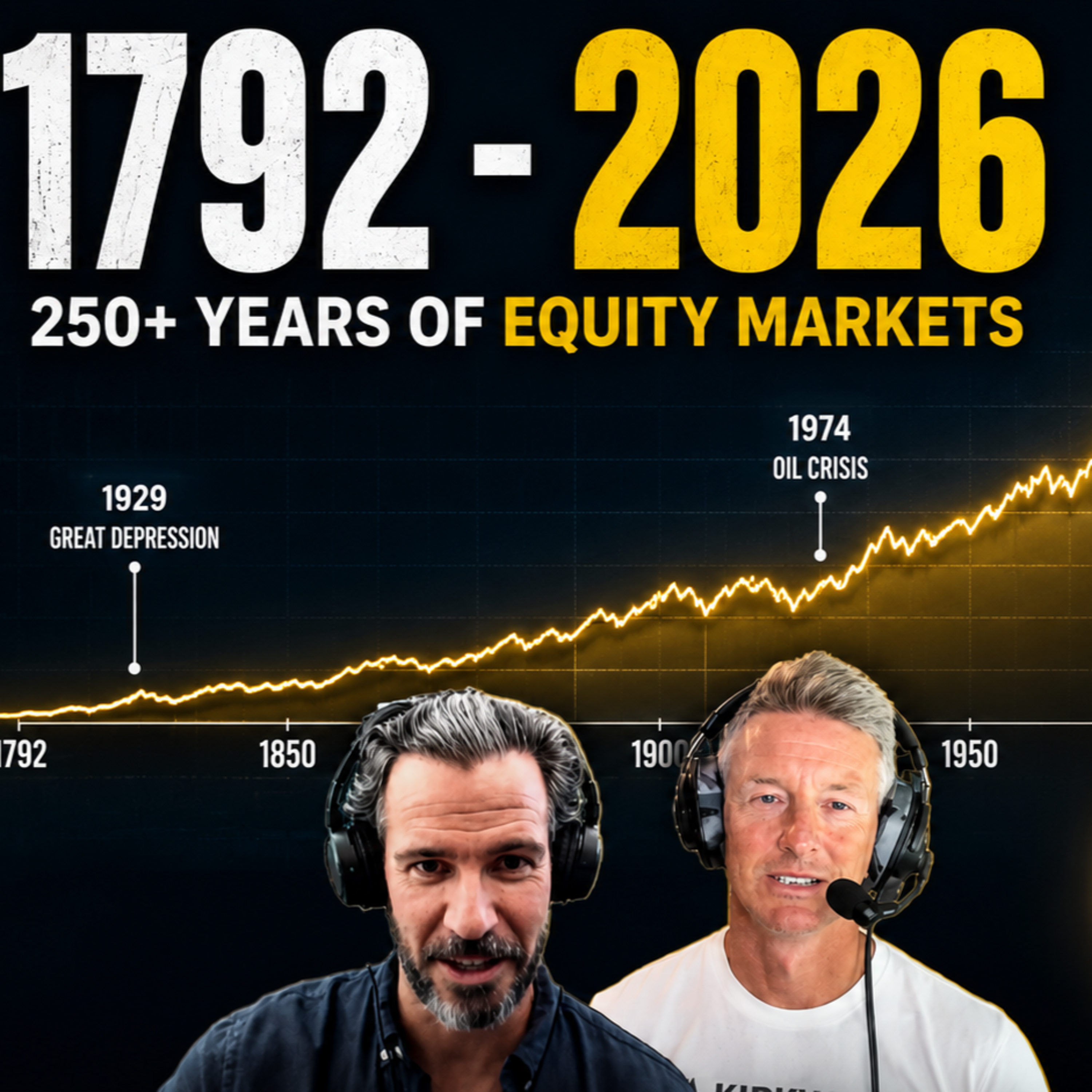 What 250 Years of Market Data Actually Tells Us | Meb Faber87 / 100
 Oil Isn't Dead - John Love on Why Energy Markets Are Defying the Headlines74 / 100
 The Stock Market Is Rewarding the Wrong Companies Right Now - Here's the Math82 / 100
 The Fund That's Beaten the Market for 45 Years by Focusing on What Could Go Wrong84 / 100