The Acquirers Podcast · 2026-06-11 · 1h 2m
Key moments - from our scoring
Substance score
62 / 100
Five dimensions, 20 points each
Ross Glotzbach, CEO of Southeastern Asset Management, argues that the stock market is currently misprice quality and growth, rewarding unprofitable companies while punishing high-quality businesses trading at deep discounts. Southeastern's portfolio - concentrated around 20 holdings with price-to-value ratios below 60% - owns companies like Rayonier (timberland REIT trading at 30-40% discount to intrinsic value) that benefit from long-term, patient capital and engagement. The firm emphasizes a stark disconnect: the S&P 500's recent gains are heavily concentrated in mega-cap tech (Mag 7) companies whose free cash flow hasn't justified valuations, while these firms' massive capital expenditures on AI and speculative investments inflate reported earnings without generating returns. Glotzbach warns that unlike typical market cycles where only denominator (multiple compression) or numerator (earnings) faces uncertainty, today presents unusual risk because both are questionable - earnings are inflated by unrealized mark-to-market gains, while valuations assume continued high multiples. For value investors and long-term operators seeking asymmetric risk-reward, this environment mirrors Jeremy Grantham's late-1990s observations about opportune entry points.
The market has become concentrated on mega-cap tech and growth stories, and unpopular asset classes like timber REITs lack sufficient analyst coverage and institutional attention. REITs in general are out of favor, and timberland specifically is misunderstood by public markets despite generating steady underlying value through land appreciation and timber harvesting.
The firm maintains approximately 20 stocks per portfolio with position sizes ranging from 2-8% (avoiding both sub-2% noise positions and above-8% concentrations that fail to add sufficient value). This range balances active share justification with diversification benefits while staying true to their concentrated investing philosophy.
Price-to-value compares current trading price to intrinsic valuation (e.g., 60% price-to-value means trading at 60 cents on the dollar). The firm uses unleveraged price-to-enterprise value to adjust for leverage risk, and currently targets selling higher P2V, lower-quality holdings while holding strong businesses even at 80-90 cents on the dollar if trusted and on offense.
Big Tech companies have inflated reported earnings through unrealized mark-to-market gains on speculative investments (like Anthropic stakes) while their actual free cash flow per share has stagnated, creating questions on both the numerator and denominator of the P/E ratio - a historically rare and dangerous situation for index valuations.
Rayonier, a timberland REIT, is a flagship holding trading at 20 when intrinsic value is 30-40 per acre, well below private market timberland values. The firm also notes that great businesses can be purchased at 10-12x earnings (versus historical 25-30x), and semiconductor stocks at 10x are preferable to mega-cap tech at 20x earnings with questionable earnings quality.
Our reviewer’s read on each dimension, with quotes from the episode.
There are genuine substantive observations - FCF per share stagnation in mega-tech, the Russell 2000 concept-stock distortion, and valuation math on specific holdings - but the episode is heavily diluted by multiple ad breaks, a lengthy location shout-out segment, and an extended fluid-dynamics analogy that crowds out investable content. The signal-to-noise ratio is moderate at best.
their actual free cash flow per share over the last three or so years hasn't been very good. And it's kind of gone to a lot of these semiconductor companies which are printing huge earnings. But these are semiconductors, they go up and down all the time
some of the top stocks in the Russell 2000 value value, you know, have been EchoStar, AST, Space Mobile. I mean, you know, it's, it's, there's, there's some silliness, uh, out there
A few genuinely counterintuitive observations stand out - smartphones displacing chewing gum as a durable-business cautionary tale, and the logical reductio of the 'never sell' doctrine - but most of the intellectual framework is standard deep-value orthodoxy (DCF, price-to-value, circle of competence) that experienced value investors will have heard many times.
something as simple as Wrigley's chewing Gum, which was like consensus, maybe one of the best businesses ever. And then all of a sudden, having a phone in your hand became kind of mental. Chewing gum
If you take the logical conclusion that you hold this security from today until it goes to zero, which we all agreed, eventually it will die, and you don't care about dividends along the way, what are you really betting on at that point?
Glotzbach is a genuine practitioner - CEO and head of research at a 50-year-old concentrated value shop with mandatory GP co-investment - not a podcast personality; he speaks with real portfolio specificity and 20-plus years of lived experience, though he is not a household-name operator whose track record would independently demand attention.
we are our own largest client and we have to put, put our money there. That's unique. Uh, that's the best kind of risk control and alignment there is
I was, uh, our Google Analyst in, in 2015 and you backed out...we were paying 12 times or so after tax free cash flow for that core business
The episode is notably concrete by podcast standards: named holdings with explicit valuation figures (Rayonier at $20 vs. $30-40 appraised, Becla at 6x EBITDA at 1x net leverage, Liberty Capital at 4x EBITDA and sub-10x FCF), and specific position-sizing thresholds; the main weakness is that most numbers are point-in-time appraisals without disclosed methodology or auditable track record data.
Becla, which has a third about the world's tequila business in, uh, Mexico City...six times EBITDA when it's levered at one times net debt to ebitda
Liberty Capital...four times EBITDA, less than 10 times free cash flow, and SpaceX gets to trade at, you know, infinity times
The hosts are knowledgeable investors who ask structurally sound questions on position sizing, quality, and rate regimes, and Jake Taylor occasionally lands a sharp conceptual challenge (the 'never sell to zero' reductio, the reflexivity of zombie competition); however, they avoid pressing Ross on concrete underperformance specifics, and the long self-contained Reynolds-number set piece swallows a significant portion of the runtime without involving the guest meaningfully.
If five years ago when rates were at zero. I told you they were five. Would you say market all time high
Do they need the same level of growth? Do they need the same level of spend? Like if they just go to maintenance at some point rather than like growing it the way they have been
Computed from the transcript - who did the talking, and the words that came up most.
Value: After Hours is a podcast about value investing, Fintwit, and all things finance and investment by investors Tobias Carlisle, and Jake Taylor. We are live every Tuesday at 1.30pm E / 10.30am P. ────────────────────── VALUE OPTIONS LETTER Three to five curated ideas every week - cash-secured puts, covered calls, and spreads on businesses we'd want to own at strikes we'd be willing to pay. Every trade includes the business thesis in plain English, the fair-value estimate and its key assumptions, the specific option trade with target premium, and the pre-identified exit criteria. Every idea reviewed and approved by an analyst before it hits your inbox. valueoptionsletter.com/subscribe ────────────────────── See our latest episodes at About Jake Jake's Twitter: Jake's book: The Rebel Allocator ABOUT THE PODCAST Hi, I'm Tobias Carlisle. I launched The Acquirers Podcast to discuss the process of finding undervalued stocks, deep value investing, hedge funds, activism, buyouts, and special situations.We uncover the tactics and strategies for finding good investments, managing risk, dealing with bad luck, and maximizing success.
Transcribed and scored by The B2B Podcast Index.
Ross Glotzbach: I'm not giving up. I am selling the building.
Narrator: The final season of FX is the Bear.
Ross Glotzbach: The restaurant is flooded.
Narrator: Everything's either gonna be okay.
Ross Glotzbach: No. Stop.
Jake Taylor: Or not.
Ross Glotzbach: We are outgunned and we are outmanned. But we have each other.
Narrator: FX's the bear, the final season. All episodes now streaming on Disney. Um, thinking about refreshing the carpet in your home? Now's the time to do it. For a limited time at the Home Depot, get 10% off. Installed carpet projects on trusted brands like Lifeproof. Lifeproof with pet proof technology, Home decorators collection and Traffic Master Plus. With installations starting at just 49 cents per square foot, upgrading your space is more affordable than ever at the Home Depot. Offer valid June 11, 2026 through June 28, 2026. Exclusions apply for licenses see homedepot.com licen numbers.
Tobias Carlisle: We're live. This is Value After Hours. I'm Tobias Carlisle, joined as always by my co host, Jake Taylor. Our special guest today is Ross Glotzbach. He's the CEO and head of research for Southeastern Asset Management storied firm started by M. Mason Hawkins. Ross, how are you?
Ross Glotzbach: I'm doing well. Thanks for having me on.
Tobias Carlisle: How did I go with the pronunciation of that last name? Did I get it right?
Ross Glotzbach: You got it. The listeners should know that we did practice before we started. So.
Tobias Carlisle: We did.
Jake Taylor: Yeah, that was the fourth. Fourth try.
Tobias Carlisle: Tell us, Ross, tell us a little bit about Southeastern, how it was founded, the philosophy and where it is today.
Ross Glotzbach: Sure. So, uh, I might start with kind of two things on why I thought it was a good time to come on today. Uh, first, you know, um, I feel like sometimes these, these pods seek, uh, out those who have done the best over the last 12 months.
Jake Taylor: You know, that's not us.
Ross Glotzbach: We, we know. And that's, that's why we, we like you guys. That's why we can tell your true value investors. Um, but, but a time like now is when you get the best prospective long term clients because, you know, we have attractive price to value ratios in the portfolio. Own high quality companies on offense, but no one wants them, you know, um, and, and then, then kind of secondly, you know, I was, uh, reading Jeremy Grantham's new book this year. He had this part where he talked about, you know, when they were going through the late 90s, um, how he realized how important it was to just go on record and get the word out during a time like now, um, which I think we are in a unique time in the market. I don't know if it's you know, exactly, it's, it's definitely not exactly like 2000 or 1987 or 1970 something, you know, but it's a unique time. Uh, and, and so, so those, those are two things I kind of wanted to say at the start. But back to Southeastern where we come from. Uh, so we were founded, uh, by Mason Hawkins, our, our chairman still, uh, in 1975. Um, we are long term, concentrated, engaged value investors. So, uh, each of those words. What do those mean? Uh, long term. You know, we've, we've been around for a while. It's a cumulative business. Hopefully we've learned some things. Uh, also our investments. We want to hold them as long as possible. Some have been decades, but on average it's going to be three to five years. That's unique. You know, time horizon arbitrage can be a powerful differentiator over the long run. Concentrated. Um, uh, what does that mean? Uh, only about 20 or so stocks in each of our portfolios. We've got a few different kinds of strategies. We have. Uh, we're also required to concentrate in our own funds. Uh, we're our own largest client and we have to put, put our money there. That's unique. Uh, that's the best kind of risk control and alignment there is. Uh, engaged. It can mean a lot of things. Uh, we prefer to work with these companies we invest in behind the scenes. They take the credit, they grow and realize the value per share and we win together. But sometimes that engagement will, you know, spill out into the open a little bit and that's okay. And hopefully that can be to the benefit of everyone involved. Uh, value, of course that can mean many things. Um, we define that by business people price business. We want to have a great business, uh, that we can understand, can grow its long term free cash flow per share, you know, solid returns on incremental capital. Uh, things of that nature. Um, people. I want to have great aligned partners who are either owners alongside us or have an intelligently designed compensation plan. Good people on the board, honorable people will do the right thing. Everybody wants those two things. We got to get a great price. Uh, you know, we define that, uh, with, you know, DCF driven valuation methods. Um, we want to pay a low multiple of long term free cash flow power. Sometimes that can be a high multiple of next 12 months, uh, you know, reported earnings. Um, but that's what we're striving to do. Uh, you know, we want to find temporarily great or temporarily misunderstood long term great companies, um, and invest in them and Help them grow. And that's, that's kind of where we're coming from. We, we have, uh, we're blessed with a great constitution, you know, 50 or so years ago where we're going to try to do the right thing, be aligned with our clients. We're grateful for them. Um, and that's kind of where we're coming from today.
Jake Taylor: Study and play come together on a Windows 11 PC. And for a limited time, college students get the best of both worlds. Get the unreal college deal. Everything you need to study and play with select Windows 11 PCs. Eligible students get a year of Microsoft 365 Premium and a year of Xbox game Pass ultimate with a custom color Xbox wireless controller. Learn more@windows.com studentoffer while supplies last ends June 30th. Terms at aka mscollegepc when you need
Narrator: to build up your team to handle the growing chaos at work, use indeed sponsored jobs. It gives your job post the boost it needs to be seen and helps reach people with the right skills, certifications and more. Spend less time searching and more time actually interviewing candidates who. Check all your boxes. Listeners of this show will get a $75 sponsored job credit@ Indeed.com podcast. That's Indeed.com podcast. Terms and conditions apply. Need a hiring hero? This is a job for indeed sponsored jobs.
Tobias Carlisle: When you look at the, uh, portfolio, Ross, um, what names stand out to you as sort of representing the philosophy that you, you espouse?
Ross Glotzbach: You know, um, it's, it's. We're. Whenever we kind of get a question like this, we'll usually kind of mentally start going down. What are our largest weightings, um, in, in the portf. And uh, some of those at the moment today would be holdings like, uh, Rayonier, which is a timberland, uh, uh, company owns about 4 million acres trading at a deep discount, uh, to what, you know, each one of these acres is, is actually worth. Um, this is an industry that we've done well in for, for decades. Uh, we've owned this company before and some of its, its predecessor companies, um, you know, the people side of things, uh, they just, uh, came together through an actually intelligent merger with, uh, with Potlatch Deltic, which is another company that we, we owned. That's how they came together to create our, our largest position. Um, and then when it gets to price, you know, that's the business, that's the people side of things. Um, we see something that's worth 30 to 40 trading at 20 and it's uh, at a, you know, you could do various ways on per acre mathematics. But um, it's, it's trading, you know, well below, ah, private market, um, timberland values. And it's a good store of value by the way, that can do something for you, uh, beyond other kind of quote stores of value that you know, rest more on, um, people believing in them than people using them.
Tobias Carlisle: What's the reason for the discount in.
Ross Glotzbach: Well, you know, this, this is somewhat of a theme in some of our other holdings as well. It might not be the best public company. Um, you know, the, the, the timberland industry. Timber REITs were created over 20 or so years ago. Um, it's a tax advantaged way to dividend out earnings from owning timberland from cutting trees. Um, and when there were a few timberland companies, I think it was a little easier for the market to kind of wrap their heads all around them. Now it's just down to Warehouser, which is a big S P500 company that doesn't trade it as much of a discount. Um, and then us at Rayonier where um, people just don't know what to do with this company. You, you know, go to re week conferences and these guys are probably stuck in a back room somewhere and uh, they're not able to, you know, by
Jake Taylor: REIT standards,
Ross Glotzbach: you know. Yeah, exactly. And nobody likes REITs anyway today either. So, so it's uh, unless there, it's
Jake Taylor: a REIT for, you know, stuff in space, then it's, then it's okay.
Ross Glotzbach: There you go. These space data centers that'll, that'll be a whole new REIT class that uh, maybe we'll invest in 10 years from now. Who knows. Um, but uh, but, but no, it's just, it's a great asset class because, um, when it's time to cut the trees you should. If it's not, then you don't. But they keep growing in value. That was kind of consens. Um, I'm coming kind of back to the Jeremy Grantham thing, I guess. I don't know why, but, but you know, that was kind of consensus thinking with endowments and foundations, you know, 10, 20 years ago. That's, that's not now, but that's the opportunity going forward. This is an understandable, you know, many decades, many generations type asset. Um, and we get a chance to buy it cheaply in the public markets and who knows how that gets solved. You know, the company is buying back its own shares currently. That's one way to kind of slowly and steadily accrete value per share and close that Gap, they could do something bigger to close that gap. Should this be owned privately at some point we'll see what other like return
Jake Taylor: on assets look like over, I don't know, call it a decade, kind of smooth out some of the timber prices.
Ross Glotzbach: You know, it's, it's never, it's, it's an interesting one because it can be both a good business and a low ROA type business where you've got that kind of steady baseline, um, to the value. But you know, because land is such a steady kind of asset class and you see that in some REITs that are out there. That's like a land REIT trades at a, you know, real low dividend yield. That's essentially what we've got with within this company. So it's going to be a single digit, you know, roa, mid to high single digit roa. Now at the price that we're paying, it can be better than that. Uh, but, but over the long run, uh, this is not, you know, some wonderful, you know, royalty patented type business or something like that.
Tobias Carlisle: How do you think about portfolio construction? How concentrated do you like to get at inception? How diversified do you like to be? How do you think about diversification across industries and so on?
Ross Glotzbach: You know, um, we, I think back to your book, Concentrated, uh, investing. You know, there's this great.
Tobias Carlisle: One of the few readers.
Jake Taylor: Yeah, we found them. We found the guy who bought one.
Ross Glotzbach: It's a really good book and I remember that I'm kind of coming from both angles here. So, so starting, um, starting at, at the most concentrated. You know, we've all in CFA class seen those studies where um, you know, 10 to 15 carefully selected things. Um, after that the incremental benefit from diversification starts dropping off. Now in real life it's hard to find 10 to 15 things that aren't at least somewhat correlated, you know, um, but, but you start there, um, then kind of coming from, from the top, from the uh, extra diversified world. Um, you know, I think of that table in the book where once you start getting over 30 to 40 stocks, you mathematically look too much like the index. And when you look too much like the index, you don't deserve to exist. Um, and it also gets hard to. We're a small team of generalists. We're always going to have five to 10 people on the research team. You know, we don't have a whole lot of different products or anything. We've never been about, know, product proliferation and asset gathering. Um, we actually closed, had each one of our strategies closed at some point, you know, so, so we're, we're truly trying to be aligned um, with, with our partners and, and as part of that you, you concentrate in your best ideas, um, what you know best. So that's somewhere between 10 and 35. We, we are uh, around 20. Um, we found that is a good solid number to get appropriate diversification benefits and to keep that high active share which justifies being an active manager.
Tobias Carlisle: How big do you like to get an inception?
Ross Glotzbach: You know, um, it'll depend a little bit. So you know, 20 or so stocks in each portfolio, if each one of them were equally weighted, that'd be about a 5% position or so. Um, if it's something where we are newer to the name, um, we'll, we'll start off smaller than that 5%. Um, one of the, the changes uh, that we think will make our, you know, next 20, 30 years, um, better than we put in a few years ago were some, some upside position limits because kind of after we started going above, you know, 8% or so positions, we weren't adding enough value for the extra risk that was taken on by that concentration. So we're just not going to do that anymore. Um, but you know, something smaller than 2 to 3% not worth your time in, in a, in a 20 stock portfolio, um, over 8% we found that's a, a level where we weren't getting enough bang, uh, for our buck. So that's what it'll be. Uh, the range between those two.
Jake Taylor: And then if you're, that's interesting.
Tobias Carlisle: What are you sort of what, where are you trimming on the other side?
Ross Glotzbach: Um, you know, this, this is a helpful time to kind of bring in our price to value concept. Um, you know, so each one of our individual investments, we appraise it and if we think it's worth a hundred and it's trading at 60, that's a 60% price to value ratio. Now each price to value ratio is not created equal. Leverage, um, is a big factor on both of those. We also have the price to enterprise value where an unleveraged 60 cent dollar is better than a leveraged 60 cent dollar because that leveraged um, 60 cent dollar could be a 75, 80 cent price to enterprise value, uh, which would therefore be more risky and less attractive for future returns. Um, so uh, you know, generally we're going to be looking to sell those investments that are higher P2V and lower quality. Um, you know, and quality can, can be a big driver of future value per share growth and free cash flow per share growth, which is a very important part of returns and can be one of those harder to quantify parts that doesn't show up in today's spreadsheet. Um, but up and down the portfolio today we've got companies that are on offense, that are begging for there to finally be some volatility that they can use to, you know, uh, outpace their peers and, and, and grow their value per share and free cash flow per share. You know, our portfolios, on average over. We've tracked this back decades, have had a price to value ratio high, uh, 60s percent, which if we're looking for 60% or so, that kind of makes sense. Uh, today we're below 60%. That's unique. It's extra unique at a time when the s and P500 is hitting highs. So, so we, we can have that kind of rare time again. Why I'm glad y' all had me on today, uh, because we have good perspective, absolute and relative, uh, from here, in our opinion.
Tobias Carlisle: Sorry jt, I stepped on your toes before.
Jake Taylor: Oh, I don't know. I think I was going to talk about power laws a little bit when it. So like trimming things that are working to theoretically buy something that wasn't working. So just maybe with more general thoughts on reversion to the mean versus power laws.
Ross Glotzbach: Yeah, uh, so I mentioned a tough 12 months at the start. It's really kind of been a tough 12 years for the concept of reversion to the mean. And uh, we do still believe trust. We do still believe in that concept. I believe that we have learned though, the virtue of, you know, holding on to something that you understand that you trust the people and that is on offense enough to keep growing its value per share. That can be a good thing to, to hold sometimes at 80 to 90 cents. It doesn't have to be a big huge weight necessarily. But don't get too distracted because we're, we're value hounds. You know, um, buy that new 60, 50 cent dollar that, you know, might not be on offense as much.
Jake Taylor: Um, yeah, and you probably don't know it as well to actually like pin down that number of.
Ross Glotzbach: And that is true. Like there is a big, big difference between having lived with something for a long time and not. And it's just, it's just one of those things. It's hard to describe, but you know it once you've done it for a while. And uh, that's also when you can make a whole lot of money too, when you know something well and it just drops for silly reasons and then you can take that weighting back up. That's good. You might have less confidence and less willingness ability to do that if it's a newer holding.
Jake Taylor: Um, but the grass is always cheaper
Ross Glotzbach: saying yeah, so, so you know, you go back 10, 15 years ago, you had a lot of great. The, the difference in multiples M between great and good to average. Wasn't, that was a mispricing. You know we, I remember I was, I was our Google Analyst in, in 2015 and you backed out. The stuff that was money losing wasn't disclosed very well. We were paying 12 times or so after tax free cash flow for that core business and that was very attractive. That's value stock, however you slice it. Um, you go forward though to today and this has actually been changing a little bit. Some we've seen this year, some of these, you know, permanent compounder type companies, um, you know, have, have been becoming a little less permanent. Um, and, and that's interesting and that's I would say encouraging for our style of investment. You know, interest rates have also been a factor here where in, in low interest rates times, it's just all about growth and you can really, you know, get some of that, you know, what was a 15 times earnings stock 10, 15 years ago had gone to a 30 times earning stock. It was just, it was kind of crazy, you know. Um, but uh, I still feel like
Jake Taylor: some of that is residual in the environment right now with like people talking about 20 times being cheap for something. It's like well that's, that's relatively cheap. But I remember a long time ago and 20 was kind of considered expensive.
Ross Glotzbach: Well, you know, it's. Again, we're all preaching to our own choir here but you know, we kind of like to uh, to boil down a lot of what we do to you know, paying 10, 12 times, sometimes up to 14 times earnings for something that is great and understandable and then it goes to 15 to 20 times and that's great. But like you said, it's just become so consensus that things are 25, 30 and oh, now they've come down to 20 folks that 20 can go to 10 or 12. So that's, you take on a lot of risk when that happens.
Jake Taylor: So I read an interesting stat here recently. I didn't actually go dig it out to make sure it was true or not, but it was that uh, 12% of the earnings of the S&P 500, I don't remember. It must be this most recent turnout in 12 months were from three companies writing up their investments in things like Anthropic and whatever. All these other moonshots that have come, it could do. So how much that would scare me right now a little bit if I was underwriting the uh, returns from here on an index fund when you've got a big chart of that is just purely a mark to market on something that's not that clear.
Ross Glotzbach: Well, I think that's a very good point. How you can get to a time in the market when you can lose serious money is when you've got both questions on both the numerator and the denominator of a PE multiple. Like you know, most times in market history, you know, your E on an index is gonna, you know, it could fluctuate 5 or 10% and maybe an 082008 type thing hits you, it fluctuates
Jake Taylor: a little more briefly the tax change.
Ross Glotzbach: Okay, like yeah, yeah, 2017 tax change. But now you've got really big questions on the E, uh, that is being capitalized in, you know, the current S&P521 20 call it. Because number one there's this massive capital SPE lending that is going on and people say oh well this company is at 20 times earnings. It's a 25 times earnings. They haven't grown their like, you know, a lot of these, we were going through our favorite acronyms for these companies earlier, but a lot of these big 5 to 10 Internet digital tech companies, again great companies, I think we'd all want to own them at the right price but their actual free cash flow per share over the last three or so years hasn't been very good. And it's kind of gone to a lot of these semiconductor companies which are printing huge earnings. But these are semiconductors, they go up and down all the time and 10 times earnings at uh, you know, pick your stock, that's one of these, micron, etc. Nvidia is 20 times. But that E on that 10 or that 20, that could be off by multiples and that could be something that's coming and uh, we're glad that we don't participate in that today. Of course we should have participated in it over the last 12 months, but we didn't and we're not gonna Today.
Narrator: This episode is brought to you by Google Chrome. You think you know a browser, but Gemini and Chrome, that's new. It can help you with practically anything on the web, like restoring a vintage motorcycle from a 50 page restoration block or finally break down that Long article you've had open for weeks. Gemini and Chrome is here for it ready to make anything online make sense. There's no place like Chrome. Check responses set up required compatibility and availability various 18 uh trading at Schwab is now powered by Ameritrade. Unlocking the power of thinkorswim. The award winning trading platforms loaded with features that let you dive deeper into the market. Visualize your trades in a new light on thinkorswim desktop laptop with robust charting and analysis tools all while you uncover new opportunities with up to the minute market news and insights. ThinkOrSwim is available on desktop, web and mobile to meet you where you are. It's built by the trading obsessed to help you trade brilliantly. Learn more@schwab.com trading it might be a
Tobias Carlisle: situation like Meta when they were in the metaverse and uh, sold off pretty hard because there was so much Capex and then woke up. Zuck decided he didn't like that and changed course. And then I think all of the Mag 7 they just go back to their where they were before if they're not spending as much on Capex. But it definitely shows up for the semis. That'll hurt the semis if they do that.
Ross Glotzbach: Oh that would be a big change. Yep.
Jake Taylor: But can they go back now with. I don't know if you can with if AI is this kind of inevitable thing you're going to all of a sudden get religion and like cede that area to someone else who's willing to spend. I think they're stuck in kind of a classic prisoner's dilemma situation.
Tobias Carlisle: Do they need the same level of growth? Do they need the same level of spend? Like if they just go to maintenance at some point rather than like growing it the way they have been.
Jake Taylor: Well, and then let somebody else take it though. How do you do that?
Ross Glotzbach: You know this is something that we've thought about a lot too. So much of it does get back to like what is the real underlying demand? Um, and what is the real kind of pricing uh, per unit of a lot of this AI uh compute that is going on. That's a really hard question.
Tobias Carlisle: I thought you're going to answer that question.
Jake Taylor: Yeah. What's the answer?
Ross Glotzbach: And you know uh, that's, that's one that we, we will be interested in trying to, to answer in the future. But at these prices we, we, we feel like it's sit out.
Jake Taylor: You have to be right about it.
Ross Glotzbach: You know you've got to have a really strong and firm opinion at These prices and sometimes you don't have to have to play. And you can own a grocery store at 7 times free cash flow or a food brand at 10 times free cash flow. We'd rather do that.
Tobias Carlisle: What does, what does quality mean to you guys? How do you think about quality?
Ross Glotzbach: We think about it a whole lot. You know, that's why it goes business people price in that order. Um, and uh, you know, we want that, that quality coming from both business and people. Um, sometimes it'll come more from one than the other, but again, we prefer both. You know, on the business side, it starts with that understandability and ability to grow. Um, you know, can, can you be confident that this will be something that can generate more true cash earnings power 5, 10 years from now? Um, and how will it get there? What will the competitive environment look like? Do their customers actually like them or kind of begrudgingly do business with them? Um,
Jake Taylor: yeah, well, I mean, you're joking, but there is something about a monopoly where they do have to do business with you that might be, might uh, be just as attractive.
Ross Glotzbach: Right? It could be. Although you want that mutual benefit flow in both ways. And yeah, the less they like you, the more that they'll be thinking about ways to ultimately stop doing business with you.
Jake Taylor: Let your throat.
Ross Glotzbach: Yeah, yeah, um, so, so it's things like that. And some of those things are, are quantifiable and some of them are not. You know, um, you can quantify pricing power to a degree, but you know, sometimes you've kind of just gotta spitball it a little bit. You can quantify return on capital in a backwards looking way, but what matters is forward looking return on incremental capital. Um, and then that gets the people side of things where we want owners alongside of us who are going to unconventionally grow the value per share and grow the free cash flow per share. I mean there's a lot of crazy stock market stuff out there we've already been riffing on, but we haven't seen growing your free cash flow per share over the long run stop working. And uh, if you do that, you'll, you'll generally get rewarded. You can have quarter or a year when, when that gets, gets out of whack versus the stock price. If you can do that, you'll be in good shape. And so, you know, we can have a company like CNX Resources that natural gas, uh, production and owning pipelines is not necessarily the world's greatest business, but we are highly confident that this board and this management team gets it on value per share creation and will do intelligent things and not put the company at risk. And that's why it's been, you know, really good holding for us. And that's also, though, how it can still be undervalued because they'll be willing to hedge. You know, a lot of other oil and gas companies will say, oh, our investors want exposure to the commodity or something. Well, we at Southeastern want exposure to growing free cash flow per share and low risk. And if you can do that with hedging, you should do it. Um, you know, on the other side of things, you know, when we've got a truly, truly great business, um, you might not need the world's best manager necessarily. Although we don't want to make any excuses though, on that side of things, you know, we've had some, some great. We've had some average. We prefer great, uh, on both.
Jake Taylor: So, Ross, you think in a world where there's perhaps faster disruption, more change, more, uh, less competitively advantaged periods to underwrite, like maybe they're shorter, maybe. Does management matter more then if you can't depend on the business's m moat as much as maybe you could have 20, 30 years ago.
Ross Glotzbach: I think that's probably true. Um, I think management, they'll figure it out.
Jake Taylor: Like, you just find someone smart and they'll figure out how to make it work.
Ross Glotzbach: That's right. And it's also, management also matters more the more you are required to recycle that capital, you know? Right. Uh, you know, these capital recycling businesses like banks, insurance, natural resources, you have to get the people right in those because if you don't, you're in trouble.
Tobias Carlisle: Yeah.
Jake Taylor: Especially the ones where they take the money today and then they give a promise of giving it back later. Uh, you really have to have that, right.
Ross Glotzbach: That's right. There's a big difference between an insurance company run by our, our good friends at White Mountains and a bunch of other random ones and a bank run by Jamie Dimon or a bank run by who knows who.
Tobias Carlisle: So, yeah, let me do a quick shout out and then we might do some veggies. Dead Cat Gully. New South Wales meets evaporation. What's up? Toronto, Boulogne, France. Uh, some Spanish about the price of this stick. The stick? The price of the boat in the market. Something like that. Toronto, Tallahassee, Snohomish. Uh, yes. It felt good to have Lilou follow me into Crocs. That was an obvious one. Took him so long. Serbiton.
Jake Taylor: Yeah.
Tobias Carlisle: Highland Park, Illinois. Oregon City, Oregon. Stuttgart, Germany. What's up? Boise, Majorca, Spain. What's up? Um, Kennesaw, Georgia. Lawrence, Kansas. Knoxville, Tennessee. Zagreb, Croatia. Jupiter, Florida. Uh, Tomball, Texas. Bellevue. Limerick City. Limerick, Glasgow. Uh, JT Hit a sweetie. Veggies.
Jake Taylor: Uh, we should just take a year and see if we can couch surf the entire world. Uh, just purely from the listeners, I think we might be able to do it.
Tobias Carlisle: Sam. I'm coming to Jupiter, Florida.
Jake Taylor: Uh, I just stay there for a year. All right, so, uh, first I need to do a little shout out to my dear friend Dan, who did probably 90% of the work on this segment. And so if this ends up being a banger, all the credit goes to him. Uh, so we open the scene in Manchester, England. It's 1883, and this bearded engineer professor guy named Osborne Reynolds is standing over a long glass pipe. And in that pipe runs out of a big tank of water that's like, perfectly still water. And he's rigged up this tiny nozzle that injects a thread of dyed water right into the center that is flowing inside of this pipe. So, and he opens his valve, and the water starts moving down the pipe, through it. And basically, like, you can kind of see this little line of dye that is running down the middle. And now, before I go any further, I'll admit up front that we're about to torture the concept of fluid dynamics with analogies. So, you know, I can already hear the three engineers we have listening that are unsubscribing already.
Tobias Carlisle: So.
Jake Taylor: But, uh, that's fair, but stick with me, because I think this one actually holds, and it's kind of interesting. So back to Reynolds. He opens the valve of crack, and there's this slow flow. And the dye is quite beautiful, actually. It's just this perfect, running the whole length of the pipe, a single clean, straight line. Picture it being maybe red inside of the water, and the water is moving around it in these very orderly parallel sheets. Each layer is sliding past the next. Nothing's really mixing. And engineers call this laminar flow L A M M I N A R. And it's smooth, predictable, boring, kind of in the best way. And then Reynolds opens the valve a little wider, and the water is now flowing a little faster through here. And then there's a specific speed that it starts going, that the thread starts to wobble a little bit. And you've probably seen this before with, like, a candle, you know, that is, uh, you know, there's no real air disturbing. And it's kind of like a perfect Little clean smoke that's coming out. And then, like, as you get more air, it starts wobbling. It's the same concept. Uh, you know, it starts shut. So we're back to in the water tank, and it starts shuddering. And then it, like, bursts apart into this mess of, like, swirling eddies that fill the entire pipe. And that's turbulence, chaos. And that clean line is completely gone. And here's. So here's why. You know, we're still using Reynolds name 140 years later. Uh, he figured out that the switch from smooth to chaotic doesn't just depend on the speed alone. It also depends on a specific ratio that's now called the Reynolds number. And at the top of that equation in the numerator, you've got the inertial forces and inertia. It kind of can maybe trip you up in this instance, because, uh, it isn't the fluid wanting to go necessarily in a straight line like you think of inertia. It's that when it starts wobbling, it starts to have a sideways momentum, and it starts these little packets of water. Imagine them kind of bumping into each other and nudging each other out of the way, and they run into their neighbors, and they knock them off course. And now this wobble grows into that swirling eddy. So inertia is what takes these small disturbances and kind of amplifies them out into chaos. And on the bottom of this equation, you have viscous forces like viscosity, and that's the fluid's internal friction, the thickness, and it's the opposite of the inertia. So when that parcel tries to dart sideways when it's moving, the viscosity drags on it and bleeds it back and staying it on course, kind of smears it back into line. Think about honey dripping. Uh, and it wants to stay in this very smooth line. So it's this fight between inertia that's amplifying the wobbles, and then viscosity is kind of erasing it. And when the viscosity wins, the wobbles die down and the flow stays laminar. And when inertia wins, the wobbles compound, and the whole pipe kind of goes turbulent. Right. So, uh, the textbooks would tell you that that flip happens somewhere around the number 2300. That's like what the Reynolds number roughly is. Uh, we'll hold on to that number to come back to in a second. But my contention, just to start torturing, is that Warren Buffett has spent the last 70 years deliberately keeping his Reynolds number quite low. So let's start with the bottom of the ratio, which is viscosity, that dampening force. You know, for an investor, I think your viscosity is your competence. So inside of your circle of competence, we all know what that is. Uh, you've got this. There's this enormous, like, internal friction, like you can feel when something is off. Uh, and by the way, I think I was just going to make a little joke that I think when value investors love this circle of competence concept, because what it does is it lets us turn, like, I don't understand this, to, like, a philosophy instead of like, well, it's not my personal failing. Right? Uh, so anyway, so imagine a hot tip comes in, or a narrative or a price spike or something random comes in. You can smooth it out because you actually understand the business. This goes back to Ross's business. People price. You really understand the business. You understand the people price. Wobbling around is not going to move you as much internally because you have this viscosity to understanding. Uh, so making this a little more concrete, too, with Buffett sitting around reading a property casualty insurance annual report, that's a high viscosity situation. He's been reading 50 years of them. Now, put Buffett in front of a biotech with some binary FDA catalysts next month, or maybe some crypto token with, uh, a white paper and a Discord channel. He doesn't have any viscosity there in that area. There's no internal friction to push back on the hype of be able to say why this is important, what's right or wrong. Um, and that story then can kind of carry him wherever it wants to. Same brain, same iq. One fluid, he's able to damp the noise, the other one, he's got nothing to really slow it down. Of course, Buffett spells this out in the 1996 annual letter, that the size of your circle is not what's important, it's knowing its boundaries. Uh, and he's telling you exactly where your viscosity drops off. You need to understand that. All right, now let's go to the top of the ratio, which is velocity for an investor. Velocity is how many decisions you're forcing through per unit of time. Or are you keeping a very crowded calendar constant inbound? Uh, every deal, every meeting, every must act now situation that's coming across your desk. And Buffett, of course, famously keeps that number absurdly low. His calendar is basically empty. Uh, he's waiting for the phone to ring. Um, of course, granted us value, guys, maybe at times have taken that as permission to do nothing for 15 years and call it discipline. Uh, and it's easy to laminate or flow yourself right through, uh, three bull markets. But I digress. Buffett has this line that the difference between successful people and really successful people is that those really successful people are able to say no to almost everything. And that's, that's low velocity, uh, on purpose. So, uh, most people run in the opposite direction. High velocity with low viscosity, tons of activity and things that they really don't understand. And that's where you go wrong. Lots, um, of trades, lots of opinions, lots of must act now, all outside your circle of competence. That's going to lead to turbulence then, um, so let's torture this analogy one step further. In fluids, you always want that low velocity, slower is always going to be, uh, more laminar. But investing, you don't want actually complete zero activity. You still have to swing at times when you get that fat pitch. The point isn't to never move. The point is to keep your Reynolds number quite low so that when you do move, the flow is clean and you're able to still see things clearly.
Ross Glotzbach: Okay.
Jake Taylor: Uh, and then there's this last third variable in the Reynolds equation that, uh, we should do, and that's that it's not just speed, it's also, uh, the thickness of the pipe, like the diameter of the pipe. So the Reynolds number goes up as the pipe gets wider. Toby, don't make any jokes on this one.
Tobias Carlisle: Just letting me know I haven't said anything. I haven't said anything.
Jake Taylor: Okay, so which means that the exact same fluid, the exact same speed will stay laminar in a more narrow pipe than it will. It'll go turbulent in a wider pipe. Uh, and so this is Buffett's observation that size is maybe an anchor on performance. Uh, so Berkshire's always been a widening pipe over time. First it was the cigar butts, then workouts, then tiny, mispriced things of yesterday. And those were very narrow pipes, very laminar. Uh, you physically can't push that much money through a narrow pipe, though.
Tobias Carlisle: Um, and now it's a Google pipe at the top of the market, and
Jake Taylor: now it's a giant Google pipe at the very top. Uh, who knows what that means? Uh, okay, so, uh, back to that. Like, remember the number of 2300 that we talked about? That's that textbook line of when things transition into turbulence. That's not actually a real law of nature. It's kind of a teaching Shortcut. Um, because the real threshold actually depends also on how much the pipe is being disturbed. So a pipe that's vibrating or being jostled, full of little shocks will tip into turbulence earlier. So. And if it's perfectly still and isolated, then that you can actually hold that number much further. Past 2300 limit. Same fluid, same speed, same pipe. So this last bit of torture, and then we'll wrap things up, uh, is that. Jostling to me, then, is like your own internal temperament. Two investors can have the same competence, the same activity level, same viscosity, same velocity. But the one who's able to isolate him or herself from Mr. Market's vibrations can stay laminar for far longer. And that vibration is all the noise, the financial news, the group chats, the screen flashing red. Uh, there's a reason that Buffett sits in Omaha on purpose, away from Wall street, uh, just to stay away from those tremors that might destroy his laminar flow. So, three variables to keep in mind. Keep your velocity low. Say no to almost everything. Keep your viscosity high, which is stay inside your circle of confidence. Dampen the noise. Isolate, uh, the pipe, which is get away from the vibrations of everybody getting all crazy. And that'll help you stay smooth. Uh, so keep that low Reynolds number as an investor, and, uh, stay laminar.
Narrator: My friends, this episode is brought to you by Palmolive. Family time isn't just the big moments. It's weeknight dinners, sitting around the table, everyone talking all at once. So when the plates are empty and the sink is full, use Palmolive Ultra. Palmolive's most powerful formula removes up to 99.9% of grease, leaving your dishes sparkling clean. And the new convenient pump makes cleaning even easier, so you can spend less time tackling dishes and more time together. Shop now@palmolive.com. tomorrow morning is knocking. Stock your fridge now. How about a creamy mocha Frappuccino drink? Or a sweet vanilla smooth caramel, maybe? Or a white chocolate mocha? Whichever you choose, delicious coffee awaits. Find Starbucks Frappuccino drinks wherever you buy your groceries.
Tobias Carlisle: I was wondering how you're going to land that one. Good job. Stay laminar. I'll get that on a T shirt. What do you think, Ross? Is Tennessee far enough? Far enough away from the mating crowd?
Ross Glotzbach: I. I think it is. I think there's, you know, uh, a reason a lot of us value folks are kind of in the middle of the country here, can't afford to live anywhere else. And you Know, there's, there's nothing wrong with uh, you know, being, being worldly as well. But uh, to, to that point, like having a bunch of things in your ear all the time. Do I need to go to that idea? Dinner tonight? Xyz? Maybe you should just, you know, stay home and read another transcript or a 10k or something. You can always get somebody on the phone if you need them.
Tobias Carlisle: So I saw a chart, uh, that's been doing the rounds. I think it runs back to 2015, which shows that basically tech is up since 2015 and everything else is down. To what extent have you had like enough tech exposure over the last.
Jake Taylor: Everything's down. That was non tech.
Tobias Carlisle: That's what the chart said. I mean, uh, that does sound, that sounds a little bit crazy, doesn't it?
Jake Taylor: But wait, was this on the Internet?
Tobias Carlisle: It was. It's on the.
Jake Taylor: Okay.
Tobias Carlisle: On Twitter. Hang on.
Jake Taylor: Twitter machine.
Ross Glotzbach: Yeah, Performance. It doesn't quite feel like everything has been down, but it hasn't been up as much as tech.
Tobias Carlisle: You know, relative performance.
Ross Glotzbach: And uh. Yeah, yeah, um, we uh, you know, I mentioned Google. Um, you know, we never should have sold it. Right. But again that doesn't necessarily mean you need to own it today. Um, and we've done our best to keep widening that circle of competence. Um, Jake, I liked what you said how uh, it can be an excuse to be lazy and have too small of one. You need to strive to, to have a properly sized one, I guess. Um, and, and we feel like we've done that, um, now price still matters. And, and you know, it had just gotten to be such gospel. You'd hear it here at Omaha. Uh, just, just buy something and, and never sell it. Um, that, that can be a really dangerous uh, way to think. It can, you know, lead to too much risk at too high of a multiple. Um, and it's, it's been interesting as some of these, you know, formerly world's greatest software companies etc have sold off in a lot of ways. Would you fully ding them for stock comp and other things that are true ongoing expenses. They might have gone from 33 times earnings to 23 times earnings. Okay. You know, is, is that it could very well work from HM there. But back to what I said earlier about you know, really reducing risk and getting future, you know, absolute returns when you paid 10 to 15 times. A lot of those aren't, aren't there yet. So um, again we, we should have done it. There were various things that we got close on that we didn't do. Uh, over the years, and we wish we, we would have, but, uh, you can't, can't let that thinking overrun what your portfolio looks like today. And for the next five to 10
Tobias Carlisle: years, anytime you reach up, um, it's the wrong decision, you get it at the price that you wanted.
Ross Glotzbach: Patience. Patience usually works. Yeah. What about.
Jake Taylor: It's an interesting thought experiment. Well, if. Let's just like, play things out to kind of absurd conclusions. Assume it was. Would anybody agree that there's no business that is so bulletproof on the planet that we can confidently say it will truly last forever? Yeah, I think that's not a crazy. Okay, so nothing lasts forever. Um, pair that with the fact that, uh, no one cares about dividends at the moment, really. I mean, it's sort of like a nice throw in, uh, that you might get, you know, an extra 1% there, but. And then number one is preaching never sell. Okay, let's see if we can try to square all these things at once. If you take the logical conclusion that you hold this security from today until it goes to zero, which we all agreed, eventually it will die, and you don't care about dividends along the way, what are you really betting on at that point? You're betting that someone else will just pay you more for that at some point. And, uh, it's not an actual, like, here's the cash flow back to me as the owner, and this is why it's worth that much.
Ross Glotzbach: Yeah, I mean, I, I think that's a good way to put it. You know, uh, Buffett's thing on a big, long string of numbers multiplied by zero is still zero. Is. It is just so hard to know what is going to be a great business 10, 20 years from now. And I think the, the last 10 years that we just lived through were in a lot of ways an outlier versus, yes. All the previous 10 year periods on that whole line of thinking. Um, and you know, I've, I've only been doing this for, for 20 to 25 years, but I remember some of the things that I thought were unstoppable in 06 07, and they're just not something as simple. I mean, this is one of my little things. I always like to talk about something as simple as Wrigley's chewing Gum, which was like consensus, maybe one of the best businesses ever. And then all of a sudden, having a phone in your hand became kind of mental. Chewing gum and chewing gum, just for a long stretch, just didn't really grow at all. And that would have Been shocking to, to somebody who was underwriting Wrigley and,
Tobias Carlisle: you know, the phone replaced the chewing
Ross Glotzbach: gum in a lot of ways. Yes.
Tobias Carlisle: I mean, I, I'm, I can believe it, but I just. I've never heard that before. I think that's a, uh, you know,
Ross Glotzbach: that the whole industry kind of like went out of the public markets. I mean, Mondele had some. But, uh, so it, it was. If you'd have said, oh, this is what the next 10 years of growth are going to be for this industry, people would have been shocked on something that low growth. And we've, we've seen it recently with the alcohol stocks. I believe y' all were talking about those on a recent, um, recent podcast. We own some of them now because we think they're mispriced at, ah, you know, for example, becla, which has a third about the world's tequila business in, uh, Mexico City. Um, but, but man, if, if you'd have told me we'd get to own this at, ah, you know, this revenue multiple and six times EBITDA when it's levered at one times net debt to ebitda. Wow. You know, um, and yeah, you wouldn't
Jake Taylor: believe that 10 years ago, right?
Ross Glotzbach: Exactly. Yeah.
Tobias Carlisle: I mean, one of the suggestions in the, in the chat is, uh, tobacco as well as, like a. Maybe an invincible product. That doesn't necessarily mean that any individual brand or company survives. But I would have said like tobacco, alcohol, maybe chewing gum, you know, here at the end of time. But it's looking, it's funny, we're in a funny space where it's probably not.
Jake Taylor: I mean, the, the answer that no one said that they should have was that you could take it out at some point, like, rather than go to zero. But then again, you're not. You don't have control over that most of the time.
Ross Glotzbach: That is true. Uh, if you want to get a fair price, you need at least two people usually who want to buy you. Um, and it can be hard to, to make that happen now sometimes. I mean, you know that, that has been a part of our process and some of our bigger winners historically have been when that's happened. Um, and we're. We're definitely not opposed to that. Um, and, you know, that can be. Be a good driver of returns when the stock market gets so, so focused on next month's comparable store sales or next month's eps, um, et cetera, et cetera. Um, and a true strategic buyer, or sometimes a financial buyer as well, is willing to look through that and pay you a fair or better than fair price. We're, we're all in favor of that. And, and you're right. I mean you look at what was in the s and P500 or any index 50 years ago, a lot of mergers and acquisitions, uh, since then.
Tobias Carlisle: I've got a question about rates. The rates were zero for a long time and that was what a lot of value guys were saying. That was what was propping up the.
Jake Taylor: That was the dog that ate their homework.
Tobias Carlisle: Yeah. And now rates have shot up to where we're still a bit below long run average at about 6%. But we're close, we're kissing it. And it looks to me like if you use the two. Yeah, well I'm going to get there, don't worry. But if you use the two year as a proxy for the fed funds rate, we may not be cutting anytime soon. We may be raising which probably that's a good thing for a lot of uh, the sort of stuff that we're in, financials and cyclicals and value stocks, they might actually do a little bit better under that regime. But that would not have been the consensus a few years ago that higher rates benefit those. Do you have any explanation for why the long run compound?
Jake Taylor: Let me see if I can reframe the question. If five years ago when rates were at zero. I told you they were five. Would you say market all time high
Ross Glotzbach: and war with Iran, um, and oil 100? Uh, no, I would not have said that. Um, and uh, that's why we think this is a pretty dangerous time uh to own the broad market. Um, you know, we think. Yeah. You know I again I always try to get us focused on our companies growing their own value per share and free cash flow per share and not having dogs eating our homework. Um, it was uh. When we do look back at our history, we have done better in times of higher rates. You know, we had better returns. 70s, 80s, 90s, we were up, but we trailed the market. We had a good oos, um, tens up, uh, trailed the market first half of the, the 2000s. Similar, um, or first part of the 2000s and uh, you know, higher interest rates increase the importance of actual, you know, valuation work. Um, it makes it, it's a lot easier to make a, a growing company quote look cheap on a spreadsheet when you've got a lower risk free rate. You can do some math with um, you know, when terminal value. Exactly. Yeah. Whenever you want cash flows are a little more relatively valuable. That makes everybody you know, focus on reality, uh, a little bit more. And so we welcome times like that especially because we feel like our companies are on offense, conservatively financed and there's a lot of craziness out there that will, you know, prove to be swimming naked that, that we're not, we're not part of it.
Jake Taylor: That's the other part. I think maybe that's somewhat uh, there's a reflexivity to it where you also like a lot of your companies would probably be in better shape if rates were higher and some of the competition was knocked out. Like the ones who don't deserve, who are able to just keep rolling over at zero rates like zombies are effectively making it harder for a good company to earn a better return on their capital.
Ross Glotzbach: That's right, that's right. I mean, and that was of course a big 2010s phenomenon. And kudos to those who, you know, we're smart enough to ride that and invest it and, and build something for longer than we thought it was. And then they were able to kind of get to more of a permanent state. Um, but that's, that's not the next 10 years.
Tobias Carlisle: What do you make of the. There was a, it felt to me like there was a turnaround for small value cyclical from Q4 last year through.
Jake Taylor: Don't blame you would have missed it this year.
Tobias Carlisle: Yeah, well it's the, they're very short lived. But then uh, the market sort of seemed to flip on a dime on the end of Q1 March 31st. It's just been relentlessly the other way since. Would you have any thoughts about what that means, what the explanation is for that?
Jake Taylor: Toby's asking for a friend.
Ross Glotzbach: This has been one of the bigger questions we've been being asked by clients and prospects and other people recently is what is going on with active small cap investing. Because it seems like everybody who's kind of a concentrated active small cap investor is just getting killed on a relative basis. And we are no exception, um, over the last two months or the last 12 months and you know, we were feeling great. It kind of in the wake of Liberation Day where we were, you know, ahead of the market, we had conservatively financed boring companies on offense and small cap world, hey, this is great. This is our market and it has just totally gone the other way. Um, feels like uh, you know, when you look at each one of these kind of 2000 stocks in the Russell 2000 and we wrote about this in our last little research perspectives note, um, it's harder to draw a Lot of broad conclusions there because a lot of the things driving the index the most don't even really have multiples. Um, and, and therefore you can't say, well this went from this multiple to that multiple. It just went up a lot. Um, and, and that to uh, us speaks to some speculation, uh, some momentum. Um, a lot of concept stocks, you know, are, are kind of flying high. And if you're a boring company that generates real free cash flow, this has been kind of the worst possible environment for you on a stock price basis in, in small cap world recently. Um, you know, some of the, the top stocks in the Russell 2000 value value, you know, have been EchoStar, AST, Space Mobile. I mean, you know, it's, it's, there's, there's some silliness, uh, out there. Um, but in a lot of ways this is, you know, it's, it's really setting. We feel up a boring portfolio like ours to, to shine from here, you know, like what a brutal April and May. But when things go vertical, uh, they more often than not start going vertical the other direction. And uh, a lot of these valuations on a price to value basis are just well off of what, what they should be.
Jake Taylor: Ross, what is, uh, what does, what does Mason say to like, you know, steal, stealing the resolve of the troops?
Ross Glotzbach: You know, he's, uh, he's been through seven bear markets. Um, and those are easy.
Jake Taylor: It's the bull markets that are the.
Ross Glotzbach: Well, you would say that, uh, you know, things change quickly. Um, whenever money is free and capital is easy, that's when a lot of, you know, capital gets destroyed. Uh, we were talking about this recently, um, and uh, don't try to get too hung up on, you know, a relative return at this stage in the game. You know, we've always been absolute return investors focused on business, people price. If you keep doing that over the long run, you'll win. Um, now he'll also say don't just sit back and hope it happens. Make it happen. And uh, you know, if these aren't the right 20 or so stocks, um, you've just got to be going down that list every day to, to qualify them and quantify them, um, and speak up and drive value per share recognition, uh, where you can. Um, but so it's, it's not just this too shall pass. It will, but um, it's. Use it as an opportunity, um, you know, to drive, drive returns from here. And um, you know, uh, we're, we're grateful uh, for his counsel and he's great at asking those big important questions and, and being there. Um, and you know, we've, we've got a great team here. Again, I go back to that constitution. It's, it would have been easy to, to you know, uh, not make it, uh, to this point if we didn't have our own money in it and believe about it and care deeply about what we're doing here.
Narrator: Chronic migraine 15 or more headache days a month, each lasting four hours or more, can make me feel like a spectator in my own life. Botox Anabotulinum toxin a prevents headaches in adults with chronic migraine. It's not for those with 14 or fewer headache days a month. It's the number one prescribed branded chronic migraine preventive treatment.
Narrator: Prescription Botox is injected by your doctor.
Jake Taylor: Effects of Botox may spread hours to weeks after injection causing serious symptoms.
Narrator: Alert your doctor right away as difficulty
Jake Taylor: swallowing, speaking, breathing, eye problems or muscle weakness can be signs of a life threatening condition.
Narrator: Patients with these conditions before before injection are at highest risk.
Jake Taylor: Side effects may include allergic reactions, neck
Narrator: and injection site pain, fatigue and headache.
Jake Taylor: Allergic reactions can include rash, welts, asthma symptoms and dizziness. Don't receive Botox if there's a skin infection.
Narrator: Tell your doctor your medical history, muscle or nerve conditions including als, Lou Gehrig's
Jake Taylor: disease, Myasthenia gravis or Lambert Eaton syndrome and medications including botulinum toxins as these may increase the risk of serious side effects.
Narrator: Why wait? Ask your doctor, visit botoxchronicmigraine.com or call 1-800-44-BOTOX to learn more.
Narrator: Get business done with the new American Express Graphite Business Cash unlimited card with unlimited 2% cash back on all eligible purchases. Unlimited 5% cash back on flights and prepaid hotels booked through American Express Travel online and a flexible spending capacity that can grow with your business. You'll have the confidence to keep building. Apply today and earn a welcome offer of $1,500 cash back after you spend $50,000 thousand dollars in qualifying purchases on your new card within the first six months of card membership terms apply. Learn more at GO MX Graphite.
Tobias Carlisle: Last uh, question. Uh, what do you think about the SpaceX IPO?
Ross Glotzbach: Uh, so I did read that prospectus, um, and uh, you know it's ah, I was talking with one of our uh, investee CEOs about it last week because he asked the same question. I think a lot of people are kind of wondering some of this. Um, it's uh, so I mean first of all we need to give Credit for Elon Musk having built a lot of things that are real businesses, you know, um, that you know, have, have generated revenue and have the prospect of generating free cash flow, you know, um, on the other hand I'm having a hard time justifying this valuation. Yeah, uh, you know I think uh, Starlink is, is a business uh, that should generate free cash flow over the long term. Although it's a very hard business to gauge the real free cash flow power of it because satellites depreciate and launch costs can fluctuate. Um, and so that Starlink business is worth a hardy number but you have to assume a whole lot of other things happening to get anywhere close to 2 trillion, let alone 1 trillion, um, in my opinion. So I think it's not a price that we would pay um, assuming it goes off at this price. Um, it was an interesting market moment last week. People were like oh, stocks are down because you know, Broadcom had a disappointing quarter or something. Stocks um, might have been down even more because um, of what the S P500 did when it didn't change its rules, uh, to, to take it after NASDAQ did change, you know, go through a bunch of gymnastics to make sure that, that SpaceX and probably the next two, uh, would, would be in there. That was uh, that was an interesting decision by the S&P 500. And um, you know uh, again who, who knows if that'll even stick, right? Like maybe it's being lobbied in some back room right now to, to go on in there and we, we don't
Jake Taylor: know any 10 days at least five is R. 10 days. That's, that's seasoning.
Ross Glotzbach: Exactly. So um, you know we try to stay focused on what we own and what we're, we're all about here but couldn't resist taking a look and you know it's, it's probably impacting some real companies that we do own. Um, for example Shenandoah Telecom, I'm sure that's not high on anybody's list of favorite companies that they know all about but it's this, it's a very good high quality telecom company and in ah, rural Virginia, um, that we invested in last year, there's probably a SpaceX cloud hanging over that um, uh, GCI Liberty now it's called Liberty Capital. That's another one where they have cable and wireless in Alaska. I'm sure people think that SpaceX can be a headwind for that business and you know it's a factor in that business but it's not why it should trade it, you know, four times EBITDA, less than 10 times free cash flow, and SpaceX gets to trade at, you know, infinity times. Um, I mean, there were, there's some pretty wild stuff in, in that prospectus. I don't know I've ever seen a, A TAM that approaches, you know, US gdp. So, um, but, but again, dangerous to bet against him, but that doesn't mean we have to bet again, bet on him at this moment.
Tobias Carlisle: So, yeah, it's going to be fun to watch, um, from the sidelines in my, in my instance.
Ross Glotzbach: Yeah, I welcome, I do welcome a lot of these big mega tech companies coming public and having to grow their free cash flow per share over the long, long term. That could be an interesting dynamic. And think back to spring of 2000, when AT&T wireless came public, and that was a big, huge, shiny deal, and it was the top.
Jake Taylor: So, um, so you, you want it to drag down your competition, really, if you're benchmarking against the S and P.
Ross Glotzbach: Or, or I want them to have to compete on the same rules that we're competing on, you know, where you have to deliver earnings in the future, real earnings.
Tobias Carlisle: On that note, uh, Ross, thanks so much for spending time with us today. If folks want to follow along with what you're doing or get in touch, what's the best way of doing that?
Ross Glotzbach: Uh, we've got a website, you know, southeasternasset, uh, management, uh, dot com. You can search for us or our Longleaf family of mutual funds and give us a call at 901-761-2474.
Jake Taylor: So also answer your phone.
Tobias Carlisle: Uh, Ross Glotzbach, uh, uh, CEO and head of research of Southeastern. Thanks so much for spending time with us today. Uh, jt, Any final words?
Jake Taylor: Thanks. Uh, Ross, it was a pleasure having you on.
Ross Glotzbach: Yeah, thanks for having me, guys.
Tobias Carlisle: Thanks, folks. Uh, we'll be back next week. We'll see everybody. Same bat time, same bat channel.
Other episodes covering the same guests and topics, from across The B2B Podcast Index.
 #63 - The Fool: David Gardner explains his philosophy of buying stocks at high valuations after they have gone up a lotBehind the Balance Sheet · on Nvidia87 / 100
 How SSW turned AI into ½ their pipeline - Ulysses Maclaren, COO of SSWSaaS Stories · on Anthropic86 / 100
 Optimistic On AI, Calm About Yields - But Own Land - Thomas PeterffyThe Master Investor Podcast with Wilfred Frost · on Nvidia84 / 100
 Unscripted with Victor: Agentic AI, Fintech's Future, and the Death of the App EconomyVentures from The Valley · on Anthropic83 / 100
 Fighting Fire with Fire: How CyberProof Is Automating Cyber Defense with Edy AlmerCyber Sentries: AI Insight to Cloud Security · on Anthropic80 / 100
 John Suarez on How Businesses Should Actually Use AI Without Losing Human JudgementMarketing for SMEs · on Anthropic78 / 100
 Patience Is the Ultimate Edge in Investing | Matt Sweeney87 / 100
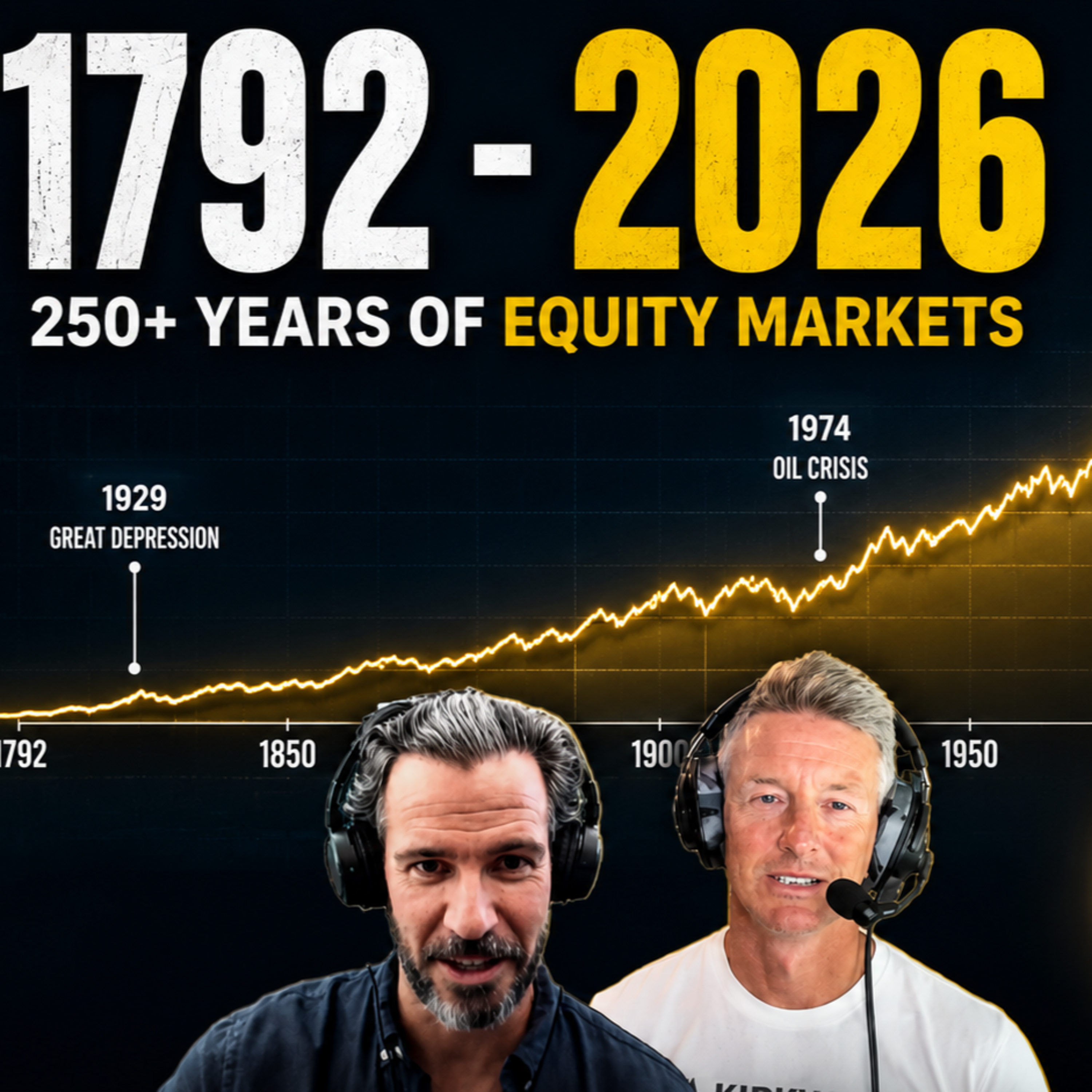 What 250 Years of Market Data Actually Tells Us | Meb Faber87 / 100
 Oil Isn't Dead - John Love on Why Energy Markets Are Defying the Headlines74 / 100
 The Fund That's Beaten the Market for 45 Years by Focusing on What Could Go Wrong84 / 100
 Value Investing with Options: Selling Puts to Buy Wonderful Businesses at Better Prices | S08 E1882 / 100