
trading places · 2026-07-01 · 1h 12m
Key moments - from our scoring
Substance score
66 / 100
Five dimensions, 20 points each
This episode examines the competitive and financial dynamics reshaping AI infrastructure and business valuations. Speakers break down SpaceX's modest float (6% vs Tesla's 80%) limiting Nasdaq 100 index buying impact despite $2 trillion market cap, while Anthropic's secondary market trading above $1 trillion signals strong momentum despite Mythos/Fable 5 regulatory staging by the government - a communications misstep the speakers see as temporary but concerning pre-IPO. DeepSeek's $50B raise at 95% of OpenAI's capability for under 10% the cost demonstrates Chinese open-weight models undercutting frontier pricing power. OpenAI's delayed IPO to 2027 reflects cash burn, revenue disclosure gaps (likely ~$30B ARR), and management churn - making it the weaker IPO story versus Anthropic's 10x ARR growth and emerging profitability. Meanwhile, supply-side pressures mount: Micron's $41.4B revenue (4x YoY), 85% margins, and sold-out 2026 HBM inventory drive memory costs up, forcing Apple price increases and Cerebras margin compression (46-47% expected vs 36-38% actual) as equipment lease costs spike. The conversation suggests AI scaling is hitting real cost and capacity constraints.
DeepSeek delivers 95% of OpenAI's capability for under 10% the cost, with open-source Chinese models good enough for most tasks, directly undercutting frontier model pricing power and margin assumptions that depend on performance scarcity.
Only ~$10B from ETFs like QQQ and Invesco alternatives into SpaceX's $86B float (6% of market cap), because index inclusion is float-adjusted; Tesla at 80% float receives 10x more weight despite similar market cap.
Anthropic is on track for $100B+ ARR by end of 2025 growing 10x, with 85% gross margins on inference and emerging profitability, projecting to $200B ARR at 2x growth by 2027 - matching 12-15x revenue multiples of SaaS peers like CrowdStrike.
Memory costs from HBM bottleneck spiked unpredictably; Micron sold out through 2026 at 85% margins, forcing Cerebras to lease back equipment and lease costs higher than forecast, compressing expected 46-47% margins.
OpenAI stopped disclosing revenue (likely ~$30B ARR, slower than Anthropic), burns $4B+ cash annually, lacks profitability, and faces leadership instability (CFO Sarah Fry diverging from CEO messaging), making it structurally riskier than Anthropic for public markets.
Our reviewer’s read on each dimension, with quotes from the episode.
The episode covers substantive topics (GP stakes, DeepSeek valuation, AI cost dynamics, IPO delays) with meaningful detail in places, but also contains significant filler - Star Wars quotes, extended banter about Elon losing trillionaire status, lengthy tangents about SpaceX lockup mechanics that don't drive operator insight. The GP stakes segment is dense and specific; the valuation corner delivers framework thinking; but roughly 30-40% of the runtime is conversational padding.
If a manager is selling a stake in their firm so that they can take a briefcase full of cash, go sit on the beach and drink pina coladas, that's not a transaction that we want to be involved in.
If you're a CFO looking at how to set your budget, obviously these, the uh, you know, 95% is good for a fifth. The cost, especially given all the constraints we just talked about, is pretty compelling.
The episode covers well-trodden ground: AI pricing pressure (widely discussed), open-source models undercutting frontier labs (known narrative), GP stakes basics (established strategy). The frameworks used - diversification, alignment, cross-cycle economics - are canonical to the GP stakes world. O'Keefe's sports-and-AI-via-personalized-advertising angle is the most novel element, but most other insights recycle common venture/PE themes without significant counterintuitive challenge.
You don't want to trust the masses who liberated the soldiers from Dunkirk with uh, you know, cybersecurity or um, maybe financial reporting, hipaa, uh, compliance like stuff.
Instead of you tuning into your local game, and seeing the same ad as everyone else, you will tune into your local game and you will see an ad that is ultra personalized to you based on your chat GPT conversation.
Michael O'Keefe is a relevant, credible operator: senior member of a $12B firm actively deploying capital, with hands-on deal experience and stated alignment (own $700M of firm capital). He has real strategic authority over GP stakes allocation. However, he's not a household name, and the episode lacks founders or public-market operators with media-level visibility. O'Keefe is substantive but one notch below ideal guest tier.
CAS Investments is a Houston based investment firm. We've been around for around 25 years. We've got about $12 billion, um, spread across 9,000 plus investors in our network
We right now have about just over 115 different asset managers inside of our broader portfolio.
The episode delivers concrete numbers in clusters: Micron revenue up 346% to $41.4B, Cerebras IPO priced at $125-135, rose to $311, fell below IPO; SpaceX Nasdaq-100 float math (6% vs. Tesla's 80%); Anthropic $47B ARR growing 10x; DeepSeek $50B valuation with 130M users, $30-50M ARR; CAZ's 115 managers across $12B, $700M co-invested. But the episode also contains vague claims (e.g., 'pressures on frontier models' without quantified market share erosion, 'material weaknesses' at Bending Spoons cited but not detailed). Strong clusters of evidence offset by stretches of abstraction.
So they reported 28 billion in GAAP net income. So they're generating 85% profit margins and 60% profit margins and are sold out of inventory for all the 2026.
They are basically a, uh, Chinese thinking machine, which is why I'm referencing Confucius here in the bottom left. When you think of a Chinese thinking machine, you think Confucius. It is a very unusual company. It's probably one you cannot invest in because it is in China and at a very limited round of, uh, a very limited round of investors. At a $50 billion valuation
Host A asks broadly competent questions and does push O'Keefe on specifics (check sizes, fund sizes, economics, portfolio construction). However, many follow-ups are soft or follow the guest's lead without friction. There's minimal challenge to O'Keefe's claims (e.g., no one questions the 75% secondaries claim, no skepticism about sports-AI thesis). The DeepSeek segment is more interrogative but still lacks sharp skepticism about governance risks or the premise that open-weight models will cannibalize pricing. Star Wars quotes and tangential banter displace potential depth.
And I don't know if you're at liberty to share, but again, you know, based on your investment in the firm, do you get better economics in investments in the individual funds?
Could I ask you one more question? Is do you ever put money into their funds, either like an LP or maybe on a, uh, more specialized, no fee or reduced fee or reduced fee carry basis?
Computed from the transcript - who did the talking, and the words that came up most.
DeepSeek just raised $7.4B at a $50B valuation and there's no cap table access. It's structured through an SPV, no voting rights, no board seats. CEO Liang Wenfeng put in $3B of his own money and controls the vehicle. Meanwhile Anthropic is trading above $1T on the secondary market despite Mythos getting staged by the government, and SpaceX just locked in its Nasdaq 100 slot with a $2T valuation on a float of only ~6%. Plus: Michael O'Keefe of CAZ Investments breaks down how a $12B GP stakes portfolio actually gets built. 00:00 - cold open 00:54 - [ tech and vc news ] 02:33 - SpaceX joins Nasdaq-100 08:39 - Anthropic hits $1T valuation & IPO outlook 14:45 - OpenAI builds its own chip + 2027 IPO delay 18:07 - AI memory demand surges (Micron wins, Apple/customers pay more) 20:24 - Cerebras falls below its IPO price 22:46 - AI token costs rising; customers shift to Chinese open-weight models 28:24 - Bending Spoons targets ~$19 - 20B IPO on profitable roll-up strategy 32:56 - [ intvw: Michael O’Keefe @ CAZ ] 33:22 - CAZ manages $12B AUM 36:04 - What is GP stake investing?
Transcribed and scored by The B2B Podcast Index.
Speaker A: Deepseek is raising a new round at a $50 billion valuation. That puts them in the top list of private companies.
Speaker B: So I guess the pitch to potential users is, uh, hey, we're not OpenAI, but we're 95% as good as OpenAI, but at under 10% the cost.
Speaker C: Artificial intelligence is incredible, but a lot of those valuations are challenging to know whether you're buying the company that will change the world or whether you're buying something that's really just hype.
Speaker A: Elon was a trillionaire for a couple weeks. Unfortunately, he is now no longer a trillionaire. Come on. Welcome back to another episode of Trading Places, our horrible, very, very bad, no good D.C. secondary podcast. Let's, uh, go over our news stories this week. We're gonna talk a little bit about SpaceX. As always, SpaceX, uh, is in the NASDAQ 100 index or will be added soon. Unfortunately, Elon is out of the four commas club. Oh, no, Russ Hanmeyer.
Speaker C: I'm out of the 3 comma club.
Speaker A: Anthropic trading above a trillion dollars. Now, they, uh, are having some headwinds with the whole Mythos thing and the Fable thing, but Micron, uh, still put some money in at a trillion dollar valuation. OpenAI is announcing a partnership with Broadcom to build new chips, but they've also announced they're pausing on their IPO until 2027. So no 2026 IPO for you, Sam Altwin. We're going to cover some memory problems. Uh, Micron is selling out. Uh, but Apple is raising prices. Cerebras, although still doing well, but trading below its IPO price. Uh, I wonder if we're starting to see some cracks in the overall AI boom here. Aman. And then a lot of people talking about the costs and how Chinese open weight models, open source models, are less expensive and good enough for most tasks. Um, seems like that might be putting some pressure on the Frontier model's ability to generate revenue related to that deep sea. A, uh, Chinese LLM is raising money at a $50 billion valuation. And then Last Bending Spoons is going to go public next month. Uh, this is not an AI story at all. Right? This is all about everything. That's not AI.
Speaker B: It is anti. Right. It is the anti AI story.
Speaker A: Well, I think we're going to talk a lot about pricing and cost, uh, on this news segment, but let's start off with Nasdaq 100 news. Uh, SpaceX is going to be joining Nasdaq 100. I guess that'll start happening after the 4th of July. After July 6th, I guess July 7th,
Speaker B: yes, probably before the, right before the market opens July 7th, there'll be, they'll be included in the Nasdaq 100. It's 15 trading days after the IPO which started June 12th. So if you factor in the uh, 4th of July holiday which falls on July 3rd this year because it's a Friday, that'll put SpaceX into the Nasdaq 100 on morning of July 7th.
Speaker A: So Aman, do you think this is going to solve SpaceX's problem? I guess the stock has been slumping a little bit after the ipo. It kind of mooned up there initially, but it has now kind of traded down to maybe only 150 a share, sort of hovering around the $2 trillion valuation.
Speaker B: Only $2 trillion negative, Nancy.
Speaker A: I know, right.
Speaker B: Two years ago this company was two, uh, hundred $10 billion valuation and everyone thought that was overvalued. Then it was 400 billion and that was overvalued and then it was 800 billion and then we went to a trillion and now it's 2 trillion. And sure the price went up to the price, remember at 135 at their IPO. Very limited price discovery by the way. Ticked at 150 bucks a share I think briefly went above 200 for uh, maybe one hour of one day in our holding it at 150. So the mini slump over the past couple of days is in context, uh, I wouldn't call this a problem. Now there will be demand coming in from beginning on July 7th from a couple of funds that are tied to the NASDAQ 100. So the forced buyers, the inelastic buyers will be primarily these ETFs. Um, the two biggest ones are QQQ, which is run by Invesco, and then kind of a baby brother to qqq. So that'll probably bring in a fair amount of demand and uh, whether that's priced in or whether they'll have an effect on the stock price, I don't know. It's probably going to generate some demand over the, over those, uh, over the, over the course of that, you know that week, first week of July should be pretty good for the stock I would think.
Speaker A: Do you think that's really going to be enough to offset the selling that's likely to happen though? I mean, I guess one thing that I read was the amount of representation. That index is not based on the size of the market cap, it's based on the size of the float and because SpaceX only has a relatively small percentage of float, there's not that much buying. I think estimates were somewhere between $5 to $10 billion worth of buying. That might happen from index purchases, but we're going to see 20% of the stock market value unlock for trading or unlock out of lockup, I guess. Yeah, that could be tens, if not 20, 30, $50 billion worth of sales perhaps. Right?
Speaker B: Uh, it won't be that much. Let's go through the rules that you correctly described. It's float adjusted. So let's take an example of, uh, so let's say Tesla and a Half trillion and SpaceX is one and a half trillion in market cap. But Tesla is floating about 80% of its stock, meaning it's publicly available to trade. In the case of Tesla, you've got, you know, 1.2 trillion of stock that's available to trade. In the case of SpaceX, you only have as of yesterday, about 86 billion ready to trade.
Speaker A: So the composition, 3, 4 or 5%. Right?
Speaker B: Uh, yeah, they, they used the exercise, the green shoe, which is what the bankers do, to take the float up a little if the market's doing well. They did that last week. The amount of float relative to market caps around 6%, but Tesla's at 80%. So that means in the NASDAQ 100 Tesla will be represented 10 times more than SpaceX, even though they have the same market cap. So you are right that there's not going to be the, the amount of buying is just going to be gated by the float. There is probably going to be, let's say, 10 billion of uh, potential forced buying from these index funds into an $86 billion float. So it is, it is significant. But there's a lot of volatility and volume we're seeing in SpaceX. Every week. They're trading probably 60 to 60 to 70 billion volume every week. So 10 billion going in. And with the conscious of 67 billion is, uh, it's a factor, you know, it's not going to be, uh, enough, I think, to push the price higher. The partial lockup begins in August after earnings. If they, once they get their earnings done, there's a 20% release for certain investors. But remember, Elon, who owns 40% of the company, is locked up for a year. Um, Gwynne Shotwell and Antonio Gracias, who together own 7 to 8%. They're locked up for a year. And uh, and just because people are locked up and ready to sell doesn't mean that they will Like a lot of these SpaceX people on the cap table have had a chance to sell in previous center offers. They haven't. In fact, they've been buying into the ipo. Not a lot of employees are buying into the ipo, not selling.
Speaker A: So it's hard employees get the chance to sell.
Speaker B: Uh, they are mostly locked up for the first 180 days, and some of the key senior ones are locked up for longer than that. So we will see employees selling, you know, probably not until the end of the year, if at all.
Speaker A: Probably, I guess, the next two, three months. It's mostly just inside investors that might be selling, right?
Speaker B: Yeah, it's the Founders Fund, um, it's Fidelity and a handful of the other larger investors. But I think what we'll see is a lot of continued volatility. This is one factor on the buy side. There'll be some selling on the lockup release. Um, this stock's going to bounce around by 10, 20, 30%. Tesla did the same thing. A lot of these IPOs will bounce around for those first three months by 20%, up or down. So it's all going to get lost in the wash, I think, and the company just has to deliver on their earnings and perform through the end of the year, and then I think we'll know what's what.
Speaker A: One minor, uh, sad story here. Elon was a trillionaire for a couple weeks, but, oh, no, he is now no longer a trillionaire. If any of you have watched Silicon Valley, the comedy series with Russ, uh, Hannemeyer lamenting his being bounced out of the three commas club, Trace commas club. Uh, Elon is no longer in the 4 comma club. Oh. Oh, woe's me. So sad.
Speaker B: That's unfortunate. I'm sure he's heartbroken. What is it?
Speaker A: Your father's lightsaber. This is the weapon of a Jedi Knight.
Speaker B: Not as clumsy or random as a blaster.
Speaker A: Moving on to our next big set of stories. Uh, Anthropic is still doing well, like trading at over a trillion billion on the secondary market. However, um, some challenges with all the Mythos and fable and whether the government is restricting the release of some of Claude's models to certain companies. What do you think about all this? Is this going to put any pressure on Anthropic?
Speaker B: It's not great to have your most important model, your most advanced model. Mythos. I guess it's Fable 5 that's essentially mythos with safety guardrails. It's not great to have that being staged by the Government. I would say the probability of an IPO for anthropic would have been 90% and a, uh, month ago, it's maybe 70% that will go public this year. So there's been maybe a little bit of, A little bit of a concern. I think this is mostly for them a messaging issue. I think if you remember back to what they did in the spring, they launched, uh, what was then mythos, now Fable 5. And they told everybody that this is going to be so dangerous, so powerful, it could override all the cyber security guardrails on the Internet. So we're going to do the responsible thing and stage it out to a bunch of partners, which I actually give them a lot of, A lot of credit for. But I think just, you know, that spooked the government. And then Amazon came out as one of the chief partners of Anthropic and said, hey, we're testing Fable 5. We're observing a jump guard rails, and rather than being able to talk through with the regulators like, this is why it's under control, somehow the communications broke down and, uh, they didn't get the message across and the government restricted them. I would hope and I would expect that they're, you know, that they got to get really good at comms and government relations before they go public. I don't think they're very good at it right now, but when you start making those statements and freak regulators out, you have to be able to have those conversations and bring them along. So I don't think it's a jack ma moment. I think this is, uh, just something they're going to have to kind of work through on their top model. But I still think they're going to be a really successful IPO just based on their financials and momentum.
Speaker A: The US Maybe pulled back a little bit on the throttle and is now allowing Mythos to release to some US Companies. But, uh, there are people who are speculating that maybe, uh, Anthropic was a victim of its own, uh, fear and doubt, basically that they were trying to do some form of regulatory capture by scaring people into thinking that, hey, we need government oversight of these models. And they got maybe a little too successful with that. The government was like, hey, yes, maybe we should restrict the model. But I think we're seeing now not just the government capture, regulatory, uh, capture issue. I think we're also seeing maybe some cost issues come up as potentially being know, a concern, and we'll cover that a little bit later. I think you're right. At least for the moment, uh, we're not really seeing any problems with anthropic secondary, um, market value trading any lower. In fact, kind of the opposite. We're seeing it, uh, trade up. If we look at sort of where the anthropic uh, rounds were being priced, that's kind of the, uh, the blue or gray line here. That's the, you know, more stair step. But then if you look at sort of the actual secondary price that's trading and that's the purple line, it's trading above a trillion dollars. Now that hasn't seemed to slow down too much. But where do you think that's going to go? Do you think we're going to see the rampant growth that we've seen over the last year or two? Do you think we might see a little bit of a slowdown in the valuation going forward?
Speaker B: I'm going to make a crazy prediction. I was thinking about this over the weekend and I actually think this could be, this is going to be north of SpaceX, I think. So where's SpaceX? 2 trillion. I think this could be close to 3 trillion when it hits the public market. And uh, I'll tell you why, because they're at 40. They were last we knew, they're at 47 billion in ARR growing at 10x a year. But let's, let's pause on the 10x a year because that just boggles the mind.
Speaker A: I have a feeling that'll slow down. I got to wonder. That might be.
Speaker B: Yeah, but where will they be at the end of the year? So they will price, let's say in Q4 and they would tell you where they're at for the full year, 2026 and they'll guide to 27 or they'll have their bankers do it the way that, I mean SpaceX came right out and projected the hell out of their numbers. And the one thing that you're never supposed to do in an S1, which is to predict the future, um, I got to think Anthropic will do that too. If they were at 100 billion in ARR by the end of this year, let's say it slows down to 2x200 billion at the end of 2027, I would think they're going to be hugely profitable. They're going to be mostly inference. Then the gross margins on inference are 85%. It could be a 70% gross margin company. I don't know how you lose money on that kind of profitability. So, 200 billion ARR growing at 2x year over year profitable. Would that be a 15x? We're seeing CrowdStrike and we're seeing all kinds of palomalti networks and SaaS companies at 12 to 15x revenues. I think this could be close to $3 trillion IPO in the next, let's say six or nine months.
Speaker A: I don't know if I'm quite as bullish there. I guess I'd like to see how revenue trends over the next six months. But I agree with you. Let's assume that revenue somewhere between 50 to 100 billion by the end of this year. And that's when they're going to go public. Um, probably they're still profitable. I guess it seems like they're heading that direction. Might be some little funny money and how you count for that. But I agree with you. I can't see how it's worth less than 2 trillion. Maybe the bar isn't SpaceX. Maybe the bar is just, um, the comparison against open weight models and maybe a little bit OpenAI. But. But I think it's certainly going to happen this year and I think I would probably agree with you. It'll be north of 2 trillion. I don't know if it'll be all the way to three, but maybe I'd
Speaker B: price conservatively and now try to max every dollar out of the ipo. I think that's a mistake that, uh, Facebook made. You got to go way back to 2012 to remember this. But Facebook tried to take every penny out of the IPO and trade it down in the next six months and they've recovered and done great. But a lot of companies just try to max the ipo. So I think if they go conservatively and then let it pop and let their day one investors get ahead and get retail participation and get included in the NASDAQ 100. Um, yeah, I think they could do. I think they'll do just fine.
Speaker A: OpenAI announced a partnership with Broadcom to build an alternative chip stack. I guess the project is called Jalapeno, a spicy AI chip. The companies are calling this an intelligence processor, describing it as the first AI accelerator. Make AI faster, more reliable, uh, than ever before. I guess that's good news. Uh, but at the same time, we're also hearing that OpenAI is going to wait on their IPO until 2027.
Speaker B: Oh, no.
Speaker A: Sam looking not so happy in that picture.
Speaker B: It looks very dapper, though.
Speaker A: Previously, I guess there'd been some news stories from OpenAI, uh, CFO Sarah Fry, about maybe them not being ready to Go public? Yes. Perhaps not at a trillion dollars, maybe, you know, somewhere below that. Seems like given all the other, you know, headwinds that is happening in the market, maybe SpaceX falling, uh, down a little bit, Anthropic having its own stories. OpenAI just maybe deciding to wait a little bit.
Speaker B: I would say, first of all, that is good news to have a partner like Broadcom. But what they are, what they're building, what you just described sounds a lot like what Nvidia does. So the fact they're, you know, this is a bit of a middle finger at Nvidia, or I guess just a way to diversify their, uh, partnership away from Nvidia and into Broadcom. I think the delay of the ipo. I think you and I had speculated that this would be the tougher of the two IPOs. Right between anthropic and OpenAI. The concerns on OpenAI are, you know, one, they haven't told us what their revenue is in the last couple of months. When companies don't tell you what their revenue is and they, they don't disclose that information, usually it's a sign that they're not hitting certain goals. So they're probably somewhere in the, you know, 30s ARR. But not hitting goals or growing less quickly than Anthropic. The other concern I think with them is they're also burning a lot of cash, which I think Anthropic has now become profitable. And OpenAI is not that. And in this environment, that could be tough. Uh, there's been a lot of churn on the OpenAI team. We've talked about that. That's number three, like between, you know, their COO, Brad Lycap being moved, uh, around and Fiji Simo and board members coming and going, and it's like the drummer on Spinal Tap, like every other day, he exploded on st.
Speaker C: An issue
Speaker B: about how somebody on the management team is no longer with the management team. You just don't go public. And then when you see the cfo, Sarah Fryer, seeing things that are a little bit different than the CEO, that's, you know, that's a little bit different.
Speaker A: I would say a lot different.
Speaker B: Yeah, it's back to that communications game. Like, you got to be really tight with your cfo, it just shows they're not quite ready for primetime. You know, it's like a, it's like a World cup team. You know, they're just not quite gelling and the team is just not quite in the right place at the right time. And, you know, I think OpenAI is uh, because they're not the strongest story. We just referenced the Chinese open weight models. If they're coming to get anybody, it's going to get OpenAI first and anthropic second. Because if we're anthropic plays and they're more enterprise and they're more in cybersecurity and OpenAI is a bit more consumer and I think has more to worry about with the deep SEQ and Chinese open. Wait. So it just feels like OpenAI is going to take their time and do it and try to do it right. And uh, they must be judging now that this is uh, they're setting expectations that maybe it's going to slip in next year, which I think is perfectly reasonable and frankly not that surprising. I suppose you're programmed for etiquette and protocol. Protocol, why? It's my primary function set.
Speaker A: Well we're seeing uh, some challenging pricing issues in the entire market. I guess we're seeing a rise in memory chip costs that's coming from a lot of AI usage and uh, that's kind of affecting companies slightly differently. This rise in memory chip cost is certainly going to increase the cost of laptops and smartphones. I think we're seeing that Apple is going to be increasing prices on some of their products as a result of this. If we look at companies like Micron, uh, they've certainly seen a rise in their earnings over the last few quarters. Uh, really kind of dramatic there. They've had a lot of chip companies and stocks go up substantially over the last couple years. But now maybe we might be hitting some limits on that. How does this kind of play into the overall AI story? And are we starting to see challenges in AI scaling? Maybe some from memory, some from power, some from like just data center build outs.
Speaker B: All the above and I guess capital too. But just if you don't know Micron, they are a trillion dollar company and they're only one of only three companies in the world that make high bandwidth memory. So HBM, the others are UM, SK, Hynix and Samsung. And what they just reported was Q1 was a blowout. They announced that their revenue was 41.4 billion. It's up an insane 346%. So they're basically 4xing the revenue year over year from 9 billion where it was so a huge number, 4xing and they reported 28 billion in GAAP net income. So they're generating 85% profit margins and 60% profit margins and are sold out of inventory for all the 2026. So the fact there's a bottleneck here with uh, high bandwidth memory or dram, means that it's just another cost driver of uh, AI on top of the other things you talked about. I mean I'm sure we'll see Apple, they announced they're raising prices of everything. I'm sure we'll see the Microsoft Xbox become more expensive. I'm sure the Nintendo Switch now will become more expensive. So I got a budget for my, you know, my Christmas gifts for my kids. But it does feel like this bottleneck's going to be here for a while. And I think that does make the, the cost of compute go up. And that's probably going to be one more factor just in metering how quickly AI, uh gets adopted across the landscape.
Speaker A: Well, moving on to some recent IPOs, cerebras, uh, a company that got a lot of attention last month for its IPO has fallen uh, below its IPO price and it fell as much as 12% just last week.
Speaker B: I wouldn't stress about this too much. I think just my quick take on Cerebras is uh, they initially went on the road. Again this is about expectations and what have you done for me lately? So showing the last couple of days without the context is a bit dangerous. But remember this is a company that priced their IPO at 1:25 to $135 a share. That was the range they set on the IPO roadshow. They then priced it 185 because it was oversubscribed and the demand blew it. It was blown out the doors. I think the top tick of $311 a share or something after a couple of days because a lot of retail people jumped in and pushed the price up. After the institutional smart money had priced at 185, the retail pushed it to 311 and then it kind of came back down. And on their earnings call they had, you know, I guess the good news was they had a really good top line story. So they met all the expectations in terms of their revenue. Q1 revenue was 193.4 million. It's up 92% year over year. No surprises. There's and then a little bit of a boof on gross margins which uh, the expectations on gross margins were 46, 47% going up. And they said, oh wait a second, the market might have misunderstood the gross margin story, um, and we might be more like at 36 to 38% next quarter. A lot of that is what we just talked about. The cost of compute and the cost of memory is forcing them to spend more than they thought. And they're going to have to lease back some equipment from customers they didn't really expect to do. So it may be temporary, but anyway, those are all negatives. And when they broke issue, uh, a company breaks issue when they trade below the IPO price. There are a lot of sellers in the public markets who just automatically sell when the price goes below the IPO. So if you price at 185 and you go below 185, it's just forced selling. And people were shorting it I think in advance of that, trying to get it down to below 185. Just kind of gaming the market knowing that these four sellers would happen. So they're below the IPO price. Let's see how they do. I think there's a lot of trading dynamics here that aren't, not long term, this is kind of short term noise. And I would still suspect over the next six months, I wouldn't be too worried about, too worried about them. I think it's still a lot of demand for this stock and these companies. Over the next six to nine months,
Speaker A: uh, we are hearing a lot about the costs of AI tokens becoming an issue. And I think this probably benefits open source models, open weight models, maybe a little bit more than the top dominant frontier labs. A pretty interesting tweet by Brian Armstrong earlier this week talked about the use of tokens at Coinbase. And you'll notice here that they're seeing that black line is continued use of tokens but the cost structure is going down as they are shifting to other open source open weight models for their usage. Slightly related story is that we've been hearing that China has matched anthropic and cybersecurity. And uh, a company called Z AI is um, making available some options for people that are interested in cybersecurity. I think we're kind of seeing maybe that the open weight models, open source models are catching up. Maybe not quite as powerful as the leading frontier models, but certainly a lot more economical, right Ahmad?
Speaker B: Yeah, I think so. The, the news out of Z8AI, which is a, uh, Chinese company, did suggest that in the field of cybersecurity. I'm not sure they were all caught up, but they're getting close. They're like 90 to 95, maybe 98% as effective, but at like 1/5 the cost. And so if you're a CFO looking at how to set your budget, obviously these, the uh, you know, 95% is good for a fifth. The cost, especially given all the constraints we just talked about, is pretty compelling. I think in the area of cyber security though, like companies will pay up for uh, an American best in class frontier model. I actually don't think I want to hand over my cybersecurity to a Chinese open source model unless I have someone like, uh, Perplexity running interference and customizing my, you know, my security in a way that prevents political bias, personal bias, manipulation from the Chinese government. So this could be a real boon for companies like Perplexity. But there's, there's no doubt that the, the difference, the, the value, the gap between what you pay and the value of it, it's getting awfully, you know, awfully tough. If these numbers are, are right, which I, you know, I think they are.
Speaker A: China's producing a good bit of the open source models that are being ranked on top performance. Six of the 10 models on the leading AI leaderboard were developed in China.
Speaker C: Wow.
Speaker A: I guess last month Uber burned through its entire annual AI budget in just four months and has since started implementing spending tiers. Uh, I think we're just hearing more and more people start to shift some of their spending out of maybe the top frontier labs to alternative open source models. And an interesting post by usv. Nick Grossman, who's a partner at usv, is talking about the Rebel alliance and this idea that there's a large stack of different tools and services at the interface layer, at the execution layer, at the intelligence layer that are not just based on a vertical stack of tools coming from either Claude or OpenAI or Gemini. Uh, it's now a lot more companies that are part of that overall stack.
Speaker B: Right.
Speaker A: How do you see this playing out in terms of where AI ah, is growing? Uh, whether there's as much dominance by just Anthropic and OpenAI or whether there's other players now that are going to start to creep in and take market share.
Speaker B: The Rebel alliance metaphor of uh, just this ragtag group of warriors that are figuring stuff out and doing it. If it's 90% as good or 95% as good and uh, 1/10 the cost, I think that works in a lot of areas. It'll work in marketing, it'll work on workflow optimization, it'll be, you know, all the consumer stuff, LLMs. That's why I think maybe OpenAI is more vulnerable to this. There are areas where you don't want to trust the masses. Like I guess the real world analog is dunkirk. You don't want to trust the masses who liberated the soldiers from Dunkirk with uh, you know, cybersecurity or um, maybe financial reporting, hipaa, uh, compliance like stuff. There are industries where this really matters and you really don't. I think you want to trust the British Royal Navy to take the Dunkirk metaphor, uh, in those areas. So I think it'll create a lot of pressure on some of the frontier models, especially OpenAI. Anthropic might be a little bit more insulated, but they'll also have to pick and choose battles as to where they want to play. The more regulated industries, the ones where you can't trust the rebels to figure out how to take down the Death Star. But there's no question the ecosystem is moving towards it's commoditizing and as that happens and cost becomes a play, which I think is very healthy for the ecosystem and for startups in general. It's going to put pressure on the frontier models for sure. And that's going to be their, that has to be their IPO story is how do they defend against this stuff?
Speaker A: Well, one of those other players is a company called Deepseek. Uh, this is a Chinese frontier model. Deepseek is raising, uh, a new round at a $50 billion valuation. Over $7 billion they're raising at a $50 billion valuation. Uh, that puts them in the top list of private companies right among, I
Speaker B: know, top 20, $50 billion valuation.
Speaker A: I think even top 10. Yeah, probably top 10.
Speaker B: So we'll cover this one in our valuation corner. But uh, the short of it is they are, uh, the leading Chinese open weight, open source model. I just reflect on Llama and Facebook and how they completely missed the boat on, uh, this. I thought they were going to be the winner, but anyway, I guess Deepseek for now, um, is in the lead. It's a very unusual round. Um, they raised 7 billion on 50. Only a handful of investors. They're all Chinese. I don't think you can even invest in it. Uh, but anyway, it is, they've raised a lot of money and I think they are right on the heel in terms of performance. They are right on the heels of OpenAI and Anthropic, so it'll be an interesting one to watch.
Speaker C: I find your lack of faith disturbing.
Speaker B: Enough of this.
Speaker C: Vader, release him. As you wish.
Speaker A: Our last story of the day is going to be about a, uh, not so exciting and not so sexy IPO bending spoons is raising at, uh, a $1.6 billion valuation. And I guess this is a Roll up company mom. But can you explain a little bit more about what bending spoons is?
Speaker B: They're actually targeting a $20 billion valuation in an IPO. Their last round was $11 billion from Goldman Sachs. The target valuation is actually pretty aggressive. It's an Italian company, it's run by a guy named Ferrari, not, uh, that Ferrari. It is actually just a roll up of basically Internet brands that uh, sound like the, you remember that graveyard of Internet logos that made the rounds in 1999, 2000, 2001. Of all the busted companies, dead companies, that's Evernote, uh, aol. There's all kinds of companies on this list that um, they've been buying up. The company began as basically a VC backed tech company that Luca Ferrari launched. I think it was about six or seven years ago. That company failed, he pivoted. Uh, he was a former McKinsey consultant, so I guess this made sense to him. And they just went out and started buying a whole bunch of Internet brands that they thought they could essentially turn around. So uh, about eight months ago they raised $710 million for investment in growth. At that time, their Pre money valuation, 11 billion. And they had folks like Fidelity and Tiro Price who led the round. So pretty serious investors. They wanted to basically buy software companies and just run them better. So they had a series of businesses that they had targeted and they wanted to improve them through operational excellence and make them better. Some of the big ones on their um, list right now are Evernote and uh, Brightcove. And in each case they have a playbook that they run. They basically fire a bunch of people. So cost reductions, they do uh, price changes to basically increase price and improve monetization. And then they just, you know, they kind of consolidate and grind through other operational improvements. Whether it's taking uh, out management teams, adding people in, consolidating some of what they do. Interestingly, what you might like about the company and why I think it'll actually be a very successful IPO is their revenue is about 1.3 billion for the full year, but it's growing 95% year over year. Their organic revenue is only 13% year over year though. So you got to be a little bit careful about thinking about their revenue and growth. Their net dollar retention for the whole portfolio is only 94%. So not exactly best in class revenue growth and net dollar retention. But they are an acquiring engine. They're like a holding company like uh, Berkshire Hathaway or somebody like Constellation Software. And they're not profitable, but they are able to acquire and build growth. So I guess the good news is they've got an interesting set of brands. They're adding operational excellence. I'll give you a couple of real concerns though. Um, they don't have any long term contracts with their customers. Their subscription revenues really aren't subscription revenues. They aren't really doing ARR. So it's all brand loyalty. And can they keep customers coming back? There's no exit value in the strategy that I can tell. They have a lot of debt right now. Um, they've piled on over 4 billion in debt and their interest expense is climbing faster than their revenues. And uh, and maybe worst of all, if you're a CFO, you read through the disclosure. If they're uh, they're S1 actually it's their F1. They're an Italian company. It's a different, different thing. But right on page, you know, right here on page.
Speaker A: Appropriate for a CEO with the name Ferrari.
Speaker B: Yeah, exactly. F1, exactly. The branding is excellent with, with things like that. But there's a, there's a huge disclosure on page 52 about material weaknesses and how they've discovered a whole bunch of material weaknesses and concerns in the financials of the companies that they're rolling up. So I kind of look at that and I'm like, well, wait a second. If you don't have long term contracts with your customers and you're piling on a lot of debt and then on top of that you're telling me that you've got a lot of material weaknesses in your contracts and your financials. I worry that they're just a collection of melting ice cubes and their organic growth rate isn't great. The question I guess for them is going to be can they compound through acquisition and improvements at a growth rate faster than their interest, expense and cost of capital? And I don't know. The truth is Berkshire Hathaway under Buffett, Munger and Greg Abel have done a good job of doing it. Constellation Software has done a great job under Henry Singleton. I think it's a lot of operational challenges here these guys have to overcome. But it's an interesting IPO to keep our eye on for uh, next couple of weeks.
Speaker A: All right, well, thanks for a great news session, Aman, and we'll be looking forward to hearing more about Deepseek and the valuation corner coming up. Uh, I'd like to welcome to the program Michael o' Keefe from CAS Investments, CAZ Investments. Michael, thanks for joining us.
Speaker C: Dave Aman, thank you for having Me,
Speaker A: I was wondering if you'd give us a little bit of a thumbnail on uh, CAZ and also your role there.
Speaker C: CAS Investments is a Houston based investment firm. We've been around for around 25 years. We've got about $12 billion, um, spread across 9,000 plus investors in our network and we're a thematic investments firm. So we identify themes that we think will persist for, you know, many years or decades. We identify the best way to partner on those themes. We invest our own money m and then we invite others in this large network to co invest alongside us in that regard. So you're right, we are one of the largest GP stakes investors on the planet. That is roughly speaking about half of the capital that we've deployed across our $12 billion. We're also very meaningful minority stake sports investors. Uh, we do a lot in energy, particularly being a Houston based firm and we participate a lot in technology and space and defense in particular.
Speaker A: Love to hear a little bit about your background.
Speaker C: Happy to. I actually grew up in St. Louis, Missouri, so I'm a Midwesterner and then ended up going to smu. I did study finance, math and mechanical engineering and my journey from SMU to CAS was actually quite unique. This is going to feed into one of the themes that is really central to the way that we operate as a business and that's the power of the network is the network. And when I say the network, I mean the CAS network. Not of just investors, the sponsors and everyone that's involved in our business. And back in 2018 when the firm started looking for a unique role that was effectively a right hand to our founder, uh, Chairman and cio Christopher Zook, one of the existing investors in the CAS network received that job application and he happened to be the father of a very close friend of mine who'd graduated a number of years earlier at smu. And so just purely out of being involved in a lot of things at smu, being involved in a lot of different circles and making my wishes known of this is really what I'm interested in and what I want do to to do. The stars kind of aligned and I wound up getting connected with the firm and seven or eight years later, now here we are. Uh, it's been a really, really fun journey. Um, could not be more honored to be a part of the team. We had maybe 12 or 15 people when I joined and I think just shy of $2 billion in assets deployed. And so we've effectively 6 xed the size of the firm not only in Team, but also in assets and number of investors. So, um, been honored to play, you know, a role in that growth and a part of the firm.
Speaker A: I was wondering if you could give us a little bit of a thumbnail on the GP stakes market and maybe if you want to explain for our audience what that means.
Speaker C: So the concept of a GP stake is effectively providing growth capital to an asset manager as a business and they happen to be a company that goes and raises money from other investors. So we are buying pieces of the management companies of private equity firms and helping them deploy money into their business faster, help them grow assets under management faster, help them deliver better results to their investors. And in exchange, we're receiving portions of the fee streams that those managers charge. So breaking this down into really, really simple numbers, right, If I run a private equity firm, I might charge my underlying investors a management fee, typically 2%, and a performance fee, typically 20%. And if someone comes in and buys a piece of my business, the fees that my investors pay me, that minority investor also gets their pro rata share of those fees. And there are some really unique attributes that come as a byproduct of that. And I like to describe it this way, it if I'm thinking of investing in a private equity fund, let's say a middle market healthcare buyout fund, there are a number of questions that I ask myself. Question number one, is now a good time to invest at all? Question number two, is now a good time to invest in health care? Question number three, am I choosing the right private equity partner to invest in healthcare? And I have to get, get each of those right in order to really hit a home run right? I can get the timing right and I can even get the sector right. But if I choose my partner incorrectly and they don't make great investment choices on my behalf, I'm not going to end up with a great result. On the other side of the table, when you own a piece of the asset management firm, you get to alleviate a significant amount of that risk because of what's called cross cycle diversification. So as a manager, I invested years ago, I'm deploying capital today, and I'm going to raise more money and deploy capital later. And so I'm getting to allocate my money at, uh, different points in time over the cycle. And all the while I'm getting paid both management fees and performance fees. And so when you position yourself on their side of the table, you get all of the benefits of private equity and private equity upside, but you significantly reduce your risk your volatility, your correlation to even private equity, and at the same time have the benefits of really strong yield and alignment with those that you're partnered with. So that's why we've deployed over $6 billion in the space and why it dominates such a large portion of our portfolio.
Speaker A: So maybe if I can summarize for our listeners how, how your firm differs from maybe a traditional, uh, fund or fund of fund. Let's think about a normal LP puts money into a single fund. They get charged an annual, uh, management fee, typically 2%, as you mentioned, and eventually they probably get charged, uh, a carry, uh, in the profit that comes from the firm. Uh, let's contrast that with when you buy into a private equity firm, uh, you're buying not just into one fund, but, but, uh, all funds that that firm might operate over time. Uh, you're not generally paying a fee and carry. You're receiving a portion of the fee and carry that the manager makes or the general partner of that private equity firm makes. Is that an accurate summary?
Speaker C: That's exactly correct. We are not making fund investments into these managers necessarily. We are buying pieces of their business and we're getting paid the economics that other fund investors are paying to those managers. That's exactly right. All uh, right.
Speaker A: Could I ask you one more question? Is do you ever put money into their funds, either like an LP or maybe on a, uh, more specialized, no fee or reduced fee or reduced fee carry basis?
Speaker C: Yeah. There's actually two really important pieces in your question, so I'll answer the most important first, which is not really a question you asked, but I think is most crucial to understand who we are as an organization. Not only, you know, when you say do you, do you invest in those funds? I first thought of do you invest in your own funds? And I actually think that's the most powerful stat at our firm. So across our $12 billion of assets deployed, we have roughly $700 million of our own money from our team, our, uh, shareholders, our balance sheet that are invested alongside our investors in everything that we do. And so typically speaking, we are not only the first money in, we're the largest money in everything that we do, which makes us one of the most aligned managers that we come across. One question you may ask that I'm happy to address later is what makes a great GP stake transaction and alignment is at the very top of that. So that's kind of one piece and happy to continue that later on. The question of do you ever invest in these, you know, the the underlying funds themselves. The answer is yes, but typically from different pools of capital. So like I said when I started, we have a number of different strategies at cas. One of those is GP stakes investing, in which case our goal is to go out and find the world's smartest, most proficient investors in certain categories and be partners with them at the balance sheet level separately. Right. If we, if we do our job and identify health care investors, consumer investors, technology investors, energy investors, typically speaking on the other half of our business, where our job is to provide diversified exposure to private alternatives effectively. And so we're not only sitting as part owners in these businesses, but from different pools of capital and on behalf of different investors. We also get to allocate in energy funds, technology funds, secondary funds, et cetera, as a byproduct of our GP stakes business.
Speaker A: And I don't know if you're at liberty to share, but again, you know, based on your investment in the firm, do you get better economics in investments in the individual funds?
Speaker C: Yeah, I certainly can't share specifics, but I can tell you that when you own a piece of someone's firm and you're talking about allocating multiple hundreds of millions of dollars to them, you most certainly have the option or uh, the opportunity to get not only preferred economics but also preferred co investment rights, preferred insight into deals. The most powerful piece of all of this, that, that, that really isn't quantifiable or in a way that we've been able to identify but is probably the most powerful piece of our diligence process is actually just the ability to pick up the phone and call these managers, you know, uh, on speed dial effectively. And I'll give you a great example of that. I think one of the most opaque diligence processes that exists really in private equity or venture capital in general are early stage venture investments. I looked at a nuclear company today. I won't state the name, but I am not a nuclear physicist. Right. I don't pretend to know whether this company is going to be successful in deploying a reactor in 2031. And for me to pretend like I know that is really just doing myself a disservice. I'm not going to go toe to toe with, with the world's, um, smartest folks in that area. But if I can pick up the phone and call Founders Fund or Khosla or any of the other, you know, prolific venture capitalists in our network and very quickly have someone tell me, ooh, I wouldn't touch that with 10 foot pole or that's an impressive company. You should look, and here's where you should dig to really understand more. That's the most powerful element of diligence that really can exist. And you better believe that being a part owner in those firms and positioned alongside them allows us to more effectively conduct that diligence.
Speaker B: Look at him. He's heading for that small moon. I think I can get him before he gets there.
Speaker C: He's almost in range.
Speaker B: That's no moon.
Speaker A: I'm wondering if you could maybe give us a sense of the size of checks that you guys typically invest and what the size of the fund is you're investing. Maybe what those economics look like. Um, yeah, you know, my, my basic understanding is, you know, we're talking about private equity funds that might be on the low end, a couple hundred million, maybe on the higher end, a couple billion. Is that in the range that you're.
Speaker C: That or that. That is generally right on, on the fund size. For most of our vehicles, we have, uh, a large number of vehicles on our side. Um, and they span a lot of different, you know, purposes, size, scope. Some of them are wildly diversified, and some of them are specific to single assets. So again, without giving its specifics, our business is really unique. We have no restriction on our side to only invest in something of a certain size, to only invest in one type, to only invest in one sector. We have total freedom to do whatever makes the most sense and what believe will be the best investment. And sometimes that actually involves doing absolutely nothing. And that is equally as powerful.
Speaker B: Right.
Speaker C: We don't have a need, need to do anything or to deploy anything. All we can do is make the best investment choice, knowing what we know about the broader world, knowing about, we know, you know, uh, about our existing pipeline of deal flows, et cetera.
Speaker A: I'm not super familiar with the GP stakes business, but my understanding is a, uh, manager, when they're getting a firm started or maybe after they've gotten a few funds off the ground, they might value their business at, say, 20% of capital under management, plus or minus. Um, and I'm kind of guessing you might write them a check for 20% of that value. Is that sort of the rough story? Am I, you know, off base there?
Speaker C: You're directionally correct in the numbers, but the math behind it is actually more complicated. So I'll touch on maybe the thought process on how a GP stake is valued, and I'd also like to touch on the rationale on why a firm would, would. Would pursue a transaction like that, which is probably the most crucial question. So on the valuation side, it's actually no different than really any kind of fundamental finance exercise, which is project out future cash flows, discount those cash flows back, and arrive at a net present value that is effectively what you would pay for the business. And so that involves projecting out management fees, which are contractually obligated. They're highly durable. They're, you know, revenues that are effectively forecasted out and locked in for, you know, five, 10 years plus in some cases. That's a really predictable bond like cash flow. Very simple.
Speaker A: Right.
Speaker C: Very easy to predict. As long as you know how fast the firm will grow, the carried interest or the performance side is more lumpy, and it relies on harvesting underlying companies that these firms invest in and then ultimately selling well. And so that itself is a mathematical exercise. It looks smoother if you look at it over the entire firm. But generally speaking, it relies on, you know, whether these firms, how fast they'll grow their underlying companies, whether they can exit them on the timeline they believe, et cetera. And so those are, A, tend to be larger, lumpier cash flows, but B, come with a higher risk profile, or in traditional terms, a higher discount rate.
Speaker A: Right.
Speaker C: And blending all of that together with the terminal value, effectively, you know, if I sold the asset manager at some point in the future, what would someone pay for that? Blending all of that together builds towards the vast majority of your value. And there are some intricacies that, um, that we can go into at a later point in time, but that is effectively everything that's here. Now, the most important question is really, why would an asset manager want to sell a stake? And this is the first question that we asked. Let's take a. Take, you know, private equity firm A, and let's say that they're, they've been around for 20 years, one of the smartest investors in the world. They have outstanding returns. Well, if they're selling a piece of their business and they're a seller, why would I want to be a buyer? They're brilliant at investing. I definitely don't want to be on the other side of their transaction. And that is where the alignment piece comes in.
Speaker A: Right.
Speaker C: If a manager is selling a stake in their firm so that they can take a briefcase full of cash, go sit on the beach and drink pina coladas, that's not a transaction that we want to be involved in. Right. That's, um. I also want to say pina coladas, but I'm definitely not going to pay them to.
Speaker A: In your line, I'm guessing a good bit of the reason they want to do this is they might have a large GP commit that they have to finance.
Speaker C: Well, that's exactly right.
Speaker A: Maybe they're, uh, not, you know, super wealthy when they're getting started.
Speaker B: Started.
Speaker C: Yeah, yeah. Uh, the easiest example, I think that that's really valuable for audience members that, that we use with, um, with folks that are new to the asset class. If you're going out and starting a private equity firm and let's say you want to go raise a billion dollars, the market will typically expect you to put up a certain amount of capital and invest it into your own vehicles to demonstrate that you're aligned with your investors. And let's say that's 2%. 2% of a billion dollars is $20 million. That's a lot of money. And let's say that you have it. Let's say you've got your $20 million reworked your whole life and you're like, great, I'm ready to go. Awesome. You invest your $20 million, you raise your billion dollar fund, you go out three years later, everything's great. Every company you've bought doubled on paper, and all your investors are happy. And you're like, I'm really good at this. I really should go raise a second fund. And I want to raise $2 billion this time, and that's going to increase the magnitude of fees that my investors pay me. Okay, great. Well, if you go raise $2 billion, Marketplace will expect you to put up your 2%, which in this case would be $40 million. Now, your original 20 that you invested, that might be worth $40 million on paper, but you've sold none of it. So you're actually cash poor and paper rich. And so the real key question here is where do you get the money to continue scaling as fast as you can? And that is where you really need to think of these transactions as growth capital. Why would a fast growing Series C company go and raise a Series D? It's not because they're trying to take beach money. It's because they need money to continue growing as fast as they can. And we can step in as an equity partner and sit alongside them and help them facilitate that growth.
Speaker A: And how do you think about, you know, sort of your portfolio construction? How many different firms do you guys invest in? Do you have a minimum number of firms that you want to hold positions in for diversification purposes?
Speaker C: Yeah.
Speaker A: How much of that rolls over every year and, you know, sort of, what's your horizon?
Speaker C: We right now have about just over 115 different asset managers inside of our broader portfolio.
Speaker A: Okay.
Speaker C: If they're not evenly weighted, right. There are 20 or 30 names in that list that dominate most of the exposure. And that's by design.
Speaker B: Right.
Speaker C: Our goal is uh, is to be diversified, but not to be diversified if you want to use that term.
Speaker A: Got it.
Speaker C: But there is a significant benefit in having elements of diversification that exist across really every major bucket. So you think about, you know, there, there are private equity firms where we own stakes in. There are private credit firms we own stakes in. There are real asset firms, real estate firms that we own stake in. That's maybe one dimension. You can do it by sector as well. Energy, consumer, technology, finance, we have that dimension. We also have capitalization. So we have a number of the world's largest private equity firms on the planet. Firms like HIG and MCAP and Starwood and Clear Lake. Those are, you know, the mega cap managers. And you have a number of middle market managers as well that act as, as really any other middle market firmwood. So you think about, you know, standard portfolio diversification. Why do I want to own a large cap company? Well, it's wildly profitable. They've been doing this for 30 years. They know exactly what they're doing and it's really hard to lose. That's great. Why do I want to own a middle market company? Well, they have more potential upside because they haven't yet grown into a large cap firm's valuation. But they also are still trying to find their footing in certain elements of their business. And so combining all of that together allows you to really achieve the kind of, of diversification that's needed in order to produce consistent results.
Speaker B: Do you think about geographical diversification?
Speaker C: Yes. Yeah, that's another dimension that I did not, I did not say, but is absolutely real. So most of our exposure sits in the US but we absolutely have an element of European exposure, we have an element of, of Asian exposure. And you know, a, ah, lot of these managers tend to be global, particularly the large cap ones. So you know, they may be domiciled in the US simply because their headquarters are here. But if you have you know, $100 billion plus in assets under management and every sector you can think of with exposure everywhere, you are effectively a wildly diversified manager.
Speaker B: If you were to map the uh, these different asset classes against like a global map, would your diversification kind of look like the market or like the map or do you.
Speaker C: It does. If you look at, if you really break it apart. Right. If I Own a piece of a private equity firm. Yeah, Uh, I, by extension own every fund that they have and by extension own every company that those funds own. And so if you kind of play the deconstruction exercise down to its lowest level, we have exposure to over 10,000 underlying companies that exist across each of these managers. And that's purely an estimate. It, the number is actually probably higher than that, but we're, you know, overly conservative in that math. The point is that if you map that across the globe, you're really getting private equity exposure, but you're doing it in a way where you're getting paid fees, you're increasing your asymmetry, you're decreasing your downside, you're increasing your cash flow yield in a way that just doesn't exist if you're a traditional private equity fund investor.
Speaker B: Here he comes. Okay, let's go. Now don't you forget this. Why I should stick my neck out for you is quite beyond my capacity.
Speaker A: Given that we're in a, uh, future where AI seems really important and energy seems really important, sports seems to be growing investment area for private equity. Uh, what's interesting, what's exciting, which of those three would you lean into more than the others and why?
Speaker C: Wow, that is an incredibly hard question. My answer is always option D. All of the above. Assuming that option D is not an option and I actually need to choose, I'm really going to probably emphasize both sports and energy in different ways for different reasons. And I think artificial is intelligent. Uh, artificial intelligence is incredible. It'll change the world. But a lot of those valuations are challenging not, not to justify, but they're challenging to know whether you're buying the company that will change the world or whether you're buying something that's really just hype. And so we, we tend to put more focus on either the picks and shovels around AI or the industries that will indirectly benefit from artificial intelligence. Like energy. And I'll describe why. But like professional sports. So with energy, it's really a supply and demand story, right? You have extremely, uh, fueled demand across every corner of the world. You have increasing population, you have a huge demand from power, you have a huge demand from artificial intelligence, from data center build out. I'm sure every single guest that you've had on the podcast has said the exact same thing. Equally on the supply side, you have radically reduced supply of energy producers. And even more powerful, you have a radical reduction in the number of institutional investors or sponsors that are on this planet to do energy in a Dedicated fashion. This is a wild stat. And I, I almost don't believe it every time I hear it. If you ask yourself how many institutional investors are out there there that have a billion dollars or more of capital that do nothing but technology, that number is very high. The number of institutional investors that do nothing but energy that have a billion dollars or more is three. There are three in the world.
Speaker A: That's it.
Speaker C: Institutional investors that do that, that is a wild stat. Ncap, Quantum and ngp. And oh, by the way, we own pieces of NCAP and Quantum through our GP stake strategy. But all that aside, there are not nearly enough capital providers that can fuel these companies that need to be in place to satisfy all of the demand that we know exists. That is one of the best opportunity sets that we see in the world. Uh, we like every, every energy deal that we can get our hands on. That is the right setup and the right way to play it. We are, we are pursuing with full force now. Professional sports is really interesting. So when you invest in a professional sports team, most people approach these assets, they think of them as kind of vanity assets or trophy assets. These are things that ultra, ultra wealthy people buy to show off or become more connected within their local community. That may or may not be true in elements, but from a pure investment standpoint, it actually looks a lot like a traditional GB stake. These are ultra low correlation assets with low leverage with, you know, high return potential. They have effectively no correlation to the rest of the world. You're operating a business in a legal monopoly where more of these cannot be created. Uh, you have durable cash flow streams that are created because every team in every league earns their pro rata share of those league proceeds regardless of whether you come in first place, last place or anywhere in between. That is a, a highly asymmetric setup that tends to produce really, really strong investment results. And when you look at how does AI impact sports, as an example, you really need to focus on what drives sports valuations, which are media rights. Right. These businesses exist and are ultra profitable because of their pro rata share of the league media rights. An NFL team before they play a game earns nearly $500 million per team. Just starting off the bat, right, they haven't played a single game and they're getting paid almost half a billion dollars in free cash flow driven significantly by the media rights associated with them. Where does AI play into that? We are not there yet, but we will get to a spot very quickly in the world where instead of you tuning into your local game, and seeing the same ad as everyone else, you will tune into your local game and you will see an ad that is ultra personalized to you based on your chat GPT conversation that you had 30 minutes ago about the flowers you forgot to buy your wife for your anniversary or whatever it might be. And oh, by the way, here's the ad that shows up on your game and it's, you know, go to your local flower store and buy this or your wife nags you because you didn't buy toilet paper for the third time. And Charmin Ultra Strong is the next thing on the app, right? That is ultra powerful. And it is the, the only place on the planet where you can really get folks to watch ads and content in a dedicated way. Everywhere else you've outsourced it to streaming services, you've cut the cord. But if you are watching the US Open or you're watching, you know, a World cup game, you are glued to that screen doing it. In a community environment.
Speaker A: We're seeing a ton of growth and interest in secondaries. I think we're also seeing a ton of growth both uh, in the overall alternative investment market and probably a little bit more exposure from the retail market as well as, you know, institutional investor and family offices. Where do you see growth happening in a sector basis or in a secondaries world? And how do you guys play that?
Speaker C: You're right that secondaries have exploded. It's no secret that, you know, investors are hungry for forms of distribution and forms of yield and it's been a rough couple of years from a uh, distribution standpoint, generally speaking across private assets. And so secondaries are booming for that reason. Folks need to access liquidity for a variety of different reasons. We, we really don't play that much in, in kind of the generic secondary space where for lack of a better term we're competing with, you know, the world's largest multi, multi, multi billion dollar type secondaries firms because that's a competitive process that, that we feel like we're not going to generate a huge amount of edge in where we do believe that there is an enormous amount of edge that we can garner is actually within the GP stakes space specifically. So when you think about what makes GP stakes unique, you can rewind this conversation and you know, listen to the last hour. What are the drawbacks? Well, GP stakes are typically highly illiquid assets. You can't sell them. There's no, no free market that trades them. These are assets that are meant to be held forever, effectively. And so that piece alone kind of breaks, the generic secondaries model for, for most investors who are looking to buy something and have a really shortened J curve or, or hold life if, if those, you know, kind of terms ring a bell, um, GP stakes are on the opposite end of the spectrum. And so as a byproduct, we can sit in a unique spot where we're set up to not only know these assets better than anyone on the planet, but as one of the few approved buyers, preferred buyers that can move quickly, can act with certainty and can structure things to meet the needs of various sellers. And so, uh, we, you know, there's no perfect number on this, but we have been told we represent about 75% of the global secondaries market in GP stakes. And when you talk about the ability to, to set price, the ability to know what things should trade for what things will not, and to get deals done in a way that anyone else can't, we're positioned really, really well.
Speaker A: Well, that's really fascinating, Michael. I, I appreciate you spending so much time with us and giving us a peek into the GP stakes market.
Speaker C: Both Dave and Aman, thank you so much.
Speaker A: Thanks a lot, Michael.
Speaker C: Thanks guys.
Speaker A: Professor Aman Virji. We're here to cover valuation corner on Deepseek. What's Deep Seq all about? Aman?
Speaker B: So this is a open source large language model. It is in China. It's China's leading LLM, designed for AI. They are basically a, uh, Chinese thinking machine, which is why I'm referencing Confucius here in the bottom left. When you think of a Chinese thinking machine, you think Confucius. It is a very unusual company. It's probably one you cannot invest in because it is in China and at a very limited round of, uh, a very limited round of investors. At a $50 billion valuation, it might be the world record holder for the largest seed round ever, the highest valuation ever. I might make a technical case in a second as to why it's not really a seed round, but it was a founder led round. And uh, this is a company that is, in terms of its performance in LLM metrics, it's getting very, very close to where OpenAI is on their Frontier model. But they're only making 30 to 50 million dollars. That's M M. That's, it's million with an M M, not, you know, billion with a billion.
Speaker A: Really?
Speaker B: No, because they're only monetizing, you know, they're basically, they're basically selling tokens that are 90 to 99% cheaper than the US counterparts and so I guess the pitch to potential users is, uh, hey, we're not OpenAI, but we're 90 as good as open or 95 as good as open AI, but at under 10% the cost. So you will use OpenAI and anthropic for a lot of things and that will be things like cybersecurity. It'll be maybe advanced things that you need. Where you need, we've got data compliance as a major issue in regulated industries. But there's a lot of stuff that we will be using AI for that is you don't have to be best in class, you don't have to have all the bulletproof, uh, protections and the same kind of SLAs and quality. And someone like Deepseek and these other open weight models from China could be a real, a real candidate here. Just think about the round for a second. There is no direct cap table access on the round there raised 7.4 billion into an SPV. Uh, that SPV then invested in Deepseek. So there's no voting rights, no board rights, no governance rights. Who led the round? Well, the CEO Lang Wenfeng put 3 billion of his own money into the 7.4 billion and he controlled the SPV. So right there, there's a lot of unusual dynamics here that probably wouldn't fly in a Western VC raise. And that's why we're not seeing Andreessen Horowitz or Lightspeed or anyone else in this deal. So who is in the deal? Well, Tencent, which is the maker of WeChat, they are a, um, large company in China. They put in one and a half billion dollars. There's some other money coming from IDG Capital, uh, and Monolith Management, and both of these guys are significant Chinese investors. So IDG Capital was founded in Boston. They're now operating, I think out of Beijing and Hong Kong. They are a leading global private equity and venture firm. They do manage money outside of the Chinese market as well. So I think they're the first foreign backed venture capital firm to enter the Chinese market. Uh, they have backed a lot of early stage companies like Tencent and Baidu and Xiaomi and uh, a few others like Coinbase and ripple in the U.S. and so, you know, pretty significant investor. The other one is Monolith Management, which is a very highly specialized tech focused fund. The founder, or at least the guy who runs the venture side of it is Chao Shi, who's a legendary figure in Asian markets. He was the guy behind Sequoia Capital China, some pretty grade A Chinese names in the company. And then the other one is CATL, which controls 40% of the battery market, the EV battery market. So they do have significant investors. But these are, you know, these are basically companies that are local uh, to China. And then of course the one company or the one entity that has any kind of voting rights, the golden vote, if you will, is the Chinese Communist Party. So anyway, a lot of concerns about governance is the point. But in terms of their overall AI capability, they are performing at levels that aren't quite where OpenAI and Anthropic are, but they're doing it basically they're at 70 to 80% of the performance of those top models and in some categories, um, they're put under 90%. So they do have capabilities that are almost as good and a lot cheaper. If you look at how the, what the user base of the company is, they have 130 million users right now. You can see the downloads uh, were successful about a year, year and a half ago when they really went broader to market. They've since slowed down quite a bit. Most of their users are China, Russia, India, maybe Indonesia. That kind of makes up the majority of their, of their company, of their users. And they haven't been able to prove the monetization angle yet. But just in terms of the performance of the models and if you think about how they're going to position against some of these American companies, it's interesting to think about whether this could be a viable investment and maybe uh, a third or fourth place AI model in the grand scheme of things. I did a quick comparison for what DeepSeq offers versus OpenAI, which I think is the closest one. The benefit I think of DeepSeq. Uh, so consider the things you think about as an AI model on the community side. Deepsea doesn't have as broad a community or as large a community, as engaged community as OpenAI. So that's one negative. But on the cost side they're a tenth or a fifth of the cost. They're open weight. So they are also very customizable, um, which is something that OpenAI is not. They're very flexible as well. Um, which means that you can also get someone like Perplexity or someone else to work with them and create something that you need for your specific business needs or your specific consumer needs needs. OpenAI, not so much. Very transparent. Right. Any kind of open weight model, they will tell you what's going into the model, what the weights are. You can manipulate them if you want to, but you know what you're getting and you know how to control for things like bias. OpenAI doesn't do that. They keep a very tightly guarded training data set infrastructure that um, will obscure to the user everything from what's in the data sets to parameter counts and how all the models are being weighted and aligned. The only one thing that you can't get with DeepSeq is data, uh, compliance. So the benefit of OpenAI is they have essentially have zero liability SLA. So they'll indemnify you, the user. If you're using the model in a way that's essentially breaking the law or basically breaking data agreements or using information that has um, IP copyright infringement. You're not going to run into trouble like that. With OpenAI you could with DeepSeek and for a lot of of CIOs, Fortune 500 company CIOs for sure would say I got to have zero liability, I got to have you know, SOC 2 type 2 compliance. If I'm in the healthcare industry, I got to have HIPAA compliance. You're not going to get all that with Deep Seek. So it's not for everybody but it does seem like they're now a credible player on the world stage. They're well capitalized with some really good investors and I guess the bottom line is, you know, at 50 billion is that valuation makes sense or not? Well, the top two American based closed source AI LLMs are uh, let's say they're worth a trillion dollars, maybe anthropics more than that, maybe OpenAI is less than that, but let's call it a trillion on average between the two of them. And deep seq said 50 billion so that feels actually about right, like given the different levels of monetization. So I think it could be an interesting player. The downside is the governance and the involvement, the fact that they're in China and the involvement of the Chinese government. So you got to be willing uh, to make those investments in that area and know what you're getting into. But I think they're definitely in the game on the board, well capitalized and I think it's going to put a lot of pressure now on anthropic and OpenAI pricing Customer acquisition to maintain their evaluation.
Speaker A: Yeah, I mean I think you're right certainly for security or government related projects that's probably not going to be a great option. But for a lot of startups and a lot of companies uh, that maybe are less concerned on those issues, the cost savings is substantial and you know, Deep Seek isn't going to be the only horse in this race either. There's going to be a lot of other players that are offering alternative solutions that are maybe not top of the line performance but still pretty close to top of the line performance at a fraction of the cost.
Speaker B: So for like you know writing or editing for maybe some workflow improvements for uh managing salesforces, maybe call center, figuring out how to talk to customers and customer interactions I think this, I think they're going to be free front and center where they may be behind is on you know legal work right? Contracts, things where there's uh a legal liability, financial reporting, moving money around, healthcare. Those are areas where they probably aren't going to be as effective out of the gate but certainly a whole avalanche of these guys coming and it'll be fun to watch.
Speaker A: All right, thanks for another great valuation coin Ramon.
Speaker B: Uh, okay, thank you Dave.
Speaker A: Been watching any World cup this weekend?
Other episodes covering the same guests and topics, from across The B2B Podcast Index.
 Ep 93: CEO of Redwood Research Buck Shlegeris on OpenAI/HuggingFace Revelations, Fixing AI Safety & Takeover OddsUnsupervised Learning with Jacob Effron · on OpenAI98 / 100
 Paul Graham On Startups, Ambition, and Great FoundersY Combinator Startup Podcast · on OpenAI88 / 100
 How SSW turned AI into ½ their pipeline - Ulysses Maclaren, COO of SSWSaaS Stories · on OpenAI86 / 100
 Unscripted with Victor: Agentic AI, Fintech's Future, and the Death of the App EconomyVentures from The Valley · on OpenAI83 / 100
 The Agile Insurer: How AI, People and Strategy Are Reshaping Insurance | 8 Industry LeadersMaking Risk Flow · on OpenAI80 / 100
 Fighting Fire with Fire: How CyberProof Is Automating Cyber Defense with Edy AlmerCyber Sentries: AI Insight to Cloud Security · on Anthropic80 / 100
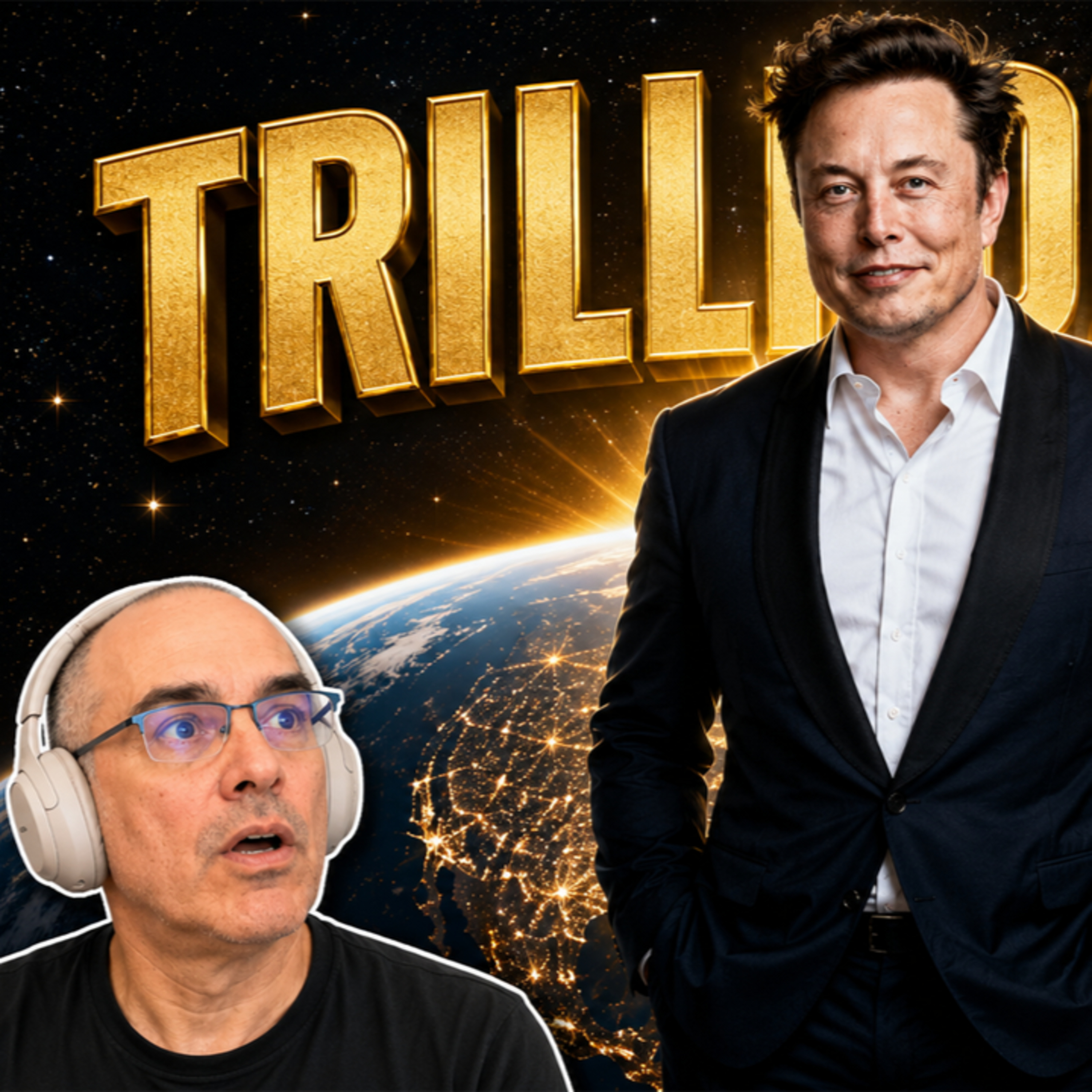 SpaceX Surges, Anthropic Stumbles, and Bezos Bets $12B72 / 100
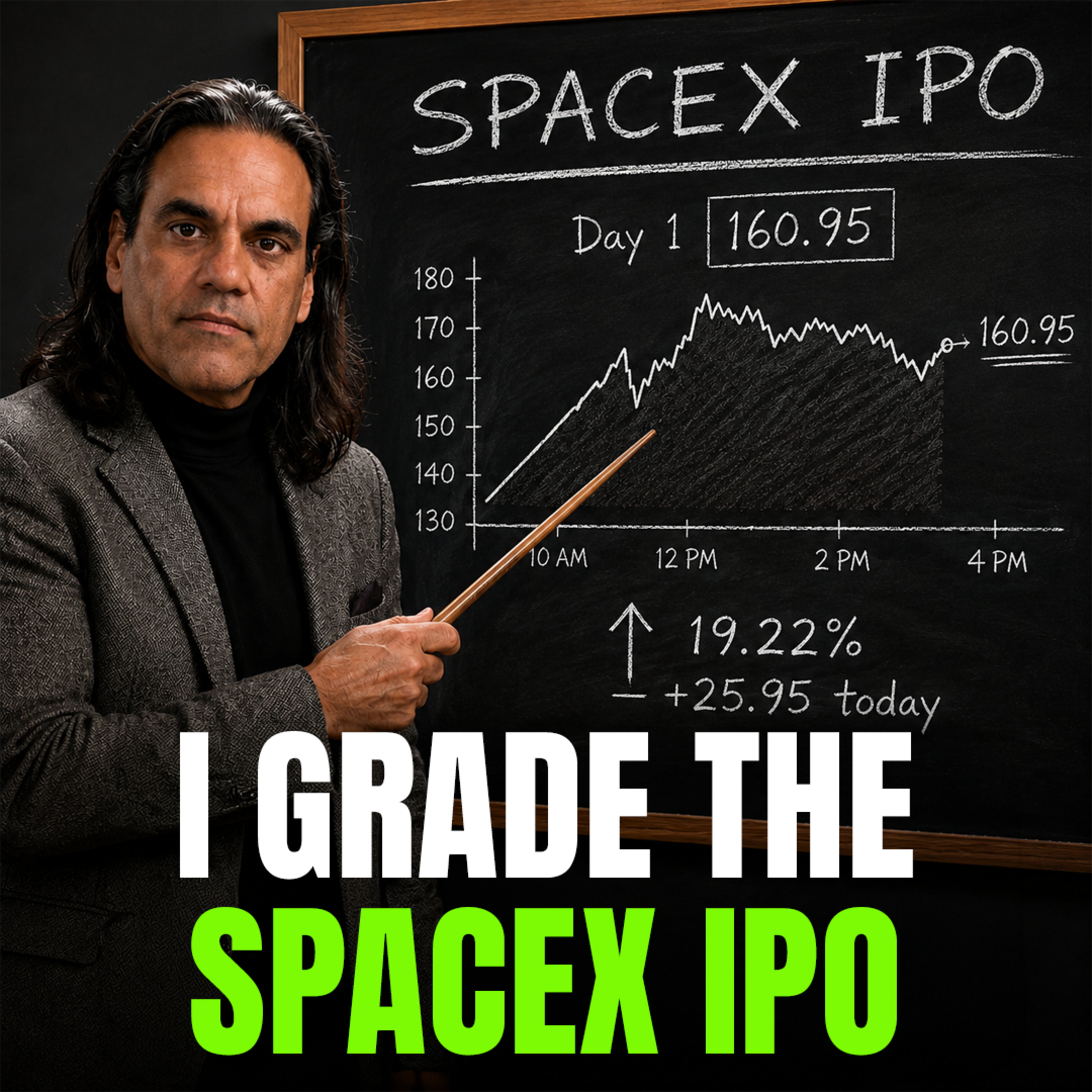 The SpaceX IPO Report Card, OpenAI vs. Anthropic, and the Private Market No One Talks About | CJ Gustafson w/ Guest CJ Gustafson76 / 100
 I Read the 308-Page SpaceX S-1 So You Don’t Have To73 / 100
 $900B Anthropic, SpaceX IPO Date, and the SPV Wild West w/ Clara Vydyanath | Trading Places Pod EP35
 Anthropic's $44B Revenue Run Rate, SpaceX's $75B IPO Problem, and the Retail VC Trap | Ep 34