
trading places · 2026-05-21 · 1h 10m
This episode covers three major private market developments with significant implications for secondary markets and IPO pipelines. Cerebras delivered a blockbuster IPO, pricing at $185 per share (well above the $115-125 range) and popping 68% on day one to reach a $100B+ market cap, validating AI pure-play demand and returning remarkable multiples to early VCs like Benchmark (whose ~$500M Series A investment is now worth roughly $8B). SpaceX signaled a June 12th NASDAQ listing date, with the S1 filing expected in late May, bringing $5B 2024 losses, Q1 XAI merger financials, and the Cursor acquisition option into public view. Meanwhile, Anthropic raised $30B at a $900B valuation - tripling from ~$350-380B just months prior - but simultaneously issued a cease-and-desist against unauthorized SPV stock sales facilitated by secondary firms like Forge and Pachamama Capital. The hosts clarify that Anthropic's concern centers on employee and early investor share transfers outside board-approved vehicles, creating administrative headaches and competitive intelligence risks, though existing shareholder agreements already contain standard transfer restrictions. For B2B operators in secondaries, venture, and alternative assets, this illustrates the tension between LP demand for liquidity and company control over cap tables.
Anthropic issued a cease-and-desist against secondary firms facilitating unauthorized stock transfers because it creates administrative overhead, competitive risks (competitors gaining shareholder information), and bypasses board approval requirements - though courts may still enforce equitable remedies (cash compensation) even if share transfers are voided.
SpaceX is targeting June 12th as NASDAQ listing day, requiring an S1 filing in late May with a mandatory three-week public period; the filing will include 2024 financials showing ~$5B losses, Q1 2025 XAI merger results, and Cursor acquisition option terms.
Benchmark's ~9% Cerebras stake is worth approximately $8B at current valuations (~$90B market cap), and given Benchmark manages ~$9B total AUM, this single position has returned not just the original fund invested from but effectively the entire firm's historical returns.
Board-approved SPVs (like Dragonair Group's co-investment vehicle) remain valid, but unauthorized secondary SPVs used by individual employees or early investors to sell shares to secondary buyers (Forge, Pachamama Capital, or individual buyers) are void without explicit board approval.
Cerebras disclosed that 80% of revenue came from G42, a UAE government entity requiring CFIUS review, leading to IPO pullbacks and eventual down-round; valuation recovered after signing $20B OpenAI cloud deal (January) and AWS partnership (March), replacing customer concentration risk.
Computed from the transcript - who did the talking, and the words that came up most.
IPO season is here - and private markets are breaking at the seams. This week on Trading Places: Cerebras just had one of the best IPOs in years, pricing way above range and popping 68% on day one. SpaceX is targeting June 12th for its Nasdaq listing - and the prospectus drops next week. Anthropic raised $30B at a $900B valuation (up from ~$350B just three months ago) - and then told SPV operators to back off. And Anduril closed a $5B round at $61B, doubling its valuation in under a year. Then Dave and Aman sit down with Clara Vydyanath, a secondaries veteran who's spent eight years at Forge and Hiive, to break down what's actually happening in the SPV market - who's legit, who's a scammer, and what CFOs should be doing right now. Plus: retail VC part two, where Aman pits AngelList's USVC (Naval Ravikant + Ankur Nagpal) against Cathie Wood's Ark Ventures. One of them has a track record problem.
Transcribed and scored by The B2B Podcast Index.
Speaker A: If you raise $50 billion from private capital markets. Right. The money has to come from somewhere.
Speaker B: If you had some advice for people who wanted to jump into the alternative asset industry, into secondaries of venture capital, what do you think are the necessary skills for folks to get in? I think the SpaceX IPO is just around the corner.
Speaker C: So they have now declared that, uh, they're aiming for June 12th as a listing day on the NASDAQ.
Speaker A: It's never been easier and harder, harder to get liquidity for your position, I think.
Speaker B: Hey man, have you seen this new musical? This new musical called Altman?
Speaker C: I have not, Dave, heard of this new musical called Altman.
Speaker B: It's really not very good.
Speaker C: It's very bad.
Speaker B: It's very bad. In fact, it's directionally very bad.
Speaker C: Directionally very bad.
Speaker B: Directionally very bad.
Speaker C: Sam, this is very bad.
Speaker A: Sam, this is very bad.
Speaker B: But, uh, you know, our podcast, uh, it's also directionally very bad. Uh, we're going to have to work on getting better. I don't know, it's just, it's not very good. We got to work.
Speaker C: Yeah, well, it's a very bad podcast, Dave, but, uh, we'll work on it
Speaker B: this week on Headlines at Trading Places, a very bad VC podcast. Uh, we're going to cover, uh, the Fed and Iran. A little bit of macro real quick. Not too much has changed there. Uh, Cerebras had a very good IPO. Directionally very good IPO. Very good news for the IPO market. And that's probably good news for SpaceX, who is going to drop their S1 next week or maybe in a week or two. We'll see. Um, Anthropic has raised another round at, uh, only $900 billion valuation. Uh, but they also said, hey, you folks stop doing those SPVs. That's. No, that's bad again, directionally very bad. Anduril closed a new round at a little bit more than we had projected, $61 billion. And then on our valuation corner, Aman, you're going to cover RetailBC Part 2.
Speaker C: This time we're going to do two closed end funds that do not trade on the exchanges but are available to the public.
Speaker B: Well, let's jump into our show here. What's going on with oil? What's going on with interest rates? Aman?
Speaker C: Well, let's start with the Fed. We had some, I guess it was big news, although it was expected. Kevin Warsh is the new Fed Chairman as of May 15th. We had been out early predicting him as the new Fed chairman. Almost a year ago now. And he got confirmed just in time for Jerome Powell to leave the chairmanship of the Fed. It was a pretty close vote in the Senate. 54 to 45 I think was the final tally. But, uh, almost on partisan lines. But, but, uh, he's the new guy, so, um, he's a little bit like a relief pitcher coming in in the ninth inning with runners on base. Inflation accelerating and picking up, you know, oil prices above $110 this week. So I don't think he's going to make any moves on interest rates between now and the end of the year, only because I think there's some inflationary pressure. But let's, let's see. At least we know who the new Fed chairman is. And he's very good. I like him a lot.
Speaker B: We'll check in on, um, polymarket and see what's happening in the Straits of Hormuz. Among the Straits of Hormuz. Open or closed?
Speaker C: I don't think they're open to Americans. Uh, I guess that's the most important point. They're selectively open if you're not an American ally. But this is the poly market chart of, uh, probability.
Speaker B: Almost exactly 0 for, uh, May 15th. I guess that's probably already passed, but May 31st, uh, 4%. End of June. This used to be more optimistic. Now it's less than 30%. End of July. Not quite 50%.
Speaker C: Yeah, not quite a coin flip.
Speaker B: Uh, I guess we don't have any, mother. Well, we have the end of the year, and that's like 75%. That's even, even end of the year is only 75%. That's, that's not great. But maybe, maybe July or August. Move that. That doesn't sound great, Ahmad.
Speaker C: No, I think the market keeps dragging it out. I am not that optimistic. I still think the sides are far apart. You know, I think we're still operating under a ceasefire, but we're blockading each other. Under international law, uh, a blockade is an act of war. So even though we're not at war, and this is an excursion, it technically qualifies as an active war.
Speaker B: An excursion.
Speaker C: Excursion, I think, was what the. Yeah, I don't, I don't find that in the international law handbook that I, that I studied at law school.
Speaker B: But wasn't there supposed to be some 60 day limit on the war? I guess since we're not at war now, uh, we haven't exceeded the 60 day limit, although we still seem to be doing warlike activities.
Speaker C: You sound like A lawyer trying to find a loophole.
Speaker B: And what is a, I don't know,
Speaker C: War Powers act, like a lawyer act? Well, the War Powers act does say if you are the President and you enact like a blockade, for instance, without Congressional approval, you're supposed to get congressional approval within 60 days. I think we got up to day 59 and then we said, oh, we're no longer at war now we're changing. Exactly. Nothing's changed. But we're going to rename what we're doing. You know, I guess as long as President Trump has control of Congress, I guess this goes. But come November, I think we may get a new Congress. And so that, that is kind of the catalyst, I think, for when, when we get a deal is after the midterms and this becomes a lot tougher for, for us to continue. But on the deal happening.
Speaker B: Yeah, everybody's always talking about the oil price, but I guess it's not just oil, right? There's other commodities, uh, natural gas, fertilizer, whole bunch of other things that probably going, uh, to see higher inflation, I guess that's what you're saying, and not a reduction in interest rates as a result of that and maybe other things.
Speaker C: I was going to say we did see a PPI number last week too. That was, I uh, think coincidentally on the, on the day that Warsh was confirmed, uh, and it was a blowout like twice as much as expected and suggests that there's supply, ah, chain cost increases coming through that eventually will be felt by consumers. And so I don't think we've seen the worst of inflation yet. And in that environment, I don't really see how the Fed can possibly cut interest rates, uh, whatever Warsh wants to do. There are 12 voting members on the FOMC. At least three or four have more of a hawkish tilt than a dovish tilt. And so I don't think there's a majority vote there probably until September at the earliest. Ladies and gentlemen, can I please have your attention? I've just been handed an urgent and horrifying news story and I need all of you to stop what you're doing and listen.
Speaker B: Cannonball. Well, despite there being maybe not so great news on the macro front, IPO window is wide open and Cerebras had a blockbuster IPO prior to actually going out. They had repriced upwards, I think twice. And then on the day of a,
Speaker C: uh, big boost, right, they had a great offering. They priced at the, they initially had a range of 1:15 to $125 a share. They ended up pricing at $185 a share. So they priced significantly above the top of the range. And then they had a 68% day one pop. So they ended at the end of IPO, uh, day at over $100 billion in market cap, which was a, uh, definitely a home run for those guys.
Speaker B: I think it's calmed down a little bit since then. Right.
Speaker C: They priced, as I said, at the top end or way above the range, and then they top ticked at $386 a share on, on day one. They had no retail demand in their IPO, so there was just a ton of buying that drove the price up. And they settled back at about 290 on Friday, so about a $90 billion market cap. So having popped 68% on day one, they then gave up 7% of that or so on, um, on day two. So overall there's going to be a lot of volatility in this offering, just because I think there's seemingly a huge amount of demand for AI shares and they're the only stock in the S and P on the indices aside from Nvidia. I guess that's just an AI pure play. So I think they're going to have, you know, some bouncing around, but overall a really good offering. And it was oversubscribed by 20x. I wanted to shout, uh, out some of the winners on the VC side. You remember they pulled their IPO really not once but twice. And some of the early investors who had led the Series a own about 8 or 9% each. So benchmark and Foundation Capital, um, Eric Vitria over at Benchmark was the lead partner on this. They led back in 2016 and still somehow own 9% of the company. Which, given how much money they've raised and just how VC mechanics work to maintain that kind of ownership is really remarkable. Foundation Eclipse and AlphaWave were also big winners. Do you know, by the way, how much AUM Benchmark has under management total?
Speaker B: I'm going to guess somewhere between 5 to 10 billion.
Speaker C: That's a great guess based on my math. That's exactly right. I had maybe 9 billion. I think this position in Benchmark is worth about 8 billion right now.
Speaker B: Wow.
Speaker C: If that is right, this returned not only the fund that they invested out of, but it's returned every single Benchmark fund ever, which is returned the firm, as it were. It returned the firm. I'm at a loss for words to even describe what this is. Uh, you know, Fidelity came in late, they led the, uh, 20, 25 Series G, the first time that there was an IPO pulled. So uh, I guess There are probably 5 or 10x on this check, which is great. And even Tiger, right, to give Tiger props because, um, I give them a lot of shit. But they own 5% of the company. They led the Urban 26 Series H, so they're probably up 3 or 4x too. So this is just a great example, I think, of where VCs can do a lot of good. Right? A company that's incubated and started at benchmark, invested in innovation, goes through the public markets, has to pull an ipo, pulls in new money. This is where a lot of VCs took some really bold and smart bets. Happy to see them paying off.
Speaker B: I think it's really interesting to look at this graph of valuation. This is from the information, kind of not a monotonic increase in valuation, in fact rather a dip in valuation between 22 and 25. And then all of a sudden huge takeoff between 25 and uh, just recently. Right. So really substantial takeoff post 25. Really even at the end of 25 almost.
Speaker C: Right, yeah. You know what, you remember kind of what happened? And we covered them in a prior evaluation corner. They were trying to get an IPO done around 8 billion. And then I think the reason for why they had a bit of uh, a valuation drop was because around the time of that deal they dropped their S1, which is the precursor to the prospectus you do. And it came out that 80% of their revenue came from G42, which is a UAE government run entity. UAE is actually an, ostensibly, it's an ally of the United States. It's complicated I guess is the short, you know, the short way to put it. But they are an ally, yet they had to go through CFIUS review. And so that, and the concentration of revenues uh, sort of flagged them. And then they had a polar IPO and they ended up doing a kind of a flat round or a slight down round from where their IPO was. But, but then they got this big deal with OpenAI, which signed a $20 billion cloud deal back in January and then just they closed another AWS deal in March. And I think those were the two catalysts that allowed them to finally go public at that, you know, 25 to $30 billion evaluation. And then they, they jump from there. So they really solved their customer concentration problems, or maybe better said, they replaced G42 with OpenAI as the, as the big concentration risk. I guess now they have three or four of these big customers and that's, that's enough to make it a very credible offering. Still a lot of revenue from OpenAI though. Over 70% of their backlog is OpenAI, so that's still something to watch out for if you're an IPO investor.
Speaker B: So kind of interesting. They raised a series F in 22. I guess you're saying they tried to do that IPO sometime around 24. Worse. Unsuccessful.
Speaker A: Correct.
Speaker B: And then they raised a series F1, which was a down round, uh, valuation kind of a misnomer to call that round an F1 round F1 known for racing. And they kind of raced backwards. All right, well, anyway, certainly, uh, an amazing IPO and a pretty good sign for upcoming iPodOS. And guess what's coming up next, Aman?
Speaker C: Is it another IPO, Dave?
Speaker B: Well, I think the SpaceX IPO is just around the corner. Sometime next week we should see the full filing with financials, right?
Speaker C: Well, we should. So they have now declared, uh, that they're aiming for June 12th as a listing day on the NASDAQ, which also uh, I had put a little bet down on Kelshi myself as to what the listing day would be. I had three thoughts. I had June 7th as a possibility because. Sixes and sevens, Dave. But then I recognized 6, 7. But then Elon's not a 14 year old girl, so the next obvious candidate was June 12because obviously it's the parade of planets where I think it's Mercury, Venus and um, Jupiter end up aligning in perfect alignment or something. So why not June 12th? That was my second bet. And then the backup was Elon's birthday.
Speaker B: Aligns with Mars, that's going to be
Speaker C: their IPO theme song. And then the backup date was June 29th, which is Elon's birthday, but obviously June, if June 12th is the day, which is what they're signaling, if I work back 21 days from June 12, that takes us back to something like May 21. So I think, you know, May 22 next week should see the public, the public prospectus should drop next week and then it'll open up all their financials and their, their 424B prospectus. And uh, and then we'll be able to crack into all their financials and you know, fill in some missing pieces. But they need to have that three weeks public before they actually list in price.
Speaker B: Wasn't there already some information about the SpaceX posting a $5 billion loss in 2025? Is that confirmed?
Speaker C: Yes, it has all been leaked, so it is not confirmed. But I think it's with widely reported and from what we know, it's pretty, pretty credibly correct. But what we'll want to now know now is there've been a lot of changes in the financials since then. They've now merged with XAI. That was a Q1 event. So we want to see Q1 financials and then we want to confirm what the historical financials are for 2025. And then they have this deal with Cursor that'll probably be noted in the prospectus because it's not a merger or consolidation of financials, it's just going to be an option to buy the company. But they'll be putting all this information, any projections in the prospectus. So that's, that's what we'll want to confirm.
Speaker B: Aman, um, do you want to place any bets on SpaceX acquiring cursor before the end of the year?
Speaker C: Yeah. Say It's a, uh, 94% probability, but.
Speaker B: Oh, wow.
Speaker C: What do you think?
Speaker B: I would agree with you. I think it's pretty likely. I don't know if I would say more than 90% but uh, that's quite a vote of confidence there, I guess. I think it's definitely in SpaceX interest. I just wonder if it's in Cursor's interest if SpaceX is basically saying, hey, we'll buy you at 60 billion. Can cursor do anything else or do they, they have to accept the option if Elon pulls the trigger on that?
Speaker C: Yeah, I think, uh, I think Elon bought the option. There's a $10 billion breakup fee. So if, if Elon decides not to.
Speaker B: I see, right.
Speaker C: He pays, he pays 10 billion. And from what I know of Elon, he doesn't like, he doesn't like paying $10 billion. So a cursor at this point, if they've accepted the money and, and, or SpaceX stock, they have no choice in it now. So it's um, it's in SpaceX's court and I think as long as, you know, the IPO goes well and their public currency holds up, I think cursors are pretty important part of their IPO story now. So I feel like there's a very high probability that it closes by the end of the year. Do you know who I am? No, I can't say that I do. I don't know how to put this, but I'm kind of a big deal.
Speaker B: Well, after the SpaceX IPO, I guess next on tap is going to be either OpenAI Or Anthropic. Um, and Anthropic seems like they're doing great. Aman, they just raised another 30 billion at a $900 billion valuation.
Speaker C: Wow. So they basically tripled. The last time we spoke about them, they had a 350 to $380 billion valuation. Wasn't that just three months ago, Dave? And they've already tripled to 900.
Speaker B: I think it was even less than that. They were giving some strategics the opportunity to invest at, uh, below 400 billion and now they're almost kind of giving them a double really quickly.
Speaker C: Yeah, absolutely. I think they probably left some money on the table the last time just to get Amazon and Google in. So the new investments were Sequoia, Altimeter, Dragonair and Green Oaks. And it looks like they're going to raise about $30 billion in this round. 900 pre money. So they would, I guess they would surpass OpenAI as the most viable indeed AI startup in the world.
Speaker B: Funny that you bring up OpenAI. Uh, there was another article kind of related to this, uh, in the information just from this morning, I believe, and talking about those two companies share of the AI startup revenue market. Uh, almost 90% of AI revenue is going into those two companies. I guess the red sort of bar chart there is OpenAI. The blue bar chart is Anthropic. Guess Cursor's listed on there and a few others. But definitely the lion's share of revenue is taken up by those two companies.
Speaker C: Yeah, and you said that share, it's getting bigger, right? I guess Anthropic has monetized the enterprise space and Coding and OpenAI has monetized the consumer side and everyone else is just getting left behind for now.
Speaker B: Well, interestingly, Anthropic might be even worth More than $900 billion if you were buying it in the secondary market. But hold on there, folks. Not so fast. Can you actually buy it via, uh, SPVs? I guess. Last week, Anthropic issued a press release declaring, uh, stock sales that were facilitated by unauthorized firms. Boyd. Which was causing a bit of panic among a whole bunch of people who had bought anthropic shares via SPVs, or at least they thought they had bought them. According to Anthropic, any sale or transfer of Anthropic stock or any interest in Anthropic stock offered by these firms is void and will not be recognized on our books and records. A quote from somebody else, it was. People are freaking out. And, uh, I think that's probably correct. People were freaking out.
Speaker C: So let's just talk about what exactly they said and what exactly the concern is here. I'm just seeing a lot of misinformation, uh, on the web and in VC discussions. What they said was any of these transactions to these third parties or through these exchanges are void unless explicitly approved by the Board of directors. So let's just distinguish what some of these SPVs are. Let's say in the new round they raised from Dragonair Group, right. And Dragonair is going to say, hey, in our fund we're going to invest in Tanthropic, but we have demand from our LPs and we're going to manage another sidecar and bring people in and we're going to create an spv, a uh, co investment vehicle that would be authorized by Anthropic. Assuming it is then that there's no problem with this spv. So what is Anthropic concerned about and is that a fair concern? What they're concerned about is really if they have shares in the hands of say individuals and not well behaved VCs, but individuals, ex employees, maybe some angel investors and that investor wants to transfer interest to someone else, their beneficial interest to someone else, they could sell it to a secondary buyer. I'm picking JCal here. Not that he's necessarily involved in this transaction, but he's. And as an employee you could also go to, if you can't find a Jason Calacanis or a Dave McClure, um, you can also go to Forge or Pachamama Capital, uh, which is a forward exchange specialist and sell to another party. And this is really where Anthropic, I think has a legitimate concern. You might ask, why would somebody want to sell their shares in Anthropic? There's a lot of these employees, as you know, they want to buy a house, they want to have a child, they want to send a kid to Stanford. All bad decisions in, in my mind. But if you actually do want to raise some money and have some cash for your shares, that's the way to do it. Well, Anthropic doesn't necessarily want to have thousands of employees transferring shares because think of the administrative overhead of that. Let's say Jason Calacanis or the, the buyer is not an accredited investor or they work for OpenAI. You don't want to have your competitors having these shareholder rights information. It's also a pain to have thousands of transactions happening on your cap table every quarter. Right. So they are legitimately concerned about that. But this is nothing new. Every company I've ever worked at has transfer restrictions in their investor rights agreements and for their employees. And in fact, this isn't new for Anthropic. About a year ago they warned Menlo Ventures.
Speaker B: Right, right.
Speaker C: One of the best firms out there. Hey, if you want to invest, you can, but do not bring an SPV into the game. So Anthropic is legitimately saying, I'm just concerned about, you know, I'm just concerned about doing this transaction and having all these transactions happen willy nilly. So I think all they are saying, and it's nothing new, is if you are unauthorized, then you don't, we don't have to transfer the shares over to the new entity. The question now becomes what happens if there is an agreement between a shareholder like uh, an M early employee and they sold their shares on a forward basis or on Forge or somebody else, is that contract going to get honored? Well, just because Anthropic M doesn't approve the share transfer doesn't mean the contract doesn't get honored. So if you and I, Dave, have a transaction like this, I sell shares to you, you're the buyer, the company may not honor their part of the trade, which is they're going to transfer shares to you. But you might take me to court and you can say, hey, look, I got these shares from you. If the court can't issue a specific performance remedy like I got to have the shares, the court might say, well, you still owe Dave an equitable remedy, which means I owe you cash or consideration or something that reflects the value of what I sold to you. So I think that this is probably a lot of noise, but I'm not sure it's a big deal. I would just say Anthropic is not the only one that has share transfer restrictions or a legitimate concern here. I think this is pretty, uh, endemic in the private venture space and it's good for them to clean it up and offer a little bit of clarity here, I think, and just make sure that people do have the shares in their spv. So that's the question. If you're an investor in spb, you should ask, do you have the shares in your SPV or do you have some kind of a forward contract? And if the latter, is the company on board, did they approve it? That's the evidence of that. If you can't get that information, then as a buyer, you're probably going to be in a difficult position down the line.
Speaker B: I, uh, think you'd also be worried if you were in a multi layered vehicle. I Don't know. By default, any second or third layers are illegal, but certainly you might worry about whether you can get access to the shares if they're not explicitly approved by the company. Hey, nice clothes, gentlemen. I didn't know the Salvation army was having a sale.
Speaker A: Am I right?
Speaker B: Am I right?
Speaker C: Look at these guys.
Speaker B: Interestingly, there was a post by a guy named Hari Raghavan, and Hari I've been following for quite some time on Twitter. Really thoughtful person. Uh, he previously worked at Forge Global. He wrote a rather lengthy article Talking about rounds, SPVs and anthropics bulletin. I think, uh, you know, he did a really great job laying out this post. I'll just share a couple of items from this. He starts off with, there is a lot of genuinely bad shit going on. And then he talks about three different types of bad shit, the worst of which is scammers. And I guess by scammers he means people who don't have the shares, never intended on getting the shares, and are just trying to collect your money and then run away with it. And so in this case, I would say the blame is definitely on the scammer, uh, not on the investor. Uh, but a second group is misrepresentation. And these are maybe people who don't have the shares or don't have the shares yet at least, and they're pretending that they do, or at least suggesting that they can get access. And they go about trying to market and raise money and uh, then going about trying to get the shares. And I think we come across this kind of scenario quite a bit. We get a lot of these offers as well from people like, hey, would you like to buy this? Would you like to sell that? And it's not really clear necessarily whether they have, uh, access to those shares. So that's maybe not as bad as the scammers, but still not great. And then third in this list is just people who are layering vehicles one upon another with relatively expensive fees and carry structure. Uh, and again, if you look through the math on this, you may not be getting as good a deal as you thought if everybody in that food chain is charging anywhere from 5 to 10% or more as a fee structure and then maybe anywhere from 10 to 20% as a carry structure. That tends to add up a lot. And then not really lifted in here, I guess, is people who are just doing maybe not egregious fees, but still doing some layered vehicle structure and potentially people who are running SPVs or doing forward contracts that maybe aren't authorized by the company, but aren't necessarily illegal per se, as you were describing.
Speaker C: There's a big difference in that group. So Hive and Forge are, uh, both regulated broker dealers with the sec. They're also members of finra, which oversees their daily trading activity and their compliance. They focus on the direct sale of shares by the company they're supposed to, and I'm assuming they are, they're vetting both the buyer and the seller and making sure there's clear title of the shares. So if you go to Hive, you will have to obtain company approval to sell your shares. Otherwise they'll turn you down. If you go to like a, uh, Pachamama Capital or a forward contract specialist, that's where I think the potential bad actors that he was describing. That's potentially where the fraud is, and that's where you should be careful. And then I guess the last category is like fees on fees. I guess if you're an accredited investor or you're, uh, you know, you're trying to get into Anthropic and you're paying 2, 3, 4 layers of fees and a premium, it's not great. But if that's the way you get access, that's the way you get access until all these companies go public. Right. So that's just more of a guess, a financial decision. And hopefully there's disclosure around those fees. But it's really that category of unregulated forward contracts that I think is the most concerning, where you could end up getting nothing at all and then having to go to court for some kind of a remedy.
Speaker B: You know, we deal with SPVs in our business, not exclusively, but sometimes we use SPVs for investments. And, um, there's obviously been a ton of growth in, uh, in various SPVs. I think if we, we had Saikar on the show previously, and they've, uh, I guess quadrupled revenue maybe over the last three, four or five years. So we're certainly seeing a lot of use of SPVs. And I guess I would bring up that a lot of these companies are raising capital that they might not be able to raise if they weren't allowing the use of SPVs. Let's maybe exclude anthropic and OpenAI and SpaceX from these conversations right now and just say there's plenty of other people that use SPVs fairly regularly, and it's a useful process for these companies to help expand their marketing and fundraising efforts to help use, uh, SPDs. You could argue some of the money being raised wouldn't have been possible without the use of SPVs. So what do you think about, can these companies sort of have their cake needed too and like, you know, use SPVs when they need them, but maybe reject them when they don't need them?
Speaker C: I think so. I think you want to be dealing with. So the reason why SPVs are good for the companies, let's make sure I understand your argument is you'd be able to access capital from investors, smaller investors, small family offices that aggregate into a, into a bigger check. And so the SPV maybe meets your minimums and clears up some administrative difficulty. Right. Like if you're anthropic and you want to raise from uh, a thousand small investors, that's going to be a pain. But if, if you're going to have 10 administrators aggregate people under uh, the special purpose vehicle and just deal with those 10, then you can tap markets or access markets. You couldn't otherwise. I think as long as you've got visibility into who the managers are, you know that they're vetting their buyers, they're accredited, um, you know that they're, you know, they're performing their kyc, then I think the SPV market's fine. I think when those things, when those controls begin to go, you're dealing with SPVs where the administrators are not onboarding accredited investors, which could get you in trouble, or where potentially the, the money is, uh, not following some kind of KYC protocol. Sidecar's got a very good KYC protocol. For instance, we've work with them, they're very buttoned up. Um, then I think it's a, it's a very good fundraising process. It's like a, it's like a, you know, a well lit transaction marketplace that companies should be benefiting from.
Speaker B: This is a graph of Sidecar revenue growth over the last few years. This was just from a few months ago, I think about three months ago. They've gone from 1 billion in transacted revenue in the first three and a half years, then 2 billion in less than a year and 3 billion less than six months and then 4 billion in just four months. So, okay, our last news item for today. Andrew raised another round. We kind of knew this was coming. It had been talked about already. Thrive Capital and Andreessen Horowitz are leading around that we thought was 4 billion now 5 billion. And the valuation has doubled in less than a year to 61 billion. You profiled Anduril in one of our valuation corners not too long ago and uh, it seems like they're continuing to take off like a Rocket.
Speaker C: They've been doing great. The last time we covered them in our valuation Corner they had reported 2, uh.2 billion in revenue in 2025. That was double year over year. They've got a lot of contracted momentum now and they've secured a $20 billion ten year contract with the US army to integrate their new lattice AI software across the force. And so you know, it's, they're clearly benefiting from a um, technology that works really, really well. These investors are fantastic. It is a capital intensive business though I think that could get to profitability in the next 12 to 18 months. It does say their last firms are 28. So the valuation momentum seems pretty high for a defense contractor. But they're obviously demonstrating doubling and doubling and doubling their revenue so hopefully justifies it. We are investors in Andrew, I must say. Uh, so let's caveat that, but I think they're doing great in a fast growing space zone two US Military and its allies.
Speaker B: Now thanks for that new segment, Aman.
Speaker C: Uh, okay, thanks Dave.
Speaker B: It's so damn hot Milk was a bad choice. This afternoon we have Clara Vidyanath with us. Clara is uh, an experienced person in private markets and secondaries. Clara, welcome to the show.
Speaker A: Thank you so much, Dave. And I'm on.
Speaker B: Clara, you have an extensive background in legal, uh, work as well as secondaries. Also, uh, you're a graduate from Yale I believe.
Speaker A: Yes. So I was in a PhD program in economics and I was a doctoral fellow at the Yale Law School. Um, but uh, my background actually is, is not legal. So I was, I was at the University of Chicago for my undergrad way back in the day economics, um, and statistics. And then I went to business school at Chicago as well. Uh, I worked for J.P. morgan in Chicago and then moved to the Bay Area for Credit Suisse in the Ableton banking coverage group. In the tech practice I worked on some notable deals including the IPO of Shopify, the IPO of some run. Did a fair amount of uh, coverage work there. And I came across the direct listing of Spotify, which is, which was my first introduction to secondaries and SPVs sitting on the cap tables of private companies. So with that intro I joined Forge. In 2018 I joined them as a VP Operations. At the beginning I wore multiple hats. But I joined Hive in January 2024 where I joined Sim to build out their asset management and SPV practice. At Hive, we have about a billion dollars plus I believe now it was billion as of March, um, AUM in our funds across 150 funds. Um, I have experience in secondaries all the way back to back in the day. You could have Uber, Lyft, Airbnb, before they all went public and kind of roll that forward to now. The, um, space that's actually has, has been a piece of continuity from my time at Forge all the way to now. So they've sort of been very systematically running one of the best secondaries programs in, in the market. So that's my background in a long.
Speaker B: Great. Given that you've seen so much, uh, history and change in secondaries and private markets, what do you see as kind of the most interesting developments maybe over the last few years? And how do you contrast kind of the haves versus have nots? We see a concentration of attention and capital into a very few number of top names. But then there's a much longer tail of companies that don't get all that attention.
Speaker A: It's always been that way. So back in the day it was. Your darlings were Snapchat and Spotify and Airbnb and, um, SpaceX. Right. So it's always been this way. And, um, the market, the concentration is not new. That's sort of been a feature of the market since it began because there's demand coming from, I'm going to call them, loosely speaking, retail investors, but in my world, retail winter Credit plus, and what you find are names that have strong price appreciation, strong household brand, brand recognition have always taken 75% plus of volume. In secondaries, there is a long tail of names which are sort of more, more the value buys. And those who know, know, and those are typically driven by institutional funds trading with each other. That's when you see the blocks of the notion and the rippling and the revolution kind of changing hands. And those are institutionally priced, but I would say the majority of volume institutionally has been concentrated in under five names. And that's always been the case. It's a, it's a rolling five, typically, but it's always been the five.
Speaker B: Yeah. The whole anthropic issue that came up last week and restrictions on, you know, any, almost any kind of SPVs, but certainly on unauthorized SPVs and multi layer SPVs. Do you see that as being kind of a watershed moment for the industry at a slowdown, maybe? Or is that more just evidence of how crazy it's getting and how fast it's getting?
Speaker A: If you raise $50 billion from private capital markets, Right. The money has to come from somewhere.
Speaker B: You're pushing the envelope.
Speaker A: The dry powder of the 25 VC firms does not have the capital to deliver $50 billion in the, in the allocation limits. Fundamentally.
Speaker B: Right, right.
Speaker A: So the money has to come from somewhere. It was, it was not coming from the venture fund's own fund allocation. It's coming from Co Invest which are SPVs only under a word, under a more reputable name. So yeah, uh, so co invest SPVs are often blessed by the company. In fact Anthropic has blessed a fair few of them to be, to be allowed. Right, right. And these are authorized vehicles and they're allowed to be marketed to the, to the fund's LPs. Now it's a stone's throw away from that to saying, okay, I'm going to open up this Co Invest vehicle to other LPs who may be part of the fund eventually but want to come in on a one off basis. If you combine that with the shift of capital, wanting to go direct from families as well as from larger institution allocators, endowments are in wealth funds, etc. You kind of end up uh, in a place where SPVs are in inevitable. Right. I think the real pushback here, which is authorized SPVs that are sanctioned by the company and offered under the umbrella of existing GP versus net new SPV providers that kind of grow underneath that co investor vehicle and start to say great, if I pool my five friends and we make an SDU, we can commit 5 million as opposed to me committing 1 billion by myself allocation. And that's sort of how it blooms down. What did you think would happen if you were trying to raise $50 billion from this private capital market?
Speaker B: So you're saying this is a uh, monster that Anthropic created and is now uh, you know, trying to shut the door.
Speaker A: I think it's an inevitability. Right. Given the level of demand. Anthropic has been one of the fastest growing companies in the, in the history of all companies, I think. So people see that profile, they're like I want to deploy a lot of money. Um, if you, if you have demand and if you have a lack of supply, things sort of evolve. And if you want to raise a funding ones, I mean back in the day funding ones were not this big. Right. You would just go public at this point. You would not be able to or be allowed to pay this much money
Speaker B: several, several rounds ago in this case now we're talking the company immediately becoming one of the most valuable companies in the entire market.
Speaker A: Exactly. The infrastructure doesn't exist yet in private capital markets. And, and I view SPVS as sort of organic pipes that are developing to, to, to pull capital and to pull capital down from the, from the soil if you will. Because the, because the piping of public capital markets, um, like, like, like private, like you know, public placements and floats and used a shares, it doesn't exist.
Speaker B: Right. I, I don't know if you saw the recent uh, announcement about NASDAQ Private Markets getting a patent for Rails and ultimately suing Hive, one of your former employers. I don't know that Sims had a great week uh, with all this news coming his way. Do you think that that's a minor issue, that's very technical matter, or do you think that IQ protection around the rails for secondary trades and process is something strategic in the industry?
Speaker A: Rails need to happen. Like you, we can go one of two ways here. Right. The sec, by the way, is taking a close look at the space as we speak. Like there is, there is wondering if
Speaker B: there isn't regulatory uh, oversight coming.
Speaker A: Yeah, yeah, there's a fair amount of scrutiny because SDGs are beginning to get big enough and goal and go to small enough investors that the SEC is beginning to care a great deal. If we don't want to have the proliferation of brokers, six broker deep chains and daisy chains and SBV daisy chains and carry, then someone has to build pipes for capital to flow compliantly. And I do think, you know, having good issuer relationships to make that happen with their blessing is at some level the way of the future. I think everyone recognizes that.
Speaker B: Yeah. Seems like there almost has to be some kind of uh, proof of you know, uh, capital proof of cap table, um, that's built into these structures and maybe some chain of custody. If you have multi layer SPVs that shows that people really do have access to the asset. Let's go back to maybe the rest of that long tail market. And I think there's almost like really more like three or four different groups. We talk about in our analysis all these companies that aren't very well known being kind of secret stallions that are playing under the radar. Maybe three or 400 companies, but there's probably somewhere in between the top three to five companies that are on everybody's lips and maybe the next 30, 40, 50 companies, um, how do you see kind of the differentiation in the market are there, you know, let's say suggest fast forward a year and a half, two years from now when maybe SpaceX, OpenAI and Anthropic have all gone public. And then we're back to all these maybe not quite trillion dollar companies. Uh, are we still going to see this bifurcation in the market between very big attention, names and everything else, or is there more granular segmentation of the market?
Speaker A: Given what I've seen over the past eight years, the market's going to pick six new darlings and that's going to be the concentration for most capital to flow. But that, but that said, right, that said, two things are going to be different after the summer. I think business goes public, anthropic goes public potentially. Right. OpenAI potentially goes public and I think there's so much capital tied up in SPVs or in or directly onto the cap tables that all of that capital when returned has to flow somewhere. Right. Once it's already in the ecosystem, they're already invested in privates and so for most investors, portfolios, they're not going to go put that money into the S
Speaker B: and P. Uh, so that's an interesting statement. So you're saying basically these three big companies have really driven a whole bunch of new capital, pretty much changed the asset allocation sort of objectives of a lot of, of investors. And, and you're saying that's somewhat permanent and not likely to change?
Speaker A: Um, no, I think once you've got a taste for this sort of thing, I think once you've seen the returns. And by the way, taking a step back here, this is a fantastic asset class and I mean late stage venture, I've used secondaries as an entry point into the kinds of companies you want to get into. So the asset class really is sort of mid to late stage venture and secondaries is one entry point, Primrose is the other. Right.
Speaker B: Although these days I would say that a lot of secondaries are actually just repackaged primary for the retail market. It's almost like, you know, you're not really buying secondary, you're just buying, you know, marked up primary.
Speaker A: Exactly. And so I think the asset class is a fantastic one. There's a beautiful strike zone between about $3 billion in valuation to about 20 billion in valuation I think, which is a great place to play because the companies there, I mean a lot of people can just m, get their way into a billion dollar valuation. Three billion, there's some real signal there. Right. And then 20 billion, you're, you're kind of scaling a little bit. And so if you get companies in that sort of strike zone, I think you have a really good shot at getting your 3 to 5x on a, uh, lower end to like 10 to 20x on the, on the higher end. Type of returns if you get the right ones. And I think the market kind of filters out of that level. So as an, so as an asset class, it's a very attractive one. So I do think when the capital sort of sloshes back out of anthropic, out of space, x out of OpenAI, it will I believe, flood the next tier. I do always think it's going to be a bit of a, uh, you know, five or six darlings and then the rest of them end up being opportunistic. But I do think we will see a widening out of it. I think once the fever, like once the capital gets returned a little bit.
Speaker B: Do you think that's just the limit of attention to how many companies people can keep in their head or are there actual sort of numeric limitations, limitations for those companies sort of break into that higher level group?
Speaker A: I think it's the return profile. Right. People look for good returns. And so if a company has delivered five consequential um, funding rounds with good uplift and if a company is a household name, if there's sort of in top tier investor interest around it, I think investors in this market invest by signal as well as much as by fundamentals.
Speaker B: Well, I guess if you had some advice for people who wanted to jump into the alternative asset industry or specifically into secondaries in venture capital, what do you think are the necessary skills for folks to get in? And how much of that happens in the academic environment versus, you know, everyday work environment?
Speaker A: I think 95% of what happens in the work environment, I mean like every job, right? Like a lot of these things are apprenticeship faced, especially in finance. And we don't call it that because we're like, oh, you can go to business school. But fundamentally I learned what I know from other people who've done it before me and I figured out some of it and I now teach those who come to me. And so I think it's very apprenticeship based. Um, a lot more jobs than we think are and there's no, there is no substitute for reps. I think having a good network, having people that, you know, having people that you transacted with. I think what's happening now, we're seeing a lot of new brokers, brokers enter this space, we're seeing a lot of new GPS enter the space, running small funds of their own. We're seeing a lot of influx of people who are just attracted by the amount of money that's to be made here. Right. If three $50 million deals in brokerage Hit a year, you've, you're making north of $5 million. And if you scale that back down to one deal, hitting it like prospect of making the kind of money that you could not have made in any stable position, I think is attracting a lot of people to enter the space. What I will say is it's harder than they think because um, relationships matter. Long relationships matter. There are exactly four brokers, five brokers I would ever work with in this space closely. And because I know them and I've known them for years, right. And I, and I trust their work. And so I think be just being, saying, oh, I have access, let me spin up an SPV and let me try and hustle my way around selling it, you become a deal slinger. But you're seeing so much of that. You're seeing so much of that and
Speaker B: you're seeing hard to see who is uh, reputable and not uh, with so many people entering the space at the same time.
Speaker A: Exactly, exactly.
Speaker C: Is that new do you think? Is the proliferation of people without the uh, experience, uh, the right connections? Do you think that's always been part of landscape or is it much worse now than you've seen it in the last uh, 15 years?
Speaker A: It is much worse now. Um, I, I have not seen this level of activity. I've, I have. I mean I write pretty often non link, etc, right. So I get a lot of inbounds from people who come to me with deals for deals, for advice, whatever. Right. Like, so I see a lot of this activity kind of saying, and, and I've this number of times I've heard, oh, I am not in this space, but I have a lot of people, people asking me for this stuff in my, in my day to day. And so I'm entering the space now and I want to be a broker. That story I've heard told to me so much and especially over the last two years, last one year even, it's wildly accelerated. And so I think people are entering the space at an unprecedented rate and I think a lot of them are going to find that it is harder than it looks.
Speaker C: So can I ask a question just on behalf of CFOs? Uh, so I used to be a CFO of Sonos, which was very early in the secondary market. I think we were right after Facebook and managing, um, and uh, we were very permissive, allowing the market to exist, I think for reasons of employee retention and liquidity. But what do you do now? So I heard you say before, if you're going to raise this much money, you're going to attract a lot of SPVs. A lot of capital, uh, has to come from somewhere and the factor, uh, you're describing of a lot of people getting in without the right experience is higher than it's ever been. So as the CFO of a company that wants to break into the, the new Elite 8 or Magnificent 7, on the private side, whatever you want to call it, what do you do about it now? Do you embrace SPVs and knowing there are a lot of shady characters around? How do you maintain control, your cap table and of kyc at the same time as raising all that money? Like what's your, what's your advice for CFOs getting in the business? Should they do what Anthropic did and sort of shut it down or should they be more on the permissive side and just, you know, accept it or how do you, how would you navigate it if you were a CFO?
Speaker A: CFO, I would point to SpaceX as a fantastic case study on how to do this. Well, I think as a cfo it's critical that you have a view on secondaries. I think that is now non negotiable. You cannot ignore it. It is going to happen. It is going to be a part of your race. And I think having a strong view on how you want to manage the process is key if you're going to do this systematically and stay private for a very long time. Right. Having a team in IR that is trained to deal with secondaries and navigating them and approving them, having a strong policy, having a strong viewpoint, taking control of the process before it gets out of hand, I think is super critical. Have a very well developed and established view. And that view cannot be, we want none of it. That's not an option anymore.
Speaker C: Right? Right.
Speaker B: What about employees and other early investors who are sitting on gains? How should they be thinking about the secondary market? Um, how should they be thinking about liquidity and maybe diversification for them? That may be, you know, not too knowledgeable about these areas. Just, you know, normal engineer, product person or salesperson at a company who isn't a financial expert but now might be sitting on 5, $10 million worth of equity or value or even more.
Speaker A: Absolutely. It's never been easier and harder to get liquidity for your position. I think, I think a lot of companies are beginning to embrace tenders in a very good way.
Speaker C: Right.
Speaker A: I think that is one of the best ways to get liquidity for your position is to participate in a company tender and you do the math around like what that means for you and your personal tax situation and your liquidity needs as an early employee with some sway in the company, you know, putting even advocating for tenders right to your cfo, to your finance team and saying, hey, you know, we're sitting on a lot of gains here. We would like to have an orderly way to realize those gains would be a very good way to go. I think to an extent that your company does permit m transfer of stock, then I think secondary markets have never been more vibrant. Don't enter forward contracts. Right. Like, I mean that's, that's probably going to be against your transfer restrictions. Let's, let's go examine them. If you haven't done again, I keep coming back to if you haven't done this for a long time. I've, um, done this for eight years. It's really hard to navigate this place. It is complicated. It is technical. As an investor, uh, as a cfo, as an employee, this is a technical, difficult, complicated space and you need people who know it inside and out.
Speaker C: Come get a taste. Rick, where'd you get a hand grenade? I don't know.
Speaker B: I think there's probably two, uh, trends that we're seeing that sort of map into what you were just talking about. One is companies that are at least large enough doing regular tender offers on almost an annual basis. You see that now at Stripe and Betabrix and Canva and others. And the other thing is seeing companies combine primary rounds with tender offers. And um, when they're sort of preparing the financials for marketing their shares to new investors, they're also opening up the opportunity for some previous investors and employees to get liquidity kind of at the same time using the same financial information. Those two seem really different than maybe five, ten years ago when companies were actively pushing back on any secondary sales. And you know, tender offers were a very maybe unusual one time thing. Now we're seeing this almost as like, hey, it's part of our regular process to do tender offers on an annual basis or at least a frequent basis. And we also combine them with when we're, you know, raising capital for the company. Do you see this kind of becoming something regular for companies that get to a certain size? And what do you think that size is?
Speaker A: Yes, um, I think it's inevitable. I think if you get to a certain size in public, in private capital markets and you don't want to go public, then you have to find a way to release valve that uh, supply and that demand both for Your company on the outside as well as for your employees who are sitting on large gains that, that they want to monetize.
Speaker B: Right.
Speaker A: I would say for most employees, 5 billion is a meaningful number. For most employees who've joined earlier in the early innings, 1 to 5 billion. And that's when you go great. A lot of my early folks are kind of sitting on, on gains that I think would be meaningful and they've put in years of work and now is a good time to like try and release some of that. Right. And my early investors have, want to generate dpi. A lot of tenders also come from investors as well. Um, and wanting to do large secondary blocks to uh, be able to realize DPI for the long lived funds. If you invest in a company at precedency and your fund is seven years old, you have to return capital to the investor to, to your LPs and they're waiting for. That's why I go back to having a view on what you want to do with your secondaries and how you want to handle and manage that program systematically is one of the most, most important things that as a CFO you should be thinking about.
Speaker B: Got it. So kind of in that at least multiple billion dollar market cap, probably you know, hundred couple hundred million dollars maybe in revenue is kind of the stage where you would see that start to happen.
Speaker A: I would say so yeah.
Speaker B: I think we saw a uh, partnership announcement by G Squared and NASDAQ Private Markets uh, earlier this year that was providing kind of strategic capital for companies that were thinking about doing tenders and kind of managing that process. Well, we've covered a lot today in the conversation. I uh, wonder if you have any sort of predictions for what might happen in the next few years, uh, outside the big three magic names, any sort of predictions for what happens for the next 30, 40, 50 companies that are competing for those top uh, 7 to 10 spots.
Speaker A: Well, we can go one of two ways as I said earlier. Right. The regulators can take a look at this and say private capital markets need more regulation, more oversight, become more inconvenient to stay private as it were, and make the public path easier simultaneously so that we force more volume into the IPO channel. I do not believe that's actually going to happen.
Speaker B: Yeah, I would probably take the under on that. I don't, I don't think that's likely. No.
Speaker C: Sorry. Which part? On easing, on easing the public company uh, regulations or on uh.
Speaker B: I don't think we're going to see a heavier hand by the SEC given The current administration's, uh, you know, sort of behavior. And it just seems like there's a lot of people who want more of this activity happening. Anthropic's recent, you know, sort of finger wagging aside, uh, it seems like we're headed for more, not less.
Speaker A: I, I couldn't agree more. Right. And if we don't do that, then companies are going to stay private longer, that strength's going to continue. There's going to be more capital flowing into and through the private capital market ecosystem. Um, I think we're going to see a lot of new piping being built. I do think though, opacity in this market is a feature, not a bug of it, right?
Speaker B: Oh, really?
Speaker A: Yes, I think so. Because a lot of players don't want their order books to be like, like, like their wish list put out there. And the capital wants to flow discreetly, capital wants to flow quietly, capital wants to flow institutionally. So I think the kind of infrastructure that gets built for public markets is often emphasizing transparency and emphasizing, you know, all of the, like getting all the data out there transparently. Whereas I think infrastructure for private markets needs to be built around the fact that most participants would like their activities, investing as well as companies on their shares being traded to be less visible and yet have a certain level of institutional quality. So I think the infrastructure needs to be built a little bit differently in this space.
Speaker B: We had a conversation with Sim, uh, CEO of Hive a couple of months back where he was talking about the companies that would have been large enough to go public five, 10 years ago that maybe had 100 million in revenue. But now our bar for going public is 500 million to a billion in revenue. And so you've got this new class of companies, maybe, you know, 300 companies, a uh, couple hundred companies that sit in that category where they might be private for another three to five years, but they're pretty stable product market fit companies. They have an existing market and customer base. I wonder if there's an opportunity to have a more limited set of financials that those companies produce that allow more investors, uh, to participate. It seems like we have this new class of companies that are operating as if they were public, but without the typical requirements and disclosures of public companies. And maybe you don't need to force the entire framework of going public for those companies, uh, to be traded. But you might argue that the cost of capital would be lower, the participation in the market would be higher, if you had some amount of financial transparency and disclosure from those companies. Basic Quarterly financials perhaps if a company
Speaker A: can command capital from investors without revealing its financials, it's it, it will do. So I think companies that. Right, like um, the reality of it. Right, like so you will disclose if you need to and if you need the capital to come and give your employees or your investors liquidity and, and your, and your needing to attract the capital systematically and in an orderly manner, I think then potentially disclosures could be helpful. But I also think it's much more to do with controlling who gets that access. I think companies value control a great deal. I think having financials, I'm sure they do.
Speaker B: But I'm just wondering if you're willing to disclose your financials and you can double your market cap. Wouldn't that merit being more forthcoming in those disclosures? Potentially you're also trying to manage the value of your company in the most optimal way. And if you're hiding everything and nobody knows actually how well you're doing, you might not command as great a valuation as if you were a little bit more brave in disclosing that information.
Speaker A: Quite possibly. And I think already we're seeing that. Right like prior to a funding round you'll sort of see selectively release the financial numbers done across platforms, reforms by the CFO and the CEO. They're going to drop the growth rate and they'll raise into those metrics being theme reveals.
Speaker B: So yeah, well and that's what I'm saying is that these numbers are out there and somebody's getting them when they're doing these private rounds. You know, companies, you know, investors are seeing their financials on a, you know, maybe limited basis. You know, if they sign an NDA and go through that process. And I sort of wonder if that information doesn't get leaked and shared to a broader audience. If it's, you know, if it's interesting information with some eye popping numbers, people are probably going to share. Share it.
Speaker A: Oh absolutely.
Speaker B: Especially these people who are running you know, multi layer SPVs and wanting to, you know, repackage and sell that equity. You know, they might be more forthcoming with that information.
Speaker A: The strongest cases to that argument, just to like take that side for a second, is a lot of institutional capital is wanting to go direct and write direct checks at this point. Like I think that trend we're seeing quite a bit of those allocators, um, operate very differently than traditional VC firms and so they may well demand a higher level of disclosure when they're writing check directly into your round than you know what perhaps a VC firm Might ask for where they do the same.
Speaker B: Well, Claire, thanks for uh, spending a lot of time with us this morning and really uh, interesting developments in the industry. Um, I hope uh, wherever you decide to place your talents next, uh, they get the benefit of seeing all the opportunity ahead.
Speaker A: Thank you so much for your time and it's been an absolute pleasure.
Speaker B: We're back with another edition of Valuation Corner and Professor Aman Virji. Aman, uh, do you have some retail vici for sale?
Speaker C: Yes, we're going to cover some retail venture capital, that stuff that non accredited investors can jump into. Last week we had covered Robinhood Ventures, fundrise and dxyz. And if you remember what we had said last week was each of these funds have interesting portfolios, a lot of exposure to companies like SpaceX, Databricks, Anthropic Ramp, and uh, all of them, if you want to go buy them, the New York Stock Exchange will cost you a price per share that is way above their nav. It's between 2 and 3x on a price price to nav basis. So the portfolios, you might, you might like the portfolio. I think last week we said we kind of like the fundrise portfolio, but you're paying a, almost uh, a 3x premium based on yesterday's closing of price to nav. So today we're going to cover a couple of closed end funds which operate a little bit differently. They do not trade on the exchanges like the New York Stock Exchange exchange. You can get in on them if you subscribe, usually on a quarterly basis, but you can get in at the net asset value of the fund so you don't end up paying that premium that the retail VCs have on them. Now here's the downside because they don't trade on exchanges, they don't offer immediate liquidity. They do periodic redemptions, usually up to 5% of what you put in. You can get that on a quarterly basis. But like the other retail VCs, there's no accreditation requirement. In this case there is a $500 minimum. So we'll cover two of them today. One is USVC, it's under the Angellist umbrella and it's run by Ankar Nagpal, who's the general partner over there. And then we'll go into Ark Ventures, which is run by Cathie Wood. So let's start with the Angellist portfolio and their strategy. Right now their portfolio holds shares in XAI. I guess that would be SpaceX. Now, uh, Anthropic OpenAI, Sierra Vercel, Crusoe, Lagora. It's primarily a fund of funds. So it is not just investing in companies, but they're investing in early fund managers. A lot of this is Ankur, but it's also he works for Naval at Angelist and that social network and that access that Naval and Ankur have that will determine the value of this portfolio with looking at it on the right funds and at the right stages. There's a lot of AI in this fund. Uh, you can see just patterns that they're picking up already. Um, I mean, xai it is Space AI. Sierra is a conversational AI company. Crusoe is focused on AI infrastructure. Vercel is now pivoting to be a cloud infrastructure provider. And then Logora is legal AI. So if you look at what their portfolio looks like, they have raised a fair amount of money recently. There's a lot of cash in the portfolio. The big holding is SpaceX, but they have exposure to anthropic and OpenAI. It's about 44% deployed and 56% yet to deploy. And that would primarily be going into these early stage managers. They haven't really articulated what their strategy is in terms of a focus on sectors, but you can just tell from what they're investing in, it's primarily these AI companies. Whether it's Crusoe, which is um, building these massive gigawatt scale data centers directly on top of stranded power sources, whether it's um, Sierra, which is doing agent OS and deploying brand aware agents across customer workflows. Vercel is now creating the operating system for developer tools for AI natives. And then Lagora is a legal AI company. So if you like that strategy and you think that these guys have access to the best fund managers, that seems like a winning strategy. Here's the alternative. Cathie Wood, she runs Ark Ventures. She's been a public company investor for a long, long time. She's recently launched ARK Ventures, uh, which is just a private, mostly private company. There are some public companies in there which we'll talk about, but they are big into SpaceX, open AI, anthropic. She's been, I think, very famous for identifying some really big mega, uh, tech trends and then trying to invest behind those tech trends. I will say that I've not always been very high on Cathie Wood. A couple of reasons. Just sometimes an investor says something about this broad economic, technological transformations and converts that into economic reality in a way that I just think is completely bafflingly wrong. And when somebody says something that I just find wrong. I have a hard time overcoming that credibility gap. I know, Dave, you are a bigger fan of, like, the reality distortion fields that operate around entrepreneurs.
Speaker B: I am not a fan. I admire people who could pull it off, but I'm not a fan of it.
Speaker C: No, you have to figure out if this person really is grounded in economic realities. One thing I will say about her is she. She, uh, got on my list about a year ago, I think. She says she expects nominal GDP to grow 6 to 8% annually. And we're around 2% right now. And I just feel like anyone who really thinks we're going to be at 6 to 8%, uh, if that is the basis of their investment strategy, I just want to really question whether they can be a good investor and still have their macroeconomic picture. Uh, in my opinion, this far wrong, and I'd love to be proven wrong and I'd love for the economy to grow at 8% a year. I just don't think if that's what you're counting on, that's going to be a good strategy. I will also say this. If you invested in ark, let's say 10 years ago when she started it, uh, how would you have done versus the market? That's just a good sanity check because you have a track record. She is the green line, the Nasdaq is the blue line, and then Berkshire Hathaway is the red line. And you can see that the NASDAQ has appreciated significantly over the last 10 years. There have been times when she was ahead of the nasdaq, but she's really spent the last couple years way below that tech benchmark. So you got at least question, based on her track record, whether she's going to be a good investor in the private company space. That said, you can look at what she's so far done in the portfolio and look at where her big wins are. She's big in SpaceX, also anthropic bit of OpenAI. She's picked companies like Epic Games, Freenom, Discord, and then she has a lot of public equities, which is a little bit of a flag in a fund like this. We'll see in a minute. But the fee structure here is a little bit higher than it would be for an index fund. And if all you want to do is buy public equities, then, uh, it seems like the fees are a little bit high for that. And then there's a long tail of private companies and some cash. So I think our portfolio is maybe a Bit more balanced than um, the Angellist portfolio. Not quite as AI dominant, although there's a lot of AI names in here. The question ultimately is what do you think is the right strategy? Let's do a final wrap up in comparison. So on the one hand you got the Angellist. Naval and Ankur are the managers of that fund. They have about a 3.6% fee structure. It's comparable to Ark. It's a little higher than you would see for like A S&P 500 index fund. It's an actively managed fund with some compliance headache. I think it's reasonable. There's no carry in any of these funds. That's important to know so far better than investing in a venture fund. The Angellist is a little bit more of a mid stage Decacorn strategy. A lot of AI, a lot of space tech and really just a fund of funds. And then Kathy is a closed end fund doing uh, some of the hottest companies that she thinks based on her research are high quality. So of those two, do you feel like you've got, where would you put your money? Let's say you had $500, only $500, Dave. You can't, you can't cheat and cut it up because There's a minimum 500 bucks. Who would you bet on and why of those two managers?
Speaker B: Well, uh, I may have met Ankur at some point, but I don't know him very well. I do know Naval fairly well and met him probably almost 20 years ago at this point. I've co invested with him in the past and I think he again is one of the smartest investors out there. I'd probably put my money in usvc, but I want to bring up another reason why I think they're different from the other firms that we've covered. They're also investing not just in companies, but in fund managers. And one of the benefits of having access to all the syndicate managers and emerging managers on Angellist, they've really been doing this for 15 years at this point. One of the fund managers they invested in, Ryan Hoover, uh, was the founder of Product Hunt. Uh, I believe he's running his fourth fund now, the Weekend Fund. They raised a little bit of capital from USB C. So most of the other companies that you looked at are investing in late stage private companies. Some of them even like Ark, are investing in public equities.
Speaker C: Right.
Speaker B: Um, but I think USVC is the only one that I'm familiar with that is actually investing in early stage, uh, investments via fund managers. So I do Think that's different whether you like it or not. I think it's an interesting way to go find alpha that other people wouldn't find by just picking late stage companies.
Speaker C: Do you think he would just index into emerging funds in general or do you think he is good enough, smart enough, connected enough, that he can find alpha and outperform a benchmark of the emerging funds?
Speaker B: Well, I think that really is part of the thesis. I think Ankur was even on camera, uh, with the interview with Jason Calacana, saying that our net goal is we're
Speaker C: trying to index venture capital as a whole, so we will back the best emerging fund manager.
Speaker B: How early will you go?
Speaker C: And uh, so for early stage we'd rather go with fund managers because it's just very difficult for us to underwrite,
Speaker B: um, again a seed company.
Speaker C: So how would that work? If I have my next $50 million fund, I go to you, I pitch you, you say, okay, we'll take 20% of the fund, give us a $10 million slice. Our sweet spot, where possible is find fund managers that only write seed checks. So therefore when they want to write a larger series A or series B or series C at scale, we could
Speaker B: be their capital partner where we kind
Speaker C: of come in and write their check, pay them potentially a small amount of carry.
Speaker B: So I think that's one of the things that's really different is that they're working with fund managers, investing in them early, hopefully identify the winners that come out of those early stage fund managers portfolio and then doubling down on those winners at A, B and C. And this is a very common strategy we see with fund of funds where they're co investing in the winners that come out of the smaller funds that they invest in and may even buy secondary positions in some of those companies or funds as they get older. So I think that's a really differentiated position. And I like the fact that Naval and Ankur have access to all the Angellist syndicates and people that have worked there in the past. And they probably have a good insight as to which emerging managers have the hot hand in a bunch of startups.
Speaker C: That's interesting. I did not hear him say, I heard him say a couple of things. There might be a little bit in conflict and I'm not sure which one is right. I heard him say they want to index into venture capital broadly and then I heard him say they want to invest in the best fund managers, which is a little bit of different strategy. That's like finding alpha and outperforming the benchmark and then as to your point, if they can find and double down on the winners through pro rata rights, being a capital partner or just identifying the um, companies coming out of that portfolio, that seems like a way to outperform the 10 to 15% net IRR venture category in general and could be a real winner. I actually think Naval and Ankara are connected enough and have enough insight and experience through Angelus to outperform the market. And so I think that actually is would be where I would, that's probably where I would place my $500 as well. Great.
Speaker B: Well, thanks for that summary, Aman. I guess we'll take a look at other retail focused venture capital funds that are becoming available in the future.
Speaker C: Yeah, absolutely. Thank you, Dave. I never went to Yale Law School though. I couldn't. Uh, I went to the second best law school in the country. Not the first best law school in the country.
Speaker B: Yeah, I was going to say Harvard's really a, uh, slum law, slum city for lawyers.
Other episodes covering the same guests and topics, from across The B2B Podcast Index.
 How we built Grok Bot in a month | Roman Ugarte (SpaceXAI)Lenny's Podcast · on Cursor90 / 100
 How SSW turned AI into ½ their pipeline - Ulysses Maclaren, COO of SSWSaaS Stories · on Anthropic86 / 100
 Unscripted with Victor: Agentic AI, Fintech's Future, and the Death of the App EconomyVentures from The Valley · on Anthropic83 / 100
 Fighting Fire with Fire: How CyberProof Is Automating Cyber Defense with Edy AlmerCyber Sentries: AI Insight to Cloud Security · on Anthropic80 / 100
 John Suarez on How Businesses Should Actually Use AI Without Losing Human JudgementMarketing for SMEs · on Anthropic78 / 100
 Most Government AI Agents Never Reach Production | Scott DitchDrag & Drop · on Cursor78 / 100
 DeepSeek's $50B Round, OpenAI's Delayed IPO, and the GP Stakes Market with CAZ Investments86 / 100
 SpaceX Surges, Anthropic Stumbles, and Bezos Bets $12B72 / 100
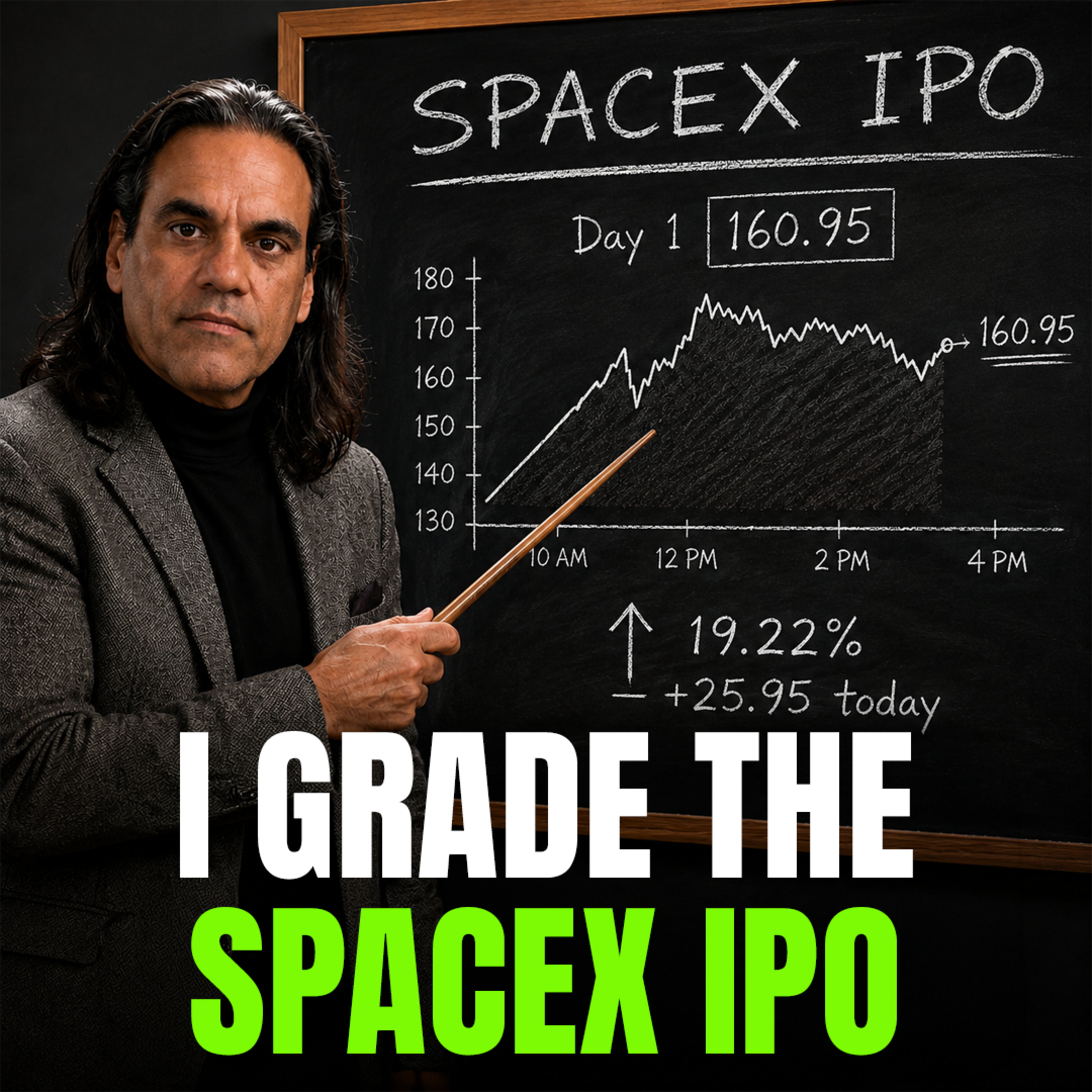 The SpaceX IPO Report Card, OpenAI vs. Anthropic, and the Private Market No One Talks About | CJ Gustafson w/ Guest CJ Gustafson76 / 100
 I Read the 308-Page SpaceX S-1 So You Don’t Have To73 / 100
 Anthropic's $44B Revenue Run Rate, SpaceX's $75B IPO Problem, and the Retail VC Trap | Ep 34