The Acquirers Podcast · 2026-09-03 · 1h 4m
Key moments - from our scoring
Substance score
67 / 100
Five dimensions, 20 points each
At the 10-year mark of running Laughing Water Capital, Sweeney reflects on a fundamental shift in mindset: the removal of pressure to participate in whatever the market rewards. Early in his career, he faced tension between his small-cap value philosophy and the dominance of SAS stocks and growth - a tension that made fundraising difficult when underperforming hot sectors. Now established, he can pursue his core strategy without that institutional pressure. Sweeney's approach targets small- to mid-cap companies (typically north of $1 billion market cap) where he can exploit inefficiencies missed by quantitative screeners that rely on trailing and forward GAAP financials. His investment filters are deceptively simple: identify a genuinely good business, ensure aligned incentives (founder, board, or activist ownership), stress-test resilience through cycles, and understand why the market has mispriced it. He specializes in what he calls "good co, bad company" situations - where one profitable segment masks a loss-making division, creating a simple thesis for value creation through divestiture. Examples range from management transitions that trigger panic selling to pending litigation or regulatory approvals (like his NexNav position) that cloud near-term earnings but offer significant upside if resolved favorably. The conversation highlights how patience and boring discipline - waiting for multiple expansion or earnings normalization - become a genuine edge once you're no longer forced to prove yourself quarterly.
A good business is one you can visualize functioning reasonably similarly in five to ten years - typically stable, defensive businesses (like fire prevention services) where you don't need to predict technological disruption. Quantitatively, it can mean strong returns on equity or capital; philosophically, it means something a kindergartner could understand without marketing hype.
Quant models only ingest trailing and forward GAAP financials, so Sweeney looks for situations where the headline numbers hide true earning power: pending litigation, recent acquisitions, off-balance-sheet assets, R&D spend that temporarily depresses earnings, or regulatory uncertainty. Once resolved, the market reprices based on normalized earnings.
A single company with two segments - one earning $1 per share, another losing $0.50 - trades on the blended $0.50 earnings. If management with skin in the game shuts the losing division, earnings power effectively doubles to $1, and the stock has no choice but to appreciate as long as entry valuation was reasonable.
At 10 years, he eliminated the pressure to prove his strategy or chase whatever the market was rewarding. This allowed him to follow his process without emotional friction, knowing his track record and comfortable sleeping at night with concentrated positions in good businesses led by aligned managers.
NexNav holds wireless spectrum in the 900 MHz band licensed for GPS-equivalent location services; their value thesis depends on FCC approval to use the spectrum for 5G communications, which would multiply its worth. The situation awaits regulatory clarity, requiring patience while opposition claims interference that NexNav's engineering studies refute.
Our reviewer’s read on each dimension, with quotes from the episode.
The episode contains solid, actionable frameworks (good business filter, management skin-in-the-game, cycle resilience, valuation thesis) and concrete examples (NextNav spectrum case, Aptus Biosciences structure, Whole Earth Brands failure), but much of the discussion recycles familiar value investing principles. The USS Scorpion analogy and red team process add novelty, but there's considerable throat-clearing about market cycles, small-cap drought, and general philosophy that doesn't produce new insights for an experienced operator.
Is it a good business? And it's totally possible to make money in the market by owning crappy businesses and hoping they get less crappy. And that's a, a completely valid strategy. Uh, I just know for me in a concentrated portfolio, I sleep better at night knowing that the business is good in quotes.
understanding why something is cheap. And you know, why, why am I so lucky to find this opportunity in the market with the general idea that most of the time the market is efficient and you could find these sort of wrinkles or repeatable, repeatable setups that indicate that something might be cheap.
Sweeney's core ideas - seeking mispricing via gaps between GAAP and normalized earnings, exploiting quant screening blind spots, owning businesses led by aligned managers, testing thesis through red-team criticism - are well-established value approaches. The NextNav deep-dive is specific but not contrarian; the USS Scorpion metaphor borrowed from Jake Taylor's segment is clever but not Sweeney's original thinking. Few genuinely counterintuitive claims; mostly solid execution of known frameworks.
if you have a business and a team that is going to do well over a reasonable period of time, things like tariffs are not going to change it.
the way I Think about it. Mostly we touched on a little bit brief or a little bit earlier with the idea that so much of the market is dominated by quant funds. And what are the things that could kind of trick the quant funds?
Sweeney is a credible, practitioner-grade guest - 10 years running Laughing Water Capital, concentrated portfolio with specific investment thesis, real skin in the game managing his own capital. He speaks candidly about failures (Whole Earth Brands), process discipline (red teams, filters), and macro headwinds. Not a household name but a serious operator with track record and humility. However, limited discussion of AUM scale, LP composition, or institutional challenges limits his caliber relative to mega-fund leaders or successful public market operators.
I'm at the point where I, on a very personal level, like the emotional side of it, which is a big part of the game. I really don't feel any sort of pressure to prove myself or to participate or chase.
I mean, I can't for marketing reasons, you know, I can't talk about returns, but I'm, I'm pleased with the returns we've had over 10 years. I think my LPs are pleased as well.
NextNav discussion provides substantial specificity (lower 900 band spectrum, FCC NPRM process, 915 MHz center tune for RFID, engineering study details) and evidences reasoning with physics and regulatory history. Aptus Biosciences example is concrete (royalty stream separation, litigation, trial outcome pending). However, portfolio examples are sparse - Sweeney declines to detail Whole Earth Brands failure or name other holdings, citing discretion. General frameworks lack dollar figures, time horizons, or quantified return targets. Spectrum value appreciation is claimed but not measured.
Recently I've had a lot of success with, you know, unknown legal outcomes. I hope there's some sort of pending litigation, for example, some sort of regulatory review. But all these things that just don't show up in the numbers but very clearly are going to have an impact on the future earnings power of a business.
NexNav has this spectrum which is being underused at the moment. They have applied for permission from the FCC to use their spectrum for 5G mobile communications. If they get permission from the FCC, the value of that spectrum goes up quite a bit. Um, like multiples I should say.
Hosts ask reasonable follow-ups on NextNav (details on FCC process, timing), the Scorpion analogy (what wreck location implies), and calibration under disagreement. However, questioning is often soft and allows Sweeney to deflect or pontificate - e.g., on Whole Earth Brands he declines to explain ('not one I really want to rehash') and hosts accept without pressing. The Scorpion segment (Jake Taylor) is a monologue, not dialogue. Few moments of productive tension or challenge; Sweeney's pronouncements on small-cap extinction or long cycles go largely unprobed. Hosts seem reverential rather than adversarial.
Can you tell us what happened, Tell us why? It's, um, some combination of getting the people wrong and the world not changing the way I thought it would, I guess. It's not one I really want to, want to rehash, I guess.
Yeah, I mean, it depends. Everyone is unique, right? Especially for me because like I have in the portfolio typically some sort of mix between, you know, what you might label a compounder versus a special situation or something that's more event driven.
Computed from the transcript - who did the talking, and the words that came up most.
Value: After Hours is a podcast about value investing, Fintwit, and all things finance and investment by investors Tobias Carlisle, and Jake Taylor. We are live every Tuesday at 1.30pm E / 10.30am P. ────────────────────── VALUE OPTIONS LETTER Three to five curated ideas every week - cash-secured puts, covered calls, and spreads on businesses we'd want to own at strikes we'd be willing to pay. Every trade includes the business thesis in plain English, the fair-value estimate and its key assumptions, the specific option trade with target premium, and the pre-identified exit criteria. Every idea reviewed and approved by an analyst before it hits your inbox. valueoptionsletter.com/subscribe ────────────────────── See our latest episodes at About Jake Jake's Twitter: Jake's book: The Rebel Allocator ABOUT THE PODCAST Hi, I'm Tobias Carlisle. I launched The Acquirers Podcast to discuss the process of finding undervalued stocks, deep value investing, hedge funds, activism, buyouts, and special situations.We uncover the tactics and strategies for finding good investments, managing risk, dealing with bad luck, and maximizing success.
Transcribed and scored by The B2B Podcast Index.
Speaker A: This episode is brought to you by Google Chrome. You think you know a browser, but Gemini and Chrome, that's new. It can help you with practically anything on the web, like restoring a vintage motorcycle from a 50 page restoration block. Or finally break down that long article you've had open for weeks. Gemini and Chrome is here for it, ready to make anything online make sense. There's no place like Chrome. Check responses set up required compatibility and availability various 18 plus.
Speaker B: I'm not giving up. I am selling the building.
Speaker A: The final season of FX is the Bear.
Speaker B: The restaurant is flooded. Everything's either gonna be okay.
Speaker C: Nope.
Speaker B: Stop. Or not. We are outgunned and we are outmanned. But we have each other. FX's the bear, the final season, all
Speaker A: episodes now streaming on Disney.
Speaker C: And we're live. This is Value After Hours. I'm Tobias Carlile, joined as always by my co host, Jake Taylor. Our special guest today is Matthew Sweeney from Laughing Water capital. Matthew's celebrating 10 years in business this year. Congrats. Matthew, how are you?
Speaker B: Good. Thank you very much for the congrats and happy to be back. I think this is the third time, actually. So celebrating the hatrick here.
Speaker C: Uh, what is the mindset change with 10 years? What's. How you feeling?
Speaker B: Wow, we're jumping right in, huh? Yeah, let's do it. Um, well, it's fun. You know, the last two times I've been on, we've talked more about like, you know, building the business, developing the business, the philosophy, that stuff. And, um, the big change that I have felt on a personal level lately is that there's no pressure for me at this point to kind of build the business. And it's important because over the last couple years or last decade, I guess there were times where in the early days, if you're trying to build a business, you feel the pressure to behave a certain way. Specifically if, for example, the market is going up, but you don't have anything you're super excited about, you feel a pressure to participate. Um, and that had been a challenge for me at times over the years, especially with so much of that period. SAS stocks, for example, were dominating the headlines. And I, I could never really get comfortable. A couple exceptions, but for the most part, I was underweight, uh, massively underweight. What was powering the market for a lot of that time. And it, you know, it comes with some pressure because if you're trying to build a business, but you're not participating in the market's upside, you're swimming upstream.
Speaker D: Right?
Speaker B: It's it's very hard to build a bi, a business with the message of, well, I don't really feel comfortable with what's working for everybody right now. Like, no allocator hears that message and says, great, let's give it to the guy who's uncomfortable with what's working.
Speaker D: Yeah, he has no good ideas. Let's give him some money. Yeah.
Speaker B: Ah, right. So there's a pressure to participate, but now, um, you know, not there's Anything magical about 10 years, but it's kind of that nice round number where I'm at the point where I, on a very personal level, like the emotional side of it, which is a big part of the game. I really don't feel any sort of pressure to prove myself or to participate or chase. Uh, I feel like much deeper clarity of thought around what I own and my process and not, not really worrying about what is going on in the world and what is working for other people and really just being able to focus on what I think works for, for me, for the portfolio, of course, for my LPs. And I'm hopeful that will translate into, into better returns over time. We'll see. Obviously, you know, you can't predict the future by any means, but there is definitely some sort of advantage to being established versus being in kind of startup phase and, you know, trying to prove your strategy and prove your philosophy to the world. I think 10 years with, um, I mean, I can't for marketing reasons, you know, I can't talk about returns, but I'm, I'm pleased with the returns we've had over 10 years. I think my LPs are pleased as well. And um, it, it's better, it's better this way. It's better to know that you did it and not feel like you have to chase to participate or anything like that.
Speaker C: So we know what you're not. Let's talk about what you are. Your small cap value. How would you, uh, characterize your portfolio?
Speaker B: Yeah, well, I mean, small mid cap, um, for the most part I can go anywhere. I mean the documents are agnostic, but in practice I've almost all the success at the smaller end of the market cap. Right now, the average position size or average market cap size rather is somewhere north of a billion. Um, so not super tiny. I've never done anything like, you know, the extreme nano caps, $40 million market cap or anything like that. I've never been down there. I've had plenty of success in the $500 million market cap or, or something like that over Time, specifically over the last couple years I've gravitated to be slightly larger and that's mostly just due to my experiences with, um, the quality of the management teams or there could be great management teams at any size, but broadly speaking, you just going a little bit larger in market cap, I think you get a lot better management teams and you get a lot more focused board of directors and often more engaged shareholders as well. And all of those things can be positive in terms of governance, which can contribute to returns and also importantly contribute to the, uh, idea of sleeping well at night, um, you know, knowing that the people that are minding your company are properly incentivized and on the right side of the page as you or the same side of the page as you. Um, and yes, value strategy, it's very much a bottoms up, fundamental approach. Value can of course mean a lot of different things. I don't tend to think of value as, you know, low PE or low PB or anything like that. It's much more value the way an intelligent business person would think of something which is being mispriced versus what it's actually worth, independent of what the quantitative side might say. And um, you know, I mentioned we had, I had been on before. I know that's something we talked about a lot in the past. I do think that one of the areas of opportunity in the market today and over the last several years, and likely over the next several years as well, is kind of exploiting the gaps in what can be seen very quickly by a quantitative screener by looking at gaap, uh, financials and how an independent business person would view something. Because there are times and when the gaap, uh, financials don't really tell the truth about the true earnings power of a company. And that could be any number of reasons. But a quick example would be maybe a company is spending more in R and D right now, so then their earnings power looks like it's lower than it actually is. But in a couple years from now, one, presumably the spend can roll off and two, presumably they get a return on that spend. So that earnings power a couple years from now will be higher than the market can anticipate at this time. The market being the quantitative screeners that are dominating the. So if you buy, you investigate that business, you understand the incentives of the management team, understand the competitive environment, understanding the deliberate decisions that are being made by management to influence their current earnings power and how they view future earnings power versus current earnings power. And if you find something that lines up, then you're basically just kind of sitting around and waiting. And um, you know, that's, that's one of my specialties, is doing nothing.
Speaker D: Matt, do you think, um, how much more sort of like business inertia do you feel in the call it the $1 to $2 billion market cap range relative to 100 to 500 million. Even so, pretty noticeable.
Speaker B: I'm not sure what you mean by business inertia.
Speaker D: Just like uh, the relationship with customers. How much more predictable is revenue? The margin stability?
Speaker B: Um, yeah, I mean, well, look, every business is unique, but it's harder to be a billion dollar company than a hundred million dollar company. Presumably. Obviously there's part of that is influenced by the multiple that the market will put on the business. But generally speaking, as businesses get bigger, they often get more stable, more predictable. Um, even things like customer concentration, risk or something like that stuff tends to go down. So there is an argument that getting a little bit bigger can make the business just that much more stable. Um, again, it depends on the valuation aspect too. And you could have two businesses that are doing the same thing, but one of them could be wildly more expensive. And that doesn't make it necessarily a more stable company or give them more inertia to use your term. But I do think in general erring on the side of quality is uh, a good idea versus the smaller stuff. There are probably a lot more opportunities where you can find something cheap and then as it gets revalued or valued up, you probably want to exit versus larger businesses. Maybe there's more of an opportunity to own it for longer time and you know, enjoy the compounding internally at the business.
Speaker C: You've described your business as needing to, your, your investment processes needing to clear a few specific filters. Can you walk us through the filters and, and tell us what they do?
Speaker B: Yeah, I mean, I start with a couple main questions and the first one is just, is it a good business? And it's totally possible to make money in the market by owning crappy businesses and hoping they get less crappy. And that's a, a completely valid strategy. Uh, I just know for me in a concentrated portfolio, I sleep better at night knowing that the business is good in quotes. And good can mean a number of different things. It could be on the quantitative side like returns on equity or returns on capital. It could also just be the idea of close your eyes and trying to envision what the future will look like in five or 10 years and think that the business will be reasonably similar. Um, I don't do a Lot of things that are very tech forward and you have to kind of predict how the world is going to evolve around a business. So you know, a lot of, I like, for example, a lot of like service businesses and you know, things like just to pick one out of the portfolio like fire prevention. I, I don't care how the world changes, we're still going to need to prevent fires. And like, there's not a ton of brain power that needs to go into that statement. Fire is bad. I feel very strongly about that. So, you know, stuff like that could be a good business. On just like you know, a sentence that my kindergartner can understand like fire is bad. That makes it a good business. And it's more deep than that. But that's just like the place to start. And then the next question is just understanding who we're partnering with. And I typically look for some combination of either a management team that owns a lot of stock, a board of directors that owns a lot of stock, or maybe it's an activist investor that's recently got involved. But I want someone with skin in the game, someone that's going to be there to, you know, keep an eye on the business at a closer level than I will ever be able to do as an outside minority investor. Um, and again, that's to sleep well at night. Then the next piece is kind of understanding how the business performs through a cycle. And that could be the macro cycle. It could also be an industry specific cycle. But want to recognize that nothing goes smoothly forever. There's going to be a time when the business hits a bump in the road, whether that's their own doing or something external to what they're doing. But you feel better about them being able to survive that period, um, cleanly. So that could be a rock solid balance sheet. It could be recession resistant or recession proof cash flows. It could be a history of being acquisitive during downturns. It could be, um, you know, buying back stock, but just a view on how they're likely to behave when things get difficult. Because those difficult periods are always around the corner. We just don't know how far away that corner is. And then the last one that I spend a lot of time on is understanding why something is cheap. And you know, why, why am I so lucky to find this opportunity in the market with the general idea that most of the time the market is efficient and you could find these sort of wrinkles or repeatable, repeatable setups that indicate that something might be cheap. And the way I Think about it. Mostly we touched on a little bit brief or a little bit earlier with the idea that so much of the market is dominated by quant funds. And what are the things that could kind of trick the quant funds? And at a very, very high level, all the quant funds in the world only have two sets of inputs, right? And one of those is trailing financials and the other one is forward financials. So by going small cap, where there's maybe less, uh, sell side coverage, you can maybe even reduce or remove the impact of those forward financials if there's no forward inputs to feed into the quant model. And then two is just like what is going on that might hide the actual potential of the business through the GAAP financials. And it could be anything like a recent acquisition, it could be an off balance sheet asset, it could be recent divestiture, it could be, um. Actually recently I've had a lot of success with, you know, unknown legal outcomes. I hope there's some sort of pending litigation, for example, some sort of regulatory review. But all these things that just don't show up in the numbers but very clearly are going to have an impact on the future earnings power of a business. And if you could kind of find an opportunity where you have a good business led by good people, that business does well through cycles. But right now there's some sort of temporary problem or it doesn't have to be a problem. It could be an optical issue with the gap financials or something like that, but something to just indicate that what you see on the page and um, in front of you with a quantitative screener does not tell the whole truth. And then the job is figuring out what is the whole truth and how predictable is it. And will that whole truth be surfaced over a reasonable investment timeline? For me, that's typically three to five years. And then what is the market likely to do when it sees the normalized earnings power of the business a couple years out?
Speaker C: Um, see, you've mentioned before that you buy into situations with an operational, optical or structural problem. So how do you differentiate those from fixable problems from permanent ones?
Speaker B: Yeah, well every, every situation is unique, of course. And um, you know, the biggest pile is the too hard pile, right? So you could start looking at something and say, I think I understand what this is. And I just went through a couple examples there whether, you know, whether like an optical problem could be a business that is operating well, but the CEO steps down unexpectedly. Uh, right. There are certain market participants that will see the headline and Just hit the exit button right away and maybe that's the right call. You know, it might be, it might be. The CEO is absolutely the key to the future of this business. And especially with the very small companies that, that could be the case. As, as you get a little bit, you know, bigger companies, that's less of the, less likely to be the issue. But if you see something like that where maybe the company's everything, right, sales are growing, margins look good, etc. Etc. But then the CEO steps down. It's worth investigating. Uh, why did he step down? Is it because he's trying to get out before the, you know, before the wave crashes and sinks the ship? Or is it because, I don't know, his, you know, his, his brother died young and he's feeling nervous about that or something? There's, there's any number of reasons, um, that it's worth looking at. So that's like an optical problem, a structural problem is more like what I think of as my favorite investment archetype, which is really what I call good co, bad company. And you think of one stock, you know, one overarching business that has two segments or two business lines, and one of those businesses maybe earns a dollar a share and the other one maybe loses 50 cents a share. So on a net basis, they earn 50 cents a share. And then the market, in all of its wisdom, puts a multiple on that 50 cents a share earnings. But in the real world, that one business line is doing a dollar a share in earnings and is worth some multiple of the dollar a share. The quants, I'm sure some quants can figure this out, but the average screener just running a dumb screener is not going to pick up on that. So then the analysis becomes what has to happen for that dollar a share to become visible to the market as the true earnings power of the combined entity. And in the best case, you have maybe a CEO or a board of directors or something like that, they own a lot of stock. And you can very, very rationally ask yourself, are these people going to continue to light money on fire forever when it's their own money? And in almost all cases, the answer is no. So if they simply kill off this money losing business within a reasonable amount of time, earnings power as seen by the outside world, effectively doubles. There's exit costs and stuff like that. So it's not as smooth as that. But the reality is that the earnings power of the business doubles in a reasonable period of time. It's very hard for the stock to not go up as long as you're not overpaying going in. Um, the other outcome, of course, is maybe they're, they have this other business that they're losing money on currently, but they believe in the longer term prospects of that business. And if that business succeeds, that's even better. Right. So then you not only erase the 50 cent loser, but you add, you know, just making up numbers. Maybe you add another 25 cents of earnings power. So then you have outside earnings power going from $0.50 a share to 1,25 a share. And you know, it's, it would be extremely unusual if a stock that meets those characteristics did not go up. So the real idea is just finding these things that, you know, the market maybe looks at and focuses on thinking that they're the, you know, the truth, if you will, truth in quotes. But the truth is different than what you see in the headlines or in the numbers.
Speaker D: Do you think that having, um, the manager, having skin in the game helps delineate between the rational maybe closing or divesting that business and the. Well, you know, this is like I'm building my empire or this is like my little pet project that I want to keep going and I don't care how much it costs.
Speaker B: Yeah, I mean, on some level, to be fair, I've gotten some of these wrong. I mean, I have had times where you think, I mean, the exact conversation I have in my head is like, oh, they won't, they won't do this forever. And four years later you're like, geez, there's still worse. Not only they're still doing it, results are, you know, returns from that business are getting worse. And then you figure out that it's, uh, you know, maybe one member of the board of directors or whatever, this is his pet project. And the other members of the board don't want to, don't want to insult him or bother him or whatever, and he's convinced it's going to work and you know, like, it's not foolproof, but sure. I mean, if people own a lot of stock, they tend to look out for their own interests. And I want to be on the same side of the ledger as them.
Speaker C: Um, uh, we had a question when we were, when I put this out over Twitter about NexNav.
Speaker B: Mhm.
Speaker C: Can you talk to us a little bit about what that is and what the situation is?
Speaker B: Yeah, I don't want to get too deep on the single name stuff, But High Level NexNav is a company that owns, um, wireless spectrum in the lower 900 band. And historically they have not really been able to do much with that spectrum because it is licensed by the FCC very specifically for, for location and monitoring services. Effectively we could think about that in layman's terms as for, you know, GPS equivalence. And their main product is a backup to the GPS system, um, in the United States. The GPS system in the United States was developed in the 1960s. It is encrypted, but it is with like 1960s level encryption, which means an eight year old with a smartwatch can hack it at these days. So the US GPS system can effectively be spoofed or tricked in a variety of different ways. We do not have a domestic backup to GPs in the US. China and Russia on the other hand, they have, sorry I should say a terrestrial backup. China and Russia on the other hand, have a terrestrial backup. Um, China and Russia also have satellite killing missiles, as do we. So if we ever got into a hot war with China or Russia, they could blow up the satellites that control GPS for the United States. We could blow up their satellites, but then they could still function because they have terrestrial GPS and we do not. And gps, it's not just about finding the best route to Costco to do your weekly, uh, grocery shopping. It also powers the clocks that coordinate the energy grid and coordinate the financial system and all sorts of smart agriculture these days that relies on gps. So there are huge implications. In any case, Next Nav has this spectrum which is being underused at the moment. They have applied for permission from the FCC to use their spectrum for 5G mobile communications. If they get permission from the FCC, the value of that spectrum goes up quite a bit. Um, like multiples I should say. So the user on Twitter was asking, I forget how he phrased it, but I guess, you know, asking what my current thoughts are. And my current thoughts are more patience required there. We're waiting for permission from the fcc. We don't know exactly what is happening other than the FCC has put forth what's called an NPRM or a notice of proposed rulemaking. They, they have submitted a draft NPRM which means the FCC is on board, but it is now stuck in effectively review under one of the executive branch departments where other branches of the uh, or other parts of the federal government can comment on it and you know, worry if there are objections. And there are indeed objections. Right now this spectrum is used by a couple other groups, one of which is what's called part 15 devices that includes RFID tags, um, among other things it could control like smart utility meters, etc. They claim that there will be interference. Um, Nextnav has done a number of engineering studies to show that there is no interference. The opposition of course, has done their own studies. They say there is interference. My, my read is that, uh, the next NAV studies read better because they respond to any criticism of their studies with detailed analysis of why they did what they did. Whereas the opposition, I mean, Next NAV at one point, for example, replied to opposition study and said like, your whole study relies on the idea of the laws of physics not being applicable. Like you have to bend the laws of physics, if not break them.
Speaker C: You just executive ordered right to get rid of that.
Speaker B: Yeah, I mean like, like literally the criticism of is you're, you're saying that physics is not like really a thing. And I'm not, I'm not an engineer, but I'm, I'm fairly certain that the laws of physics are undefeated. And, but then the opposition of course does not reply to that criticism. They just put out press releases about their, their study. So the real point is, I'm not an engineer, I don't know the answer. I know that Next NAV is very confident in their position and I know what they're calling for is joint testing between the two groups, like joint real world testing. And the only way to get to the real answer here is joint real world testing. And broadly speaking, next NAV has been pounding the Dr. On that for two years and the opposition has been refusing to engage. Which at the very least, I think you should make people suspicious of the opposition. Like, why would, if you're so confident in your position, why would you, why would you not test it? In any case, there is a delay. I have been absolutely wrong on the timing here. I thought all of this might have gone through, you know, I guess at this point, almost a year ago, it has not. Um, it is taking more time than anticipated. And that's fine as long as in the background you're able to kind of come up with assorted, you know, I don't know, I guess scuttlebutt is the right word. You know, reading tea leaves, some of the bigger tea. I'm not going to mention all of them here because some of them are, you know, better, better left, not said, I guess, but some very obvious ones, like the fact that this entire process to develop a backup to GPS was put in motion by President Trump at the end of his first term when he had an executive order basically saying we need a backup to gps. And um, you know, that's a national defense issue, so he wants it to happen. You could read the other people that are involved. Ted Cruz is one of the people that will be overseeing the committee that helps us move forward. He has been pretty vocal about the need for a backup to gps. You could look at some of the people that are involved with financing the company and their experience in this arena. And then there's also an army of lobbyists and consultants and lawyers and everything else that basically roams the hallways of the FCC in Washington trying to keep their finger on the pulse of how these things are developed, developing. And the scuttleback is all positive. Other than taking longer than expected and, you know, the wheels of government grind slow, I guess there's no news on that front. It's certainly frustrating. But the good news is that in the background during this whole delayed process, the value of the spectrum itself has continued to go up. And basically, when this whole journey started a number of years ago, the idea of satellite direct to device communication was not really in vogue. But just over the last year or so, that's become the hottest top in the spectrum world, with everyone from Elon Musk to Amazon to others, you know, trying to figure out how they can work through satellites direct to device. Now, uh, the beauty of the spectrum in question here is that it is low band. And from a very high level, low band spectrum can penetrate through walls and through tree cover in a way that mid band or high band spectrum cannot. If you're, you know, if you're basically broadcasting from space, that's important, right? And part of the background as well is that for years the FCC has made it clear they want to stand up a fourth carrier. Elon is now trying to, I mean, he hasn't publicly said that, but he's very heavily hinting that could be Starlink. Um, but to do that, to have a fourth carrier, you need low band spectrum because people want to be able to get cell phone service inside. So there's a number of reasons why the spectrum value keeps going up. So, yes, frustrating delay. The reality, though, is that if this had all happened very, very, the spectrum probably would have been sold at a price or monetized at a price, I should say. That would have been disappointing in terms of where we are today, because the value of the spectrum keeps going up. So, you know, I don't really have an update other than more patience required.
Speaker D: Um, isn't there some initial, uh, coin offering that you could buy to grease the skids of.
Speaker B: Well, I mean, look, that's kind of one of the jokes amongst people that know is like, how come Eric Trump can't come out and file as one of the large shareholders here? Like, wouldn't, wouldn't that be nice? But, you know, I don't, I don't want to, I don't want to get into the political side of it all, other than to say that I think both sides of the aisle, with one exception being the congressman who represents Walmart's district, he has been, uh, an objector, but other than him, everyone else in Congress, I think, is on board with the idea that this is a national defense issue. And then there's things you could do that just, you know, in the realm of common sense for. So for example, in the United States right Now, for part 15 devices, they have is it, I guess it's 26 megahertz of spectrum allocated to part 15, which includes RFID, and China has, I think six and the EU has 5 megahertz or, you know, that's directionally correct. Why do we need five times more spectrum allocated to this than those other major economies? And part of the FCC's mandate is to maximize the use of spectrum. It's kind of, you know, it's kind of a highest and best use. I mean, that's not the exact phrasing, but it's essentially highest and best use. So why do we need this much spectrum for RFID when the rest of the world does fine without that much? And then, I mean, I could get more technical. It's probably not worth the time here, but just understanding the way RFID works. RFID readers are center tuned to 915 MHz and then they scan from 902 to 928 continuously. Like in a second they will scan that band like a thousand times or whatever it is. Maybe it's 2000 depending on the technology. And if they bump into some interference on the way, they just go to the next little slice of spectrum. So if there is, you know, a 5G phone call taking place on one little slice of spectrum, it just, it just keeps going. But the center tune is 9:15. That's where the signal is strongest. That's where most of the hits occur. And 9:15 is not part of the spectrum that next nav is even interested in. So that stuff is all common sense. The government piece is admittedly not common sense. Um, but if you think of the big picture dynamics of the US needing a backup to GPS there, and I should be clear, there are other alternative ways to get that. But this is the cheapest fastest, and best way to get there. And it also makes best use of the spectrum. Um, and just another small common piece. Slice is one of the other users of the spectrum are the toll roads. So, like Easy Pass or Sun Pass, something like that. But also in the news these days is the idea of these flock cameras that are out recording everyone's license plates. It's not clear to me why Easy Pass needs to use spectrum to, you know, have a little tag in your card, rather than just at this day and age, using a video camera and AI to read the license plates. Like, you know, Easy Pass first came on the scene, I think it was 1988, if I remember correctly. And at the time, there was no AI. You know, there weren't even real computers. So obviously the world has come a long way. It's not clear why they still need to rely on wireless spectrum when there are better technologies out there that don't use this very scarce and very valuable resource because they're not making any more spectrum. Despite the opposition's need or want to ignore the laws of physics, the laws of physics still apply. They're not making more spectrum. So why would we as a country use it for something where we don't need to? It's just. It's kind of common sense. The politics are harder than the common sense. Um, more patience required.
Speaker C: Yeah, the, uh, the tweet was, please squeeze his brain on.
Speaker B: I think we did a good job.
Speaker C: We did it.
Speaker D: Yeah.
Speaker B: I mean, it's. Look, it's hard. It's, um, you know, if you're. If you're only looking on Twitter for your information, it's hard because there's a lot of people around, um, space stocks and everything else that are, you know, very quick to, to say things that they maybe heard somewhere else but haven't confirmed or have not talked. Insiders. There's a lot of information not just around NextNAB, but around other stocks as well. But, um, there's also a ton of experts in this space that are very accessible. A ton of these lobbyists and lawyers and stuff and, you know, work the phones a little bit and find out from the experts. The view is a lot better than the negative view you get from, from Twitter.
Speaker C: Let me do a quick shout out and then we'll do some, um, veggies. Breckenridge, what's up? Gothenburg, Sweden. In the house as always. Toronto, Boise. Petitikva, Israel. Jupiter, Florida. Good on you, Sam. You've already won. Tallahassee, Albany, New York. Bremerton, Bendigo, Victoria, Good on you, Hamish. Early stuff for you. London, uk. Luzon, Switzerland. Snohomish. What's up? Paris, France. Welcome. Uh, Batty boy. Very good. You got me. Wales. Is that real? Vistry? Zagreb, Croatia, Glasgow. Welcome. Toronto, Temecula, Glasgow. Did I say that? Philly? I think we've just about covered it here. Turku, Finland, Bellevue, wa. What's up? We, uh, appreciate you being here with us. Jt, hit us with the veggies.
Speaker D: He'll read anything on the prompter. So just. All right. So, you know, I know Matt has, uh, some interesting ideas around searching for stock ideas, uh, and it's kind of some of the topics that we've covered previously with him. So I thought I have this segment that I've, uh, been saving for a little bit. And let's open the scene in Plymouth, England, 1906. And a livestock show is also putting on a contest. And, uh, people are guessing, uh, the dressed weight of an ox. And it costs 6 pence to submit a ticket with your guess on it. And this guy, Francis Galton, collects all 787 tickets. And shockingly, the middle guess, when he lines them all up, misses the true weight by just nine pounds out of 1200, which is less than 1% off. So the crowd beat nearly everyone in it, and he publishes his findings as vox populi, which is the voice of the people. And a century later, we now call that the wisdom of the crowds. And every, you know, there's always these contests about how many jelly beans are in that jar. Uh, and it's a replay of the OX contest. And of course, as investors, we're all living inside this very similar experiment, which is the market. Is the Ox contest just run continuously? And it publishes the crowd's best guess. Every second of the market is open. And we call that the price. If you're an active investor, the average opinion is the thing that you're trying to beat. And edge is really whatever this average machine can't do. And that's a lot of things that Matt is trying to do. Which, uh, brings us more to the real veggie segment, which is about a submarine. And it's May 1968. And the USS Scorpion is a, is a nuclear attack sub and its crew of 99 men and two nuclear torpedoes are crossing the Atlantic heading for home. And on May 21, she radios in about 50 miles south of the Azores. And then nothing, nor distress calls. Nothing on the surface. A, uh, 3,000 ton boat gone in water two miles deep. Uh, there were listening stations that had caught A series of sharp bangs around that time. And there was enough triangulation to be done that they could draw a rough box of a map, more than 12 miles on each side where the scorpion was likely to be. And inside that box, of course, there's rival stories of what happened. Uh, and they're proliferating. You know, was it a battery explosion? Was there just a sudden flooding? Maybe a torpedo had gone hot in the tube, Uh, a run in with a Russian sub. Like, who knows? Like, there's nothing to go off of except for these, these pings from the. The, uh, listening stations. And each story gives the boat a different final run, like, uh, a different resting place. This is an ocean we're talking about, after all. And so the search area is just dauntingly massive. This fellow named John Craven was a chief scientist of Navy's special projects office is now tasked with finding this sunken sub. Now, he didn't just take all the experts and lock them in a room until they agreed. No, he didn't defer to the most, you know, senior submariner that was present and say, like, what's the right answer? He made them all bet. And actually it was bottles of Shiva's Regal, uh, and they wagered on specifics about the accident, like, how fast was she falling, at what angle, what was the torpedo story? Right, like, there's all these different permutations. And then a computer ran the weighted stories thousands of times, and every square inside of this giant box of a map got a number. And the map never really said where the scorpion was. It was just that it was more likely to have landed here and maybe less likely there. And the map is really a search plan, not. Not an actual prediction. So, you know, the odds that she's in this particular square times the odds that you'd actually spot her if she was, against the cost of a pass to determine if that was right or wrong. And don't forget that an empty pass actually still has useful information in it. If you find nothing in that particular square, its probability then drains somewhat and spreads out across the map to the other squares. Uh, but it's not zero because there's always a chance that you might have missed it when you were searching. So the map at the end of a failed day is actually slightly smarter than the map that you had with that morning when you started. So for five months, they're dragging a camera sled two miles down on the bottom near the bottom of the ocean, and it sort of looked like they're mowing the lawn in stripes. Uh, and this camera can only see a stripe 100ft wide. So it's like incredibly small when you think about the ocean and they're mowing this 12 mile box. Uh, you know, to do the whole thing, it would require more than 600 passes. But on just the 75th run in October 1968, so it's only like five or six months later, uh, the camera caught a shattered hole 400, uh, miles southwest of the Azores. So actually pretty far away from where they thought the scorpion ended up being only 260 yards from their highest probability square, which for context, like that's less than three football fields in a search area that's like bigger than Detroit. That's astounding to me. Uh, I don't know if it is for you guys as well, but yeah, absolutely. Uh, so what can we learn from this? You know, we're all looking for sunken treasure in our investments. We're uncovering those rare finds in a sea of duds. You know, how can you make your search process look more like the hunt for the USS Scorpion? So let's start with the process that you likely have if you're a professional investor. That's the, the Monday meeting. Uh, you know, the most senior person typically tells us some good story. Everyone likes it. Uh, you know, it wins. Let's go get the due diligence process going, right? And uh, it becomes this to do list of things to go confirm what everyone already sort of hopes is already true. Uh, or at least what everyone knows that the boss wants to be true, right? So it's time to start torturing that data to get, get it to confess to what you want. The scorpion version instead really asks like three questions. One, what are the rival stories and what are their odds? So it's never a single thesis. It's theses, plural, like each with a probability and an outcome and ideally written down before anyone on the team talks together too much. So if you have, you know, five analysts working, you should probably have five blinded sets of scenarios and numbers because don't forget that the independent assessment is a super important part of the wisdom of the crowds. So think about how you can structurally protect those minority opinions. Question two, if the story is true, then where's the wreck? So, you know, every scorpion story put her somewhere specific on the ocean floor, depending upon, you know, if they blew up this way, it would have planed this far away, that kind of thing. Every investment thesis has something similar. You know, is there channel stuffing? Well, the wreck is probably in the receivables uh, maybe demand is fading. Okay, maybe you need to do you need to parse cohort, uh, data? Uh, is the CEO properly aligned? All right, let's go to look in the proxy for clues. There's a logic to where the ship ends up that you can use. And don't just take off researching the company. Like, search for the actual resting place and also focus on the cheapest kill criteria first. This is part of, uh, why you look in a particular area. Start with simple arithmetic. If the price implies that the company needs, say, 40% market share in a super crowded marketplace to make any money, well, that thesis might be dead before lunch and you can go look for another ship. Or if a quick scan of the balance sheet tells you the company's lever to the gills, it'll be out of money before your milk expires. Uh, maybe best to just move on. And then, of course, you get into the more detailed documents. Usually second, which, reading deeper into the financials, the footnotes, the proxy statements, these take time, but they aren't all that hard to track down and get through. Uh, and I should say that Buffett actually has three quick disqualifying criteria that he's looking, and he's looking to kill it as fast as he can. And number one, too much tail risk. Forget about it. Number two, low margin business. Forget about it. Number three, doesn't like the CEO. Forget about it. Uh, now, so people research then is actually the hardest of these things. And Matt, you could probably attest to this, like, getting a fix for, for the people, uh, you know, customer calls, suppliers meeting, management expert networks. They're all, like, pretty expensive search areas, so you probably want to, like, wait to do those last, uh. And then finally question, uh, three, which is what did the empty pass prove? Remember, like, every time you went past something and it wasn't there, like, there's some information there for you. So when the square that we love keeps coming up empty, we figure we just need to look a little bit harder, right? Especially if that's what the boss wants. So one more expert call, we'll maybe find the right answer. One more quarter, we'll see the results that we want to see. One more pass over water that you know you've already searched. Like, don't fight reality if it's telling you that the sub is not sunk in there. Like, stop trying to torture it. Now, of course, there's. There's kind of two issues with this torture analogy that I'll address up front. One, the scorpion was sitting at the bottom of the ocean, it wasn't moving. Uh, so that's a lot easier than your companies are moving. So you kind of have to stay a little bit more dynamic. And then two, you know, Craven's bets sat on top of very hard evidence. Like it was those hydrophone bangs that were, that made the search area manageable. Markets instead often produce constant opinions. Often. Matt was just saying about Twitter being a, uh, cacophony of problems. Uh, but there's often nothing underneath that. And as William Bernstein said in one of my favorite quotes, investors incapable of doing the math on the way up do not m. Miraculously acquire the ability to recognize bargains on the way down. Uh, and so just to, to wrap this all up, we never found out definitive proof of what did happen with the Scorpion. Um, but just like the crowd guessing at the dressed ox, a clever usage of organized disagreement, put a camera within a few football fields of her hole in an entire ocean, which is absolutely insane. So see what you could do to bake in more of the USS Scorpion lessons into your own search process.
Speaker C: Can I, can I ask a dumb question? If it was like two football fields away from where they thought it was going to be the highest probability place that it was going to be in a search zone the size of Detroit, why did it take five months to get to that point?
Speaker D: Um, I don't know. I think it's because they were trying like to go back to that cost thing. Like you're, you're sort of mowing through the highest probabilities as much as you can. You don't just go to one spot. Um, so if you imagine, you know, this big 12 mile box and maybe there's like a patch over here that's high probability and a patch down over here that's high probability. You kind of have to decide like, which ones you want to hit first and if maybe there's a cluster of them that are together, you would try to mow through that first.
Speaker C: What does it imply happened that it ended up where it was? Like, what were the collected stories pointing towards?
Speaker D: Uh, I did a, I tried to track this down and like there were. There was no official findings because there was too much conflicting evidence. Um, so it wasn't like there was no neat thing that would say, like, oh, the. Definitely. The Russian sub one was like the one that was most eliminated. Um, but, but it was probably a battery issue too. The fact that it wasn't like they, they found parts of it that were the whole, the uh, the tube, the torpedo tubes, I think were still in, uh, in decent shape. Which suggested then that it wasn't like a torpedo that blew up inside. Um, so it was probably like a battery fire problem, but they can't really say for sure.
Speaker C: Yeah, good one.
Speaker B: Probably so happy to recover the nukes and so happy that it wasn't the Russians and we weren't, uh, you know, about to blow everything.
Speaker C: Don't ask. Yeah, that's everything we need to know.
Speaker B: Just move on.
Speaker D: Right, exactly.
Speaker B: So let me ask you this. Is this, I mean, is this sort of like a pitch for the efficient market hypothesis though? Right. Because the market is kind of the assumptions of everybody together saying that's closest to value, fair value, I guess. And I'm not a believer in the efficient market hypothesis all the time, but a lot of times I think it's reasonable. It's just the job is finding the times when it doesn't apply.
Speaker D: No, I think that's right. I think knowing what you're up against is really something. Uh, and it's an incredible adverse. It's incredibly good at doing that for the most part. Um, where it breaks down though, is when you lose that independent assessment angle and the errors are no longer canceling out on either side of the prediction. And then you get some runaway dynamics of everyone gets excited about something or overly pessimistic and it's just going to. Human psychology then sways and the independent assessment gets, gets broken down and you get madness of crowds instead.
Speaker B: Yeah, I think, uh, also, you know, that's kind of a vote for people like me that don't have an investment committee where there's the most senior person is trying to. Hinting at what your conclusion should be before you start. Uh, so.
Speaker D: Well, you're doing it to yourself though, perhaps. Yeah, you're not.
Speaker B: Absolutely. I mean, that's fair. And I, I mean, I have things in place to try and try and combat that. I just, I like the idea of a, uh, committee of one, though. Or you know, in Buffett's case, a committee of two versus this institutional decision making platform that has all sorts of problems that come with it.
Speaker D: Yeah, it is like, what do you do then to engender the outside view without tainting your, your own assessment?
Speaker B: Yeah, So I know what I do. Um, basically a group of managers got together, I don't know, it's seven or eight years ago now, um, something that Scott Miller of Greenhaven Road put together where we did kind of a workshop with Annie Duke and talk, uh, about decision making. And for those that don't know Annie Duke, I know you guys know, but she's the world's winningest professional female poker player. Uh, she was a PhD in psychology, and she dropped out of the program to pursue her poker career, but has since become, I guess, an expert in decision making. So we did a workshop with Annie Duke, and it was, I don't know, 10 or 12 managers, sponsored by Scott Miller. And we kind of came together and talked about the problem we all run into as solo practitioners is that. That, um, I'm trying to. I'm trying to phrase it politely for the audience here, but basically, you can wind up believing your. Your own bull, if you will. Uh, and that's one of the most dangerous things, right, is you're. You're very. It's very easy to trick yourself, so you need a mechanism to avoid that. Now, the problem, if you're at a, you know, whether it's a platform with an institutional decision making framework, or whether it's, you know, a solo practitioner with an analyst or whatever it might be, there are certain pressures that apply to the person who is supposed to be there to challenge you. So, you know, for example, with me, one of the things I think about, if I had an analyst, on some level, the analyst would think that his bonus is going to be tied to his ability to get names in the book. And I always think of my job as, like, I don't want anything in the book. Like, I want it to be. I want the bar to be very high, so I want to say no. And your job is to make me say yes. That's one conflict. But then the other conflict is maybe you want to say yes to anything just because you want to please me. If I like something, maybe you want to like it to please me. So there's, you know, a number of conflicts there, and there are ways to get around them. But going back to this workshop, what we did was basically acknowledge that if someone. If you share your work with someone, they tell you that it's bad or that they disagree, there is a social cost to that. So people are unlikely to impose that social cost on themselves. And they might be hesitant to disagree with you or challenge you. But if as a group up front, you acknowledge that social cost and then say, we're just not going to charge it to each other, um, you know, that. That sort of eliminates the risk to some extent. So for me, in part of my process, typically when I'm, I don't know, 80 or 85% done with my work on a name, I will go to Someone that I've sort of have this arrangement with, I call it the Red team, as do other people in this group and say, hey, uh, this is, this is where I am, this is why I like it. But I don't know what I'm missing and I don't know where I need to focus more time and what blind spots I have. Can you look at it? And I don't want you to come back and tell me how smart I am and how much money I'm going to make. I want you to come back. Even if you love it, come back and just tell me what you don't like and criticize me as much as you can to help me be aware of my own blind spots and be aware of how I might be fooling myself. And uh, that I have found that that works very well because you have someone who, you know, for me using the, the idea of like why I prefer this rather than an in house analyst, a lot of times is members of the group, um, they have of skin in their own game. So they don't, but they don't have any skin in my game so they don't really care, you know, whether it works, whether the idea works or does not work. Although they may choose to invest on it in their own later. But they get away from that problem that an in house analyst might have of where he's trying to get things in the book. And then often in analysts there are of course exceptions, but most typically an analyst that would work at a fund like Laughing Water Capital is someone who is, I don't know, 25, 27 years old, whatever it might be. I'm sure they go to a top school and you know, banking at Goldman Sachs or whatever it might be, but very limited real world experience actually running a portfolio, um, especially on the, you know, the, the non quantitative side, the emotional side of like, what is it like, what does it feel like to hold concentrated positions when the market is telling you every day you're wrong, that sort of thing, like that's that skill set, that experience set is very hard to come by unless you're actually running a portfolio yourself. Whereas the guys that I would work with in these situations, like they've been doing it, they've been fighting those battles themselves for you know, 10, 15, 20 years or whatever. So they understand the pressure that comes with that in a way that an analyst by themselves maybe would not. So it's kind of, you know, build, building this structure to prevent me from fooling myself because you know, everybody, everybody tends to fall in love with their own ideas. It's just part of the human condition and that could be dangerous.
Speaker C: Matt, uh, just changing direction slightly. We've got a question. Last, uh, time you were on, you pitched Whole Earth brands. Can you tell us a little bit about the situation there?
Speaker B: Uh, I'm out of the name and I don't have anything to add at this time.
Speaker C: Can you tell us what happened, Tell us why?
Speaker B: It's, um, some combination of getting the people wrong and the world not changing the way I thought it would, I guess. It's not one I really want to, want to rehash, I guess. But, you know, it was something that on the surface it seemed very easy to say, like the people are going to be the right people and the business is going to be the right business. And then it, uh, you know, it didn't go the way I thought I would, I guess. Sorry, I know that's not, that's not a great answer. Sorry. It's, uh, you know, try to avoid talking about some of those ones.
Speaker C: Um, your Q3 2025 letter talked about, uh, the drawdown last year was a tariff sort of, uh, when the market fell over in sort of April.
Speaker D: Tariff tantrum.
Speaker C: The tariff tantrum, yeah. Uh, you talked a little bit about how you stay calibrated when the market disagrees with you for an extended period of time. How do you do that?
Speaker D: Toby's asking for a friend always.
Speaker B: Well, I mean, look, a lot of it is redoing the work, right? But, um, you know, when things are going, going wrong, I redo the work to whatever extent you can. But a lot of it is just like a high level fundamental belief that if you have a business and a team that is going to do well over a reasonable period of time, things like tariffs are not going to change it. So, you know, I mean, two ways to kind of illustrate the example. One, going back to what I said earlier about the good co, bad co setup, uh, um, you know, the stock could trade down because of tariffs, but if they kill off that money losing business, tariffs aren't going to matter. You know, like maybe you don't get the same multiple expansion you would have otherwise, but if the earnings power doubles, you know, like earnings power doubles and you think it should be worth 16 times X, but because of tariffs it's only worth 14 times. You know, like you're, you're going to be fine. And um, then the other one I, I often think of is just like, you know, high level. And there's an argument I'M cherry picking here, but go back and look at Walmart in the 1970s and everything. They dealt with inflation and oil prices and you know, all sorts of economic hardship. And there were periods in that, you know, through the 1970s, well, where Walmart was flat. You know, the stock didn't perform well, it was down at times. But at the end of the day they just had a much better mousetrap. And if you have a better mousetrap, everything else is going to fade into the background on any sort of reasonable timeline. So there are people out there that make careers, um, you know, trying to bet on these sort of things. My goal when I go into an investment is to try and just reduce it down to the one or two variables that are going to matter and that you can have a reasonable path to understanding who is going to control those variables. So, you know, best case it's a CEO who has leveraged the poll that can normalize earnings power, uh, and then understand their incentives. And it's a lot easier to do that I think, than to try to guess what the next headline out of the White House is going to be or how tariffs are going to impact things. And there are definitely exceptions, there are definitely ways you can make money around the fringe of those sort of more macro policy decisions. It's just not what I do. I think there's easier ways to make money than to try and be right on things that you really can't control.
Speaker D: When you think about the betting on the horse versus betting on the jockey, does you find that you get attracted more to being the predictability of jockeys these days than kind of feeling like, you know, where a business is going to be five years from now, but you know that the person running it's probably still going to be smart.
Speaker B: Yeah, I mean, it depends. Everyone is unique, right? Especially for me because like I have in the portfolio typically some sort of mix between, you know, what you might label a compounder versus a special situation or something that's more event driven. And in the special situations and uh, you know, the event driven stuff, it's, it's typically more the people and the event path that are going to matter for a revaluation. Whereas the compounders, it's typically more the business, but not always. Right. I mean you could look at businesses that were not really all that remarkable, but they had great capital allocation from a very skilled management team that, that did very well. The stocks did very well over time due to the people involved. So they're. Each one is unique, I think you have to be open to the full spectrum of, of um, you know, event paths and the people and the business. But I do think it's important to know which one you're betting on so you know when you're wrong.
Speaker C: Right.
Speaker B: If you, if you think you're going to be right because of the way a person's going to behave and then that person is not doing what you want them to, but the stock is still going up, like maybe it's time to reevaluate or exit, maybe not. But you have to kind of, I think, be honest with yourself upfront about what the thesis is and what the process was to get to that thesis and then not, not believe that it's right or wrong based on stock performance. You have to believe that it's right or wrong based on, you know, the real world, tangible things that we could see, you know, execution, et cetera.
Speaker C: Do you have explicit sleeves for those different kind of strategies that special situations or compounders or do you just idiosyncratically allocate to them as they come up?
Speaker B: It's primarily idiosyncratic. There are times where I try to spend more of my finite research time on one type of investment. For example right now with um, I would say elevated global macro uncertainty, oil prices, interest rates, midterm election coming up, et cetera. It's a time where I've over the last, last you know, six to 12 months coming into this and obviously not all of these things preceded that period. But um, you know, kind of thought it would be a good time to spend more time think on things that were shorter term in nature, shorter duration, maybe less time on compounders and more time on things where the, maybe the certainty of return is higher rather than the duration of the return. Um, so like, but that's not, I'm not, I'm not in my head saying okay, I'm going to have 60% of the portfolio. In special situations it's more just, you know, where do I spend my research time and typically try to you know, shape that allocation of time based on how I'm feeling about things and based on broader valuations as well.
Speaker C: What sort of special situations? What sort of stuff do you like?
Speaker B: Um, I mean all sorts of buckets. Not, not so much the, like the classic Greenblatt special situations. Like I still look at spin offs and things like that. Um, more recently I've been looking at things more like uh, like legal outcomes that are short term in nature, um, or relatively short term in nature. Although getting, getting the timing Right. Can be very difficult as all the liquidity of shareholders out there can attest to. It's a hot topic on Twitter the last couple days and when there's going to be a ruling that everyone's been waiting more than a year for. Um, but just really, it's really the idea of just things that don't show up in the screener. Right. So um, you know, or, or major changes to a business. So like there's for example um, an Aptus biosciences is a stock I own where they, you know, basically recently they separated their development assets from a royalty stream. So a lot of people own the stock for development assets. Those development assets are no longer there. Um, you know the people that owned the, owned it for the development assets. Presumably they sell. Then you have a royalty stream and then there's litigation around the royalty stream. So there's, there's a lot going on beneath the surface that if you just ran a screen you would see a history of burning cash on science projects and that's clearly not for everybody, nor is it for me. But then when you note what has changed in the very recent paths, um, you know it, it changes everything in terms of the fundamental analysis. It makes anyone who starts with a, uh, you know, like let's look at 10 years of cash flows. Like that is not relevant here. The business is entirely different today than it was a year ago and it is entirely, well not entirely. It is. There are real upside cases tied to an event that is pending and that should be concluded by the end of this year independent of Iran and oil prices and interest rates. Um, the trial is complete. My read on the trial is very favorable and we'll see what happens. But for now we're just kind of waiting to see. In a bad scenario though, there's still future cash flows tied to it royalty stream. You can value those cash flows however you choose and come up with some downside protection. And in a, ah, good trial outcome, um, you know there's, there's in theory there's multi bagger potential depending on how, how good the trial outcome could be.
Speaker C: Development assets are like the blue sky optionality and the trail is more like
Speaker B: phase one research or you know, whatever. We're trying to figure out a drug that, that sort of thing which um, again there's plenty of people that make money doing that sort of thing. It's just I'm not a science guy and I, I don't think I have any great ability to predict how that sort of stuff will, will work.
Speaker D: Out.
Speaker B: But if you pair that with a royalty stream tied to a drug that is, you know, a blockbuster drug, um, you know, look like the, the future sales of that drug can vary in, in many different ways, of course. But you could also kind of look at how successful their existing indications are, how successful the lawn their launch has been, who they're partnering with, what other future indications they have on tap. And some people will spend an enormous amount of time trying to figure out quarter by quarter, when does each indication launch and what is the total addressable market. I'm happy to just kind of say broad numbers back of the envelope if I'm even close to. Right. There's a good amount of upside here and as we get closer then we'll, we'll get more specific, more granular if we need to.
Speaker C: This is another little non sequitur. But do you notice the market trading sort of favorably for small and micro or small and mid caps versus the larger caps? Because I've noticed that there are some days the big names, uh, are all green. The AI names are all green. Sucks the oxygen out of the room for everything else and vice versa.
Speaker B: Yeah, Yes, I do notice it. I don't know really the right way to think about it. I don't spend too much time thinking about it. Part of it feels to me like for a long time the trade that quote unquote, everybody had on was short, small and long sass or whatever it might be. And maybe now the trade or has been for some period with time like short SaaS and long AI. And maybe it's just like the funding currency on the short side has changed. Um, or maybe it's that these things tend to move in 7 to 12 year cycles where smalls win and then bigs win and then smalls win and then bigs win. And it's been happening that way for a long time. And small has been out of favor. I mean, you know, Toby, it feels like it's been.
Speaker D: How long has it been?
Speaker B: Forever.
Speaker C: Well, I posted that, I uh, posted the factor chart the other day. I thought that was interesting. It's like 11 years for value and for small.
Speaker B: Yeah. Which, you know, it's um, I mean, that's basically the entirety of how I, how long I've been running my strategy. It feels like the, you know, kind of like the fundamental principles that are underneath the strategy have been out of favor. So I'm, I'm certainly hopeful that small value has its day. And um, you know, I would love the tailwind. I also think though, that by, rather than focusing on indexes, focusing on, you know, unique idiosyncratic businesses and situations, it's kind of gonna work if you're doing the work properly and you're able to keep your head about you and a fair amount of luck never hurt anybody, however you want to think about it. But like, those things can make the strategy work. Regardless of how the, you know, the factor world is operating between large and small. Um, you know, there's, there are some things that I have certainly been structural behind the large. Just like, you know, the prevalence of low cost ETFs, which are typically centered around the S P 500, which is market cap weighted. So the more money goes in, the more the market cap goes up, so the more attractive, the bigger stocks get it. You know, like, I don't know if that ever reverses. In theory. Nothing lasts.
Speaker C: I think that's sort of broken down already a little bit. I look at the, uh, I look at market cap versus equal weight and the 100 versus the 500, and I think that's been broken down for like six to 12 months maybe.
Speaker B: Yeah, I think it's been breaking down. But like, I don't envision a world on a, you know, like on a allocation basis where everyone decides, hey, forget about the S&P 500. You're going to love this thing called the Russell 2000.
Speaker C: I don't think we found the Russell 2000.
Speaker B: Yeah. And one of the things I often get asked like, are we in a bubble? How do you think about that? And like one, I don't know. And two, I don't really think about it. But one of the things I do think about is if you go back to the late 90s, early 2000s tech bubble bursting, then of course small value had a huge period of outperformance. And that's great. And I hope that if the, you know what, if there is an AI bubble, if it bursts, I hope we get the same thing because I will do very well in that situation. Hypothetically. Uh, nothing is guaranteed, of course, but the world is so much different because back then you had however many funds and mutual funds, hedge funds, et cetera, that were basically set up to do stock picking with small cap companies. And there's just been an extinction event amongst managers in small value over the last, I don't know, 10 or 15 years, however long it's been. Like, there's just not as many people doing what I do. So if the world says, okay, the AI bubble is bursting, um, sell. I don't Know where, you know, sell the S&P 500 or sell whatever it might be. Like I don't know where that money gets allocated to because again, I don't think it's the small cap indexes, which are flawed for a number of reasons. And then there's just not really as many managers to allocate to. So, you know, maybe it's the sort of thing where a ton of new managers pop up, et cetera, but like, maybe people decide to sit in cash for a bit instead and you don't get that true rotation away from big to small. You get people sitting on the sidelines
Speaker D: and who's left to do the work.
Speaker B: Yeah, and, and you know, I don't think it's the sort of thing where you can repopulate that ecosystem overnight. You know, I think that it would take time and maybe that's why these cycles tend to last 7 to 12 years or whatever it is, because it takes time to get going. But you know, going back to the, the 2000s, it was, it wasn't an immediate rotation, but it was, it was pretty darn close to an immediate rotation to the, you know, small cap value stock picking type strategies. And I just don't know that that can repeat today. Um, so what, what does that mean? Maybe people sell, you know, they sell their large caps, they sell their S&P 500, but then what do they do? Uh, you know, like, I guess, would they put it in bitcoin? I don't know. That doesn't seem right. That doesn't seem very conservative at a time when there's panic in the market. I don't think you put it there. So maybe you want to put it in small cap. But how do you do that? And again, I don't think the answer is ETFs. It's a harder problem to solve for. So maybe then people collectively sit in cash for a while. Uh, uh, I don't know. I don't have strong opinions. I just don't think it'll be as easy as it sounds to say, oh, last time there was a rotation, it was great for small value. Well, that was, that was last time. It doesn't mean it's this time. I certainly hope it's this time.
Speaker C: But on that note, we're coming up on time if folks want to get in contact with you or get in or follow along with what you're doing. What's the best way of doing that?
Speaker B: Uh, laughingwatercapital.com as the website, um, my Twitter handle is, I think laughing H2O cap. Um, and that's about it. The only thing I would like to add, uh, I feel like I have to acknowledge quickly. I've recently gotten a number of inbounds from students or other people earlier in their journey asking to speak with me and get advice on what they should be doing. And historically, I've been very good at getting back to everybody. And over the last three to six months, I've been absolutely terrible. So if I. If you've reached out to me and I have not responded, I apologize. Uh, you know, feel free to stay on top of me. I will get to it eventually. But, like, like everything else I gets, that sort of stuff gets subordinated to the portfolio. And I've just been exceptionally busy lately. So apologies to everyone and. And happy to help anyone on their journey that I can jt.
Speaker C: Any final words?
Speaker D: No. Good to see Matt. Glad to have him on. Always good catching up.
Speaker B: Yeah. Pleasure, guys. Thanks for having me again.
Speaker C: Matt Sweeney, Laughing Water Capital. Thanks, uh, very much. We'll see everybody next week. Sember.
 What 250 Years of Market Data Actually Tells Us | Meb Faber87 / 100
 Oil Isn't Dead - John Love on Why Energy Markets Are Defying the Headlines74 / 100
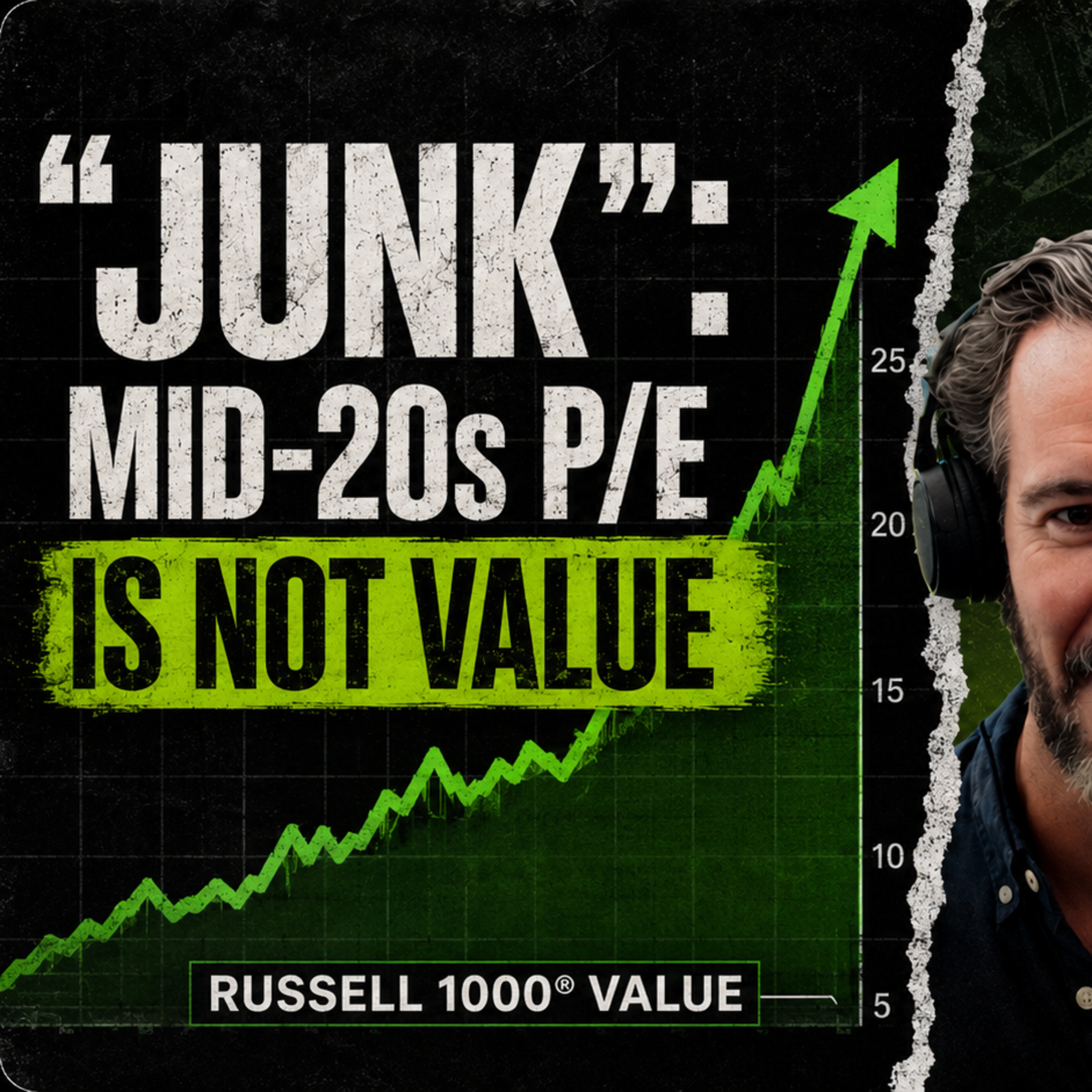 The Stock Market Is Rewarding the Wrong Companies Right Now - Here's the Math82 / 100
 The Fund That's Beaten the Market for 45 Years by Focusing on What Could Go Wrong84 / 100
 Value Investing with Options: Selling Puts to Buy Wonderful Businesses at Better Prices | S08 E1882 / 100