
SuperConnector Show · 2026-04-20 · 1h 13m
Key moments - from our scoring
Substance score
46 / 100
Five dimensions, 20 points each
Anthony Hutton brings a unique personal narrative to addressing male mental health. His journey from Big Brother winner to barber to keynote speaker informs his multifaceted approach through the Never Throw In The Towel Project, which uses three core channels: monthly free outdoor meetups, keynote presentations paired with pop-up barber services in workplaces, and a podcast launching a community platform. The host and Anthony both explore identity crises - how losing a defining role (celebrity status, business ownership, marriage) creates psychological vulnerability - and discuss the importance of seeking help, mentorship (David Wilkinson is cited as a men-focused coach), and normalizing mental health conversations. The barber chair and walking-alongside format deliberately lower confrontation barriers, creating safer spaces for men to open up about suicidal ideation and emotional struggles. Companies are now requesting his services after viral LinkedIn posts, signaling workplace demand for male mental health interventions delivered in non-clinical, culturally comfortable settings.
It's a grassroots male mental health initiative founded by Anthony Hutton using three channels: monthly free outdoor meetups focused on nature-based activities, keynote speeches combined with pop-up barber shop services in workplaces, and a podcast with a launching community platform. The barber chair and outdoor settings are deliberately used because men open up more when not face-to-face.
From his experience as a barber, Anthony knows men open up in the barber chair due to the shoulder-to-shoulder positioning and lack of confrontational face-to-face dynamic. Similarly, walking alongside someone in nature reduces confrontation compared to desk-based conversations, making vulnerable disclosures more likely.
After winning Big Brother in 2005 and experiencing a crash when fame dried up, Anthony worked as a hairdresser, then opened Mr. Hutton's Barbers and Bar for 10 years. During that decade in the barber chair, he had countless informal therapy conversations with struggling men, giving him lived experience that drove his mission.
Anthony's grandmother exemplified resilience and never giving up; after delivering her eulogy using the phrase 'never threw in the towel,' a man approached him in tears saying he was suicidal but the story had saved him. That moment lit a fire and directly inspired the project's name and mission.
David Wilkinson is a coach specializing exclusively in men, helping them become better fathers, partners, brothers, and sons while addressing mental and physical health. The host used his coaching during his own divorce and separation to navigate identity and self-care, illustrating the model Anthony advocates for.
Our reviewer’s read on each dimension, with quotes from the episode.
The episode contains some genuine insights about identity crisis, male mental health, and the value of nature-based interventions, but much of the conversation drifts into generic self-help territory (morning routines, journaling, vision boards, stoicism quotes). The most concrete insight - that men open up more in side-by-side environments like barber chairs and forest walks rather than face-to-face scenarios - is valuable but arrives late and isn't deeply explored. Too much filler about personal anecdotes and book recommendations.
the thought of having to get a normal job, that that terrified me. And there was ego, there was pride. There was paranoia all around what what what I thought people would think of me.
I know people open up in the barber chair, and I know hearing a story really triggers and has a ripple effect where people want to share their story.
The core concept - using barber chairs and nature walks for male mental health conversations - is somewhat original in execution, but the episode heavily relies on recycled self-help frameworks: stoicism (Marcus Aurelius, The Daily Stoic), manifestation (The Secret, vision boards), morning routines, journaling, and identity recovery narratives. These are well-trodden paths in the entrepreneurship/personal development podcast space. The guest adds personal flavor but doesn't challenge or reframe existing orthodoxy.
your happiness depends on the quality of your thoughts
thought to become things
Anthony Hutton is a practitioner with lived experience - Big Brother winner, barber, entrepreneur, keynote speaker, and founder of a grassroots mental health initiative - which gives him credibility in certain domains. However, his track record on the core mission (male mental health/suicide prevention) is recent and appears nascent: the Never Thrown the Towel Project seems to be in early stages with monthly meetups, corporate speaking gigs, and a forthcoming platform. He's not a clinical researcher, epidemiologist, psychologist, or long-standing operator in mental health infrastructure. Good operator in some domains, still proving the model in his primary focus.
founder and CEO of the Never Throwing the Towel Project, which is a grassroots initiative focused on tackling male suicide
I've got the monthly free meet ups, I've got the keynote speaking with the pop up barbershop, I've got my podcast, and then I'm about to launch a community
The episode lacks hard data, statistics, or measurable outcomes. Anecdotal evidence appears: one factory event with three men opening up about suicide attempts, a couple of coaching examples (teenage boy, husband), personal timelines (Big Brother 2005, barber shop 10 years, divorce 6 years ago). No numbers on reach, impact metrics, dropout rates, or comparative effectiveness of the interventions. References to brain research on walks are gestural, not substantiated. Most claims rest on storytelling rather than evidence.
there was three blocks that day in the barber chair. After the talk, they opened up about actually attempting to take the wrong life.
I've done I've done my Grandma's eulogy and used the words she never threw in the towel.
The host asks reasonable opening questions and creates space for the guest to share his story, but rarely pushes back, challenges, or probes deeper. When Anthony makes claims (e.g., about brain changes from 20-minute walks, the efficacy of his interventions), the host nods along rather than asking for evidence or specifics. The conversation meanders through personal stories, book recommendations, and philosophy without sharp follow-ups. The host does reference the guest's earlier demo day talk positively, showing preparation, but the interview lacks the intellectual friction that would generate novel insight.
Yeah amazing, No, no, no, it's great. I love I love hearing people's not origin story, but definitely the origin of the never Throwing the Towel project.
Yeah, no, you do. It's it's it's so true though, You've just got to keep on.
Computed from the transcript - who did the talking, and the words that came up most.
Mental ill health costs the UK economy £300 billion annually, highlighting a massive, critical need for corporate & public sector wellbeing services. After winning Big Brother 2005, Anthony Hutton has gone on to become Founder & CEO of the Never Throw In The Towel Project - a grassroots initiative focused on tackling male suicide & encouraging open conversations around men’s mental health via the barber's chair & in workplace or outdoor environments! Find out more in this interview with Paul Lancaster that was originally broadcast live on Monday 20th April 2026 & Follow Anthony on LinkedIn at ⭐️ In addition to being Host of the SuperConnector Show podcast, Paul Lancaster is Founder, Event Producer and Host of the popular, monthly PLATFORM events and 5-day UK Startup and Scaleup Week festivals. He is also Coach and Mentor for busy entrepreneurs, business owners and leaders who want to focus and be more productive. Find out more at &
Transcribed and scored by The B2B Podcast Index.
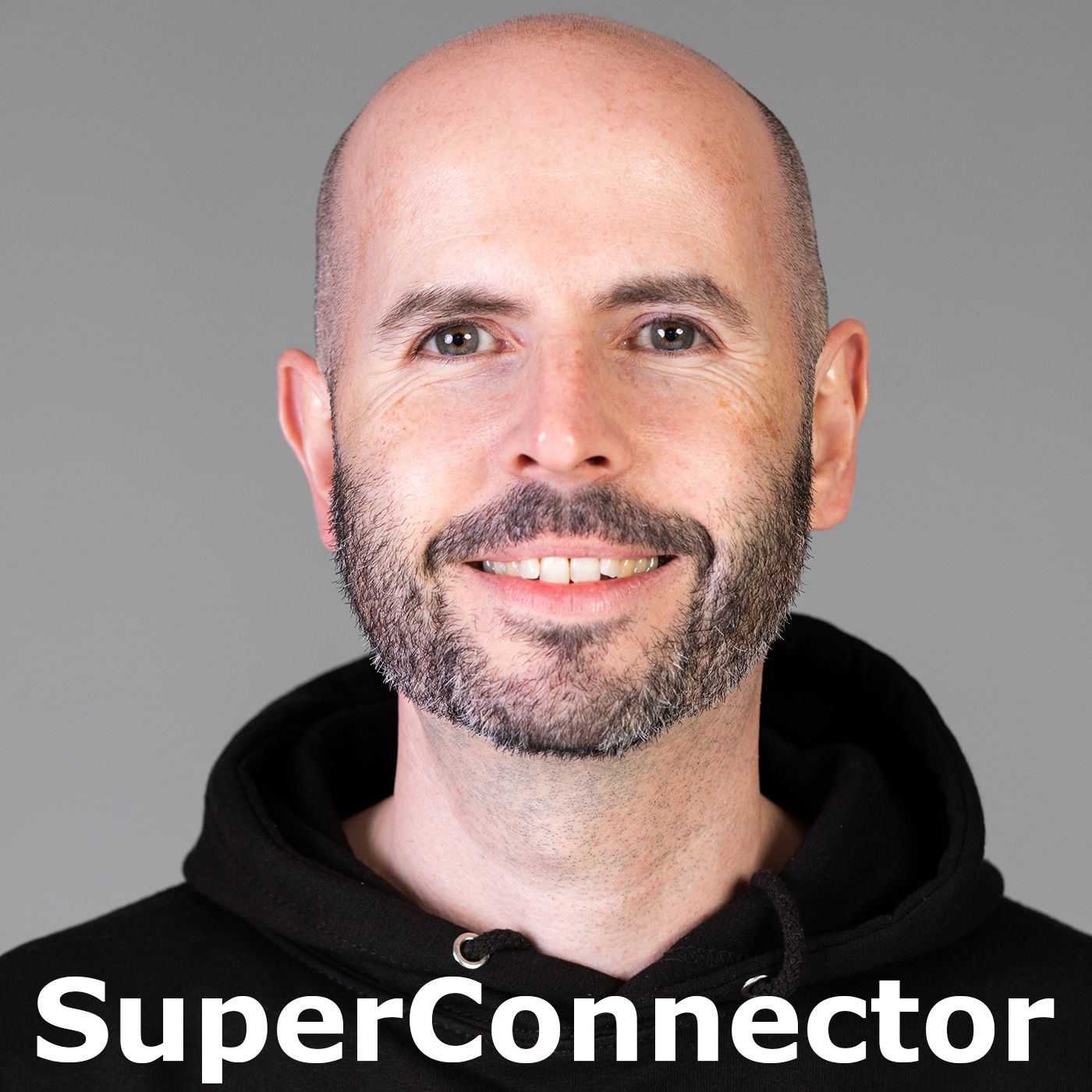
Well, hello and welcome to the super Connector Show, where I'm delighted to be joined by Anthony Hutton, who is the founder and CEO of the Never Throwing the Towel Project, which is a grassroots initiative focused on tackling male suicide encouraging open conversations around men's mental health via the barber's chair and in workplace and outdoor environments. Thank you, Anthony, thanks for joining me. How are you doing. I'm very good.
Thank you. Happy Monday. First time I've done I've done a lot of podcasts, but I've actually never done LinkedIn live, so yeah, this is the first time for doing it. And yeah, like I said, great, I think we'd met in flock you were speaking, and then I've followed your you know, kind of kept an eye on your career doing some really good stuff.
So it's cool to connect again. Yeah, no, thank you. I appreciate you doing this. Yeah, because time with sort of each other.
You were you were on stage given a talk at the Tees Valley Labs demo day, and I mean I knew you were good anyway, but I was really impressed with your presentation and the way you came across and I just so I need to ask Anthony to do something because I think what you're doing is really really important and I'd love to help you get the message out a bit more. And through this channel. Obviously we talked before when live this is going to go out on LinkedIn, Facebook, YouTube, it's going to be on every podcast platform, it's going to be a blog.
It's the more people that know about it, yeah, the better. Really, So do you want to go back in time a little bit? I didn't. I didn't mention, but like some people might know or might not know that you you found fame on TV The Big Brother way back in two.
Thousand and five. So do you want to say a bit about that that experience? Yeah? Yeah, absolutely, Like we, like we said off camera just before, I kind of mentioning about the Big Brother experience And sometimes I get asked, you know, is it okay to mention it for me?
For me, absolutely, because it's a it was a huge it's a huge chapter in my life. It's it's something that I've done, but it's not who I am, and I and I think and I think, like you know, I do public speaking for a living now and at first glance, I touch on my experience from winning Big Brother, and you know that that at first glance is a really niche story, but actually it's at its core it's very relatable because when I touch on my struggles, it's very relatable because I touch on about identity and for a long time, my identity was really really attached to that.
But you know, going back to two thousand and five, it was, honestly, what an incredible one acredible ride it was. It was a fantastic experience with some unbelievable roller course to highs and laws and yeah, great experience and still open store. It's still opens stores for me now in business. Well, yeah, it's going to grab youple because you didn't just appear on it.
You actually want it, you know, Which is which is mega that you actually with a winner of something like that, Which is whether people saw it or. Not, that they they've heard of the program. I would say pretty much everyone in the UK has heard of that program. Obviously millions and millions of fans as well who tune and watched it every season as well, So there'll be those people.
But it was twenty years ago, twenty twenty one years ago. So you say you're not I'm not who who I was twenty years ago. I can't even remember I was doing twenty years ago. But it still influences who you are and how you got to where you are now.
So but it so what, okay, So let's go back in time. So you've won that, You've come out a big brother, loads of presumably loads of media coverage, loads of attention. Everyone wants a piece of year. So what what happened next after that?
Although there was a lot of fun there was there was a lot of fun that happened. So it was it was such a like it was such a crazy taste of fame that I experienced because I always used the same term. It was such an extreme taste of fame. And I think, especially back then doing the reality TV stuff, you were I was just a run in the mill.
You're you know, young lad as I was in the early twenties. I lived with my grandparents and my mother and then was in the house. And back then it was such a long stint. I was in the house for just under three months, like cooked up in a house, and it was like what you've seen, what you is, what you got?
Like that we didn't speak to no producers. There was no little bit of time out. I was cooked in there for you know, seventy eight days and then came out one pounds for winning the show. And then the very next day signed with an agency and got two hundred thousand pounds for an Oka photo shoot and you know, got wisp off to a mansion, a London mansion and done the interview there so and then started doing a load of other like celebrity type stuff.
So it was a it was a huge wallop of a fame and a high and went on went on to do some you know a load of a load of amazing stuff that I never would have normally done if it wasn't forgetting on Big Brother. But you know, with with the huge eye, there definitely came I would say, a huge law. And I'll get back to the word identity because when everything had dried up m hm, when when it was like the realization of having to get a normal job, because my identity was so tied to you know, have one big brother.
You know, I am known as Anthony from Big Brother. So the thought of having to get a normal job, that that terrified me. And there was there was ego, there was pride. There was paranoia all around what what what I thought people would think of me.
But that was mainly a lot of stuff just in my own head. But I think a lot of people, you know, you get if we if we look at say people ex military, the soldiers when they come out when they come into the civy civy world, or a failed business. I remember I had I experienced it again where I had a business for ten years and it was called mister Hutton's Barbers and Bar. It was a barber shop through the day and then it was a cocktail bar in the evening.
And you know, I was mister Hutton. I was there all the time. And when when I when it was kind of like time to pull pull the plug on the business, it was I was. I was like, this is this is who I am, this is what I'm known for.
And but one of the messages I always say, you know that you're you're Your most important titles are you, you, You're son, You're a sister, You're you're a friend. And I do whether that's answered your question, I I can talk a lot. By the way, that's spot on. I often think this about sports people like athletes when when the career is over, what did they do next?
Footballers? Yeah, obviously the players whatever. There's good examples like Gary Neville, Michael Lohan, who's they've gone on to be successful because like entrepreneurs, business owners. But there's people like Gaza who's like I love Gaza, but he's a disaster, like I was off.
Yeah, it's the football. He shouldn't have been set for life, but he just hasn't had the good people around him. Didn't so difficult to be like considered the world's greatest footballer to being a normal guy. You just same with additions as well, I think as well, you know, like someone who's maybe had a hit record to ten, fifteen, twenty thirty longer ago, how do you then become what do you do next after that?
Yeah? But you know what you like? You know you can you can. You know you can pivot in business and you can pivot in life.
You can, you can, you can absolutely do other things. And I think in terms of from a from a mindset perspective, like you know, again from from my own personal experience when I started going down this this route of being a keynote speaker. You know, sometimes I'm getting introduced after a professor or sometimes I've been speaking at a law firm and may who wasn't educated at school, I deludedly thought I was going to be a footballer and didn't have a plan B. So you kind of you get you know, the word imposter syndrome gets mentioned a lot and stuff.
But how I like that from it? Again, this has took from experience. I I kind of use in the imposter syndrome is a good thing because I think if you're feeling that imposter syndrome, it simply just means you are feeling uncomfortable and you are maybe in different territory. You've you know, you're on it, You're on a different level of the computer game now.
And what what that means is growth. And yeah, I think you know you can you can always pivot, and you can always do and reinvent yourself. And this is something that that I've done with you know, getting into the never Thrown the Tail project. Yeah, yeah, we'll go obviously into that in a in a moment, but I just want to say a little bit more about that.
Yeah, people talk about imposter syndrome, but you say, if you if you're worried it's because your care and if you're nervous about all and it is I love that analogy of like up in a computer game. It is a growth opportunity. It will be uncomfortable if you're testing yourself and trying something new, but you will come out better at the other at the other end of it, I just wanted to say, like, obviously I wasn't on Big Brother, and I wasn't like mega famous or anything like that, but at at a lower level something similar.
So I had my own business for ten years to celebrate ten years in business. But then when COVID came along, Like a lot of people, my business was primarily in events business, so most of my income came from running events, which obviously couldn't do anymore. So I moved moved it online, which. Was still good, started doing more want one coach than mentoring paid for which which was good, a bit of consultancy and whatever, but my income did fall off a cliff, right, so, and I went through a divorce.
I went through a separation, you know, and again identity, I'm a family man, I'm a husband, I've got a kid, you know, I'm an entrepreneur. And it's like, well, all of this is just falling apart. Yeah, right. But after a couple of years of like sort of bundled along, I suppose doing COVID, I went back into employment for two years.
So that was difficult for me as well. Yes, mister Entreeur missed a startup that I'm going to take a job. Yeah, but I just had to get over my own ego and pride or whatever it was. It was just like, look, the best thing to do for me and my family and everyone is to take a job.
Yeah. But it took a while to find a job that I was comfortable doing though. But like the job I went into was recruitment. Again, not something I'd ever thought about doing, but they came to me and said, we need someone with your knowledge and skills and expertise and network.
And it was a way for me. To continue doing what I was doing in a different way. Like I was all about helping people start and grow businesses, and I could still help people grow their business. But just focused on recruitment.
Yeah. But it was difficult though, like to set my own who I am and my aims and dreams and what I put one side so I can get a bit of stability, and but I did that for two years, dead on two years, and and I didn't think I would do it forever, but I did it too. But in the back of my mind, I was always going to go back to what I was doing before. But anyway, I just want to say that that it was it's.
Great nor it's great that, it's great that you've it's great that you've shared that that in the and the thing is, but that that that's my point about, like I reckon, most people will be able to relate to the identity situation. And it's no no one's less or it's all the same, whatever's whatever going around your world, it's you know that that's what it is and to come through to come through those And but also I think, and I bet you, I bet you say this, I bet you wouldn't change that that time, that that challenging time, because I think one to kind of thrust yourself off and say do what you've got to do is huge, is huge strength.
And then and the lessons that you learn from that you you go again. And like that was like me, I had to My first job was getting I had to get back into the hair salom and I had to. Actually I was a hairdresser, hairdresser by trade, but because I hadn't done it for so long, my skill set was was way low. So I was a lot of the time sweeping flaws and learning and you know, done that for done that for two years and then and then open beyond business.
But I needed, you know, I needed that time to reset and I needed to like dust myself off and get that job. And you know, I would I change that challenge and time in my life, Absolutely not, because it's shaped me. And I'm guessing you might say the same thing. Yeah, definitely.
I mean, yeah, I thought I was good at what I was doing. Ba I think I'm better now what I do because of that experience. And yeah, quite quite humbling and going through it obviously, but I tell you I gave it. I gave a talk at the end of twenty nineteen.
I got invited to give a talk, and it was before lockdown happened, but I was going through the separation, and I gave a talk about how I felt a bit like Luke Skywalk and Return of the Jedi. He's come back and he's all beaten up and he's got he's a bit scarred and he's a bit dark, but he's like he's. Stronger for it. And yeah, I feel I feel i'd rather Yeah, that was always my favorite Star Wars film, not through.
Yeah, yeah, and I mean, I mean mate, I obviously work in the field of mental mental health and the like the amount of times I come across men struggle and going through challenges where when a when a divorce happens, that that you know, it's it must be some of that that that I've never been through, but especially when you're a family a family man and stuff, and that that change up must be incredibly incredibly difficult. But like you said, you kind of you, I always boil things down for me when when when something when you go through a real, real challenging situation, whatever it is, it always boils down to two options sink or swim, And it's always going to be better for you and everyone else if you right forward and swim.
Yeah. Yeah, I think what what I'm really proud of is that like me and my ex wife are still friends, like we we we stayed friendly throughout and still I still like it, like we're still like it it was me it was great then it wasn't so great. Then it was a bit ship. Then then we split up and that was we're friends again.
Yeah, you kids. Yes, so we've got two kids together, and from the very beginning we both agreed the kids are the priorities, so whatever we do, we'll do whatever kind of make sure that they're happy and it doesn't affects them as little as possible. So so I moved out. So like.
I guess what I did instigating we both agreed that we didn't want to be married anymore. Right, So yeah, I moved. Out, which that was the hardest thing, actually telling the kids that I was going to move out and that we were But then I moved out, and then every week again the kids stayed with me. During the week they were with the mom, and then every weekend Friday night till Sunday, they were with me without fail for several years.
It's now six years since this happened. So yeah, for three. Years we were doing that and then more recently it's been every other weekend. But I see them every Wednesday night and we're just but and we do fifty fifty during holidays and everything's split equally, and it's anyway, I'll tell you I'll tell you what was really good.
I'll give him a shout out. Actually, there's a guy called David Wilkinson. I didn't have even heard of him, but he's a he's a coach who specializes in working with men, only works with men, and I really enjoyed and benefit from working with him because his coaching was all about how to be the best father, brother, partner, the best man you can be. Yeah, but in a positive way, not like not like a we'll go into probably about the manisphere and all that sort stuff, but like how how to be a good man.
Yeah. Yeah, I really. Enjoyed the coaching sessions I did on a one one with him and and in the group session because it was focused on being a good more model or a good let's say partner for their brother son, but how to be how to look after yourself mentally, physically and in a business context. So yeah, it's so important all of that though.
I mean that, I mean what you've mentioned there are all the most important things in life for for for me, but yeah, it's so it's so it's so important, and I think when you're going through that, you know, if you're going through such a challenging time. I think that's when you you know, a good bit of help is just you know, the value, and that is just unbelievable because that's when you you just need, you need, you needed, you need a bit of help. And and also looking you know, looking after yourself.
I always use the analogy around you know, on the airplane they tell you to put put your mask on first, because ultimately, if you look after yourself, then you're going to be that You're going to be the better dad, You're going to be the better partner, the better work, etcetera, etcetera. It runs, it runs full circle. Yeah, totally spot on. So tell it.
Tell us a bit more about the throwing the towel project and how that got started. Oh man, it's it's you know, you probably heard me briefly touch on it when I done my done me pitch. But like this this might sound a bit cheesy, but like I probably am a little bit cheesy. I don't have and and I don't and I don't care.
But like for me, this project has it has such a huge feeling of per and it also has like where you know, I don't know whether you've ever experienced this, but like I feel when I'm doing when I'm when I've embarked in this, it was like I have a feeling of like, Wow, I was meant to do this. I always seen something years ago that stuck with me and it said, you know, try and do something where you find your gift. And I certainly think my my gift as a person really lent itself into everything that I'm doing with the project in regards to working and speaking with men and stuff and it and it feels it kind of feels like it has a sense of like I was meant to do it because it's it's it's kind of come from chapters in my life.
The first one was the Big Brother experience where I had huge eyes, but then I had a huge law but come out the other end. So I had had that lived experience. And when I got back into the hate the hate industry, and then I was a barber talking to men for a living in the chair, that's when I was like basically had lots of unofficial therapy sessions with men who was men, men who who were struggling. Like, honestly, the stories I've got from the chair from the chair, or I could I could write a book just on stories from the chair.
But I all but but I had such a want to help someone who was who was struggling, because I really feel as if I could, because I had that lived experience. So I always like I was wanting to do something in that field, but but never really never really done anything. And then you had the final chapter was the passion of my Grandma, and I've done I've done my Grandma's eulogy and used the words she never threw in the towel. She done everything she possibly could to keep on living and never thrown the towel.
Keep on living is the name and the strap line of my project. And then straight after the funeral, there was a bloke waiting for me outside the church. Floods are tears, and he thanked me for the eulogy. But then on the same night he got back in touch sharing with me that he was suicidal.
He was saying professional help, but right at the end of the message he said, I just need to let you know I'm cleaning out of the words never thrown the towel, and that that done something to me, that just it just lit a fire. And then it highlighted the power of a story and so I thought, I have to continue telling the story. And it kind of feels like it's just all it just kind of clicked in the place. And when I got when i'd done me first talk and got asked what the name of your kenose I was on the phone, the first thing that came to my head was the talks called never Thrown the Towel, and I'll be honest, and this is such a this is against something that I've learned from experience.
Like I was absolutely petrified to tell that story, like because I was. I was It was the first time I'd ever opened up publicly about my own issues and problems and challenges that I've had and I'd kept them cards really close to my chest. But like afterwards, I couldn't believe the impact when I shared the story. And that's what that's what I've learned.
Sometimes the story that you are more scared about talent actually can have the biggest impact. And then just it once I've done that, I couldn't believe the impact of it because I started getting so many messages about this and then no November November approached, so that's when I decided to do they never Throwing the towel project, and that consisted of two things. One was I got, I've done a free meet up in nature, free to attend until the day, all around the things that I love to do around the outdoors.
So I do them monthly free meetups. And then I then I thought, what if I combined telling the story with a pop up barber shop where I do I'll do haircuts straight after the talk. And I was like, I think that might be a good idea because I was like, I know people open I know people open up in the barber chair, and I know hearing a story really triggers and has a ripple effect where people want to share their story. So I was like, I think that might work.
So I pitched the idea to to to a client who had a factory full of like ninety blocks done that, and again that added like it was not it wasn't a very warm welcome when I attended. It was kind of like there was a lot of like rough blocks. Yeah yeah, yeah, like just you know mental health chat on a on a on a Monday morning, rough tough crowd. But then then afterwards, like I was getting handshakes coming up to me, and then and then there was three blocks that day in the barber chair.
After the talk, they opened up about actually attempting to take the wrong life. And. That was like that was a bit of an eye opener. And then it's just kind of then I went on you know, LinkedIn and kind of basically just done a couple of posts about what what what I've done, got a testimonial, and then it it kind of snowboard there where I start getting companies asking me how much how much I charge for the service, and it was like oh wow, and it's snow snowboard from there.
So I've got the monthly free meet ups, I've got the keynote speaking with the pop up barbershop, I've got my podcast, and then I'm about to launch a community, a community platform. So there's lots going on with the project. Yeah amazing, No, no, no, it's great. I love I love hearing people's not origin story, but definitely the origin of the never Throwing the Towel project.
And I think I also love it when things just make sense, do you know what I mean? When when people describe something like well, of course you're going to do that, Like all your experience up till now has like fed into this and it's like the perfect embodiment of everything that you've done and never that you're doing into into one new neat project. So yeah, it's very very powerful what you're doing. And there's something about being outside as well in nature as or like people can open up, and especially the walking and talking.
I think people often open up a bit more when they're walking alongside someone rather than face to face and uh huh, and Bob's chair, you're like shoulder the shoulder, You're you're behind them. You're not like. Opposite each other on a desk, which can confrontational for some people. It's always the it's always the advice that I that I give from from experience, Like a lot often i'll get, you know, mothers coming up to us or different people coming up to me saying, especially with the with the kids and the team, you know, the moody teenagers or whatnot.
They'll say me so so often they'll say me, you know me my son or my daughter, like I know, the struggling with the mental health. There's kind of been snippets of it, and they'll say, if you've got any any advice to get them to talk, And to that I always say, go on a walk, go on a one two hour walk, and something that I incorporate with my with my kind of one one coaching so often. I'm like, the last two examples that I'll give you is what there was. One a teenager a teenage boy.
The mother reached out to me. Thankfully, she like she knew what I was about because she works in HR and she booked me as a speaker. And she said, we've tried, We've tried a counselor, we've tried doctors and everything, and he just is insane anything. We're not really getting out anything from him, and he's not really liking it.
It was like, you've got if do you do anything? And mine was my thing was like, yeah, I have in my monthly. My one one involves we meet in Armstea forest in this stunning beautiful spot. There's no Wi Fi, so you can't go on your phone.
And for the first and is I get them. We we just go on a walk and I've had great results from that. And then the second, the second one was a husband. Again she said they've explored every of every other avenue and we met in Hampsteay Forest and we've done the full thing on a on a walking and talking in in a beautiful scenic root called black lind Hale at Hamstea Forest.
It's where we do we call dips. But I think I think you know, and it's not one shoe fits all, but I do think in particularly men and that like sat across in a room scenario might be a little daunting. And that's what like what you've said, that side by side walking and talken and I really think nature lends itself to that as well. Yeah, no, it's it's it's relaxing, isn't it.
Like I love come for blonde walks, long hikes in the in the country side. Yeah, particularly forests. There's something about being in amongst the trees very. Well, there's the energy from the trees.
The the is there's energy from the trees. But yeah, I mean I've you know, I've You could say, well, I don't think i've People use that, you know, the word hippie and stuff, but I've I just think I've with with with life experience, I've became a bit more in touch with like kind of being a bit more like spiritual and and and iron operate breath work into my lifestyle. And stuff like that, and I think these are tools that that that that really can be useful. Mhm.
Yeah, Well a lot of these things have been around for many, many years and there for good reason, you know. And yeah, I think we've forgotten a lot of these things that do help people. And it's well documented that you say there's energy all around that I think life is energy. So if you can get energy from from any kind of source, particularly nature, and then oxygen, you know, the.
Oxygen's there's a lot of oxygen coming off the. Trees and the plants, so you're you're gonna your brain's going to be feeling more energized and your body is. And just the movement as well. Sometimes if you're if you're stressed out or you've got too much on your mind, just moving and going in a different environment, changing environment can massive difference to your mood.
Well, I've got us. I've got us. I use the term movement as metal, and I've got when I'm when I'm doing my talks, I've got There's a slide with two pictures of the brain, and one of the brain is multi colored, and it's what the brain looks like simply just after a twenty minute walk like you literally you literally your brain chemicals literally change. Yeah, I love it.
Well, well, I mean I do. I do like walks. But I used to go out for like four or five six hour walks sometimes on a on a Sunday afternoon, not all the time, at least sponsorble I would do it. But I haven't been doing that for a long time.
But I got it. She's asleep now, I've got to I've got a puppy got it's ten months old now, but a beautiful dog. Got a in September October last year. So I'm out usually three times, three times a day, sometimes just half an hour sometimes but it's so good, Like I'm so happy with having a dog.
Like I've got. I've got a retrieve across with German shepherds, and that's well, that's one of the great things about a dog in terms of psych like for you, they I think that the the like you certainly do more walking, don't you. Do more walk? But she's so happy, like she's just just be being out, so happy when you walk through the door as well, who.
Do you who's at your home? Now? Then? Who do you?
Who do you live with? Do you just live yourself. So no, no, So I've got a new partner. We've being together every three years now.
So my partner Katie, We've got four kids between us. So we've got four We've got a dog and a cat. So it's a busy, busy, busy house. But that but I live with Katie and her two daughters and then my son and daughter.
They stay with us every other weekend, but I stay. I see them every I didn't stay. Not great, No, it's just what I was going to say. I wasn't sure, just just in terms of like if you're someone I think, if you're someone who lives by yourself, I think having an animal, I think having an animal companion is is brilliant, especially with the you know, with the with the dog.
I mean I talk about you know, setting your setting your morning, setting your morning routine can really I think, can set momentum in your day. And I love my my morning walks with me dog because it's just kind of like sets me up for the day. I get a walk. I actually do tie into a lot of video content as well.
I'm started doing that as well, like. A short little video when I'm out. Well, I just feel for me. It's just like I think, even though you do it a lot and putting a camera in front of you and then start and talk to it, it can.
It can. It can feel weird. But I think for me, I just I just literally pulled me phone up on me walk and I just start filming and I'm kind of walking and I just, I don't know, just feels a lot more natural. It's good.
Good you see your time as well as Yeah, yeah, yeah, absolutely, So tell me a bit more. Do you have a morning routine? Yeah, I try. I try to have a morning routine.
Yeah. So a lot of it is I'll firstly try and get water down me straight away. And this is I think this is a good little tip actually, because I think most people what's the first thing to do is like the coffee I need. I need the morning coffee.
But the coffee, the coffee d idt you more So the best the best use to to the best to get the best use out of the coffee, it's to fill yourself with water first. And this is something that I teach that that I teach my son. He's only four, and I say, like I just I say, listen, you've got to fill your brain up first with water, so I'll do that. I'll have a big glass of water, and then I'll try and get me dog on a walk.
Obviously that there's there's there's endless amounts of curveballs with the Moe routine because I've got three kids under five. But if I, if I can, that's what I'll try and do for me. For me morning routine, get myself, you know, get myself outside, get myself moving on a walk, and you know that's Yeah, that's what I try to tend to do is big glass of water, walk the dog, come in, have a coffee and then and then maradas. Yeah do you I mean everyone's everyone's got it.
I think everyone's got a mourning routine. Yeah. I think it's been. I think it's actively been conscious of of what that is.
Yeah, well I do know, I do. I do have one. So this isn't possible for everyone, but especially if you I think most people the mornings are really busy. Especially if they've got kids.
Yeah, especially young kids. But I always get up a twenty five past six. Sometimes I got a bit earlier today because I was doing a bit of coaching with someone. But I always get up with twenty five past six at the latest.
As soon as I wake up, the dog wants to go outside, so take her outside. Then then I will normally have about thirty to forty minutes to myself, just me and the dog before anyone else gets up. So that's a bit. I like that time where it's just me and it's quiet, and I.
Do need to drink a bit more water, definitely, because because I'm guilty of not drinking enough water. But always one of my favorite things is a mocker pot. Do you know what a mocker pot is? No, please tell me.
It's just like a little stove based for making coffee. I just seen them when you're on holiday. Probably it's just like you fill the bottom. It's in two halves the bottom, Yeah, and you put like a little funnel you fill it with coffee.
Yeah, screwed the topic on. Put it on a on a stove and it's it's slower than a kettle, but it's quite the whole. Ritual of just yeah, yeah, yeah, coffee and put it on, letting it. I love.
It's like magic. It comes out, it's like a little inside. It comes out like a volcano and then beautiful like a couple of coffee. I'll sit there.
I try not look on my phone for the first hour. Yeah, I wake up, so I'll say I'll have my breakfast, I'll have a coffee. I do usually have it. I've got a journal.
So I've got something called the Reset, which I'm musing at the moment, which is really good for just helping you even when you've got lots going on, figuring out what is the one thing that I need to focus on today. Yeah, clarify and clarity and focus, and then I'll plan my day. I'll try and plan ahead, but just having that time peace and quiet to. Think before it gets really busy.
Yeah, the journal and and stuff. That's what that that's I mentioned before ramon Paul, more like kind of like program and the heavy, heavy part of that is the journal and and I think it's again it's it's it's not for everyone, but it's but a lot of what someone that have noticed a lot of successful people do it. And I think it's just it's just programs into your like of like what you've mentioned they have just especially on the Mond the Monday, like what what do you want to get done?
And then and then having some form of accountability at the back end of like on the Friday, like have you done them? And if you haven't, why haven't you done them? So it's just I. Think it's a good I think if you if you're trying to operate at a at a high level.
I think them little tools and then and them let them them little wins like the rack up, don't they? Yeah, I mean it's I think it is. It's just like getting getting into a routine or a system that works for you. But like I mean, the journaling, I was quite resistant to it and I'm still probably a bit resistant to it.
Right and that. But the one I'm using at the minute, like I said, it helps me because it's got a very simple structure to follow. When I've done it in the past, when I've just had blank, empty pages to fill, I found that quite like daughting or like not quite sure what to right or when to write and whatever. And I went in the days where I felt like I should be doing it.
So I was writing journal on an evening, but I was finding myself being quite negative. I was like writing down things that weren't going my way or things I was frustrated with. And then I was just having a bone basically, and after a while I was like, that's not me. I'm I'm usually a positive guy, so I don't want to just dwell in this negativity.
So I'm going to stop doing that. So now the one when I do do journal or diary or to do lists or whatever, it's it's much more positive. It's focused on that I want to do. Going well, yeah, well, I think that's that's we could really get into this because this is this is this is important because often it's just it is a switching mindset.
And even though I don't know you can be a positive person, but you can go down that direction. And if you get into neuroscience and neuro you know, you can neurologically rewire your brain your mindset, and it's it's what you focus on. So if you're kind of focusing on those negative thoughts and those negative things, like it's the quote that one of my favorite quotes is from Marcus Aurelius, which is over two thousand years ago, your happiness depends on the quality of your thoughts, and you can you know, and that's so true, Like you if you focus on the positives, what you've got and gratitude.
And what can do that is questions. So if it's for me, a good a good journal will be kind of like good questions and you know from you know what what are your what are you grateful for? What we wins? And this is some of the stuff that I'm that I'm heavily into and this is something that is in Paul's program.
You can trigger your thoughts by you know, you you can steer your thoughts through questions in what you focus on. And that's why you can literally kind of you can shift and go down that positive route. And sometimes a journal can do that because questions in the journal can direct you in focusing on the positives. And it's so I'm hoping to get I am looking to launch a journal and I'm and I'm hopefully looking to try and get it into schools because I think the challenges that kids have now with mental health and suicide, they've got some they've got huge challenges now with social media, comparison.
The list goes on. So I think it's so important that we really try to like give younger people extra tools two to go against them. And I think it's really really really needed in this modern day world. We live in now.
I love that. When you mentioned Marcus really is I was wondering, did you know much about Stoicism that have you read what them? Talk? Taught me through that.
So so Margus are really so? Yes, he was a Roman emperor. Yeah, so he's considered like a philosopher. Yeah.
I was talking about his book just a couple of days ago. Yeah. Yeah, So I didn't know any I'm really into history, but I'm in like philosophy, and I'm in psychology and anything that's going to help you be a better person or whatever. So it was in twenty nineteen.
Someone who used to come to my events regularly that I was running told me about this thing called Stoicism, and I was like, never heard of it. But once she explained what it was, I was like, I think I'm a Stoic and I didn't even know I was right but right, So I started reading into it and during the lockdown, something that really helped me through the lockdown and going through the separation and the divorce was Stoicism. So it's an ancient Greek philosophy. It's like thousands of years old, right, But the general gist of it is that bad things will and do happen, and people will say and do bad things, And you can't control what other people say and do or what goes on in the world.
But the one thing you can control is how you respond or how you think about something, or how you interpret something, and whether you react or not. You are ultimately in control of your own thoughts and feelings, and you can literally just decide whether to respond or not. Sometimes the only thing is to respond and get angry and get annoyed and do something about it. But often it's just to let it wash over you and just carry on regardless and not get distracted and knocked off course by things that are that are going on, which is which is difficult when you've got too much stimulus and too much going on around you.
Yeah, sorry, but but that's There's a good book called I Think Like a Roman Emperor. I Think, which is a part part biography and part about Marcus Aurelius, but it's like a history and a biography, but it's a bit about he's the way he thought about Stoicism. But the probably the most easy way in for a lot of people, which is a famous books called The Daily Stoic. Right, Okay, so every day of the year, there's just a page and has an ancient Stoic quote, but then it's got a modern day interpretation of it.
And I usually read that every day. I've been reading for the past six years, like literally every day. Yeah, it's just brilliant. There's a lot of benefit, doesn't it, because it can just give you that little that little nudge.
To how to approach it exactly because a lot of it it's like common sense. And like you, I'm not perfect. I'm always trying to get better. But then there'll be times like, oh, yeah I didn't I wasn't very stoic today was I was like, oh yesterday, I just I let things get get on top of this.
And but it's a good reset. But then there's another book you're talking about thoughts as well. So the two books that I read during the lockdown was The Daily Stoic and this Marcus Aurelius book. And there's a there's a guy called Mike Dooley, and he's he invented something called Notes from the Universe, which is a bit more I was gonna say, wishy wash it, but it's not right.
But basically, it's a free email you can subscribe to and every day you get a little email which is might be written by the universe side, and it's just a really positive, motivating reminder of how powerful your thoughts on and his his strap line might Duley, he invented this thing is thought to become things. I love that quote of it was that was that in the was that quote in the Secret. He's one of the guys that speaks the secret as well. So yeah, so I'm into that.
I'm like again, some people might think, like, you know, that's a bit you know, fluffy or whatnot, but I believe in that, Like I've you know, got a vision I've got a I've from my own personal experience for me that that you put that stuff out there, you write them down. You got like the vision boards, the vision board that I've got, you know that that you put them there in in in the to be honest, it a simplest form, it's it's a reminder, that's what like, that's what you know.
The the vision board isn't going to be something that just magically happens because it's because it's there, But actually it's it's a reminder. Actually I'm going to message them again and I used I used a post recently. The Lareal were on my vision board and it took me. It took me eight hundred and thirty three days to get a yes from them.
But I was I was borderline stalking them. I was absolutely was. I was relentless and I managed to get I managed to get the job because it was it was on the vision board and it was a reminder. And I do like that.
I remember reading this, reading The The Lost Trained Force, The Secret, and the biggest validation was like, I have been doing this for years, but I believe in all that. Yeah, I do totally. And it's it's not it's not wor or anything like that, because it's it's proven. You know, these things have happened over over many, many years.
But I think the thing that a lot of people misunderstand is it's not just about thinking things. It's actually not something with it. So it's like, but the key a lot of people don't actually know what they want to do. So getting really really clear on what you want to do, what you want to do, and that's the thought become things like so be careful what type of thoughts you have, right to get really really clear on what what you want, think about it like every day if you can, but then following up with some real world action that's going to get you closer to that thing.
So the vision board, to do list, the business plan, whatever is is a way to try and you're on track when when you're getting pulled off course by all these other things. So yeah, I wouldn't action definitely. Yeah, it's all about the action. But yeah, it's it's it's it's so true.
And you know, there's a there's the stuff that the stuff that I want to well, the stuff that there's there's stuff that in my life that that I know I'm going to do and I and I and I don't mean that at all from from a cocky perspective, but I'm like, I'm not going to stop till till that happen. Yeah, and that's literally my mentality. Yeah, Well, if it's humanly possible, you can do anything. But it's how much, how much do you want it?
How focused I on it? And you might get there eventually, it might take you years to get there, but depending on what else is going on. I'm really and all this sort of stuff like have you I'm sure you have you have you read The Alchemist. No, so that that I think I mentioned that the talk I.
Gave it a flock actually, So that's a it's an amazing book where it's about the shepherd boy who goes off in search of his fortune. Right, So he's he's in southern Spain, if I remember rightly, and then he goes over to Egypt and and he's off in search of treasure and fortune whatever, and along the way he gets sidetracked. Basically, he ends up somewhere and someone offers him a job, and he ends up working for them, and and he's having a good time. But then he's like, hang on, years have gone past, and I was meant to do this, the thing that I set out to do.
And yeah, so he quits that job and then he goes off on his adventures and all these amazing things happened along the way. But there's a there's a quote in it where it's something like, like caravans in the desert, there are a lot of detours, but we're still heading. In the same direction. Yeah, And it's so true, like your will, life is never very rarely a straight line.
You know, you'll get in you get distractions, along the way, but reminding yourself who you are and what you want to do and and and. Trying to trying to stick to that. And it doesn't matter if it takes in months or years or whatever to get there, as long as you get there eventually. Yeah, yeah, no, you do.
It's it's it's so true though, You've just got to keep on. I think I think there's like I think sometimes that this is something that I heard recently in a Ted talk and it's it's britt I loved it, and it was like, just just try and win the next point. Don't try and win the don't try and win the match. And I just think, you know, sometimes you know, if you have a dream or or something where you know you it might sound for fetched, but I think if you just if you break things down and you just keep on keep on doing the right thing, you you know, your next thing you know actually have achieved it or and stuff when it's and it's just around, just keep on driving forward and keep on chipping away.
And it's around what what what? You know? What what you've just touched on? There?
Have you heard of them? Again? I have another book. Last thing I will talk about.
There's a famous book which a lot of people talk about, but I'd only just read it about a year ago. It's Think and Grow Rich by Napoleon Hill. Every every every adversity, every heartache, every failure has the seed of an equal or greater benefits and I that is my I finish on that quote, and I love that quote. Basically, every every adversity has the seed of benefit.
And again I know that from experience. So yeah, I haven't read all of it, but I've read I've listened to most of it. Yeah. Like I said, a lot of people referred to it and talk about it, and I was like, I need to read this thing, Like what's so good about it?
But when I read it, I was just like, it's like the very first book of its type where this this guy you basically interviewed some of the world's greatest entrepreneurs and industrialists and successful people to try and figure out what were the common traits that they had. And you know, it's a simplify thing, but a lot of it is focus mindset. Doesn't that focus in. Mindset have a really really clear idea of what the goals and the dreams are and sticking to it and not getting distracted and and being like also surrounding themselves with people who shared were on the same journey with them and would boost each other up.
And support each other. They all had their own goals and dreams, but they would still meet regularly to support each other. But a lot of the things in that book have then gone on to be things like The Secret, Mike Dooley's all these other great things that you've probably read and heard of since a lot of it stems from from. When I was listening when when I when I was listening, when I was listening to it, I had the I've got the I've got the audio book and I was like nodding a lot.
But it was kind of it took me to the Secret, I was like, And to be honest, it was quite again it was quite just good for ldiation because I was kind of like, Okay, well, like i feel like I'm on the right Trackie, this is stuff that I'm doing. And it was a lot I've got I've got the sense of it. It reminded me a lot of the Secrets. Yeah, it was went a long time ago, so I think the Secret's been influenced by that.
But like all of it is probably goes back thousands of years and going back to things like the Stoics and the philosophers and all these like great thinkers who've all there's a reason. Thing sticks around. These things stick around. Yeah, I think also I've always said this.
I think I've probably always hold my life being slightly guilty of being deluded. Like in terms of what I wanted to do, I was convinced I was going to be a footballer. That that didn't come off, but there was a hell of a lot of stuff from a mindset and attitude perspective that I got from that. Then I was completely I had a wild idea of I'm going to get on Big Brother.
I think I think I could win it. That that was literally again my mind might my mind thought us and kind of like obviously I remember when I was a postman at the time and I'd kind of like kind of flicked it out that that I'm going that I'm going to go for the show. And it was kind of like, oh, let me know, like deluded or but I think actually, if you do, if you do, sometimes people who do you know, if you're doing something really out there or something somewhat good and people who have done that, there's probably been a little bit of, you know, ingredients of deluded.
And I think sometimes you sometimes sometimes being deluded, like framed in a bad way. But I think actually it's also sometimes a good thing as well. If you just kind of think, actually, you know what, I'm going to try and do that, it might be a little bit deluded, but so what. Yeah, well well if you if you're not there, yeah, you have to imagine that that future.
The only the only difference between people who've done something and the people that haven't is that they believe that they could, you know that they like, rightly or wrongly, they believe that they're going to be a new a movie star, a singer in a band, They're going to be mega successful doing whatever they're doing. They've set out on that and they've they've been single minded or in that pursuit of that thing, and they've stuck at it long enough. When most people have given up and we've kept they've kept on going.
But it comes from a lot of a lot of it. It comes from it comes from loads of experience, or it comes from a load of hard work. And I think that's what I think, that's what confidence is like in its simplest forms, confidence is you are going to know, you know, the future outcome from what's what you're going to do. But that that that confidence, it isn't cocky, it's it's it's confidence from you've got you've done a load of hard work and you've got loads of experience seeing what happens.
So you have got the confidence because you know what because you know what's going to happen. M h. Yeah. But I believe that confidence comes from experience, definitely, and and that lately often say that people including my kids, who probably don't like it, is I trust the process, you know, as like if if someone else has done this, and you can learn a lot from history and from biographies of successful people how they've thought and what they've done, and trust that if you do put the work in and put the reps in, and you and you and you really believe in what you do, and it will you will get there eventually.
So it does go around the mindset and and the people that you surround yourself as well. Yeah, well, environments huge. I again, I'll flip it that environment will always trump will power. That's that's that's that's the law.
Of conformity. That's not an opinion, that is the law of conforming conformity. You're so you know, picking your environment is so important, your your circle in where you are is so important because it has such a huge impact on you. Well, well that that brings us on neatly to the last thing I was gonna ask you, really is about the importance of role models, and because I think a lot of people are living in quite isolated environments and they're not in these group settings where particular to talk about men, right, so particularly men who maybe worked building things or making things together in factories or mines or steel works or ship building or whatever, or even in armed forces or whatever, that that has gone right where you maybe had or older, wiser people that you could look up to, or they could take you under the wing and show you how to how to do, how to operate, and how to behave.
If people aren't having that and they're getting the role models online. We touched on it last time, I sort of about the Louis through Netflix documentary Inside the Manisphere. I mean, these guys that were featured on that, they're horrible people, like, they're really bad role models, but they do have millions of followers because they're providing something some sort of I don't know, some sort of lifestyle or images that people are wanting because it's that they're feeling like they haven't got something, so that it's what anyway, I will get your thoughts on that.
But definitely when you were speaking of that event, when I saw yet recently have thinking we need more positive role model like like like you and there's others that I know who were doing great. Things in instead. Of talking about these negative role models, we should be talking about and boosting up people like yourself who are yet a good example of what it's like to be a man. Yeah, well it's there's we could probably do a full full podcast on this topic.
Well, come on, I. Would like this say there's yeah, there's a there there's a lot of challenges in regards to that, and there's a lot of there's a lot of you know, you can blame women, blame other men, blame you know, no single single moms and like what these people lost. But I think we've got that. There are a lot of the reasons.
But like for me, I think we we have to think, well, you know what, what are the answers of that, and it's about better conversations, better friendships, better environments and trying to create safe spaces for that and and again that you can get you can get that from from communities and that's you know, that's why I've created a community around what what what I do with the Never Thrown the Towel Project, And you know, it's it's it's so important that we trying to create them them environments and that that that approach because and it's a it's a it was a it was a real it's a real shame.
I think that documentary in terms of them that a lot of them males on there. They had a lot of a lot of attributes. So they've obviously been in something that some way driven. They've obviously created a huge social following.
They're making they make they're making a lot of money. They could do some real positive stuff. With that following. And it's a real shame that went they went down that direction.
And you know, I could like, I'm for me. It was never mam and dad grown up for me. It was marm and grandma. So I've got I've never had a relationship with me with me with my father, but I've I've I think I've took a lot of a lot of positives, been getting brought up by by women.
And you know, for me, who's you know, haven't got it a huge like a huge public following, but you know, I have been in the public eye and and I just think, you know, it's you know, trying to do something positive and especially but am a you know, I'm a dad to three kids, so you look at things with a different lens. I was, I was watching that that documentary kind of like thinking about my kids. And that's why I think it's so important that people like myself it's important to bang the drum around positivity because the ones who were the ones who were doing it from a negative perspective really or massively banging the drum about going on a certain way.
M hm. So that's why I think it's so important to really try and bang the drum around positivity positive male role models. And I think like in the modern day world now, like like masculinity and and and feminine, like you know, feminine, I can't even say the word, you know, being feminine or a feminist. They like they have like both probably like a slight negative vibe on both of the words, but like there's from a if you look at the core meaning like feminist is just simply means like equal rights.
I mean, you would be you would be stupid not to think that that shouldn't be a thing. And you know, masculinity isn't a bad thing. It's a it's a it's a it's a it's a good thing. But I think there's there's been there's kind of like there's the toxic masculine masculinity, and it's kind of like so I think it's just important to shine light on on it all.
Really. Yeah, No, definitely that that positive masculinity definitely is because it is easy to I think there's a there's a risk that any sort of masculineity is seen as toxic or negative for some. But you can I don't know. I think you need you need men and women masculine feminine.
Yea, yeah, absolutely, Actually that that talk I gave when I was talking about look Skywalker, I had a slide about Yin and yang, which is the masculine feminine energy, how you need them working together to absolute be happy and successful. And I think definitely life is better with women in it, like and men in it like, m. Yeah, it gets a hundred one hundred percent. It gives, it gives that, it gives that, it gives that, it gives that balance and yeah, that's just something that I you know, trying to touch our title, try to incorporate in my monthly meet up some stuff, you know.
One respect, I'm I'm teaching boxing because you know, I believe that everyone should be able to defend themselves. It's something that you know, with bringing my kids up, being being able to swim and being able to defend yourself is non negotiable. You got you don't want to drowned, and you need to be able to defend yourself and that that is masculine. But for me, that's just I believe that that.
You know, I believe everyone should be able to have an idea of doing it. But then on the flip side, we're doing breath work and stuff and kind of like meditating. So it's just around that balancing. It's really important I think for for the youth too to get shown that.
And that's why I'm I'm really that's why I love I love speaking at schools because it's something that I think is really it's really important message to get out there. Yeah, I love it. I think it's really important what you're doing. And lots of people get to watch they sort of listen to this and share it with whether the male or females share with people, particularly men obviously, in the in the in the family of their friends, or in the in the workplace.
So what's what's the best place for people to find out more about what you do. I'm quite easy, quite easy to find online. So I'm like on LinkedIn Anthony Hutton, and that's probably the social platform that I'm most active on. I've got Never Thrown the Tell podcast, which is all around storytelling of resilience and people who have came through hard times and came out the other end.
Got some great guests on there, and then all form of social media places forms Anthony Hutton and Never Thrown the Tail project really easy to find. And if you want a knot speaker to attend your I'm doing a plug here pitch in order to speak. I speak speaking organizations and events around around mindset, mental health and suicide prevention, primarily from storytelling from lived experience. Love Anthony, Thank you very much.
Really enjoyed that conversation and this will be a blog as well with backlinks to everything that you mentioned. So if anyone's watching this, please spread the word, get the message out because it's it's really important what Anthony is doing. So thank you again. We'll leave it there.
Thank you very much having me be in a good chat. Yeah, I enjoyed that. Thank you. Cheers, Yeah, thank you.
Cheers. Are we going off?
 Rethinking AI: Why Collaboration, Not Replacement, is the Future of Work with Tim Lidman (Clyde AI)64 / 100The Importance of Health & Wellbeing in Entrepreneurship to Avoid Burnout with Cass UK42 / 100Yoga For Tired People & Building an Audience on Substack with Jo Hutton71 / 100What is a business coach & when do you need one with Ian Kinnery (aka The Scale-Up Coach)55 / 100The importance of PR & Sales with Michael Grahamslaw (Northern Insight Magazine)50 / 100