Key moments - from our scoring
Substance score
41 / 100
Five dimensions, 20 points each
Accenture's deep partnership with OpenAI represents more than a licensing deal; it marks the moment when consulting firms transition from advising clients on AI to embedding AI into their own delivery engines at scale. The initiative unfolds across three concurrent tracks: equipping tens of thousands of consultants with ChatGPT Enterprise (including secure access, private data controls, and usage analytics), building industry-specific AI adoption playbooks and deployment templates in partnership with OpenAI, and fundamentally retraining the workforce to treat AI as a junior team member handling research, synthesis, documentation, QA, and workflow automation. This cascades directly to clients through faster delivery cycles (accelerated market analysis, due diligence, technical summaries), more consistent quality via structured AI playbooks, and genuine implementation expertise grounded in lived internal use cases rather than theoretical strategy. The move responds to the Deloitte debacle - a high-profile failure where consultants deployed hallucinated data and fabricated sources with zero governance - exposing the liability of unmanaged AI use across professional services. Enterprise leaders should recognize that the real challenge isn't deploying AI tools but scaling AI responsibly: managing hallucinations across thousands of concurrent users, implementing source validation agents, enforcing workflow-level controls, and preventing IP leakage and compliance violations.
Accenture is deploying ChatGPT Enterprise to tens of thousands of consultants with secure access and private data controls, building industry-specific AI adoption playbooks with OpenAI, and retraining employees to use AI as a junior team member for research, synthesis, documentation, QA, and workflow automation - integrating it directly into their consulting delivery engine.
Clients will see faster delivery cycles (accelerated market analysis and due diligence), more consistent quality through structured AI playbooks, and genuine AI implementation expertise based on Accenture's own lived internal use cases rather than theoretical strategy.
Deloitte delivered a 100-page analysis containing hallucinated data, fabricated sources, and misquoted research with zero validation or governance, exposing the hidden liability of unmanaged AI use across professional services and prompting the industry to shift toward enterprise-wide governance and auditing.
Scaled AI deployment creates risks including hallucinations, inconsistent workflows, shadow AI, unmanaged prompts, data sensitivity issues, compliance risk, and IP leakage - all requiring guard rails, usage audits, source validation agents, and workflow-level controls.
Leaders should move AI from a project mindset to a core competency, embed it across workflows with governance from day one, build repeatable safe processes, train teams to pair effectively with AI, and deploy validation agents that check for accuracy and compliance.
Our reviewer’s read on each dimension, with quotes from the episode.
The episode packs several substantive ideas - consulting firms as operating systems for enterprises, the distinction between AI experimentation and operational adoption, and the governance implications of scaled AI use. However, significant portions are spent on obvious points (faster delivery, better quality) and the breakdown becomes somewhat mechanical toward the end, listing guardrails without deep exploration of how they're actually implemented or the tradeoffs involved.
Consulting firms are the operating system for many large enterprises, so when they transform everyone downstream transforms with them.
rolling out AI is easy scaling it responsibly is the hard part
The core insight - that consulting firms embedding AI internally will cascade impact to clients - is relatively fresh and worth stating. However, the supporting framework (governance, guardrails, embedding AI as competency) recycles common talking points from mainstream AI discourse. The Deloitte example adds specificity but doesn't yield novel conclusions beyond 'do governance better.'
Consulting firms are the operating system for many large enterprises, so when they transform everyone downstream transforms with them.
Most firms will preach AI strategy without even using AI internally. Accenture is flipping that script
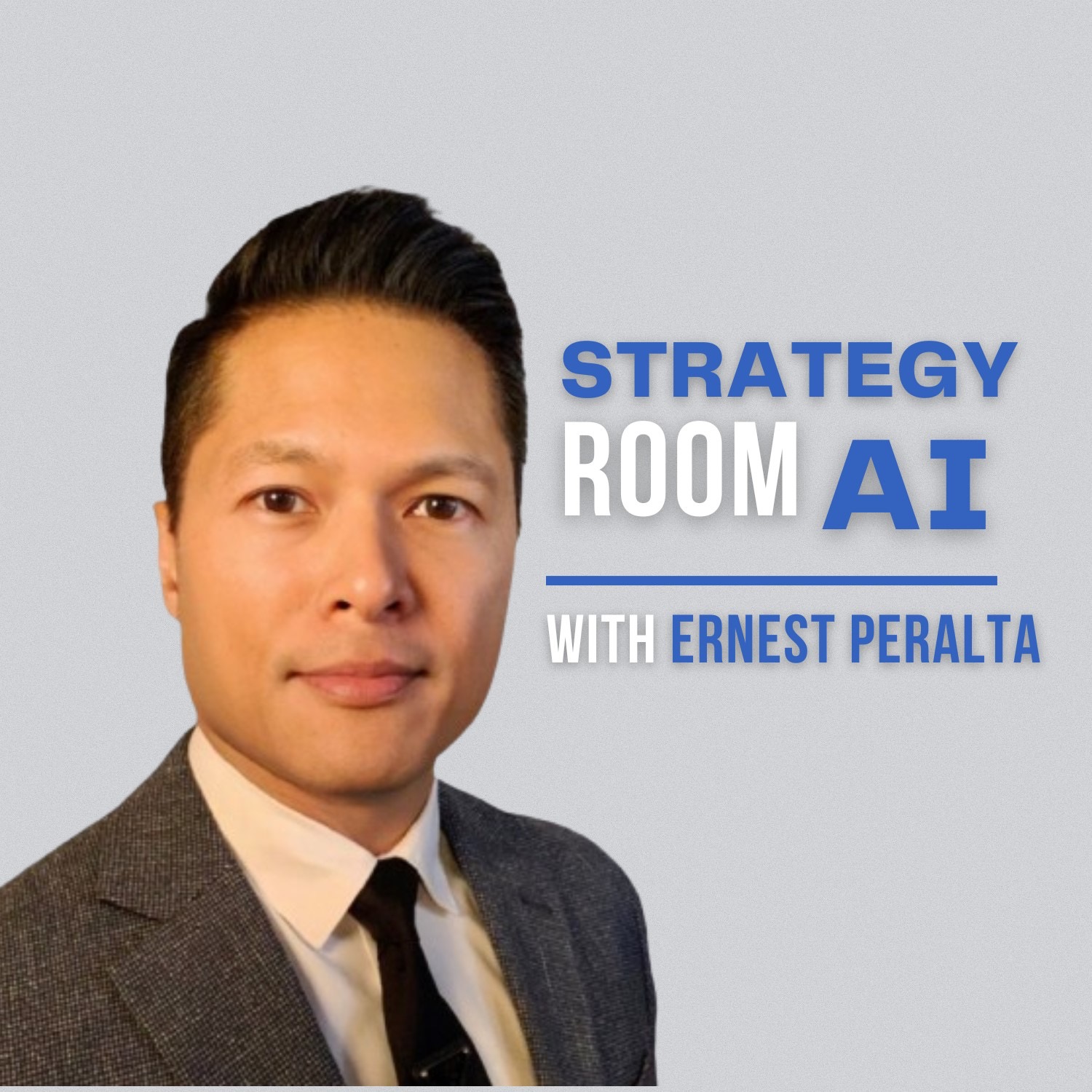
This is a solo monologue by the host (Ernest Peralta) analyzing a public announcement. No guest with operational experience is present to validate claims, share implementation lessons, or challenge assumptions. The entire episode is one person's synthesis rather than practitioner testimony.
[SPEAKER_00]: Alright, this past week, Accenture made a massive announcement
The episode names Accenture and OpenAI and references the Deloitte hallucination incident, providing some grounding. However, concrete details are sparse: no specific use cases Accenture is deploying, no metrics on speed improvements, no examples of the 'industry-specific playbooks,' and no data on the governance approach Accenture actually implemented. Claims about client benefits remain abstract.
Accenture didn't just buy licenses. They're doing three things simultaneously.
Deloitte delivered a 100-page analysis to a major client that provided hallucinated data, fabricated sources, misquoted research
This is a monologue with no guest interaction, follow-ups, or push-back. The host walks through a pre-structured argument (Accenture's three moves → three client benefits → risks → takeaways) in a linear, unchallenged way. There is no genuine inquiry, no tension, and no moment where an assumption is tested or nuanced. It reads as a polished script rather than a conversation.
So with all of this, what does this mean for clients? Well, Accenture's clients get three immediate advantages or benefits.
So, you're take away in what you should do, and here are the signals inside behind the noise.
Computed from the transcript - who did the talking, and the words that came up most.
The enterprise world just hit a turning point - and most people missed it. Accenture’s massive partnership with OpenAI isn’t just another corporate headline. It’s the moment consulting firms shift from advising on AI… to actually running AI inside their own delivery engines. And when a firm as big as Accenture changes how it operates, every Fortune 500 company downstream feels that ripple. In this episode, I break down what Accenture is really doing, why this move is bigger than the press release, and how it reshapes the future of consulting, enterprise transformation, and AI governance. You’ll learn why this partnership signals a new operating model for business - AI not as a tool, but as a teammate - and what today’s leaders must do to stay ahead, especially after Deloitte’s recent AI governance disaster.
Transcribed and scored by The B2B Podcast Index.
[SPEAKER_00]: Alright, this past week, Accenture made a massive announcement, a deep partnership with OpenAI rolling out chatGPT Enterprise to tens of thousands of its consultants and technical staff. [SPEAKER_00]: On the surface, this sounds like just another big consulting firm investing in their AI headline. [SPEAKER_00]: but that's not the case. [SPEAKER_00]: This is the beginning of a new phase in Enterprise AI, where consulting firms aren't just advising clients on AI, they're running AI internally at scale inside their own delivery engines.
[SPEAKER_00]: And here's why this matters. [SPEAKER_00]: Consulting firms are the operating system for many large enterprises, so when they transform everyone downstream transforms with them. [SPEAKER_00]: Let's dig into what Accenture is actually doing, and what this means for their clients, but most importantly what leaders should learn from this move, especially after the recent Deloitte debacle. [SPEAKER_00]: You see, Accenture didn't just buy licenses.
[SPEAKER_00]: They're doing three things simultaneously. [SPEAKER_00]: The first one is that they're equipping tens of thousands of employees with chatGPT Enterprise. [SPEAKER_00]: What this means is that it's giving their teams secure access, private data controls, the ability to build internal workflows, model customization, and advanced usage analytics. [SPEAKER_00]: This moves them out of the AI experimentation theater and into more the daily operational adoption.
[SPEAKER_00]: Number two is they're building a flagship AI adoption program with OpenAI. [SPEAKER_00]: This would include things like industry, specific playbooks, deployment templates, governments, recommendations, starter use cases, and implementation frameworks. [SPEAKER_00]: This is basically the consulting version of a franchise model, reusable assets that accelerate AI roll out across different verticals like healthcare, retail, financial services, [SPEAKER_00]: The third thing is integrating AI into the consulting delivery engine.
[SPEAKER_00]: And this is where the real unblock happens. [SPEAKER_00]: Accenture is training its workforce to think of AI not just as a tool, but more of a junior team member that executes research, synthesis, documentation prep, QA and workflow automation. [SPEAKER_00]: What this changes is how fast work gets done, how many people are needed, and what clients expect in terms of speed and quality. [SPEAKER_00]: So with all of this, what does this mean for clients?
[SPEAKER_00]: Well, Accenture's clients get three immediate advantages or benefits. [SPEAKER_00]: The first one is faster delivery cycles. [SPEAKER_00]: AI will speed up, market analysis, due diligence prep, technical summaries, and requirements gathering. [SPEAKER_00]: And on the client side, what they're going to be seeing is shorter timelines, lower cost, faster iterations, and better documentation.
[SPEAKER_00]: And the second advantage is going to be better, more consistent quality. [SPEAKER_00]: you're going to have a more structured AI playbook, reducing inconsistency across various teams, consulting quality usually will vary dramatically depending on who you get, but AI narrows that variance, advantage number three is real AI expertise, not just slideware. [SPEAKER_00]: Most firms will preach AI strategy without even using AI internally. [SPEAKER_00]: Accenture is flipping that script or that model.
[SPEAKER_00]: Clients now get a referential internal use cases, true implementation examples, more realistic road maps, and guidance based on lived experience. [SPEAKER_00]: And finally, [SPEAKER_00]: The Deloitte debacle, why this move is actually happening? [SPEAKER_00]: So a few weeks ago, if some of you have read this in the news, that Deloitte delivered a 100-page analysis to a major client that provided hallucinated data, fabricated sources, misquoted research, and had no validation or governance.
[SPEAKER_00]: What this did was that it exposed what many already knew is that firms are using AI behind the scenes but with zero guardrails. [SPEAKER_00]: So Accenture's move represents the industry shift from, let's consultants, let's our consultants use AI privately. [SPEAKER_00]: We're implementing structured govern enterprise-wide AI at scale. [SPEAKER_00]: So the catch that leaders need to understand are those that are decision makers if they're listening to this podcast is that rolling out AI is easy scaling it responsibly is the hard part.
[SPEAKER_00]: When tens of thousands of consultants start using AI simultaneously, you're going to face various issues, such as hallucinations at scale, inconsistent workflows, shadow AI, unmanaged prompts, data sensitivity issues, there's going to be compliance risk, IP leakage, and zero transparency into how answers were produced. [SPEAKER_00]: And this is why every large enterprise will need [SPEAKER_00]: Guard rails, AI specific guard rails, AI usage audits, source validation agents, model governance, and workflow level controls.
[SPEAKER_00]: Accenture is going to be taking the first visible step, but the entire industry more or less will begin to follow suit. [SPEAKER_00]: So, you're take away in what you should do, and here are the signals inside behind the noise. [SPEAKER_00]: AI now is a competency, not a project. [SPEAKER_00]: The companies that will win in the future are going to embed AI across their workflows, create governance guard rails from day one, build repeatable safe processes, train their teams to pair with AI effectively, and then deploy these agents that checks for accuracy and compliance.
[SPEAKER_00]: This is the shift from AI tools, AI teammates, AI operating systems, and Accenture just moved the consulting industry just one step closer to the future. [SPEAKER_00]: So if you found this breakdown helpful, I go deeper into topics like this every week in my newsletter, AI strategy run down. [SPEAKER_00]: And if you want more conversations like this, please subscribe to my podcast and we're just getting started. [SPEAKER_00]: Until the next time.
Other episodes covering the same guests and topics, from across The B2B Podcast Index.
 104: From Particle Physics to AI: Rewiring How Organisations Work with Markus Bernhardt (Endeavour Intelligence)The Curious Advantage Podcast · on Workflow automation100 / 100
 Ep 93: CEO of Redwood Research Buck Shlegeris on OpenAI/HuggingFace Revelations, Fixing AI Safety & Takeover OddsUnsupervised Learning with Jacob Effron · on OpenAI98 / 100
 Paul Graham On Startups, Ambition, and Great FoundersY Combinator Startup Podcast · on OpenAI88 / 100
 How SSW turned AI into ½ their pipeline - Ulysses Maclaren, COO of SSWSaaS Stories · on OpenAI86 / 100
 Stop Asking What AI Can Do. Ask What Your Staff Hates to Do.Small Business Big AI · on Workflow automation84 / 100
 Unscripted with Victor: Agentic AI, Fintech's Future, and the Death of the App EconomyVentures from The Valley · on OpenAI83 / 100
 The Future Will Have Two Versions Of You (Digital Twin)40 / 100
 The AI Boomerang: Why Human Judgment Matters More Than Ever36 / 100
 Agentic AI Is Here: Why You Should Treat It Like A Team Member (Not A Tool)42 / 100
 Real Estate 2020 vs 2026: Why It’s Harder Now (And How to Win)64 / 100
 If You Don’t Build Guardrails, AI Will Build Chaos50 / 100