Key moments - from our scoring
Substance score
30 / 100
Five dimensions, 20 points each
Organizations deploying AI rapidly often assume quality is improving when it's actually becoming inconsistent, according to Peralta. The problem isn't AI hallucinations or technical failures - it's the absence of structured processes that existed before AI arrived. Most companies lack formal review systems, relying instead on individual judgment without safety nets or accountability. When AI is introduced into this environment, weaknesses multiply quickly. Peralta advocates for five foundational guardrails before scaling: mapping where AI is used across the organization, establishing explicit quality standards for AI-influenced work, assigning human review responsibility on high-risk decisions, ensuring processes are repeatable and not ad-hoc, and logging decisions (not just prompts) for audit trails. These guardrails aren't bureaucratic friction - they're clarity mechanisms that let teams move fast while maintaining control. Peralta positions this approach as insurance rather than limitation, enabling companies to scale AI adoption without spiraling into preventable errors.
AI doesn't create chaos - it exposes existing organizational chaos like people making decisions without processes, copying information without verification, and using human shortcuts without accountability. When AI scales these weaknesses, inconsistencies become visible and problems compound quickly.
Map where AI is being used, decide what quality standards AI-influenced work must meet, assign human review to high-risk tasks, make the review process repeatable and not ad-hoc, and track decisions made (not just prompts entered).
High-risk tasks should always have human finalization - AI can assist but a human must make the final decision on anything that directly affects clients or strategic decisions.
No; Peralta emphasizes tracking decisions and outcomes, not prompts, because what matters for audit and accountability is what was decided and acted upon, not what was asked of the AI.
Guardrails aren't meant to slow innovation - they provide clarity and structure that let teams move confidently without the risk of discovering later that decisions were made without oversight or proper review.
Our reviewer’s read on each dimension, with quotes from the episode.
The episode delivers a clear central thesis - AI exposes existing process failures rather than creating new chaos - with supporting logic about guardrails and structure. However, the insight is relatively straightforward (process discipline matters) and the five-point framework (map AI use, define standards, add human review, make repeatable, track decisions) is sensible but fairly conventional for governance conversations. Most operators already understand the need for oversight; the specific novelty here is limited.
AI doesn't create chaos. It exposes the chaos that was already there.
Add AI to that environment and guess what? Everything snaps. Not because the AI is wrong, but because the process there never existed in the first place.
The core insight that AI reveals organizational dysfunction rather than causing it is sound but not particularly novel - this idea has circulated widely in AI governance discourse. The five-point framework (map, define, review, repeat, track) is logically sound but recycles familiar governance and quality-assurance patterns. The framing as 'insurance' and 'clarity' rather than 'limitation' is a useful reframing, but the underlying thinking is incremental rather than contrarian or first-principles.
AI doesn't create chaos. It exposes the chaos that was already there.
Guardrails aren't a limitation. They're insurance. They're clarity.
This is a solo monologue by Ernest Peralta with no guest interview. The speaker presents himself as someone who has worked on 'building structure around AI heavy workflows' but provides no verifiable operating history, company scale, or third-party validation. This is a thought leadership piece rather than a practitioner-backed conversation.
So this is the space that I spent a lot of my time in, building structure around AI heavy workflows
If you want more information of these breakdowns, subscribe to my AI strategy run-down newsletter
The episode is almost entirely abstract and pattern-based, with zero named companies, specific metrics, or concrete examples. Claims like 'most organizations don't have a real review system' and 'I'm seeing' patterns are unsubstantiated. The five guardrails are described in general terms (e.g., 'what AI is allowed to touch') without a single case study, failure story, or measurable outcome.
A pattern that I'm seeing is that companies adopt AI quickly. Team start relying on it heavily.
Most organizations don't have a real review system. They have individuals that are doing their best at it.
This is a scripted monologue with no host-guest interaction, no follow-up questions, no pushback, and no genuine dialogue. There is no conversational craft to evaluate; it is a pre-prepared statement delivered uninterrupted.
And that's all I have to say for now.
I'll keep it there.
Computed from the transcript - who did the talking, and the words that came up most.
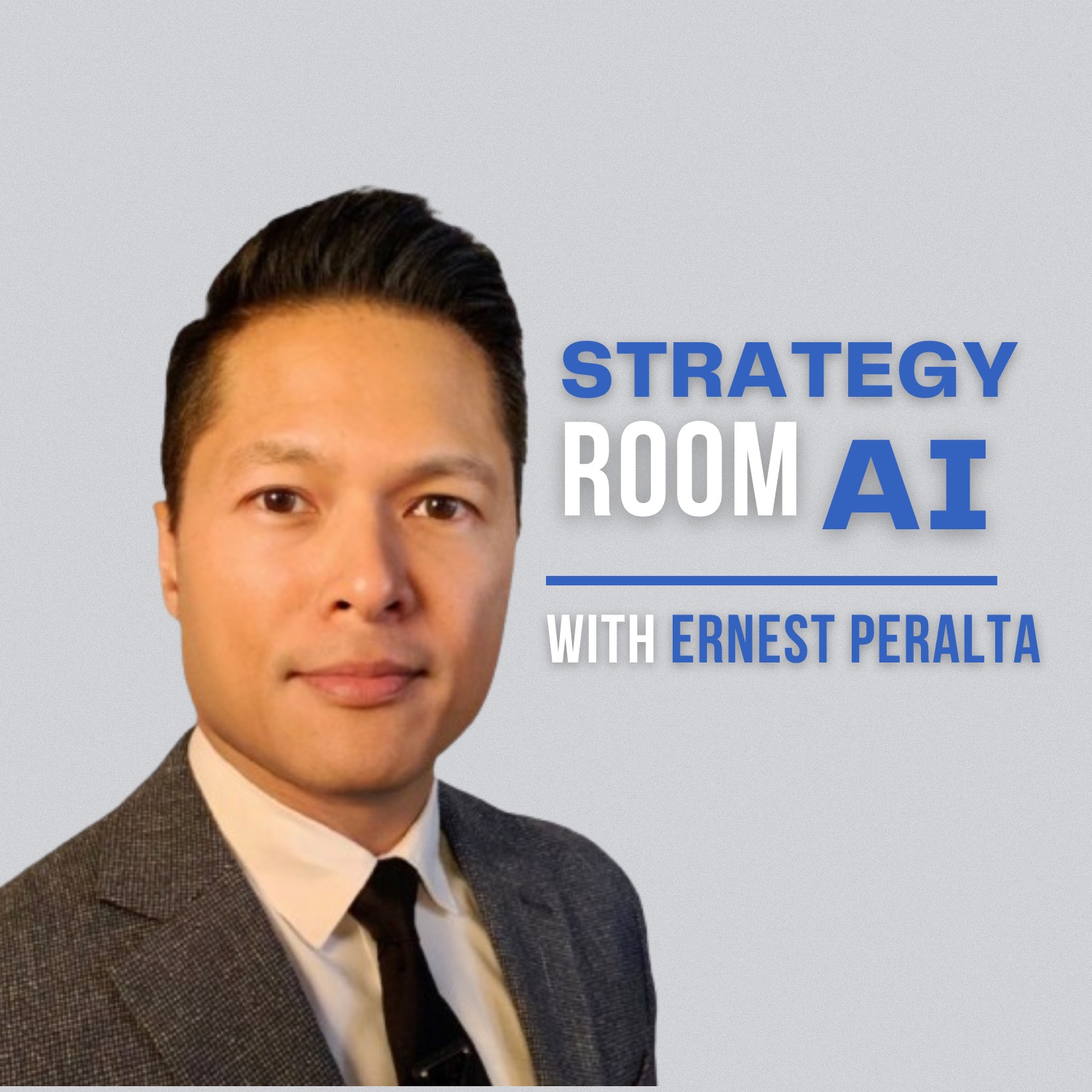
AI gets blamed for everything - hallucinations, mistakes, inconsistencies - but the truth is sharper: AI isn’t creating chaos. It’s exposing how chaotic most company processes already are. In this episode of Strategy Room AI , Ernest breaks down the uncomfortable truth behind AI failures: there’s no structure, no validation layer, and no real review discipline inside most teams. When AI enters that environment, the cracks widen fast. This episode walks through why organizations struggle, what strong leaders do differently, and the simple guardrail framework Ernest gives executives to stabilize AI-powered work before scaling it. Whether you’re a founder, operator, or enterprise leader, this is the blueprint for building AI workflows that actually hold up under pressure.
Transcribed and scored by The B2B Podcast Index.
[SPEAKER_00]: Here's something that I've learned watching after watching teams experiment with AI over the past year. [SPEAKER_00]: AI doesn't create chaos. [SPEAKER_00]: It exposes the chaos that was already there. [SPEAKER_00]: When I say chaos, I'm talking about something simple.
[SPEAKER_00]: People making decisions without a process. [SPEAKER_00]: People copying things into decks without checking them. [SPEAKER_00]: People pulling numbers [SPEAKER_00]: AI just brought it to a spotlight. [SPEAKER_00]: Most organizations don't have a real review system.
[SPEAKER_00]: They have individuals that are doing their best at it. [SPEAKER_00]: Human judgment, but without a safety net, human interpretation, but without structure, human shortcuts, but without accountability. [SPEAKER_00]: Add AI to that environment and guess what? [SPEAKER_00]: Everything snaps.
[SPEAKER_00]: Not because the AI is wrong, but because the process there never existed in the first place. [SPEAKER_00]: A pattern that I'm seeing is that companies adopt AI quickly. [SPEAKER_00]: Team start relying on it heavily. [SPEAKER_00]: Leadership assumes quality is going up.
[SPEAKER_00]: Meanwhile, quality is becoming inconsistent. [SPEAKER_00]: Nobody notices it until a mistake reaches a client or affects a real decision that needs to be made. [SPEAKER_00]: This is predictable and it is also avoidable. [SPEAKER_00]: And it has nothing to do with AI hallucinations.
[SPEAKER_00]: That's the surface level talking points here. [SPEAKER_00]: The real issue is no structure. [SPEAKER_00]: be create guardrails before scale. [SPEAKER_00]: Nothing complicated just what AI is allowed to touch, what it must not touch, what must be reviewed, what needs two humans on it, what gets validated every time, what gets logged or archived, and what counts as safe versus high risk work.
[SPEAKER_00]: This isn't bureaucracy, it's just clarity and clarity is what stops the chaos. [SPEAKER_00]: Here's a simple version. [SPEAKER_00]: No where AI shows up. [SPEAKER_00]: You see, if you don't know where AI is being used, you can't control it.
[SPEAKER_00]: The second thing is decide what good enough looks like. [SPEAKER_00]: What standard do you want AI influenced work to meet? [SPEAKER_00]: The third thing is put a human where it actually matters. [SPEAKER_00]: High-risk tasks get human-finals safe, always.
[SPEAKER_00]: And number four, make it repeatable. [SPEAKER_00]: If the process isn't repeatable, it's not really a process. [SPEAKER_00]: And number five, track your decisions. [SPEAKER_00]: Not the prompts, the decisions, and that's it.
[SPEAKER_00]: AI becomes predictable, teams feel safer, quality becomes consistent. [SPEAKER_00]: So this is the space that I spent a lot of my time in, building structure around AI heavy workflows, and my goal is simple. [SPEAKER_00]: Give companies the ability to move fast without losing the plot. [SPEAKER_00]: Not slowing down innovation, not locking people into a grid system, just giving team guidance so that they don't wake up one day realizing that they built a house of cards.
[SPEAKER_00]: And that's all I have to say for now. [SPEAKER_00]: I'll keep it there. [SPEAKER_00]: AI doesn't break companies. [SPEAKER_00]: It reveals how breakable they already were.
[SPEAKER_00]: Guard rules aren't a limitation. [SPEAKER_00]: They're insurance. [SPEAKER_00]: They're clarity. [SPEAKER_00]: They're the difference between scaling and spiraling.
[SPEAKER_00]: If you want more information of these breakdowns, subscribe to my AI strategy run-down newsletter, I go deeper there, until the next time.
Other episodes covering the same guests and topics, from across The B2B Podcast Index.
 Burnout: Why Thought Load, Not Workload, Is Draining You with Liane DaveyBeyond the To-Do List · on AI hallucinations95 / 100
 Who Owns What Your AI Does?The Pre-Read · on AI risk management85 / 100
 Episode 111: Building Your Defences Against AI MisinformationValue Driven Data Science · on AI hallucinations83 / 100
 Are You Actually Protected? Learn How to Prove Your Cybersecurity Posture For Free Ep. 97UnHacked · on AI guardrails82 / 100
 I Would Never Let AI Touch a Number and what to do about that with Alok AjmeraFP&A Unlocked · on AI guardrails80 / 100
 What AEC Marketers Need to Know About Pursuit Intelligence ToolsSpill The Ink · on AI hallucinations78 / 100
 The Future Will Have Two Versions Of You (Digital Twin)40 / 100
 The Enterprise Shift: What Accenture x OpenAI Means For How Companies Will Operate Next61 / 100
 The AI Boomerang: Why Human Judgment Matters More Than Ever36 / 100
 Agentic AI Is Here: Why You Should Treat It Like A Team Member (Not A Tool)42 / 100
 Real Estate 2020 vs 2026: Why It’s Harder Now (And How to Win)64 / 100