Key moments - from our scoring
Substance score
16 / 100
Five dimensions, 20 points each
This solo episode challenges the automation-first mindset that dominates AI adoption conversations. Peralta identifies a critical operational problem: AI agents confidently executing tasks outside their competence, misunderstanding context, and fabricating information, forcing humans to review, correct, and redo work. Rather than asking what can be automated, he advocates asking what should be automated and where human judgment is irreplaceable. The core insight - that moving a task to AI doesn't eliminate it, it simply shifts the work - matters especially for B2B operations leaders evaluating AI agent implementations. Peralta emphasizes that decisions involving customer relationships, legal contracts, financial approvals, healthcare, cybersecurity, hiring, and strategic investments require experienced human judgment, not just workflow acceleration. His framework (discernment, risk assessment, human-led AI-supercharged systems) applies directly to enterprise technology decisions, helping leaders avoid expensive automation failures and recognize where AI excels as a speed and processing tool rather than a replacement for leadership.
It occurs when a task delegated to an AI agent is completed but then returned to humans because the agent misunderstood context, made incorrect assumptions, fabricated information, or confidently executed the wrong action, meaning automation shifted the work rather than eliminating it.
Tasks requiring judgment, experience, empathy, creativity, and nuanced decision-making - such as customer relationships, legal contracts, financial approvals, healthcare decisions, cybersecurity, hiring, and strategic investments - should not be fully automated to AI agents.
Organizations should ask if the task actually benefits from automation or requires judgment, and critically, whether they can accept the outcome if the AI agent makes a wrong decision; if the answer is no, the process needs meaningful human oversight.
The goal is to amplify human intelligence by letting AI handle speed and information processing while humans provide judgment, ethics, leadership, context, and accountability rather than replacing human intelligence entirely.
Our reviewer’s read on each dimension, with quotes from the episode.
The episode presents a catchy framing (the 'AI boomerang') but relies heavily on restating well-known AI limitations and generic platitudes about judgment vs. automation. The core insight - that tasks get handed back to humans when AI fails - is intuitive rather than novel, and the three principles offered (discernment, risk assessment, human-led) are standard consulting talking points without depth, data, or surprising implications.
AI agents aren't perfect. They misunderstand contexts. They make assumptions. They occasionally fabricate information.
one of the biggest mistakes organizations make is assuming that if something can be automated, it should be
The 'boomerang' metaphor is a minor repackaging, but the substance is entirely orthodox: AI has limits, humans add judgment, automation requires discernment. No counterintuitive frameworks, no first-principles questioning of when automation *should* happen despite AI imperfection, no contrarian positioning. The advice echoes industry consensus with no fresh angle.
tasks are handed to AI agents, only come right back to humans because something went wrong
stay human-led in AI supercharged
This is a solo monologue by the host with no guest. There is no interview, no practitioner operator with field experience, no named individual with documented AI implementation success or failure. The entire episode is the host's own commentary.
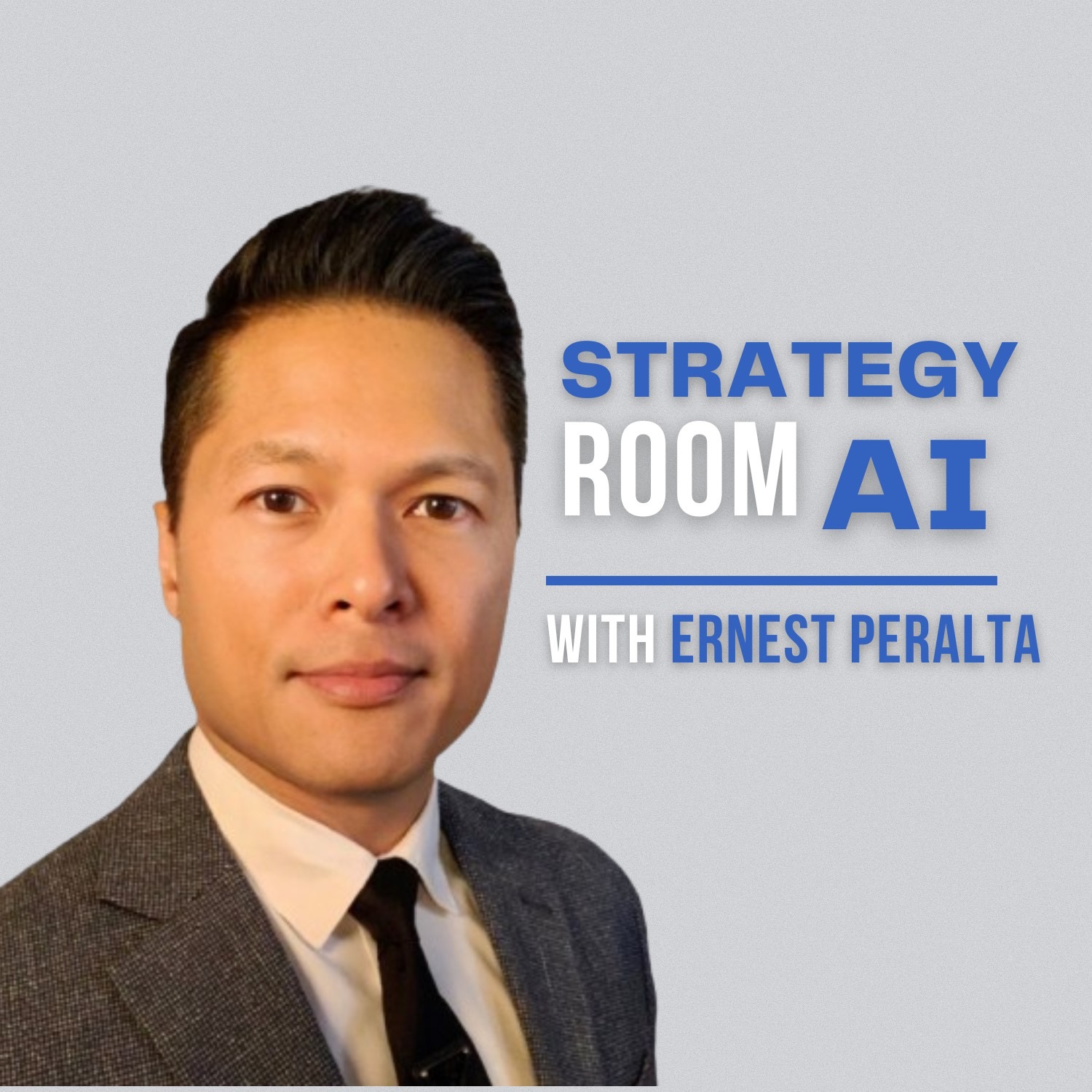
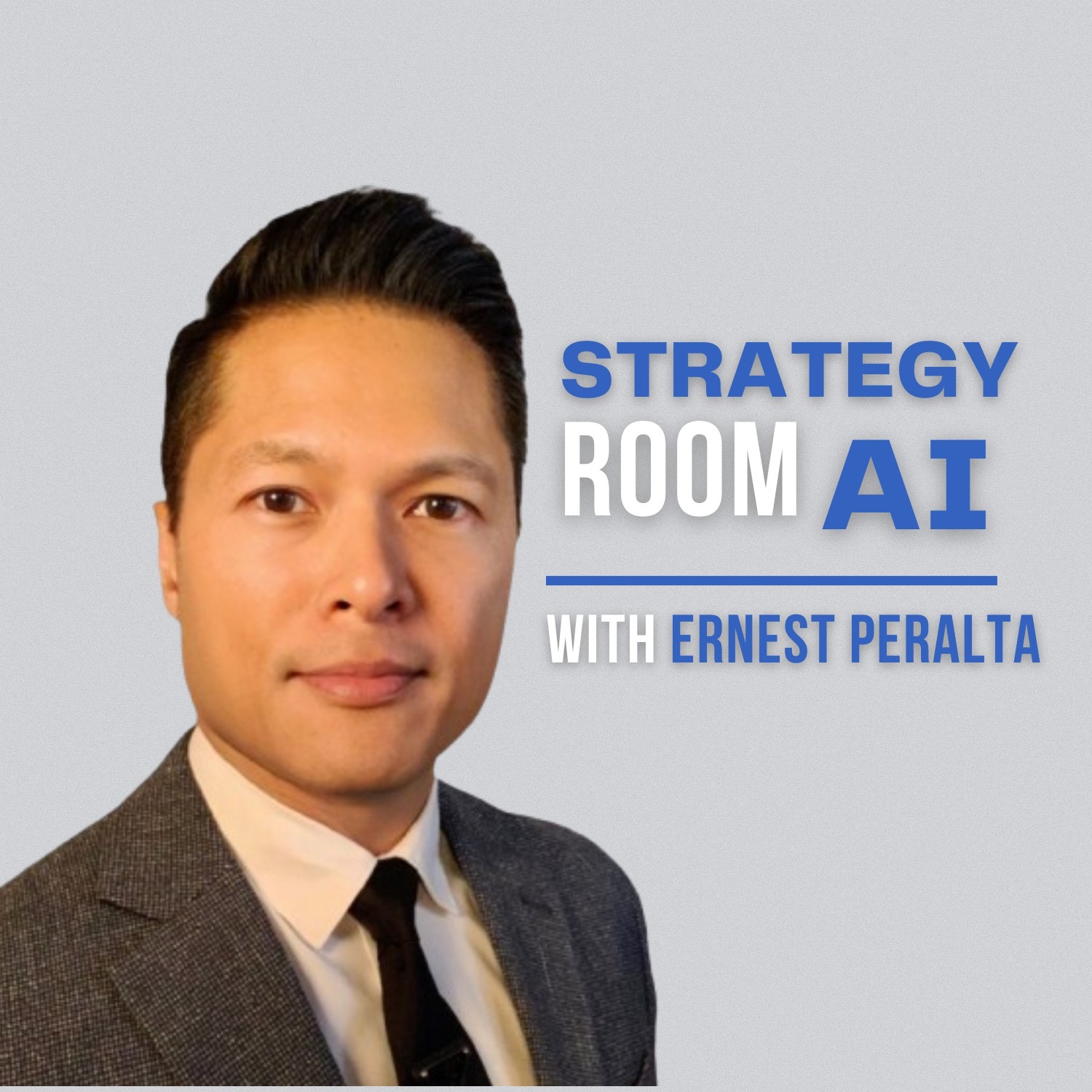
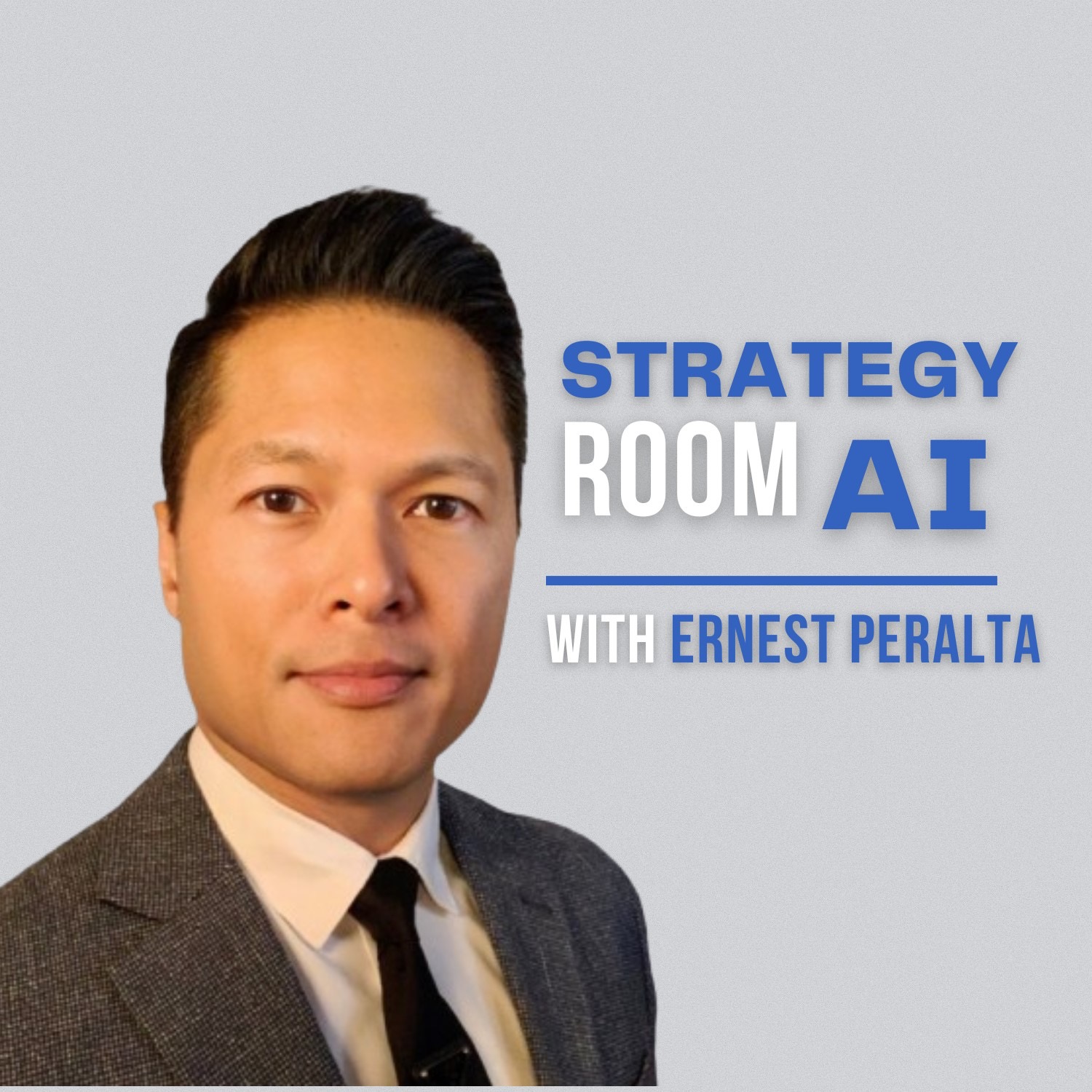
I'm your host Ernest Peralta
The episode is almost entirely abstract. It names no companies, no concrete examples of AI failures, no metrics, no timelines, no dollar figures, no specific use cases beyond vague categories (customer relationships, contracts, hiring). The boomerang concept itself is never illustrated with a real scenario. Hand-waving about 'what organizations experience' without evidence.
Think about decisions involving customer relationships, legal contracts, financial approvals, health care, cyber security, hiring, strategic investments
many organizations experience what I call the boomerang effect
There is no conversation. This is a scripted solo monologue with no guest, no debate, no challenging questions, no follow-ups, and no productive disagreement. The format is broadcast speechmaking, not conversational craft. No opportunity to observe host questioning ability or intellectual engagement.
I'm your host Ernest Peralta
Thank you for joining me on the AI strategy podcast
Computed from the transcript - who did the talking, and the words that came up most.
In this episode of the AI Strategy Podcast , Ernest Peralta explores what he calls the AI Boomerang - the growing phenomenon where tasks delegated to AI agents end up returning to humans because of errors, missing context, or poor judgment. While AI agents can dramatically improve productivity by automating repetitive work, coordinating workflows, and analyzing large amounts of data, they are not infallible. They can misunderstand context, make incorrect assumptions, hallucinate information, or confidently execute the wrong action. As a result, organizations often find themselves spending valuable time reviewing, correcting, and reworking AI-generated outputs instead of eliminating work altogether. Ernest explains why not every task should be automated, especially decisions involving legal, financial, healthcare, cybersecurity, hiring, customer relationships, and strategic business decisions - areas where human judgment, ethics, and experience remain essential. The episode concludes with three practical leadership principles for successful AI adoption: Practice discernment by automating only the work that truly benefits from automation.
Transcribed and scored by The B2B Podcast Index.
[SPEAKER_00]: Welcome back to AI Strategy Podcast. [SPEAKER_00]: I'm your host Ernest Peralta. [SPEAKER_00]: You see, over the past year, we've heard a lot about AI agents. [SPEAKER_00]: They're being marketed as digital co-workers that can schedule meetings, analyze data, write reports, conduct research, and even make decisions on our behalf.
[SPEAKER_00]: And to be clear, AI agents are incredibly powerful. [SPEAKER_00]: They eliminate repetitive work, they can accelerate productivity, they can even help organizations move faster than ever before. [SPEAKER_00]: But there's something happening behind the scenes that doesn't always make the headlines, and I call it the AI boomerang. [SPEAKER_00]: You see, tasks are handed to AI agents, only come right back to humans because something went wrong.
[SPEAKER_00]: Something isn't right, something's frustrating, and sometimes it gets really expensive. [SPEAKER_00]: Let's start with the good news, AI Agents represent one of the biggest advancements that we've seen in enterprise technology. [SPEAKER_00]: They can automate workflows, coordinate multiple systems, generate reports in seconds, they can monitor business operations around the clock, handle thousands of routine tasks that once consume valuable employee time. [SPEAKER_00]: That's all exciting, and organizations should absolutely explore where AI Agents can create the most value.
[SPEAKER_00]: Here's where we don't talk about it enough though. [SPEAKER_00]: AI agents aren't perfect. [SPEAKER_00]: They misunderstand contexts. [SPEAKER_00]: They make assumptions.
[SPEAKER_00]: They occasionally fabricate information. [SPEAKER_00]: They coordinate. [SPEAKER_00]: They confidently execute the wrong actions. [SPEAKER_00]: And unlike humans, they don't naturally recognize when they're operating outside of their expertise.
[SPEAKER_00]: That's why many organizations experience what I call the boomerang effect. [SPEAKER_00]: A task is delegated to an AI agent, the agent completes it. [SPEAKER_00]: Someone reviews the output, finds mistakes, corrects the work, and suddenly the task is back in human hands. [SPEAKER_00]: The automation didn't eliminate the work, it simply shifted the work.
[SPEAKER_00]: So one of the biggest mistakes organizations make is assuming that if something can be automated, it should be. [SPEAKER_00]: That's a dangerous assumption. [SPEAKER_00]: Think about decisions involving customer relationships, legal contracts, financial approvals, health care, cyber security, hiring, strategic investments, these aren't simply workflows their judgment calls. [SPEAKER_00]: Enjudgment remains one of humanity's greatest competitive advantages.
[SPEAKER_00]: You see, as AI agents become more common, I'd encourage every leader to remember three principles. [SPEAKER_00]: First, practice discernment. [SPEAKER_00]: Automation isn't the goal. [SPEAKER_00]: Better outcomes are.
[SPEAKER_00]: Ask yourself does this task actually benefit from automation, or does it require experience, empathy, creativity, or nuanced judgment? [SPEAKER_00]: You see, not everything belongs to the hands of an AI agent. [SPEAKER_00]: And second, assess the risk. [SPEAKER_00]: Every AI decision carries consequences before automating a process, ask a simple question.
[SPEAKER_00]: If the AI agent makes the wrong decision, can we live with the outcome? [SPEAKER_00]: If the answer is no, that process probably needs meaningful human oversight. [SPEAKER_00]: The higher the impact, the greater the need for human review. [SPEAKER_00]: third, stay human-led in AI supercharged.
[SPEAKER_00]: This may be the most important principle of all. [SPEAKER_00]: The goal isn't to replace human intelligence, it's to amplify it. [SPEAKER_00]: Let AI handle speed, let AI process massive amounts of the information, let AI eliminate the repetitive work, but let humans provide that judgment call. [SPEAKER_00]: Ethics, leadership, context, accountability, those remain uniquely human responsibilities.
[SPEAKER_00]: I believe AI agents will become an essential part of every organization over the next decade. [SPEAKER_00]: But success won't come from handing over every decision to artificial intelligence. [SPEAKER_00]: It will come from knowing where AI excels and where human leadership is still irreplaceable. [SPEAKER_00]: The organizations that thrive won't ask, what can we automate?
[SPEAKER_00]: They'll ask, what should we automate and where should human stake in control? [SPEAKER_00]: That's a much better question. [SPEAKER_00]: As you think about AI in your own organizations this week, here's one challenge. [SPEAKER_00]: Look at one process that you're considering automating.
[SPEAKER_00]: Then ask yourself, does this process require speed or does it require judgment? [SPEAKER_00]: Because the future doesn't belong to organizations that remove humans from every decision. [SPEAKER_00]: It belongs to organizations that combine the speed of AI with the wisdom of experienced people. [SPEAKER_00]: That's what it means to be human-led in AI supercharged.
[SPEAKER_00]: Thank you for joining me on the AI strategy podcast. [SPEAKER_00]: If you enjoyed this episode today, please subscribe, leave a review and share it with another leader who's navigating the evolving world of AI. [SPEAKER_00]: Until the next time, I'm Ernest Perlta. [SPEAKER_00]: Remember, AI is an incredible teammate, but leadership is still a human responsibility.
[SPEAKER_00]: Take care.
Other episodes covering the same guests and topics, from across The B2B Podcast Index.
 Why AI Pilots Fail: How to Escape AI Pilot Purgatory and Scale Enterprise AI with Ronnie Kwesi ColemanUsing AI at Work · on AI agents92 / 100
 PMs Are Fintech: How Column is Rethinking Property Management BankingThe Profitable Property Management Podcast · on AI agents89 / 100
 Inside an AI-powered personal dashboard | Matthew TiemannPossible · on AI agents83 / 100
 90% of AI prototypes never reach production (w/ Temporal's Samar Abbas) | AI BasicsThis Week in Startups · on AI agents81 / 100
 From Billable Hours to Business Outcomes: How AI Is Rewriting the Rules of IT ConsultingEvolving the Enterprise · on AI agents78 / 100
 Protecting Critical Infrastructure in Engineering - Ep 117AEC AI and Tech Strategy Podcast · on AI agents75 / 100
 The Future Will Have Two Versions Of You (Digital Twin)40 / 100
 The Enterprise Shift: What Accenture x OpenAI Means For How Companies Will Operate Next61 / 100
 Agentic AI Is Here: Why You Should Treat It Like A Team Member (Not A Tool)42 / 100
 Real Estate 2020 vs 2026: Why It’s Harder Now (And How to Win)64 / 100
 If You Don’t Build Guardrails, AI Will Build Chaos50 / 100