Key moments - from our scoring
Substance score
22 / 100
Five dimensions, 20 points each
Ernest Peralta challenges the prevailing view of AI as a nice-to-have tool by reframing agentic AI as a reliable junior team member capable of handling complete workflows without supervision. Rather than viewing AI deployment as a software implementation, Peralta advocates treating AI onboarding like hiring a new employee - one that learns from feedback, improves with repetition, and never procrastinates. The key insight is that agentic AI excels at taking responsibility for discrete chunks of work, freeing human talent from repetitive tasks like document review, data gathering, and first-draft preparation. Companies that adopt this mindset shift workflows, compound execution speed, and unlock human capital currently trapped in administrative work. Peralta emphasizes this isn't about replacing people but about repositioning them: letting strategists focus on judgment calls, pattern recognition, and high-level decisions while AI handles the labor-intensive foundation. The organizations that treat AI as a consistent team member - not a widget - will outexecute competitors not through headcount advantages, but through smarter allocation of existing human capital.
Treating AI as a tool keeps it on the sidelines with limited impact; treating it as a team member means building workflows around its strengths, giving it responsibility for complete tasks end-to-end, and expecting it to improve with feedback like any junior employee would.
Instead of deploying AI as a software feature, companies should onboard it as a teammate by assigning it repetitive, important-but-annoying tasks (like document review or first-draft preparation), then have humans review and refine the output.
Agentic AI excels at taking on small chunks of work without supervision - tasks like reviewing documents, identifying anomalies, flagging missing information, and preparing first drafts that humans then review and improve.
By automating administrative, prep, and repetitive work, agentic AI frees high-value team members from grunt work so they can focus on strategic thinking, decision-making, and pattern recognition where human judgment adds real value.
No; agentic AI is about repositioning people to higher-value work by removing them from low-level administrative tasks, allowing strategists to do strategy again instead of being data gatherers.
Our reviewer’s read on each dimension, with quotes from the episode.
The episode contains a core insight (treating AI as a team member rather than a tool) that is genuinely useful for operators, but this single idea is stretched across three minutes with significant repetition and padding. The specific claim about agentic AI handling end-to-end processes is valuable, but there's minimal density of novel claims per minute - the speaker re-states the team member metaphor roughly six times without adding new dimensions.
They're treating it like an employee... a reliable, tireless junior team member, who doesn't get bored, doesn't get distracted, and never says, I'll get to that tomorrow.
You tell it, go through these documents, find anything weird and tell me what's missing... that's not a tool. That's an intern.
The framing of AI as a junior team member is clever and memorable, but not particularly novel in the broader AI discourse. The core insight - that AI should be treated as responsible for end-to-end work rather than as a widget - echoes widely circulated takes on agentic AI and human-AI collaboration. No contrarian arguments, first-principles reasoning, or genuinely counterintuitive claims are present.
most companies still think about AI the way they thought about cloud back in 2010. Nice to have, might save us some time.
If you treat AI like a widget, you'll get widget level impacts.
This is a solo host episode with no guest. The speaker, Ernest Peralta, presents no credential evidence, case studies from his own experience, or demonstrated track record of deploying agentic AI at scale. Without a named guest or speaker background provided, caliber cannot be assessed; however, the lack of specific operational evidence suggests limited practitioner credibility.
companies keep asking me, how do we deploy AI? And every time I tell them, you don't deploy a tool, you're onboarding a teammate.
The episode contains almost no concrete evidence: no named companies, no metrics, no real timelines, no dollar figures, and no actual case studies. The document-review example ("go through these documents, find anything weird") is generic and illustrative rather than a named, verifiable case. Claims about organizational impact remain abstract and unsupported by data.
You tell it, go through these documents, find anything weird and tell me what's missing.
Most companies have no idea how much human capital is trapped under admin work, prep work, and repetitive tasks.
This is a monologue with no host-guest interaction, follow-ups, or adversarial testing of claims. There are no questions posed to a guest, no pushback, and no willingness to challenge assumptions. The episode is a pure thought-leadership pitch with no conversational friction or genuine exploration.
So companies keep asking me, how do we deploy AI? And every time I tell them, you don't deploy a tool, you're onboarding a teammate.
Computed from the transcript - who did the talking, and the words that came up most.
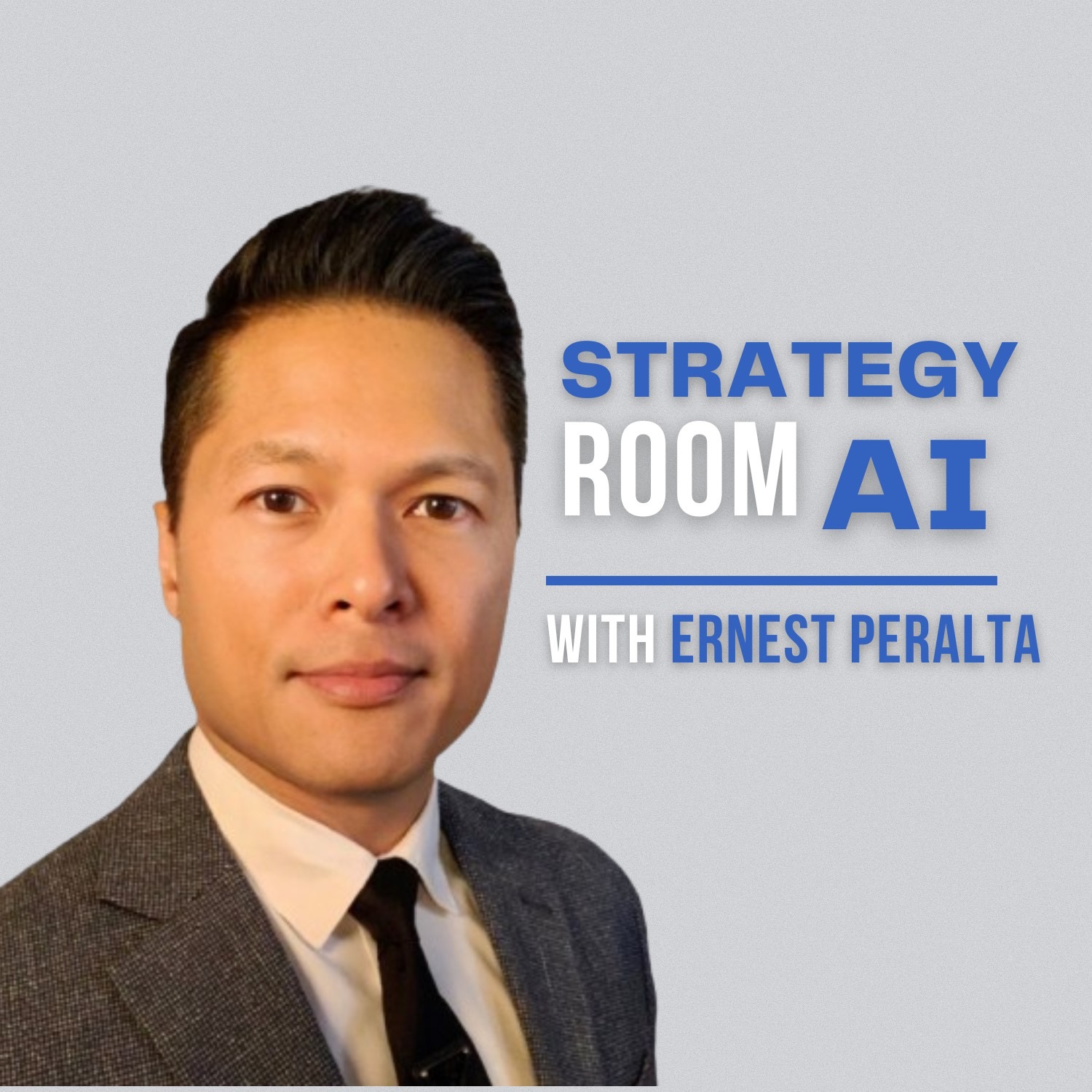
Most companies are still treating AI like a 'nice-to-have' piece of software, but the leaders seeing exponential gains have already made a critical shift: They treat AI like a reliable, tireless junior employee. In this episode, Ernest breaks down the difference between deploying a tool and onboarding a teammate . Agentic AI isn't impressive because it answers questions; it's impressive because it can take on responsibility - executing small chunks of work end-to-end without constant supervision. What You Will Learn: The Mindset Shift: Why treating AI like a junior team member (rather than a simple piece of software) is the only way to unlock compound speed and change organizational workflows. The Practical Unlock: How to delegate the repetitive, "gray area" tasks your team hates, keeping human judgment for strategy and letting AI handle the consistent labor. The Real ROI: Why Agentic AI is a people story, not a technology story - and how it frees your smartest human beings from admin work, enabling them to become true strategists again. The Takeaway: The companies that succeed won't have more people; they'll simply use their existing people better, leveraged by AI teammates.
Transcribed and scored by The B2B Podcast Index.
[SPEAKER_00]: Alright, so let me start with a simple observation. [SPEAKER_00]: You see, most companies still think about AI the way they thought about cloud back in 2010. [SPEAKER_00]: Nice to have, might save us some time. [SPEAKER_00]: Meanwhile, the people who are actually using this stuff correctly, they're not treating AI like software.
[SPEAKER_00]: They're treating it like an employee. [SPEAKER_00]: Not a senior one, not a strategic one, but a reliable, tireless junior team member, who doesn't get bored, doesn't get distracted, and never says, I'll get to that tomorrow. [SPEAKER_00]: Honestly, that mindset shifts changes everything. [SPEAKER_00]: You see, AI is not impressive because it answers questions.
[SPEAKER_00]: It's impressive because it can take on responsibility. [SPEAKER_00]: Small chunks of work end to end process without supervision. [SPEAKER_00]: Not in a sci-fi way in a very boring practical way. [SPEAKER_00]: You tell it, go through these documents, find anything weird and tell me what's missing.
[SPEAKER_00]: it actually does it. [SPEAKER_00]: Then you clean it up. [SPEAKER_00]: Then the next time you give it the same job, it does it even better. [SPEAKER_00]: That's not a tool.
[SPEAKER_00]: That's an intern. [SPEAKER_00]: So companies keep asking me, how do we deploy AI? [SPEAKER_00]: And every time I tell them, you don't deploy a tool, you're onboarding a teammate. [SPEAKER_00]: You see, if you treat AI like a software, you'll keep getting it on the sidelines.
[SPEAKER_00]: If you treat it like a team member, you'll start building it around its strength. [SPEAKER_00]: That's when workflows change, that's when speed compounds, and that's when org charts begin to shift. [SPEAKER_00]: Let me paint a picture. [SPEAKER_00]: You've got a task that your team hates, something repetitive, something that falls into the gray area between important and annoying.
[SPEAKER_00]: Normally, someone procrastinates, drags, or rushes through it, but with agentic AI, you say, this is your job now, do the first draft every time. [SPEAKER_00]: The AI starts doing the grunt work. [SPEAKER_00]: Your people get to final say, you keep the judgment and it keeps the labor. [SPEAKER_00]: Now, your team is embarrassed in the base layer tasks.
[SPEAKER_00]: They're actually thinking, making decisions, spotting these patterns. [SPEAKER_00]: That's the unlock. [SPEAKER_00]: Now, I'm going to say something that might sound a little weird. [SPEAKER_00]: A Gentic AI isn't about replacing people.
[SPEAKER_00]: It's about [SPEAKER_00]: You start using your smartest human beings as data gatherers. [SPEAKER_00]: You let them be strategists again. [SPEAKER_00]: Most companies have no idea how much human capital is trapped under admin work, prep work, and repetitive tasks. [SPEAKER_00]: Agentic AI cracks that open.
[SPEAKER_00]: If you treat AI like a widget, you'll get widget level impacts. [SPEAKER_00]: If you treat AI, like the most consistent junior team that you've ever hired, you'll [SPEAKER_00]: You see, the companies who get this right, they're going to out execute everyone else, not because they have more people, but because they use their people better. [SPEAKER_00]: If this sparks something, subscribe to AI strategy rundown, that's where I dig deeper into this stuff, until again.
Other episodes covering the same guests and topics, from across The B2B Podcast Index.
 104: From Particle Physics to AI: Rewiring How Organisations Work with Markus Bernhardt (Endeavour Intelligence)The Curious Advantage Podcast · on Workflow automation100 / 100
 Radiology Can't Keep Up. Here's Where AI Actually Helps | Dr. Nina KottlerRethink Imaging · on Agentic AI96 / 100
 How People Intelligence Is Helping Shape Cisco’s AI Workforce TransformationDigital HR Leaders with David Green · on Agentic AI92 / 100
 Agentic AI in the Commercial Workflow with Johnson Controls CDIO Vijay SankaranEnterprise AI Innovators · on Agentic AI88 / 100
 Stop Asking What AI Can Do. Ask What Your Staff Hates to Do.Small Business Big AI · on Workflow automation84 / 100
 Turning AI Agents Into Revenue Workflows With OutreachTech Talks Daily · on Agentic AI83 / 100
 The Future Will Have Two Versions Of You (Digital Twin)40 / 100
 The Enterprise Shift: What Accenture x OpenAI Means For How Companies Will Operate Next61 / 100
 The AI Boomerang: Why Human Judgment Matters More Than Ever36 / 100
 Real Estate 2020 vs 2026: Why It’s Harder Now (And How to Win)64 / 100
 If You Don’t Build Guardrails, AI Will Build Chaos50 / 100